


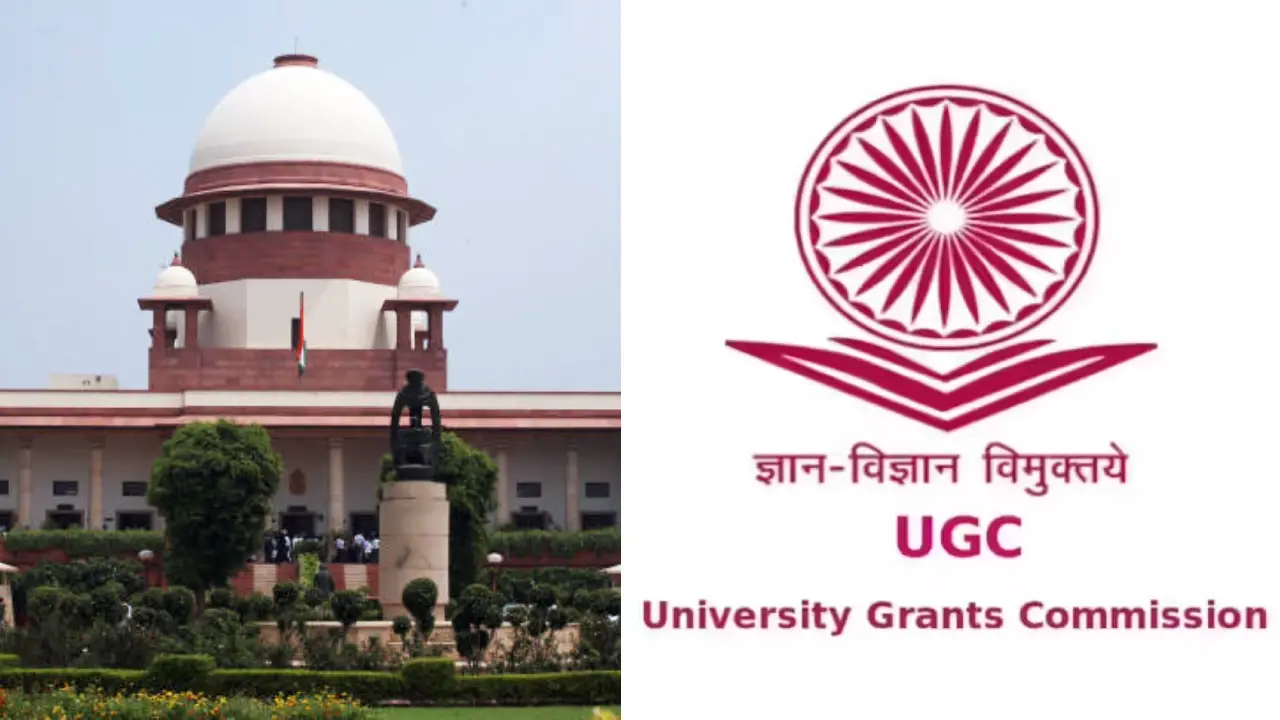
In a significant intervention, the Supreme Court of India on Thursday stayed the University Grants Commission’s 2026 regulations on preventing caste-based discrimination in higher education, observing that the framework is “prima facie vague”, capable of misuse and could have “very sweeping consequences” for society.
A bench led by Chief Justice Surya Kant and Justice Joymalya Bagchi said the regulations, if implemented in their present form, could have a “dangerous impact” and end up dividing society. The court sought responses from the Centre and the University Grants Commission by March 19 on petitions challenging the UGC (Promotion of Equity in Higher Education Institutions) Regulations, 2026.
Keeping the contentious provisions in abeyance, the bench revived the earlier UGC (Promotion of Equity in Higher Educational Institutions) Regulations, 2012, invoking its powers under Article 142 of the Constitution. The court said that repealing the earlier framework without an alternative would leave students without any effective remedy.
The bench took particular exception to Regulation 3(1)(c), which defines caste-based discrimination as discrimination only against members of Scheduled Castes, Scheduled Tribes and Other Backward Classes, noting that it excludes students from the general category from institutional protection. The court observed that Regulation 3(1)(e) already provides a broad definition of “discrimination” and questioned the need for a separate, narrower definition.
“If we do not intervene, it will have a dangerous impact and divide society. The language of the regulation is vague and needs to be carefully modulated so that it is not exploited,” the bench remarked.
The court also flagged the complete omission of ragging from the scope of the regulations, despite it being one of the most common forms of harassment on campuses. Questioning the assumption that discrimination operates only along caste lines, the bench asked why harassment based on junior-senior hierarchies had been ignored.
Advocate Vishnu Shankar Jain, appearing for one of the petitioners, argued that the impugned definition violates Article 14 of the Constitution by creating an unreasonable classification and presuming that caste-based discrimination affects only certain social groups. Another counsel highlighted scenarios where victims from the general category could be left without remedies and even face retaliatory action under the current framework.
The Chief Justice suggested that the issue be reconsidered by a committee of eminent jurists and experts with a deep understanding of social realities, warning against measures that could push society towards regressive segregation. “Educational institutions must reflect unity, not deepen divisions,” the bench said.
Senior advocate Indira Jaising, appearing in a 2019 public interest litigation filed by the mothers of Rohith Vemula and Payal Tadvi—which eventually led to the framing of the 2026 regulations—defended the new rules.
The bench made it clear, however, that while addressing discrimination is essential, the present framework requires serious re-examination to avoid unintended and far-reaching consequences. The petitions were filed by Mritunjay Tiwari, advocate Vineet Jindal and Rahul Dewan.
