


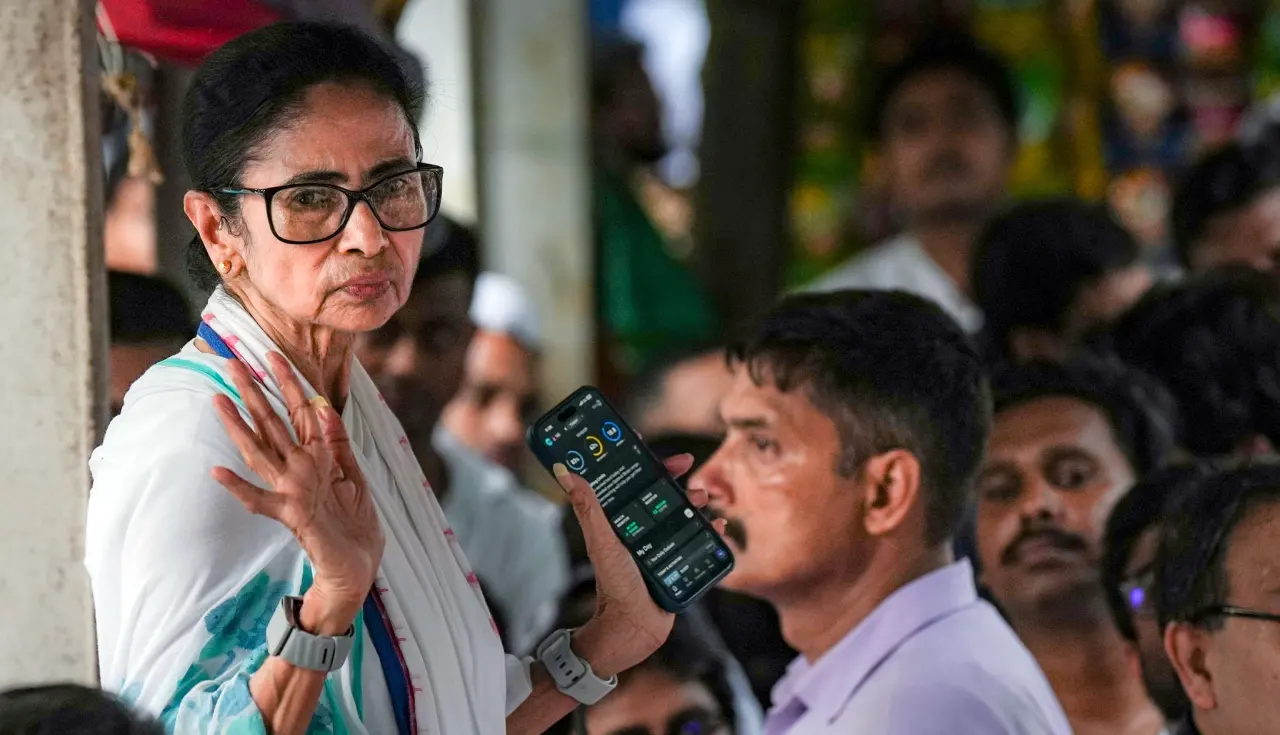
The Trinamool Congress (TMC) plunged deeper into crisis on Monday after a group of 20 Lok Sabha MPs, led by senior leader Kakoli Ghosh Dastidar, claimed to have extended support to the BJP-led National Democratic Alliance (NDA) and sought recognition as a separate bloc in Parliament.
The dramatic development marks the first major split in the party’s parliamentary wing since its formation in 1998 and comes amid an ongoing rebellion within the party’s ranks in West Bengal.
Speaking to PTI, Ghosh Dastidar said that nearly 20 TMC MPs had decided to support the NDA, citing the need for Bengal’s development and changing political realities.
“Nearly 20 TMC MPs, including me, have decided to support the NDA for Bengal’s development. We have written to Lok Sabha Speaker Om Birla and formally conveyed our decision,” she said.
Later, while speaking to a news channel, she claimed that a letter signed by 20 MPs had already been submitted to the Speaker seeking separate seating arrangements as an independent parliamentary bloc.
The development comes at a politically sensitive moment for the Mamata Banerjee-led party, which has already been grappling with a major internal rebellion in the West Bengal Assembly. Days earlier, 58 of the party’s 80 MLAs reportedly backed expelled MLA Ritabrata Banerjee as Leader of the Opposition instead of the party’s official nominee, Sovandeb Chattopadhyay.
The unrest reached Parliament while Mamata Banerjee was in New Delhi attending an INDIA bloc meeting aimed at strengthening opposition unity against the BJP, underscoring the scale of the challenge confronting the TMC leadership.
Sources in the dissident camp said the MPs have chosen not to resign from the TMC or formally join the BJP at this stage. Instead, they plan to function as a separate parliamentary group while supporting the NDA, a move seen as an attempt to remain protected under anti-defection provisions.
The dissident MPs are also expected to argue before the Speaker that Ghosh Dastidar remains the legitimate chief whip of the party in the Lok Sabha and that subsequent changes announced by the party leadership were not completed through the required parliamentary procedures.
However, the TMC has countered those claims by releasing a May 20 letter from party chief Mamata Banerjee informing Lok Sabha Speaker Om Birla about the appointment of Kalyan Banerjee as the new chief whip. The party also shared Ghosh Dastidar’s resignation letter from party posts submitted last week.
Adding to the turmoil, senior Rajya Sabha MP Sukhendu Sekhar Roy resigned from both the Upper House and the TMC earlier in the day. In his resignation statement, Roy said the people of West Bengal had delivered a clear verdict in favour of the BJP and criticised what he described as the TMC’s failures in governance.
His resignation has fuelled speculation that the unrest could spread to the Rajya Sabha, where the TMC currently has 12 members.
TMC MP Mahua Moitra strongly criticised the rebels, accusing them of betraying the mandate on which they were elected.
The dissident camp, meanwhile, insists that the parliamentary revolt is a continuation of the rebellion that began in the West Bengal Assembly, with Ritabrata Banerjee describing the developments as a growing movement within the party.
Political observers have drawn comparisons with major political splits witnessed in Maharashtra involving the Shiv Sena and NCP, where legislative strength played a decisive role in altering the balance of power. However, unlike those episodes, Mamata Banerjee continues to retain firm control over the party organisation.
With rebellion now visible in both the Assembly and Parliament, the TMC faces what many analysts describe as the most serious internal challenge in its nearly three-decade history, potentially reshaping the political landscape of West Bengal and the national opposition.
