


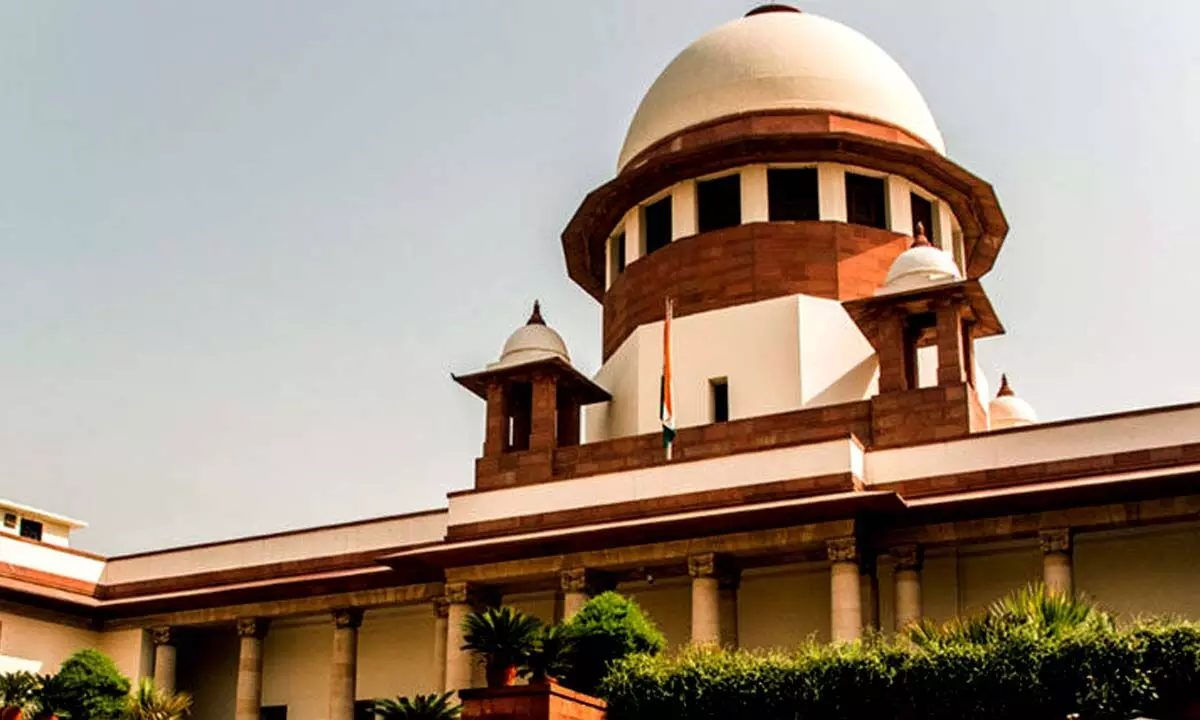
Just days before Diwali, the Supreme Court on Friday said that a complete ban on bursting firecrackers in Delhi-NCR is “neither practical nor ideal,” noting that such restrictions are frequently violated and a balance must be struck between environmental protection and public celebration.
The observation came from a bench comprising Chief Justice B.R. Gavai and Justice K. Vinod Chandran, which reserved its order on pleas seeking permission to manufacture and sell green firecrackers in Delhi and the National Capital Region.
Solicitor General Tushar Mehta, appearing for the Centre and NCR states, argued for lifting the blanket ban imposed since 2018. He said children should be allowed to celebrate Diwali and other festivals without time restrictions. “Let the children celebrate for two days. It’s only for festivals like Diwali, Gurpurab, and Christmas,” Mehta urged, adding humorously that “the child inside me is persuading the child in your Lordships.”
The Chief Justice questioned whether the ban had yielded any tangible improvement in air quality. “Has the air quality index improved or worsened since 2018? Was pollution much less then compared to now?” he asked. Mehta responded that data from the Commission for Air Quality Management (CAQM) showed pollution levels remained “more or less the same,” except during the COVID-19 lockdown when industrial and vehicular activity halted.
Emphasizing the need for a realistic approach, CJI Gavai said, “Despite a complete ban, firecrackers continue to be used. Extreme orders create problems.” The court hinted at allowing only certified green crackers approved by the National Environmental Engineering Research Institute (NEERI) and Petroleum and Explosives Safety Organisation (PESO) under strict monitoring.
Mehta suggested that the sale of firecrackers be limited to licensed traders and that no online platforms be allowed to sell them. He also recommended regular inspections of manufacturing units, with violators facing immediate closure.
Senior advocate K. Parameshwar, representing green cracker manufacturers, argued that the ban was imposed “without consultation” and contradicted the Supreme Court’s 2017 and 2018 rulings that permitted eco-friendly firecrackers. He noted that manufacturers had invested heavily in NEERI-approved facilities and were being unfairly penalized despite compliance.
Some counsels also pointed out that Delhi’s air pollution was largely caused by stubble burning and industrial emissions rather than festive fireworks.
The bench reserved its order after hearing extensive arguments from the Centre, Delhi government, NCR states, environmentalists, and industry representatives. The verdict is expected soon, setting the tone for how Delhi-NCR will celebrate Diwali this year.
