


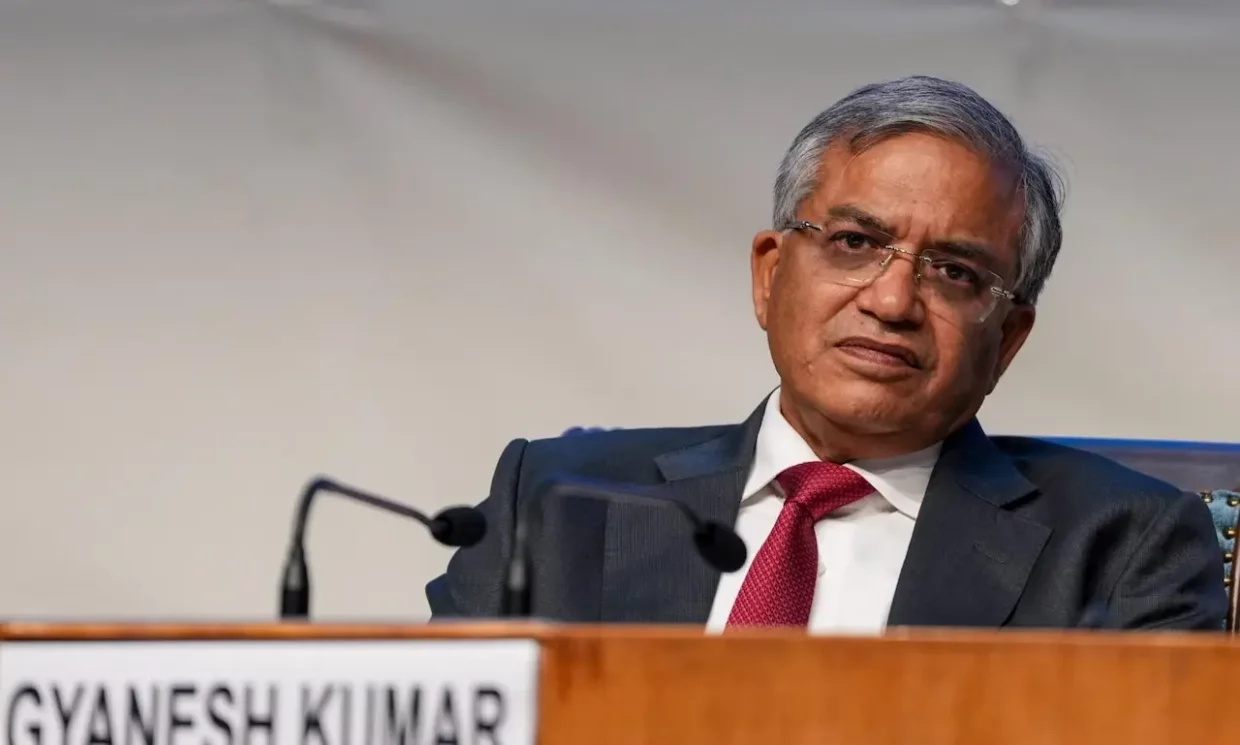
Opposition Members of Parliament have submitted notices in both Houses of Parliament seeking a motion for the removal of Chief Election Commissioner (CEC) Gyanesh Kumar, sources said on Friday.
According to sources, the notice has been signed by 130 MPs in the Lok Sabha and 63 MPs in the Rajya Sabha. The signatories include members from parties associated with the INDIA bloc as well as the Aam Aadmi Party (AAP), which, though no longer formally part of the alliance, has backed the initiative. Some Independent MPs have also supported the move, while several others have reportedly shown interest in joining it.
This marks the first time in India’s parliamentary history that a notice has been submitted seeking the removal of a Chief Election Commissioner.
Sources said the notice lists seven allegations against Kumar, including claims of “partisan and discriminatory conduct in office”, “deliberate obstruction of investigation into electoral fraud”, and “mass disenfranchisement”. Opposition parties have accused the CEC of favouring the ruling Bharatiya Janata Party (BJP), particularly in relation to the ongoing Special Intensive Revision (SIR) of electoral rolls, which they claim could benefit the party at the Centre.
Under the Constitution, the process for removing the Chief Election Commissioner is similar to that for removing a judge of the Supreme Court or a High Court. The removal can only take place on grounds of “proven misbehaviour or incapacity”.
In a blog post, Trinamool Congress Rajya Sabha MP Derek O’Brien said the term “proven misbehaviour” has been interpreted to include deliberate abuse of authority, partisan exercise of constitutional duties in favour of a particular political formation, and actions that erode public confidence in the independence and impartiality of the Election Commission.
O’Brien noted that India has had 25 Chief Election Commissioners in the past 75 years and that Parliament has never before initiated a removal motion against a CEC.
Describing the move as a “strong message”, he said opposition parties were using “every constitutional tool available to protect the sanctity of India’s democratic institutions”. He added that if the notice is not taken up by the government, questions may arise about a possible understanding between the executive and the CEC.
Article 324(5) of the Constitution states that the CEC cannot be removed except in the same manner and on the same grounds as a judge of the Supreme Court. The motion can be introduced in either House of Parliament and must be passed by a special majority — a majority of the total membership of the House and at least two-thirds of members present and voting.
According to the Judges (Inquiry) Act, 1968, if such notices are submitted in both Houses on the same day, a committee will be constituted only after the motion is admitted in both Houses. The committee is jointly formed by the Lok Sabha Speaker and the Rajya Sabha Chairman.
The inquiry panel consists of the Chief Justice of India or a Supreme Court judge, the Chief Justice of one of the High Courts, and a distinguished jurist. The committee conducts proceedings similar to a court trial, including examination and cross-examination of witnesses.
The Chief Election Commissioner is also given an opportunity to present his defence before the panel. Once the committee submits its findings, the report is tabled in Parliament and debated before a final vote on the motion in both Houses.
