Balasaheb Thackeray Was Uncompromising in His Core Beliefs: PM Modi 2
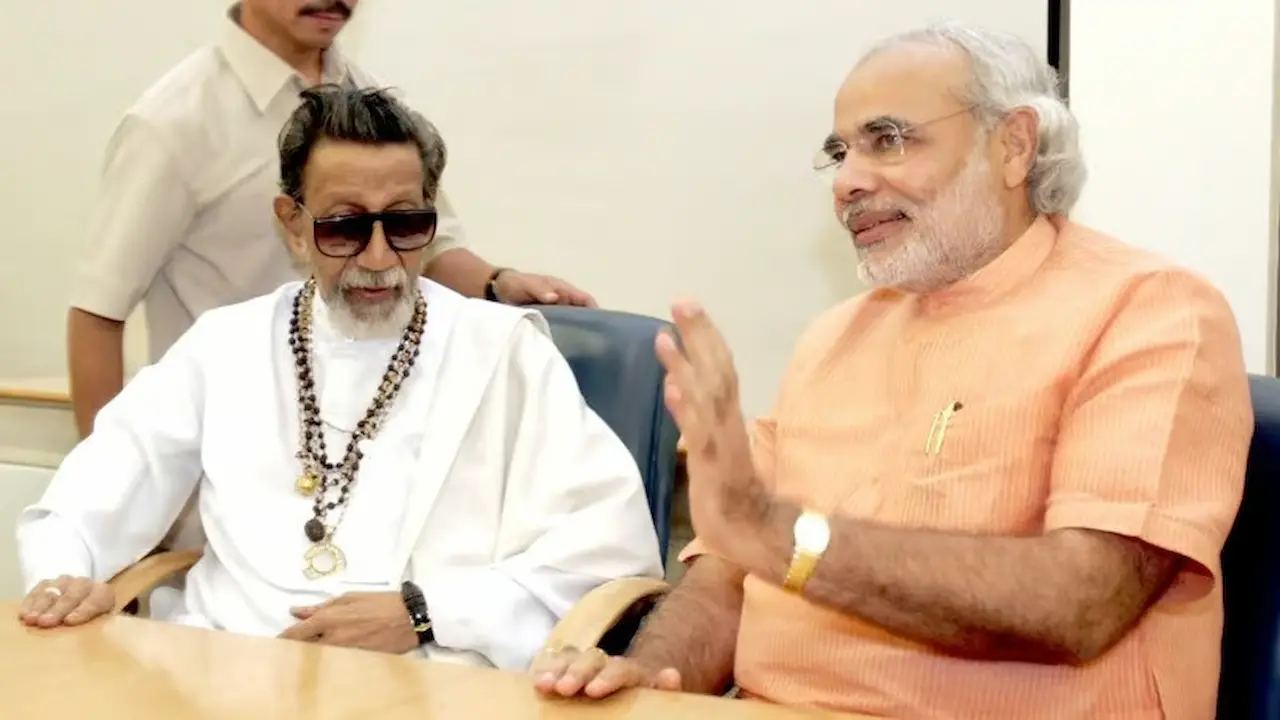
Prime Minister Narendra Modi paid homage to Shiv Sena founder Balasaheb Thackeray on his 99th birth anniversary, acknowledging his unwavering commitment to public welfare and Maharashtra’s development.
Taking to X (formerly Twitter), PM Modi wrote, “He is widely respected and remembered for his commitment to public welfare and towards Maharashtra’s development. He was uncompromising when it came to his core beliefs and always contributed towards enhancing the pride of Indian culture.”
I pay homage to Balasaheb Thackeray Ji on his birth anniversary. He is widely respected and remembered for his commitment to public welfare and towards Maharashtra’s development. He was uncompromising when it came to his core beliefs and always contributed towards enhancing the…
Balasaheb Thackeray, a staunch proponent of Hindutva, intertwined it with a nativist ideology rooted in “Marathi pride,” transforming his party into a powerful force in Maharashtra, particularly in Mumbai. His legacy continues to influence the state’s political landscape, resonating with his steadfast dedication to his principles.
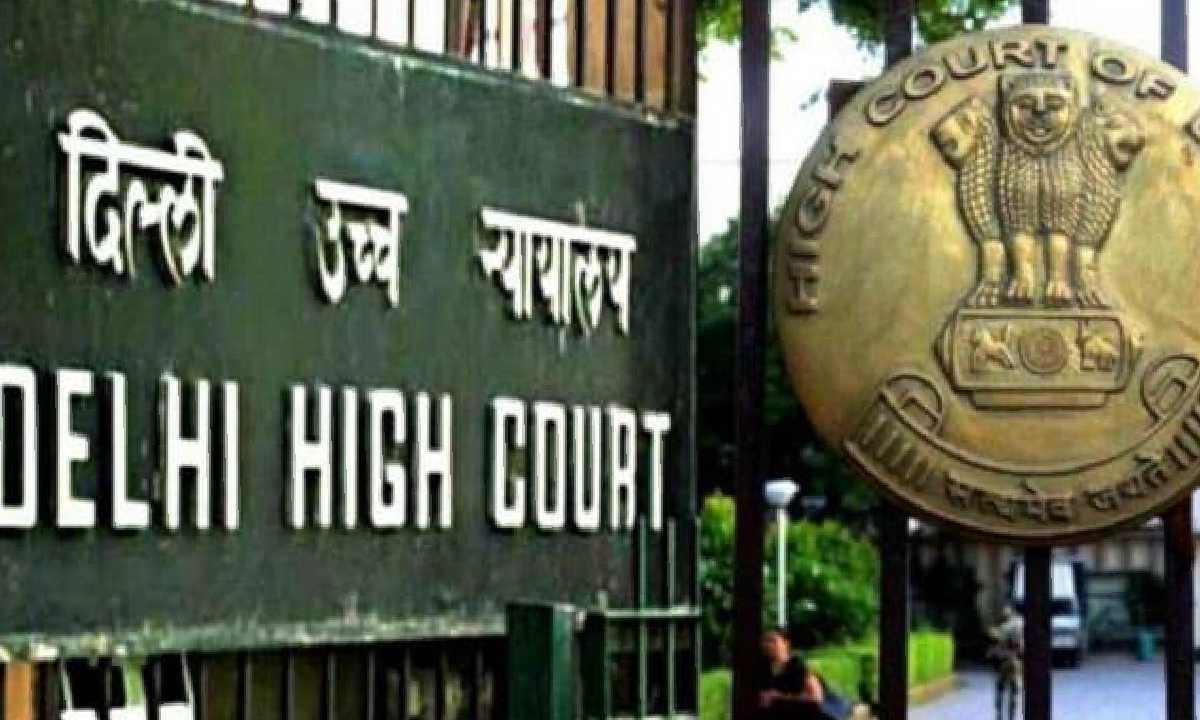
The Delhi High Court has significantly held that consent to have sex doesn’t allow capturing private moments and posting them on social media.
Justice Swarana Kanta Sharma, while dismissing the bail application by a rape accused, said consent did not extend to permitting misuse and exploitation of private images.
“Even if the consent for sexual relations had been given at any point in time by the complainant, such consent cannot, in any manner, be construed as consent to capture and post her inappropriate videos on social media platforms. Consent to engage in physical relations does not extend to the misuse or exploitation of a person’s private moments or their depiction in an inappropriate and derogatory manner,” the court held in a January 17 verdict.
The accused, in the present case, alleged it was a case of a “long friendly relationship” turning sour owing to the woman failing to repay a loan he gave her.
Refusing to grant any reprieve, the court said even if the initial sexual relationship between the parties was consensual, the alleged subsequent acts of the accused were “clearly rooted in coercion and blackmail.”
“While the first sexual encounter may have been consensual, the subsequent ones were allegedly based on blackmail, with the accused taking advantage of the videos to exert control over the complainant. The accused’s actions in preparing the videos and using them to manipulate and sexually exploit the complainant prima facie reflect a strategy of abuse and exploitation, transcending any initial consensual interaction,” it said.
It prima facie appeared that the accused had exploited his relationship under the guise of a loan transaction but such an arrangement—even between friends—did not entitle one party to exploit the other’s vulnerability or dignity, the court said.
The court rejected the accused’s plea that, being married, the woman was mature enough to understand the significance of her actions and said an “attempt to weaponise” her marital status and professional background to diminish the gravity of the allegations was “unacceptable.”
The mere fact that, said the court, the complainant worked in a massage parlour could not be used to diminish the seriousness of the alleged offences committed against her when there was no evidence of her engaging in illicit or unlawful activities.
The complainant alleged she was lured by the accused, who also gave her Rs 3.5 lakh in loan to enrol in a course but subsequently began blackmailing her to comply with his sexual demands.
She alleged that by 2023 end, the accused came to Delhi and showed an allegedly objectionable video of her on his cellphone and forced her to have sex for two days while threatening to make the videos public.
He reportedly posted the content on social media platforms such as Facebook, WhatsApp, and Instagram.
Los Angeles Faces New Crisis as Hughes Fire Forces Evacuations for Over 50,000 Residents 5
More than 50,000 residents in Los Angeles County found themselves under evacuation orders or warnings on Wednesday as the Hughes Fire erupted in the mountains near Lake Castaic. The wildfire, which began late Wednesday morning, rapidly consumed over 15 square miles of vegetation within hours, spurred by dry conditions and gusty winds.
While no homes or structures have been reported damaged, the Los Angeles County Fire Department and Cal Fire mounted an aggressive response. Firefighting aircraft dropped tens of thousands of gallons of fire retardant on the advancing flames, leveraging calmer winds compared to the ferocious conditions that fuelled the ongoing Palisades and Eaton fires.
“This fire received a robust response today, and the teams are making progress in containing it,” said Joe Tyler, director of Cal Fire. Despite this, officials warned that the danger is far from over, with wind speeds expected to surge to 60 mph by Thursday.
A critical stretch of Interstate 5 was temporarily closed to aid emergency operations but was later reopened. Fire crews worked to prevent the Hughes Fire from jumping the interstate and threatening nearby communities, including Castaic.
Among the evacuees was Kayla Amara, a Valencia resident, who rushed to help a friend retrieve belongings before hosing down the property as flames loomed nearby. “It’s stressful,” Amara admitted, referencing weeks of anxiety from Southern California’s ongoing fires.
Meanwhile, Los Angeles officials are bracing for potential rainfall forecasted for the weekend, which could trigger mudslides and debris flow in areas ravaged by the Palisades and Eaton fires. “The threat of mud and debris flow is real,” warned LA County Supervisor Kathryn Barger.
The Palisades and Eaton fires, which have been burning since January 7, have claimed 28 lives and destroyed over 14,000 structures. While containment progress has been made—68% for the Palisades Fire and 91% for the Eaton Fire—authorities remain vigilant, with red flag warnings extended until Friday.
Adding to the crisis, LA Mayor Karen Bass cautioned residents about toxic ash carried by winds, urging precautions to protect against exposure. Public health officials have also issued warnings, noting that the ash may contain heavy metals and other hazardous substances.
As fire crews race to contain the Hughes Fire, lawsuits against Southern California Edison are piling up, alleging that the utility’s equipment sparked the deadly Eaton Fire. Investigations into the causes of all three fires remain ongoing, with no conclusions released thus far.
The Hughes Fire now joins a grim chapter in Southern California’s battle with wildfires, leaving communities on edge as they face continued threats from nature’s fury.
The death toll in the Jalgaon train accident has gone up to 13 with the recovery of a headless body along the railway tracks, police said on Thursday.
Some passengers of the Mumbai-bound Pushpak Express, who got off the train after an alarm chain-pulling incident, were run over by the Karnataka Express heading from Bengaluru to Delhi on the adjacent tracks in Maharashtra’s Jalgaon district on Wednesday evening.
“Of the 13, we have identified eight bodies so far, including two from their Aadhaar cards,” Special Inspector General of Police Dattatraya Karale told PTI.
The eight identified deceased include four hailing from Nepal, Jalgaon district information officer Yuvraj Patil told PTI.
Out of the 15 persons injured in the incident, 10 were currently undergoing treatment – nine at the Pachora civil hospital and one at a medical facility in Jalgaon city- while the others who suffered minor injuries were discharged, he said.
Meanwhile, the Lucknow-Mumbai Pushpak Express reached the Chhatrapati Shivaji Maharaj Terminus (CSMT), its final destination in the Maharashtra capital, at around 1.20 am on Thursday, a railway spokesperson said.
The Central Railway’s general manager and other senior officials also reached the accident spot at night and inspected the site, he said.
They also visited the hospitals where the injured persons were taken for treatment.
The tragedy unfolded on Wednesday evening when passengers onboard the Pushpak Express, fearing a blaze, hastily jumped onto the adjacent tracks and were run over by the oncoming Karnataka Express, officials earlier said.
The accident took place between Maheji and Pardhade stations near Pachora town in north Maharashtra’s Jalgaon district, when the Pushpak Express halted after someone pulled the chain at around 4.45 pm on Wednesday, Central Railway officials said.
Dilip Kumar, Executive Director, Information and Publicity, Railway Board, however, denied that any spark or fire inside the coach caused passengers to pull the alarm.
In a video message from Davos in Switzerland, Maharashtra Chief Minister Devendra Fadnavis on Wednesday said, “Some passengers in the train mistakenly assumed that smoke is coming out of the train and they jumped. Unfortunately, they were run over by another train.”
The CM announced a financial assistance of Rs 5 lakh each to the next of the kin of the passengers who died in the tragedy.
The Railway Board separately announced an ex-gratia of Rs 1.5 lakh each to the kin of the deceased, Rs 50,000 for grievous wounds and Rs 5,000 for simple injuries.
Although India has enacted laws to combat bride trafficking, such as the Immoral Traffic Prevention Act and various provisions of the Indian Penal Code, enforcement remains a significant challenge. According to Legal Services India, “research has demonstrated that there are many gaps in the law’s treatment of human trafficking and slavery.” The report further underscores the lack of media attention and police inaction, stating, “The police are also uninterested in looking into such problems.”
One shocking example of such exploitation is the practice of wife rental, which has persisted for decades in the Shivpuri district of Madhya Pradesh, under the Dadhicha custom. Each year, a market is established where families traditionally offer their daughters or wives for rent. Men participate in this market, selecting women to serve as companions.
Alarmingly, parents and guardians in economically vulnerable regions willingly lease their daughters, and in some cases, even married men rent out their wives to other individuals. This distressing reality often involves the women being handed over to wealthy businessmen who lack spouses or partners. These transactions are formalised using stamped papers, often for paltry sums ranging from ten to a hundred rupees. Such practices not only perpetuate systemic exploitation and dehumanisation but also facilitate thousands of such agreements every year, trapping generations in cycles of despair.
The roots of this issue are deeply intertwined with the alarming prevalence of female infanticide, which has drastically skewed the sex ratio in regions like Haryana, Punjab, Rajasthan, and Uttar Pradesh. The imbalance leaves men in these areas struggling to find brides, compelling them to purchase or rent women from economically disadvantaged states such as Madhya Pradesh, Odisha, Assam, West Bengal, Jharkhand, Andhra Pradesh, and Bihar. This practice is often justified as a means to secure family lineage, driven by financial constraints and the desire to avoid exorbitant dowries.
These transactions are typically orchestrated by brokers who exploit the situation for their gain. Acting as intermediaries, they retain a significant portion of the money, leaving only a fraction for the family of the leased woman. This predatory system thrives on poverty and patriarchal norms, further entrenching the commodification of women.
Within the Dhadicha custom, a particularly appalling aspect comes to light: the exploitation of virgin girls, usually between the ages of 8 and 15, who are preferred over married women. The valuation of these girls is determined by the duration for which the man intends to “rent” her as a wife—be it by the hour, day, week, month, or year. Once the agreed period ends, the arrangement can either be renewed or terminated. In many cases, the girl is then subjected to a new contract, rented out to another man, perpetuating her exploitation and reinforcing the commodified view of women as mere assets to be traded.
This abhorrent system thrives on systemic failures, economic desperation, and deeply entrenched gender inequalities, painting a grim picture of the urgent need for both legal and societal interventions.Usually, the financial arrangement is set at around Rs. 15,000 to 25,000 per bride. The age of the bride significantly influences the pricing, with younger brides commanding higher amounts proposed by their families. At times, the price can surge substantially, even reaching up to 2 lakhs if the bride is considered beautiful, physically appealing, and a virgin. Non-virgin girls are valued at Rs. 10,000 to 15,000, taking into account factors such as their age, skin tone, and the number of prior contractual marriages they have been involved in.
The deeply distressing aspect of the Dadicha situation is that girls being offered for rent are as young as 6 years old, with no maximum age limit. Even before reaching puberty, these underage girls face sexual exploitation. It is truly disturbing to learn that parents frequently administer a particular drug to these girls, aimed at enhancing their breast and muscle development. This is done to make them appear aesthetically appealing and mature like women, in order to command a higher price.
Every day, these young girls are raped not only by their husbands, but also by other males in the household. To satisfy their sexual desires, they can sleep with any guy in the household. In certain families, even the father-in-law is permitted to have sexual relations with the girl. The rationale for this is that they paid the same price for the girl. The girl’s standing is lowered to that of a sex toy utilized for enjoyment by males and as an income-generating machine for the parents. As a result, the parents in this community prefer producing more girls, which equals more money for the family.
When her contract expires, she is either renewed by the same guy or returned to her family, where she is priced again and hired to new clients. The cycle goes on. These girls are subjected to a great deal of maltreatment, both physical and emotional, and there is no one with whom they can express their anguish. Many people come into touch with lethal infections such as HIV, AIDS, and Hepatitis B. There is a long list of women who have been subjected to this type of torture. Many people remain silent.
When a bride’s contract expires, she is either retained by the same man under a renewed agreement or sent back to her family, where she is once again priced and offered to new clients. This harrowing cycle continues unabated, subjecting these girls to relentless physical and emotional abuse with no avenues to express their pain or seek help. Many fall victim to severe health issues, contracting life-threatening diseases such as HIV, AIDS, and Hepatitis B due to their exploitation.
The list of women who endure such torment is tragically long, yet the silence surrounding their suffering is deafening. Fear, stigma, and systemic neglect compel many to endure in silence, perpetuating the cycle of abuse.
The continued existence of practices like the Dadhicha Pratha in 21st-century India stands as a glaring indictment of societal and systemic failure to protect vulnerable populations and achieve gender equality. As the Legal Services India report aptly states, “It is past time for the state to take notice of this and enact stronger legislation, as well as make people aware of how illegal it is in nature.” Ending this cycle of exploitation demands immediate and decisive action—both through legal reform and widespread societal change—to ensure dignity, safety, and justice for all.
In a shocking revelation that lays bare the grim realities of gender exploitation in modern India, a village in Madhya Pradesh’s Shivpuri district has drawn widespread attention for perpetuating a horrifying custom known as Dadhicha Pratha. This practice, which involves renting women and young girls as wives, exposes the deeply entrenched gender inequalities that continue to thrive despite significant strides in women’s rights.
As reported by Legal Services India, the Dadhicha Pratha unfolds annually in a makeshift market where families present their daughters or wives for rent. Men from the surrounding areas gather to participate, selecting women based on factors such as virginity, physical appearance, and age. This abhorrent tradition has reportedly persisted for decades, with thousands of such transactions finalized each year.
This practice not only commodifies women but also normalizes their exploitation, reducing them to objects of trade and servitude. Despite the constitutional and legal safeguards aimed at ensuring gender equality and protecting women, the continued existence of Dadhicha Pratha highlights glaring gaps in enforcement and awareness, calling for urgent intervention to dismantle this deeply oppressive system.
JD(U) Ends Support for BJP Government in Manipur, Sparks Internal Rift 10
Nitish Kumar’s Janata Dal (United) has officially withdrawn its support for the BJP-led government in Manipur under Chief Minister N. Biren Singh. The announcement was made by the JD(U) Manipur unit through a letter submitted to the Governor, stating that its sole MLA, Md. Abdul Nasir, will now function as an opposition MLA in the Assembly.
The letter cited the defection of five out of six JD(U) MLAs to the BJP after the 2022 Manipur Assembly elections as a key reason for the decision. These defections, it noted, are still under legal scrutiny before the Speaker’s Tribunal under the Tenth Schedule of the Constitution.
The party also pointed out that its decision to withdraw support aligns with its participation in the INDIA alliance, a coalition formed to challenge the BJP. “Our lone MLA, Md. Abdul Nasir, is seated on the Opposition Bench in the Assembly as per the Speaker’s arrangement,” the letter stated.
However, the JD(U)’s central leadership has dismissed this move. National spokesperson Rajiv Ranjan Prasad called the state unit’s action a “baseless claim,” emphasizing that the central leadership was neither consulted nor informed. “The JD(U) continues to support the BJP government in Manipur and at the Centre,” Prasad clarified, adding that the state unit had been asked to explain its unilateral decision.
The conflicting narratives have raised questions about internal coordination within JD(U) and the future of its relationship with the BJP in Manipur and beyond.
Jharkhand IAS Officer Pooja Singhal Reinstated After Bail in Money Laundering Case 12
The Jharkhand government has revoked the suspension of IAS officer Pooja Singhal, who was jailed for over two years in connection with a money laundering case. Her reinstatement follows her release on bail granted by a special court on December 7, 2024.
Singhal was initially suspended on May 12, 2022, a day after the Enforcement Directorate (ED) arrested her over alleged corruption in the implementation of MGNREGA, the central government’s flagship rural employment scheme.
A notification issued by the Department of Personnel, Administrative Reforms and Raj Bhasa confirmed that the Suspension Review Committee recommended her reinstatement, effective December 7, 2024. Singhal has been assigned to the Department of Personnel, Administrative Reforms and Raj Bhasa.
The ED had accused Singhal, who previously served as secretary in the state Mines Department, of laundering money linked to corruption. Her release and subsequent reinstatement have sparked discussions across administrative and political circles.
North Karnataka Truck Tragedy: 10 Dead, 15 Injured in Devastating Accident 14
A horrific accident in North Karnataka on Wednesday morning claimed the lives of 10 people and left 15 others injured. The victims were en route to Kumta market from Savanur to sell vegetables when the truck they were traveling in met with the tragic incident.
Local authorities, including Karwar SP Narayana M, are conducting an in-depth investigation to determine the cause of the accident.
Further updates are awaited as the inquiry unfolds.
Traffic Rerouted in Bandra Kurla Complex (BKC) from January 21 to April 20; Find Out Alternate Routes 16
In response to the increasing congestion in Bandra Kurla Complex (BKC), the Mumbai Traffic Police have announced temporary traffic rerouting measures from January 21 to April 20. These changes aim to ease the flow of vehicles in this busy business hub and improve traffic conditions.
Why Is the Traffic Being Rerouted in BKC?
Bandra Kurla Complex (BKC) has always been a bustling area in Mumbai, known for its thriving commercial centers and offices. However, due to an alarming rise in the number of vehicles on BKC roads, traffic jams and bottlenecks have become a persistent issue. This surge in traffic is partly attributed to ongoing construction projects, such as the Mumbai Metro and the Bullet Train, which have further compounded the congestion problem.
The Traffic Police have taken proactive measures to address these challenges and reduce traffic snarls. As part of the effort, the following traffic changes will be implemented for the duration of the rerouting period:
Traffic Rerouting: Key Details
Closed Roads: Avenue 3 Road, extending from the WeWork building gap to the BKC Connector Junction, and from BKC Connector Junction to NSE Junction, will remain closed to vehicular movement during the specified period.
Alternate Routes for Commuters: Drivers can take Avenue 3 Road, turning left at the WeWork building gap. They will then need to take a right turn from the rear side of the WeWork building, travelling under the BKC Connector bridge to reach the MMRDA ground. Commuters can also take the alternative route from NSE Junction to their desired destinations.
These rerouting measures are designed to minimise traffic congestion and facilitate smoother travel throughout the BKC area.
Impact of Construction Projects on BKC Traffic
BKC is one of Mumbai’s most prominent commercial districts, home to several multinational companies, corporate offices, and government institutions. Due to its strategic location, it is a significant transport hub in the city, well-connected by road, rail, and metro services.
However, in recent years, the surge in urban development and large-scale infrastructure projects, such as the Mumbai Metro and the Bullet Train, have created considerable disruptions in daily traffic flow. Construction activity, coupled with a growing number of vehicles on the roads, has contributed to frequent traffic jams, particularly during peak hours.
While these projects are expected to enhance Mumbai’s transport network in the long term, their immediate impact on local traffic has been felt by commuters and residents in the area. The ongoing construction of new metro stations, along with the digging and road blockages for the Bullet Train project, has made driving through BKC increasingly difficult.
What Measures Are Being Taken to Improve Traffic Flow in BKC?
The traffic rerouting initiative is just one of the many steps being taken to alleviate congestion in BKC. Along with the road closures and new alternate routes, the authorities are also monitoring the situation closely to ensure minimal disruption for commuters. The Traffic Police are working to coordinate with construction teams to expedite work and reduce roadblocks.
Additionally, the municipal corporation is working on expanding the road infrastructure in the area to accommodate the growing number of vehicles and provide better access to various commercial complexes and offices.
Chhattisgarh: Major Blow to Naxalism as 14 Maoists, Including Senior Leader, Killed in Gunfight 18
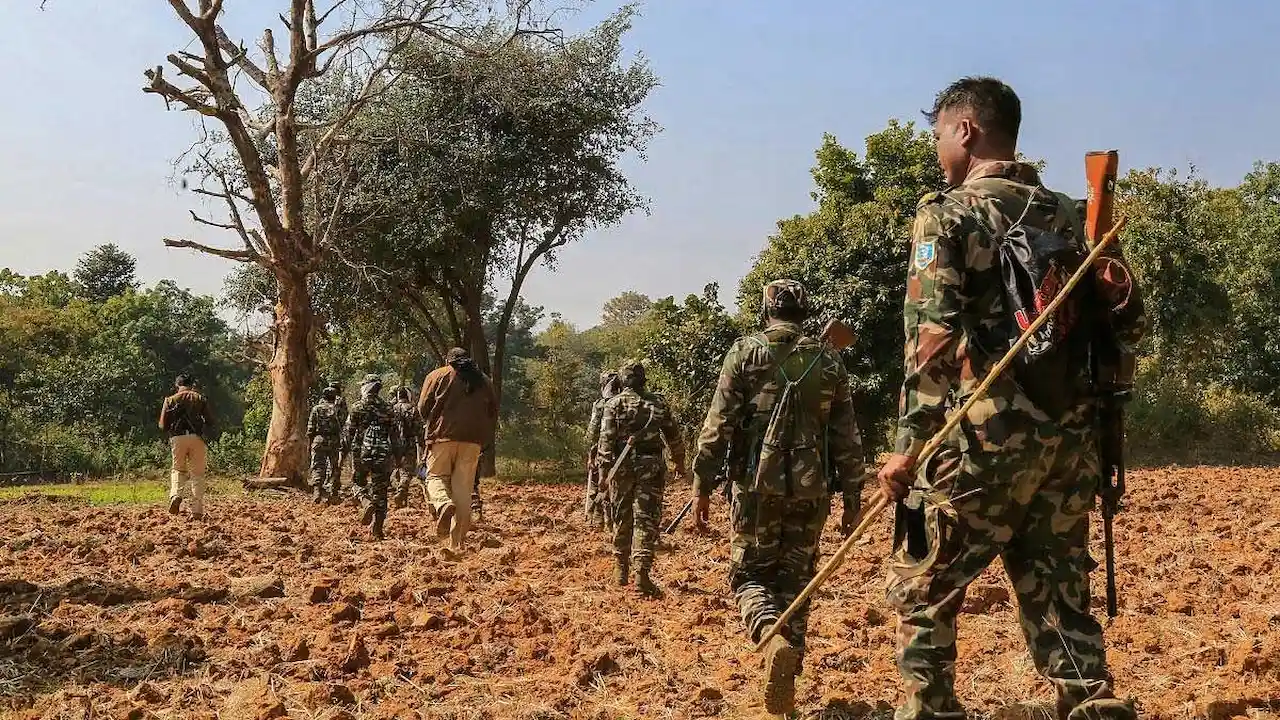
At least 14 Maoists, including a senior cadre, were killed in a fierce gunbattle with security forces along the Chhattisgarh-Odisha border in Gariaband district, police confirmed on Tuesday.
The operation, a joint effort between the Central Reserve Police Force (CRPF), the Special Operations Group (SoG) of Odisha, and Chhattisgarh Police, dealt a significant blow to the Maoist insurgency, according to Union Home Minister Amit Shah.
“This is another mighty blow to Naxalism. Our security forces have achieved a major success towards making India Naxal-free. The CRPF, SoG Odisha, and Chhattisgarh Police neutralized 14 Naxalites in a joint operation,” Shah said in a post on X, emphasizing that Naxalism is “breathing its last” in India.
Another mighty blow to Naxalism. Our security forces achieved major success towards building a Naxal-free Bharat. The CRPF, SoG Odisha, and Chhattisgarh Police neutralised 14 Naxalites in a joint operation along the Odisha-Chhattisgarh border. With our resolve for a Naxal-free…
The operation, which began on January 19 based on intelligence about Maoist activity in Chhattisgarh’s Kularighat reserve forest, resulted in two women Naxalites being killed during an initial exchange of fire on Monday. A CoBRA jawan was also injured in the encounter. A fresh exchange of fire occurred late Monday night and into Tuesday morning, bringing the total number of casualties to 14.
Gariaband Superintendent of Police Nikhil Rakhecha identified one of the deceased as Jairam alias Chalpati, a central committee member of the Maoists, who carried a bounty of Rs 1 crore. The identities of the remaining dead Naxalites are still being verified.
The operation continues, with security forces still engaged in firefights in the area. Officials warned that the final toll may rise as the operation progresses.
The combined security team from the District Reserve Guard (DRG), CRPF, CoBRA, and the SoG from Odisha was involved in the operation. The forces also recovered a large cache of weapons, ammunition, and improvised explosive devices (IEDs) from the encounter site.
Chief Minister Vishnu Deo Sai hailed the efforts of the security forces, asserting that Chhattisgarh would be rid of the Naxal menace by March 2026, in line with the government’s goals. “This victory is a testament to the bravery of our soldiers, and I salute their courage,” Sai said.
This encounter marks the 40th Naxalite casualty in the state this year, following a similar operation on January 16 that resulted in 12 Naxalites being killed. In 2024, 219 Maoists were neutralized by security forces in separate encounters across Chhattisgarh.