Saif Ali Khan Stabbing: Suspect Nabbed at Chhattisgarh's Durg Railway Station 2
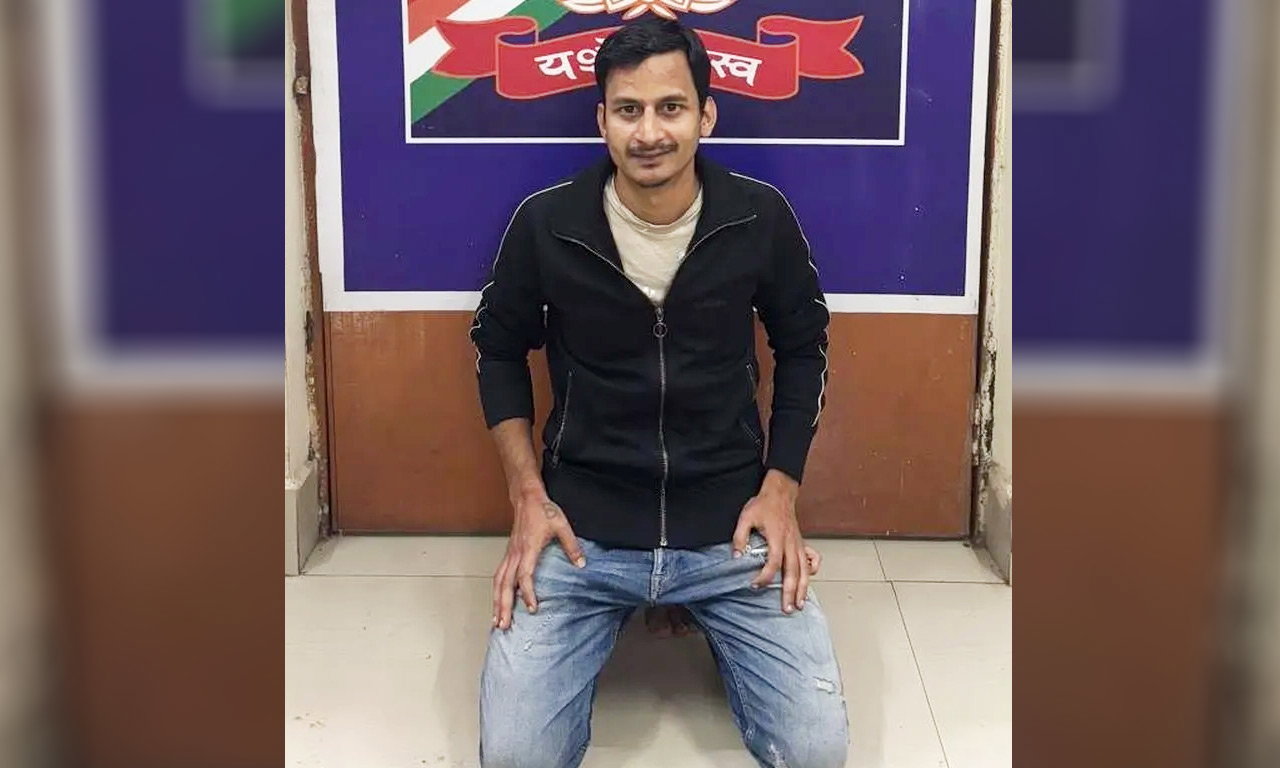
In a dramatic development, the Railway Protection Force (RPF) detained a 31-year-old man suspected of stabbing Bollywood actor Saif Ali Khan during an attempted robbery at the actor’s Bandra residence in Mumbai. The incident, which occurred early Thursday morning, left Khan, 54, with multiple injuries. Doctors have since reported that the actor is recovering steadily.
The suspect, identified as Aakash Kailash Kannojia, was apprehended at Durg railway station in Chhattisgarh while traveling on the Jnaneshwari Express, which operates between Mumbai Lokmanya Tilak Terminus (LTT) and Kolkata Shalimar.
Mumbai Police, acting on mobile tower data and a photograph, alerted the RPF at around 12:30 pm, tracking the suspect’s movement on the train. Initial efforts to intercept him at Rajnandgaon station were unsuccessful. However, two teams were deployed at Durg station, where he was finally detained.
Sources revealed that Kannojia was traveling in the general class bogie just behind the engine. Following the detention, a Mumbai Police team flew to Chhattisgarh to take custody of the suspect. Both the Mumbai Police and RPF are now jointly interrogating him as part of the ongoing investigation.
The incident has sparked widespread concern, with questions being raised about the security of high-profile individuals in their own homes. Khan’s fans and the film fraternity continue to express their support and relief at his recovery.
Israel Approves Ceasefire Agreement: Hostage Release and Fragile Calm in Gaza Awaited 4
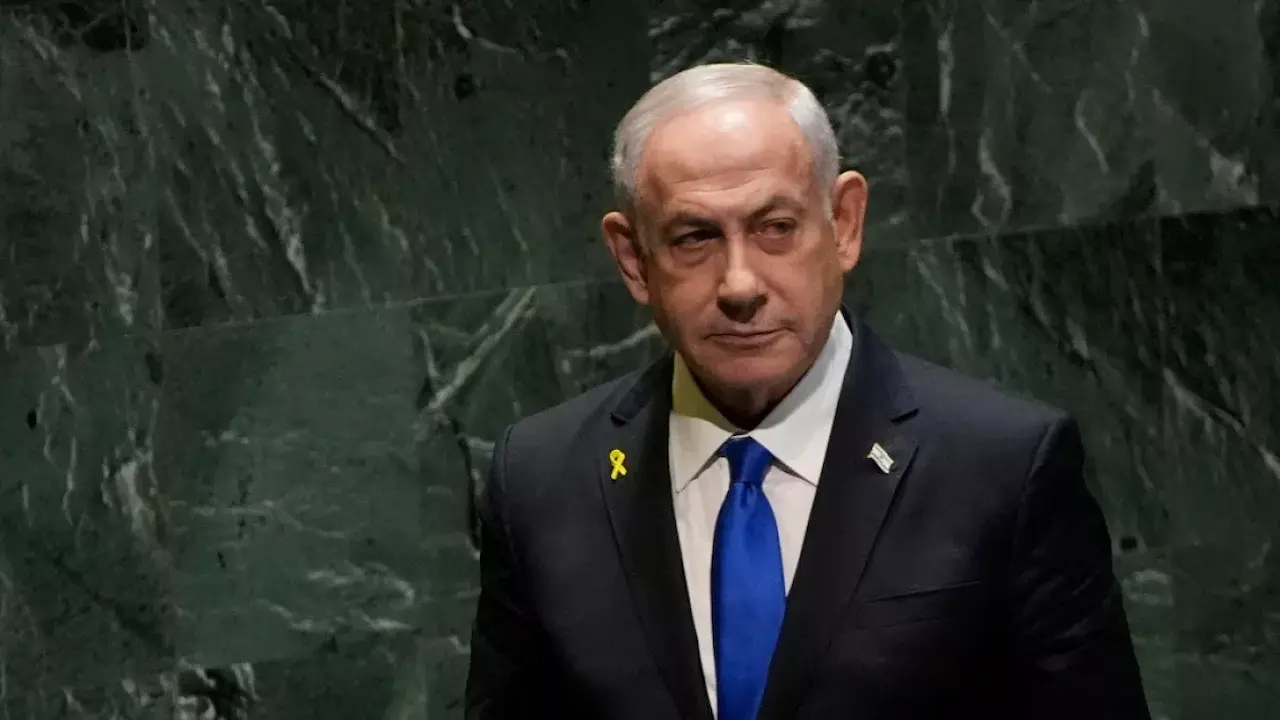
Israel’s Cabinet has approved a ceasefire agreement early Saturday to halt the 15-month war with Hamas, aiming to release dozens of hostages from Gaza. The deal, mediated by Qatar and the United States, marks only the second ceasefire during the prolonged conflict.
Prime Minister Benjamin Netanyahu confirmed the agreement after resolving last-minute complications attributed to Hamas. The ceasefire is set to commence Sunday, starting with the release of 33 hostages during a six-week first phase. However, uncertainty persists over the list of hostages and their current status.
The Cabinet convened past the Jewish Sabbath, underscoring the gravity of the situation. Netanyahu has tasked a special committee with preparing for the return of hostages, informing their families about the deal’s progress.
As part of the agreement, Israel will release hundreds of Palestinian detainees, including younger prisoners and women. Israel’s Justice Ministry has published the names of 95 detainees to be freed in the initial phase, emphasizing their involvement in activities like incitement, vandalism, and terror-related charges. Unlike the first ceasefire, Israel’s Prison Services will oversee prisoner transfers to avoid celebratory displays during the process.
The deal also promises increased humanitarian aid for Gaza, with trucks already lined up at the Rafah border crossing from Egypt. Discussions between Israeli and Egyptian officials are underway regarding border reopening protocols.
Israeli forces plan to withdraw from key areas in Gaza, enabling hundreds of thousands of Palestinians to return to their devastated homes. However, restrictions will remain in areas near Israeli troop presence or the Israel-Gaza border, with the military warning of “forceful responses” to any perceived threats.
The conflict erupted on October 7, 2023, after a Hamas cross-border assault killed approximately 1,200 Israelis and took 250 hostages. Israel’s retaliatory campaign has claimed over 46,000 Palestinian lives, with women and children reportedly making up more than half the casualties.
The fragile truce is set against a backdrop of escalating violence, with Gaza’s Health Ministry reporting 88 fatalities in the past 24 hours. Historically, both sides have ramped up military operations in the hours leading to ceasefires.
The ceasefire represents a tentative step toward de-escalation, though the road to lasting peace remains uncertain amid widespread destruction and profound mistrust.
The dismembered body of woman was found on Friday in Maharashtra’s Satara district, a police official said, adding the angle of black magic was being probed.
A part of her head and lower limbs were found close to a sugarcane farm near Vidani village, while the torso is missing, Senior Inspector Sunil Mahadik of Phaltan police station said.
The police official said that an angle of black magic was being probed. “The body parts are decomposed. All angles, including that of black magic and superstition, are being probed,” the official said.
Mysterious Disease Claims 16 Lives in Rajouri; J&K on High Alert 7
A mysterious disease has caused widespread panic in Badhal village, with 16 reported fatalities and 38 affected individuals since early December 2024.
The cause of the illness remains unidentified, despite extensive efforts by medical experts and organisations such as PGIMER Chandigarh, the National Institute of Virology, and the National Centre for Disease Control (NCDC).
On Saturday, one woman from Badhaal Village was admitted to the Government Medical College (GMC) after showing symptoms of a mysterious illness.
Authorities are on high alert, with the Rajouri district administration, health department, and police working in coordination to investigate the deaths and provide assistance to the affected families. The outbreak has primarily impacted three interlinked families in the village.
In the absence of concrete information regarding the cause of the disease, efforts to implement targeted measures have been hindered, leaving local authorities to intensify their investigations and preventive actions in a race against time to avoid further casualties.
The medical team present there is also inspecting the chaotic situation of ‘mysterious illness’.
An official said, “We’re closely monitoring the situation. Reports of illnesses and deaths due to a mysterious disease will be available within 8–10 days. Medical assistance has been provided in 4 wards, and door-to-door counselling and surveillance are ongoing. ICMR has collected samples, and we’re taking daily samples. Doctors are available 24/7, and village surveillance has been ongoing since December 7.”
Another member of the team said, “From a paediatric perspective, all necessary tests have been conducted. The symptoms and progression of the illness have been observed. The ill children’s condition deteriorates rapidly within 2-3 days, leading to coma and eventually death despite ventilation. Notably, these incidents are confined to three specific families, suggesting a non-infectious cause. Therefore, there’s no need for the general public to worry.”
The situation continues to evolve, with all relevant departments committed to identifying the origin of the disease and ensuring the safety of the local population.
RG Kar Incident: Kolkata Court to Deliver Verdict in Abhaya's Rape-Murder Case Today 9
The judgement in the brutal rape and murder of an on-duty doctor at RG Kar Medical College and Hospital will be delivered later on Saturday.
Sanjay Roy, who was a civic volunteer with the Kolkata Police, was charged with committing the crime on the postgraduate trainee at the state-run hospital in the northern part of the city on August 9 last year.
The judgement will be delivered by Anirban Das, the additional district and sessions judge of the Sealdah court, 57 days after the in-camera trial commenced on November 12.
The Kolkata Police, which was investigating the case initially arrested Roy on August 10, a day after the medic’s body was recovered from the seminar room of the hospital. The Calcutta High Court later transferred the case to the Central Bureau of Investigation (CBI).
The in-camera trial in the rape and murder of the doctor commenced on November 12.
The hearing in Roy’s trial was concluded on January 9, during which 50 witnesses were examined. The parents of the deceased doctor have claimed that other persons were involved in the crime and expected that they would also be arrested and tried before the court.
The victim’s parents have also filed an application before the court seeking further investigation into the case.
The crime led to nationwide outrage and prolonged protests by junior doctors in Kolkata, demanding justice for the victim and adequate security arrangements in state-run hospitals.
From Aerospace to Asceticism: The Uncharted Flight of IIT Baba 11
At the sacred confluence of the Ganga, Yamuna, and the mythical Saraswati, the Maha Kumbh Mela unfolds in a spectacle unlike any other. Millions of devotees, ascetics, and seekers flood the banks of the Triveni Sangam, their prayers and chants merging with the river’s timeless flow. The air is thick with devotion and the scent of burning incense, a place where the divine feels within reach. In this sprawling gathering of humanity, amidst saffron-clad sages and pilgrims seeking absolution, one man stands apart, both ordinary and extraordinary. He is Baba Abhay Singh, known to the world as ‘IIT Baba.’
Draped in humble robes, his dreadlocked hair flowing freely, Abhay Singh is a figure who defies expectations. Once an aerospace engineer, a brilliant alumnus of IIT Bombay, he walked away from a promising career to embark on a path few would dare to tread. His presence here at the Maha Kumbh Mela is not that of a preacher but of a seeker who has seen the world and found its offerings wanting. His story has become a quiet revolution, whispered among the crowds, shared in hushed awe, and debated online. How does a man who once earned lakhs of rupees designing cutting-edge technologies now find fulfillment sitting cross-legged on the sands of Prayagraj?
Abhay Singh’s journey did not begin in the simplicity he now embodies. It began in the polished classrooms of IIT Bombay, where he excelled in aerospace engineering between 2008 and 2012. His sharp intellect and passion for innovation seemed destined to place him among the great architects of modern technology. Later, pursuing a master’s in design and visual communication, he added creativity to his arsenal of skills. His career flourished, taking him to Canada, where he earned a handsome salary designing for multinational corporations. Yet, behind the success, he carried a burden no title or paycheck could lift—a yearning for something deeper, a sense of meaning that seemed always out of reach.
The shadows of his childhood lingered in his adult life. Growing up in a home fraught with conflict, Abhay witnessed the struggles of his parents’ relationship, leaving him skeptical of stability and afraid of marriage. Though he was in a relationship for four years, he admitted he did not know how to navigate it, his fears rooted in the dysfunctional patterns he had observed. At work, he excelled but felt hollow. The corporate world’s promises of success felt shallow, its rewards fleeting. “You can earn three lakhs a month, live in a foreign land, and still feel completely lost,” he later confessed.
Photography became a turning point for him. With a camera in hand, he traveled extensively, capturing not just landscapes but the soul of the world. The act of framing life through a lens offered him a form of meditation, a way to connect with something greater than himself. Immersing himself in the wisdom of ancient texts, the teachings of ISKCON, and the insights of J. Krishnamurti, Abhay began to see the threads that connect science and spirituality. He realized these were not opposing forces but complementary paths leading to the same truth.
Leaving behind the material comforts of his life, Abhay returned to India and embraced asceticism. The transition was not without its challenges, but his resolve was unwavering. At the Maha Kumbh Mela, he is a magnetic presence. Crowds gather around him, drawn by his quiet demeanor and profound insights. His words resonate deeply, especially with the younger generation. “Science and spirituality are not adversaries,” he tells them. “They are two ways of understanding the universe, two sides of the same coin.”
Not far from Abhay’s tent is another remarkable figure—Dinesh Swaroop Brahmachari, or ‘Chai Wale Baba.’ Silent for decades and surviving solely on tea, this ascetic dedicates his life to guiding civil service aspirants. He communicates through WhatsApp, offering mentorship to those preparing for some of the nation’s toughest exams. Together, these two men, though vastly different in their approaches, represent the need for a new kind of leadership—one that values wisdom, compassion, and a commitment to nurturing humanity.
Abhay’s story has sparked conversations across India. Critics question his choices, asking whether the nation can afford to lose bright minds like his to the call of asceticism. “What if Einstein or Edison had renounced the world?” they argue. But Abhay responds with quiet conviction. To him, the measure of progress is not just technological achievement but the ability to find harmony between material and spiritual growth. His life is a reminder that success is not a singular pursuit—it is a delicate balance of intellect, purpose, and inner peace.
As the sun sets over the Sangam, painting the sky in hues of orange and gold, Abhay sits among his followers, speaking softly about freedom and detachment. “I don’t want to get stuck. I don’t want to stop,” he says. “When you stop clinging, you become free. And when you are free, you truly live.” His words linger in the air, a gentle challenge to all who hear them.
The Maha Kumbh Mela, a place where time seems to stand still, is an apt backdrop for Abhay’s journey. His life, much like the rivers that meet here, is a confluence of paths—science and spirituality, reason and faith, past and future. He stands as a bridge between worlds, a man who has seen what lies beyond ambition and returned to share his wisdom. His story is a testament to the power of transformation, a call to build a world where progress is measured not just in inventions but in the richness of human experience. In a time when the world is desperate for answers, Abhay Singh offers a path that is both timeless and profoundly relevant.
Blackmailed By Uncle Over Private Photos, Bengaluru Techie Dies By Suicide 13
A 24-year-old woman working in the tech industry tragically died after setting herself on fire in a Bengaluru hotel room. Police revealed on Thursday that she was allegedly being repeatedly blackmailed by her uncle and aunt, who had obtained her private photos and videos.
The woman’s uncle, identified as the prime accused, has been arrested, and a detailed investigation is in progress, police confirmed.
According to Whitefield Deputy Commissioner of Police Shivakumar Gunar, the woman was initially reluctant to visit the hotel room, where her uncle was waiting, but was forced to do so after he threatened to share her private photos and videos with her parents.
The victim, however, carried some petrol that she poured on herself inside the room and set herself ablaze, police said. She succumbed to injuries in the hospital.
The woman’s mother claimed that her daughter had been living with her uncle and aunt for six years and often accompanied them on trips.
According to the police, a pen drive was seized from the man’s possession. A case has been filed against the man and his wife under various sections of the Bharatiya Nyaya Sanhita at the HAL Police Station, and a thorough investigation is currently underway.
Prashant Kishor Ends 14-Day Hunger Strike, Vows to Continue Fight Against BPSC Irregularities 15
Jan Suraaj Party Chief Prashant Kishor ended his 14-day hunger strike on Thursday, launched in protest against alleged irregularities in the Bihar Public Service Commission (BPSC) exam conducted on December 13 last year. However, Kishor emphasized that his campaign for justice for civil service aspirants and his stand against the “authoritarian attitude” of the state government would continue.
Speaking after breaking his fast, Kishor said, “The matter seeking the cancellation of the BPSC’s 70th Combined Competitive exam is being heard by the Patna High Court today. It’s a coincidence that I am ending my fast on the same day. We are hopeful the court will deliver justice for the job aspirants. If not, we will approach the Supreme Court.”
Kishor had begun his hunger strike on January 2, demanding the cancellation of the controversial examination. Before concluding his protest, he took a ceremonial dip in the Ganga River and offered prayers. His party workers marked the end of the hunger strike by offering him fruit juice at their camp office, set up at LCT Ghat on the banks of the Ganga.
Kishor’s withdrawal of the fast has not dampened his resolve, as he reaffirmed his commitment to continue the ‘Satyagraha’ for the youth of Bihar, promising to stand by them in their quest for justice.
Mumbai's Safety Questioned After Saif Ali Khan Knife Attack, Opposition Targets CM Fadnavis 17
Maharashtra Chief Minister Devendra Fadnavis, addressing concerns over the recent knife attack on actor Saif Ali Khan in Mumbai, defended the city’s reputation as India’s safest. Speaking to the media on Thursday, he emphasized that isolated incidents should not define Mumbai as unsafe. “Mumbai is the country’s safest city. Some incidents happen, but labeling the city unsafe over one incident would tarnish its image. However, we are taking this matter seriously and probing the motive behind the attack,” Fadnavis stated.
The chief minister also acknowledged the need for increased safety measures, assuring that efforts are being made to enhance security. His remarks came in response to the violent incident in which Khan was repeatedly stabbed by an intruder at his Bandra apartment early Thursday morning. Doctors reported that Khan, who underwent surgery to remove the knife from his back, is now out of danger.
Opposition leaders, however, were quick to criticize the Fadnavis-led government, highlighting lapses in law and order. Nationalist Congress Party (Sharad Pawar faction) chief Sharad Pawar stated, “The attack on Saif Ali Khan shows a deteriorating law and order situation in Maharashtra. Incidents like these are alarming and demand serious attention from the government, especially the chief minister, who also holds the home portfolio.”
Shiv Sena (UBT) MP Sanjay Raut expressed grave concern, remarking, “No one is safe, not even celebrities with private security. This reflects a complete breakdown of law and order.” Raut also alleged that the police were more focused on securing politicians, particularly those who switched parties, than addressing public safety.
Congress spokesperson Atul Londhe echoed similar sentiments, citing the recent killing of a village sarpanch in Beed and the need for celebrities like Salman Khan to install bulletproof windows in their Bandra residences as signs of public distrust in the government. Londhe accused Fadnavis of failing to maintain security in Maharashtra, including his own hometown, Nagpur, which has seen a spate of violent crimes.
The attack on Saif Ali Khan follows a series of high-profile crimes in Mumbai’s Bandra area, including the shooting of former minister Baba Siddique last year. Critics argue these incidents highlight systemic issues in maintaining law and order.
Adding to the political backlash, NCP (SP) MP Supriya Sule called the attack “worrisome,” while former home minister Anil Deshmukh demanded strict action from the police and reinforced the government’s responsibility to ensure the safety of artists.
Meanwhile, celebrations turned somber for Khan, who had recently met Prime Minister Narendra Modi in Delhi and attended a special screening of Kangana Ranaut’s directorial film Emergency before the incident. The attack on the Padma Shri recipient has intensified calls for improved security measures, not only for public figures but for the common citizens of Mumbai.
Israel Accuses Hamas Of 'Reneging' On Parts Of Gaza Deal 19
Israel on Thursday accused Palestinian Islamist movement Hamas of backtracking on parts of the Gaza ceasefire deal announced the previous day.
“Hamas has reneged on parts of the agreement reached with the mediators and Israel in an effort to extort last-minute concessions”, Prime Minister Benjamin Netanyahu’s office said in a statement, adding the situation created a “last minute crisis”.