16-Year-Old Girl Gang-Raped in UP's Ballia, Both Accused Arrested 2
A 16-year-old girl was allegedly gang-raped in Uttar Pradesh’s Ballia district, police said.
According to police, the incident occurred late on Tuesday night when the victim left home in an autorickshaw after a dispute in the family.
Mantu Yadav (19) and Amit Prajapati (22) allegedly lured the girl and raped her.
Based on a complaint filed by the girl’s father, a case was registered against the accused under relevant sections of the BNS and the Protection of Children from Sexual Offences (POCSO) Act.
Station House Officer (SHO) of the police station Rakesh Singh confirmed the incident and said, “Both accused, Mantu Yadav and Amit Prajapati, were arrested on Wednesday. Further investigation is underway.”
Unincorporated sector enterprises witnessed a 10.01 per cent increase in employment to over 12 crore during the year ended September 2024, while the number of establishments rose 12.28 per cent to 7.34 crore, according to a government survey.
The survey, which covers unincorporated non-agriculture sector enterprises, showed gross value added (GVA) grew 16.52 per cent during the October 2023–September 2024 period.
These findings form part of the Annual Survey of Unincorporated Sector Enterprises (ASUSE) for 2023-24 for the reference period—October 2023–September 2024—referred to as ASUSE 2023-24, released by the Ministry of Statistics and Programme Implementation (MoSPI) on Tuesday.
The sector employed more than 12 crore workers between October 2023 and September 2024, marking an increase of more than one crore workers from 2022–23 and reflecting robust labour market growth.
The total number of workers employed increased to 12,05,99,800 in ASUSE 2023-24 from 10,96,26,000 in ASUSE 2022-23.
Among the broad activities, the “Other Services” sector showed the highest annual growth of 17.86 per cent, followed by 10.03 per cent by the manufacturing sector.
The percentage of female-owned proprietary establishments has increased from 22.9 per cent in 2022–23 to 26.2 per cent in ASUSE 2023-24.
This trend indicates a positive shift in the participation of women in business ownership, highlighting an increase in female entrepreneurship over the given period, it stated.
In ASUSE 2023-24, data were collected from a total of 4,98,024 establishments (2,73,085 in rural and 2,24,939 in urban) from 16,842 surveyed FSUs (8,523 in rural and 8,319 in urban).
ASUSE 2023-24 has been conducted based on area frame and establishments have been listed in the selected FSUs of both rural and urban sectors.
Mostly, data were collected from the selected establishments through oral enquiry pertaining to the ‘monthly’ reference period, barring a few big establishments, which had provided annual data from their audited Books of Accounts.
The data for the survey were collected in Tablet using Computer-Assisted Personal Interviewing (CAPI).
The percentage of establishments using the internet has also grown significantly from 21.1 per cent in 2022–23 to 26.7 per cent in ASUSE 2023–24.
This substantial growth reflects a strong trend toward digital adoption among establishments, highlighting the increasing reliance on the Internet for business operations.
The average emolument per hired worker also increased by 13 per cent in 2023-24 compared to the previous year 2022-23, signalling improvements in wage levels.
This wage growth serves as a catalyst, strengthening the labour market, enhancing productivity, and fuelling broader economic demand.
The highest increase in this metric was observed in the manufacturing sector with a growth of little more than 16 per cent.
The total number of establishments in the sector increased substantially from 6.50 crore in 2022–23 to 7.34 crore in 2023–24, representing a healthy 12.84 per cent growth.
Among the broad sectors covered, the number of establishments in the “Other Services” sector recorded a growth of 23.55 per cent, followed by a 13 per cent increase witnessed by the manufacturing sector.
This significant increase highlights consistent sectoral expansion and reinforces the sector’s critical role in driving the overall growth of the unincorporated sector, the report stated.
During the same period, the Gross Value Added (GVA), a key indicator of economic performance, rose 16.52 per cent, driven by a 26.17 per cent growth in the other services sector.
Gross Value Added (GVA) per worker, a measure of labour productivity of the sector, increased to Rs 1,49,742 in 2023-24 from Rs 1,41,769 in 2022-23 in current prices, showing a 5.62 per cent increase.
During the same period, the Gross Value of Output (GVO) per establishment also increased from Rs 4,63,389 to Rs 4,91,862 in current prices.
The unincorporated non-agricultural sector plays an important role in the Indian economy, contributing significantly to employment, gross domestic product, and the overall socio-economic landscape.
This sector not only sustains livelihoods for millions but also acts as a backbone for the incorporated sector by supplying goods and services, reinforcing its role in the domestic value chain.
ASUSE is carried out with the primary objective of measuring various economic and operational characteristics of unincorporated non-agricultural establishments in manufacturing, trade and other service sectors (excluding construction).
The survey collects data on various economic characteristics of this sector, including the number of workers, GVA, emoluments paid, fixed assets owned, and outstanding loans; besides, different types of operational characteristics, such as type of ownership, nature of operation, registration status, use of ICT, etc.
The data serves as a key input for policy-making, supporting National Accounts Statistics, fulfilling the requirements of ministries, such as Micro, Small, and Medium Enterprise (MSME), Textiles, Labour & Employment, and empowering stakeholders to make informed, data-driven decisions.
The survey has been conducted following a multi-stage stratified sampling scheme, where first-stage units (FSUs) are census villages in rural areas (except for rural Kerala, where Panchayat wards have been taken as FSUs) and UFS (Urban Frame Survey) blocks in urban areas.
The ultimate stage units (USUs) are establishments for both sectors. In the case of large FSUs, one intermediate stage of sampling has been done in the form of hamlet groups in rural and sub-blocks in urban.
Delhi Govt Departments Distance Themselves From AAP's Promised Schemes, Ask People Not to Share Personal Details 6
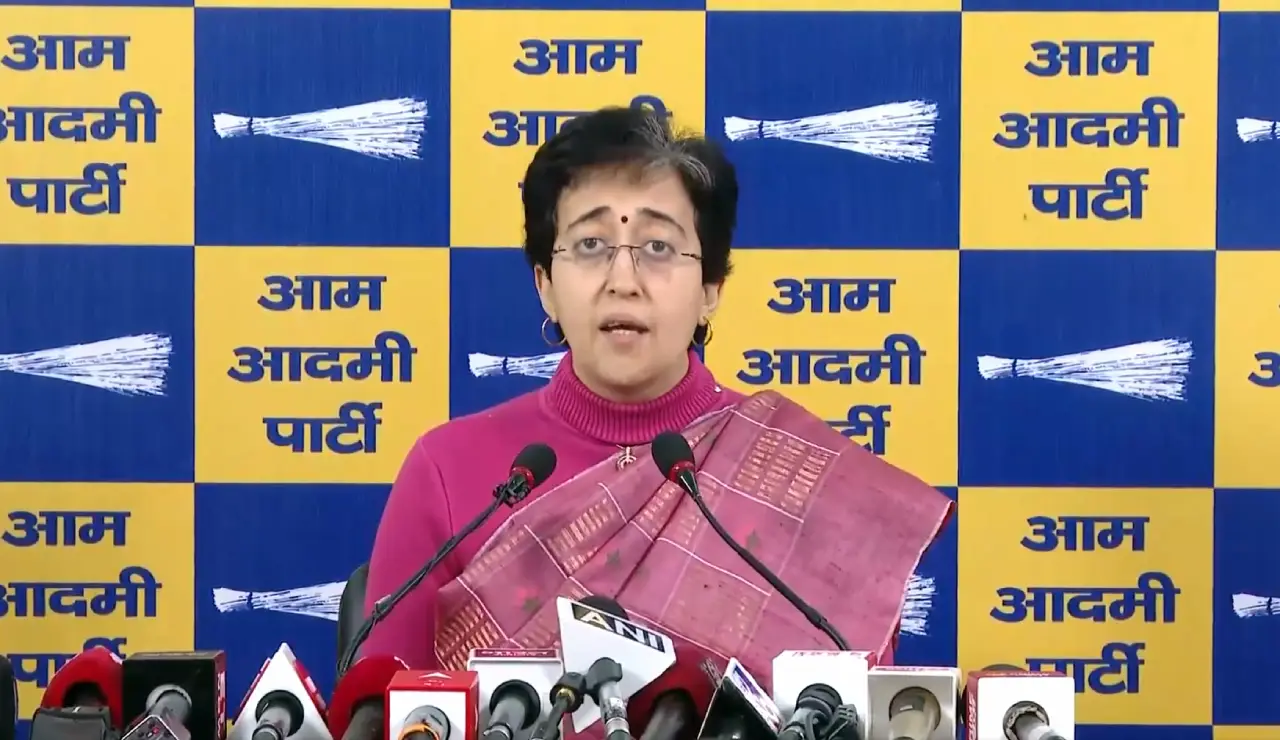
The Delhi government’s Women and Child Development and Health departments issued public notices on Wednesday distancing themselves from the ruling AAP’s promised schemes of providing Rs 2,100 to women and free treatment for the elderly, triggering a fresh row ahead of assembly polls.
The two departments also cautioned the people against providing personal details to anyone on the pretext of registration for “non-existent” schemes, saying any private individual or political party collecting such physical forms or information is “fraudulent and without any authority”.
The development, which came days after AAP leaders launched the exercise of registering people for the Mukhya Mantri Mahila Samman Yojana and Sanjeevani Yojana with much fanfare, left the AAP convener Arvind Kejriwal furious.
Kejriwal, who is leading the registration drive, alleged that the BJP was rattled by the two schemes and claimed that Chief Minister Atishi could be arrested in a “fake” case in the coming days.
“They are completely rattled with Mahila Samman Yojna and Sanjeevani Yojna. They have hatched a plan to come up with a fake case and arrest Chief Minister Atishi in the next few days,” he said on X.
He also claimed that before Atishi’s arrest, raids would be conducted against senior AAP leaders.
BJP MP Bansuri Swaraj had on Tuesday claimed that she spoke to the health secretary of the Delhi government and was informed that there was no “Sanjeevani Yojna” in existence.
Both the schemes were announced by Kejriwal ahead of Assembly polls in February next year and AAP had started registrations for the schemes in campaign mode. Its leaders are confident that the measure will help woo voters as many believe that such schemes were a factor in the ruling parties retaining power in several state elections.
“It has been brought to the notice of the Department of Women and Child Development, through media reports and social media posts, that a political party is claiming to disburse Rs 2100 per month under Mukhyamantri Mahila Samman Yojana to women in Delhi.
“It is clarified that no such scheme has been notified by the Government of Delhi,” said the public notice by the department.
If and when the scheme begins, the department will launch a digital portal for eligible individuals to submit their applications online as per the approved guidelines, it said.
Since no such scheme exists, the question of physical forms for registration under this non-existent scheme does not arise, read the notice.
“Any private individual/ political party collecting such physical forms/applications or collecting information from applicants under the name of the Mukhyamantri Mahila Samman Yojana is fraudulent and without any authority,” it said.
The notice cautioned the people that providing personal details and sensitive information like PAN account numbers, phone numbers or Voter ID, in the name of the scheme may lead to crime including cyber and banking frauds.
It advised people not to entertain the “misleading” promise of non- non-existent scheme and to exercise caution and asked them not to provide personal details to unauthorised persons.
The Mahila Samman Yojna was announced by the AAP government in the budget 2024-25 to provide Rs 1000 per month to all eligible women aged above 18 in Delhi. Kejriwal recently promised to raise the amount to Rs 2100 per woman if AAP returned to power.
The Health and Family Department public notice similarly cautioned the people about “Sanjeevani Yojna” announced by the AAP supremo for free treatment of senior citizens above 60 years at government and private hospitals.
It has also come to the notice of the department that a registration drive to get enrolled under this scheme by filling up physical forms has also been started by some political functionaries and volunteers who are visiting door to door to collect information from elderly citizens and handing over to them some sort of “Health/Sanjeevani Scheme Card”.
The notice said details of senior citizens like phone numbers, addresses, Aadhar and bank accounts were being sought for the registration and many of the elderly people have started visiting government hospitals and government offices to enquire about the scheme.
The notice said the Health and Family department does not have any supposed “Sanjeevani Scheme” in existence till date.
“Any private individual/political party collecting such physical forms/ applications or collecting information of applicants under the name of “Sanjeevani Yojna” is fraudulent and without any authority,” read the notice clarifying the department has not authorised any health officials to collect personal details of the elderly.
Pak Govt, Imran Khan's Party PTI Agree to Continue Talks to Resolve Contentious Issues 8
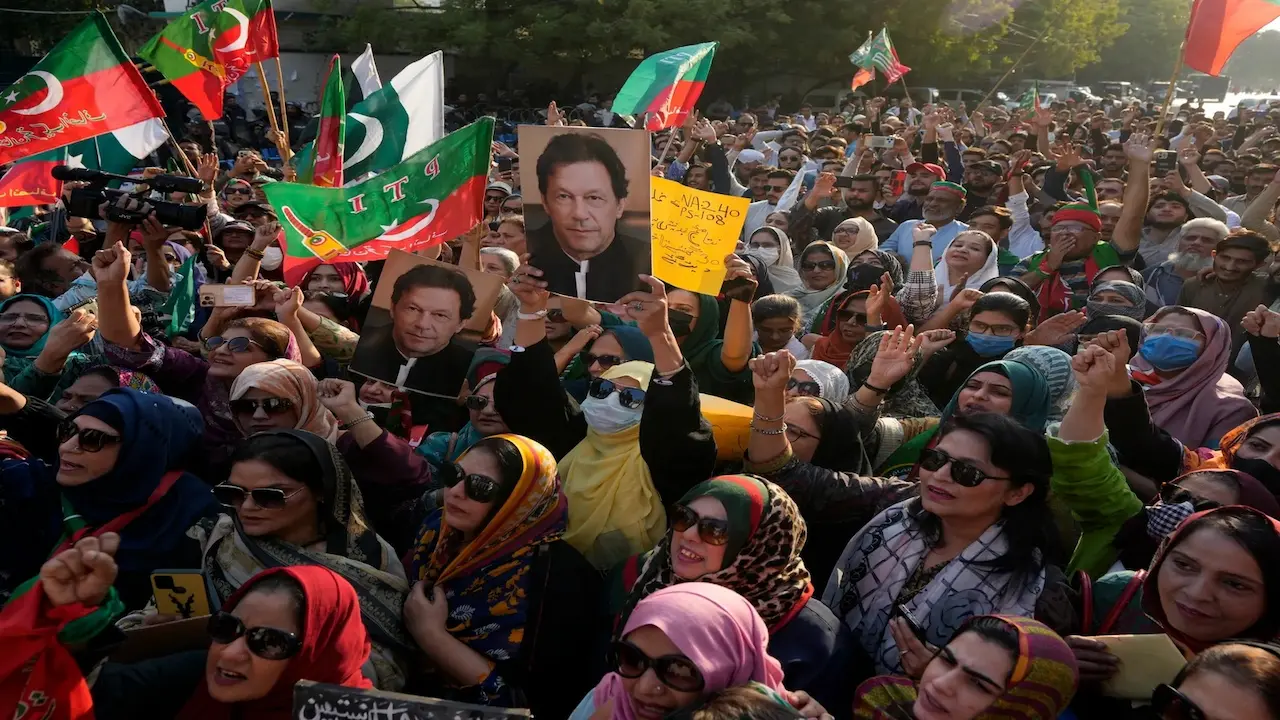
The Pakistan government and the opposition Pakistan Tehreek-e-Insaf party, in their maiden meeting on Monday, agreed to continue talks to address contentious issues, including the release of jailed former prime minister Imran Khan.
The long-anticipated talks between the committees representing the government and the PTI were chaired by the National Assembly (NA) Speaker Ayaz Sadiq, who had last week announced to facilitate the two sides in their effort to defuse the prevailing political tension.
Those who attended from the government side include Deputy Prime Minister and Foreign Minister Ishaq Dar, PM’s political aide Rana Sanaullah, Senator Irfan Siddiqui, former premier Raja Parvez Ashraf, former minister Naveed Qamar, lawmaker Farooq Sattar and Privatisation Minister Aleem Khan.
PTI was represented by former speaker Asad Qaiser, Sahibzada Hamid Raza, and Senator Raja Nasir Abbas.
Sadiq thanked the government’s leadership and senior leaders of the opposition for holding the talks. He announced that the next session would be held on January 2 and PTI’s team would present a charter of their demands in the next meeting.
“We discussed things about past and present and I hope that if we work together for the country’s betterment, it will strengthen the political stability, strengthen democracy and help in dealing with challenges faced by Pakistan,” he said after the meeting.
Senator Irfan Siddiqui read out the communiqué regarding the talks that both sides described the talks as a positive development and emphasised the importance of keeping the negotiations ongoing.
Both committees expressed goodwill, saying that Parliament is the appropriate forum for resolving issues, the handout said.
PTI’s Qaiser informed the members that several members of his committee could not attend due to court proceedings.
It was agreed that both sides stand united in the fight against terrorism. A tribute was also paid to the martyrs for their sacrifice. There was also a declaration of support for standing alongside the forces in the war against terrorism.
The talks began amidst the ongoing political tension between the government and PTI as the latter was demanding the release of all political leaders, including Imran Khan.
Bangladesh Launches $5 Billion Graft Probe Against Sheikh Hasina in Nuclear Power Plant Case 10
An anti-graft panel in Bangladesh has launched an investigation against former prime minister Sheikh Hasina and her family in connection with the allegations of embezzling USD 5 billion in the Rooppur nuclear power plant, according to a media report.
Indian companies are participating in constructing the Rooppur nuclear power plant which is being built by Rosatom, Russia’s state-run corporation, in Bangladesh.
The first Bangladeshi nuclear power plant, the Russian-designed Rooppur, is being built 160 km west of the Bangladeshi capital of Dhaka.
Along with Hasina, her son, Sajeeb Wazed Joy, and Tulip Siddiq, her niece and the UK’s Treasury minister, were also questioned, BDNews reported on Sunday.
There are accusations of embezzling USD 5 billion in the Rooppur Nuclear Power Plant project, the report added.
The development came two days after the High Court issued a rule asking why the Anti-Corruption Commission’s (ACC) inaction over an alleged transfer of USD 5 billion from the Rooppur Nuclear Power Plant project to a Malaysian bank by Hasina, Joy, and Tulip should not be declared illegal, the report added.
According to ACC documents, the allegations of corruption in the Rooppur Nuclear Power Plant project were brought to light by Bobby Hajjaj, chairman of the National Democratic Movement (NDM).
Hasina, 77, has been living in India since August 5 when she fled the country following a massive student-led protest that toppled her 16-year regime.
Her sister Rehana accompanied her. Joy resides in the US, while her niece Tulip is a member of the British parliament.
Bangladesh-based International Crimes Tribunal (ICT) has issued arrest warrants for Hasina and several former Cabinet ministers, advisers, and military and civil officials for “crimes against humanity and genocide”.
They are also named in multiple murder cases filed in connection with the demonstrations.
Five Soldiers Killed as Vehicle Falls Into Gorge in J-K's Poonch 12
Five soldiers were killed when a vehicle carrying them skidded off the road and rolled down into a gorge in Jammu and Kashmir’s Poonch district on Tuesday evening, sources said.
The accident occurred in the Gharoa area when an Army vehicle was on its way to Banoi in the district, they said.
The vehicle plunged into a deep gorge, approximately 300-350 feet deep, resulting in serious injuries to 8-9 jawans, they added.
The Army and police teams rushed to the spot for rescue operation, sources said.
12 IAS Officers Transferred in Maharashtra; Kamble Named BEST GM; Anbalgan Industries Secy 14
The Maharashtra government on Tuesday appointed IAS officer Anbalgan P industries secretary and civil servant Harshdeep Kamble general manager of Mumbai civic transport undertaking BEST as it effected a reshuffle in the bureaucracy with the transfer of 12 officers.
Anil Diggikar, a 1990-batch IAS officer who was GM, Brihanmumbai Electricity Supply and Transport Undertaking (BEST), has been posted as Additional Chief Secretary, Divyang Kalyan Department, Mantralaya (state secretariat) in Mumbai, according to an official statement.
Kamble, a 1997-batch officer who was principal secretary (industries), industries, energy and labour department, will replace Diggikar at BEST. Anbalgan, a 2001-batch bureaucrat and Chairman and Managing Director, MAHAGENCO, will succeed Kamble, it said.
Radhakrishnan B, a 2008-batch officer and joint secretary to the Chief Minister, will be the new chairman and managing director of MAHAGENCO, the state-run power generation company.
Collector of Gadchiroli district Sanjay Daine has been named Commissioner (Textile) and posted in Nagpur.
Rahul Kardile, collector of Wardha, has been transferred and appointed the new commissioner of the Nashik Municipal Corporation. Vanmathi C, joint commissioner (state tax), will succeed Kardile in Wardha, according to the statement.
Sanjay Pawar, Chief Executive Officer (CEO), Chandrapur Zilla Parishad, will replace Vanmathi. Avishyant Panda, Commissioner (Textile), Nagpur will be the new Gadchiroli district collector. Vivek Johnson (IAS-2018 batch) will take the place of Pawar in Chandrapur, it informed.
Annasaheb Dadu Chavan, Deputy Commissioner (Revenue), Pune Division, has been moved to Mumbai where he will take over as Mahtma Phule Jiavandai Arogya Yojna Society CEO. Gopichand Murlidhar Kadam (promoted to IAS cadre from state civil service) has been posted as CEO of Smart City, Solapur, the statement added.
Fraud and Betrayal: The Pooja Khedkar Case Exposes Flaws in India's Reservation System 16
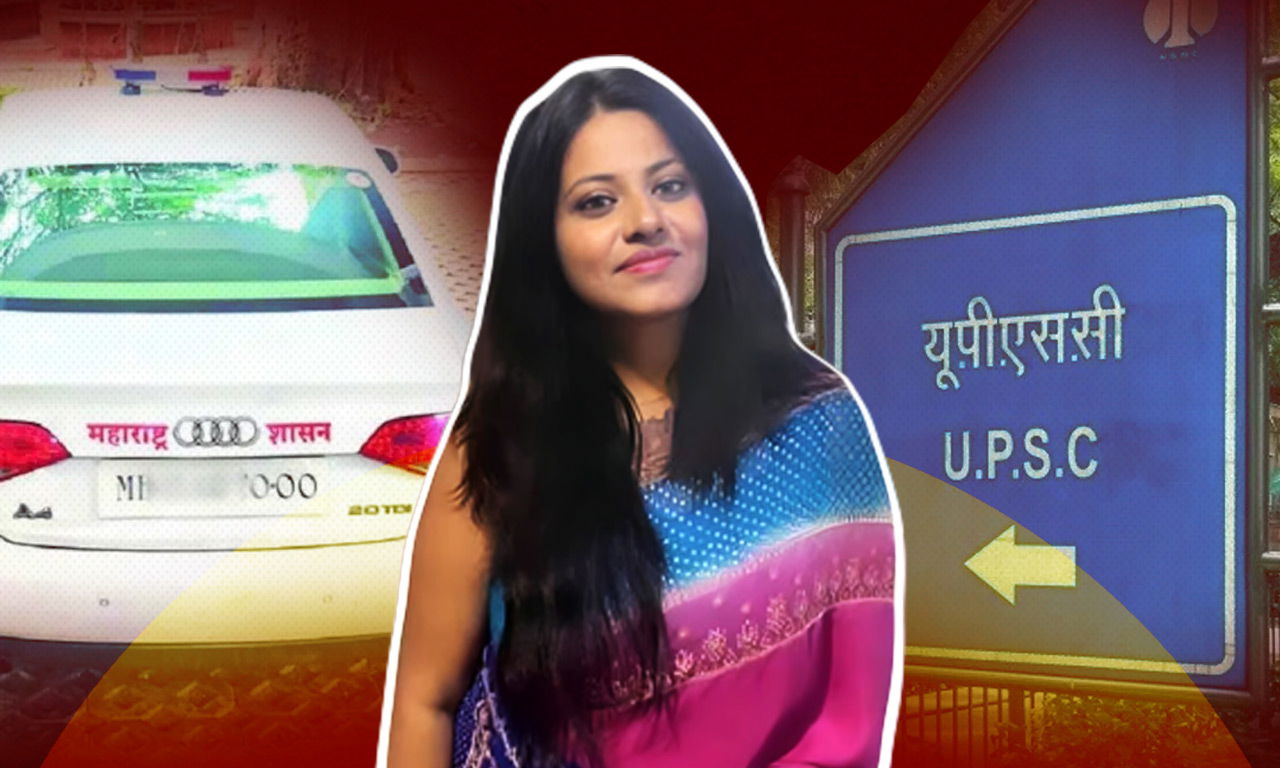
The legal proceedings in the Pooja Khedkar case have triggered widespread debate across Maharashtra and the nation. Khedkar, a former IAS probationer, allegedly secured her position through fraudulent means, exploiting quotas meant for Other Backward Classes (OBC) and persons with disabilities. The allegations have raised serious concerns about the misuse of reservation policies and the integrity of public administration.
Khedkar was selected for the Indian Administrative Service (IAS) through the 2022 Union Public Service Commission (UPSC) examination under quotas for disadvantaged groups. Investigations revealed that she falsified her eligibility by submitting fabricated certificates. It was discovered that Khedkar neither belonged to the OBC category nor qualified as a person with disabilities. Following these revelations, the Delhi Crime Branch registered an FIR based on a complaint from the UPSC.
Khedkar’s petition for anticipatory bail was denied by both the Patiala House Court and the Delhi High Court. On December 23, 2024, Justice Chandra Dhari Singh of the Delhi High Court highlighted the gravity of the allegations, describing Khedkar’s actions as a betrayal of public trust. The court stated, “Her conduct undermines not only the UPSC but society at large,” and emphasised the necessity of custodial interrogation to uncover the extent of the fraud and identify other conspirators.
The case underscores the vulnerabilities in India’s reservation system, designed to provide equitable opportunities for marginalised groups. By allegedly exploiting these provisions, Khedkar jeopardised the credibility of the UPSC and deprived deserving candidates of opportunities. The High Court’s ruling reflected this, stating that the alleged actions constituted a “serious betrayal of the principles of fairness and equality.”
In her defence, Khedkar denied the allegations, asserting the authenticity of her documents. She claimed to be targeted for filing a sexual harassment complaint against a senior official. To support her disability claim, she presented a hospital certificate diagnosing her with an “old ACL tear with left knee instability.” However, both the Delhi Police and the UPSC countered these claims, maintaining that her custody was essential for a thorough investigation.
The case has reignited debates on the effectiveness of current verification mechanisms for reservation benefits. Civil society organisations and policymakers have called for stricter checks to prevent misuse. Public outrage has been fuelled by reports that Khedkar’s affluent and well-connected family may have facilitated the production of fraudulent certificates.
In September 2024, the Union Government dismissed Khedkar from her probationary position, reflecting its commitment to addressing breaches of trust in public service. Justice Singh’s ruling emphasised the judiciary’s role in maintaining accountability and transparency, underscoring the importance of upholding democratic principles.
The Pooja Khedkar case serves as a stark reminder of the challenges facing India’s reservation system. It highlights the urgent need for systemic reforms to prevent similar abuses and ensure that affirmative action policies fulfil their intended purpose. As investigations continue, restoring public trust in the UPSC examination process and the reservation system remains a critical priority.
Police Says CT Ravi Was Shifted to Places While in Custody for Security Reasons, to Maintain Public Order 18
In the wake of allegations against police for ill-treating Karnataka MLC CT Ravi in custody, the police on Tuesday clarified that the BJP leader was shifted to various places for security reasons and to avoid disrupting public order.
On December 19, Ravi was arrested by the police from the premises of Suvarna Vidhana Soudha in Belagavi for allegedly using a derogatory word against Minister Laxmi Hebbalkar in the legislative council hall.
According to a police statement, after registration of case under section 75 (sexual harassment) and 79 (word, gesture or act intended to insult the modesty of a woman) of the Bharatiya Nyaya Sanhita in Hirebagewadi police station here, Ravi was taken into custody and handed over to the investigating officers.
However, Ravi was shifted to Khanapura police station considering the security aspect and the huge crowd gathered near Hirebagewadi police station.
“In Khanapura too, a large number of media persons, supporters and party workers gathered and created a chaotic atmosphere. There was also the possibility of additional supporters and Congress workers arriving, all these factors also had the potential to disrupt public order,” the police stated.
Keeping in mind Ravi’s safety, he was shifted to Ramadurga, it said.
“Despite all precautions, media and other persons followed the convoy. Keeping in mind the safety of Ravi, the escort force took steps to escape from all of them. Throughout this process, all facilities including food and medical services were provided to Ravi and he was produced in the court,” the police added.
The clarification came from police days after Ravi accused them of “violating” human rights, as he alleged that they took him on rounds the entire night to various places in the district.
The former BJP national general secretary, who had bandages on his head, even claimed that police were behaving on the directions of someone from the “top”, as he hit out at the state government and the administration, calling it “dictatorial”.
Mumbai Air Pollution: BMC Issues New Guidelines, Calls for Strict Adherence 20
Mumbai’s civic body on Monday issued fresh guidelines to curb air pollution, particularly due to construction-related and road dust.
In a release, the Brihanmumbai Municipal Corporation instructed its solid waste department officials to strictly follow the guidelines, which come in response to growing concerns over deteriorating air quality in the Mumbai Metropolitan Region.
The fresh measures include prohibiting the use of wood or similar materials as fuel for cooking and the lighting of bonfires at construction sites, the release said.
“The concerned department has been asked to employ vigilance teams and clean up marshals to take prohibitory measures. The Solid Waste Management Department has been tasked with ensuring that dust caused by construction along roads is effectively controlled,” the release said.
The department has instructed all assistant engineers and deputy chief supervisors to strictly adhere to these guidelines and take prompt action, it said, adding that a comprehensive action plan has been devised to address both major and minor factors contributing to air pollution.
Last year, the civic body issued guidelines and best practices for air pollution control, in which specific measures for construction activities have been included now.