Police Says CT Ravi Was Shifted to Places While in Custody for Security Reasons, to Maintain Public Order 2
In the wake of allegations against police for ill-treating Karnataka MLC CT Ravi in custody, the police on Tuesday clarified that the BJP leader was shifted to various places for security reasons and to avoid disrupting public order.
On December 19, Ravi was arrested by the police from the premises of Suvarna Vidhana Soudha in Belagavi for allegedly using a derogatory word against Minister Laxmi Hebbalkar in the legislative council hall.
According to a police statement, after registration of case under section 75 (sexual harassment) and 79 (word, gesture or act intended to insult the modesty of a woman) of the Bharatiya Nyaya Sanhita in Hirebagewadi police station here, Ravi was taken into custody and handed over to the investigating officers.
However, Ravi was shifted to Khanapura police station considering the security aspect and the huge crowd gathered near Hirebagewadi police station.
“In Khanapura too, a large number of media persons, supporters and party workers gathered and created a chaotic atmosphere. There was also the possibility of additional supporters and Congress workers arriving, all these factors also had the potential to disrupt public order,” the police stated.
Keeping in mind Ravi’s safety, he was shifted to Ramadurga, it said.
“Despite all precautions, media and other persons followed the convoy. Keeping in mind the safety of Ravi, the escort force took steps to escape from all of them. Throughout this process, all facilities including food and medical services were provided to Ravi and he was produced in the court,” the police added.
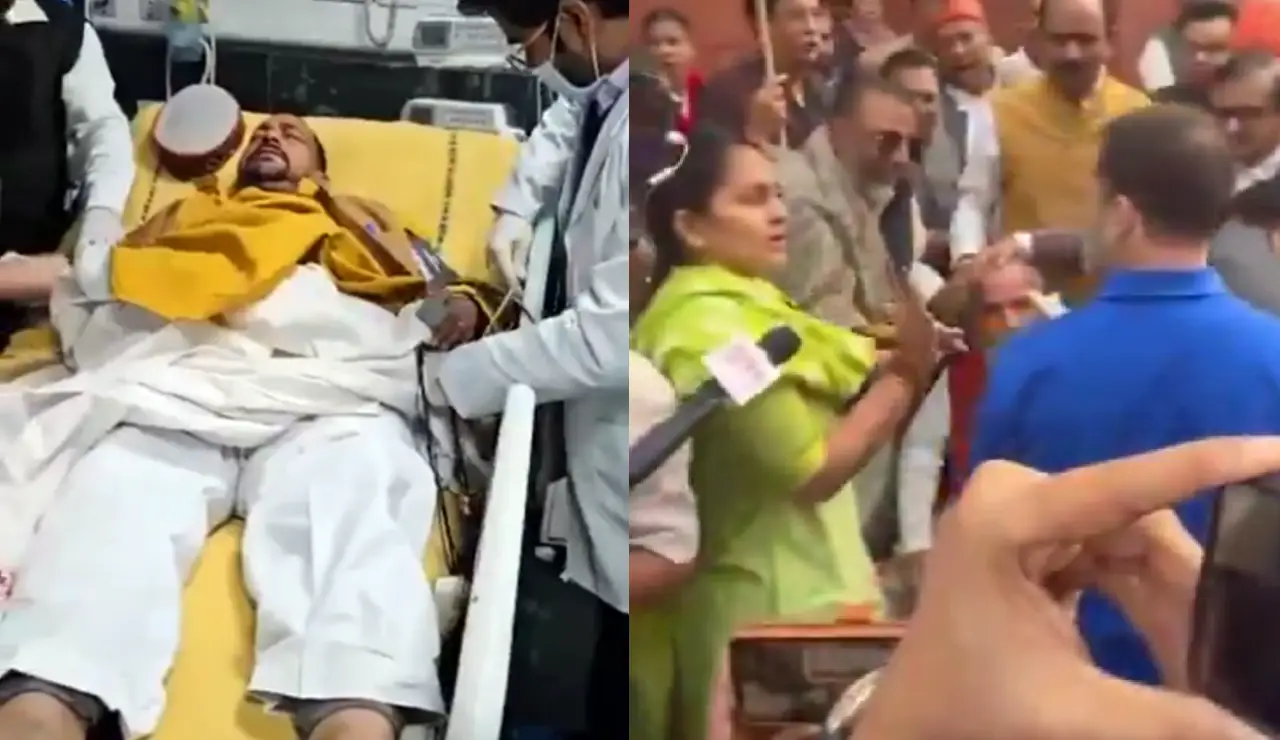
The clarification came from police days after Ravi accused them of “violating” human rights, as he alleged that they took him on rounds the entire night to various places in the district.
The former BJP national general secretary, who had bandages on his head, even claimed that police were behaving on the directions of someone from the “top”, as he hit out at the state government and the administration, calling it “dictatorial”.
Mumbai Air Pollution: BMC Issues New Guidelines, Calls for Strict Adherence 4
Mumbai’s civic body on Monday issued fresh guidelines to curb air pollution, particularly due to construction-related and road dust.
In a release, the Brihanmumbai Municipal Corporation instructed its solid waste department officials to strictly follow the guidelines, which come in response to growing concerns over deteriorating air quality in the Mumbai Metropolitan Region.
The fresh measures include prohibiting the use of wood or similar materials as fuel for cooking and the lighting of bonfires at construction sites, the release said.
“The concerned department has been asked to employ vigilance teams and clean up marshals to take prohibitory measures. The Solid Waste Management Department has been tasked with ensuring that dust caused by construction along roads is effectively controlled,” the release said.
The department has instructed all assistant engineers and deputy chief supervisors to strictly adhere to these guidelines and take prompt action, it said, adding that a comprehensive action plan has been devised to address both major and minor factors contributing to air pollution.
Last year, the civic body issued guidelines and best practices for air pollution control, in which specific measures for construction activities have been included now.
Doval Meets Chinese Foreign Minister, Special Representatives Dialogue Resumes 6
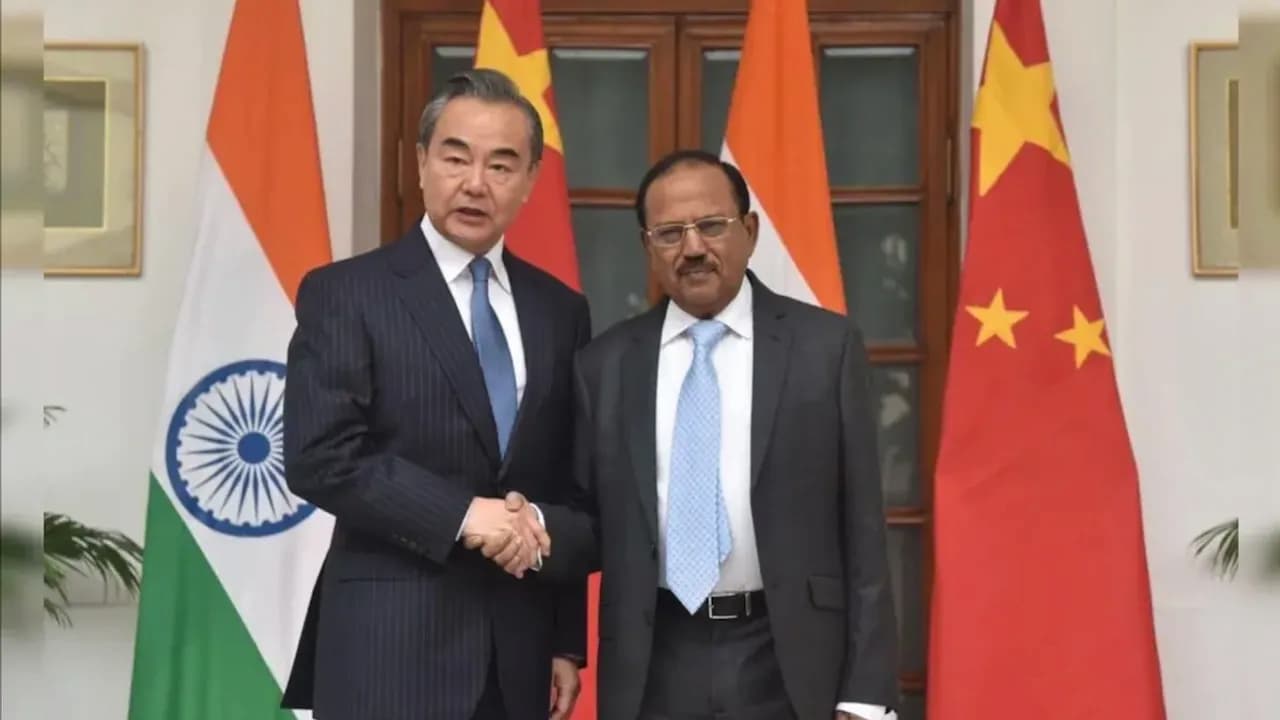
National Security Advisor Ajit Doval and Chinese Foreign Minister Wang Yi met Wednesday, resuming the Special Representatives dialogue as they sought the restoration of bilateral ties frozen for over four years due to a military standoff in eastern Ladakh.
Doval, who is heading the Indian delegation, arrived here on Tuesday to take part in the 23rd round of the Special Representatives’ talks being held after a gap of five years. The last meeting was held in 2019 in Delhi.
The talks began at 10 am China time.
Both the leaders will discuss a range of issues, including the management of peace and tranquillity along LAC and the restoration of bilateral ties stalled for over four years due to the military standoff in eastern Ladakh.
The two officials were expected to discuss a range of issues to rebuild the bilateral ties following the October 21 agreement of disengagement and patrolling in eastern Ladakh between the two countries.
On Tuesday, China expressed optimism about the talks saying that it is ready to work with India to implement the commitments based on the common understandings reached between Prime Minister Narendra Modi and President Xi Jinping during their meeting at Kazan in Russia on the sidelines of the BRICS summit on October 24.
China is prepared to settle differences with sincerity, Chinese Foreign Ministry spokesman Lin Jian told a media briefing here when asked about the Special Representatives (SR) talks.
China is ready to work with India to implement the important common understandings between the leaders of China and India, respect each other’s core interests and major concerns, strengthen mutual trust through dialogue and communication, properly settle differences with sincerity and good faith, and bring bilateral relations back to the track of stable and healthy development as soon as possible, he said.
The two SRs will discuss the management of peace and tranquillity in the border areas and explore a fair, reasonable, and mutually acceptable solution to the boundary question, as agreed upon during the meeting of the two leaders in Kazan, the External Affairs Ministry said on Monday.
After the Modi-Xi meeting, which was their first after five years, External Affairs Minister S Jaishankar and his Chinese counterpart met on the sidelines of the G20 summit in Brazil followed by a meeting of the Working Mechanism for Consultation & Coordination on China-India Border Affairs (WMCC).
The military standoff along the Line of Actual Control (LAC) in eastern Ladakh began in May 2020 and was followed by a deadly clash at the Galwan Valley in June of that year resulting in a severe strain in ties between the two neighbours.
Barring trade, relations between the two countries virtually came to a standstill.
The face-off effectively ended following the completion of the disengagement process from the last two friction points of Demchok and Depsang under an agreement finalised on October 21.
The SRs’ meeting is regarded as significant as it is the first structured engagement between the two countries to restore relations.
Constituted in 2003 to comprehensively address the vexed dispute of the India-China border spanning 3,488 km, the SRs mechanism over the years met 22 times.
While success eluded it in resolving the boundary dispute, officials on both sides regard it as a very promising, useful and handy tool in addressing the recurring tensions between the two countries.
Parliament Scuffle: Police to Record Statement of 2 Injured MPs, Call Rahul Gandhi for Questioning 8
A day after Congress leader Rahul Gandhi was booked in connection with a scuffle on the Parliament premises, sources said police are likely to record the statements of the two injured MPs on Friday and may also call the opposition leader for questioning.
They said that the Delhi Police was also likely to write to the Parliament secretariat, seeking access to CCTV footage of the area where the alleged incident occurred.
An official said senior police officers may also consider transferring the case to the crime branch from the local police.
A case under sections 115 (voluntary causing hurt), 117 (voluntary causing grievous hurt), 125 (act of endangering life or personal safety of others), 131 (use of criminal force), 351 (criminal intimidation) and 3(5) (common intention) of the Bharatiya Nyaya Sanhita was registered at the Parliament Street police station on Thursday.
Gandhi was booked hours after the BJP filed a complaint, accusing him of physical “assault and incitement” during the scuffle in which its two MPs Pratap Chandra Sarangi and Mukesh Rajput were injured.
According to a police source, officials may call Rahul Gandhi for questioning and also record the statements of other MPs who witnessed the incident.
The source said a team of police officials may also meet the Sarangi and Rajput at the hospital and record their statements for further investigations.
The reports of their medical certificates will be collected, he said.
On Thursday, BJP MP Hemang Joshi, accompanied by party colleagues Anurag Thakur and Bansuri Swaraj, visited the Parliament Street police station and filed the complaint.
The Congress strongly rejected the claim, alleging that BJP MPs pushed its chief Mallikarjun Kharge and “physically manhandled” Leader of the Opposition in the Lok Sabha Rahul Gandhi.
The Congress also lodged a complaint in connection with the matter.
A delegation of Congress MPs, including Digvijaya Singh, Mukul Wasnik, Rajiv Shukla and Pramod Tiwari, filed the complaint visiting the station in person, an officer said.
Search Operation On for 7-Year-Old Boy Missing After Ferry-Navy Craft Crash 10
The search operation launched by naval boats to locate a seven-year-old boy missing after a Navy craft rammed into a ferry off the Mumbai coast two days ago continued on Friday, an official said.
With the recovery of the body of a 43-year-old man on Thursday evening, the death toll in the December 18 tragedy rose to 14.
The Navy has launched a probe into one of the deadliest crashes in the city’s harbour area.
A naval helicopter and boats of the Navy and Coast Guard were deployed to look for the missing passengers as part of the Search and Rescue (SAR) operation, the official said.
Of the 113 persons on board both vessels, 14 died and 98, including two injured, were rescued.
There were six persons on board the Navy craft, of which two survived, the official said.
The tragedy struck when the speeding Navy craft undergoing engine trials lost control and collided with passenger ferry ‘Neel Kamal’ off the Mumbai coast. The ferry with more than 100 passengers was on its way from the Gateway of India to the Elephanta Island, a popular tourist attraction that has a collection of ancient caves.
According to the documents issued by the Maharashtra Maritime Board (MMB), the boat had permission to carry 84 passengers and 6 crew members, but it was overloaded, a police official said.
A case has been registered against the Navy craft driver at the Colaba police station, the official said.
Bharatiya Nyaya Sanhita (BNS) sections invoked in the FIR related to the tragedy included those related to causing death by negligence, actions that endanger the personal safety or life of others, rash or negligent navigation of a vessel and acts of mischief that cause wrongful loss or damage to individuals or the public.
The accident-affected craft is in the custody of the Navy and police will demand it whenever needed for investigation, the official said.
The mangled passenger ferry has been taken to Bhaucha Dhakka (a wharf near Dockyard Road) in south Mumbai, another official said.
5 Dead, 37 Injured in Fire After LPG Tanker Collides With Other Vehicles on Jaipur Highway 12
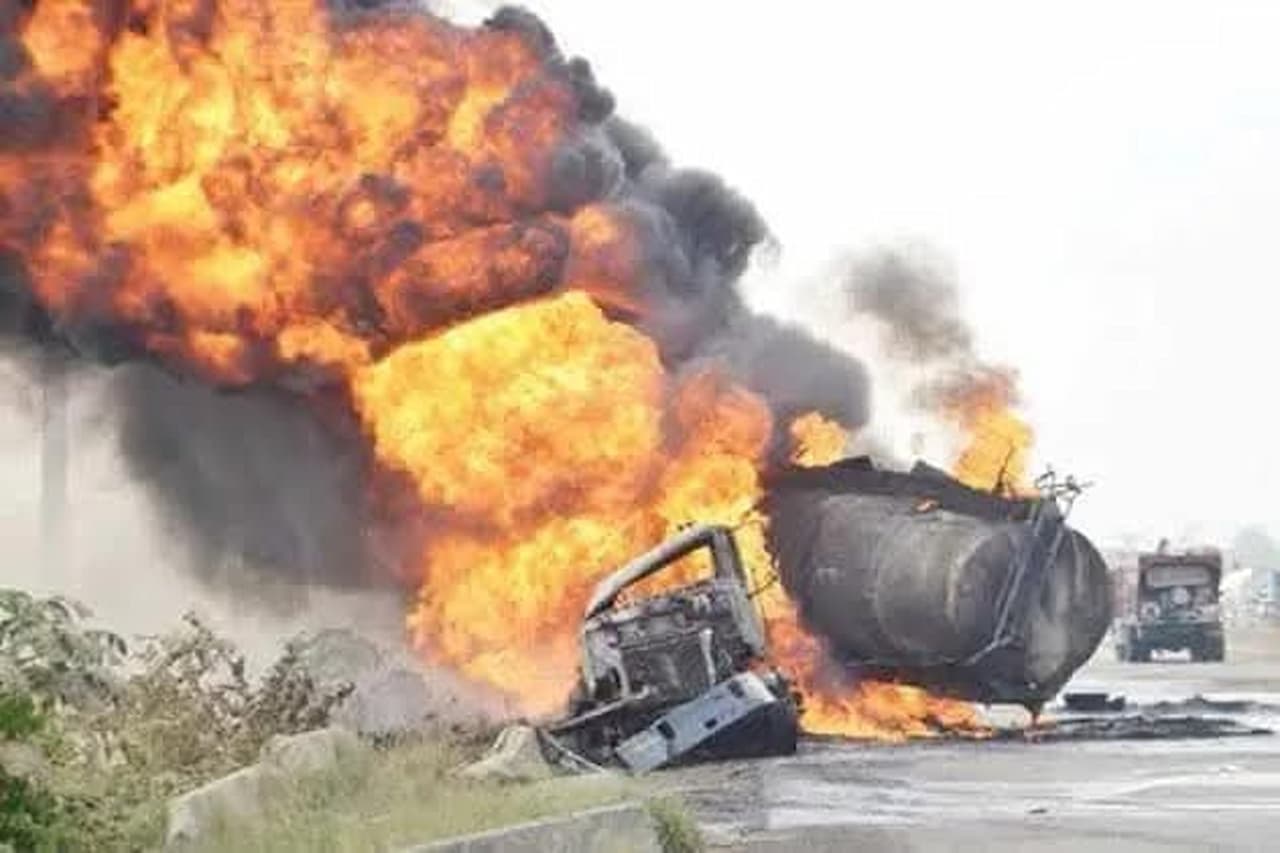
A deadly collision involving an LPG tanker and multiple vehicles turned a stretch of the Jaipur-Ajmer highway here into an inferno on Friday morning, killing five people, injuring 37, and engulfing over 30 vehicles in flames as thick black smoke filled the sky.
Eyewitnesses reported spotting the flames from over a kilometre away and ambulances and fire brigade teams rushed towards the crash zone as panic and chaos set in. A school van driver on his way to pick up students recounted with horror the sight of a man engulfed in flames.
Jaipur Police Commissioner Biju George Joseph told PTI that five people lost their lives and 37 suffered injuries in the accident.
Rajasthan Chief Minister Bhajanlal Sharma rushed to the SMS Hospital, where the injured were admitted, spoke to administration officials and doctors and issued directions to ensure proper treatment was facilitated. He also visited the accident site and spoke to police officials.
In a post in Hindi on X, the chief minister said, “Deeply saddened to hear the news of casualties in the gas tanker fire incident on the Jaipur-Ajmer National Highway. As soon as the information about the incident was received, I went to the SMS Hospital and directed the doctors there to provide immediate, necessary medical facilities and take proper care of the injured.”
Sharma, Governor Haribhau Bagade, and former chief minister Ashok Gehlot expressed their condolences for the loss of lives in the crash.
The station house officer of Bhankrota, Manish Gupta, said it was difficult to bring the fire under control initially.
“Fire brigade teams initially were unable to reach the vehicles that were burning. There are three petrol pumps in the area but fortunately, they are safe,” he added.
More than 25 ambulances shifted the victims to the hospital.
A nearly 300-metre busy stretch of the highway was affected by the accident, leading to a long queue of vehicles.
Police officials said the fire engulfed some establishments along the highway as well and details of the actual losses were not yet clear.
The school van driver told PTI that the flames were visible from a kilometre away and there was panic and chaos on the highway.
“As I got closer to the spot, I saw people running in haste and shouting for help. I saw a man engulfed in flames. It was a frightening scene. Fire brigades and ambulances were there but it was difficult for them to reach the spot initially,” he said.
India and Israel: A Strategic Partnership in Shared Challenges and Opportunities 14
India and Israel share a deep-rooted partnership built on shared challenges, mutual respect, and opportunities for collaboration. From addressing security concerns to advancing trade, technology, and agriculture, the relationship between the two nations continues to thrive and evolve, as highlighted during the recent plenary session at the World Hindu Economic Forum (WHEF) 2024.
Shared Challenges in Security and Extremism
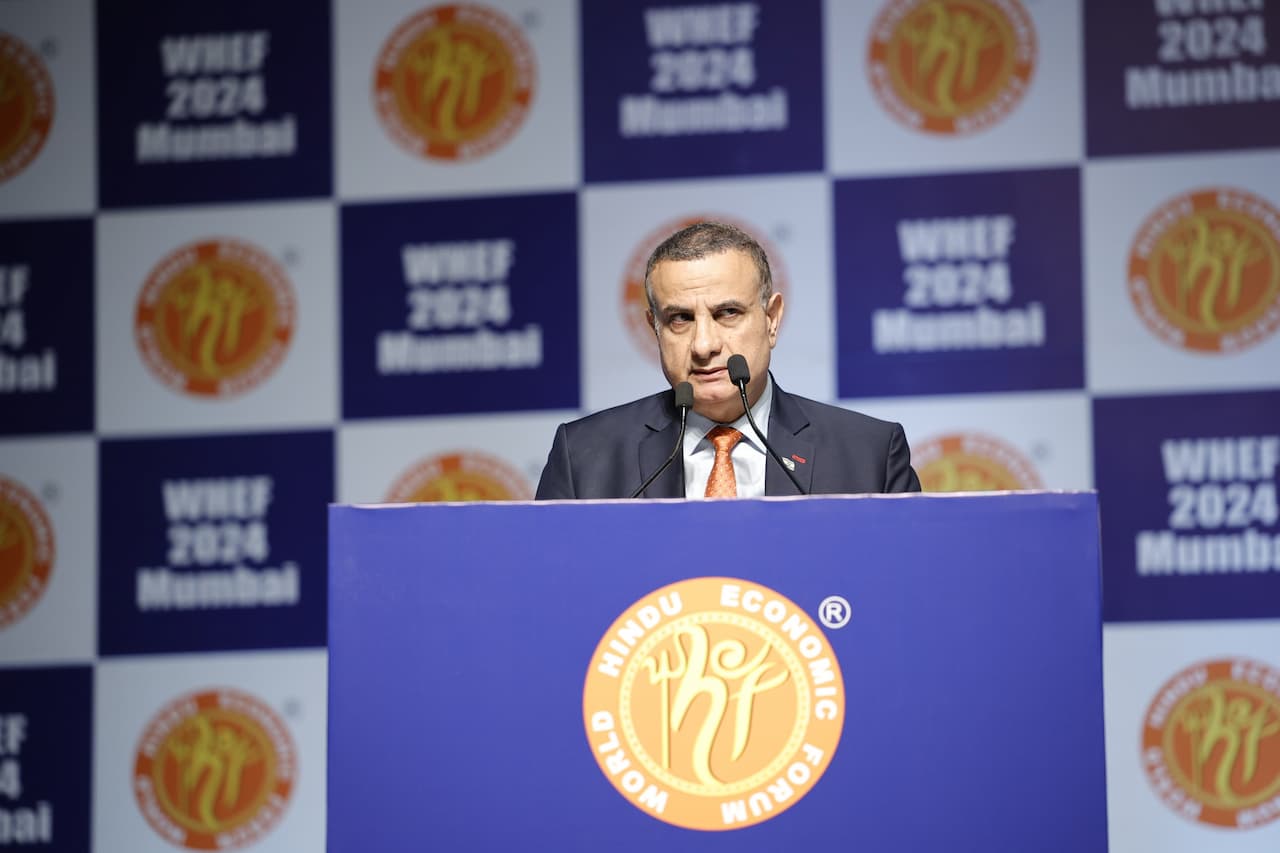
Kobbi Shoshani, Consul General of Israel to Mumbai, underscored the similarities in challenges faced by India and Israel, particularly in areas of security and extremism. Speaking at the WHEF, Shoshani expressed solidarity with the Hindu community in Bangladesh, condemning the violence and persecution they endure. He drew parallels between the historical experiences of the Jewish community and the Hindu community, emphasizing a shared understanding of suffering and resilience. Highlighting the attacks by Hamas on Israel, Shoshani reflected on the importance of addressing these challenges through robust military and economic strategies.
“You can’t have a strong economy with a weak Army,” Shoshani remarked, stressing the importance of military strength as a foundation for economic stability. He further emphasized that crises often lead to innovation, citing advancements in telecommunications and medical technology as examples.
Economic Ties: Trade and Investment
India is Israel’s second-largest trading partner in Asia and the ninth-largest globally. Bilateral trade has grown exponentially from a modest US$ 200 million in 1992 to US$ 10.77 billion in FY23 (excluding defence). Diamonds and chemicals have traditionally dominated this trade; however, recent years have seen diversification into sectors such as electronic machinery, medical equipment, communications systems, and high-tech products.
India’s exports to Israel amounted to US$ 8.45 billion in FY23, driven by petroleum products (US$ 5.50 billion), gems and jewellery (US$ 1.26 billion), and engineering goods (US$ 136.84 million). Between April-November 2023, exports reached US$ 3.51 billion, continuing to highlight petroleum products, gems, and chemicals as key commodities. Israel, in turn, has invested significantly in India, with nearly 300 companies actively engaged across sectors such as pharmaceuticals, clean energy, water management, and health.
Agricultural Collaboration and Technology Sharing
Agriculture remains a cornerstone of bilateral cooperation. Under a comprehensive work plan signed in 2006, projects are implemented through MASHAV (Israel’s Center for International Cooperation) and CINADCO (Centre for International Agricultural Development Cooperation). The fifth phase of the joint action plan (2021-23) has furthered high-level collaborations between Israeli institutions and the Indian Council of Agricultural Research (ICAR), leveraging Israel’s advanced agricultural technologies to enhance productivity in India.
Strategic Partnerships in Defence and Technology
The defence sector forms a critical pillar of the India-Israel partnership. India is the largest buyer of Israeli military equipment, while Israel is India’s second-largest defence supplier. These ties have strengthened over the last decade, with both countries advancing partnerships in homeland security, cyber defence, and advanced military technologies. In May 2023, India and Israel signed agreements facilitating the deployment of 42,000 Indian workers in Israel’s construction and nursing sectors, a move aimed at addressing rising costs and workforce shortages in Israel.
Celebrating 30 Years of Diplomatic Relations
The year 2022 marked 30 years of full diplomatic ties between India and Israel. Commemorative events included illuminating historic landmarks with the colors of both nations’ flags and launching a logo combining the Star of David and the Ashoka Chakra—symbols of friendship and mutual admiration. These celebrations highlighted the growing depth of cooperation in trade, technology, agriculture, and defence.
Future Directions: Free Trade Agreement and I2U2
Negotiations for a Free Trade Agreement (FTA) between India and Israel have resumed, with the potential to significantly boost economic collaboration. This agreement aims to capitalize on India’s manufacturing prowess and Israel’s technological expertise, complementing India’s flagship ‘Make in India’ initiative. Additionally, both nations have joined the I2U2 group, which includes the UAE and the United States, to address global challenges such as food security and clean energy.
Conclusion
India and Israel’s partnership exemplifies the power of collaboration in addressing shared challenges and seizing opportunities. With robust economic ties, strategic defence cooperation, and innovative agricultural and technological exchanges, the relationship continues to set new benchmarks. As both nations look ahead, the foundation of trust and shared values promises to propel their partnership into new horizons, fostering stability, innovation, and prosperity.
NIA Chargesheets Two Key Aides of Khalistani Terrorist Lakhbir Singh Alias Landa 16
The National Investigation Agency has charge-sheeted two key aides of designated terrorist Lakhbir Singh alias Landa of the banned Babbar Khalsa International outfit in a Punjab terror conspiracy case, according to the probe agency on Wednesday.
Jaspreet Singh of Punjab’s Ferozepur district and Baljeet Singh of Madhya Pradesh’s Barwani district were charge-sheeted on Tuesday before the NIA special court in Mohali, it said.
They were identified by NIA as members of a terror gang formed by foreign-based Khalistani terrorist Landa, said a statement issued by the probe agency.
A probe by the NIA found Jaspreet Singh to be an important on-ground operative of Landa and his associate Pattu Khaira, while Baljeet Singh was involved in supplying weapons to members of the Landa gang and other gangsters.
It further emerged during the investigation that Jaspreet Singh was involved in Landa’s drug smuggling and extortion network aimed at generating funds for BKI, the NIA claimed.
Baljeet was manufacturing weapons locally and using social media to supply them to operatives of the Landa gang, it added.
He was one of the various weapons suppliers with whom the terrorists had tied up across the country for the supply of arms and ammunition, the NIA said.
In the course of the investigation, NIA seized various arms, ammunition, narcotics and drug money, digital devices, and other incriminating articles from the accused.
Maha Opposition MLAs Protest at Vidhan Bhavan Steps Against Beed Sarpanch’s Murder 18
Leaders of the opposition parties staged a demonstration at the Vidhan Bhavan here on the second day of the Winter Session on Tuesday to protest the murder of a sarpanch in Maharashtra’s Beed and demanded the arrest of the accused involved in the crime.
Legislators from the opposition Maha Vikas Aghadi allies protested on the steps of the Vidhan Bhavan and raised slogans against the government.
Leader of Opposition in the legislative council Ambadas Danve, Congress’s Nana Patole, Nitin Raut, Bhai Jagtap, Vikas Thakre, and Shiv Sena (UBT) leaders Bhaskar Jadhav, Sachin Ahir, NCP (SP) Jitendra Awhad and other legislators took part in the protest.
Last week, Massajog village sarpanch Santosh Deshmukh was abducted from his car near a toll plaza, and his body was later found in the Daithana area of Kej tehsil, following which three persons were arrested. The CID is investigating the murder.
Talking to reporters, Danve alleged that people from the ruling party were involved in the death of the sarpanch in Beed.
He claimed that the Mahayuti government had not taken any action in both the Beed murder and the death of a 35-year-old man arrested in connection with the violence triggered by the vandalism of a replica of the Constitution in Parbhani last week.
The post-mortem report in Parbhani case suggested that the man died due to assault, the Shiv Sena (UBT) leader said, alleging that the collector and superintendent of police of Parbhani are responsible for the incident.
Danve said the Opposition raised these issues in the House on Monday and will do so today.
One Nation One Election Bills Introduced in Lok Sabha With 269 Votes in Favour 20
Two bills that lay down the mechanism to hold simultaneous elections were introduced in the Lok Sabha after a fiery debate on Tuesday.
Opposition parties dubbed the draft laws—a Constitution amendment bill and an ordinary bill—as an attack on the federal structure, a charge rejected by the government.
The bills were introduced after the opposition sought a division of votes.
After electronic voting and a subsequent count by paper slips, the bills were introduced with 269 members in favour and 198 against.
This was the first time that the electronic voting system was used in the Lok Sabha in the new Parliament House.
The proceedings were later adjourned for a little over an hour till 3 pm.