5 Dead, 37 Injured in Fire After LPG Tanker Collides With Other Vehicles on Jaipur Highway 2
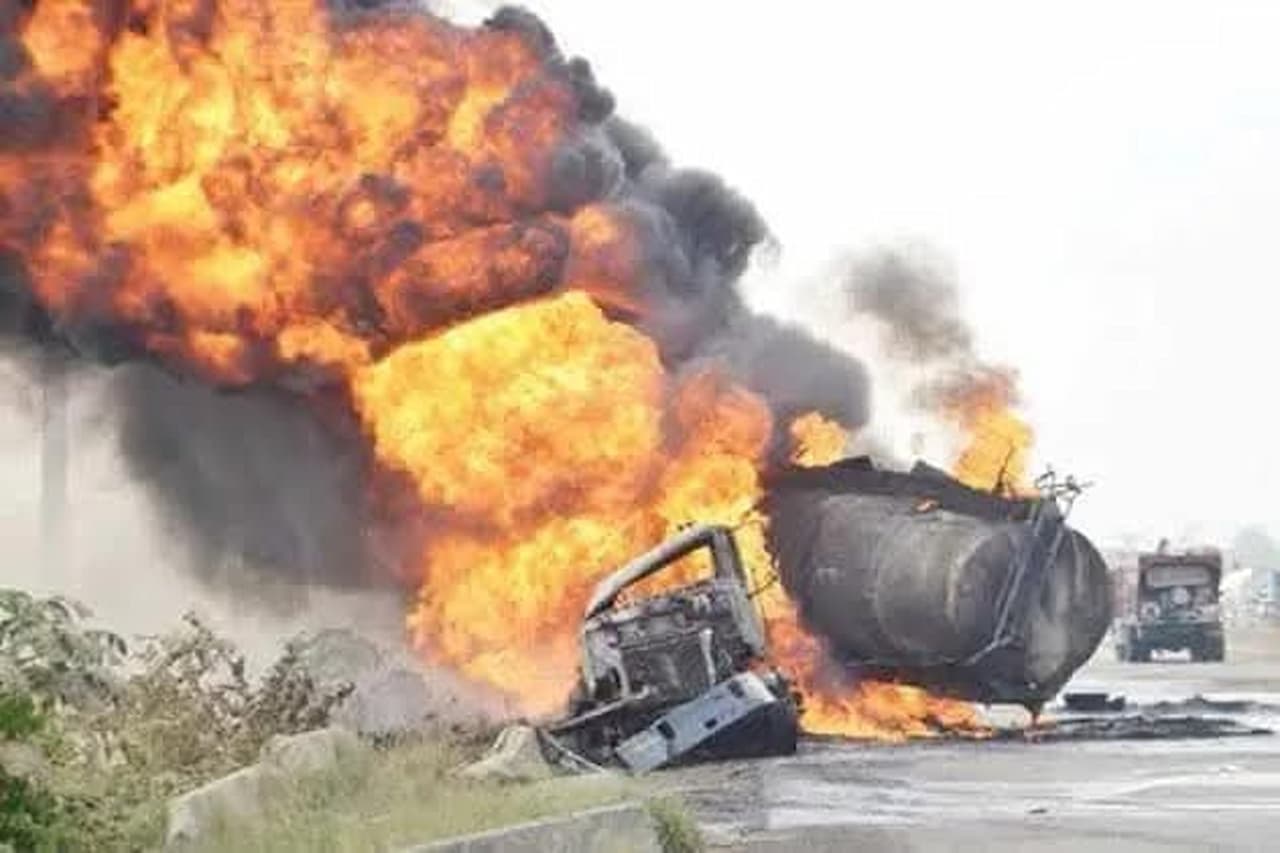
A deadly collision involving an LPG tanker and multiple vehicles turned a stretch of the Jaipur-Ajmer highway here into an inferno on Friday morning, killing five people, injuring 37, and engulfing over 30 vehicles in flames as thick black smoke filled the sky.
Eyewitnesses reported spotting the flames from over a kilometre away and ambulances and fire brigade teams rushed towards the crash zone as panic and chaos set in. A school van driver on his way to pick up students recounted with horror the sight of a man engulfed in flames.
Jaipur Police Commissioner Biju George Joseph told PTI that five people lost their lives and 37 suffered injuries in the accident.
Rajasthan Chief Minister Bhajanlal Sharma rushed to the SMS Hospital, where the injured were admitted, spoke to administration officials and doctors and issued directions to ensure proper treatment was facilitated. He also visited the accident site and spoke to police officials.
In a post in Hindi on X, the chief minister said, “Deeply saddened to hear the news of casualties in the gas tanker fire incident on the Jaipur-Ajmer National Highway. As soon as the information about the incident was received, I went to the SMS Hospital and directed the doctors there to provide immediate, necessary medical facilities and take proper care of the injured.”
Sharma, Governor Haribhau Bagade, and former chief minister Ashok Gehlot expressed their condolences for the loss of lives in the crash.
The station house officer of Bhankrota, Manish Gupta, said it was difficult to bring the fire under control initially.
“Fire brigade teams initially were unable to reach the vehicles that were burning. There are three petrol pumps in the area but fortunately, they are safe,” he added.
More than 25 ambulances shifted the victims to the hospital.
A nearly 300-metre busy stretch of the highway was affected by the accident, leading to a long queue of vehicles.
Police officials said the fire engulfed some establishments along the highway as well and details of the actual losses were not yet clear.
The school van driver told PTI that the flames were visible from a kilometre away and there was panic and chaos on the highway.
“As I got closer to the spot, I saw people running in haste and shouting for help. I saw a man engulfed in flames. It was a frightening scene. Fire brigades and ambulances were there but it was difficult for them to reach the spot initially,” he said.
India and Israel: A Strategic Partnership in Shared Challenges and Opportunities 4
India and Israel share a deep-rooted partnership built on shared challenges, mutual respect, and opportunities for collaboration. From addressing security concerns to advancing trade, technology, and agriculture, the relationship between the two nations continues to thrive and evolve, as highlighted during the recent plenary session at the World Hindu Economic Forum (WHEF) 2024.
Shared Challenges in Security and Extremism
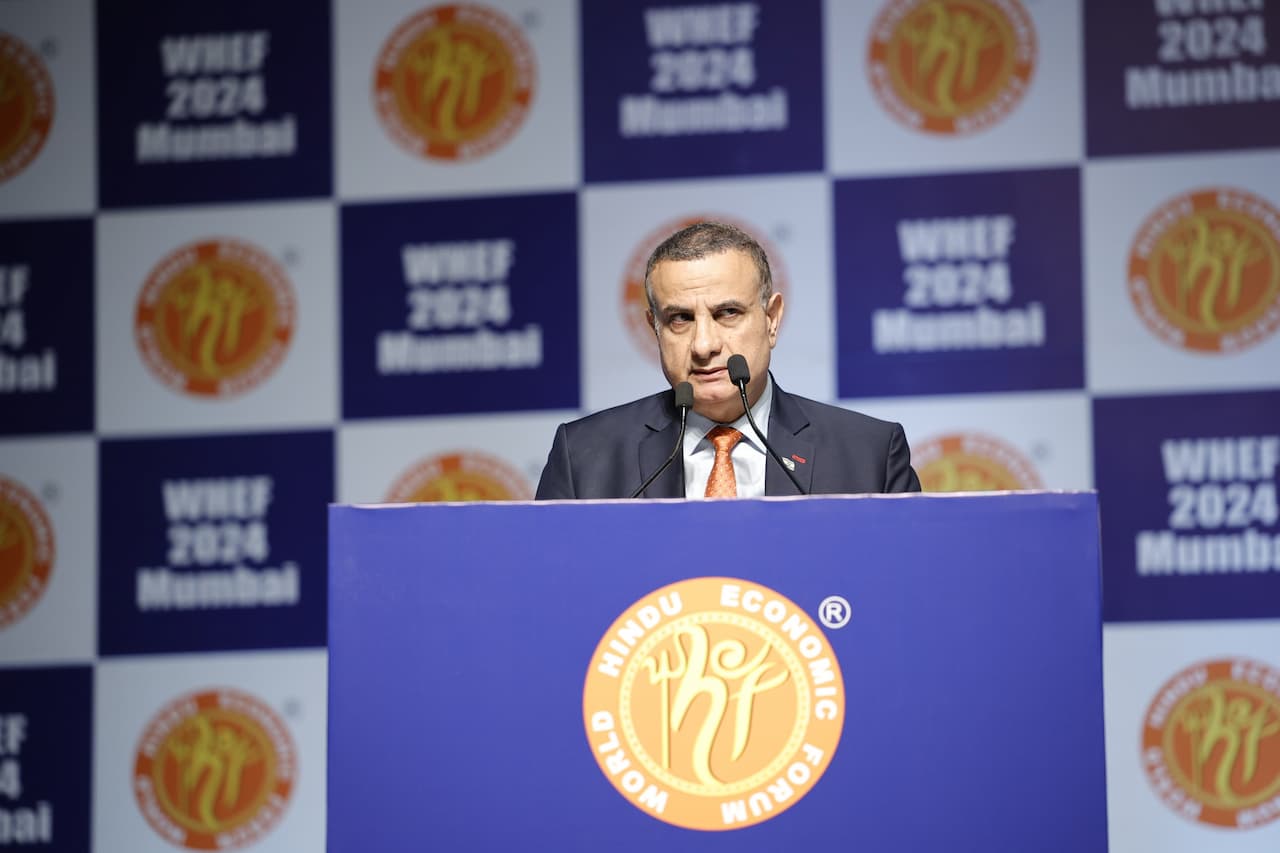
Kobbi Shoshani, Consul General of Israel to Mumbai, underscored the similarities in challenges faced by India and Israel, particularly in areas of security and extremism. Speaking at the WHEF, Shoshani expressed solidarity with the Hindu community in Bangladesh, condemning the violence and persecution they endure. He drew parallels between the historical experiences of the Jewish community and the Hindu community, emphasizing a shared understanding of suffering and resilience. Highlighting the attacks by Hamas on Israel, Shoshani reflected on the importance of addressing these challenges through robust military and economic strategies.
“You can’t have a strong economy with a weak Army,” Shoshani remarked, stressing the importance of military strength as a foundation for economic stability. He further emphasized that crises often lead to innovation, citing advancements in telecommunications and medical technology as examples.
Economic Ties: Trade and Investment
India is Israel’s second-largest trading partner in Asia and the ninth-largest globally. Bilateral trade has grown exponentially from a modest US$ 200 million in 1992 to US$ 10.77 billion in FY23 (excluding defence). Diamonds and chemicals have traditionally dominated this trade; however, recent years have seen diversification into sectors such as electronic machinery, medical equipment, communications systems, and high-tech products.
India’s exports to Israel amounted to US$ 8.45 billion in FY23, driven by petroleum products (US$ 5.50 billion), gems and jewellery (US$ 1.26 billion), and engineering goods (US$ 136.84 million). Between April-November 2023, exports reached US$ 3.51 billion, continuing to highlight petroleum products, gems, and chemicals as key commodities. Israel, in turn, has invested significantly in India, with nearly 300 companies actively engaged across sectors such as pharmaceuticals, clean energy, water management, and health.
Agricultural Collaboration and Technology Sharing
Agriculture remains a cornerstone of bilateral cooperation. Under a comprehensive work plan signed in 2006, projects are implemented through MASHAV (Israel’s Center for International Cooperation) and CINADCO (Centre for International Agricultural Development Cooperation). The fifth phase of the joint action plan (2021-23) has furthered high-level collaborations between Israeli institutions and the Indian Council of Agricultural Research (ICAR), leveraging Israel’s advanced agricultural technologies to enhance productivity in India.
Strategic Partnerships in Defence and Technology
The defence sector forms a critical pillar of the India-Israel partnership. India is the largest buyer of Israeli military equipment, while Israel is India’s second-largest defence supplier. These ties have strengthened over the last decade, with both countries advancing partnerships in homeland security, cyber defence, and advanced military technologies. In May 2023, India and Israel signed agreements facilitating the deployment of 42,000 Indian workers in Israel’s construction and nursing sectors, a move aimed at addressing rising costs and workforce shortages in Israel.
Celebrating 30 Years of Diplomatic Relations
The year 2022 marked 30 years of full diplomatic ties between India and Israel. Commemorative events included illuminating historic landmarks with the colors of both nations’ flags and launching a logo combining the Star of David and the Ashoka Chakra—symbols of friendship and mutual admiration. These celebrations highlighted the growing depth of cooperation in trade, technology, agriculture, and defence.
Future Directions: Free Trade Agreement and I2U2
Negotiations for a Free Trade Agreement (FTA) between India and Israel have resumed, with the potential to significantly boost economic collaboration. This agreement aims to capitalize on India’s manufacturing prowess and Israel’s technological expertise, complementing India’s flagship ‘Make in India’ initiative. Additionally, both nations have joined the I2U2 group, which includes the UAE and the United States, to address global challenges such as food security and clean energy.
Conclusion
India and Israel’s partnership exemplifies the power of collaboration in addressing shared challenges and seizing opportunities. With robust economic ties, strategic defence cooperation, and innovative agricultural and technological exchanges, the relationship continues to set new benchmarks. As both nations look ahead, the foundation of trust and shared values promises to propel their partnership into new horizons, fostering stability, innovation, and prosperity.
NIA Chargesheets Two Key Aides of Khalistani Terrorist Lakhbir Singh Alias Landa 6
The National Investigation Agency has charge-sheeted two key aides of designated terrorist Lakhbir Singh alias Landa of the banned Babbar Khalsa International outfit in a Punjab terror conspiracy case, according to the probe agency on Wednesday.
Jaspreet Singh of Punjab’s Ferozepur district and Baljeet Singh of Madhya Pradesh’s Barwani district were charge-sheeted on Tuesday before the NIA special court in Mohali, it said.
They were identified by NIA as members of a terror gang formed by foreign-based Khalistani terrorist Landa, said a statement issued by the probe agency.
A probe by the NIA found Jaspreet Singh to be an important on-ground operative of Landa and his associate Pattu Khaira, while Baljeet Singh was involved in supplying weapons to members of the Landa gang and other gangsters.
It further emerged during the investigation that Jaspreet Singh was involved in Landa’s drug smuggling and extortion network aimed at generating funds for BKI, the NIA claimed.
Baljeet was manufacturing weapons locally and using social media to supply them to operatives of the Landa gang, it added.
He was one of the various weapons suppliers with whom the terrorists had tied up across the country for the supply of arms and ammunition, the NIA said.
In the course of the investigation, NIA seized various arms, ammunition, narcotics and drug money, digital devices, and other incriminating articles from the accused.
Maha Opposition MLAs Protest at Vidhan Bhavan Steps Against Beed Sarpanch’s Murder 8
Leaders of the opposition parties staged a demonstration at the Vidhan Bhavan here on the second day of the Winter Session on Tuesday to protest the murder of a sarpanch in Maharashtra’s Beed and demanded the arrest of the accused involved in the crime.
Legislators from the opposition Maha Vikas Aghadi allies protested on the steps of the Vidhan Bhavan and raised slogans against the government.
Leader of Opposition in the legislative council Ambadas Danve, Congress’s Nana Patole, Nitin Raut, Bhai Jagtap, Vikas Thakre, and Shiv Sena (UBT) leaders Bhaskar Jadhav, Sachin Ahir, NCP (SP) Jitendra Awhad and other legislators took part in the protest.
Last week, Massajog village sarpanch Santosh Deshmukh was abducted from his car near a toll plaza, and his body was later found in the Daithana area of Kej tehsil, following which three persons were arrested. The CID is investigating the murder.
Talking to reporters, Danve alleged that people from the ruling party were involved in the death of the sarpanch in Beed.
He claimed that the Mahayuti government had not taken any action in both the Beed murder and the death of a 35-year-old man arrested in connection with the violence triggered by the vandalism of a replica of the Constitution in Parbhani last week.
The post-mortem report in Parbhani case suggested that the man died due to assault, the Shiv Sena (UBT) leader said, alleging that the collector and superintendent of police of Parbhani are responsible for the incident.
Danve said the Opposition raised these issues in the House on Monday and will do so today.
One Nation One Election Bills Introduced in Lok Sabha With 269 Votes in Favour 10
Two bills that lay down the mechanism to hold simultaneous elections were introduced in the Lok Sabha after a fiery debate on Tuesday.
Opposition parties dubbed the draft laws—a Constitution amendment bill and an ordinary bill—as an attack on the federal structure, a charge rejected by the government.
The bills were introduced after the opposition sought a division of votes.
After electronic voting and a subsequent count by paper slips, the bills were introduced with 269 members in favour and 198 against.
This was the first time that the electronic voting system was used in the Lok Sabha in the new Parliament House.
The proceedings were later adjourned for a little over an hour till 3 pm.
Zakir Hussain Dies in San Francisco, Tributes Pour In for Tabla Maestro 12
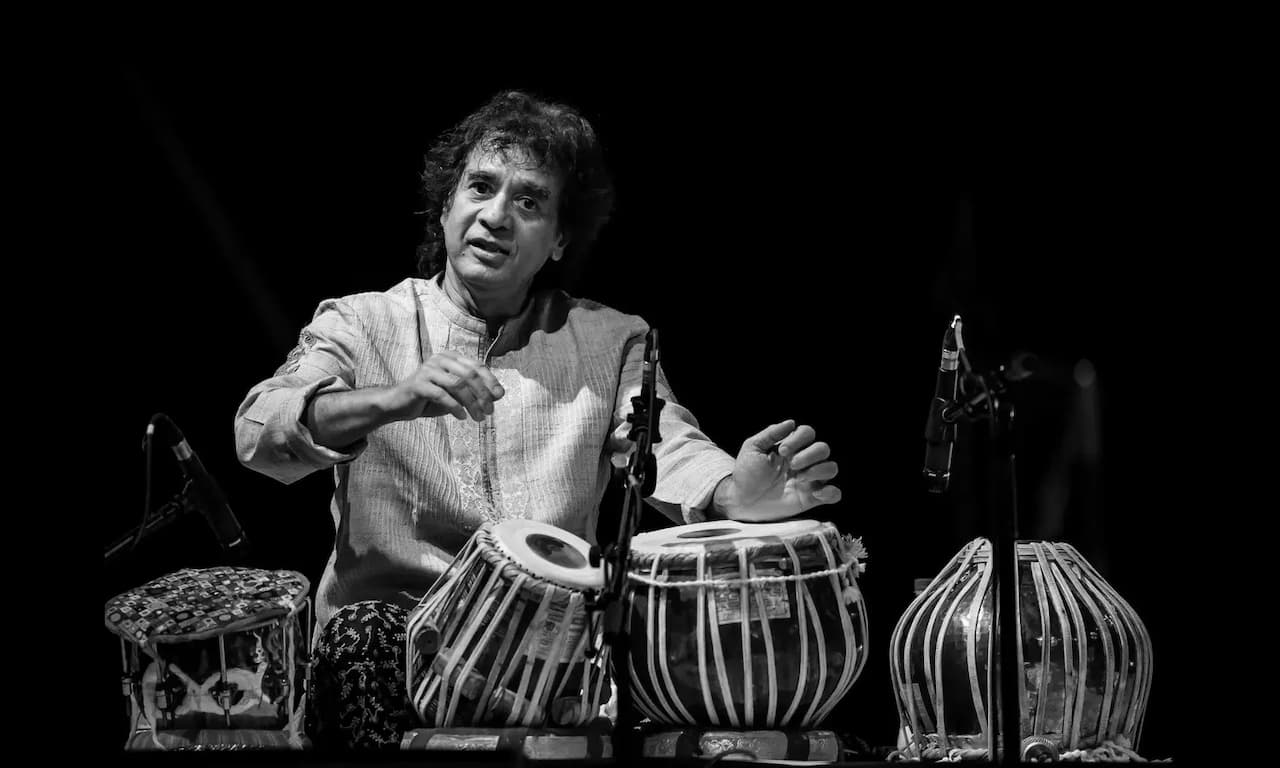
Tabla maestro Zakir Hussain died in a hospital in San Francisco, US, his family said on Monday. He was 73.
Hussain died from complications arising out of idiopathic pulmonary fibrosis, the family said in a statement.
He had been in hospital for the past two weeks and was shifted to the intensive care unit (ICU) after his condition deteriorated.
Hussain’s sister Khurshid Aulia said he passed away “very peacefully”.
“He passed away very peacefully after the ventilation machine was switched off. This was 4 pm San Francisco time,” she told PTI.
Regarded as the greatest tabla player of his generation, Hussain is survived by his wife Antonia Minnecola and their daughters — Anisa Qureshi and Isabella Qureshi.
Born on March 9, 1951, he was the son of legendary tabla master Ustad Alla Rakha.
The family said in its statement, “He leaves behind an extraordinary legacy cherished by countless music lovers around the globe, with an influence that will resonate for generations to come.”
In a career spanning six decades, Hussain worked with several renowned international and Indian artistes but it was his 1973 project with English guitarist John McLaughlin, violinist L Shankar and percussionist TH ‘Vikku’ Vinayakram that brought together Indian classical music and elements of jazz in a hitherto-unknown fusion.
Starting at the age of seven, he went on to collaborate with virtually all of India’s iconic performers, including Ravi Shankar, Ali Akbar Khan and Shivkumar Sharma, in his career.
His groundbreaking work with Western musicians such as Yo-Yo Ma, Charles Lloyd, Bela Fleck, Edgar Meyer, Mickey Hart and George Harrison brought Indian classical music to an international audience, cementing his status as a global cultural ambassador.
Hussain received four Grammy Awards in his career, including three at the 66th awards ceremony earlier this year.
The percussionist, one of India’s most celebrated classical musicians, received the Padma Shri in 1988, Padma Bhushan in 2002, and the Padma Vibhushan in 2023.
As news of Hussain’s passing spread, messages of condolence poured in on social media.
Grammy-winning musician Ricky Kej remembered Hussain for his “immense humility, approachable nature”.
“One of the greatest musicians and personalities India has ever produced. Along with being the best himself, Zakir ji was known for… being responsible for the careers of numerous musicians, who are now forces to reckon with themselves,” Kej said in a post on X.
“He was a treasure trove of skill and knowledge and always shared and encouraged the entire music community through collaborations and his actions. His legacy will live on forever, and his influence will be felt for generations. He left us too soon,” he added.
American drummer Nate Smith thanked Hussain for “all of the music you gave us”.
Rajya Sabha MP Priyanka Chaturvedi also paid tribute, describing Hussain as an “irreplaceable legend”.
“The world of music will be lesser without tabla maestro Ustad Zakir Hussain. Heartfelt condolences to his family, friends and his fans all around the world. My prayers, Om Shanti,” she said on X.
Filmmaker Hansal Mehta credited Hussain for bringing “an accompanying instrument to the forefront”.
“The maestro, Ustad Zakir Hussain passed away a few hours ago. Goodbye Ustad ji. The man who made the tabla sexy, who brought an accompanying instrument to the forefront is gone. Deepest condolences to his family, fans and students around the globe,” Mehta said.
Kerala Chief Minister Pinarayi Vijayan called the percussionist “a beacon of India’s rich musical heritage and a true custodian of classical traditions”.
“Ustad Zakir Hussain was instrumental in popularising Indian music across the globe, serving as a beacon of India’s rich musical heritage. A true custodian of classical traditions, his contributions to the arts remain unparalleled. His passing is a monumental loss to culture and humanity. Heartfelt condolences to his loved ones,” Vijayan said.
Expressing his condolences to Hussain’s family, Congress president Mallikarjun Kharge called him a “cultural ambassador who bridged borders and generations with his mesmerising rhythms”.
“The Padma Vibhushan tabla maestro and percussionist, gloriously took forward the legacy of his father with exceptional performances and collaborations. His numerous national and international honours are a testament to this,” Kharge said.
Leader of Opposition Rahul Gandhi launched a scathing attack on the BJP in Parliament on Saturday, invoking Hindutva ideologue V. D. Savarkar’s critique of the Indian Constitution to accuse the ruling party of hypocrisy. Gandhi alleged that while the BJP claims to protect the Constitution, its ideological roots lie in the Manusmriti, a text Savarkar deemed superior to the Constitution.
Quoting Savarkar, Gandhi said, “The worst thing about the Constitution of India is that there is nothing Indian about it. Manusmriti is that scripture which is most worshippable after the Vedas and has codified the spiritual and divine march of our nation. Today, Manusmriti is law.” Gandhi challenged the BJP, asking, “Do you stand by your leader’s words? When you speak of defending the Constitution, you are defaming Savarkar. Do you accept his vision or reject it?”
Gandhi further accused the BJP government of perpetuating social and economic inequality, drawing a parallel between the epic story of Eklavya in the Mahabharata and the policies of the current regime. “Just as Dronacharya demanded Eklavya’s thumb, this government is cutting the thumbs of the poor, Dalits, farmers, and backward classes by creating monopolies for Adani, introducing schemes like Agnipath, and ignoring systemic corruption like paper leaks,” he said.
Referring to his visit to Hathras, where a Dalit woman was allegedly gangraped and murdered, Gandhi said the victim’s family was confined to their house while the accused roamed free. “Where in the Constitution is it written that the victim’s family should be imprisoned while the perpetrators walk free? This is not the Constitution’s vision—it’s yours,” he declared, directly targeting the BJP.
Accusing the BJP of fostering division and societal violence, Gandhi cited recent incidents like the Sambhal violence and claimed that the BJP’s ideology thrives on inequality. “The INDIA alliance stands to protect the Constitution that brought political, social, and economic equality. The BJP and RSS want to return to the Manusmriti days,” he said, adding that a caste census and the removal of the 50% reservation cap would pave the way for a more equitable society.
Gandhi also invoked historical figures like Ambedkar, Periyar, Phule, and Basavanna, calling them the true defenders of equality and the Constitution. He quoted B. R. Ambedkar: “If there is political equality but no social and economic equality, political equality will be destroyed,” stressing that the BJP has already eroded the balance of equality in the country.
On the BJP’s repeated references to Savarkar, Gandhi claimed his grandmother and former Prime Minister Indira Gandhi viewed Savarkar as someone who “compromised” with the British. “Savarkar wrote letters of apology to the British. Meanwhile, Gandhi ji went to jail, Nehru ji went to jail, but Savarkar begged for forgiveness,” Gandhi remarked.
Gandhi concluded his fiery speech by reiterating his stance: “The country will be run by the Constitution, not by Manusmriti. The Congress and the INDIA alliance are the protectors of the Constitution, while the BJP and RSS are its opponents.” Posting his remarks on social media, Gandhi declared, “This is a battle for the soul of India—a battle between Manusmriti and the Constitution.”
Tear Gas, Water Cannon Used Against Farmers at Shambhu Border, March Paused 16
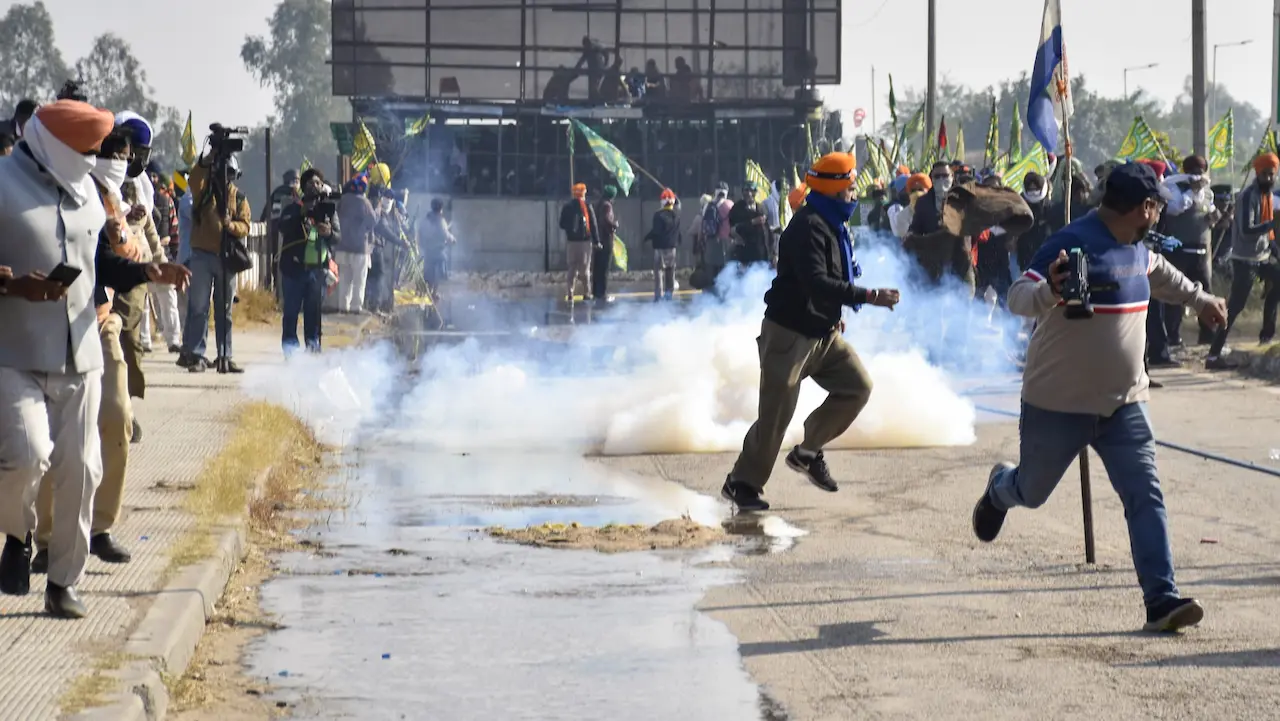
Haryana security personnel fired teargas shells and used a water cannon to disperse a group of protesting farmers from heading towards Delhi at the Shambhu border point on Saturday.
A few farmers who were injured and taken to a nearby hospital in ambulances stationed at the protest site, officials said.
The action came after a ‘jatha’ (group) of 101 farmers, who resumed their foot march to Delhi shortly after 12 noon on Saturday from the Shambhu protest site on the Punjab-Haryana border, reached the barricades put up by the Haryana security personnel.
The farmers are pressing the Centre for various demands, including a legal guarantee of minimum support price for crops.
Earlier, Ambala Deputy Commissioner Parth Gupta and Ambala Superintendent of Police S S Bhoria engaged in talks with some protesting farmers for over half an hour, trying to convince them to get permission from Delhi for going towards the national capital.
However, the farmers were adamant on going to Delhi and urged the security personnel to proceed. Soon after walking for a few metres, the group was stopped at the barricading by Haryana security personnel, including paramilitary forces.
“We want to go ahead in a peaceful manner. Our voices should not be crushed like this. More than half of the country’s population are connected with agriculture, their voice cannot be supressed,” a farmer leader argued with the Haryana officials on the other side of the barricades.
“We are marching on foot in a peaceful manner, therefore, we should be allowed to proceed. We want government should listen to the problems of farmers and labourers. We want to go to Delhi in a peaceful manner,” the leader said.
Ambala’s Superintendent of Police S S Bhoria told the farmers that they should take permission from the authorities concerned if they intend to protest in Delhi.
“We will ourselves help you reach there,” he said.
The spot where you are standing in protest, according to the Supreme Court order of July 24, directions were issued to maintain status quo at Shambhu border so that no untoward incident occurs, Bhoria told them.
Appealing to the protesting farmers to move back, Bhoria referred to the apex court, saying a high-powered committee constituted by it would talk to the protesting farmers and make recommendations to the court.
“Farmers should not get violent and do peaceful agitation. They should adopt the Gandhian way of protests because their grievances are being looked into,” a bench of Justices Surya Kant and Ujjal Bhuyan had said on Friday.
The bench had directed the Centre and Punjab government representatives to immediately meet Jagjit Singh Dallewal, who is observing a fast unto death.
Ambala Deputy Commissioner Parth Gupta told the protesters that the matter was sub-judice and the next date of hearing has been fixed for December 18.
This is the third attempt by the protesting farmers to march towards the national capital from the Shambhu border point. They had made similar attempts on December 6 and December 8 but were not allowed to proceed by security personnel in Haryana.
The farmers under the banner of Samyukta Kisan Morcha (Non-Political) and Kisan Mazdoor Morcha (KMM) have been pressing for various demands, including a legal guarantee of MSP. They have also been pressing the Centre to initiate talks with them to address their issues.
The Ambala district administration has already clamped a prohibitory order under Section 163 of the Bharatiya Nagarik Suraksha Sanhita (BNSS) that bans unlawful assembly of five or more people in the district.
Earlier in the day, the Haryana government suspended mobile internet and bulk SMS services in 12 villages in Ambala till December 17.
The order to suspend mobile internet in Dangdehri, Lehgarh, Manakpur, Dadiyana, Bari Ghel, Choti Ghel, Lharsa, Kalu Majra, Devi Nagar (Hira Nagar, Naresh Vihar), Saddopur, Sultanpur and Kakru villages in Ambala was issued to prevent any disturbance of peace and public order.
Meanwhile, farmer leader Dallewal’s fast unto death at the Khanauri border point entered the 19th day on Saturday. Doctors have already recommended his hospitalisation, saying because of the prolonged fast, he has turned weak.
However, the protesting farmers have formed a security ring around Dallewal so that the state authorities could not remove him from the protest site.
The Punjab Police had forcibly removed Dallewal from the Khanauri border point on November 26, just hours before he was going to start his fast unto death.
On Friday, SKM leader Rakesh Tikait met Dallewal and also called for unity of farmers’ groups for a “joint fight”.
Dallewal has been on a fast-unto-death at the Khanauri border between Punjab and Haryana since November 26 to press the Centre to accept the agitating farmers’ demands, including a legal guarantee of MSP on crops.
Farmers under the banner of SKM (Non-Political) and KMM have been camping at Shambhu and Khanauri border points between Punjab and Haryana since February 13 after their march to Delhi was stopped by security forces.
Besides a legal guarantee on MSP for crops, the farmers are demanding a debt waiver, pension for farmers and farm labourers, no hike in the electricity tariff, withdrawal of police cases and “justice” for the victims of the 2021 Lakhimpur Kheri violence.
Reinstatement of the Land Acquisition Act, 2013 and compensation to the families of the farmers who died during a previous agitation in 2020-21 are also part of their demands.
Maharashtra Cabinet Expansion and Strategic Appointments in Fadnavis Government 18
The Maharashtra BJP-led government is gearing up for a significant cabinet expansion on December 15, with the swearing-in ceremony scheduled for 3 PM at the Raj Bhavan in Nagpur. Approximately 30 new ministers are set to join the government, marking a crucial reshuffle ahead of the winter session, which begins on December 16. The timing of the expansion, set for a Sunday, ensures minimal disruption to legislative schedules.
In a parallel development, the Devendra Fadnavis government has appointed Ashwini Bhide, one of Maharashtra’s most respected bureaucrats, as the new Principal Secretary to the Chief Minister. This appointment underscores Fadnavis’s strategy to strengthen his administrative team by bringing in trusted and capable officers. Bhide, 54, replaces Brijesh Singh, an IPS officer who held the position under the Eknath Shinde-led government. Her new role adds to her illustrious career, characterized by transformative contributions to Maharashtra’s infrastructure landscape.
A 1995-batch IAS officer with nearly three decades of experience, Ashwini Bhide is widely known as the “Metro Rail Woman” for her pivotal role in major urban infrastructure projects. During her tenure as Managing Director of the Mumbai Metro Rail Corporation (MMRC), she spearheaded the successful implementation of the Mumbai Metro Line 3 (Colaba-Bandra-Seepz line) and the Mumbai Coastal Road project. Bhide’s ability to manage large-scale initiatives, even amid political and environmental controversies, has earned her a reputation as a resilient and results-oriented leader.
Her journey, however, has not been without challenges. In 2020, the Uddhav Thackeray-led government removed her from her role as MMRC MD and transferred her to the Brihanmumbai Municipal Corporation (BMC) following disputes over the Aarey Metro project, which was halted to protect the forest cover in the Aarey Colony. Despite this, Bhide’s commitment to balancing development with environmental considerations set her apart as a forward-thinking administrator.
Bhide’s story is an inspiring one. Raised in a small town and educated in a rural vernacular medium school, she defied the odds to pursue a career in the Indian Administrative Services. With limited resources and little access to information, she cleared the UPSC examination in 1995, securing the top rank among female candidates. Her journey serves as a testament to the power of determination, discipline, and perseverance.
Over the years, she has demonstrated exceptional leadership in urban development projects, including the Eastern Freeway, Milan Subway Flyover, Mumbai’s Skywalks, and the Mithi River clean-up. These projects often required sensitive negotiations and the relocation of affected communities, tasks she managed with diplomacy and tact.
Ashwini Bhide’s appointment as Principal Secretary is a strategic move by Chief Minister Fadnavis to assemble a team of high-performing bureaucrats capable of driving Maharashtra’s development agenda. Known for her focus on results and her ability to navigate complex challenges, Bhide is poised to play a critical role in the state’s governance.
With the cabinet expansion and key appointments reflecting a renewed focus on development and leadership, Maharashtra stands at the cusp of transformative growth under the Fadnavis government.
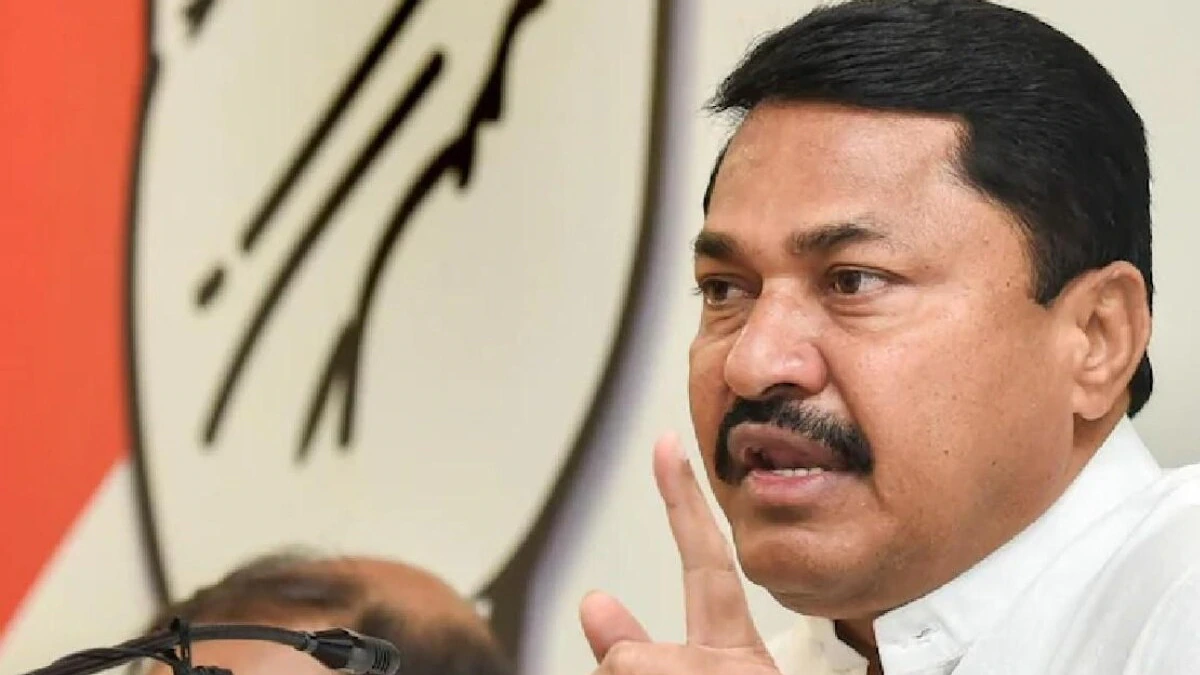
Nana Patole Denies Resignation Rumors: 'Everyone is Responsible for Defeat' 20
Maharashtra Congress President Nana Patole on Saturday dismissed reports claiming he had resigned, stating that the responsibility for the party’s defeat lies with everyone. Addressing the media, Patole said, “I have not given any resignation. The tenure is usually for three years, but I’ve been here for four. This is an internal matter of the party, and everyone deserves a chance to work. I never took credit when we won, so when we lose, the responsibility is collective.”
Reports had earlier suggested that Patole had written to Congress President Mallikarjun Kharge, seeking to step down from his position. However, Patole refuted these claims, emphasizing that his tenure had extended beyond the standard term and that such decisions are part of the party’s internal processes.
Maharashtra Assembly Leader of Opposition Vijay Wadettiwar also commented on the speculation, saying he was unaware of any formal resignation by Patole. Wadettiwar added that the party’s senior leadership shares credit for both victories and defeats. He hinted that electoral losses might have played a role in the rumors, but any decision regarding leadership changes would ultimately be made by the Congress high command in Delhi.
Despite securing his Sakoli assembly seat in Bhandara district, Patole’s narrow victory margin of just 208 votes in the Maharashtra Assembly elections has fueled criticism. The elections were a major setback for the Maha Vikas Aghadi (MVA) coalition, with the Congress securing only 16 seats. In contrast, the BJP-led Mahayuti alliance achieved a landslide victory, winning 235 seats. The BJP emerged as the single-largest party with 132 seats, while its allies, the Shiv Sena and the Nationalist Congress Party (NCP), claimed 57 and 41 seats, respectively.
The MVA coalition, which included the Congress, Shiv Sena (UBT), and the Sharad Pawar faction of the NCP, faced a crushing defeat. Congress secured 16 seats, the Shiv Sena (UBT) won 20, and the NCP (Sharad Pawar faction) managed just 10.
While rumors about Patole’s resignation continue to circulate, his statement underscores the collective nature of leadership accountability within the Congress party, especially during turbulent times. The final decision on the leadership question now rests with the party’s high command.