Nitin Gadkari Reveals: Lane Indiscipline, Not Speeding, is India's Biggest Road Menace 2
Road Transport and Highways Minister Nitin Gadkari on Thursday identified lane indiscipline as the primary cause of road accidents in India. Speaking in the Lok Sabha during the Question Hour, Gadkari shared that even his own car had been fined twice in Mumbai for violating traffic rules, underscoring the widespread nature of the issue.
Contrary to popular belief, Gadkari stated that speeding is not as significant a problem as it seems. “Globally, people drive fast, but lane indiscipline is where India faces its biggest challenge,” he emphasized.
The minister called for a robust campaign to educate citizens, particularly the youth, about traffic discipline. He also suggested that children be sensitized early on to understand the importance of adhering to traffic rules. Gadkari pointed out that technological measures, such as installing CCTV cameras, have been implemented to curb violations effectively.
In an appeal to his parliamentary colleagues, Gadkari urged members of the House to organize awareness programs in their constituencies. Lok Sabha Speaker Om Birla echoed his sentiment, emphasizing that lawmakers have a responsibility to educate citizens on traffic rules to prevent road accidents.
The minister’s candid admission and focus on lane discipline over speeding bring attention to the cultural and behavioral challenges that continue to plague India’s roads, making his remarks both timely and thought-provoking.
Cabinet Approves One Nation, One Election; to Be Tabled in Parliament 4
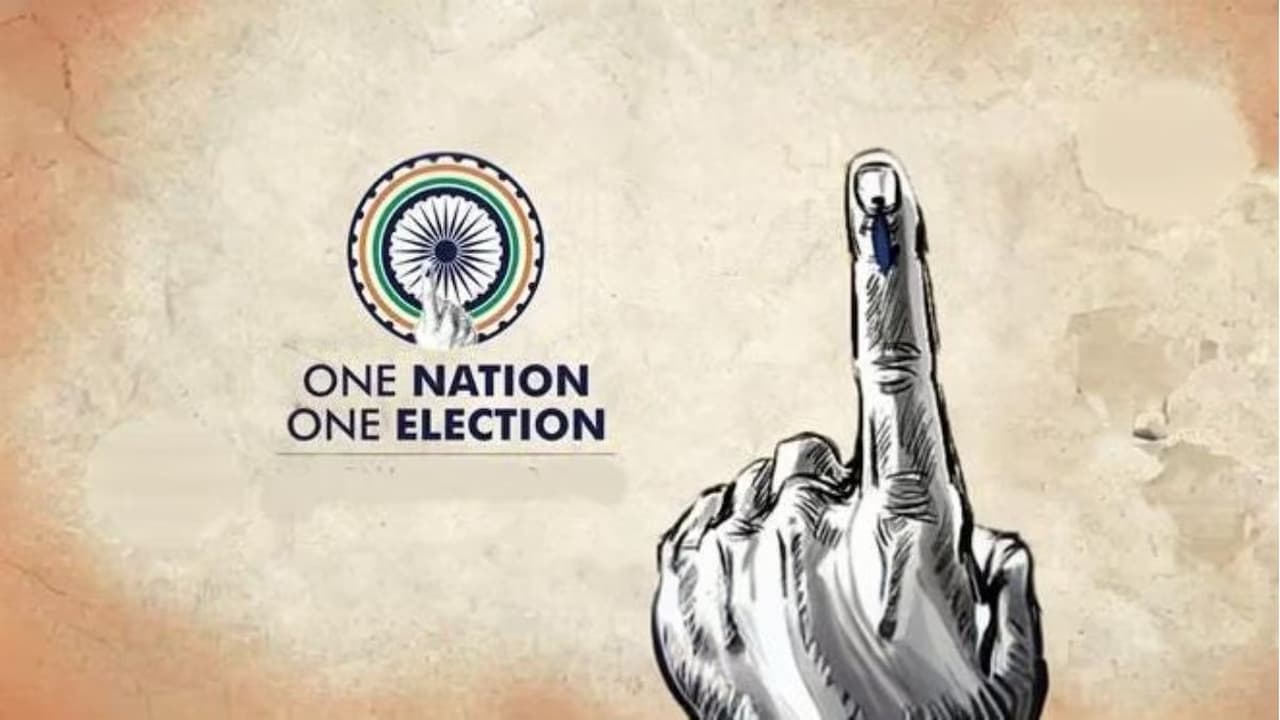
The Union Cabinet on Thursday approved bills to implement ‘One Nation, One Election’, and the draft legislation is likely to be introduced in Parliament in the ongoing Winter session, sources said.
The decision was taken at a meeting of the Union Cabinet chaired by Prime Minister Narendra Modi.
This decision follows the recommendations of a high-level committee chaired by former President Ram Nath Kovind, which had been advocating for this change since its formation in September 2023.
The proposal, now set for legislative action, seeks to conduct simultaneous elections for the Lok Sabha, state assemblies, and local bodies, which include municipalities and panchayats.
According to the approved plan, the implementation will occur in two phases: first, aligning the elections for the Lok Sabha and state assemblies, followed by local body elections within 100 days of the general elections.
The government is aiming to bring it in the ongoing Winter session of Parliament.
The sources said once the bill or bills are introduced in Parliament, the government would like to refer the measures to a joint committee of the two Houses for wider consultations.
The government is also keen to consult all the Speakers of various state legislative assemblies through committees.
In September, sources had said that the government is likely to bring three bills, including two to amend the Constitution, to put in place its plan to hold simultaneous elections.
Moving ahead with its ‘one nation, one election’ plan, the government in September accepted the recommendations of the high-level committee for holding simultaneous polls for the Lok Sabha, state assemblies, and local bodies in a phased manner.
Citing recommendations of the high-level committee, sources had said one of the proposed bills would seek to amend Article 82A by adding sub-clause (1) relating to the ‘appointed date’. It will also seek to insert subclause (2) to Article 82A relating to the end of terms of the Lok Sabha and state legislative assemblies together.
It also proposes to amend Article 83(2) and insert new sub-clauses (3) and (4) relating to the duration and dissolution of the Lok Sabha. It also has provisions related to the dissolution of the legislative assemblies and amending Article 327 to insert the term “simultaneous elections.
This bill will not require ratification by at least 50 per cent of the states, the recommendation said.
The proposed second Constitutional Amendment Bill will require ratification by at least 50 per cent of the state assemblies as it will deal with matters relating to state affairs.
It will seek to amend constitutional provisions relating to the preparation of electoral rolls by the Election Commission (EC) in consultation with State Election Commissions (SECs) for elections to local bodies.
Constitutionally, the EC and SECs are separate bodies. The EC holds elections to the posts of the President, the Vice President, Lok Sabha, Rajya Sabha, state assemblies, and state legislative councils, while the SECs are mandated to conduct polls for local bodies such as municipalities and panchayats.
The proposed second Constitution amendment bill will also create provisions to hold simultaneous elections to municipalities and panchayats, along with elections to Lok Sabha and state legislative assemblies, by inserting a new Article 324A.
The third bill will be an ordinary one to amend provisions in three laws dealing with Union territories having legislative assemblies—Puducherry, Delhi, and Jammu and Kashmir—to align the terms of these Houses with other legislative assemblies and the Lok Sabha as proposed in the first constitutional amendment bill.
The statutes it proposes to amend are the Government of National Capital Territory of Delhi Act-1991, the Government of Union Territories Act-1963 and the Jammu and Kashmir Reorganisation Act-2019.
The proposed bill will be ordinary legislation not requiring a change in the Constitution and will also not need ratification by the states.
The high-level committee had proposed amendments to three Articles, the insertion of 12 new sub-clauses in the existing articles and tweaking three laws related to Union Territories having legislative assemblies. The total number of amendments and new insertions stands at 18.
In its report submitted to the government in March, just before the general election was announced, the panel recommended implementing “one nation, one election” in two phases.
There was no clarity yet on the number of bills the government plans to bring for holding simultaneous polls in the country.
Advocate Vrinda Grover Withdraws From Representing RG Kar Victim's Family 6
Senior advocate Vrinda Grover will no longer be representing the R G Kar Medical College rape-murder victim’s family, sources said on Thursday.
They said that the concerned trial court, before which the trial in the rape-murder case is being held, has been informed accordingly and that the counsels stand discharged from the matter.
The sources said that at this stage, on account of “certain intervening factors and circumstances,” senior advocate Vrinda Grover is constrained to withdraw from the case proceedings in this matter and will no longer be representing the victim’s family.
The chamber of advocates Grover, including advocates Soutik Banerjee and Arjun Gooptu, were requested by the victim’s parents to provide legal representation before the Supreme Court, Calcutta High Court, and the Sealdah Sessions Court and ACJM Court, they said.
Grover’s chamber provided legal services and representation pro bono (free of cost) to the victim’s family before all courts from September 2024, the sources said.
The body of the on-duty post-graduate trainee doctor was found in the seminar room of R G Kar Medical College and Hospital on August 9. Post mortem of the body revealed that she was raped and brutally murdered.
The high court handed over the investigation into the case from the Kolkata Police to the Central Bureau of Investigation (CBI) after hearing a number of PILs on the matter, including one by the parents of the victim, who sought an impartial probe on the death of their daughter.
Rahul Gandhi Meets Family of 2020 Hathras Rape-Murder Victim, Invites BJP Criticism 8
Leader of Opposition in the Lok Sabha, Rahul Gandhi, met the family of a Dalit woman here who died allegedly after being gangraped in September 2020.
The Congress MP reached Bool Garhi village around 11.15 am, even as police stepped up deployment in and around the hamlet in the Chandpa area of the district in light of his visit.
Gandhi spent around 35 minutes with the family at their home and intercated with them. He left without speaking to a waiting group of reporters who had gathered in the village for his visit.
After Gandhi’s visit, Congress’ former Hathras chief Chandragupta Vikramaditya told reporters, “Rahul Gandhi has a relation with this family. He has always stood with them and will continue to do so. Today he came to listen to their problems. He is continuously fighting for their problems.” Last month, the Congress MP and LoP had tried to go to violence-hit Sambhal district to meet the victim families but were stopped by the state government with local authorities citing prohibition on the entry of outsiders, including public representatives, till December 10 in view of the law and order situation in the area.
Before Gandhi met the family, Chandragupt Vikramaditya told PTI, “Rahul ji and Priyanka ji are the leaders who are in touch with aggrieved people across the country. Rahul ji has been in touch with this family also.” Uttar Pradesh Deputy Chief Minister Brajesh Pathak, however, criticised Gandhi for the visit, saying he is “confused” and “not aware of the status of the case.”
“The CBI has already conducted an inquiry into this case. Under the BJP rule, no culprit is allowed to get away scot-free,” Pathak said. “Whether Sambhal or Hathras, he (Gandhi) keeps visiting them just to be in limelight and not for any other reason.” UP Minister for Minorities Welfare Om Prakash Rajbhar also slammed Rahul Gandhi. “If he was not aware of the facts of the case, he should know that a CBI probe had long been done.” “If he knows of any higher investigating authority, he should let us know. Such visits are mere gimmicks showing the Congress desperation,” Rajbhar said.
Rahul and Priyanka Gandhi had met the family on October 3, 2020, and declared they would fight for ensuring justice for the deceased.
The 19-year-old woman was allegedly gangraped on September 14, 2020. She was moved to Aligarh for treatment and later to Delhi, where she died on September 29, 2020.
She was cremated in the early hours of October 30, with her family alleging the local police had forced them to conduct the last rites in the dead of the night. Local police officers, however, had told PTI that the cremation was carried out “as per the wishes of the family.”
After an initial police probe into the matter, the CBI had taken over the investigation into the case and filed a charge sheet against all four accused.
Shiv Sena Likely to Drop Few Ministers From Previous Govt in New Cabinet 10
The ruling Shiv Sena in Maharashtra may not give another chance to three leaders in the new state cabinet even as they were ministers in the previous government in view of complaints about their performance and inaccessibility, a party leader said.
The party is likely to induct fresh faces in their place.
An aide of Deputy Chief Minister Eknath Shinde and the party MLA said several legislators raised concern regarding certain ministers. They said the three former ministers—one each from Konkan, western Maharashtra, and Marathwada—were inaccessible even to the party MLAs.
“We have raised this issue with the deputy CM (Shinde) and demanded that they should not be inducted in the new cabinet. These ministers did not even meet their own party MLAs,” the aide said.
This development reflects the churn within the Shiv Sena, which has 57 MLAs.
In a related development, Shinde’s office said he has not gone to Delhi to hold talks on cabinet expansion.
Shinde was not scheduled to go to Delhi, his office added.
Chief Minister Devendra Fadnavis left for the national capital on Wednesday, his office said, adding that it was a courtesy visit, the first after taking over the reins of the state again. He was scheduled to meet Prime Minister Narendra Modi, President Droupadi Murmu, and Vice President Jagdeep Dhankhar.
The aide also said that the cabinet expansion of the new government is likely to take place by December 14, just before the winter session of the state legislature commences.
Shiv Sena MLA and spokesperson Sanjay Shirsat said CM Fadnavis has made it clear that the cabinet expansion will take place before the winter session of the state legislature, which begins on December 16.
On complaints and possible exclusion of some former ministers in the previous government, Shirsat said, “Such grievances must have reached Shinde saheb. He is the chief leader of the party and he will decide on it.”
Protests in Parbhani Over Damage to Constitution Replica; Collector’s Office Vandalised 12
Violent protests took place for the second day in central Maharashtra’s Parbhani city on Wednesday over the vandalising of a replica of the Indian Constitution, police said.
Amid the bandh called by Ambedkarite activists, a mob indulged in arson and the district collector’s office was vandalised, officials said.
A glass-encased replica of the Constitution outside Parbhani railway station, close to a statue of Dr B R Ambedkar, was found to have been damaged on Tuesday, sparking protests.
Police arrested a man in connection with the incident, but protests resumed on Wednesday morning.
“Pipes outside a shop were set ablaze around 1 pm today. As the mob became violent, police fired tear gas shells and dispersed them,” said acting Superintendent of Police Yeshwant Kale.
The protesters were demanding that police should find who was behind Tuesday’s incident of vandalising, he told PTI.
Hundreds of protesters gathered outside the collector’s office in the afternoon, and some of them rushed inside and damaged furniture and window panes before police brought the situation under control, officials said.
Senior officials including the Special Inspector General of Police of the range visited the spot.
Bandh was also observed in Vasmat area of the district, local officials said.
Protesters had blocked the railway tracks at Parbhani station on Tuesday evening and roughed up the loco-pilot of the Nandigram Express.
I Am Indebted to Everyone, Want INDIA to Stay Well: Mamata on Leaders Backing Her in Heading Bloc 14
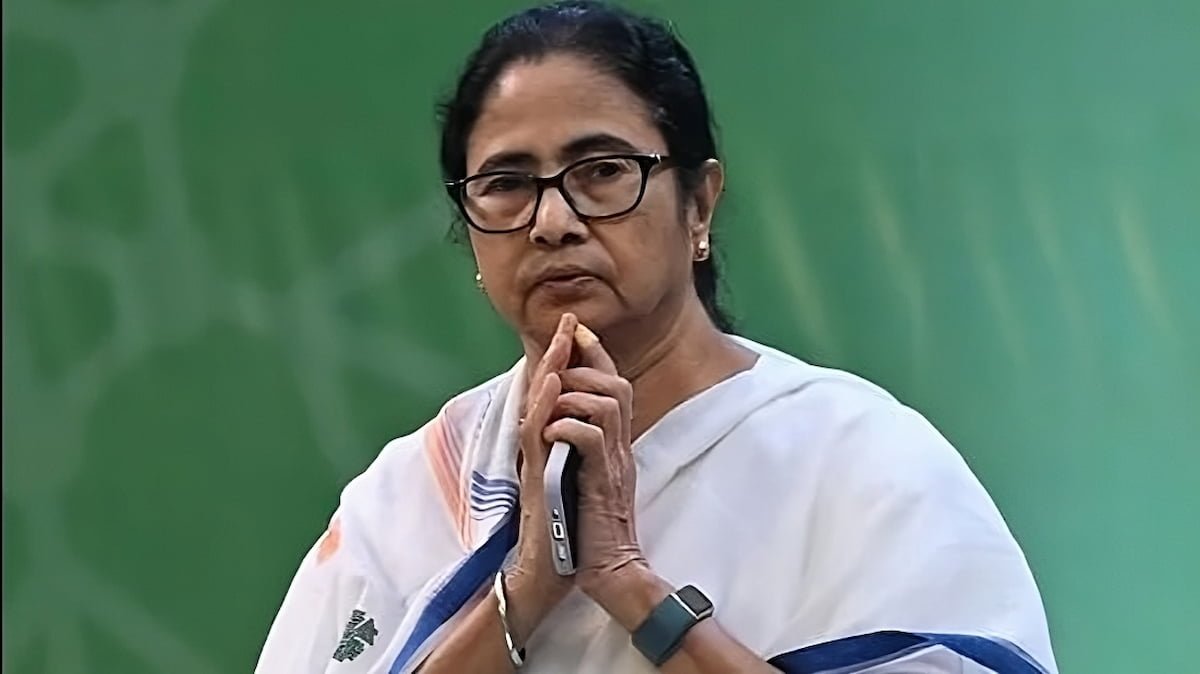
West Bengal Chief Minister Mamata Banerjee on Wednesday thanked several senior leaders of the INDIA bloc for backing her as the leader of the non-BJP coalition.
Banerjee, who is on a three-day trip to the coastal town of Digha in Purba Medinipur district, told reporters that she would pray for the well-being of those leaders and the alliance.
“I am indebted to everyone for the respect they have shown to me. I pray for their good health. I want them as well as their party to stay well. I also want INDIA to stay well,” Banerjee said.
The Trinamool Congress supremo refused to speak more on the issue.
Banerjee last week expressed her dissatisfaction with the functioning of the INDIA bloc and signalled her intent to take charge of the alliance if given an opportunity. Leaders of several of its constituents backed her, saying she should be allowed to lead the coalition.
“I had formed the INDIA bloc, now it is up to those leading the front to manage it. If they can’t run the show, what can I do? I would just say that everyone needs to be taken along,” she said in an interview with Bengali news channel News 18 Bangla.
Leaders such as NCP (SP) chief Sharad Pawar and RJD president Lalu Prasad, backed her.
While Pawar called her a ‘capable leader’, Prasad said that Banerjee should Mamta Banerjee should be allowed to head the INDIA bloc.
YSRCP Rajya Sabha MP Vijayasai Reddy has also said that the TMC supremo could better handle INDIA bloc parties.
The Aliya Fakhri Case: A Tale of Love, Heartbreak, and Tragedy 16
In an extraordinary and heart-wrenching turn of events, the story of Aliya Fakhri, the younger sister of Bollywood actress Nargis Fakhri, has captured widespread attention. Aliya’s arrest for allegedly setting fire to a garage, resulting in the deaths of her ex-boyfriend Edward Jacobs and his friend Anastasia Ettienne, has left a trail of shock, disbelief, and unanswered questions. What began as a love story spiralled into a tale of heartbreak and, ultimately, revenge. This tragic case highlights the devastating consequences of unchecked emotions, fractured relationships and the complex human psyche.
A Life of Contrasts: The Kindness of Aliya Fakhri
Aliya Fakhri, also known as “Athena” in her professional life, was described by friends and family as a kind, caring, and compassionate individual. A former stripper, Aliya had a magnetic personality that drew people to her. Her friends often spoke of her as a helpful and empathetic person who always went out of her way to support others. Her mother echoed these sentiments, stating, “Aliya was someone who cared for everyone and tried to help people in need. I cannot believe she is capable of such an act.”
Despite this positive image, Aliya’s life was not without its challenges. She had a complicated past, marked by struggles and an estranged relationship with her elder sister, Nargis Fakhri, a renowned Bollywood actress. Sources revealed that the two had not been in touch for over 20 years, although Aliya reportedly spoke fondly of her sister. Nargis, known for her performances in films like Rockstar and Madras Cafe, has remained silent on the incident, choosing not to comment publicly amidst the intense media scrutiny.
A Love Story Turned Sour
The relationship between Aliya and Edward Jacobs was tumultuous from the beginning. Jacobs, a 35-year-old plumber and father of four, met Aliya in their shared social circle. Their bond grew over time, but friends described their relationship as “on and off” and often marred by arguments and misunderstandings. Despite these issues, Aliya appeared deeply invested in Jacobs, even after he ended their relationship a year ago.
Jacobs’ decision to move on from their relationship left Aliya devastated. Her attempts to reconcile were met with resistance, as Jacobs found a new partner and seemed determined to leave the past behind. Aliya, however, struggled to accept the breakup. Friends speculated that her actions may have been driven by jealousy and unresolved emotions as she watched the man she once loved build a new life without her.
The Night of the Tragedy
On the fateful morning of November 2, the culmination of Aliya’s pain and frustration led to an unthinkable act. According to reports, she arrived at the Queens, New York, garage where Jacobs was living and shouted, “You are all going to die today.” Witnesses claimed that shortly after, the two-story garage was engulfed in flames. Jacobs and his friend Anastasia Ettienne, who had gone back upstairs to rescue him, succumbed to smoke inhalation and burns before they could escape the blaze. Other residents of the building managed to flee, leaving behind a scene of destruction and heartbreak.
The aftermath was devastating. Jacobs, a hard-working plumber and devoted father, left behind four children who now face a future without their father. Ettienne, a close friend and confidante, was also caught in the tragic incident, adding another layer of grief to an already heart-wrenching story.
Legal Proceedings and Allegations
Aliya Fakhri has been charged with multiple counts of murder in the first and second degrees, along with arson. If convicted of the top charge, she faces a maximum sentence of life in prison. The Queens District Attorney, Melinda Katz, described the act as premeditated, emphasising Aliya’s alleged intent to harm those inside the building.
Despite these allegations, Aliya’s friends and family struggle to reconcile the charges with the person they knew. Many expressed disbelief, describing her as incapable of such violence. “Aliya was a kind and loving person,” said a close friend. “This doesn’t sound like her at all.” Her mother echoed these sentiments, maintaining that her daughter was being misjudged. However, prosecutors argue that the evidence against Aliya is strong, citing eyewitness accounts and the circumstances leading up to the fire.
The Impact on Nargis Fakhri
The incident has thrust Aliya’s estranged sister, Nargis Fakhri, into an unwanted spotlight. Known for her roles in Bollywood films like Rockstar and Main Tera Hero, Nargis has built a successful career in the entertainment industry. Sources suggest that the sisters have not been in contact for decades, yet the media frenzy surrounding the case has inevitably drawn her into the narrative.
Nargis has refrained from making any public statements about the incident, but her silence has not deterred media outlets from pursuing her for comments. The pressure of this scrutiny, combined with the personal shock of her sister’s alleged actions, has undoubtedly placed Nargis in a challenging position. Her fans and the public await her response, though she may choose to maintain her privacy as the case unfolds.
A Broader Reflection on Love, Loss, and Revenge
The Aliya Fakhri case is more than a sensational crime story; it is a poignant reflection on the darker aspects of love and heartbreak. Aliya’s alleged actions, though extreme, underscore the emotional turmoil that can arise from unprocessed pain and rejection. Her story serves as a tragic reminder of how unresolved feelings can spiral into destructive behaviour, leaving irreversible consequences in their wake.
At its core, this case highlights the complexities of human relationships and the fragile line between love and hate. It also raises questions about the support systems available to individuals dealing with emotional distress. Could this tragedy have been prevented if Aliya had received the help she needed? These are the questions that linger as the case moves forward.
The Road Ahead
As Aliya Fakhri faces her legal battles, the ripple effects of her alleged actions continue to impact those around her. Edward Jacobs’ family, especially his four children, must now navigate life without their father. The friends and loved ones of both victims are left grappling with grief and anger, searching for closure in a situation that offers none.
For Aliya, the path ahead is uncertain. While her friends and family continue to defend her character, the evidence presented by prosecutors paints a starkly different picture. The court proceedings will determine her fate, but the emotional and societal repercussions of this case will linger long after the verdict is delivered.
A Closing Note
The story of Aliya Fakhri, Edward Jacobs, and Anastasia Ettienne is a tragic testament to the complexities of human relationships and the devastating consequences of unresolved emotions. It serves as a sombre reminder of the need for compassion, understanding, and mental health support in navigating the challenges of love and loss. As the legal process unfolds, the world watches with a mixture of sadness, curiosity, and hope for justice.
Maharashtra Assembly Developments: Fadnavis Government Secures Confidence Vote Amid Political Dynamics 18
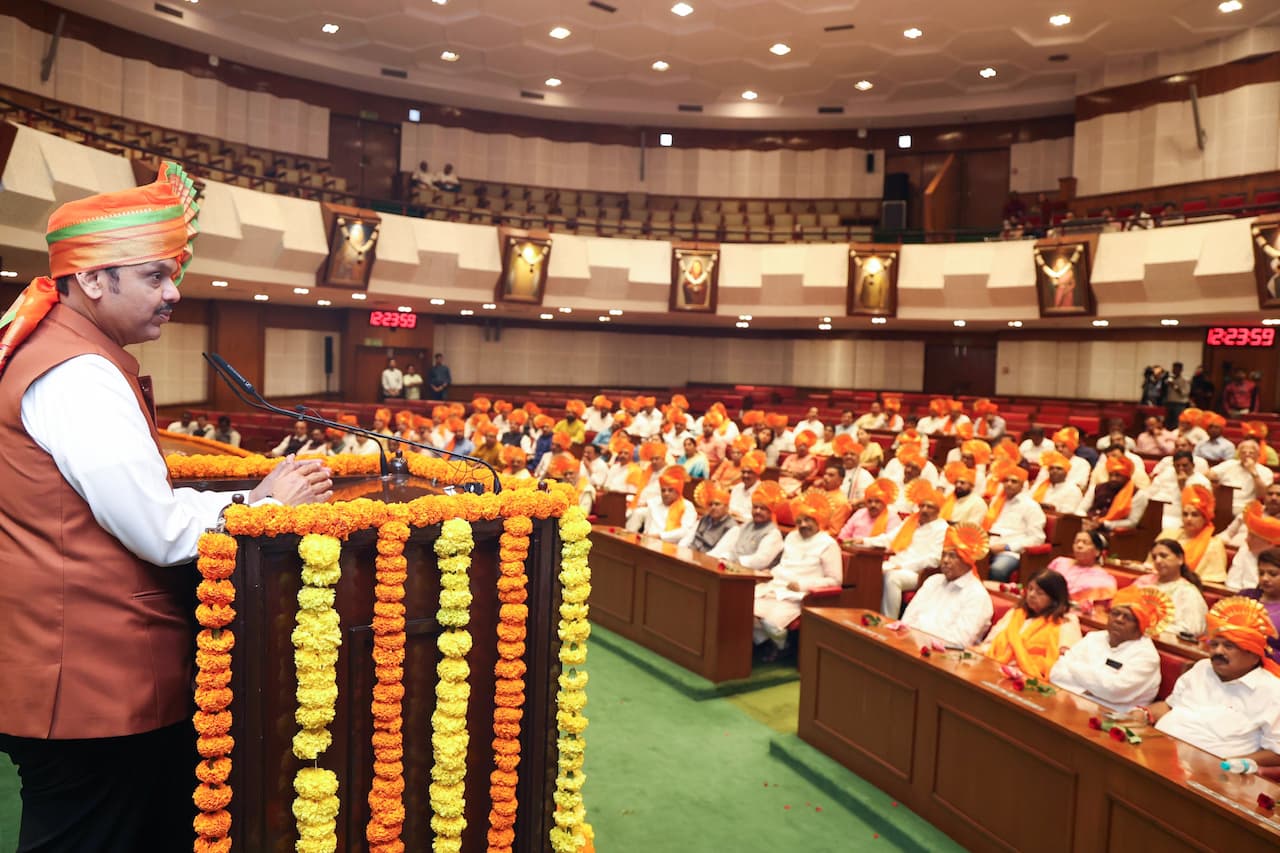
The Maharashtra Assembly’s three-day special session marked a turning point in the state’s political dynamics, showcasing the consolidation of power by the Devendra Fadnavis-led Mahayuti coalition and the challenges faced by the opposition Maha Vikas Aghadi (MVA). During the session, BJP MLA Rahul Narwekar was elected unopposed as the Assembly Speaker after the MVA declined to nominate a candidate. This election and the subsequent passage of a confidence vote in favor of the ruling coalition reinforced its majority, with 237 MLAs in the 288-member assembly. Shiv Sena MLA Uday Samant introduced the confidence motion, which was passed by a voice vote, further establishing the government’s firm grip on the Assembly.
The MVA, comprising the Congress, NCP (Sharad Pawar faction), and Shiv Sena (UBT), used the session to highlight its dissatisfaction with the current electoral processes. Maharashtra Congress Chief Nana Patole and NCP leader Sharad Pawar questioned the credibility of electronic voting machines (EVMs), demanding a return to ballot paper voting, citing public concerns over the mandate’s legitimacy. This skepticism followed the Mahayuti coalition’s sweeping victory in the recent elections, where it secured over 230 seats, while the MVA managed only 46. Deputy Chief Minister Eknath Shinde, in a sharp rebuttal, criticized the opposition for using EVMs as a scapegoat for their electoral failures, calling for them to accept the people’s mandate.
Amid this, discussions over cabinet expansion and portfolio allocation gained momentum. The BJP is expected to secure 21-22 ministerial berths, followed by Shiv Sena with 11-12 and the NCP faction with 9-10. The final decisions on these allocations are being led by Chief Minister Fadnavis, Deputy Chief Ministers Shinde and Ajit Pawar, and are reportedly in the final stages. A performance review of the ministers from the previous administration is influencing these decisions, and some reshuffle is anticipated.
The election of Rahul Narwekar as Speaker was not without controversy. The Shiv Sena (UBT) boycotted the vote, citing Narwekar’s past rulings that legitimised the Shinde faction as the “real” Shiv Sena after the party’s split and similarly recognised the Ajit Pawar faction as the true NCP. Despite these criticisms, Narwekar’s unanimous election underscored the Mahayuti coalition’s dominance. In his address, Chief Minister Fadnavis requested the Speaker to address overcrowding issues within the Legislative Assembly premises, which he described as chaotic due to the influx of delegations and visitors accompanying MLAs. Opposition leader Jayant Patil supported this call, suggesting alternative arrangements to manage crowding and ensure efficient legislative proceedings.
The MVA also formally demanded the posts of Leader of Opposition and Deputy Speaker, indicating its intent to assert a stronger presence in the Assembly. These demands, alongside the opposition’s critique of the electoral process, signal the political contention that lies ahead. Despite these challenges, the Mahayuti coalition has firmly established itself as the dominant force in Maharashtra, with its overwhelming electoral success providing a robust mandate. The coming months will test the government’s ability to deliver on governance while navigating opposition demands, setting the stage for an intriguing political phase in the state.
Drama, Smiles, and Sanskrit Slips: Maharashtra Assembly's Oath-Taking Gala 20
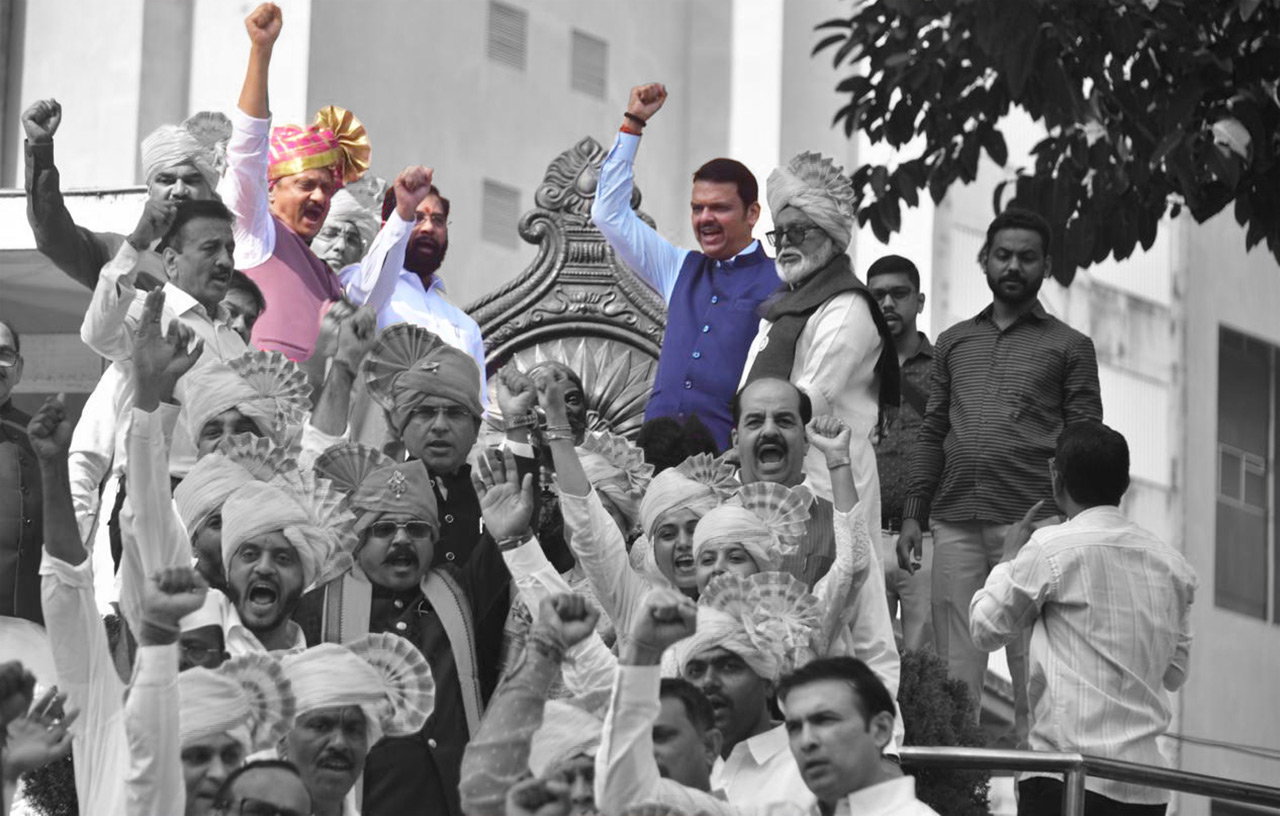
In a political theatre brimming with spectacle, sarcasm, and subtle snubs, the Maharashtra Legislative Assembly kicked off its three-day special session with a mix of seriousness, humour, and cringe-worthy Sanskrit pronunciations. The newly elected 288 MLAs took their oaths in Mumbai, but not before a healthy dose of political gossip and high drama took centre stage.
The star-studded entrances of Chief Minister Devendra Fadnavis and his deputies, Eknath Shinde and Ajit Pawar, were nothing short of a Bollywood red carpet moment. Fadnavis, ever the seasoned politician, greeted everyone with his signature grin, while Ajit Pawar played the role of the jovial crowd-pleaser, decked out in his now-famous pink jacket—a sartorial statement that is fast becoming a meme-worthy symbol of optimism. But amidst the smiles, Eknath Shinde cut a visibly uncomfortable figure. Once the Chief Minister, Shinde now had to settle for the Deputy CM role, a demotion he reportedly accepted only after exhausting every possible tantrum in the book. BJP’s cold shoulder left him with no choice, reminding him—and the rest of us—that in politics, beggars indeed can’t be choosers.
Meanwhile, Kalidas Kolambkar, the senior-most legislator, took charge as the pro-tem speaker with a gravitas that briefly overshadowed the lighter moments. A nine-time MLA and a seasoned BJP leader, Kolambkar oversaw the oath-taking ceremony, which saw a mix of hilarious mispronunciations and moments of nationalist zeal. Several MLAs chose to take their oaths in Sanskrit to emphasise their “nationalist beliefs.” Unfortunately, their mangled pronunciations turned the sacred language into an unintentional comedy routine, leaving the assembly amused and bemused.
Ajit Pawar, in stark contrast, was the life of the Assembly. Greeting everyone with his infectious humour and larger-than-life charisma, he reminded the house why he’s often called a man of action—and endless energy. His commitment to the alliance with the BJP was unwavering, and his pink jacket and broad smile seemed to encapsulate the “no hard feelings” vibe he carried.
However, the elephant in the room was the absence of the opposition MVA alliance, which boycotted the session in dramatic fashion. Alleging EVM tampering and accusing the government of “murdering democracy,” Aaditya Thackeray and other opposition leaders decried the election results as fraudulent. According to them, the massive mandate for the ruling Mahayuti alliance was a result of “EVM manipulation” rather than the people’s will. Their fiery speeches outside the assembly added fuel to an already charged atmosphere, with Congress leader Amit Deshmukh echoing the call for a review of election processes.
Amidst the pomp and drama, the question of cabinet portfolios loomed large. BJP, being the biggest player, is expected to bag 21-22 ministerial berths, while Shiv Sena might settle for 11-12 and NCP for 9-10. Shinde’s wish for the Home portfolio—a position of power previously held by Fadnavis—remains uncertain. With the BJP holding the reins tightly, Shinde might have to contend with a less glamorous ministry, further adding to his woes.
The pink jackets weren’t the only colourful highlight of the day. NCP MLAs sported pink phetas in solidarity with Pawar, adding a touch of coordinated flair to the proceedings. Meanwhile, the oath-taking ceremony also saw moments of cultural diversity. Some MLAs invoked Allah, others stumbled over Sanskrit, and the rest went the straightforward route, keeping the assembly entertained through it all.
As the first day wrapped up, the political stage was set for the next act. The trust vote for the Fadnavis-led government and the speaker’s election are just around the corner. Meanwhile, the winter session in Nagpur and the impending cabinet expansion promise more drama, negotiations, and surprises.
In the end, the special assembly session was less about governance and more about political theatre—a heady mix of humour, sarcasm, and intrigue. For now, Maharashtra waits to see whether Shinde will get his coveted home portfolio and whether the opposition can convert its fiery rhetoric into effective action. Until then, the assembly floor remains the hottest stage in town.