
Home Blog Page 119

The Aliya Fakhri Case: A Tale of Love, Heartbreak, and Tragedy

nargis fakhri, aliya fakhri, crime case, crime, bollywood
The Aliya Fakhri Case: A Tale of Love, Heartbreak, and Tragedy 2

In an extraordinary and heart-wrenching turn of events, the story of Aliya Fakhri, the younger sister of Bollywood actress Nargis Fakhri, has captured widespread attention. Aliya’s arrest for allegedly setting fire to a garage, resulting in the deaths of her ex-boyfriend Edward Jacobs and his friend Anastasia Ettienne, has left a trail of shock, disbelief, and unanswered questions. What began as a love story spiralled into a tale of heartbreak and, ultimately, revenge. This tragic case highlights the devastating consequences of unchecked emotions, fractured relationships and the complex human psyche.

A Life of Contrasts: The Kindness of Aliya Fakhri

Aliya Fakhri, also known as “Athena” in her professional life, was described by friends and family as a kind, caring, and compassionate individual. A former stripper, Aliya had a magnetic personality that drew people to her. Her friends often spoke of her as a helpful and empathetic person who always went out of her way to support others. Her mother echoed these sentiments, stating, “Aliya was someone who cared for everyone and tried to help people in need. I cannot believe she is capable of such an act.”

Despite this positive image, Aliya’s life was not without its challenges. She had a complicated past, marked by struggles and an estranged relationship with her elder sister, Nargis Fakhri, a renowned Bollywood actress. Sources revealed that the two had not been in touch for over 20 years, although Aliya reportedly spoke fondly of her sister. Nargis, known for her performances in films like Rockstar and Madras Cafe, has remained silent on the incident, choosing not to comment publicly amidst the intense media scrutiny.

A Love Story Turned Sour

The relationship between Aliya and Edward Jacobs was tumultuous from the beginning. Jacobs, a 35-year-old plumber and father of four, met Aliya in their shared social circle. Their bond grew over time, but friends described their relationship as “on and off” and often marred by arguments and misunderstandings. Despite these issues, Aliya appeared deeply invested in Jacobs, even after he ended their relationship a year ago.

Jacobs’ decision to move on from their relationship left Aliya devastated. Her attempts to reconcile were met with resistance, as Jacobs found a new partner and seemed determined to leave the past behind. Aliya, however, struggled to accept the breakup. Friends speculated that her actions may have been driven by jealousy and unresolved emotions as she watched the man she once loved build a new life without her.

The Night of the Tragedy

On the fateful morning of November 2, the culmination of Aliya’s pain and frustration led to an unthinkable act. According to reports, she arrived at the Queens, New York, garage where Jacobs was living and shouted, “You are all going to die today.” Witnesses claimed that shortly after, the two-story garage was engulfed in flames. Jacobs and his friend Anastasia Ettienne, who had gone back upstairs to rescue him, succumbed to smoke inhalation and burns before they could escape the blaze. Other residents of the building managed to flee, leaving behind a scene of destruction and heartbreak.

The aftermath was devastating. Jacobs, a hard-working plumber and devoted father, left behind four children who now face a future without their father. Ettienne, a close friend and confidante, was also caught in the tragic incident, adding another layer of grief to an already heart-wrenching story.

Legal Proceedings and Allegations

Aliya Fakhri has been charged with multiple counts of murder in the first and second degrees, along with arson. If convicted of the top charge, she faces a maximum sentence of life in prison. The Queens District Attorney, Melinda Katz, described the act as premeditated, emphasising Aliya’s alleged intent to harm those inside the building.

Despite these allegations, Aliya’s friends and family struggle to reconcile the charges with the person they knew. Many expressed disbelief, describing her as incapable of such violence. “Aliya was a kind and loving person,” said a close friend. “This doesn’t sound like her at all.” Her mother echoed these sentiments, maintaining that her daughter was being misjudged. However, prosecutors argue that the evidence against Aliya is strong, citing eyewitness accounts and the circumstances leading up to the fire.

The Impact on Nargis Fakhri

The incident has thrust Aliya’s estranged sister, Nargis Fakhri, into an unwanted spotlight. Known for her roles in Bollywood films like Rockstar and Main Tera Hero, Nargis has built a successful career in the entertainment industry. Sources suggest that the sisters have not been in contact for decades, yet the media frenzy surrounding the case has inevitably drawn her into the narrative.

Nargis has refrained from making any public statements about the incident, but her silence has not deterred media outlets from pursuing her for comments. The pressure of this scrutiny, combined with the personal shock of her sister’s alleged actions, has undoubtedly placed Nargis in a challenging position. Her fans and the public await her response, though she may choose to maintain her privacy as the case unfolds.

A Broader Reflection on Love, Loss, and Revenge

The Aliya Fakhri case is more than a sensational crime story; it is a poignant reflection on the darker aspects of love and heartbreak. Aliya’s alleged actions, though extreme, underscore the emotional turmoil that can arise from unprocessed pain and rejection. Her story serves as a tragic reminder of how unresolved feelings can spiral into destructive behaviour, leaving irreversible consequences in their wake.

At its core, this case highlights the complexities of human relationships and the fragile line between love and hate. It also raises questions about the support systems available to individuals dealing with emotional distress. Could this tragedy have been prevented if Aliya had received the help she needed? These are the questions that linger as the case moves forward.

The Road Ahead

As Aliya Fakhri faces her legal battles, the ripple effects of her alleged actions continue to impact those around her. Edward Jacobs’ family, especially his four children, must now navigate life without their father. The friends and loved ones of both victims are left grappling with grief and anger, searching for closure in a situation that offers none.

For Aliya, the path ahead is uncertain. While her friends and family continue to defend her character, the evidence presented by prosecutors paints a starkly different picture. The court proceedings will determine her fate, but the emotional and societal repercussions of this case will linger long after the verdict is delivered.

A Closing Note

The story of Aliya Fakhri, Edward Jacobs, and Anastasia Ettienne is a tragic testament to the complexities of human relationships and the devastating consequences of unresolved emotions. It serves as a sombre reminder of the need for compassion, understanding, and mental health support in navigating the challenges of love and loss. As the legal process unfolds, the world watches with a mixture of sadness, curiosity, and hope for justice.
Maharashtra Assembly Developments: Fadnavis Government Secures Confidence Vote Amid Political Dynamics

fadnavis, devendra fadnavis, maharashtra, fadnavis government, bjp, confidence vote, rahul narvekar
Maharashtra Assembly Developments: Fadnavis Government Secures Confidence Vote Amid Political Dynamics 4

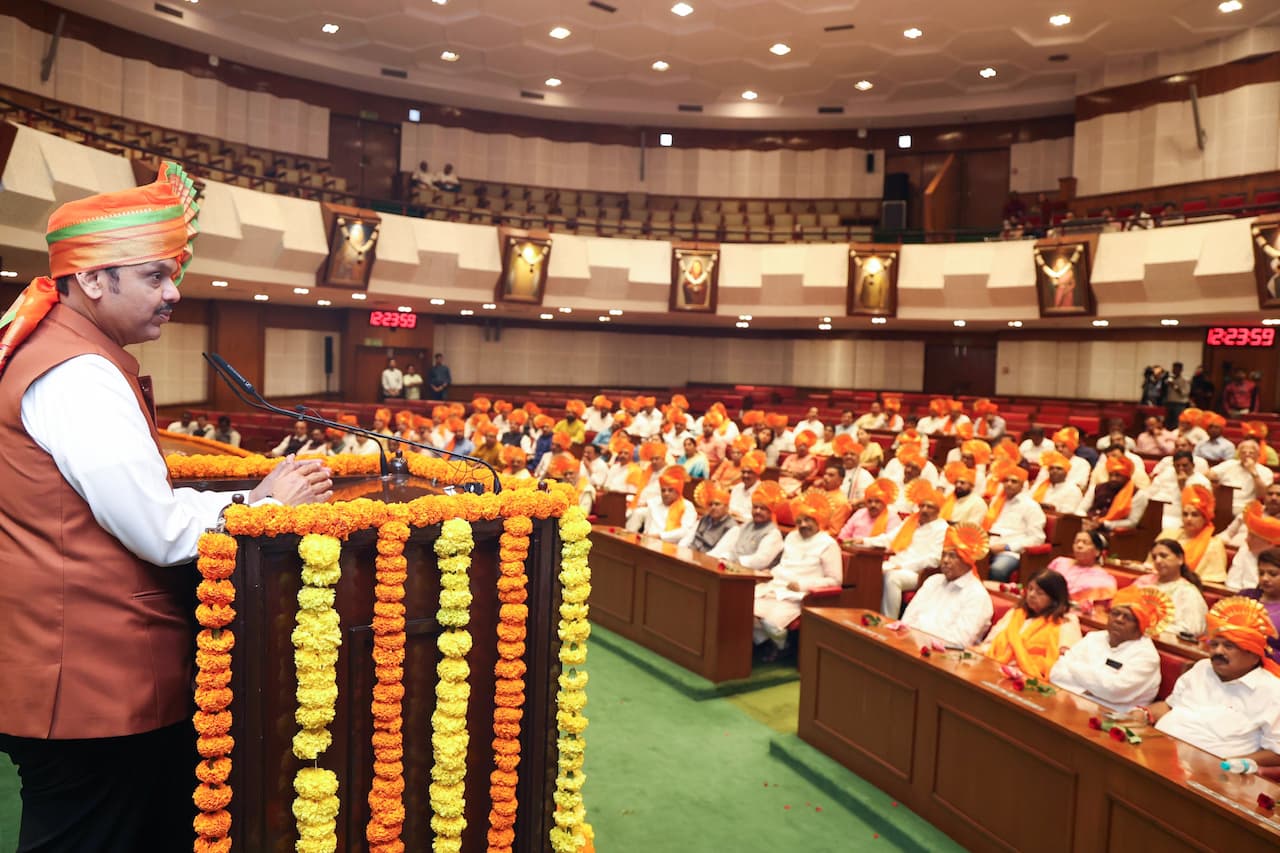
The Maharashtra Assembly’s three-day special session marked a turning point in the state’s political dynamics, showcasing the consolidation of power by the Devendra Fadnavis-led Mahayuti coalition and the challenges faced by the opposition Maha Vikas Aghadi (MVA). During the session, BJP MLA Rahul Narwekar was elected unopposed as the Assembly Speaker after the MVA declined to nominate a candidate. This election and the subsequent passage of a confidence vote in favor of the ruling coalition reinforced its majority, with 237 MLAs in the 288-member assembly. Shiv Sena MLA Uday Samant introduced the confidence motion, which was passed by a voice vote, further establishing the government’s firm grip on the Assembly.

The MVA, comprising the Congress, NCP (Sharad Pawar faction), and Shiv Sena (UBT), used the session to highlight its dissatisfaction with the current electoral processes. Maharashtra Congress Chief Nana Patole and NCP leader Sharad Pawar questioned the credibility of electronic voting machines (EVMs), demanding a return to ballot paper voting, citing public concerns over the mandate’s legitimacy. This skepticism followed the Mahayuti coalition’s sweeping victory in the recent elections, where it secured over 230 seats, while the MVA managed only 46. Deputy Chief Minister Eknath Shinde, in a sharp rebuttal, criticized the opposition for using EVMs as a scapegoat for their electoral failures, calling for them to accept the people’s mandate.

Amid this, discussions over cabinet expansion and portfolio allocation gained momentum. The BJP is expected to secure 21-22 ministerial berths, followed by Shiv Sena with 11-12 and the NCP faction with 9-10. The final decisions on these allocations are being led by Chief Minister Fadnavis, Deputy Chief Ministers Shinde and Ajit Pawar, and are reportedly in the final stages. A performance review of the ministers from the previous administration is influencing these decisions, and some reshuffle is anticipated.

The election of Rahul Narwekar as Speaker was not without controversy. The Shiv Sena (UBT) boycotted the vote, citing Narwekar’s past rulings that legitimised the Shinde faction as the “real” Shiv Sena after the party’s split and similarly recognised the Ajit Pawar faction as the true NCP. Despite these criticisms, Narwekar’s unanimous election underscored the Mahayuti coalition’s dominance. In his address, Chief Minister Fadnavis requested the Speaker to address overcrowding issues within the Legislative Assembly premises, which he described as chaotic due to the influx of delegations and visitors accompanying MLAs. Opposition leader Jayant Patil supported this call, suggesting alternative arrangements to manage crowding and ensure efficient legislative proceedings.

The MVA also formally demanded the posts of Leader of Opposition and Deputy Speaker, indicating its intent to assert a stronger presence in the Assembly. These demands, alongside the opposition’s critique of the electoral process, signal the political contention that lies ahead. Despite these challenges, the Mahayuti coalition has firmly established itself as the dominant force in Maharashtra, with its overwhelming electoral success providing a robust mandate. The coming months will test the government’s ability to deliver on governance while navigating opposition demands, setting the stage for an intriguing political phase in the state.

Drama, Smiles, and Sanskrit Slips: Maharashtra Assembly’s Oath-Taking Gala

mahayuti, ajit pawar, devendra fadnavis, eknath shinde, maharashtra, legislative assembly, vidhan parishad
Drama, Smiles, and Sanskrit Slips: Maharashtra Assembly's Oath-Taking Gala 6

In a political theatre brimming with spectacle, sarcasm, and subtle snubs, the Maharashtra Legislative Assembly kicked off its three-day special session with a mix of seriousness, humour, and cringe-worthy Sanskrit pronunciations. The newly elected 288 MLAs took their oaths in Mumbai, but not before a healthy dose of political gossip and high drama took centre stage.

The star-studded entrances of Chief Minister Devendra Fadnavis and his deputies, Eknath Shinde and Ajit Pawar, were nothing short of a Bollywood red carpet moment. Fadnavis, ever the seasoned politician, greeted everyone with his signature grin, while Ajit Pawar played the role of the jovial crowd-pleaser, decked out in his now-famous pink jacket—a sartorial statement that is fast becoming a meme-worthy symbol of optimism. But amidst the smiles, Eknath Shinde cut a visibly uncomfortable figure. Once the Chief Minister, Shinde now had to settle for the Deputy CM role, a demotion he reportedly accepted only after exhausting every possible tantrum in the book. BJP’s cold shoulder left him with no choice, reminding him—and the rest of us—that in politics, beggars indeed can’t be choosers.

Meanwhile, Kalidas Kolambkar, the senior-most legislator, took charge as the pro-tem speaker with a gravitas that briefly overshadowed the lighter moments. A nine-time MLA and a seasoned BJP leader, Kolambkar oversaw the oath-taking ceremony, which saw a mix of hilarious mispronunciations and moments of nationalist zeal. Several MLAs chose to take their oaths in Sanskrit to emphasise their “nationalist beliefs.” Unfortunately, their mangled pronunciations turned the sacred language into an unintentional comedy routine, leaving the assembly amused and bemused.

Ajit Pawar, in stark contrast, was the life of the Assembly. Greeting everyone with his infectious humour and larger-than-life charisma, he reminded the house why he’s often called a man of action—and endless energy. His commitment to the alliance with the BJP was unwavering, and his pink jacket and broad smile seemed to encapsulate the “no hard feelings” vibe he carried.

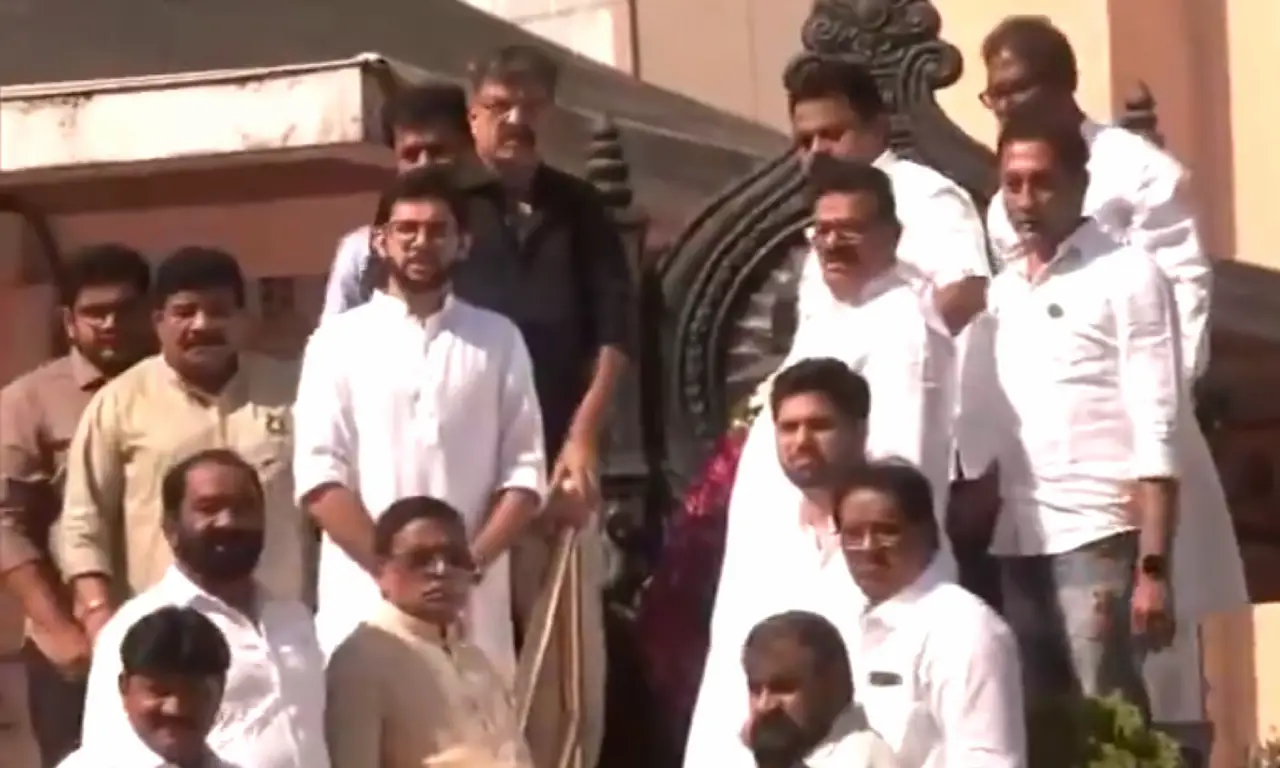
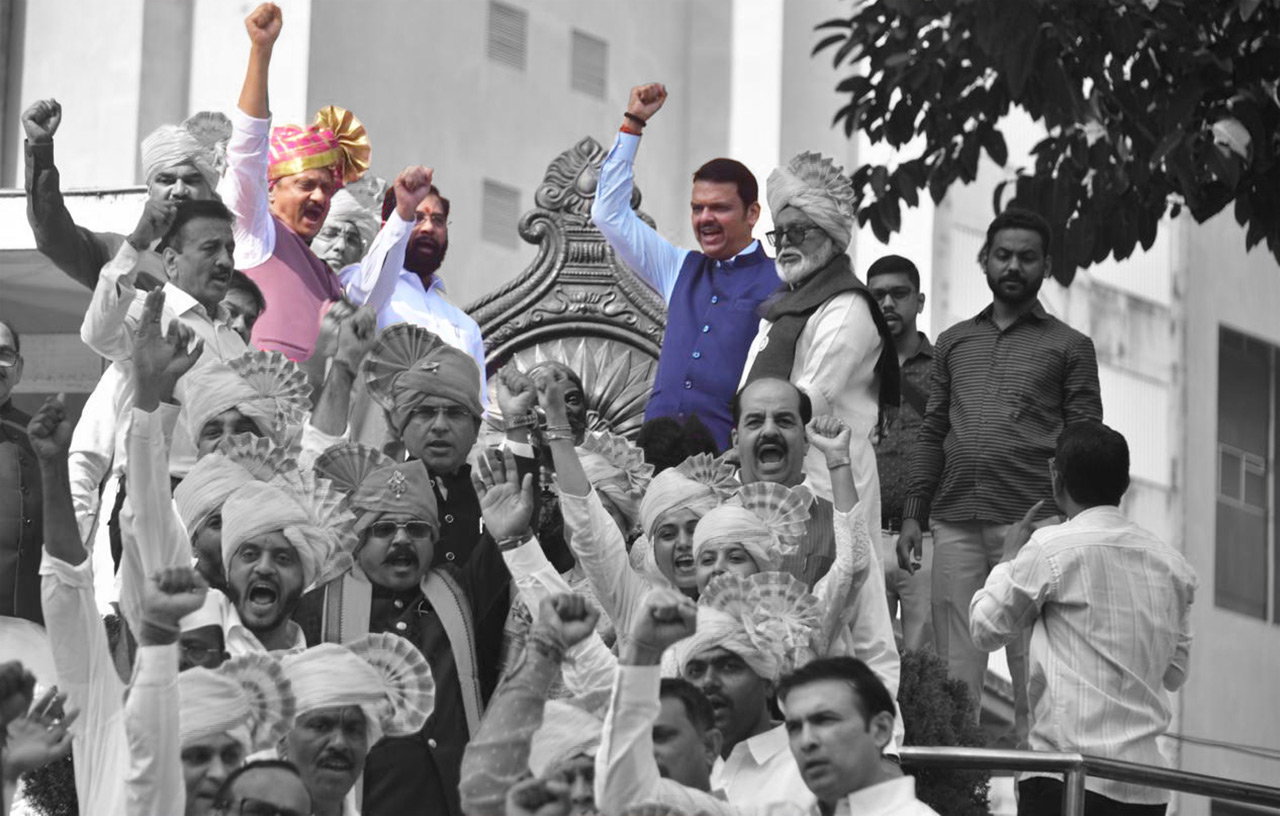
However, the elephant in the room was the absence of the opposition MVA alliance, which boycotted the session in dramatic fashion. Alleging EVM tampering and accusing the government of “murdering democracy,” Aaditya Thackeray and other opposition leaders decried the election results as fraudulent. According to them, the massive mandate for the ruling Mahayuti alliance was a result of “EVM manipulation” rather than the people’s will. Their fiery speeches outside the assembly added fuel to an already charged atmosphere, with Congress leader Amit Deshmukh echoing the call for a review of election processes.

Amidst the pomp and drama, the question of cabinet portfolios loomed large. BJP, being the biggest player, is expected to bag 21-22 ministerial berths, while Shiv Sena might settle for 11-12 and NCP for 9-10. Shinde’s wish for the Home portfolio—a position of power previously held by Fadnavis—remains uncertain. With the BJP holding the reins tightly, Shinde might have to contend with a less glamorous ministry, further adding to his woes.

The pink jackets weren’t the only colourful highlight of the day. NCP MLAs sported pink phetas in solidarity with Pawar, adding a touch of coordinated flair to the proceedings. Meanwhile, the oath-taking ceremony also saw moments of cultural diversity. Some MLAs invoked Allah, others stumbled over Sanskrit, and the rest went the straightforward route, keeping the assembly entertained through it all.

As the first day wrapped up, the political stage was set for the next act. The trust vote for the Fadnavis-led government and the speaker’s election are just around the corner. Meanwhile, the winter session in Nagpur and the impending cabinet expansion promise more drama, negotiations, and surprises.

In the end, the special assembly session was less about governance and more about political theatre—a heady mix of humour, sarcasm, and intrigue. For now, Maharashtra waits to see whether Shinde will get his coveted home portfolio and whether the opposition can convert its fiery rhetoric into effective action. Until then, the assembly floor remains the hottest stage in town.

Samajwadi Party Walks Out of MVA Over Babri Masjid Row: ‘No Difference Between BJP and Sena (UBT)’

abu asim azmi, mva, samajwadi party, sp, samajwadi party quits mva
Samajwadi Party Walks Out of MVA Over Babri Masjid Row: 'No Difference Between BJP and Sena (UBT)' 8

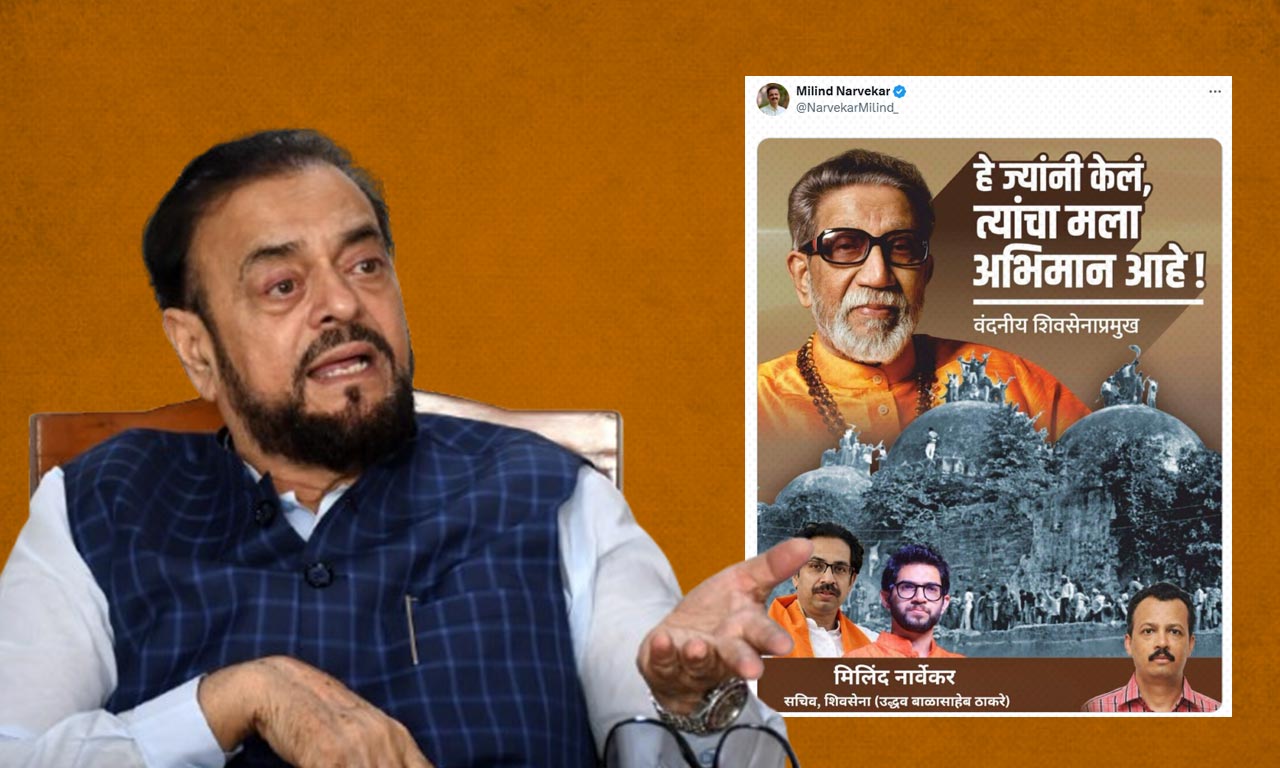
In a significant political fallout, the Samajwadi Party (SP) announced its exit from the Maharashtra Vikas Aghadi (MVA) alliance on Saturday. The decision came after a Shiv Sena (UBT) leader, close to party chief Uddhav Thackeray, publicly hailed the demolition of the Babri Masjid.

Triggering the Rift

Maharashtra SP president Abu Asim Azmi expressed outrage over a controversial newspaper advertisement by the Shiv Sena (UBT) and a social media post by party MLC Milind Narvekar. The advertisement congratulated those responsible for the mosque’s demolition, while Narvekar’s post on platform X (formerly Twitter) featured a photo of the demolition alongside Shiv Sena founder Bal Thackeray’s statement, “I am proud of those who did this.” The post also included images of Uddhav Thackeray, Aaditya Thackeray, and Narvekar himself.

Azmi did not mince words while announcing the party’s decision. “If anyone in the MVA speaks this language, what is the difference between the BJP and them? Why should we stay with them?” he questioned. He also confirmed discussions with SP national president Akhilesh Yadav regarding the move.

SP’s Stand

The Samajwadi Party, which has two MLAs in the Maharashtra assembly, has been a critical ally in the opposition MVA bloc alongside the Congress and Shiv Sena (UBT). However, the party has made it clear that communal provocations, even within the alliance, are unacceptable.

“This is a matter of principle,” Azmi stated. “The Shiv Sena (UBT) leader’s actions directly contradict the inclusive politics we stand for.”

Fallout and Political Implications

The SP’s departure from the MVA could weaken the opposition alliance, already under pressure to counter the BJP-led government in Maharashtra. It also raises questions about the Shiv Sena (UBT)’s strategy, as it risks alienating secular allies in its effort to uphold its Hindutva legacy.

With the 2024 general elections on the horizon, the incident underscores the fragile balance within opposition alliances navigating ideological differences. The move by the SP not only reflects a fracture in the MVA but also sends a broader message about the challenges of maintaining unity amidst diverging political ideologies.

EVM Controversy Sparks Drama: MVA MLAs Boycott Assembly Oath-Taking Ceremony

vidhan bhavan, mva, maha vikas aghadi, oath, mva mlas
EVM Controversy Sparks Drama: MVA MLAs Boycott Assembly Oath-Taking Ceremony 10

In a dramatic turn of events, Maharashtra’s political stage witnessed high-voltage drama on Saturday as opposition Maha Vikas Aghadi (MVA) MLAs boycotted the oath-taking ceremony in the legislative assembly, citing allegations of electronic voting machine (EVM) misuse. The session marked the formal swearing-in of Chief Minister Devendra Fadnavis, Deputy Chief Ministers Eknath Shinde and Ajit Pawar, alongside other MLAs.

MVA’s Protest Raises Eyebrows

The opposition members abstained from taking the oath, questioning the integrity of the recently concluded assembly elections that delivered a sweeping victory to the Mahayuti alliance. They alleged that the results, which saw the BJP, Eknath Shinde-led Shiv Sena, and Ajit Pawar’s NCP securing 230 out of 288 seats, were influenced by EVM manipulation.

Addressing reporters outside the Vidhan Bhavan, Shiv Sena (UBT) leader Aaditya Thackeray explained the boycott. “When a government wins with such a massive mandate, it’s usually a cause for celebration. However, doubts persist—was this mandate truly given by the people or engineered through EVMs and the Election Commission?” he questioned. Thackeray also highlighted unrest in Markadwadi village, Solapur, where residents demanded mock polls using ballot papers.

Oath-Taking Ceremony Goes On

Despite the opposition’s absence, the assembly session commenced with pro-tem speaker Kalidas Kolambkar administering the oath of office to CM Fadnavis, Shinde, and Pawar. BJP leaders Chainsukh Sancheti and Jaykumar Rawal, along with Manikrao Kokate (NCP) and Ashish Jaiswal (Shiv Sena), were also sworn in as pro-tem speaker’s panel members.

CM Fadnavis, representing Nagpur South-West, took his oath for the sixth time since first being elected in 1999. His entry into the assembly was met with thunderous desk-thumping and chants of “Jai Shri Ram” and “Jai Bhavani, Jai Shivaji” from treasury bench members.

Deputy CM Eknath Shinde received a similar welcome, with BJP leaders Ashish Shelar and Girish Mahajan leading the celebrations. Ajit Pawar, donning a traditional red pheta with a golden border, was cheered on by his supporters, who chanted, “Ekach Dada, Ajit Dada!”

Symbolism and Sentiments

The ceremonial attire of legislators also caught attention. Shiv Sena MLAs wore saffron phetas, emphasizing their Hindutva roots, while NCP MLAs sported pink phetas. Ajit Pawar’s preference for pink jackets during the election campaign has sparked speculation about his outreach to women voters.

Prominent Figures Take the Oath

Apart from the trio of Fadnavis, Shinde, and Pawar, prominent leaders such as former assembly speakers Dilip Walse-Patil and Rahul Narwekar, BJP’s Girish Mahajan, and SP’s Abu Asim Azmi were also sworn in. Notably, Mahajan took his oath in Sanskrit, continuing his tradition from previous terms. NCP leader Hasan Mushrif invoked Allah during his oath, reflecting the diverse cultural and religious fabric of Maharashtra’s legislature.

MVA’s Strategy Ahead

The MVA’s boycott has sparked debates about the fairness of the electoral process and its implications for democracy. While the ruling alliance basks in its landslide victory, the opposition’s protest underscores deep-rooted concerns about electoral transparency.

As the session unfolds, all eyes are on how this political tug-of-war will shape Maharashtra’s governance and public trust in democratic institutions.

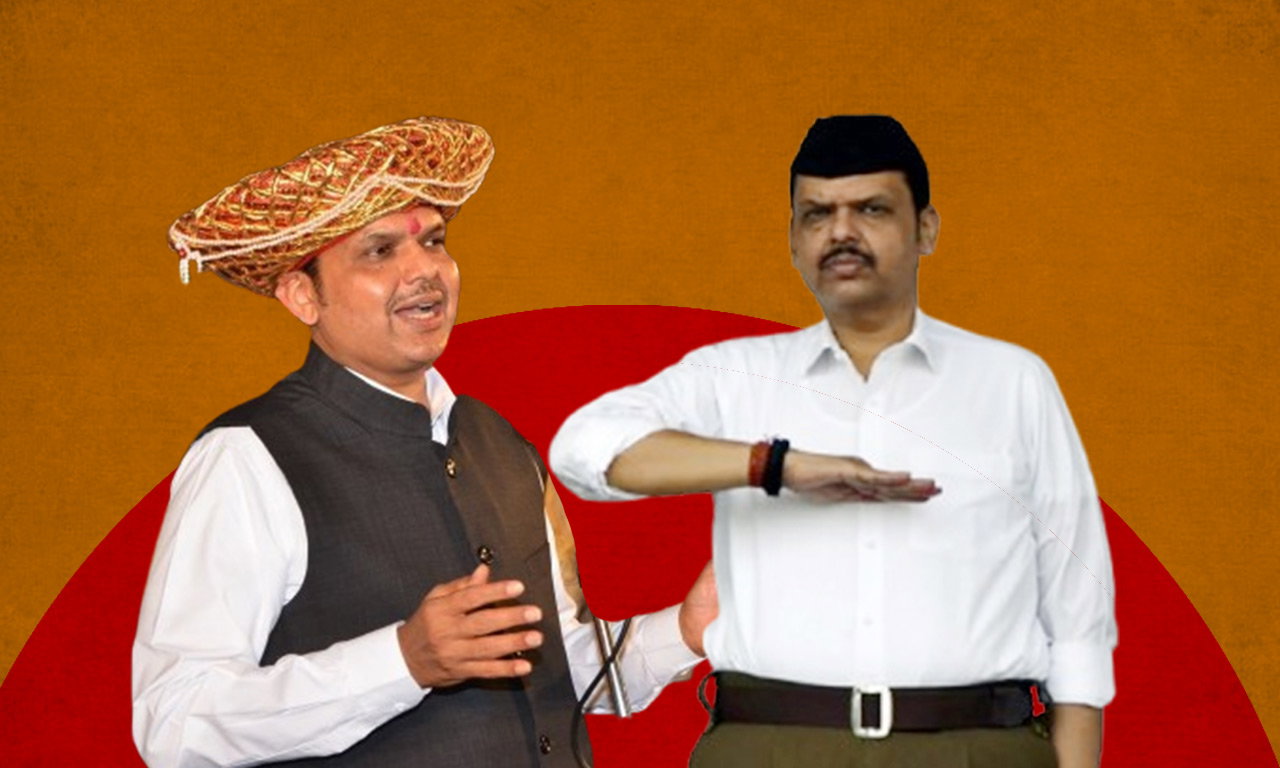
Devendra Fadnavis: The Brahmin Who Refuses to Crack

devendra fadnavis, fadnavis, brahmin, brahman, bjp, maharashtra cm, maharashtra chief minister
Devendra Fadnavis: The Brahmin Who Refuses to Crack 12

Let’s be honest—every politician has their breaking point. Personal criticism? That’s their Achilles’ heel. Political jabs? Sure, they’ll brush those off with rehearsed lines about democracy. But poke at their personal lives, and they’ll whip up vendettas faster than you can say “press conference.” Except, of course, for Devendra Fadnavis, who seems to be made of Teflon-coated steel with a side of patience worthy of sainthood.

As a Brahmin, Fadnavis has been at the receiving end of a never-ending parade of insults so inventive they could win awards for creativity. “Tarbujya,” “Anaji Pant,” and “Bamani Kawa” aren’t just outdated nicknames; they’re the verbal equivalent of bar fights started by opposition leaders who double as amateur comedians with questionable timing. And yet, Fadnavis remains unruffled, like a monk calmly sipping chai while the world burns.

But let’s rewind for context: Fadnavis didn’t just drop out of the sky as Chief Minister. His story has all the right ingredients—luck, lineage, and a healthy dose of hustle. Sure, his father, Gangadharrao Fadnavis, was a BJP MLC and a Jan Sangh stalwart, but Devendra didn’t ride any golden chariot to power. Instead, he worked his way up from shakhas and student activism, even staging a rebellion as a child by refusing to attend Indira Convent School after his father was jailed during the Emergency. If political messaging were an Olympic sport, young Devendra would’ve been a prodigy.

Fast forward to Maharashtra’s unique pastime: Brahmin-bashing. For some, it’s practically a hobby. When Fadnavis became Chief Minister, the critics came out in full force, equipped with insults that sounded like they were ripped straight from toxic WhatsApp groups. And Jarange Patil? His linguistic flourishes were so coarse they’d make even the most hardened troll blush. But while others might have crumbled or lashed out, Fadnavis channelled his inner yogi, calmly ignoring the cacophony.

Where other leaders would’ve thrown tantrums or Twitter storms, Fadnavis stayed stoic. He is, after all, a karmayogi—the kind who probably meditates to the sound of political chaos. His restraint stands in stark contrast to leaders like Uddhav Thackeray, whose idea of damage control was storming into an actress’s home for daring to critique him. Classy.

But Fadnavis isn’t just about keeping calm; he’s also the guy who plays political chess while everyone else is fumbling with checkers. Elections? Parliamentary maneuvering? He’s the wizard behind the curtain, turning long shots into sure bets with meticulous micro-planning. The man could probably turn Monopoly into a high-stakes strategic thriller. Whether it’s leveraging parliamentary rules to bring in sick MLAs for a vote or pulling off miracle wins, Fadnavis operates with a level of finesse that keeps his opponents awake at night.

Now, let’s talk ambition. Every politician has it in spades—it’s practically a requirement. But what sets Fadnavis apart is how he tempers his ego with unshakeable loyalty to his party. Take Uddhav Thackeray’s betrayal, for example. Fadnavis could’ve gone full Shakespearean vengeance, but instead, he regrouped, backed Eknath Shinde, and orchestrated a revolution. Even when he was “demoted” to Deputy Chief Minister, he didn’t sulk or scheme. Why? Because for Fadnavis, it’s not about the title; it’s about the mission.

And then there’s his rare “ajatshatru” (enemy-less) quality. Balasaheb Thackeray was blunt and fiery, while Sharad Pawar’s friendships were often transactional. Fadnavis, however, wins respect across party lines without breaking a sweat or resorting to intimidation. It’s a rare trait that makes him both formidable and oddly likeable—a unicorn in today’s political jungle.

Let’s not forget his fiscal wizardry. While others bankrupted the Treasury with lump-sum waivers, Fadnavis found a way to balance relief for farmers with economic prudence. His loan waivers helped small farmers while keeping the coffers intact—a rare feat in a state known for its financial juggling acts.

In a political landscape overflowing with theatrics and egos, Devendra Fadnavis is a refreshing anomaly. He’s not just surviving; he’s thriving—with grace, intellect, and a level-headedness that feels almost otherworldly. Maharashtra politics would be a lot duller—and a lot less strategic—without him.

So here’s to Fadnavis: the karmayogi with a spine of steel and a chessboard for a brain. Long may his political checkmates continue.

Congress MP Submits Privilege Notice Against BJP’s Sambit Patra for ‘Traitor’ Barb at Rahul

Sambit Patra, BJP, AAP, corruption
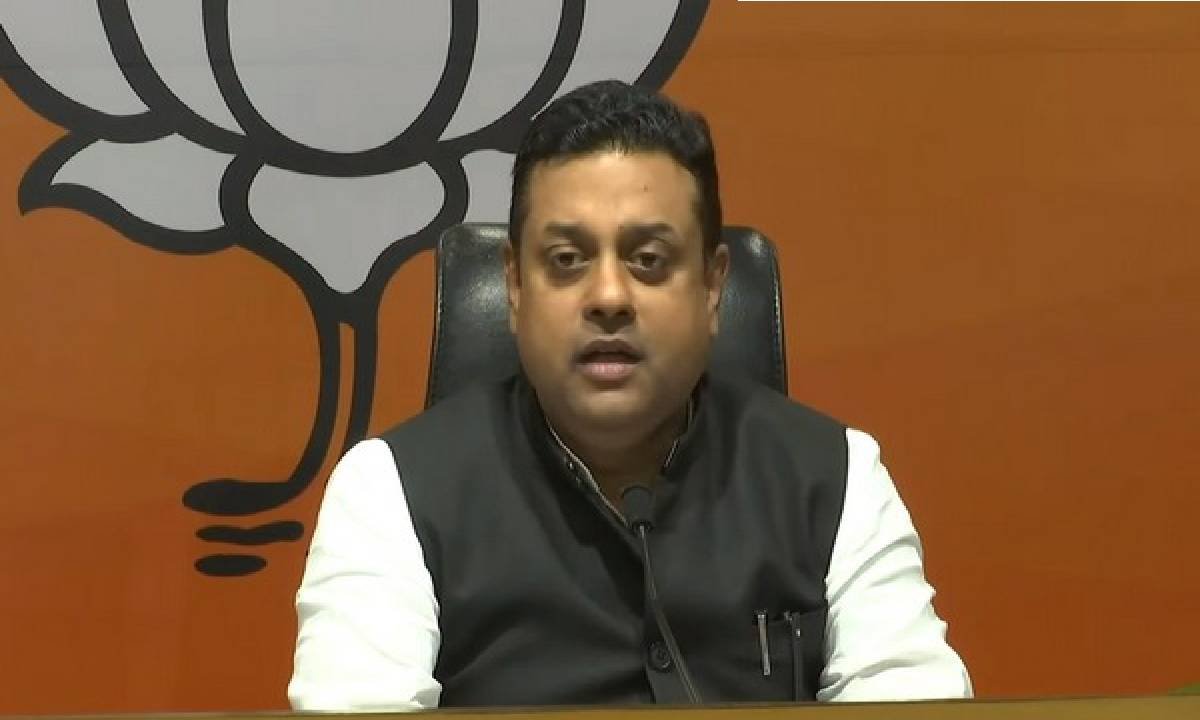
Sambit Patra | Image : Agencies

Congress MP Hibi Eden has submitted a notice to move a privilege motion against BJP MP Sambit Patra for his remarks calling Leader of Opposition Rahul Gandhi “traitor of the highest order”, asserting that the usage of “completely defamatory and unparliamentary words” has clearly violated constitutional norms.

In his letter to Lok Sabha Speaker Om Birla, Eden said, “I wish to raise a motion of privilege and bring to your attention the completely unparliamentary conduct of Sambit Patra, MP Lok Sabha, against the Leader of Opposition in Lok Sabha, Rahul Gandhi.”

In a press conference held on December 5, Patra has referred to the Leader of Opposition as “traitor of the highest order” while making unfounded allegations against the LoP, he said.

“The usage of such words against the LOP, while being defamatory and unacceptable in public life, is also a complete breach of parliamentary privilege of the LoP,” Eden argued.

“I wish to highlight that the position of the Leader of Opposition is a constitutional position and therefore requisite parliamentary dignity needs to be given to such a post. Patra, by the usage of completely defamatory and unparliamentary words, has clearly violated constitutional norms and should be held in contempt of the same,” the Congress MP from Ernakulam said.

“I further wish to add that it is highly unfortunate and disgraceful that a leader whose family has given so many sacrifices for the country is being subjected to such harsh and socially appalling language by a member of the ruling party,” Eden said in his letter to Birla.

The Congress leader requested Birla to take appropriate and immediate action on this privilege motion, Eden said.

Congress MP Manickam Tagore had on Thursday written to Birla, expressing deep concern over Patra allegedly using “slanderous language” against Gandhi at a media interaction, and sought stringent action against the ruling party leader.

In his letter to Birla, Tagore had alleged that Patra’s conduct was a “clear violation” of the decorum and ethics expected of a member of Parliament.

Bharatiya Janata Party (BJP) MPs K Laxman and Patra cited a report published by French media outlet “Mediapart” to target Gandhi, after the ruling party raised the issue in the Lok Sabha.

Patra claimed that billionaire investor George Soros and some US-based agencies, investigative media platform “Organised Crime and Corruption Reporting Project (OCCRP)” and Gandhi occupy three sides of a “dangerous” triangle trying to destabilise India and stoke public disaffection for a regime change in the country.

“I have no hesitation in saying that he (Gandhi) is a traitor of the highest order,” Patra had said.

Bangladesh Summons Its Kolkata Mission Head Following Protest Against Attacks on Hindus in Country

iskcon, kolkata mission, mission kolkata, protest, bangladesh, bangladesh protest, hindu
Bangladesh Summons Its Kolkata Mission Head Following Protest Against Attacks on Hindus in Country 15

Bangladesh has summoned Shikder Mohammad Ashrafur Rahman, the Acting Deputy High Commissioner in Kolkata, for urgent consultations following protests over attacks on Hindu minorities.

Rahman, who is also Minister – Political Affairs, stationed in Kolkata, has returned to Dhaka.

“Ashrafur Rahman was called for urgent consultations following ongoing protests outside our mission in Kolkata. Additionally, he will be part of the delegation during the foreign secretary-level talks between the two countries slated for next week. He will be back by the middle of this month,” a senior official of the Bangladesh Deputy High Commission in Kolkata told PTI on condition of anonymity.

The mission in Kolkata has witnessed multiple protests over the past week by political parties and religious groups condemning the reported atrocities against Hindus minorities in Bangladesh.

In a related development, the Bangladesh Assistant High Commission in Agartala, Tripura, suspended all visa and consular services on Tuesday, citing “security reasons”.

The decision followed an incident where protesters breached the mission’s premises on Monday to protest the arrest of Hindu spiritual leader Chinmoy Krishna Das in Dhaka.

Amid rising tensions, the Bangladesh foreign ministry summoned the Indian High Commissioner in Dhaka to register its protest over the vandalism at the mission in Agartala.

Indian Foreign Secretary Vikram Misri is expected to visit Bangladesh next week for the foreign secretary-level meeting, marking the first high-level interaction between the two nations since the interim government led by Muhammad Yunus assumed office on August 8, following the ouster of Sheikh Hasina as prime minister.

Relations between the two neighbours have been strained since Hasina fled to India on August 5.

The recent arrest of Das has further intensified the situation, with India expressing concerns over continued attacks on minorities, particularly Hindus, in Bangladesh.

BJP MLA Kalidas Kolambkar to Take Oath as Pro-Tem Speaker of Maharashtra Assembly

kalidas kolambkar, kolambkar, maharashtra, bjp, maharashtra pro-tem speaker
BJP MLA Kalidas Kolambkar to Take Oath as Pro-Tem Speaker of Maharashtra Assembly 17

BJP MLA Kalidas Kolambkar will take oath as the pro-tem Speaker of the Maharashtra legislative assembly on Friday, a day before the special three-day session of the Lower House of the state legislature begins.

Talking to PTI this morning, Kolambkar, a nine-time MLA, confirmed that he will take oath as the pro-tem speaker at 1 pm at the Raj Bhavan.

Governor C. P. Radhakrishnan will administer the oath to him, he said.

Kolambkar currently represents the Wadala assembly constituency in Mumbai.

As pro-tem speaker, he will administer the oath of office to 288 newly-elected MLAs, conduct the assembly speaker’s election during the three-day special session of the 15th assembly beginning December 7.

The speaker’s election will be held on December 9 followed by a trust vote of the Devendra Fadnavis-led Mahayuti government.

Fadnavis on Thursday evening took oath as the state chief minister, while leaders of the BJP-led Mahayuti alliance, Eknath Shinde and Ajit Pawar, were sworn in as deputy chief ministers at a grand ceremony in south Mumbai’s sprawling Azad Maidan.

The BJP-Shiv Sena-NCP Mahayuti coalition won 230 out of the 288 assembly seats in the elections held on November 20.

The winter session of the state legislature will be held in Nagpur from December 16 to 21.

Jharkhand Cabinet: 11 MLAs Take Oath As Ministers; 6 From JMM, 4 From Congress & RJD Get 1

jharkhand cabinet, jharkhand, oath,
Jharkhand Cabinet: 11 MLAs Take Oath As Ministers; 6 From JMM, 4 From Congress & RJD Get 1 19

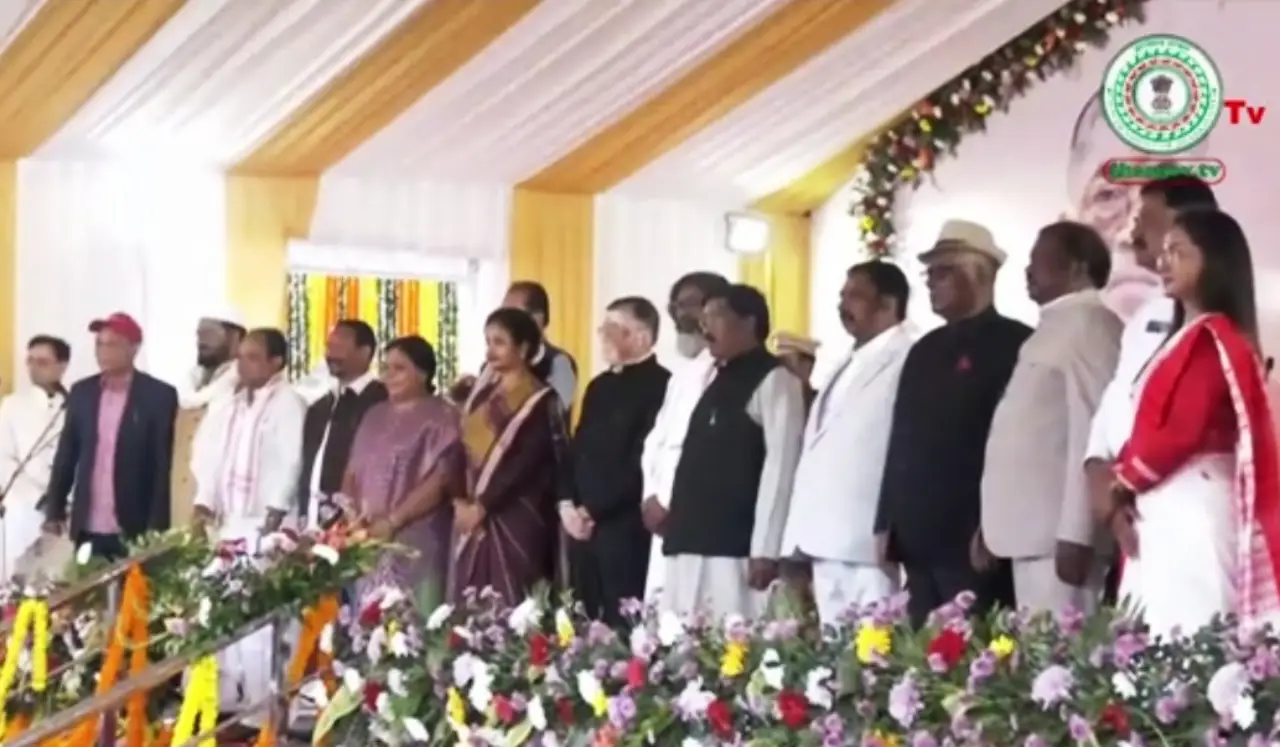
Eleven MLAs, including six from JMM, were sworn in as ministers in the Hemant Soren government in Jharkhand on Thursday.

Governor Santosh Kumar Gangwar administered the oath to the ministers at Ashok Udyan of the Raj Bhavan.

The six JMM legislators, who took oath as ministers, are Sudivya Kumar, Deepak Birua, Ramdas Soren, Chamra Linda, Yogendra Prasad and Hafijul Hasan.

Congress MLAs Deepika Pandey Singh, Shilpi Neha Tirkey, Irfan Ansari and Radhakrishna Kishore were sworn in as ministers, while RJD’s Sanjay Prasad Yadav also found a berth.

The swearing-in ceremony began with Stephen Marandi taking oath as the pro-tem speaker of the assembly.

JMM leader Hemant Soren took oath as the chief minister on November 28.

The JMM-led alliance, last month, stormed to power in Jharkhand for the second time in a row, securing 56 seats in the 81-member assembly, while the BJP-headed NDA managed 24.