Mahayuti Ministers To Take Oath in One Week: NCP's Chhagan Bhujbal 2
NCP leader Chhagan Bhujbal on Thursday said ministers from the Mahayuti allies in Maharashtra will take oath in a week’s time.
Talking to reporters here, Bhujbal also said that NCP head Ajit Pawar, who will take oath as deputy chief minister for the sixth time on Thursday evening, has a good grasp over the finance department.
Notably, Pawar served as the deputy CM and also held the finance portfolio in the outgoing government.
BJP legislature party leader Devendra Fadnavis will be sworn-in as the new chief minister of Maharashtra on Thursday evening at a grand ceremony in Mumbai to be attended by Prime Minister Narendra Modi.
Fadnavis would be taking oath along with two deputy chief ministers, BJP leader Sudhir Mungantiwar told reporters earlier in the day.
Bhujbal said after the swearing-in of the chief minister and two deputy CMs, they will sit together and discuss the cabinet formation.
“The cabinet formation modalities will be discussed by the three leaders and the ministry will be formed in a week’s time,” said Bhujbal, who served as a minister in the outgoing government.
The formation of the new government comes after two weeks of intense negotiations following the November 20 state assembly polls and results on November 23.
Together with allies Shiv Sena and NCP, the BJP-led Mahayuti coalition has a commanding majority of 230 seats in the 288-member state assembly.
Fadnavis To Be Sworn In As Maharashtra CM Along With 2 Deputy CMs 4
BJP legislature party leader Devendra Fadnavis will be sworn-in as the new chief minister of Maharashtra on Thursday evening at a grand ceremony here to be attended by Prime Minister Narendra Modi and several other dignitaries.
Fadnavis, who would be occupying the CM’s post for the third time, along with two deputy chief ministers will take the oath of office, BJP leader Sudhir Mungantiwar told reporters, adding that other members of the cabinet will take oath later.
Nationalist Congress Party chief Ajit Pawar and Shiv Sena chief Eknath Shinde are expected to take oath as deputy chief ministers, sources said.
While Pawar has said he would take oath on Thursday, there was no confirmation yet from the Shinde camp that he would accept the deputy CM post.
Asked when other ministers would take oath of office, Mungantiwar told reporters, “It is most likely that the council of ministers will be sworn in before the winter session of the assembly starts, so as to avoid administrative disruption.” The swearing-in ceremony will be held at the Azad Maidan ground in south Mumbai. Governor C P Radhakrishnan will administer the oath of office to Fadnavis and his deputies.
The formation of the new government comes after two weeks of intense negotiations following the November 20 state assembly polls and results on November 23.
Fadnavis, 54, who represents Nagpur South West constituency, emerged as the frontrunner for the top post as he was the face of the BJP’s campaign and led the party to victory in 132 seats in the 288-member House.
Together with allies Shiv Sena and NCP, the BJP-led Mahayuti coalition has a commanding majority of 230 seats.
Ahead of the swearing-in ceremony, Fadnavis visited the famous Siddhivinayak temple here in the morning and performed a puja.
On Wednesday, Fadnavis, with Shinde and Ajit Pawar, met Governor Radhakrishnan to formally stake claim to form a government, presenting letters of support from the coalition partners.
Before that, Fadnavis was elected as leader of the BJP legislature party at a meeting on Wednesday morning.
The swearing-in ceremony will have 42,000 attendees, BJP leader Prasad Lad had said earlier. Besides PM Modi, several Union ministers and chief ministers and deputy CMs of various states will attend the event, he said.
Special arrangements have been made to accommodate 40,000 BJP supporters and a separate seating arrangement made for 2,000 VVIPs, including leaders from various religions, he said.
More than 4,000 police personnel have been deployed for security, officials said.
Fadnavis has been chief minister twice. He headed the BJP-Shiv Sena government for five years from 2014 to 2019. Amid a deadlock after the 2019 elections as the Uddhav Thackeray-led Shiv Sena severed its ties with the BJP over the CM post, Fadnavis was sworn in as chief minister with Ajit Pawar as his deputy.
But this government lasted only 72 hours as Pawar could not get the backing of enough NCP MLAs.
When the Mahayuti government came to power under Shinde’s leadership following a split in the Shiv Sena, Fadnavis became a deputy CM. Ajit Pawar too joined this government as a second deputy CM in 2023 after he split the NCP led by Sharad Pawar.
Ajit Pawar, 65 would be taking oath as deputy CM for the sixth time.
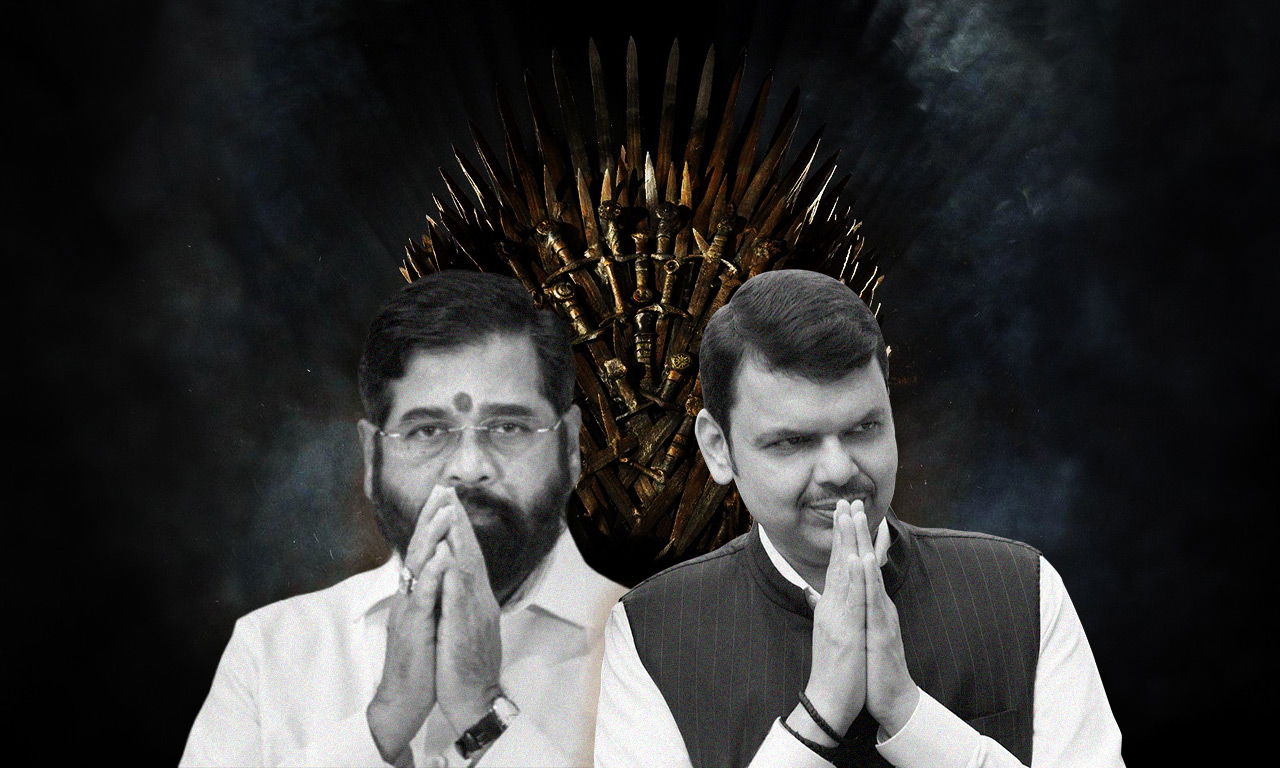
Devendra Fadnavis: The Political Chess Grandmaster and Eknath Shinde's Karma Ride 6
Devendra Fadnavis is living proof that political survival is an art form, and Maharashtra is his canvas. With a resume boasting victories, coups, and comebacks, Fadnavis is not just a three-time Chief Minister but a man who could very well headline a Netflix drama titled “Game of Thrones: Mumbai Edition”. If you’re surprised by his rise, you haven’t been paying attention—this man has been maneuvering his way to power with the finesse of a grandmaster playing chess in a storm.
Fadnavis’s clever politicking delivered the BJP its massive 132-seat win, leaving ally-turned-puppets like Eknath Shinde’s Shiv Sena and Ajit Pawar’s NCP scrambling for relevance. But make no mistake, this isn’t just a coalition; it’s a cleverly crafted trap. Fadnavis made sure the alliance is structured in such a way that its partners will struggle to exist without the BJP. Shinde might have dreamed of retaining the CM chair, but reality hit harder than a Mumbai monsoon. Once hailed as a rebel who toppled Uddhav Thackeray’s government, Shinde now finds himself clutching at straws—and reportedly frequenting hospitals to recover from the heartbreak of being demoted to Deputy CM.
Let’s not forget the irony of Shinde’s downfall. After staging a dramatic rebellion and breaking the Shiv Sena, karma circled back to remind him that what goes around comes around. The man who once split a party for power is now negotiating his own relevance with Ajit Pawar—a political heavyweight who could teach masterclasses in opportunism. As for Uddhav Thackeray and the Shiv Sena (UBT), they’re gleefully reminding Shinde of his promise to quit politics if even one of his rebel MLAs lost the elections. Spoiler alert: five of them did. Somewhere, Raj Thackeray’s MNS is chuckling from the sidelines, having played spoiler just enough to make Shinde’s night sleepless.
But let’s not miss the real star of this saga: the EVM blame game. Critics cried foul, accusing the BJP of “managing machines,” but since no one took to the streets, it seems even the opposition knows when they’re outplayed. Fadnavis, meanwhile, has moved on—busy orchestrating the grand swearing-in ceremony where he’ll take center stage while Shinde is politely asked to vacate the CM’s house. It’s political theatre at its finest, with Prime Minister Modi himself making an appearance to add gravitas.
As for Shinde’s discomfort? Well, he did betray Uddhav for the top post, only to now find himself downgraded. Sliding from the apex to the second fiddle isn’t easy, but hey, it’s all part of the political karma buffet. Shinde may still be dreaming of portfolios like Home Ministry, but let’s be real: the BJP isn’t in the mood for tantrums this time around. Ajit Pawar is poised for Deputy CM, Shinde for further irrelevance, and the BJP for complete dominance.
Fadnavis, ever gracious, thanked Modi, Amit Shah, Nadda, and even a list of Union Ministers (was that a political Oscar acceptance speech?) while promising a government that works for the people. Meanwhile, Shinde is reportedly isolating himself—strategising, sulking, or both. But as the saying goes, once you dance with the BJP, you don’t call the tunes. For now, the stage is set, the alliances are fragile, and the popcorn is ready. Maharashtra, get ready for another blockbuster season of “As the Assembly Turns.”
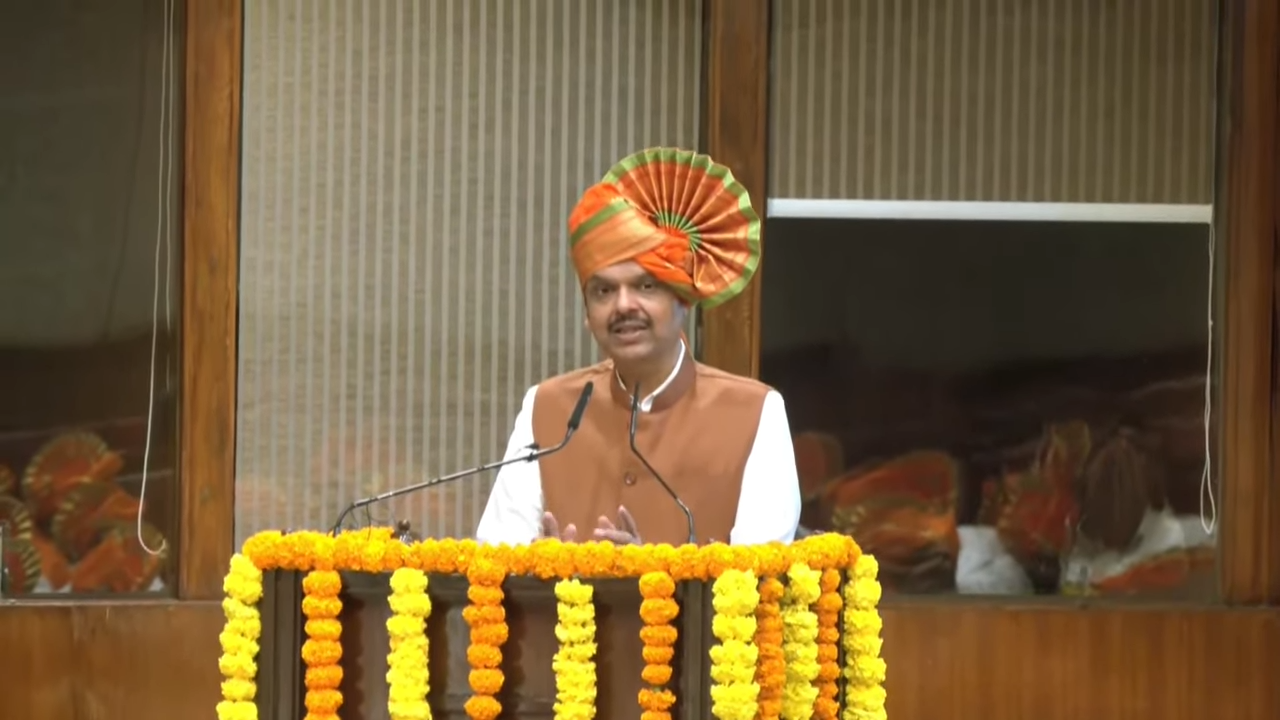
Patience, Loyalty to Party Leadership and Strategic Acumen Pay Off for Devendra Fadnavis 8
Devendra Fadnavis, the political stalwart who rose from humble beginnings to become a key figure in Maharashtra politics, is set to become chief minister—a position he has held twice before.
The 54-year-old leader, whose career has been marked by a blend of resilience and strategic manoeuvring, is positioned to lead the state for the third time following a decisive showing of the BJP in the November 20 assembly polls and his election as leader of the state BJP legislature party on Wednesday.
Fadnavis’ political journey has been nothing short of remarkable. From serving as an obscure corporator to becoming the youngest mayor of Nagpur, he has strengthened his status as a prominent leader within his party. Notably, he is only the second Brahmin to serve as Chief Minister of Maharashtra, following the Shiv Sena’s Manohar Joshi.
His ascent began in earnest ahead of the 2014 assembly elections, where he garnered significant support from Prime Minister Narendra Modi and senior BJP leader Amit Shah. Modi famously referred to him as “Nagpur’s gift to the country” during a campaign rally, underscoring the confidence placed in Fadnavis.
Though Modi had launched a campaign blitzkrieg in the 2014 Lok Sabha and Maharashtra assembly polls, a portion of the credit also went to Fadnavis, then state BJP president, for the party’s unprecedented victories in the elections.
Son of Jan Sangh and later BJP leader late Gangadhar Fadnavis, whom his fellow Nagpur politician and former BJP chief Nitin Gadkari calls his “political guru,” Devendra cut his teeth in politics at a young age when he joined Akhil Bhartiya Vidyarthi Parishad, the students wing of the RSS, in 1989.
At 22, he became a corporator in the Nagpur civic body and its youngest Mayor in 1997 at the age of 27.
Fadnavis contested his first assembly election in 1999 and won. There was no looking back for him, as he won three subsequent assembly elections. He retained his Nagpur South West seat comfortably in the last month’s election.
Unlike many leaders across the political spectrum in Maharashtra, Fadnavis has remained untainted by accusations of corruption.
Among the most articulate Maharashtra politicians, Fadnavis is also credited with pushing the previous Congress-NCP government into a corner over the alleged irrigation scam.
Fadnavis experienced a setback in the aftermath of the 2019 assembly elections as the then united Shiv Sena leader Uddhav Thackeray pulled out of the pre-poll alliance over sharing of CM’s post, shattering the BJP leader’s much-hyped “mee punha yein (I will come back again) slogan.
Fadnavis was sworn in as the chief minister for the second time on November 23, 2019, and Ajit Pawar was sworn in as the deputy chief minister. However, before a Supreme Court-ordered no confidence motion could take place, Fadnavis quit on November 26, three days after taking oath as the CM.
Uddhav Thackeray, propped up by Sharad Pawar-led NCP, later became the CM, but quit after senior Sena leader Eknath Shinde split the party in June 2022 and later became the CM.
After Thackeray demitted office following the large-scale desertions in the Sena, many political observers thought that Fadnavis, who they knew was behind the episode, would become the CM. However, the BJP leadership had other plans and a reluctant Fadnavis was asked to occupy the deputy CM’s post.
His tenure in the last two-and-a-half years as Deputy Chief Minister saw a marked resurgence, and the assembly elections results of November 23 came as the much-awaited cherry on the cake.
Though he hails from a politically active family, his father and aunt both served in the Maharashtra Legislative Council, and Fadnavis has crafted his own distinct political identity.
Fadnavis’ first tenure as the CM was characterised by a combination of good governance and effective political manoeuvring. He earned praise for his push to expedite infrastructure projects, gaining favour particularly among urban voters.
However, his term was not without challenges. The state suffered significant crop losses due to erratic weather, and his initial rejection of loan waivers for affected farmers sparked widespread protests.
Another major issue during his tenure was the Maratha community’s demand for reservations. Though he passed legislation to meet these demands, the subsequent Supreme Court ruling that overturned the law left many in the Maratha community dissatisfied, blaming Fadnavis for the failure.
The 2019 assembly elections marked a dramatic shift in Fadnavis’ political trajectory. The Shiv Sena’s refusal to join the government unless it shared the Chief Minister’s post led Fadnavis to seek an alternative alliance with the Nationalist Congress Party (NCP) leader Ajit Pawar.
This government, however, was short-lived, collapsing after just 72 hours. Fadnavis then assumed the role of Leader of the Opposition.
In June 2022, following a rebellion within the Shiv Sena led by Eknath Shinde, Fadnavis was instructed by the BJP leadership to return to the government as Deputy CM under Shinde.
Although initially reluctant, Fadnavis accepted the role, signalling his loyalty to the party leadership.
Even after a significant loss in the 2024 Lok Sabha elections, he played a pivotal role in shaping the seat-sharing arrangement between the BJP and Shinde’s faction.
Fadnavis’ career has, thus far, been defined by resilience, adaptability, and strategic insight. His ability to adapt and make tactical decisions could prove crucial for him and his party in the coming days.
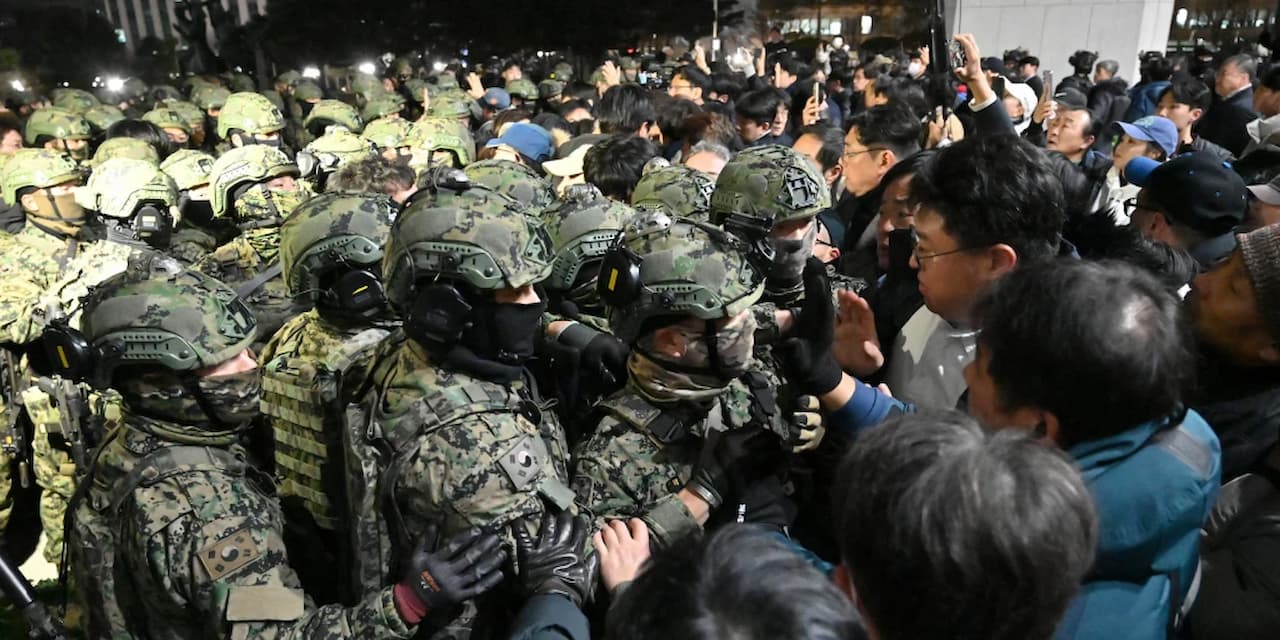
South Korean Parliament Votes to Overturn President Yoon's Martial Law Declaration 10
The South Korean parliament has voted to defy the country’s president and immediately lift his martial law declaration.
President Yoon Suk Yeol declared martial law late Tuesday, vowing to eliminate “anti-state” forces as he struggles against an opposition that controls the country’s parliament and that he accuses of sympathising with communist North Korea.
The surprising move harkened back to an era of authoritarian leaders that the country has not seen since the 1980s, and it was immediately denounced by the opposition and the leader of Yoon’s own conservative party.
Dharavi redevelopment remains as one of the largest, and unique slum redevelopment projects. (Johnny Miller Photographs).
In a groundbreaking move for urban redevelopment in India, the Dharavi Redevelopment Project (DRP) is leveraging advanced technologies like drones and Light Detection and Ranging (LiDAR) to map and survey Asia’s largest slum, officials announced. This high-tech approach aims to ensure precision, transparency, and efficiency in a project of immense complexity and scale.
Reimagining Dharavi: From Slum to Urban Hub
Spread across 620 acres near Mumbai’s international airport, Dharavi is home to approximately 1 million people, with 7 lakh residents likely eligible for free 350-square-foot flats under the redevelopment plan. The project, spearheaded by Dharavi Redevelopment Project Pvt Ltd—80% owned by the Adani Group—seeks to transform the slum into a modern urban hub akin to international cityscapes.
Cutting-Edge Technology at Work
For the first time in a slum redevelopment initiative, technologies like LiDAR, drones, and mobile applications are being employed:
LiDAR Mapping: Utilizing laser-based technology, LiDAR creates precise 3D models of Dharavi’s intricate terrain, structures, and pathways. Portable backpack-mounted scanners allow teams to navigate narrow lanes.
Drones: Aerial drones capture overhead imagery to complement ground-level mapping.
Digital Twin: These technologies are used to create a “digital twin” of Dharavi—a virtual replica enabling enhanced data analysis and decision-making.
This digital model aids in identifying eligible residents, resolving disputes efficiently, and minimizing errors in the data collection process.
Challenges and Community Engagement
Despite its promise, the project faces challenges, particularly skepticism among Dharavi’s residents regarding fraud or misuse of data. To address these concerns, DRP-SRA (Slum Rehabilitation Authority) has launched an extensive public engagement campaign, including:
Distribution of informational pamphlets.
Public meetings to explain survey details.
Establishment of call centers for queries.
Field supervisors are assisting residents in preparing and submitting documentation, ensuring no one is excluded from the process. Residents are provided acknowledgment slips after successful submissions, outlining the next steps in their rehabilitation journey.
Innovative Housing Solutions
The Maharashtra government has approved the acquisition of 256 acres of salt-pan land for building affordable housing, ensuring sufficient space for both current residents and relocated businesses. Surveys are ongoing to decide whether residents will be rehoused within Dharavi or relocated to alternative sites.
Redefining Slum Redevelopment in India
The Dharavi project is not just a redevelopment initiative; it’s a model for future urban rejuvenation. By embracing technology and prioritizing transparency, the DRP is setting a new standard for transforming marginalized communities into thriving urban spaces.
As Dharavi moves towards a new chapter, the success of this ambitious plan could redefine how India tackles its urban housing challenges.
Nepal and China Forge Stronger Ties with Nine-Point Agreement During PM Oli's Beijing Visit 13
Nepal and China have strengthened bilateral relations with a nine-point agreement signed during Prime Minister K. P. Sharma Oli’s official visit to Beijing. In a high-level meeting with Chinese President Xi Jinping at the State Hall, the two leaders discussed various avenues of cooperation, including connectivity, industrial development, infrastructure, trade, and tourism, among other key areas.
Prime Minister Oli also held a bilateral meeting with Chinese Premier Li Qiang, focusing on enhancing partnerships across multiple sectors such as agriculture, technology, sports, disaster management, and poverty alleviation, according to Krishna Prasad Dhakal, spokesperson for Nepal’s Ministry of Foreign Affairs.
Key Agreements Signed
The nine-point agreement includes significant commitments and memorandums of understanding (MoUs), such as:
Infrastructure Development: Construction of the Tokha-Chhahari tunnel road near Kathmandu.
Trade and Tourism: MoU on promoting Nepal-China trade and certificates of completion for the renovation of the historic nine-storey palace in Basantapur, Kathmandu.
Agriculture and Exports: Protocol for exporting thermally processed buffalo meat to China.
Education and Media: Agreements on Chinese language education and cooperation in communication technology between Nepal Television and China Media Group.
Financial Aid: Exchange of letters on cash aid and additional economic and technical assistance.
Financial Support from China
Ahead of the visit, Nepal’s government accepted a grant of USD 20 million from China. Additionally, the Nepali Cabinet approved projects worth 300 million Chinese Yuan (approximately USD 4.13 million), further highlighting China’s growing involvement in Nepal’s development.
Prime Minister Oli’s four-day visit, which began Sunday, marks his first official trip to China since assuming office for the fourth time. He is expected to return to Nepal on December 5.
This landmark visit underscores the deepening ties between Nepal and China, with both nations committed to mutual growth and regional stability.
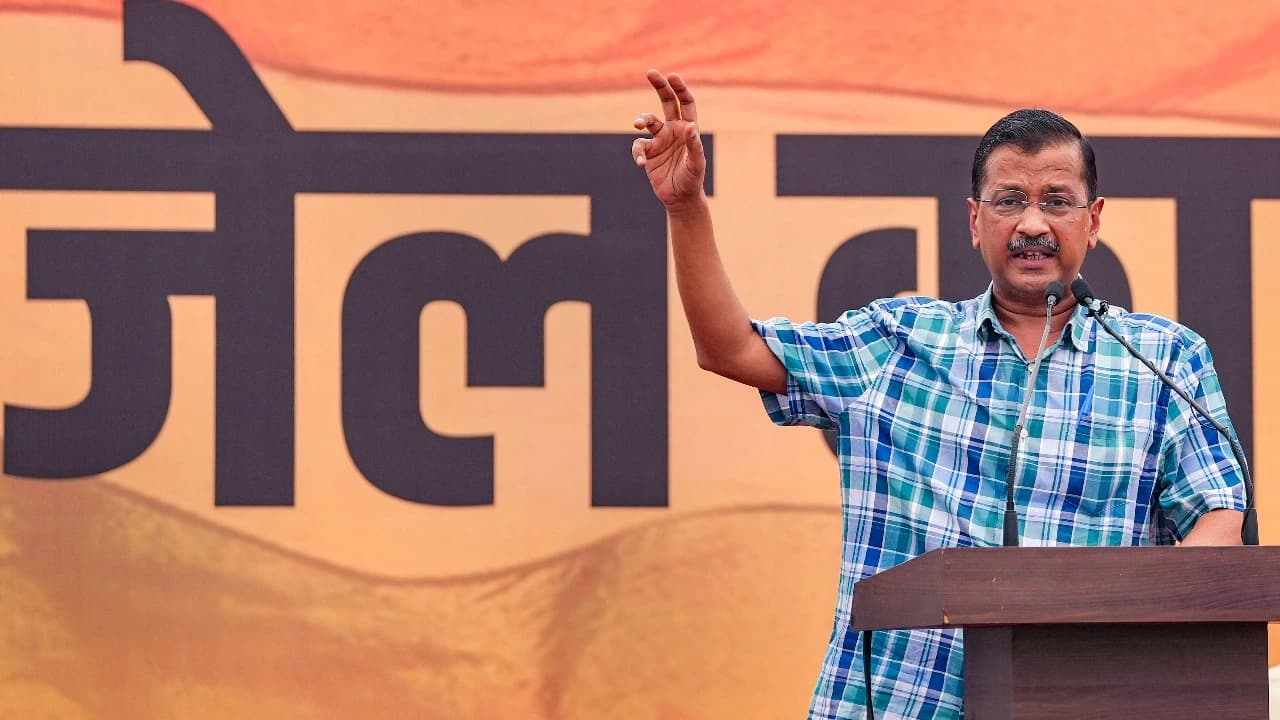
Kejriwal Slams Shah: 'Resign If You Can't Handle Delhi's Law and Order' 15
AAP supremo Arvind Kejriwal launched a scathing attack on Union Home Minister Amit Shah, demanding his resignation over the alleged “chaotic” law-and-order situation in Delhi. Kejriwal accused the BJP-led Centre of failing to ensure public safety, citing the recent fatal stabbing of a youth in Pitampura as evidence of deteriorating security.
“Two youths were attacked by seven to eight local boys. Manish was stabbed multiple times and tragically died because he couldn’t reach the hospital in time. Himanshu, the other victim, survived, but police haven’t even recorded his statement,” Kejriwal said after meeting the deceased’s family.
The Delhi Chief Minister criticized the Delhi Police, alleging threats against the victims instead of action against the perpetrators. “If Amit Shah is too busy with political tours to address Delhi’s law and order, he should step down,” Kejriwal declared.
AAP to “Force” Action Amid Rising Crimes
Kejriwal alleged that crimes like drug abuse and chain snatching have become rampant across the city, instilling fear among residents. “People are afraid to step out of their homes. AAP will unite Delhiites and force the BJP-led Centre to take action to ensure public safety,” he stated.
Kejriwal also claimed he had been receiving numerous appeals from residents across the city to visit their areas and address safety concerns. “I will personally visit these places and raise their issues,” he said.
BJP Hits Back: “Diversion Tactics”
The BJP dismissed Kejriwal’s accusations, alleging that his remarks were an attempt to deflect attention from the corruption scandals and administrative failures plaguing the AAP government in Delhi.
“Instead of creating unnecessary fear about law and order, Kejriwal should introspect on AAP’s governance failures over the past decade,” a BJP spokesperson said.
With rising crime rates and political blame games escalating, Delhi’s residents remain caught in the crossfire of this heated political tussle.
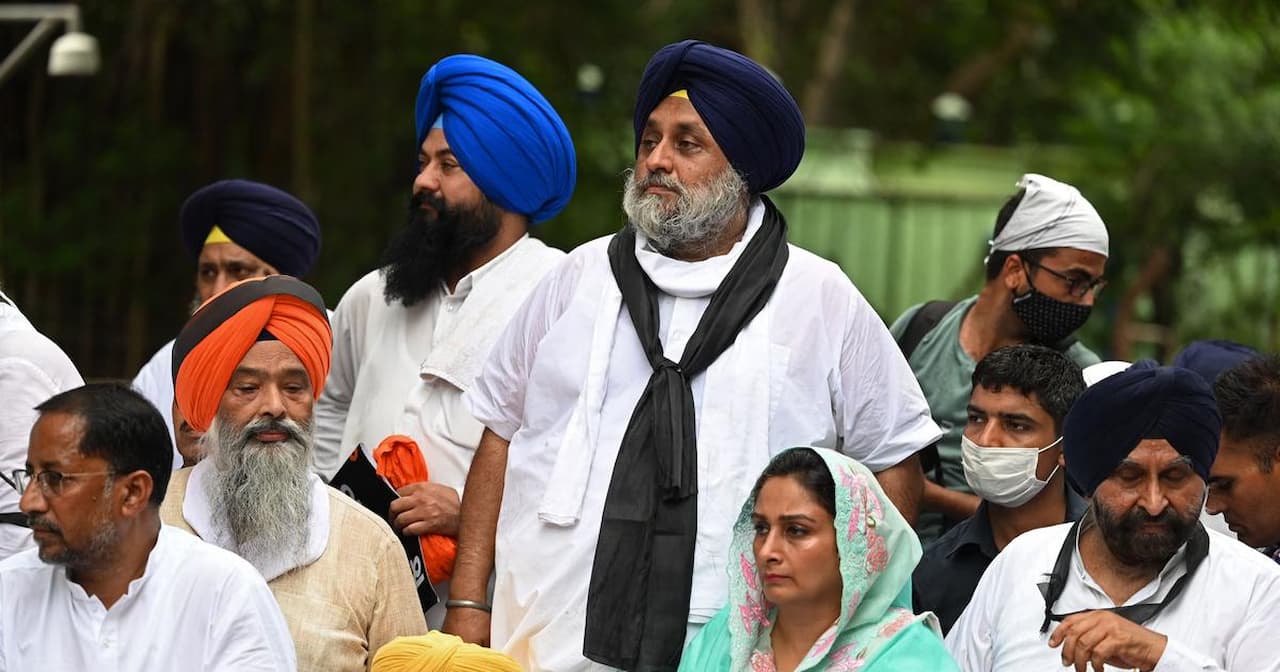
SAD Set for Overhaul, Akal Takht Says Leadership Lost Moral Right to Lead 'Sikh Panth' 17
The 104-year-old Shiromani Akali Dal (SAD) is set for a reorganisation following the Akal Takht’s decision to form a committee to oversee elections for the party president’s post and other office bearers.
The party’s political fortunes have waned in recent years under the leadership of Sukhbir Singh Badal, who, three months ago, was declared ‘tankhaiya’ (guilty of religious misconduct) by the Akal Takht.
On Monday, the Sikh clergy issued a ‘tankhah’ (religious punishment) for Badal and other leaders for “mistakes” committed by the SAD and its government in Punjab between 2007 and 2017.
Prior to the pronouncement of the punishment, Badal admitted to several mistakes, including pardoning Dera Sacha Sauda chief Gurmeet Ram Rahim Singh during the SAD government’s tenure in Punjab.
Sukhbir Badal, the former deputy chief minister, was credited with the party’s victory in the 2012 assembly elections. However, the SAD won only 15 out of 117 seats in the 2017 elections and just three seats in the 2022 polls. In the 2024 Lok Sabha elections, the SAD won only one of the 13 parliamentary constituencies in Punjab.
These electoral setbacks let to his leadership come under scrutiny. The party recently faced the worst rebellion in its history, with a section of SAD leaders revolting against Badal over its general election results.
The five ‘Singh Sahibans’ (Sikh clergy) have announced the formation of a six-member committee to oversee the membership drive of the party, ensuring transparency and the holding of elections for the president and office bearers within six months.
Rebel party leader Gurpartap Singh Wadala, who is part of the committee, stated on Tuesday that, following the Akal Takht’s directions, all party leaders should now work collectively towards the revival of the Akali Dal.
“With Sukhbir Badal admitting his mistakes before the Akal Takht, the SAD now has a chance to rebuild its trust within the ‘Sangat’ (Sikh community),” he said. Wadala also confirmed that the ‘SAD Sudhar Lehar’ will now be disbanded.
Several rebel leaders, including Bibi Jagir Kaur, Prem Singh Chandumajra, and Sukhdev Singh Dhindsa, who had previously called for Sukhbir Badal to step down, had formed the ‘SAD Sudhar Lehar’ to “strengthen and uplift” the party.
The six-member committee, announced by Akal Takht Jathedar Giani Raghbir Singh, will comprise Shiromani Gurdwara Parbandhak Committee (SGPC) president Harjinder Singh Dhami, party leaders Iqbal Singh Jhunda, rebel leader Gurpartap Singh Wadala, MLA Manpreet Singh Ayali, Santa Singh, and Bibi Satwant Kaur, who represents the Akal Takht.
Before announcing the committee, Singh remarked that the SAD leadership had lost its moral right to lead the ‘Sikh Panth’ due to its past mistakes and instructed the SAD’s working committee to accept the resignations of those who had tendered them.
He also urged the rebel leaders to unite and work towards strengthening the SAD, setting aside any personal rivalry or jealousy.
Sukhbir Badal had resigned from the post of SAD president last month following his ‘tankhaiya’ declaration. However, the working committee did not accept his resignation.
Badal stepped down after being found guilty of mistakes during the SAD’s rule from 2007 to 2017, including the failure to punish those responsible for the 2015 sacrilege incidents and pardoning Gurmeet Ram Rahim Singh in a 2007 blasphemy case.
The SAD, which had been in an alliance with the BJP, severed ties with the party four years ago, over the issue of the now-repealed farm laws.
ISKCON Kolkata Urges Bangladesh Govt to Ensure Safety of Lawyers Willing to Represent Chinmoy Das 19
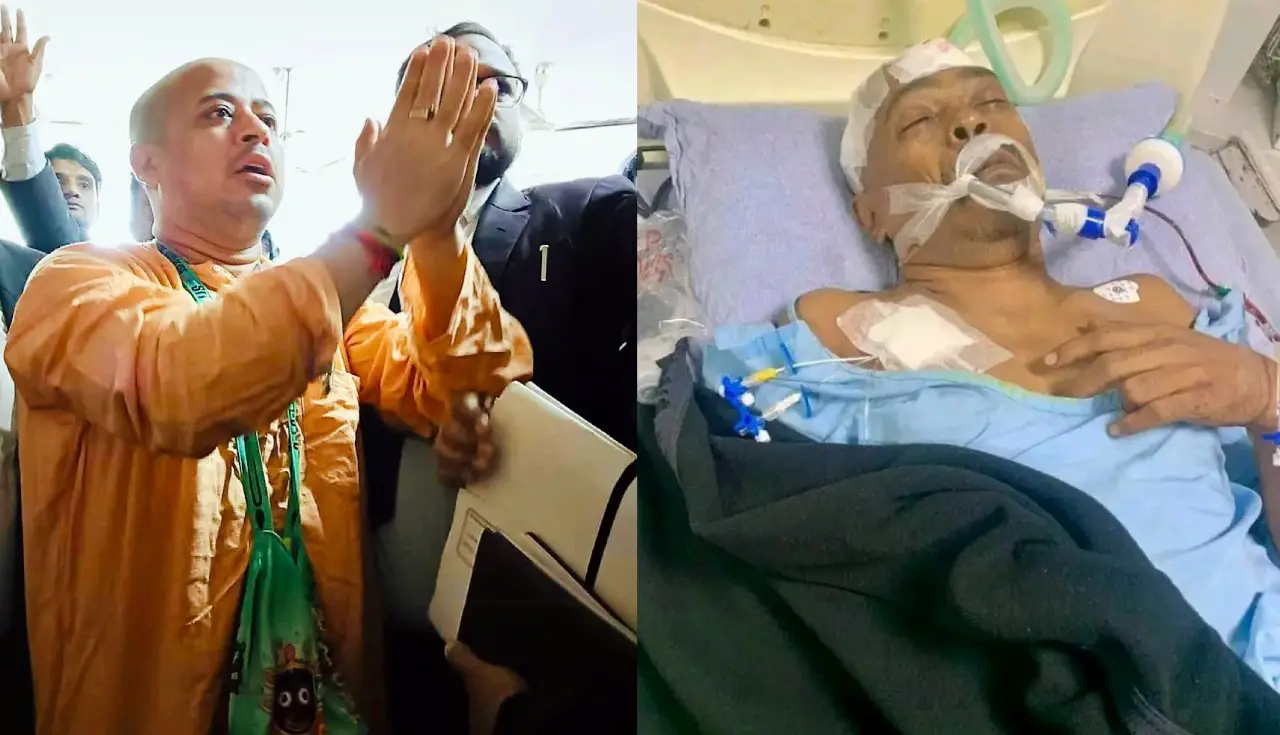
The International Society for Krishna Consciousness (ISKCON) Kolkata has appealed to the Bangladesh government to ensure the safety of lawyers willing to represent Hindu monk Chinmoy Krishna Das in an ongoing case, following a brutal attack on his lawyer.
ISKCON Kolkata spokesperson Radharamn Das on Monday claimed that Ramen Roy, who was defending Chinmoy Krishna Das, was attacked by a group of Islamists at his home in Bangladesh.
According to Das, no new lawyer has come forward to represent Chinmoy Krishna Das following the attack on Roy, citing safety concerns.
“No new lawyer has come up to fight his case till now. Those who want to fight the case are afraid that they might face the same consequences as Ramen Roy. We would request the Bangladesh government to provide the lawyers who are willing to fight the case with adequate safety and security,” he said.
“It must be ensured that such targeted attacks are dealt with sternly. The situation is deeply alarming and highlights the hostile environment faced by those supporting justice for minorities in Bangladesh,” he added.
According to Radharamn Das, Roy’s only “fault” was defending Chinmoy Krishna Das in court, and a group of Islamists ransacked his home.
The attack left Roy critically injured, and he is currently in the ICU, fighting for his life, ISKCON Kolkata spokesperson claimed.
“Please pray for Advocate Ramen Roy. His only ‘fault’ was defending Chinmoy Krishna Das in court. Islamists ransacked his home and brutally attacked him, leaving him in the ICU, fighting for his life. #SaveBangladeshiHindus #FreeChinmoyKrishnaPrabhu,” he posted on X along with a picture of Roy in ICU on Monday night.
Chinmoy Krishna Das, who served as a spokesperson for Bangladesh Sammilita Sanatani Jagran Jote, was arrested at Dhaka’s Hazrat Shahjalal International Airport on Monday while en route to Chattogram to attend a rally.
He was denied bail and sent to jail on Tuesday by a court in the neighbouring country.
Historically, Hindus made up approximately 22 per cent of Bangladesh’s population during the 1971 Liberation War.
The Hindu population, once a substantial demographic in Bangladesh, has experienced a significant decline in recent decades, with the minority community now comprising only around 8 per cent of the country’s total population.
This drop is largely attributed to a combination of socio-political marginalisation, exodus and sporadic violence over the years.