Trial Court Not to Proceed With Mosque Survey Matter, Maintain Peace in Sambhal: Supreme Court 2
The Supreme Court on Friday asked the Sambahl trial court not to pass any order related to the survey of a Mughal-era mosque while directing the Uttar Pradesh government to maintain peace and harmony in the violence-hit town.
A bench comprising Chief Justice Sanjiv Khanna and Sanjay Kumar ordered the Allahabad High Court to take up the plea of the Muslim side within three working days of its filing.
“We hope and trust that the trial court will not proceed with the matter till the high court takes up and passes any order in the matter,” it said.
The bench directed the state government to maintain peace and harmony at Sambhal and set up a peace committee comprising members of both communities.
The top court further asked the Sambhal trial court to not to open any report, which may be filed before it, till the high court took up the matter and passed an order on the plea of the Muslim side.
The bench, which advised the Muslim side to move the high court against the impugned order of the district court, has kept the matter pending and ordered its listing in the week commencing January 6.
The management committee of Sambhal’s Shahi Jama Masjid moved the Supreme Court on Thursday, challenging the November 19 order of the district court directing survey of the Mughal-era mosque while seeking an ex-parte stay on the operation of the November 19 order passed by the civil judge.
Tensions brewed in Uttar Pradesh’s Sambhal since November 19 when the court-ordered survey of the Shahi Jama Masjid was carried out following claims that a Harihar temple previously stood at the site.
On November 24, protesters gathered near the mosque and clashed with security personnel, leading to stone pelting and arson. Four people died and several others were injured in the violence.
Controversial Priest Narsinghanand Accuses Bangladesh of Hindu Genocide 4
Yati Narsinghanand Giri, the polarizing head priest of Dasna Devi temple in Ghaziabad, Uttar Pradesh, has stirred fresh controversy by alleging a systematic genocide of Hindus in Bangladesh. In a fiery statement on Thursday, he urged Indian Hindus to take lessons from the plight of their counterparts in the neighboring country and act decisively to secure their future.
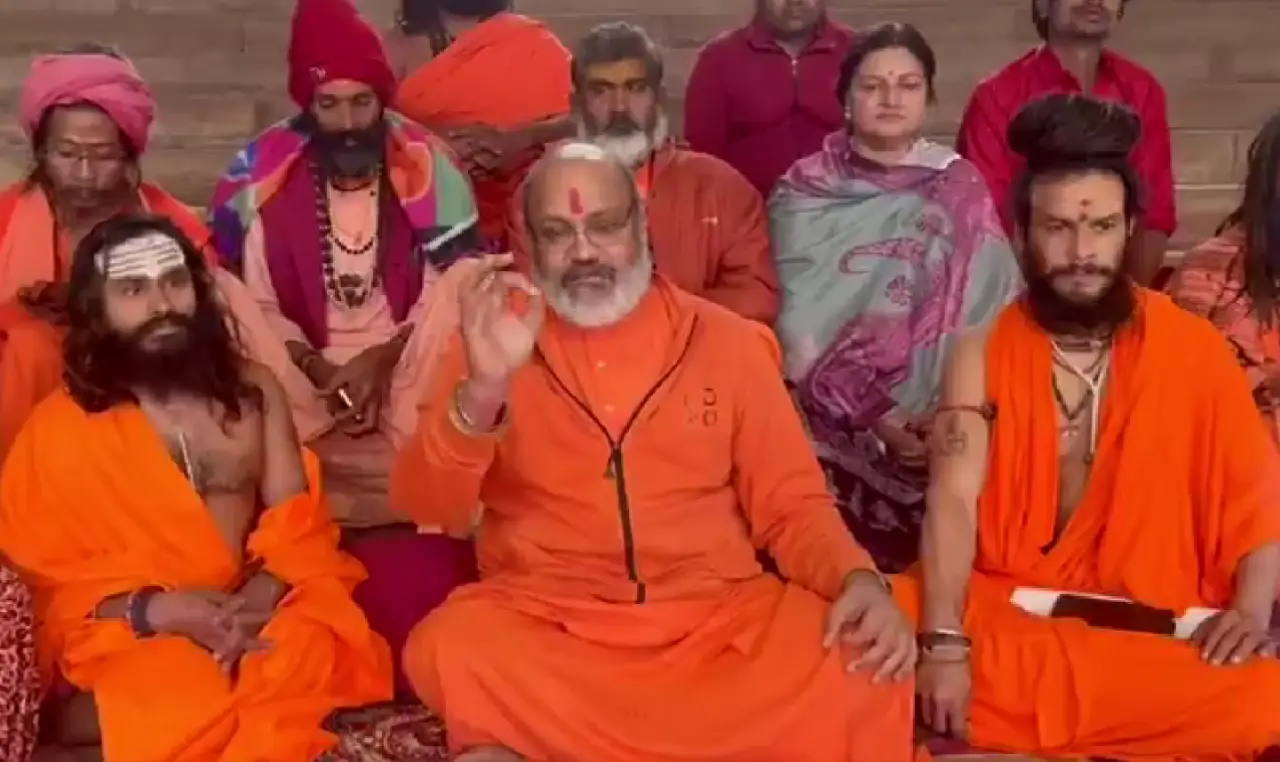
Narsinghanand announced a three-day “Dharma Sansad” to be held at the Anand Bhairav Mandir from December 19-21. Organized by the Juna Akhara, the event aims to spotlight the alleged atrocities against Hindus in Bangladesh. He called upon Hindus who wish to protect their future generations from “Islamic Jihadis” to participate in the congregation.
“Massacres in Bangladesh”
In a video released alongside Kothari Srimahant Mahakal Giri of the Juna Akhara and other saints, Narsinghanand accused the Muslim community in Bangladesh of orchestrating gruesome massacres of Hindus with the alleged backing of the country’s army and police. He specifically referenced the imprisonment of Chinmay Das Prabhu, a member of ISKCON, as evidence of what he claimed was the Bangladesh government’s disdain for Hindus.
“The arrest of Chinmay Das Prabhu demonstrates the position of Hindus globally. Had such an act been committed against Jews, Israel would have launched a counterstrike. If Hindus had a nation truly dedicated to them, such tragedies in Pakistan and Bangladesh would not occur,” Narsinghanand asserted, invoking the idea of a Sanatan Vedic Rashtra as a solution.
Criticism of Hindu Movements
The priest also criticized past Hindu movements, including the Ram Mandir campaign, for failing to address what he termed the “real problems.”
“If the Ram Mandir movement had focused on establishing a Sanatan Vedic Rashtra, issues like ‘love jihad,’ cow protection, Shri Krishna Janmabhoomi, Kashi Vishwanath, or Sambhal would not exist. We’ve never collectively raised our voice against these deeper issues,” he lamented.
Previous Controversies
Narsinghanand is no stranger to controversy, having faced charges for hate speech in the past. His provocative remarks have drawn widespread criticism for inflaming communal tensions, though his followers argue that he is a vocal advocate for Hindu causes.
The allegations and the planned “Dharma Sansad” are likely to reignite debates on the treatment of Hindus in Bangladesh and the broader communal discourse in South Asia.
Raj Kundra's Home and Office Raided by ED in Porn Content Case 6
The Enforcement Directorate (ED) on Friday conducted raids at the residence and office of businessman Raj Kundra, husband of Bollywood actor Shilpa Shetty, in Mumbai. The action is part of an ongoing money laundering investigation tied to the production and distribution of pornographic content via mobile applications.
Officials confirmed that searches were also underway at the premises of Kundra’s associates as the agency deepens its probe into the case.
Background of the Case
Raj Kundra was arrested in June 2021 following complaints by four women alleging they were coerced into filming pornographic content under the pretense of securing acting roles in web series. After spending two months in jail, Kundra was granted bail in September 2021.
Mumbai Police had earlier identified Kundra as the primary conspirator in the case. The ED’s current investigation is focusing on tracing financial transactions and potential proceeds from the alleged illegal activities.
This case has reignited debates around the misuse of digital platforms and the need for stringent laws to tackle such offenses.
Sambhal Mosque Committee Challenges Survey Order in Supreme Court Amid Tensions 8
The management committee of Sambhal’s Shahi Jama Masjid approached the Supreme Court on Thursday, challenging a district court’s November 19 order to conduct a survey of the Mughal-era mosque. The Supreme Court is set to hear the plea on Friday, led by a bench headed by Chief Justice Sanjiv Khanna, as per the court’s cause list.
The committee has requested an ex-parte stay on the district court’s order, citing its “hasty execution” that has allegedly triggered communal unrest in the region. The plea argued that such surveys, carried out without proper notice or opportunity for the mosque’s representatives to respond, could “inflame communal passions” and jeopardise the secular fabric of the nation.
Tensions Surrounding the Shahi Jama Masjid
The Shahi Jama Masjid, a 16th-century structure, has been at the center of a dispute following claims by plaintiffs that it was originally a Harihar temple. On November 19, a court-ordered survey was carried out with minimal notice, sparking tensions in the area.
The situation escalated on November 24 during protests against a second unannounced survey, resulting in violence, stone-pelting, and arson. Four people died, and several others were injured in the clashes.
The petitioners argued that the surveys were conducted in an unprecedented rush, violating due process and inflaming communal unrest. They also highlighted a growing trend of similar disputes being raised across the country, cautioning against the potential for widespread discord.
The Supreme Court’s ruling in this case is expected to have far-reaching implications for disputes over places of worship nationwide.
Maharashtra Awaits CM Announcement as Mahayuti Leaders Seal Power-Sharing Deal with Amit Shah 10
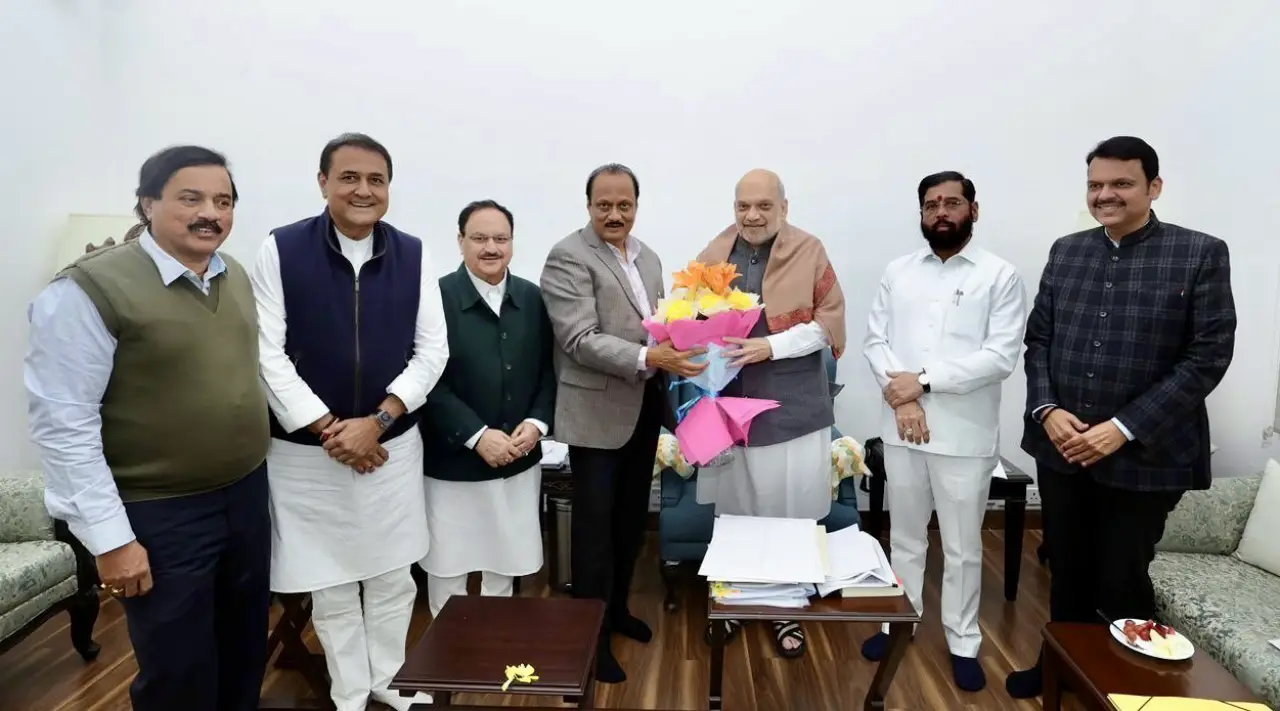
In a significant political development, Maharashtra Chief Minister Eknath Shinde, along with Deputy CMs Devendra Fadnavis and Ajit Pawar, met Union Home Minister Amit Shah in New Delhi on Thursday night to finalize the power-sharing formula following the BJP-led Mahayuti alliance’s landslide victory in the state assembly elections.
Fadnavis: The Frontrunner for CM?
With the BJP securing over 100 seats for the third consecutive time under Devendra Fadnavis’ leadership, speculation is rife that he may return as Maharashtra’s chief minister. Fadnavis is seen as a strong contender, but discussions over caste equations and coalition dynamics are delaying the announcement.
Ajit Pawar, NCP chief and one of the alliance’s deputy CMs, confirmed that a decision regarding ministerial portfolios for BJP, Shiv Sena, and NCP leaders was a key agenda during the meeting with Shah.
Shinde Signals Willingness to Step Aside
Outgoing CM Eknath Shinde met Amit Shah separately before the formal Mahayuti meeting, signaling his willingness to abide by decisions made by Prime Minister Narendra Modi and Amit Shah. “I won’t be an obstacle to the government formation,” Shinde stated, implying he may not retain the top post.
Shinde’s supporters, however, are lobbying for his continuance, citing his successful grassroots initiatives such as the Ladki Bahin campaign, which brought governance closer to citizens. Shiv Sena insiders suggest Shinde will remain part of the cabinet but is unlikely to accept a deputy CM role.
Caste Dynamics in Focus
The BJP’s central leadership is reportedly weighing Maharashtra’s complex caste equations, with an emphasis on balancing representation for the OBC and Maratha communities. Fadnavis, a Brahmin, previously served as CM in 2014 and briefly in 2019. Sources speculate that RSS influence may favor his appointment.
Meanwhile, Shinde’s Shiv Sena is expected to propose a different leader for the deputy CM position, reflecting an effort to maintain coalition harmony.
A Resounding Victory for Mahayuti
The Mahayuti alliance triumphed in the November 20 assembly elections, securing 230 of the 288 seats. The BJP emerged as the largest constituent with 132 seats, followed by Shinde’s Shiv Sena (57) and Ajit Pawar’s NCP (41). The Congress-led Maha Vikas Aghadi suffered a humiliating defeat, with Congress winning just 16 seats and Uddhav Thackeray’s faction (UBT) managing only 20.
What’s Next?
A new government is expected to be in place by December 2. Shinde’s son, MP Shrikant Shinde, lauded his father’s commitment to “alliance dharma,” emphasizing collective governance over personal ambition.
As political circles buzz with speculation, Maharashtra awaits an official announcement on its next chief minister. Will it be Fadnavis, or will caste equations and alliance negotiations bring a surprise? The decision is expected to shape the state’s political trajectory in the coming years.
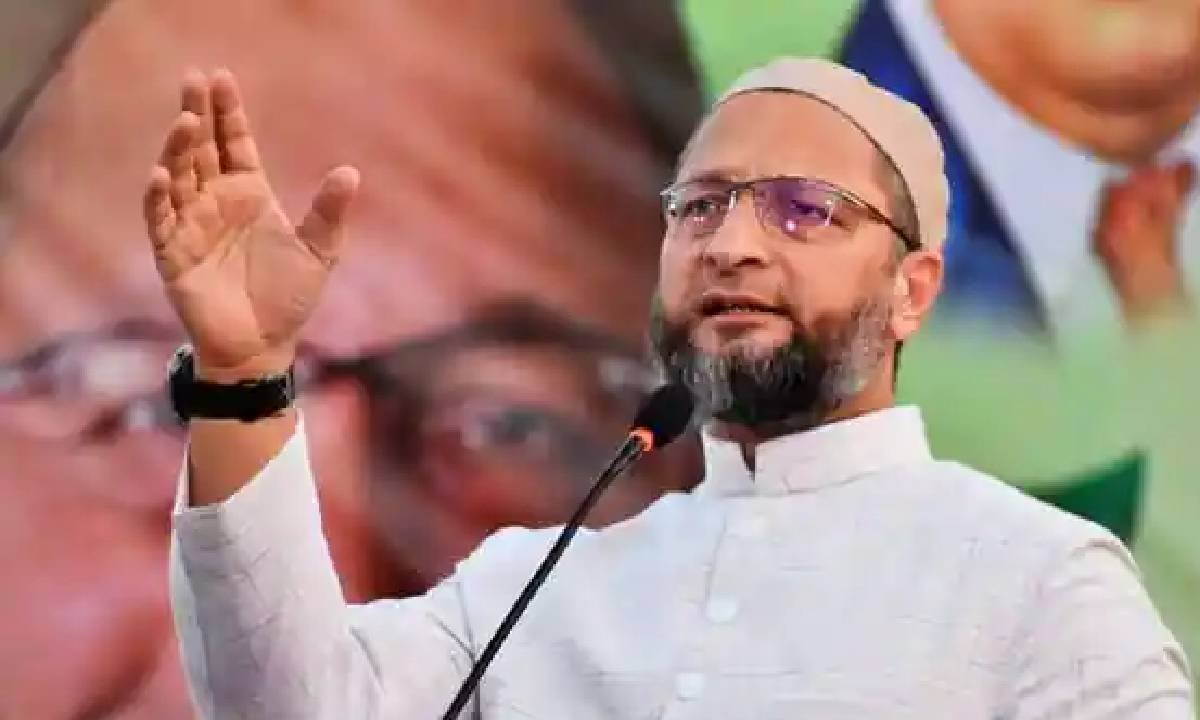
All Indian prime ministers, including Narendra Modi, have offered ‘chadar’ at Ajmer Sharif Dargah and the controversy over the claim that the Sufi shrine was a temple was directly or indirectly linked to the BJP and the RSS, AIMIM leader Asaduddin Owaisi said on Thursday.
A court on Wednesday admitted a petition seeking to declare the Mughal-era shrine a Shiva temple. Several opposition leaders raised serious concerns over the controversy on the Ajmer Dargah, which comes close on the heels of similar claims made regarding a mosque in Uttar Pradesh’s Sambhal.
“The Dargah Sharif has been there for 800 years. Every prime minister of the country sends ‘chadar’ for the dargah during ‘Urs’. Official delegations from neighbouring countries come there, Indian diaspora from all over the world visit the dargah… Now suddenly you are raising this issue…” Owaisi told reporters outside Parliament.
“Where will all this stop? What will happen to the Places of Worship Act, 1991?” The Places of Worship Act 1991 states that the religious character of any place of worship as it existed on August 15, 1947, must be maintained.
Owaisi continued, “What would Narendra Modi say? The dargah where he offered ‘chadar’ is not a dargah? What would ASI say?” “This is being done to destabilise the country… I am saying repeatedly that these things are not in favour of the country. These people are related directly or indirectly with BJP, RSS… no one can deny this,” he said. The Ajmer court issued notices to the Ajmer Dargah Committee, the Ministry of Minority Affairs and the Archaeological Survey of India on the plea seeking to declare the shrine a temple. The suit was filed in Ajmer in September.
The court’s notice came just days after four people were killed in violence following a court ordering a survey of the Shahi Jama Masjid in Sambhal, which petitioners said was built after destroying an old temple.
Samajwadi Party’s Rampur MP Mohibbullah Nadvi said the petition on Ajmer Dargah was “painful”.
“Some people have lost their cool after the 2024 (Lok Sabha) election results as they didn’t get the majority. These people want to target a particular community to please the majority. This is their misbelief,” he told reporters outside Parliament.
Saharanpur MP Imran Masood said an atmosphere of hatred has been created in the country. “They did it in Sambhal yesterday. Now they did it in Ajmer. What is this drama?” he said. “BJP and the government should think, this country cannot be run by hatred, you cannot sideline 25 crore people. How would the country develop without their contribution? We are very clear, your party may become stronger by creating hatred, but it is not good for the country,” the Congress leader said addressing reporters outside Parliament. He also targeted the Uttar Pradesh government over the Sambhal violence.
“Do Muslim lives not matter? They will shoot us in the head? Stone pelting is wrong but they could have shot at the leg, why did they shoot people in the head and chest?” he said. Police have denied opening fire at the protesters in Sambhal, saying “rioters” carried out shootings and stone pelting. A magisterial probe into the violence is ongoing. Samajwadi Party’s Mainpuri MP Dimple Yadav reiterated her party’s demand for a discussion on the Sambhal issue in Parliament. “Our main issue is that we want a discussion on Sambhal in Lok Sabha. Speaker sir has assured that there will be a discussion. Police personnel are harassing, manipulating people in Uttar Pradesh. The police administration is working like this in the entire state,” she said.
Azad Samaj Party (Kanshi Ram) MP from Nagina in Uttar Pradesh, Chandra Shekhar said these incidents create a trust deficit in the country.
“What if a Buddhist says there is a Buddhist temple under Hindu temples and demands a probe? Those who are encouraging this should also answer what would be the outcome… Employment, price rise, health, education, farmers, women… these are the issues, should we talk about these issues or religious places?” he said.
“What is this drama, Kashi, Mathura, Sambhal, Ajmer, what more do we have to witness? Where is the prime minister? He and the Supreme Court should take cognisance. This is being done to distract attention from real issues, but the trust deficit it is creating is dangerous,” he said.
Hemant Soren Sworn in as Jharkhand CM for Fourth Term 13
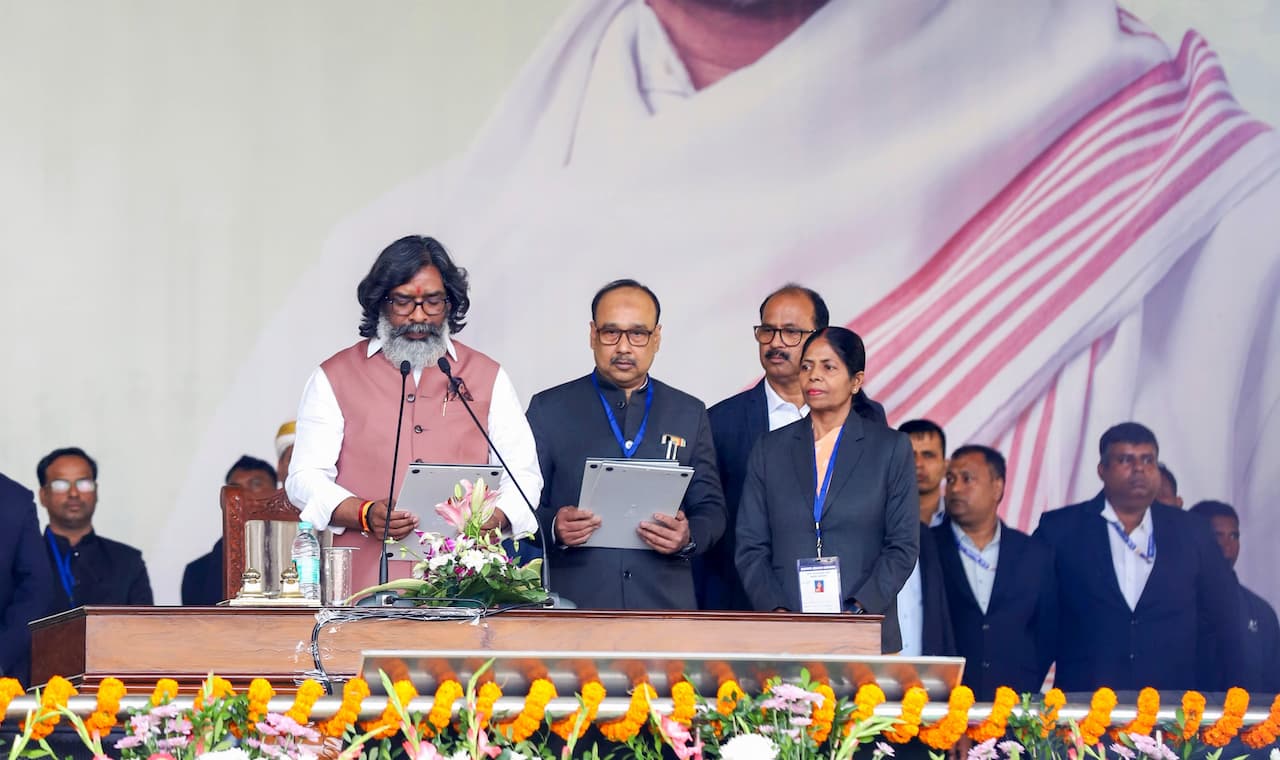
Hemant Soren, leader of the Jharkhand Mukti Morcha (JMM), took oath as the 14th chief minister of Jharkhand on Thursday in a grand ceremony held at Ranchi’s Morabadi Ground. Jharkhand Governor Santosh Kumar Gangwar administered the oath of office and secrecy.
A Star-Studded Ceremony
The event witnessed a strong show of solidarity from the INDIA bloc, with prominent leaders including Congress president Mallikarjun Kharge, West Bengal Chief Minister Mamata Banerjee, AAP leader Arvind Kejriwal, and Leader of Opposition Rahul Gandhi attending.
Soren, 49, donned a traditional kurta-pyjama for the occasion and met his father, JMM patriarch Shibu Soren, before the ceremony. This marks Soren’s fourth term as chief minister, further solidifying his leadership within the state.
Election Triumph
In the recent assembly elections, Hemant Soren retained his Barhait seat with a commanding margin of 39,791 votes, defeating BJP candidate Gamliyel Hembrom. The JMM-led alliance, which includes Congress and RJD, secured a decisive victory by winning 56 of the 81 assembly seats, while the BJP-led NDA managed just 24.
This resounding mandate is seen as a vote of confidence in Soren’s leadership and the JMM alliance’s governance in the tribal-dominated state.
Mohan Bhagwat Calls for Unity Amid Diversity at 'Lokmanthan Bhagyanagar 2024' 15
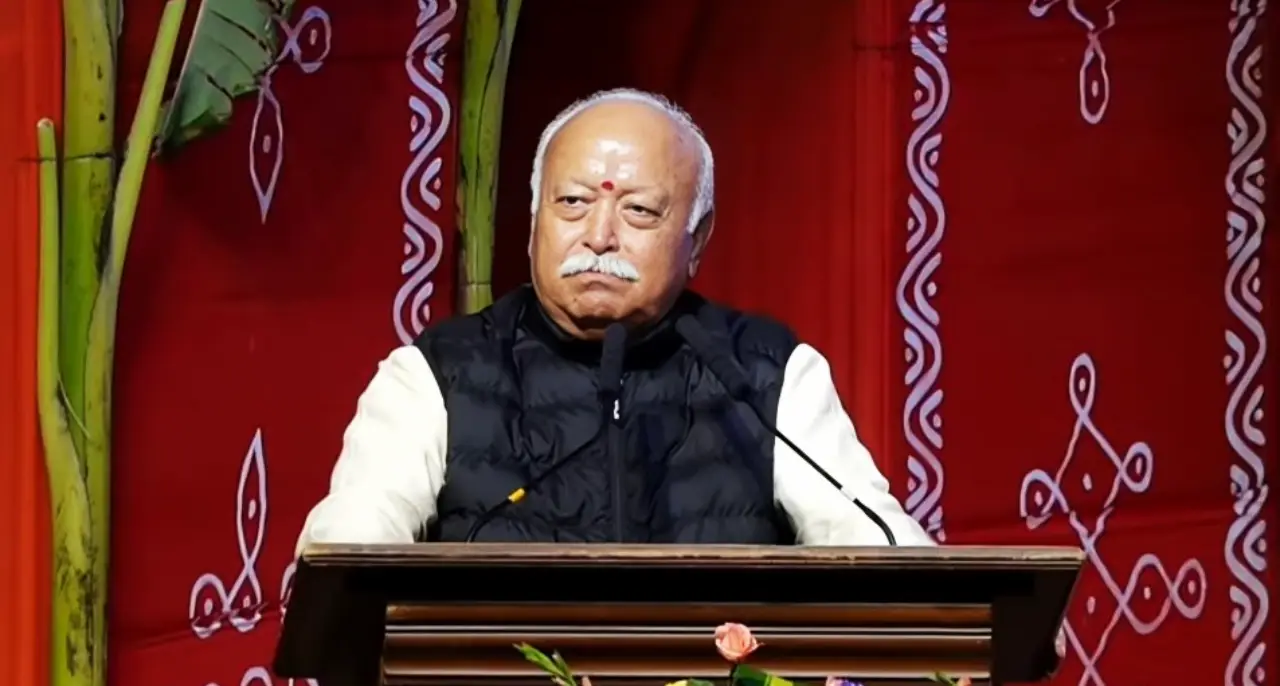
Speaking at the ‘Lokmanthan Bhagyanagar 2024’ event in Hyderabad, Rashtriya Swayamsevak Sangh (RSS) Chief Mohan Bhagwat emphasized the eternal unity underlying the diversity of existence, urging society to embrace harmony and interconnectedness. Highlighting the “unity of existence,” Bhagwat remarked that the truth of oneness has been known to India’s ancestors, who understood that while diversity may exist temporarily, it ultimately converges into unity. He stressed that this philosophy forms the foundation of India’s resilience and cultural identity.
A day after the BJP’s decisive victory in Maharashtra, in which the RSS played a pivotal role through extensive grassroots mobilization, Bhagwat called for expanding the Lokmanthan initiative to rural India. He encouraged smaller gatherings in villages to amplify the voices of grassroots communities, fostering a deeper connection with the cultural and spiritual ethos of Bharat. Reflecting on the organization’s mission, Bhagwat stated that the RSS strives to unite Hindu society, making it fearless, self-reliant, and selfless, dedicated to the service of the nation.
In his address, Bhagwat drew from Puranic symbolism, likening life’s challenges to “Halahala” (poison) that emerged during the churning of the ocean, asserting that such difficulties must be endured to achieve the “Amrit” (nectar) of collective welfare. He reiterated that India’s core values—symbolized by “Sanatan Dharma”—teach respect for diversity and reject division. “Sanatan Dharma is called by different names, be it Bharatiya Sanskriti or Hindu culture, but its essence lies in unity and respect for all,” he said.
Bhagwat also urged Indians to reconnect with their roots, self-respect, and shared heritage. “The foreign invaders who ruled us could not have succeeded if we had not forgotten our own values and goals,” he remarked, stressing the need for societal cohesion and spiritual awakening. He acknowledged the efforts of figures like Dr. B.R. Ambedkar, who emphasized brotherhood as essential for India’s progress and independence.
The RSS Chief concluded by emphasizing the importance of fostering a society that respects unity in diversity, works towards collective welfare, and upholds India’s cultural and spiritual legacy. As the RSS prepares for upcoming state elections in Bihar and Uttar Pradesh, Bhagwat’s remarks resonate as a call for alignment with the organization’s mission of nation-building through cultural and social cohesion.
Sambhal Violence: UP Government to Recover Damages, Display Posters of 'Stone Pelters' 17
The Uttar Pradesh government has announced strict measures against individuals involved in the recent Sambhal violence, where four people died and numerous others, including police personnel, sustained injuries during clashes near the Shahi Jama Masjid.
Crackdown on Miscreants
Officials confirmed that protesters responsible for damaging public property will be made to pay for the losses, and posters of those identified as “stone pelters” will be prominently displayed in public areas.
“The government is taking a firm stance. Posters of stone pelters and miscreants will be displayed, and recovery of damages will be initiated. Rewards may also be announced for information leading to their arrest,” said a government spokesperson.
This move mirrors a similar approach taken during the anti-CAA protests in 2020 when posters of alleged vandals were displayed in public places but were later removed following a court order.
Background of the Violence
The violence erupted on Sunday in the Kot Garvi area of Sambhal during a court-ordered survey of the Shahi Jama Masjid, sparked by claims that a Harihar temple previously stood at the site. Protesters gathered in large numbers, chanting slogans, which escalated into a clash with security forces. Vehicles were set ablaze, and stones were pelted, leading to widespread unrest.
Arrests and Investigations
To date, 25 individuals have been arrested, and seven FIRs have been filed, naming prominent figures such as Zia-ur-Rehman Barq, the Samajwadi Party MP from Sambhal, and Sohail Iqbal, son of the party’s local MLA Iqbal Mehmood. The charges also extend to over 2,750 unidentified individuals.
A magisterial inquiry is underway, with Superintendent of Police Krishna Kumar Vishnoi assuring that the situation is now under control. “Strict action will be taken against those responsible for the unrest,” he stated.
The UP government’s robust response underscores its commitment to maintaining law and order while holding those accountable for violence and property damage.
Manipur: Army Intensifies Search for Missing Civilian Near Imphal Valley 19
The Indian Army has launched an extensive search operation for Laishram Kamalbabu Singh, who went missing from the outskirts of the Imphal Valley two days ago. Drones, tracker dogs, and aerial surveillance are being deployed, according to a defence spokesperson.
Massive Search Underway
Singh, a native of Assam’s Cachar district residing in Khukrul, Imphal West, disappeared on Monday while traveling to his workplace at Leimakhong Military Station in Kangpokpi. A works supervisor for a contractor under the Military Engineering Services (MES), Singh’s family reported him missing after he failed to return home.
“The Army is scanning CCTV footage, interviewing co-workers, and conducting extensive searches with tracker dogs. Despite these efforts, neither Singh nor his two-wheeler has been found,” said a spokesperson from Kohima.
The search operation has expanded to include the military station, nearby villages, and surrounding areas. Civil society organizations (CSOs) are assisting in the effort, and Singh’s family has been assured of every possible measure for his safe return.
Rising Tensions in Imphal Valley
The incident has sparked tensions, with hundreds from the Meitei community marching toward the military station on Tuesday to demand Singh’s whereabouts. Security forces intercepted the march near Kanto Sabal to prevent the situation from escalating. Protesters subsequently blocked roads with rocks, demanding immediate action.
The Army urged the Meitei CSOs to lift blockades, ensuring free movement for security forces and police engaged in the search.
The protesters suspect Singh was abducted by militants, prompting demands for additional state forces to secure his release.
Ethnic Strife Adds Complexity
The area around Leimakhong, 16 km from Imphal, has been a flashpoint since ethnic violence erupted in May last year, claiming over 250 lives. The military station is surrounded by hilly regions predominantly inhabited by the Kuki community, while Meiteis residing near Leimakhong fled after the violence began.
State police have launched a parallel investigation into the incident, while the Army continues its intensified combing operations.