Delhi's Air Quality Hits 'Severe' Levels for Third Day; GRAP-III Curbs Enforced to Combat Pollution Crisis 2
Delhi implemented Stage III of the Graded Response Action Plan (GRAP) on Friday as the city’s air quality continued to deteriorate, remaining in the “severe” category for the third consecutive day. The Air Quality Index (AQI) at 9 am recorded a reading of 411, marking another day in the “severe” range (400 to 500), according to the Sameer app.
The Commission for Air Quality Management (CAQM) imposed these GRAP-III restrictions following two days of “severe” air quality, with Delhi experiencing the highest pollution levels in the nation. Delhi’s AQI had previously been in the “very poor” category for 14 consecutive days before tipping into the severe range.
GRAP’s four stages of air quality restrictions include:
Stage I: “Poor” AQI (201-300)
Stage II: “Very Poor” AQI (301-400)
Stage III: “Severe” AQI (401-450)
Stage IV: “Severe Plus” AQI (450+)
Stage III Curbs include a ban on non-essential construction and demolition activities, the closure of stone crushers, and suspension of mining operations in Delhi and the National Capital Region (NCR). Stage IV restrictions would enforce more stringent measures, such as restricting inter-state bus entry to electric, CNG, and BS-VI diesel vehicles only, banning most construction activities, and considering online classes for young students.
Currently, 27 out of 39 air quality monitoring stations in Delhi recorded AQI levels above 400, indicating severe air pollution. Areas with the worst air quality include Alipur, Anand Vihar, Jahangirpuri, and ITO.
In addition to poor air quality, Delhi also experienced its lowest night temperature of the season, at 15.6°C, coupled with dense fog and high humidity, which reached 98% on Friday morning. Visibility was reduced to 400 meters in Safdarjung, as the city braced for further dense fog throughout the day.
For the past two days, Delhi has recorded the worst air quality levels in the country, underscoring the urgent need for heightened pollution control measures.
PTI Reporter and Cameraperson Brutally Assaulted in Tonk Amid Political Protest 4
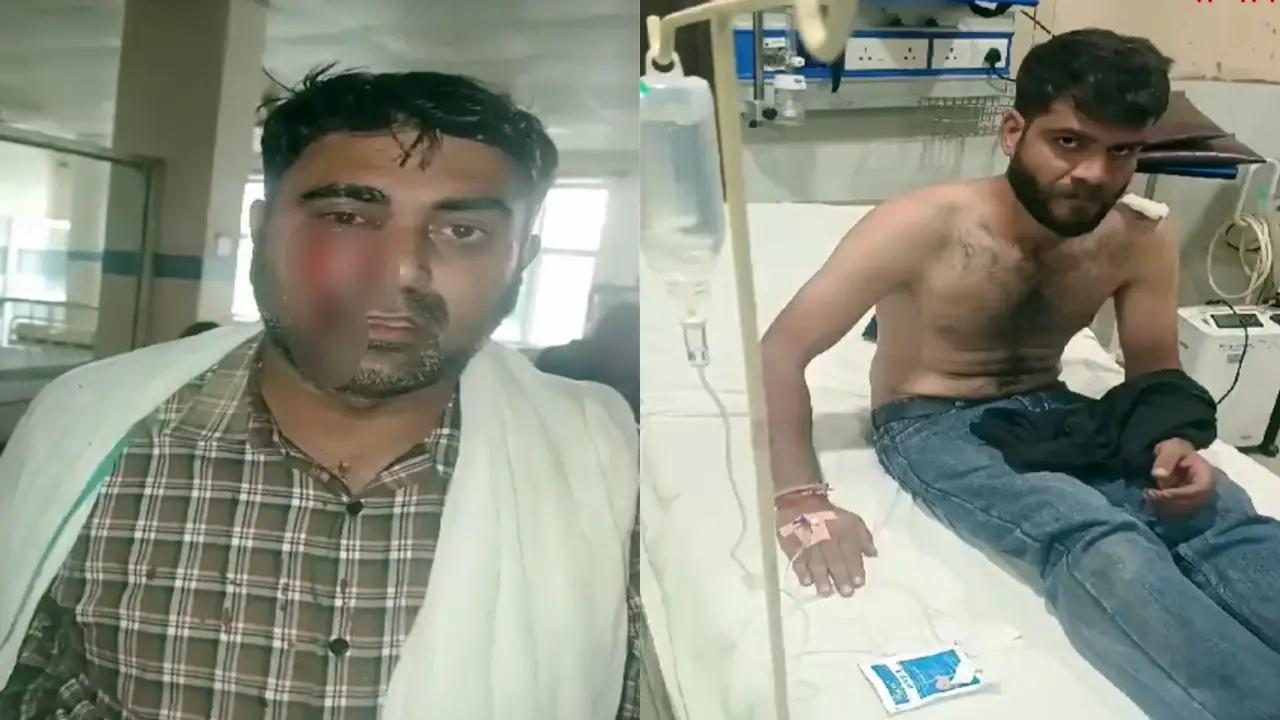
A PTI reporter and cameraperson were brutally assaulted by a mob while covering a protest in Tonk district on Thursday, following the arrest of Independent MLA candidate Naresh Meena. The attack left reporter Ajeet Shekhawat and cameraperson Dharmendra Kumar severely injured, and their camera was snatched and set ablaze by the mob.
In a selfie video sent to the PTI head office in Delhi, Shekhawat appeared with a visible injury below his left eye, while Kumar sustained a deep cut on his head and a possible fracture in his arm. Both journalists were rushed to the hospital with the help of a colleague.
The assault occurred just as the two were preparing to interview Agriculture Minister Kirodi Lal Meena, who had arrived at the scene to assess the escalating unrest. The violence initially erupted on Wednesday evening when police attempted to prevent supporters of Naresh Meena, a Congress rebel running as an Independent, from staging a sit-in protest. The conflict intensified after Naresh Meena was caught on camera slapping SDM Malpura Amit Chaudhary, who was on election duty.
The PTI team’s traumatic experience highlights the risks journalists face in volatile political environments, sparking calls for stronger protections for press personnel in conflict zones.
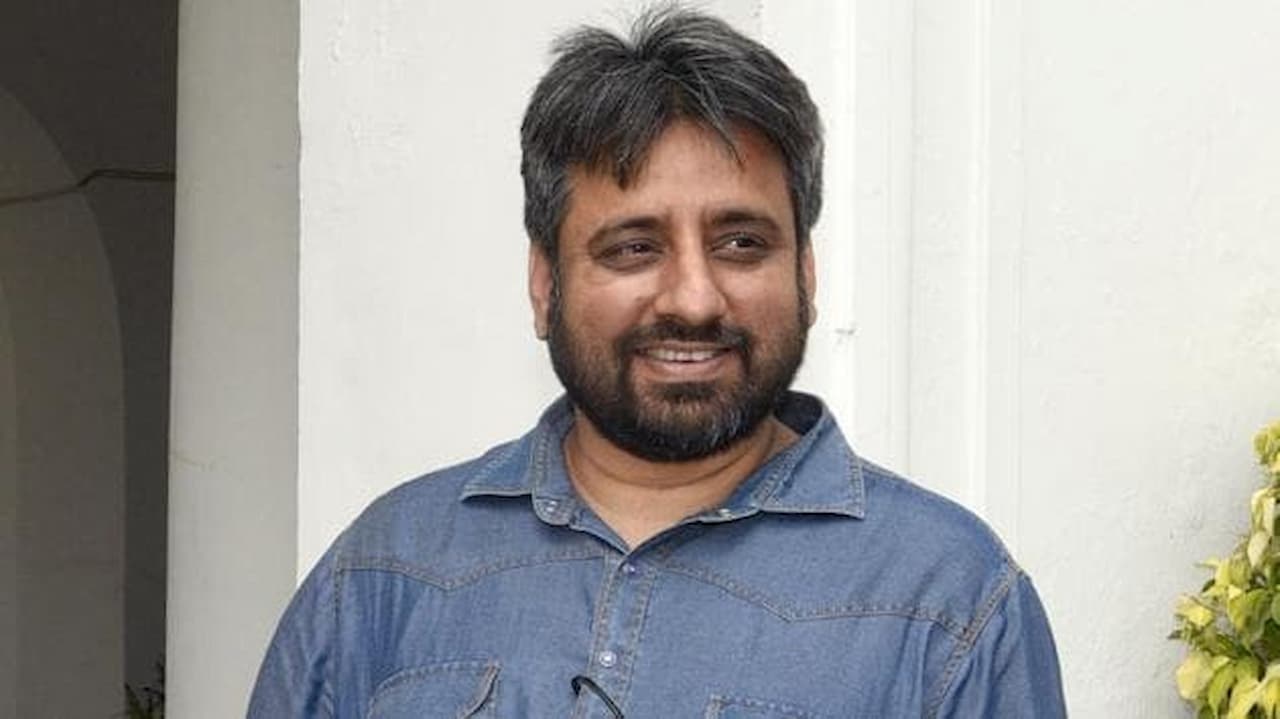
A court on Thursday refused to take cognisance of a chargesheet filed against AAP MLA Amanatullah Khan in a money laundering case related to alleged irregularities in the Delhi Waqf Board and ordered his “immediate release,” saying his further incarceration in the matter would be “illegal.”
Special Judge Jitendra Singh said that after going through the supplementary chargesheet and the documents filed with it, including the statement of the witnesses, there was sufficient ground to proceed against Khan.
However, no sanction from the competent authority/government was placed on record against him.
“Thus, cognisance against A-6 (Khan) is declined for the offence defined under Section 3 (money laundering) and punishable under Section 4 of the PMLA for the lack of requisite sanction,” the judge said while noting that Khan was a “public servant.”
He further said that in the case, “there is no legal ground to justify further detention of the accused in custody”.
“Keeping the accused in custody in these circumstances when the cognisance has been declined for the absence of sanction under section 197 (1) CrPC, shall tantamount to illegal custody. Under these circumstances, the accused has to be immediately released,” the judge said.
Special Judge Singh further issued an order for the release of Khan in the case after accepting his bail bond of Rs 1 lakh and a surety of like amount “for securing his presence in case the sanction is obtained and filed by the complainant (ED) in the future”.
The ED on October 29 filed a 110-page first supplementary prosecution complaint (ED’s equivalent of a chargesheet), claiming Khan laundered money that was allegedly generated through corruption in the Delhi Waqf Board.
The chargesheet had also named one Mariam Siddiqui, who was not arrested as an accused by the ED in the case. The court said there was no evidence to proceed against Siddiqui and discharged her.
“The case against Siddiqui is apparently based upon surmises and conjectures, as there exists no evidence, whether direct or circumstantial, against her. The SPC (supplementary prosecution complaint) lacks grounds for proceeding against Siddiqui. Accordingly, she is not summoned in the present case,” the judge said.
The ED had earlier urged the court to take cognisance of the chargesheet and said there was sufficient evidence to prosecute Khan and others in the case registered under the provisions of the Prevention of Money Laundering Act.
Khan was arrested on September 2 under the provisions of the PMLA by the ED, which conducting a search at his house in Delhi’s Okhla area. The AAP MLA was accused of being “evasive” when questioned by the probe agency.
The money laundering probe against him stems from two FIRs—the CBI’s case in connection with the alleged irregularities in the Waqf Board and an alleged disproportionate assets case registered by the Delhi Police anti-corruption unit.
'Batenge to Katenge' About Unity, Some Leaders Have Failed to Grasp Its 'Core' Meaning: Fadnavis 8
Maharashtra Deputy Chief Minister and senior BJP leader Devendra Fadnavis on Thursday said his party’s ‘batenge to katenge’ slogan is a counter-narrative to the MVA’s campaign and claimed his colleagues Ashok Chavan and Pankaja Munde, as well as Deputy CM Ajit Pawar, had failed to grasp its “core” meaning.
The slogan, frequently used by Uttar Pradesh CM Yogi Adityanath on the campaign trail for the November 20 Maharashtra polls, has united the opposition in its condemnation, which claims it has communal overtones, while even some ruling alliance leaders have frowned on it.
‘Batenge to katenge’ (disunity will lead to destruction) is a counter-narrative to the Congress-led Maha Vikas Aghadi’s divisive campaign, and the core message of the slogan is that “everyone has to stick together”, Fadnavis said during an interaction with select members of the media.
Foreign invaders ruled the land when society was divided, he further pointed out.
Asked about NCP chief Ajit Pawar as well as Chavan and Munde striking a different note on the slogan, the senior BJP leader said, “I believe they have not understood the core message of the slogan. ‘Batenge to katenge’ means everyone has to stick together. The Prime Minister has succinctly said ‘ek hai to safe hai’.”
“It does not mean we are against Muslims. The government has framed various welfare initiatives for all communities. Have we said the Ladki Bahin Yojana will not apply to Muslim women,” Fadnavis asked.
Explaining further, he said the Other Backward Classes comprise some 350 castes, who would not get importance if they are divided.
There are 54 groups under the Scheduled Caste segment and they are essential as long as they are together, Fadnavis said to underline his contention that the slogan emphasised unity.
“Batenge to katenge is also a response to the appeasement (politics) of the Congress and the MVA. They experimented with ‘vote jihad’ during Lok Sabha elections and posters were put up at mosques urging people to vote for a particular party. What kind of secularism is this,” he asked.
The Ulema Council has given a 17-point memorandum to the Congress, which includes a demand to withdraw cases against Muslims allegedly involved in riots between 2014 and 2024, Fadnavis said.
“If a particular community is creating pressure in this manner, and others are divided on caste lines, then your existence comes under a cloud. This (batenge to katenge) is a natural reaction,” the senior BJP leader claimed.
Fadnavis admitted the Maratha quota agitation has led to rift between the Marathas and OBCs and assured that the Mahayuti would provide a healing touch if it retains power.
The Nagpur bench of the Bombay High Court has upheld a man’s conviction for raping his 55-year-old mother-in-law, calling the act “shameful” and underscoring the deep violation of trust.
Justice G.A. Sanap, presiding over the case, noted that the victim, who was of the same age as the convict’s mother, would never have imagined that her son-in-law would commit such a deplorable act, now leaving her with a lifelong stigma.
“The appellant defiled the womanhood of the prosecutrix, who, in her wildest dreams, could not have anticipated such a deplorable act,” observed the court. Justice Sanap further emphasized the trust breach, highlighting how the accused had exploited his familial relationship with the victim.
The accused challenged his 14-year sentence, issued by a sessions court in March 2022, arguing that the incident was consensual. The High Court dismissed this defense, emphasizing that the woman would not subject herself to the stigma and distress of a police report if the act had been consensual.
The incident reportedly occurred in December 2018. According to the prosecution, the convict, who was separated from the victim’s daughter, had quarreled with the victim, demanding that she intervene to reconcile his marriage. On the pretext of discussing matters further, he allegedly lured her to his residence, consumed alcohol, and committed the assault.
The High Court found the evidence submitted by the prosecution sufficient to uphold the sentence, deeming the punishment proportionate to the severity of the crime.
UPPSC Row: Students Demand 'One Day, One Exam' As Protest Enters Third Day 11
“One day, one exam” read the placards as students protested for the third consecutive day on Wednesday against the decision to conduct the RO-ARO and PCS preliminary examinations over two days.
The Uttar Pradesh Public Service Commission (UPPSC) has scheduled the Provincial Civil Service Preliminary Examination for December 7 and 8. The Review Officer and Assistant Review Officer Preliminary Examinations are set for December 22 and 23.
Demanding a rollback to the earlier practice of holding the tests on a single day, the students said they would not buckle down until their demand is met.
Although the number of protesters was smaller compared to the previous two days, the students were firm on their stance. “We will continue the agitation for one day, one exam,” said Pratyush Singh, one of the protesting students outside the UPPSC office.
One placard read, “We will not divide, we will not retreat, we will remain united until we get justice”, another said, “One day, One examination”.
Supreme Court Applies Brakes on Bulldozers, Lays Down Guidelines on Demolition of Properties 13
Equating ‘bulldozer justice’ with a lawless state of affairs where might is right, the Supreme Court on Wednesday laid down pan-India guidelines and said no property should be demolished without a prior show cause notice and the affected must be given 15 days to respond.
The executive cannot assume judicial powers to punish citizens by demolishing their properties without following due process, the apex court said while terming such excesses “high-handed and arbitrary” and ruling that they need to be dealt with the “heavy hand of the law”.
A bench of Justices B R Gavai and K V Viswanathan described as “chilling” the sight of a bulldozer demolishing a building, rendering women, children and aged persons homeless overnight.
“If the executive acts as a judge and inflicts penalty of demolition on a citizen on the ground that he is an accused, it violates the principle of ‘separation of powers’,” the bench said in its 95-page judgment.
“The chilling sight of a bulldozer demolishing a building, when authorities have failed to follow the basic principles of natural justice and have acted without adhering to the principle of due process, reminds one of a lawless state of affairs, where ‘might was right’,” it said.
The bench said such high-handed and arbitrary actions have no place in the Constitution, which rests on the foundation of the rule of law.
Passing a slew of directions, the bench made clear that they will not be applicable if there is an unauthorised structure in a public place such as road, street, footpath, abutting railway line or any river or water bodies and also in cases where there is an order for demolition made by a court of law.
“No demolition should be carried out without a prior show cause notice returnable either in accordance with the time provided by the local municipal laws or within 15 days time from the date of service of such notice, whichever is later,” the bench directed.
The top court also observed that constitutional ethos and values would not permit any such abuse of power and such misadventures cannot be tolerated by the court of law.
“The executive cannot become a judge and decide that a person accused is guilty and, therefore, punish him by demolishing his residential/commercial property/properties. Such an act of the executive would be transgressing its limits,” the bench said.
In order to allay the fears in the minds of citizens with regard to arbitrary exercise of power by the officials of the State, the top court finds it necessary to issue certain directions in exercise of power under Article 142 of the Constitution, it said.
Article 142 empowers the apex court to pass any decree or order necessary for doing complete justice in any case or matter pending before it.
Even after orders of demolition are passed, the bench said, the affected party needs to be given some time so as to challenge the order before an appropriate forum.
And even in cases of persons who do not wish to contest the demolition order, sufficient time needs to be given to them to vacate and arrange their affairs, the apex court said.
“Heavens would not fall on the authorities if they hold their hands for some period,” the bench said.
It directed that notice shall be served upon the owner/occupier by a registered post. Additionally, the notice shall also be affixed conspicuously on the outer portion of the structure in question.
“The time of 15 days, stated herein above, shall start from the date of receipt of the said notice,” it said.
To prevent any allegation of backdating, the bench directed that as soon as the show cause notice is duly served, intimation shall be sent to the office of the concerned collector or district magistrate digitally by e-mail.
“The collector/DM shall designate a nodal officer and also assign an e-mail address and communicate the same to all the municipal and other authorities in charge of building regulations and demolition within one month from today,” it said.
The notice shall contain details regarding the nature of unauthorised construction, specific violation and the grounds of demolition, it directed.
The designated authority, the court added, shall give the person concerned an opportunity of personal hearing and pass a final order.
It said the final order should contain the contentions of the ‘noticee’, and if the designated authority disagrees with the same, the reasons for it.
The bench said the final order shall also contain why the extreme step of demolition is the only option available and other options like compounding and demolishing only part of the property are not available.
It also said the proceedings of demolition shall be videographed.
“Needless to state that the authorities hereinafter shall strictly comply with the aforesaid directions issued by us. It will also be informed that violation of any of the directions would lead to initiation of contempt proceedings in addition to the prosecution,” the bench said.
Justice Gavai, who penned the verdict, started his judgement with a few lines of famous Hindi poet Pradeep to highlight the importance of having a home.
The top court delivered its verdict on pleas seeking framing of guidelines on demolition of properties.
103 Senior Citizens and 11 Differently-Abled Voters Cast Votes from Home in Mumbadevi Constituency 15
As part of the Assembly General Election 2024, the Election Commission of India facilitated home voting for senior citizens above 85 years and differently-abled voters in Mumbai city district who could not visit polling stations. This initiative, enabled through the submission of Form 12D, allowed eligible voters to exercise their democratic right via a postal polling team.
In Mumbadevi Assembly Constituency, 103 senior citizens and 11 differently-abled voters availed of this facility today. Out of 118 eligible senior citizens and 13 differently-abled voters in the constituency, 114 had submitted Form 12D, making the home voting process a success.
Across the ten constituencies of Mumbai city district, a total of 2,137 senior citizens and 219 differently-abled voters qualified for postal voting. The home voting process for all eligible voters is scheduled to conclude by November 16, 2024.
The Election Commission has expressed appreciation for the smooth execution of this initiative and commended the efforts of the postal polling teams in ensuring inclusivity and accessibility in the electoral process.
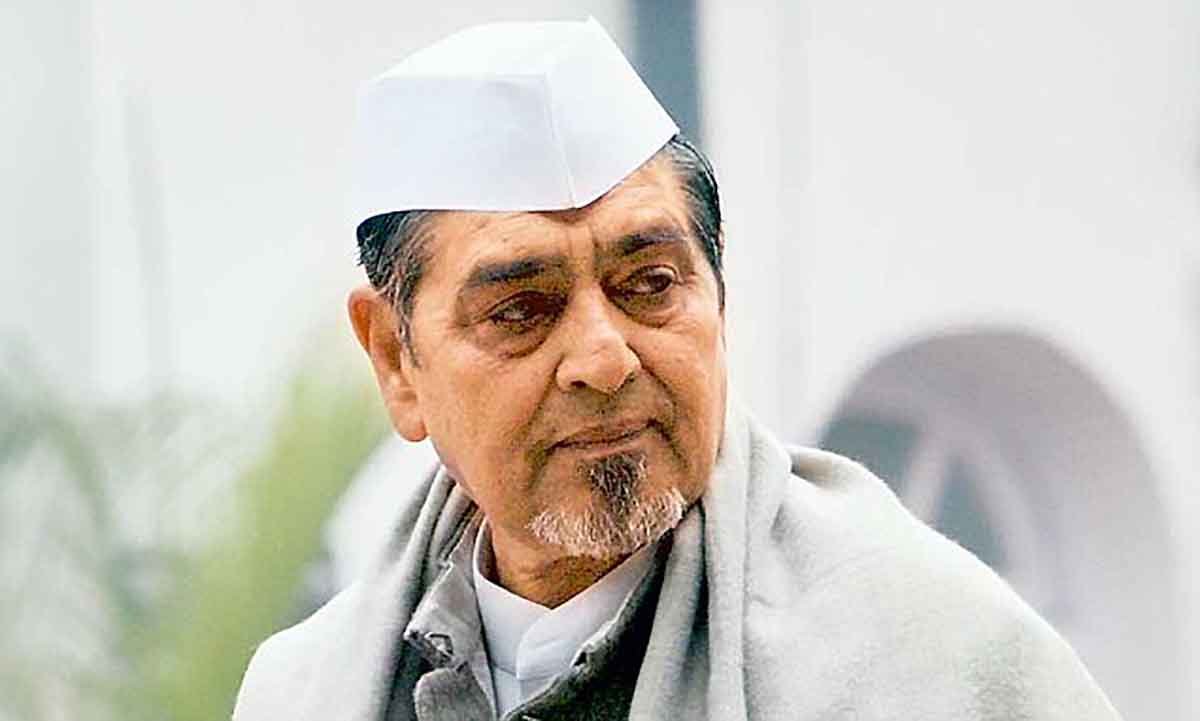
1984 Riots: Delhi HC Says Murder Trial to Continue Against Jagdish Tytler 19
The Delhi High Court on Monday made it clear that the murder trial in a 1984 anti-Sikh riots case against Congress leader Jagdish Tytler would continue.
Justice Manoj Kumar Ohri was hearing a plea filed by Tytler seeking a stay on the trial proceedings taking place against him in a Delhi court. The court would continue with the hearing on November 29.
“It is made clear the trial will continue. Same will be subject to the outcome of the present proceedings,” the judge ordered.
Tytler’s counsel submitted the case was listed for the recording of evidence of a prosecution witness before the trial court on November 12 and the trial court be asked to not proceed till the high court decided his plea against the framing of charges order.
Tytler’s plea challenging the framing of murder and other charges against him is listed on November 29 but he moved court with the plea to stay the trial.
His plea said the evidence of the prosecution witness was recorded by the trial court and her cross-examination by the defence counsel was scheduled for November 12.
“The criminal revision petition (of Tytler) raised substantial questions upon the motivation of the prosecution and the investigation conducted by the CBI. Therefore, an order/direction from this court for the trial court to not proceed with the captioned matter till the pendency of the revision petition is expedient in the interest of justice,” his plea read.
Senior advocate H S Phoolka, representing the victims, opposed the plea arguing the witness was old and suffered from various ailments and being subjected to multiple court appearances. She would be appearing in court for the fourth time, he said.
Tytler has claimed being a victim of a “witch-hunt” and contended the trial court’s order framing charges against him was “perverse, illegal and lacked application of mind”.
“Trial court has erroneously framed charges against the petitioner overlooking the settled principles of law on the point of charge,” his petition stated.
While Tytler’s counsel raised the plea of alibi, claiming his absence at the time of the incident, the counsel for the CBI and victims argued the plea of alibi had already been decided and rejected by the high court.
Tytler said there was no credible evidence to corroborate the allegations against him and the trial court’s order was “misconceived” passed “mechanically” and liable to be set aside.
He alleged it was a case of harassment wherein he was made to face the trial for alleged crimes committed more than four decades ago, and referred to being 80-years old and suffering from several ailments, including heart disease and diabetes.
The trial court on September 13 framed charges against him after he pleaded not guilty.
Besides murder, the trial court ordered the framing of charges pertaining to unlawful assembly, provocation, rioting, murder, promoting enmity between different groups, house trespass, and theft, among others.
The CBI on May 20, 2023, filed a chargesheet against Tytler in the case saying he “incited, instigated and provoked the mob assembled at Pul Bangash Gurdwara Azad Market” on November 1, 1984. The mob, the agency claimed, provoked by Tytler, set a gurdwara ablaze and killed three men—Thakur Singh, Badal Singh, and Gurcharan Singh.
Anti-sikh riots erupted in several parts of the country in the aftermath of the assassination of then Prime Minister Indira Gandhi by her sikh bodyguards on October 31, 1984.
A session court had in August, 2023, granted anticipatory bail to Tytler in the case.