Home Blog Page 129

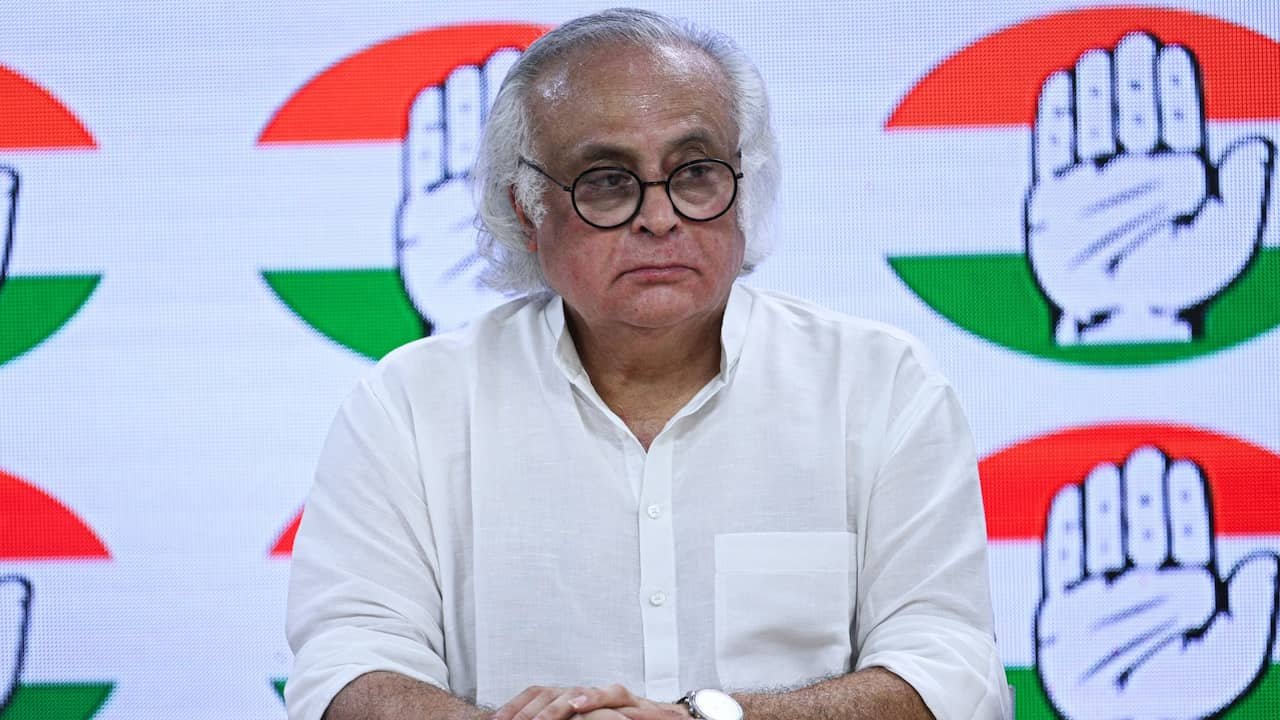
What Is BJP Doing to Prevent Farmer Suicides in Maharashtra, Jairam Ramesh Questions to PM

jairam ramesh, ramesh, congress, rajasthan,
What Is BJP Doing to Prevent Farmer Suicides in Maharashtra, Jairam Ramesh Questions to PM 2

The Congress hit out at Prime Minister Narendra Modi on Tuesday by posing questions to him on Maharashtra, asking what is the BJP doing to prevent farmer suicides in the states.

Congress general secretary in-charge communications Jairam Ramesh posed questions to the PM ahead of his rallies in Chimur and Solapur and asked why has the BJP “diluted” Adivasis’ forest rights in Maharashtra.

In 2006, the Congress had passed the revolutionary Forest Rights Act (FRA) which granted Adivasis and forest-dwelling communities legal rights to manage their own forests, and economically benefit from forest produce they collect, he pointed out.

“The BJP government, however, has obstructed the implementation of the FRA, depriving millions of Adivasis of its benefits. Only 52% (2,06,620 claims) of the 4,01,046 individual claims filed have been granted, and land titles distributed cover only 23.5% (11,769 sq. km) of the 50,045 sq. km eligible for community rights,” Ramesh said in his post on X.

Why has the BJP government in Maharashtra failed to provide Adivasi communities their rights, he asked.

Ramesh further asked as to what has the PM done to alleviate water scarcity in Satara and Solapur.

“The scarcity of drinking water in Satara, Sangli, and Solapur has only gotten worse in recent years. Between March and April 2024, the requirement of tankers increased 13% in Sangli, 31% in Satara and 84% in Solapur. Dams, ponds and lakes in the area dried up entirely, with the situation being the worst in Solapur,” he said.

Water supply in the city’s main source of water, the Ujani Dam, dipped below zero, and the city had to survive the “dead storage” in the dam, Ramesh pointed out.

The situation got so bad that the Solapur Municipal Corporation had to supply drinking water on a rotational basis, with different areas in the city getting water at five to eight day intervals, the Congress leader said.

“Why have the non-biological PM and the BJP ignored the plight of thousands who deal with water scarcity every day? Do they have any concrete plans to improve the situation?” Ramesh said.

He further asked what is the BJP doing to prevent farmer suicides.

On an average day in Maharashtra, seven farmers take their own lives, he pointed out.

“This heartbreaking statistic comes from the state’s Minister for Relief and Rehabilitation, who reported that 2,366 farmers died by suicide between January and October last year. The reasons are evident: 60% of districts faced drought conditions last year but no help arrived from the government.

When crops were damaged by unseasonal rains in more than half of the state, farmers were extended loan waivers, but 6.56 lakh farmers were deprived of this relief due to software glitches,” Ramesh said.

“In the face of this state-sponsored callousness, the Congress has consistently guaranteed farmers MSP as per the Swaminathan Committee’s recommendation, a farm loan waiver with a Permanent Commission set up to implement it smoothly, and settlement of all crop insurance claims within 30 days,” he said.

What is the BJP’s vision to support Maharashtra’s and India’s farmers, he asked.

His remarks come amid campaigning for the November 20 polls in Maharashtra.

Counting of polls would take place on November 23.

Thane Municipal Corporation Cracks Down on Illegal Hoardings, Fines Exceed Rs 10 Crore

thane municipal corporation, tmc, hoardings, fine
Thane Municipal Corporation Cracks Down on Illegal Hoardings, Fines Exceed Rs 10 Crore 4

In a significant move against illegal hoardings, the Thane Municipal Corporation (TMC) has imposed fines totaling Rs 10.96 crore on 52 advertisers who violated municipal rules and caused financial losses to the civic body. The offenders were fined five times the penalty amount, signaling TMC’s intent to enforce compliance rigorously.

Action Prompted by MNS Leader’s Efforts

The crackdown follows persistent efforts by Sandeep Pachange, President of the Maharashtra Navnirman Sena’s (MNS) Ovala-Majiwada Legislative Assembly Division. Pachange highlighted the issue of oversized hoardings installed in violation of municipal approvals. Despite initial inaction, Pachange filed a Public Interest Litigation (PIL), which prompted the municipal corporation to act.

Among the violators, Vihang Advertising Company was fined Rs 44 lakh. The penalties have stirred significant attention in political circles.

Safety and City Aesthetics at Stake

This action aims to curb illegal hoardings, protect the city’s visual appeal, and safeguard citizens’ safety. Concerns about the structural stability of unauthorized hoardings gained prominence after the Ghatkopar hoarding tragedy, adding urgency to enforcement.

Pachange emphasized the need for a robust policy to regulate hoardings and strict adherence to prevent future violations. While TMC has acted against 52 advertisement boards, questions remain about the status of other violations and incomplete actions.

Political Repercussions

The fines and the role of MNS in pushing for action have sparked discussions within political circles, underscoring the increasing pressure on local administrations to ensure safety and transparency in public spaces.

Riteish Deshmukh Rallies for Dhiraj Deshmukh, Calls for Focus on Real Issues Over ‘Dharma Politics’

riteish deshmukh, dhiraj deshmukh, riteish, latur, assembly elections, maharashtra
Riteish Deshmukh Rallies for Dhiraj Deshmukh, Calls for Focus on Real Issues Over 'Dharma Politics' 6

Actor Riteish Deshmukh took center stage in Latur Rural, campaigning for his brother and Congress candidate, Dhiraj Vilasrao Deshmukh, ahead of the Maharashtra Assembly Elections. Speaking to a large gathering, Riteish criticized the BJP for sidelining pressing issues like unemployment and focusing on “Dharma politics.”

Highlighting the contradiction in Latur’s reputation for educational excellence under the ‘Latur Pattern’ and the lack of job opportunities for its youth, Riteish declared, “The government has failed to deliver on its responsibilities. The youth of Latur deserve better.” He encouraged voters to prioritize real issues when they cast their ballots on November 20.

Riteish Urges Voters to Reject Divisive Tactics

Riteish accused the BJP of using religion as a shield to distract from their performance. Drawing on the teachings of Lord Krishna, he stated, “Work is Dharma. Doing one’s duties diligently is Karma, and that is true Dharma. Those who work honestly embody this, while those who fail use religion to mask their shortcomings.”

He further urged voters to hold politicians accountable, asking critical questions about agricultural policies, public safety, and economic development instead of succumbing to divisive narratives. “Ask those who preach religion how they will ensure better crop prices or guarantee the safety of our mothers and sisters,” he advised.

Confidence in the Deshmukh Leadership

Expressing faith in his brothers, Dhiraj and Amit Deshmukh, Riteish assured the crowd of their capability to address the region’s needs effectively. He also expressed confidence in the Maha Vikas Aghadi’s prospects, asserting that the alliance would fulfill its promises and form the next government.

A Fierce Contest in Latur Rural

The Latur Rural Assembly Constituency is set for a high-stakes contest. Congress’s Dhiraj Deshmukh faces BJP’s Ramesh Karad and MNS’s Santosh Ganpatrao Nagargoje in the electoral fray. Voting for the 288-member Maharashtra Assembly will take place on November 20, with counting scheduled for November 23.

Congress ‘Shahi Parivar’ Hell-Bent on Breaking OBC-ST-SC Unity to Snatch Reservations: PM Modi

narendra modi, modi, gumta, jharkhand, shahi parivaar, congress, reservations
Congress 'Shahi Parivar' Hell-Bent on Breaking OBC-ST-SC Unity to Snatch Reservations: PM Modi 8

Prime Minister Narendra Modi launched a sharp attack on the Congress during an election rally in Gumla, Jharkhand, on Sunday. He accused the Congress, particularly its “shahi parivar” (royal family), of attempting to divide the unity among Scheduled Tribes (ST), Scheduled Castes (SC), and Other Backward Classes (OBC) to “snatch reservations” through what he termed an “evil design.”

PM Modi argued that the Congress aims to weaken tribal communities by fostering division among groups, including Munda, Oraon, Lohra, Kharia, Kharwar, and Korwa. He also alleged that Congress has historically opposed the elevation of tribals to high positions, pointing to resistance against President Droupadi Murmu’s appointment.

Modi also criticized the Jharkhand Mukti Morcha (JMM)-led government, accusing it of exploiting Jharkhand’s resources—minerals, forest, land, and coal—while compromising the state’s “Roti-Beti-Mati” (bread, land, and daughter).

He assured that under the BJP’s “Dharti Aba Janjatiya Utkarsh Abhiyan,” over 60,000 tribal villages across India will be developed with an investment of Rs 80,000 crore. Additionally, he promised that the BJP’s “Gogo Didi” scheme, offering Rs 2,100 monthly to women, will be implemented in Jharkhand, and “Lakhpati Didis” will benefit through promoted millet (Ragi) cultivation.

Modi pledged that leaders involved in resource exploitation and youth neglect will face justice, urging voters that their support will ensure a prosperous future for Jharkhand in the next 25 years.

3,734 Code of Conduct Violation Complaints Resolved; Rs 398.40 Crore Worth of Assets Seized

c-vigil, election commission, model code of conduct,
3,734 Code of Conduct Violation Complaints Resolved; Rs 398.40 Crore Worth of Assets Seized 10

As part of the 2024 Assembly General Elections, a total of 3,764 complaints were registered across the state through the C-Vigil app between October 15 and November 9, 2024. Out of these, 3,734 complaints have been resolved by the Election Commission, according to the Chief Electoral Officer’s office.

C-Vigil App for Reporting Code of Conduct Violations

The C-Vigil app, which can be downloaded from any app store, enables citizens to report violations of the Model Code of Conduct. Upon receiving a complaint, the concerned teams investigate and take appropriate action promptly. This initiative allows citizens to actively contribute to ensuring compliance with election norms.

Seizure of Rs 398.40 Crore Worth of Assets

In a major crackdown, state and central enforcement agencies have seized Rs 398.40 crore worth of assets, including illegal cash, liquor, narcotics, and valuable metals. These measures highlight the strict enforcement of the Model Code of Conduct across the state.

The Election Commission has reiterated its commitment to ensuring a fair and transparent election process by effectively addressing complaints and taking swift action against violations.

Mumbai Workplaces Mandated to Provide Voting Leave for Assembly Polls on November 20

mumbai voting, compulsory leave, voting, november 20
Mumbai Workplaces Mandated to Provide Voting Leave for Assembly Polls on November 20 12

Mumbai District Election Officer and Municipal Commissioner Bhushan Gagrani has made it mandatory for all workplaces within the Brihanmumbai limits to grant leave to employees to cast their votes during the Maharashtra Assembly elections on November 20.

According to a release issued on Wednesday, failure to comply with this directive will result in action under Election Commission guidelines. The initiative is part of a broader effort to boost voter turnout across Mumbai Suburban and Mumbai City districts.

The mandate applies to all establishments, including corporate and industrial sectors. While workplaces are required to provide a full day’s leave, exceptions may be made for granting a minimum of four hours of leave, provided prior approval is obtained from the district election officer.

Under Section 135(B) of the Representation of the People Act, exemptions apply to employees whose absence could compromise public safety or critical operations at their establishments.

Tensions Escalate in Mahayuti Alliance as Yogi Adityanath’s ‘Batenge Toh Katenge’ Remark Sparks Controversy

yogi adityanath, ajit pawar, uddhav thackeray, Batenge Toh Katenge, mahayuti
Tensions Escalate in Mahayuti Alliance as Yogi Adityanath's 'Batenge Toh Katenge' Remark Sparks Controversy 14

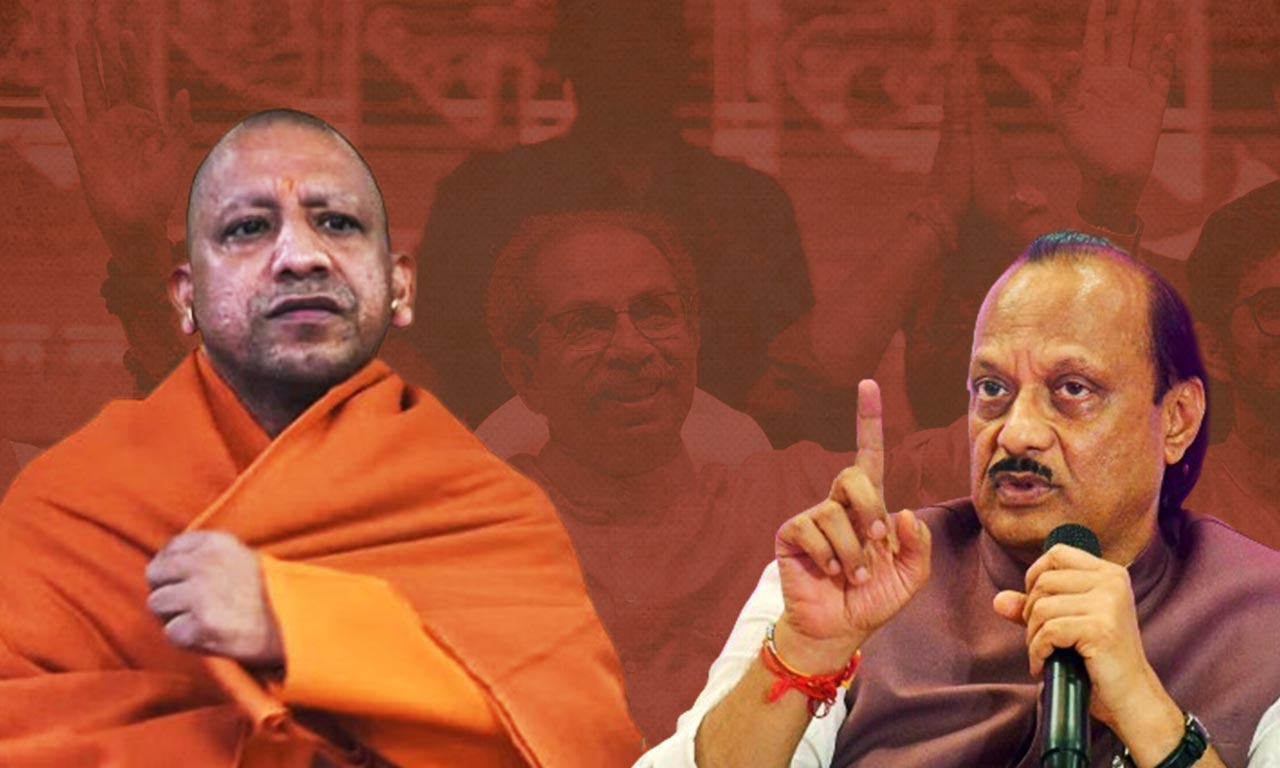
Yogi Adityanath’s provocative “batenge toh katenge” (if divided, will be divided) slogan, delivered at election rallies in Maharashtra, has stirred tensions within the ruling Mahayuti alliance, which includes the Bharatiya Janata Party (BJP), the Eknath Shinde-led Shiv Sena, and Ajit Pawar’s Nationalist Congress Party (NCP). The Uttar Pradesh Chief Minister’s statement, widely seen as a call for aggressive political rhetoric, has drawn sharp criticism from BJP ally and NCP chief Ajit Pawar, who insisted that such remarks do not resonate with the people of Maharashtra.

Reacting to Adityanath’s comments, Pawar made it clear that the people of Maharashtra have always valued communal harmony and secularism, emphasizing that the state does not tolerate divisive statements. “Maharashtra has a long history of maintaining communal peace, and people here will not accept any attempt to stir division,” Pawar said, adding that external leaders should not impose their views on the state. He also referenced Maharashtra’s legacy of social reform, invoking icons like Shahu Maharaj, Jyotiba Phule, and Babasaheb Ambedkar, who promoted unity and secularism.

The controversy comes as the NCP attempts to distance itself from Adityanath’s divisive remarks, fearing it could alienate Muslim voters—who are a key constituency for the party. With the potential for minority votes to shift towards Congress or Uddhav Thackeray’s UBT Shiv Sena, the NCP is wary of further political fallout.

NCP Distances Itself from Yogi’s Comments

The NCP, particularly concerned about its Muslim vote base, has distanced itself from the remarks made by the UP Chief Minister. “Such statements could negatively impact the party’s position and push away the consolidating minority votes,” said a senior NCP leader. Pawar himself was quick to underline that the people of Maharashtra have always maintained peace and that no outsider should undermine the state’s secular values.

In the same breath, Pawar also defended party candidate Nawab Malik, who is contesting the Mankhurd-Shivajinagar seat despite being embroiled in a money laundering case. Malik, currently out on bail, is a key NCP candidate, but the BJP has declined to campaign for him, backing Shinde’s candidate in the same seat. Pawar reaffirmed Malik’s innocence, stating, “No allegations against Nawab Malik have been proved.”

Thackeray Takes Aim at Yogi’s Maharashtra Visit

Shiv Sena (UBT) chief Uddhav Thackeray took the opportunity to slam the BJP for bringing in leaders from outside Maharashtra to campaign. “The Maharashtra Assembly election is a contest between those who love Maharashtra and those who betray it,” Thackeray declared. He also accused the Mahayuti government, led by Eknath Shinde, of being the “most corrupt” in the state’s history, citing the controversy surrounding the collapse of the Shivaji Maharaj statue in Sindhudurg, which was unveiled last year by Prime Minister Narendra Modi.

Thackeray was quick to criticize the lack of unity within the Mahayuti alliance, pointing to Ajit Pawar’s disapproval of Adityanath’s remarks as evidence that the coalition is fractured. “If the Deputy CM himself is objecting to what Yogi Adityanath is saying, it shows the complete lack of cohesion within the ruling alliance,” Thackeray said, suggesting that such divisions only harm the BJP’s campaign in Maharashtra.

As election day draws closer, the rhetoric surrounding the campaign has intensified, with the Mahayuti alliance grappling with both internal discord and external criticism over its leadership and ideological direction.

Congress Accused of Trying to Undermine Eknath Shinde and Create Rift in Mahayuti Alliance

nana patole, eknath shinde, shinde, devendra fadnavis, congress, shiv sena
Congress Accused of Trying to Undermine Eknath Shinde and Create Rift in Mahayuti Alliance 16

The Congress party is intensifying its efforts to demoralize Maharashtra Chief Minister Eknath Shinde and create divisions within the ruling Mahayuti alliance, according to political leaders from the Bharatiya Janata Party (BJP) and Shiv Sena. Congress President Nana Patole has alleged that the BJP is trying to keep Shinde under control, claiming that while the BJP presents Shinde as the Chief Minister, it is actually Deputy CM Devendra Fadnavis who holds the real power.

Patole pointed out that although BJP posters feature the logos of all three parties in the alliance, only Prime Minister Narendra Modi and Fadnavis are prominently displayed, with Shinde’s image barely visible. This, Patole argued, reflects the true dynamics within the alliance.

The latest controversy centers around the BJP’s election posters for the upcoming Assembly elections, where Shinde’s photo appears in a small, passport-sized format despite the party’s claims that it is contesting under his leadership. The omission of Deputy CM Ajit Pawar’s photo from earlier posters had also sparked public debate, and now the minimization of Shinde’s image has raised new questions about the BJP’s internal power structure.

A senior BJP leader, speaking to Afternoon Voice, dismissed the Congress’s criticisms, stating, “This is exactly what Congress has been doing all along—trying to sow division and create rifts, both within the nation and political parties. These comments will have no impact on our alliance.”

Shiv Sena leader Ramdas Kadam also responded to Congress’s allegations, asserting, “We are fighting this election under the leadership of Eknath Shinde. All decisions, from seat sharing to strategy, have been made under his guidance. Congress has a habit of creating controversy, but it doesn’t affect us.”

As the election approaches, tensions within the Mahayuti alliance and the Congress’s attempts to exploit them remain a point of contention in the state’s political discourse.

Income Tax Department Raids Jharkhand CM’s Aide’s Premises Amid Election Season

income tax department, tax, it dept, congress, bjp
Income Tax Department Raids Jharkhand CM's Aide's Premises Amid Election Season 18

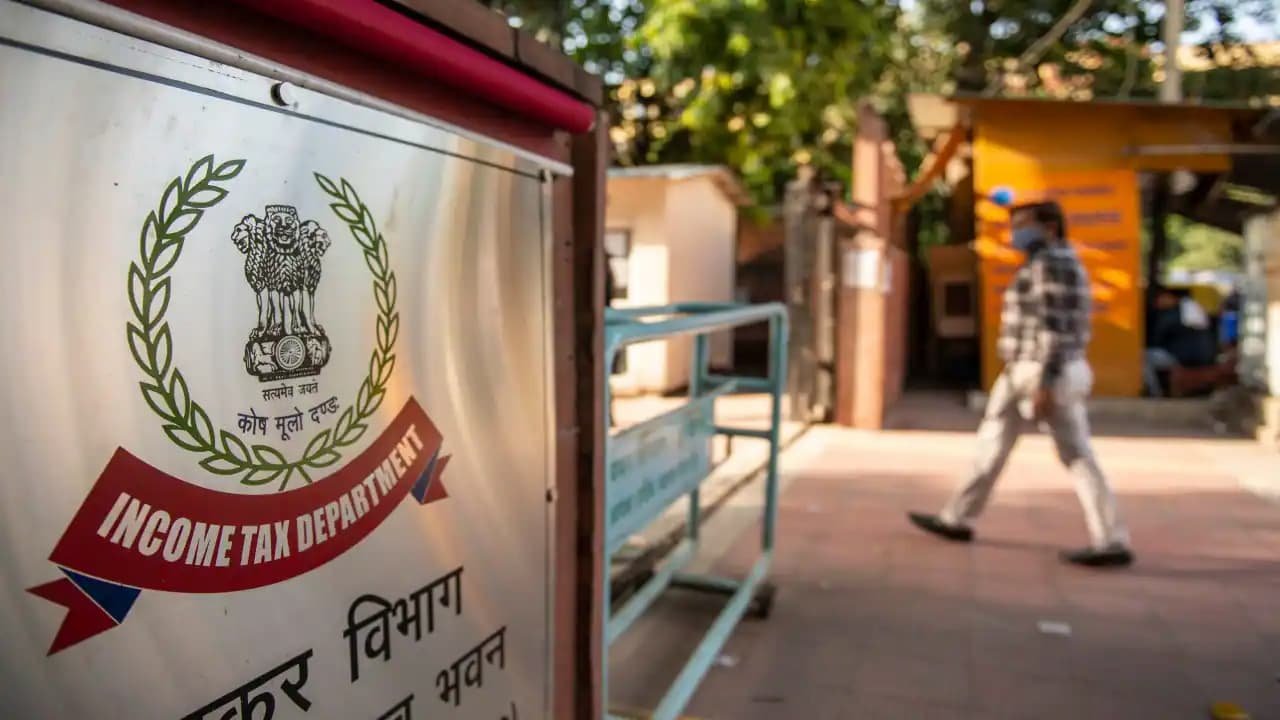
The Income Tax Department launched searches on Saturday at multiple sites across Jharkhand, including premises associated with a close aide of Chief Minister Hemant Soren, in connection with a tax evasion investigation, according to official sources. These searches come just weeks before the Jharkhand assembly elections, scheduled for November 13 and 20, with results expected on November 23.

The Congress reacted strongly to the timing of the raids. Congress leader Rakesh Sinha said, “This is not new for Jharkhand. I-T raids are often conducted at opposition leaders’ premises. The BJP is attempting to gain a foothold in the state using I-T and ED raids as pressure tactics.”

In response, BJP spokesperson Pratul Shahdeo urged patience, stating, “There is no need to link these actions to elections. Let’s wait for the official statement from the I-T department.”

The timing of these searches has sparked a political debate in Jharkhand, with both parties questioning each other’s motives as they approach the upcoming polls.

Legal and Historical Developments Surrounding Aligarh Muslim University’s Minority Status

aligarh muslim university, supreme court, amu, allahabad high court, minority status
Legal and Historical Developments Surrounding Aligarh Muslim University's Minority Status 20

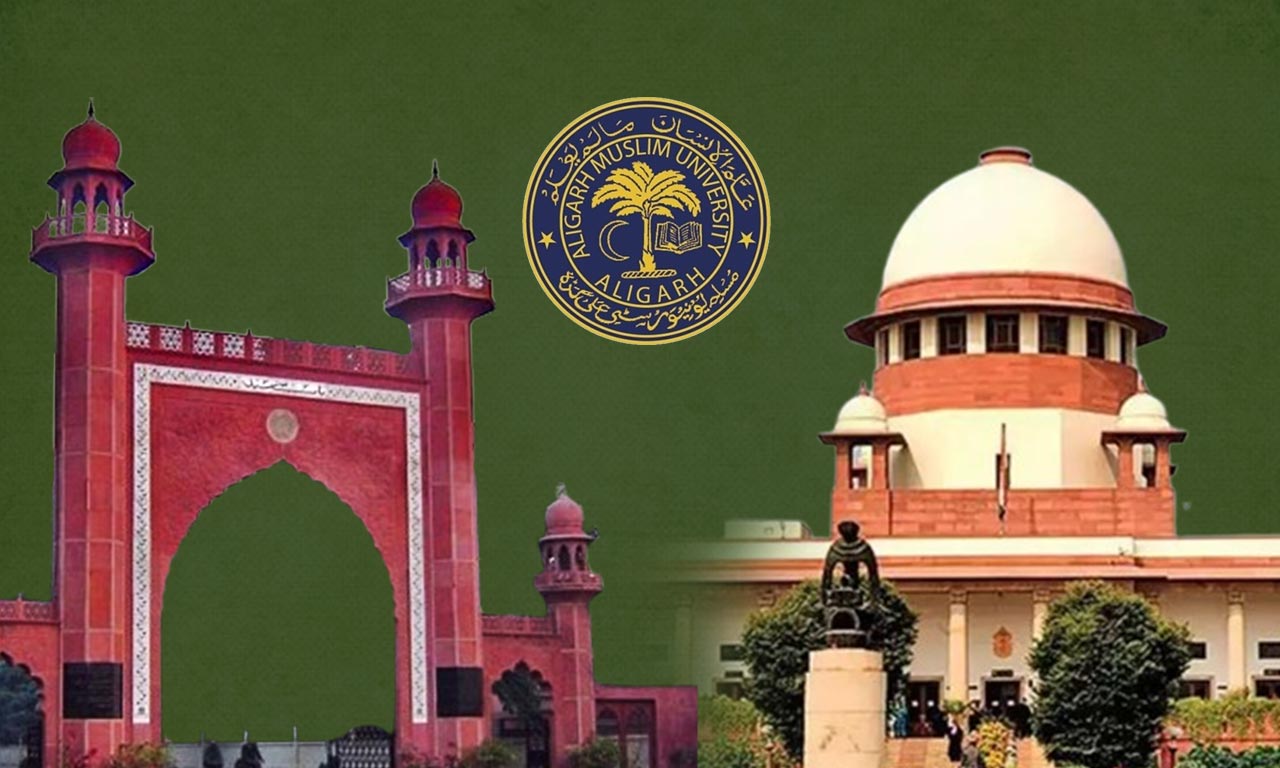
A seven-judge Bench of the Supreme Court headed by Chief Justice of India DY Chandrachud, in a majority judgment of 4:3 ratio, overruled a 1967 Constitution Bench decision which held that a minority community cannot claim to have established an educational institution if it was created by a statute.

The 2006 Verdict by Allahabad High Court

In 2006, the Allahabad High Court struck down the reservation policy implemented by Aligarh Muslim University (AMU) that reserved 50% of seats in its postgraduate medical courses for Muslim students. The court ruled that AMU could not claim minority status. This decision was based on the 1967 Supreme Court ruling in S Azeez Basha v Union of India, which held that AMU was not a minority institution because it was established by an act of legislation — the Aligarh Muslim University Act, 1920 — and not by the Muslim community.

Background and Amendments to AMU Act

AMU was initially founded in 1875 as the Muhammadan Anglo-Oriental College. It was later incorporated as a university by imperial legislation in 1920. A key amendment to the AMU Act in 1951 removed the provision for compulsory religious instruction for Muslim students. In 1981, another amendment attempted to restore the university’s pre-1951 position regarding its minority character. However, this amendment was dismissed by the 2006 High Court ruling, which stated that AMU did not qualify as a minority institution.

Supreme Court Rulings and the Question of Minority Status

The 1967 S Azeez Basha ruling by a five-judge Constitution Bench concluded that AMU, as a central university established by a statute, could not claim minority status. This legal precedent significantly influenced subsequent judicial decisions.

In 2006, after the Allahabad High Court’s verdict, the matter was referred to the Supreme Court. The Congress-led UPA government and AMU filed appeals against the High Court’s decision. The case remained unresolved for years until 2024 when a seven-judge Constitution Bench of the Supreme Court delivered a split verdict (4:3) on the matter.

2024 Supreme Court Verdict

On November 8, 2024, the Supreme Court overturned the 1967 ruling that denied minority status to institutions established by a statute. However, the majority opinion led by Chief Justice DY Chandrachud deferred the final decision on AMU’s minority status to a yet-to-be-constituted three-judge bench.

Key points from the majority judgement:

  • Founding and Genesis: The court emphasized identifying the institution’s origins to determine its minority status. It stated that being incorporated by legislation does not preclude the possibility of having been established by a minority community.
  • Secular and Minority Education: An institution need not exclusively serve the community that established it to qualify as a minority institution. The emphasis on secular education does not negate its minority character.
  • Regulation by Government: The court allowed government regulation of minority institutions as long as it does not interfere with their essential minority character.

Dissenting judges, however, held differing views. Justice Dipankar Datta ruled that AMU is not a minority institution, while Justice SC Sharma emphasized that minority control over such institutions must ensure secular educational opportunities.

Government and Financial Factors

The central government argued that AMU’s extensive reliance on state funds — over ₹5,000 crore between 2019 and 2023 — undermines its claim to minority status. The BJP-led government also refused to accept the contentious 1981 amendment that attempted to restore AMU’s minority character, favoring a return to the 1967 precedent.

Academic Performance and Rankings

Despite the ongoing legal disputes, AMU has performed well in national and international academic rankings. In the National Institutional Ranking Framework (NIRF) 2024, it ranked 8th among Indian universities. In the QS World University Rankings 2025, AMU was placed in the 1001-1200 band, while Delhi University and Jamia Millia Islamia ranked higher at 328 and 851-900, respectively.

Current Status and Sub-Judice Matters

As of 2024, the issue of reservations at AMU remains unresolved. The Supreme Court has maintained the status quo on reservations since 2006, and the matter of AMU’s minority status continues to be sub-judice.

This legal saga underscores the complexities of balancing constitutional provisions for minority rights with the principles of secularism and state regulation.