Mumbai Workplaces Mandated to Provide Voting Leave for Assembly Polls on November 20 2
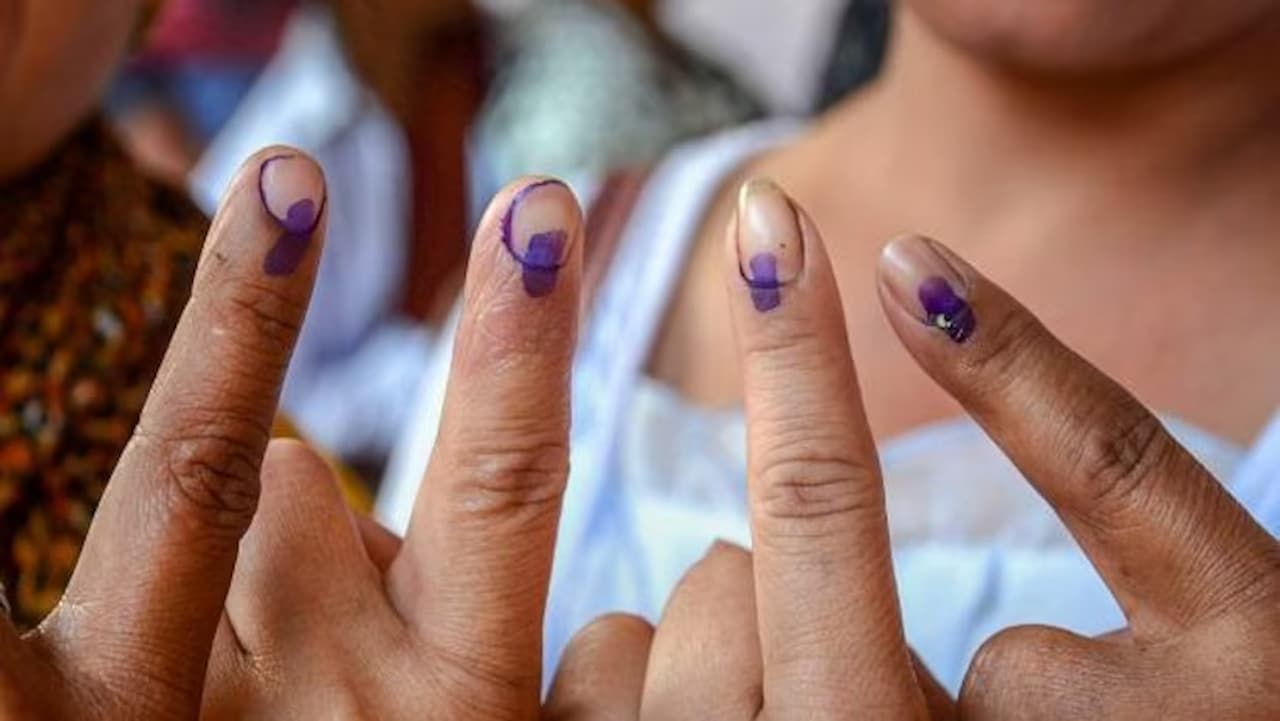
Mumbai District Election Officer and Municipal Commissioner Bhushan Gagrani has made it mandatory for all workplaces within the Brihanmumbai limits to grant leave to employees to cast their votes during the Maharashtra Assembly elections on November 20.
According to a release issued on Wednesday, failure to comply with this directive will result in action under Election Commission guidelines. The initiative is part of a broader effort to boost voter turnout across Mumbai Suburban and Mumbai City districts.
The mandate applies to all establishments, including corporate and industrial sectors. While workplaces are required to provide a full day’s leave, exceptions may be made for granting a minimum of four hours of leave, provided prior approval is obtained from the district election officer.
Under Section 135(B) of the Representation of the People Act, exemptions apply to employees whose absence could compromise public safety or critical operations at their establishments.
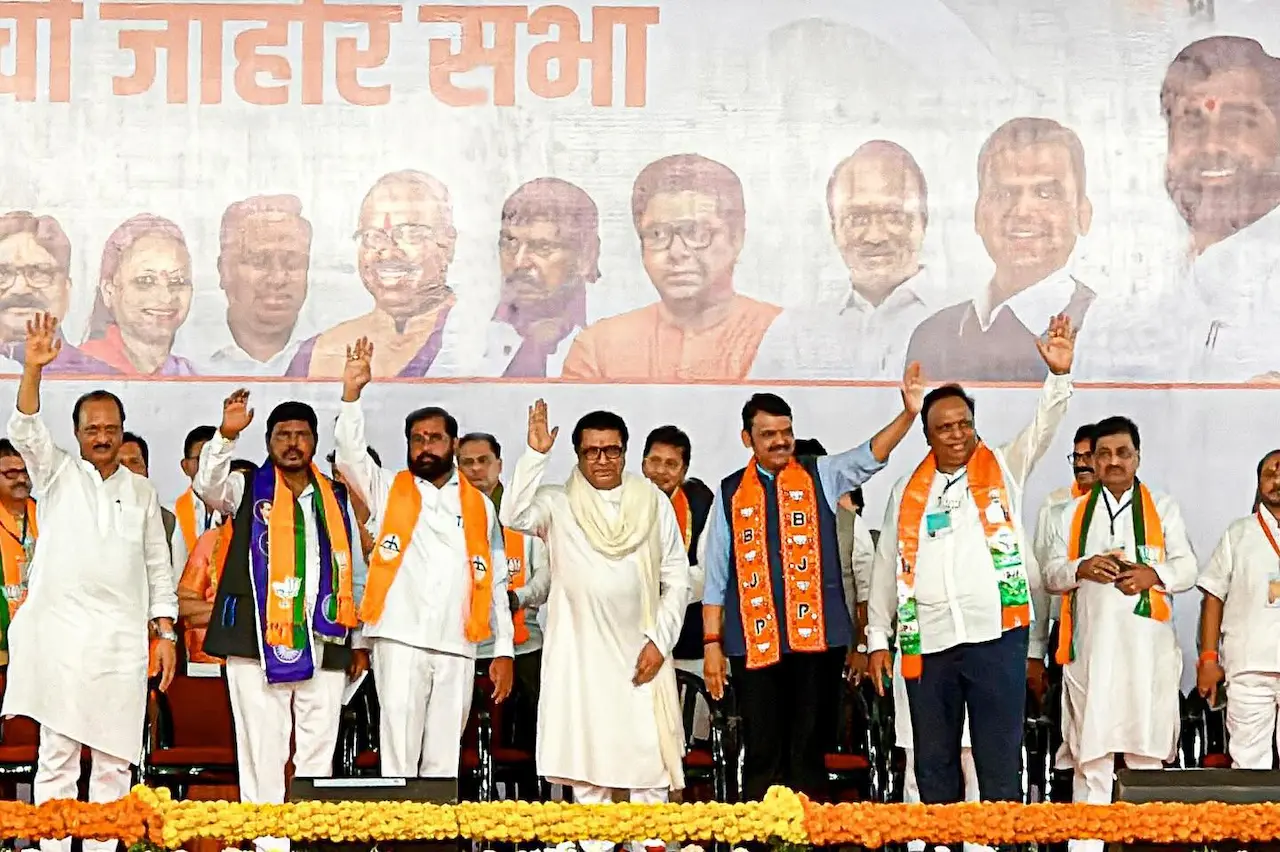
Tensions Escalate in Mahayuti Alliance as Yogi Adityanath's 'Batenge Toh Katenge' Remark Sparks Controversy 4
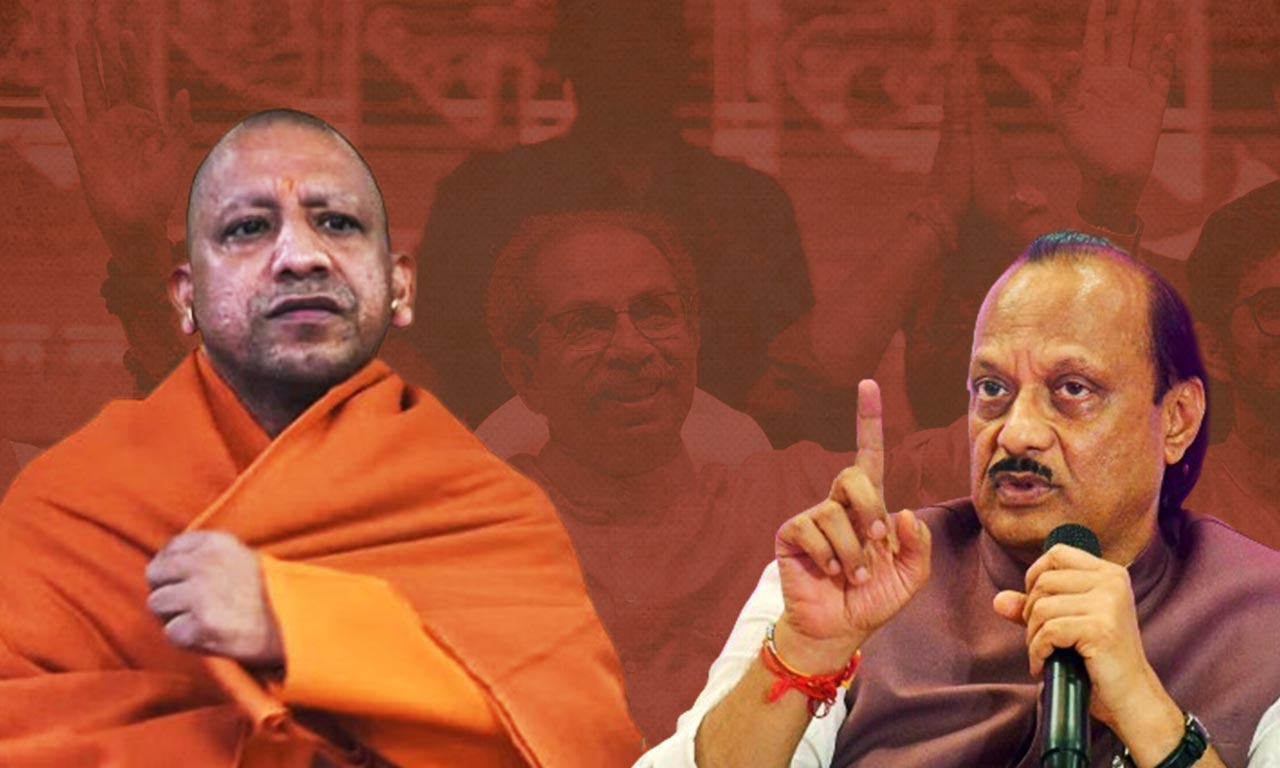
Yogi Adityanath’s provocative “batenge toh katenge” (if divided, will be divided) slogan, delivered at election rallies in Maharashtra, has stirred tensions within the ruling Mahayuti alliance, which includes the Bharatiya Janata Party (BJP), the Eknath Shinde-led Shiv Sena, and Ajit Pawar’s Nationalist Congress Party (NCP). The Uttar Pradesh Chief Minister’s statement, widely seen as a call for aggressive political rhetoric, has drawn sharp criticism from BJP ally and NCP chief Ajit Pawar, who insisted that such remarks do not resonate with the people of Maharashtra.
Reacting to Adityanath’s comments, Pawar made it clear that the people of Maharashtra have always valued communal harmony and secularism, emphasizing that the state does not tolerate divisive statements. “Maharashtra has a long history of maintaining communal peace, and people here will not accept any attempt to stir division,” Pawar said, adding that external leaders should not impose their views on the state. He also referenced Maharashtra’s legacy of social reform, invoking icons like Shahu Maharaj, Jyotiba Phule, and Babasaheb Ambedkar, who promoted unity and secularism.
The controversy comes as the NCP attempts to distance itself from Adityanath’s divisive remarks, fearing it could alienate Muslim voters—who are a key constituency for the party. With the potential for minority votes to shift towards Congress or Uddhav Thackeray’s UBT Shiv Sena, the NCP is wary of further political fallout.
NCP Distances Itself from Yogi’s Comments
The NCP, particularly concerned about its Muslim vote base, has distanced itself from the remarks made by the UP Chief Minister. “Such statements could negatively impact the party’s position and push away the consolidating minority votes,” said a senior NCP leader. Pawar himself was quick to underline that the people of Maharashtra have always maintained peace and that no outsider should undermine the state’s secular values.
In the same breath, Pawar also defended party candidate Nawab Malik, who is contesting the Mankhurd-Shivajinagar seat despite being embroiled in a money laundering case. Malik, currently out on bail, is a key NCP candidate, but the BJP has declined to campaign for him, backing Shinde’s candidate in the same seat. Pawar reaffirmed Malik’s innocence, stating, “No allegations against Nawab Malik have been proved.”
Thackeray Takes Aim at Yogi’s Maharashtra Visit
Shiv Sena (UBT) chief Uddhav Thackeray took the opportunity to slam the BJP for bringing in leaders from outside Maharashtra to campaign. “The Maharashtra Assembly election is a contest between those who love Maharashtra and those who betray it,” Thackeray declared. He also accused the Mahayuti government, led by Eknath Shinde, of being the “most corrupt” in the state’s history, citing the controversy surrounding the collapse of the Shivaji Maharaj statue in Sindhudurg, which was unveiled last year by Prime Minister Narendra Modi.
Thackeray was quick to criticize the lack of unity within the Mahayuti alliance, pointing to Ajit Pawar’s disapproval of Adityanath’s remarks as evidence that the coalition is fractured. “If the Deputy CM himself is objecting to what Yogi Adityanath is saying, it shows the complete lack of cohesion within the ruling alliance,” Thackeray said, suggesting that such divisions only harm the BJP’s campaign in Maharashtra.
As election day draws closer, the rhetoric surrounding the campaign has intensified, with the Mahayuti alliance grappling with both internal discord and external criticism over its leadership and ideological direction.
Congress Accused of Trying to Undermine Eknath Shinde and Create Rift in Mahayuti Alliance 6
The Congress party is intensifying its efforts to demoralize Maharashtra Chief Minister Eknath Shinde and create divisions within the ruling Mahayuti alliance, according to political leaders from the Bharatiya Janata Party (BJP) and Shiv Sena. Congress President Nana Patole has alleged that the BJP is trying to keep Shinde under control, claiming that while the BJP presents Shinde as the Chief Minister, it is actually Deputy CM Devendra Fadnavis who holds the real power.
Patole pointed out that although BJP posters feature the logos of all three parties in the alliance, only Prime Minister Narendra Modi and Fadnavis are prominently displayed, with Shinde’s image barely visible. This, Patole argued, reflects the true dynamics within the alliance.
The latest controversy centers around the BJP’s election posters for the upcoming Assembly elections, where Shinde’s photo appears in a small, passport-sized format despite the party’s claims that it is contesting under his leadership. The omission of Deputy CM Ajit Pawar’s photo from earlier posters had also sparked public debate, and now the minimization of Shinde’s image has raised new questions about the BJP’s internal power structure.
A senior BJP leader, speaking to Afternoon Voice, dismissed the Congress’s criticisms, stating, “This is exactly what Congress has been doing all along—trying to sow division and create rifts, both within the nation and political parties. These comments will have no impact on our alliance.”
Shiv Sena leader Ramdas Kadam also responded to Congress’s allegations, asserting, “We are fighting this election under the leadership of Eknath Shinde. All decisions, from seat sharing to strategy, have been made under his guidance. Congress has a habit of creating controversy, but it doesn’t affect us.”
As the election approaches, tensions within the Mahayuti alliance and the Congress’s attempts to exploit them remain a point of contention in the state’s political discourse.
Income Tax Department Raids Jharkhand CM's Aide's Premises Amid Election Season 8
The Income Tax Department launched searches on Saturday at multiple sites across Jharkhand, including premises associated with a close aide of Chief Minister Hemant Soren, in connection with a tax evasion investigation, according to official sources. These searches come just weeks before the Jharkhand assembly elections, scheduled for November 13 and 20, with results expected on November 23.
The Congress reacted strongly to the timing of the raids. Congress leader Rakesh Sinha said, “This is not new for Jharkhand. I-T raids are often conducted at opposition leaders’ premises. The BJP is attempting to gain a foothold in the state using I-T and ED raids as pressure tactics.”
In response, BJP spokesperson Pratul Shahdeo urged patience, stating, “There is no need to link these actions to elections. Let’s wait for the official statement from the I-T department.”
The timing of these searches has sparked a political debate in Jharkhand, with both parties questioning each other’s motives as they approach the upcoming polls.
Legal and Historical Developments Surrounding Aligarh Muslim University's Minority Status 10
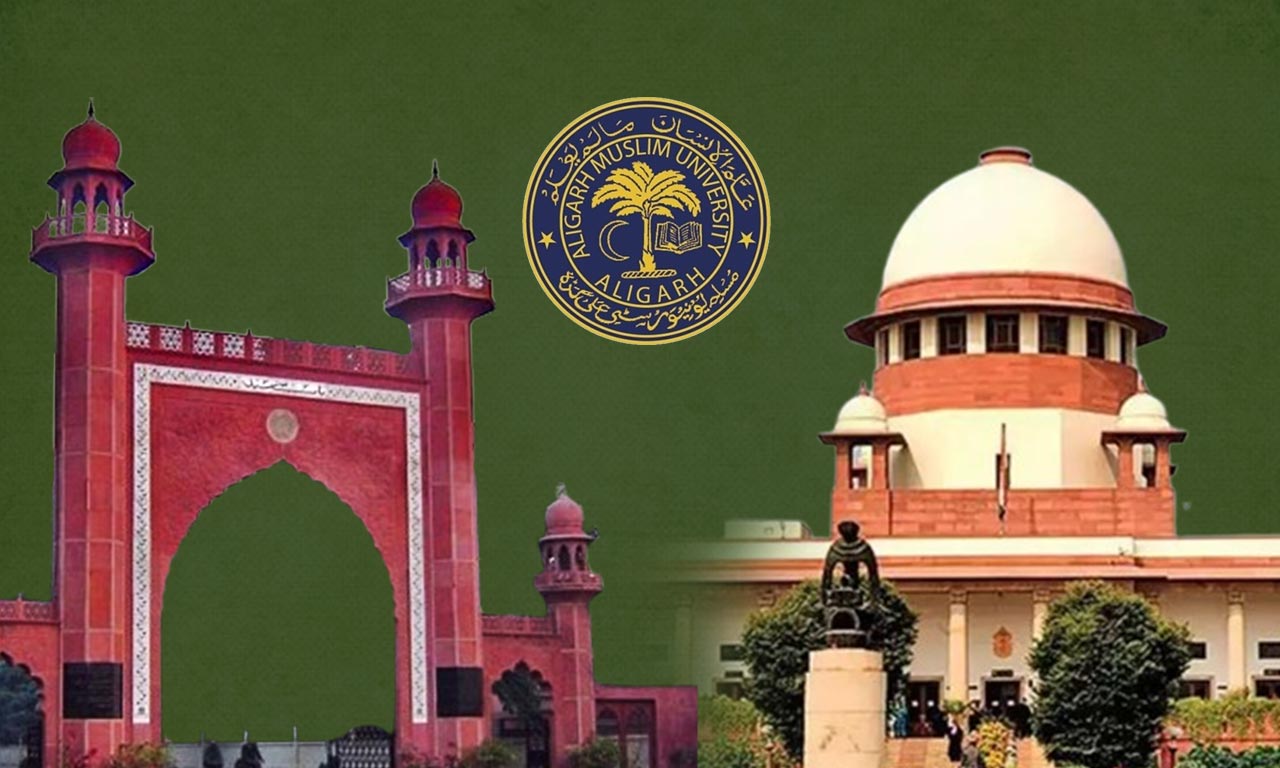
A seven-judge Bench of the Supreme Court headed by Chief Justice of India DY Chandrachud, in a majority judgment of 4:3 ratio, overruled a 1967 Constitution Bench decision which held that a minority community cannot claim to have established an educational institution if it was created by a statute.
The 2006 Verdict by Allahabad High Court
In 2006, the Allahabad High Court struck down the reservation policy implemented by Aligarh Muslim University (AMU) that reserved 50% of seats in its postgraduate medical courses for Muslim students. The court ruled that AMU could not claim minority status. This decision was based on the 1967 Supreme Court ruling in S Azeez Basha v Union of India, which held that AMU was not a minority institution because it was established by an act of legislation — the Aligarh Muslim University Act, 1920 — and not by the Muslim community.
Background and Amendments to AMU Act
AMU was initially founded in 1875 as the Muhammadan Anglo-Oriental College. It was later incorporated as a university by imperial legislation in 1920. A key amendment to the AMU Act in 1951 removed the provision for compulsory religious instruction for Muslim students. In 1981, another amendment attempted to restore the university’s pre-1951 position regarding its minority character. However, this amendment was dismissed by the 2006 High Court ruling, which stated that AMU did not qualify as a minority institution.
Supreme Court Rulings and the Question of Minority Status
The 1967 S Azeez Basha ruling by a five-judge Constitution Bench concluded that AMU, as a central university established by a statute, could not claim minority status. This legal precedent significantly influenced subsequent judicial decisions.
In 2006, after the Allahabad High Court’s verdict, the matter was referred to the Supreme Court. The Congress-led UPA government and AMU filed appeals against the High Court’s decision. The case remained unresolved for years until 2024 when a seven-judge Constitution Bench of the Supreme Court delivered a split verdict (4:3) on the matter.
2024 Supreme Court Verdict
On November 8, 2024, the Supreme Court overturned the 1967 ruling that denied minority status to institutions established by a statute. However, the majority opinion led by Chief Justice DY Chandrachud deferred the final decision on AMU’s minority status to a yet-to-be-constituted three-judge bench.
Key points from the majority judgement:
Founding and Genesis: The court emphasized identifying the institution’s origins to determine its minority status. It stated that being incorporated by legislation does not preclude the possibility of having been established by a minority community.
Secular and Minority Education: An institution need not exclusively serve the community that established it to qualify as a minority institution. The emphasis on secular education does not negate its minority character.
Regulation by Government: The court allowed government regulation of minority institutions as long as it does not interfere with their essential minority character.
Dissenting judges, however, held differing views. Justice Dipankar Datta ruled that AMU is not a minority institution, while Justice SC Sharma emphasized that minority control over such institutions must ensure secular educational opportunities.
Government and Financial Factors
The central government argued that AMU’s extensive reliance on state funds — over ₹5,000 crore between 2019 and 2023 — undermines its claim to minority status. The BJP-led government also refused to accept the contentious 1981 amendment that attempted to restore AMU’s minority character, favoring a return to the 1967 precedent.
Academic Performance and Rankings
Despite the ongoing legal disputes, AMU has performed well in national and international academic rankings. In the National Institutional Ranking Framework (NIRF) 2024, it ranked 8th among Indian universities. In the QS World University Rankings 2025, AMU was placed in the 1001-1200 band, while Delhi University and Jamia Millia Islamia ranked higher at 328 and 851-900, respectively.
Current Status and Sub-Judice Matters
As of 2024, the issue of reservations at AMU remains unresolved. The Supreme Court has maintained the status quo on reservations since 2006, and the matter of AMU’s minority status continues to be sub-judice.
This legal saga underscores the complexities of balancing constitutional provisions for minority rights with the principles of secularism and state regulation.
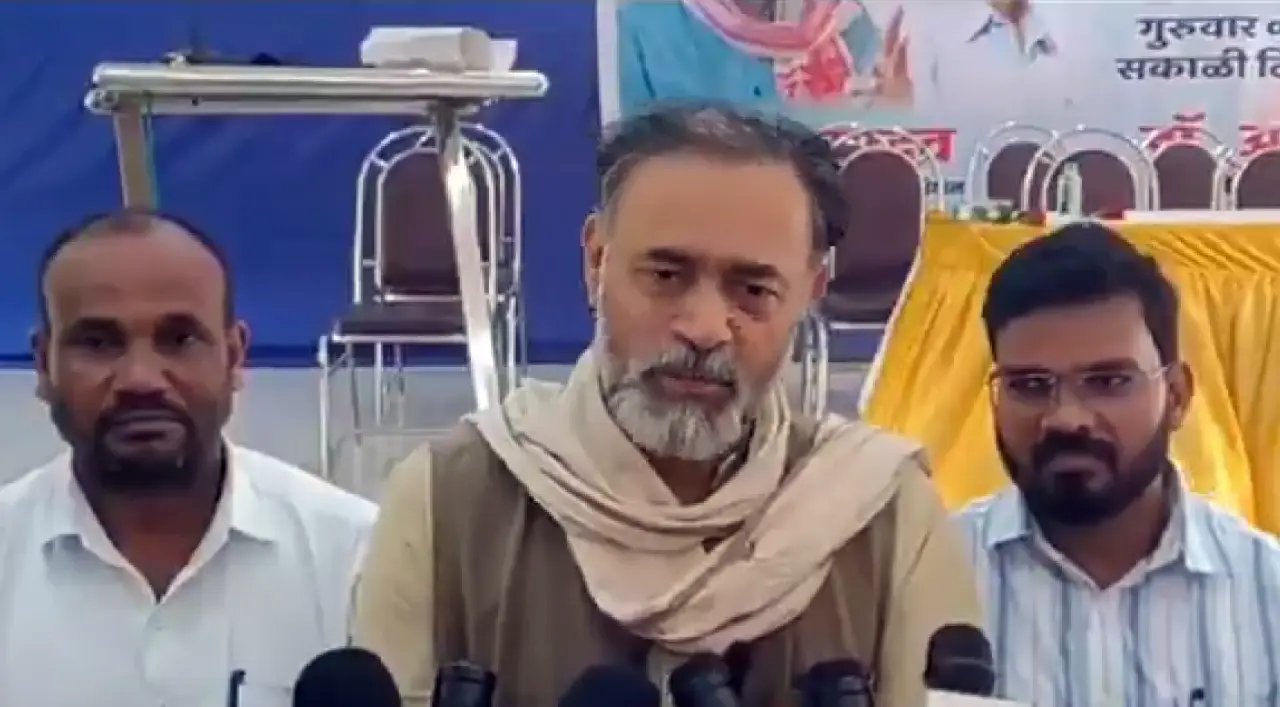
Maharashtra Has a Govt of 'Jhoot, Loot, Phoot': Yogendra Yadav in Palghar 12
Swaraj India chief Yogendra Yadav has accused the BJP-led Mahayuti alliance of running a ‘jhoot, loot, phoot’ (lies, corruption, and division) government in Maharashtra.
Addressing a public rally in Dahanu in Palghar district on Thursday in support of sitting MLA Vinod Nikole, he urged people to vote based on values and principles, rather than being swayed by financial promises.
The Communist Party of India (Marxist), a constituent of the opposition INDIA bloc, has renominated Nikole from Dahanu.
Yadav denounced the current administration as a ‘jhoot, loot, phoot’ government and alleged that those in power were implementing “destructive” policies.
“Under the guise of development, the BJP and its allies have deceived the common people,” said MLA Nikole and appealed to the crowd, “It is our duty to fight for the rights of the tribals here, and we are committed to doing so.” The lawmaker claimed that ideological battles are more effective than those fought with money. “Ideologies can win battles, not money,” said Nikole.
Activists present at the event condemned the Eknath Shinde government’s tribal policies, accusing them of exploiting tribal rights for political gains.
Waqf Properties Row: JPC Chairman Receives Over 500 Petitions From Aggrieved Farmers in Karnataka 14
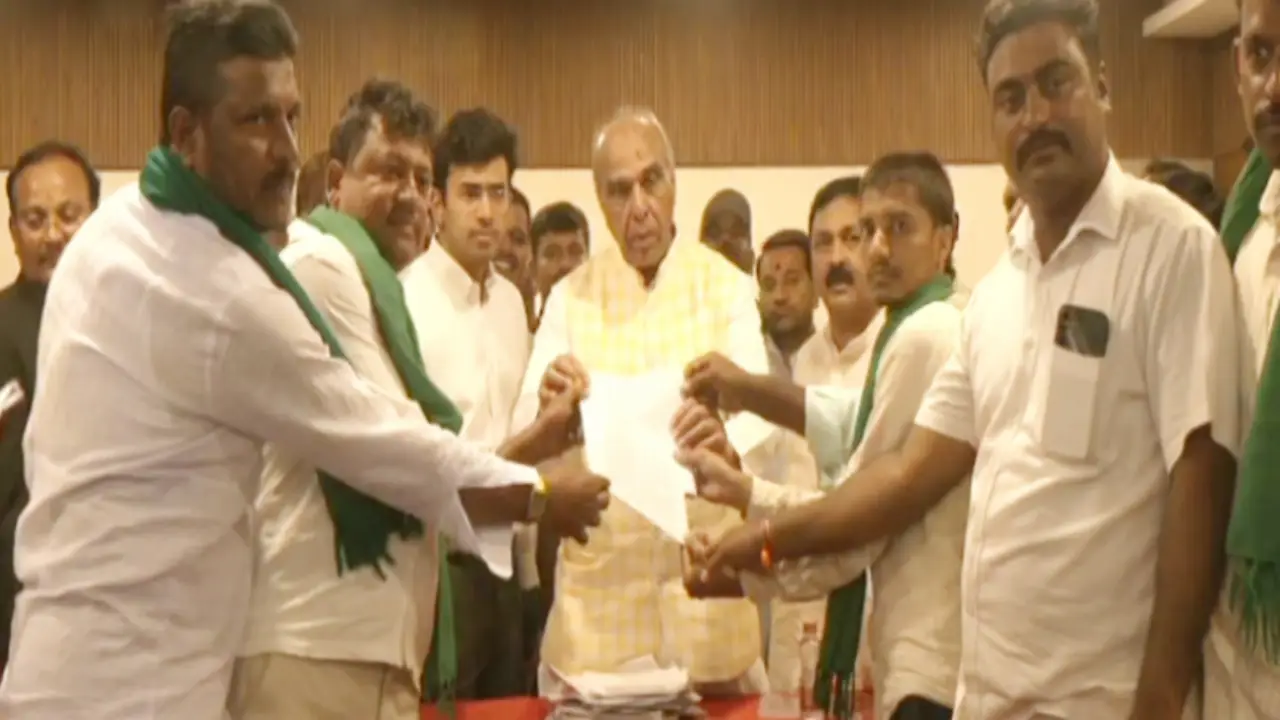
Over 500 petitions were received by the Chairman of the Joint Committee of Parliament on the Waqf (Amendment) Bill, Jagdambika Pal, along with the JPC member and Bengaluru South MP Tejasvi Surya, on Thursday from farmers in Karnataka’s northern districts, who alleged that their lands were marked as Waqf properties.
Pal visited Hubballi, Vijayapura and Belagavi, during which he met farmers and members of various organisations who complained that their lands were being claimed by the State Waqf Board.
“Jagdambika Pal along with Surya received over 500 petitions from farmers from Vijayapura, Bidar, Kalaburagi, Hubballi, Bagalkote and Belgavi on their agricultural land being claimed by the Waqf Board as Waqf property,” Surya office said in a statement.
Stating that he had come to the State on a “fact finding” mission and to meet those aggrieved, Pal said, farmers’ and various organisations have handed over to him documents and memorandums and assured that all of them will be discussed in the JPC and incorporated in the report.
“Maybe the state government has given directions to the revenue department officials not to evict the farmers, but will the issue be resolved? There has been tampering of records, mutations, Waqf has ensured changes in the documents. What is the state government doing on this and who is responsible for this?” he asked.
Karnataka Deputy Chief Minister D K Shivakumar termed the visit of Pal to the state as a tour of a “drama company” and “politically motivated”, with an eye on the upcoming assembly by-polls in the state and election in neighbouring Maharashtra.
Charging the JPC Chairman with indulging in political propaganda, Shivakumar, who is also the state Congress President, said it is not a joint Parliamentary committee that is visiting, as “only BJP members have come and are doing politics.” Home Minister G Parameshwara too said, “it doesn’t look like JPC as a committee is visiting, as the Chairman is visiting alone disregarding rules. “It seems to be a politically motivated visit.” Members of the committee too have raised objections stating that any visit has to be decided in the panel and “unilaterally one cannot make visits,” he said.
Later, addressing a gathering during his visit to Vijayapura, Pal said, “….what is the hurry for some one, when a transparent law (Waqf law) coming into force, to go to every district to conduct adalats (Waqf adalats) and declare the lands as Waqf properties?”.
Further highlighting various incidents and petitions submitted to him by farmers, groups and individuals, he said, the state government has to answer why such things are happening in the state.
“Why notices are being given to farmers who are cultivating in land since 1920 and 1930, even before the law is enacted?” he asked, while pointing out that farmers have claimed that apart from serving notices, changes have been made in the RTC (Record of Rights, Tenancy and Crops), pahani and mutation registers.
Noting that the Karnataka Waqf board has laid claim to at least 53 historic Archeological survey of India protected monuments across the state, Pal asked, “how is it a Waqf property?” There were allegations by a section of farmers from Vijayapura district that their lands were marked as Waqf properties, and similar charges have surfaced from few other places subsequently. Similar allegations have also been made by some organisations and religious institutions like Maths.
With the row escalating, Chief Minister Siddaramaiah, directed officials that all notices issued to farmers be immediately revoked, and any unauthorised amendments in land records without due notice must also be nullified.
The opposition BJP has been holding protests, accusing the Congress government of indulging in “land jihad”. The party has also demanded the sacking of Waqf Minister Zameer Ahmed Khan from the Cabinet.
Surya had recently written to Pal, drawing attention to the plight of farmers from Vijayapura District and other areas in the vicinity in Karnataka, who have been served notices claiming their land as Waqf property.
Surya said, “The exponential rise in the number of instances in Karnataka where agricultural lands are being claimed by the State Waqf Board is happening during a period in which the Joint Parliamentary Committee on the Waqf (Amendment) Bill, 2024, is meeting to deliberate on the reforms for the Waqf Act, 1995.” “The Karnataka Minority Affairs and Waqf Minister Zameer Ahmed Khan has been conducting ‘Waqf Adalats’ in several parts of the state. Such Waqf Adalats do not have any valid status under the Constitution or any of the Revenue Department Rules,” he said.
Surya alleged that the CM made mere token announcements to cancel any recent changes made in the revenue records, but Waqf adalats have not been stopped and the notices have not been withdrawn to all farmers concerned yet.
Shifting Alliances and Strategic Maneuvering Shape Maharashtra's Complex Political Scene 16
In Maharashtra’s ever-fluid political landscape, loyalty and ideology seem transient as leaders and alliances adapt for survival. Once fixated on challenging regional parties, the BJP is now witnessing intricate realignments intended to counterbalance its influence. In a recent twist, the BJP has decided not to support Amit Thackeray, son of MNS chief Raj Thackeray, in his bid for the Mahim assembly seat. Instead, BJP is backing only one MNS candidate—Bala Nandgaonkar, contesting from the Shivdi seat. Earlier, BJP had hinted at supporting Amit Thackeray in Mahim, but this stance has since shifted.
Meanwhile, whispers of behind-the-scenes interactions between Eknath Shinde and NCP senior leader Sharad Pawar fuel speculation of strategic positioning against BJP. In this high-stakes environment, Maharashtra’s regional parties are reportedly strategizing to prevent a BJP-led government, underscoring the stakes for BJP, which is keen to maintain relevance.
Adding to the intrigue, NCP leader Nawab Malik, known for his candid commentary, hinted at the unpredictable nature of Maharashtra’s politics. He noted that post-election alliances remain uncertain, recounting instances from the ’90s where opposing factions became unexpected allies. Malik expressed gratitude toward Ajit Pawar for his personal support, despite Pawar’s current alignment with BJP, emphasizing that core ideological beliefs remain intact.
As assembly elections approach, Maharashtra’s shifting alliances suggest a pivotal test for regional parties. Voters are watching closely to see how these alliances will impact the state’s political balance.
Valmiki Ramayana Has Sparked Arguments Between Meat Eaters and Vegetarians 18
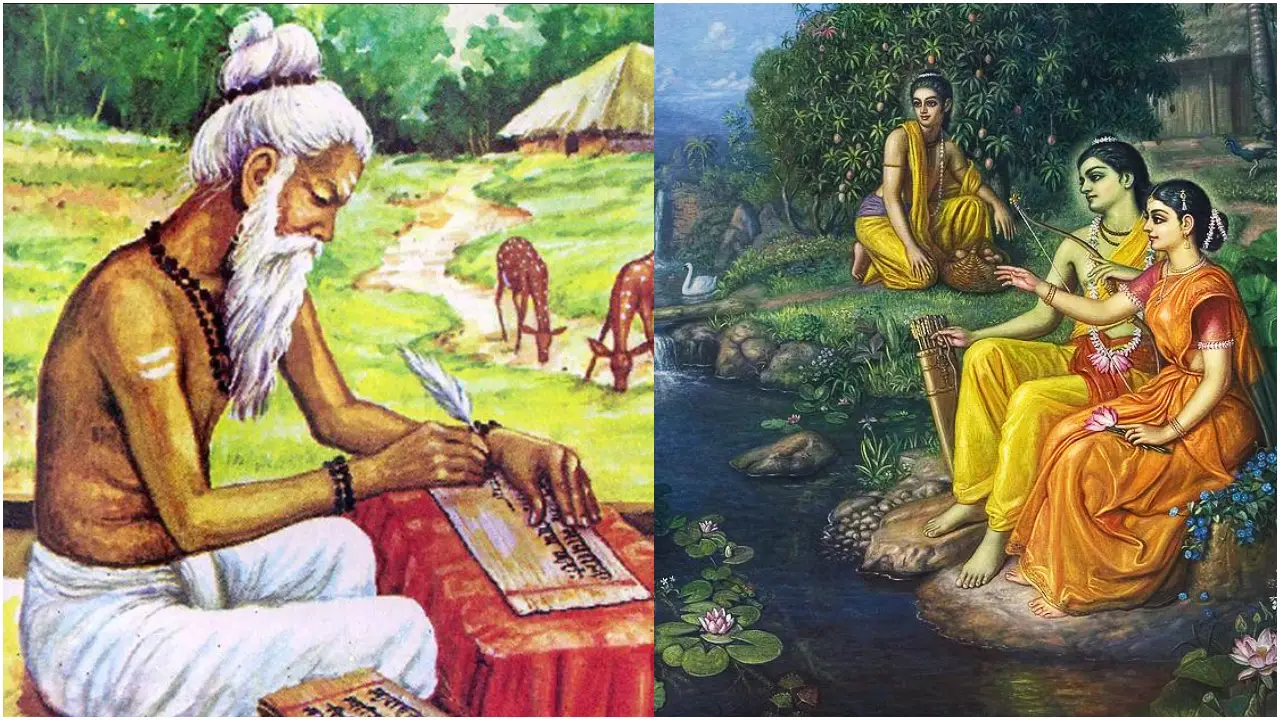
The debate over meat consumption in Hindu texts, particularly in the Valmiki Ramayana, is a longstanding one, with different interpretations fueling varied practices among Hindus. Central to this discussion is whether Lord Rama and his family consumed meat, as some passages in the Valmiki Ramayana suggest, in contrast to the ideals of vegetarianism emphasized in later texts like the RamCharitManas by Tulsidas.
The Valmiki Ramayana is one of Hinduism’s primary epics, attributed to Maharishi Valmiki and divided into seven books or kandas. These divisions are largely accepted among Hindus, except for debates about the Uttarākāṇḍa and, to a lesser extent, the Bālakāṇḍa. Some scholars argue that these later sections might have been added posthumously. These texts, especially in the widely accepted portions, contain passages that reference meat consumption, which has become a point of contention.
In particular, there are verses in the Ayodhya Kanda that describe moments where Lord Rama, Lakshman, and Sita, during their exile, hunted animals to eat meat as a means of sustenance. For example, Sita, while crossing a river, vows to the river deity Ganga that if she and her family return safely from the forest, she will offer Ganga food, including meat. This ritualistic promise indicates that meat offerings were acceptable and even revered within certain ritualistic contexts during that era.
Further, in another passage (Ayodhya Kanda, Chapter 52, Verse 102), after crossing the river Sarayu and reaching the territory of Vatsa, Ram and Lakshman, described as hungry, hunt four types of animals: wild boar, antelope, deer, and stag. They then eat the meat, which is a stark contrast to the vegetarian ideals later associated with Ram.
Interestingly, scholars and followers alike cite additional verses where forest rituals involve offerings of meat, fruits, and roots to satisfy local spirits and deities. These passages point to a cultural acceptance of meat consumption in ancient Hindu practices, where it was ritualistic and seen as an aspect of sustenance rather than a moral issue. The verses highlight that, in certain ritual settings, meat was considered an acceptable and even necessary component, challenging the vegetarian ideal that is often now emphasized.
Contradicting these passages, however, are other texts that seem to promote vegetarianism as a purer or more virtuous lifestyle. The Gita Press publication, for instance, interprets a shloka from the Valmiki Ramayana to mean that it would be sinful for a member of the Raghu dynasty, such as Rama, to consume meat or alcohol. This interpretation is supported by Rama’s statement, upon leaving Ayodhya, that he would live on roots, fruits, and honey, deliberately excluding meat during his time in the forest.
This duality in interpretations has led to varied cultural practices and sectarian divides. Some argue that Ram was a vegetarian by choice, as suggested by his vow to abstain from meat during exile. This interpretation aligns with the cultural push towards vegetarianism in certain Hindu communities, where non-violence and abstaining from meat consumption are seen as ethical ideals. On the other hand, proponents of meat consumption find validation in the Valmiki Ramayana, suggesting that it was not considered a moral issue in ancient times but rather a personal choice aligned with local customs.
These contradictions extend into broader Hindu beliefs on the consumption of meat and the concept of tamas—the idea that meat consumption is linked with darker, more lethargic qualities of being. Those who favor a vegetarian interpretation often associate meat consumption with tamasic (dark or inert) qualities, while others argue that food choice should not be linked with spirituality or morality, as this creates an artificial hierarchy that enforces cultural superiority.
Scriptures themselves sometimes add to this complexity by including verses or sections perceived as later additions. This is a well-documented phenomenon where textual insertions reflect the beliefs and social customs of subsequent periods, such as the later push towards vegetarianism. The Gita, for instance, advises against killing a Brahmana—but in the context of qualities rather than caste by birth, emphasizing non-violence as a universal principle.
These interpretations are not unique to Hinduism; similar debates arise in many religious traditions around practices that evolved over centuries. Jesus, for example, is often discussed regarding whether he was vegetarian or not, as early Christian teachings on food were later modified by different interpretations. Jainism’s stance on non-violence, as advocated by Mahavira, takes this principle to an extreme, restricting even justified non-violence, aiming to eliminate harm in all forms.
The Mahabharata and the Vedas address animal sacrifice and the concept of consuming animal flesh. However, some argue these texts suggest sacrificial practices were meant only as partial controls, guiding society gradually towards non-violence rather than enforcing immediate dietary restrictions. In some passages, the word maamsa (meat) in sacrifices symbolically means that the animal killed will have karmic retribution on its killer, illustrating the cyclical consequences of harm in karmic law.
The interpretation of these rituals can further illustrate the message against harm rather than an encouragement to consume meat. Ritual animal sacrifices, for instance, were at times performed with flour-based effigies of animals rather than real ones, representing a symbolic “slaughter” of one’s inner ignorance or animalistic tendencies.
Overall, the tension between these interpretations underscores the flexibility and diversity within Hinduism’s scriptural traditions. Whether these references in Valmiki Ramayana support vegetarianism or non-vegetarianism largely depends on the context and motivations behind each translation or commentary. Instead of definitive dietary restrictions, these texts might encourage Hindus to reflect on the ethical implications of their choices, respecting each individual’s dietary decisions without imposing a single cultural standard on an entire faith.
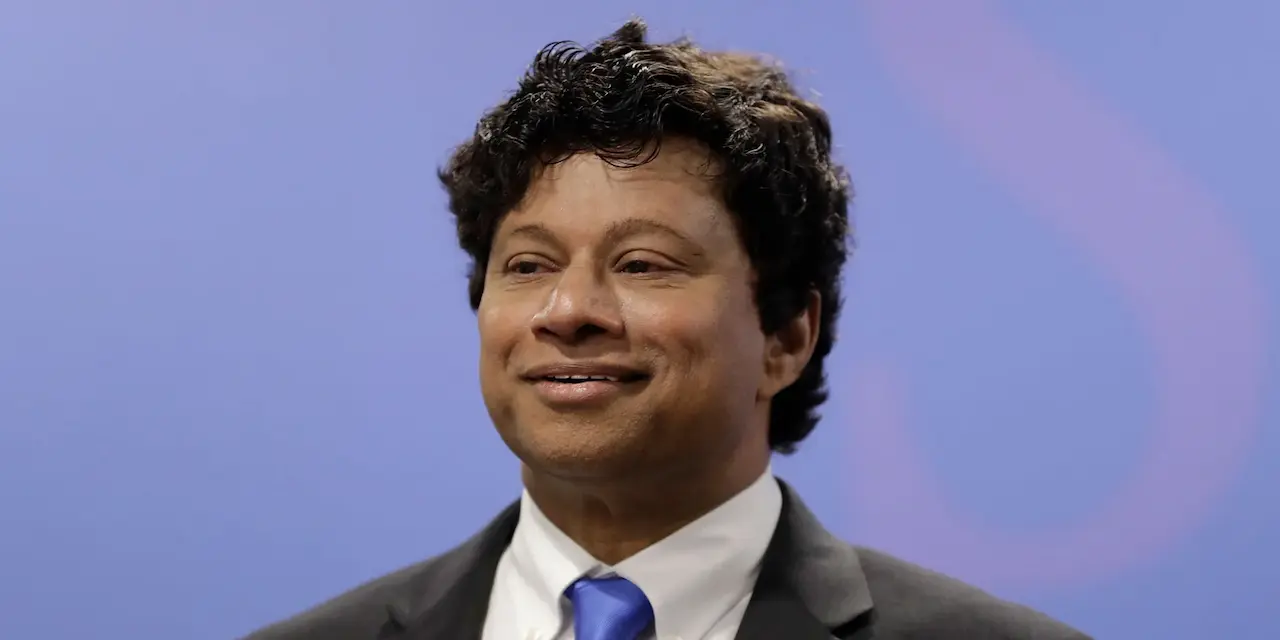
Shri Thanedar Re-Elected in Michigan's 13th District: Highlights from the 2024 US Election 20
Indian American Congressman Shri Thanedar has been re-elected for a second term in Michigan’s 13th Congressional District, defeating his Republican opponent, Martell Bivings, by over 35 percentage points. Thanedar attributed his victory to his record in delivering constituent services, advocating for working families, supporting unions, and standing up for reproductive rights.
“Everywhere I go, constituents tell me how my office helped them with immigration issues, secured visas, obtained veterans’ benefits, and addressed tax concerns. This victory is a testament to my team’s hard work,” Thanedar said.
Reflecting on his first term, he noted that he brought federal dollars to underserved areas, such as Southgate, and worked on significant issues, including mental health and small business support. He sponsored 27 bills and co-sponsored 574 others, reinforcing his commitment to the district’s needs.
Thanedar also expressed appreciation for the support he received from Democratic leadership, unions, and community groups, adding, “Regardless of the outcome of the national elections, I will always fight for Michigan’s 13th District.”
In addition to Thanedar, the current Indian American representatives include Raja Krishnamoorthi (IL-07), Ro Khanna (CA-17), Pramila Jayapal (WA-07), and Ami Bera (CA-06). Suhas Subramanyam will join them in the next Congress, representing Virginia’s 10th District.