Samartha Mahalakshmi: A Young Prodigy Making Global Waves 2
Samartha Mahalakshmi, born in Mumbai, on August 26, 2021, has captured the world with her remarkable intelligence and communication skills. Trained by her mother, Mahalakshmi Pillai, from the tender age of five months, Samartha has achieved extraordinary feats at just 2 years and 10 months old.
At 14 months, she entered India’s World Record as the youngest child to identify and recite various general knowledge (GK) pictures. Her talent earned her international recognition, being featured in the PITI profile of global talent and intellectuals as the youngest extraordinary child.
Her mother’s focus on developing Samartha’s communication skills led her to achieve several records. Samartha appeared in the Influencer Books of World Records (International) for answering 54 GK questions in 5 minutes and later broke her own record by answering 70 GK questions. The Universal Record Forum also recognised her as an exceptionally talented child, further honouring her for answering 100 GK questions in a short time, earning her the title of the youngest GK prodigy.
Among her many accolades, Samartha has been honoured with:
The Dadasaheb Phalke Award as a GK prodigy
The Rashtriya Puraskar as the youngest GK master from the Socially Point Foundation
The Global Kids Achievers Award as the youngest talented child in education
The National Icon Award from Bharat News, titled “Pride Daughter of India” and an IQ Master
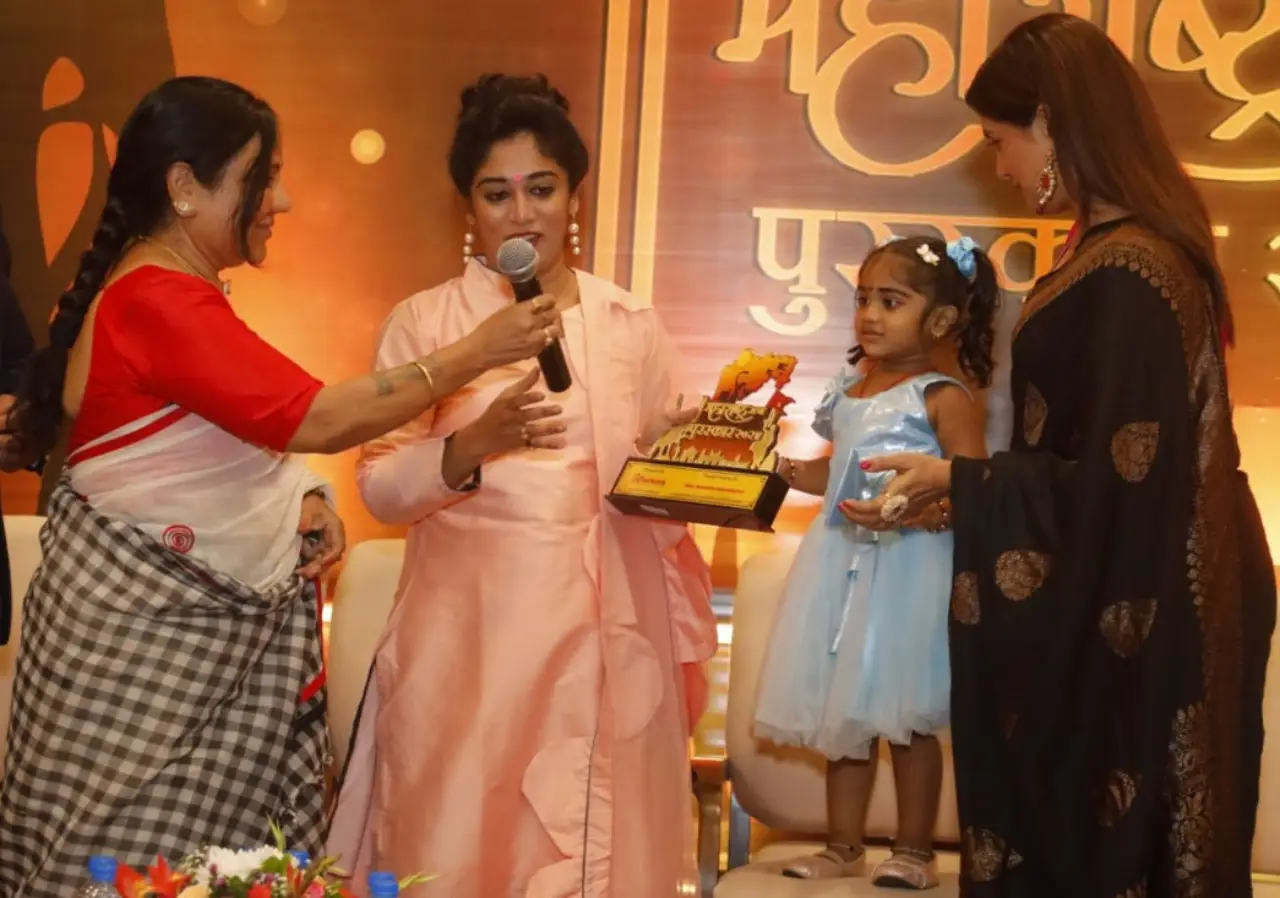
Samartha also set a record by naming all cabinet ministers at just 2 years and 3 months, earning recognition in the Influencer Books of Records. Recently, she received the prestigious Maharashtra Ratna Puraskar 2024 as the youngest extraordinary- talent and influencer, titled “Maharashtra Daughter” by Afternoon Voice.
Her journey as a child prodigy continues to inspire, with each achievement adding to her already impressive legacy.
Maharashtra Police Face Challenges: Demand for Basic Facilities 4
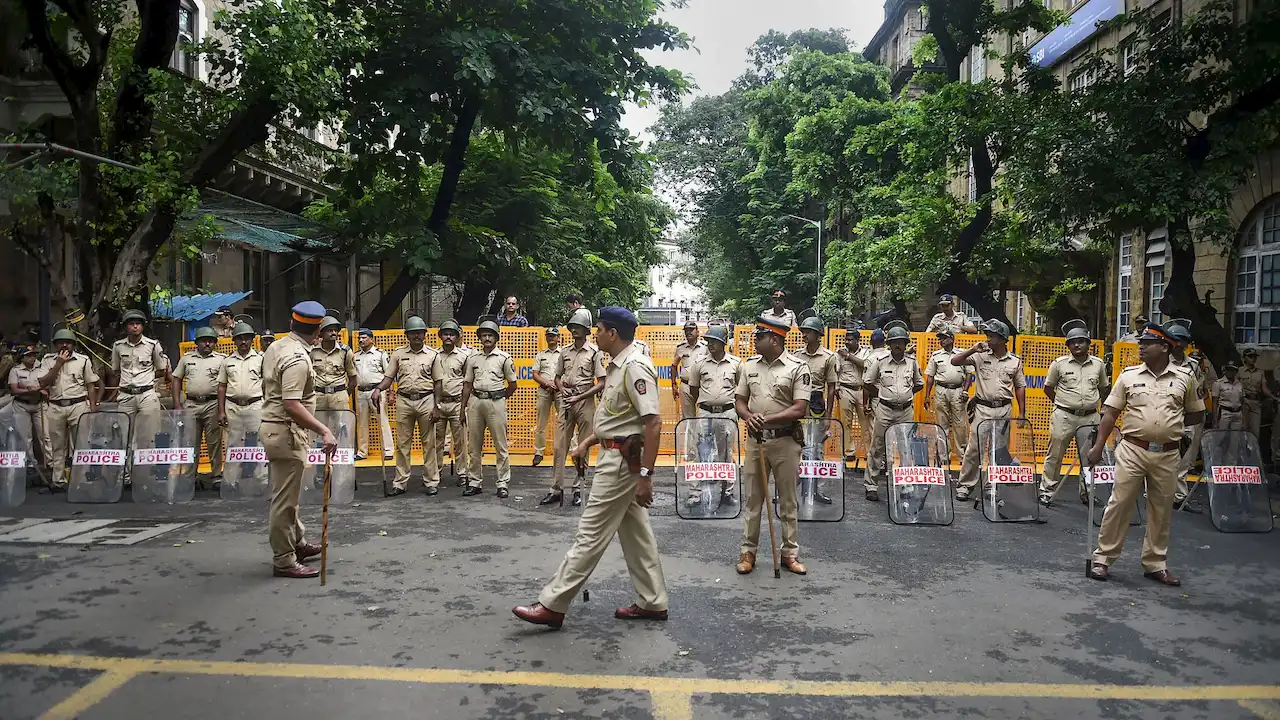
The issue of police personnel traveling without tickets on trains has drawn attention again, with Maharashtra Police facing criticism for this practice. While it is a common violation, several officers have been penalized in the past. Railway authorities have launched multiple drives to curb ticketless travel, issuing fines and reminding police personnel to follow the rules. Despite these efforts, many police officers continue traveling without tickets, citing their demanding schedules and responsibilities.
A Mumbai police officer, speaking anonymously to Afternoon Voice, shared the challenges faced by law enforcement personnel. “We handle numerous cases simultaneously, and waiting at ticket counters is not feasible. Our priority is to reach crime scenes or investigation sites as quickly as possible. The government should address our travel needs,” the officer said.
The officer highlighted additional hardships, particularly in rural areas. “When investigating missing person cases, we often travel to remote locations where there are no hotels. We end up paying locals for accommodation, and while we submit bills to the department, they are often rejected on various grounds,” the officer explained. “We work 24/7 with a limited salary and minimal facilities.”
When asked whether these challenges contribute to corruption, the officer pointed out, “Corruption exists in every department, not just the police. If police officers were paid better, they wouldn’t be tempted by bribery. The criticism of police corruption is selective.”
Addressing the issue of overtime pay, the officer noted, “We don’t get paid for overtime. If we did, the government treasury would run dry. Police have no union, no overtime benefits, and no special considerations despite working under immense pressure and in difficult conditions.”
This interview sheds light on the various difficulties faced by police officers, highlighting the need for systemic changes and better support to enable them to carry out their duties effectively.
Nashik Court Summons Rahul Gandhi in Defamation Case Over Savarkar Comments 6
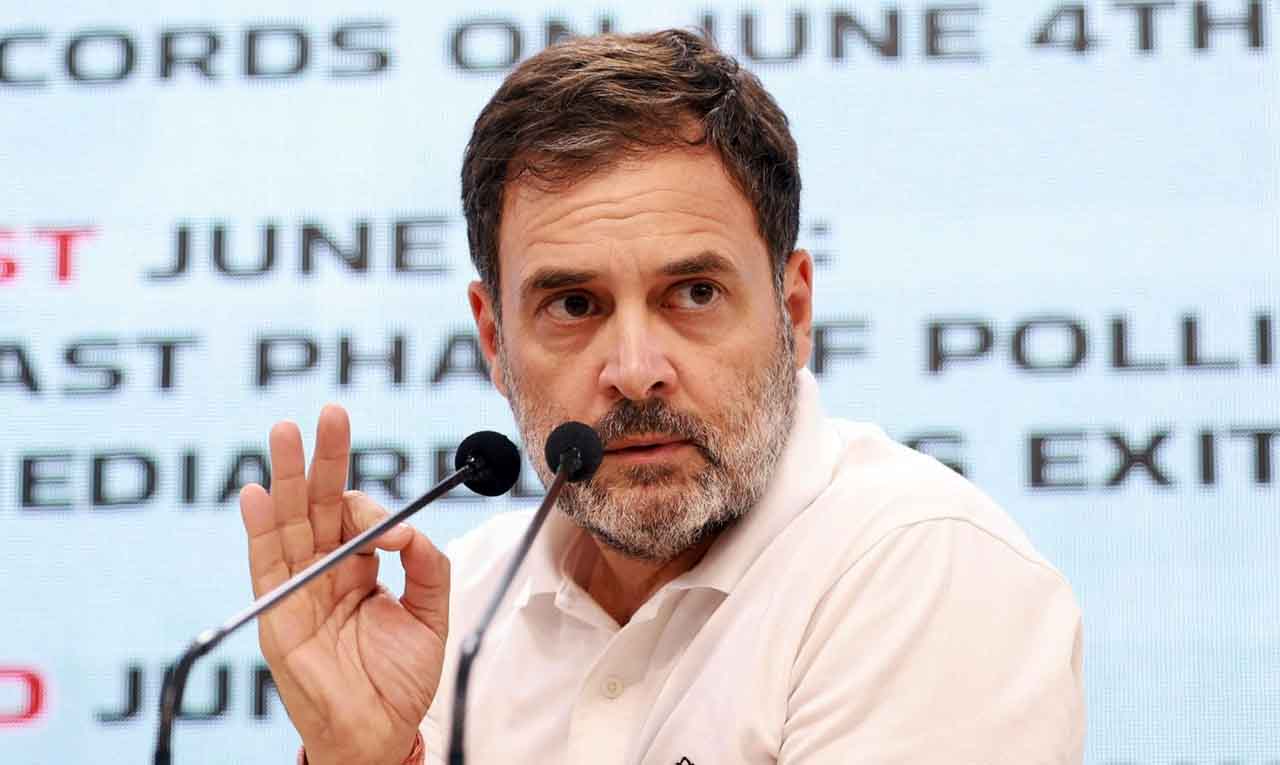
In a fresh legal development, a Nashik court has summoned Congress leader Rahul Gandhi over a defamation suit tied to his controversial remarks about Hindutva figurehead, Vinayak Damodar Savarkar.
On September 27, Additional Chief Judicial Magistrate Deepali Parimal Kaduskar issued the summons, noting that Gandhi’s remarks “prima facie appear defamatory” towards a “patriotic individual.”
The defamation suit was filed by the director of an NGO, who took offense to statements made by Gandhi during a November 2022 speech and a press conference in Hingoli, Maharashtra. According to PTI, the complainant argued that these remarks damaged Savarkar’s legacy.
The complaint centers around Gandhi’s alleged statement: “Savarkar is BJP and RSS jin,” with further accusations that he claimed Savarkar sought his release from the British by promising to work for them during India’s pre-independence struggle.
The court deemed that the accusations warranted a formal hearing, citing sections 499 (defamation) and 504 (intentional insult) of the Indian Penal Code. Rahul Gandhi has been instructed to appear before the court, either personally or through legal representation, on a future date to be announced.
The complainant emphasized that Gandhi’s comments had tarnished the reputation of his “idol,” Swatantryaveer Savarkar, and undermined his contributions to the nation during the fight for freedom.
Mission Happy Harda: A Revolutionary Model for Rural Entrepreneurship and Development 8
The Narmada Valley Rural Development Foundation, under the initiative of Mission Happy Harda has emerged as a successful and innovative approach to foster entrepreneurship by transforming obstacles into opportunities. This unique model is not only reshaping the future of rural India but is also a significant step towards realizing the vision of a developed India by 2047. Happy Harda is poised to become a role model for all districts in the country, showcasing how rural development can be achieved through collective effort and innovative thinking.
As a journalist, I was invited to attend this year’s meeting under Mission Happy Harda, but what I experienced went far beyond mere reportage. After spending hours understanding the intricate workings of this initiative, I was left amazed by the depth and scope of its vision. This initiative can be best described as a comprehensive approach aimed at bringing about sustainable development and transformation in the district of Harda.
Visionary Leadership and Logical Framework
The foundation and leadership of Dr. Arun Joshi, Vice Chancellor of C.V. Raman University and a key member of Happy Harda, have been pivotal in shaping the roadmap for rural development in the Narmada Valley. With a strategic, well-thought-out plan, Dr. Joshi and the Happy Harda team are addressing the rural-urban divide at the micro level. By creating information and knowledge hubs, they are promoting transparent governance and providing a platform for those dedicated to bridging the gaps in sectors such as agriculture, technology, education, health, and social upliftment.
For those passionate about innovation and rural development, Happy Harda offers a cutting-edge platform to bring about real change. The initiative encourages participation from experts and entrepreneurs in diverse fields, ensuring that the impact reaches the grassroots level.
Empowering Agriculture and Entrepreneurship
One of the most noteworthy aspects of the Happy Harda model is its commitment to agriculture and rural entrepreneurship. By focusing on organic farming, horticulture, and small-scale food processing units, the initiative connects these sectors with large retail associates. This linkage helps improve the scale and quality of production, offering farmers and small entrepreneurs access to larger markets.
The Happy Harda initiative is particularly beneficial for organic farmers, horticulturists, and those involved in small food processing units, providing them with the opportunity to expand and grow their businesses. In addition to offering strategic support, the platform also connects these small entrepreneurs with consumers, both large-scale and boutique, who are seeking high-quality, locally sourced products.
Promoting Eco-Tourism and Heritage Preservation
Happy Harda is also making strides in promoting tourism, particularly eco and nature tourism, in the region. Handia, a sacred pilgrimage site located approximately 20 kilometers from Harda, is a key attraction. Known for its temples dedicated to Lord Shiva and the famed Nabhi Kund (center of the Narmada River), Handia offers a wealth of historical and spiritual significance. According to local belief, one of the temples was built overnight by the Pandavas during the Mahabharata era, adding a layer of mystique to the region’s heritage.
To further capitalize on this heritage, Happy Harda has developed several websites dedicated to promoting eco-tourism. These sites offer a variety of experiences, including local food tours, adventure activities, farming experiences, and tours that showcase the region’s rich historical and cultural legacy.
Dairy Farming and Sustainable Agriculture
Another focus area of Mission Happy Harda is dairy farming, with an emphasis on breeding Indian cows that produce A2 milk, known for its health benefits. The initiative has developed a socio-economic model that ensures both the quality and sustainability of dairy products. This not only supports local dairy farmers but also contributes to the broader goal of sustainable agriculture in the region.
The Heart of Agricultural Commerce: Harda Mandi
At the heart of Harda’s agricultural economy is the Harda Mandi, one of the largest agricultural markets in Madhya Pradesh. The mandi facilitates the auctioning of major crops such as moong, gram, tur, wheat, urad, maize, soybean, and mustard, serving as a crucial hub for farmers to sell their produce. The transparency in daily price updates provides farmers with critical information, empowering them to make informed decisions regarding their sales.
Collaborating for Comprehensive Rural Development
The success of Happy Harda is driven by the collaboration of a diverse group of stakeholders. Bharat Bhushan, founder of Friends of Bharat, and Rajiv Bahety, the founder of Happy Harda, have brought together people from all walks of life to discuss and address the challenges of rural development. The initiative has garnered support from a wide array of participants, including progressive farmers, MSME entrepreneurs, educators, financial experts, and other stakeholders.
The platform is organized into specialized focus groups that tackle different aspects of rural development, such as organic farming, dairy production, micro, small, and medium enterprises (MSMEs), education, and finance. These focus groups work closely with local communities, particularly in the 400 villages that form the foundation of the initiative. The villages are grouped into 40 clusters, with each cluster consisting of 10 villages. From each cluster, 4-5 business partners are selected, forming a group of 2000 business partners who play a crucial role in driving local growth.
Scaling for Success
The platform connects local suppliers and farmers with business partners, providing them with the consistency and scalability needed to thrive in the marketplace. This model ensures that the benefits of Happy Harda reach not only the farmers and small businesses but also the consumers who are looking for high-quality, locally sourced products.
Conclusion: A Role Model for Rural India
The Happy Harda model is a groundbreaking initiative that has the potential to reshape rural India. By focusing on sustainable agriculture, empowering entrepreneurs, and fostering community-driven development, Happy Harda is creating a blueprint for success that can be replicated across the country. Through the collaboration of dedicated individuals and innovative strategies, Mission Happy Harda is transforming challenges into opportunities, proving that rural India has the potential to be at the forefront of the nation’s development journey.
As India looks ahead to 2047, the 100th anniversary of its independence, initiatives like Happy Harda will play an instrumental role in fulfilling the dream of a developed, prosperous, and self-sustaining nation.
TMC Suspends Two Student Leaders Over Controversial Short Film on RG Kar Incident 10
In a move that has reverberated through political circles, the Trinamool Congress (TMC) has suspended two student leaders for their involvement in creating a short film allegedly centered on the rape and murder of a junior doctor at Kolkata’s RG Kar Medical College and Hospital.
Trinankur Bhattacharya, the president of the Trinamool Chhatra Parishad (TMCP), released a statement late on September 27, confirming the suspension of Rajanya Halder and Prantik Chakraborty, both office-bearers within the party. According to The Indian Express, the decision was attributed to “anti-party activities.”
Halder, who portrayed a key role in the short film, and Chakraborty, who directed it, dismissed accusations that the film drew any connection to the RG Kar case.
The film, Agomoni, Tilottamader Golpo, which is set to release on October 2 in conjunction with Mahalaya, features a teaser that shows Halder dressed as a doctor, her stethoscope symbolically alluding to the RG Kar incident. The teaser triggered outrage, both within West Bengal and nationally, as it seemed to touch on a politically charged issue.
Within hours of TMC leader Kunal Ghosh posting on X (formerly known as Twitter) that the party would distance itself from any members who attempted to leverage the matter for political gain, the TMCP acted swiftly, announcing the suspension.
In their defense, both Halder and Chakraborty vehemently rejected the notion that their film was tied to the RG Kar controversy, insisting it was a work promoting women’s empowerment.
“It’s unrelated to the party or the incident at RG Kar,” Halder explained to The Indian Express. “We are artists and human beings, and this project is solely about the empowerment of women.”
Chakraborty, the director, echoed these sentiments, stating, “I respect the party’s decision, but this film has no connection to the RG Kar case. It is purely a narrative of women’s strength and resilience.”
Lower Parel Car Parking Tender Worth ₹520 Crore Faces Criticism, May Cause ₹300 Crore Loss 12
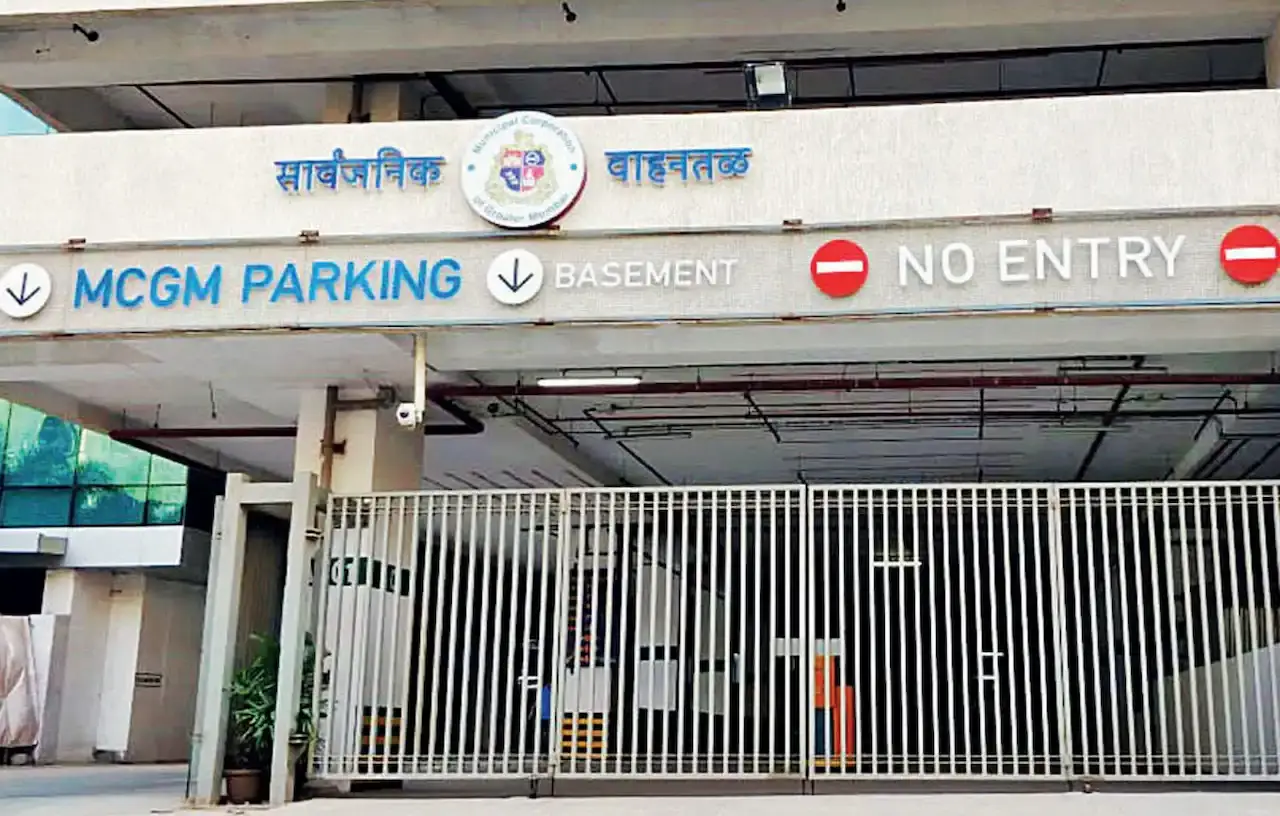
A new car parking project in Lower Parel, worth ₹520 crore, has sparked controversy with concerns of a potential ₹300 crore loss. Despite past failures in similar projects across Mumbai, the Brihanmumbai Municipal Corporation (BMC) has issued a fresh tender for constructing a 548-space parking system at the Asphalt Plant in Lower Parel. RTI activist Anil Galgali has raised objections, citing collusion between contractors and officials, and has called for the cancellation of the tender.
In a letter addressed to Maharashtra Chief Minister Eknath Shinde, Deputy Chief Minister Devendra Fadnavis, and Municipal Commissioner Bhushan Gagrani, Galgali highlighted the inflated cost of the project. He pointed out that the cost per parking space amounts to ₹95 lakh, which he claims will lead to a loss of ₹300 crore.
Galgali’s letter suggests that the same original equipment manufacturer (OEM), Sotefin Parking Private Limited, is likely to be involved, as in previous projects. Similar contracts were awarded for car parking systems in Matunga, Flora Fountain, and Worli, with prices significantly lower. For instance, the Worli project cost ₹33.90 lakh per car, while the Matunga project cost ₹21.87 lakh per parking space.
Anil Galgali criticised the BMC for failing to conduct a proper price evaluation for the Lower Parel project. He compared the costs to similar projects being executed by other government agencies like CPWD, NHIDCL, Railways, and the Delhi Municipal Corporation, which have reportedly been completed at far lower costs.
According to Galgali, the BMC is overpaying for outsourced projects, with some contracts costing 200% to 300% more than comparable projects. He suggested that the BMC should request bid documents and cost estimates from agencies like MMRDA to reassess the rates.
Galgali also accused BMC officials of inflating tender prices, saying, “If action is taken against such officers, no one will do such a job in the future.” He emphasized that the people of Mumbai are bearing the brunt of these inflated costs.
The Lower Parel parking project is now under scrutiny, as calls for accountability grow.
Pentagon Chief Warns Iran of 'Serious Consequences' if It Attacks Israel 14
The United States Secretary of Defence, Lloyd Austin, spoke with Israeli Minister of Defence, Yoav Gallant and reiterated “serious consequences” for Iran if Tehran chooses to launch a direct military attack against Israel.
The Pentagon Chief discussed security developments and Israeli operations with counterpart Gallant and made it clear that the US supports Israel’s right to defend itself.
“I spoke with Israeli Minister of Defence Yoav Gallant today to discuss security developments and Israeli operations. I made it clear that the United States supports Israel’s right to defend itself. We agreed on the necessity of dismantling attack infrastructure along the border to ensure that Lebanese Hizballah cannot conduct October 7-style attacks on Israel’s northern communities,” Austin said, sharing a post on X on Tuesday.
The US Defence Secretary in his talks to Gallant, further ensured that the US is “well-postured to defend” US personnel, partners, and allies in the face of threats from Iran.
He said, “I reaffirmed that a diplomatic resolution is required to ensure that civilians can return safely to their homes on both sides of the border and made clear that the United States is well-postured to defend U.S. personnel, partners, and allies in the face of threats from Iran and Iran-backed terrorist organizations and determined to prevent any actor from exploiting tensions or expanding the conflict.”
“I reiterated the serious consequences for Iran in the event Iran chooses to launch a direct military attack against Israel,” Austin added.
The Israeli Defence Forces (IDF) had launched precision strikes on the Lebanese capital in Beirut on September 27, which led to the death of Hassan Nasrallah.
Following the death of Nasrallah, Israeli Prime Minister Benjamin Netanyahu issued a warning to Iran’s Ayatollah regime and asserted that those who target Israel will face consequences and that no location in Iran or West Asia is beyond Israel’s reach.
Netanyahu called Nasrallah the “main engine of Iran’s axis of evil” and added, “Nasrallah was not just another terrorist, he was the terrorist. He was the axis of the axis, the main engine of Iran’s axis of evil. He and his people were the architects of the plan to destroy Israel. He was not only operated by Iran, he also frequently operated Iran.
"Expect Just a Little for Ladakh": Ladakh MP Joins Protest at Singhu Border After Sonam Wangchuk's Detention 16
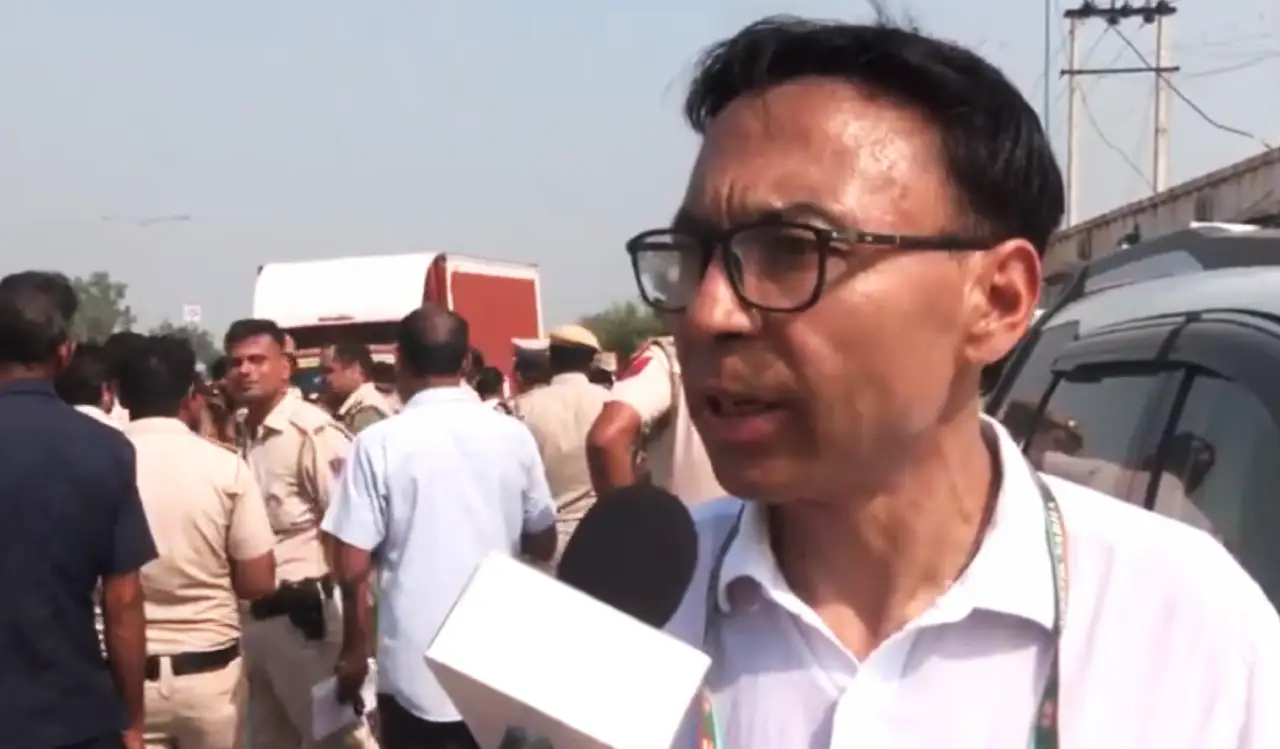
Ladakh MP Haji Hanifa joined the ongoing protest at the Singhu border between Delhi and Haryana on Tuesday, following the detention of activist Sonam Wangchuk and several others by the police late Monday night. The protestors are demanding the protection of Ladakh’s environmental and constitutional rights.
Speaking to ANI, MP Hanifa highlighted that for the past three years, Ladakh has been peacefully fighting for its rights, with negotiations taking place between the government and the people of Ladakh. However, these talks were halted after the elections and the formation of the new government. The protestors, under the banners of the Kargil Democratic Alliance (KDA) and Apex Body, had marched from Leh to Delhi to present their demands.
The protest escalated when Wangchuk, along with other members—including several women—was detained in different locations.
Hanifa emphasized that the protestors’ primary goal was to submit a memorandum of their demands to the government. He urged Prime Minister Narendra Modi and Home Minister Amit Shah to either provide a location in Delhi for them to conclude their march or directly engage with their leaders to address the situation.
“We have sacrificed so much for the nation, and now we expect just a little in return for Ladakh,” Hanifa stated, warning that the entire Ladakh region was now closed, and the situation could escalate further if their demands are not met.
One of the detained members expressed their frustration, stating, “This is injustice. We have peacefully crossed six to seven borders, obeying the law, yet around 300 of us have been detained without any cause. We are simply protesting for our rights.”
The protestors remain firm in their demands for immediate government action to resolve the ongoing issues in Ladakh.
Actor-producer Kangana Ranaut has agreed to the cuts suggested by the Central Board of Film Certification (CBFC) for her upcoming film Emergency, the Bombay High Court was informed on Monday.
During the court hearing, Zee Entertainment’s advocate Sharan Jagtiani confirmed that the proposed cuts were discussed and accepted by both Ranaut and the CBFC. However, Zee Entertainment requested additional time to verify the specific modifications.
The film, which has faced delays due to certification issues, came under scrutiny after Sikh organizations, including the Shiromani Akali Dal, raised concerns that it misrepresented the Sikh community. The court has adjourned the matter until October 3, allowing both parties to seek further instructions.
Junior Doctors in West Bengal Strike Over Trainee's Murder, Demand Safety Reforms 20
Junior doctors in West Bengal resumed their indefinite ‘cease work’ strike on Tuesday, protesting the rape and murder of a trainee doctor at RG Kar Medical College and Hospital in Kolkata. The doctors are calling on the Mamata Banerjee government to urgently address their demands for enhanced safety measures in hospitals.
Following a tense eight-hour meeting, the junior doctors outlined 10 key demands, which include heightened hospital security, improved healthcare infrastructure, and the elimination of political interference in medical establishments. The West Bengal Junior Doctors’ Front announced, “We are forced to continue the cease work until clear actions are taken on safety, patient care, and the elimination of the politics of fear.”
The doctors voiced their dissatisfaction with the sluggish Central Bureau of Investigation (CBI) inquiry and the slow judicial process by the Supreme Court. “The pace of the CBI investigation and the delays in the judiciary have deeply frustrated us. Despite our demands for immediate actions, the state government has not adequately responded,” they said.
Despite multiple meetings with top state officials, including the Chief Minister and Chief Secretary, junior doctors stated that their safety concerns remain unaddressed, with minimal progress on security upgrades like CCTV installations. They are also pushing for representation in hospital decision-making committees to ensure their safety and input are prioritized.
Meanwhile, the Supreme Court has intervened, ordering social media platforms to remove any content revealing the victim’s identity. Senior Advocate Indira Jaisingh emphasized the gravity of the case, pointing out that elected council members were present at the scene of the crime. The case will resume after the Dussehra break for further hearings.