Home Blog Page 150

SC To Hear Arvind Kejriwal’s Plea Against Summons In Defamation Case

kejriwal, ed plea, delhi high court, enforcement directorate, bail to arvind kejriwal, arvind kejriwal, aap
SC To Hear Arvind Kejriwal's Plea Against Summons In Defamation Case 2

The Supreme Court is scheduled to hear on Monday a plea of Chief Minister Arvind Kejriwal challenging a Delhi High Court order upholding the summons issued to him in a criminal defamation case for retweeting an allegedly defamatory video circulated by YouTuber Dhruv Rathee in May 2018.

A three-judge bench of justices Sanjiv Khanna, Sanjay Kumar and R Mahadevan is likely to hear the matter in which Kejriwal has admitted that he “committed a mistake” by retweeting the alleged defamatory video.

On March 11, the top court asked Kejriwal whether he wanted to give an apology to the complainant in the matter.

Kejriwal had on February 26 told the top court that he made a mistake by retweeting the allegedly defamatory video related to the BJP IT Cell.

The counsel appearing for complainant Vikas Sankrityayan had told the top court that Kejriwal may issue an apology on social media platforms like microblogging platform ‘X’ or Instagram.

On February 26, the top court, without issuing notice on Kejriwal’s plea challenging the high court order, had asked the complainant whether he wanted to close the matter in view of the petitioner accepting it was a mistake.

The top court had asked the trial court not to take up the defamation case involving Kejriwal till further orders.

In its February 5 verdict, the high court said that reposting alleged libellous content would attract the defamation law.

It said a sense of responsibility has to be attached while retweeting content about which one does not have knowledge and added that retweeting defamatory content must invite penal, civil as well as tort action if the person retweeting it does not attach a disclaimer.

The high court, while refusing to quash the trial court’s 2019 order summoning Kejriwal, had said when a public figure tweets a defamatory post, the ramifications extend far beyond a mere whisper in someone’s ears.

It had said if the act of retweeting or reposting is allowed to be misused as it is still considered to be a vacant grey area of law, it will encourage people with ill intentions to misuse it and conveniently take a plea that they had merely retweeted a content.

The chief minister had said in the high court that the trial court failed to appreciate that his tweet was not intended or likely to harm the complainant.

Sankrityayan claimed the YouTube video titled ‘BJP IT Cell Part II’ was circulated by Rathee, who lives in Germany, “wherein a number of false and defamatory allegations were made”.

Maharashtra Governor Launches Phase 2 of ‘Mukhyamantri Majhi Shala’ and Other Key Educational Initiatives

Maharashtra Governor, Educational initiatives, German language training, Youth employment, Mukhyamantri Majhi Shala, CP Radhakrishnan
Maharashtra Governor Launches Phase 2 of 'Mukhyamantri Majhi Shala' and Other Key Educational Initiatives 4

Maharashtra Governor C.P. Radhakrishnan officially launched the second phase of several significant educational initiatives, including the ‘Mukhyamantri Majhi Shala Sundar Shala,’ ‘Maha Vachan Utsav,’ and ‘Majhi Parasbaug,’ during a ceremony held at Raj Bhavan.

As part of the event, the Governor unveiled the logo and QR code for a new programme aimed at registering and providing employment and skill development opportunities to the youth of Maharashtra in Baden-Württemberg, a state in southwest Germany.

A Memorandum of Understanding (MoU) was signed between the Department of School Education and Goethe Institutes in Mumbai and Pune to facilitate the teaching of the German language to young people in Maharashtra. Another MoU was also signed, focused on promoting Marathi language education in the United States.

The state government has already allocated ₹767 crore to train an initial group of 10,000 youth for employment opportunities in Baden-Württemberg, which shares borders with France and Switzerland. The government plans to extend these opportunities to approximately 400,000 youth in the future.

In addition, the government will establish around 200 classrooms across Maharashtra, with an investment of ₹36 crore, to ensure students can complete all four levels of German language learning (A1, A2, B1, and B2). The State Council for Educational Research and Training (SCERT) has been tasked with signing an agreement with the Goethe Institute to conduct German language classes in each district headquarters.

The ‘Maha Vachan Utsav’ is designed to emphasize the importance of reading, aiming to ensure that every child in the state becomes proficient in reading by the third grade. The initiative seeks to create a widespread public reading movement by involving the community in promoting reading habits, providing children with access to quality Marathi literature appropriate to their age group, and cultivating a new generation of Marathi readers.

The ‘Mukhyamantri Majhi Shala’ initiative focuses on creating a conducive learning environment in schools, fostering a competitive spirit, and promoting the overall development of students.

Chief Minister Eknath Shinde and Deputy Chief Minister Devendra Fadnavis participated in the event via a digital platform. The ceremony was also attended by Minister of School Education and Marathi Language Deepak Kesarkar, Minister of Skill and Employment Mangal Prabhat Lodha, Minister of Rural Development and Panchayat Raj Girish Mahajan, Germany’s Consul General in Mumbai Achim Fabig, as well as other officials, principals, teachers, students, and invited guests.

Modi Cabinet Reaffirms: No ‘Creamy Layer’ Provision in SC-ST Reservations as Per Ambedkar’s Vision

ashwini vaishnaw, creamy layer, scs, sc, st, ambedkar, supreme court judgement, modi cabinet
Modi Cabinet Reaffirms: No 'Creamy Layer' Provision in SC-ST Reservations as Per Ambedkar's Vision 6

The Union Cabinet, under the leadership of Prime Minister Narendra Modi, has reaffirmed that the Constitution, as envisioned by Dr. B.R. Ambedkar, does not include any provision for a “creamy layer” in the reservations for Scheduled Castes (SCs) and Scheduled Tribes (STs).

Following a cabinet meeting held on Friday, Union Minister for Information and Broadcasting, Ashwini Vaishnaw, addressed the media, highlighting the government’s stance in light of a recent Supreme Court judgment. The judgment had suggested the application of the “creamy layer” principle to SCs and STs for availing the benefits of affirmative action.

Minister Vaishnaw stated that the cabinet had thoroughly deliberated on the matter and concluded that the National Democratic Alliance (NDA) government remains steadfast in upholding the provisions of the Constitution.

“As per the Constitution crafted by Dr. B.R. Ambedkar, there is no provision for a creamy layer within the SC-ST reservation framework,” Vaishnaw affirmed.

Earlier in the day, Prime Minister Modi met with a delegation of Members of Parliament (MPs) from SC and ST communities. During the meeting, the Prime Minister reiterated the government’s unwavering commitment to the welfare and empowerment of these communities.

The delegation reportedly submitted a memorandum addressing concerns over the Supreme Court’s recent observations regarding the application of the creamy layer to SCs and STs.

Prime Minister Modi took to social media platform X to share details of the meeting, stating, “Met a delegation of SC/ST MPs today. Reiterated our commitment and resolve for the welfare and empowerment of the SC/ST communities.”

The Supreme Court, on August 1, had proposed the application of the creamy layer principle to Scheduled Castes (SCs) and Scheduled Tribes (STs) in the context of affirmative action benefits. The 7-judge Constitution Bench had been examining whether sub-classification within reserved categories to provide more focused benefits would be constitutionally permissible.

In a 6:1 majority decision, the bench overturned its 2004 judgment, which had previously ruled against offering preferential treatment to certain sub-castes within SCs.

The Targeting of Statues Highlights the Disturbing Trend of Violent Political Activism

sheikh mujibur rahman, mahatma gandhi, gandhi, sheikh mujibur, bangladesh, bangladesh crisis, bangladesh protest, statue, statue vandalized
The Targeting of Statues Highlights the Disturbing Trend of Violent Political Activism 8

The humiliation of freedom fighters across the globe often stems from a complex mix of political manipulation, misinformation, and shifting societal values. As time progresses, the sacrifices made by these leaders can be overshadowed by contemporary political agendas, distorting their legacy. Additionally, the younger generation may be influenced by propaganda that portrays these figures negatively, sometimes as part of a broader effort to reshape national narratives. This phenomenon is dangerous as it undermines the very foundations of a nation’s history and identity.

Nearly 50 years after the tragic massacre of Sheikh Mujibur Rahman and his family in a military coup, the legacy of Bangladesh’s founding father, ‘Bangabandhu,’ faces another upheaval. Protestors have overthrown the regime of his daughter, Sheikh Hasina, marking a significant and turbulent moment in the country’s history. Sheikh Mujibur Rahman, widely known as “Bangabandhu” (Friend of Bengal), was central to Bangladesh’s struggle for independence from West Pakistan’s oppression. Born on March 17, 1920, he became a folk hero for his relentless advocacy for Bengali rights and the Bangla language. His leadership in movements like the Six Points Movement and his resistance against West Pakistani policies made him a revered figure. By 1953, he had already become a legendary leader, elected to the East Bengal Legislative Assembly, and through years of sacrifice and dedication, he became the undisputed leader of his people.

The desecration of Sheikh Mujibur Rahman’s legacy is deeply troubling, especially considering his pivotal role in securing Bangladesh’s independence. This anger likely stems from current political tensions and efforts to manipulate public sentiment through misinformation. By distorting historical facts and misleading the youth, there is a dangerous attempt to erase the contributions of a leader who sacrificed his life for the nation. This situation highlights the destructive power of dirty politics and the risks associated with erasing historical truths.

Under Sheikh Hasina’s rule, Bangladesh transitioned from a struggling nation to a prosperous one. Her leadership significantly contributed to the country’s development, particularly through strong relations with India and efforts to combat anti-social and terrorist elements linked to Pakistan. This led to a period of stability and prosperity for all communities in Bangladesh. However, issues such as reservations and some of Hasina’s statements have recently escalated tensions, ultimately forcing her to leave the country and highlighting the fragility of political stability.

The hatred toward figures like Mahatma Gandhi and Sheikh Mujibur Rahman reflects the complexities of national memory and the influence of divisive politics. Despite Gandhi’s pivotal role in India’s independence and his advocacy of non-violence, some individuals continue to harbour resentment, fuelled by ideological differences or manipulated narratives. Similarly, Sheikh Mujibur Rahman, who led Bangladesh to freedom, faces posthumous humiliation due to contemporary political agendas. This trend of desecrating the legacies of freedom fighters undermines their contributions and distorts historical truths, often for short-term political gain. True national pride should involve honouring and preserving the legacies of those who fought for freedom.

Sheikh Mujibur Rahman and Mahatma Gandhi were monumental figures in the independence movements of Bangladesh and India, respectively. Their commitment to non-violence, civil disobedience, and leadership played a crucial role in uniting their people and achieving freedom from colonial rule. Gandhi’s tactics forced the British to address the demands of Indians, while Rahman led Bangladesh to independence. However, both figures face divided legacies today, with Gandhi’s contributions being debated in India and Rahman’s relevance waning in Bangladesh, influenced by political and social changes. This reflects the complex nature of historical memory and its manipulation in contemporary politics.

The targeting of statues in India, including those of Lenin, Ambedkar, and Periyar, highlights the disturbing trend of violent political activism. These acts of vandalism are not just attacks on statues but on the legacies of figures who symbolize various social and political movements. Gandhi, Lenin, Ambedkar, and Periyar represent different ideologies that have shaped India’s history, and the destruction of their statues signals deeper societal divisions. This violence reflects the growing intolerance and attempts to erase or rewrite history through destructive means.

Supreme Court Grants Bail to Manish Sisodia in Delhi Excise Policy Scam; “Slams Delay”

manish sisodia, aap, excise policy, aam aadmi party, supreme court
Supreme Court Grants Bail to Manish Sisodia in Delhi Excise Policy Scam; "Slams Delay" 10

In a major relief to jailed AAP leader and former Delhi Deputy Chief Minister Manish Sisodia, the Supreme Court on Friday granted him bail in the liquor policy case.

Pronouncing the verdict, a bench headed by Justice B.R. Gavai said that Sisodia has been deprived of his right to a speedy trial, considering the fact that he suffered incarceration of more than 17 months and the trial in the case has not yet commenced.

“In the matter of liberty, every day counts,” remarked Justice Gavai-led Bench.

On Tuesday, the Bench, also comprising Justice K.V. Viswanathan, reserved its judgment after hearing the oral arguments raised by Additional Solicitor General (ASG) S.V. Raju, representing the central agencies, and senior advocate Abhishek Manu Singhvi, who appeared on Sisodia’s behalf.

During the hearing, the CBI and the ED told the apex court that a Rs 100 crore bribe was demanded by the Aam Aadmi Party (AAP) for the Goa elections, out of which Rs 45 crore has been traced in the course of the investigation.

“A Rs 100 crore bribe was demanded to be used for Goa elections. Out of which we have been able to trace 45 crore. We have digital evidence. There is a lot of evidence,” the ASG said, adding that Sisodia was in charge of the Excise Department of the Delhi government and co-accused Vijay Nair was tasked to receive the kickbacks.

“They wanted to make money out of this exercise. There is evidence to show that this particular gentleman (Sisodia) engineered emails and told certain interns to write a particular type of email,” Raju said.

On the other hand, Singhvi contended that the AAP leader has been in custody for 17 months and should be granted bail on the grounds of delay in the conclusion of the trial.

Singhvi also prayed that Sisodia be released on interim bail. He said his wife has “a very very bad medical condition” and is “virtually like a vegetable”.

In its judgment delivered on October 30 last year, the SC had denied bail to the former Deputy CM but said that if the trial proceeds slowly in the next three months, he may apply for bail afresh.

Special Judge Kaveri Baweja of the Rouse Avenue Court had on April 30 refused to grant bail to Sisodia who was seeking regular bail a second time. Denying bail, the trial court order noted that delays in the case proceedings were largely due to actions attributable to Sisodia himself, dismissing his claims of undue delay.

Subsequently, the Delhi High Court denied bail to Sisodia, saying that he failed to pass the triple test for grant of bail in the corruption case and the twin conditions required under the Prevention of Money Laundering Act (PMLA), 2002.

Challenging this, the former Deputy CM filed special leave petitions before the Supreme Court. Last month, the apex court had disposed of the pleas seeking bail in corruption and money laundering cases after Solicitor General Tushar Mehta gave an undertaking that the final charge sheet/complaint in the liquor policy case would be filed by July 3.

Meanwhile, a court here extended the judicial custody of Sisodia, till August 9 in the corruption case and till August 13 in the money laundering case. He was produced through video conferencing from Tihar Jail upon expiry of the previously granted judicial custody.

FM Nirmala Sitharaman to Move Banking Laws Amendment Bill in LS Today

nirmala sitharaman, sitharaman, banking laws, bill amendment
FM Nirmala Sitharaman to Move Banking Laws Amendment Bill in LS Today 12

Union Finance Minister Nirmala Sitharaman will on Friday move the Banking Laws (Amendment) Bill in the Lok Sabha, which seeks to amend the Reserve Bank of India Act, 1934, the Banking Regulation Act, 1949, the State Bank of India Act, 1955, the Banking Companies (Acquisition and Transfer of Undertakings) Act, 1970 and the Banking Companies (Acquisition and Transfer of Undertakings) Act, 1980.

Union Ports, Shipping and Waterways Minister Sarbananda Sonowal will introduce the Carriage of Goods by Sea Bill and the Bills of Lading Bill.

The first bill seeks to provide for the responsibilities, liabilities, rights and immunities attached to carriers with respect to the carriage of goods by sea and for matters connected therewith or related thereto. While the Bills of Lading Bill seeks to make provisions for the “transfer of rights of suit and all liabilities to the consignee named in a bill of lading and every endorsee of a bill of lading, to whom the property in the goods mentioned in the bill of lading shall pass, upon or by reason of a consignment or an endorsement, and for matters connected therewith or related thereto”.

According to the revised list of business, Railways Minister Ashwini Vaishnaw is slated to introduce a bill further to amend the Railways Act, 1989, in the Lower House.

The Lok Sabha session on the day will start with obituary references to passing away of Iqbal Ahmed Saradgi (Member, Thirteenth and Fourteenth Lok Sabhas); Sqn. Ldr. Kamal Chaudhry (Member, Eighth, Ninth, Tenth and Twelfth Lok Sabhas); and Ramesh Rathod (Member, Fifteenth Lok Sabha).

Meanwhile in the Rajya Sabha, Vaishnaw, who is also Union IT Minister, will make a statement regarding the status of implementation of recommendations contained in the 48th Report of Parliamentary Standing Committee on Communications and Information Technology on ‘Citizen’s Data Security and Privacy’.

Union MoS L. Murugan will make a statement on the status of implementation of recommendations contained in the 27th Report of the Parliamentary Standing Committee on Communications and Information Technology on ‘Ethical Standards in Media Coverage’.

He will also make statements on the status of implementation of recommendations contained in the 47th Report of the Parliamentary Standing Committee on Communications and Information Technology on ‘Review of functioning of Central Board of Film Certification (CBFC)’.

Similarly, Union MoS Ravneet Singh is slated to make a statement regarding the status of implementation of recommendations contained in the 67th Report of the Parliamentary Standing Committee on Agriculture, Animal Husbandry, and Food Processing on ‘Scheme for Creation/ Expansion of Food Processing and Preservation Capacities – An Evaluation’.

Let’s Again Make Har Ghar Tiranga a Memorable Mass Movement: PM Narendra Modi

narendra modi, pm modi, tiranga, tiranga movement
Let's Again Make Har Ghar Tiranga a Memorable Mass Movement: PM Narendra Modi 14

Prime Minister Narendra Modi on Friday urged people to make the ‘Har Ghar Tiranga’ campaign a memorable mass movement.

“As this year’s Independence Day approaches, let’s again make #HarGharTiranga a memorable mass movement. I am changing my profile picture and I urge you all to join me in celebrating our Tricolor by doing the same. And yes, do share your selfies on https://harghartiranga.com,” PM Modi posted on his X handle.

He has replaced his profile picture with the national flag on his X handle.

PM Modi’s HarGharTiranga campaign has evolved into a national movement since it was launched two years ago. The PM, in his monthly ‘Mann Ki Baat’ radio broadcast on July 28 talked about the Har Ghar Tiranga Abhiyan and urged people to upload selfies with the national flag on the ‘harghartiranga.com’ website. He said the campaign has caught on with every section of society.

Union Home Minister and Minister of Cooperation Amit Shah has also appealed to the countrymen to hoist the tricolor at their homes from August 9 to 15 under the ‘Har Ghar Tiranga’ campaign and upload their selfies.

Earlier, in a post on the X platform, Union Home Minister Amit Shah called it a national movement and also urged people to continue with the enthusiasm.

“PM Shri Narendra Modi Ji’s #HarGharTiranga campaign has evolved into a national movement over the last two years, awakening the basic unity in every Indian across the length and breadth of the nation. I appeal to all citizens to bolster this movement further and participate in it with the same enthusiasm again. Hoist our pride, our Tiranga, at your homes, take a selfie with the Tiranga, and upload it on the Har Ghar Tiranga website: https://harghartiranga.com.”

The Bharatiya Janata Party (BJP) will also launch the ‘Har Ghar Tiranga’ campaign following Prime Minister Narendra Modi’s call to organize the event ahead of Independence Day 2024.

The Har Ghar Tiranga campaign was launched by the Union Ministry of Culture in 2022, as part of the ‘Azadi Ka Amrit Mahotsav’ celebrations, commemorating the completion of 75 years of India’s independence.

Muhammad Yunus Takes Oath as Chief Adviser of Bangladesh’s Interim Government

Muhammad Yunus, Bangladesh, Interim Government, Bangladesh Protest
Muhammad Yunus Takes Oath as Chief Adviser of Bangladesh’s Interim Government

Nobel laureate Dr. Muhammad Yunus has been sworn in as the chief adviser to Bangladesh’s interim government on Thursday, following weeks of intense student protests that led to Prime Minister Sheikh Hasina’s resignation and subsequent flight from the country. Yunus, who arrived in Dhaka from Paris, has urged calm and appealed to Bangladeshis to “get ready to build the country.” Meanwhile, Hasina, who fled to India, is seeking asylum in Europe. Nahid Islam and Asif Mahmud, two student leaders in their mid-20s who led the protests, will join the caretaker government, according to local media reports.

President Mohammed Shahabuddin administered the oath of office to the new government at Bangabhaban. According to the Dhaka Tribune, arrangements were made for 400 people to attend the ceremony. Dr. Yunus was in Paris for medical treatment prior to his return to Dhaka. Regarding the size of the interim government, Zaman said, “I believe it might initially consist of around 15 members. However, one or two more individuals may be added.”

Meanwhile, ousted Prime Minister Sheikh Hasina’s son, Sajeed Wazed, has blamed Pakistan’s ISI for fueling unrest in Bangladesh. “The Indian government must build up international pressure for the swift restoration of democracy in Bangladesh,” Joy told PTI. The Indian visa application center announced that its offices in the country will remain closed until further notice.

Aman Sehrawat Shines at Paris Olympics; Anshu Malik Faces Setback

Aman Sehrawat, olympics, paris, paris olympics 2024, wrestler
Aman Sehrawat Shines at Paris Olympics; Anshu Malik Faces Setback 17

Young Indian grappler Aman Sehrawat ensured an easy passage into the quarterfinals with a dominating performance against North Macedonian rival Vladimir Egorov in the 57kg freestyle category at the Paris Olympics on Thursday.

The 21-year-old Indian, an Asian Championship gold medallist and the only male wrestler from the country to qualify for the Olympics, displayed remarkable agility. He maintained a strong defense while overpowering his 29-year-old former European champion competitor with leg holds to win the bout on technical superiority (10-0).

Egorov required medical attention on his knee after Aman’s relentless attacks in the first round but couldn’t stage a comeback. Aman sealed the win with a takedown to earn two more points, leading by 10-0 with over two minutes remaining. In the quarterfinals, Aman is set to face former world champion Zelimkhan Abakarov later in the day.

Meanwhile, female wrestler Anshu Malik showed determination but couldn’t breach the defense of USA’s experienced Helen Louise Maroulis, losing 2-7 in the 57kg pre-quarterfinals. In a rematch of the 2021 World Championship final in Oslo, Anshu’s hope of fighting for a medal now depends on ‘repechage’ if Helen reaches the final.

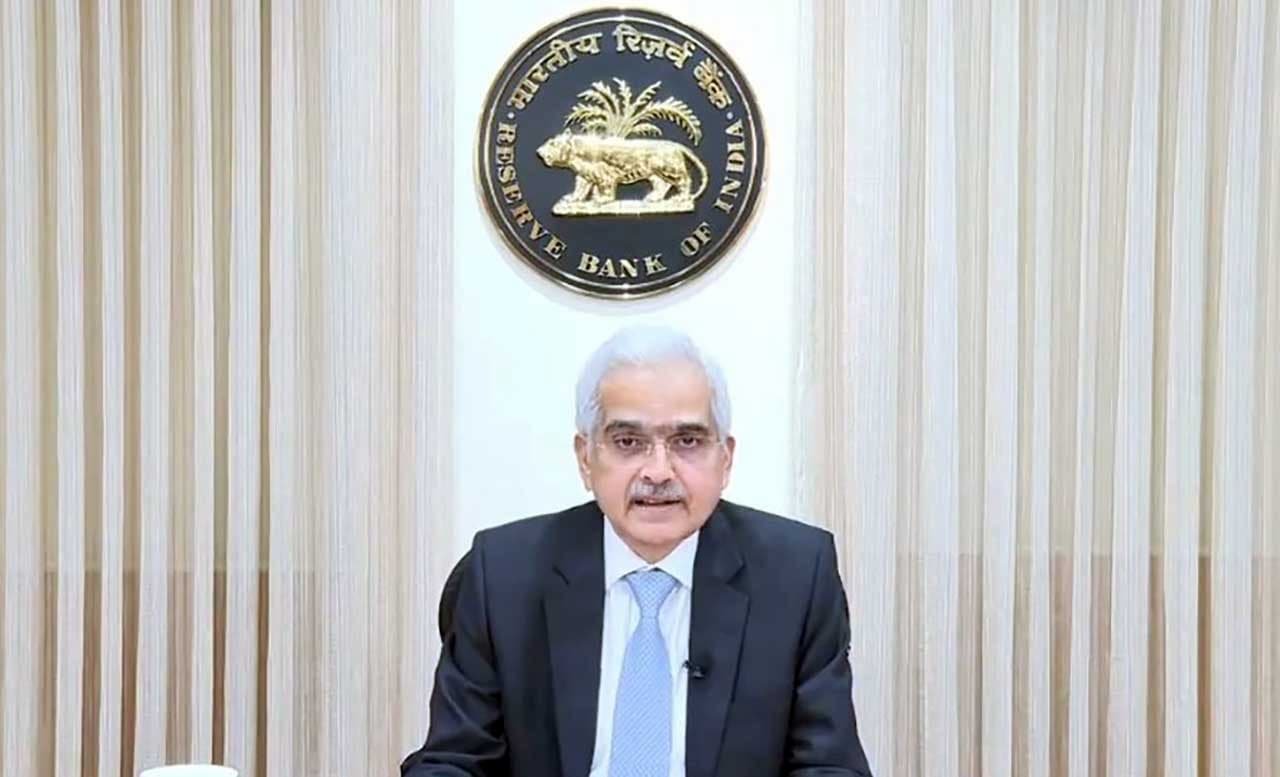
RBI Leaves Repo Rate Unchanged to Ensure Price Stability With Growth

repo rate, rbi, reserve bank of india, shaktikanta das, finance
RBI Leaves Repo Rate Unchanged to Ensure Price Stability With Growth 19

The RBI on Thursday kept the key policy repo rate unchanged at 6.5 per cent for a ninth consecutive meeting as it continued to maintain a balance between accelerating economic growth and keeping inflation under control.

RBI Governor Shaktikanta Das said the Monetary Policy Committee has decided by a 4:2 majority to keep the repo rate unchanged as inflation has risen above 5 per cent and is still above the targeted level of 4 per cent.

He said that inflation after having eased to 4.8 per cent in April and May has risen to 5.1 per cent in June on the back of “stubbornly” high food prices.

“Without price stability, growth cannot be sustained so we have decided to continue with the disinflationary stance,” Das explained.

However, the RBI Governor said that the country’s inflation rate is expected to come down in the third quarter of the current financial year.

He also said that domestic growth is resilient, supported by steady urban consumption. The MPC determined that it is crucial for monetary policy to remain consistent while closely monitoring inflation. The committee emphasized maintaining a primary focus on inflation to support sustained economic growth.

Das also said there “is a convergence” between the RBI monetary policy decision and market expectations.

The RBI has decided to stick to the “withdrawal of accommodation” policy stance. Monetary policy is considered to be “accommodative” when it aims to make more money available in the banking system to spur economic growth and create more jobs.

The RBI Governor also said that inflation is receding gradually across economies, while medium-term global growth faces significant challenges. Despite this, domestic economic activity remains resilient, with manufacturing gaining traction due to improving demand.

The RBI had last changed rates in February 2023, when the repo rate was hiked to 6.5 per cent. The RBI raised rates by 2.5 per cent between May 2022 and February 2023 after which they have been kept on hold to support economic growth despite inflationary pressures in the past.

The repo rate is the interest rate at which the RBI gives short-term loans to banks to enable them to meet their liquidity requirements. This in turn has an impact on the cost of loans that banks extend to corporates and consumers.

A cut in interest rates results in more investment and consumption expenditure which spurs economic growth. However, the increased expenditure also pushes up the inflation rate as the aggregate demand for goods and services goes up.

The country’s annual retail inflation eased to 4.83 per cent in April but is still above the RBI’s medium-term target rate of 4 per cent.

The fact that the economy has clocked a robust growth rate of 8.2 per cent for 2023-24 leaves the RBI with headroom to put off an interest rate cut until inflation comes down to its targeted level, according to economists.