Home Blog Page 151

RBI Leaves Repo Rate Unchanged to Ensure Price Stability With Growth

repo rate, rbi, reserve bank of india, shaktikanta das, finance
RBI Leaves Repo Rate Unchanged to Ensure Price Stability With Growth 2

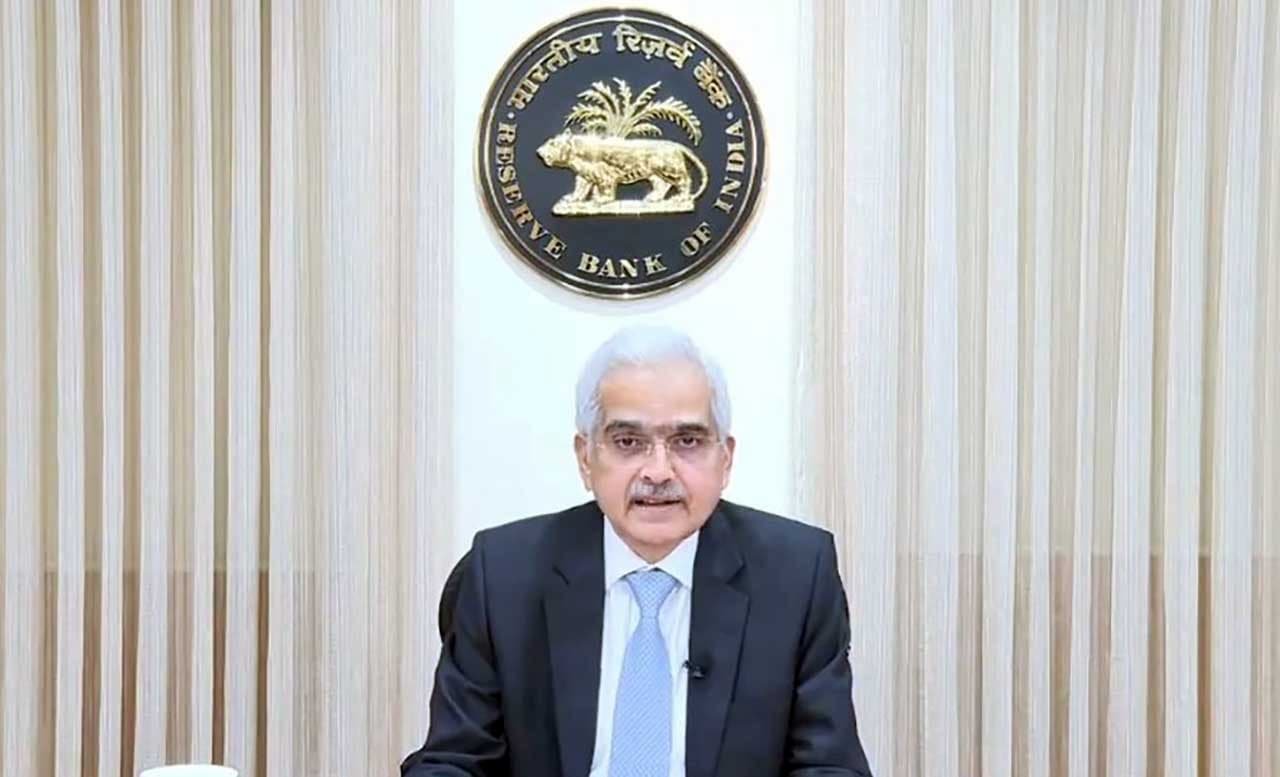
The RBI on Thursday kept the key policy repo rate unchanged at 6.5 per cent for a ninth consecutive meeting as it continued to maintain a balance between accelerating economic growth and keeping inflation under control.

RBI Governor Shaktikanta Das said the Monetary Policy Committee has decided by a 4:2 majority to keep the repo rate unchanged as inflation has risen above 5 per cent and is still above the targeted level of 4 per cent.

He said that inflation after having eased to 4.8 per cent in April and May has risen to 5.1 per cent in June on the back of “stubbornly” high food prices.

“Without price stability, growth cannot be sustained so we have decided to continue with the disinflationary stance,” Das explained.

However, the RBI Governor said that the country’s inflation rate is expected to come down in the third quarter of the current financial year.

He also said that domestic growth is resilient, supported by steady urban consumption. The MPC determined that it is crucial for monetary policy to remain consistent while closely monitoring inflation. The committee emphasized maintaining a primary focus on inflation to support sustained economic growth.

Das also said there “is a convergence” between the RBI monetary policy decision and market expectations.

The RBI has decided to stick to the “withdrawal of accommodation” policy stance. Monetary policy is considered to be “accommodative” when it aims to make more money available in the banking system to spur economic growth and create more jobs.

The RBI Governor also said that inflation is receding gradually across economies, while medium-term global growth faces significant challenges. Despite this, domestic economic activity remains resilient, with manufacturing gaining traction due to improving demand.

The RBI had last changed rates in February 2023, when the repo rate was hiked to 6.5 per cent. The RBI raised rates by 2.5 per cent between May 2022 and February 2023 after which they have been kept on hold to support economic growth despite inflationary pressures in the past.

The repo rate is the interest rate at which the RBI gives short-term loans to banks to enable them to meet their liquidity requirements. This in turn has an impact on the cost of loans that banks extend to corporates and consumers.

A cut in interest rates results in more investment and consumption expenditure which spurs economic growth. However, the increased expenditure also pushes up the inflation rate as the aggregate demand for goods and services goes up.

The country’s annual retail inflation eased to 4.83 per cent in April but is still above the RBI’s medium-term target rate of 4 per cent.

The fact that the economy has clocked a robust growth rate of 8.2 per cent for 2023-24 leaves the RBI with headroom to put off an interest rate cut until inflation comes down to its targeted level, according to economists.

Clearing Time for Cheques to Be Cut From 2 Days to a Few Hours: RBI Chief Das

indian banks, cheques, rbi, reserve bank of india, rbi governor, shaktikanta das, das
Clearing Time for Cheques to Be Cut From 2 Days to a Few Hours: RBI Chief Das 4

The RBI aims to reduce the clearing time required for bank cheques to a few hours as part of a major step to facilitate the ease of doing business in the country, RBI Governor Shaktikanta Das said on Thursday.

At present, cheque clearing through the Cheque Truncation System (CTS) operates in a batch processing mode and has a clearing cycle of up to two working days. It is proposed to reduce the clearing cycle by introducing continuous clearing with ‘on-realisation-settlement’ in CTS, Das explained.

“This means that cheques will be cleared within a few hours on the day of presentation. This will speed up cheque payments and benefit both the payer and the payee,” the RBI chief added.

Cheque truncation entails the process of replacing the flow of the physical cheque issued by a drawer from the presenting bank to the paying bank branch. Instead of the physical cheque being sent, an electronic image of the cheque is transmitted to the paying branch through the clearing house, which conveys the relevant information such as the MICR band, date of presentation and the presenting bank.

Cheque truncation thus obviates the need to move the physical instruments across bank branches, other than in exceptional circumstances for clearing purposes. This effectively eliminates the associated cost of movement of the physical cheques, reduces the time required for their collection and expedites cheque processing.

CTS enables quick and cheap realisation of funds to customers as compared to traditional methods that entail physical movement. Under grid-based CTS clearing, all cheques drawn on bank branches falling within the jurisdiction of the grid are treated and cleared as local cheques. No outstation cheque collection charges are to be levied if the collecting bank and the paying bank are located within the jurisdiction of the same CTS grid even though they are located in different cities.

Bangladesh Protest: Hindus in Turmoil Due to Brutal Violence Against Them

bangladesh, hindu attack, hindu, sheikh hasina, bangladesh crisis, bangladesh protest,
Bangladesh Protest: Hindus in Turmoil Due to Brutal Violence Against Them 6

The protests began as a movement against civil service job quotas but quickly escalated when Prime Minister Sheikh Hasina used the term “Razakar” during a press conference. This remark angered the protesters, who intensified their agitation, eventually turning it into a communal conflict with growing public participation. Hindus, particularly those of Indian descent who largely supported Sheikh Hasina, became specific targets, as protesters sought to instill fear among them. The situation in Bangladesh has grown dangerously volatile, with widespread riots and protests resulting in substantial violence.

After weeks of demonstrations and a severe government crackdown that led to over 300 deaths and thousands of injuries, Sheikh Hasina resigned and fled the country. The Hindu community, which comprises about 8% of Bangladesh’s population, has faced severe violence and persecution. Historically, the Hindu population in Bangladesh has been declining due to religious persecution and migration; it stood at 22% in 1951.

An interim government is now forming, with the promise of a peaceful transition and a thorough investigation into the violence and human rights abuses. Numerous Hindu homes and temples have been vandalized and set on fire. A journalist friend of mine in Bangladesh described the mob lynchings as terrifying. In Dhaka, protesters burned down the Indira Gandhi Cultural Centre and the Bangabandhu Memorial Museum, highlighting the intensity of the communal violence. The clashes have resulted in numerous casualties and displacements, with over 100 reported deaths. Prominent Hindu figures, such as Councillor Haradhan Roy, have been lynched, and widespread fear of further attacks and displacements grips the Hindu community. The rise of hardline Islamist groups like Jamaat-e-Islami has heightened these fears among minorities.

The plight of Hindus in Bangladesh has worsened amid the recent political unrest. During the riots, Hindu homes, temples, and businesses were systematically targeted. Incidents include the burning of the ISKCON temple in Meherpur and the destruction of the Indira Gandhi Cultural Centre and the Bangabandhu Memorial Museum in Dhaka. Many Hindus have been killed or injured, and there have been reports of lynchings, including that of Councillor Haradhan Roy. The escalating violence has forced many Hindus to flee their homes. Fears of further attacks and displacements evoke memories of past communal violence during the Liberation War and other periods of unrest. The Hindu community has been appealing for protection and justice, emphasizing their vulnerability in the current chaotic environment.

The violence against Hindus has drawn international attention, particularly from India. The instability threatens regional dynamics, with potential implications for Bangladesh-India relations. Indian officials have expressed deep concern over the safety of Hindus in Bangladesh, warning of a possible influx of Hindu refugees into India if the situation continues to deteriorate. Many Bangladeshi migrants may seek refuge in Kolkata due to linguistic and cultural similarities.

In response to the ongoing crisis, Bangladesh’s interim government, led by President Mohammad Shahabuddin and Nobel Laureate Muhammad Yunus, aims to restore order and address grievances. However, the potential release of former Prime Minister Khaleda Zia and the involvement of hardline Islamist groups like Jamaat-e-Islami complicate prospects for a peaceful resolution and the protection of minority rights. The Hindu community in Bangladesh faces a precarious future, with urgent calls for international intervention and support to ensure their safety and rights amid the country’s political and social turmoil.

Sheikh Hasina and Khaleda Zia: Two Begums of Bangladesh and Their Bloody Enmity

battle of begums, sheikh hasina, hasina, bangladesh, bangla, khaleda zia, begums, sheikh mujibur, hasina
Sheikh Hasina and Khaleda Zia: Two Begums of Bangladesh and Their Bloody Enmity 8

In politics, no one is anyone’s own. Conspiracy, bloodshed, and revenge are common here. Since Bangladesh became independent, two women ruled the country alternately for a long time, maintaining a fierce rivalry. Khaleda Zia, 78, was sentenced to 17 years in prison for graft in 2018 under Hasina’s rule. Khaleda Zia is the archrival of Hasina. The animosity between Zia and Hasina is referred to in Bangladesh as the “Battle of Begums.” Begum means a powerful woman. Their grudge has its background in the murder of Hasina’s father—the country’s founding leader, Sheikh Mujibur Rahman—along with her mother, three brothers, and several other relatives in a 1975 military rebellion.

Khaleda Zia has three different dates of birth: one on her birth certificate, one on her marriage certificate, and one on her passport. She decided to celebrate her birthday on August 15. Born in 1945 in Bengal’s Jalpaiguri, she is the chief of the main opposition party, the Bangladesh Nationalist Party (BNP). Her political career began after the assassination of her husband, Ziaur Rahman, who was President of Bangladesh from 1977 to 1981 and formed the BNP in 1978. Khaleda suspects Sheikh Hasina’s involvement in her husband’s killing, while Hasina believes there was no mastermind behind Khaleda’s husband’s assassination.

Ziaur Rahman was a Bangladeshi military officer and politician who served as President of Bangladesh from 1977 until his assassination. He was the founder of the BNP and served as its chairman until his death. He previously served as the third chief of army staff from 1975 to 1978, with a minor break. In 1991, Khaleda Zia became the first woman Prime Minister of Bangladesh, making her the second female prime minister in the Muslim world after Pakistan’s Benazir Bhutto. She served as prime minister again from 2001 to 2006. The 2007 elections were postponed due to political violence and bickering, leading to a military takeover of the caretaker government. During this interim rule, Zia and her two sons faced corruption charges.

Ziaur Rahman’s death created divided opinions on his legacy in Bangladeshi politics. Awami League supporters malign him for alleged connections to Mujib’s assassination and debatable actions during his presidency.

Khaleda lost to Hasina in the 1996 elections but returned to power five years later. This rivalry between Hasina and Khaleda never settled. Khaleda’s government and its Islamic allies were widely blamed for a 2004 rally where Hasina was addressing with grenades. Hasina survived, but over 20 people were killed and more than 500 were injured. Years later, Khaleda’s eldest son was tried in absentia and sentenced to life for the attack. This incident made the two Begums arch-rivals forever.

Sheikh Hasina Wazed is a Bangladeshi politician who served as the tenth and twelfth prime minister of Bangladesh from June 1996 to July 2001 and again from January 2009 to August 2024. She is the daughter of Sheikh Mujibur Rahman, the founding father and first president of Bangladesh. Having served for a combined total of over 20 years, she is the longest-serving prime minister in the history of Bangladesh. Her presidency ended in self-imposed exile following a series of violent protests in 2024.

Bangladesh President Mohammed Shahabuddin ordered the immediate release of former Prime Minister Khaleda Zia, who has been imprisoned since 2018. Sheikh Hasina has survived a total of 19 assassination attempts during her political career. She suffers from a hearing impairment as a result of injuries sustained during the 2004 grenade attack. She and her children were given lifelong protection by the government of Bangladesh through the Special Security Force. Since Hasina’s rise to power in 2009, Khaleda has faced numerous criminal charges and imprisonment. She has retreated from public life and left her exiled eldest son to lead her political movement as an acting leader. Over the years, Sheikh Hasina and Khaleda Zia have had a long-standing feud in which both accused each other of various charges.

Now that the BNP is calling the shots, it has been claimed that all the cases against Zia were false and made up to keep her away from active politics. Meanwhile, Hasina’s party has denied all the claims.

Sheikh Hasina, a long-standing leader, suddenly left Bangladesh during violent protests. General Waker-Uz-Zaman informed Hasina’s office that his soldiers could not enforce the lockdown she had ordered. An Indian official briefed on the situation suggested that she leave the country for her own safety. Gradually, Hasina lost the support of the army. Sheikh Hasina resigned from her position as Prime Minister and fled the country, marking the end of her 15-year rule.

Recent Developments: The Exile of Hasina and Release of Khaleda

Meanwhile, Bangladesh President Mohammed Shahabuddin announced the release of jailed opposition leader and former Prime Minister Khaleda Zia. The decision to release Khaleda Zia was made during a meeting with opposition party members. Once Hasina left the country, Muhammad Yunus called for calm and urged people to use the opportunity to build a better nation. The caged Begum is free now, and the Begum who aggressively ruled Bangladesh had to quit the nation. Bangladesh’s Nobel laureate Muhammad Yunus will lead an interim government after mass protests forced longtime prime minister Sheikh Hasina to flee. The appointment came quickly after student leaders called on the 84-year-old Yunus to lead. The decision was made in a meeting with President Mohammed Shahabuddin, the heads of the army, navy, and air force, and student leaders.

Hamas Power Centre Back in Gaza After Yahya Sinwar Announced as Political Head

hamas, yahya sinwar, palestine
Hamas Power Centre Back in Gaza After Yahya Sinwar Announced as Political Head 10

After Hamas announced Yahya Sinwar, the military head of the organisation, as its political head, the power centre of the militant organisation is to shift to Gaza in Palestine.

Yahya Sinwar is replacing Ismail Hanieyh, the political head of Hamas who was assassinated in Tehran allegedly by Israel on July 31.

Haniyeh and his predecessor Khalid Mashal had operated out of Doha, Qatar, while they were heading Hamas. However, Sinwar — considered by Israel as the mastermind of the October 7, 2023 killing spree — is believed to be living in the network of tunnels of the Hamas near either Rafah or Khan Younis region of southern Gaza.

The spokesperson of Israel Defense Forces (IDF), Rear Admiral Daniel Hagari, in a press statement on Tuesday night after Hamas announced Sinwar as its political head, said: “Yahya Sinwar is a terrorist, who is responsible for the most brutal terrorist attack in history — October 7. There is only one place for Yahya Sinwar, and it is beside Mohammed Deif and the rest of the October 7 terrorists. That is the only place we’re preparing and intending for him.”

The Defence Minister of Israel Yoav Gallant had also publicly said that Israel would hunt down Yahya Sinwar and kill him.

Sinwar joined Hamas in 1987 when it was founded by Sheikh Ahmad Yassin, and had served 27 years in Israeli prisons over four jail terms. He is well-versed in Hebrew and has always been considered the most ruthless of Hamas leaders.

With Yahya Sinwar becoming the most powerful leader of Hamas, it has to be seen how the indirect peace talks being carried out at the behest of the United States, Qatar and Egypt would move forward.

According to Israel, of the 251 hostages captured by Hamas on October 7, 2023, after the massacre and mayhem, 111 are still under the custody of Hamas. This includes 39 dead and Yahya Sinwar is believed to be hiding in the tunnels surrounded by these hostages.

CBI Takes Over Probe in Delhi Three IAS Aspirants Deaths Case

delhi coaching centre, issue, lok sabha, parliament, rahul gandhi, UPSC, UPSC coaching centre
CBI Takes Over Probe in Delhi Three IAS Aspirants Deaths Case 12

The CBI has taken control of the investigation into the tragic deaths of three civil services aspirants at a Delhi coaching center, officials announced on Wednesday.

Shreya Yadav (25), Tanya Soni (25), and Nevin Delvin (24) drowned when water surged into the basement of Rau’s IAS Study Circle in Old Rajinder Nagar during heavy rains on July 27. The Central Bureau of Investigation (CBI) took over the case following a Delhi High Court directive.

The High Court criticized Delhi Police and the Municipal Corporation of Delhi (MCD) for their handling of the incident, questioning their failure to evacuate the students. The court inquired if the exits were blocked or if narrow staircases hindered escape. It also instructed the Central Vigilance Commission (CVC) to assign a senior officer to supervise the CBI’s investigation into the criminal case.

Identity of Champions, They Give Answer on Field: Rahul Gandhi After Grappler Vinesh Phogat Enters Olympic Finals

vinesh phogat, phogat, rahul gandhi, olympic, wrestler
Identity of Champions, They Give Answer on Field: Rahul Gandhi After Grappler Vinesh Phogat Enters Olympic Finals 14

Leader of Opposition in the Lok Sabha Rahul Gandhi on Tuesday hailed Vinesh Phogat for becoming the first Indian woman wrestler to reach the final of the Olympic Games and said the identity of champions is that they give their answer on the field.

Phogat (50kg) became the first Indian woman wrestler to reach the final of the Olympic Games with a convincing 5-0 win over Cuba’s Yusneylis Guzman Lopez on Tuesday. With the semifinal win, Vinesh guaranteed herself at least a silver medal.

In a post in Hindi on X, Gandhi said, “After defeating three top wrestlers of the world in a single day, the whole country is emotional along with Vinesh.” “Those who refused to acknowledge the struggle of Vinesh and her friends, even raised questions on their intentions and abilities, all of them have got an answer,” the former Congress chief said.

“Today, the entire system of power which made her shed tears of blood lay shattered in front of the brave daughter of India,” Gandhi said, adding this is the identity of champions, they give their answer on the field.

The Congress leader urged her to go for the gold medal and said, “Best wishes Vinesh. The echo of your success in Paris is being heard clearly in Delhi.” His post had an apparent reference to Vinesh Phogat, Sakshi Malik and some other grapplers’ long sit-in protest in Delhi early last year against the alleged sexual harassment of women wrestlers by former Wrestling Federation of India chief Brij Bhushan Sharan Singh.

Congress general secretary Priyanka Gandhi Vadra, in a post on her WhatsApp channel, said Vinesh Phogat has created history.

“She reached the finals by winning three important matches in a single day. My sister, we all are eagerly waiting for the medal. Your every move on the field is thrilling us all. The prayers of crores of Indians are with you. Jai Hind! Keep fighting! Keep moving forward!” she said.

Excise Policy Cases: SC Reserves Order on AAP Leader Manish Sisodia’s Bail Pleas

manish sisodia, manish, aap, aam aadmi party
Excise Policy Cases: SC Reserves Order on AAP Leader Manish Sisodia's Bail Pleas 16

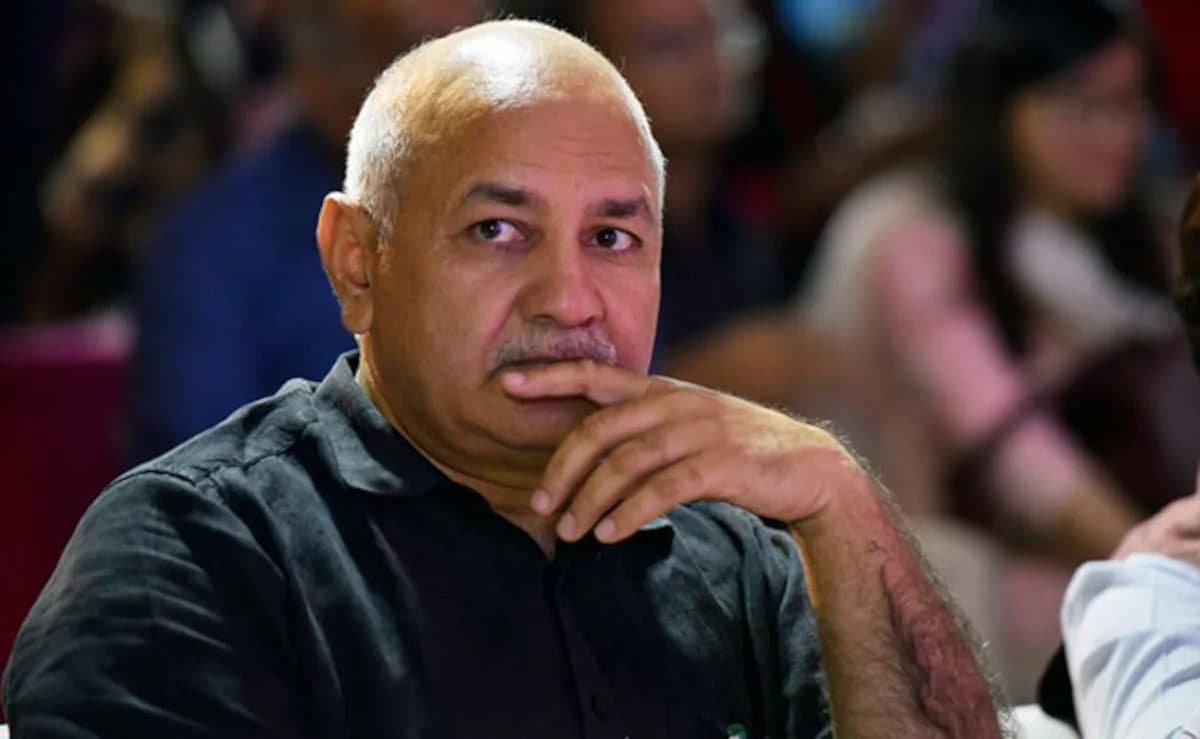
The Supreme Court on Tuesday reserved its order on pleas filed by AAP leader Manish Sisodia seeking bail in corruption and money laundering cases linked to the alleged Delhi excise policy scam.

A bench of Justices B R Gavai and K V Viswanathan heard submissions advanced by senior advocate Abhishek Singhvi, who appeared for Sisodia, and Additional Solicitor General S V Raju, who represented the Central Bureau of Investigation (CBI) and the Enforcement Directorate (ED).

Sisodia was arrested by the CBI on February 26, 2023, for his alleged involvement in irregularities in the formulation and implementation of the now-scrapped Delhi excise policy 2021-22. The ED arrested him in the money laundering case stemming from the CBI FIR on March 9, 2023.

He resigned from the Delhi cabinet on February 28, 2023.

Sisodia, a former deputy chief minister of Delhi, has sought bail contending that he has been in custody for 17 months and the trial against him has not yet started.

The ED and the CBI have opposed his bail pleas.

The ED has claimed before the apex court that it has documents to show Sisodia’s “neck-deep involvement” in the alleged scam.

80 Students Fall Ill Due to Food Poisoning in Uttar Pradesh School

uttar pradesh, students, food poisoning, food poison, up
80 Students Fall Ill Due to Food Poisoning in Uttar Pradesh School 18

As many as 80 students from the Pandit Deendayal Upadhyay Ashram Method Inter College in Mehroona village fell ill due to food poisoning experiencing stomach pain, vomiting and diarrhoea, officials said.

The incident took place after the children had dinner on Sunday night, they said on Monday.

District Magistrate Divya Mittal told the media that the students are in stable condition while an investigation into the incident is underway.

According to an official statement released on Monday evening, some students at the government-run school were reported to have fallen ill due to food poisoning.

Two students, Akash and Nitesh, are receiving treatment at Maharishi Devraha Baba Medical College.

The remaining students received primary treatment from a team of doctors led by the Chief Medical Officer (CMO) at the school itself.

All students are safe, and a medical team remains at the school as a precaution, the statement said.

District Magistrate Mittal and Superintendent of Police Sankalp Sharma visited the medical college to check on the affected students.

Mittal told reporters that the student’s condition was stable and that action would be taken against those found responsible.

In an official statement, Assistant Commissioner of Food Safety Vinay Kumar Sahay said that a team from the Food Safety and Drug Administration inspected the inter-college’s kitchen and storage area.

They collected seven samples, including prepared bread, lentils, vegetables, chilli powder, chickpeas, mustard oil, and mixed pickles.

The samples were collected in the presence of the school’s director, Rajkumar Gupta, and a notice regarding storage and kitchen deficiencies is being issued.

The samples have been sent to a food laboratory for testing, and further action will be taken based on the results, Sahay added.

Sources revealed that the government-run Ashram school has 326 enrolled students from classes six to 12.

After dinner on Sunday night, some students began experiencing vomiting, diarrhoea, stomach pain, dizziness, and chills.

By Monday morning, the number of affected students had risen to around 80.

The affected students were then taken to a hospital.

Sub-Divisional Magistrate (SDM) Vipin Kumar Dwivedi and Food Inspector Vipin Kumar Sahay arrived at the scene.

Sahay noted that most of the students suffered from food poisoning, while some were affected by infectious diseases.

The Health department team conducted an investigation and found that all students are now in stable condition.

Sheikh Hasina To Stay In India Until UK Grants Asylum: Report

sheikh hasina, india, bangladesh, asylum, uk
Sheikh Hasina To Stay In India Until UK Grants Asylum: Report 20

The Indian government has granted former Bangladesh Prime Minister Sheikh Hasina an interim stay following the collapse of her government in the South Asian country on Monday, media reports said.

During this period, India will offer comprehensive logistical support as Hasina pursues asylum in the UK, the Daily Sun reported.

Her stay in India is approved only temporarily, pending her relocation to Britain.

Hasina, who resigned on Monday following unprecedented anti-government protests, is on her way to London through India.

As of now, there has been no confirmation from the UK government regarding the grant of political asylum for the former Bangladesh Prime Minister, Daily Sun reported.

Hasina is currently seeking asylum in the UK, with her sister Rehana, a UK citizen, accompanying her.

Rehana, the younger daughter of Sheikh Mujibur Rahman, the “Father of Bangladesh,” and Sheikh Fazilatun Necha Mujib, is also the younger sister of Sheikh Hasina. Her daughter, Tulip Siddiq, serves as a member of the British Parliament representing the Labour Party.

Meanwhile, Indian government sources said that New Delhi is closely following the fast-paced developments in Dhaka.

In Dhaka, Bangladesh Army Chief General Waqar-uz-Zaman said Hasina has resigned and an interim government is taking over the responsibilities.

“I’m taking all responsibility (of the country). Please cooperate,” he said in a televised address.

The Army Chief said he had met political leaders and told them the Army would take over responsibility for law and order.

More than 100 people have been killed in the protests against the Hasina government over the last two days.