Delhi Court Denies Bail to Umar Khalid in 2020 Riots Case 2
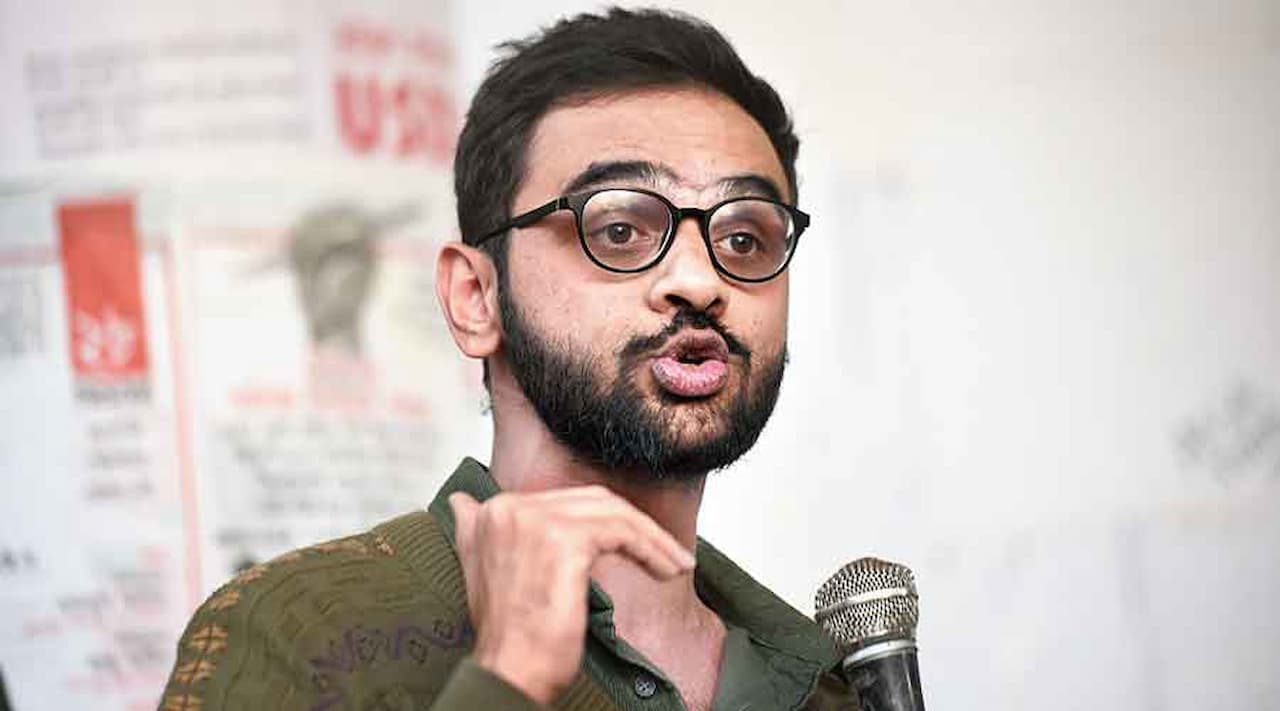
A Delhi court on Tuesday dismissed the bail plea of former JNU student Umar Khalid, who is accused of the alleged larger conspiracy behind the 2020 northeast Delhi communal riots.
Khalid has been booked under the stringent Unlawful Activities (Prevention) Act (UAPA).
Additional Sessions Judge Sameer Bajpai rejected the bail plea.
Kejriwal Seeks Bail Extension for Critical Health Tests Amid Legal Battle 4
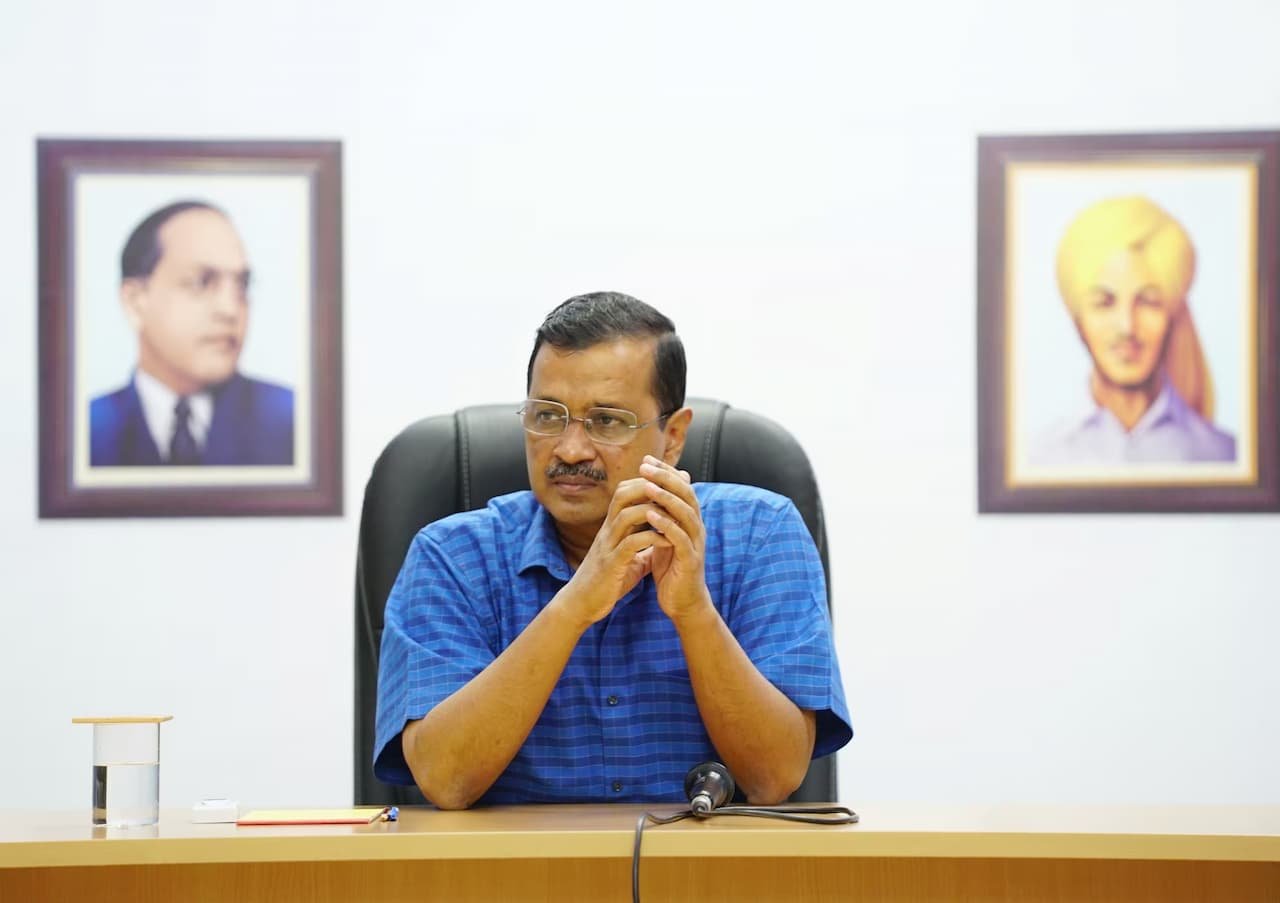
Delhi Chief Minister Arvind Kejriwal has sought extension of his interim bail by seven days from the Supreme Court to undergo a host of medical tests, including a PET-CT scan in view of his ”sudden and unexplained weight loss, coupled with high ketone levels”, which are indicatives of kidney, serious cardiac ailments and even cancer.
Kejriwal, in his plea filed on May 26, said he will surrender back to jail on June 9, instead of June 2, the scheduled date for his return to prison.
”The appellant prays for an extension of his interim bail by a week, during which the Appellant can get the prescribed tests done and obtain results of the same. The Appellant will get all these tests done in the working week from June 3 (Monday) to June 7 (Friday) and then surrender on the weekend, i.e. June 9,” the fresh plea, according to the sources, said.
The top court had on May 10 granted 21-day interim bail to the chief minister, who was arrested in a money laundering case linked to the excise policy ‘scam’, to enable him to campaign for the Lok Sabha polls.
It had directed that Kejriwal shall surrender on June 2, a day after the last phase of the seven-phase poll gets over.
The fresh plea, which is likely to be taken up in the coming days by a vacation bench, said during the incarceration from March 21 to May 10, the chief minister suffered a lot of health-related complications which are also ”partly attributable to the negligent and callous behaviour of the jail authorities”.
Kejriwal lost around six to seven kg of weight in the jail and has not been able to regain even after his release and renewing his earlier lifestyle to the extent possible, it said.
”In the meantime, recent test reports confirm that the Appellant has also developed an unusually high blood glucose level as well as high ketone levels in urine, which indicate that in addition to increased blood sugar level, the appellant may have also developed kidney related complications and kidney damage,” it said.
Referring to his recent health check up at his residence by a senior physician of a private hospital, the plea said the doctor took note of Kejriwal’s health complications and increased risk indicators and prescribed a host of full body tests, which are necessary to be carried out before he surrenders.
”It is important to note that unexplained weight loss which a person is not able to regain along with the other symptoms …, can have a host of causes, including some potentially life threatening ones.
”It is on account of this that a senior physician from Max Hospital upon a detailed clinical examination of the appellant at his home on May 25, 2024 has directed a host of tests including but not limited to tests such as whole body PET-CT to rule out any malignancies and Holter Monitor Test, where the appellant will be required to wear a Holter monitor for a few days while going about his daily activities to identify any irregularities in his heart functioning,” the plea said.
The PET-CT scan shows detailed pictures of organs and tissues.
These tests are to be done in a particular sequence and would require about five-seven days, it said, adding ”sudden and unexplained weight loss, coupled with high ketone levels could be indicative of kidney damage, serious cardiac ailments and even cancer”.
Early detection of these ailments is essential for preventing further progress of the disease and associated life risk and Kejriwal needed to undergo these tests, otherwise his life is at ”high risk”, it said.
While setting him free for campaigning in the remaining phases of the Lok Sabha elections after 50 days of custody in the case, the court on May 10 had barred him from visiting his office or the Delhi secretariat, and signing official files unless absolutely necessary for obtaining the lieutenant governor’s approval.
While imposing a strong of bail conditions on Kejriwal, the apex court had directed him to furnish bail bonds of Rs 50,000 with one surety of the like amount to the satisfaction of the jail superintendent.
A bench of justices Sanjiv Khanna and Dipankar Datta had rejected the argument of the Enforcement Directorate (ED) counsel that enlarging Kejriwal on interim bail to campaign in the elections will be without a precedent.
Later on May 17, the top court reserved its verdict on the main plea of Kejriwal seeking to declare his arrest as illegal.
The Delhi High Court, on March 21, had refused to grant him protection from arrest on his petition challenging summonses issued to him. The ED arrested Kejriwal shortly after that.
The ED, on October 30, had sent first summons to Kejriwal in the money laundering case for appearance on November 2. Several summons were also issued subsequently.
The matter relates to the alleged corruption and money laundering in the formulation and execution of the Delhi government’s now-scrapped excise policy for 2021-22.
Roadside Trees Not To Be Cut Because They Obstruct Commercial Activities: Kerala HC To Govt 6
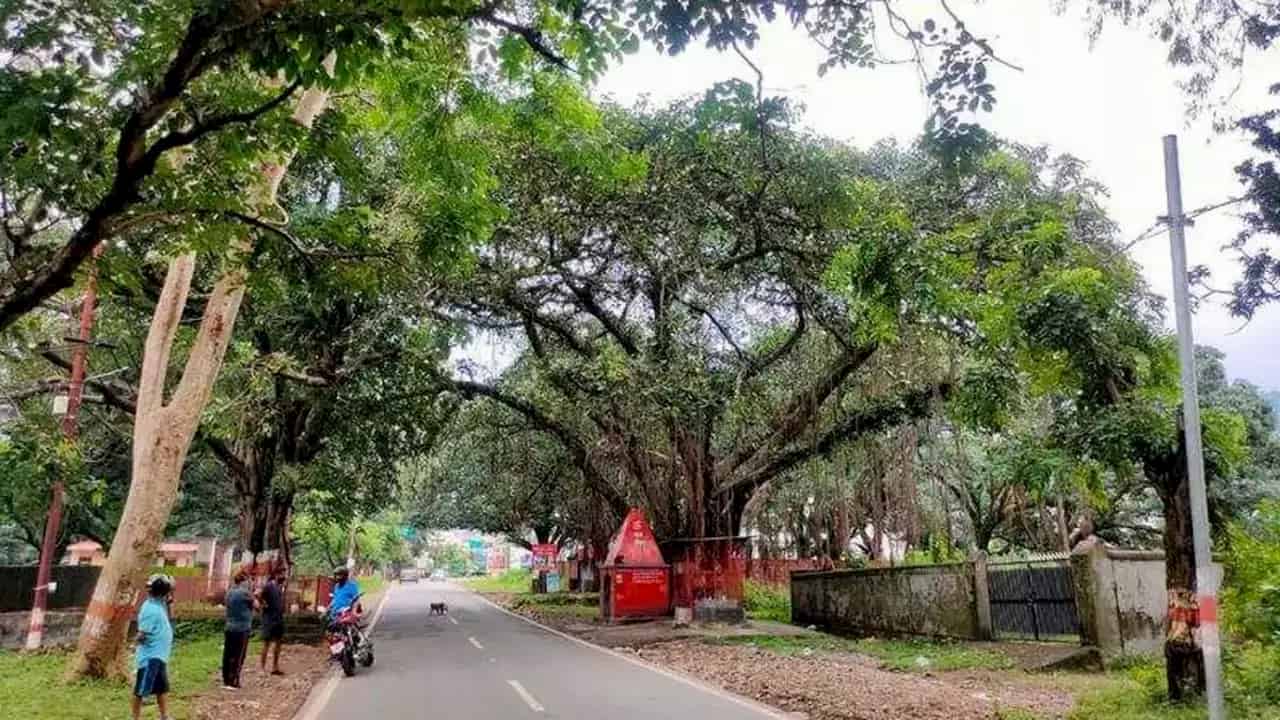
The Kerala High Court has directed the state government to ensure no trees on roadsides are felled merely because they obstruct commercial activities.
The High Court said that trees can be cut and removed only if they are in damaged condition and as a result pose a danger to public safety.
A decision regarding that should be taken by a committee constituted in accordance with a 2010 government order regulating the felling and disposal of trees growing on government lands, Justice P V Kunhikrishnan said.
”Without such a decision, no trees on the roadside of the State shall be cut and removed by any authorities. The Chief Secretary of the State shall issue necessary orders to that effect.
”…the State of Kerala should see that no request to cut and remove trees on the roadsides of the State can be permitted without sufficient reasons. Trees give cool shades, pure oxygen and shelter to birds and animals,” the court said in its order of May 22.
The court’s ruling came while dismissing a plea challenging the Forest department’s decision to reject an application to fell trees blocking the view to a commercial property built adjacent to the Palakkad-Ponnani road.
The petitioners had approached the Public Works Department (PWD) for felling the trees by claiming that they posed a danger to their building as well as the public.
The PWD officials were convinced by the petitioners’ claim and had forwarded their application to the Forest Department.
However, after inspecting the area, the Assistant Conservator of Forests in Palakkad gave a report stating that the trees were not a danger to anyone, gave shelter to many birds and the local public was opposed to cutting them.
The court termed it ”surprising” that merely because some branches were hanging dangerously, the PWD recommended cutting and removing the trees itself.
It said that the state government should consider the matter seriously and take action against the officers concerned if there was any dereliction of duty from their side when they approved the petitioners’ request to cut and remove the trees.
”Even if the branches of the trees are dangerously leaning, at the maximum, the recommendation can only be to cut and remove those branches. The duty of PWD is to protect the trees standing on the roadside and not to destroy them.
”To protect a building or to protect a commercial activity of a citizen, the trees cannot be cut and removed,” the court observed.
Lok Sabha Polls: Delhi Records Early Voter Turnout Amid Heatwave and EVM Glitches 8
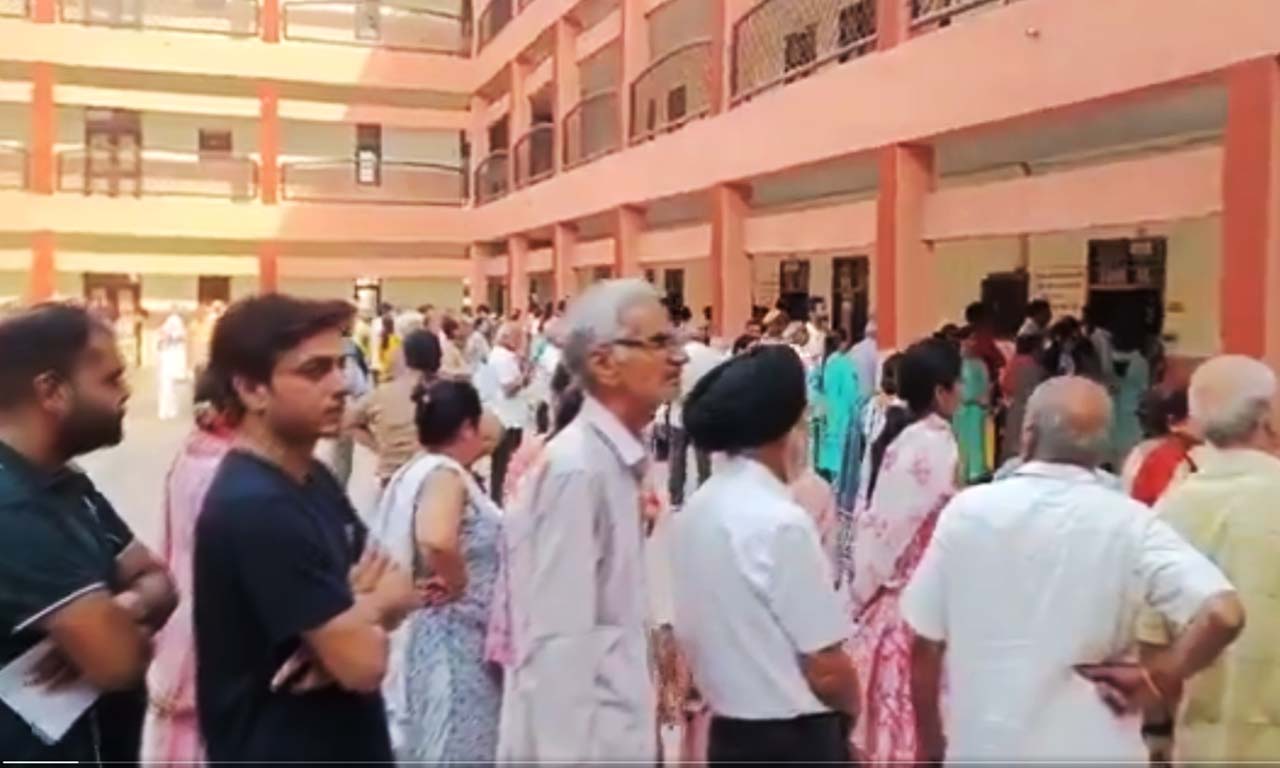
A voter turnout of 8.94 per cent was recorded till 9 am in Delhi, where polling is underway for its seven Lok Sabha constituencies on Saturday.
The Delhi Chief Electoral Officer said that at 10.15 per cent, the highest turnout was recorded in the North East Delhi constituency while New Delhi had the lowest voting percentage till 9 am at 7.04 per cent.
Poll officials said there were no reports of technical snags or delays in the commencement of voting at any polling station.
However, CPI(M) leader Brinda Karat, who had gone to cast her vote at St Thomas School in New Delhi, said she could not vote due to a snag. ”The battery of the Electronic Voting Machine (EVM) was down, that’s why I could not vote but I will come again,” she said. She also questioned the arrangements made by the Election Commission.
”It is now 9:15 am but I am being told that the battery of the machine (EVM) is down,” she said.
Union ministers S Jaishankar and Hardeep Singh Puri, Delhi Minister Atishi, outgoing East Delhi MP Gautam Gambhir, and candidates of different parties cast their votes early in the morning.
President Droupadi Murmu and Vice-President Jagdeep Dhankhar also cast their votes in the New Delhi constituency, officials said.
Delhi Chief Minister Arvind Kejriwal, in a post in Hindi on X, appealed to the people to vote and urge their family members, relatives and friends to also exercise their franchise.
”…Each vote cast by you in this great festival of democracy will be against the authoritarian mindset and strengthen democracy and the Constitution of India. Go to the polling stations and assert that there is democracy in India and democracy will remain in India through your votes,” Kejriwal said.
A ‘yellow’ warning is in place for the day and the Met Office has predicted that the mercury is likely to reach a maximum of 44 degrees Celsius.
The Delhi poll body has said that it has made arrangements for the voters to beat the scorching heat.
People were seen queuing up outside the more than 13,000 polling booths across the seven constituencies, even before the commencement of voting at 7 am.
Jaishankar, the first voter at Atal Adarsh Vidyalaya, APJ Abdul Kalam Lane, in the New Delhi constituency, told PTI Videos, ”We want that people come out in large numbers to vote because it a time to take a big decision for the country.” Puri cast his vote at Mount Carmel School, Anand Niketan, in the New Delhi constituency.
It’s a very good feeling to be able to reach the polling booth half an hour before the gates open and to participate in the world’s largest carnival and celebration of democracy, he said.
Atishi cast her vote at Nigam Pratibha Vidyalaya, Kalkaji B Block, in the South Delhi constituency. AAP Rajya Sabha MP Swati Maliwal also cast her vote.
Gambhir appealed to people to exercise their franchise after casting his vote at the Government Sarvodaya Kanya Vidyalya.
The AAP’s South Delhi candidate Sahi Ram Pahalwan, the BJP’s Chandni Chowk nominee Praveen Khandelwal and its New Delhi hopeful Bansuri Swaraj were among the early voters.
”I want to appeal to the residents of Delhi to cast their votes as it is a big festival in the country,” Pahalwan said.
Congress leader Priyanka Gandhi Vadra and Robert Vadra’s daughter, Miraya Vadra, who voted for the first time, said, ”I came all the way from college to vote. So, everyone should come out and vote.” ”My only message to the youth is to come out and vote. It is our job to make a change, so we need to come out and do it,” she said.
Her brother Raihan Vadra, a second-time voter, expressed hope that everyone will come out and vote. He cast his vote at a polling booth at Lodhi Road under the New Delhi constituency.
”It’s hot but we get this chance every five years to directly effect a change and participate in democracy. So, everyone should come out and vote,” he said.
Voting is underway peacefully with no reports of any untoward incidents.
Deputy Commissioner of Police (Central) M Harsha Vardhan said, ”It is an important task for us to conduct free and fair elections. It is a matter of great pride for everyone involved in the process.” ”We have made good arrangements. We are seeing great enthusiasm among the officials and the voters. We look forward to a day of good voter turnout and encourage everyone to vote,” he added.
A total of 1.52 crore voters — 82 lakh men, 69 lakh women and 1,228 from the third gender category — are eligible to cast their votes at more than 13,000 polling booths across the seven constituencies, officials said.
There are more than 2.52 lakh first-time voters this time.
The BJP won all seven seats in Delhi in the 2014 and the 2019 elections and is aiming for a clean sweep for the third consecutive time.
The opposition INDIA bloc partners AAP and the Congress are contesting the elections in Delhi under a four-three seat-share formula. This is the first Lok Sabha election in Delhi in which AAP and the Congress have fielded joint candidates.
Delhi Court Convicts Activist Medha Patkar in Defamation Case Filed by Delhi LG V K Saxena 10
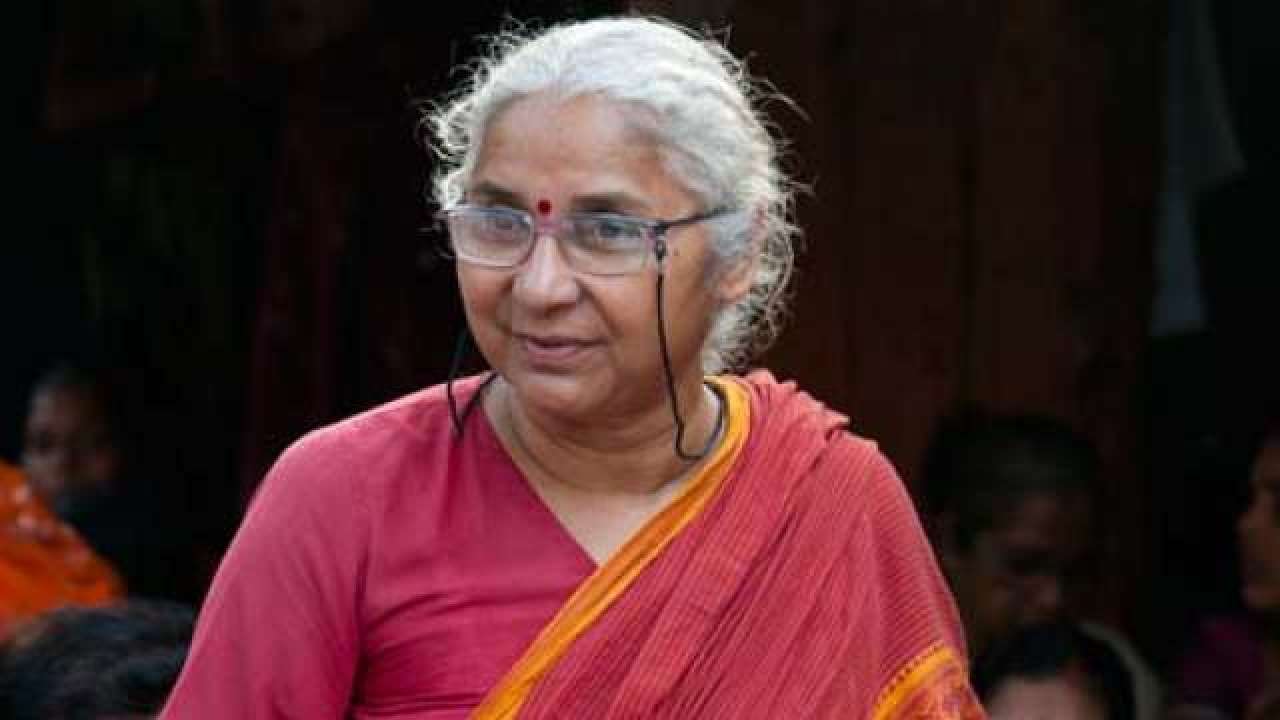
A Delhi court on Friday convicted Narmada Bachao Andolan (NBA) leader Medha Patkar in a defamation case lodged against her by V K Saxena, the incumbent lieutenant governor of the national capital.
Metropolitan Magistrate Raghav Sharma found Patkar guilty of criminal defamation.
Under the relevant law, the activist may get a jail term of two years or fine or both as the punishment.
Patkar and Saxena have been locked in a legal battle since 2000 after she filed a suit against him for publishing advertisements against her and the Narmada Bachao Andolan (NBA).
Saxena was then the chief of Ahmedabad-based NGO National Council for Civil Liberties.
Saxena had also filed two cases against her for making derogatory remarks against him on a TV channel and issuing a defamatory press statement.
Bombay HC Lifts Liquor Ban Post Election Results on June 4 12
The Bombay High Court on Friday permitted the sale of liquor in Mumbai after the announcement of Lok Sabha poll results on June 4.
A vacation bench of Justices N R Borkar and Somasekhar Sundaresan said the ban imposed by the city Collector on sale of liquor by hotels, restaurants, bars and permit rooms shall cease to have an effect upon declaration of results of elections in the city of Mumbai.
Additional government pleader Jyoti Chavan informed the bench that the Collector for Mumbai district suburban has already issued a letter modifying the earlier notification declaring June 4 as a dry day. However, no such modification was issued by the Mumbai city collector.
The bench then quipped that while people in the city suburbs can drink after declaration of results those in the city cannot.
”Let’s work it out. There has to be some parity,” the high court said. The court was hearing petitions filed by the Indian Hotel and Restaurant Association (AHAR) challenging the orders passed by the Collectors of the Mumbai city and Mumbai district suburban declaring the whole day of June 4 as a dry day.
The pleas said that the sale of liquor should be permitted once election results are declared.
As per the pleas, the petitioner association had in April approached the Mumbai city collector and the Mumbai district suburban collector requesting them to review their decision declaring the whole day of June 4 as a dry day.
However, the collectors said no such review could be done as the orders were passed pursuant to directives from the Election Commission of India (ECI). The petitions claimed that the association members pay huge amounts as license fees to the state government for carrying on business, whereas there are several illicit liquor manufacturers and bootleggers who have been manufacturing and selling illicit liquor as well as Indian Made Foreign Liquor and beer in Mumbai.
Whenever the authorised outlets for sale of liquor are closed for various reasons, such illegal businesses thrive and bootleggers make huge profits through the illegal and illicit sale of liquor, taking undue advantage of the fact that liquor is not officially available.
The pleas had sought for the Collectors’ orders to be modified to state that the establishments which sell liquor be permitted to open up for business after the declaration of results instead of the whole day.
US announces visa restriction policy, launches review of bilateral cooperation with Georgia 14
The US Secretary of State, Antony Blinken, has announced new visa restriction policy for those responsible for undermining democracy in Georgia. He also announced the launch of a comprehensive review of bilateral cooperation between the US and Georgia. In a post on X, Blinken stated, “I am announcing a new visa restriction policy for those responsible for undermining democracy in Georgia, including in connection with the Georgian Dream’s proposed “foreign influence” legislation.”
In a statement, Blinken noted that the ruling Georgian Dream party over the past few months has developed and passed “foreign influence” law that would stifle the exercise of freedoms of association and expression, stigmatise organisations that serve the people of Georgia, and impede independent media organisations working to provide people of Georgia with access to high quality information. He further said, “As Georgian citizens have voiced opposition to the law, we have seen clear indications of a campaign of intimidation and the use of violence to suppress peaceful dissent. Both the “national security law” and the repressive tactics used to quell legitimate dissent undermine Georgia’s democracy and the fundamental freedoms to which the Georgian people are entitled and run contrary to Georgia’s long-stated goal – reflected in its constitution — of Euro-Atlantic integration and strategic partnership with the United States.”
In a statement, Blinken said, “In response to these actions, the Department of State is implementing a new visa restriction policy for Georgia that will apply to individuals who are responsible for or complicit in undermining democracy in Georgia, as well as their family members. This includes individuals responsible for suppressing civil society and freedom of peaceful assembly in Georgia through a campaign of violence or intimidation.” Blinken stressed that US support for Georgia’s democracy is longstanding and foundational for the bilateral relationship. He stated that anyone who undermines democratic processes or institutions in Georgia, including in the lead-up to, during, and following Georgia’s October 2024 elections, may be found ineligible for US visas under this policy and precluded from travelling to the US. He added that immediate family members of such persons may also be subject to these restrictions.
He further said, I am also launching today a comprehensive review of bilateral cooperation between the United States and Georgia. It remains our hope that Georgia’s leaders will reconsider the draft law and take steps to move forward with their nation’s democratic and Euro-Atlantic aspirations. As we review the relationship between our two countries, we will take into account Georgia’s actions in deciding our own.” Earlier this month, Georgian Dream, the ruling party, passed the law in Parliament, and has vowed to overrule a veto that was signed by the president, Politico reported.
People of Georgia have taken to the streets in Tbilisi and around the country for weeks to protest against the foreign agents law. The bill, if enacted, requires individuals or organisations that receive 20 percent of their funding from a foreign government to register with the internal security services as “foreign agent” and as promoting the interests of a foreign power. Some groups that would fall under the category of “foreign agent” have expressed their unwillingness to register. However, they expressed fear about being a target of the police and courts that could ransack and close their operations and possibly jail people, Politico reported. The legislation is similar to Russian law introduced in 2012 that has been used to criminalise pro-democracy groups, opposition figures, journalists and news outlets, Politico reported.
European Union officials have spoken out against Georgian Dream’s pursuit of the law calling it incompatible with Georgia’s aspirations to join the bloc, according to Politico report. US lawmakers warned that passing the foreign agents law would require a fundamental shift in US relations with Georgia.
Supreme Court declines to direct ECI to publish data of votes polled per booth 16
The Supreme Court on Friday declined to pass any direction on a plea seeking the uploading of Form 17C data on the Election Commission of India website and publication of booth-wise voter turnout data. A bench of Justices Dipankar Dutta and Satish Chandra Sharma refused to grant any interim relief to petitioners and said it could not interrupt the polls.
The bench said that of the seven-phase elections, five phases are over, and the sixth phase is scheduled for Saturday. The “hands-off” approach is needed in the middle of the election process, observed the apex court while adjourning the application. The bench told the petitioner that the interim prayer raised in the present application was the same as of the petition pending before it since 2019.
“Prima facie we are not inclined to grant any interim relief since prayer A of the 2019 petition is similar to prayer B of the 2024 application. List the interim plea after (summer) vacation,” ordered the bench. The apex court clarified that it has not expressed any opinion on the merits of the case apart from the prima facie view.
The apex court was hearing an application filed by the NGO Association for Democratic Reforms (ADR) seeking disclosure of final authenticated data of voter turnout in all polling stations including the number of votes polled in the Lok Sabha Elections 2024 within 48 hours of the polling. During the hearing today, senior advocate Maninder Singh, representing the Election Commission of India (ECI), said that ADR’s application was based on “unfounded suspicions” and “false”.
Petitions like these are responsible for reducing the voter turnout because of the “continuous questioning of the process”, said Singh. He said such kind of attitude is causing damage to the public interest by always putting a question mark on the sanctity of the elections. Earlier, ECI had filed an affidavit before the top court and said that voter turnout data based on Form 17C (records of votes polled in each polling station) will cause confusion among voters as it will also include postal ballot counts.
The ECI had contended that there is no legal right that can be claimed towards publishing final authenticated data of voter turnout in all polling stations. On May 17, the Supreme Court asked ECI to file its response to the application seeking direction to immediately upload accounts of votes recorded at all polling stations after the close of polling of each phase.
The NGO ADR alleged an inordinate delay in the publication of voter turnout data for the first two phases of polling in the elections. The application, besides the delay in publishing the voter turnout details, said there was a sharp spike in figures from the initial voter turnout percentages released by the Election Commission. It sought a direction to the Election Commission to provide tabulated polling station-wise data in absolute figures of the number of votes polled as recorded, in Form 17C Part- I, after each phase of polling in the ongoing 2024 Lok Sabha elections and also a tabulation of constituency-wise figures of voter turnout in absolute numbers in the on-going 2024 Lok Sabha elections.
It further asked for uploading on the ECI website the scanned legible copies of Form 17C Part- II which contained the candidate-wise result of counting after the compilation of results of the 2024 Lok Sabha elections. The application said the voter turnout data for the first two phases of the Lok Sabha elections were published by the ECI on April 30, after 11 days of the first phase of polling held on April 19 and four days after the second phase of polling held on April 26.
It said that the data published by the ECI in its April 30 press release showed a sharp increase (by about 5-6 per cent) from the initial percentages announced by it on the polling day. The NGO pointed out the data published in the press release by the ECI on April 30, 2024 (Phase I voter turnout- 66.14 per cent and Phase II voter turnout – 66.71 per cent) when compared with the initial date of April 19, 2024, and April 26, 2024 respectively showed an increase of nearly 6 per cent in the Phase I data and increase of approximately 5.75 per cent in the Phase II data.
Lok Sabha Polls: Business tycoon Naveen Jindal to face triangular contest in Haryana's Kurukshetra 18
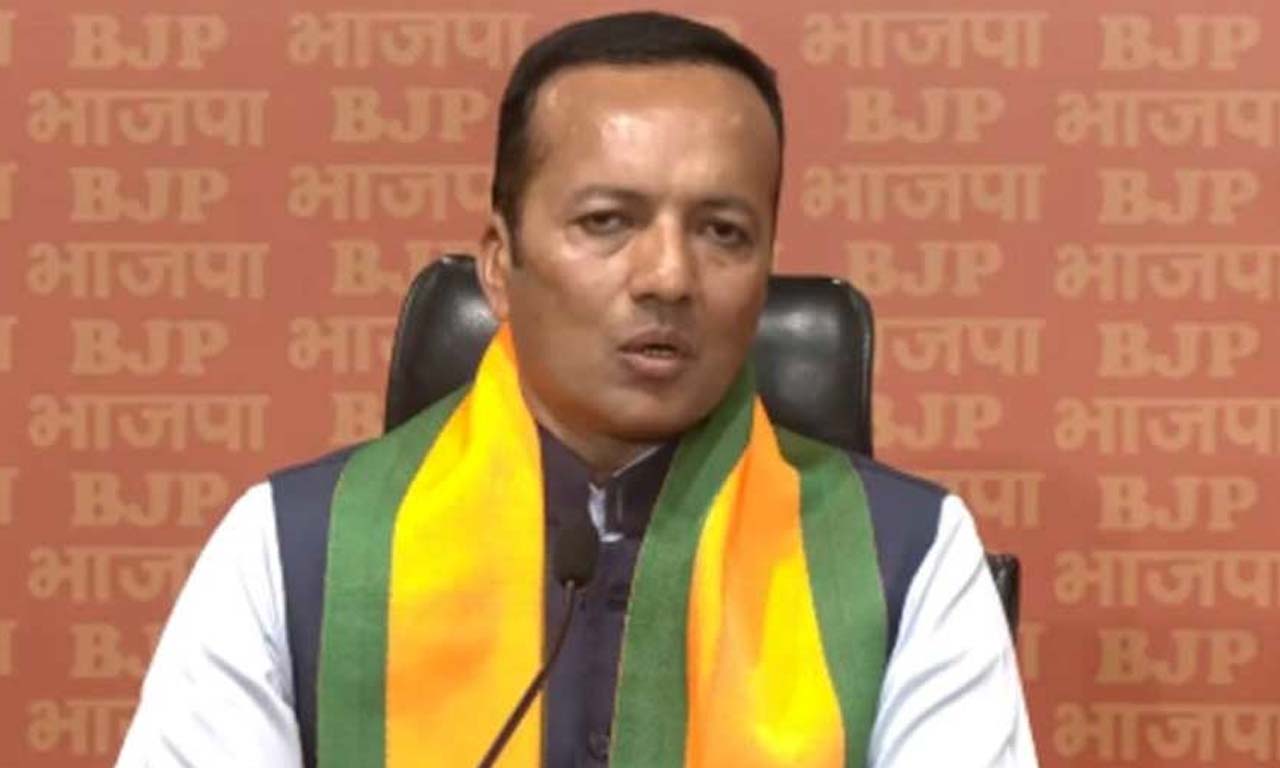
Haryana’s Kurukshetra is set to witness a triangular contest between newly-inducted Bharatiya Janata Party (BJP) candidate industrialist Naveen Jindal, the Aam Aadmi Party’s (AAP) Sushil Gupta and the Indian National Lok Dal’s (INLD) Abhay Singh Chautala on Saturday, as the state will be voting for the Lok Sabha this Saturday. Kurukshetra, which is about 150 kilometers from Delhi is a place that holds significant religious significance because it was here where the battle of Mahabharata was believed to be fought.
Jindal who defected from the Congress to BJP in March, had earlier represented the Kurukshetra parliamentary constituency from 2004-2014. However, he lost to BJP’s Raj Kumar Saini in the 2014 national elections and was not fielded by the Congress in 2019. Campaigning at his constituency earlier this month, Jindal said that in the BJP’s Sankalp Patra for Kurukshetra, there is something for all sections of society.
“We made a Sankalp Patra for Kurukshetra. We have met the people here and then made this Patra… This has been made considering the suggestions from people. There is something for all the sections of society,” he said. “We will work for the quality enhancement in the education. We will do development works here like improvement in the health care, providing better sports facilities…We will set up new training sections for the youths which will provide them better opportunities in the future…” he said.
Highlighting further, he assured that the handicapped will also be benefitted. “Our youth won’t go abroad but will be able to secure jobs here. Even if they want to go abroad they will be taken in a proper legal way,” he added. Speaking at a public rally in Haryana’s Kurukshetra on Monday, Uttar Pradesh Chief Minister Yogi Adityanath described Kurukshetra as a ‘karmbhoomi’ and said, “Kurukshetra is a karmbhoomi and apparently, it is the only land where the armies referred this land as ‘Dharmabhoomi.’ This can happen only in India and that too in Kurukshetra. The war that was fought was fought for dharma, justice, truth, and the result that will come out on June 4 will give a message of Satyamev Jayate.”
Nayab Singh Saini is the outgoing BJP MP from Kurukshetra who replaced Manohar Lal Khattar as the Chief Minister in March. Saini will be contesting the Karnal assembly bypolls on Saturday, the same day as the Lok Sabha polls in the state. Saini won Kurukshetra in the 2019 Lok Sabha polls with a margin of more than three lakh votes against Congress’ Nirmal Singh.
The AAP which is contesting the polls in Haryana, in partnership with the Congress as part of the opposition INDIA bloc has fielded its state president Sushil Gupta from Kurukshetra. Gupta is also one of the richest candidates contesting in this phase. As part of the seat-sharing deal with the Congress, the AAP is contesting from the sole Kurukshetra seat in Haryana and the Congress has fielded candidates in the remaining nine seats in the state.Delhi Chief Minister Arvind Kejriwal who is out on interim bail till June 1, urged voters in Kurukshetra not to get trapped by promises by the BJP and vote just to elect the Prime Minister but to elect an MP who would work for the people during difficult times.
“Don’t make a mistake this time. Don’t get trapped to elect the Prime Minister; vote to elect your MPs. Elect an MP who works for you during tough times,” he said backing Sushil Gupta. Referring to the farmers’ agitation which left its maximum impact in Punjab and Haryana, Kejriwal said that the farmers wanted to go to Delhi but they were stopped at the border.
“The farmers only demanded the right value of money for their crops. When the farmers demanded their rights, they were attacked with tear gas shells. One farmer lost his life. When farmers were being attacked with rubber bullets and water cannons, then the BJP MPs were enjoying it,” he said. He further said that last year crops of Haryana farmers were damaged, and farmers were asking for compensation but no one received it.
“When the unemployed youths were getting beaten by police, then where were the 10 MPs? The Khattar government sent the unemployed youth to Ukraine to die. Sushil Gupta (AAP candidate) understands the pain of the traders. Don’t fall into the trap of electing the Prime Minister. BJP’s 10 MPs don’t have the courage to address the difficulties of farmers and traders,” he added. INLD’s Secretary General Abhay Singh Chautala who is against the BJP and taking on Jindal from Kurukshetra, is being supported by the Shiromani Akali Dal and farmer leader and Sanyukt Sangharsh Party president Gurnam Singh Charuni.
The Haryana BJP underwent a significant change in leadership with the party’s high command removing Manohar Lal Khattar from the post of Chief Minister in March after reports that Dushyant Chautala-led JJP which was part of the ruling government in the state, will be withdrawing its support to the Khattar government. Eventually, the JJP severed its ties with the BJP. On May 7, amid the Lok Sabha polls, the Haryana government suffered another big jolt after three independent MLAs withdrew support from the Nayab Saini government, pushing the dispensation into a minority. However, the BJP appeared confident of retaining power, with former chief minister Khattar claiming that several leaders of the Congress and the JJP were in touch with his party.
Lok Sabha elections in the 10 parliamentary constituencies of Haryana will be held in a single phase on Saturday. The counting of votes will be on June 4. In the 2019 Indian general elections, the Bharatiya Janata Party (BJP) emerged as the dominant force in Haryana, securing a landslide victory by winning all 10 parliamentary seats.
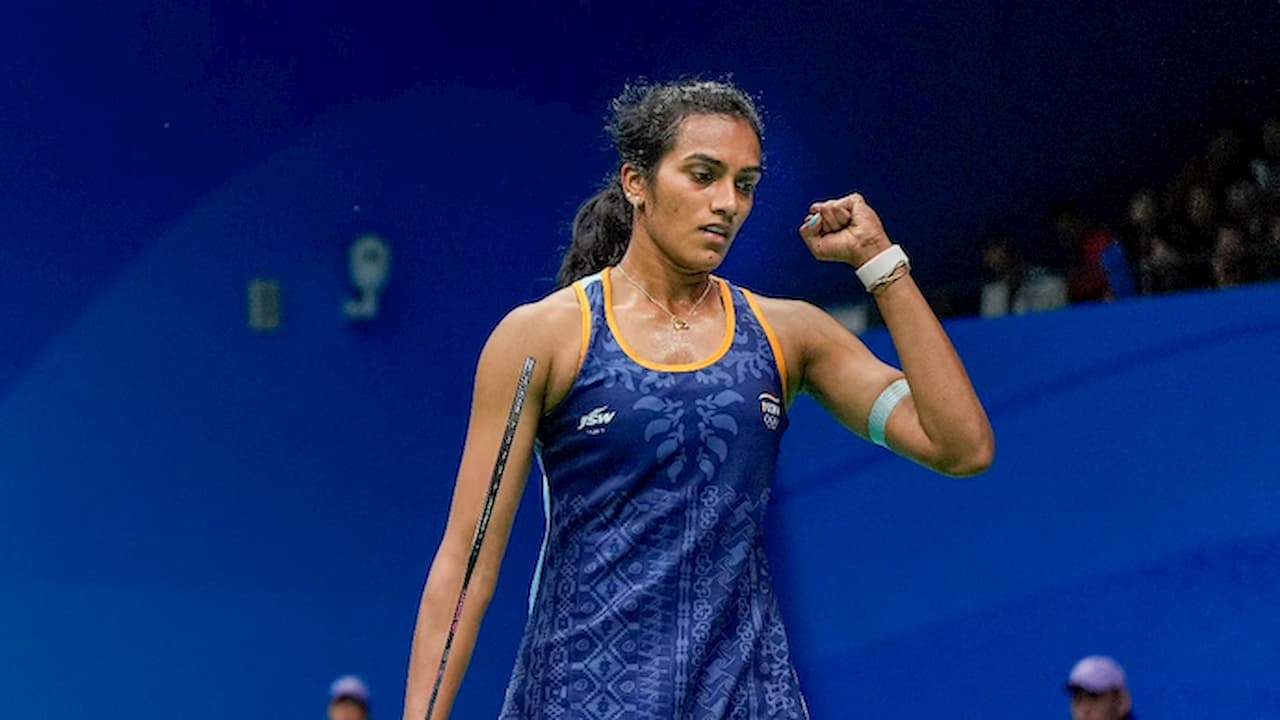
Malaysia Masters: PV Sindhu storms into semis after beating Han Yue 20
Indian shuttler and two-time Olympic medalist PV Sindhu moved to the semifinals of the ongoing Malaysia Masters competition on Friday. Sindhu fought against China’s world number 6 shuttler Han Yue in the quarterfinal round. She defeated her Chinese opponent by 13-21, 21-14 and 12-21 in a match that lasted for 55 minutes.
Sindhu’s next clash will be against either Putri Kusuma Wardani or Busanan Ongbamrungphan in the semis. In the previous round, Sindhu beat South Korea’s Sim Yu Jin. She won by 21-13, 12-21 and 21-14. The match lasted for 59 minutes.
In the other match, the 24-year-old Ashmita Chaliha ranked world number 53, suffered a defeat against Zhang Yi Man by 21-10, and 21-15 of China in a match that lasted for 30 minutes. While Chaliha made her place in the quarterfinal after beating USA’s Beiwen Zhang by 21-19, 16-21, 21-12 in a 43-minute match.
Earlier in the tournament, the Indian women’s doubles duo of Simran Singhi and Ritika Thaker lost their second-round match by 21-17, 21-11 in lasted 37 minutes, against the Malaysian pair of Pearly Tan and Thinaah Muralitharan. In the other pre-quarterfinals clash, the Indian women’s doubles pair of Treesa Jolly and Gayatri Gopichand crashed out of the competition as well, losing to the Chinese Taipei pair of Yu Chien Hui and Sung Shuo Yun by 18-21, 22-20, 14-21.
The Malaysia Masters is being held from May 21 to 26 in Kuala Lumpur, Malaysia. It is a Badminton World Federation (BWF) World Tour Super 500 level tournament. PV Sindhu has captured the women’s singles title in the competition twice in 2013 and 2016, while Saina Nehwal secured the title in 2017. HS Prannoy also won the title as he beat Weng Hongyang of China by 21-19, 13-21, 21-18 in the final last year.