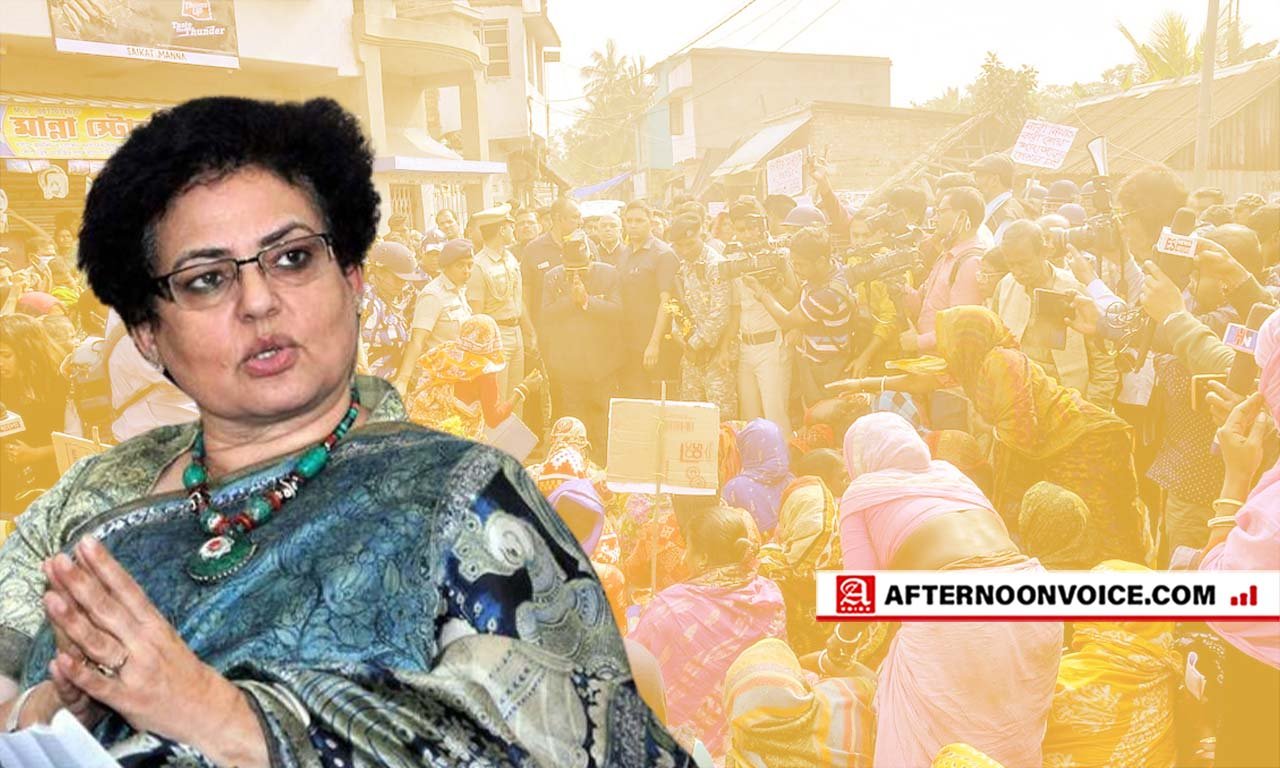
NCW chairperson Rekha Sharma to visit Sandeshkhali, slams state govt 2
A delegation of the National Commission for Women (NCW) led by its chairperson Rekha Sharma is scheduled to visit unrest-hit Sandeshkhali on Monday.
Last week two members of NCW had visited the area and submitted a report revealing a ”troubling pattern of negligence and complicity” by the Bengal government and law enforcement officials.
”We want to talk to the victims. We will then meet the West Bengal Governor and then President in New Delhi tomorrow. Even if one incident takes place then it is shameful,” Sharma said.
She alleged that the TMC government is ”not allowing the state administration to cooperate” with central agencies.
As the situation in Sandeshkhali in North 24 Parganas, gradually returns to normalcy following a week of protests alleging TMC-led atrocities on villagers and sexual harassment of women, the police have been maintaining a strong vigil in the area.
The TMC, however, dubbed the visit by NCW as politically motivated.
”The NCW is quick to visit West Bengal. But has never shown similar promptness in visiting BJP-ruled states,” TMC spokesperson Kunal Ghosh said.
A large number of women in Sandeshkhali accused Trinamool Congress strongman Shajahan Sheikh and his supporters of ”land-grab and sexually assaulting” them under coercion.
Shajahan has been absconding after a mob, allegedly affiliated with him, attacked Enforcement Directorate officials who had gone to search his premises in connection with a ration scam on January 5.
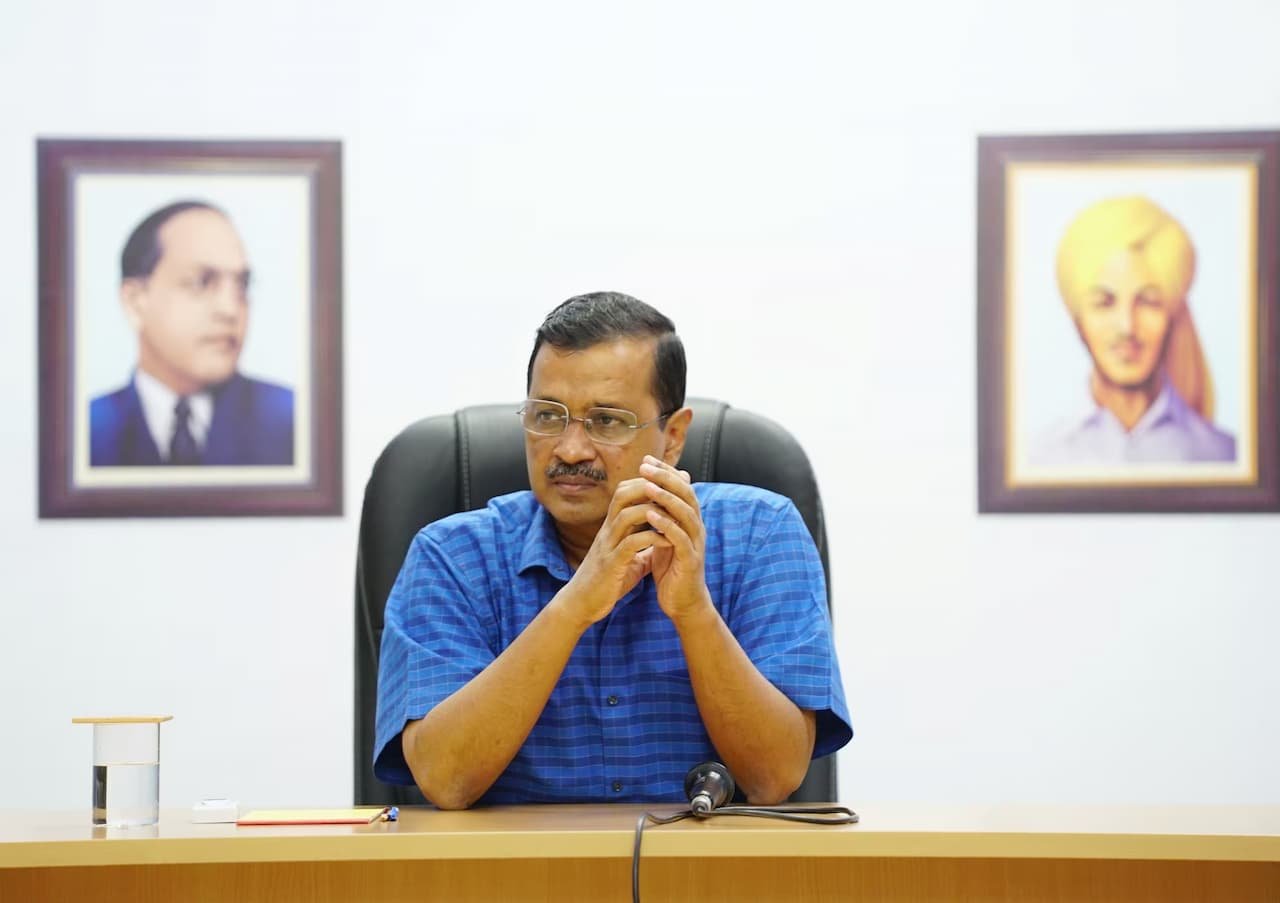
Delhi CM Kejriwal skips ED summons again in excise policy case, AAP calls it 'illegal' 4
Delhi Chief Minister Arvind Kejriwal will not appear before the Directorate of Enforcement (ED) for questioning in connection with an excise policy case linked to money laundering, the Aam Aadmi Party (AAP) sources said on Monday. The AAP called the ED summons ‘illegal’ saying that the matter of the validity of the summons is now in the court.
“ED itself has gone to court. Instead of sending summons again and again, ED should wait for the court’s decision,” a party source said. On February 2, Kejriwal skipped the ED’s summons for the fifth time in connection with the money laundering probe related to irregularities in the Delhi excise policy 2021-22 case.
Kejriwal, on February 17, appeared before the Rouse Avenue Court via video conferencing following a complaint by the ED over his alleged non-compliance with its summons. Kejriwal, while appearing virtually, informed the court that he wanted to join the court proceedings physically, but due to the confidence motion and budget sessions, he was unable to attend physically.
Additional Chief Metropolitan Magistrate Divya Malhotra allowed the exemption plea moved by Kejriwal for Saturday and fixed March 16, 2024, for his physical appearance before the court. The ED recently filed a fresh complaint case under sections 190 (1)(a) and 200 of the Code of Criminal Procedure, Section 174 of the Indian Penal Code, and Section 63 (4) of the Prevention of Money Laundering Act (PMLA) for non-attendance in compliance of Section 50 of PMLA.
According to the ED, the agency wanted to record Kejriwal’s statement in the case on issues like the formulation of policy, meetings held before it was finalised, and allegations of bribery. In its sixth charge sheet filed in the case on December 2, 2023, naming AAP leader Sanjay Singh and his aide Sarvesh Mishra, the ED has claimed that the AAP used kickbacks worth Rs 45 crore generated via the policy as part of its assembly elections campaign in Goa in 2022.
The excise policy was aimed at revitalising the city’s flagging liquor business and replacing a sales-volume-based regime with a licence fee for traders. It promised swankier stores and a better buying experience. The policy introduced discounts and offers on the purchase of liquor for the first time in Delhi. Two senior AAP leaders, Manish Sisodia and Sanjay Singh–are already under judicial custody in the case.
Sisodia, who was the then Delhi Deputy Chief Minister, was arrested by the CBI on February 26 following several rounds of questioning. On October 5, the ED arrested Singh, who is a Rajya Sabha member.
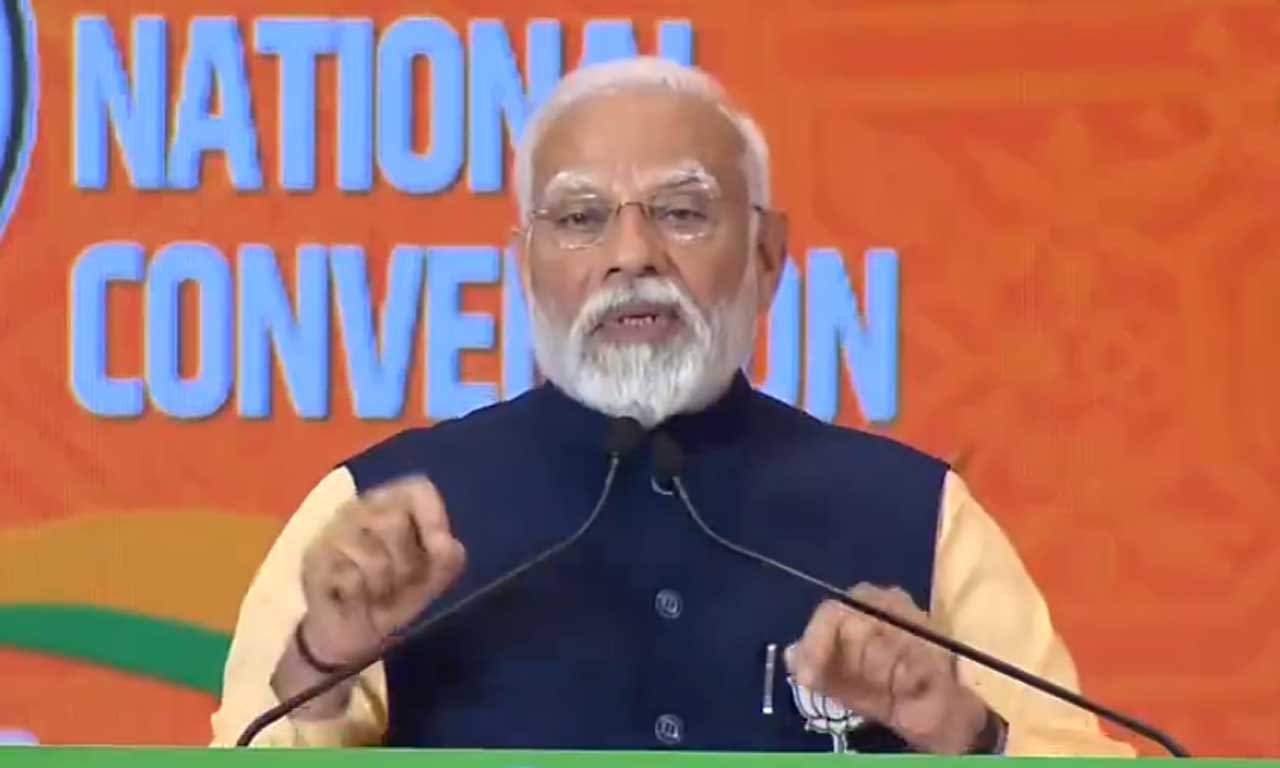
"Ten years of NDA testimony to courageous, far-reaching decisions": PM Modi at BJP National Convention 6
Looking back at 10 years of the government at the Centre under his leadership, Prime Minister Narendra Modi on Sunday said the past decade at the helm bears testimony to courageous and far-reaching decisions.
Addressing party leaders and supporters on the closing day of the BJP’s National Convention at the state-of-the-art Bharat Mandapam on Sunday, Prime Minister Modi said, “The last 10 years of our government stands testimony to courageous and far-reaching decisions. We resolved tasks that had been pending for centuries. We fulfilled a dream and a wish going back five centurues by building the Ram Temple in Ayodhya. The country, in general, and Jammu and Kashmir in particular, were rid of Article 370 after nearly seven decades. Also, it took us six decadaes after independence to rename ‘Rajpath’ as ‘Kartavya Path’. The demand for ‘One Rank, One Pension’ was also fulfilled after four decades by our government,” PM Modi said.
Expanding on the signifcance of the ‘Nari Shakti Vandan Adhiniyam’, a legislation aimed at raising the representation of women in Parliament and state legislatures, Prime Minister Modi said, “We brought a law that guarantees more reservation for women in the Parliament as well as state legislative assemblies after three decades. We also showed the courage to implement a law that puts an end to the practice of Triple Talaq (among Muslims). The requirement for a new Parliament House had been felt by many for long. It was our government that fulfilled this long-pending requirement.” PM Modi further said the BJP workers are fortunate to have witnessed ‘revolutionary changes’ across the country over the last 10 years.
“The BJP workers are fortunate to have witnessed revolutionary changes over the past 10 years of our government. Any country can progress and reach its promised place when the people come to appreciate and cherish its heritage and history. During our decade in governance, the country has not only come to cherish its heritage but also flaunt it with pride,” PM Modi said. Earlier, on the inaugural day of the national convention on Saturday, the BJP passed a significant political resolution titled ‘Viksit Bharat’, highlighting the achievements of the BJP-led NDA at the Centre under Prime Minister Modi. It added that the BJP would return for a third term at the helm and carry forward its roadmap for holistic development and welfare.
With the Lok Sabha polls around the corner, the BJP National Convention was aimed at fleshing out the party’s strategy and charging up cadres ahead of the Lok Sabha elections.
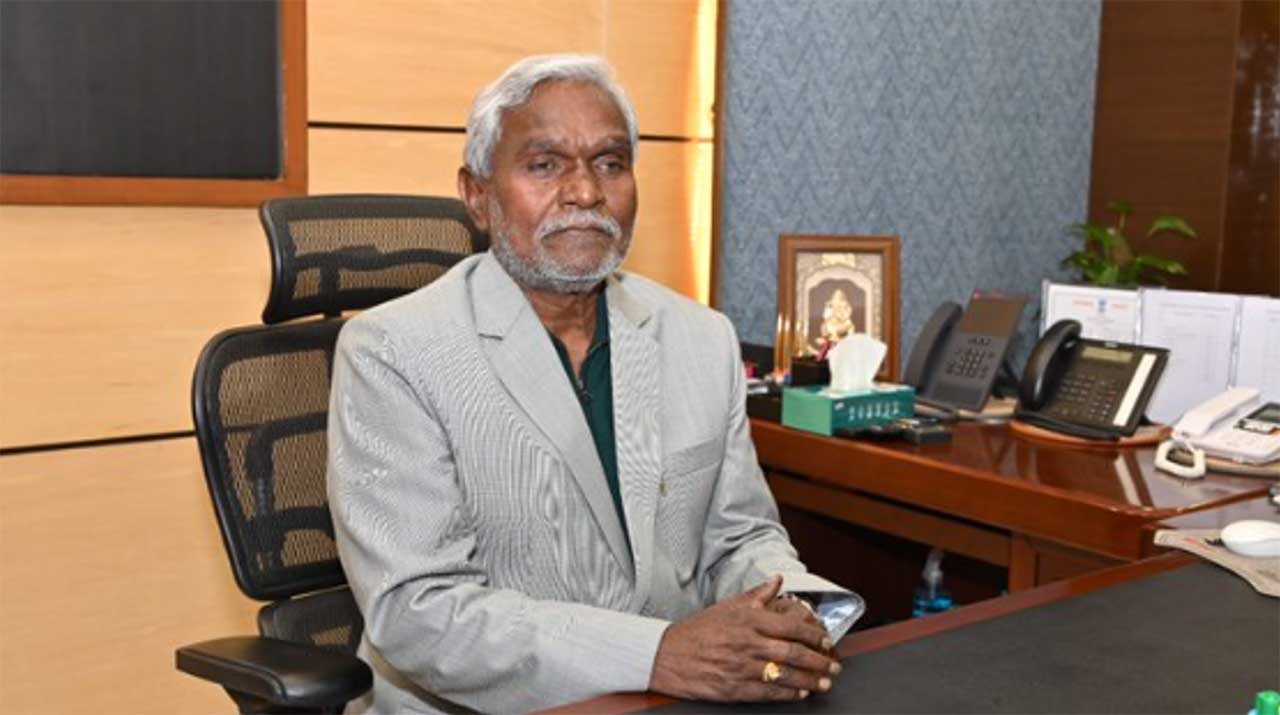
Alliance strong, no threat to coalition govt in Jharkhand: CM Champai Soren 8
The JMM-led alliance in Jharkhand is ”strong” and there is no threat to the coalition government in the state, Chief Minister Champai Soren said on Sunday, amid reports of resentment brewing among a section of Congress legislators over the induction of four party MLAs as ministers.
Soren, who is in the national capital, made the remarks before meeting Congress president Mallikarjun Kharge.
After meeting Kharge, he told reporters that it was a courtesy meeting with the Congress president after taking charge as the chief minister.
On a section of Congress MLAs being disgruntled over the recent cabinet formation, Soren said it was the internal matter of the Congress.
In a post on X after his meeting with Soren, Kharge said, ”Today, along with Jharkhand Chief Minister Shri Champai Soren ji and leaders of Jharkhand Congress, we again resolved to fight the dictatorial government (Centre).” ”We will continue our journey of progressiveness, public welfare and social justice in Jharkhand,” Kharge said.
Jharkhand Congress president Rajesh Thakur, AICC general secretary in-charge of the state Ghulam Ahmad Mir and Pranav Jha, among others, were present during Soren’s meeting with Kharge.
Asked about the meeting, Mir also told reporters that it was a courtesy call.
Asked about the section of disgruntled Congress MLAs being in Delhi, Mir said they did not have any problem with the government but had some specific issues, some related to their respective constituencies, which they would raise with the party leadership and sort out.
Earlier in the morning, Soren said, ”There’s no issue, our alliance is strong.” On being asked about disgruntled Congress MLAs reaching Delhi, he had told reporters, ”This is an internal matter of the Congress, they will resolve it. I have nothing to say about that. There is no conflict between the JMM and Congress, and everything is absolutely fine.” As many as 12 MLAs of the Congress have threatened to boycott the upcoming state assembly session from February 23 and head to Jaipur if the ministers are not replaced with new faces.
The JMM-led alliance in the state has 47 MLAs (JMM-29, Congress-17 and one RJD) in the 81-member assembly.
Unhappy with the Congress’ decision to give ministerial berths to Alamgir Alam, Rameshwar Oraon, Banna Gupta and Badal Patralekh again, the disgruntled section of Congress legislators went into a huddle Saturday at a Ranchi hotel, where JMM’s new minister Basant Soren, the youngest son of party supremo Shibu Soren, reached to persuade them to change their decision.
”There is no confusion…we are all united,” Basant Soren said after meeting the MLAs.
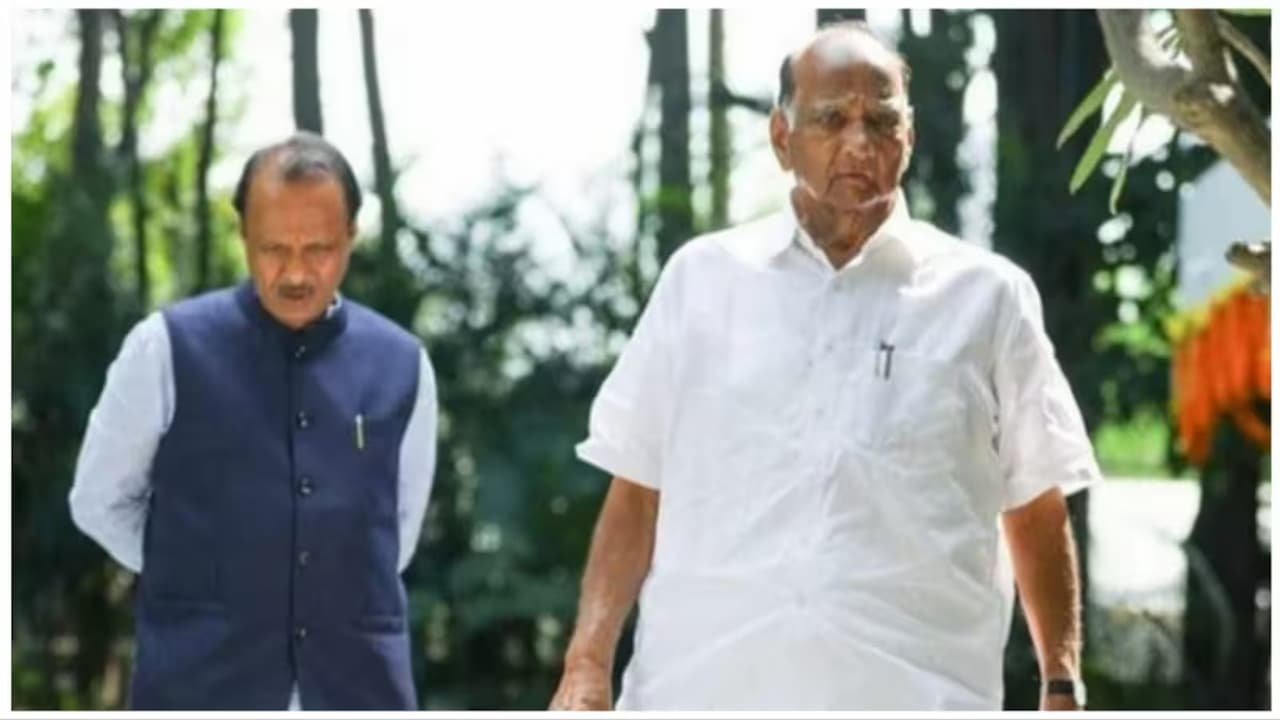
SC to hear Sharad Pawar's plea against EC order recognising Ajit Pawar-led faction as real NCP 10
The Supreme Court is scheduled to hear on Monday a plea of Sharad Pawar challenging an Election Commission order recognising the Ajit Pawar-led faction as the real Nationalist Congress Party (NCP).
A bench of Justices Surya Kant, Dipankar Datta and KV Viswanathan is likely to hear Sharad Pawar’s plea.
On February 16, the top court had agreed to urgently list the plea after Sharad Pawar stated that a whip may be issued by the faction led by Maharashtra Deputy Chief Minister Ajit Pawar.
The veteran leader had sought an urgent hearing of his plea in the wake of twin blows suffered by the group led by him and the consequential fear of facing action for possible violations of whip by his MLAs.
Sharad Pawar had sought urgent hearing in view of the February 15 order of Maharashtra Assembly Speaker Rahul Narwekar.
Narwekar held that the NCP faction led by Ajit Pawar was the real NCP and that the anti-defection provisions in the Constitution cannot be used to stifle internal dissent.
Prior to this, the poll panel announced on February 6 that the Ajit Pawar faction is the real NCP and also allotted the party’s ‘clock’ symbol to the group.
The special Maharashtra assembly session is beginning on February 20.
Pawar senior, who founded the NCP with former Lok Sabha speaker Purno Sangma and Tariq Anwar in 1999 after their expulsion from the Congress, filed the petition through lawyer Abhishek Jebaraj.
Prior to him, the Ajit Pawar faction had filed a caveat in the Supreme Court through advocate Abhikalp Pratap Singh to ensure that no ex-parte order is passed in favour of the Sharad Pawar group if the latter moves the top court.
Ajit Pawar, currently a deputy chief minister in Maharashtra, had walked away with a majority of NCP MLAs in July last year and supported the BJP-Shiv Sena government led by Eknath Shinde.
”…this commission holds that the faction led by the petitioner, Sh Ajit Anantrao Pawar, is the Nationalist Congress Party (NCP) and is entitled to use its name and reserved symbol ”clock” for the purposes of the Election Symbols (Reservation and Allotment) Order, 1968,” the EC had said in its 140-page order.
The commission had said there were serious inconsistencies in terms of timelines in the claim of the Sharad Pawar group on organisational majority, which resulted in unreliability of their claim.
It had also expressed the hope that political parties will adopt good disclosure practices of organisational elections and internal party democracy.
Then came the decision of the assembly speaker on February 15, the deadline fixed by the top court for deciding disqualification plea.
The speaker, in his elaborate decision, dismissed the disqualification petitions filed by the factions led by Ajit Pawar and his uncle Sharad Pawar against each other’s legislators.
The Speaker noted that the Ajit Pawar group had ”overwhelming legislative majority” of 41 out of 53 party MLAs when it decided to join the Shiv Sena-BJP government in Maharashtra in July 2023.
The Ajit Pawar group was, thus, the ”real political party” when the factions emerged, Narwekar said.
”All the petitions seeking disqualification of MLAs are rejected,” Narwekar had said while reading out the ruling at the legislature complex in Mumbai on February 15.
Questioning then party supremo Sharad Pawar’s decisions or defying his wishes did not amount to defection but it was only internal dissent, the speaker had said.
The tenth schedule of the Constitution, which provides for disqualification of a legislator in case of defection, was misused in this case, Narwekar had held.
A party leadership cannot use the tenth schedule to stifle dissent of a large number of members by threatening to disqualify them, he had said.
Man kills wife, walks with her severed head in UP's Barabanki; arrested 12
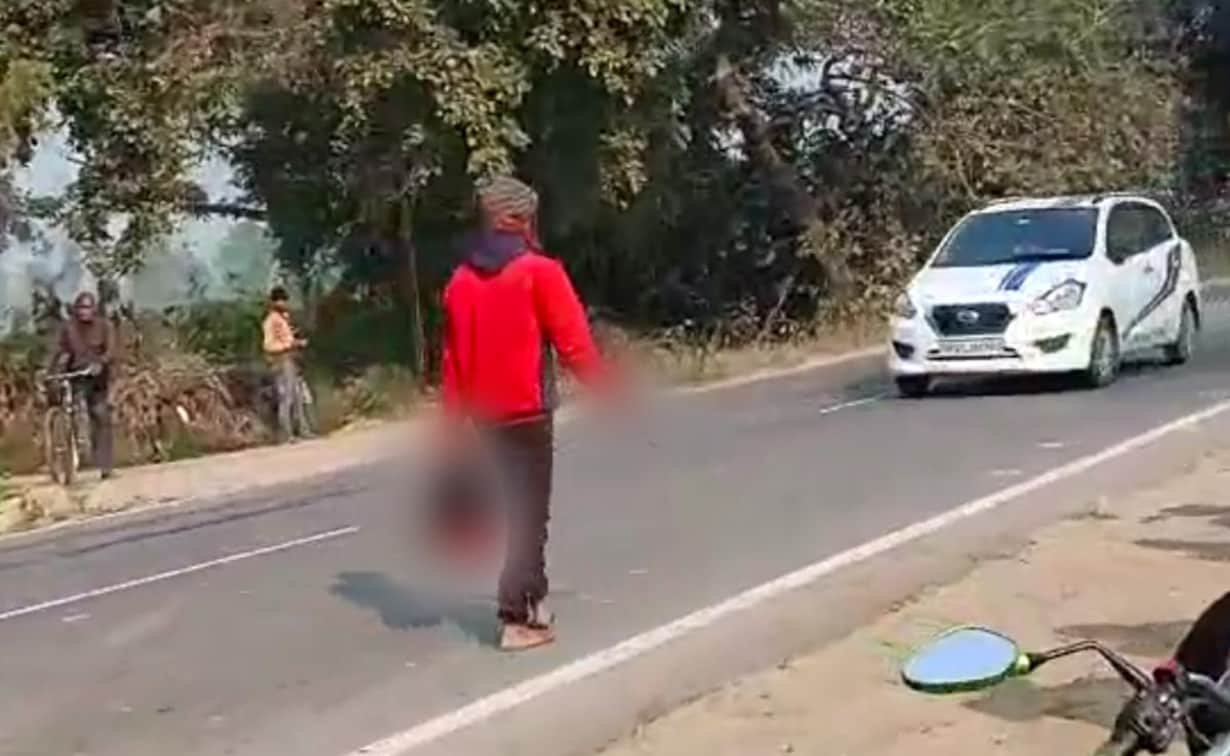
A man was arrested after he beheaded his wife and walked around on the streets with her severed head in one hand and a sickle in the other in Uttar Pradesh’s Barabanki, police said on Saturday. The accused, identified as Anil Kumar, a resident of Basra village, allegedly cut off his wife’s head with the sickle over suspicions that she was having an affair.
The couple was married for eight years. According to officials, the incident took place in Basra village on Friday, where the accused was seen walking barefoot with his wife’s decapitated head.
A video of him also went viral on social media. In the video, he could be seen showing the sickle to a few men who were standing on the roadside as he walked past them. Upon receiving information, Fatehpur police reached the spot and apprehended him.
Barabanki Superintendent of Police, Dinesh Kumar Singh, later confirmed the arrest of the accused. “The accused, Anil Kumar, has been arrested. The woman’s body has also been recovered and sent for post-mortem examination. The couple had been married for eight years and have two children,” SP Singh said.
“We are further looking into the matter,” he added.
In what is a potential blow for the erstwhile K Chandrashekhar Rao led BRS government in Telanaga, a report of the Comptroller and Auditor General of India (CAG) report revealed that he benefit-cost ratio (BCR) of the Kaleshwaram irrigation project in Telangana was inflated and the entire programme was economically unviable. The cost of the Kaleshwaram project, which was initially estimated at Rs 81,911.01 crore, is now likely to exceed Rs 1,47,427.41 crore, with a cost overrun of about 80 per cent, the audit report tabled on Thursday said.
Even with the understated project cost of Rs 81,911.01 crore, benefit-cost ratio works out to be 0.75. Considering the latest likely project cost of Rs 1,47,427.41 crore, the BCR works out to 0.52. “This means that every rupee spent on the project would yield only 52 paise. It clearly indicates that the project was, ab-initio, economically unviable,” the audit report stated.
“The Benefit-Cost Ratio (BCR) of the project was inflated by overstating the value of project benefits and understating the annual costs.” The audit report into the big-ticket irrigation scheme revealed that the Government of Telangana did not accord administrative approval for the project, and instead issued separate approvals — as many as 73 administrative approvals aggregating to Rs 1,10,248.48 crore.
The audit report added that there were no orders from the government about the funding pattern for the project. “The absence of a comprehensive plan duly spelling out the sources of funds for a project of this scale, which will have a long term impact on the finances of the State, is an indication of improper planning,” it said.
In 2008, the government of the erstwhile combined state of Andhra Pradesh took up the Dr B.R. Ambedkar Pranahitha-Chevella Sujala Sravanthi Lift Irrigation Scheme (PCSS Project) at a cost of Rs 38,500 crore. The project proposed to lift 180 thousand million cubic feet (TMC) of water from Pranahitha and Godavari rivers and provide irrigation to a new command area of 16.40 lakh acres in the Telangana region.
Even without the approval of the project by the Central Water Commission (CWC), the project works were awarded to different contractors during 2008-2009 and execution of the works commenced. After the state re-organisation in June 2014, the government of the newly formed state Telangana decided to re-engineer the project and divided it into two separate projects — the Dr. B.R. Ambedkar Pranahitha Project and the Kaleshwaram Project.
56 contracts were awarded under work for the Kaleshwaram project. The progress of project work is slow, the CAG report said. “Out of the 56 works, only 12 works were completed, 40 works were ongoing with progress ranging from 3 per cent to 99 per cent while 4 works have not even commenced, as of March 2022. As against the total value of civil works of Rs 1,02,267.99 crore, the progress achieved was Rs 70,666.48 crore (i.e., 69 per cent),” the report read.
The delay in completion of works was mainly due to revisions in the scope of works and delays in finalisation of scope of works/designs/drawing and land acquisition, it argued.
Bradley Cooper says cold baths help him stay focused 15
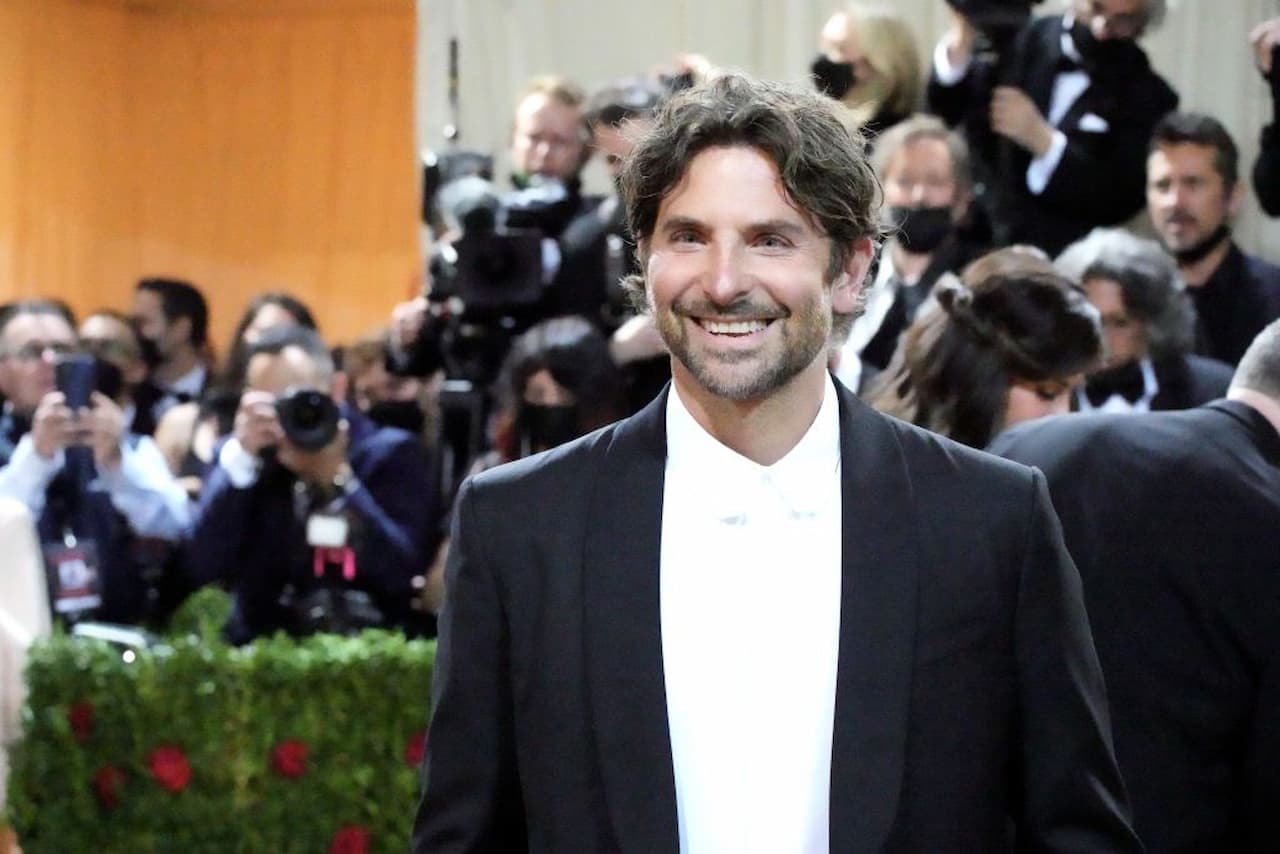
Hollywood star Bradley Cooper meditates in freezing temperatures as soon as he wakes up as it helps him stay focused.
“James Nachtwey (a photographer commissioned by the Times) asked me if there are any rituals I do to prepare for a role. I said not really but mentioned that I do cold plunge every morning when I get up,” Cooper told The New York Times.
Cooper made the admission as part of a piece by Nachtwey that saw him photograph A-listers doing what they loved away from film sets.
The ‘A Star is Born’ actor added about the shoot that saw him captured swinging a hammer in the snow before he took a cold plunge: “We were outside next to a creek, and we looked at each other and thought, ‘OK? Let’s give it a shot.'”
“It was much colder than the cold plunge I’m used to – and unfortunately, I didn’t have a towel or a change of clothes. But we had a good laugh.”
Photojournalist Nachtwey, who is known for his intimate depictions of the front lines in warzones such as like Iraq, Afghanistan, and Ukraine, had never photographed a movie star before, but was sent to do so by the Times for its ‘Great Performers’ issue, reports aceshowbiz.com.
His other shots for the project included Da’Vine Joy Randolph, 37, shopping for fabrics and Paul Giamatti, 56, reading in his favourite second hand book store.
The 49-year-old actor’s ‘Maestro’, which is about troubled composer Leonard Bernstein, is nominated for seven Oscars including best actor for Cooper who played the conductor.
Great apes tease each other just like humans do: Study 17
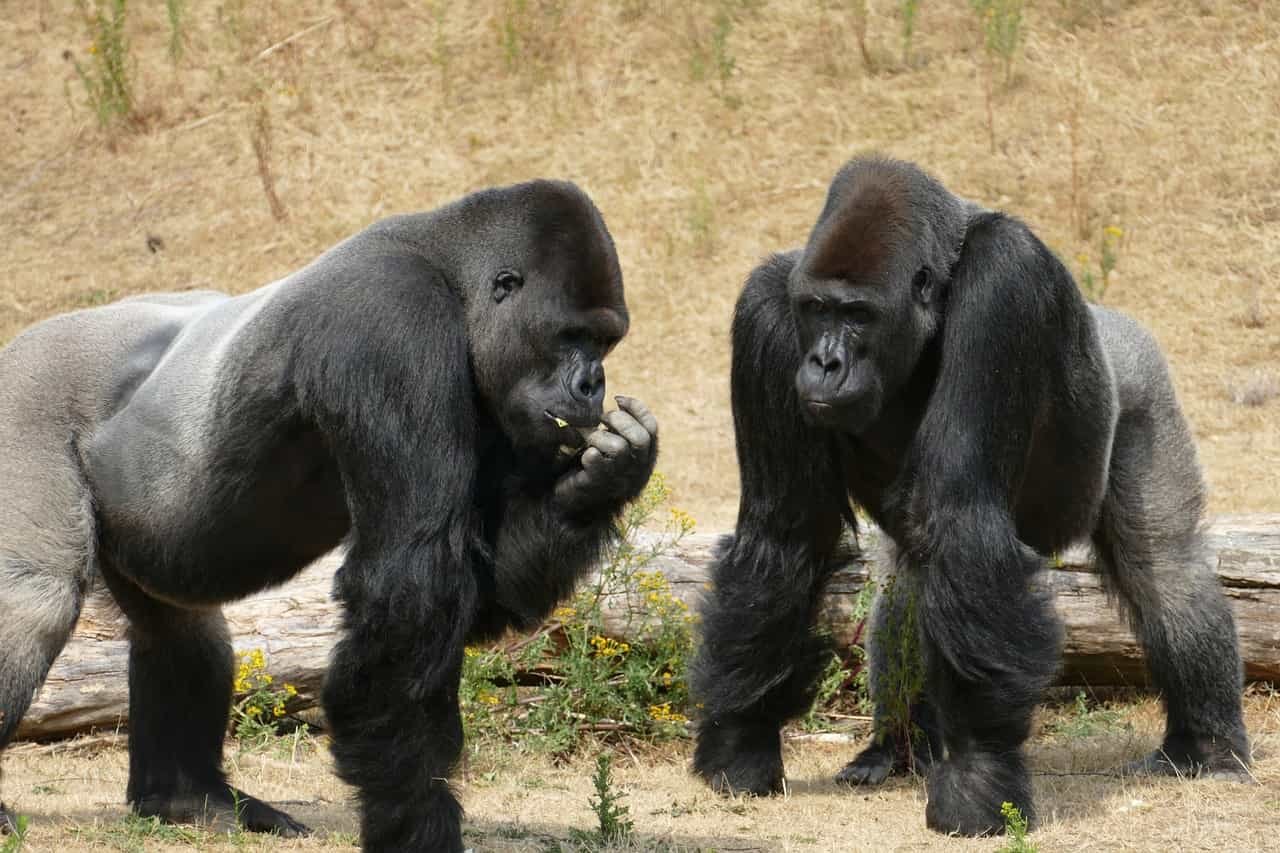
Cognitive biologists and primatologists have observed playful teasing in four species of great apes. Babies start teasing one other as early as eight months of age. Because language is not required for this activity, nonhuman animals may engage in similar playful teasing.
Ape teasing, like human joking, is provocative and persistent, incorporating elements of surprise and play. Because all four great ape species engaged in playful teasing, the elements of humour likely developed in the human lineage at least 13 million years ago. Joking is a crucial aspect of human connection that requires social intelligence, the ability to anticipate future acts, and the ability to identify and appreciate violations of others’ expectations.
Teasing has much in common with joking, and playful teasing may be seen as a cognitive precursor to joking. The first forms of playful teasing in humans emerge even before babies say their first words, as early as eight months of age. The earliest forms of teasing are repetitive provocations often involving surprise. Infants tease their parents by playfully offering and withdrawing objects, violating social rules (so-called provocative non-compliance), and disrupting others’ activities.
In a study published in the Proceedings of the Royal Society B, scientists from the University of California Los Angeles, the Max Planck Institute of Animal Behavior, Indiana University, and the University of California San Diego (Isabelle Laumer, Sasha Winkler, Federico Rossano, and Erica Cartmill) reported evidence of playful teasing in the four great ape species orangutans, chimpanzees, bonobos and gorillas. “Great apes are excellent candidates for playful teasing, as they are closely related to us, engage in social play, show laughter and display relatively sophisticated understandings of others’ expectations,” said Isabelle Laumer (UCLA/MPI-AB) a post-doctoral researcher and the first author of the study.
The team analyzed spontaneous social interactions that appeared to be playful, mildly harassing, or provocative. During these interactions, the researchers observed the teaser’s actions, bodily movements, facial expressions, and how the targets of the teasing responded in turn. They also assessed the teaser’s intentionality by looking for evidence that the behaviour was directed at a specific target, that it persisted or intensified, and that the teaser waited for a response from the target.
The researchers found that orangutans, chimpanzees, bonobos and gorillas all engaged in intentionally provocative behaviour, frequently accompanied by characteristics of play. They identified 18 distinct teasing behaviours. Many of these behaviours appeared to be used to provoke a response, or at least to attract the target’s attention. “It was common for teasers to repeatedly wave or swing a body part or object in the middle of the target’s field of vision, hit or poke them, stare closely at their face, disrupt their movements, pull on their hair or perform other behaviours that were extremely difficult for the target to ignore,” explained UCLA and IU professor Erica Cartmill, senior author of the study.
Although playful teasing took many forms, the authors note that it differed from play in several ways. “Playful teasing in great apes is one-sided, very much coming from the teaser often throughout the entire interaction and rarely reciprocated,” explained Cartmill. “The animals also rarely use play signals like the primate ‘play face’, which is similar to what we would call a smile, or ‘hold’ gestures that signal their intent to play.”
Playful teasing mainly occurred when apes were relaxed, and shared similarities with behaviors in humans. “Similar to teasing in children, ape playful teasing involves one-sided provocation, response waiting in which the teaser looks towards the target’s face directly after a teasing action, repetition, and elements of surprise,” Laumer explained. The researchers noted that Jane Goodall and other field primatologists had mentioned similar behaviours happening in chimpanzees many years ago, but this new study was the first to systematically study playful teasing.
“From an evolutionary perspective, the presence of playful teasing in all four great apes and its similarities to playful teasing and joking in human infants suggests that playful teasing and its cognitive prerequisites may have been present in our last common ancestor, at least 13 million years ago,” explained Laumer. “We hope that our study will inspire other researchers to study playful teasing in more species to better understand the evolution of this multi-faceted behaviour. We also hope that this study raises awareness of the similarities we share with our closest relatives and the importance of protecting these endangered animals.”
US plans to send weapons to Israel even as Biden pushes for ceasefire, WSJ reports 19
The Biden administration is preparing to send bombs and other weapons to Israel that would add to its military arsenal even as the U.S. pushes for a ceasefire in Gaza, the Wall Street Journal reported on Friday, citing current and former U.S. officials.
The proposed arms delivery includes MK-82 bombs and KMU-572 Joint Direct Attack Munitions that add precision guidance to bombs, and FMU-139 bomb fuses, the Journal reported, adding that the value of is estimated to be “tens of millions of dollars.” The proposed delivery is still being internally reviewed by the administration, the report added, citing a U.S. official, who said the details of the proposal could change before the administration notifies congressional committee leaders who would need to approve the transfer.
The U.S. State Department and Defense Department, Israel Defense Forces and Israel Defense Ministry did not immediately respond to a Reuters request for comment on the report. As of December 2023, the Biden administration had
skipped congressional review of weapons sale to Israel twice.
The Biden administration has faced criticism
for continuing to supply arms to Israel as allegations pile up that American-made weapons have been used in strikes that have killed or injured civilians. The war in Gaza began when Iran-backed Hamas sent fighters into Israel on Oct. 7, killing 1,200 people, mostly civilians, and seizing 253 hostages, according to Israeli tallies.
Israel’s air and ground offensive has since devastated much of Gaza, killing 28,775 people, also mostly civilians according to Palestinian health authorities, and forcing nearly all of its more than 2 million inhabitants from their homes.