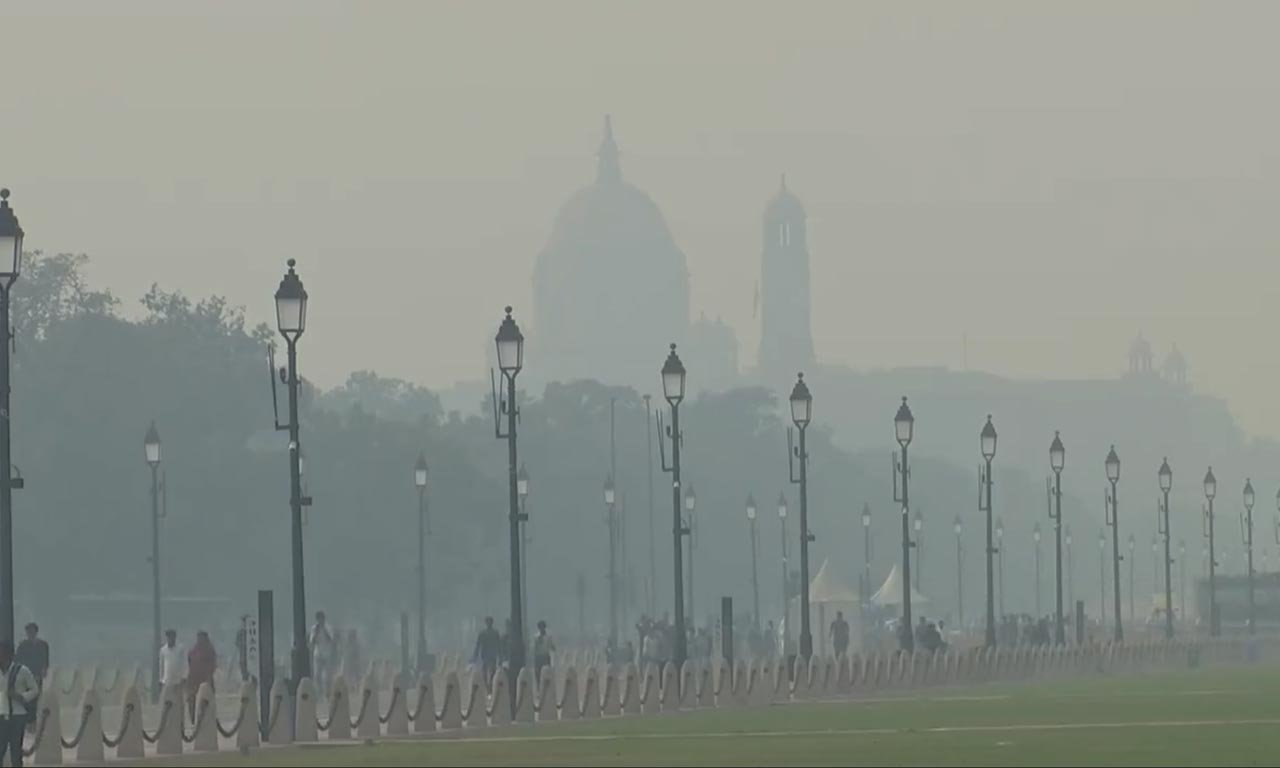
Delhi's air quality deteriorates to 'very poor' due to unfavourable Met conditions 2
Delhi’s air quality turned “very poor” on Sunday for the first time since May 17 due to unfavorable meteorological conditions, according to monitoring agencies.
The capital’s 24-hour average air quality index stood at 313 on Sunday, deteriorating from 248 on Saturday.
Delhi last recorded “very poor” air quality on May 17, when the AQI was 336.
Almost all areas in Delhi recorded air quality in the ‘very poor’ category on Sunday.
According to the Central Pollution Control Board (CPCB), Faridabad recorded an AQI of 322, Ghaziabad 246, Greater Noida 354, Gurugram 255, and Noida 304.
Officials from the India Meteorological Department stated that the air quality in Delhi-NCR will remain “very poor” for the next few days due to a drop in temperature and the influx of emissions from stubble burning.
The wind speed is slow, and there has been scant rainfall in October, unlike the last two years, an official said.
The central government’s Decision Support System for Air Quality Management predicts that paddy straw burning may increase starting Monday.
According to the system, smoke from paddy straw burning accounted for 16 per cent of Delhi’s PM2.5 pollution on Sunday, and this could increase to 30-32 per cent on Monday.
According to the Union Environment Ministry, the maximum share of farm fires in Delhi’s PM2.5 pollution stood at 34 per cent on November 3 last year and 48 per cent on November 7 in 2021.
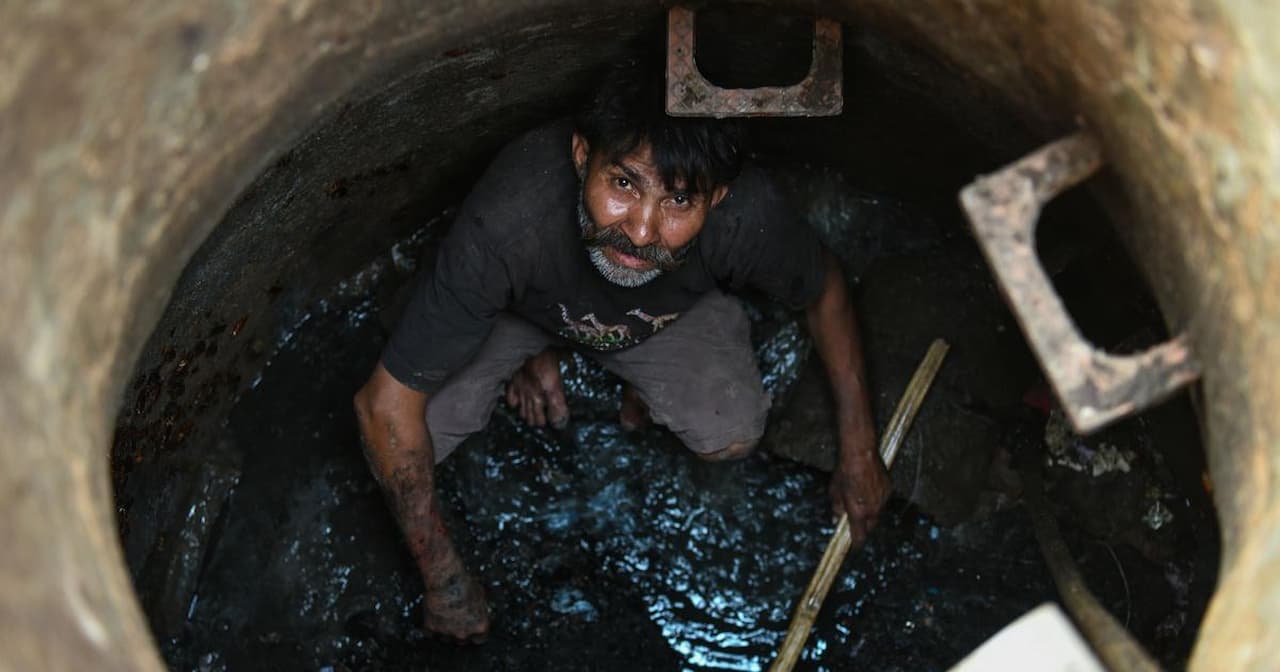
Observing that a large segment of India’s population, involved in manual scavenging, has remained unheard and muted in bondage and systematically trapped in inhumane conditions, the Supreme Court has directed the Centre and states to take appropriate measures, frame policies, and issue directions to ensure that manual sewer cleaning is completely eradicated in a phased manner.
The top court has asked the Centre to issue guidelines and directions that any sewer-cleaning work outsourced or required to be discharged by or through contractors or agencies do not require individuals to enter sewers for any purpose whatsoever.
Issuing a slew of directions, a bench of Justices S Ravindra Bhat (since retired) and Aravind Kumar asked the central and state governments to pay Rs 30 lakh as compensation to the next of kin of those who die while cleaning sewers.
“The court hereby directs the Union and the states to ensure that the compensation for sewer deaths is increased (given that the previous amount fixed, that is, Rs 10 lakh, was made applicable in 1993). The current equivalent of that amount is Rs 30 lakh.
“This shall be the amount to be paid by the concerned agency, that is, the Union, the Union Territory, or the state, as the case may be. In other words, compensation for sewer deaths shall be Rs 30 lakh. In the event the dependents of any victim have not been paid such an amount, the above amount shall be payable to them. Furthermore, this shall be the amount to be hereafter paid as compensation,” the bench said.
The top court directed all the states and Union territories to make sure that all departments, agencies, and corporations ensure that the guidelines and directions framed by the Centre are embodied in their own guidelines and directions.
“The Union, states, and Union territories are directed to ensure that full rehabilitation (including employment for the next of kin, education for the wards, and skill training) measures are taken in respect of sewage workers and those who die,” it said.
The apex court also directed that, in the case of sewer victims suffering from any disability, the minimum compensation shall not be less than Rs 10 lakh.
If the disability is permanent and renders the victim economically helpless, the compensation shall not be less than Rs 20 lakh, it said.
“The appropriate government (that is, the Union, states, or Union territories) shall devise a suitable mechanism to ensure accountability, especially wherever sewer deaths occur in the course of contractual or ‘outsourced’ work. This accountability shall be in the form of cancellation of contract, forthwith, and imposition of monetary liability, aimed at deterring the practice.
“The Union shall devise a model contract, to be used wherever contracts are to be awarded by it or its agencies and corporations, in the concerned enactment, such as the Contract Labour (Prohibition and Regulation Act), 1970, or any other law, which mandates that the standards—in conformity with the Manual Scavengers and their Rehabilitation Act, 2013 and rules—are strictly followed, and in the event of any mishap, the agency would lose its contract and possibly (invite) blacklisting,” it said.
The National Commission for Safai Karamchari (NCSK), the National Commission for Scheduled Castes (NCSC), the National Commission for Scheduled Tribes (NCST) and the secretary of the Union Ministry of Social Justice and Empowerment shall, within three months, draw up the modalities for the conduct of a national survey. The survey will ideally be completed in the next year, the court said.
“To ensure that the survey does not suffer the same fate as the previous ones, appropriate models shall be prepared to educate and train all concerned committees. The Union, states, and Union territories are hereby required to set up scholarships to ensure that the dependents of sewer victims (who have died or might have suffered from disabilities) are given meaningful education,” it clarified.
The top court directed that the National Legal Services Authority (NALSA) also be part of the consultations towards framing the aforesaid policies.
“It shall also be involved in coordination with the state and district legal services committees for the planning and implementation of the survey. Furthermore, the NALSA shall frame appropriate models (in the light of its experience in relation to other models for disbursement of compensation to victims of crime) for easy disbursement of compensation.
“The Union, states, and Union territories are hereby directed to ensure coordination with all the commissions (NCSK, NCSC, and NCST) for setting up state-level and district-level committees and commissions in a time-bound manner. Furthermore, constant monitoring of the existence of vacancies and their filling shall take place,” it said.
The NCSK, NCSC, NCST, and Union governments are required to coordinate and prepare training and education modules for information and use by district and state-level agencies under the 2013 Act, the bench said.
“A portal and a dashboard containing all relevant information, including information relating to sewer deaths and victims and the status of compensation disbursement, as well as rehabilitation measures taken and existing and available rehabilitation policies, shall be developed and launched at an early date,” it added.
The top court’s judgment came on a PIL seeking directions to the Centre and states to implement the provisions, inter alia, of the Employment of Manual Scavengers and Construction of Dry Latrines (Prohibition) Act, 1993, and the Act of 2013.
BJP revokes suspension of Telangana MLA Raja Singh ahead of elections 5
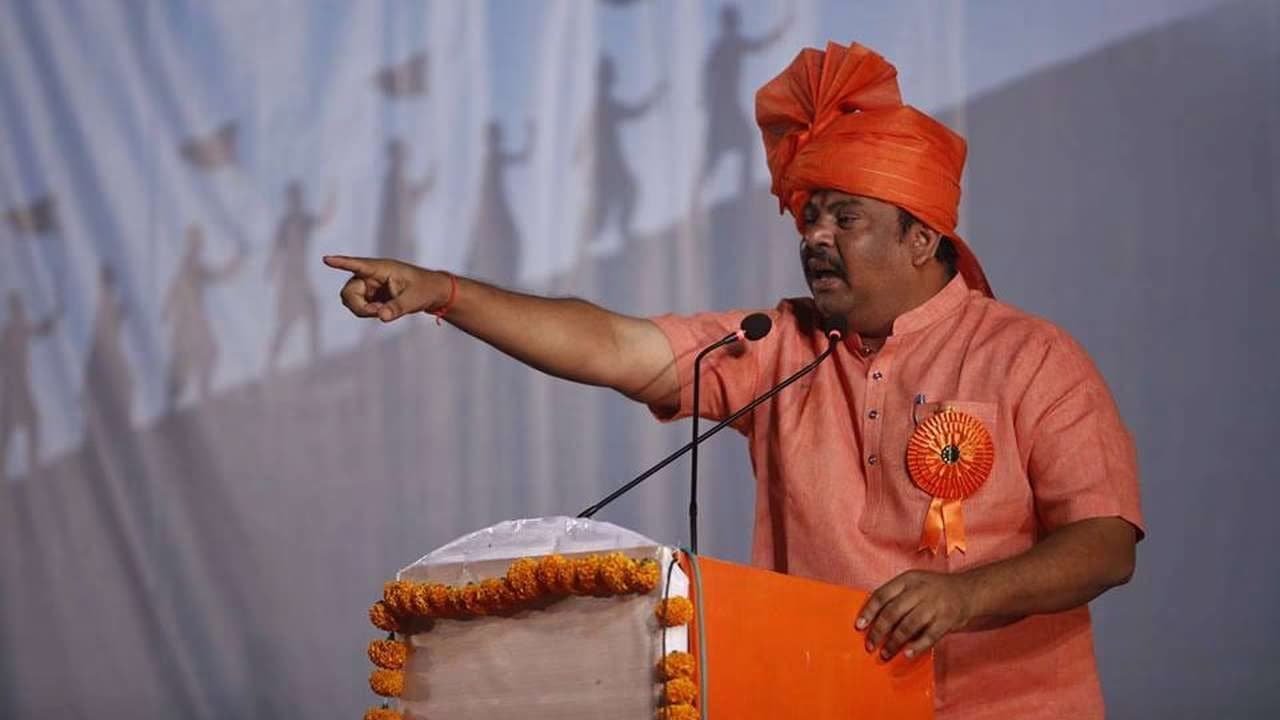
The Bharatiya Janata Party (BJP) has revoked the suspension of its Telangana MLA T Raja Singh. The Central Disciplinary Committee of the BJP informed Raja Singh on Sunday, October 22, that it has decided to revoke his suspension forthwith. Raja Singh was suspended last year for making derogatory comments about Prophet Mohammad.
The Committee took the decision on the basis of his reply to the show-cause notice issued to him following his suspension. Raja Singh shared the letter on ‘X’ and thanked Prime Minister Narendra Modi, BJP President JP Nadda, and other leaders for the same. The revocation of suspension cleared the decks for fielding Raja Singh in the next month’s Assembly elections. He will contest again from the Goshamahal constituency in Hyderabad.
The MLA was arrested by the police in August last year for comments hurting the religious sentiments of Muslims. He was sent to jail on August 25 after the Hyderabad Police Commissioner invoked the Preventive Detention Act. Raja Singh was released from jail on November 9 after the Telangana High Court set aside the police commissioner’s order and granted him bail. The court, however, directed him not to make any speech or comment that created hatred among communities.
As the BJP delayed the revocation of his suspension, Raja Singh had told the state assembly in August this year that he would not be a member in the next assembly.
His meeting with state Minister for Finance and Health T Harish Rao, had triggered speculation that he was planning to shift loyalties to the ruling Bharat Rashtra Samithi (BRS). He, however, clarified that he has no plans to leave the BJP or contest as an independent.
BJP names 83 more candidates for Rajasthan polls, fields ex-CM Vasundhara Raje from Jhalrapatan 7
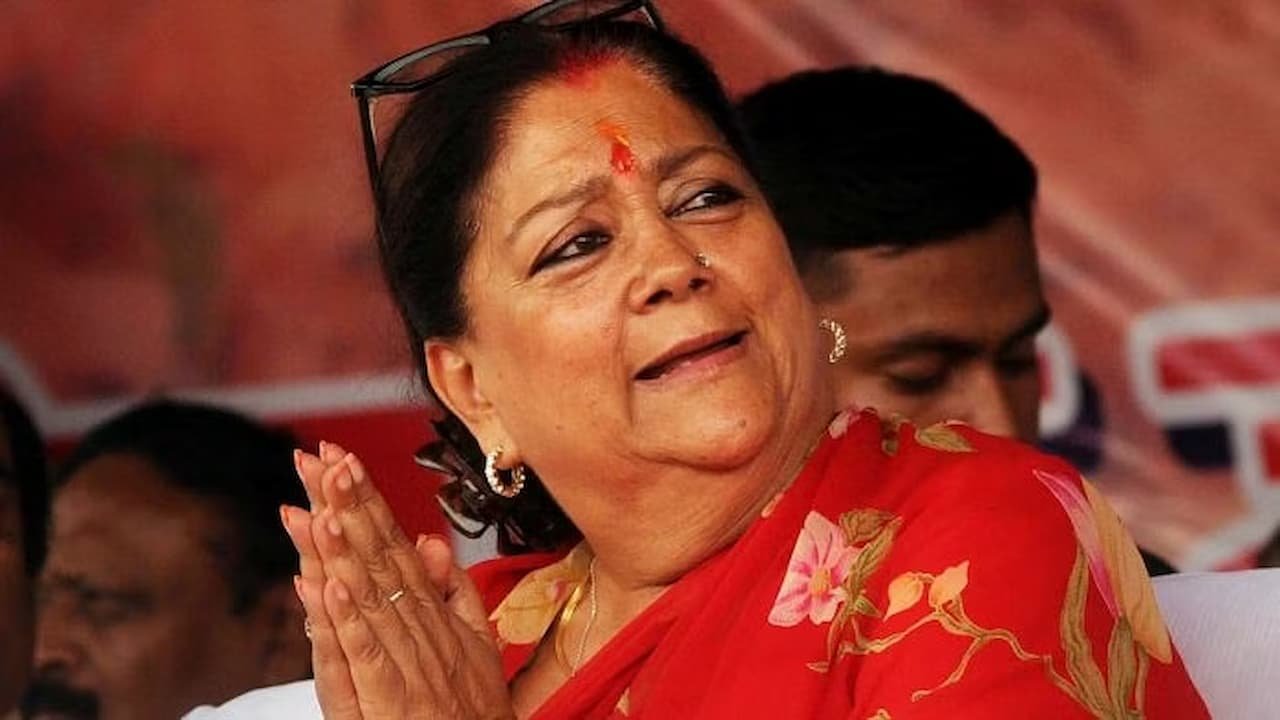
The BJP on Saturday named 83 more candidates for the Rajasthan Assembly polls, including former chief minister Vasundhara Raje from her traditional Jhalrapatan seat.
Fifty incumbent MLAs have been given tickets while nine have not been renominated by the Bharatiya Janata Party (BJP), which has also not named any MP in the second list.
Of the 83 candidates, 10 are women.
With this, the BJP has so far named 124 candidates for the November 25 polls to the 200-member Rajasthan Assembly.
Some of the supporters of Raje, including two former state ministers, have also been given tickets.
The saffron party has decided to field Narpat Singh Rajvi from Chittorgarh after its earlier decision to deny the five-term MLA, who is the son-in-law of BJP stalwart Bhairon Singh Shekhawat, renomination from his Vidhyadhar Nagar seat.
This triggered a backlash from a section of party workers.
The BJP leadership’s about turn on Rajvi’s candidature is being seen as a damage-control exercise after the latter reacted angrily and cited his family legacy to hit out at the party.
The names also include Vishwaraj Singh Mewar, a descendent of Maharana Pratap Singh, who joined the party recently. He has been fielded from Nathdwara, which was won by veteran Congress leader C P Joshi in 2018.
Former state BJP chief Satish Poonia has been fielded from Amber, the seat he currently represents in the Assembly.
Rajendra Rathore, the BJP’s leader in the Assembly, has also been given a ticket. However, his constituency has been changed from Churu to Taranagar.
A seven-time MLA, Rathore represented Taranagar in the Assembly for just one term, from 2008 to 2013.
Former Nagaur MP Jyoti Mirdha, who joined the BJP last month, has been fielded from Nagaur.
Incumbent MLAs Subhash Poonia (Surajgarh), Ashok Lahoti (Sanganer), Mohan Ram Chaudhary (Nagaur), Roopa Ram (Makrana), Suryakanta Vyas (Soorsagar), Harendra Ninama (Ghatol), Chandrabhan Singh Akya (Chittorgarh) and Lalit Kumar Ostwal (Bari Sadri) were not given tickets.
Also, Dholpur MLA Shobharani Kushwah, who was expelled from the party for cross-voting in the Rajya Sabha polls last year, was not given a ticket.
Soorsagar MLA Suryakanta Vyas (85) had praised Chief Minister Ashok Gehlot sometime ago for development work, which had invited critical remarks from Union minister Gajendra Singh Shekhawat, who is the MP from Jodhpur.
From Surajgarh, the BJP has fielded former MP Santosh Ahlawat.
The 200-member Rajasthan Assembly will go to polls on November 25 and the counting of votes will be taken up on December 3.
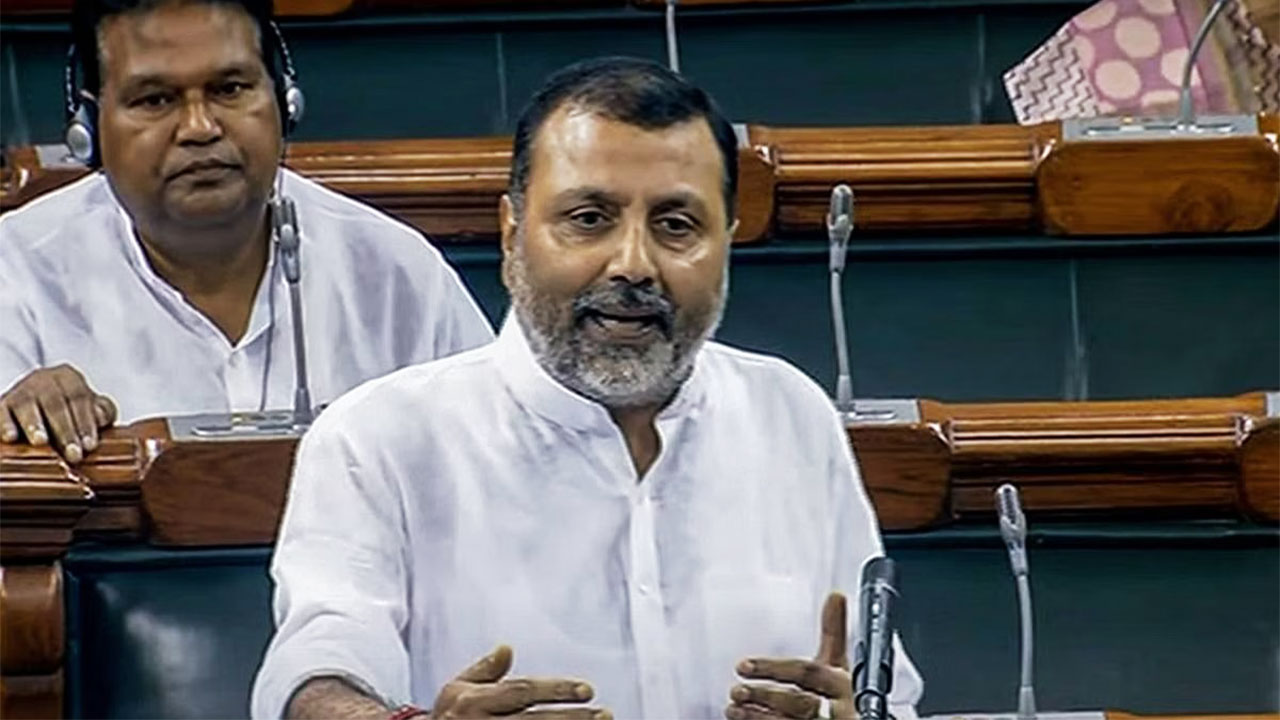
Nishikant Dubey moves Lokpal against Mahua Moitra; TMC MP hits back over allegations 9
The war of words between BJP MP Nishikant Dubey and Trinamool Congress (TMC) MP Mahua Moitra over his “cash for query” allegations against her continued on Saturday, with both targeting each other through social media posts without taking names. Dubey said he had moved Lokpal over his complaint against the Trinamool Congress MP.
“Tired of hearing CBI-CBI. Filed a complaint with Lokpal today. Lokpal probes the corruption of MPs and Ministers and CBI is its medium,” Dubey said in a post on ‘X’ Earlier in the day, he accused Moitra of “mortgaging country’s security” and alleged that when the ID of the concerned MP was opened in Dubai, she was in India. He said the NIC, (National Informatics Centre) handles various government sites and had provided information to the probe agencies.
Mahua Moitra also posted on X and urged NIC to release all details of MPs publicly to show “they were physically present where IDs were accessed”. “Request NIC to please release ALL details of MPs publicly to show they were physically present in place from where IDs were accessed by their PAs & researchers/interns/staff. Don’t use Fake Degree wala for leak, make this public NOW,” she said..
She also said she got message “about impending CBI raid”. “I am busy with Durga Puja. I invite CBI to come home & count my pairs of shoes. But first please file FiR into Rs13,000 crore coal money Adani stole from Indians.
“Unknown FPIs own Adani shares whose origin SEBI cannot find & Adani gets MHA clearance to buy Mumbai airport. This is the real question of National security. Not email ID that every PA & every unchecked intern team of every MP has publicly and accesses at will,” she said. Meanwhile, the Trinamool Congress has distanced itself from Moitra over ‘cash for query’ allegations levelled by Dubey, with party leader Kunal Ghosh stating that the “related person may answer the issues”.
“No comments on this particular issue. We have nothing to say on it, The Trinamool Congress will not say a single word. We have nothing to say and no comments. The related person may explain or answer the issues but not Trinamool Congress,” Kunal Ghosh told ANI. Asked about BJP levelling allegations against the Trinamool Congress, he said “we are observing the issue, gathering information but we don’t want to comment anything now”.
“Till now no comments,” he said answering another query about possible action. While a few other opposition leaders have commented on the controversy, it is the first time that a senior Trinamool Congress leader has spelled out the party’s stance.
The Ethics Committee of Lok Sabha has called BJP MP Nishikant Dubey and Advocate Jai Anant Dehadrai, for oral evidence later this month in regard to the complaint filed by the BJP MP against Moitra alleging that she has “a direct involvement in ‘cash for query’ in Parliament”. Dubey had on Sunday written a letter to Lok Sabha Speaker Om Birla making “cash for query” allegations against Moitra and demanding an inquiry committee against her.
He urged for her “immediate suspension” from the House alleging that “bribes were exchanged between her and businessman Darshan Hiranandani to ask questions in Parliament in exchange for cash and gifts”.Businessman Darshan Hiranandani on Friday submitted a “sworn” and notarised affidavit to the Ethics Committee of Lok Sabha, a day after he reportedly submitted a signed affidavit in the ‘cash for query’ allegations involving Mahua Moitra.
Sources said the Ethics Committee has received a fresh affidavit from Hiranandani, who resides in Dubai. Office of Consulate General in Dubai said in its stamp that the signatory (Hiranandani) had signed it in their presence and that no “responsibility is accepted for the contents of the document”. The contents of Hiranandani’s two affidavits are the same.
Moitra, in her response to the “affidavit” had said in a press release on Thursday that it is “on white paper and not an official letterhead or notarised”. She also said there is “no official origin aside from a press leak”. Hiranandani, in his affidavit, made allegations against Moitra, claiming that she provided him with her “Parliament login and password” so that he “could post questions directly on her behalf when required”.
Moitra had said in the press release that the “contents of the letter are a joke” and that “he was forced to sign a white paper.” “The affidavit is on white paper, and not an official letterhead or notarized. Why would one of India’s most respected/educated businessmen sign a letter like this on white paper unless a gun was put on his head to do it?” Mahua said in the press release posted on ‘X’ on Friday.
“Darshan Hiranandani has not been summoned by the CBI or the Ethics Committee or indeed by any investigative agency yet. Who then has he given this affidavit to,” she said. “The contents of the letter are a joke. It has clearly been drafted by some half-wit in the PMO who doubles up as a creative writer in the BJP’s IT cell. It sings paeans to Modi and Gautam Adani while linking every opponent of theirs to me and my alleged corruption,” Moitra alleged.
“Clearly someone said, ‘Sabh ka naam ghusaa do, aisa mauka phir nahi ayega’,” she added. Further, attacking the Bharatiya Janata Party (BJP), the TMC leader said,
“Paragraph 12 claims that Darshan gave in to my demands because he was fearful of displeasing me. Darshan and his father run one of India’s largest business groups and their recent projects in UP and Gujarat have been inaugurated by the CM of Uttar Pradesh and by the Prime Minister. Darshan accompanied the PM abroad as part of his business delegation very recently. Why would such a wealthy businessman who enjoys direct access to every minister and the PMO be coerced by a first-time opposition MP into giving her gifts and giving into her demands?” “It is totally illogical and only cements the truth that the letter was drafted by the PMO and not Darshan”, the TMC MP alleged
The face-off between BJP MP Nishikant Dubey and Mahua Moitra over his ‘cash for query’ allegations took a fresh turn on Thursday as Hiranandani, who was behind the alleged payoffs, responded in an affidavit. In his three-page signed affidavit, Hiranandani said that he resides in Dubai and came across letters dated October 14, by Advocate Jai Anant Dehadrai to the CBI and to BJP MP Nishikant Dubey where his name figured prominently. He says he has been following the events carefully.In his affidavit, the businessman admitted to his friendship with Mahua Moitra.
“I have known Mahua since I met her at the Bengal summit 2017…..Over a period of time, she has become a close personal friend of mine…However, as our interactions grew over time she asked for odds and ends which involved my time,” the affidavit read. Hiranandani claimed that the TMC MP saw attacking the Adani group as a route to fame. “She became Lok Sabha MP in May 2019… She was advised by her friends that the shortest route to fame was by attacking Narendra Modi. She thought that the only way to attack PM Modi was by attacking Gautam Adani and his group as they both come from Gujarat” his affidavit said.
Hiranandani claimed that Mahua Moitra did share her Parliament Login credentials with him. “She knew that Indian Oil Corporation was getting into an arrangement with Dhamra LNG a joint venture of the Adani group….. She drafted a few questions that she could raise in parliament that would have elements to embarrass the Govt and target the Adani group. She shared with me her email ID as MP, so I could send her information and she could raise the questions. I went along with her proposal” he claimed. Hiranandani also claimed that he used the TMC MP’s login credentials to pose questions on the Adani group himself.
“She also received unverified details from several sources including some claiming to be former Adani group employees…..Certain information was shared with me, based on which I continued to draft and post questions using her Parliamentary login” he said in his affidavit. Hiranandani then claimed that the TMC MP also demanded favours and gifts from him. “She made frequent demands of me and asked for various favours, The demands included gifting her expensive luxury items…..travel expenses, holidays etc” he claims in his affidavit.
Dubey has also written to Union IT Minister Ashwini Vaishnaw over the allegations.
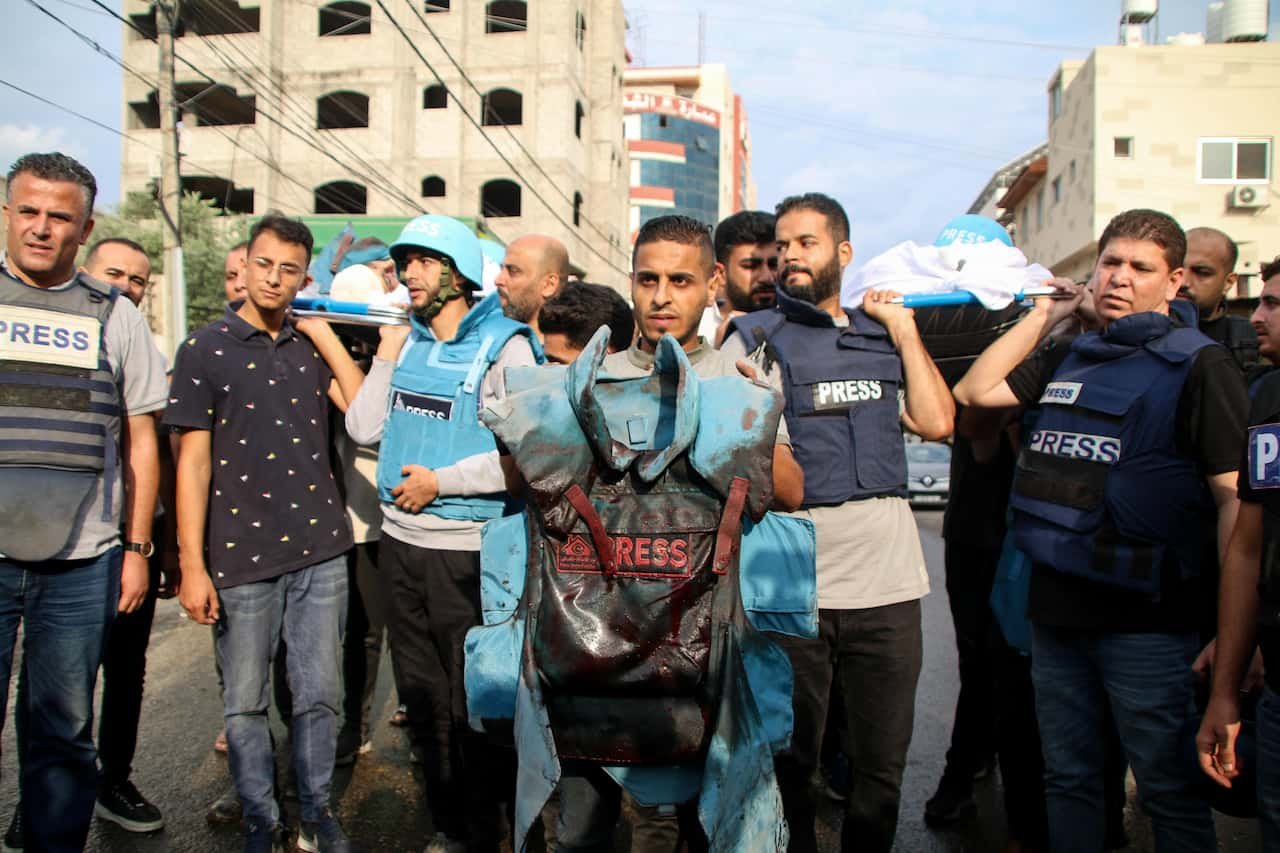
The Committee to Protect Journalists, a New York-based nonprofit, has said that at least 22 journalists have been killed since the Hamas launched its massive assault on Israel on October 7.
In a report released on Friday, the CPJ said that it is investigating all reports of journalists killed, injured, detained, or missing in the raging conflict, including those hurt as hostilities spread to neighboring Lebanon.
“As of October 20, at least 22 journalists were among the more than 4,000 dead on both sides since the war began on October 7, with hundreds killed in Tuesday’s hospital blast in Gaza,” it said.
“Journalists in Gaza face particularly high risks as they try to cover the conflict in the face of a ground assault by Israeli troops, devastating Israeli airstrikes, disrupted communications, and extensive power outages.”
Of the 22 slain journalists, 18 were Palestinian, three were Israeli, and one was Lebanese.
While eight reporters were injured, three others have been reportedly missing or detained.
The CPJ said that it was probing “numerous unconfirmed reports of other journalists being killed, missing, detained, hurt or threatened, and of damage to media offices and journalists’ homes”.
“CPJ emphasizes that journalists are civilians doing important work during times of crisis and must not be targeted by warring parties,” said Sherif Mansour, CPJ’s Middle East and North Africa program coordinator.
“Journalists across the region are making great sacrifices to cover this heartbreaking conflict. All parties must take steps to ensure their safety.”
The nonprofit stressed that it remained unclear whether all of the slain journalists were covering the conflict at the time of their deaths.
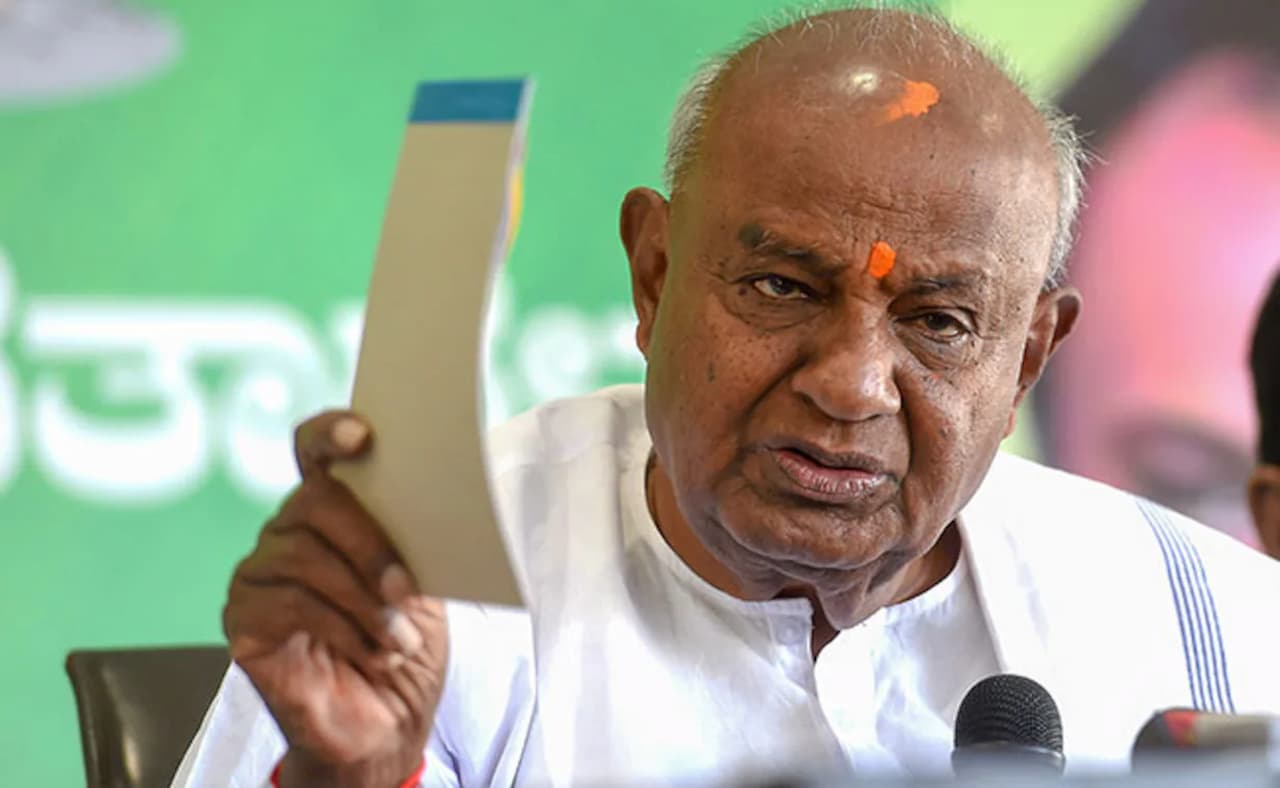
CPI(M) has some confusion about BJP-JD(S) alliance, says Deve Gowda, clarifies he never said Left party 'supported tie-up' 12
JD(S) patriarch H D Deve Gowda on Saturday said there is some confusion in Kerala’s CPI(M) with regard to his party’s alliance with the BJP in Karnataka and clarified that he never said the ruling Left party in the neighboring state supported the tie-up.
”There is some confusion about my statement on the CPI(M). My Communist friends do not seem to have followed what I said nor the context in which I said,” Gowda said on the social media platform X.
”I only said my party unit in Kerala is getting along with the LDF government as things within my party units outside Karnataka remain unresolved after our alliance with the BJP. I wish CPI(M) leaders had chosen their words better or had sought clarification,” the JD(S) patriarch said.
While removing state JD(S) Karnataka unit president and former union minister C M Ibrahim from the state working committee by dissolving it—for raising a banner of revolt against the party leadership for tying up with the BJP—Gowda had said, ”Kerala’s Left government’s Chief Minister Pinarayi Vijayan has given full concurrence to move forward in Karnataka with the BJP to save the party. This is the position.”
However, Vijayan on Friday rejected Gowda’s claim that the Left leader had approved of Kerala ruling LDF partner JD(S) having an alliance with the BJP in Karnataka and said it was both ”baseless and devoid of truth”.
The Kerala Chief Minister even asked the former Prime Minister to correct his statement.
In a strongly worded statement, Vijayan said the JD(S) state unit had made it clear that they were categorically against the association with the BJP and that they would stand strong with the Left Front in Kerala.
”This is not the first time Deve Gowda is joining hands with the BJP. We all remember 2006, when JD(S) joined the BJP. He left this ideology and associated with the BJP to get a ministerial post for his son,” Vijayan said.
Vijayan also attacked the Congress which has alleged that there are links between the CPI(M) and the BJP, and asked the grand old party not to ”make a fool out of themselves”.
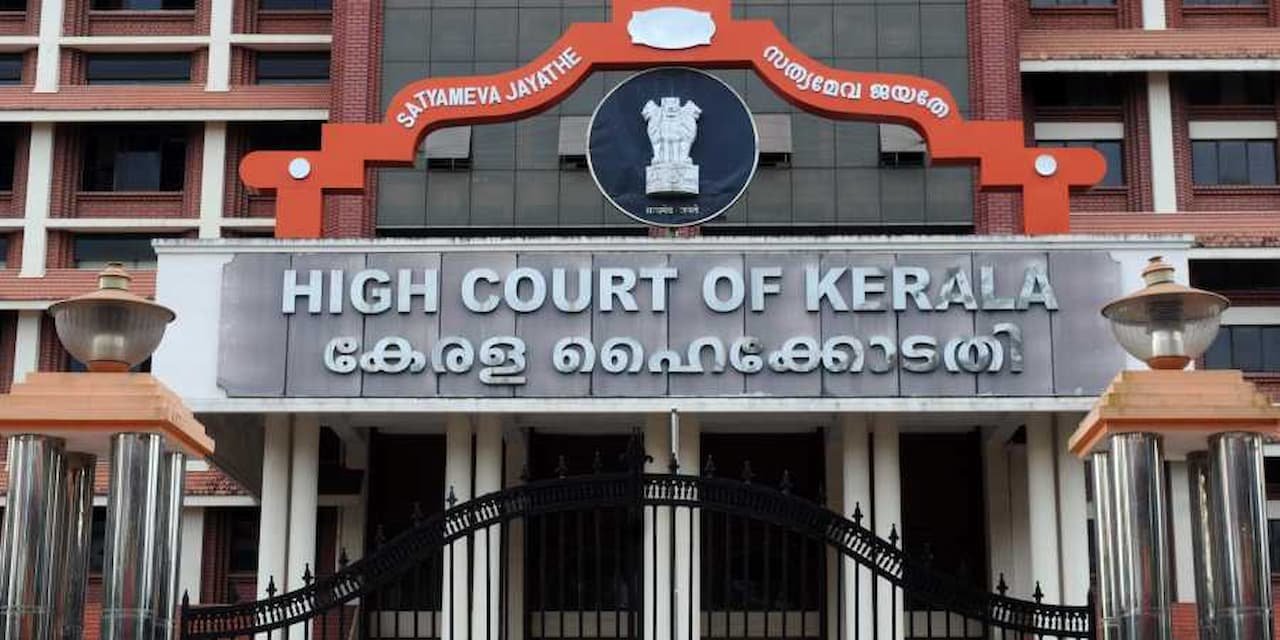
Wife's poor cooking skills, not cruelty, rules Kerala High Court 14
The Kerala High Court has held that a wife not preparing food for her husband due to a lack of cooking skills cannot be termed cruelty for the purpose of dissolving a marriage.
The ruling by a division bench of Justices Anil K. Narendran and Sophy Thomas came as it took up a man’s petition seeking divorce on the ground of cruelty.
“Another ground of cruelty urged by the appellant is that the respondent did not know cooking and so she did not prepare food for him. That also cannot be termed cruelty sufficient enough to dissolve a legal marriage,” it said.
The couple were married on May 7, 2012, and were living in Abu Dhabi. In his petition seeking divorce, apart from leveling a few allegations of her ill-treatment, the man said that she was not ready to cook food for him and even quarreled with his mother for silly reasons.
But she dismissed the allegations and contended that her husband had sexual perversions and even body-shamed her; besides, he was mentally unstable and had discontinued the medicines prescribed to him.
The High Court noted that the wife expressed her anxiety about the behavioral changes seen in her husband and was seeking the assistance of his employer to find out what was wrong with him in order to bring him back to a normal life.
And on the ground that the marriage was “dead practically and emotionally”, and that the parties had been living separately for ten years, it said: “So legally, one party cannot unilaterally decide to walk out of a marriage, when sufficient grounds are not there justifying a divorce…saying that due to non-co-habitation for a considerable long period, their marriage is dead practically and emotionally.
No one can be permitted to take an incentive out of his own faulty actions or inactions.” It dismissed the husband’s petition to dissolve the marriage.
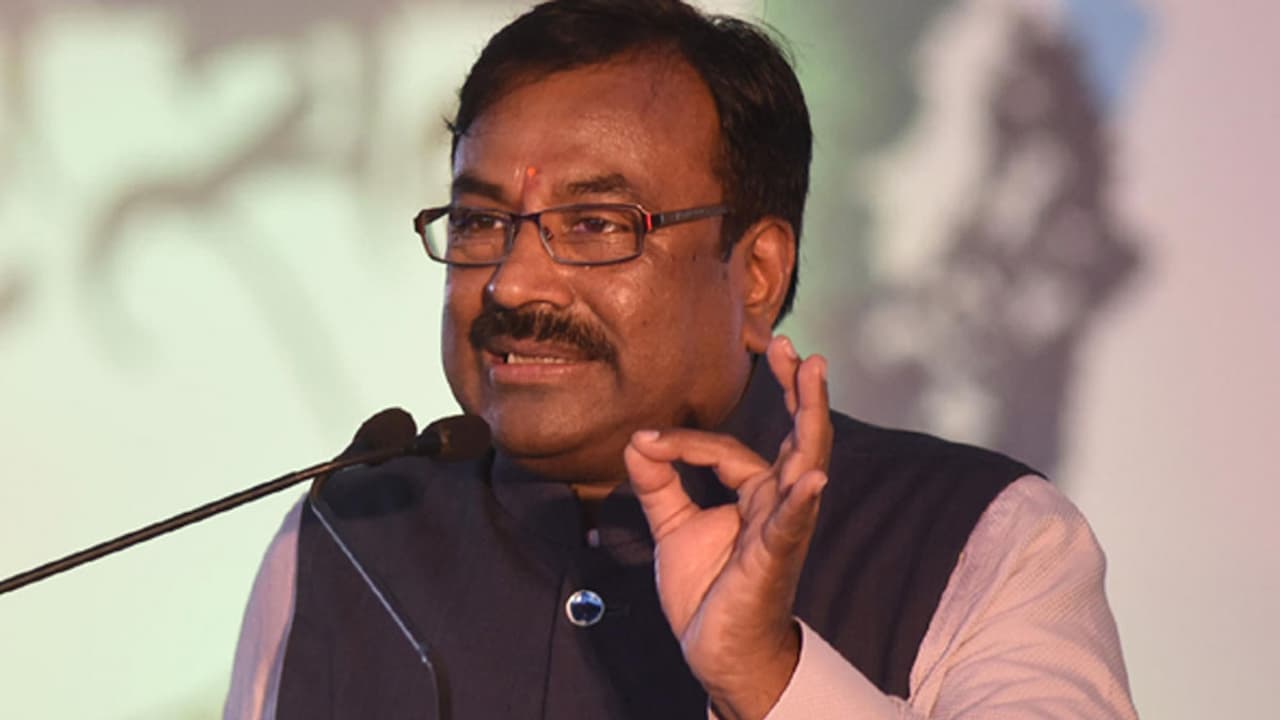
"Citizen should read the Constitution" appeals Nagpur's Guardian Minister Sudhir Mungantiwar 16
Although the area of Nagpur and Chandrapur is known as the ‘Tiger Capital’ in the world, Babasaheb gave a tiger scare in both of these districts in 1956, and the entire country has heard this scare. The constitution given by this great man also includes freedom, rights, responsibility, and duty. Therefore, every citizen should read the Constitution. One should resolve to follow the ideas given by Babasaheb Ambedkar and take inspiration from them to live,’ said the state minister for forests, cultural affairs, fisheries, and the guardian minister of the district.
He greeted the great man in a program organized by the Babasaheb Ambedkar Memorial Trust at Dikshabhoomi Chandrapur. He was talking at that time. Trust President Arun Ghotekar presided over the program. Chief Guest MLA Sudhakar Adbale, Kishore Jorgewar, Subhash Dhote, Pratibha Dhanorkar, Vice President of the Institute Ashok Ghotekar, Secretary Vamanrao Modak, Gondwana University Chancellor Dr. Prashant Bokare and others were present.
Today there are more than 750 districts in the country, but two districts, Nagpur and Chandrapur, are of special importance, said Guardian Minister Mungantiwar: ‘On October 14 in Nagpur and two days later, i.e., on October 16, 1956, in Chandrapur, Dr. Babasaheb Ambedkar initiated Buddhism for his followers. Both of these districts are famous for tigers today. But since 1956, Babasaheb’s horror has been heard by the whole country. Dr. The country and the state are moving according to the constitution given by Babasaheb Ambedkar.
He has mentioned everything in the Constitution. Along with individual freedom and rights, everyone has also been made aware of their responsibility and duty. Therefore, we should not stop only by remembering Babasaheb; we also have to implement his ideas. And for that, everyone has to read the constitution too.’
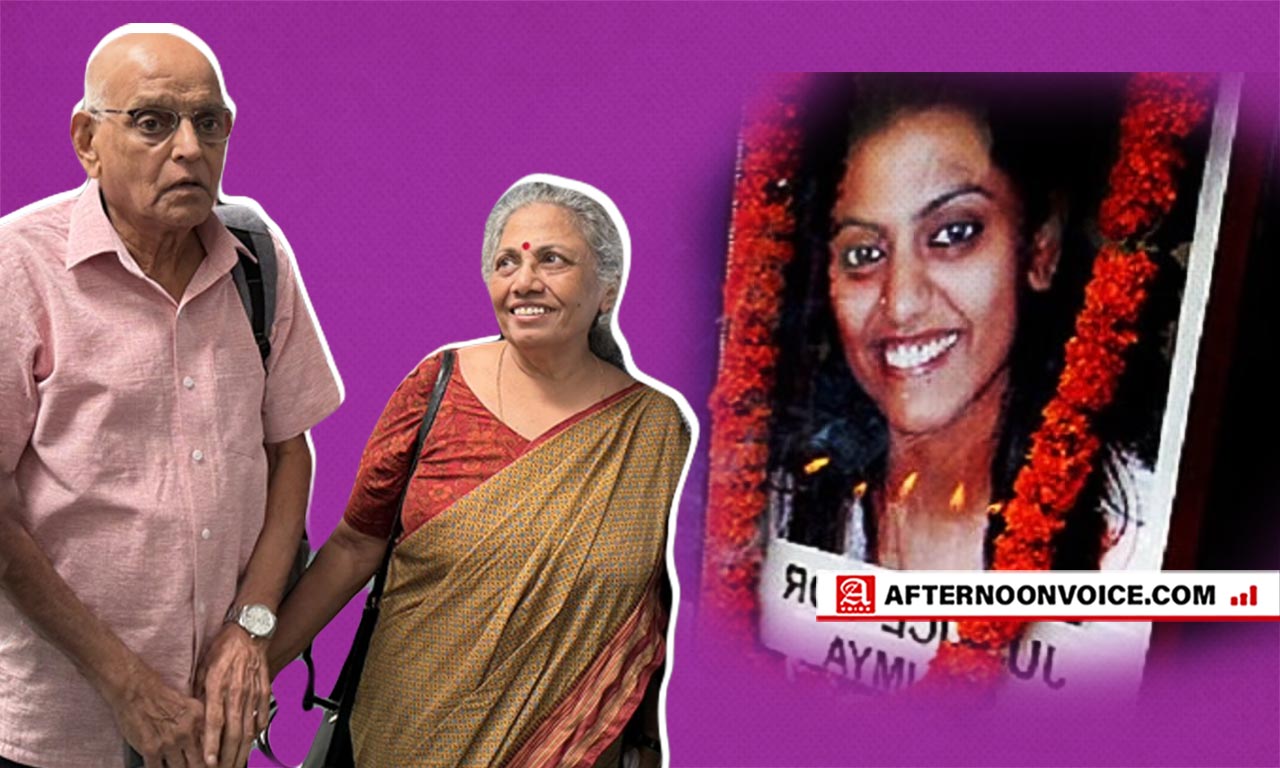
Soumya Vishwanathan's murder case judgement left her parents in pain even today 18
The sad and tired face of Soumya’s father, MK Vishwanathan, said it all. We might say his daughter got justice after 15 years of her murder, but that is not all. The parents who lost their daughter legally battled to know what had exactly happened and why their daughter had to lose her life. For them, there is no happiness even today because they will never get their daughter back. Soumya Vishwanathan’s murder was a big challenge to the investigators, as they had literally struggled to crack this murder case for months.
In 2008, on September 30, Soumya Vishwanathan, a 25-year-old journalist working with India Today, was found dead in her car on Nelson Mandela Marg in South Delhi. The police primarily struggled to identify her killers, but finally, in 2009, they got some breakthrough. The First Information Report (FIR) registered in this case the same day books unknown people for murder (Section 302 of the IPC).
Those days, police were investigating the murder of BPO employee Jigisha Ghosh. On March 21, 2009, the body of Jigisha was recovered from Faridabad. Police arrested three in connection with this case — Kapoor, Shukla, and Malik. Reports at the time had also suggested that Kapoor first shot at Vishwanathan to stop her car in a bid to attempt robbery but when she didn’t stop, he allegedly shot her gravely. During interrogation, one of the accused, Malik, alias Poppy, confessed to also being involved in Vishwanathan’s murder. Malik, who was arrested along with Kapoor and Shukla in connection with Ghosh’s killing, allegedly admitted to his involvement in Soumya Vishwanathan’s murder. Vishwanathan was shot in the head as she was driving back home from work in the early hours of September 30, 2008. According to court records, the local police station in Vasant Kunj received a phone call about the killing at 3.45 am.
Ravi Kapoor was a police informant and a car thief known to have several criminal backgrounds. He was arrested in his first auto theft case in 2002, and several newspapers reported about the same. Later, police claimed to have recovered the pistol that was used to kill Vishwanathan from Kapoor’s home. In October 2009, Kapoor threw chili powder at police personnel in a bid to escape when he was brought to Delhi’s Safdarjung Hospital for treatment. And in May 2010, he reportedly flashed a knife before a magistrate at the Patiala House Court during one of his hearings and claimed that he was ‘given the weapon by policemen to attack undertrials’ in Tihar jail, where he was lodged. In 2018, the Delhi High Court granted him bail but it was stayed by the Supreme Court.
Another accused, Amit Shukla, was one of Kapoor’s crime partners in the case and allegedly helped him take the fatal shot at Vishwanathan. According to reports, Shukla fled from Delhi two days after Vishwanathan’s murder and returned to Delhi a week before Ghosh was killed. Third accused Baljeet Malik, alias Poppy, is believed to be the person whose confession gave police a breakthrough in the investigation. In 2019, after Malik submitted an application to the Delhi High Court to ask for the trial to be expedited, the latter asked the lower court why the case was being delayed. In its response, the trial court reportedly cited the absence of prosecution witnesses and the lack of a special public prosecutor.
Fourth accused Ajay Kumar was still on the run, he was eventually arrested in 2009. In 2010, during one of his court hearings at the Patiala House Court Complex, Kumar reportedly attacked another accused in the case, Ajay Sethi, with a blade. Sethi, who allegedly dealt in stolen vehicles, later claimed he was unaware that a stolen vehicle that Kapoor was trying to sell him was used in the murder of Vishwanathan. He had also been arrested four times before he was arrested for Vishwananathan’s murder.
In October 2009, Delhi Police invoked the MCOCA against the five accused, saying that they were working as part of an “organized gang”—an essential element to invoke the stringent law. In its charge sheet, police listed Ravi Kapoor as the leader of the gang. Police also believed invoking the stringent law would help the investigation since the accused were not supposed to get bail for at least six months. For this, police also needed to trace previous FIRs against the accused.
In 2014, public prosecutor Rajeev Mohan, who had been handling the case since the start of the trial, reportedly quit to pursue private practice—a development that came as a major setback in the case. Then, in November 2015, then-Delhi Lieutenant Governor Najeeb Jung reappointed Mohan as the public prosecutor in the case. In 2016, Soumya Vishwanathan’s father, M.K. Vishwanathan, approached Delhi Chief Minister Arvind Kejriwal about the delay in the trial.
Fifteen years after the murder of journalist Soumya Vishwanathan, Delhi’s Saket Court pronounced the accused guilty in the case on Wednesday. The court convicted four accused in the murder case. The fifth accused has been convicted for other offences in the case. All five accused have also been convicted under Maharashtra Control of Organised Crime Act (MCOCA). The court will announce the quantum of sentence next week.