Mumbai customs dept seize diamonds worth Rs 1.49 crore, one held 2
Mumbai Air Customs have arrested one Indian national traveling to Dubai and seized 1559.6 carats of natural and lab-grown diamonds worth Rs 1.49 crore, officials said. According to the officials, the accused was arrested on Wednesday and remanded to judicial custody.
“The seized diamonds were ingeniously concealed inside a tea packet,” added the officers of customs. Further investigation into the matter is underway.
Mumbai Air Customs on 9th August seized 1559.6 carat natural and lab grown diamonds worth Rs 1.49 Cr from a person travelling to Dubai, which were ingeniously concealed inside a tea packet. The passenger arrested and remanded to Judicial custody: Customs pic.twitter.com/OmebdFcN99
Earlier, Cochin Customs officers recovered gold, worth around Rs 85 lakh, from the rear toilet of an Indigo Airlines plane. The gold was in paste form and found in two unclaimed bags, according to officials.
The officials said the gold weighed around 1,709 grams. “On the basis of information received from Indigo Airlines staff, two unclaimed packets containing gold in paste form were recovered from the rear toilet of flight 6E 1404 from AUH,” said Cochin Customs. Further investigation is on in pursuance of the recovery, the officials added.
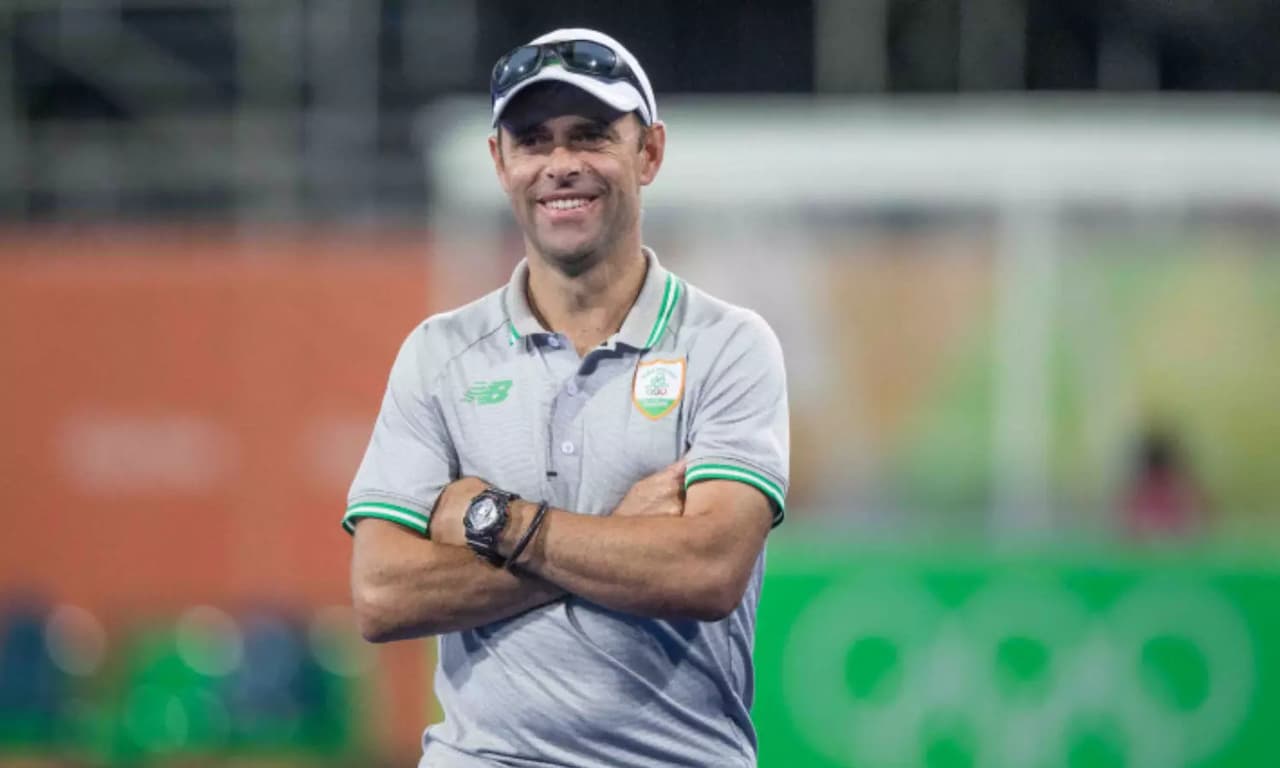
I don't do a lot of coaching from sidelines, but during training: Hockey coach Fulton 4
India hockey team head coach Craig Fulton said following his team’s semifinal win over Japan in the Asian Champions Trophy that he is not someone who likes giving instructions to players from the sidelines, but prefers imparting lessons during training.
India thrashed Japan 5-0 in the last-four clash to set up a title showdown here with Malaysia on Saturday.
Following the huge win, Fulton said, ”I don’t do a lot of coaching from the sidelines, but during training. That’s where the ideas are installed. Maybe, there are a few things that have to change (during the match), but it’s up to the senior players to take a call.” India skipper Harmanpreet Singh, too, was all praise for Fulton for bringing in ”structural changes” to the side.
”Every coach has a different mentality. Our past coaches have been good. Even he (Fulton) is good. Every coach thinks about the betterment of the team,” said Harmanpreet after the match on Friday.
”He is doing a good job. While we have brought in structural changes in our team, managing it (changes) at such a short notice is a highly positive point for us. All credit to him.” Harmanpreet added that staying strong defensively and converting opportunities would be the key to success in the final.
”It’s a great achievement to make it to the final, which would be completely different compared to league matches. It was a good performance (on Friday), as we played according to our plans. We even created our opportunities as per the plans.” ”(On Saturday), our focus would be to stay strong defensively and convert most of our chances,” he added.
The win against Japan saw Mandeep Singh and Vivek Sagar Prasad work in tandem on several occasions and Fulton called them the ”engine room” of the side.
”It’s a nice mix. They have played a lot of hockey together. So, when they are in full flow, they play free, and they have the right focus that can open up our positions. They were all good today. They were the engine room, which was nice to see,” he said.
Goalkeeper is like a coach: Sreejesh
Veteran India goalkeeper PR Sreejesh, who earned his 300th international caps in the match against Japan, said, at times, he has to guide and instruct his players on the field as he has the best view of the rival team’s placement.
”I always believe that goalkeeper is more of a coach because I’m the only one standing behind and watching the entire game. When we are sitting in a team meeting, the instructions come and strategies play. But sometimes, the players find it hard in executing them. So, it’s my responsibility to guide them,” said the 35-year-old stalwart. Before the semifinal on Friday, Sreejesh was felicitated by Hockey India. He credited the team for helping him achieve the 300-match landmark in international hockey.
”What I am and where I am today is definitely because of the team. So, I wanted to thank them for supporting me or helping me when I need them. It’s all because of them.” Asked how he motivates the youngsters in the team, he said, ”I always keep telling the boys that if you have to achieve your dream, you have to go through sacrifices and need to bring in discipline. Stay focused on your goals and continue doing the hard work.
”When you are high, don’t get too excited. When you are low, don’t get too disheartened. Be neutral, and it will prolong your career. For goalkeepers, if they are young, they mostly sit out. They get to see more matches from the sidelines and learn a lot.
”Maybe, that’s the reason I have achieved my 300 caps now. Remember the dialogue, ‘Goalkeepers are like wine’. The more they age, the better they become,” he added.
Goalkeeping department in good hands
Sreejesh also asserted that the Indian goalkeeping department is in good hands, and that decent goalkeepers are on the way.
”Good goalkeepers are incoming. (Krishan) Pathak is getting really well. Pawan (Malik) is there with us. Suraj (Karkera) is also there. We have a good keepers’ pool at the junior level.
”Goalkeeping is a responsible job, and once you concede goals, you should know how to handle that pressure and situation and how to manage it. Experience is going to help you with that, while I also believe the goalkeeping is in good hands now.”
Bharatiya Nyaya Sanhita Bill proposes 3 years of imprisonment for spreading fake news 6
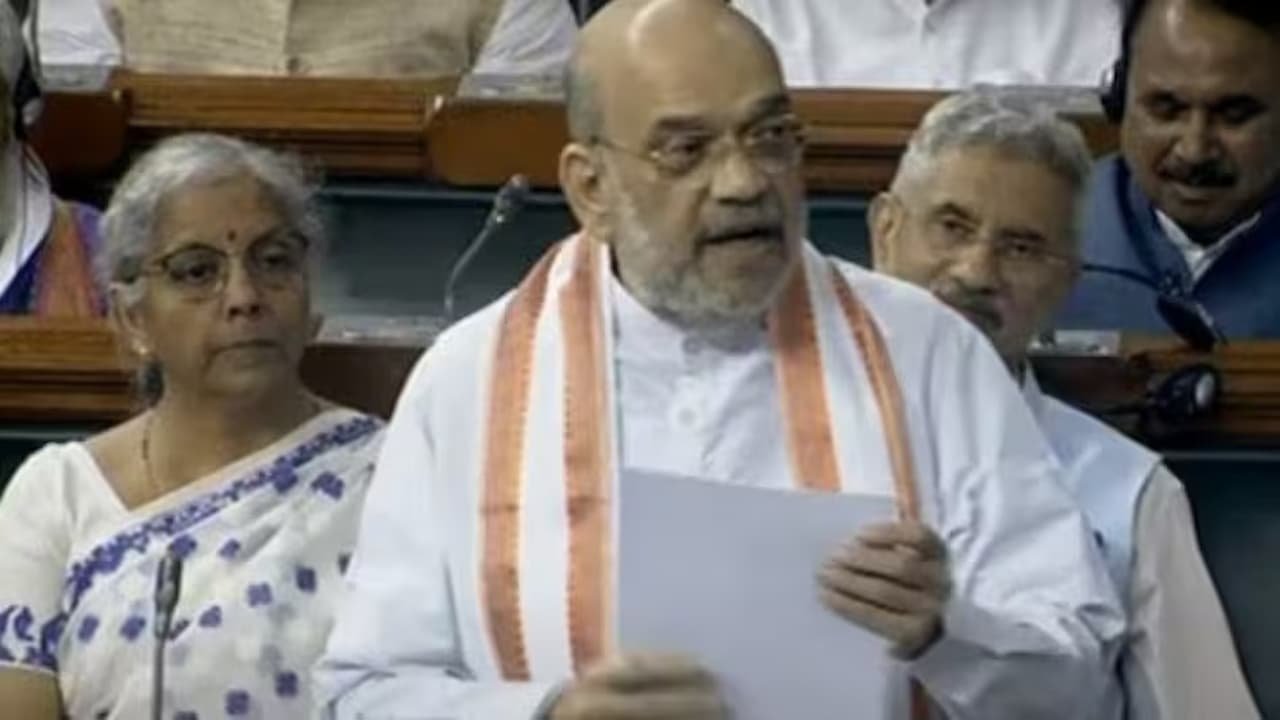
Union Home Minister Amit Shah introduced the Bharatiya Nyaya Sanhita Bill, 2023, in the Lok Sabha on Friday. The proposed bill, which has been referred to the Standing Committee for review, contains a provision under Section 195 that deals with those spreading ‘fake news or misleading information’ that jeopardizes the sovereignty and security of India and shall be punished for up to three years of imprisonment.
Section 195 (1) d reads, Whoever makes or publishes false or misleading information jeopardizing the sovereignty, unity, integrity, or security of India shall be punished with imprisonment, which may extend to three years, or with a fine, or with both.” The section is contained under Chapter 11 of the newly proposed bill under ‘Of Offences against the Public Tranquility’ under the subject of ‘Imputations and assertions prejudicial to national integration.’
The provisions related to imputations and assertions prejudicial to national integration’ were under Section 153B of the Indian Penal Code. Home Minister Amit Shah introduced three Bills in the Lok Sabha on Friday that aimed at giving justice and protecting the rights given to Indian citizens by the Constitution.
While introducing the bills, Shah said the soul of these three new laws will be to protect all the rights given to citizens by the Constitution. He said that the three bills—the Bharatiya Nyaya Sanhita Bill, 2023; the Bharatiya Nagarik Suraksha Sanhita Bill, 2023; and the Bharatiya Sakhshya Bill, 2023—fulfill a vow outlined by Prime Minister Narendra Modi in his Independence Day address to end all signs of slavery.
The bills will abolish the Indian Penal Code, 1860; the Criminal Procedure Code, 1898; and the Indian Evidence Act, 1872, made by the British. “The Indian Penal Code, 1860, will be replaced by the Bharatiya Nyaya Sanhita Bill, 2023; the Criminal Procedure Code, 1898, will be replaced by the Bharatiya Nagarik Suraksha Sanhita Bill, 2023; and the Indian Evidence Act, 1872, will be replaced by the Bharatiya Sakshya Bill, 2023,” he said.
Syria: Islamic State terrorists increase attacks on government forces 8
Suspected Islamic State terrorists attacked a bus carrying soldiers in the eastern Syrian province of Deir al-Zour, killing over 20 people and wounding others, the Voice of America reported, citing state media and a war monitor group. The late Thursday attack took place in the southeastern part of the restive province, according to Syria’s official news agency, SANA, which quoted a military source.
The Syrian Observatory for Human Rights, or SOHR, a Britain-based war monitor group, said the attack killed 26 Syrian government soldiers and wounded at least 10 others, VOA reported. The attack comes two days after another attack blamed on IS in the nearby province of Raqqa, the terror group’s former de facto capital in Syria. At least 10 Syrian troops were killed in that attack, according to local news reports.
Despite losing nearly all the territory it once held in Syria and Iraq, IS continues to carry out occasional attacks in both countries, as VOA reported. Rami Abdulrahman, director of SOHR, attributed the recent uptick in violence by IS in eastern Syria to its ability to recruit informants in government-held areas.
“The deteriorating economic situation in regime-held areas, particularly in eastern Syria, has allowed [IS] to recruit locals who provide intelligence and coordinate government military positions,” he told VOA. “This is a new tactic that Daesh is relying on,” Abdulrahman said, using an Arabic acronym for IS, also known as ISIS.
In addition to Syrian government troops and their allies, US-backed Kurdish-led forces control large parts of both the Deir al-Zour and Raqqa provinces. Those areas have also come under attack by IS militants. US Central Command said on Wednesday that the US-led Global Coalition against IS conducted 11 partnered operations in July against IS elements, killing three IS operatives and detaining six others, VOA reported.
“Thanks to the efforts of our Coalition-supported partners, we have seen a dramatic reduction in ISIS activity and effectiveness across our area of operations,” Major General Matthew McFarlane, the commander of the US-led Combined Joint Task Force, said in a statement, VOA reported. But Colin Clarke, a senior research fellow at the New York-based Soufan Center, said that despite successive decapitation strikes against the Islamic State leadership in Syria, the group can and will remain a persistent threat.
“ISIS has built up an insurgent infrastructure over the better part of the last decade,” he told VOA. “Dismantling that will be extremely difficult, and it’s likely that a low-level insurgency that flares up at various times is simply a fact of life for certain areas in Syria outside of regime control,” he added.
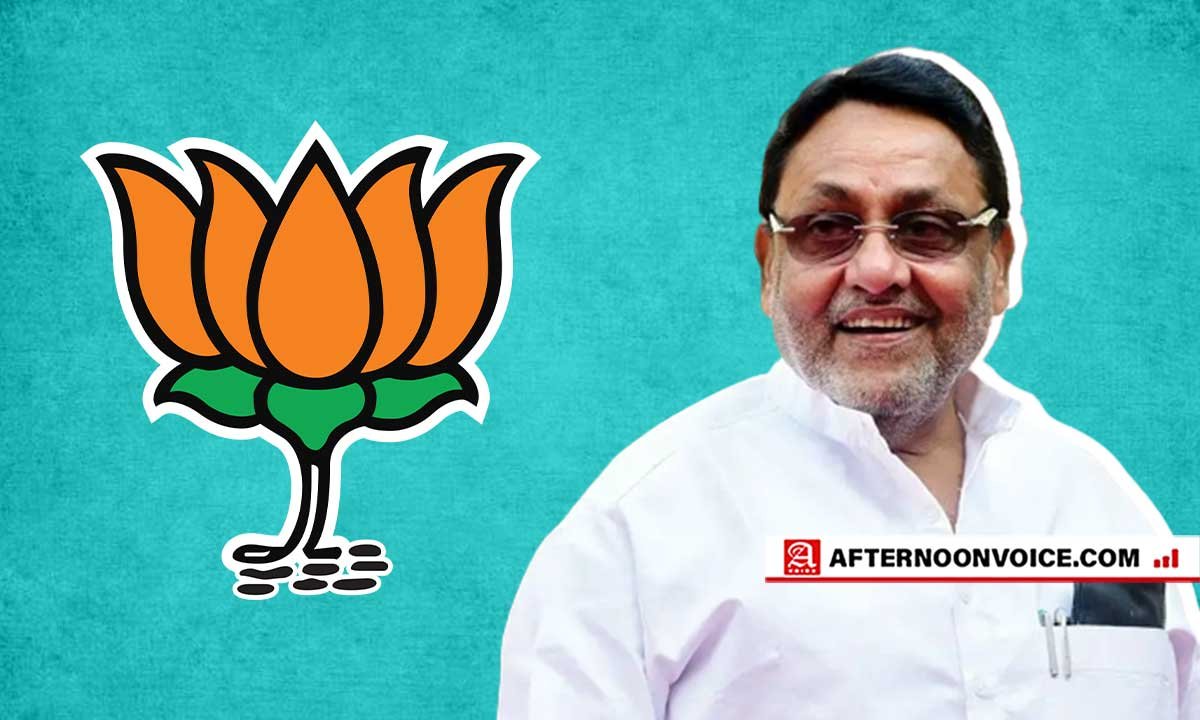
Nawab Malik should join BJP to stay out of jail? 10
Former Maharashtra Minister and NCP leader Nawab Malik was very vocal against the misuse of central agencies. The NCB, then led by the former Zonal Director Sameer Wankhede, had arrested Nawab Malik’s son-in-law, Samir Khan, in January 2021, hurling the NCP leader and minister into controversy’s lap. Months later, when Shah Rukh Khan’s son Aryan Khan was arrested in the drugs-on-cruise case in October 2021, Nawab Malik made a series of verbal jabs against Sameer Wankhede, who was then heading the investigation of the case at the time.
After the war of words with Fadnavis, Malik claimed late in November 2021 that a conspiracy was underway to frame him in an ‘Anil Deshmukh-style fake case,’ allegedly at the ‘behest’ of some officials in central agencies. Nawab Malik brutally exposed Sameer Wankhede, and later on, even the court raised questions about Sameer Wandhede’s intentions in the Aryan Khan case. Some of the ACB officers claimed that the case against Khan was fake and was manipulated to extort money and grab overnight fame. In the name of investigations, many Bollywood actors were harassed and booked wrongfully. When Mallik madly went after Wankhede, the film fraternity got some respite.
There is another story making the rounds in the political corridors about the arrest of Mallik. Many believe that the arrest of Mallik was desired by Sharad Pawar himself because Mallik was growing larger than life in state politics. He became the face of Muslim leaders on an all-India level, and there is still a tendinous craze for him among Muslim organizations, Maulavis, and Mosques. Mallik has earned love and respect in these pockets. In Maharashtra, there is an internal conflict between the UP-born Muslim leadership and the Marathi Muslim leadership, the battle being linguistics and provincialism.
During his recent tenure, he became unstoppable. Nawab Malik, a five-time MLA, was the national spokesperson of Sharad Pawar’s Nationalist Congress Party (NCP), which was a part of Maharashtra’s Shiv Sena-led government. He was the minister in charge of minority affairs.
Nawab is one of the most studious leaders, and his arguments in parliament had put the BJP and opposition in dizziness. Sharad Pawar has that typical backbiting tendency; he never wants any leader to grow beyond some limits. We have several examples to refer to, such as Vijay Singh Mohite Patil and Nawab Mallik Pawar, who sacrificed many good leaders for their own whims and fancies. We can give many such examples where Sharad Pawar played a culprit in spoiling the careers of his own leaders.
Well, Mallik’s arrest came after a passionate feud between the BJP and him. While the latter had accused Fadnavis of protecting Narcotics Control Bureau (NCB) official Sameer Wankhede, the saffron party leader had ‘exposed’ Malik’s alleged mafia dealings. Talking to media persons, Malik claimed that he had acquired some emails and WhatsApp chats of officers of central probe agencies “instigating” people to lodge false complaints against him.
The Enforcement Directorate claims Nawab Malik grabbed property in Mumbai’s Kurla worth Rs 300 crore by paying just Rs 55 lakh in 2005, with the help of Dawood Ibrahim’s sister, Haseena Parkar, and two associates. The National Investigation Agency registered a case against Dawood Ibrahim and his associates for terror financing through hawala networks. There being no First Information Report in the land grab issue, the Enforcement Directorate took note of this case and initiated a money laundering probe.
The agency says a Dawood Ibrahim associate, Salim Patel, had taken control of the Kurla property from its original owners through a power of Attorney in 1999. One portion of this property was transferred to Nawab Malik and the other to Haseena Parkar. Later, in 2005, Nawab Malik paid Rs 55 lakh to Dawood Ibrahim’s sister and bought the entire property, which is how he aided in the financing of Dawood Ibrahim’s gang, the agency claims.
Nawab Malik told the Bombay High Court that he has been arrested by the Enforcement Directorate (ED) for a transaction that is 22 years old, by retrospective application of provisions of the Prevention of Money Laundering Act (PMLA). The agency had searched Nawab Malik’s residence briefly before taking him to its south Mumbai office. The minister was arrested after over five hours of questioning.
We know that the judicial procedures take time, and Mallik has to go through the hell he invited for himself. After repeated appeals, the Supreme Court on Friday granted interim bail for two months to Malik on medical grounds. The Bombay High Court had previously rejected a plea by Malik seeking bail on health grounds. Malik had sought relief from the HC, claiming he was suffering from a chronic kidney disease, apart from various other ailments. Mallik has three options: wait for his jail term to finish, come clean in all the cases registered against him, or join the BJP holding the hand of Ajit Pawar and seek salvation.
(Any suggestions, comments or dispute with regards to this article send us on feedback@afternoonvoice.com)
On the medical ground SC grants two-month interim bail to NCP leader Nawab Malik 12
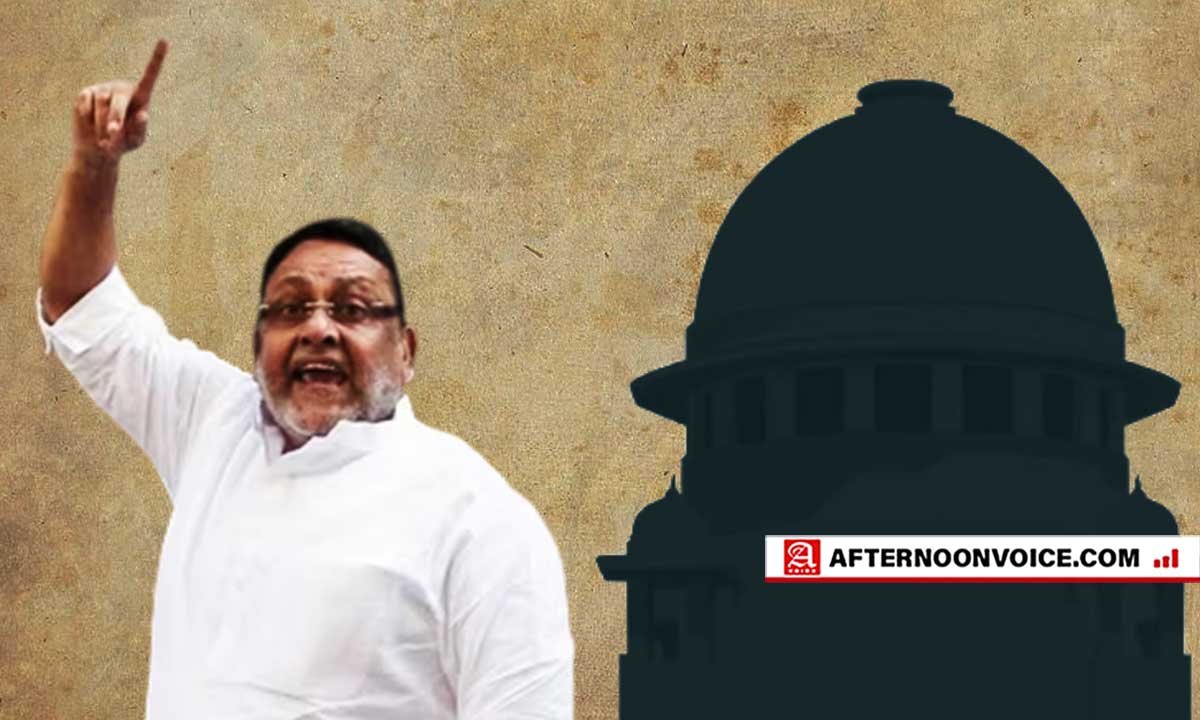
The Supreme Court on Friday granted interim bail for two months to former Maharashtra minister Nawab Malik on medical grounds in a money laundering case.
Malik had moved the top court against the Bombay High Court’s July 13 order denying him bail on medical grounds in the case being probed by the Enforcement Directorate (ED).
A bench of justices Aniruddha Bose and Bela M. Trivedi noted that Malik is in the hospital for kidney disease and other ailments.
”We are passing the order strictly on medical conditions and have not entered into the merits of the case,” the bench said.
The ED had arrested Malik in February 2022 in a case allegedly linked to the activities of fugitive gangster Dawood Ibrahim and his associates.
Opposition NCP, led by Sharad Pawar, welcomed bail granted to party MLA Nawab Malik by the Supreme Court.
The Bombay High Court had previously rejected a plea by Malik seeking bail on health grounds in a money laundering case lodged by the Enforcement Directorate (ED).
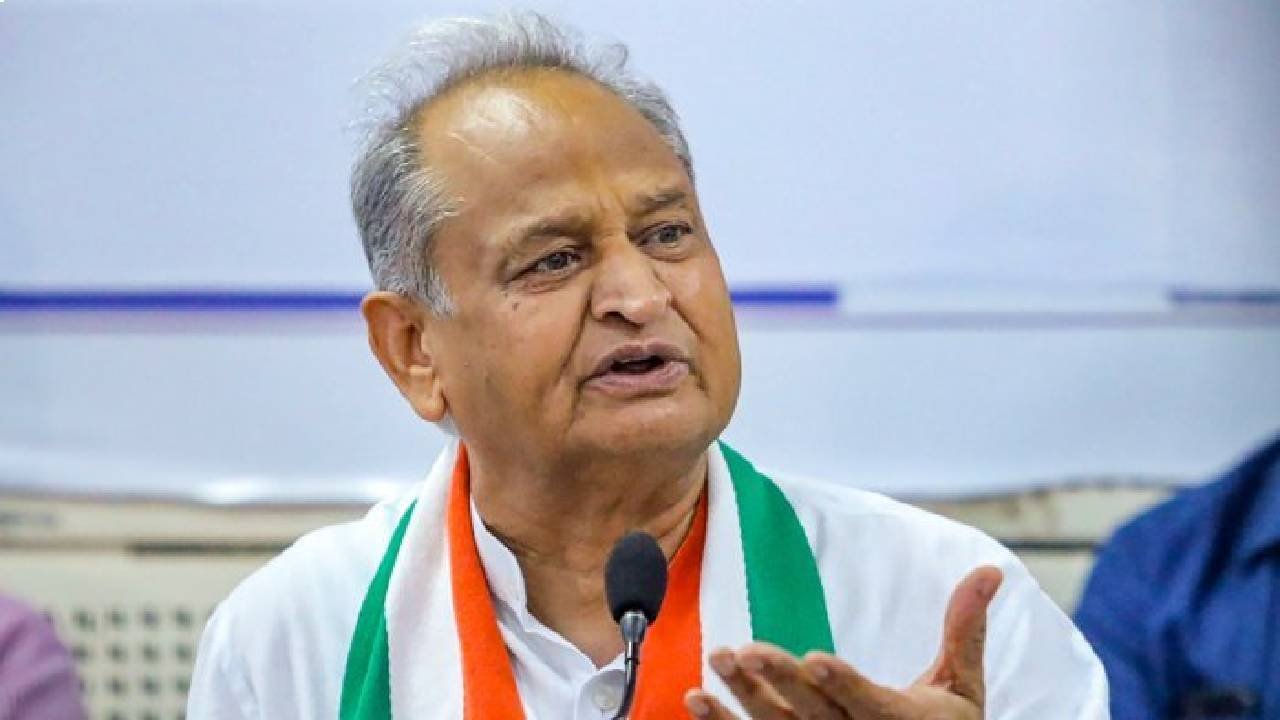
Rajasthan Chief Minister Ashok Gehlot on Thursday blamed Prime Minister Narendra Modi and Union Home Minister Amit Shah for the violence in Manipur, claiming that their behaviour could lead to similar unrest in other places.
“An entire state is burning. Imagine what will happen if this spreads to other parts of the country in five or ten years because these people have created this type of atmosphere,” he said.
The CM referred to Congress leader Rahul Gandhi’s remarks during the debate Wednesday in Parliament on the no-confidence motion against the government. Gandhi had accused the BJP-led government of harming the country.
Gehlot used the term “varg sangharsh” (class struggle) for the unrest in Manipur.
He said if the atmosphere worsens, the Centre, the state governments, the army or the police will not be able to tackle the situation, “like they are not able to do anything in Manipur”.
He was speaking to reporters on the sidelines of an event where he distributed smartphones to a group of women under a new scheme.
The CM attacked BJP leaders for targeting his government over law and order, claiming that there is more crime in BJP-run states like Uttar Pradesh and Madhya Pradesh.
He also recalled his recent announcement that people involved in sex crime will not be given state government jobs.
He urged people to share their ideas for Vision 2030 for Rajasthan. “It is my wish that Rajasthan should be among the top states by 2030 and every step of my government is targeted towards it.” On recent action by central agencies in Rajasthan, he said the Enforcement Directorate and the Income Tax Department become more active in state where elections are near.
“If someone has committed a wrongful act, dishonesty or theft, he should be put behind bars and I have no objection to it. But officers from these agencies are instructed by the home minister,” he said.
“Why should we worry, let them come,” he said. “I have said that I am a bigger faqir (ascetic) than Modi ji.” Forty lakh women will benefit from new Indira Gandhi Smartphone Yojana in the first phase, according to the state government.
“The scheme will empower women,” the chief minister said at the event.
He said widows and single women receiving pension and families with girl students have been picked for this phase.
Good News! By-road time to reach Goa to come down to 6 hours by Sept 15
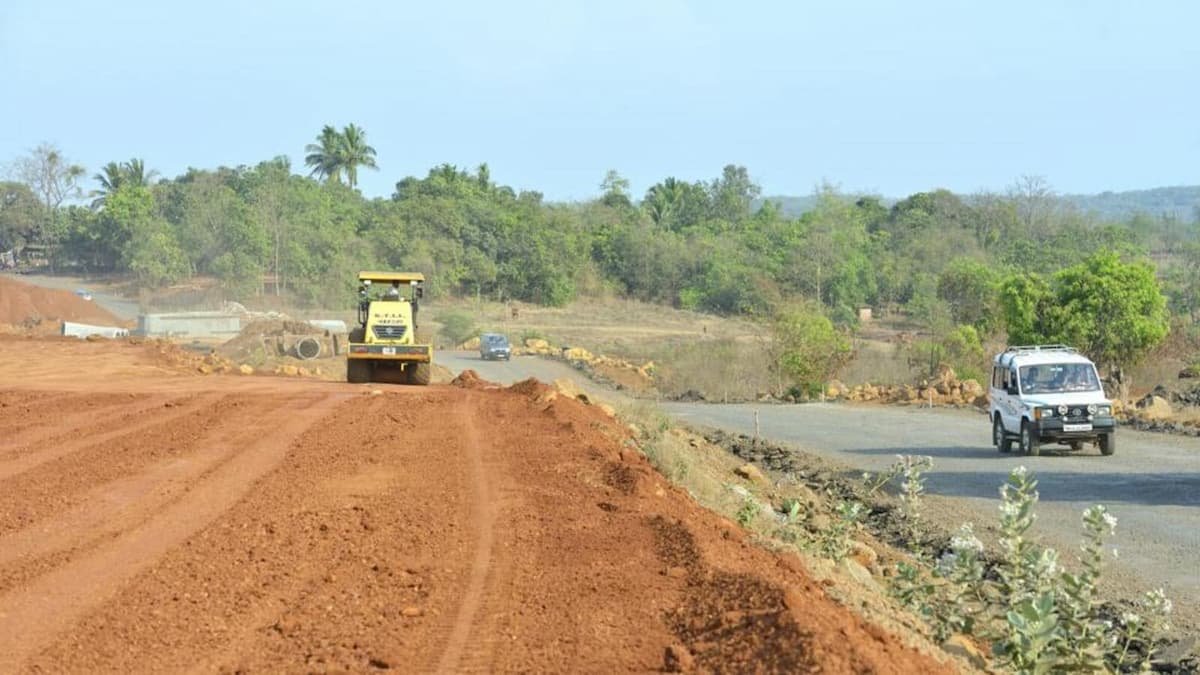
Public Works Department (PWD) Minister Ravindra Chavan announced that the Mumbai-Goa highway (NH-66) is expected to be finished before Ganeshotsav next month.
Minister Chawan said, “The PWD is trying to finish this project within a month. We want the Mumbai-Goa National Highway to be functional before the Ganpati festival. The detailed project report work for the Mumbai-Sindhudurg route is in its final stage.”
At the very moment, Chief Minister Eknath Shinde tweeted that, “The 18-hour journey through the Samruddhi Highway has come down to 8 to 10 hours. This is proving useful in terms of expanding industry opportunities for farmers and travelers. The government has prioritized the expansion of various such communication facilities, and the communication facilities will be expanded in this manner in Konkan too.”
Even though construction is still going on, fissures have appeared in a number of places along the Panvel to Pen Taluka section of the Mumbai-Goa highway and have been patched with concrete by the National Highway Authority of India (NHAI).
Since the highway portion is also used by loaded heavy vehicles, activists and residents claim that the six-inch concrete layer of highway work will not hold up. The 471-kilometer, four-lane Goa Mumbai Highway in western India is anticipated to reduce the distance between the two cities’ travel times by about six hours once it is finished. It is also projected to promote tourism in the Konkan region’s unexplored regions.
There would be no height limit for Ganpati Idols during Ganeshotsav in Mumbai, says BMC 17
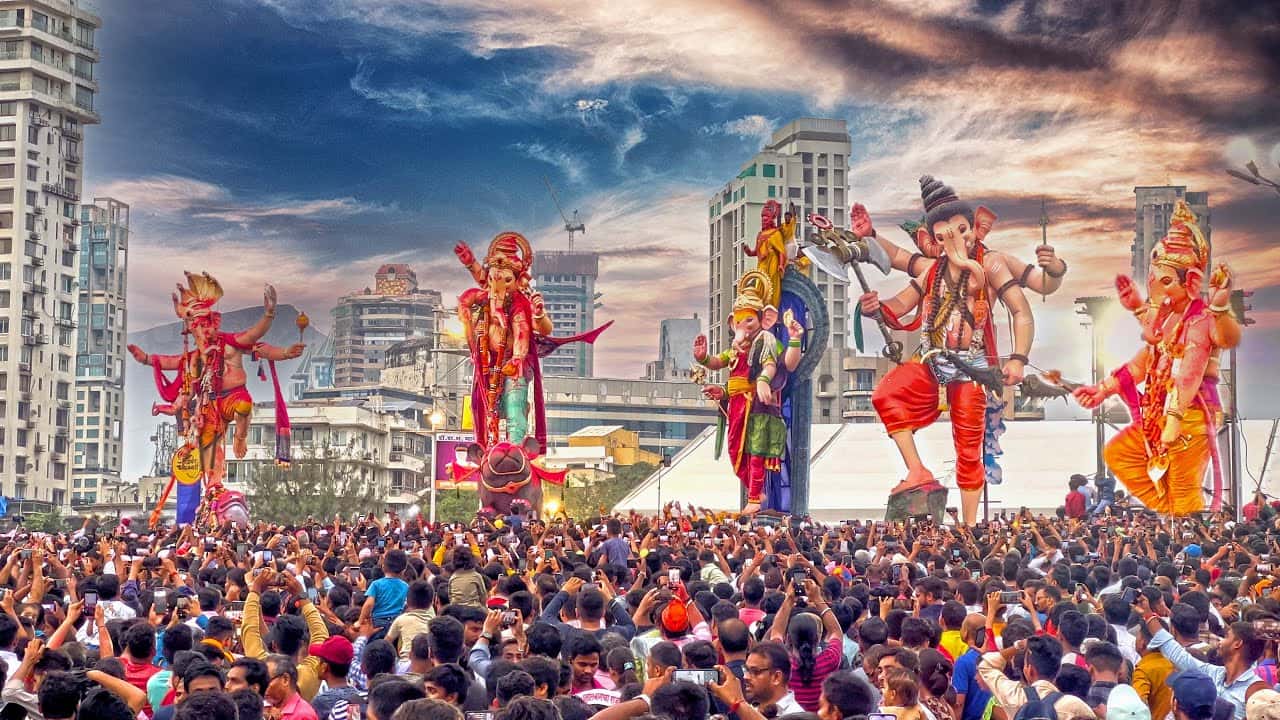
The Maharashtra government revoked its announcement on height restrictions for idols in sarvajanik mandals, but the civic body highlighted that public Ganeshotsav organizers can’t install statues of more than a certain height. The mismatch between the stances of BMC and the government threw the organizers into a panic, resulting in a low turnout of applicants seeking permission for a mass celebration of the festival.
There are 12,000 Ganesh mandals in Mumbai. Every year, they have to get permission from the BMC, traffic cops, and local police stations to erect pandals. This year, Chief Minister Eknath Shinde directed the civic body to start a one-window system for granting all the permissions in one go.
Deputy Municipal Commissioner Ramakant Biradar told Afternoon Voice, “We had official discussions on the height of the Ganesh idol, and the condition of a limit on the height will be removed in a day or two. Till August 9, around 350 mandals have applied for the permissions, while permission has been given to 260 mandals to erect pandals.”
To clear up the confusion among public Ganeshotsav organizers regarding the height of Lord Ganesh’s idol, the BMC has decided to do away with the condition of installing four-foot-tall busts, which are eco-friendly as well.
On August 1, the municipality started a one-window system for expeditiously granting permissions to Ganesh mandals. The application process requires mandals to submit an affidavit, stating that they will not set up idols taller than four feet. However, the clause has discouraged many mandals from coming forward to seek permission.
There used to be a teacher across from my house; he was a writer and also a scholar, but no one used to like him because he was very arrogant and cruel. At the same time, he was a staunch worshiper of God; every morning without fail, he used to visit temples, and there used to be soothing mantra chanting music in his house. Once a stray cat entered his house, he brutally trolled her and threw her out of his balcony without bothering for its life. I asked my grandmother how a God-fearing man could do so. She then told me the story of one very spiritual demon called Vritrasura.
In Kaliyuga, God and goddesses are very much in the people around us; those who have wisdom, kindness, an inclination to charity, and serve mankind are God-like people, and the Monks around us are like Rishis (sages). And teachers, like people, are demons, and there are various types of demons that we see from day to day. The idea of mythological epics is to teach you a way of life.
Well, I asked my grandmother. If a person has been doing sin all his life and suddenly one day starts doing some good deeds, then will God not punish him for his sin? If he is being punished for his sin, then what about the good deeds he did? My granny said, “One has to pay for all the good and bad karma they do; for example, for whatever sin this man has committed, God may make him a dog in the next birth, but since he has done some deeds, the Dog would be a pet for a rich family.” Karma needs no address; it reaches wherever it has to give you the outcomes.
Despite being a demon, Vritrasura was a preeminent bhakti-yogi. He was created in a sacrificial fire to fight Indra, the king of heaven. Vritrasura was so powerful that he collided with terror and was able to fight an army of demigods by himself. What makes Vritrasura so magnificent, however, is not his enormous strength as a fighter, but rather his level of spiritual elevation. Vritrasura was an illustrious bhakti-yogi able to propound deep mystical knowledge even in the midst of a fight for his life. Sometimes a person born into an underprivileged family may be spiritually progressive, and someone born into a reputable family may be spiritually unsighted. Spirituality is an individual’s virtue. Spiritual progress carries on from life to life. Vritrasura was King Chitraketu in his previous life, but when he was born as the demon Vritrasura in his next life, he carried his spiritual advancement with him. Krishna states in the Gita (2.40) that our progress on the path of bhakti-yoga is never lost or diminished, and even a little progress can save us from the greatest danger, securing for us a greater opportunity for spiritual progression in our next life.
Sage Vishwarupa, who was serving as a poojari (priest) to the gods, had three heads. Both the gods and the Asuras were his relatives. While offering clarified butter in the sacrificial fire of yajna in the names of gods, he also offered oblations to demons secretly. When Indra came to know about this, he got furious and cut off the three heads of Vishwarupa. Knowing this, Vishwarupa’s father, Tvasta, vowed to kill Indra to avenge the murder of his son.
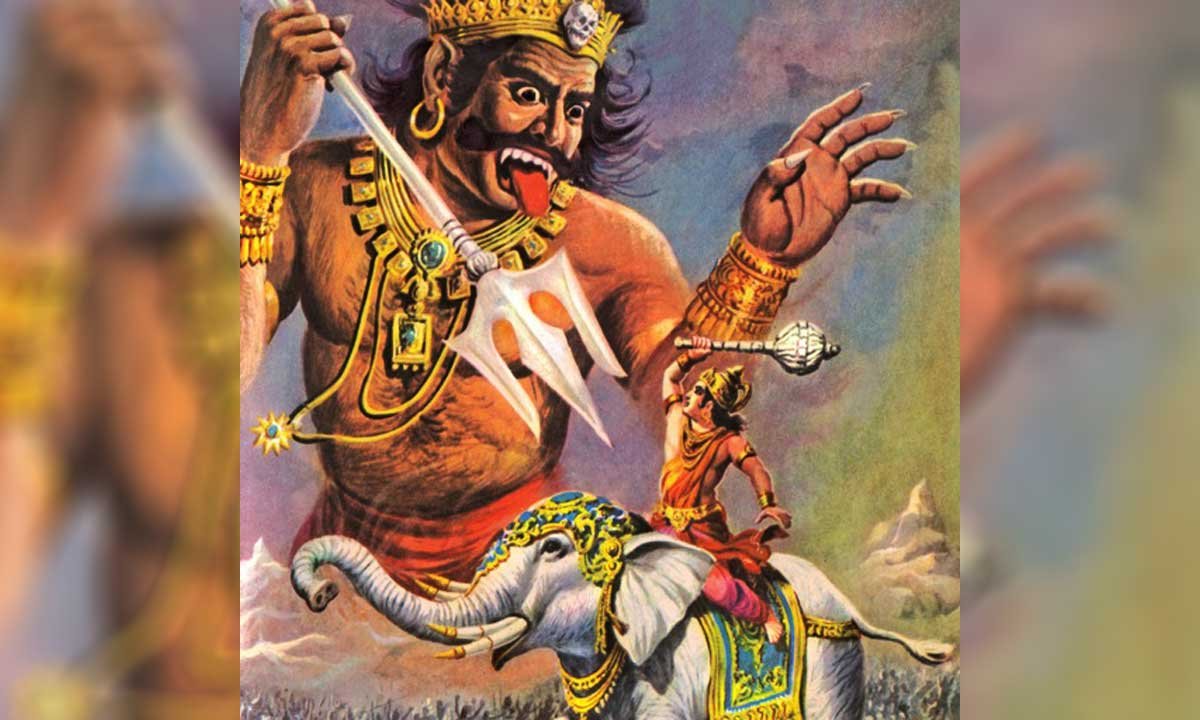
Tvasta performed a yajna. He offered oblations in the sacrificial fire, saying, “O enemy of Indra, flourish to kill your enemy without delay.” Thereafter, from the southern side of the sacrificial fire, known as Anvāhārya, came a fearful personality who looked like the destroyer of the entire creation at the end of the epoch. The body of the demon grew day by day. Soon, he covered all terrestrial systems. Therefore, he was named Vritra, one who covers everything.
So Vritrasura was born with a purpose; he strokes Indra with an iron mace and disarms him, and Indra loses the courage to fight. All the gods under the leadership of Indra attacked him with their weapons, but Vritrasura swallowed all their weapons. The fearful gods then ran away and went to the refuge of Lord Vishnu. They praised him. Lord Vishnu, pleased with their acclamations, advised Indra to approach Sage Dadhichi. Because of the austerity and the Narayana Kavacha, his body was very strong. Therefore, only a weapon made from his bones was useful to kill Vritrasura.
In Spite of all the gathered forces, Indra was losing his strength to fight. Vritrasura then begins a logical discourse with Indra and encourages him to keep fighting. During their discussion, Vritrasura reveals his status as an advanced bhakti yogi. The slaying of Vritrasura is considered the biggest achievement of Indra. Vritra, knowing that he was going to die soon, called out with immense devotion to Sri Hari and said, “O Lord, I am waiting for you like a baby sparrow would wait for her mother, like a calf would wait for the cow, like the wife would wait for the husband!” He then addressed Indra and said, “O Indra! Strike me down so I can be reunited with my Lord.” And when Indra struck Vritrasura down, a bright light came from his body and merged with Sri Hari.
Thus, in this beautiful story, Sri Hari shows us how much he loves his devotees, no matter who they are. We have many such Vritrasuras, resourceful Indras, and supremely authoritative Vishnu-like entities, we all have our roles to play and will one day leave this body. Human conduct is what remains forever, rest everything is perishable. So just by judging someone by his or her outer looks, one cannot predominately predict anything.
(Any suggestions, comments or dispute with regards to this article send us on feedback@afternoonvoice.com)