Home Blog Page 267

11 people killed as rural West Bengal votes in panchayat elections

west bengal, panchayat elections, violence, bengal, tmc, bjp
11 people killed as rural West Bengal votes in panchayat elections 2

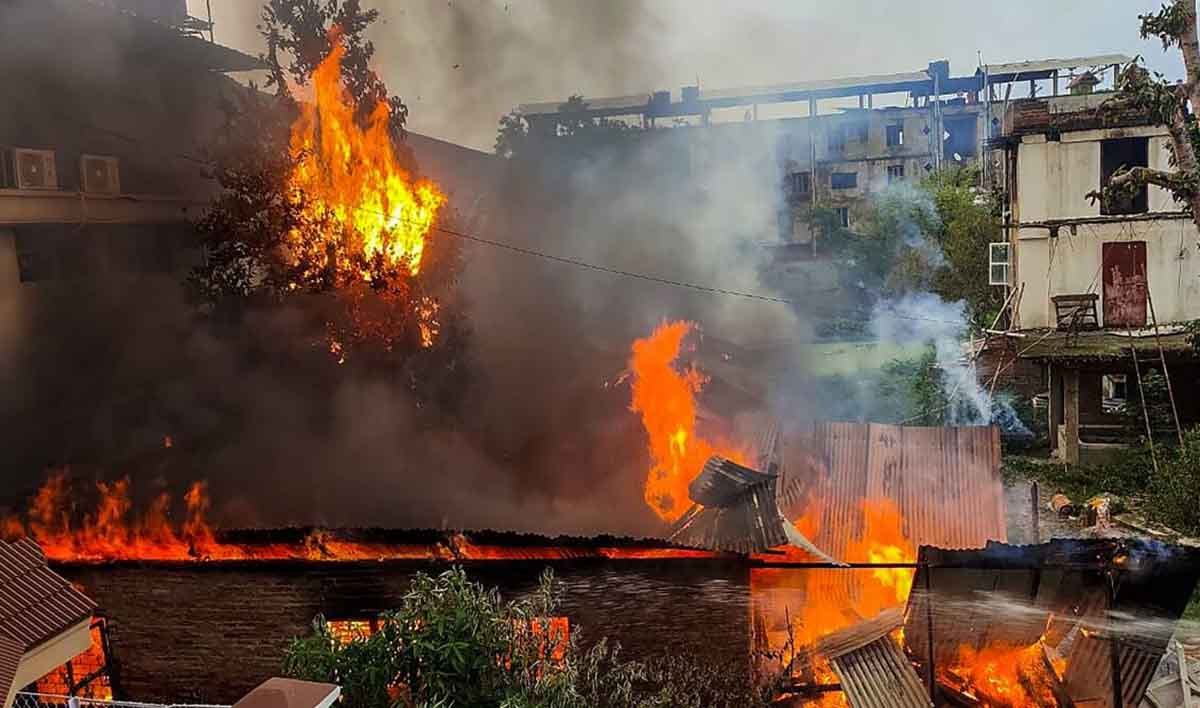
Eleven people were killed in election-related violence in West Bengal since midnight as voting was underway for the three-tier panchayat polls in the state on Saturday, officials said.

Among those killed were six TMC members, and one worker each of the BJP, CPI(M), Congress and ISF, and another person whose political identity could not be known, they said.

Besides violent clashes that injured several people, ballot boxes were destroyed in several parts of the state, they added.

The polling began at 7 am in 73,887 seats in the rural areas of the state with 5.67 crore people deciding the fate of around 2.06 lakh candidates. Till 1 pm, 36.66 per cent voter turnout was recorded, officials said.

Governor CV Ananda Bose visited different areas in North 24 Parganas district, and met people injured in the violence.

BJP polling agent Madhab Biswas was allegedly killed in Falimari gram panchayat in Coochbehar district, they said.

The BJP alleged that when Biswas tried to enter the polling booth in the morning he was stopped by TMC supporters, and as the situation escalated, they killed him. The TMC denied the allegations.

The supporter of an Independent candidate was injured in Kadambagachi area in North 24 Paraganas district. Superintendent of Police Bhaskar Mukherjee had earlier told reporters that 41-year-old Abdullah Ali died, but later the superintendent of Barasat Hospital said that he was critically injured and on ventilator support but not dead.

A TMC worker was killed in Murshidabad district’s Kapasdanga area in overnight violence. The deceased was identified as Babar Ali, officials said.

Another TMC worker was killed in the district’s Khargram area. He was identified as Sabiruddin Sk.

The TMC also alleged that its booth committee member in Tufanganj 2 panchayat samiti in Cooch Behar, Ganesh Sarkar, was killed in an attack by the BJP.

The brother of a TMC leader was killed in a clash with Congress supporters in Malda district, police said.

The incident happened in Jisharattola in Manikchak police station area. The deceased was identified as Malek Sheikh, they said.

The TMC also alleged that one of its workers was killed in Nadia’s Chapra.

An ISF worker was killed in a clash with TMC in the district’s Haringhata area. The victim was identified as 48-year-old Saidul Seikh, police said.

Nadia’s TMC president Debasish Ganguli claimed that the incident happened when ISF supporters were hurling crude bombs at TMC workers. “One of the bombs slipped from their hands and exploded,” he claimed.

However, Seikh’s family alleged that he was killed in an attack by TMC supporters.

A 38-year-old man was killed in South 24 Parganas district’s Basanti. The incident happened in the Fulmalancha area, and the deceased was identified as Anisur, police said.

A Congress worker was allegedly killed in Murshidabad’s Rejinagar police station area in election-related violence. He was identified as Yasmin Sk.

CPI(M) worker Rajibul Hoque was critically injured allegedly in an attack by TMC supporters in Purba Bardhaman district’s Aushgram 2 block. He died in the morning while undergoing treatment at a hospital.

The TMC alleged that one of its workers was killed outside a polling booth in the district’s Katawa area by CPI(M) supporters. The deceased was identified as Goutam Roy.

Incidents of destruction of ballot boxes and intimidation of voters were also reported from some areas.

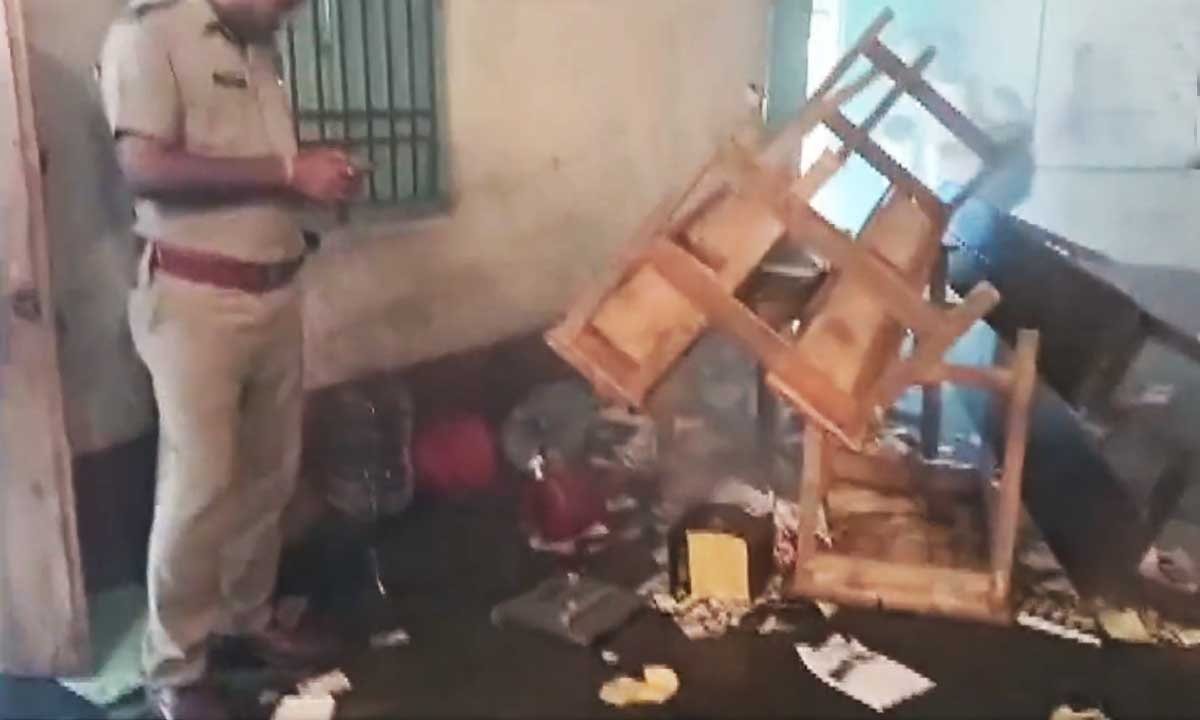
In Cooch Behar district’s Dinhata, ballot boxes were vandalised and ballot papers were set on fire at a booth in Baravita Govt Primary School. At another booth in the Barnachina area, locals torched a ballot box along with ballot papers, alleging that false voting was done.

Protests were also held in various areas, demanding the deployment of central forces.

In Nandigram, female voters gheraoed a police officer with bottles of poison in their hands, demanding that central force be deployed in the area.

Governor CV Ananda Bose toured various areas in North 24 Parganas, meeting people injured in the violence and listening to complaints.

“People requested me to stop my motorcade on the way. There were a lot of tales to tell, they told me about murders happening around them, goons not allowing them to go to polling booths, and also about presiding officers not listening to them. These are stray cases but even one incident of bloodshed should cause concern to all of us,” he told reporters.

“This is the most sacred day for democracy. These are stray incidents but there should be a stop to it,” he added.

The ruling TMC questioned where were the central forces that were brought in for the elections.

“Shocking incidents are being reported since last night. BJP, CPI(M) and Congress had colluded, demanding central forces. Where are they deployed? TMC workers are being murdered. Where are the central forces?” state minister Sashi Panja asked.

The TMC also alleged that at a border village in Cooch Behar’s Gitaldaha, BSF personnel attempted to create chaos and disrupt the poll process.

CPI(M) state secretary Md Salim shared a video of open ballot boxes lying in the field, tweeting, “Vote is over! Condition of the ballots, ballot boxes in one of the booths. Btw this pic is from Diamond Harbour.” At least 600 companies of central forces have been deployed for the elections along with around 70,000 state police.

Sharing photos on Twitter, BJP state president Sukanta Majumdar that the State Election Commission (SEC) was reluctant to deploy the central forces that were sent to the state.

“On the one hand, the SEC is reluctant to deploy the central forces. On the other hand, civil volunteers are deployed for the election duty. This clearly shows that state govt and SEC has hoodwinked the courts. Is SEC silently facilitating the booth capturing by TMC goons?” he asked.

There are 63,229 gram panchayat seats and 9,730 panchayat samiti seats in 22 districts, while 928 zilla parishad seats in 20 districts as Darjeeling and Kalimpong have a two-tier system with Gorkhaland Territorial Administration (GTA) and Siliguri Sub-divisional Council at the top.

The ruling TMC is contesting all the 928 seats in zilla parishads, 9,419 seats in panchayat samitis and 61,591 seats in gram panchayats. The BJP has fielded candidates in 897 zilla parishad seats, 7,032 panchayat samiti seats and 38,475 seats in gram panchayats.

The CPI(M) is fighting 747 zilla parishad seats, 6,752 panchayat samiti seats and 35,411 gram panchayat seats. The Congress is contesting 644 zilla parishad seats, 2,197 panchayat samiti seats and 11,774 gram panchayat seats.

The election assumes significance for political parties as it will serve as an opportunity for them to assess their organisational strengths and weaknesses ahead of the 2024 Lok Sabha polls, besides broadly outlining the mood of the state after two years of the TMC government’s third consecutive term.
Canada Open: PV Sindhu, Lakshya Sen storm into semifinals

pv sindhu, sindhu, canada open, canada, tennis, badmington
Canada Open: PV Sindhu, Lakshya Sen storm into semifinals 4

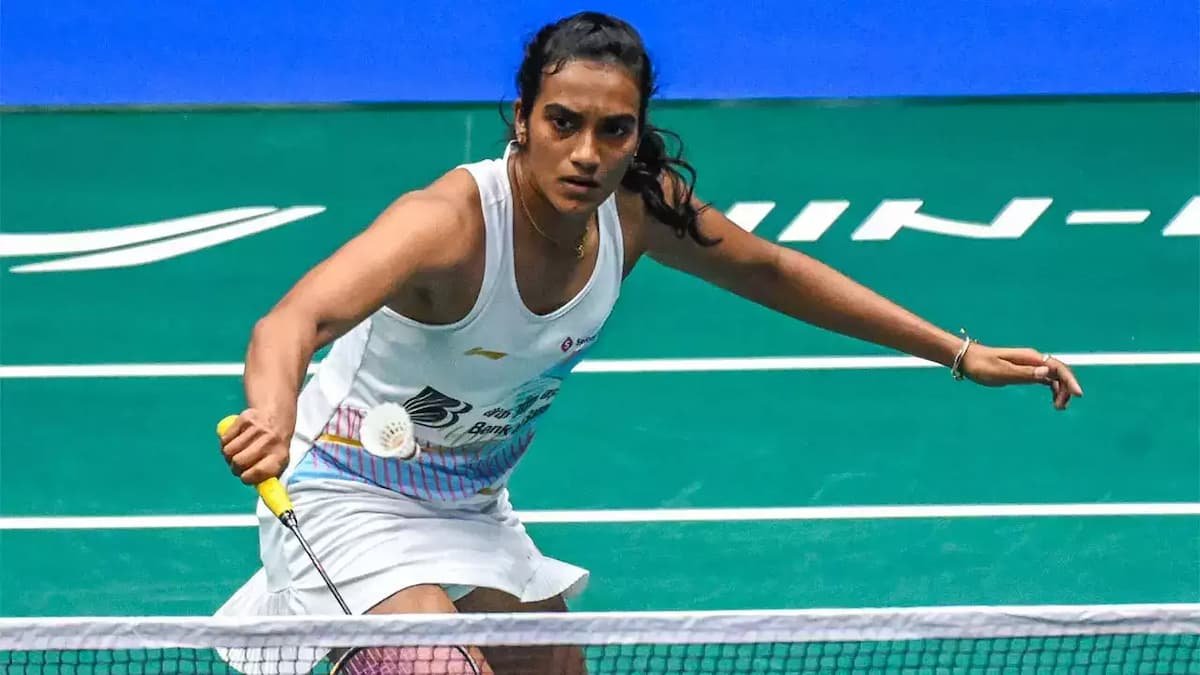
Star Indian shuttlers PV Sindhu and Lakshya Sen advanced to the semifinals of the ongoing Canada Open on Friday. In her match, the two-time Olympic medalist, Sindhu overcame Gao Fang Jie of China 21-13, 21-7 in two straight games.

In the semifinal, Sindhu will face the first-seed Akane Yamaguchi of Japan. She has won 14 matches and lost nine against the Japanese. In his match, Lakshya Sen, the 2022 Commonwealth Games medalist, overcame Germany’s Julien Carragi 21-8, 17-21, 21-10.

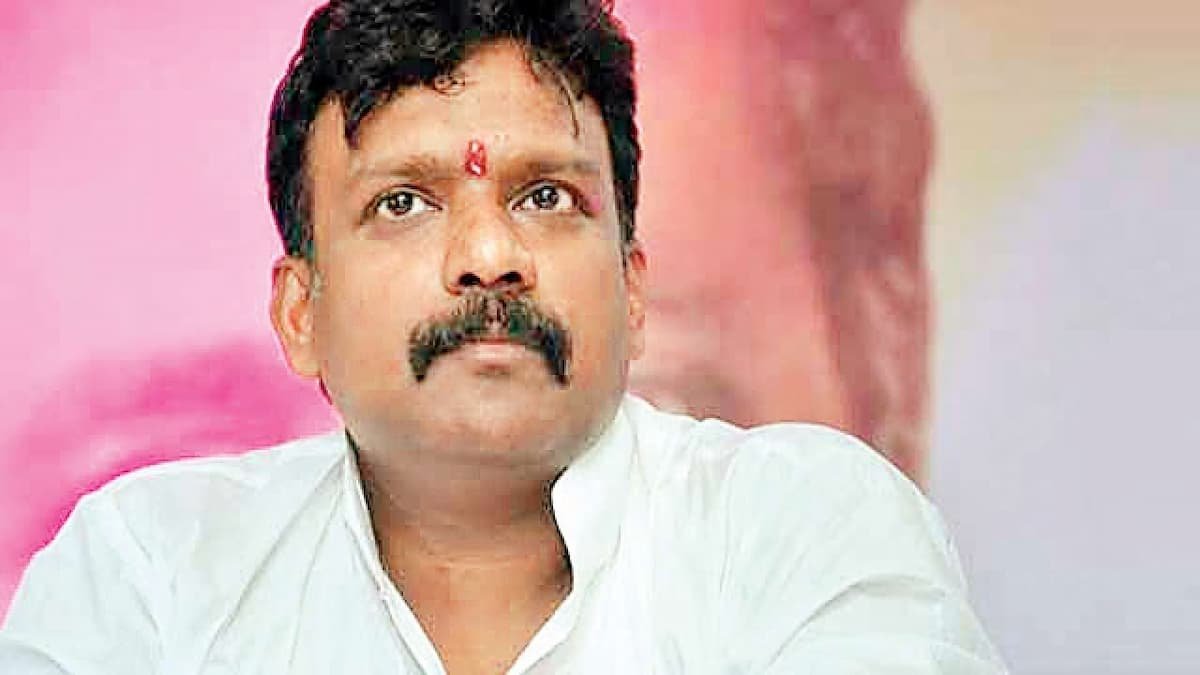
The Indian was off to a good start, winning the first game. He stumbled in the second game, which was a competitive one. However, Lakshya maintained his composure to win the final game in a one-sided manner and seal his final four position. In the semis, Lakshya will face Japan’s Kenta Nishimoto.

The Canada Open competition started on July 4 and will end on July 9.

Ex-NCP MLA Ramesh Kadam gets bail in funds misappropriation case

mla, ramesh kadam, mumbai, special court
Ex-NCP MLA Ramesh Kadam gets bail in funds misappropriation case 6

A special court in Mumbai has granted bail to former NCP MLA Ramesh Kadam in a case of misappropriation of funds in the Sahityaratna Lokshahir Annabhau Sathe Development Corporation (SLASDC) of the Maharashtra government.

Kadam, however, will not be released from jail as he is an accused in another case. He has been in jail since 2015.

His bail in the SLASDC case was granted on Friday by special court judge RN Rokade. The order was made available on Saturday.

The SLASDC was set up with the objective of providing financial aid for the uplift of backward classes. Kadam was the chairman of the corporation, when he in collusion with other accused, hatched a criminal conspiracy and misappropriated its funds, the prosecution said.

Kadam and other accused created false documents and illegally siphoned off and misappropriated amount to the tune of Rs 3,30,00,000.

Based on the information, Parbhani police had registered a case under the Prevention of Corruption Act against Kadam and others.

The main case in connection with the scam was registered at the suburban Dahisar police station in 2015.

The court, in its order said, notably Kadam has been granted bail by the Bombay High Court in main offence registered with Dahisar police with similar allegations and similar set of offences.

Till date, the prosecution has not preferred appeal against the high court order, it said.

”Having regard to the entire gamut of the circumstances, including the applicant was enlarged on bail in main offence registered with Dahisar police station and long incarceration in custody without trial, I am of the considered view that this is a fit case to enlarge the applicant on merit,” the court noted.

Manipur violence: Fresh firing reported at Kangvai in Bishnupur

manipur violence, manipur, clashes, riots, violence
Manipur violence: Fresh firing reported at Kangvai in Bishnupur 8

The situation in Manipur remains volatile as intermittent firing continued at the general area of Kangvai-Awang Lekhai area in Bishnupur district on Friday night. According to the sources, Additional Border Security Forces (BSF) were inducted to bring the situation under control as columns of the Indian Army and Assam Rifles moved to the general area of Songdo.

The sources further said that one police personnel was injured during a retaliatory firing incident. An exchange of fire was also reported in the Laikot area of YKPI with the situation being monitored by the security forces.

A mob of nearly 200 people built up at Mahabali road and set two vehicles on fire near the historic Kangla Fort in Imphal, Manipur. According to sources, the mob also tried to snatch weapons from the police.

“The police had to resort to firing to disperse the mob and bring the situation under control, although no casualties were reported in the incident,” the sources said. No casualty has been reported.

The sources further said that another mob of nearly 200 people had gathered at Palace Compound in Imphal West but Army and Rapid Action Force personnel were able to disperse by 12.30 am today. According to a statement by Manipur Police, the situation is tense in some parts with sporadic incidents of firing, but is normal in most districts in Manipur, an official statement from Manipur police said on Thursday.

“The situation is tense in some places with sporadic incidents of firing and congregation of unruly mob during the last 24 hours. However, the situation is normal in most districts,” said the statement. The statement added that the State Police and Central forces on Thursday conducted search operations in the vulnerable and fringe areas in both the hill and valley districts of the state.

The official statement further said that on July 6, a joint team of Manipur Police and the Central Security Forces (CSF) destroyed 24 bunkers in the districts of Manipur.

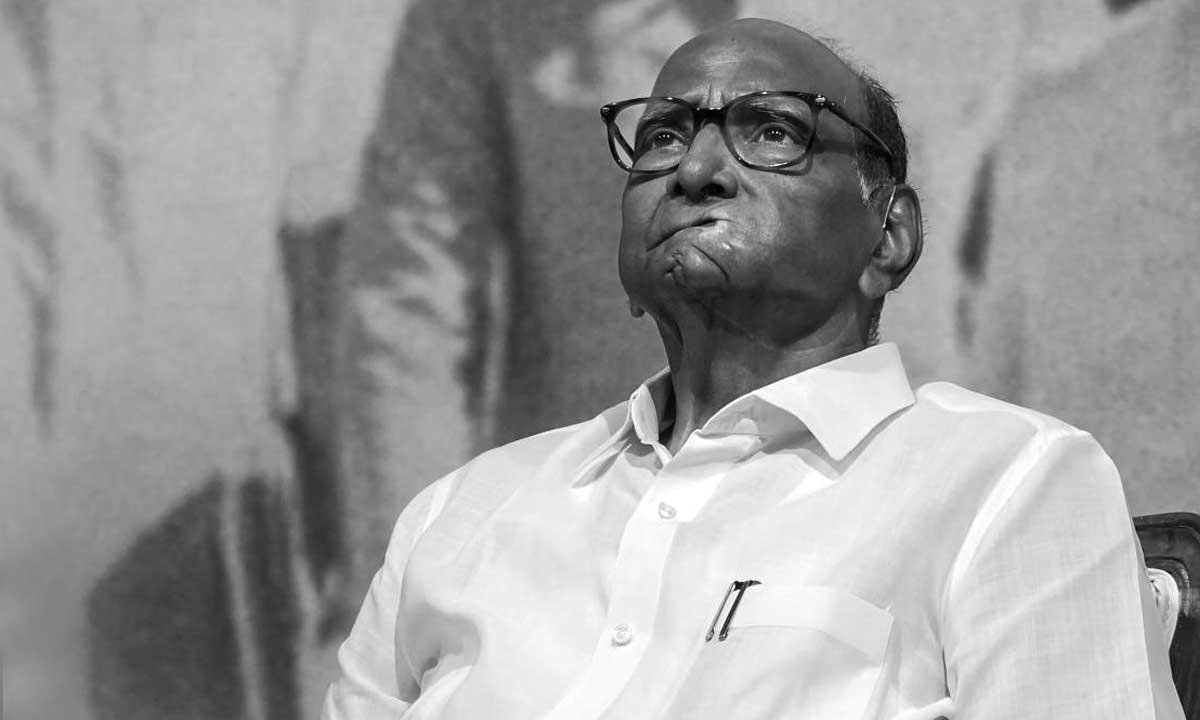
Maharashtra Politics: What Sharad Pawar started once ended with him

sharad pawar, pawar, ncp, congress, congress split, gandhi, rahul gandhi, ajit pawar, pawar
Maharashtra Politics: What Sharad Pawar started once ended with him 10

A major rebellion in Maharashtra politics began with Sharad Pawar in 1999, after the 12th Lok Sabha was dissolved and elections to the 13th Lok Sabha were called. Pawar, P. A. Sangma, and Tariq Anwar demanded that the party propose someone native-born as the prime ministerial candidate and not the Italian-born Sonia Gandhi, who had entered party politics and replaced Kesri as Congress president. That was when Pawar and Sangma founded the Nationalist Congress Party in June 1999. 

Despite the falling out, the new party aligned with the Congress party to form a coalition government in Maharashtra after the 1999 state assembly elections to prevent the Shiv Sena-BJP combine from returning to power. Pawar, however, did not return to state politics, and Vilasrao Deshmukh of the Congress was chosen as chief minister, with Chagan Bhujbal representing the NCP as deputy chief minister. Many stalwarts of the Congress rebelled and joined Pawar’s NCP. That incident was a big jolt for the then-ruling party. Those days, Pawar succeeded in breaking Congress; now his nephew Ajit has given him back in the same way.

Very strategically and without any hint, eight MLAs, including Ajit Pawar, took oath as ministers in the Shinde-Fadnavis government after a split in the NCP. After that, Sharad Pawar suspended all the main leaders of the Ajit Pawar group from their positions in the party. After that, Ajit Pawar’s group directly sued the NCP itself. A total of 32 MLAs show their support to Ajit; tomorrow, if a few more join his camp, he can retain both his name and symbol. Ajit Pawar’s group needs three to four more MLAs to escape the action of the Defection Act. Therefore, if MLAs Rajesh Tope, Sunil Bhusara, and Chetan Tupe join the Ajit Pawar group, it will be a big political blow to the NCP. Due to this, the political movement in Mumbai between the NCP and the Ajit Pawar group has gained momentum.

The general sentiment is that a few months down the line, the frictions will only increase and the Bharatiya Janata Party (BJP) will eventually attempt to lead the government. Shinde’s self-boasting advertisement claiming that he is the most popular leader has not gone well with the BJP; Ajit and other leaders’ induction into the party may damage Shinde’s prospects. In a meeting held at Varsha bungalow, many of his MLAs expressed their disappointment openly; a few of them even quarreled with each other. The development in Maharashtra seems very interesting. Ajit Pawar reported having the support of exactly 40 MLAs, which Eknath Shinde had when he joined hands with the BJP. Just think that Shinde and Ajit Pawar are both part of the government in Maharashtra; it will be more of the government of the Shiv Sena and NCP. It could be possible that 40 or so MLAs in Congress will also be bought over. This means there will be no opposition in Maharashtra.

Not bad; perhaps we are heading towards One India, One Party, then possibly One India, Lifetime PM. I wonder what Shinde will do if the BJP offers the CM post to Ajit Pawar in the future. The BJP seems very desperate to save its prospects in 2024. Meanwhile, the PM wants a huge number of MPs in his camp, looking at the 2024 elections. Moreover, Devendra has not forgotten the betrayal and humiliation caused to him by Uddhav Thackrey and Pawar. After serving for five days as Chief Minister during the 2019 Maharashtra political crisis, he had to resign on November 28, 2019.

In 1978, Sharad Pawar ran the rainbow coalition comprising the Janata Party and the Peasants Workers Party, which lasted less than two years. Incidentally, he is trying to forge a similar alliance in the state by joining hands with the Congress and the Shiv Sena. Now Ajit Pawar breaking the NCP is seen as Sharad Pawar’s master plan, and his nephew is a pawn in his hand.

When Ajit Pawar was made Deputy Chief Minister on Saturday morning, only to be snubbed by Sharad Pawar, who said the decision to support the BJP was not supported by him and was his nephew’s personal one, In fact, Sharad Pawar’s decision in 1978 to establish his own party and run it for a decade earned him the unofficial title of “strongman” in political circles. Sharad Pawar wrote in his book “On My Terms” that the poll reverses the 1977 post-Emergency anti-Indira Gandhi wave that shocked many in the state and the country. VN Gadgil lost on a Congress ticket in Baramati, the home turf of the Pawars.

In January 1978, former Prime Minister Indira Gandhi split the Congress, forming the Congress (Indira) to take on the parent organization, the Congress (S), headed by Sardar Swarn Singh, in the state elections. Sharad Pawar stayed with the Congress (S) and his mentor, Yashwantrao Chavan. In the assembly polls held a month later, the Congress (S) won 69 seats as against 65 for the Congress (I). The Janata Party won 99 seats. However, no party got a full majority. The two factions of the Congress got together to form the government, headed by Vasantdada Patil from the Congress (S) and Nashikrao Tirpude from the Congress (I) as the deputy Chief minister. However, the bickering between the two Congress factions continued, which made it difficult to run the government. Sharad Pawar decided to quit. His relations with Janata Party president Chandrashekar helped him. Sharad Pawar walked out with 38 Congress MLAs to form a new government called the Samantar Congress (Parallel Congress). He then became the youngest chief minister of the state at the age of 38. However, with the return of Indira Gandhi to power in 1980, his government was dismissed.

Now Ajit Pawar’s joining the Maharashtra government as the deputy chief minister shocked everyone in the state, including many MLAs of the Eknath Shinde faction, who once again find themselves in the exact dilemma they faced in 2019 when Uddhav Thackeray decided to ally with the NCP and the Congress. There are many concerns that have created unrest in the Shinde camp. The loss of monopoly as the only party the BJP could rely upon to stay in power led NCP leaders to be inducted into the state government, while the expansion of the Shinde-Fadnavis cabinet was long due to incorporating many from the Sena who were promised berths last year. Dilemma over joining hands with those they were wrestling with even while being in the MVA Having to make more compromises than promised when it comes to sharing seats in the Lok Sabha and Assembly elections scheduled for 2024. Fear that Ajit Pawar will meddle and interfere to create hurdles for them like he allegedly did in the MVA government.


Gujarat HC refuses to stay Rahul Gandhi’s conviction in defamation case; Congress to move SC

rahul gandhi, gandhi, gujarat hc, gujarat high court, supreme court, sc, defamation case
Gujarat HC refuses to stay Rahul Gandhi's conviction in defamation case; Congress to move SC 12

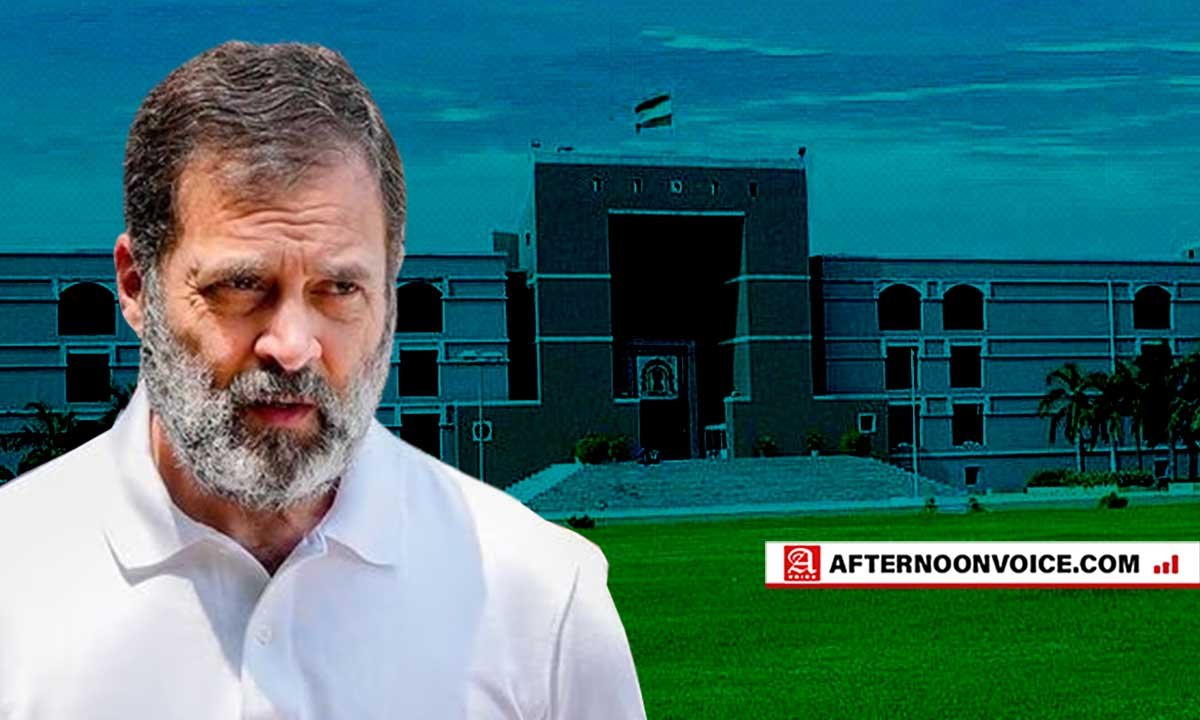
The Gujarat High Court on Friday dismissed Congress leader Rahul Gandhi’s plea seeking a stay on his conviction in a criminal defamation case over his ”Modi surname” remark.

While dismissing the plea, Justice Hemant Prachchhak noted that Gandhi was already facing 10 criminal cases across India, adding that the order of the lower court was ”just, proper and legal” in handing over a two year jail term to Gandhi for his remarks.

There was no reasonable ground to stay the conviction, the high court said. After the verdict, the Congress party said it would challenge the high court order in the Supreme Court. A stay on Gandhi’s conviction in the case would have paved the way for his reinstatement as a Member of Parliament.

”He (Gandhi) was trying to stay the conviction on absolutely non-existent grounds. It is a well-settled principle of law that staying of conviction is not a rule, but an exception, resorted only in rare cases. Disqualification is not only limited to MP, MLAs. Moreover, as many as 10 criminal cases are pending against the applicant,” the HC said.

”After this complaint, another complaint was filed in a court in Pune by the grandson of Veer Savarkar for Gandhi’s defamatory utterance against Veer Savarkar at Cambridge. Another complaint against him was filed in the concerned court of Lucknow,” it said. In this backdrop, refusal of stay on conviction would not in any way result in injustice to the applicant, the judge said.

”Impugned order passed by the appellate court is just, proper and legal, and does not call for any interference. However, it is hereby requested by the concerned learned district judge to decide the criminal appeal on its own merits and in accordance with law as expeditiously as possible.

”In view of the above, the present criminal revision application deserved to be dismissed and accordingly it is dismissed,” the judge while reading the order.

While noting that there was no reasonable ground to stay the conviction at this stage, Justice Prachchhak also directed the district and sessions court of Surat to hear Gandhi’s appeal against the conviction ”as expeditiously as possible”. Unhappy with the high court’s verdict, Congress Legislative Party leader in Gujarat Assembly, Amit Chavda, told reporters that the party will challenge the high court order in the apex court.

A metropolitan magistrate’s court in Surat on March 23 sentenced the former Congress president to two years in jail after convicting him under Indian Penal Code (IPC) sections 499 and 500 (criminal defamation) in a 2019 case filed by Bharatiya Janata Party’s (BJP) Gujarat MLA Purnesh Modi.

Following the verdict, Gandhi, elected to the Lok Sabha from Wayanad in Kerala in 2019, was disqualified as a Member of Parliament (MP) under the provisions of the Representation of the People Act.

Gandhi then challenged the order in a sessions court in Surat, which is still pending, along with an application seeking a stay to the conviction. While granting him bail, the sessions court on April 20 refused to stay the conviction, following which, he had knocked the doors of HC.

BJP MLA and former minister in Gujarat government Purnesh Modi filed a criminal defamation case against Gandhi over his ‘How come all thieves have Modi as the common surname?’ remark made during an election rally at Kolar in Karnataka on April 13, 2019.

During an earlier hearing on April 29 in the court of Justice Prachchhak, Gandhi’s lawyer had argued that a maximum punishment of two years for a bailable, non-cognisable offence meant he could lose his Lok Sabha seat ”permanently and irreversibly”, which was a ”very serious additional irreversible consequence to the person and the constituency he represents”.

In a major setback for Uddhav, Neelam Gorhe is set to join Shinde-led Shiv Sena

neelam gorhe, shiv sena, eknath shinde, shinde, uddhav, uddhav thackeray, sena
In a major setback for Uddhav, Neelam Gorhe is set to join Shinde-led Shiv Sena 14

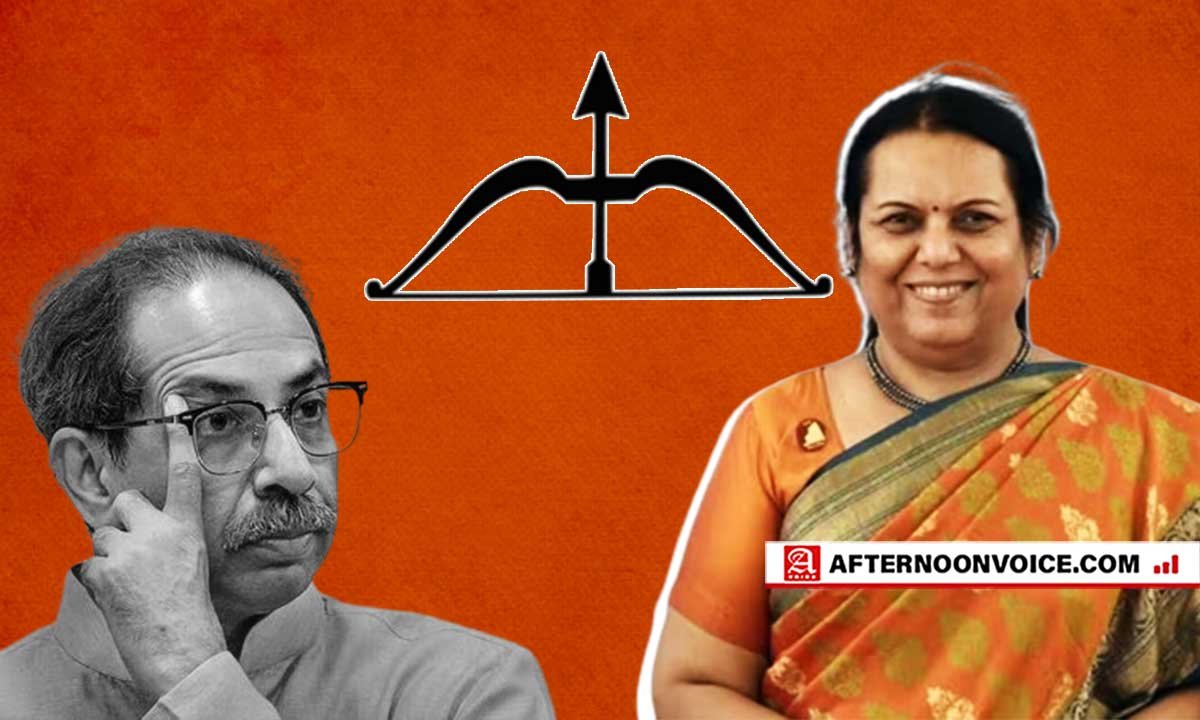
In a major setback for Uddhav Thackeray, Neelam Gorhe, Shiv Sena (UBT) deputy leader and deputy chairperson of the legislative council, is reportedly joining the Shiv Sena, the political party of chief minister Eknath Shinde. Neelam Gorhe will formally join Shinde’s Shiv Sena today during the entry ceremony.

Neelam Gorhe joined the Shiv Sena in 1998, since then she is known as a loyal Shiv Sainik and the female face of Shiv Sena. She has always been a leader in raising her voice on women’s issues as well as other social issues. She is also known as a loyal worker of Balasaheb Thackeray. After Eknath Shinde’s rebellion, Neelam Gorhe consistently advocated for the Thackeray group.

Many Thackeray-faction leaders, including Deepali Syed, Manisha Kayande, and Neelam Gorhe, were said to have been upset after Sushma Andhare’s entry into Thackeray’s Shiv Sena. Many leaders criticized Sanjay Raut following Eknath Shinde’s rebellion.

There have been reports since this morning that Neelam Gorhe has decided to join the Shiv Sena. However, her name was not directly taken. Her phone was also unreachable. Finally, it appears that Neelam Gorhe is joining the Shiv Sena.

No evidence suggesting slowdown in Indian economy: Finance ministry

indian economy, india, finance ministry, nirmala sitharaman, inflation
No evidence suggesting slowdown in Indian economy: Finance ministry 16

The Indian economy has carried the momentum from the past year into the current fiscal year and there has been no evidence by far that suggests a slowdown in the current financial year 2023-24, said the Department of Economic Affairs under Ministry of Finance in its monthly review report.

According to the provisional estimates released by the National Statistical Office (NSO) recently, real GDP growth for 2022-23 stood at 7.2 per cent, higher than the 7 per cent as was projected earlier. An upward revision in the 2022-23 GDP numbers is expected going forward.

For 2023-24, the central government sees growth at about 6.5 per cent. “A strong final quarter performance pushed the GDP growth for the full year to 7.2 per cent, higher than the 7 per cent estimated in February. This upside to the growth estimate takes the growth momentum deep into the current year,” said the finance ministry report.

Several forecasting agencies also share optimism as they have upwardly revised their growth estimates for India for 2023-24. “The latest evidence also does not indicate any slowing of activity in the first two months of the current year. India is the fastest-growing major economy, is now no longer only a statistical fact,” it added.

The finance ministry stated that what has been clearly working for India’s economy is the strength of its domestic demand. “High-frequency indicators paint a healthy picture of the state of the economy. Urban demand conditions remain resilient, with higher growth in auto sales, fuel consumption and UPI transactions. Rural demand is also on its path to recovery, with robust growth in two and three wheelers sales.”

Goods and Services tax collection, Purchasing Managers’ Index (PMI) for the manufacturing and services sector continues to expand, it noted. Further, for the agricultural sector, it said the forecast of a normal monsoon despite the prevalence of El Nino, adequate availability of seeds and fertilisers and sufficient water in key reservoirs augur well for a healthy kharif season.

India has three cropping seasons — summer, kharif, and rabi. Crops sown during June-July and harvested in October-November are kharif. Crops that are sown during October-November and the produce harvested from January-March depending on maturity is Rabi. Crops produced after rabi but ahead of kharif are summer crops.

Farmers have meanwhile started sowing their Kharif crops. Paddy, moong, bajra, maize, groundnut, soybean, and cotton are some of the major Kharif crops.

No respite, retail tomato price further shoots up to Rs 162/kg

tomato seller, tomato, inflation, price rise, vegetable vendor, farmers, tomatoes, price hike
Image: PTI

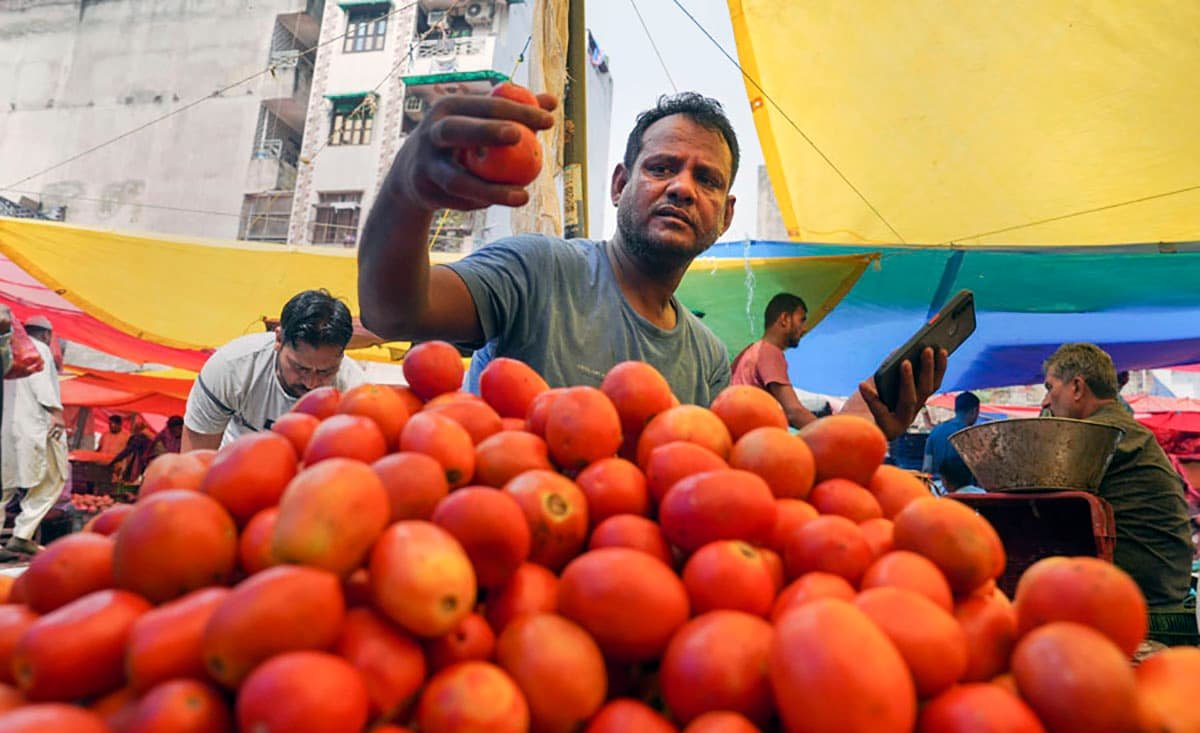
Consumers continue to see red due to pricier tomatoes as retail prices of the kitchen staple soared up to Rs 162 per kg on Thursday across the country due to tight supplies caused by rainfall in many parts.

Among metros, retail tomato prices remained highest at Rs 152 per kg in Kolkata, followed by Rs 120 per kg in Delhi, Rs 117 per kg in Chennai and Rs 108 per kg in Mumbai, according to the data maintained by the Consumer Affairs Ministry. The all-India average retail tomato price was ruling at Rs 95.58 per kg on Thursday.

A maximum rate of Rs 162 per kg was quoted in Shahjahanpur in Uttar Pradesh, while the minimum rate was Rs 31 per kg in Churu district of Rajasthan, the data showed. Tomato prices remained high in other major cities in the country.

In Gurugram, retail tomato price was ruling at Rs 140 per kg, at Rs 110 per kg in Bengaluru, Rs 107 per kg in Varanasi, Rs 98 per kg in Hyderabad and at Rs 90 in Bhopal on Thursday. Normally, tomato prices spike during July-August time of the year as harvesting and transportation of highly perishable commodity supplies get affected due to monsoon.

Excise policy scam: AAP leader Manish Sisodia moves SC seeking bail in CBI & ED cases

manish sisodia, manish, aap, aam aadmi party
Excise policy scam: AAP leader Manish Sisodia moves SC seeking bail in CBI & ED cases 19

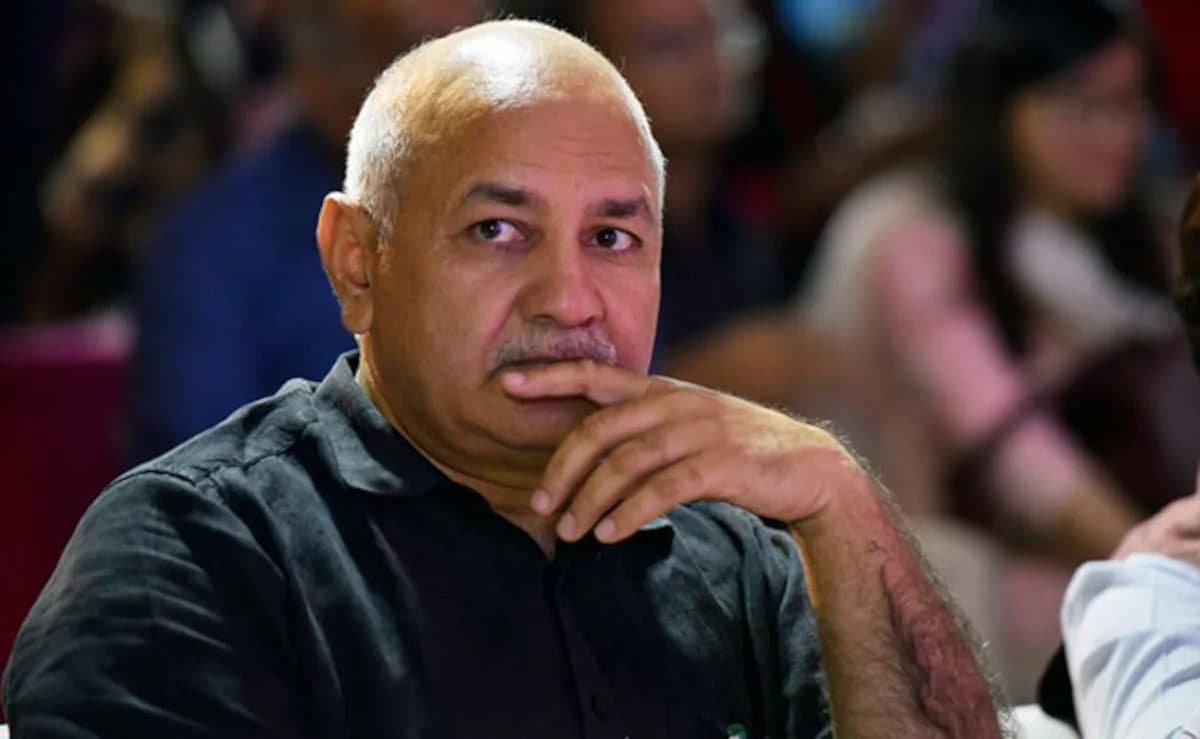
Aam Aadmi Party (AAP) leader Manish Sisodia on Thursday moved the Supreme Court seeking bail in the CBI and ED cases related to the alleged Delhi excise policy scam.

He has moved the apex court challenging the two orders of the Delhi High Court dismissing his bail petitions in these cases.

Sisodia, who also held the excise portfolio among many that he handled as the deputy chief minister of Delhi, was first arrested by the CBI on February 26 for his alleged role in the ”scam”, and has been in custody since then. He resigned from the Delhi cabinet on February 28.

The high court had on May 30 denied bail to him in the excise policy scam case being probed by the CBI, saying having been the deputy chief minister and excise minister, he is a ”high-profile” person who has the potential to influence the witnesses.

On July 3, the high court had declined him bail in a money laundering case linked to alleged irregularities in the city government’s excise policy, holding the charges against him were ”very serious in nature”.

In its May 30 order, the high court had said since Sisodia was at the ”helm of affairs” when the alleged scam took place, he cannot say he had no role to play.

The high court had said, with his party still in power in the national capital, Sisodia, who once held 18 portfolios, continues to wield influence, and since the witnesses are mostly public servants, the possibility of their getting influenced cannot be ruled out. Citing the allegations against the senior AAP leader, it had said the excise policy was formed at the instance of the “South Group” with malafide intention to give undue advantage to them.

The so-called South Group comprises politicians, businessmen and others, including BRS leader K Kavitha, daughter of Telangana Chief Minister K Chandrasekhar Rao. The CBI had arrested Sisodia for alleged corruption in the formulation and implementation of the now-scrapped Delhi Excise Policy 2021-22 following several rounds of questioning. Sisodia had challenged in the high court the March 31 order of the trial court which had dismissed his bail plea saying he was prima facie the ”architect” of the alleged scam and had played the ”most important and vital role” in the criminal conspiracy related to alleged payment of advance kickbacks of Rs 90-100 crore meant for him and his colleagues in the Delhi government. The ED is also investigating the money laundering case against the AAP leader that stems from the CBI FIR.

According to the CBI and the ED, irregularities were committed while modifying the excise policy and undue favours were extended to licence holders.

The Delhi government implemented the policy on November 17, 2021, but scrapped it at the end of September 2022 amid allegations of corruption.

Sisodia was arrested by the ED in connection with the money laundering case on March 9. In its July 3 order, the high court had declined him bail in the ED case.

This matter has to be visited with a “different approach” as a deep rooted conspiracy involving huge loss of public funds has been alleged, the high court had observed while rejecting his bail application in the money laundering case.

It had said the former deputy chief minister of Delhi has not been able to pass the ”triple test” for bail under the anti-money laundering law in which the court has to see whether an accused is likely to flee from justice, tamper with evidence or influence witnesses.

The court had noted that the ED has alleged that the excise policy was framed as a ”special purpose vehicle” to generate the proceeds of crime and, with the same motive, M/s Indo spirits was also constituted for regular generation of proceeds of crime.

The ED has alleged that Sisodia got Indo Spirits formed as a special purpose vehicle for recoupment of the kickbacks.