Home Blog Page 288

Tax reforms

tax india, tax reforms, income tax, gst, indian tax system, cess, modi government, goods and services tax
Tax reforms 2

Undoubtedly, the introduction of a single, unified tax reform has brought about a major transformation in the Indian tax administration. The elimination of a number of indirect taxes has also made tax compliance easier for businesses and helped make many goods and services more affordable for consumers. 

Of equal significance were those meaningful interventions to reduce the tax on certain areas, such as essential goods, food items, and life-saving drugs. The reduced rate of 5% is a genuinely helpful step in the right direction. In very similar lines, certain medicines are also extended at a lower rate of 12% GST, which is another supportive gesture from the Union Government.  

However, GST charged on the entire spectrum of insurance services is unfortunately at the rate of 18% (9% + 9%). And this includes the much-needed service of health insurance as well. Add to this the fact that a great many seniors in their evening years depend solely on health insurance for their health needs, especially the high-cost hospitalizations that they have to undergo in their late years, with no one to turn to, either from within the family or governmental support. 

Times have changed, and the unsupported MAPL and APL geriatric population increasingly rely on the meager savings they create during their active career period for the benefit of their post-retirement lives and health management. With children mostly away, engaged in their own livelihoods and jobs, a great many of them are relying on their health insurance policies as a tool to protect them from increasing medical costs.

Many modern governments have implemented various strategies to deal with the medical expenses of the geriatric population, which typically requires more healthcare services due to their age-related health conditions. Unfortunately, in India, we do not have any such systems available as of date.

Even though the fact remains that the Indian Government has taken a few initiatives in the healthcare sector for the common benefit of the elderly, they predominantly address the needs of the BPL sector and retired government employees. Except for the rich and super-rich, the MAPL and APL populations, after contributing all that they could towards nation-building (through taxes), are practically left in the lurch in their late years, when health becomes compromised for most.

Their only fallback option, health insurance, becomes increasingly costly as the premium cost is linked to age. As of date, it has shot up steeply thanks to the heightened claims costs arising from the COVID-19 pandemic and its complications. 

An important element that adds to the cost proportionately is the GST factor, which escalates the cost by an additional high element of nearly 20%. Of course, the health insurance costs offer a tax deduction benefit to the taxpayers, but a huge proportion of the elderly who do not have taxable income are not entitled to this benefit either.

This appeal is to make a deviation in GST rules confined purely to medical and health insurance. The act of “no GST” on the premium element of medical policies for persons beyond the age of 60 can go a long way in helping the distressed geriatric population in India. This would be an enormously helpful gesture to the seniors of India. 

It is my solemn submission that the cited request be considered in earnest for the benefit of the elderly population of India, whose means of income are limited and healthcare needs unlimited.


Disclaimer: The opinions expressed within this article are the personal opinions of the author. The facts and opinions appearing in the article do not reflect the views of AFTERNOON VOICE and AFTERNOON VOICE does not assume any responsibility or liability for the same.
Bombay High Court allows abortion of 28 weeks foetus

bombay hc, bombay high court, bombay, abortion, pregnancy
Bombay High Court allows abortion of 28 weeks foetus 4

On May 9, a vacation bench of Justices Amit Borkar and Kal Khata granted the woman’s petition for medical termination of her pregnancy under the provisions of the Medical Termination of Pregnancy Act, 1971, because continuing her pregnancy would endanger her life. The woman filed the petition on May 3 through her advocates, Vinayak Patil and Ajinkya Udane, when her pregnancy was at 28 weeks.

The court directed the establishment of a committee of experts to submit a report as to whether the continuation of pregnancy would involve a risk to the woman’s life or cause injury to her physical or mental health. A team of doctors approves abortions.

The committee of seven doctors and a social service superintendent submitted a report on May 6 recommending termination subject to delivery complications. According to the report, the woman, who is 29 weeks pregnant, may require surgical intervention, and intra-operative and post-operative complications are similar to those of other surgeries. It said that there are chances of survival of the fetus requiring neonatal intensive care unit admission and management.

The Bombay High Court has permitted a woman to undergo medical termination of pregnancy (MTP) at the advanced stage of 28 weeks after the medical board recommended termination subject to delivery complications.

As far as the woman’s health was concerned, the report said that there were more chances of complications in her future pregnancy. “If a patient requires surgical intervention, she becomes a high-risk case of hysterotomy. So, in the next pregnancy, she can have chances of uterine scar dehiscence or scar rupture,” the report added. 

Permitting the woman to undergo MTP, the HC clarified that in case the child born out of the procedure is alive, the Civil Hospital, Solapur, conducting the procedure shall “ensure that all necessary facilities are made available to such a child for saving its life”. Also, if the child is born alive, the state government and its agencies shall assume full responsibility for him or her, the HC said.

Donald Trump indicted, welcome verdict

donald trump, court, trump, E. Jean Carroll, carroll
Donald Trump indicted, welcome verdict 6

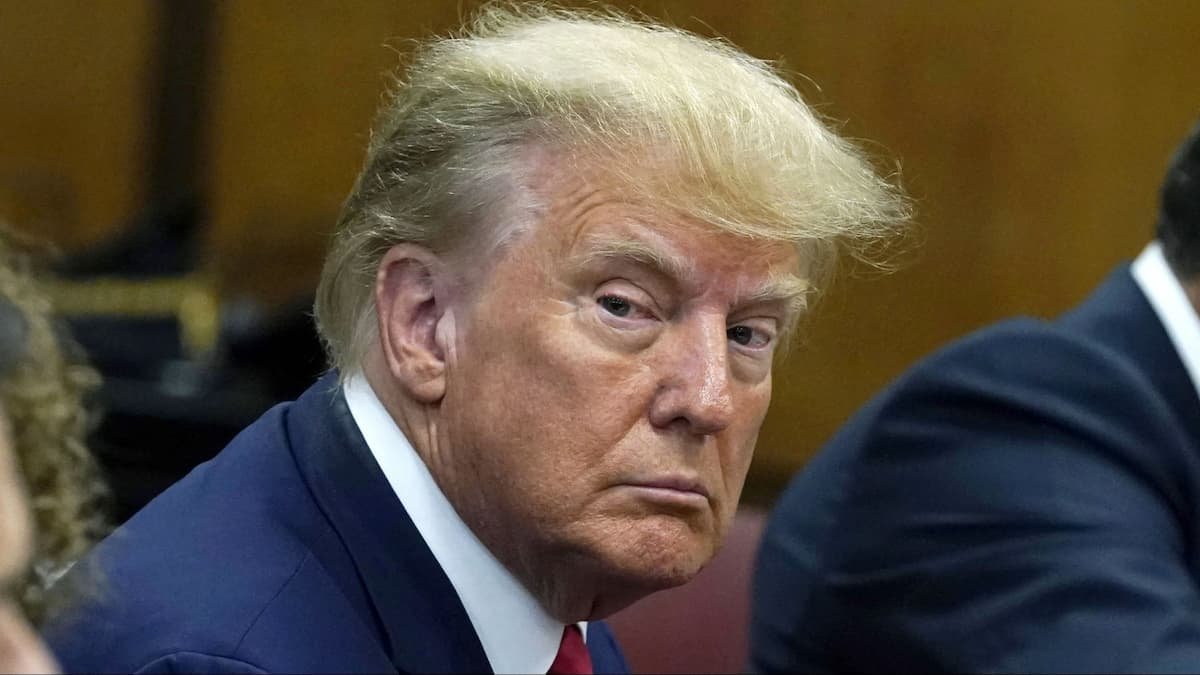
US jury finds former President Donald Trump guilty of sexually abusing and defaming magazine writer E. Jean Carroll, and ordered to pay her $5m as damages. This is one more feather to the #MeToo movement, and has raised important questions about the accountability of public figures and the legal system’s ability to address sexual assault and harassment allegations.

During the two-week long trial, Carroll testified that Trump had sexually assaulted her in a fitting room at a Manhattan store in mid-1990s.

Though Carroll subsequently filed a defamation lawsuit against Trump for his statements, the case was delayed due to legal challenges. In March 2021, the Court of Appeals ruled that the case could proceed, rejecting Trump’s claim that he was immune from the lawsuit as a sitting president.  The judge’s decision was significant, as it marked the first time that a court had allowed a defamation case against a sitting president to proceed.

Carroll told the jury, “Woman after woman stood up… Well, this may be a way to change the culture of sexual violence…”

The impact of this decision on the #MeToo movement is two-fold. Firstly, it demonstrates that even those in power and influence are not above the law and that victims of sexual assault and harassment have the right to seek justice. The ruling also sends a message to other high-profile figures that they can be held accountable for their actions.

Secondly, the ruling highlights the challenges that victims face when seeking justice through the legal system. Carroll’s case took over two years to reach this point, and many victims face significant barriers when attempting to report or seek justice for sexual violence. The fact that a court has allowed Carroll’s case to proceed is a positive step, but there is still much work to be done to ensure that such victims have access to justice.

It remains to be seen how Trump makes the next move, but it is a defining verdict towards a more just and equal society. 

Courage is contagious

Carroll attained justice beyond herself, and more skeletons can be expected to come out.  The verdict also infers that political slant can’t compete with evidence in the court of law.  Human law thwarted law of the jungles, where might is right.  The law is meant to shield victims whose rights or characters are violated, and to hold the trespassers to account. 

Back in India, recall the Delhi court verdict in February 2021 where journalist Priya Ramani was found not guilty of criminal defamation for accusing former Union minister MJ Akbar of sexual harassment in 2018. The case had become a focal point of the #MeToo movement in India.

Ramani was the first to publicly accuse him and was subsequently sued for defamation by Akbar.  The ruling was also seen as a blow to powerful men who had long been able to silence their accusers through the use of defamation lawsuits.

Overall, the rulings in both the Trump and Ramani cases highlight the importance of holding powerful individuals accountable for their actions. They also encourage victims to speak out.

The predicament

Earlier one thought that #MeToo has done what law could not.  The judgement reinforces the hash-tag. The internet-age has better equipped people to deal with these issues; social media democratises women’s lib helping them to share their ordeals.  For some women, the world is changing.  

How many women were stripped of their livelihoods/reputations without due-process?  When more survivors speak up, the nation not only listens, it demands answers.  Unwanted advances aren’t buried and forgotten.  In other words, he may overlook her; she remembers him. 

The perpetrator can easily say he was misunderstood, tough to prove that a gesture was harassment.  Complaints will be negatively flagged, and the offenders often pretend they were ‘surprised’ by the victim’s interpretation and walk away unscathed. 

If your boss flirts, you try to steer the fine line between not hurting his fragile ego and ending up trespassed upon.  You don’t want to risk that promotion for which you worked so hard.  You discreetly express your unease.  Some women have to deal with awkward attention all the time.  Here, Ramani and Carroll refused to be cowed down.

What grows from within this culture is an attitude of impunity.  It may be a CEO, politician, celebrity, sportsman, artist, actor, author…  They rely on their ‘superiority’ that allows them to do what they do.  Some wrongdoers believe their victims should feel ‘privileged’; punishment is usually for ordinary people, not them. 

Is this the end of Trump’s political future?  Will this be the first of many convictions?  Carroll, you’ve shown the world that you will not be silenced. Yes, all allegations merit adjudication.


Disclaimer: The opinions expressed within this article are the personal opinions of the author. The facts and opinions appearing in the article do not reflect the views of AFTERNOON VOICE and AFTERNOON VOICE does not assume any responsibility or liability for the same.
India lose to Chinese Taipei in Sudirman Cup opener

pv sindhu, sindhu, badmington, badminton, china
India lose to Chinese Taipei in Sudirman Cup opener 8

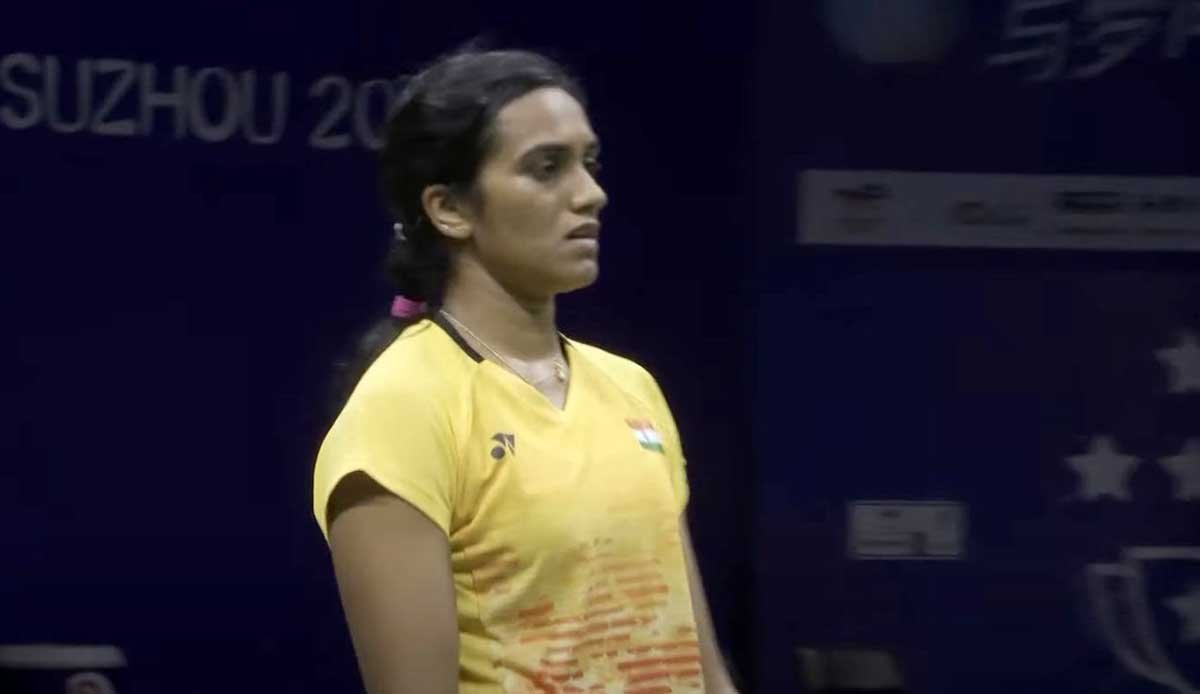
Double Olympic medallist PV Sindhu’s gallant fight ended in agony as India made a dismal start to their Sudirman Cup campaign, going down to the formidable Chinese Taipei in the opening round here on Sunday.

There was, however, no lack of fight from the Indian players, as Tanisha Crasto and K Sai Prateek started on a positive note in the mixed doubles contest, but they ran out of steam in the end, losing 21-18 24-26 6-21 to world no. 30 Yang Po-Hsuan and Hu Ling Fang.

World Number 9 HS Prannoy then couldn’t find his ‘A’ game, going down 19-21 15-21 to world No. 5 Chou Tien Chen as India lagged 0-2 after the first two matches.

Sindhu was then handed the responsibility to bring India back into the tie, but it was always going to be a tough task with her nemesis and former world no. 1 Tai Tzu Ying standing across the net.

The 27-year-old from Hyderabad, who hasn’t been in the best of form lately, produced a gritty performance after the opening game reversal but couldn’t go the distance, with Tai Tzu managing a 21-14 18-21 21-17 win in an hour and four minutes.

It allowed Chinese Taipei to take an unassailable 3-0 lead in the five-match tie.

The last time Sindhu beat Tai Tzu was on way to her world championship title in 2019. Overall, it was her 18th loss to the Taipei player.

Sindhu, whose best result this season so far has been a final appearance at the Spain Masters, however, looked far more polished in her overall game as she displayed great fightback in the second and third games after losing the first.

While Tai Tzu looked by far the better player in the opening game, Sindhu managed to step up the pace in the second to take the match to the decider.

In the third game, the duo moved neck and neck until 6-6. Tai Tzu then eked out a 9-6 lead but Sindhu continued to look for angels to trouble the Taipei wizard. A forehand angled drive brought Sindhu back on even par at 10-10 before her opponent went into the break with a one-point lead.

After resumption, Sindhu was up 14-12 but she sprayed to the net twice to make it 15-14 in Tai Tzu’s favour. Another shot went long and Tai Tzu moved to 17-14 with a deceptive shot.

The touch artist played a few of her sensational shots before a down the line smash gave her five match points. Sindhu saved two before Tai Tzu unleashed a quick return off the Indian’s serve to take the match.

Study reveals human eyes play ‘tricks’ on minds

human eyes, human visuals, visual system, study
Image: Unsplash

According to a new study, the human visual system can ‘trick’ the brain into generating incorrect assumptions about the size of objects in their environment. The research is published in the journal PLoS ONE.

The research findings could have implications for many aspects of everyday life, such as driving, how eyewitness accounts are treated in the criminal justice system, and security issues, such as drone sightings. The research team from the University of York and Aston University presented participants with photographs of full-scale railway scenes, which had the upper and lower parts of the image blurred, as well as photographs of small-scale models of railways that were not blurred.

Participants were asked to compare each image and decide which was the ‘real’ full-scale railway scene. The results showed that participants perceived that the blurred real trains were smaller than the models. Dr. Daniel Baker, from the University of York’s Department of Psychology, said: “In order for us to determine the real size of objects that we see around us, our visual system needs to estimate the distance to the object.

“To arrive at an understanding of absolute size it can take into account the parts of the image that are blurred out – a bit like the out-of-focus areas that a camera produces – which involves a bit of complicated mathematics to give the brain the knowledge of spatial scale. “This new study, however, shows that we can be fooled by our estimates of object size. Photographers take advantage of this using a technique called ’tilt-shift miniaturisation’, which can make life-size objects appear to be scale models.”

The findings demonstrate that the human visual system is highly flexible – sometimes capable of accurate perception of size by exploiting what is known as ‘defocus blur’, but at other times subject to other influences and failing to make sense of real-world object size. Professor Tim Meese, from Aston University, said: “Our results indicate that human vision can exploit defocus blur to infer perceptual scale, but that it does this crudely.

“Overall, our findings provide new insights into the computational mechanisms used by the human brain in perceptual judgments about the relationship between ourselves and the external world.”

Violent clash between 2 groups in Akola, 2 killed, 20 injured; Section 144 imposed

akola, clashe, maharashtra, crime, violent clash, police, maharashtra police
Violent clash between 2 groups in Akola, 2 killed, 20 injured; Section 144 imposed 11

On Saturday evening, a violent clash erupted between two groups over a minor dispute in Maharashtra’s Akola, killing one person and injuring at least ten others, according to police. A video purportedly showed members of the two groups pelting stones at each other, damaging vehicles, and creating a ruckus on the streets.

However, officials said that the situation is under control now. The incident prompted the administration to issue a prohibitory order under Section 144 of the CrPC. “Following the violent clashes, Section 144 has been imposed in the city,” Akola Collector Neema Arora said.

According to the police, the violent mob has damaged some vehicles. Reportedly, a large crowd marched on the Old City police station after a violent incident arose after a minor dispute.

The violent mob targeted some vehicles in the area, and the police have started using force to bring the situation under control, official sources said. Akola SP Sandeep Ghuge said that the situation is currently under control. “A Section 144 Prohibition Order has been imposed in Akola City on the order of the District Collector,” he said.

This is the second such incident reported in Akola. A few days ago, there was a violent clash between two groups in the Shankar Nagar locality of the Akot File area.

Karnataka chooses the Congress over communal BJP

siddaramiah, shivakumar, d k shivakumar, congress, rahul gandhi, gandhi, karnataka elections, karnataka, bjp, modi, narendra modi, reddy, south india, bjp rejected
Karnataka chooses the Congress over communal BJP 13

Karnataka saw a striking turnout of 73% in this year’s elections. This was 2% higher than the voting percentage in 2018 (71.1%). This change is perhaps due to the Bharat Jodo Yatra of Rahul Gandhi. Women and young voters are believed to have exercised their franchise in large numbers on May 10. However, the turnout in the city of Bengaluru was not up to the mark, with only 54.8% casting their vote in Bengaluru Urban, lower than the 56% in 2018.

Despite many exit polls predicting a defeat, BJP leaders in Karnataka were very hopeful of winning the election. They believed that the last-minute surge in voter turnout was missed by pollsters and would help them retain the mandate. Several party functionaries have pointed out that most exit polls concluded by 3 pm and are inaccurate, while the polling percentage increased significantly afterwards. The fact is that most of the news channels are the pets of the BJP, but they could not change the narrative. The BJP and its favorite news channels also had the argument that those who came to the booths after 3 pm were not part of the exit polls, and therefore, the predictions of the pollsters may be inaccurate. But the reality is that Karnataka is not happy with the communal politics of the BJP.

Both the BJP and Congress generated a lot of buzz when they released their respective election manifestos for the state. The BJP promised to bring the Uniform Civil Code (UCC) and National Register of Citizens (NRC) to Karnataka after making similar vows in other states where polls were held recently. It also promised to provide three free cooking gas cylinders to all BPL families annually. Meanwhile, the Congress’s promise to ban the right-wing Bajrang Dal in its manifesto drew the ire of the BJP. The grand old party also promised free electricity and a monthly allowance to women and the unemployed. Somewhere, Karnataka wanted to come out of communal politics, and they found some solace in Congress promises.

The Bharatiya Janata Party and the Rashtriya Swayamsevak Sangh have expectedly put in every possible effort and resource into the Karnataka election. Their desperation to win forced them to declare Yeddyurappa as its chief ministerial face and bring back the tainted Reddy brothers to campaign. The desperation did not really work in their favor. The South, with 130 seats in the Lok Sabha, has become even more crucial because of the ground the BJP is losing in Uttar Pradesh. The loss of by-elections in Gorakhpur and Phulpur—constituencies won and then vacated by the BJP’s Chief Minister and the Deputy Chief Minister in UP—signalled the writing on the wall.

But despite its best efforts, the BJP had to lose in Karnataka. The 2011 census put the state’s population at 6.15 crore, out of which around 83% are Hindus, tempting one to conclude that the demography of Gujarat and Karnataka is not very different. However, in Karnataka, 17% of the population belongs to Scheduled Castes (SC) and 7% to Scheduled Tribes (ST). Besides, the Brahmanical order of the RSS leadership and the language barrier have also made the SC and STs in Karnataka more alienated from upper caste Hindus and even Lingayats.

Thus, the generalization that all Hindus prefer the BJP does not seem to work in the state. The Dalit-upper caste clashes of recent years in many BJP-ruled states and cases like the suicide of Dalit scholar Rohith Vemula have also led SCs to have second thoughts about the BJP. Nor does the minority community, which constitutes 15% of the population, see the BJP, as the party of their choice. The smaller caste groups belonging to the OBC fold and comprising roughly a quarter of the population also don’t like the dominance of the big castes like Lingayats and Vokkaligas. This also weighs against the prospects of the BJP in Karnataka.

The BJP is still perceived as a North Indian party in the southern states, and the events of the past four years have cemented that perception. Be it the controversy over beef or the primacy of the Hindi language, the Modi government is seen as the force promoting the agenda of the RSS. The way of life defined by the RSS’s Hindutva is still somewhat alien to Kannadigas. What also works against the BJP is that North Indians living in Bengaluru and elsewhere in the state are largely youth who are uncomfortable with the moral policing done by Hindutva outfits. This section may well root for Narendra Modi as PM but is not necessarily enthusiastic about BJP rule in Karnataka.

Depending on dominant castes does not always fetch handsome political returns. The BJP itself has won several state elections by strategically distancing itself from the dominant castes and thus attracting smaller groups to come together and turn the table. The BJP distancing itself from the Jats in Haryana, Marathas in Maharashtra, and Yadavs and Jatavs in Uttar Pradesh are some such examples. In Karnataka, however, the BJP’s strategy revolves around the Lingayats, who comprise 17% of the population and provide the party with its main support base. While the Lingayats and Vokkaligas, the latter aligned with the JD(S), did determine electoral outcomes earlier, a rainbow coalition of smaller groups, minorities, and OBCs is likely to work better this time around.

No question of imposing martial law, says Pakistan Army after political turmoil

asim munir, pakistan, army, imran khan, chaos in pakistan, munir, pak, pak army
No question of imposing martial law, says Pakistan Army after political turmoil 15

Pakistan’s Army has ruled out the possibility of imposing martial law in the country amidst the political turmoil and deteriorating law and order situation following the arrest of former prime minister Imran Khan, saying Army chief General Asim Munir and the entire military leadership believe in democracy.

The remarks of Inter-Services Public Relations (ISPR) Director General Major General Ahmed Sharif Chaudhry came after an almost four-day political turmoil erupted due to Pakistan Tehreek-e-Insaf (PTI) Chairman Khan’s arrest, in which Army’s installations, including the General Headquarters in Rawalpindi, were also targeted.

“There is no question of imposing martial law in the country,” he told Geo News, adding that Army Chief General Asim Munir and the entire military leadership along with him believe in democracy. The Army remains Pakistan’s most powerful institution, having ruled it directly for close to half its 75-year history through three coups.

Chaudhry stressed that the Army’s unity is unwavering and will persist, serving as a pillar of stability and security for the nation.

He also rejected social media rumours about resignations by top Army officers or anyone disobeying the military discipline. “No one in the Army has resigned and no one has disobeyed any order,” the military spokesman said on Friday.

He also rejected the impression of division within the army in the wake of attacks on military facilities during protests following the arrest of Khan. “Despite the internal and external propaganda, the army is united and will remain,” he said.

Major General Chaudhry further said that the army is united despite internal miscreants and external enemies. “The dream of dividing the Pakistan Army will remain a dream, the Army is united under the leadership of Army Chief General Asim Munir and will remain united.” He called upon the public and media to rely on verified information from official sources rather than giving credence to unfounded speculation.

The Army has come under scanner after showing no response when the rioters ransacked the residence of Corps Commander Lahore after Khan was arrested on May 9. At least 10 people have been killed in the violence that erupted after Khan’s dramatic arrest by the paramilitary Rangers from the Islamabad High Court on Tuesday.

The unrest in the country has come to a halt for now as the Islamabad High Court (IHC) has provided blanket relief to Khan and barred authorities from arresting the PTI chief till Monday morning.

Khan has been highly critical of the alleged role of the establishment, especially that of former Army chief General (retired) Qamar Javed Bajwa, in bringing down his government in April 2022. Before his retirement, Gen Bajwa said that the Pakistan Army will remain apolitical.

Researchers reveal how physical activity is critical for post-stroke recovery

physical activity, walking, running, activity, heart rate, health
Image: Pexels

Physical exercise following a stroke can be crucial to a successful recovery. According to research conducted by the University of Gothenburg, persons who exercise four hours per week after suffering a stroke recover more functionally in six months than those who do not. The research, which has been published in the scientific journal JAMA Network Open, is based on data from 1,500 stroke patients in 35 Swedish hospitals. The subjects were divided into groups based on their poststroke patterns of physical activity.

The results show that increased or maintained physical activity, with four hours’ exercise weekly, doubled the patients’ chances of recovering well by six months after a stroke. Men and people with normal cognition kept up an active life relatively more often, with better recovery as a result. Positive programming from exercise.

The researchers have previously succeeded in demonstrating a clear inverse association between physical activity and the severity of stroke symptoms at the actual onset of the condition. These new findings highlight the importance of maintaining a healthy, active lifestyle after a stroke. The first and corresponding author of the study, Dongni Buvarp, is a researcher in clinical neuroscience at Sahlgrenska Academy, University of Gothenburg. Besides her research internship, she is a resident doctor at an initial stage of specialist training at Sahlgrenska University Hospital.

“Physical activity reprograms both the brain and the body favorably after a stroke. Exercise improves the body’s recovery at the cellular level, boosts muscle strength and well-being, and reduces the risk of falls, depression, and cardiovascular disease. Regardless of how severe the stroke has been, those affected can derive benefits from exercising more,” she said.

“Being physically active is hugely important, especially after a stroke. That’s a message that health professionals, stroke victims and their loved ones should all know. Women and people with impaired cognition seem to become less active after stroke. The study results indicate that these groups need more support to get going with physical activity,” Buvarp said.

One weakness of the study is that, with a few exceptions, the researchers were unable to study the participants’ degree of activity before the stroke. The patients included were treated in Sweden in the period from 2014 to 2019.

K’taka Poll Results 2023: “BJP will win with absolute majority”, says Bommai; “Am small party, there is no demand for me,” says JDS’ Kumaraswamy

Basavaraj Bommai Karnataka, bommai, karnataka, karnataka elections, congress, bjp, kumaraswamy
K'taka Poll Results 2023: "BJP will win with absolute majority", says Bommai; "Am small party, there is no demand for me," says JDS' Kumaraswamy 18

As the counting of votes for the Karnataka Assembly polls began on Saturday, Chief Minister Basavaraj Bommai exuded confidence in the Bharatiya Janata Party emerging victorious with an absolute majority. The counting of votes began at 8 am today across the state amid tight security.

“Today is a big day for Karnataka as the people’s verdict for the state will be out. I am confident that the BJP will win with an absolute majority and form a stable government,” Bommai said while speaking to the media. The Chief Minister also visited the Hanuman temple in Hubballi.

The exit polls, which were out after voting ended on May 10, predicted a hung assembly, with some showing Congress returning to power with a majority. Most of the exit polls predicted that the BJP would fall short of the halfway mark, 113. Congress is expected to have a clear edge in Karnataka in the assembly elections conducted on May 10, with four exit polls giving it a full majority and some predicting a hung assembly with an advantage to the party.

In such circumstances, the JD (S) can likely play the role of a kingmaker. However, JD(S) leader HD Kumaraswamy said on Saturday that he has not been contacted as yet for the formation of the government in case of a cliffhanger, adding that he is hoping for a good show.

Speaking to the media ahead of the counting, Kumaraswamy cited the exit polls, which predicted nearly 30-32 seats for JD(S) and a clear edge for the Congress party, with some even predicting a majority for the grand old party, and said that according to the predictions, there is no need for him to explore options. “In the next two to three hours, it will become clear. Exit polls show that the two national parties will score big. The polls have given 30-32 seats to JD (S). I am a small party, there is no demand for me…  I am hoping for a good development,” he said.

“No one has contacted me till now. Let us see the final results first. According to the exit polls, there is no need for options. Let us see,” the JD (S) leader added. The exit polls, which were released after the polling ended in Karnataka, predicted that Janata Dal-Secular JD(S) would not touch the 37 seats it won in the 2018 polls but would continue to be a strong regional player in the state. If Karnataka throws up a hung assembly, the JD-S could emerge in the role of kingmaker.

The fiercely contested election that saw high-pitch campaigns from the political parties is crucial for both the BJP and the Congress. Hectic electioneering by leaders of various political parties saw the BJP allow Union Ministers and Chief Ministers to campaign with their full force. The Congress, on the other hand, worked hard to wrest power from the BJP, which is striving to break the 38-year-old pattern of alternating governments and retain its power in the state.

Congress leaders, including Rahul Gandhi, Sonia Gandhi, and Mallikarjun Kharge, held various roadshows, rallies, and election campaigns. An incumbent government has not returned to power in Karnataka after a full term of five years since 1985.