Gas all Oppn leaders Nazi-style: RJD's Manoj Jha on CBI summons to Kejriwal 2
The RJD on Friday taunted the Modi government after Delhi Chief Minister Arvind Kejriwal was summoned by the CBI for questioning, saying it should put all opposition leaders in a gas chamber and finish them off ”Nazi-style”.
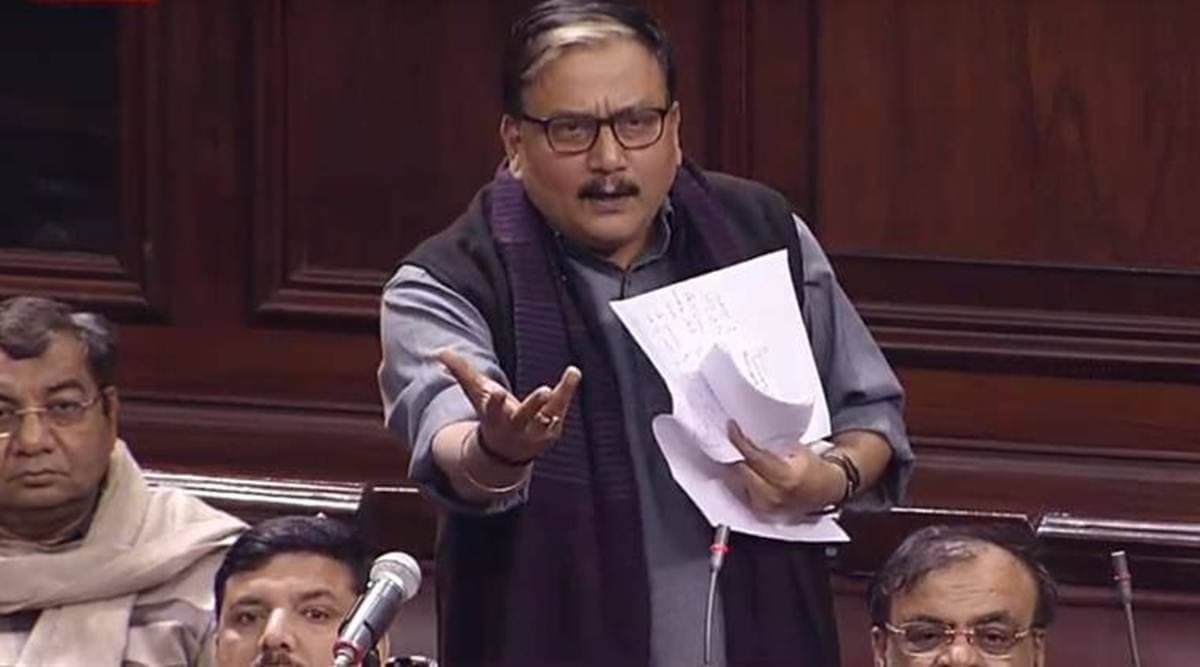
The CBI has summoned Delhi Chief Minister and Aam Aadmi Party national convenor Kejriwal in connection with the excise policy scam case on April 16, officials said. Reacting to the development, RJD MP and spokesperson Manoj Jha said, ”I would request the prime minister (Narendra Modi), the home minister (Amit Shah), that they should put all opposition leaders in a gas chamber and finish them off Nazi-style.”
“You work in a dictatorial manner.” You are seeing that power is slipping out of your hands, so you have pushed the probe agencies into a state where they can only see the houses of opposition leaders who speak against you. Continue doing this, but your end is near,” Jha said in a video statement, slamming the government.
“In order to save yourself from the Adani issue, you have targeted the Congress, NCP, AAP, and BRS.” Has anyone been spared? “What is left now is your fear that your friend will get exposed,” the Rashtriya Janata Dal (RJD) leader said.
Kejriwal has been asked to be present at the agency headquarters at 11 am on April 16 to answer queries of the investigating team, officials said. The central probe agency has already arrested former Delhi deputy chief minister Manish Sisodia in connection with the case.
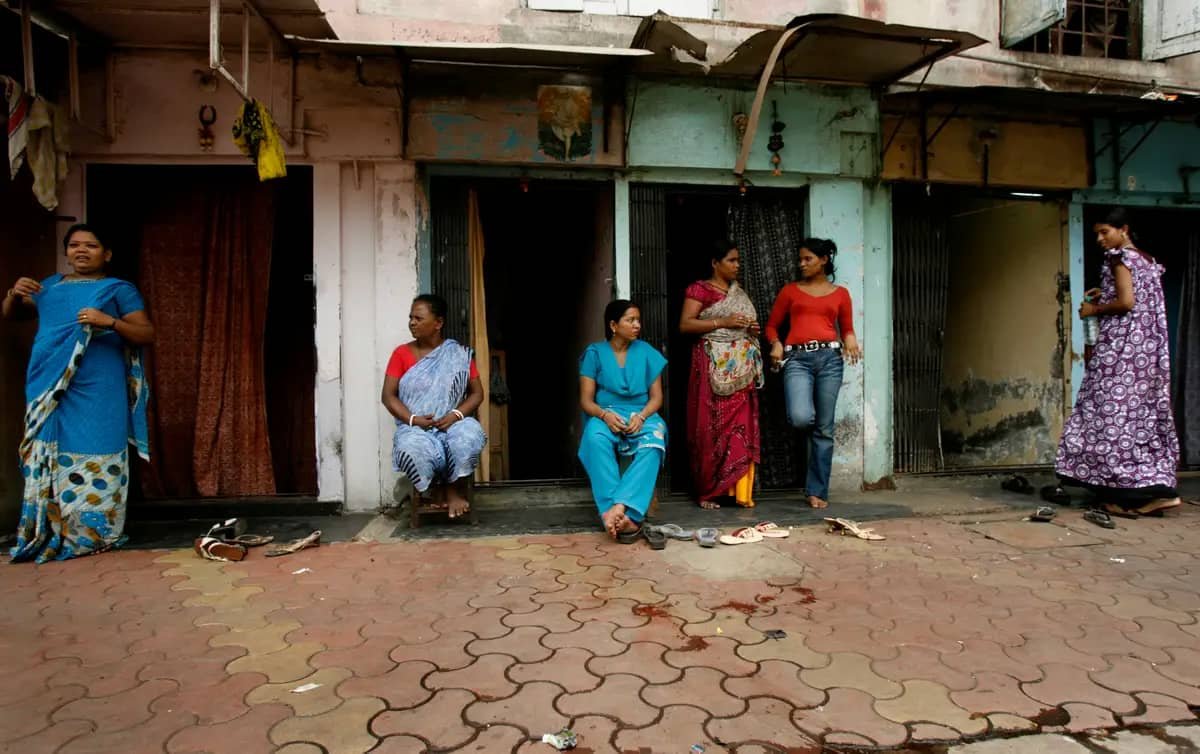
Kamathipura Mumbai’s famous red-light area which is known for the flesh trade business. It was established after 1795 with the construction of causeways that connected the erstwhile seven islands of Mumbai. Initially known as Lal Bazaar, it got its name from the Kamathi (workers) of other areas of the country, who were laborers on construction sites. Due to tough police crackdowns, in the late 1990s, with the rise of AIDS and the government’s redevelopment policy that helped sex workers move out of the profession and subsequently out of Kamathipura, the numbers of sex workers in the area declined.
Before the completion of the Hornby Vellard project in 1784, which built a causeway uniting all seven islands of Mumbai under William Hornby, governor of Bombay (1771–1784), it plugged the Great Breach in Mahalaxmi, while the subsequent Bellasis Road causeway joined Mazagaon and Malabar Hill in 1793. This resulted in several low-lying marshy areas of the Mumbai Flats, like Byculla, Tardeo, Mahalaxmi, and Kamathipura, opening up for habitation. Thereafter, starting in 1795, Kamathis (workers) from other areas of the country, working as laborers on construction sites, began settling here, giving the area its present name. It was bounded by Bellasis Road on the north, Gaodevi on the south, and the main road across, Falkland Road. At one point during this period, it was home to a Chinese community, which worked as dockhands and ran restaurants.
By the late 19th century, it had all changed. As previous 1864 Census figures for Mumbai indicate, other areas had a larger population of prostitutes, like Girgaon (1,044), Phanaswadi (1,323), and Oomburkharee (1,583), compared with Kamathipura (601), all of which declined after 1864. This small region boasted the most exotic consorts. In the 19th and early 20th centuries, a large number of women from continental Europe, Japan, and China were trafficked into Kamathipura, where they worked as prostitutes, servicing soldiers and locals alike. Gradually, social stratification also took place: a busy road in Kamathipura was known as Safed Gully owing to the European prostitutes housed here during the British era.
The lane is now known as Cursetji Shuklaji Street. The most well-known brothel in the area, Pila House, is a hybridization of its original word: playhouse. The first venereal disease clinic in Bombay was opened in 1916, and it was taken over by BMC in 1925. Nearby, Bachu Seth ki Wadi on Foras Road was famous for its kothewalis, or tawaifs and mujras.
When India gained independence, Indian sex workers moved into the area. In recent decades, large numbers of Nepalese women and girls have also been trafficked into the district. Over the years, under Indian government rule, the sex industry in Kamathipura continued to flourish. Trafficking and economic circumstances also brought women from different parts of the country there. Eventually, it became Asia’s largest sex district.
The brothels in the area are crowded. Sex workers wait outside to pick up customers and then rent an available bed. The estimated 3,000 buildings in the area are largely dilapidated; safe drinking water and sanitation are threatened in this area. The movie Gangubai described the exact politics of this area. There were a lot of wonder world activities in this area; in the 1970s and early ’80s, Bachchu Wadi at Kamathipura was frequented by gang leaders from the Mumbai underworld, such as Haji Mastan, Karim Lala, and Dawood Ibrahim.
In 1992, the Mumbai Municipal Corporation recorded that there were 45,000 sex workers here, which were reduced to 1,600 in 2009 and 500 in 2018. Many sexual workers have migrated to other areas of Maharashtra, with real estate developers taking over the high-priced lands. In 2018, the Maharashtra government sought tenders to demolish and redevelop this area. Kamathipura is one of the prime locations in south Mumbai.
This is not the first time that a proposal has been put forth for the redevelopment of Kamathipura. In the 1980s, Mhada carried out a comprehensive survey as the first step towards transforming the entire neighborhood through an urban renewal proposal, but the project was stalled citing financial risks. In 2005, a local private developer expressed his interest in undertaking the redevelopment of a large part of Kamathipura, according to a report prepared by the Tata Institute of Social Sciences.
This time the state government has decided to constitute three different committees to ensure that the project is successfully executed and without delays. The first committee, called the “project feasibility committee,” will consist of Mhada and BMC officials who will determine the actual area that will come under redevelopment, determine the eligibility of the tenants, and help in getting approvals from at least 51 percent of tenants to take the project ahead.
Kamathipura is divided into roughly 14 lanes and divided according to the regional backgrounds of the workers. Most of the workers come from other Indian states. There is little interaction between areas, which makes it harder for social organizations to organize them into a movement or union. Further, a lack of public opinion, political leadership, or social activism that is empathetic towards them means a tough time forming unions. The area had 55,936 voters in 2007. Since 2015, when the BJP came to power in Mumbai, they have focused on the development of all these neglected and dilapidated areas.
For speedy implementation of the project, a high-powered committee headed by the additional chief secretary of the housing department will clear all the proposals related to the project. The committee will also examine the DPR prepared by MHADA, approve the appointment of the developer, review the project at regular intervals, and coordinate with various government departments. The present government is committed to the development, and they have plans to give it a facelift. Mumbaikar are curious to know how the new Kamathipura would look like.
Why do some fathers sexually molest their daughters? 5
These days, there are many stories of fathers sexually abusing or assaulting their own daughters. In the recent past, BJP leader and actor Khushbu Sundar opened up about sexual abuse by her father, which she described as leaving scars for life. At the age of eight, Khushbu Sundar went through sexual abuse by her father and could not open up about it till the age of 15. The trauma she went through as a child has scarred her for life, and she was fighting for others today. Before this news settled, Delhi Commission for Women chief Swati Maliwal made the same terrible revelation.
She told the media that her own father used to sexually assault her when she was a young girl. He used to beat her up a lot. As a child, she was petrified when he came home and often hid under the bed. Her father held her by her ponytails and banged her head against the wall. She used to bleed from the head on impact. Maliwal lived with her father till she was in the fourth grade of school, and it happened several times then.
Khushbu and Maliwal are privileged women, and their voices are heard, but there is much news on a daily basis where fathers randomly abuse daughters; some make them pregnant, and some even kill them after rape. We read the news, feel sorry, and forget. As a society, somewhere we lack our social responsibility of saving a girl child. These abuses give children confidence issues, and that literally robs their childhood. Unfortunately, there are fathers who believe that their daughters are personal possessions that they can do whatever they want with. These men see women as sex objects and not as human beings. Father was the first man that they trusted, and he betrayed their trust brutally.
It’s a journey to heal these deep wounds. One of the most important steps to healing is letting go of personal responsibility. Nothing that happened was my daughter’s fault. Offenders often justify their behavior by cognitively distorting their reasoning; again, the excuse “she came onto me” is common, as is “I told her to tell me if she wanted me to stop”; both of these transfer the responsibility of the offender onto the child. Mothers and women are also parents. Women do not tend to covet infants and children; it is exceedingly rare. The tendency towards child rape and rape in general seems to be a disease and pathology on the male line.
Furthermore, when the sexually abused children become adults, they are often mentally and spiritually destroyed, with self-harm, addictions, and high suicide rates. The so-called ‘loving’ fathers have cursed their own lineage since they groom their own children to be the doormats of humanity by destroying what should have been a healthy ego. You have more or less killed the child, since they will have a lifelong burden of ego fragmentation and mental illness. It is only by some miracle and extensive determination to salvage their lives that those survivors of childhood abuse can undergo a metamorphic journey within themselves and shed the trauma of a really disgusting betrayal of trust.
Child abuse, including sexual abuse, especially chronic abuse at early ages, leaves horrible mental and physical wounds in children for life. They suffer amnesia from the abuse of memories. Recent research showed that females with high exposure to child sexual abuse (CSA) develop PTSD symptoms that are associated with poor social functioning, which is also supported by prior research studies. The feelings of being “cut off” from peers and “emotional numbness” are both results of CSA and highly inhibit proper social functioning.
In such cases where the sexual offender is a father, stepfather, or grandfather, the daughters have no voice. The rape victim cannot even tell someone because, in most cases, they were not heard. Male-dominant families suppress the voice of the daughter, but they never question the father or complain against him. Financial dependency is the biggest issue in some families. Women are not independent. It is believed that the rape victim’s call for help, which is frequently directed toward the mother, is ignored by the mother because acknowledging the rape poses a threat to a cohesive family structure. The mother’s powerlessness often reaffirms the daughter’s feelings of powerlessness and frequently prevents the daughter from putting a stop to the sexual abuse.
Father-daughter rape may continue for many years because the victim has no one to turn to. Another problem with incest stems from the fact that most children are taught that danger lies outside the home and not in the family. These children are unaware that any harm can occur to them within the home. Children may sense that their fathers’ fondling of them is wrong, but since they are not accustomed to being exposed to harm in the home and are accustomed to being controlled by their parents, they may continue to permit themselves to be used as sexual objects. Most of these rapes aren’t about sexual desire; they’re about power.
Our Prime Minister may say “Beti Bachao, Beti Padho,” but no one is here to keep checks or provide social security for daughters. The rapes are on the rise in India, and I think they are never going to stop.
Adani hard-working, down to earth with big ambitions in building infrastructure: Sharad Pawar in 2015 autobiography 7
NCP chief Sharad Pawar may have broken ranks with other opposition parties on the Adani issue, but his friendship with Gautam Adani dates back nearly two decades, when the businessman was exploring expansion into the coal sector.
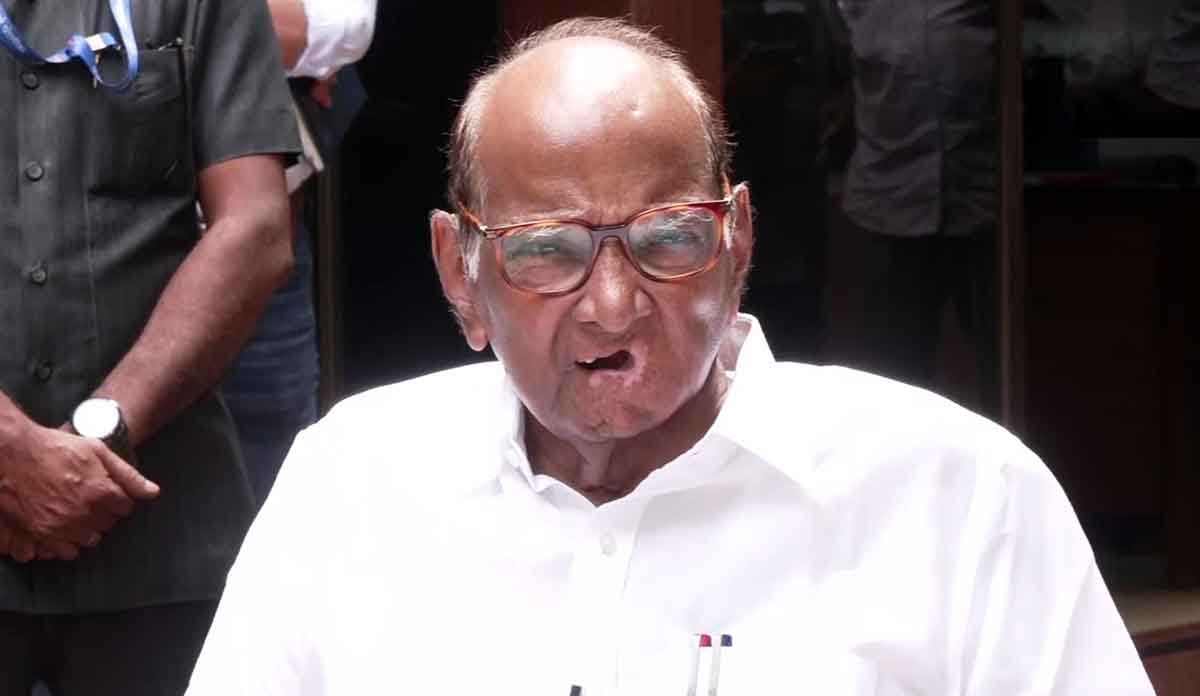
In his 2015 Marathi autobiography, “Lok Maze Saangati…” published in 2015, Pawar lavished praise on Adani, describing him as “hard-working, simple, down to earth,” and with ambition to make big in the infrastructure sector.
The veteran leader also wrote that it was at his insistence that Adani ventured into the thermal power sector.
Pawar recounts in the book how Adani built his corporate empire from scratch, starting as a salesman in Mumbai and dabbling in small ventures before trying his luck in the diamond industry.
“He was earning well in the diamond industry, but Gautam was not interested in that.” He had ambitions to enter the infrastructure sector. “He had good relations with Gujarat Chief Minister Chimanbhai Patel and had submitted a proposal to develop a port at Mundhra,” the NCP chief wrote.
He recalled that Patel had warned Adani about the port being closer to the Pakistan border and in an arid region. “Despite the adversities, he accepted the challenge.”
Pawar wrote that later Adani made his foray into the coal sector, and it was at his suggestion that the businessman ventured into the thermal power sector.
Pawar, who was the then Union Agriculture Minister, said he had made the suggestion to Adani during a function to mark the death anniversary of NCP leader Praful Patel’s father at Gondiya in Maharashtra.
Gautam acknowledged my suggestion in his speech. “Usually, nothing much happens on statements made from the podium, but Gautam pursued the matter and established a 3,000 MW thermal power plant in Bhandara,” the former Maharashtra chief minister said.
In the book, Pawar recounts how he developed close ties with several businessmen as he sought to usher in development in Maharashtra during his decades-long political career.
The NCP chief said he remained in regular touch with business leaders who could meet him without an appointment daily between 2 pm and 4 pm during his tenure as chief minister.
Pawar recounted his arrangement with the then Gujarat chief minister, Chimanbhai Patel, who would divert big projects to Maharashtra. Pawar said he reciprocated the gesture by sending some small projects to Gujarat, an arrangement that ensured the two states scaled greater heights on the economic front.
Pawar has also written about how he helped Hyundai Motors set up a manufacturing plant in Tamil Nadu after the Korean carmaker faced some hurdles in setting up business in Maharashtra during the Shiv Sena-BJP rule.
Amid a strident opposition campaign demanding an investigation into the Adani Group by a Joint Parliamentary Committee, Pawar surprised his fellow opposition leaders by favoring a probe into the dealings of the Gujarat-based business house by a Supreme Court-appointed panel.
Pawar also came out in support of the Adani Group and criticised the narrative around Hindenburg Research’s report on the conglomerate, saying that he felt that the business group was “targeted” and that he was not aware of the antecedents of the US-based short-selling firm.
Pawar has charted a different course than the Congress on issues such as criticism of Vinayak Damodar Savarkar and the Adani Group.
Why is Amritpal Singh Sandhu, a radical, self-styled Khalistani separatist, active now? 9
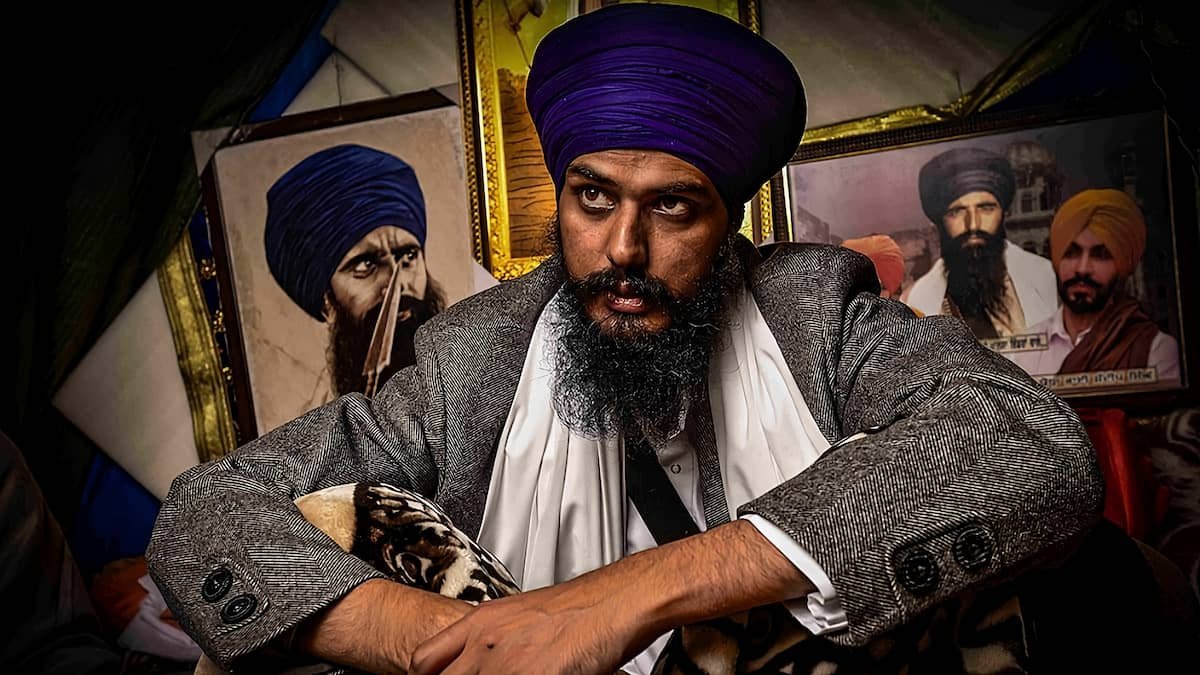
A young Sikh who spent most of his life in a foreign land all of a sudden returns to India and hits the headlines for the wrong reason. Since the government changed in Punjab, many such separatist elements have become active in the state. Amritpal Singh Sandhu, a radical, self-styled Indian Khalistani separatist activist from Punjab, heads an organization called “Waris Panjab De”. This is a Sikh separatist movement seeking to create a homeland for Sikhs by establishing a sovereign state, called Khalistan (the Land of the Khalsa’), in the Punjab region. He has been recently appointed as the head of ‘Waris Punjab De’, an organization founded by Deep Sidhu, an actor and activist who died in a road accident in February last year.
Amritpal Singh is also a Sikh preacher. Singh has since invoked the teachings of slain militant Jarnail Singh Bhindranwale, with renewed calls for the freedom of Punjab and the creation of Khalistan. He gained a cult-like following in Punjab due to his radical views. It is important to note that Amritpal Singh Sandhu has been arrested and detained by the police on multiple occasions for his alleged involvement in promoting Khalistani ideology and activities. But he is not deterred. He has also been accused of making provocative statements and promoting separatism. Some reports suggest that he and his organization have been involved in violent clashes with other groups in Punjab.
His arrest has sparked controversy and discussion about the Khalistan movement and the use of violence in advocating for political goals. Additionally, his arrest has implications for national security and has raised concerns about the spread of extremist ideologies.The news of his detention and the subsequent developments in the case have been widely covered by the media and have generated a lot of interest among the public.The exact reason for his arrest may vary depending on the specific instance. In one recent case, he was detained by the Punjab Police on March 18, 2023, after a major search operation. It is not entirely clear what specific charges were brought against him in this instance, but they are believed to be related to his alleged involvement in promoting and supporting Khalistani causes.
Additionally, Daljeet Singh Kalsi, an alleged advisor and financier of Amritpal Singh, was arrested by authorities in another recent case, suggesting that the authorities are cracking down on individuals associated with this movement. Disquiet against Amritpal Singh and his activities has been growing, and recently, hundreds of his supporters stormed a police station in the northern Indian state. Ultimately, whether to support or accuse Amrit Pal Singh Sandhu is a matter of personal judgment based on a deep understanding of the specific situation and the various factors at play.
Khalistan is a foreign-funded agenda, and Amritpal is probably on their payroll just like the Kashmiri separatists were funded by ISI. After Article 370 was lifted, the Kashmiri Separatist Movement also died, which clearly reveals their link with the ISI, as funding the separatists after the lifting of 370 became a useless activity and was stopped. Now the question is: why is the ISI funding Khalistan when they can fund Islamic terrorists who are closer to the ISI agenda?
Let us note that Amritpal has been in the news for the last month or so, and before that, nobody even bothered to gather any news about him. Pakistan’s economy has been spiraling downward since the last few months, which is no secret, and the big Pakistani crash has been well publicized by not only the media of India but also by the Pakistani media themselves. As long as Pakistan is in the business of supplying terrorist action in exchange for money, there have always been countries willing to fund Pakistan for carrying out cross-border terror as per their motive. In such a financial mess of a condition, if Pakistan sends out Islamic terrorists as they normally do, they will attract blatant international attention and get criticized globally, which clearly Pakistan cannot afford. They can’t risk the international community commenting: Oh, these people have a begging bowl in hand and still want to send out terrorists.
There are still countries that are willing to fund Pakistan’s terrorism. Pakistan is specialized in fighting proxy wars with terrorism but cannot send Islamic terrorists in the current situation without risking international criticism. So now ISI, using the received funding, has activated the Khalistanis to fight proxy wars instead, and no one can point fingers at Pakistan for doing so. That is why Khalistanis don’t demand Lahore or any Pak-occupied Punjab territory, though that is what they should be demanding.
Sikhs have lived well in India overall, but Islamists have treated them badly over the ages, and they have faced persecution from Islamic invaders just as Hindus have too. Is the torture and martyrdom of Chhatrapati Sambhaji Maharaj any different from the torture meted out to Sikh martyrs Guru Tegh Bahadur and Baba Banda Bahadur, who were all inhumanely tortured and killed by the Mughal invaders?
It is unpalatable that the Khalistan movement be funded by the ISI, which espouses the very cause that the said Hindu and Sikh martyrs have opposed. In India, whether it is Om or whether it is Ek Omkar, all are ours, and the liberation of Sikhs from Pak-occupied Punjab and Taliban-infested Afghanistan is more important.
When Amritpal Singh arrived in India, he was a baptized Sikh and started dressing like Bhindranwale. Like Bhindranwale, he started moving with a band of armed followers to soon gain the moniker “Bhindranwale 2” during his Dubai stay.
Amritpal Singh also has links with SFJ and has even campaigned for the latter’s activities on social media,” he added, identifying Khalistani activist Gurpatwant Singh Pannun as a close contact for Amritpal. Pannun has been designated a terrorist by the Indian government under the Unlawful Activities Prevention Act (UAPA). Agencies have also found that Amritpal Singh was running a drug smuggling network in India, aided by “known linkages” in the ISI—Pakistan’s spy agency, Inter-Services Intelligence—and was creating a “private militia” in drug de-addiction centers in Punjab, where weapons procured from Pakistan were being stockpiled. As part of the conspiracy to revive militancy, Singh and his AKF were not only defying government orders on open display of weapons but were actively misleading the youth towards a gun culture.
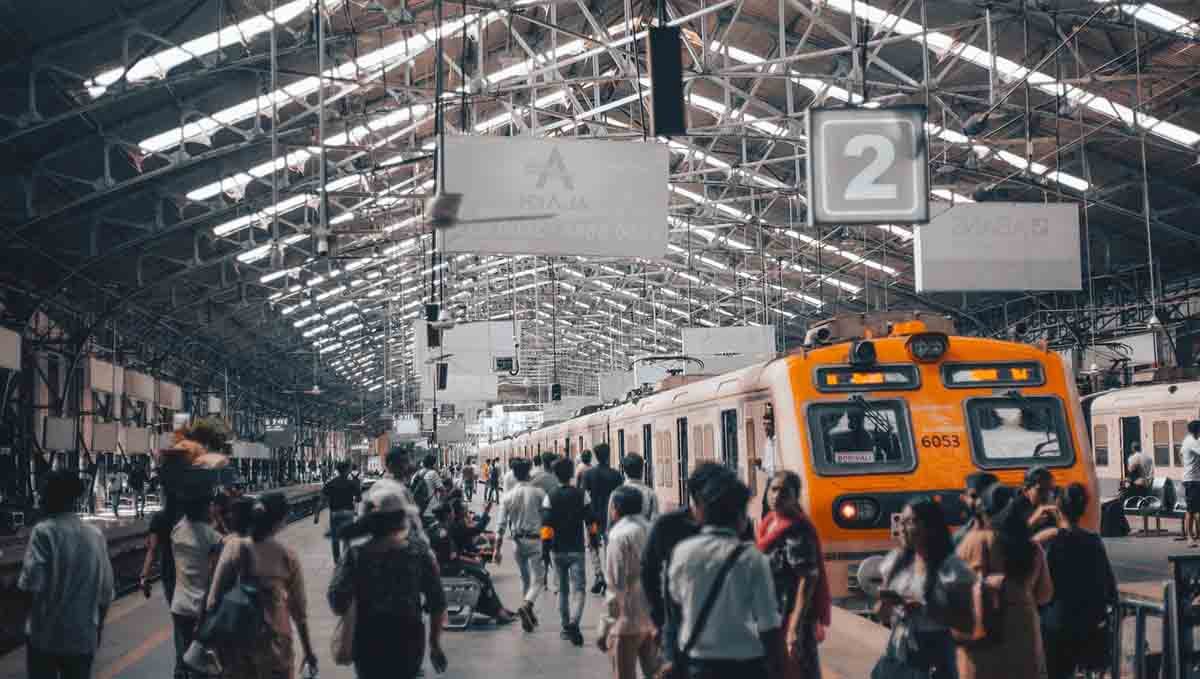
Mumbai local trains are often crowded, hot, and uncomfortable, but they’re also a great way to get around the city quickly. The locals are friendly and helpful, so you’ll never feel lost or alone on your journey. However, there are some downsides to traveling by train in Mumbai: delays due to overcrowding or technical issues can be common during peak hours, and the lack of air conditioning makes for a very airless, suffocating, and smelly ride! Is it fair to say that if someone has to experience real Mumbai life, they must travel by local train at least once in their lifetime?
Traveling by local train is a small part of experiencing real Mumbai. What makes Mumbai special or different is its people. Mumbai is a cosmopolitan city. Mumbai has enough bread for all those who come here to earn. What one must know is how to adjust to local people and local trains. Recently, a group of passengers thrashed two commuters after they blocked the door of a local train at the busy Diva station in Thane district, which comes under the Mumbai suburban network.
A video of the incident, which took place earlier this week, went viral on social media platforms. The video was captured by some passengers as a local train heading towards Karjat stopped at Diva station. In the video, some people on a platform are seen pulling out two commuters standing at the door of the train. The angry people kicked and thrashed the two commuters and also hit them with shoes, while some passengers were seen trying to save them. A brawl among passengers is not new. Some incidents get noticed; others get ignored.
I have always seen people traveling in Mumbai during rush hour like cockroaches. Humans should not be treated like that; it shows apathy from authorities. I traveled to Mumbai like that once and then never again. Hundreds and thousands of people waiting at the platform for the train, pouncing in before it even comes to a halt; packed locals; people struggling to get in; a million petty fights. But this experience teaches you everything.
Happiness is when the train, pretty empty at night, cuts through the wind, making a rhythmic sound with the tracks, while the cold breeze tickles your cheek. Annoyance is when people just refuse to adjust and start fighting and insulting each other in the worst possible manner. Every minute counts when you want to catch the 8:17 local. Mind you, it isn’t 8:15 or 8:20 either. Miss it, and your entire schedule goes up and down.
There is a popular saying about suburban travel: “It is either crush hour or rush hour depending upon the time of the day”. When the local arrives, the people around you will push you inside the train with little or no effort from you. That is where facing the track helps if you do not want to land on your bumps and get trampled over. Though it is improbable because there is absolutely no floor space to fall on and the other passengers make for a good vertical wall surrounding you snugly, Just as much space as is required, no more or less, for your person to stand. Even if you didn’t want to board that particular plane, you will be pushed into it nonetheless. Now, isn’t that amazing?
There are hundreds of people around you, a lot of them in close proximity; people of all age groups and backgrounds could be your co-passengers. You have to adjust, and so does everyone else. Everyone is an equal here, and you have to accommodate to get accommodated. I have seen a lot of women faint in trains. Suffocation, exhaustion—whatever the reason—a lot of women go out of their way to help. Chocolates, water, a place to sit, even some fanning Complete strangers going out of their way to help is a common picture. And the best part of all, you make new friends. a very unique group called “train friendships. Local trains are the most convenient mode of transport. But that does not mean we can survive without it. Motorists often go on strike or trains stop during the monsoon. Trust me, we suffer a lot.
Other than that, there is no worry about Mumbai locals; the train time tables have changed now, and local trains have been increased, but the rush-hour problem is not solved because of the continuously increasing population of Mumbai. Daily travel in the local trains of Mumbai mellows down anyone’s temper. There are a number of things that are super irritating and anger-instigating, but if you get angry every day over one such thing, you will definitely get frustrated and give up the thought of getting angry over petty things.
Even today Rahul Gandhi maintains fearless stand 12
Since 2013, there has been a huge anti-Congress campaign in India by various activists to project the UPA in a bad light. The entire campaign was run on Swiss bank accounts, black money, and the corrupt Gandhi family. The BJP came to power with a huge majority. Voters also expected some miracles and a few lakhs in their bank accounts if the BJP comes to power. They all were waiting for “black money” to return from the Swiss Bank, but one fine day, Home Minister Amit Shah confessed in one of the TV interviews that bringing back black money was Jumla (an election gimmick).
The Swiss Bank was overloaded with BJP leaders’ and their counterparts’ accounts; somehow this issue was sent to cold storage. Then came demonetization, and no black money was traced; neither fake currency printing nor terror activities were stopped. Rather, corruption in government offices doubled due to the biggest denomination of the 2000 rupee note. The BJP failed to prove their point; all those accused in the 4G scam got bail because there was no proof against them; the government was of the BJP, but they hardly could do anything about it. Here comes the BJP’s favorite topic, the Nehru-Gandhi dynasty.
There were non-stop personal attacks on Sonia Gandhi and her children; there was a nasty campaign against Nehru on social media by the IT cell; and the BJP made a huge investment in tarnishing the Gandhi family by projecting Sonia Gandhi as a bar dancer, Rahul Gandhi as Pappu (a nave), and Priyanka Gandhi as a land grabber’s wife. They were made to do rounds in ED, IT, and CBI offices, but it was not easy to break the morals of the Gandhi family, as there was nothing to establish against them. The family graciously cooperated with all the inquiries that came their way. Well, there was a huge virtual infrastructure created against the Gandhi family to somehow end their political existence, but a Congress-free India couldn’t become more than a remote possibility.
In the recent past, Rahul Gandhi became very aggressive and vocal in the BJP against the corruption in some business groups. The BJP and the BJP’s IT cell are always trying to impress the people of India with a rosy picture, but the problems of a failed economy, high unemployment, poverty, and extreme poverty are persisting and becoming bigger by the day and more unmanageable. All the international indices, including the Global Hunger Index, are dropping even below those of our neighbors, Sri Lanka, Nepal, and Bangladesh. The downslide continues.
When everything breaks down in India, then, Congress might emerge as a ray of hope. The BJP failed to eradicate poverty in India, they failed to generate mass employment for the youth of India, and they failed to boost the economy of India for common people. GST, demonetisation, and lockdown actually broke the business, and many remained jobless after continuous financial shockers. The BJP is in power, but their leaders act like the opposition by attacking those leaders who are either in regional parties or who are strong voices against the ruling party.
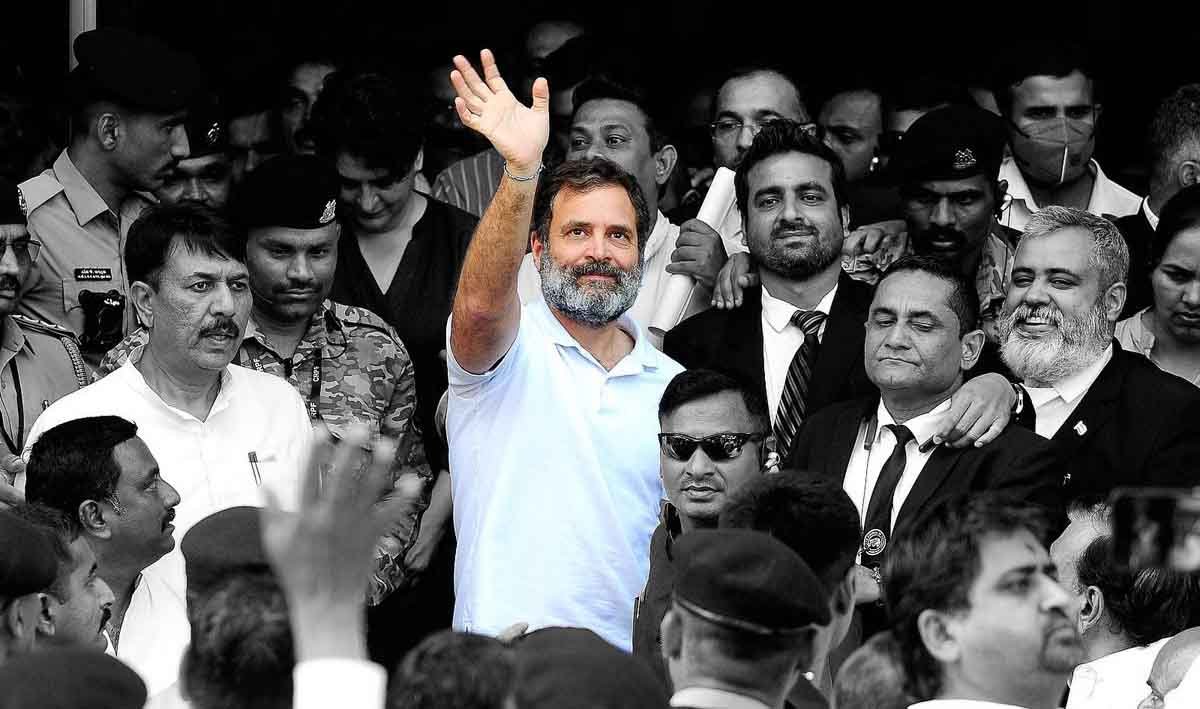
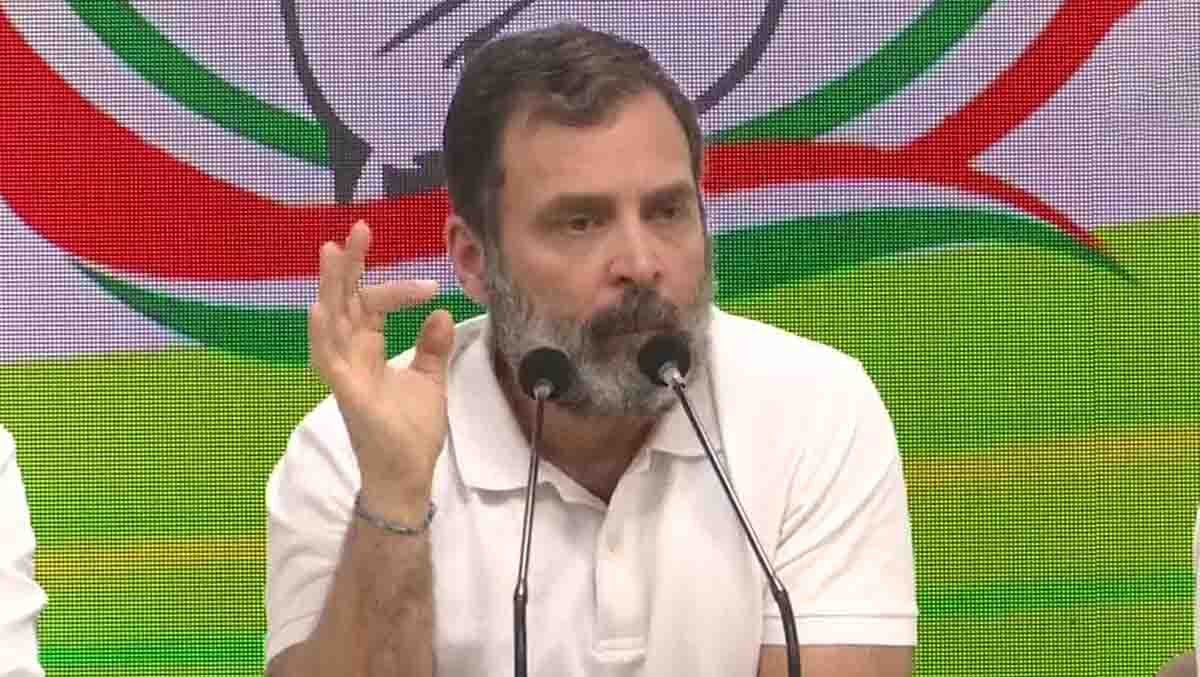
Congress’s Rahul Gandhi, after getting bail from a session’s court in Gujarat today in the defamation case over his remarks on the surname of Prime Minister Narendra Modi, said, “truth is my weapon” in another Gandhian tweet. The BJP is always afraid of Rahul Gandhi because the BJP and the political experts know that the BJP’s show can end at any time. The BJP’s weakness lies in the fact that they cannot administer or manage such a large and diverse nation like India. The BJP is hell-bent on eradicating opposition voices. Somewhere we are heading towards an invisible dictatorship. The largest democracy is losing its appeal. The BJP never made efforts to answer the allegations made against them, but they replied by making counter-allegations, and that too of Indira’s 1975 emergency or Nehru’s smoking with Lady Mount Batten.
Rahul Gandhi asked simple questions about Make in India, JNU, Rohith’s case, and the NaGa Accord, but the likes of Rajnath Singh and the late Arun Jaitley chose to attack him personally. Even Prime Minister Modi mocks him rather than answering his questions in person. Don’t they have any answer for him, or are they not answerable regarding their promises? Nobody from the Union Government has responded so far for any of Rahul Gandhi’s accusations at the Parliament. They have disqualified him out of fear that he might enter Parliament again, and that will jeopardize their politics.
Well! Gandhi got bail today, and his two-year jail sentence was put on hold until the court took a call on his appeal challenging the order of the Surat magistrate. The next hearing is on April 13. The two-year jail sentence handed to Gandhi has led to his disqualification from parliament under the provisions of the Representation of the People Act, 1951. Every single institution in the country is under attack. The democratic foundation, the Parliament, the Judiciary, the free press, the election commission, the bureaucracy… Every single institution is under pressure.
Gandhi said that the BJP and RSS were “confused” and thought that “they are India,” adding that “the confusion is in the minds of the Prime Minister, the BJP, and the RSS. They are under the impression that they are from India. They think of themselves as the whole of India. The PM is an Indian, but he is not from India. No matter how delusional or arrogant he may be, he is just one Indian. The BJP and RSS have forgotten that there are 1.4 billion people in the country, and this country is not the BJP, RSS, or the Prime Minister.” Gandhi did not mince words but strongly highlighted that any criticism of the Prime Minister, the Bharatiya Janata Party, or the Rashtriya Swayamsevak Sangh, a Hindu nationalist organization, was “not an attack on India”.
Gandhi was fearless in his speech. He knows if the sentence is not reversed, he will be disqualified and will not be able to contest polls for eight years. He has already started packing after agreeing to vacate his government-allotted Lutyens bungalow in Delhi. But he has not stopped speaking his mind, and he continues to be a fearless voice against the powers.
Kapil Dev will be seen in a new show 'Driving with the legends' 14
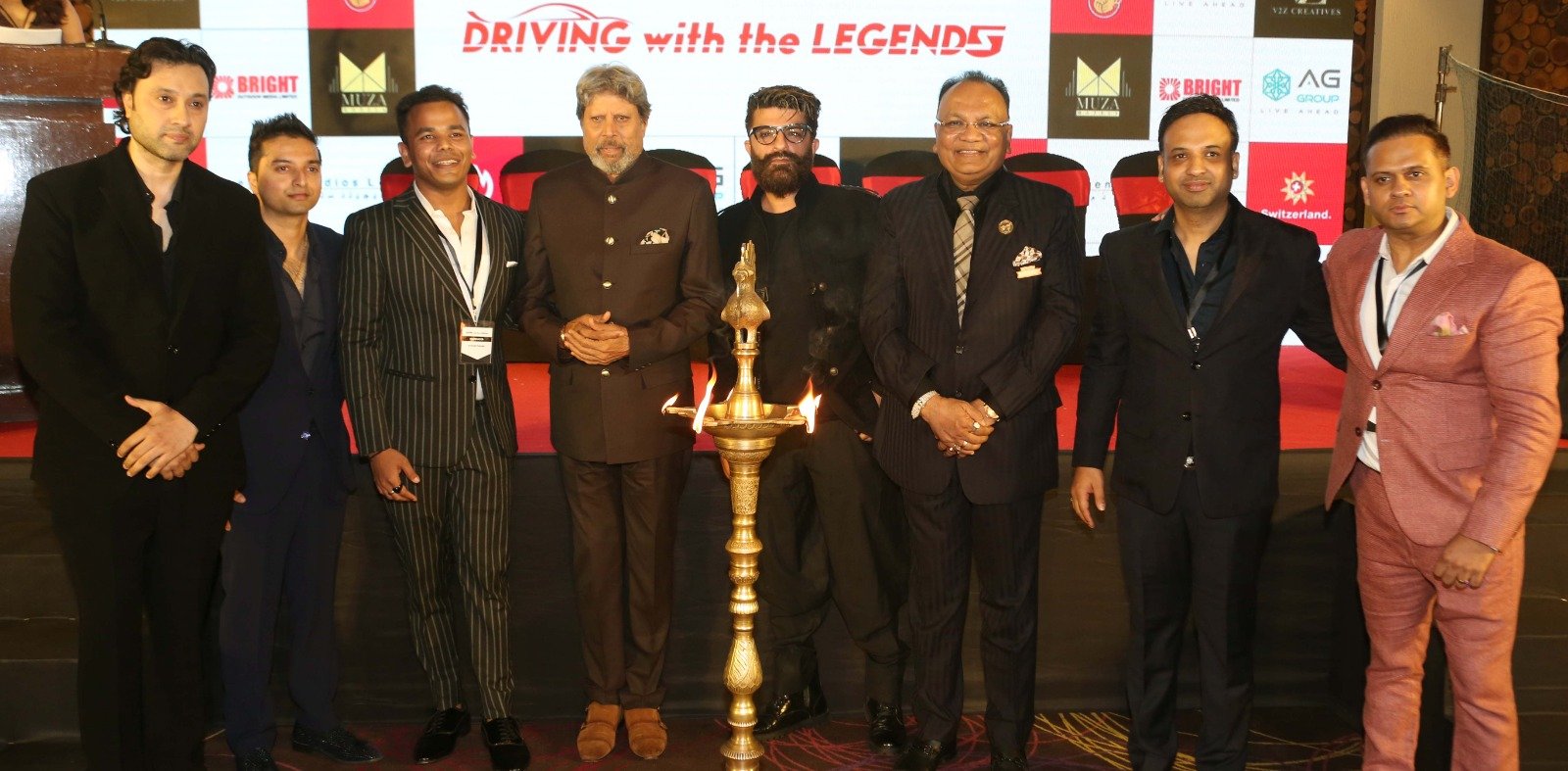
Cricket legend Kapil Dev along with industrialist Pawan Kumar Patodia, Kaushik Ghosh, actor Zaid Sheikh, Uma Vishal Agarwal and Varun Goenka are all set to bring to viewers an interesting show named ‘Driving with The Legends’.The first season will be shot extensively in Switzerland. The show will be produced under the banner of The Legend Studios LLC.
Kaushik Ghosh said, “The idea is to have a legend and a few other celebrities with whom about 10 fans globally would join for a 7-day driving trip in Switzerland. We will select these fans through a global online audition campaign. The first chapter will be all about Kapil Dev .”
The show will be directed by the popular director Haider Khan, who has already intrigued everyone by the teaser that was played during the launch event with his unique vision and portrayal of Kapil Dev. Haider Khan is considered to be amongst the world’s best photographers, winning the gold at the prestigious PX3 2021 Prix de la Photographie de Paris. His movies have previously premiered in Halifax, the black film festival in Canada, Durban film festival and others.
Paul Nuber, the former CXO at Nestle has also come on board as the company’s first foreign investor, demonstrating the strong potential of the concept and the confidence of the foreign investors in the Indian sports-entertainment industry.
The entire journey on the show will be hosted by Archana Vijaya, with surprise elements planned and announced with the signing of Krushna Abhishek, Jaan Kumar Sanu and Esha Gupta. Talking about the show, Kapil Dev said, “I was super excited about this project right from the moment I heard about it! I want to send a strong message through the medium of this show, and I am looking forward to interacting with the fans who get chosen to accompany us on the trip to Switzerland. I felt most confident about the expertise of the management, which is when I decided to come on-board as a partner in the company in addition to my on screen role in the first season.”
Rahul Gandhi to file appeal in Gujarat court on April 3 against conviction in defamation case 16
Congress leader Rahul Gandhi will file an appeal before a court in Surat, Gujarat, on Monday against his conviction in a criminal defamation case.
Gandhi is likely to remain present in the sessions court when the plea will be filed challenging the lower court’s order sentencing him to two years in jail, sources said on Sunday.
”A petition challenging the lower court order will be filed in the sessions court of Surat on Monday, with Rahul Gandhi remaining present,” a member of his legal team said, requesting anonymity.
Senior state and national leaders of the Congress will accompany him to Surat, sources said.
The court of Chief Judicial Magistrate HH Varma here convicted Gandhi on March 23 and sentenced him to two years in jail in a 2019 criminal defamation case filed against him over his “Modi surname” remarks.
It had held 52-year-old Gandhi guilty under Indian Penal Code (IPC) sections 499 and 500.
The court had also granted him bail and suspended the sentence for 30 days so he could appeal to a higher court.
Gandhi was disqualified from the Lok Sabha on March 24 following his conviction by the Surat court in the criminal defamation case.
Celebs from the Film and TV industry attended Free Medical Camp in Mumbai 19
Chief Guest Shivaji Rao Sawant, Dr Dharmendra Kumar, President of RK HIV AIDS Research and Care Center, Manish Verma, and actor, producer, and director Dheeraj Kumar, CMD of Creative Eye Ltd., organized a free medical camp for the film and media industries with the Mumbai Police at Chitrakoot Ground, Mumbai. Many celebrities, including Versova MLA Bharati Lavekar, Vice President BN Tiwari, Johny Lever, Sangeeta Tiwari, and Sundari Thakur, were present on the occasion.
Let us tell you that for the first time, a huge free medical camp was organized for all the people from Bollywood and the media. It was successfully organized by India’s leading home health care service provider, Doctor 365, with Dr. Dharmendra Kumar, Manish Verma, Avinash Rai, Jaswinder Singh, and Dheeraj Kumar.
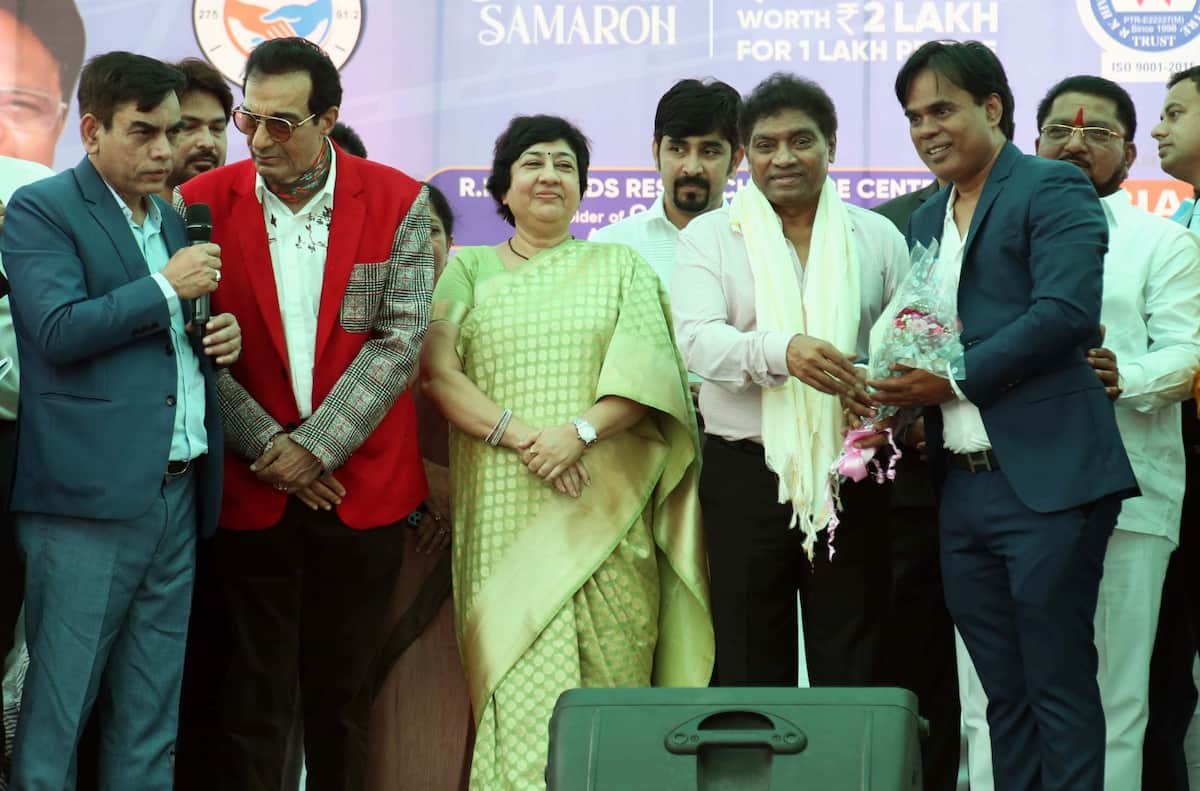
All the guests started this free medical camp by lighting the lamp, after which the guests were felicitated with shawls and bouquets. On this occasion, many special guests were also present, including the Council General of Georgia, Mr. Satendra Pal Singh Ahuja, the Council General of South Africa, Miss Andrea Khun, the GM of PNB, Mr Bhowmik, and DGM MS Subhadra, who were all welcomed by Dheeraj Kumar.
Dr Dharmendra Kumar said that for the last three months, our team has been working continuously to organize this Maha Arogya Shivir for the people associated with the Bollywood industry and media. I am thankful to our chief guest, Shivaji Rao Sawant, that he came to our medical camp after traveling such a long distance. Under his supervision in Osmanabad, we made a record by checking lakhs of patients there. We want to see all the citizens of India healthy.
Celebs from the Film and TV industry attended Free Medical Camp in Mumbai 20
Thousands of people took advantage of this free medical camp. Hundreds of doctors, including specialists from top hospitals, were present in this camp throughout the day. Here facilities like health checkup, orthopedics, ECG testing, heart checkup, eye checkup, acupuncture, spectacle distribution, medicine distribution, dental checkup, tricycle distribution, and blood checkup were provided to the people. Thousands of spectacles and hundreds of wheelchairs were also distributed here.
Dheeraj Kumar said that here, health facilities were kept for the people associated with the film industry, media, and police. All this is the result of the hard work of Dr. Dharmendra Kumar and his team. On January 14, 2024, we will also organize a bigger camp than this. An e-shram card camp was also organized here, from which people benefited.
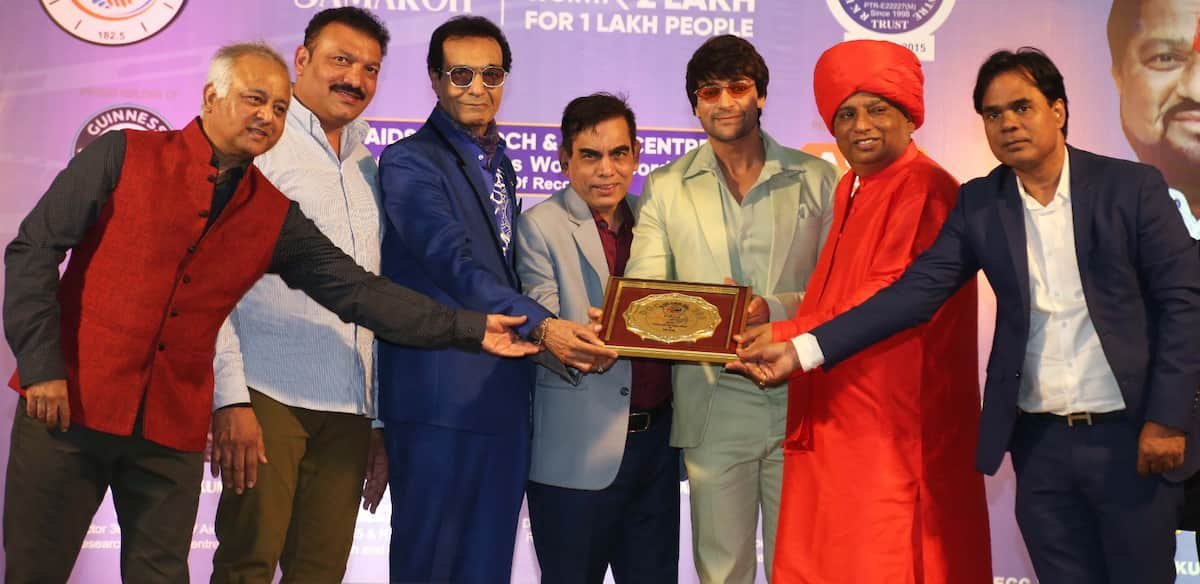
Dheeraj Kumar and Dr. Dharmendra Kumar gave the world record certificate to Shivaji Rao Sawant. In the medical camp in Osmanabad, a world record was created by checking up on lakhs of patients; in that connection, this certificate was handed over to him.
A felicitation ceremony was held here in the evening, in which Shaleen Bhanot of Big Boss fame, Dr. Yogesh Lakhani of Bright Outdoor Media Ltd., Deepshikha Nagpal, Singer Bhumi Trivedi, Comedian Naveen Prabhakar, Composer Dilip Sen, Actress Ekta Jain, Richa Shukla, Krishna Prasad, Sundari Thakur, Col. PC Sood, Corporate Advisor of the Hinduja Group, comedian Rajiv Thakur, Ramesh Goyal, Manav Sohal, and others were honored. Bhumi Trivedi enthralled the audience by singing Ramlila on the stage. Rajeev Thakur and Naveen Prabhakar made everyone laugh with their comic timing. Producer and director Dheeraj Kumar was also honored.
Dr.Guru Ji Kumaran Swami, a philanthropist and businessman with interests in various segments, specially came to grace the occasion. He also honored certain artists and dignitaries.