At least 27 per cent of the 56 samples of cooking oil and other food items collected from four companies in Maharashtra’s Thane district have been found adulterated or with false claims, the Food and Drug Administration (FDA) officials said.
The FDA’s (Foods) Joint Commissioner, S R Kekre, said the samples tested revealed that palmolein oil was mixed in products sold as sunflower and soyabean oils, rice bran oil was mixed in a product sold as mustard oil and vegetable oil was mixed in products claimed to be milk cream and ghee.
Based on complaints, the FDA had carried out raids and inspected the four units located in Dahisar Mori, Bhiwandi, Kalher and Koparkhairne areas of the district, it said in a release. Kekre asked customers to be cautious while purchasing these items.
The FDA was in the process of verifying as to whom the wholesalers and manufacturers had sold these adulterated products, he said.
Kekre also appealed to the citizens to contact the FDA if they find any substandard or adulterated goods in markets.
Seven suspected measles deaths and 164 cases of the viral infection have been reported in Mumbai since its outbreak in September, the Brihanmumbai Municipal Corporation (BMC) has said.
With 184 new cases having symptoms of fever and rashes on the body, the number of suspected measles cases in the city rose to 1,263, and 647 of these cases included children in the age group of 1 to 4 years, the BMC said in a release on Wednesday.
The number of patients admitted in hospitals due to measles infection rose to 80, it said, adding that 12 new patients were admitted on Wednesday. On Monday, a one-year-old boy died of measles.
The toddler from Null Bazar area, was undergoing treatment at the BMC-run Kasturba Hospital in Chinchpokli since last week, a civic official had said on Tuesday.
The civic body in its bulletin said though the city witnessed seven suspected deaths due to measles infection, the exact reason behind their death will be confirmed only after a review committee gives its report.
The latest outbreak of measles is spread across eight civic wards in the city and the highest number of cases are from M-East ward, which includes Govandi and surrounding areas, it said.
As per the release, the civic body has set up isolation wards for patients with mild and severe symptoms of measles in various hospitals.
The highest 83 beds are made available in the Kasturba Hospital, apart from five ventilators.
Civic officials have appealed to the parents to get children in the 9-16 age group vaccinated against the disease.
In measles, the child gets fever, cold, cough and red rashes on the body. Complications from this disease can be serious in children who are partially vaccinated or unvaccinated, a BMC release earlier said.
The Union Health Ministry last week said it has deputed a high-level multi-disciplinary team to Mumbai to take stock of the upsurge of measles cases in the city.
The team will assist the state health authorities in instituting public health measures and facilitate operationalisation of requisite control and containment measures, it had said.
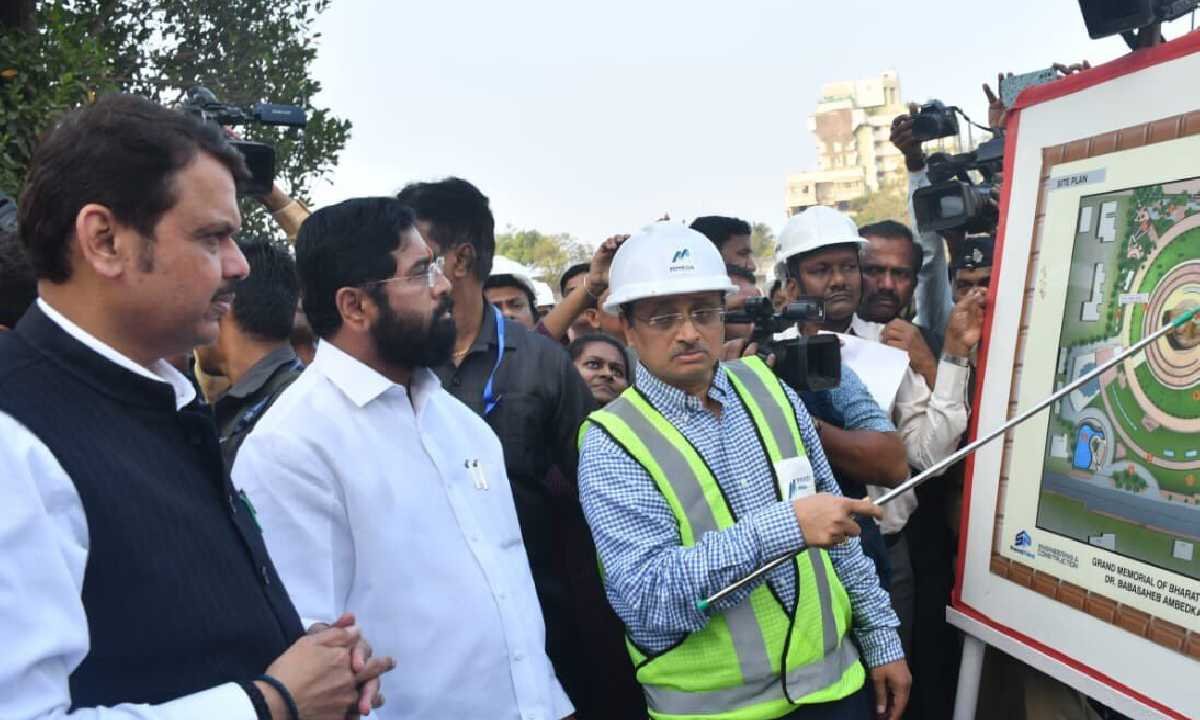
Eknath Shinde, Devendra fadnavis,shiv sena | Image : Twitter/@mieknathshinde
Maharashtra CM Eknath Shinde and Deputy CM Devendra Fadnavis goes to Indu Mill in Mumbai to inspect the work done on the monument of Bharat Ratna Dr. Babasaheb Ambedkar. While speaking to the reporters CM said the work of the monument is approximately 50 percent completed.
Deputy CM Devendra Fadnavis said that “ We have reached here at Indu Mill to check the work going on to complete the monument and if there is any amendments or any final decisions those work can be completed”.
CM also mentioned that the completion of the monument will be completed by the year 2024 approximately. The presentation of the work completed till now are been checked and we expect the project should be completed as soon as possible.
भारतीय संविधानाचे शिल्पकार, भारतरत्न डॉ.बाबासाहेब आंबेडकर यांच्या इंदू मिल परिसरातील आंतरराष्ट्रीय दर्जाच्या स्मारकाच्या कामाची आज पाहणी केली. यावेळी उपमुख्यमंत्री @Dev_Fadnavis हेदेखील उपस्थित होते. pic.twitter.com/hGx2TJQZ9b
डॉ.बाबासाहेब आंबेडकर यांच्या नावलौकिकाला साजेसे स्मारक इंदू मिलच्या परिसरात उभारले जात असून त्याचे स्थापत्य काम प्रगतीपथावर आहे.या स्मारकात बाबासाहेबांचा ३५०फूट उंच पुतळा उभारण्यात येणार असून त्याशिवाय वाचनालय, पार्किंग,बसण्याची व्यवस्था,मोठे सभागृह तयार करण्यात येणार आहे. pic.twitter.com/GCLkHDysBc
Rekha Sharma, National Commission Women | Image: PTI
The National Commission for Women (NCW) launched the fourth phase of the Digital Shakti Campaign, a pan-India project on digitally empowering and skilling women and girls in cyberspace, on Tuesday.
In line with its commitment to creating safe spaces for women and girls online, Digital Shakti 4.0 is focused on making women digitally skilled and aware of standing up against any illegal/inappropriate activity online. NCW launched it in collaboration with CyberPeace Foundation and Meta, said a press release by the Ministry of Women and Child Development.
While addressing the audience, Rekha Sharma, Chairperson, NCW mentioned the Commission’s continuous efforts to empower women in every sphere across the nation, added the press release.
She said, “This new phase will prove to be a milestone in ensuring safe cyber spaces for women. Digital Shakti has been accelerating the digital participation of women and girls by training them to use technology to their advantage and to keep themselves safe online.
I believe the project will continue to contribute towards the larger goal of fighting cyber violence against women and girls and making the internet a safer space for them.” The launch was followed by an interactive panel discussion on “Safe Spaces Online Combatting Cyber-enabled Human Trafficking & Combatting Other forms of Online Violence” in order to provide keen opinions from experts from the Industry, Government, and Academia to address the issue of online women safety from all tangents and provide the whole approach to ensure better women safety online.
Sunitha Krishnan, General Secretary, Prajwala, Ashutosh Pande, Senior Research Officer, NCW, Pavan Duggal, advocate, Supreme Court of India and Advisor, CPF, Veerendra Mishra, AIG, SISF, Madhya Pradesh Police and Advisor, NCW, Preeti Chauhan, Director-Operations, CPF participated in the discussion.
Digital Shakti started in June 2018 to help women across the nation to raise the awareness level on the digital front, to build resilience, and fight cybercrime in the most effective ways.
Through this project, over 3 lakh women across India have been made aware of cyber safety tips and tricks, reporting and redressal mechanisms, data privacy and usage of technology for their benefit.
The third phase of the program was started in March 2021 with the launch at Leh by NCW Chairperson in the presence of Lieutenant Governor Radha Krishna Mathur and Jamyang Tsering Namgyal, MP, Ladakh.
In the third phase, a Resource Center was also developed under the project to provide information on all the avenues of reporting in case a woman faces any cybercrime.
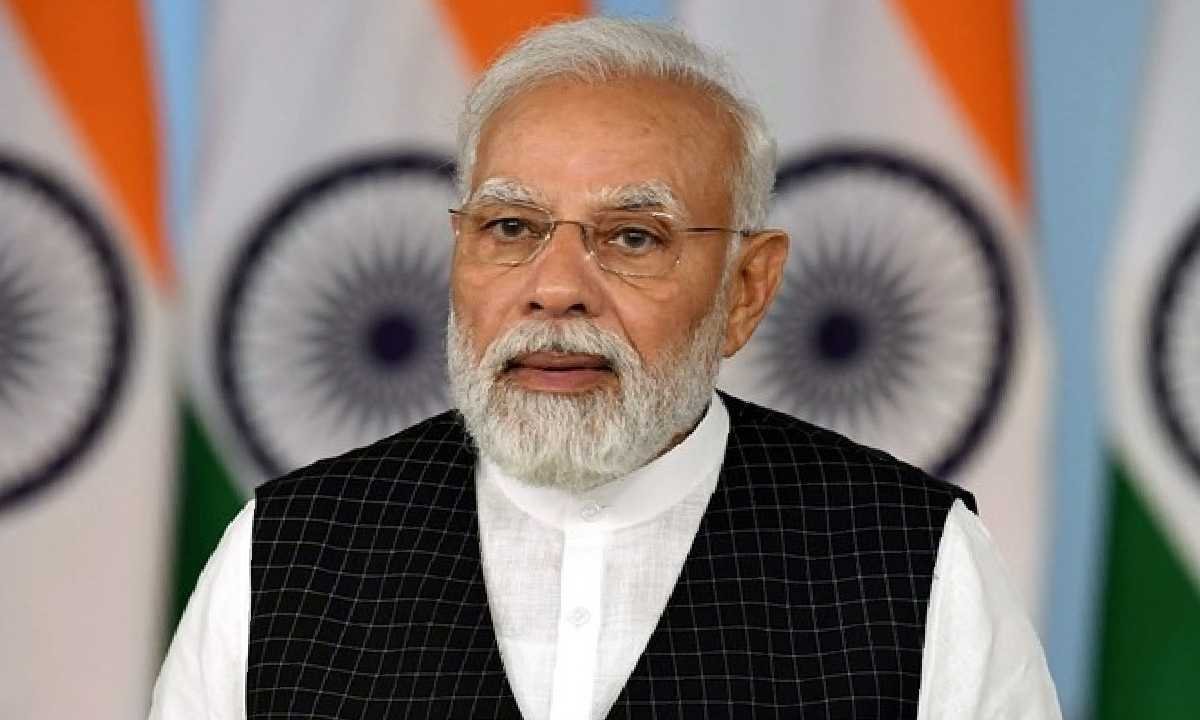
Prime Minister, Narendra Modi, Gujarat | Image: Agencies
Ahead of the Gujarat polls, Prime Minister Narendra Modi will hold rallies in Gujarat’s Saurashtra for three consecutive days from November 20-22, said sources. More than 1.5 lakh people will participate in these rallies, added the source.
The Prime Minister will conduct three rallies in Saurashtra on November 20, two in South Gujarat and Saurashtra on November 21 and two in Saurashtra on November 22. An important source of BJP said that a detailed program of the PM’s rallies and road shows is being prepared. Since the PM was out of the country for the G20 summit, the party waited for his return to seek approval and finalize the rally venues.
Out of the 182 assembly seats in the state, 48 are in this region, where polling is to be held in the first phase itself on December 1.
In the 2017 assembly elections, the Congress won 28 seats here on the basis of the support it got due to the Patidar movement. Whereas, the number of MLAs in the Bharatiya Janata Party had come down from 30 in 2012 to just 19 here.
Voting for 182 seats for the assembly election will be held in two phases on December 1 and 5. The results of the Gujarat and Himachal Pradesh polls will be declared on December 8.
A six-year-old boy died in West Bengal’s Murshidabad district after he was hit by the car of TMC MP Abu Taher Khan on Wednesday, police said.
The police have arrested the car’s driver and seized the vehicle, officials said.
The incident happened this morning when Khan was traveling from Nowda area to Berhampore town in the district.
According to police officials and eyewitnesses, the boy who was playing nearby suddenly came in front of the speeding car and got hit.
“The boy was grievously injured, and the MP took him to a nearby hospital where he was declared dead. We have arrested the driver of the car Alamgir Mondal and seized the vehicle. A case has also been lodged,” a senior district police officer said.
Khan later told reporters that he would visit the boy’s village on Thursday during the burial ceremony and meet his parents.
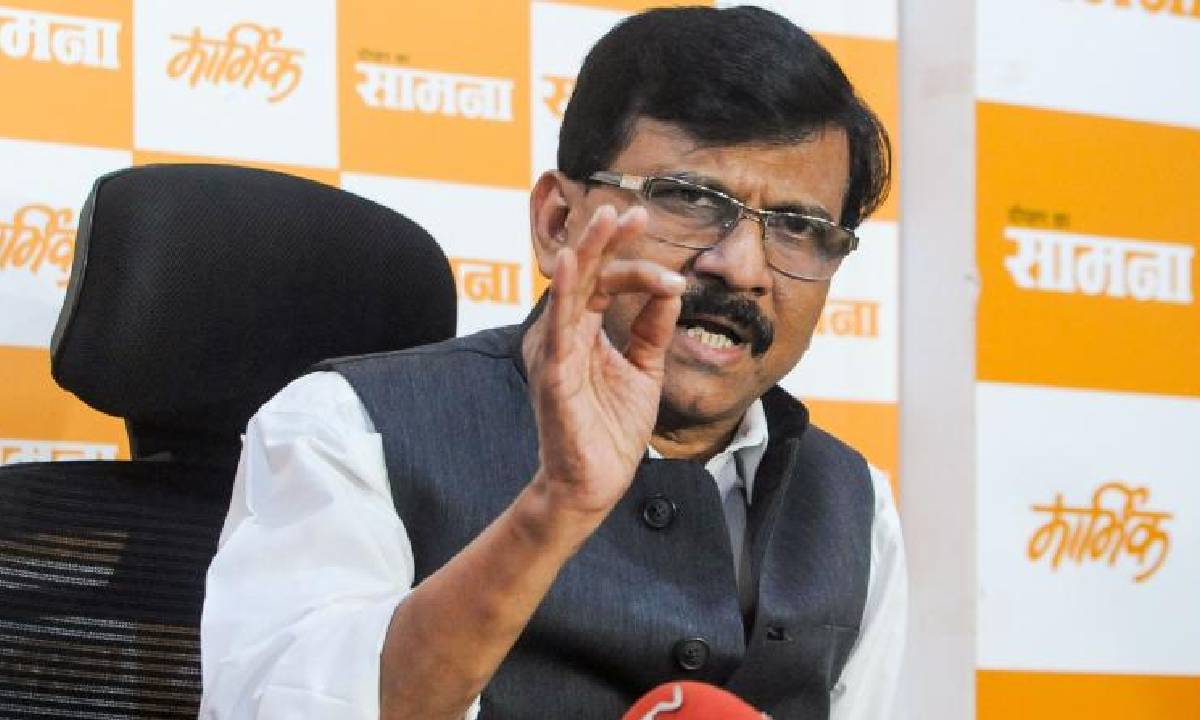
Taking note of the horrific Shraddha murder case, Rajya Sabha member and Shiv Sena MP Sanjay Raut on Wednesday said that the culprit should be hanged publicly.
“The killer of Shraddha should be hanged publicly and our girls should be alert while trusting any person. People might call it love Jihad but our girls are dying,” said Raut.
His remarks came after 27-year-old Shraddha Walker, a call-center employee from Mumbai was murdered by her live-in partner Aftab Amin Poonawalla, in the national capital.
“In such cases law cannot do anything. It has to be dealt with by society as a whole,” Raut added.
Earlier, Delhi Police, which is probing the horrific Shraddha Walker murder case in which her live-in partner Aftab Amin Poonawala had allegedly strangulated Walker to death and chopped her body into 35 pieces, dumped it in the Chhatarpur area of the national capital, has taken DNA samples of Shraddha’s father Vikas Walker so that the dumped body parts and blood sample can be matched.
According to top sources of Delhi Police, the DNA sample of Shraddha’s father has been taken. About 10-13 bones have been recovered from the forest. They have been sent to the forensic lab to find out whether the bones belonged to Shraddha or those of an animal.
As the investigators dig deeper into the Shraddha Walker murder case, Delhi Police have found blood stains in the kitchen of accused Aftab Amin Poonawalla’s flat in Delhi’s Chhatarpur. The blood samples have been sent for examination to ascertain whose blood it is.
Sources said Police are also scanning the CCTV to find out whom Aftab was meeting these days.
“A lot of work has to be done. The weapon, Shraddha’s head and mobile phone are yet to be traced. The clothes worn by Aftab and Shraddha on the day of the murder have not been found. These clothes were thrown in a garbage-moving vehicle,” sources said.
Delhi Police recovered a bag of Shraddha in Aftab’s house, which has her belongings. The bag has to be now identified with Shraddha’s family. Delhi Police had applied for the Narco test of the Aftab on Saturday but till now no permission has been granted by the Court, sources said.
Aftab was arrested on Saturday after Delhi police started probing into a missing complaint filed by Shraddha’s father. Aftab had attempted to dupe the police of Delhi and Mumbai in the initial days of the investigation.
Aftab had tried to hide the murder of Shraddha by removing any physical evidence, however, he had left the digital evidence that the police traced to reach the truth of the case.
When Delhi Police initiated the investigation, Aftab had told the police that Shraddha had left the house on May 22 (Shraddha was killed on May 18), after a fight.
He said that she had only carried her phone with herself and had left her belongings in his flat. He claimed that she was unreachable and he had not come in contact with her since then, according to the police sources.
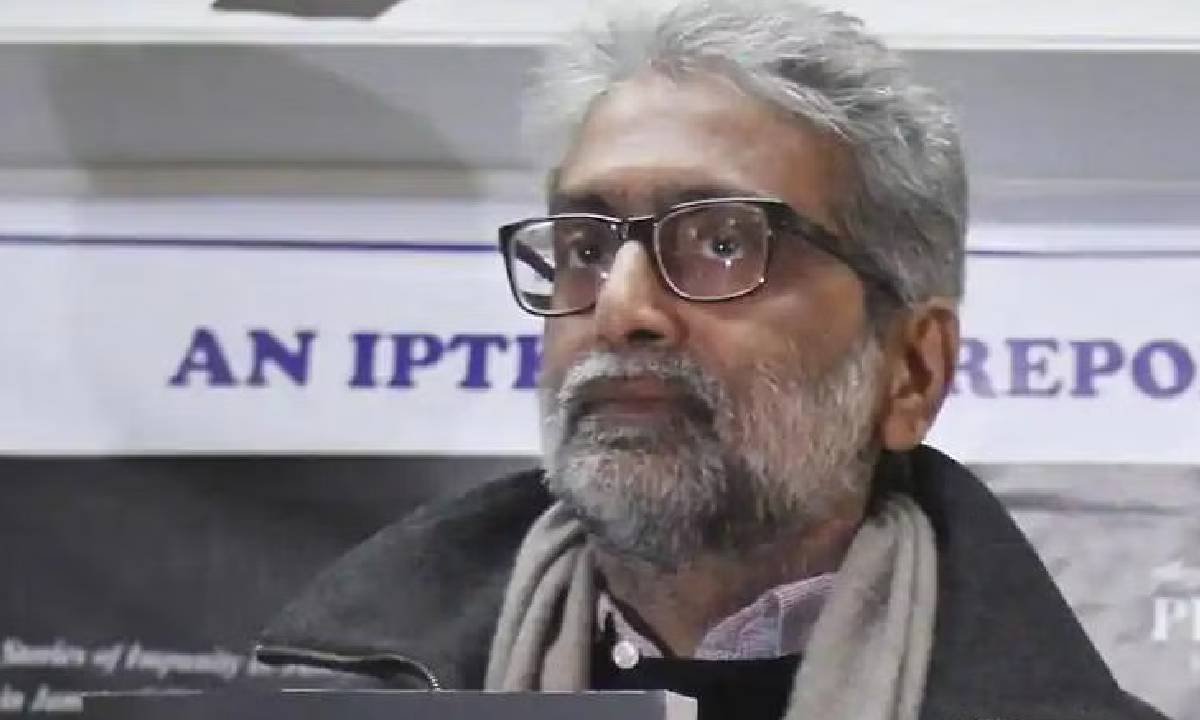
The release of activist Gautam Navlakha, an accused in the Elgar Parishad-Maoists links case, was delayed yet again on Wednesday as the National Investigation Agency (NIA) raised safety concerns about premises in Navi Mumbai where he had proposed to live during his house arrest.
Veteran actor Suhasini Mulay appeared before the special NIA judge Rajesh Katariya during the day and stood as surety for Navlakha which the court accepted.
“Since there is strong objection on the part of the prosecution (NIA) for keeping the accused in the premises on account of safety and security of the accused, it would not be proper to keep the accused in house arrest in the given premises,” the judge said in his order.
Further, as the special public prosecutor also submitted that the prosecution was going to file a report of the evaluation of the premises in the Supreme Court, it would not be appropriate to shift the accused there until further directions from the Apex court, the court added.
The 70-year-old activist, who claims to be suffering from multiple ailments, is in prison since April 2020.
On November 10, in response to his petition, the Supreme Court allowed Navlakha to be put under house arrest for a month and said the order should be implemented within 48 hours.
But the release was delayed as necessary formalities were not completed. Actor Suhasini Mulay appeared in the court on Wednesday and said she was standing as surety for Navlakha.
The 71-year-old actor, known for her work in films like “Bhuvan Shome” and “Hu Tu Tu”, appeared in the court as part of verification process.
Responding to a question by the judge, she said she was standing as surety for Navlakha. She knew him for more than 30 years as he is from Delhi where she had lived for some time, Mulay said.
She had never stood as surety for anyone before this, in fact she had never appeared in a court, she said.
The case relates to alleged inflammatory speeches made at the ‘Elgar Parishad’ conclave held in Pune on December 31, 2017, which the police claimed triggered violence the next day near the Koregaon -Bhima war memorial on the outskirts of the western Maharashtra city.
According to the Pune police, people linked to banned Naxalite groups had organized the program.
The case, in which over a dozen activists and academicians have been named as accused, was later handed over to the NIA.
Four persons, including two women, suffered burn injuries due to a chemical leak at a research institute located at Worli in Central Mumbai on Wednesday evening, a civic official said.
As per the preliminary information, the leaked chemical is Glycerin.
The chemical leaked from a machine in the testing department of the institute, the official said, “Four people suffered burn injuries. They were sent to nearby Jaslok Hospital and later transferred to Airoli burns hospital in Navi Mumbai after first aid.”
Further details about the leak and the condition of the injured are awaited.
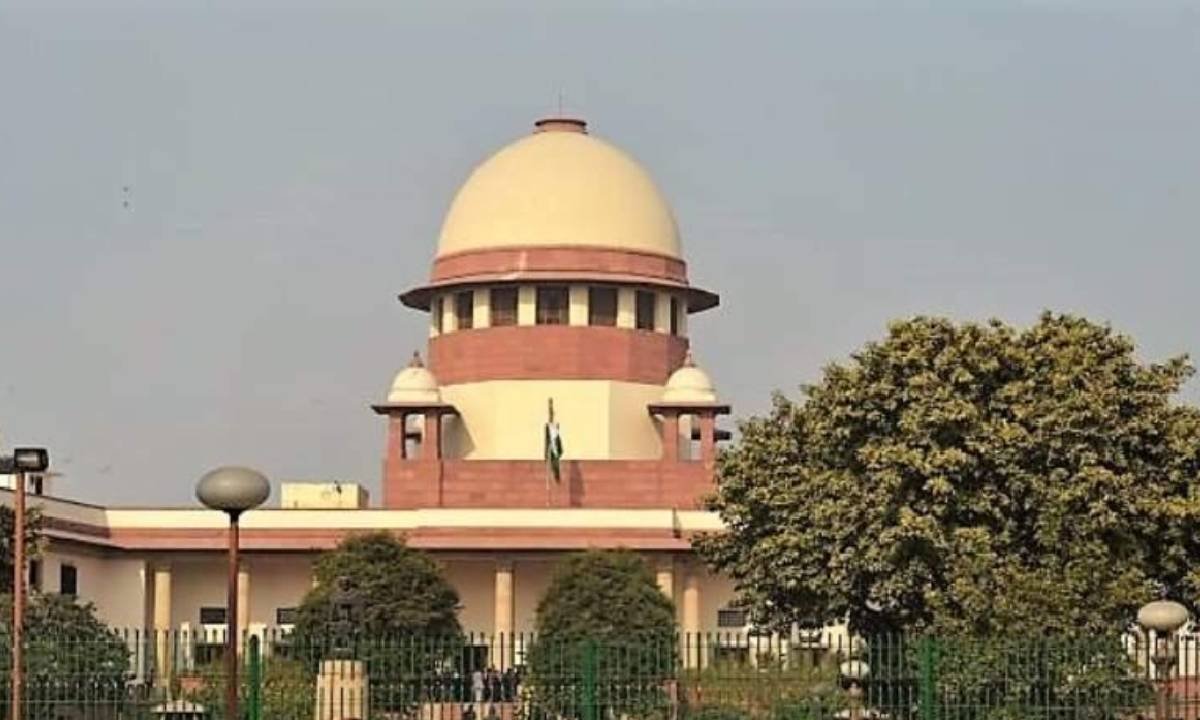
Observing that nobody should stop feeding stray dogs as canines may become aggressive, the Supreme Court, in an interim order on Wednesday, stayed certain observations of the Bombay High Court in which it was said that who are interested in feeding stray dogs to “formally adopt” them and directed that no nuisance must be created by people while feeding them.
A bench of justices Sanjiv Khanna and JK Maheshwari sought a response from Nagpur Municipal Corporation (NMC) and Animal Welfare Board on a plea against the Bombay High Court order over guidelines on stray dog feedings.
The court stayed the certain observation of the Bombay High Court related to persons interested in feeding dogs having to adopt them till the next date of hearing.
The top court while hearing the matter passed various remarks including one that whether street dogs have any residence to live in.
The court said, “where do street dogs live and do the canine have any residences to live in?” Supreme Court further expressed concern about keeping the street dogs in captivity and said that they are not meant to be kept in captivity.
The court also said that one cannot insist that people who feed dogs must adopt them.
In an interim order, the court directed the Nagpur Municipal Corporation to ensure and take steps for the general public to feed the street dogs at the appropriate locations identified and demarcated by them.
The court also asked the general public to ensure that no public nuisance is caused by feeding stray dogs.
The court asked the concerned municipal corporation to note down details and names if any feeders who are creating public nuisance but not to take any coercive step against them till the next date of hearing.
The court said that proceedings before Bombay HC will continue and also clarified that the concerned corporation to deal with the issue of the nuisance caused by the street dogs in accordance with the law.
The bench noted that there may be other consequences if street dogs are not treated well and the court needs to balance both sides.
During the hearing, the Animal Welfare Board counsel said that if the stray dogs did not get food, they may turn aggressive.
The court was hearing a plea against the Bombay High Court over guidelines regarding the feeding of stray dogs. The petitioner has challenged the Bombay High Court order which issued a slew of directions and directed the civic officials and the police to take “stern action” against anyone obstructing them from acting against the menace of stray dogs.
The petition has been filed through advocate-on-record Surbhi Kapoor. The Petitioners submitted that the directions issued by the High Court are inconsistent with the provisions of the Prevention of Cruelty to Animals Act, 1961.
The High Court has passed a blanket direction to the concerned authorities under Section 44 of the Maharashtra Police Act, 1951 to detain all stray community dogs wandering in the public streets.
“As far as the direction, in respect of Section 44 of the Maharashtra Police Act, 1951 are concerned, it is respectfully submitted that the aforesaid provision contemplates issuance of a public notice proclaiming that any stray dog found wandering in the street or in any public place maybe destroyed,” read the petition.
“The provision does not contemplate detention of dogs. Subclause (3) of Section 44 provides that a dog that has been detained may be destroyed or sold. A comprehensive reading of Section 44 makes it abundantly clear that the scheme of the said provision is to detain the dogs found to be wandering in the streets or in any public place in contravention of any public notice issued by the competent authority, and either destroy or sell them in accordance with law,” the petition said.
In October, the Bombay High Court’s Nagpur Bench ordered those interested in feeding stray dogs to “formally adopt” them while issuing a slew of directions regarding the feeding of stray dogs.
The High Court has issued a slew of directions and directed the civic officials and the police to take “stern action” against anyone obstructing them from acting against the menace of stray dogs.
The court has ordered people interested in feeding strays to first formally adopt them and only feed them inside their homes.
The High Court has directed no citizen and no resident of Nagpur and areas surrounding it shall feed or make any attempt to feed the stray dogs in public places, gardens etc, and directed the Municipal Commissioner of Nagpur to ensure that no such feeding at any place except own homes of such persons shall be undertaken.
The court also directed the Commissioner, Nagpur Municipal Corporation to ensure that, no feeding of street dogs takes place at any place except at the own place of the dog feeder or in the dog shelter homes or any other authorised place and to impose an appropriate penalty for any breach of these directions.