Rahul Gandhi Accuses CEC Gyanesh Kumar of Shielding ‘Vote Thieves’ and Undermining Democracy 2
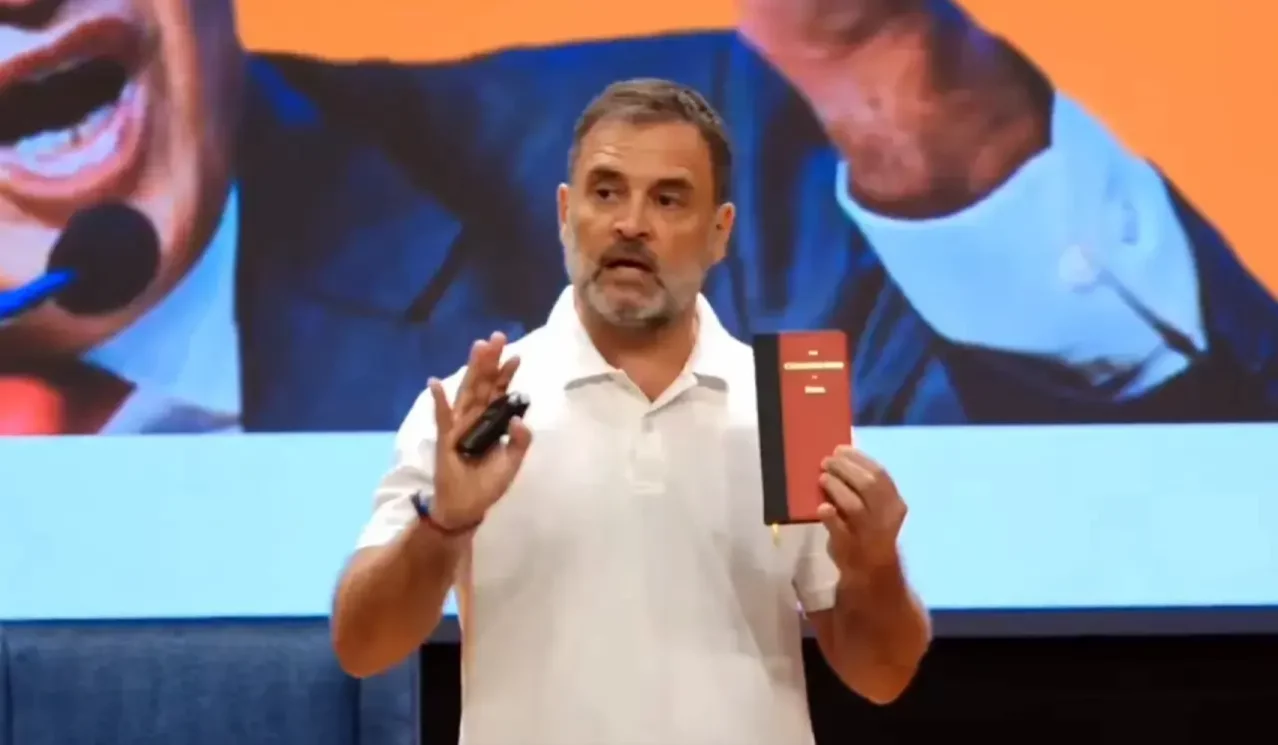
Congress leader Rahul Gandhi on Thursday launched a sharp attack on Chief Election Commissioner (CEC) Gyanesh Kumar, accusing him of protecting “vote chors” and those who have destroyed Indian democracy. Addressing a press conference at the Congress’ Indira Bhawan headquarters, Gandhi cited alleged large-scale voter deletions in Karnataka and fraudulent additions in Maharashtra as evidence of systematic electoral manipulation.
Calling his revelations a “milestone” in exposing how elections are being rigged, the Leader of Opposition in the Lok Sabha said this was not the “hydrogen bomb” of disclosures he has promised, which would come later. He pointed to Karnataka’s Aland constituency, where he claimed 6,018 votes—mostly of Congress supporters—were targeted for deletion in 2023. “The booth-level officer discovered her uncle’s vote had been deleted. It turned out someone else had hijacked the process through software,” Gandhi alleged.
He further claimed that applications impersonating voters were filed automatically using mobile numbers from outside Karnataka. On stage, he presented a voter whose name was targeted for deletion and another person whose identity was used to file the deletion request—both denied involvement.
In Maharashtra’s Rajura constituency, Gandhi alleged votes were added fraudulently with the help of automated software. He claimed millions of voters across India were being systematically targeted. “I am the Leader of Opposition, I will not make claims without 100 percent proof,” he said.
Gandhi accused the Election Commission of stonewalling the Karnataka CID, which has sent 18 letters over 18 months seeking details such as destination IPs and OTP trails linked to the deletions. “They are not providing information because it will expose where this operation is being conducted,” he said, alleging that CEC Gyanesh Kumar is shielding those behind the conspiracy.
“Every youngster in India must know this—they are stealing your future. By withholding information, the EC is defending the murderers of democracy,” Gandhi charged.
He reminded reporters that at the conclusion of his Voter Adhikar Yatra on September 1, he had promised a “hydrogen bomb” of revelations, warning that after its release, Prime Minister Narendra Modi would not be able to show his face to the country. Last month, he had also claimed that over one lakh votes were “stolen” in Karnataka’s Mahadevapura constituency during the 2024 Lok Sabha polls, describing “vote chori” as an “atom bomb on our democracy.”
Wadettiwar Urges Maharashtra to Declare 'Wet Drought', Seeks Rs 50,000 Aid Per Hectare for Farmers 4
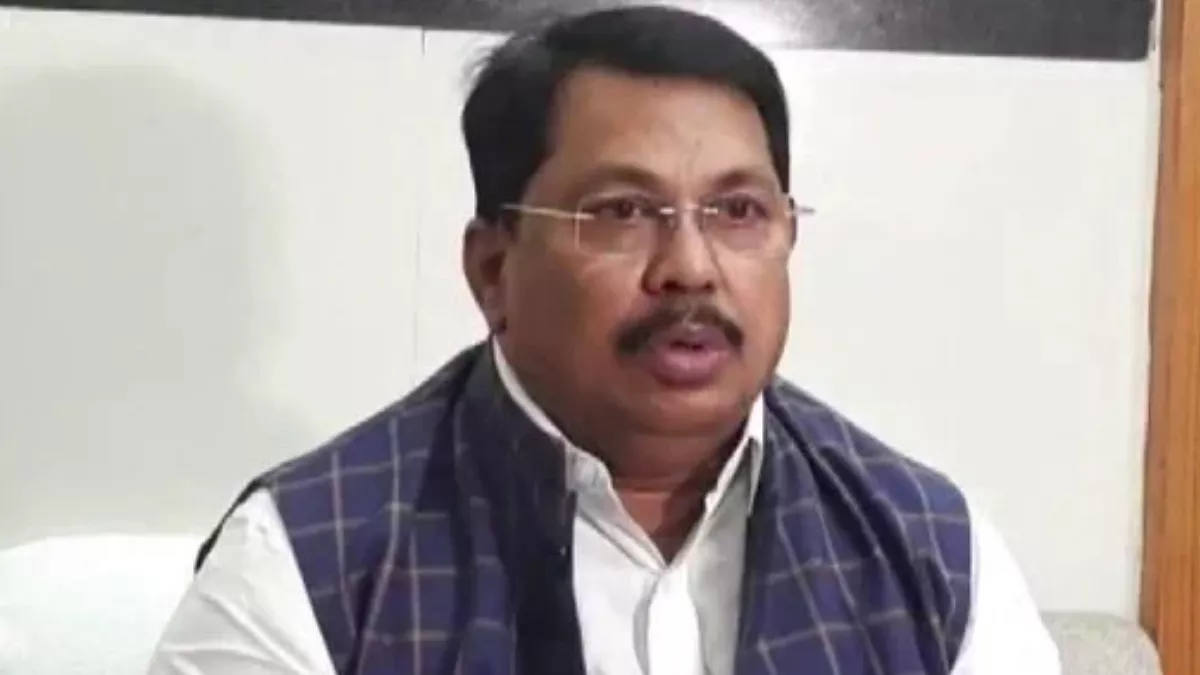
Congress legislature party leader Vijay Wadettiwar on Wednesday urged the Maharashtra government to immediately declare a “wet drought” and extend financial relief of ₹50,000 per hectare to affected farmers.
In a letter to Chief Minister Devendra Fadnavis, Wadettiwar said heavy rains in August and September devastated crops across 30 districts, impacting nearly 17.85 lakh hectares of farmland. He added that farmers, who have not received loan waivers, are left with neither standing crops nor financial stability, making urgent assistance critical.
Highlighting the severe losses in Marathwada and Vidarbha, Wadettiwar said soybean, maize, and cotton fields were destroyed, with the upcoming Rabi season also under threat. He demanded that the government halt loan recoveries, direct insurance companies to expedite compensation, and roll out relief measures without delay.
He criticised the state cabinet for failing to take a decision in its recent meeting, leaving farmers disappointed. “The government must complete crop loss assessments quickly, declare a wet drought, and announce immediate assistance,” he stressed.
According to government data, Marathwada, which typically records deficient rainfall, received 717.4 mm between June and September 17—around 118% more than its seasonal average of 607.6 mm.
US Open Champion Aryna Sabalenka Pulls Out of China Open with Injury 6
World No. 2 Aryna Sabalenka has withdrawn from the upcoming China Open after sustaining an injury during her title-winning run at the US Open earlier this month, tournament organisers confirmed on Wednesday.
The Belarusian star, who clinched her second consecutive US Open crown and fourth Grand Slam title by defeating Amanda Anisimova, was expected to be one of the top contenders in Beijing. Last year, she advanced to the quarter-finals of the WTA 1000 event.
“I am sad to announce my withdrawal from the China Open this year after sustaining a small injury after the US Open,” Sabalenka said in a statement shared by organisers. “I am going to focus on being 100% healthy for the rest of the year.”
The China Open will be held at the National Tennis Centre in Beijing from September 24 to October 5, with American Coco Gauff returning as the defending champion.
Mumbai School Horror: Female Staff Arrested for Alleged Sexual Harassment of 4-Year-Old Girl 8
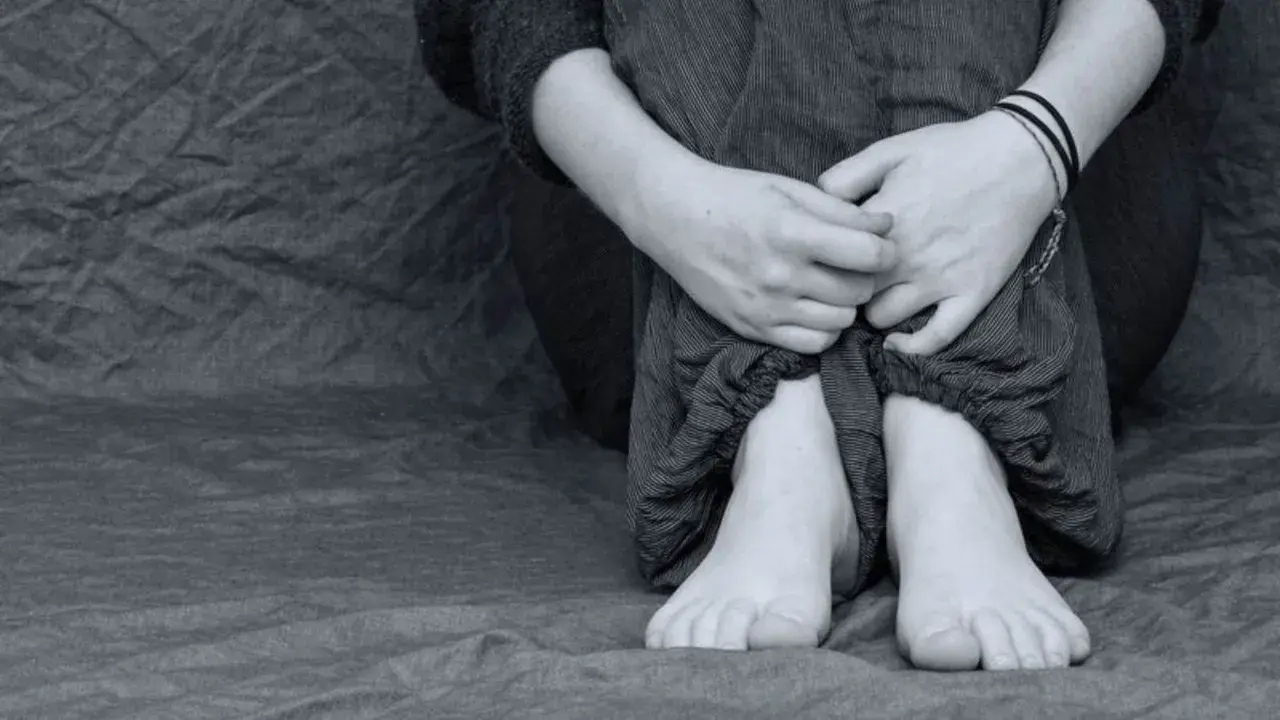
A shocking case has emerged from Goregaon (West), Mumbai, where a four-year-old girl was allegedly sexually harassed at a reputed school on Link Road on September 16. The Goregaon police have arrested a 40-year-old female assistant staff member in connection with the incident. The Dindoshi city civil and sessions court has remanded the accused to police custody until September 19.
According to police, the child’s grandmother, who regularly dropped and picked her up from school, noticed the girl in pain while changing her clothes after returning home. On being asked, the child complained of discomfort in a private part of her body.
The family immediately informed the school principal, took the girl to a private hospital for medical examination, and later approached Goregaon police station to lodge a complaint.
Police have registered the case under the Protection of Children from Sexual Offences (POCSO) Act. Officials said CCTV footage is being reviewed, and three female assistant staff members were called for questioning as part of the ongoing investigation.
NGT Orders Demolition of Illegal Aksa Beach Promenade in Two Months 10
The National Green Tribunal (NGT) has ordered the demolition of a promenade built along Aksa Beach in Malad West within two months, ruling that the Maharashtra Maritime Board (MMB) constructed it without approval and in violation of coastal regulation zone (CRZ) norms.
In 2017, the MMB had proposed a sea-front beautification project at Aksa Beach, but the Maharashtra Coastal Zone Management Authority (MCZMA) rejected it, citing restrictions on construction in the CRZ area and the risk of obstructing tidal flow, which could trigger downstream flooding.
A revised proposal in 2018 sought permission for an anti-erosion bund, which was approved in 2019 with clear instructions to avoid concrete construction on the beach as per the 2011 CRZ notification. Despite this, in 2023 the MMB built a 600-metre-long uncoursed rubble (UCR) wall with a four-metre-wide cobble-stoned pathway at a cost of ₹11.83 crore.
Environmental activists Banda Kumar and Zoru Bathena approached the NGT, arguing that the promenade, located in the intertidal zone between high and low tide lines, would block natural sediment deposition and accelerate beach erosion. They pointed out that parts of the promenade had already caved in and washed away due to tidal flows in 2023 and 2024.
In its ruling, the NGT said that although the anti-erosion wall was intended to prevent flooding and soil erosion, the MMB had exceeded its mandate and blatantly violated CRZ clearance conditions, warranting demolition of the illegal structure.
Mumbai Sees Surge in Malaria, Chikungunya, and Hepatitis; Dengue and Gastro Cases Decline 12
Mumbai has witnessed a rise in malaria, chikungunya, and hepatitis cases between January and September 15 this year compared to the same period in 2024, according to the Brihanmumbai Municipal Corporation’s (BMC) Monsoon-Diseases report released on Tuesday.
The city reported 6,277 malaria cases so far in 2025, up from 5,182 last year. Hepatitis cases rose to 913 from 791, while chikungunya cases climbed to 542 from 366 in the same period. In contrast, dengue cases dropped to 2,724 from 3,435, leptospirosis cases declined to 558 from 628, and gastro cases fell to 5,989 from 6,599.
The civic body noted that while malaria and chikungunya cases rose overall this year, the numbers have shown a downward trend since August, mirroring patterns seen in 2024. No increase was observed in other waterborne diseases.
During the Ganesh Chaturthi festival, BMC’s health department conducted multiple public health awareness initiatives across city wards, including cleanliness drives in hospitals and maternity homes to curb mosquito breeding. Between August 1 and September 15, officials inspected 4,74,450 houses and collected 83,228 blood samples. Extensive advisories were also issued for the prevention of vector-borne diseases such as malaria, dengue, and chikungunya.
The BMC has urged citizens to avoid stagnant water in and around their homes, ensure proper disposal of items like old tires and water tanks that can collect water, and refrain from consuming uncovered street food. Residents have also been advised to wash hands frequently, avoid self-medication, and seek medical help promptly in case of fever.
India takes pride in being the world’s largest democracy. Every election cycle, the ruling party proudly proclaims the magnitude of its electoral exercise as proof of democratic health. But democracy is not validated by size; it is tested by strength. And its strength is measured not in votes cast, but in how power tolerates dissent once the votes are counted.
On that measure, India is failing. The recent defamation summonses against Abhisar Sharma and Raju Parulekar are not isolated incidents. They are the latest in a disturbing series of attacks on independent journalism—a trend that threatens to hollow out the very core of India’s democratic promise.
From Reporting to Retaliation
The facts are clear. In August 2025, Sharma uploaded a video alleging questionable land allotments to corporate giants, pointing to a pattern of political favouritism. Around the same time, Parulekar, a fierce critic of the BJP and RSS, posted similar claims on social media. Instead of robust rebuttals from the state or transparent disclosure of policy, the response was swift retaliation: criminal defamation complaints filed in Gujarat, dragging both men into the grind of court appearances, legal costs, and reputational battles.
This is not justice; it is deterrence. And it sends a message louder than any press conference: speak against power, and you will be punished.
Why Governments Target Independent Media
Authoritarian impulses rarely announce themselves with jackboots and curfews. They creep in through quieter, procedural tools: defamation suits, tax raids, broadcast suspensions, and algorithmic throttling. These tactics achieve what outright censorship cannot: plausible deniability.
The logic is simple. Independent journalists embarrass the state. They expose corruption, challenge official narratives, and puncture the carefully crafted image of invincibility. Their very existence makes governance uncomfortable. And because governments cannot openly criminalise dissent, they resort to indirect intimidation—using laws and courts as weapons.
The Corporate Nexus
What makes India’s situation particularly dangerous is the marriage of political power with corporate dominance. Newsrooms today are not just pressured by governments; they are owned by conglomerates whose fortunes depend on government goodwill. When billionaires hold the keys to television channels and newspapers, editorial freedom becomes a casualty of shareholder interest.
In the present case, the alleged land deals involved companies with powerful political connections. Instead of scrutinising these ties, the media ecosystem—already compromised by ownership structures—largely looked away. Only a handful of independent voices dared to probe. And they, unsurprisingly, became targets.
A Global Pattern
India is not unique in this trajectory. Turkey under Erdoğan, Hungary under Orbán, Russia under Putin—all tell the same story. Strong leaders consolidate control not by abolishing elections, but by capturing institutions, weakening courts, and silencing the press. In each case, media intimidation was the canary in the coal mine, a warning of democratic decay.
The United States, too, has wrestled with a hostile state-media relationship, especially under the Trump administration. But what distinguishes India is the scale of self-censorship. Many journalists no longer need to be silenced; they silence themselves. Fear of defamation suits, fear of losing licenses, fear of harassment—all combine to produce a press that often echoes rather than interrogates power.
The Legal Cage
India’s legal framework itself abets this climate of fear. Defamation in India is both civil and criminal—a peculiarity inherited from colonial rule. While most democracies restrict defamation to civil claims, India still permits imprisonment for speech deemed defamatory. This draconian provision acts as a sword of Damocles, ready to fall on any journalist who dares to challenge the powerful.
Similarly, sedition laws—though read down by the Supreme Court—remain on the statute books, weaponised at will. Add to this the tightening grip over digital platforms through IT Rules, and the picture becomes clear: the law is less a shield for citizens than a whip for dissenters.
Citizens Pay the Price
The greatest casualty of this crackdown is not the journalist, but the citizen. In a democracy, people make decisions based on the information available to them. If that information is curated, censored, or distorted, the citizen’s choice is no longer free—it is manipulated.
Independent media is not a journalist’s indulgence; it is the public’s right. A vote cast without access to truthful information is not a democratic act—it is theatre. That is why freedom of the press is often called the lifeblood of democracy. Without it, the citizen is reduced to a spectator in a political drama where the script is written by those in power.
The Illusion of Neutrality
Critics argue that journalists like Sharma or Parulekar are themselves biased, one-sided, or blunt to the point of provocation. Perhaps. But bias is not the issue. In fact, bias is inevitable. Every journalist, like every citizen, approaches the world through a lens shaped by experience and conviction.
The problem is not bias—it is the suppression of multiplicity. A democracy thrives when multiple voices compete, clash, and coexist. It dies when only one voice dominates. A biased but free press can be debated, challenged, and corrected. A silenced press offers nothing but obedience.
The Slow Death of Dissent
What should alarm us is not only that journalists are targeted, but that society is becoming accustomed to it. Each raid, each defamation suit, each suspension is met with a shrug. Over time, outrage fades, and silence becomes normal. That is how democracies erode—not with dramatic coups, but with the slow suffocation of dissent.
Already, India’s press freedom ranking has plummeted on global indices. Journalists face hostility not just from the state but from partisan citizens who brand them “anti-national” for asking questions. The result is a media environment where fear outpaces courage.
The Road Ahead
If India is to preserve its democratic character, it must protect its independent voices—not after they are destroyed, but while they are still speaking. This requires reform on three fronts:
Legal Reform: Decriminalise defamation, repeal sedition, and safeguard whistleblowers. Laws must shield journalists, not shackle them.
Corporate Reform: Enforce transparency in media ownership, prevent monopolies, and insulate newsrooms from shareholder interference.
Cultural Reform: Cultivate in citizens the understanding that criticism of government is not treason but patriotism. A democracy that cannot stomach dissent is not democracy at all.
What Kind of Nation Do We Want?
The question before us is stark. Do we want a press that flatters governments, or a press that informs citizens? Do we want journalists who are obedient stenographers, or journalists who are fearless watchdogs?
If it is the latter, then the persecution of independent voices must end. For if the truth dies in India, it will not be at the hands of foreign enemies. It will die quietly, in courtrooms and newsrooms, under the weight of a government that mistook criticism for crime and dissent for disloyalty.
And when that day comes, it will not just be the journalists who are silenced. It will be the people themselves.
Gold Prices Soar to Record Rs 1.1 Lakh on Fed Rate Cut Hopes, Safe-Haven Demand 16
Gold prices surged to an all-time high on Tuesday, crossing the ₹1,10,000 mark per 10 grams, fueled by strong safe-haven demand and expectations of a US Federal Reserve rate cut.
According to the India Bullion and Jewellers Association (IBJA), 24-carat gold was priced at ₹10,951 per gram at 10:17 a.m. Earlier, gold touched ₹1,10,650 per 10 grams, up from ₹1,09,820 on Monday. In the global market, spot gold traded at $3,679 per ounce, just below Monday’s record of $3,685, World Gold Council data showed.
Analysts cited rising geopolitical tensions, the likelihood of a US Fed rate cut on September 17, and a weakening dollar as key drivers of the rally. They expect both gold and silver to continue with a bullish bias through the week.
Across metro cities, prices stood at ₹1,10,260 in New Delhi, ₹1,10,450 in Mumbai, ₹1,10,540 in Bengaluru, ₹1,10,310 in Kolkata, and ₹1,10,770 in Chennai, the highest among metros.
Silver also gained, with October 5 MCX futures trading at ₹1,29,452 per kg, supported by rising industrial demand from electric vehicles and solar energy sectors.
India’s gold ETFs saw inflows of $233 million in August 2025, a 67% jump from July’s $139 million, according to World Gold Council data. However, the surge in gold prices is adding to inflationary pressures. The August CPI showed that gold’s 40% year-on-year spike contributed nearly 43 basis points to core inflation.
SC Slams Maharashtra Poll Panel, Orders Local Body Elections by January 2026 18
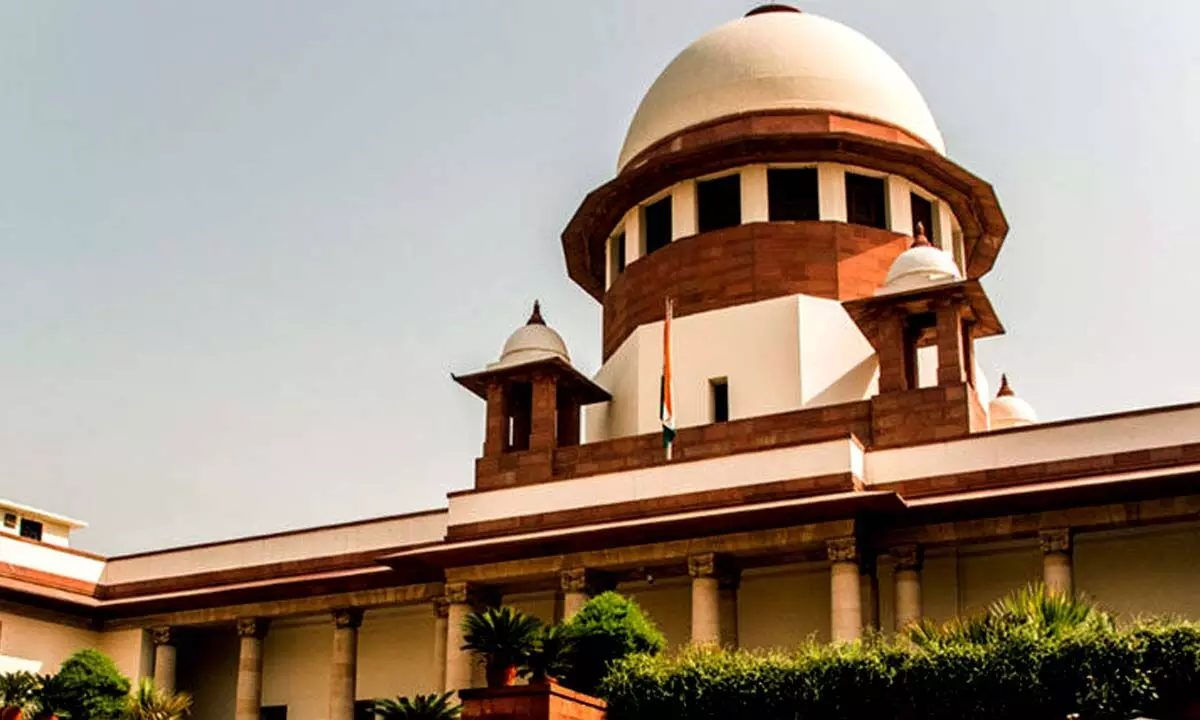
The Supreme Court on Tuesday pulled up the Maharashtra State Election Commission (SEC) for failing to comply with its earlier orders and directed that all local body elections in the state, pending since 2022, must be completed by January 31, 2026, without further delay.
A bench of Justices Surya Kant and Joymalya Bagchi expressed displeasure over repeated extensions and excuses by the SEC, which cited reasons such as delimitation, EVM shortages, and school premises being unavailable during board exams. “Elections of all local bodies, including Zila Parishads, Panchayat Samitis and municipalities, shall be conducted by January 31, 2026. No further extension shall be granted,” the bench ruled.
The court directed that the delimitation process must be completed by October 31, 2025, and made clear that exams or other logistical issues cannot be cited as grounds to postpone polls. It instructed the Maharashtra Chief Secretary to immediately deploy sufficient staff to serve as returning officers and support staff, based on requirements submitted by the SEC within two weeks. The Chief Secretary must ensure the deployment within four weeks of the SEC’s request.
Addressing the shortage of electronic voting machines, the court ordered the SEC to arrange the required units and file a compliance affidavit by November 30, 2025. Currently, 65,000 EVMs are available, but another 50,000 have been ordered.
The bench reminded the state and the SEC that elections were originally directed to be concluded within four months of its May order. “Have the elections been conducted? Your inaction speaks of incompetence. These issues were known even when we passed the first order,” Justice Kant remarked.
Petitioners opposing the extension accused the SEC of deliberately delaying the process by citing excuses ranging from festivals to staff shortages. The bench noted that the civic polls had been stalled since 2022, largely due to disputes over OBC reservation in local bodies.
Heavy Rains and Landslides Wreck Kotranka-Khawas Road in Rajouri, Villages Cut Off 20
The 32-km Kotranka-Khawas road in Jammu and Kashmir’s Rajouri district, completed just last year, has been extensively damaged by continuous heavy rainfall and landslides over the past two weeks. The vital link between Kotranka sub-division and Khawas tehsil has been closed for 15 days, leaving residents stranded and daily life severely disrupted.
Students are unable to reach schools, patients struggle to access hospitals, and many villagers have been forced to walk 15 to 20 kilometres to avail essential services. Road restoration has been stalled as ongoing land subsidence continues to pose serious risks.
“The road has been shut for 15 days, and the damage is very severe due to floods. This closure has hit everyone, especially school children and the elderly. No one from the administration has started repairs yet. We request urgent restoration,” said Jatinder Sharma, a resident of Badhal village.
In several stretches, sinking land has worsened the crisis, with at least seven houses badly affected. In one alarming case, a two-storey house shifted nearly 50 metres from its original site while still standing upright, sparking fear among locals.
Additional Deputy Commissioner (ADC) Kotranka, Dilmir Choudhary, said residents from the most affected zones have been evacuated to safer places, with food and essential supplies being delivered. Compensation files for displaced families are under process, and the area is under constant monitoring.
Meanwhile, in Poonch district, around 400 residents of Kalaban village in Mendhar sub-division have been moved to temporary shelters after houses developed cracks from land subsidence caused by relentless rainfall. Authorities, supported by a local NGO, are providing relief material, and the village has been declared unsafe until further notice.