Sensex, Nifty Close Higher on US-India Trade Deal Optimism 2
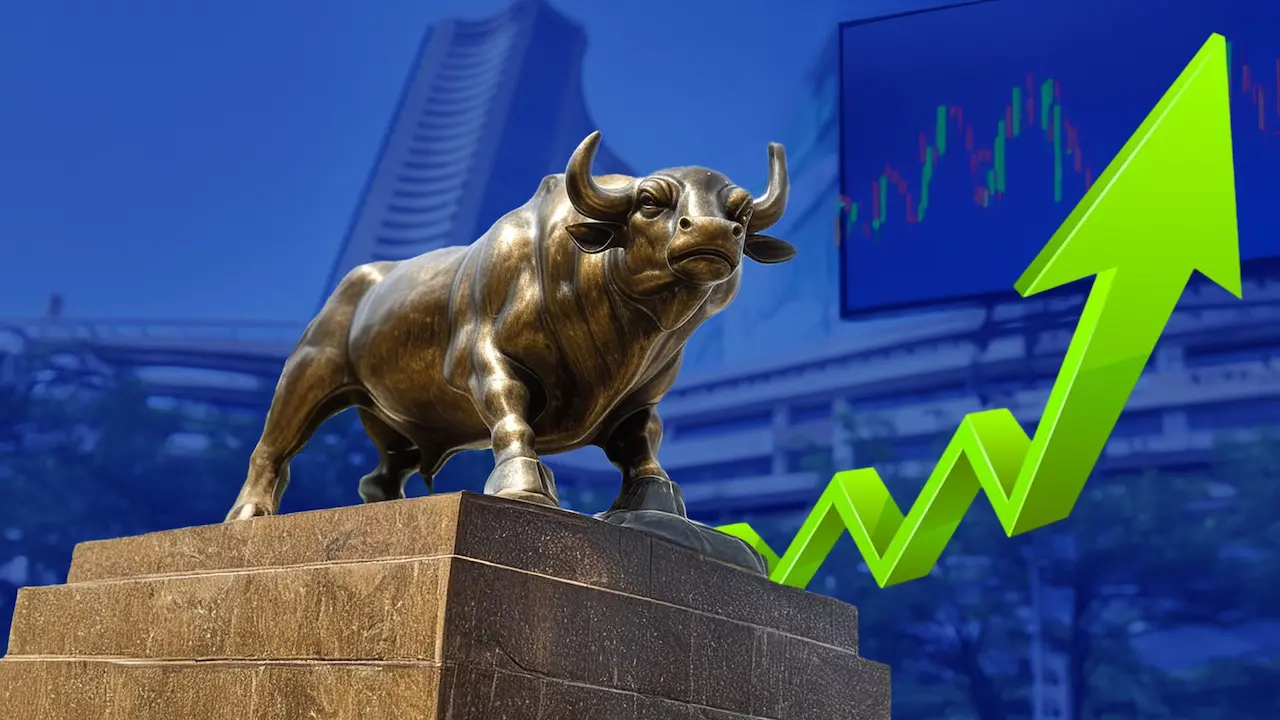
Indian equity benchmarks ended higher on Wednesday, extending their positive momentum on the back of optimism surrounding the India-US trade deal and expectations of GST rationalisation.
The Sensex closed at 81,425.15, up 323 points or 0.43%, after opening strong at 81,504.36 against its previous close of 81,101.32. The index touched an intra-day high of 81,643.88. The Nifty settled at 24,973.10, gaining 104.50 points or 0.42%.
Analysts attributed the gains to renewed optimism around ongoing trade negotiations between India and the US. Anticipation of stronger earnings in H2 FY26, supported by GST rationalisation and monetary easing, also lifted investor sentiment.
The IT sector outperformed, buoyed by hopes of a potential Fed rate cut and a revival in technology spending. Market participants are closely tracking the progress of trade talks for cues on tariff-related issues.
Among the top gainers on the Sensex were BEL, HCL Tech, Bajaj Finance, Axis Bank, TCS, Tech Mahindra, Infosys, SBI, L&T, Adani Ports, ITC, Bajaj Finserv, and Kotak Bank. On the downside, Mahindra & Mahindra, Maruti Suzuki, Tata Motors, Ultratech Cement, PowerGrid, and Eternal ended lower.
Most sectoral indices closed in the green, with Nifty IT rising 927 points or 2.63%, Nifty FMCG up 359 points or 0.64%, Nifty Bank climbing 319 points or 0.59%, and Nifty Financial Services gaining 161.80 points or 0.62%. Nifty Auto was the only major laggard, falling 348.55 points or 1.28% due to profit booking.
The broader market mirrored the upbeat mood, with Nifty Smallcap 100 advancing 130 points or 0.73%, Nifty Midcap 100 jumping 535 points or 0.93%, and Nifty 100 climbing 319 points or 0.59%.
Chaos in Nepal: Tourists Stranded as Protests Shut Down Kathmandu Airport 4
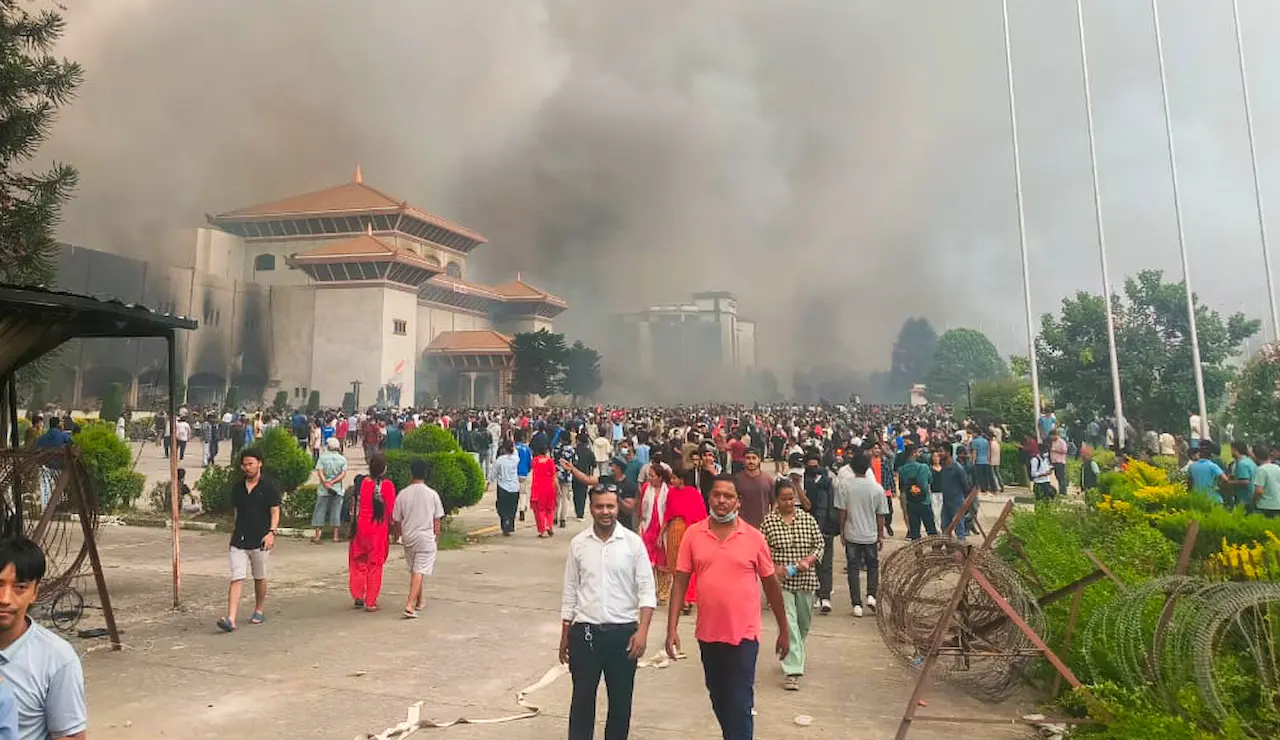
Hundreds of tourists, including many from India, have been stranded in Nepal after Kathmandu Airport was shut down due to violent Gen Z protests against alleged corruption and the Oli government’s controversial social media ban.
The youth-led demonstrations, which began peacefully, spiralled into violent clashes with security forces, leaving several people dead and prompting mobs to attack politicians and torch the homes of leaders. With major highways also blocked by protesters, travellers remain trapped across the capital.
Among those stranded is a group of friends from Navi Mumbai who had come to visit the Pashupatinath Temple. “We were travelling in Nepal with friends, but a curfew was imposed after we arrived. The situation is very problematic now. The sooner we find a way to leave safely, the better it will be for us,” one of them told IANS. Another said they had been confined to their hotel for two days and had contacted the Indian Embassy, which advised them to remain indoors until arrangements for evacuation are made.
Tourists from other countries are facing the same plight. A German traveller said, “The situation is very bad. Yesterday I saw a lot of smoke from hotels. They were burning, and people were dying—innocent people. It’s very sad. I hope everything will return to normal soon.” Another German, part of a group of 14, added, “We are safe, but we hope that we can leave tomorrow.”
The Indian Embassy has assured stranded nationals that efforts are underway to arrange their safe return, but until then, tourists have been asked to stay inside their hotels. With Nepal’s unrest still volatile, uncertainty looms large as travellers wait anxiously for safe passage out of the country.
PM Modi Voices Anguish as Cabinet Security Panel Reviews Crisis in Nepal 6
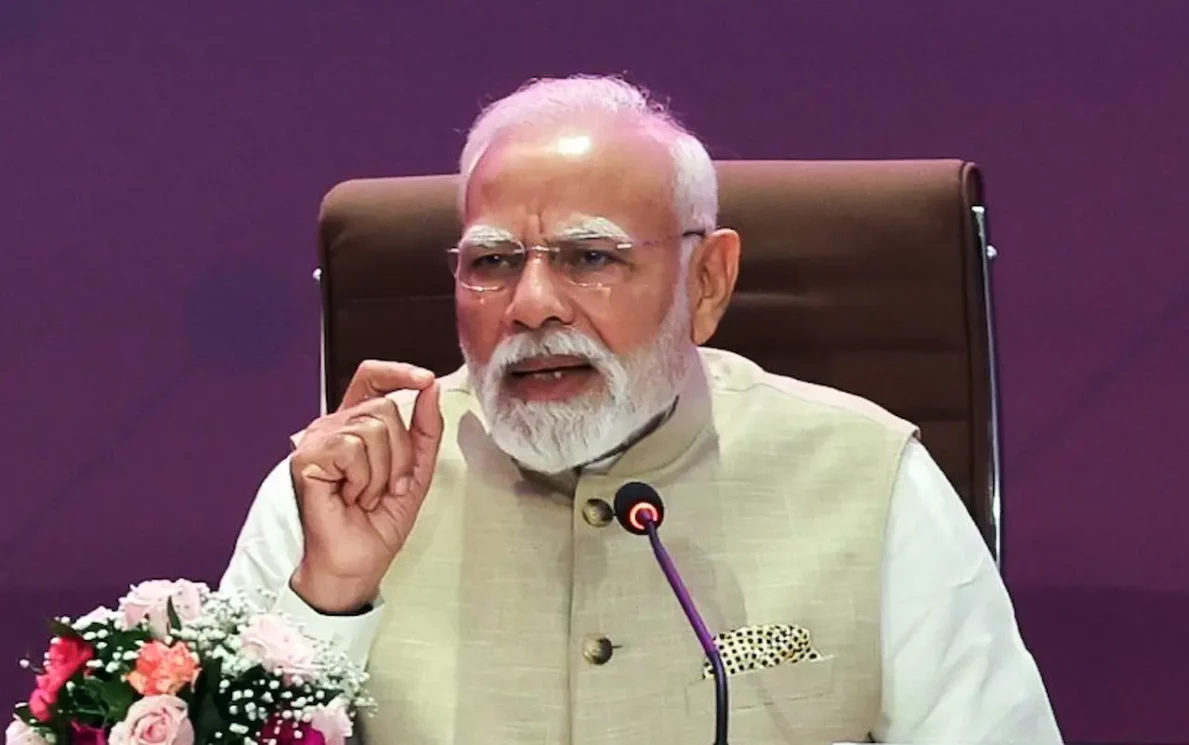
Prime Minister Narendra Modi on Tuesday chaired a meeting of the Cabinet Committee on Security (CCS) to review the escalating crisis in Nepal, where violent protests have claimed several lives, many of them young demonstrators.
Expressing anguish over the unrest, the Prime Minister stressed the need for peace, stability, and prosperity in the neighbouring country. “On my return from Himachal Pradesh and Punjab today, a meeting of the Cabinet Committee on Security discussed the developments in Nepal. The violence in Nepal is heart-rending. I am anguished that many young people have lost their lives. The stability, peace and prosperity of Nepal are of utmost importance to us. I humbly appeal to all my brothers and sisters in Nepal to support peace,” Modi posted on X.
The CCS discussions underscored India’s concern for regional stability and its commitment to peace in South Asia. Authorities have stepped up security along the Indo-Nepal border, while Indian citizens in Nepal have been advised to avoid unnecessary travel and remain indoors.
Nepal is currently reeling from one of its worst political crises in years, sparked by the government’s decision to ban 26 social media platforms. The move triggered massive youth-led demonstrations, dubbed the “Gen Z movement,” which escalated into violent clashes with security forces. At least 19 people have been killed and over 300 injured after police reportedly opened fire and used tear gas to disperse crowds.
Though the ban has now been lifted, the unrest has forced several ministers to resign, including Prime Minister K. P. Sharma Oli. Reports suggest President Ram Chandra Poudel has also stepped down. With flights to and from Kathmandu suspended and the Army deployed to control the situation, Nepal remains on edge.
Deva Bhau: Maharashtra's Relentless Political Chess Master 8
In the shifting sands of Maharashtra politics, one name repeatedly rises to the center—Devendra Fadnavis. He is not just another politician navigating elections, but the man who has over and over again proved that he is the strategist, the mover, the player who cannot be ignored. His journey from Nagpur’s youngest mayor to becoming the state’s most important political force is not built merely on luck or timing, but on an instinctive ability to read the mood of Maharashtra, to sense when to strike and when to step back.
When the BJP stormed into power in 2014, it was Fadnavis who became the face of that new chapter, the first BJP chief minister of Maharashtra in decades. He carried the weight of development on his shoulders, pushing urban infrastructure, agrarian support, and governance reforms that gave him credibility not just among party loyalists but also among voters who had never imagined a BJP face leading the state. Five years later, when the Sena broke ranks in 2019, he pulled off a breathtaking political stunt by returning to power with Ajit Pawar in an overnight coup that lasted only 80 hours. Critics mocked the brevity of that government, but what lingered in political memory was not the fall, it was the audacity of the attempt. It cemented his reputation as a leader who could turn the tables when everyone else thought the game was over.
That same quality defined him again in 2022, when he accepted the Deputy Chief Minister’s chair to stabilize the Mahayuti government with Eknath Shinde. It was a moment that revealed his understanding of real power—not in titles, but in control, influence, and the ability to hold the system together from behind the curtain. Today, as civic elections approach, he has once again reshaped his image. The sudden disappearance of “Fadnavis” from his name and the emergence of “Deva Bhau” on posters across Mumbai are not random. They are a deliberate play to cross caste lines, to claim the emotional connect that Shiv Sena once monopolized, and to present himself as the brotherly figure every Marathi voter can identify with.
In the posters, he stands before the image of Chhatrapati Shivaji Maharaj, offering flowers. It is more than homage; it is a quiet declaration that Shivaji’s legacy does not belong to one party, that BJP and Devendra too have the right to embody that vision of justice, courage, and pride. The fact that these posters carry no party name or symbol, only his picture and Shivaji’s presence, shows that he is trying to build a personal connection that rises above organizational branding. And this is happening just as the Maratha reservation decision has set off a credit war within the Mahayuti, making his move even more significant.
What emerges from all this is a portrait of a man who is far more than an administrator. Devendra Fadnavis is the chess player of Maharashtra politics, a strategist who knows when to take risks, when to sacrifice, and when to claim the board. From 2014 to 2019 to 2022 and now to the civic polls ahead, every turning point of the state’s politics has his imprint. He has shown that he can reinvent himself, command narratives, and keep Maharashtra’s politics revolving around his presence. That is why, in the final reckoning, he stands not just as the BJP’s strongman but as the man of Maharashtra.
PM Modi Heads to Flood-Hit Himachal and Punjab, Assures Support to Affected Families 10
Prime Minister Narendra Modi on Tuesday said the government stands “shoulder-to-shoulder” with people affected by the recent floods and landslides, as he departed for Himachal Pradesh and Punjab to review the situation in the disaster-hit states.
“Leaving for Himachal Pradesh and Punjab to review the situation in the wake of floods and landslides. The Government of India stands shoulder to shoulder with those affected in this tragic hour,” the Prime Minister posted on X.
PM Modi will review relief, rescue, and rehabilitation measures in Kangra, Himachal Pradesh, where he is expected to meet affected families and interact with personnel of the National Disaster Response Force (NDRF), State Disaster Response Force (SDRF), and Aapda Mitra volunteers engaged in operations.
Later, he will conduct an aerial survey of flood-hit regions in Punjab before holding a review meeting with senior officials in Gurdaspur. He will also meet survivors and relief workers on the ground.
The two northern states have suffered severe damage due to monsoon-triggered floods and landslides, leaving thousands displaced and causing large-scale devastation.
Nepal Lifts Social Media Ban After Deadly Gen Z Protests, Curfew Enforced in Kathmandu 12
Nepal lifted its social media ban on Tuesday, less than a day after violent anti-corruption protests sparked by the restrictions left 19 people dead and over 100 injured. The government has now imposed a curfew in Kathmandu to curb further unrest.
The week-long ban on platforms including Facebook was withdrawn following a Cabinet meeting, Communications and Information Technology Minister Prithvi Subba Gurung confirmed. Social media apps were back online by Tuesday morning.
The protests, largely driven by Nepal’s Gen Z, erupted against widespread corruption and intensified after the shutdown, spreading across multiple cities. Authorities in Kathmandu and neighbouring Lalitpur enforced curfews to prevent gatherings, with officials banning protests, assemblies, and public meetings.
Prime Minister K.P. Sharma Oli expressed sorrow over the deaths, blaming “infiltration from different selfish centres” for the violence. He announced compensation for victims’ families, free treatment for the injured, and the formation of an investigation panel to report within 15 days.
Organisers described the demonstrations as a reflection of young people’s frustration with the government’s failure to tackle corruption and provide economic opportunities. Officials defended the initial social media ban, citing a crackdown on fake accounts, misinformation, and hate speech.
The Game of Votes: Why India's Presidential & Vice-Presidential Elections Matter More Than Ever 14
India prides itself on being the world’s largest democracy. Yet, its two highest constitutional offices — the President and the Vice-President — are chosen not directly by the people but through an intricate web of indirect voting. Critics call it elitist; defenders hail it as balanced federalism. Both are partly right. What cannot be denied is that these elections are far more political and consequential than many imagine.
The System: Elegant, Complex, Essential
The President is elected by an Electoral College of MPs and MLAs, with each vote carefully weighted to balance state and national interests. A single transferable vote ensures that consensus, not brute majority, defines the outcome. It is a system designed to prevent domination by a single state or party, and to compel wide acceptability. The Vice-President, meanwhile, is chosen by MPs alone. Here too, proportional representation and secret ballots ensure free choice, at least in theory.
The complexity is no accident — it is deliberate constitutional craftsmanship. Our founders understood that while Parliament represents the national mood, state legislatures embody the federal spirit. Combining the two prevents Delhi from swallowing the states whole. But this elegance comes at a price: MPs and MLAs need training before voting, lest their ballots be declared invalid. Union Minister S.P. Singh Baghel’s frank admission that many first-time MPs do not even know whether the ballot is electronic or paper speaks volumes about the seriousness of this exercise.
The Past: Cross-Voting, Consensus, and Surprises
History shows that these elections are not mere formalities. Cross-voting has often tilted the scales. In 2022, Jagdeep Dhankhar secured a thumping 75% win, thanks not just to the NDA but to unexpected support from Naveen Patnaik’s BJD and KCR’s BRS. In earlier years, too, parties broke ranks, proving that secret ballots can sometimes free lawmakers from rigid party discipline. These contests have produced both predictable results and political earthquakes, reminding us that “ceremonial” posts can reflect deep undercurrents in national politics.
The Present: A Loaded Battle
This September’s Vice-Presidential election, however, carries a sharper edge. On paper, the NDA has the numbers — 427 MPs, comfortably above the majority mark of 386. With support from Jagan Reddy’s YSR Congress, Maharashtra Governor C.P. Radhakrishnan is the clear frontrunner. Opposition candidate Justice B. Sudershan Reddy, despite a stronger INDIA bloc showing in 2024, faces a daunting shortfall of nearly 100 votes even in the best-case scenario.
Yet, abstentions by the BJD and BRS tell a story of their own. Both regional satraps — Patnaik and KCR — are recalibrating after electoral setbacks. Their silence is not neutrality but strategy, aimed at safeguarding state interests and Muslim vote banks ahead of crucial bypolls. Politics, not procedure, drives these calculations.
Why It Matters: More Than a Rubber Stamp
Skeptics dismiss the President and Vice-President as symbolic figures, bound by cabinet advice. That is a dangerously shallow reading. The President is the constitutional guardian, the one who can send back a flawed bill, summon or dissolve Parliament, and decide who forms government in hung verdicts. The Vice-President, as Rajya Sabha Chair, can make or break the fate of contentious bills, often acting as the government’s shock absorber or lightning rod.
In an era where Parliament is increasingly polarized, these offices are not passive chairs but pivotal referees. Their credibility, impartiality, and even personality matter. A Dhankhar or a Hamid Ansari at the helm makes all the difference in how Rajya Sabha debates play out.
The Bottom Line
India’s presidential and vice-presidential elections are not dull rituals but carefully engineered balancing acts between democracy and federalism, symbolism and power. They are stress tests of our constitutional design.
This year’s Vice-Presidential election, though tilted towards the ruling NDA, reveals how abstentions, cross-voting, and regional power plays can reshape the arithmetic. What looks like a foregone conclusion is, in fact, a snapshot of India’s messy, magnificent democracy at work.
The ballot may be secret, but the politics is never hidden.
Landslide Hits Mansa Devi Hills, Halts Train Movement on Haridwar-Dehradun Route 16
A landslide from the Mansa Devi hills near Har Ki Pauri in Haridwar on Monday blocked the Haridwar-Dehradun railway route, disrupting train services, officials said.
Large boulders from the hillside crashed onto the track near Bhimgoda, close to the Kali temple, forcing the suspension of train movement, said Government Railway Police (GRP) Superintendent of Police Aruna Bharti. The debris completely obstructed the track near the Bhimgoda tunnel, affecting more than a dozen trains, including the Vande Bharat Express.
A Shiva temple built near the track also collapsed under the impact of the landslide, Circle Officer Swapnil Suyal confirmed.
The incident comes days after a similar landslide at the same spot despite the installation of a protective iron net. Officials said the net was torn apart by the force of falling stones.
Railway teams rushed to the site and began clearing operations using gas cutters and JCB machines. Authorities estimate it will take 8–10 hours to remove the debris and restore movement on the route.
Sonia Gandhi Slams Govt's 'Planned Misadventure' in Great Nicobar, Warns of Ecological Disaster 18
Congress Parliamentary Party chairperson Sonia Gandhi on Monday launched a sharp attack on the government over the ₹72,000-crore Great Nicobar infrastructure project, terming it a “planned misadventure” that threatens the survival of indigenous tribes and devastates one of the world’s most unique ecosystems.
In an article published in The Hindu, Gandhi said the project “poses an existential danger” to the Nicobarese and Shompen tribes and is being pushed through “insensitively, making a mockery of all legal and deliberative processes.” She warned that the Shompen tribal reserve is being denotified, the Nicobarese risk permanent displacement, and lakhs of trees face destruction in a rainforest ecosystem already vulnerable to seismic risks.
Calling the project an “environmental and humanitarian catastrophe,” Gandhi alleged that constitutional safeguards, including the Forest Rights Act and consultation with the National Commission for Scheduled Tribes, were ignored. She also pointed out that estimates suggest between 8.5 lakh and 58 lakh trees could be cut, while biodiversity assessments were flawed and key wildlife concerns, including those over sea turtles and Nicobar macaques, were dismissed.
“The country’s laws are being mocked wholesale, and one of its most vulnerable groups may have to pay the ultimate price,” Gandhi wrote, urging people to oppose the project.
Her remarks follow similar objections by Rahul Gandhi and Jairam Ramesh, who have accused the government of disregarding tribal rights and ecological balance in pursuit of the “Holistic Development of Great Nicobar” project, which includes a transhipment port, international airport, township, and power plant over 160 sq km.
UK Team Inspects Tihar Jail Ahead of Vijay Mallya, Nirav Modi Extradition 20
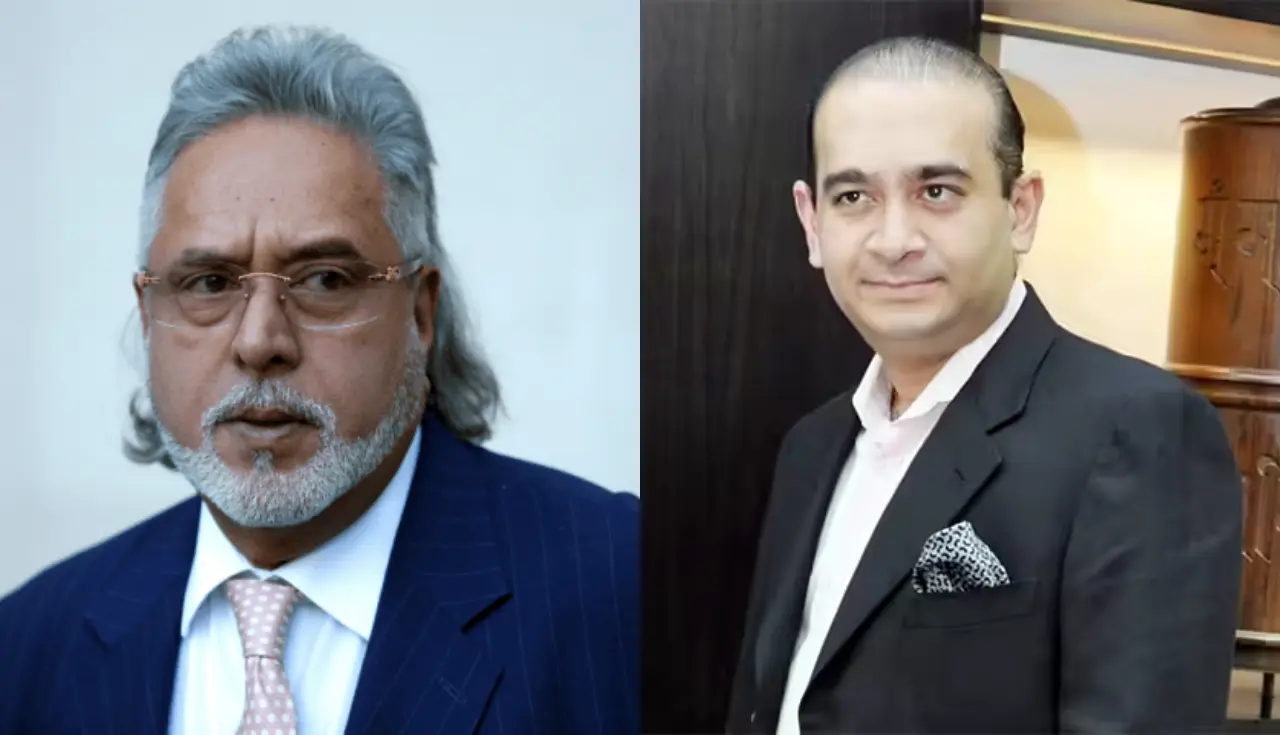
Efforts to extradite fugitive economic offenders Vijay Mallya and Nirav Modi from the United Kingdom have picked up pace after a Crown Prosecution Service (CPS) team inspected Delhi’s Tihar Jail last week, officials confirmed on Sunday.
The UK delegation visited the high-security ward to assess prison conditions, a key legal requirement before British courts decide on extradition pleas. Jail authorities assured the team that, if needed, a separate enclave could be created for high-profile inmates to ensure safety and compliance with international standards.
India has long pressed for the return of fugitives facing charges ranging from massive bank fraud to arms smuggling. British courts have previously denied extraditions citing concerns about prison conditions, prompting New Delhi to provide fresh assurances that rights of the accused will be protected with no scope for mistreatment.
Mallya, accused in loan default cases exceeding ₹9,000 crore, has been residing in the UK while contesting extradition. Nirav Modi, the key accused in the ₹13,800 crore Punjab National Bank scam, was arrested in London in 2019. His extradition was cleared by a UK court, though his appeals remain pending.