SC allows ECI to hear Shinde-factions claim over Shiv Sena, symbol; rejects Thackeray-factions plea 2
The Supreme Court on Tuesday allowed the Election Commission to go ahead with the hearing of Maharashtra Chief Minister Eknath Shinde group’s plea seeking recognition as the real Shiv Sena and allocation of the party’s bow-and-arrow poll symbol to it.
Justice D Y Chandrachud, heading a constitution bench, rejected the plea of the Uddhav Thackeray-led faction seeking to restrain the EC from deciding the Shinde group’s claim over the “original” Shiv Sena.
“We direct that there would be no stay of the proceedings before the Election Commission,” the bench comprising Justices M R Shah, Krishna Murari, Hima Kohli and P S Narasimha said.
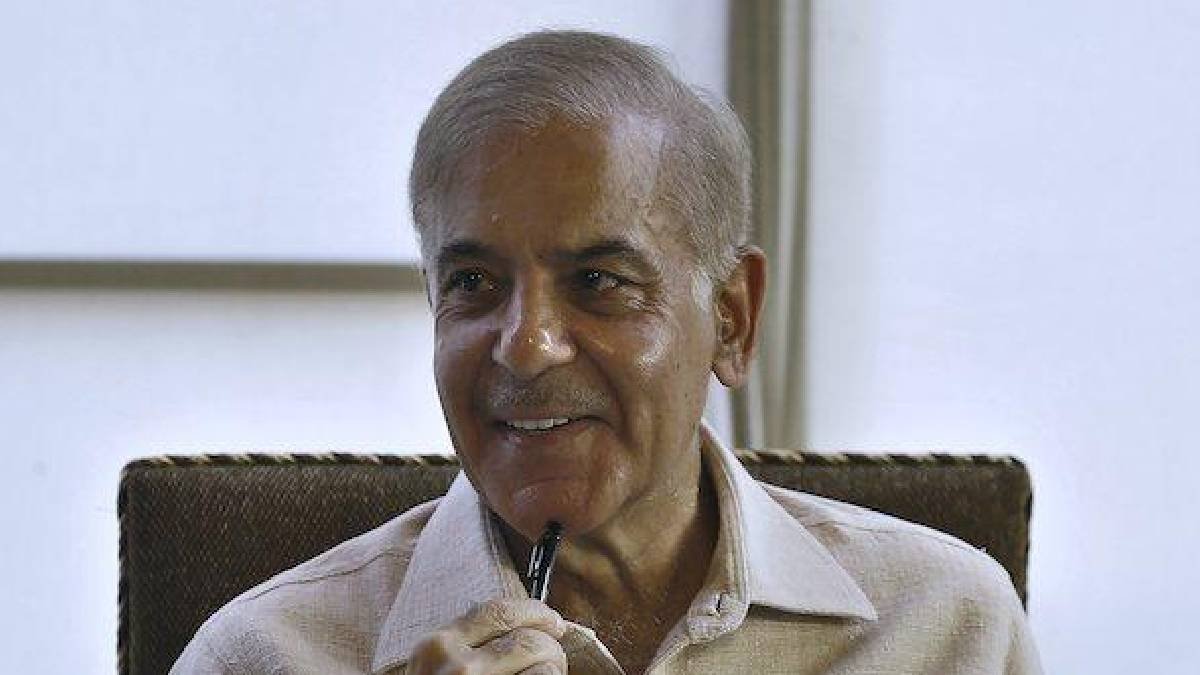
Pakistan Prime Minister Shehbaz Sharif has called a meeting of the National Security Committee (NSC) on Wednesday to deliberate on the audio leaks from the Prime Minister’s Office that has trigged a controversy with the Opposition demanding his resignation.
A slew of audio recordings featuring confidential conversations of the prime minister with high-government officials surfaced on social media last week, raising questions about the security of the highest office of the country.
More audio clips were leaked on Monday where top PML-N leaders were purportedly heard making strategies about the by-elections that were recently postponed due to the devastating floods.
A joint investigation team (JIT) with a representative from Army-run intelligence agencies was ordered to probe the issue. The Intelligence Bureau (IB) is also investigating the leaks.
Officials said an initial report by the top intelligence agencies has been prepared which will be placed before the NSC — the highest civil-military body on security affairs.
According to an official statement issued on Monday, the NSC meeting will take place at the PM House on Wednesday, the Express Tribune newspaper reported.
The top military and civilian leadership, including defence minister, interior minister, information minister, finance minister and other important cabinet members will participate in the meeting, it said.
On Monday, ousted prime minister Imran Khan demanded the resignation of his successor Sharif over the issue.
Asian Development Bank, USD, Fund, Crisis | Image: Reuters
The Asian Development Bank on Tuesday announced a USD 14 billion fund to fight food security crisis in Asia Pacific, threatened by adverse climate and exacerbated by Russia-Ukraine war choking supply lines, triggering soaring food prices.
The multilateral funding agency is hosting its 55th annual meeting at its headquarters in Manila from September 26-30 in a hybrid mode with 45 governors of the member nations attending in person after 2019. Others will join virtually.
“In this meeting, we are discussing our region’s path to recovery as new uncertainties facing our developing member countries. These headwinds include food security, inflation and debt crisis. All these challenges need to be understood in rising threats of climate change,” ADB President Masatsugu Asakawa said in a press conference addressed virtually.
Offering a few reflections of the situation the Asia and the Pacific region is facing, he said the social and economic conditions have changed. “The pandemic was difficult and continues to impact many aspects of life.” In 2020, developing Asia and Pacific saw its first contraction of economy in nearly six decades, he said. “We now see economies in recovery but the outlook has started to worsen. This is due to growing challenges such as the impact of the Russian invasion of Ukraine, monetary tightening in the advanced economies and the exchange rate (of currencies) and depreciation and the financial instability that may result from these. We are also scaling up support for climate adaptations,” Asakawa said.
Another pressing issue for ADB is food security in the region.
Many factors are contributing to the worsening situation. Floods, draughts, heat, disease and other factors affected by climate change will impact food production. It will drive more food scarcity compounded by climate induced migration.
“In the face of growing urgency surrounding food security, in our developing member countries to make this issue a top priority, also today I am announcing that ADB will provide USD 14 billion in support from 2022 to 2025 to address food security,” he said.
It is a comprehensive programme to address the worsening food crisis in Asia and the Pacific and improve long-term food security in the region by strengthening food systems against the impacts of climate change and biodiversity loss.
The latest funding announcement compliments ADB’s existing support for food security in the region. Nearly 1.1 billion people lack healthy diets due to poverty and food prices in Asia and the Pacific, which have soared to record highs this year. While, USD 3.3 billion of the total funding is earmarked for 2022, the rest of USD 10.7 billion will be spread over 2023-25.
For 2022, a further funding break-up includes USD 2.5 billion sovereign support towards repurpose and utilisation of existing projects, strengthening of countercyclical support for food security and launch of new projects in agriculture, natural resources and rural development.
Besides, USD 800 million will be utilised in the private sector for trade and supply chain financing, direct agribusiness lending, microfinancing programme and lending to financial institutions.
ADB said it will continue to invest in other activities which contribute to food security such as energy transition, transport, environmental management, health and education.
Asakawa said it is a timely and urgent response to a crisis that is leaving too many poor families in Asia hungry and in deeper poverty.
“We need to act now, before the impacts of climate change worsen and further erode the region’s hard-won development gains. Our support will be targeted, integrated, and impactful to help vulnerable people, particularly vulnerable women, in the near-term, while bolstering food systems to reduce the impact of emerging and future food security risks,” he said in a statement.
The Russian invasion of Ukraine has disrupted supplies of food staples and fertilizer, straining a global food system already weakened by climate change impacts, pandemic-related supply shocks, and unsustainable farming practices, the agency said.
Asia and the Pacific is vulnerable to food shocks, as some of its countries depend on imported staples and fertilizer.
Even before the invasion of Ukraine, nutritious food was unaffordable for significant portions of the population in many low-income ADB member countries.
The ADB President said an important part of its long-term approach is to safeguard natural resources and support farmers and agribusinesses, which produce and distribute much of the region’s food, and to promote open trade to ensure it reaches consumers efficiently.
The assistance from the funding programme seeks to leverage an additional USD 5 billion in private sector co-financing for food security.
Last week, ADB lowered the economic growth forecast for Asia and the Pacific for 2022 to 4.3 per cent from its April projection of 5.2 per cent.
For 2023, it has been lowered to 4.9 per cent from 5.3 per cent.
ADB said it will apply lessons learned from supporting its members during the global food crisis in 2007–2008 and through the implementation of its food security operational plan the following year.
Since then, it has provided USD 2 billion in annual investments in food security. In 2018, ADB identified food security as a key operational priority. Established in 1966, ADB is owned by 68 members of which 49 are from the region
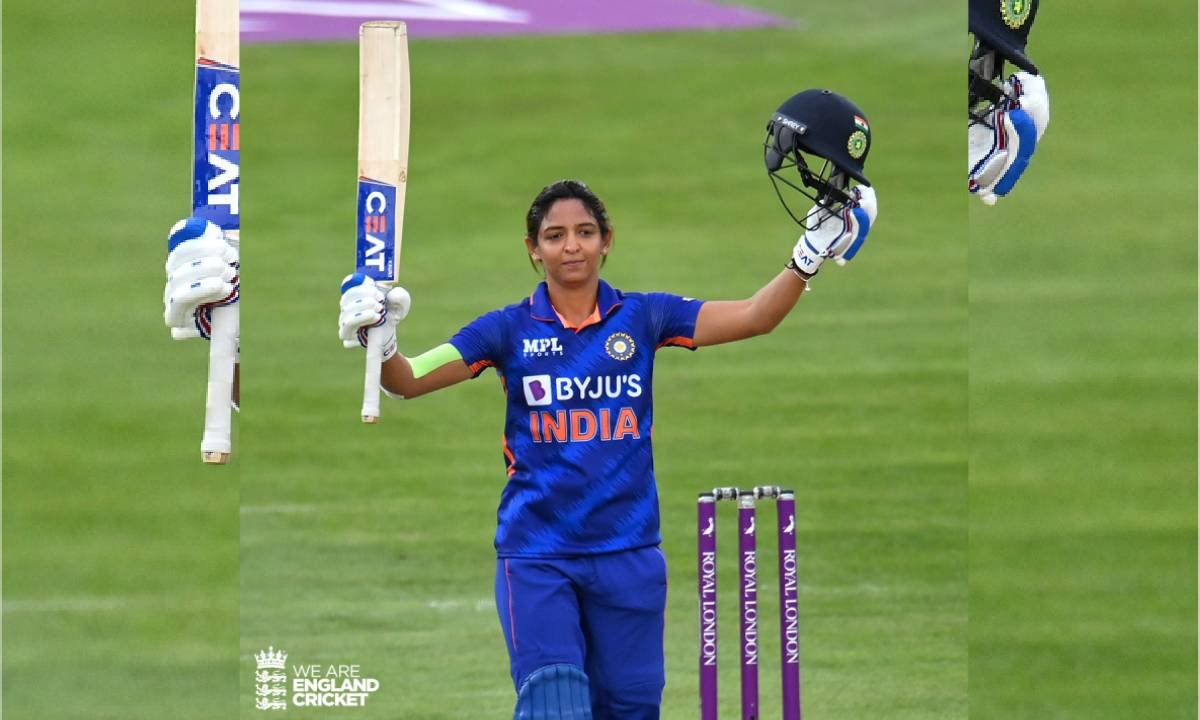
Indian skipper Harmanpreet Kaur has climbed up four spots to reach the fifth position in the latest ICC Women’s ODI Players Rankings after a match-winning 143 off 111 deliveries against England in the second ODI at Canterbury.
She leads a bunch of Indian players who have made rapid gains in the rankings after some excellent performances that helped complete a 3-0 sweep over England in their ICC Women’s Championship (IWC) series.
Smriti Mandhana and Deepti Sharma have also moved up in the latest update that considers performances in the last two matches of that series as well as the IWC series between the West Indies and New Zealand.
Mandhana, a formerly top-ranked batter, who scored 40 and 50 in the two matches, has inched up one place to take the sixth position while Sharma’s unbeaten 68 not out in the third match at Lord’s has lifted her eight places to 24th position.
Pooja Vastrakar (up four places to 49th) and Harleen Deol (up 46 places to 81st) are other India players to move up the batters’ list while new-ball bowler Renuka Singh has galloped 35 places to take 35th position after grabbing four wickets each in the two matches. Fast bowler Jhulan Goswami, a formerly top-ranked bowler, retired in the fifth position.
England’s Danny Wyatt, who scored 65 in the second match, has gained two slots to reach 21st position among batters while Amy Jones is up four places to 30th. Charlie Dean has progressed 24 places to get to 62nd among batters and one slot to 19th among bowlers.
West Indies captain Hayley Matthews has grabbed the No. 1 position for all-rounders in the ODI format for the first time in her career after aggregating 88 runs and grabbing five wickets in a 2-1 series win over New Zealand.
Mathews, who has been a top-ranked all-rounder in T20Is in the past, has also moved up three slots to 18th among batters and two places to sixth among bowlers. Lauren Down of New Zealand (up 15 places to 55th) is another batter to progress after the series while Hannah Rowe (up two places to 33rd), Amelia Kerr (up four places to 11th) and Jess Kerr (up one place to 21st) have moved up in the list for bowlers.
West Indies leg-spinner Afy Fletcher is now in 41st position. In the ICC Women’s T20I Player Rankings, Thailand’s Natthakan Chantham, who was named Player of the Match for a valiant 64 off 51 deliveries in the ICC Women’s T20 World Cup Qualifier 2022 semifinal against Bangladesh, has moved up two places to 14th position while Scotland captain Kathryn Bryce is up one place to 19th position.
Zimbabwe’s Sharne Mayers (up 18 places to 21st), United Arab Emirates’ Theertha Sathish (up nine places to 28th), Ireland’s Gaby Lewis (up one places to joint-29th, Papua New Guinea’s Brenda Tau (up nine places to 33rd) and Bangladesh’s Murshida Khatun (up 23 places to 36th) are among the others to move up the rankings for batters.
Off-spinners Nattaya Boochatham (up one place to 14th) of Thailand and Precious Marange (up five places to 29th) of Zimbabwe and Ireland medium-pacer Arlene Kelly (up 39 places to 39th) are among those to move up in the bowlers’ list.
While the recent report of United Nations Human Rights on China’s treatment of Uyghurs and other ethnic minorities in the Xinjiang region has brought global condemnation, most of the African countries were silent on it due to Beijing’s heavy economic clout in the second-biggest continent.
Cobus van Staden, a China-Africa expert at the South African Institute of International Affairs, said that because of China’s economic clout, most African countries simply don’t want to “pick a fight” over Xinjiang, which, to many, seems far away, reported all Africa.
“We’ve seen most African countries side with China, and this includes a lot of majority Muslim countries. … In terms of how the African partners will vote on the human rights council (if there is a vote), I tend to fear that they will probably vote with China,” he said.
There are reasons for this, he said. China is Africa’s biggest trade partner, far outstripping the West, and a lot of African countries “tend to be quite suspicious of separatist movements and quite suspicious of hardliners or political Islam.”
Nigeria, for example, has been plagued by hardliner Islamist groups, reported allAfrica.
The report, published by then-UN human rights chief Michelle Bachelet on her last day in office in August, said China’s actions against Uyghurs and others in the Xinjiang region “may constitute international crimes, in particular crimes against humanity,” citing abuses such as arbitrary detention in camps, torture and sexual violence.
However, China’s ambassador to the UN in Geneva, Chen Xu, delivered a joint statement on September 13, during the 51st session of the Human Rights Council, saying the Xinjiang assessment was “based on disinformation and draws erroneous conclusions.”
The statement was signed by 28 other countries, with close to half of the supporters from African countries such as Burundi, Cameroon, Comoros, Egypt, Equatorial Guinea, Guinea, Eritrea, Ethiopia, Sierra Leone, South Sudan and Zimbabwe, reported allAfrica.
Last year, out of 43 countries, only two in Africa, Eswatini and Liberia, signed a UN communique condemning China’s policies in Xinjiang. In June, they signed again, but they are rare outliers.
South Africa, the continent’s third-largest economy, neither signed the letter supporting China’s position nor staked out a position critical of China.
Analysts told VOA that South Africa – seen as the continent’s leading democracy – has simply mostly remained silent on the issue.
“South Africa, with its proud tradition as a shining example for human rights, struggles now, saying nothing about China’s apartheid,” said Magnus Fiskesjo, an associate professor at Cornell University’s Department of Anthropology, alluding to a system of discrimination and segregation that took place in South Africa from 1948 to 1994.
Analysts say some African countries can relate to China’s position, as stated by the state-run Xinhua news agency, that “Xinjiang-related issues are not about human rights, ethnicity or religion at all but about combating violent terrorism and separatism.” African nations, according to observers, are also unwilling to alienate China, their Belt and Road initiative benefactor and the source of massive infrastructure loans, reported allAfrica.
Egypt is among the Muslim countries in Africa that have supported China on the Uyghur issue, says Bradley Jardine, a political analyst who focuses on China and recently published a study for the Wilson Center on China’s global campaign against the Uyghurs.
“Across the Muslim world, it’s a very diverse region with very diverse strategic interests,” he said. “There are a lot of economic interests at play, particularly (with) actors such as Egypt, who in 2017 detained hundreds of Uyghur students and deported them to China.”
According to Jardine’s research, more than 1,500 Uyghurs abroad have been detained or extradited — many in North Africa.
Global fund Blackstone on Tuesday raised around USD 325 million (about Rs 2,650 crore) by selling its shares in Embassy Office Parks REIT to monetize part of its investment, according to sources.
Embassy Office Parks REIT is the country’s first Real Estate Investment Trust (REIT), which was launched last year by realty firm Embassy group and global investment firm Blackstone to raise nearly Rs 5,000 crore.
The REIT is listed on the stock exchange.
According to the sources, Blackstone raised USD 325 million (Rs 2,650 crore) by selling 7.7 crore shares/units in the REIT to institutional investors through block deals at Rs 345 per share.
Post this deal, Blackstone’s stake will come down to 24 per cent from around 32 per cent shareholding earlier.
As per the sources, Abu Dhabi Investment Authority (ADIA) and Kotak have bought shares in the block deal. ICICI Prudential, HDFC Life and Kotak Mutual Fund are among other buyers.
The Embassy Group has around a 15 per cent stake.
When contacted, Blackstone declined to comment. This is the third time Blackstone is monetizing its investment in Embassy REIT.
Blackstone has emerged as the most aggressive institutional investor in India with overall assets under management estimated to be at USD 60 billion across various sectors, making it one of the top 10 business groups in the country.
Real estate accounts for nearly USD 22 billion of this market value across over 40 investments.
Blackstone is the largest office owner in India with an office portfolio of around 100 million sq ft across 38 assets in 7 cities.
Of this, around 13 million sq ft offices are under construction and 16 million sq ft for future development.
It has created the Nucleus Office Parks platform with 22 million sq ft for hosting 100 percent-owned commercial assets.
The global fund also owns over 10 million sq ft of retail space under the Nexus Mall portfolio and 35.5 million sq ft of logistics space under Horizon Industrial Parks portfolio and Green base Industrial and Logistics Park.
The market value of Blackstone’s Real Estate India investments is around USD 22 billion.
Blackstone has launched two REITs in the country – Embassy REIT and Mindspace REIT. It has already exited from Mindspace REIT. Embassy REIT is India’s first publicly listed Real Estate Investment Trust. It owns and operates a 42.8 million square feet portfolio of eight infrastructure-like office parks and four city-center office buildings in India’s best-performing office markets of Bengaluru, Mumbai, Pune, and the National Capital Region (NCR).
Its portfolio comprises 33.8 million square feet of the completed operating area. The portfolio also comprises strategic amenities, including four operational business hotels, two under-construction hotels and a 100 MW solar park supplying renewable energy to tenants.
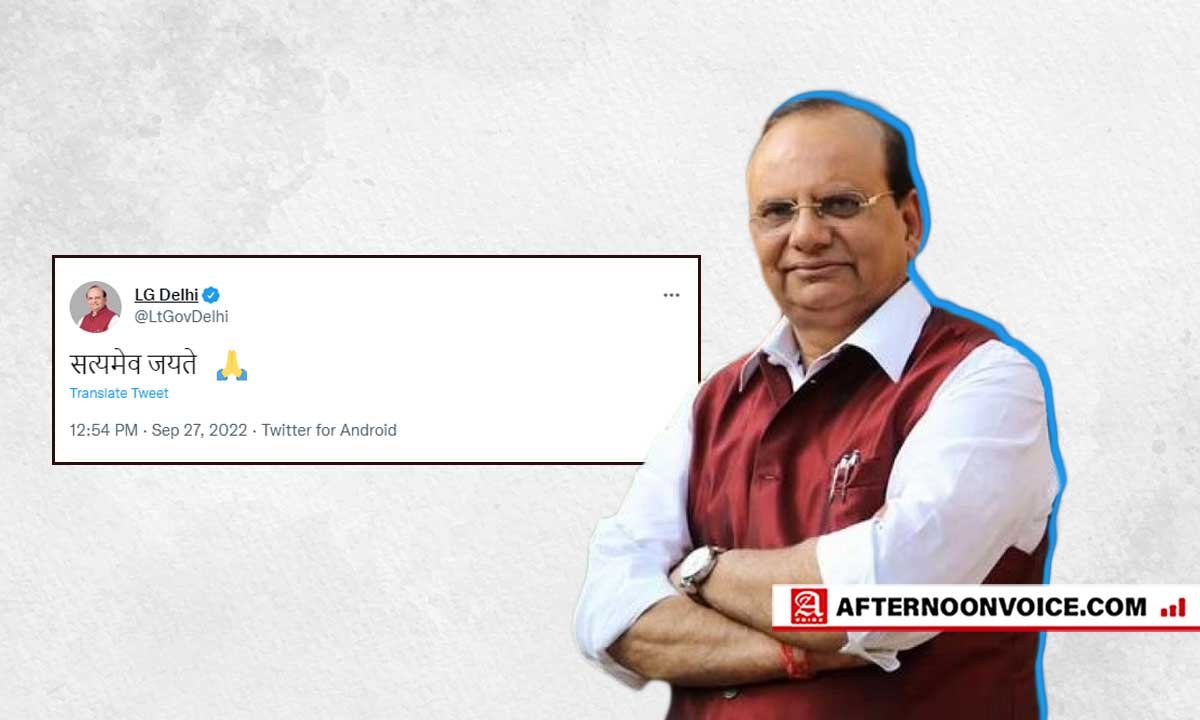
HC restrains AAP from levelling charges against Delhi LG, he tweets 'Satyameva Jayate' 9
Delhi Lieutenant Governor V K Saxena tweeted “Satyameva Jayate” (truth alone triumphs), soon after the High Court on Tuesday restrained the AAP and several of its leaders from levelling ”false” allegations against him.
The Delhi High Court also directed the Aam Aadmi Party leaders to remove their alleged libellous posts, videos, and tweets against Saxena on social media.
The AAP leaders had alleged that Saxena had received and channelized demonetized currency in November 2016 while acting as chairman of the Khadi and Village Industries Commission (KVIC). The party had alleged that Saxena was involved in a Rs 1,400 crore scam.
Saxena had sent legal notices to AAP leaders Sanjay Singh, Atishi, Saurabh Bhardwaj, Durgesh Pathak, and Delhi Dialogue and Development Commission vice-chairperson Jasmine Shah.
He also sought damages and compensation of Rs 2.5 crore along with interest from the political party and its five leaders.
Saxena came under fierce attack by the AAP over his frequent run-ins with the Arvind Kejriwal government over a host of issues, including his decision to recommend a CBI probe into alleged irregularities in the implementation of Excise Policy 2021-22.
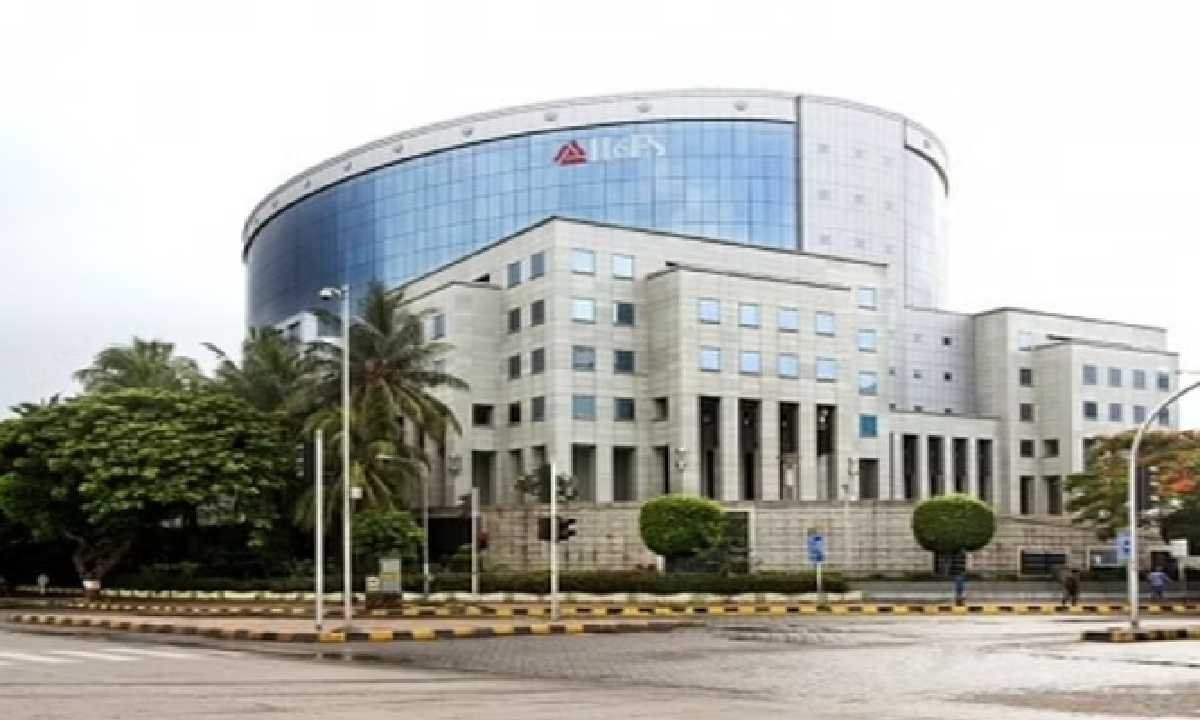
The government has reshuffled the board of IL&FS Ltd, which is undergoing debt resolution process, with existing board member C S Rajan being redesignated as the Non-Executive Chairman. Nand Kishore, who was serving as an executive director, has been made the Managing Director, according to the company.
In the wake of financial misdoings coming to light, the corporate affairs ministry had superseded the board of IL&FS in October 2018.
The sprawling financial services group has 347 entities under it and resolution has taken place for 246 entities after the ministry-appointed board started the resolution process.
The term of noted banker Uday Kotak, who helmed the resolution process for nearly four years, as the IL&FS Ltd board’s Non-Executive Chairman ended on April 2. Since then, Rajan was serving as Chairman and Managing Director.
Now, the ministry has redesignated Rajan as the Non-Executive Chairman and Kishore as the Managing Director. The latest appointments with immediate effect are till March 2023. “We have been informed by the Ministry of Corporate Affairs of these changes,” an IL&FS spokesperson said on Tuesday.
Currently, the board has five members. Besides Rajan and Kishore, the directors are G C Chaturvedi, Malini Shankar and N Srinivasan.
Chaturvedi will step down from the board on September 30. Earlier, the ministry had appointed Rajan as Chairman and Managing Director for six months with effect from April 3.
In March, IL&FS said its new board and management had addressed a total debt of Rs 55,000 crore.
“The group retained its overall resolution estimate at Rs 61,000 crore, representing 62 per cent of overall fund-based and non-fund based debt of over Rs 99,000 crore as of October 2018. The debt addressed till date (Rs 55,000 crore) represents over 90 per cent of the overall estimated resolution value. “Resolution of the remaining Rs 6,000 crore debt will move into FY23,” it had said.
A 36-year-old man allegedly stabbed his estranged wife to death in the eastern suburb of Chembur here, in a dispute over custody of their child, police said on Tuesday.
The police arrested the accused Iqbal Sheikh, a taxi driver, in the early hours of the day, an official from Tilak Nagar police station said.
Sheikh had allegedly called his wife Zara (20) to meet him on Monday morning to have a talk. But when the victim reached the spot, he attacked her multiple times with a sharp weapon and killed her on the spot, he said.
The couple had gotten married in 2019 and had a two-year-old child. The victim was seeking a divorce and the accused wanted the custody of the child, the official said.
The accused has been arrested under section 302 (murder) of the Indian Penal Code and further probe is underway, he added.
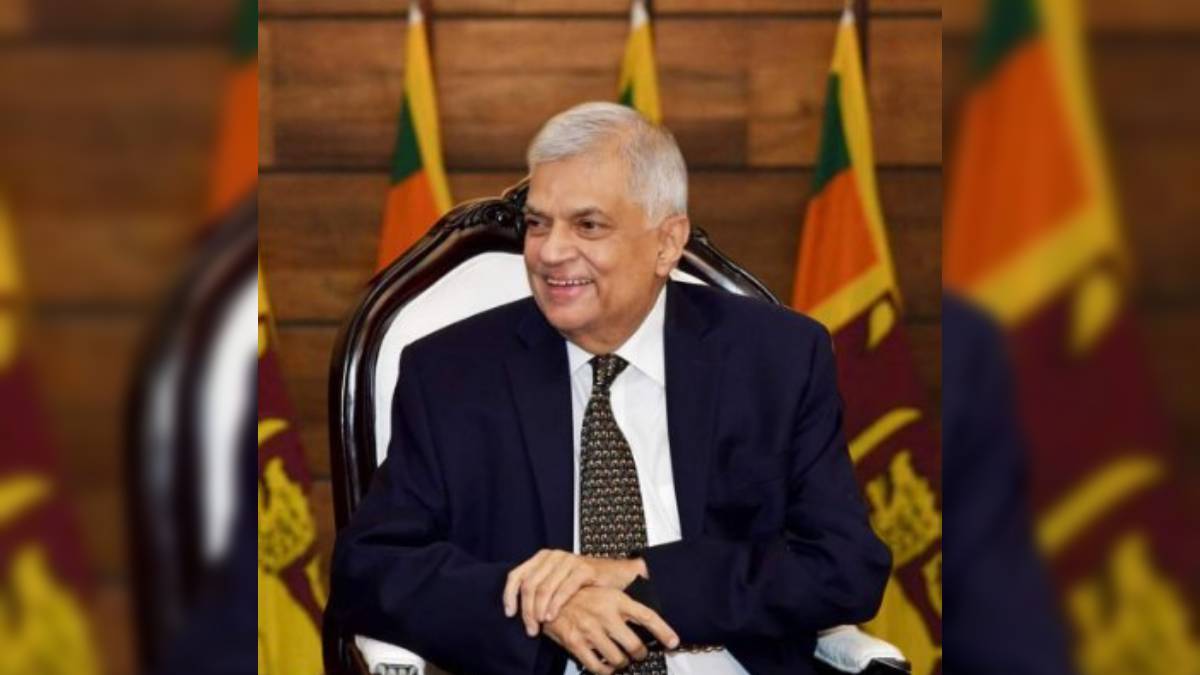
Sri Lankan President Ranil Wickremesinghe on Tuesday said his government will back the bids of India and Japan for permanent member status at the UN Security Council.
President Wickremesinghe is currently in Japan to attend the state funeral of the former Japanese prime minister Shinzo Abe.
During a meeting with Japanese foreign minister Yoshimasa Hayashi on Tuesday, Wickremesinghe “appreciated the support extended by Japan (to Sri Lanka) on the international stage and expressed the government’s willingness to support both Japan’s and India’s campaign to become permanent members of the UN Security Council”, the President’s office said in a press release.
India has been at the forefront of the years-long efforts to reform the Security Council saying it rightly deserves a place as a permanent member of the UN body, which in its current form does not represent the geo-political realities of the 21st century.
At present, the UNSC comprises five permanent members and 10 non-permanent member countries which are elected for a two-year term by the General Assembly of the United Nations.
The five permanent members are Russia, the UK, China, France and the US and these countries can veto any substantive resolution. There has been growing demand to increase the number of permanent members to reflect the contemporary global reality.
India is currently halfway through the second year of its two-year term as an elected non-permanent member of the UN Security Council.
India’s tenure at the Council will end in December when the country will also preside as President of the powerful UN organ for the month.
On Saturday, External Affairs Minister S Jaishankar, addressing the General Debate of the 77th session of the UN General Assembly, emphasised that India is prepared to take up greater responsibilities.
The call for reformed multilateralism – with reforms of the Security Council at its core – enjoys considerable support among UN members, he said.
“It does so because of the widespread recognition that the current architecture is anachronistic and ineffective. It is also perceived as deeply unfair, denying entire continents and regions a voice in a forum that deliberates their future,” Jaishankar said.
Meanwhile, President Wickremesinghe’s office said Japan has expressed willingness to take a lead role in Sri Lanka’s debt restructuring, which is vital for the island’s bid to gain a bailout facility from the International Monetary Fund.
The IMF had expressed readiness to enter a staff-level agreement with Sri Lanka conditional to debt restructuring.
In mid-April, Sri Lanka declared its international debt default due to the forex crisis. The country owes USD 51 billion in foreign debt, of which USD 28 billion must be paid by 2027.
The IMF does not lend to countries whose debt is deemed unsustainable, requiring Sri Lanka to undertake an upfront comprehensive debt treatment.
Both India and Japan are major creditors of Sri Lanka, besides China and the Asian Development Bank (ADB).
Sri Lanka is banking on Japan to organise a debt restructuring conference on its behalf.
Wickremesinghe has also indicated that he was keen to revive halted Japanese projects in Sri Lanka, officials said.