Home Blog Page 433

Tea consumption may lower risk of developing type 2 diabetes: Study

tea consumption, tea, diabetes, Oolong tea, green tea, black tea,
Image: Pixabay

According to a study of over 1 million adults from eight countries, moderate use of black, green, or Oolong tea is associated with a lower risk of developing type 2 diabetes. The findings, being presented at this year’s European Association for the Study of Diabetes (EASD) Annual Meeting in Stockholm, Sweden (19-23 Sept), suggest that drinking at least four cups of tea a day is associated with a 17 per cent lower risk of T2D over an average period of 10 years.

“Our results are exciting because they suggest that people can do something as simple as drinking four cups of tea a day to potentially lessen their risk of developing type 2 diabetes”, says lead author Xiaying Li from Wuhan University of Science and Technology in China. While it’s long been known that regularly drinking tea may be beneficial for health because of the various antioxidant, anti-inflammatory and anticarcinogenic compounds tea contain, less clear has been the relationship between tea drinking and the risk of T2D. So far, published cohort studies and meta-analyses have reported inconsistent findings.

To address this uncertainty, researchers conducted a cohort study and a dose-response meta-analysis to better define the relationship between tea consumption and future T2DM risk. First, they studied 5,199 adults (2583 men, 2616 women) with no history of T2D (average age 42) from the China Health and Nutrition Survey (CHNS), who were recruited in 1997 and followed until 2009. The CHNS is a multicentre prospective study looking at the economics, sociological issues and health of residents from nine provinces.

At the outset, participants filled in food and drink frequency questionnaires and provided information on lifestyle factors such as regular exercise, smoking and alcohol consumption. Overall, 2,379 (46%) participants reported drinking tea, and by the end of the study, 522 (10%) participants had developed T2D. After adjusting for factors that are known to be linked with increased risk of T2D, like age, sex, and physical inactivity, researchers found that tea drinkers had a similar risk of developing T2D compared to non-drinkers. And the results did not change significantly when analysed by age and sex, or when participants who developed diabetes during the first 3 years of follow-up were excluded.

In the next step of the study, the researchers did a systematic review of all cohort studies investigating tea drinking and the risk of T2D in adults (aged 18 or older) up to September 2021. Overall, 19 cohort studies involving 1,076,311 participants from eight countries [1] were included in the dose-response meta-analysis. They explored the potential impact of different types of tea (green tea, oolong tea, and black tea), frequency of tea drinking (less than 1 cup/day, 1-3 cups/day, and 4 or more cups/day), sex (male and female), and the location of the study (Europe and America, or Asia), on the risk of T2D.

Overall, the meta-analysis found a linear association between tea drinking and T2D risk, with each cup of tea consumed per day reducing the risk of developing T2D by around 1%. When compared with adults who didn’t drink tea, those who drank 1-3 cups daily lowered their risk of T2D by 4%, while those who consumed at least 4 cups every day reduced their risk by 17%.

The associations were observed regardless of the type of tea participants drank, whether they were male or female, or where they lived, suggesting that it may be the amount of tea consumed, rather than any other factor, that plays a major role. “While more research needs to be done to determine the exact dosage and mechanisms behind these observations, our findings suggest that drinking tea is beneficial in reducing the risk of type 2 diabetes, but only at high doses (at least 4 cups a day)”, says Li.

She adds, “It is possible that particular components in tea, such as polyphenols, may reduce blood glucose levels, but a sufficient amount of these bioactive compounds may be needed to be effective. It may also explain why we did not find an association between tea drinking and type 2 diabetes in our cohort study because we did not look at higher tea consumption.” Oolong tea is a traditional Chinese tea that’s made from the same plant used to make green and black teas. The difference is how the tea is processed–green tea is not allowed to oxidise much, black tea is allowed to oxidise until it turns black, and oolong tea is partially oxidised.

Despite the important findings, the authors note that the study is observational and cannot prove that drinking tea reduced the risk of T2D, but suggests that it is likely to contribute. And the researchers point to several caveats, including that they relied on subjective assessments of the quantities of tea consumed and they cannot rule out the possibility that residual confounding by other lifestyle and physiological factors may have affected the results.
Delhi LG orders FIR against DJB, pvt bank officials over Rs 20 cr ’embezzlement’

v k saxena, saxena, vk, delhi, lt governor, delhi bank
Image: PTI

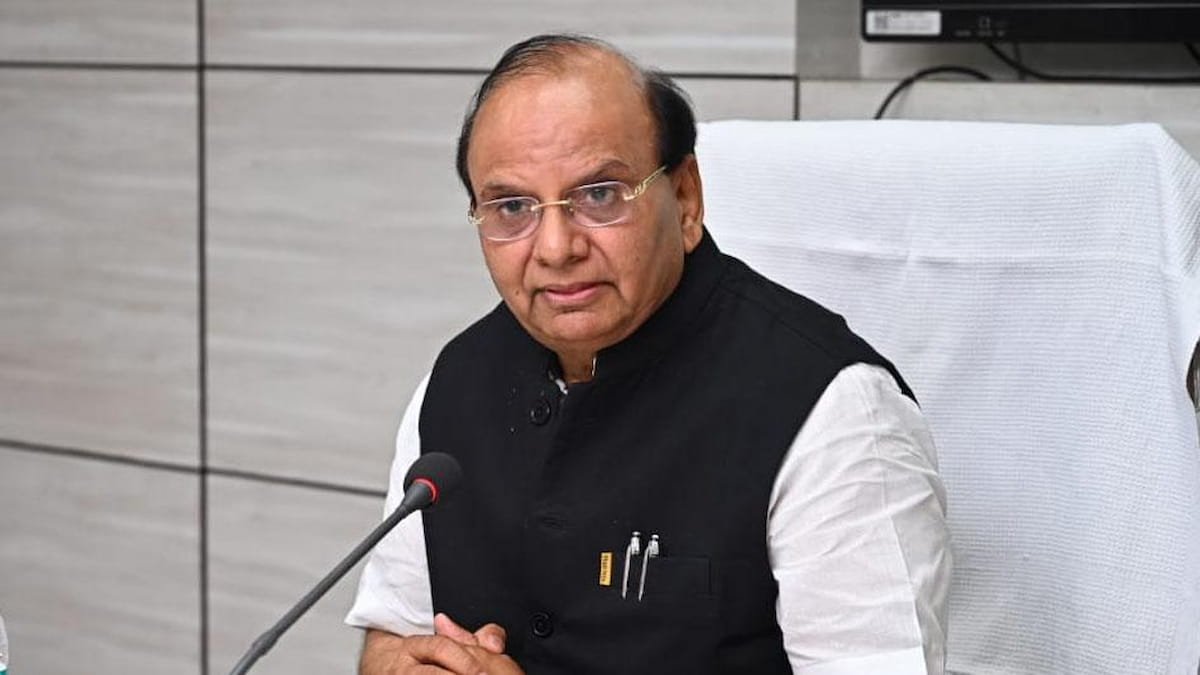
Delhi Lt Governor V K Saxena has ordered an FIR to be lodged against officials of the Delhi Jal Board (DJB), a bank, and a private company for allegedly embezzling Rs 20 crore in water bills, sources at LG office said on Saturday.

No reaction from the Delhi government or DJB was available immediately. According to the sources, the matter had first come to light in 2019 with the allegation that Rs 20 crore collected in water bills from consumers was not deposited in the bank account of DJB.

Despite the allegations, the contract of the company involved in the collection of bills, which it did in cash and cheques, was extended, they claimed. The LG has directed the Chief Secretary to have an FIR lodged in the matter against the DJB and bank officials after identifying them, as well as the private entities involved, sources said.

He also asked the officers to ensure the recovery of the funds at the earliest, they said. The LG has sought an action taken report in the matter within 15 days, they added.

Maha minister slams Thackeray, says MVA govt did not function as per Sena founder’s principles

Dada Bhuse
Image: PTI

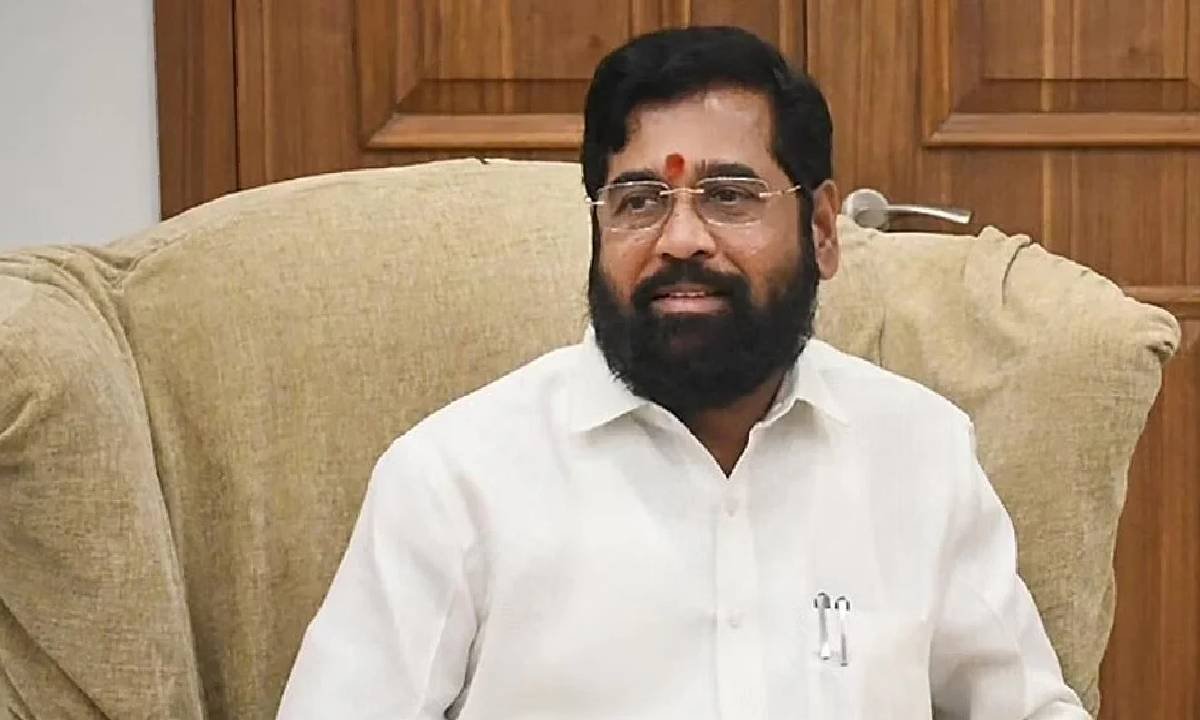
Maharashtra Minister Dada Bhuse criticised former chief minister Uddhav Thackeray claiming that the Maha Vikas Aghadi (MVA) government led by him did not function as per the principles of Shiv Sena founder Bal Thackeray.

Bhuse was addressing the Hindu Garva Garjana Samparka Yatra of the Shiv Sainiks (Eknath Shinde faction) at Thane and Dombivili on Friday.

During its two-and-half-year governance, the MVA government did not function as per the principles and teachings of the late Shiv Sena founder, Bhuse said, claiming that only the Congress and NCP had benefitted from the alliance.

The Shiv Sena witnessed a bitter split in June this year. Shinde, who had led a rebellion within the party ranks, was sworn-in as the chief minister on June 30 with the support of the BJP.

NCP seeks action against Shinde faction leader for sharing ‘morphed’ photo of Supriya Sule sitting on CM chair

Sheetal Mhatre, Twitter, Controversy, Supriya Sule
NCP seeks action against Shinde faction leader for sharing 'morphed' photo of Supriya Sule sitting on CM chair 5

The Nationalist Congress Party on Saturday accused the spokesperson of the Eknath Shinde-led Shiv Sena faction of sharing a “morphed” photo of Baramati MP Supriya Sule sitting on the chief minister’s chair, and urged the Mumbai police to take action.

Incidentally, the NCP had on Friday accused Lok Sabha member Shrikant Shinde, son of Chief Minister Eknath Shinde, of sitting in a chair meant for his father, although the parliamentarian from Kalyan had claimed that the picture had been taken at the office at their private residence.

Sheetal Mhatre, who is the spokesperson of the Shinde-led Sena faction, tweeted a photo of NCP MP Sule sitting on the chief minister’s chair. In the post, Mhatre also asked “Look who is sitting on the chief minister’s chair”. The photo shows Sule sitting on a chair and behind her there is a board with “Maharashtra Government – Chief Minister” written on it. It also shows her being flanked by former ministers and NCP leaders Dilip Walse Patil and Rajesh Tope.

Mhatre also posted a picture of Yuva Sena leader Varun Sardesai attending a meeting chaired by the then chief minister Uddhav Thackeray at the state secretariat.

Accusing Mhatre of posting a morphed picture, the NCP urged the Mumbai police’s cyber cell to take action.

Ravikant Varpe, a state spokesman of the NCP, accused Mhatre of maligning the image of Supriya Sule and asked the police to act against her. He tagged the Mumbai police in his tweet.

Aditi Nalawade, an NCP functionary and close aide of Supriya Sule, posted a tweet in which she asked Mhatre to be original. “Be original. Copies fail too fast,” she said.

She also posted some pictures saying Walse Patil and Tope had attended a virtual meeting of COVID management called by PM Modi from Mantralaya, while former CM Uddhav Thackeray participated from Varsha, the official residence.

Nalawade also said that Sule’s original picture was from one of the NCP functions.

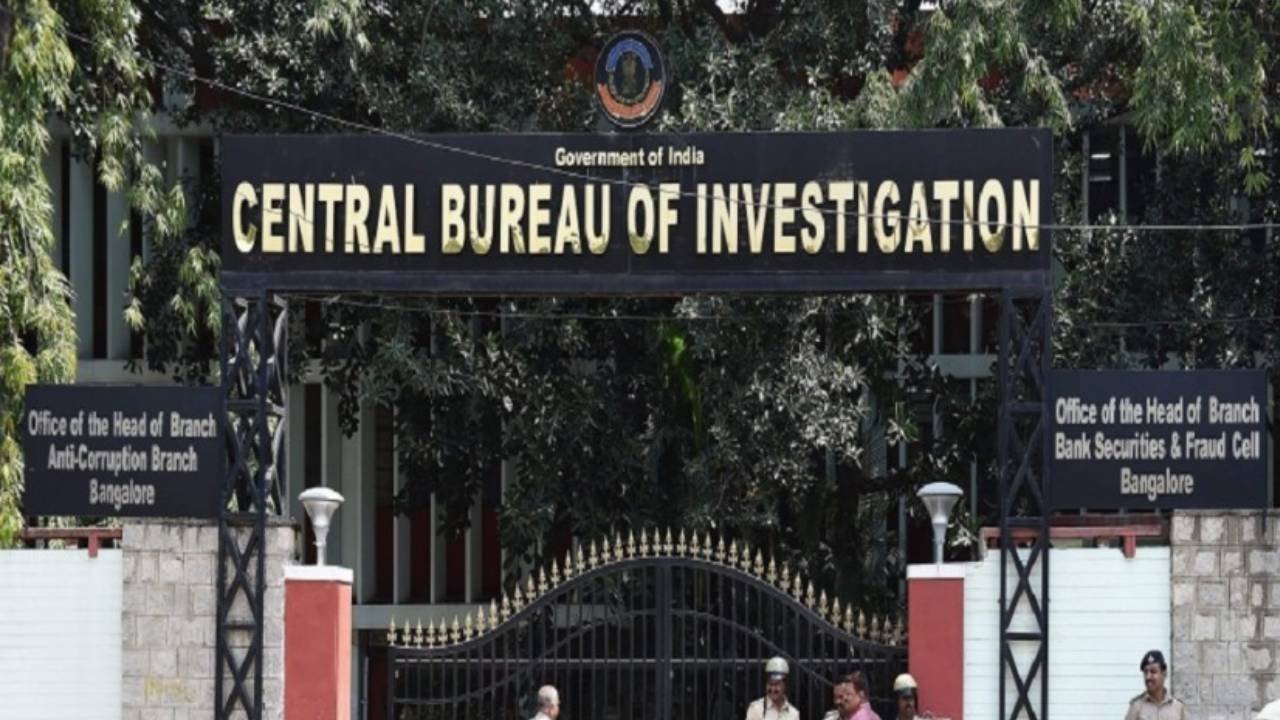
CBI cracks down against child sex abuse material, raids 56 locations across country

CBI, Child Abuse
Image: PTI / Image for representative purpose

The CBI on Saturday carried out searches at 56 locations in 19 states and a Union Territory in connection with two cases of circulation of Child Sexual Abuse Material (CSAM) online as part of Operation ‘Megha Chakra’, officials said.

The searches were based on inputs from Interpol Singapore and intelligence obtained during last year’s Operation Carbon, conducted against peddlers of CSAM on the Internet using cloud storage, they said.

The operation is targeted at cloud storage facilities used by the peddlers to circulate audio-visuals of illicit sexual activities with minors, thus earning the code ‘Megha Chakra’.

The agency, being the first agency to set up a cyber crime unit, has hit CSAM peddlers across India, an official said.

US revokes designation of Afghanistan as major non-NATO ally

joe baidan
US revokes designation of Afghanistan as major non-NATO ally 8

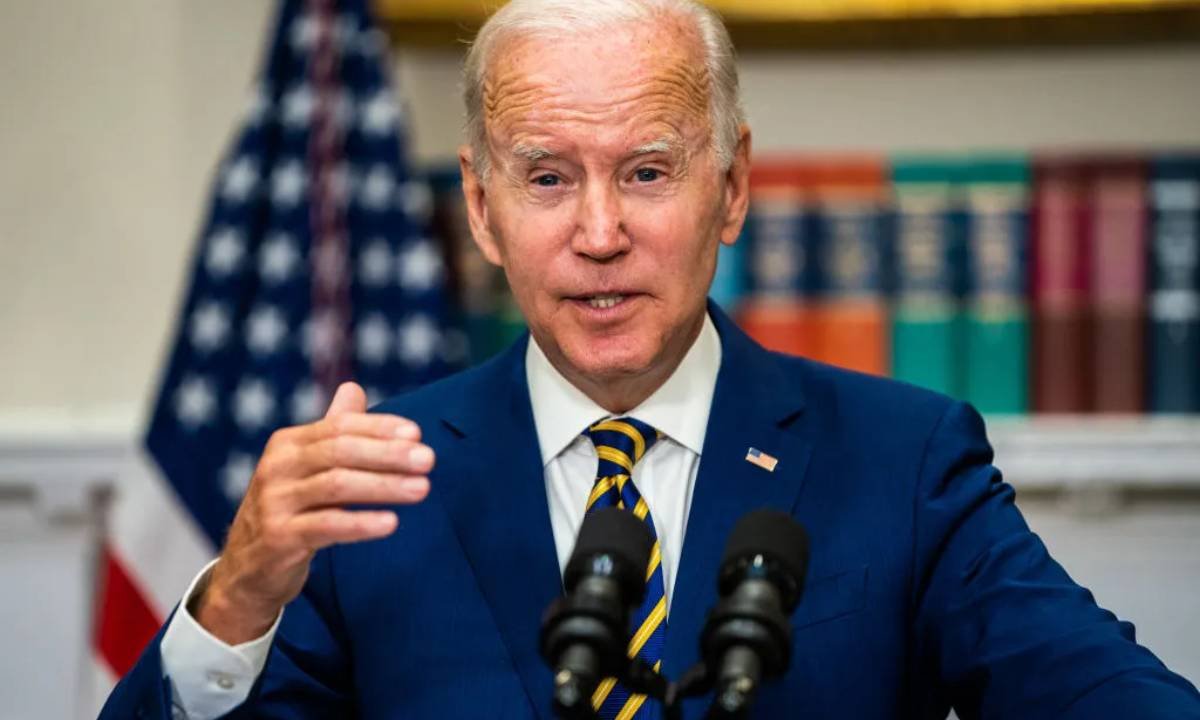
Over a year after the Taliban overthrew the democratically elected government in Kabul, the United States has rescinded the designation of Afghanistan as a major non NATO ally. The United States named Afghanistan a major non-NATO ally in July 2012, which paved the way for the two sides to maintain economic and defence ties. It also helped Kabul with defence and security-related aid and equipment.

“By the authority vested in me as President by the Constitution and the laws of the United States of America, including section 517 of the Foreign Assistance Act of 1961, as amended (22 U.S.C. 2321k) (the “Act”), I hereby terminate the designation of Afghanistan as a Major Non-NATO Ally of the United States for the purposes of the Act and the Arms Export Control Act,” US President Joe Biden said in a presidential order. In July, Biden notified the US Congress of his intent to rescind the designation of Afghanistan as a major non-NATO ally. 

“In accordance with section 517 of the Foreign Assistance Act of 1961, as amended (22 U.S.C. 2321k), I am providing notice of my intent to rescind the designation of Afghanistan as a Major Non-NATO Ally,” Biden said in an earlier letter.

Maharashtra govt appoints TISS to study status of Muslims, Rs 33.92 lakh allotted for project

Eknath Shinde, Shiv sena, maharashtra, OBC, Maratha, Dhangar ,Maharashtra Government, Pandemic, Covid-19, Corona virus
Image: PTI

In order to bring the Muslim community into the mainstream of economic development in the state, the Maharashtra government has appointed the Tata Institute of Social Sciences (TISS) to do a status study of Muslims to bring them into the mainstream of development.

The state government said that a total of Rs 33.92 lakh has been allocated for the study of the project.

“In order to bring the Muslim community into the mainstream of economic development in the state of Maharashtra, by studying the educational, economic and social status of the Muslim community and taking into account the constraints of geographical areas, suggest measures to increase participation in the important sectors of the economy,” the government statement reads.

Moreover, the TISS and government have appointed officials to work on the project.

“Of workers in the region, the Tata Social Research Council, Mumbai has enumerated 56 workers among the six regional revenue commissioners of the state of Maharashtra,” it said.

To study the social, educational and economic conditions of the Muslim community in cities, interviews and community surveys are to be studied and presented.

“Administrative approval is being given to the said study group with a total amount of Rs 33,92,040 including financial sanction,” it added.

Noida police caution religious leaders, citizens ahead of festive season

Delhi Police, Noida
Image for representative purpose

Ahead of the festive season, the Noida police have held a meeting with religious leaders along with eminent citizens and asked them to report any anti-social activity or mischievous post on social media immediately.

They have also been told not to hold any event without permission in the coming days.

The meeting was held on Friday on the instructions of Police Commissioner Alok Singh, according to an official statement.

During the meeting, Additional Deputy Commissioner of Police (Noida) Ashutosh Dwivedi exhorted the religious leaders and citizens to support the police in maintenance of law and order.

“He appealed to them to avoid any kind of rumours. The religious leaders were also asked to avoid any kind of event without permission and use of loudspeakers in compliance with the directions of the Supreme Court,” the police said.

“He also warned of action against those spreading false rumours on social media. He sought cooperation of the religious leaders and citizens in reporting anti-social elements engaged in spreading false rumours so that action could be taken immediately,” the police added.

The police have heightened vigil as the nine-day long Sharad Navratri begins this Sunday, while Dussehra, Maharishi Valmiki Jayanti, Milad un-Nabi, Karwa Chauth and Diwali will be celebrated in October.

Rohit Sharma becomes batter with most sixes in T20I cricket

Rohit Sharma 1 1
Rohit Sharma becomes batter with most sixes in T20I cricket 12

Indian skipper Rohit Sharma now has the most sixes in the history of T20I cricket. The attacking batter accomplished this feat during his side’s second T20I against Australia in Nagpur on Friday. Rohit Sharma hit a delightful unbeaten 46 of 20 balls in the match, helping the Men in Blue reach the 91-run target in a rain-truncated match reduced to eight overs per side. His inning was decorated with four boundaries and four sixes.

 Now Rohit has a total of 176 sixes in T20I cricket. In second place is New Zealand opener Martin Guptill (172). They are followed by West Indies legend Chris Gayle (124), former England skipper Eoin Morgan (120) and Australian veteran Aaron Finch (119).

Rohit has scored 3,677 runs in 138 matches across 130 innings in T20I cricket, with four centuries and 28 half-centuries at an average of 32.53. Out of these 3,677 runs, 1,056 runs have come using sixes. That means, 28.71 per cent of Rohit’s runs have been made by sending the ball into the skies.

Gangster Sube Singh Gujjar’s illegally built house demolished in Manesar

home demolishing
Representative Image

Illegally built house of Gangster Sube Singh Gujjar was demolished by the Municipal Corporation in Manesar on Thursday. The four-storey building was seen coming crashing down on the land.

The alleged house owner is Sube Singh Gujjar, a gangster who is presently lodged in Bhondsi jail, police said. The property was valued at Rs 4 crore and was demolished as part of a first-of-its-kind drive to raze down illegal properties of gangsters, in accordance with orders from the state government, a police official informed. Gujjar is a close aide of gangster Kaushal who was arrested from the Indira Gandhi International (IGI) Airport on May 1, 2021. 

He was wanted in more than 42 criminal cases, including murder, attempt to murder and extortion in Gurugram, Delhi, Palwal, Nuh and Rewari.

A Rs 7.60 lakh bounty was also declared for information leading to his arrest. Kaushal and Gujjar parted ways following a financial dispute. Gujjar allegedly started targeting Kaushal’s extortion racket and took over his gang after he was arrested. Gujjar was declared a proclaimed offender by a district court in April 2018

In April 2018, Gujjar was declared a proclaimed offender by a district court. He owns two plots, one of 1.3 acres in Bar Gujjar village near Manesar, and another of 0.8 acres in the Manesar industrial area. 

The district administration tried to auction the properties twice in 2019 and 2021 but no buyers expressed interest. After Gujjar absconded from Gurugram in 2016, officials stated that he lives and operated from Nepal for over 18 months. 

He involved extorting money from traders, jewellers, sweet shop owners, bakery owners, prominent transporters and industrialist Faridabad police demolished the properties of a gangster last week who illegally encroached on lands, and built houses and slums..