Punjab Floods Claim 29 Lives, Displace Over 2.5 Lakh in a Month 2
Punjab has been devastated by floods that have claimed 29 lives and impacted more than 2.56 lakh people in the past month, officials confirmed on Monday. Pathankot reported the maximum fatalities, while 12 of the state’s 23 districts have been ravaged since August 1 in what authorities describe as one of the worst flood disasters in decades.
The calamity stems from the swollen Sutlej, Beas, and Ravi rivers, along with seasonal rivulets, after heavy rains lashed Himachal Pradesh and Jammu & Kashmir. Punjab’s own torrential downpours have worsened the crisis, submerging farmlands and villages.
Of the 29 deaths, six were reported in Pathankot. Amritsar, Barnala, Hoshiarpur, Ludhiana, Mansa, and Rupnagar recorded three deaths each, while Bathinda, Gurdaspur, Patiala, Mohali, and Sangrur reported one each. Three people remain missing in Pathankot.
Rescue efforts have been massive, with 15,688 people evacuated to safer zones. Gurdaspur saw the highest rescues (5,549), followed by Ferozepur (3,321), Fazilka (2,049), and Amritsar (1,700). Villages have been badly hit, with 1,044 affected statewide—321 in Gurdaspur, 88 in Amritsar, 94 in Hoshiarpur, and 82 in Pathankot among the worst-hit.
In total, 2,56,107 residents have been impacted. Amritsar tops the list with 35,000 affected, followed by Ferozepur (24,015), Fazilka (21,562), and Pathankot (15,053). Meanwhile, 96,061 hectares of farmland lie submerged, threatening massive agricultural losses.
Authorities report significant livestock casualties, though final figures will emerge only after waters recede. Infrastructure damage is also expected to be substantial.
The state machinery, assisted by the NDRF, SDRF, Army, and Punjab Police, continues round-the-clock rescue and relief operations. Twenty NDRF teams are currently active in Pathankot, Gurdaspur, Amritsar, Ferozepur, Fazilka, and Bathinda.
Bombay HC Orders Eviction of Maratha Quota Protesters from All Areas Except Azad Maidan 4
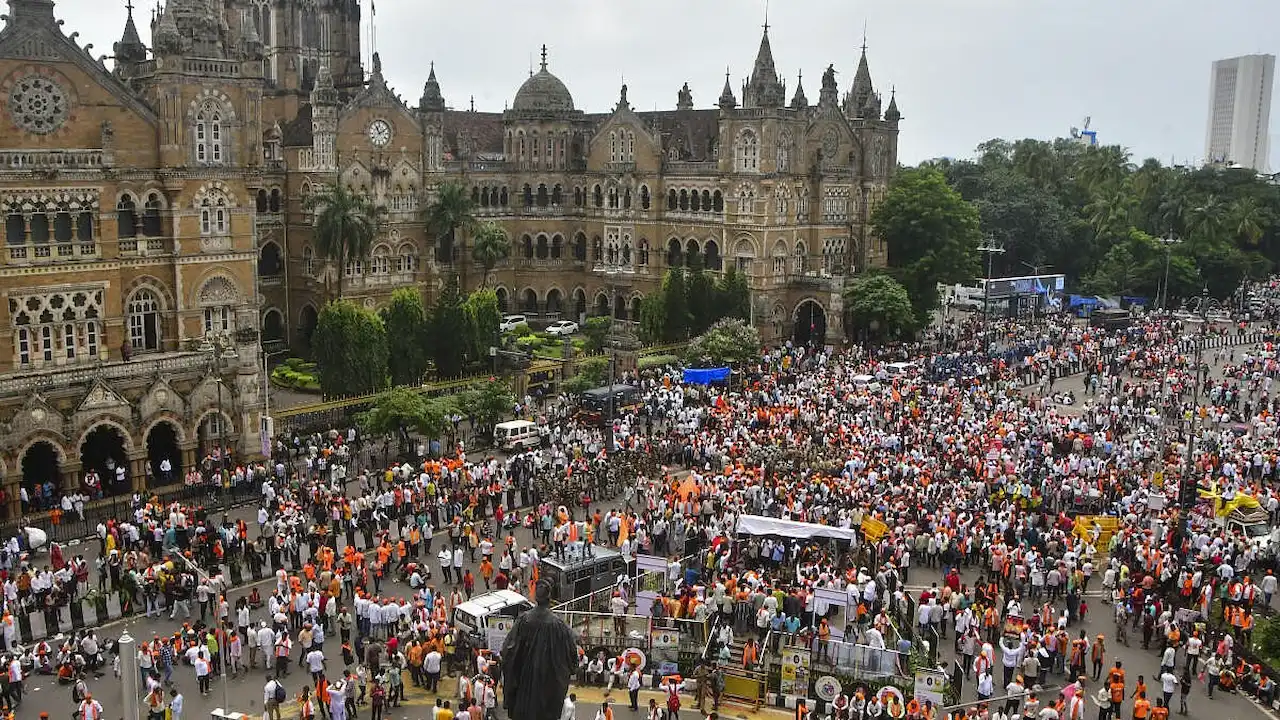
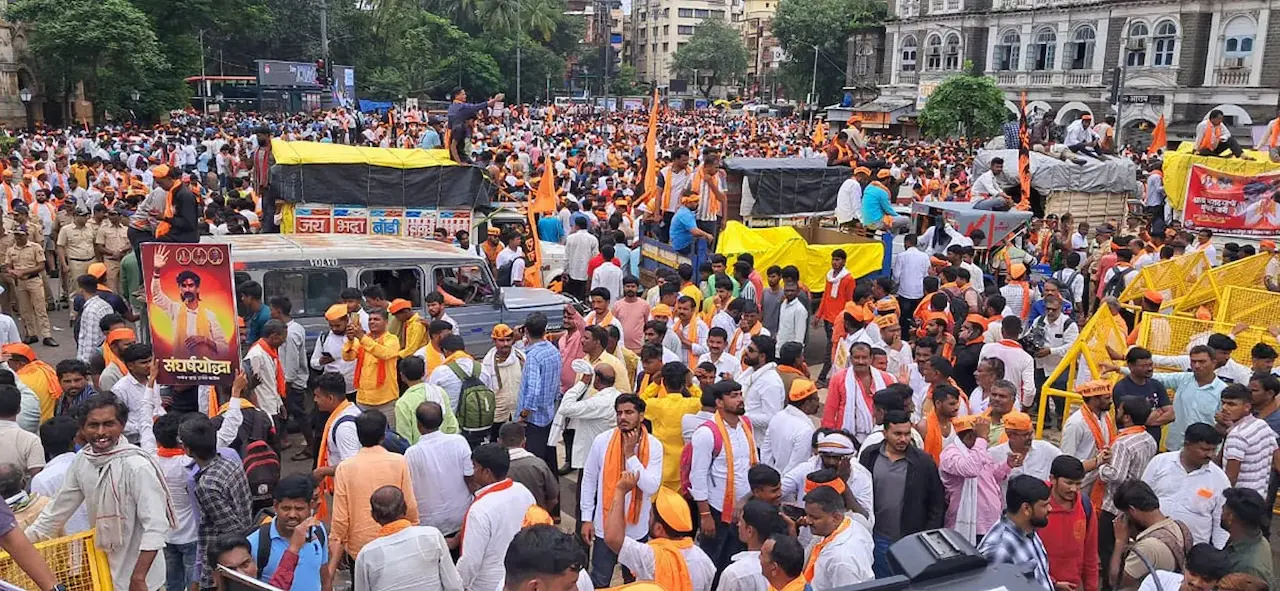
The Bombay High Court on Monday directed the Maharashtra government to evict Maratha quota protesters from all locations in Mumbai except Azad Maidan. The Court observed that the agitation had brought the city to a standstill, noting that permission had been granted for only 5,000 participants, but the number of demonstrators had far exceeded that. It further highlighted that no approval was given for an indefinite strike.
The Court will hear the case again on Tuesday and has asked the state government to provide details of the steps taken to control the situation.
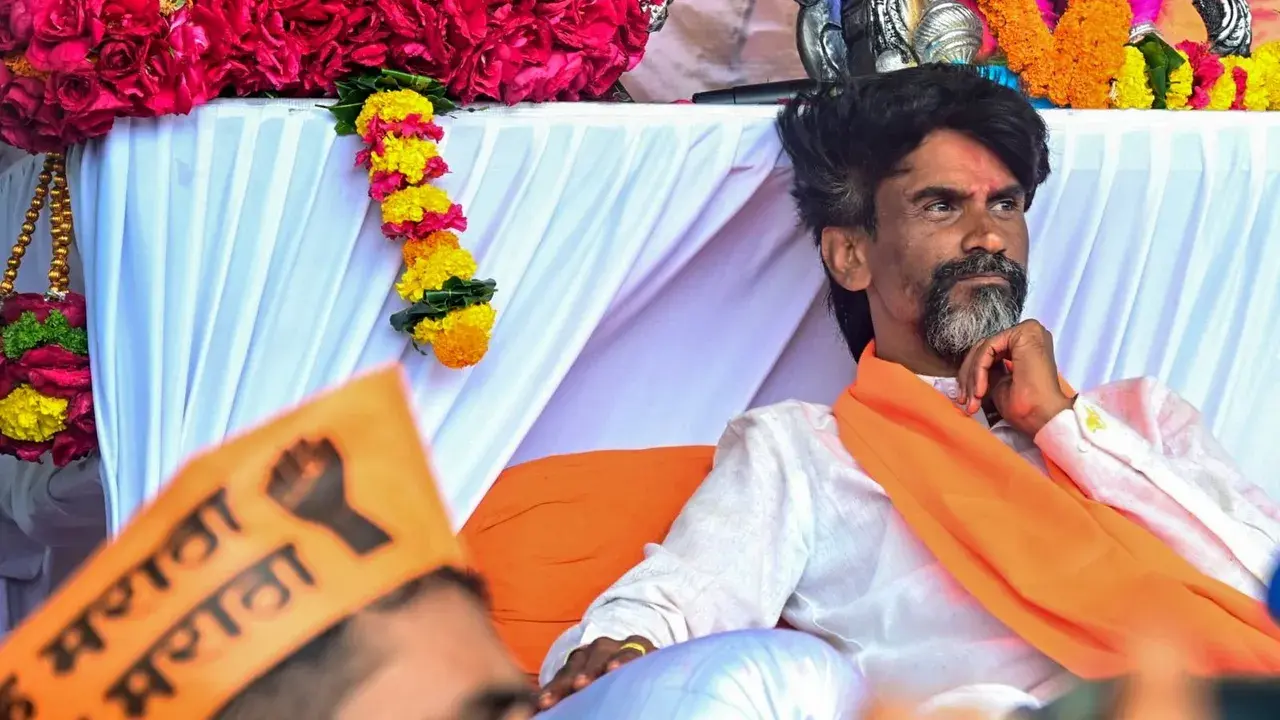
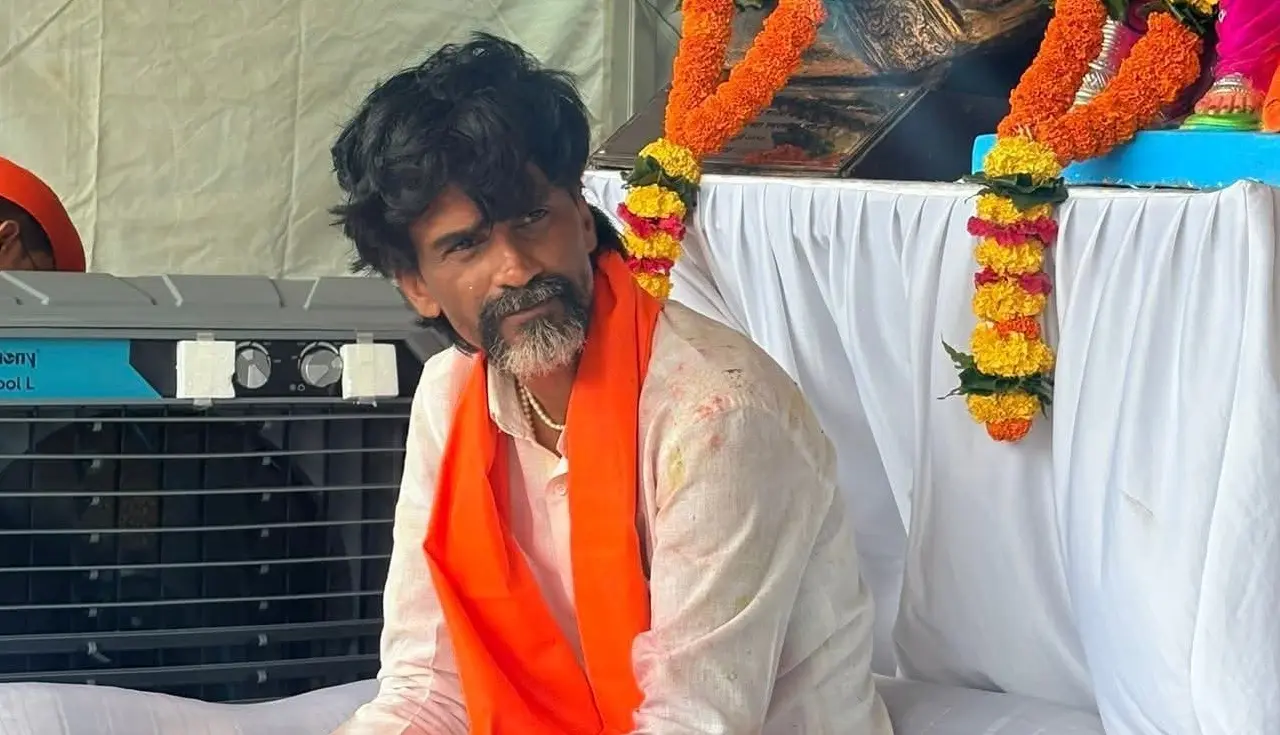
Meanwhile, activist Manoj Jarange, spearheading the protest at Azad Maidan, warned that more than five crore Marathas would march to Mumbai if Chief Minister Devendra Fadnavis fails to accept the community’s quota demand. Accusing the CM of deliberately stalling the decision, Jarange asserted that the government could easily resolve the matter by implementing gazette records from Hyderabad, Satara, and other regions, and recognizing Marathas in Marathwada as Kunbis. According to him, certificates could be distributed by district collectors and tehsildars without delay.
Jarange urged protesters to ensure that ordinary Mumbaikars are not inconvenienced by the demonstrations. However, hundreds of protesters have already gathered at Chhatrapati Shivaji Maharaj Terminus (CSMT) and surrounding areas, leading to traffic chaos and commuter disruptions. Police diverted traffic near CSMT, while BEST suspended, curtailed, or diverted several bus routes in south Mumbai.
Jarange also claimed that three of his supporters have died since his agitation began on August 29.
PM Modi Urges Putin to End Ukraine War, Stresses Humanity’s Call for Peace 6
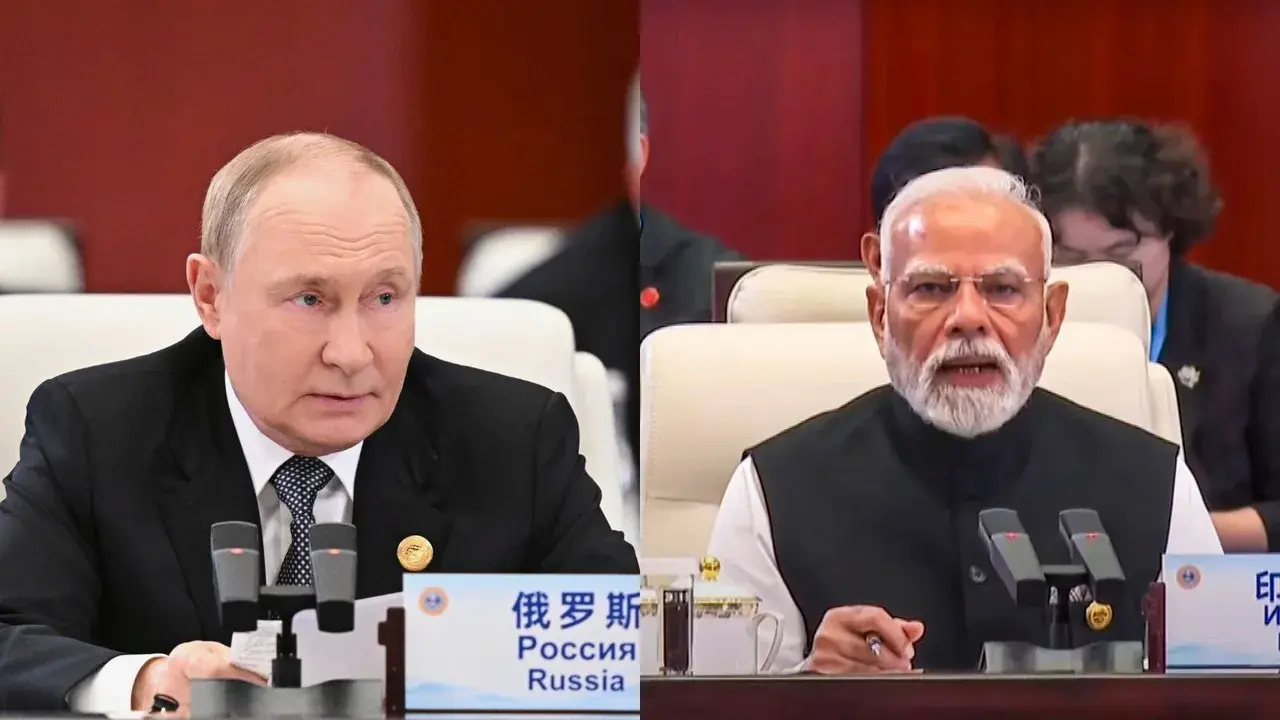
Prime Minister Narendra Modi on Monday urged Russian President Vladimir Putin to end the ongoing conflict in Ukraine at the earliest, describing it as “humanity’s call” to restore peace. The two leaders held discussions on the sidelines of the Shanghai Cooperation Organisation (SCO) summit in the Chinese port city.
In his televised opening remarks, Modi welcomed recent global efforts to bring peace to Ukraine and expressed hope that all stakeholders would move forward constructively. He said the priority must be to achieve lasting peace in the region without further delay.
Modi also noted that India is preparing to host the Russian leader in December for summit talks, highlighting that New Delhi and Moscow have always stood “shoulder-to-shoulder” in difficult times. He stressed that the close ties between the two nations are crucial for global peace, stability, and prosperity.
Bombay HC to Hold Urgent Hearing on Plea Against Maratha Quota Stir in Mumbai 8
The Bombay High Court on Monday agreed to hold a special hearing on a petition challenging the ongoing agitation in Mumbai led by activist Manoj Jarange, who is demanding reservation for the Maratha community.
Although the court has been on holiday since August 27 for the Ganesh festival and was scheduled to resume on Tuesday, a special bench of Justices Ravindra Ghuge and Gautam Ankhad decided to hear the matter this afternoon on a plea filed by the Amy Foundation against the protest.
Jarange has been on an indefinite hunger strike at Azad Maidan since August 29, demanding a 10 percent quota for the Maratha community under the Other Backward Class (OBC) category. His protest has drawn thousands of supporters, causing heavy crowding across major junctions in south Mumbai’s business district.
The petitioner had earlier moved the high court last week, arguing that prolonged occupation of public places for protests causes inconvenience to citizens. On August 26, the court had observed that demonstrations cannot continue indefinitely in public spaces and should only be allowed with proper permissions. The bench had also suggested that the government consider granting permission for the protest in Navi Mumbai’s Kharghar area instead.
Authorities initially granted Jarange a one-day permission to hold his protest at Azad Maidan, which was later extended by another day. However, the activist has remained firm, declaring on Sunday that he will not leave Mumbai until his demands are met.
On Monday, the petitioner sought an urgent hearing, raising concerns over the disruptions caused to daily life by the continuing protests.
Seven of Family Buried Alive as Landslide Destroys Home in J-K's Reasi 10
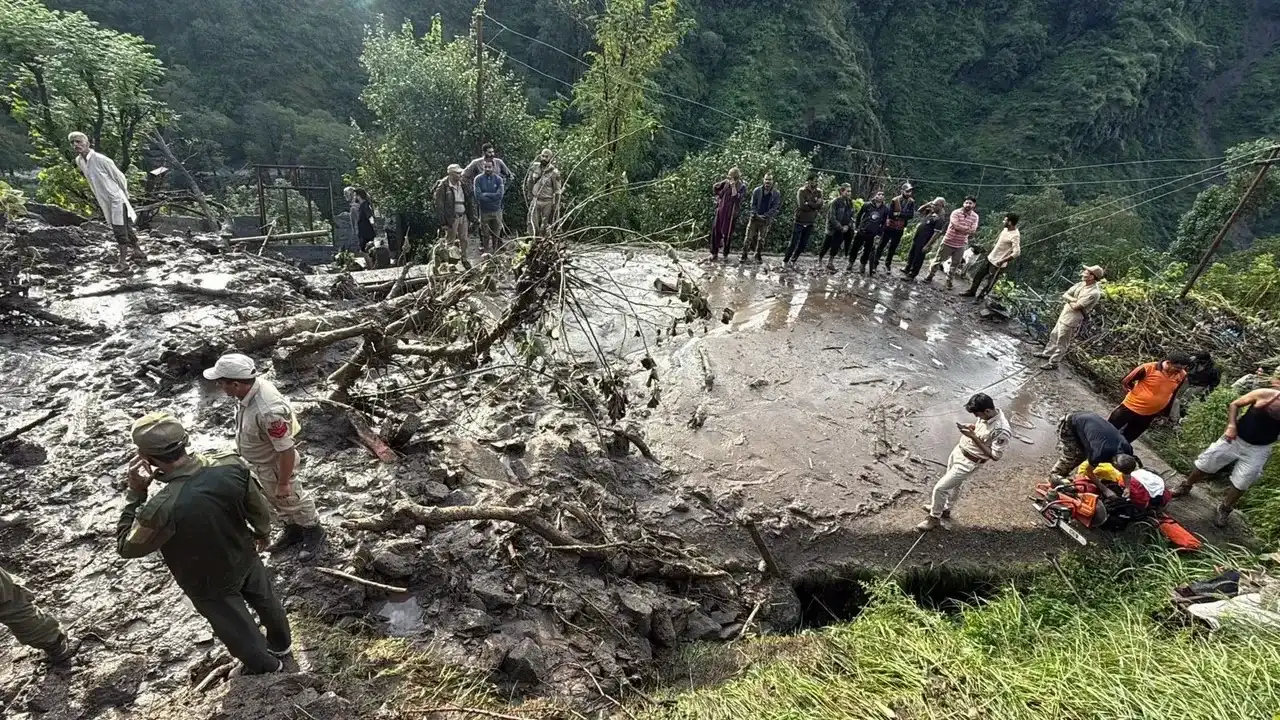
Seven members of a family were buried alive after a landslide flattened their home in Reasi district of Jammu and Kashmir early on Saturday. Officials confirmed the tragedy occurred in Badder village of Mahore following heavy overnight rains.
The victims have been identified as Nazir Ahmad (38), his wife Wazira Begum (35), and their five sons — Bilal Ahmed (13), Mohd Mustafa (11), Mohd Adil (8), Mohd Mubarak (6), and Mohd Wasim (5). Officials said the family was asleep when the house, located on a hill slope, came under the debris brought down by the landslide.
Locals rushed to the spot and began frantic rescue efforts before being joined by police. However, only the bodies could be recovered from the rubble. The region witnessed moderate to heavy rainfall overnight, triggering the devastating landslide.
Maratha Quota Stir: Protesters at Azad Maidan Slam Poor Facilities Amid Rains 12
The Maratha quota agitation at Mumbai’s Azad Maidan entered its second day on Saturday, with protesters braving heavy rains and flooded grounds while voicing concerns over the lack of basic amenities.
Lakhs of supporters have gathered in solidarity with activist Manoj Jarange, who began an indefinite fast on Friday demanding a 10% reservation for the Maratha community under the Other Backward Classes (OBC) category.
Continuous rainfall since Friday morning worsened conditions for those arriving by trains and other public transport, as puddles formed across the protest site. The situation forced many agitators to spill over near Chhatrapati Shivaji Maharaj Terminus, causing severe traffic disruptions.
Protesters alleged a shortage of food and claimed that shops around the venue were shut by the authorities. They also raised concerns about inadequate facilities to ensure safety, sanitation, and hygiene on the ground.
The Brihanmumbai Municipal Corporation (BMC), however, stated it had arranged for water drainage, sanitation, and mobility at the protest site. In a release, the civic body said all nearby ‘pay-and-use’ toilets were made free of charge for protesters.
The BMC also claimed to have installed 29 toilets inside Azad Maidan, deployed three mobile toilet units with 10 seats each along Mahatma Gandhi Road, and set up 12 portable toilets near the Metro site. Gravel was also spread on muddy paths to improve accessibility, the statement added.
Cloudbursts and Torrential Rains Ravage Uttarakhand, Rescue Ops Underway 14
Heavy rains and cloudbursts battered Uttarakhand early Friday, unleashing landslides that damaged houses, trapped villagers, and blocked highways across Chamoli, Rudraprayag and Tehri districts.
In Chamoli’s Mopata village, a house and cowshed were buried under debris, trapping a couple identified as Tara Singh and his wife. Another couple, Vikram Singh and his wife, were injured, District Magistrate Sandeep Tiwari confirmed.
Rudraprayag’s Basukedaar area witnessed widespread destruction in several villages. In Dungar and Jaula-Bhadeth, residents went missing after being swept away by landslides and floods. A house in Syur village was damaged and a car washed away, while flooded ravines posed threats to villages including Badeth, Bagaddhar and Taljamani.
Chief Minister Pushkar Singh Dhami said he was monitoring the situation closely. “Relief and rescue work is being carried out on a war footing. I am in constant touch with officials and have issued instructions for effective rescue operations,” he posted on X, praying for the safety of residents.
Tehri’s Budha Kedar area also reported heavy destruction, with livestock sheds and temples buried under debris. In Genwali village, landslides damaged homes while rivers Balganga, Dharmganga and Bhilangana swelled dangerously, spreading panic among locals. The irrigation department’s security wall, built after last year’s disaster, was washed away in the floods, villagers said.
The Alaknanda, Mandakini and their tributaries continue to rise, forcing police to issue alerts for those living near riverbanks. Agricultural land, including potato fields, was destroyed under rubble.
Meanwhile, major highways were blocked, stranding pilgrims and travelers. The Badrinath national highway was closed at several points in Chamoli, including Nandprayag, Pagalnala, and Gulabkoti, while Rudraprayag’s Sirobgadh stretch was cut off. The Kedarnath highway was blocked at multiple locations between Syalsaur and Chopta. Authorities have urged pilgrims to travel only after checking official advisories.
Uttarakhand has been repeatedly battered by natural disasters this monsoon. Earlier on August 5, a flash flood in the Kheer Ganga river wiped out large parts of Dharali near Gangotri, killing and sweeping away dozens, including Army personnel and migrant workers. At least 69 people went missing in that tragedy.
Maratha Quota Stir: Manoj Jarange Begins Indefinite Hunger Strike at Azad Maidan 16
Maratha quota activist Manoj Jarange on Friday launched an indefinite hunger strike at Azad Maidan in south Mumbai, declaring that he would not leave until the community’s reservation demands were met.
Jarange, 43, arrived at the protest venue around 9.45 am, greeted by thousands of supporters waving saffron flags and donning caps and scarves. Addressing the crowd, he said, “I will not go back until our demands are met. Even if I am shot dead, I will not retreat.”
Criticising the government for its “lack of cooperation,” Jarange said the Maratha community had no option but to march to Mumbai. He urged his followers to cooperate with police and avoid any action that could damage the community’s image. “Clear the streets in two hours and ensure Mumbaikars are not troubled. Those who want to leave the city today can do so,” he instructed.
Jarange lamented that police had granted permission for just one day of protest and announced plans to submit a fresh application. “The government must grant us reservation and accept all our demands. I caution the chief minister against inviting the wrath of the Marathas. You can shoot me or put me in jail, but I will not move until our demands are met,” he said.
The activist has been demanding a 10% quota for Marathas under the Other Backward Classes (OBC) category, insisting that all Marathas be recognised as Kunbis—an agrarian caste included in the OBC list—making them eligible for reservation in education and government jobs.
He also assured that his supporters would protest peacefully without disrupting the Ganesh festival. Jarange, who began his march from Antarwali Sarati village in Jalna district on Wednesday, was welcomed by supporters at Vashi before reaching Azad Maidan.
The Jalna police had earlier allowed Jarange’s march under 40 conditions, including avoiding law-and-order issues, refraining from raising objectionable slogans, and ensuring no disruption of vehicular traffic. Despite precautions, heavy congestion was reported near Chhatrapati Shivaji Maharaj Terminus (CSMT) after protesters spilled onto the roads.
Mumbai police have permitted the protest at Azad Maidan only between 9 am and 6 pm on Friday, with restrictions that no more than 5,000 protesters gather and only five vehicles be allowed at the site. Over 1,500 police personnel have been deployed at the ground and additional security has been stationed at CSMT to maintain law and order.
Democracy survives on truth and transparency. But what happens when the very man entrusted with guarding those values—India’s Prime Minister—builds his career on lies, concealment, and contradictions? Narendra Modi’s carefully curated persona has, over the years, been exposed as a patchwork of half-truths and outright falsehoods. His biggest lies revolve around two of the most fundamental aspects of his life: his marriage and his education.
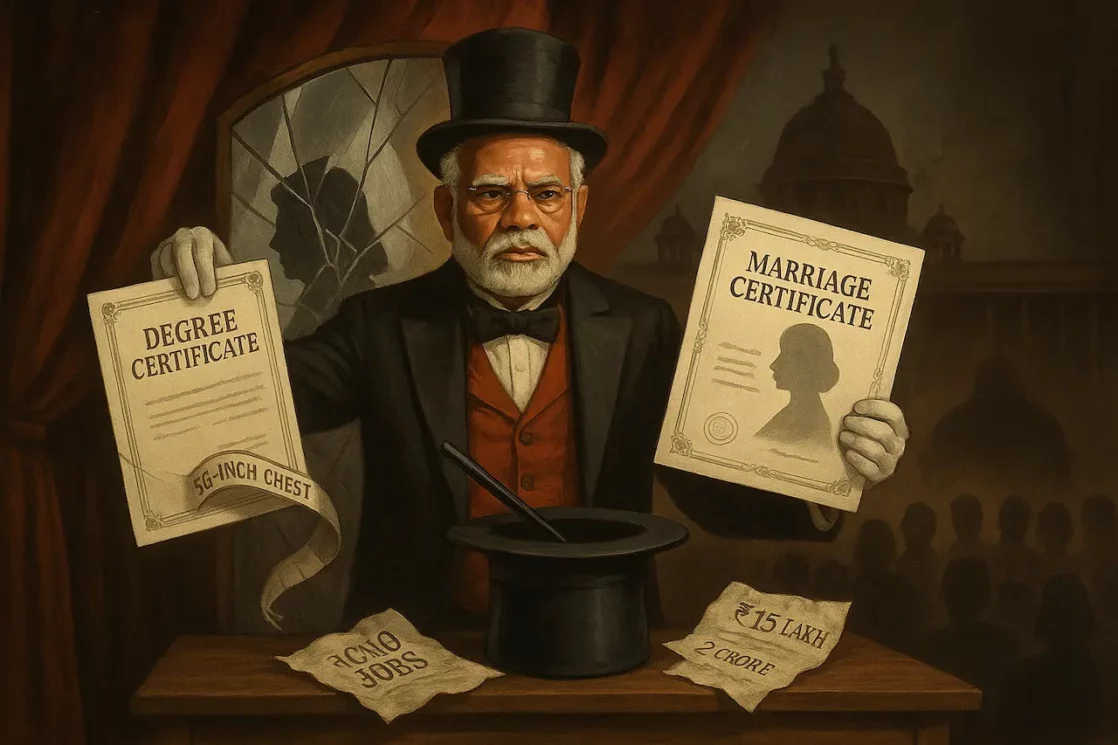
For decades, Modi projected himself as a lifelong bachelor. In interviews, speeches, and most damningly in multiple sworn election affidavits, he wrote “unmarried.” The image of an ascetic, unattached leader served him well politically—he was free of personal obligations, wedded only to the nation. This cultivated “monk-like” image differentiated him from other politicians accused of dynastic and family-based politics. But then came 2014. In his Lok Sabha nomination papers for the first time, Modi declared himself “married” to Jashodaben, the wife he had abandoned in his youth. The revelation was not voluntary but compelled by law, because omitting spouse details in affidavits had become legally untenable. The lie of decades collapsed in a single affidavit, leaving behind the uncomfortable truth that a man who had built his image on celibacy and sacrifice had deliberately erased his own wife from public record until exposure was inevitable.
The degree saga follows the same pattern. Until the 2014 elections, Modi often downplayed or dismissed his education, presenting himself as someone who “didn’t study much,” who rose despite being a dropout. The underdog narrative was politically powerful. But when questions arose about his qualifications, suddenly, in 2016, Amit Shah and Arun Jaitley appeared at a press conference waving degrees: a BA from Delhi University and an MA from Gujarat University. The documents, instead of silencing critics, raised new suspicions—name discrepancies, formatting anomalies, and stonewalling from universities. The Central Information Commission ordered Delhi University to allow inspection of records of all students who passed in 1978, but the Delhi High Court stayed and later struck down the order, astonishingly classifying Modi’s academic record as if it were a matter of national security. The very degree Shah could casually flash at the media was, for citizens, off-limits.
The parallels between the marriage lie and the degree lie are stark. In both cases, Modi denied the truth for years—first erasing his wife, then erasing his education. In both cases, he built political capital out of the lie—projecting himself as a bachelor monk and a humble dropout. In both cases, when the truth could no longer be hidden, he abruptly changed the story. And in both cases, institutions bent over backwards to shield him, whether through silence, complicity, or convenient legal technicalities.
Add to this the other fabrications and broken promises: the chaiwala myth exaggerated for effect, the “56-inch chest” hyperbole, the “₹15 lakh in every account” pledge dismissed later as a “jumla,” the promise of two crore jobs a year that never materialized, the black money promise that evaporated into rhetoric. Together they form a pattern: lie, repeat, mythologize, and when exposed, deny accountability.
This is not about whether Modi studied or married—it is about whether truth matters at all in Indian democracy. A Prime Minister who lies about his wife, his education, his promises, and then uses the state machinery to hide those lies is not just deceiving the people; he is corrupting the very idea of democracy.
The tragic irony is that ordinary Indians are punished for the smallest falsehoods—students disqualified for errors in certificates, employees dismissed for not disclosing marital status correctly. Yet the Prime Minister himself can conceal a marriage for decades, conjure up degrees when convenient, and walk free, untouchable. If this is not fraud upon the nation, what is?
When the truth of a leader’s own life becomes a national secret, when lies become a political weapon, democracy is no longer democracy—it is theatre. And in this theatre, Narendra Modi has proven himself less a Prime Minister and more a master illusionist, keeping a billion people trapped in the haze of his contradictions.
Kerala Becomes First State in India to Form Senior Citizens Commission 20
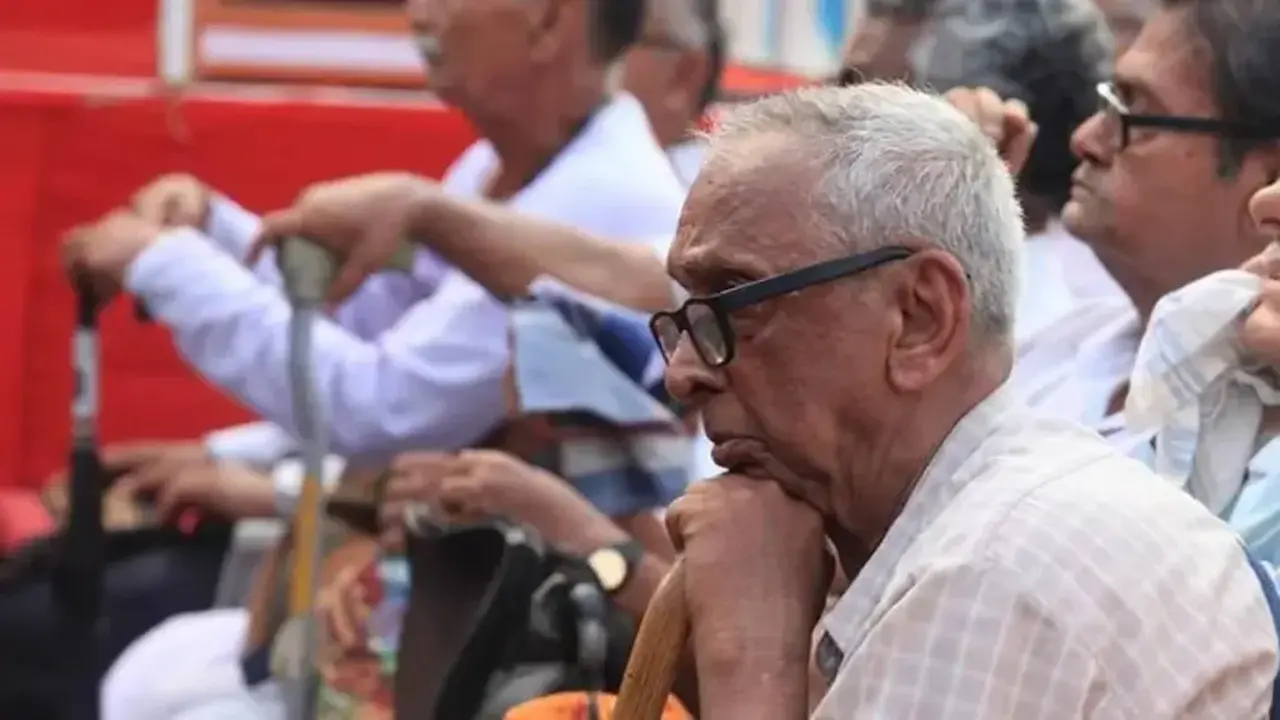
Kerala has become the first state in India to establish a dedicated Commission for Senior Citizens to ensure the welfare, protection, and rehabilitation of its elderly population.
The Commission, formed under Section 3(1) of the Kerala State Senior Citizens Commission Act, 2025, aims to eliminate age-related prejudices and harness the skills, experience, and innovative ideas of senior citizens for societal benefit.
With Kerala projected to have nearly one-fourth of its population above 60 years by 2026, the new body is expected to frame comprehensive strategies to tackle challenges posed by an ageing society.
The headquarters will be in Thiruvananthapuram, and the Chairperson will hold the status of a Government Secretary with a three-year tenure. The Commission will also include key officers, including a Secretary of Additional Secretary rank, a Registrar from the Law Department, and a Finance Officer from the Finance Department.
Former Rajya Sabha MP and Kollam District Panchayat President K. Somaprasad has been appointed as the first Chairperson of the Commission.
Social Justice Minister Dr. R Bindu said the government prioritizes elderly care through policies, healthcare access, and effective implementation of the Maintenance and Welfare of Parents and Senior Citizens Act (MWPSC). She emphasized that institutional and policy support will continue to strengthen the social security system for senior citizens.