Maratha Quota Row: Manoj Jarange Reaches Pune, March to Mumbai Gains Momentum 2
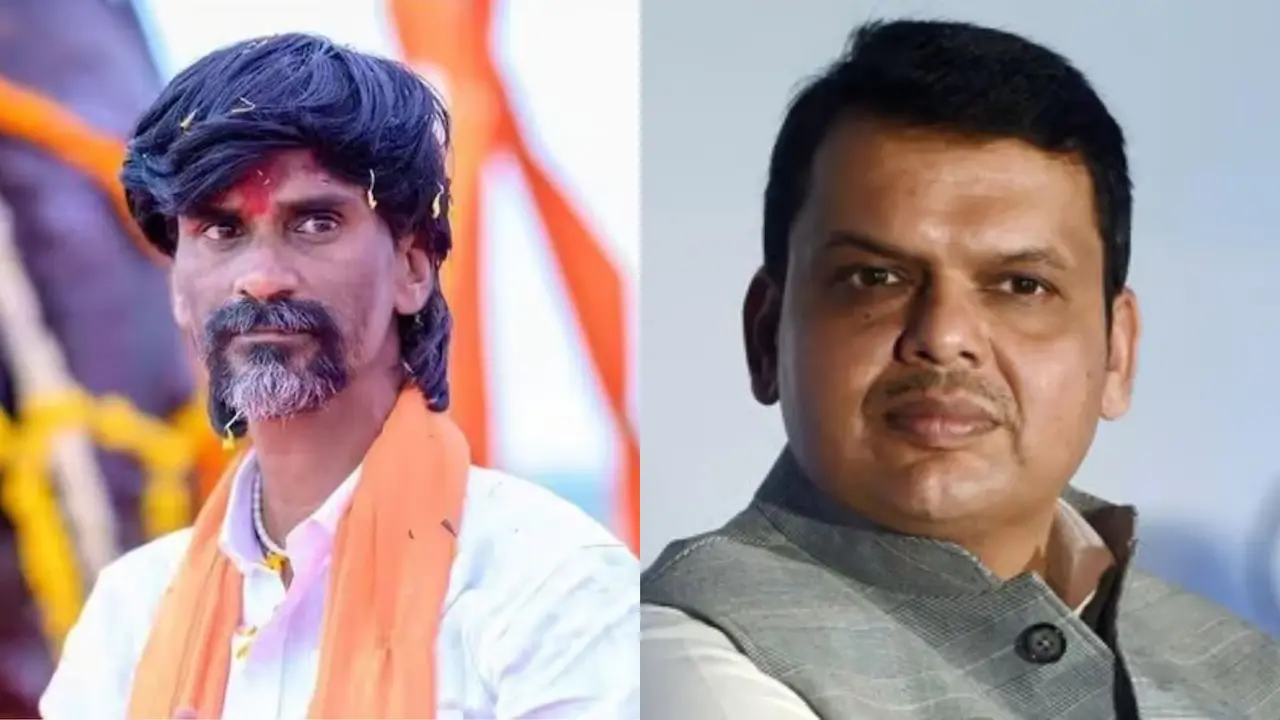
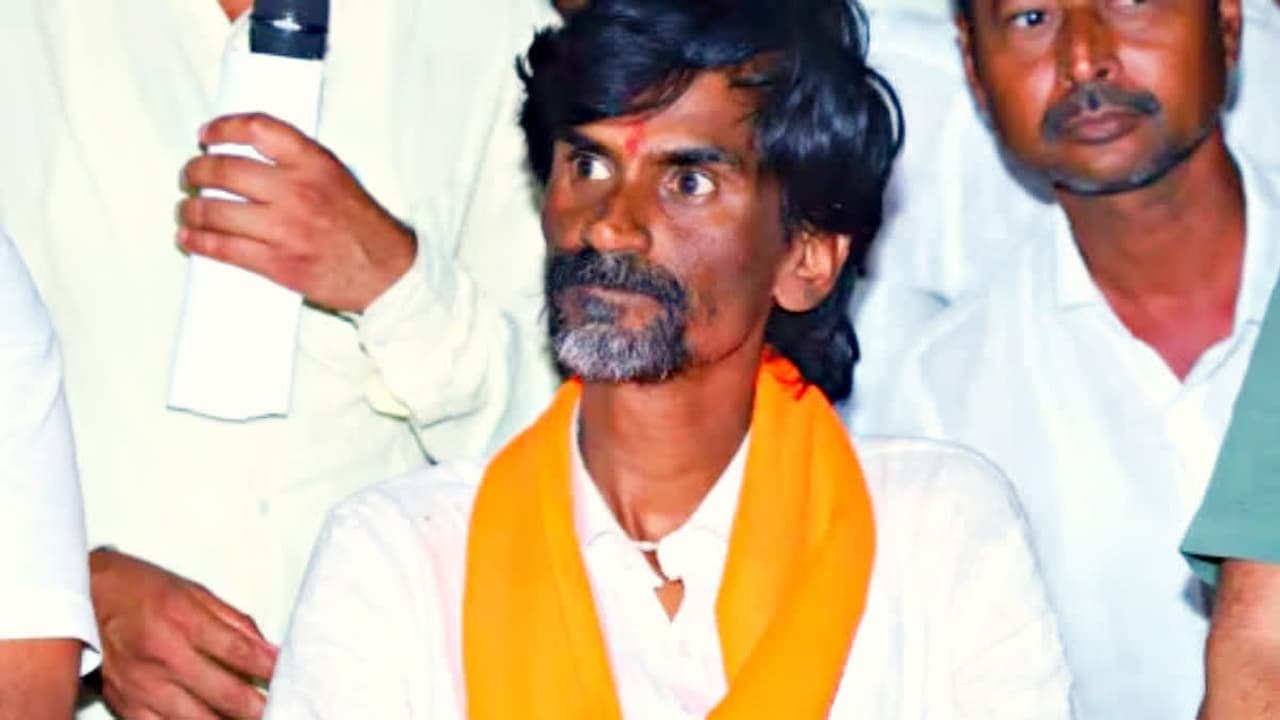
Maratha quota activist Manoj Jarange reached the base of Shivneri Fort in Pune district on Thursday morning with hundreds of supporters as he continued his march toward Mumbai to press for reservation for the Maratha community. The fort, the birthplace of Chhatrapati Shivaji Maharaj, is likely to see Jarange paying homage to the Maratha warrior king before proceeding further.
Jarange began his journey on Wednesday from Antarwali Sarati village in Jalna, over 400 km from Mumbai, vowing to launch a fresh hunger strike in the state capital. On his way, he agreed to meet a government delegation near Pune, although state minister Radhakrishna Vikhe Patil, who heads the Maratha quota sub-committee, clarified that no formal decision has been made for talks.
The activist, demanding a 10% quota for Marathas under the Other Backward Classes (OBC) category, reiterated that the protest would remain peaceful and would not disturb Ganesh festival celebrations. He has also called for all Marathas to be recognized as Kunbis, an agrarian caste under the OBC list, to secure reservation benefits in jobs and education.
The Jalna police allowed the march under strict conditions, including maintaining law and order, avoiding traffic disruptions, and refraining from objectionable slogans. In Mumbai, the Azad Maidan police granted permission for a peaceful protest on August 29 between 9 am and 6 pm, capping the number of participants at 5,000. Only five vehicles from the main protest group will be allowed to proceed from Wadi Bunder Junction to Azad Maidan, the police stated.
Fadnavis Appeals to Jarange: Don't Disrupt Ganesh Festival Amid Maratha Quota Ultimatum 4
Maharashtra Chief Minister Devendra Fadnavis on Monday expressed hope that Maratha quota activist Manoj Jarange will refrain from actions that could disturb Ganesh festival celebrations in Mumbai.
Jarange has set an August 26 deadline for the state government to grant a 10% quota for Marathas under the Other Backward Classes (OBC) category, warning of a march to Mumbai starting August 27—on Ganesh Chaturthi—if demands are not met. He has also announced an indefinite hunger strike from August 29.
“Those who call themselves true followers of Chhatrapati Shivaji Maharaj will not do anything to disrupt Ganesh Chaturthi, which is the biggest festival of Hindus,” Fadnavis told reporters.
The CM said everyone has the democratic right to protest but urged that it should not inconvenience others. He highlighted the government’s efforts, stating, “We have worked for the Maratha community and given 10% quota. We created 1.5 lakh entrepreneurs from the community.”
Last year, the state announced 10% reservation for Marathas under a separate category. Jarange, however, continues to demand that all Marathas be recognized as Kunbis—an OBC caste—making them eligible for broader reservation benefits in education and jobs.
Responding to Jarange’s claim that Fadnavis blocked Deputy CM Eknath Shinde’s efforts for Marathas, the CM said, “Shinde didn’t say this. No matter who tries to create differences, we are united and working together.”
On criticism from Jarange, Fadnavis remarked that a true follower of Shivaji Maharaj would not use derogatory language or target women. “I have the blessings of my mother, our Goddesses, and the people of Maharashtra,” he added.
The BJP has accused Jarange of making objectionable remarks against Fadnavis’ mother, a charge the activist denies. Meanwhile, Deputy CM Shinde appealed to Jarange to reconsider the timing of his protest, stressing that demonstrations should not cause public inconvenience during the festival.
The Degree Dilemma: How India's Prime Minister's Education Became a National Sensation 6
In most democracies, a Prime Minister’s education is the least controversial aspect of their life. Their policies, their politics, even their personal lives may be dissected and debated, but their qualifications are usually a matter of record. In India, however, the question of Prime Minister Narendra Modi’s degrees has become a saga of contradictions, cover-ups, and credibility crises—one that raises troubling questions about the health of the world’s largest democracy.
The Myth of the Dropout
Narendra Modi has long cultivated the image of a self-made man. From the earliest days of his political career, he proudly told the story of being a “chaiwala” (tea seller), a struggler who never had the benefit of higher education. In interviews, campaign speeches, and public addresses, he often spoke of being a “school dropout,” presenting his lack of academic credentials as a badge of authenticity, a contrast to the privileged elites of India’s political dynasties.
For millions, this humility resonated. Here was a leader who symbolized aspiration—someone who, without college or pedigree, could rise to the highest office in the land. It was a compelling narrative, one that helped define his political brand.
The Sudden Emergence of Degrees
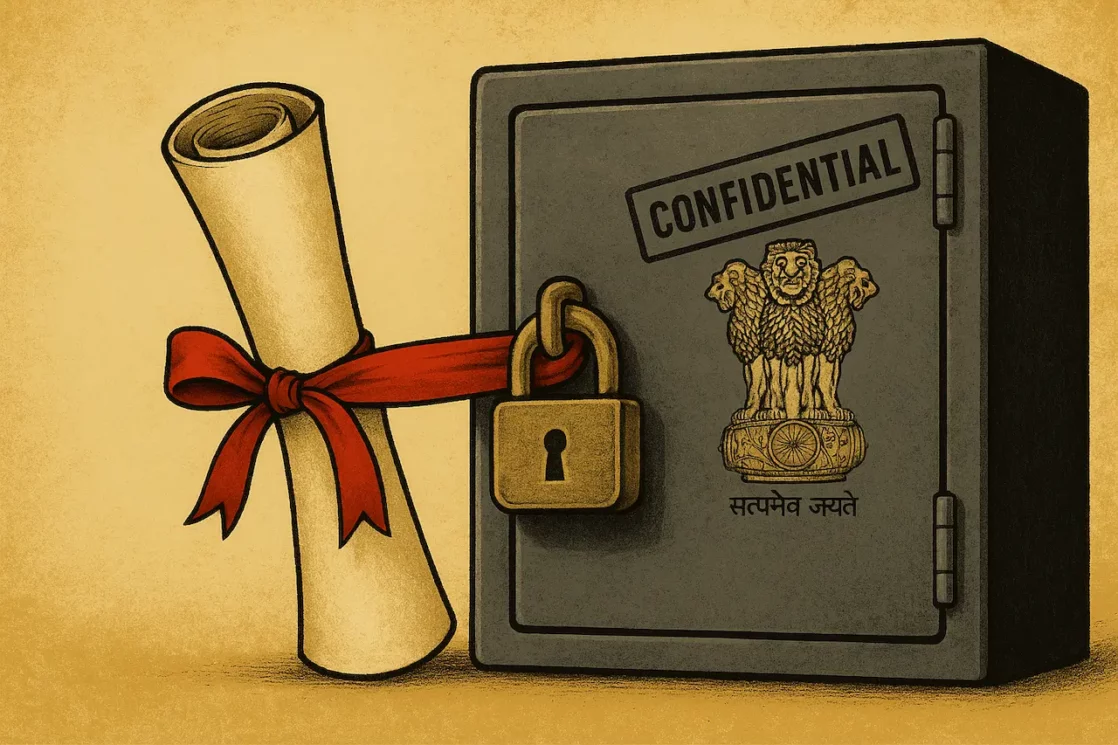
And then, abruptly, the story changed. In 2016, Modi’s closest aide and India’s current Home Minister, Amit Shah, convened a press conference to display Modi’s “degrees”—a Bachelor of Arts from Delhi University and a Master’s degree from Gujarat University. The timing was not accidental. Questions had been raised in the Delhi Assembly about the authenticity of Modi’s educational background. Instead of Modi clarifying personally, Shah stepped in to show certificates to the media.
But rather than silencing controversy, this revelation deepened it. Why had Modi, who so often stressed his lack of education, never mentioned these degrees? Why did these documents appear so late, and under such politically charged circumstances? More importantly, why did discrepancies begin to surface almost immediately? The spelling of names, formatting issues, and inconsistencies in university records sparked suspicion.
The RTI Battles and Legal Hurdles
Journalists and activists began filing Right to Information (RTI) applications to obtain official confirmation from Delhi University and Gujarat University. The responses were, at best, opaque. Gujarat University refused to release details, citing “privacy.” Delhi University, when pressed, gave vague confirmations without providing verifiable records.
The matter eventually reached the courts. Instead of demanding transparency, however, the judiciary often appeared reluctant to pursue the issue aggressively. Petitions were dismissed, sometimes on technical grounds, other times on the argument that the Prime Minister’s qualifications were irrelevant to his ability to govern. Critics saw this as institutional capture—an example of how the very bodies meant to hold leaders accountable were shielding them from scrutiny.
Democracy Under Question
The deeper issue is not whether Modi studied or did not study. The real danger lies in the precedent such a cover-up sets. A Prime Minister’s lie about his education is not a private fib; it is a public deception. It undermines the very premise of democratic accountability—that leaders must be truthful with the people they serve.
For India’s youth, the irony is particularly bitter. Every year, millions of students fight for jobs, struggling through grueling exams and interviews, where even minor discrepancies in certificates can end careers. To them, the idea that the nation’s most powerful man could possess questionable degrees and yet face no consequence is both humiliating and demoralizing.
The Global Optics
Internationally, the scandal raises awkward questions. In a world where credibility is currency, what does it mean if the Prime Minister of India—a country positioning itself as a global leader—cannot be transparent about his own academic history? Foreign governments, investors, and institutions may not say it aloud, but such controversies corrode trust. When the head of state is accused of forging credentials, the integrity of the system itself comes under suspicion.
Global media have occasionally touched on the issue, often with a tone of disbelief. How could a country with such a proud democratic tradition, home to some of the world’s finest universities, allow its leader to evade basic accountability? The answer lies not only in Modi’s own narrative management, but in the silence—or complicity—of institutions that chose to look the other way.
The Broader Scam
Seen chronologically, the degree controversy is not a side note—it is a scam at the heart of governance. First, a leader builds his image as uneducated yet authentic. Then, when challenged, allies produce degrees of dubious provenance. Questions are deflected, institutions stonewall, courts hesitate, and the media—often polarized—fails to sustain the inquiry. In the end, the lie is normalized, and the deception becomes part of the political landscape.
This is the true danger. When the most powerful man in the country can manipulate the narrative around something as basic as his education, what else can he hide? If fake degrees can be waved away, why not fake statistics, fake economic claims, or fake promises? The degree saga is not about certificates—it is about truth itself.
A Nation Compromised
For India, the cost is profound. Democracy rests on accountability, and accountability rests on honesty. A Prime Minister caught in a lie about his past and shielded from consequences represents not just personal failure but systemic rot. It is an eye-opener for citizens who still believe that institutions will safeguard their rights.
Ultimately, the scandal of Narendra Modi’s degrees is not about whether he attended Delhi University or Gujarat University. It is about whether India can still claim to be a democracy of truth and transparency, or whether it has become a republic where power rewrites history and fabricates credentials at will.
The world is watching. And what it sees is a nation where the Prime Minister’s degrees remain more mysterious than state secrets—and where democracy itself looks dangerously compromised.
SC Forms SIT to Probe Allegations Against Gujarat's Vantara Wildlife Facility 8
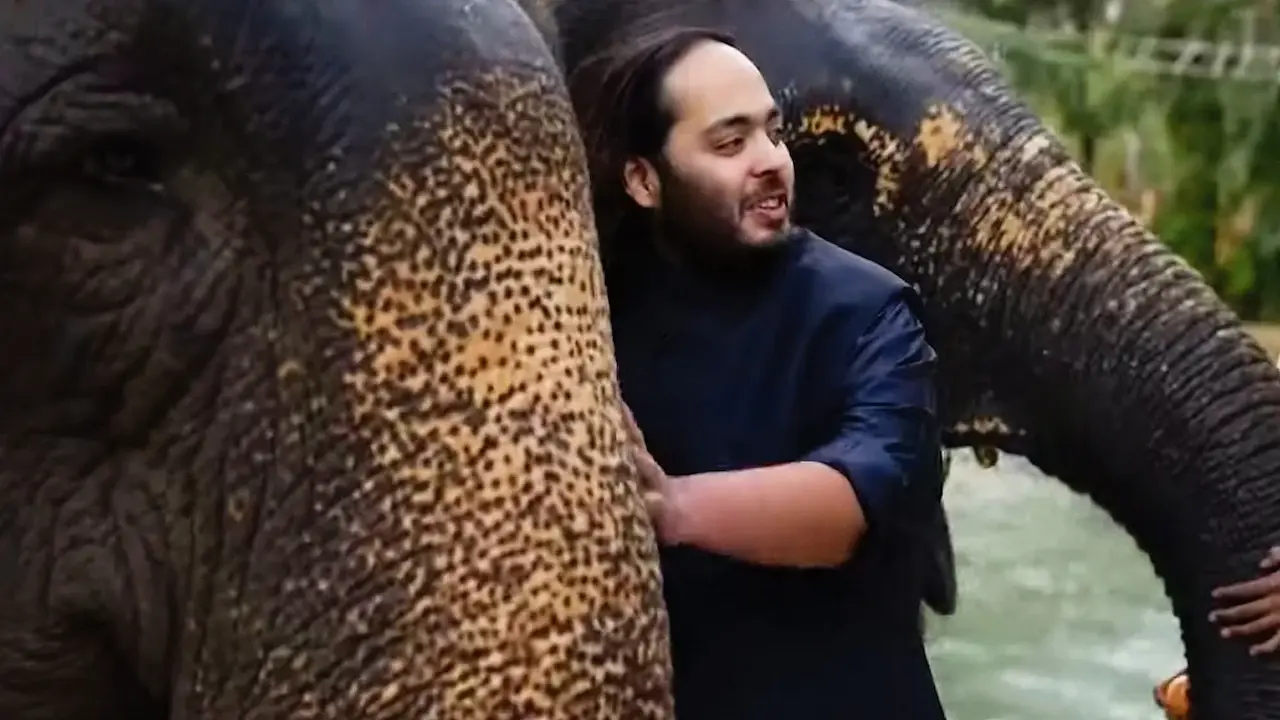
The Supreme Court on Monday constituted a Special Investigation Team (SIT) to conduct a fact-finding inquiry into allegations of irregularities at Vantara, a Green Zoological Rescue and Rehabilitation Centre in Jamnagar, Gujarat. The inquiry follows complaints of legal violations and questionable acquisition of animals, particularly elephants, from India and abroad.
A bench of Justices Pankaj Mithal and P. B. Varale appointed a four-member SIT headed by former Supreme Court judge J. Chelameswar while hearing two PILs alleging non-compliance with wildlife laws. Reports from media, social media, and complaints by NGOs and wildlife organizations formed the basis of these petitions.
The court stated that although such unsupported allegations typically warrant dismissal, the seriousness of claims regarding failure of authorities to enforce laws necessitated an independent factual appraisal. The SIT comprises Justice (retired) Raghavendra Chauhan, former Mumbai Police Commissioner Hemant Nagrale, and ex-IRS officer Anish Gupta, alongside Justice Chelameswar.
The bench clarified that the SIT will only assist the court in determining factual accuracy and does not imply any judgment on Vantara or statutory authorities. The probe will cover animal acquisition processes, compliance with the Wildlife (Protection) Act, CITES, import-export laws, and zoo regulations. It will also examine animal welfare standards, veterinary care, mortality causes, breeding practices, biodiversity usage, and allegations of illegal wildlife trade or smuggling.
Financial compliance, money laundering, and other relevant issues linked to the allegations will also be investigated. The SIT is empowered to seek information from petitioners, officials, regulators, intervenors, or journalists willing to share details.
The panel must submit its report by September 12, and the case will be heard again on September 15. The court emphasized that the exercise is limited to assisting judicial consideration and does not cast aspersions on Vantara or any authority at this stage.
ED Raids AAP Leader Saurabh Bharadwaj in Rs 5,590 Crore Delhi Hospital Scam Probe 10
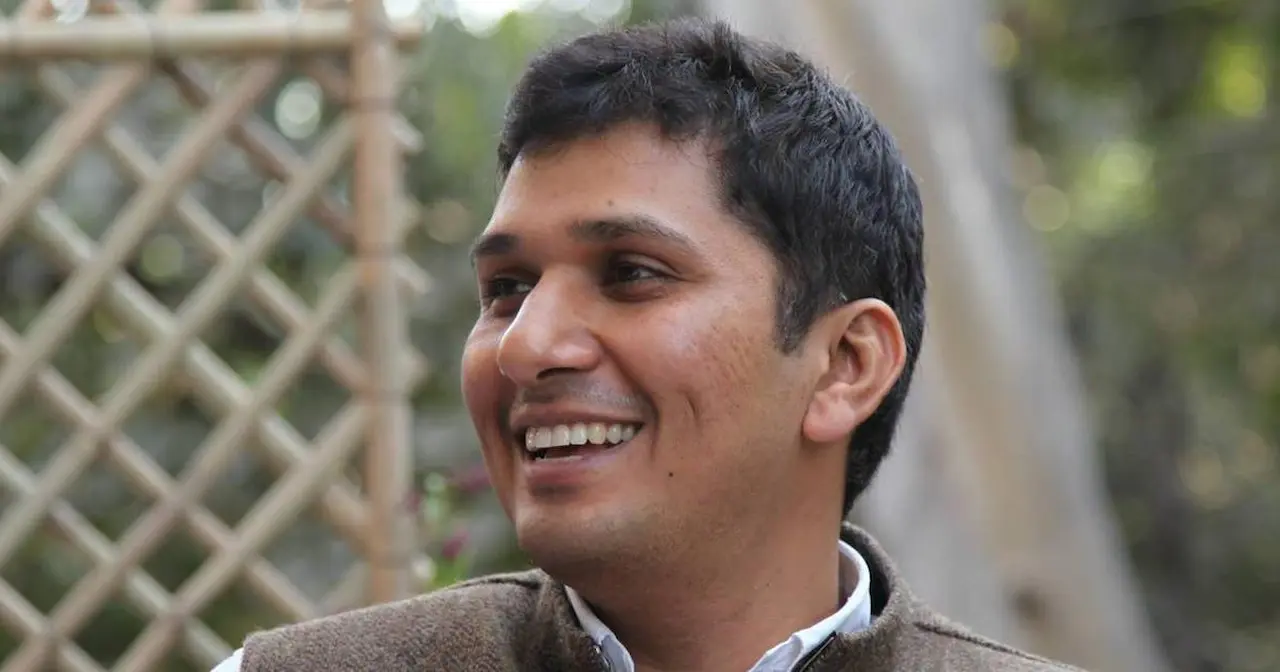
The Enforcement Directorate (ED) on Tuesday conducted searches at the premises of Aam Aadmi Party (AAP) leader and former minister Saurabh Bharadwaj as part of a money laundering investigation linked to an alleged scam in Delhi’s health infrastructure projects during the previous AAP government, officials said.
Raids were carried out at 13 locations across the National Capital Region, including those of private contractors and real estate developers, under the Prevention of Money Laundering Act (PMLA), they added.
The probe against Bharadwaj, 45, Delhi AAP chief and national spokesperson, stems from an FIR registered by Delhi’s Anti-Corruption Branch (ACB) in June. The ACB had named Bharadwaj, former health minister Satyendar Jain, private contractors and unidentified officials for alleged corruption in hospital projects under the AAP-led government.
The FIR followed allegations by the Delhi BJP in August last year of “grave irregularities and suspected corruption” in health projects. The ACB complaint accused officials of manipulating project budgets, misusing funds, and colluding with contractors.
According to ACB, 24 hospital projects worth ₹5,590 crore were sanctioned in 2018-19 but remain incomplete, with major cost escalations. Similarly, the ₹1,125-crore ICU Hospital Project, intended to build seven facilities with 6,800 beds in six months, is only 50% complete after three years and ₹800 crore spent.
The ED said the raids were based on evidence collected during the investigation and allegations of large-scale corruption, unauthorized construction, and fund misappropriation in Delhi’s health infrastructure projects.
SSC Revises Fee for Challenging Exam Results, Refund System in Progress 12
The Staff Selection Commission (SSC) has announced that its fee structure for candidates challenging exam results is under review. Currently, aspirants are charged ₹100 per question or answer they dispute.
In a notice dated August 22, the SSC stated that a refund mechanism is being developed, which will allow candidates to receive a full refund if their challenge is upheld.
Until this mechanism is in place, the Commission has reduced the fee to ₹50 per question or answer challenged.
SSC, one of the largest recruitment bodies for the central government, conducts examinations to fill non-gazetted positions across various ministries and departments.
Delhi HC Overturns CIC Order on PM Modi’s Degree Disclosure 14
The Delhi High Court on Monday set aside an order of the Central Information Commission (CIC) directing disclosure of information on the bachelor’s degree of Prime Minister Narendra Modi.
Justice Sachin Datta, who reserved the judgement on February 27, passed the verdict on Delhi University’s plea challenging the CIC order.
Following an RTI application by one Neeraj, the CIC on December 21, 2016, allowed inspection of records of all students who cleared the BA exam in 1978 — the year Prime Minister Modi also passed it.
'Give Marathas Reservation by Aug 26 or Face Agitation': Manoj Jarange Warns Maharashtra Govt 16
Activist Manoj Jarange on Monday warned the Maharashtra government to announce reservation for the Maratha community “within the legal framework” by Tuesday, failing which he would head to Mumbai to begin an indefinite hunger strike.
Jarange said the protest, scheduled to start at Azad Maidan on August 29, would be peaceful. However, he asserted that if the demand is met by Tuesday, there would be no need for the agitation.
The activist has been demanding that Marathas be recognised as Kunbis—an agrarian caste under the Other Backward Classes (OBC) category—making them eligible for quotas in education and government jobs. He has cited historical records, including the Bombay, Satara, and Hyderabad gazettes, as evidence of the community’s Kunbi identity.
Speaking at Antarwali Sarati village in Jalna district, Jarange accused Chief Minister Devendra Fadnavis of taking a “stubborn stand” on the issue, alleging that the recent inclusion of 29 other castes in the OBC category was a move to provoke the Maratha community.
“The government has today and tomorrow. We don’t want to go to Mumbai. Give us our reservation,” he said, adding that the current 10% quota for Marathas under a separate category is not enough and could be revoked at any time.
Jarange claimed that the Justice Shinde committee had already identified 58 lakh historical records proving the Marathas’ Kunbi status and submitted them to the state government. “If communities with no records can get reservation, why not us?” he asked.
If the government fails to act, Jarange and his supporters will begin their journey to Mumbai on August 27, stopping at Shivneri Fort before reaching Azad Maidan via Rajgurunagar, Chakan, Lonavala, Panvel, Vashi, and Chembur. The agitation will begin at 10 am on August 29.
Jarange urged Maratha community members, including teachers, farmers, and businesspersons, to join the protest, bringing along essentials such as water tankers, medicines, and ambulances. He reiterated that the movement will remain peaceful but firm on its demand.
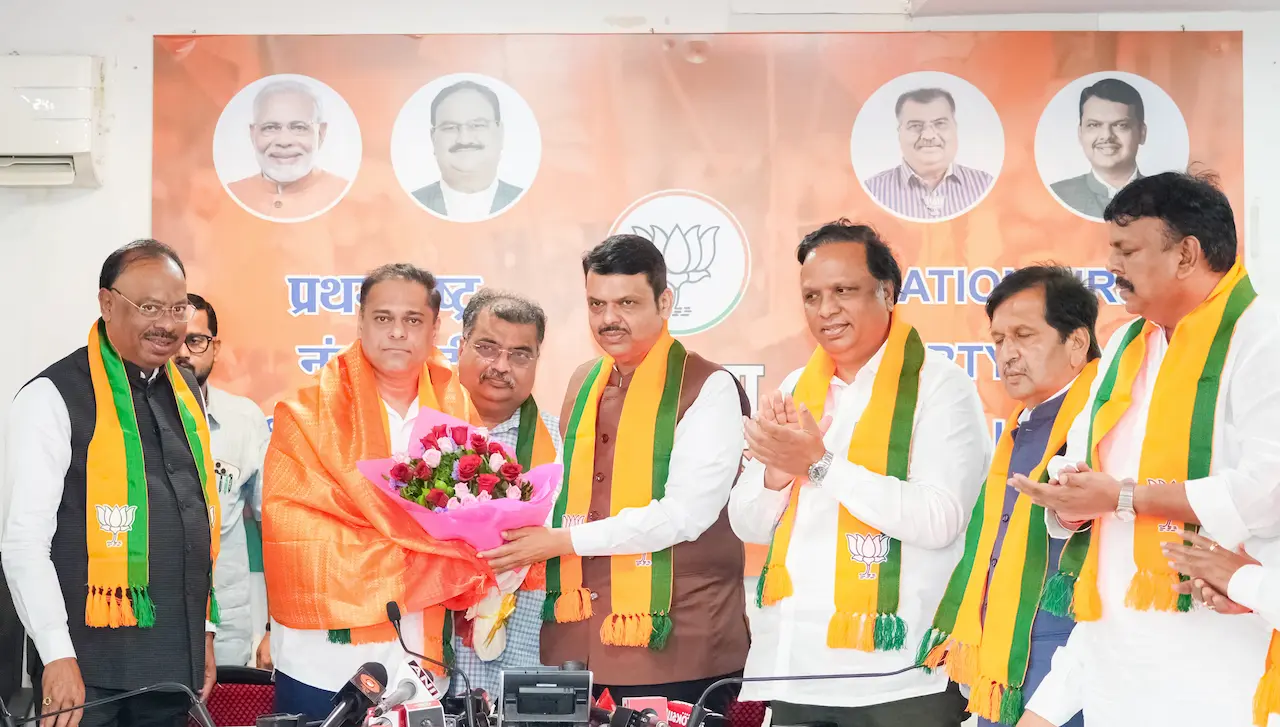
Ameet Satam Appointed Mumbai BJP Chief Ahead of High-Stakes BMC Elections 18
Three-term MLA Ameet Satam has been appointed as the new president of the Mumbai Bharatiya Janata Party (BJP) unit, Chief Minister Devendra Fadnavis announced on Monday. The decision comes ahead of the crucial Brihanmumbai Municipal Corporation (BMC) elections, expected later this year.
Fadnavis expressed confidence that Satam’s leadership would help the BJP reclaim control of the cash-rich civic body. Satam, 49, represents the Andheri West assembly constituency and has served as an MLA for three consecutive terms.
Addressing reporters at the state BJP headquarters, Fadnavis highlighted the party’s strong performance in the Maharashtra Assembly elections under the leadership of outgoing city unit chief Ashish Shelar. With Shelar now holding ministerial responsibilities, the party decided to appoint a new leader following discussions led by state BJP president Ravindra Chavan and senior leaders.
“Satam has been a committed BJP leader for years and has handled several key roles. He is known as an assertive legislator who understands Mumbai’s core issues and has the ability to resolve them,” Fadnavis said.
The chief minister added that with the support of senior leaders, the BJP aims to set new benchmarks in the upcoming civic polls and regain power in the BMC.
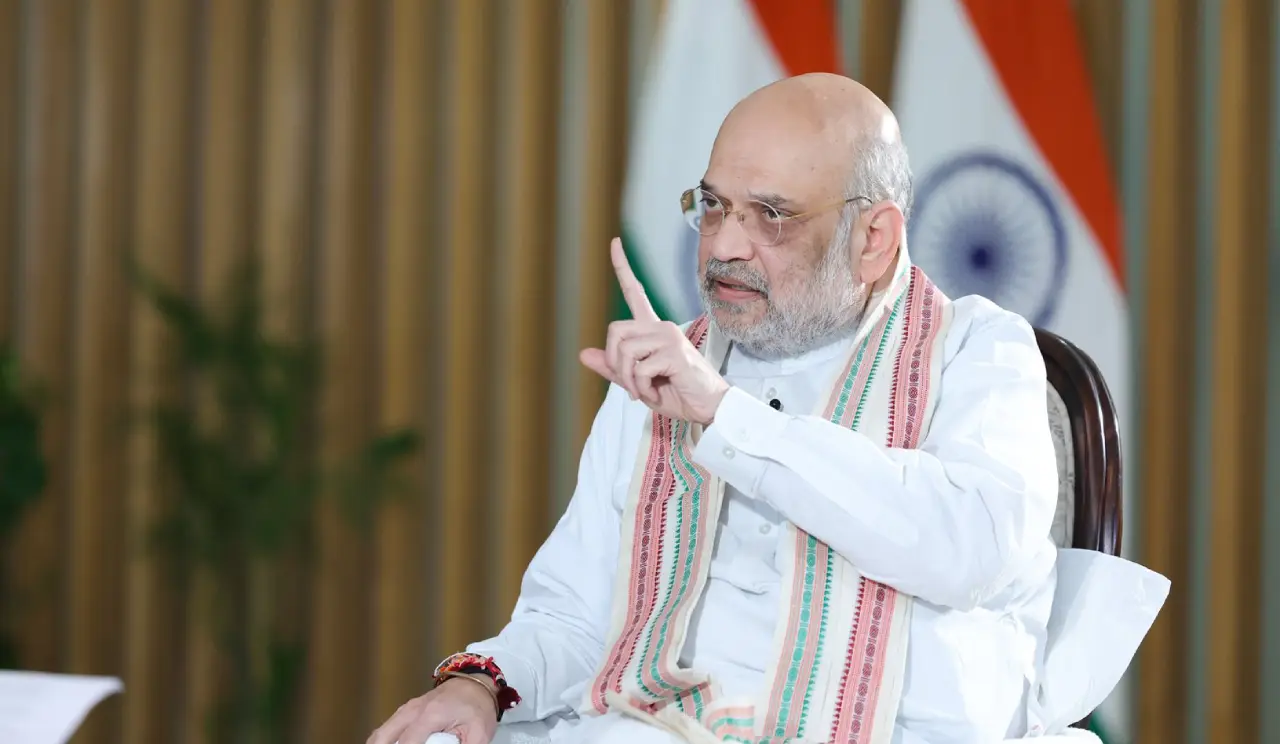
Amit Shah Clears Air on Jagdeep Dhankhar's Exit: "Don't Stretch It" 20
Union Home Minister Amit Shah on Monday dismissed speculation surrounding former Vice President Jagdeep Dhankhar’s sudden resignation, stating it was solely due to health concerns. Shah rejected the opposition’s claims that Dhankhar was under “house arrest” and urged people not to create unnecessary controversy.
“Dhankhar sahab’s resignation letter is clear in itself. He cited health reasons and expressed gratitude to the Prime Minister, ministers, and government members for a fulfilling tenure,” Shah said in an interview with ANI.
Responding to opposition allegations of Dhankhar being forcibly silenced, Shah said, “Your interpretation of truth and lies should not depend on opposition claims. We shouldn’t make a fuss about this. Dhankhar held a constitutional post and discharged his duties as per the Constitution. He resigned for health reasons. There’s no need to deliberate further.”
Opposition leaders, however, raised doubts over the timing of the resignation. Congress leader Jairam Ramesh called it the first instance of a Vice President’s resignation being linked to what he termed as “silencing.” Rahul Gandhi accused the BJP of taking India “back to medieval times,” alleging that the government removes individuals at will and uses investigative agencies to target elected representatives.
Senior advocate Kapil Sibal even suggested filing a habeas corpus petition, citing Dhankhar’s absence from public view.
The BJP has firmly denied these allegations, reiterating that Dhankhar stepped down voluntarily on health grounds. He resigned on July 21, the first day of the Monsoon Session of Parliament, after submitting his resignation to President Droupadi Murmu. Dhankhar, who also served as Chairman of the Rajya Sabha, said he wanted to prioritize his health and follow medical advice.