Home Blog Page 49

Stray Dogs in India: A Public Health Crisis and Governance Challenge

stray dogs, stray dog, supreme court, rabies, rabbies, dog bite
Stray Dogs in India: A Public Health Crisis and Governance Challenge 2

Stray dogs present a growing challenge in India, driven by a combination of public health risks, safety concerns, and unresolved animal welfare issues. With an estimated 62 million stray dogs in the country, India continues to report one of the highest rates of rabies-related deaths globally—accounting for approximately 36% of all human rabies deaths worldwide. Despite being a vaccine-preventable disease that has been largely eradicated in developed nations, rabies remains endemic in India, primarily due to the unchecked stray dog population.

Beyond rabies, the threat of dog bites is a daily concern. In 2024 alone, India reported over 3.7 million dog bite cases. Children, particularly in urban and peri-urban areas, are increasingly vulnerable. Parents often fear sending their children outdoors due to the possibility of attacks, especially in lower-income neighborhoods where civic infrastructure is lacking.

This crisis is not accidental—it is symptomatic of poor urban governance. Unregulated garbage disposal and overflowing dumpsites provide an abundant and steady food source for stray animals. As natural scavengers, dogs survive and multiply in areas where waste is mismanaged. In contrast, cities around the world that store garbage in sealed containers and maintain regular waste collection schedules have effectively eliminated stray dog populations from public spaces.

India’s failure to control its stray dog population is further compounded by the poor implementation of the Animal Birth Control (ABC) Rules, 2023, which mandate sterilisation and immunisation of stray dogs, along with the establishment of shelter homes. Civic agencies such as the Municipal Corporation of Delhi (MCD) and New Delhi Municipal Council (NDMC) have repeatedly failed to create adequate shelter infrastructure or enforce existing animal control norms. This governance vacuum has allowed the problem to escalate into a full-blown public health emergency.

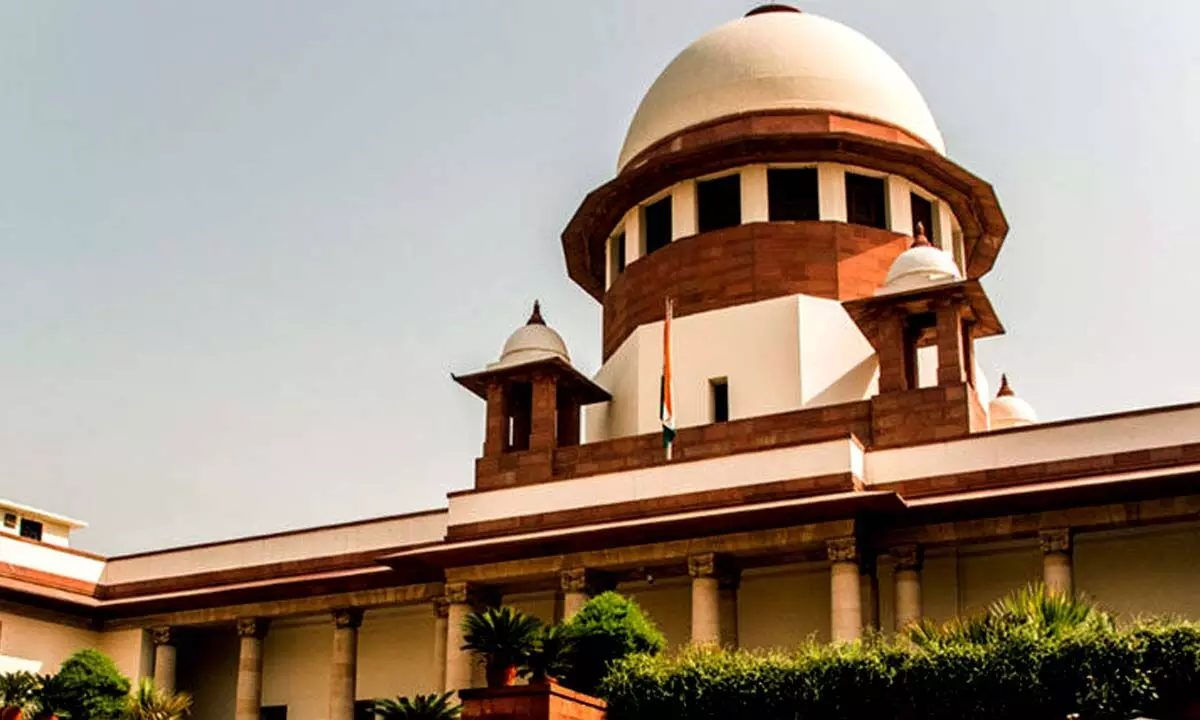
Recognising the seriousness of the issue, the Supreme Court of India issued a landmark order on August 11, 2025, directing immediate and coordinated action to remove stray dogs from all areas of Delhi-NCR, particularly vulnerable localities and city outskirts. The Court ordered the creation of shelter homes capable of housing at least 5,000 dogs within 6–8 weeks, complete with personnel, sterilisation, vaccination, and 24/7 CCTV monitoring systems. These shelters are to prevent the release of dogs back onto the streets, a practice that undermines the intent of population control efforts.

The order further directs civic authorities across Delhi, Noida, Ghaziabad, and Gurugram to maintain detailed records of captured dogs and to produce them in court. A dedicated helpline is also to be launched within a week to ensure all dog bite incidents are reported and responded to within four hours. Rabies vaccination availability must be transparently tracked and disclosed.

The Court has made it clear that this is not a debate between human safety and animal rights. Rather, it is about responsible governance. Humane population control, robust waste management, and the creation of adequate shelter infrastructure must go hand-in-hand. Authorities have also been warned that any attempt by individuals or organisations to obstruct the process will be treated as contempt of court.

The urgency of this directive stems from the need to protect human lives—particularly infants and children—while also ensuring that stray animals are treated with dignity and care. The current situation is untenable: stray dogs are forced to fend for themselves in hostile environments, often suffering from disease, injury, starvation, and abuse. Leaving animals to languish on the streets is not kindness; it is systemic neglect.

At the heart of this issue lies the need for better urban planning, effective enforcement of public health laws, and sincere commitment from all stakeholders. The Supreme Court’s intervention should not be seen as punitive but as a call to action—one that prioritises safety, compassion, and accountability.

Unless immediate, humane, and large-scale action is taken, both public safety and animal welfare will continue to suffer. The choice before us is clear: enforce responsible, science-backed population control now, or allow the crisis to deepen with devastating consequences for both people and animals.

Rahul Gandhi’s Lawyer Withdraws ‘Threat’ Plea in Savarkar Defamation Case, Cites Lack of Consent

adani, gautam adani, rahul gandhi, gandhi, us indictment, bribery charges, pahalgam, kashmir, leader of opposition
Rahul Gandhi's Lawyer Withdraws 'Threat' Plea in Savarkar Defamation Case, Cites Lack of Consent 4

In a dramatic turn in the Savarkar defamation case, Congress MP Rahul Gandhi’s lawyer on Thursday withdrew a plea from a Pune court that claimed the parliamentarian faced threats from followers of Hindutva ideologue Vinayak Damodar Savarkar.

Advocate Milind Pawar, representing Gandhi in the case, confirmed that the court had accepted the withdrawal. The move came just a day after Pawar filed the plea, later stating it was done without Gandhi’s consent.

Pawar, in a late Wednesday press release, said Gandhi had taken “strong exception” to the filing and disagreed with its contents. The plea, filed earlier that day, alleged that complainant Satyaki Savarkar—grand-nephew of V D Savarkar—had acknowledged being a descendant, through maternal lineage, of Nathuram Godse and Gopal Godse, key accused in Mahatma Gandhi’s assassination.

The withdrawn application claimed that in light of historical “violent and anti-constitutional tendencies” linked to the complainant’s lineage, combined with current political tensions, there was a “clear, reasonable, and substantial” apprehension of harm or wrongful implication to Gandhi.

Rahul Gandhi, who is out on bail in the defamation case, is accused of making remarks in a March 2023 London speech suggesting V D Savarkar once boasted about assaulting a Muslim man. The complainant has denied the claim, asserting no such incident or writing exists. The trial in the case is yet to begin.

Supreme Court Revokes Bail of Actor Darshan in Renukaswamy Murder Case

kannada, actor darshan, darshan, bail denied, supreme court
Supreme Court Revokes Bail of Actor Darshan in Renukaswamy Murder Case 6

The Supreme Court on Thursday cancelled the bail granted to Kannada actor Darshan in the high-profile Renukaswamy murder case.

A bench comprising Justices J. B. Pardiwala and R. Mahadevan overturned the Karnataka High Court’s December 13, 2024 order, ruling that it suffered from “serious infirmities” and appeared to be a “mechanical exercise” conducted at a pre-trial stage.

“The trial court is the appropriate forum to assess such matters. The well-founded allegations, supported by forensic evidence, justify the cancellation of bail,” the bench stated.

The ruling came in response to an appeal by the Karnataka government challenging the High Court’s decision to grant bail to Darshan and his co-accused, including actress Pavithra Gowda.

Darshan, Gowda, and several others stand accused of abducting and torturing 33-year-old fan Renukaswamy, who allegedly sent obscene messages to Gowda. According to police, the victim was held in a shed in Bengaluru for three days in June 2024 before being killed, with his body later recovered from a drain.

The Supreme Court had earlier, on January 24, issued notices to the accused following the state government’s plea.

Supreme Court Begins Hearing on Stray Dog Issue in Delhi-NCR

supreme court, sc, supreme court of india, fir, police, courts
Supreme Court Begins Hearing on Stray Dog Issue in Delhi-NCR 8

The Supreme Court on Thursday began hearing a case concerning the growing stray dog problem in Delhi and the National Capital Region (NCR). A three-judge bench comprising Justices Vikram Nath, Sandeep Mehta, and N V Anjaria is presiding over the proceedings.

The matter follows an earlier directive issued on August 11 by a two-judge bench of Justices J B Pardiwala and R Mahadevan, which instructed authorities across Delhi-NCR to start removing stray dogs from all localities “at the earliest” and relocate them to designated shelters.

The court had also ordered the immediate establishment of dog shelters, asking for a status report on such infrastructure within eight weeks. It stressed that stray dogs should remain in these facilities and not be released back onto streets, colonies, or public spaces.

The directions were issued during the hearing of a suo motu case initiated on July 28, prompted by a surge in stray dog bite incidents leading to rabies cases, particularly among children in the national capital.

Rahul Gandhi Slams SC Order to Remove All Stray Dogs from Delhi-NCR

rahul gandhi, street dogs, stray dogs, gandhi, sc, supreme court
Rahul Gandhi Slams SC Order to Remove All Stray Dogs from Delhi-NCR 10

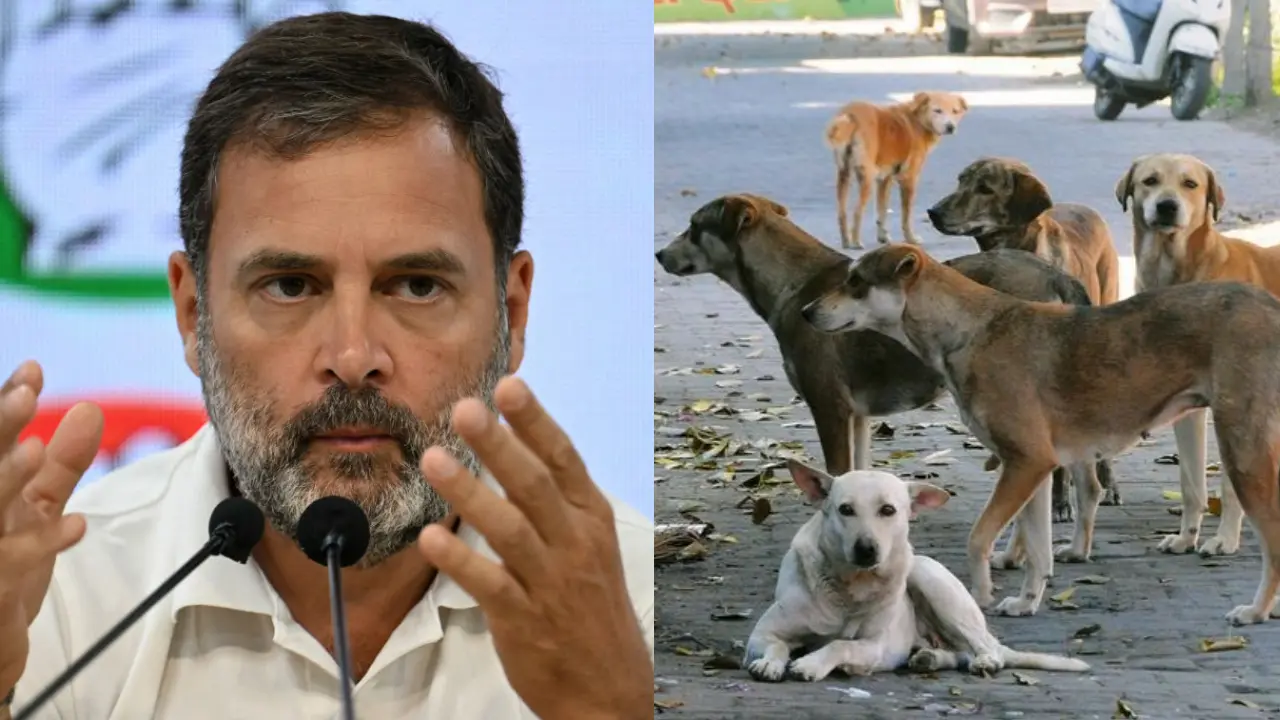
Congress leader Rahul Gandhi on Tuesday criticised the Supreme Court’s directive to remove all stray dogs from Delhi-NCR, calling it a reversal of decades of humane, science-backed policy. He argued that “blanket removals are cruel, shortsighted, and strip us of compassion,” emphasising that shelters, sterilisation, vaccination, and community care can keep streets safe without resorting to mass removal.

His comments came a day after the Supreme Court ordered Delhi-NCR authorities to permanently relocate all stray dogs to shelters “at the earliest” in view of an “extremely grim” situation caused by dog bites and rabies, particularly affecting children.

The apex court directed the creation of shelters for about 5,000 dogs within six to eight weeks, staffed for sterilisation, vaccination, and care, and monitored via CCTV to ensure animals remain inside. It also warned of strict action, including contempt proceedings, against anyone obstructing the removal of strays.

A bench of Justices J.B. Pardiwala and R. Mahadevan questioned animal activists, asking if they could “bring back children” who died from rabies, stressing the need for decisive action in the face of public health threats.

The suo motu case was initiated on July 28 after reports of rabies deaths linked to stray dog bites in Delhi. The order applies to the Delhi government as well as the civic bodies of Gurugram, Noida, and Ghaziabad.

LS Speaker Initiates Probe into Justice Yashwant Varma, Forms 3-Member Panel

justice yashwant varma, ls speaker, speaker, om birla, lok sabha
LS Speaker Initiates Probe into Justice Yashwant Varma, Forms 3-Member Panel 12

Lok Sabha Speaker Om Birla on Tuesday admitted a notice seeking the removal of High Court judge Justice Yashwant Varma and announced the formation of a three-member committee to investigate the allegations against him.

Addressing the Lok Sabha, Birla said the removal process must commence given the serious nature of the charges. The panel will be led by Supreme Court judge Justice Aravind Kumar, along with Madras High Court Chief Justice Manindra Mohan Shrivastava and senior advocate of the Karnataka High Court B.V. Acharya.

“The committee will submit its report at the earliest. The proposal for Justice Varma’s removal will remain pending until the inquiry committee’s report is received,” Birla stated.

Supreme Court Upholds Bombay HC Crackdown on Pigeon Feeding in Mumbai

supreme court, sc, supreme court of india, fir, police, courts
Supreme Court Upholds Bombay HC Crackdown on Pigeon Feeding in Mumbai 14

The Supreme Court on Monday declined to interfere with the Bombay High Court’s order directing the Brihanmumbai Municipal Corporation (BMC) to register FIRs against those feeding pigeons in defiance of a ban. A bench of Justices JK Maheshwari and Vijay Bishnoi said it would be improper for the apex court to hear the matter parallelly and advised the petitioner to seek modification of the order before the High Court.

On July 30, the Bombay High Court, responding to petitions from animal welfare activists, ruled that pigeon feeding at kabootarkhanas had become a public health hazard, particularly for children and the elderly. The bench of Justices GS Kulkarni and Arif Doctor authorised the BMC to file cases under provisions of the Bharatiya Nyaya Sanhita pertaining to public nuisance and acts likely to spread infectious or life-threatening diseases. The court also directed the installation of security cameras at locations where feeding continued.

The order has sparked strong protests in Mumbai. Last Wednesday, hundreds clashed with police at the Dadar kabootarkhana, tearing down tarpaulin sheets installed by authorities to block feeding activities.

FM Sitharaman Tables Revised Income Tax Bill in Lok Sabha, Incorporates Key Panel Recommendations

Nirmala Sitharaman, Finance Minister,recession,western countries, adani, adani group, fpo, finance minister
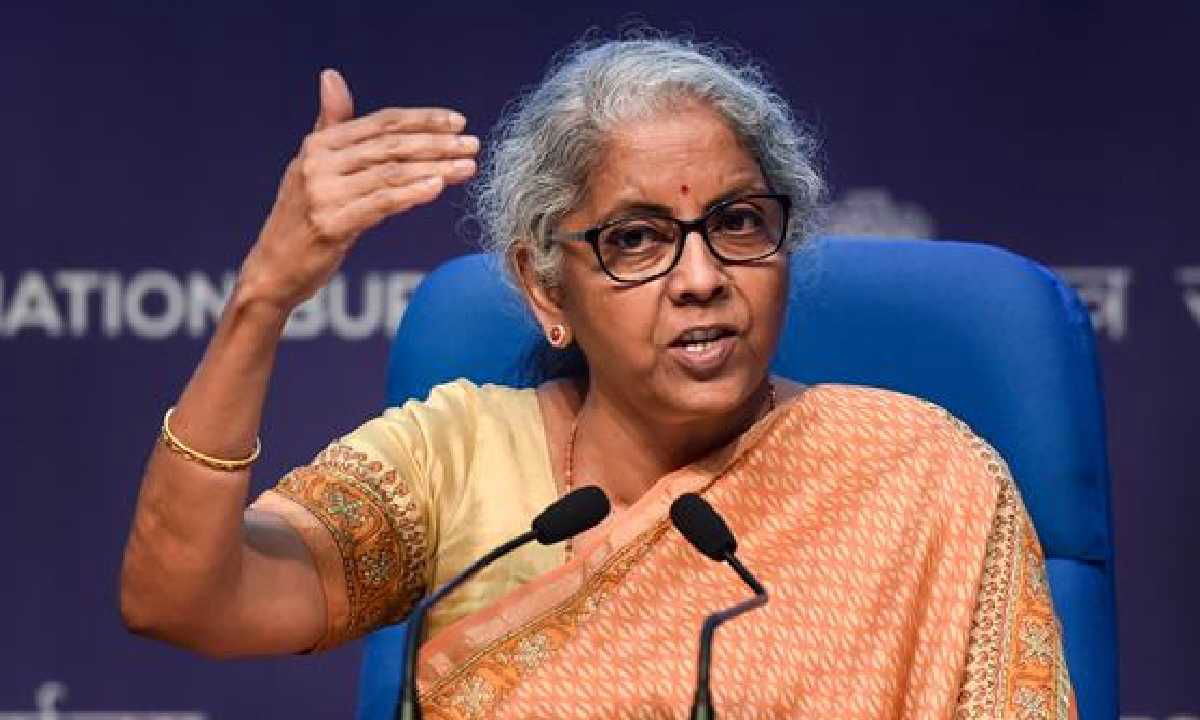
Nirmala Sitharaman, Finance Minister | Image : PTI

Finance Minister Nirmala Sitharaman on Monday introduced the revised Income-Tax (No. 2) Bill, 2025, in the Lok Sabha, replacing the decades-old Income Tax Act, 1961. The updated bill comes after the government accepted “almost all” recommendations of the Select Committee chaired by Baijayant Panda, along with additional suggestions from stakeholders to ensure the legal provisions are more precise.

The original Income-Tax Bill, 2025, was introduced in the Lok Sabha on February 13, but has now been withdrawn to make way for the modified version. According to the statement of objects and reasons, the changes include corrections in drafting, alignment of phrases, consequential amendments, and cross-referencing to improve clarity and coherence.

Sitharaman said the revised legislation consolidates and amends the existing law on income tax, reflecting both the Select Committee’s proposals and feedback from various stakeholders to strengthen the bill’s legal framework.

Rahul Gandhi, 30 Opposition MPs Detained During Protest March to EC Office in Delhi

detained, rahul gandhi, opposition, gandhi, election commission, delhi, delhi police
Rahul Gandhi, 30 Opposition MPs Detained During Protest March to EC Office in Delhi 17

Delhi Police on Monday detained over 30 opposition MPs, including Congress leaders Rahul Gandhi and Priyanka Gandhi Vadra, during a protest march to the Election Commission (EC) office against the ongoing Special Intensive Revision (SIR) of electoral rolls. Shiv Sena (UBT) MP Sanjay Raut and TMC leader Sagarika Ghose were among those held.

Police said the MPs were stopped and taken to Parliament Street Police Station as no permission had been sought for the protest march. The EC had authorised entry for only 30 MPs into its premises, but protesters turned up in “large numbers,” officials stated.

The opposition leaders began their march from Makar Dwar in Parliament, intending to submit a memorandum to the EC over alleged voter list manipulation in Bihar and Karnataka. Police informed them they would be taken to the EC only after the names of the permitted MPs were confirmed.

Security was intensified near the EC headquarters, with multiple barricades, additional police vehicles, and quick reaction teams deployed to maintain order and ensure smooth traffic flow.

The protest was part of a broader opposition campaign alleging that the SIR exercise in Bihar is being used to manipulate electoral rolls ahead of elections. The Congress also raised concerns about alleged large-scale voter list tampering in Bengaluru’s Mahadevapura constituency during the 2023 Karnataka Assembly polls.

SC Orders Delhi to Remove Stray Dogs from Streets, House Them in Shelters Amid Bite Concerns

stray dogs, shelter, dogs, stray, sc, supreme court
SC Orders Delhi to Remove Stray Dogs from Streets, House Them in Shelters Amid Bite Concerns 19

Calling the stray dog situation in Delhi “extremely grim,” the Supreme Court on Monday directed the Delhi government and civic bodies to immediately begin removing stray dogs from all localities and housing them in shelters.bite

A bench comprising Justices J.B. Pardiwala and R. Mahadevan ordered the creation of shelters capable of accommodating around 5,000 stray dogs, staffed with enough personnel to sterilise and immunise them. The court stressed that the animals must remain in shelters and not be released back into streets, colonies, or public spaces.

The bench warned that strict action would be taken against any individual or organisation obstructing the removal of stray dogs by authorities. “We are issuing these directions keeping larger public interest in mind,” the court stated, emphasising that infants and young children must be protected from potentially fatal dog bite incidents leading to rabies.

The court also ordered the establishment of a helpline within a week to ensure that all dog bite cases are reported immediately.

These directions follow the Supreme Court’s suo motu cognisance on July 28 of a media report detailing a fatal dog bite incident in Delhi that resulted in rabies.