Home Blog Page 4

Supreme Court Allows Vinesh Phogat to Compete in Asian Games 2026 Selection Trials

vinesh phogat, wfi, wrestling federation of india, supreme court, Asian Games 2026, Selection Trials
Supreme Court Allows Vinesh Phogat to Compete in Asian Games 2026 Selection Trials 2

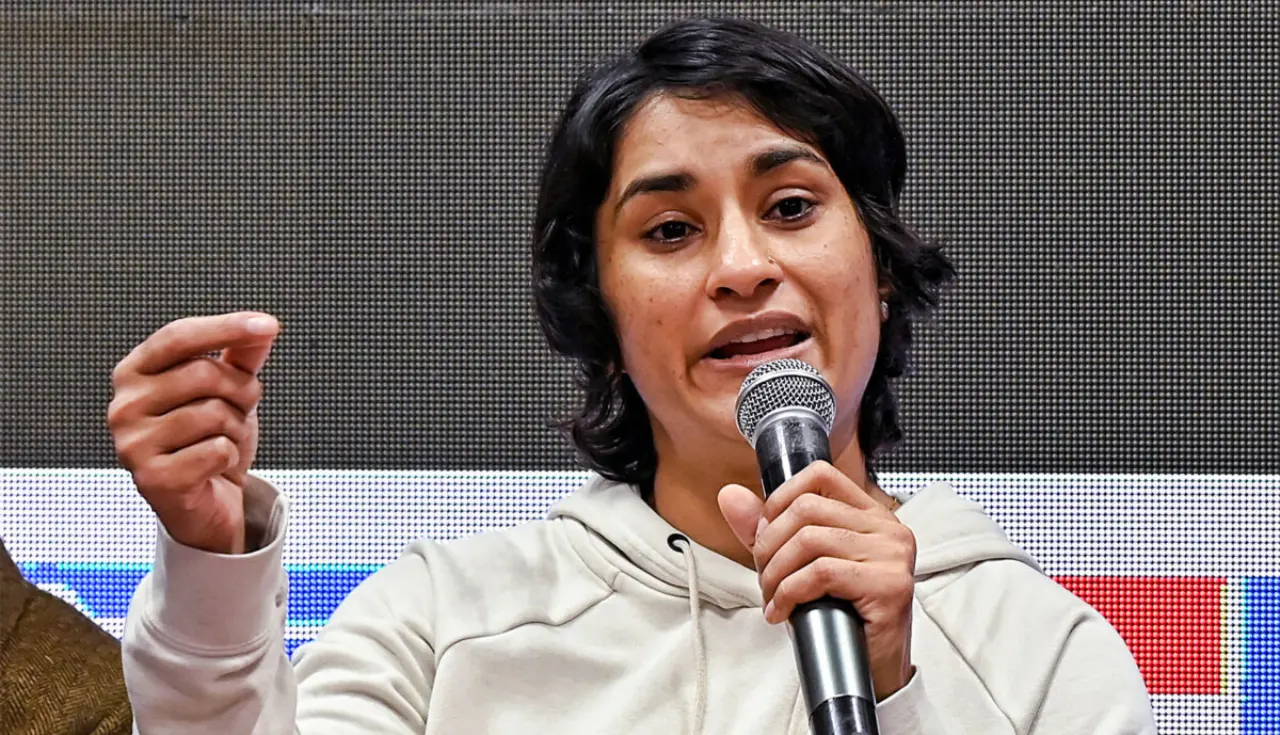
The Supreme Court on Friday permitted wrestler Vinesh Phogat to participate in the selection trials for the Asian Games 2026, scheduled to be held on May 30 and 31, providing a major boost to the celebrated athlete’s bid for a return to international competition.

A bench comprising Justices P S Narasimha and Alok Aradhe passed the order while hearing a petition filed by the Wrestling Federation of India (WFI) challenging a Delhi High Court ruling that allowed Phogat to compete in the trials.

Observing that expectations had already been raised following the High Court’s decision, the bench remarked that it would not be appropriate to deny her participation at this stage.

“Today, at this stage, the High Court having passed the order, the hope and expectations have risen. To tell her to go back home and we can’t do anything will not be proper,” the bench told the WFI’s counsel.

The Supreme Court directed that Phogat be allowed to participate in the selection trials while clarifying that it remained concerned about the manner in which the High Court had dealt with the matter. The case has been posted for further hearing next week.

On May 22, a division bench of the Delhi High Court had allowed Phogat to take part in the trials, holding that the WFI’s selection policy was exclusionary because it did not provide discretion for considering an iconic athlete returning from a maternity break.

The High Court had also ordered the WFI to video-record the trials and ensure the presence of independent observers from the Sports Authority of India (SAI) and the Indian Olympic Association (IOA).

The court observed that previous selection practices had allowed discretion for the inclusion of distinguished athletes and stressed that motherhood should not become a reason to exclude female sportspersons from competition.

“Motherhood cannot be treated as a professional impediment or a circumstance warranting adverse treatment,” the High Court had said.

The court had further criticised the WFI for describing Phogat’s disqualification from the 2024 Paris Olympics as a “national embarrassment” in a show-cause notice, calling the remark “deplorable” and “misconceived”.

Phogat has challenged the WFI’s selection policy, arguing that the eligibility criteria overlapped with her maternity leave and post-partum recovery period, effectively preventing her from qualifying for the trials.

Earlier this month, the WFI declared Phogat ineligible to participate in domestic events until June 26, citing a mandatory six-month notice period linked to athletes returning from retirement under anti-doping regulations. Despite this, she participated in the National Open Ranking Tournament in Uttar Pradesh’s Gonda.

Phogat was one of the leading faces of the women wrestlers’ protest in 2023 against former WFI president and BJP leader Brij Bhushan Sharan Singh over allegations of sexual harassment.

In August 2024, she was disqualified from the 50-kg category final at the Paris Olympics after being found 100 grams overweight during the morning weigh-in.

Siddaramaiah’s Political Journey: From Janata Parivar Loyalist to Karnataka’s Longest-Serving Chief Minister

karnataka, siddaramiah, assembly, reservation, 100% jobs reservation, job reservation
Siddaramaiah's Political Journey: From Janata Parivar Loyalist to Karnataka's Longest-Serving Chief Minister 4

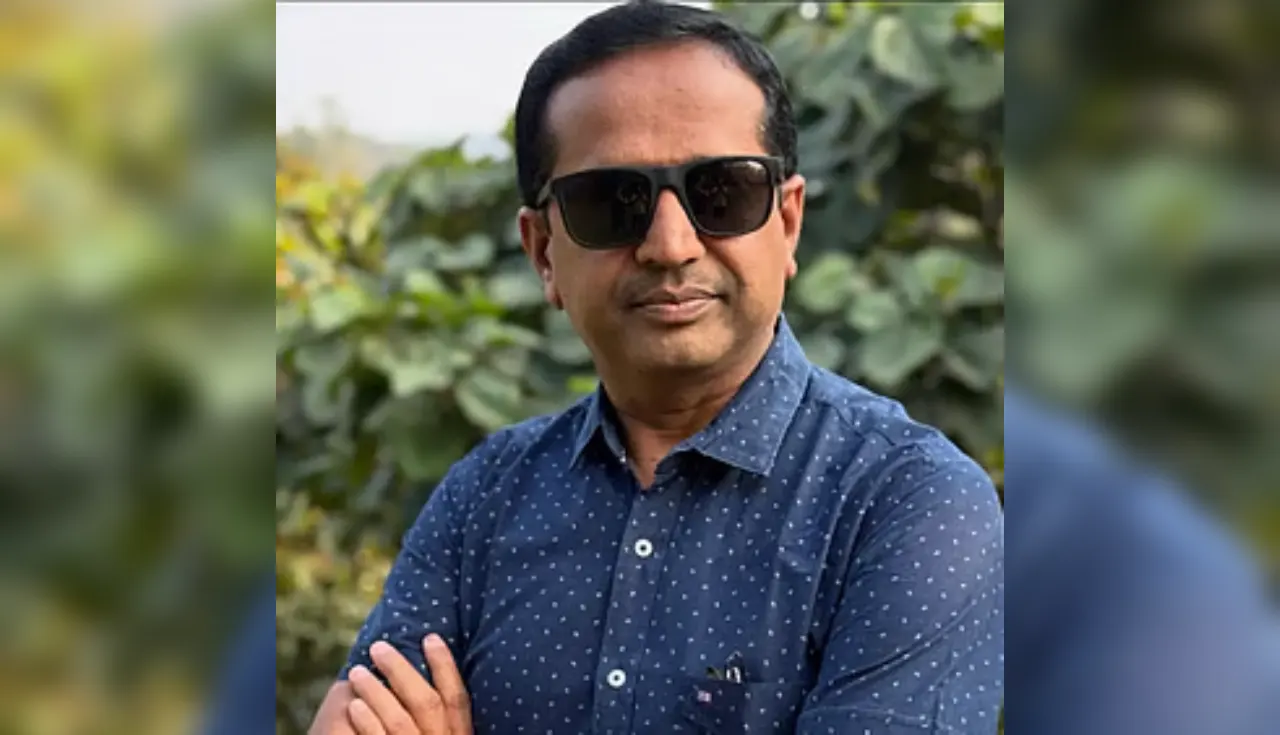
Siddaramaiah’s rise from a staunch Janata Parivar leader and vocal Congress critic to becoming Karnataka’s longest-serving Chief Minister is one of the most remarkable political transformations in the state’s history.

The 77-year-old Congress veteran, who openly expressed his desire to complete his full term and exit on a high note, stepped down as Chief Minister two years before the end of his tenure following the Congress high command’s decision to implement a leadership change in Karnataka.

During his second stint as Chief Minister, Siddaramaiah etched his name into the record books by surpassing the tenure of Congress stalwart Devaraj Urs. On January 7, he became Karnataka’s longest-serving Chief Minister, completing 2,792 days in office across his terms.

Born into a poor farming family, Siddaramaiah spent more than two decades in the Janata Parivar camp and was known for his strong anti-Congress stance. However, his expulsion from the Janata Dal (Secular) led by former Prime Minister H D Deve Gowda proved to be a turning point in his political career.

In 2006, after ruling out the possibility of forming his own regional party and rejecting overtures from the BJP due to ideological differences, Siddaramaiah joined the Congress along with his supporters—a move that was considered unthinkable at the time.

A lawyer by profession, Siddaramaiah was deeply influenced by socialist leader Ram Manohar Lohia and began his political career as a taluk board member before rising through the ranks of Karnataka politics. He made his Assembly debut in 1983 from the Chamundeshwari constituency in Mysuru on a Lok Dal ticket.

Over the years, he held several key positions, including serving as the first chairman of the Kannada Kavalu Samiti, a body formed to oversee the implementation of Kannada as the official language, and later as Karnataka’s Sericulture Minister.

The seasoned politician’s patience and persistence eventually paid off when he realised his long-cherished ambition of becoming Chief Minister in 2013. He returned to the top post again in 2023 after a five-year gap, cementing his position as one of Karnataka’s most influential leaders.

Following the fractured mandate in 2004, Siddaramaiah served as Deputy Chief Minister in the Congress-JD(S) coalition government headed by N Dharam Singh. He has often maintained that he missed an opportunity to become Chief Minister at the time due to internal political developments within the JD(S).

In 2005, Siddaramaiah strategically positioned himself as a leader of backward classes by championing the AHINDA platform—an acronym representing minorities, backward classes and Dalits—at a time when H D Kumaraswamy was emerging as a prominent face within the JD(S).

Born on August 12, 1948, in Siddaramanahundi village of Mysuru district, Siddaramaiah graduated with a BSc degree from the University of Mysore and later earned a law degree from the same institution before briefly practising as an advocate.

He is married to Parvati and has a son, Dr Yathindra Siddaramaiah, who is a Congress MLC. His elder son, Rakesh Siddaramaiah, who was once seen as his political successor, passed away in 2016.

Siddaramaiah’s tenure was marked by the implementation of several welfare-oriented guarantee schemes that became a defining feature of his government. However, his administration also faced challenges, including allegations related to the allotment of MUDA sites in Mysuru to his wife, which became a major political controversy.

His final years in office were also shaped by a prolonged power-sharing tussle with Deputy Chief Minister D K Shivakumar, another strong contender for the chief minister’s post. Ultimately, Siddaramaiah stepped down in accordance with the Congress party’s reported rotational power-sharing arrangement, bringing an end to a historic chapter in Karnataka politics.

CBI Arrests Latur Doctor, Pune Physics Teacher in NEET-UG 2026 Paper Leak Probe

manoj shirure, latur doctor, neet-ug, neet-ugc, paper leak, paper leak case
CBI Arrests Latur Doctor, Pune Physics Teacher in NEET-UG 2026 Paper Leak Probe 6

The Central Bureau of Investigation (CBI) on Wednesday arrested a doctor from Maharashtra’s Latur and a physics teacher from a Pune-based coaching institute in connection with the alleged NEET-UG 2026 paper leak case.

According to officials, the agency arrested Manoj Shirure, a Latur-based doctor, for allegedly playing a key role in facilitating access to leaked chemistry questions for three students, including the son of Renukai Career Centre (RCC) founder Shivraj Motegaonkar.

Motegaonkar, who operated the RCC coaching institute in Latur, was arrested earlier as part of the ongoing investigation.

The CBI also arrested Tejas Harshadkumar Shah, a physics faculty member at Dr Abhang Prabhu Medical Academy (APMA) in Pune. Investigators allege that Shah received leaked physics questions for the NEET-UG 2026 examination from co-accused Manisha Havaldar, who was arrested previously in the case.

With the latest arrests, the total number of people taken into custody in the paper leak case has risen to 13.

“The investigation to unearth the entire chain and conspiracy behind the paper leak is ongoing. The CBI has so far conducted searches at 49 locations and seized several incriminating documents, laptops and mobile phones,” a CBI spokesperson said in a statement.

The NEET-UG examination, conducted by the National Testing Agency (NTA) on May 3 for admissions to undergraduate medical courses, was cancelled on May 12 following allegations of a question paper leak and other irregularities.

The NTA has announced that a fresh examination will be conducted on June 21 for affected candidates.

The case has triggered nationwide concern over the integrity of competitive examinations and prompted calls for stricter safeguards in the conduct of entrance tests.

Rajasthan HC Acquits Asaram of Gang Rape Charges, Upholds Life Sentence in Minor Rape Case

asaram baupu
Rajasthan HC Acquits Asaram of Gang Rape Charges, Upholds Life Sentence in Minor Rape Case 8

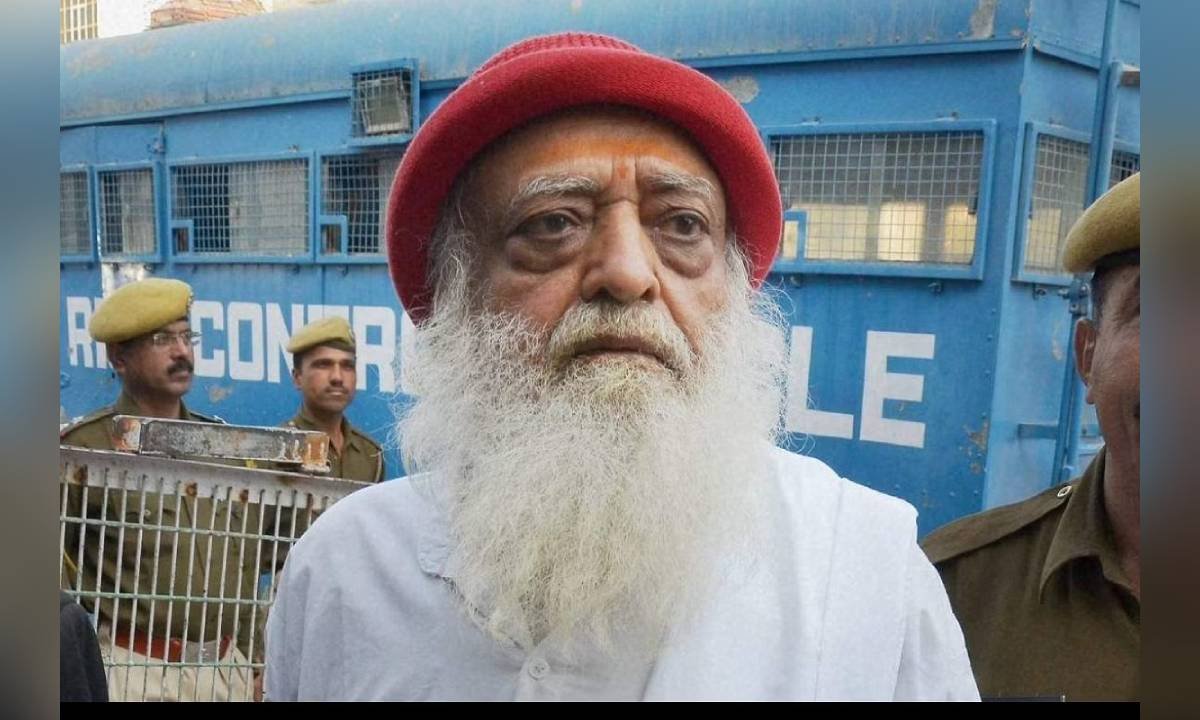
Former self-styled godman Asaram received partial relief from the Rajasthan High Court on Wednesday after it acquitted him of gang rape and gang penetrative sexual assault charges under the IPC and POCSO Act. However, the court upheld his conviction for the rape of a minor, ensuring that his life imprisonment sentence remains in force.

A division bench comprising Justice Arun Monga and Justice Yogendra Kumar Purohit acquitted Asaram of charges under Section 376(D) of the Indian Penal Code and Sections 5(G)/6 of the Protection of Children from Sexual Offences (POCSO) Act. The court also discharged him of charges under Section 120(B) of the IPC related to criminal conspiracy.

Despite granting relief on some counts, the bench upheld his conviction under Section 376(2)(F) of the IPC, which pertains to the rape of a minor, thereby retaining the life sentence imposed by the trial court.

The High Court directed Asaram to surrender in view of the conviction. He is currently out on temporary bail, which was extended by seven days earlier this week.

The bench also upheld his convictions under several other provisions, including Sections 342 (wrongful confinement), 370(4) (trafficking), 506 (criminal intimidation), 509 (insulting the modesty of a woman), and 354(A) (sexual harassment) of the IPC. Convictions under Sections 7 and 8 of the POCSO Act and Section 23 of the Juvenile Justice Act were also upheld.

Additionally, the court sustained his conviction under Section 376 of the IPC and Section 34 of the POCSO Act.

Meanwhile, the High Court acquitted co-accused Sanchita Gupta alias Shilpi and Sharat Chandra, who had earlier been convicted under provisions related to trafficking and criminal conspiracy.

The bench had reserved its verdict on April 20 after concluding hearings on appeals filed by Asaram and the co-accused.

According to reports, before pronouncing the judgment, the court remarked that it had a “mixed bag” of good and bad news for the accused and asked which part he wished to hear first.

Asaram was convicted by a trial court on April 25, 2018, for sexually assaulting a minor student at his ashram and was sentenced to life imprisonment under various provisions of the IPC, POCSO Act and Juvenile Justice Act.

Supreme Court Upholds EC’s Special Electoral Roll Revision, Says It Strengthens Free and Fair Elections

supreme court of india, supreme court, sc, uapa, uapa offence, 2011 verdict
Supreme Court Upholds EC's Special Electoral Roll Revision, Says It Strengthens Free and Fair Elections 10

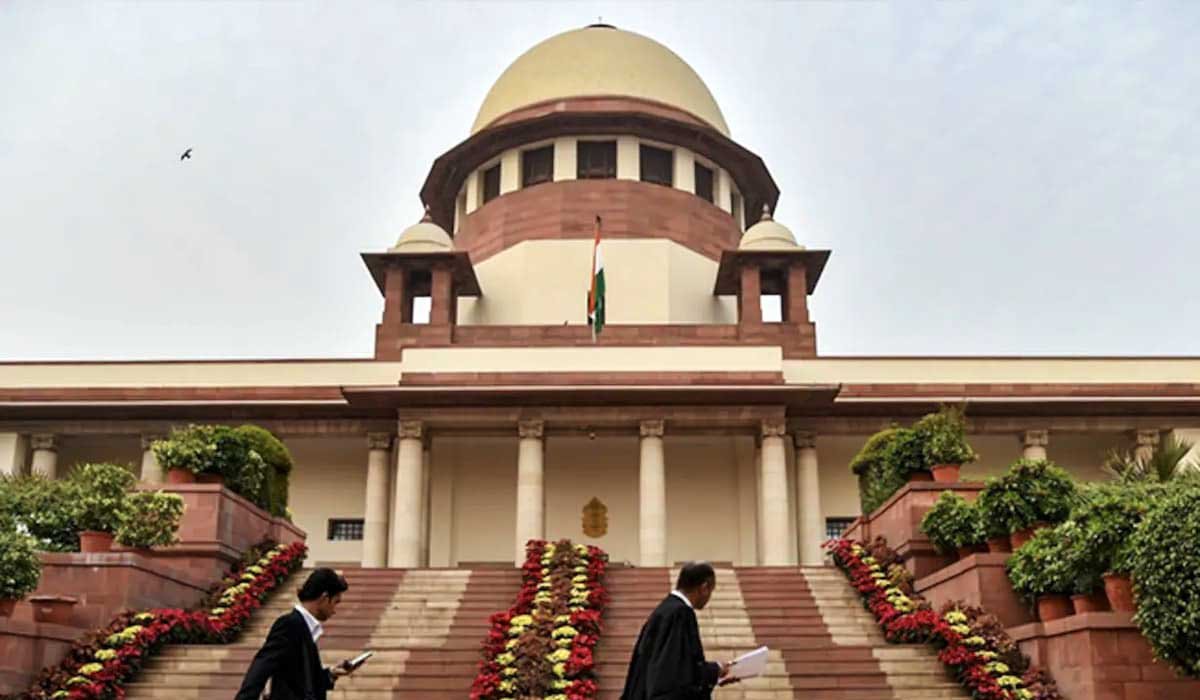
The Supreme Court on Wednesday upheld the Election Commission of India’s authority to conduct a Special Intensive Revision (SIR) of electoral rolls, observing that the exercise promotes the constitutional objective of ensuring free and fair elections.

A bench headed by Chief Justice Surya Kant ruled that the poll panel acted within its statutory powers while undertaking the electoral roll revision process and rejected claims that the exercise exceeded its legal mandate.

“We are unable to conclude that the impugned exercise is a process resorted to solely for administrative convenience. On the contrary, we hold that the electoral SIR advances the constitutional imperative of free and fair elections,” the bench said.

The verdict came on a batch of petitions challenging the legality of the SIR exercise, including one filed by the Association for Democratic Reforms (ADR). The petitioners had argued that the Election Commission lacked the authority under Article 326 of the Constitution, the Representation of the People Act, 1950, and related rules to undertake such a large-scale revision of electoral rolls.

The Supreme Court had reserved its judgment on January 29 after hearing extensive arguments from all parties.

The first phase of the SIR exercise was conducted in Bihar, where the Election Commission later reported that around 65 lakh names were removed from the draft electoral rolls following the revision process.

Under the SIR guidelines, voters whose names did not appear in the 2002 or 2003 electoral rolls were required to establish ancestral linkage with individuals listed in those rolls.

Defending the exercise, the Election Commission maintained that documents such as Aadhaar cards and voter identity cards cannot be treated as conclusive proof of citizenship.

The petitioners, however, contended that the revision resembled a National Register of Citizens (NRC)-type exercise and alleged that the poll body was effectively verifying citizenship, a function they argued rests exclusively with the central government.

The apex court, however, upheld the Election Commission’s powers and reaffirmed that the inclusion and exclusion of names in electoral rolls fall within its constitutional and statutory domain.

Nine-Year-Old Dalit Girl Allegedly Gang-Raped By Two Minors In UP’s Ballia

crime, rape, harassment, women, ballia, uttar pradesh
Nine-Year-Old Dalit Girl Allegedly Gang-Raped By Two Minors In UP's Ballia 12

A nine-year-old Dalit girl was allegedly gang-raped by two minor boys from her village in the Haldi area of Ballia district, police said on Tuesday.

An FIR was lodged based on a complaint filed by the girl’s father, a resident of a village under Haldi police station limits, they said.

According to the complaint, the accused allegedly lured the girl with a bribe and sexually assaulted her on the evening of May 23 while she was grazing goats outside the village. The complaint also alleged that the accused used casteist slurs during the incident.

Bairia Deputy Superintendent of Police Mohammad Fahim Qureshi said that the two accused boys are 11 to 12 years old and were known to the girl.

Based on the complaint, a case was registered on Monday against the two boys under Section 70(2) of the Bharatiya Nyaya Sanhita (BNS), related to gang rape, along with provisions of the Protection of Children from Sexual Offences (POCSO) Act, and relevant sections of the Scheduled Castes and Scheduled Tribes (Prevention of Atrocities) Act.

The girl has been sent to the District Women’s Hospital for a medical examination on Tuesday, he said.

Proceedings are underway to record the girl’s statement and the police are taking necessary legal action, he added.

SC Declines Urgent Hearing on Plea Seeking Complete Ban on Cow Slaughter Ahead of Bakrid

swarajya 2017 04 ffdc93cf 5ac3 4abf 9b13 f1e78922303d Cattle
SC Declines Urgent Hearing on Plea Seeking Complete Ban on Cow Slaughter Ahead of Bakrid 14

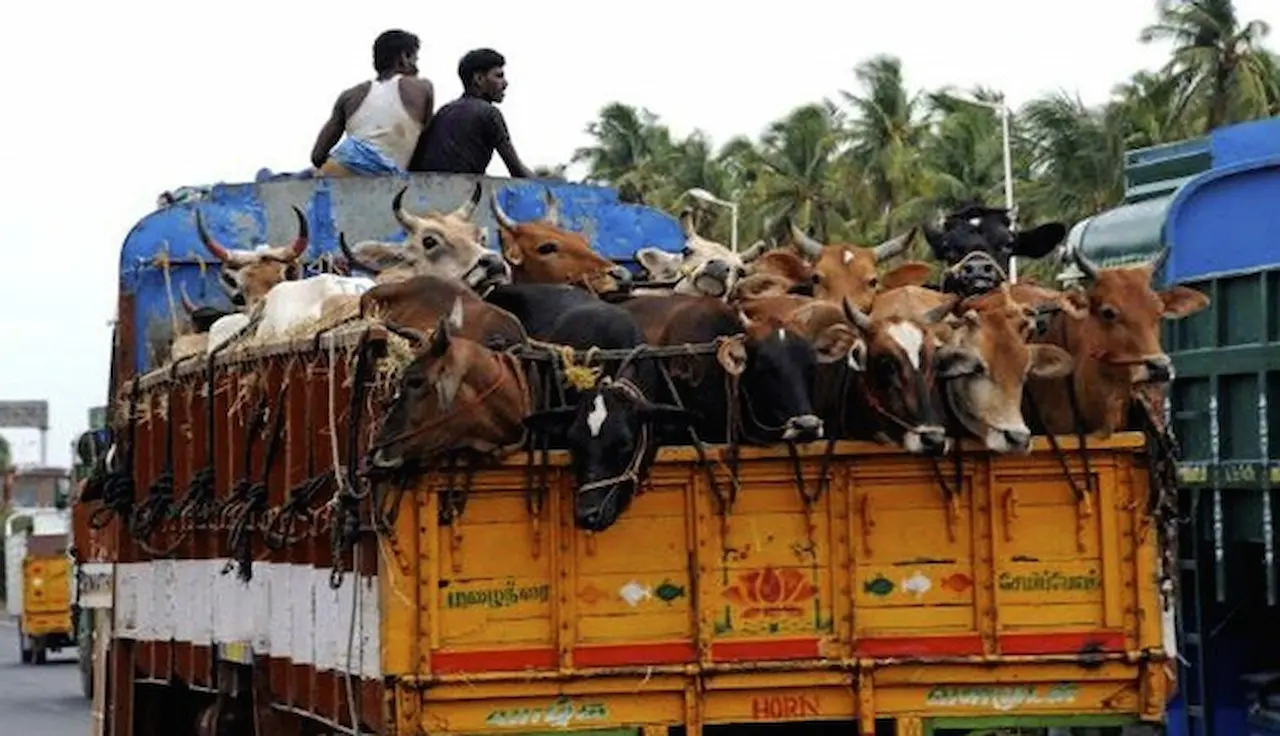
The Supreme Court on Tuesday refused to grant an urgent hearing on a Public Interest Litigation (PIL) seeking the effective implementation of laws imposing a complete ban on cow slaughter ahead of Bakrid.

A bench comprising Chief Justice of India Surya Kant and Justice Joymalya Bagchi declined the request after the matter was mentioned for urgent listing.

“You remembered this a day before. No urgency. Thanks,” the bench remarked while rejecting the plea for an expedited hearing.

Advocate Barun Kumar Sinha, appearing for the petitioner, urged the court to take up the matter urgently, pointing out that Bakrid was just two days away.

“Day after tomorrow is Bakrid. This is a plea seeking implementation of anti-cow slaughter laws. If this can be listed tomorrow,” Sinha submitted before the court.

The petition was filed by Satish Kumar Aggarwal, former vice-president of the Akhil Bharat Hindu Mahasabha. It seeks directions for the strict enforcement of existing anti-cow slaughter laws to protect cows and their progeny from slaughter.

The plea also requests the apex court to direct state governments to formulate and notify guidelines for regulating slaughterhouses in accordance with applicable laws across the country.

While refusing an urgent hearing, the Supreme Court did not comment on the merits of the petition.

The matter comes amid heightened public and legal debates surrounding animal protection laws and their implementation during religious festivals.

Fuel Price Hikes Have Made Life Miserable, Alleges Shiv Sena (UBT) in Scathing ‘Saamana’ Editorial

uddhav thackeray, shiv sena, ubt, sena, mahayuti, shiv sena (ubt)
Fuel Price Hikes Have Made Life Miserable, Alleges Shiv Sena (UBT) in Scathing 'Saamana' Editorial 16

The Shiv Sena (UBT) on Tuesday launched a sharp attack on the Centre over rising inflation and repeated fuel price hikes, claiming that four increases in petrol and diesel prices within eight days have made life increasingly difficult for ordinary citizens.

In a strongly worded editorial published in its mouthpiece Saamana, the Uddhav Thackeray-led party alleged that the government fears growing public anger over inflation and is attempting to suppress criticism.

The editorial claimed that fuel price hikes have a cascading impact on the cost of essential commodities and accused the government of trying to silence expressions of public resentment.

“The government is so terrified that it has banned the song ‘Mehngai Dayyan Khaaye Jaat Hai’ from the film Peepli Live. The message seems to be: suffer the pain of inflation but do not speak about it,” the editorial alleged.

The party further accused the government of being intolerant of criticism, alleging that it fears political opponents, stand-up comedians and public dissent. It also claimed that investigative agencies such as the ED and CBI were being used against opposition leaders.

Referring to political developments in West Bengal and Maharashtra, the editorial alleged that the ruling establishment was attempting to undermine opposition leaders, including Mamata Banerjee and Uddhav Thackeray.

The article pointed out that BJP leaders, including late former External Affairs Minister Sushma Swaraj and former Union Minister Smriti Irani, had actively protested against inflation during previous governments.

“The BJP came to power raising the issue of inflation. Today, the same government appears uncomfortable with criticism over rising prices,” the editorial stated.

Recalling the 2010 film Peepli Live, the editorial highlighted the popular song ‘Mehngai Dayyan Khaaye Jaat Hai’, sung by actor Raghubir Yadav, which portrays the struggles of common people dealing with rising costs despite working hard to earn a livelihood.

The party argued that the song had become a symbol of public frustration over inflation and questioned why citizens should not relate to it when facing rising fuel and commodity prices.

According to the editorial, the removal of the song from social media platforms shortly after it was posted by Aamir Khan Productions reflected alleged pressure from authorities, though no evidence was cited for the claim.

The editorial concluded by asserting that public anger over inflation cannot be addressed by restricting criticism or removing content from social media. It warned that economic hardship and rising prices could intensify public dissatisfaction in the coming months.

The criticism comes amid a series of fuel price hikes that have pushed petrol and diesel rates higher across the country, sparking political reactions from opposition parties and concerns over inflationary pressures.

Karnataka Leadership Buzz Intensifies: Siddaramaiah Meets Congress High Command, Shivakumar Dodges CM Question

siddaramaiah, shivakumar, congress, karnataka, chief minister
Karnataka Leadership Buzz Intensifies: Siddaramaiah Meets Congress High Command, Shivakumar Dodges CM Question 18

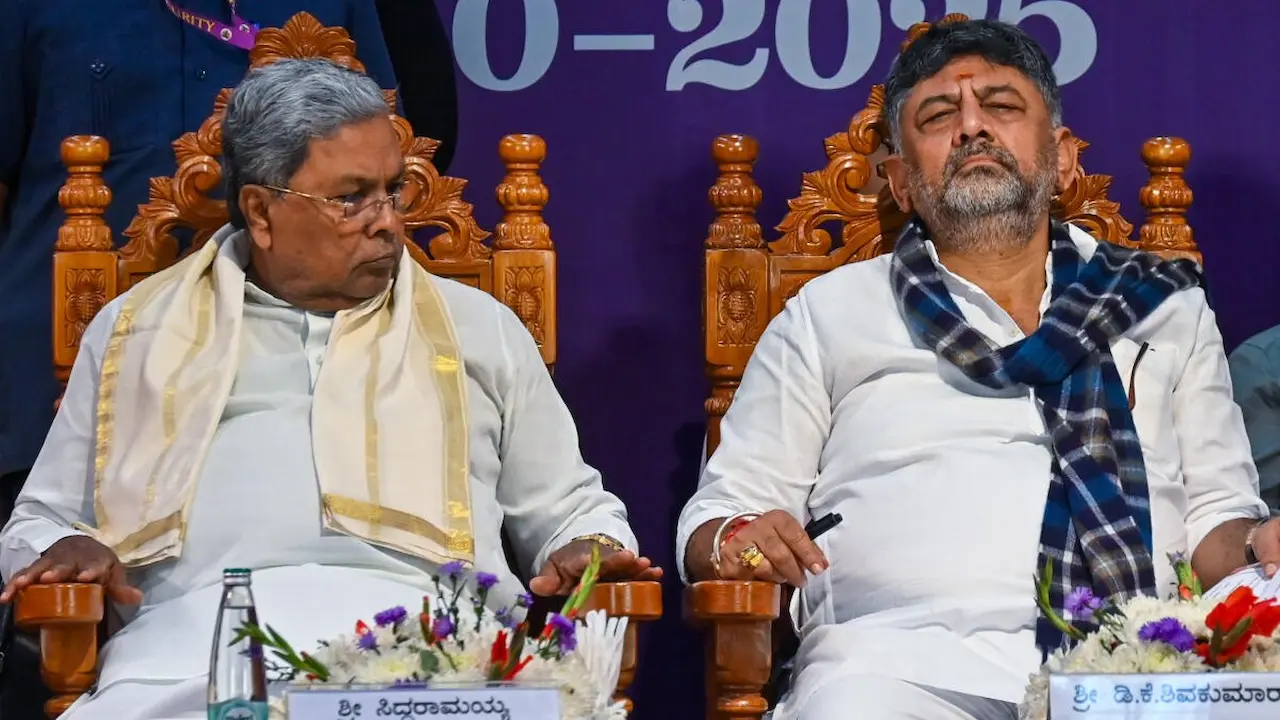
Speculation over a possible leadership change in Karnataka intensified on Tuesday as Chief Minister Siddaramaiah arrived at Indira Bhavan in New Delhi for crucial discussions with the Congress high command.

Adding to the political intrigue, Deputy Chief Minister and Karnataka Congress chief D.K. Shivakumar smiled but declined to comment when asked by reporters whether he would be the next Chief Minister of the state.

Siddaramaiah is scheduled to meet Congress president Mallikarjun Kharge and party general secretaries K.C. Venugopal and Randeep Singh Surjewala at the AICC headquarters. A separate meeting with Congress leader Rahul Gandhi is also expected later in the day.

Before heading to Indira Bhavan, Siddaramaiah had breakfast at Karnataka Bhavan along with senior ministers G. Parameshwara, Satish Jarkiholi, H.C. Mahadevappa, Byrathi Suresh, K.J. George and M.B. Patil. Senior Congress leader and Haryana in-charge B.K. Hariprasad, along with legal adviser Ponnanna, were also present.

Public Works Department Minister Satish Jarkiholi acknowledged ongoing uncertainty within the party and expressed hope that the high command would soon provide clarity.

“There has been confusion in the party for the past six months, and we are confident that it will be resolved soon. We have come to Delhi along with the Chief Minister, and discussions are yet to begin,” Jarkiholi said.

He added that leaders may also discuss the post of Karnataka Pradesh Congress Committee (KPCC) president and stressed that resolving leadership-related issues could help address other concerns within the party.

Jarkiholi said the entire party would abide by whatever decision is taken by the Congress leadership.

Congress MLC and senior leader B.K. Hariprasad maintained that there was no formal discussion on a leadership change but remarked that matters had reached a “final stage.”

Energy Minister K.J. George dismissed suggestions of internal turmoil, stating that Delhi remained the political centre where leaders frequently visited for consultations.

The meeting between the Congress high command, Siddaramaiah and Shivakumar is being closely watched by party workers and political observers amid persistent rumours regarding a leadership transition in Karnataka.

Both Siddaramaiah and Shivakumar arrived in Delhi late Monday night after being called by the party leadership. Their respective camps are closely monitoring developments as the Congress attempts to address speculation over the state’s future political leadership.

Meanwhile, Industries Minister M.B. Patil, considered a close aide of Siddaramaiah, refrained from commenting on the outcome of the discussions, saying it would be inappropriate to speculate on the decisions of the party leadership.

Delhi Sizzles Under Heatwave Alert as Temperature Set to Hit 44°C; Air Quality Slips to ‘Very Poor’

Delhi heatwave alert, Delhi weather today, Delhi AQI today, IMD yellow alert, Delhi temperature 44 degree. delhi, heatwave
Delhi Sizzles Under Heatwave Alert as Temperature Set to Hit 44°C; Air Quality Slips to 'Very Poor' 20

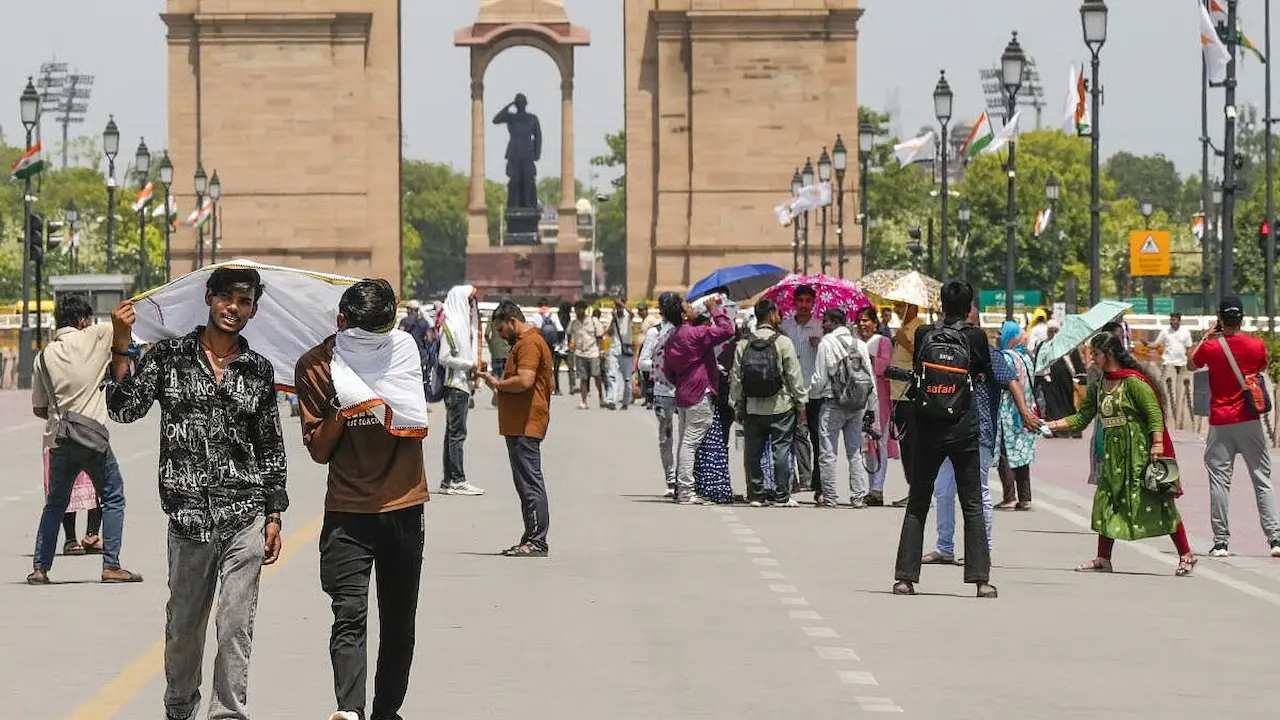
Delhi woke up to hot and humid conditions on Tuesday, with the India Meteorological Department (IMD) issuing a yellow alert for heatwave conditions as the national capital braces for temperatures as high as 44 degrees Celsius.

The city recorded a minimum temperature of 26.8 degrees Celsius, close to the seasonal average.

Among the key weather stations, Palam recorded a minimum temperature of 27.5 degrees Celsius, 0.6 degrees above normal, while Lodhi Road registered 25.6 degrees Celsius, 0.4 degrees below normal. The Ridge station logged 26.7 degrees Celsius, slightly above normal, while Ayanagar recorded 27.1 degrees Celsius, marginally below the seasonal average.

According to the IMD, the maximum temperature is likely to touch 44 degrees Celsius during the day, intensifying heatwave conditions across the city.

Adding to residents’ discomfort, Delhi’s air quality deteriorated further and entered the “very poor” category. The Air Quality Index (AQI) stood at 301 at 9 am, according to data released by the Central Pollution Control Board (CPCB).

As per CPCB standards, an AQI between 301 and 400 falls in the “very poor” category and may cause respiratory discomfort, particularly among vulnerable groups such as children, senior citizens and people with pre-existing health conditions.

The combination of scorching temperatures and worsening air quality has prompted authorities to advise residents to avoid prolonged outdoor exposure, stay hydrated and take necessary precautions against heat-related illnesses.

With weather conditions expected to remain harsh over the coming days, Delhiites may face a challenging spell of extreme heat and poor air quality.