SC Rejects Media Gag in Dharmasthala Mass Burial Case, Sends Defamation Plea Back to Trial Court 2
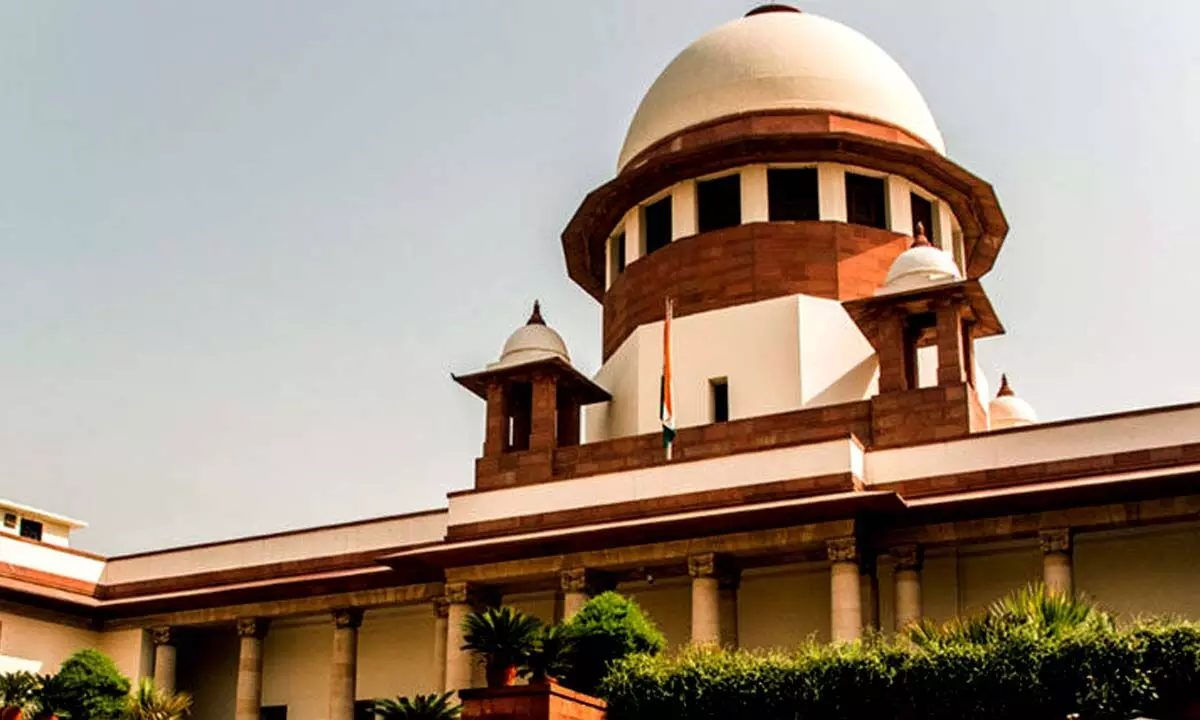
The Supreme Court on Friday refused to impose a media gag on the Dharmasthala mass burial case in Karnataka, asserting that such restrictions are reserved for the rarest of circumstances. A bench comprising Justices Rajesh Bindal and Manmohan directed a trial court in Karnataka to re-examine a plea filed by Harshendra Kumar D, secretary of the Dharmasthala Temple, who had sought the removal of allegedly defamatory content targeting the temple’s managing family.
While declining to restrict media coverage, the apex court emphasized that it had not expressed any opinion on the merits of the case and advised the petitioner to present all relevant materials before the trial court for consideration.
The controversy stems from reports on alleged murders of women in Dharmasthala, located in Karnataka’s Dakshina Kannada district. The Karnataka High Court had earlier, on August 1, quashed a gag order issued by a Bengaluru civil court that had restrained media from reporting on the case.
Kumar, in his petition, alleged that nearly 8,000 YouTube channels were circulating defamatory content about the temple and its authorities. On July 23, a separate petition filed by YouTube channel Third Eye was turned away by a CJI-led bench. That petition challenged a sweeping interim gag order issued by a local court, which had directed nearly 390 media outlets to take down around 9,000 links and stories related to the burial case and its alleged connection to the brother of Dharamadhikari D Veerendra Heggade of Dharmasthala.
The earlier gag order was granted in a defamation suit by Kumar, despite the fact that no formal FIR named him or the temple in the alleged crimes.
Amidst growing public and media scrutiny, Karnataka Home Minister G Parameshwara recently stated that a thorough investigation must be conducted before drawing conclusions regarding the alleged murders. A Special Investigation Team (SIT) has been formed by the state government to probe the disturbing claims.
Congress Blocks Roads in Mumbai, Accuses EC of Acting as BJP's 'Broker' in Voter Fraud 4
The Maharashtra Congress on Friday intensified its protest against the BJP and the Election Commission (EC) by staging a dramatic ‘rasta roko’ in Mumbai, accusing the ruling party of “stealing votes” with the help of the poll body. The protest, led by Maharashtra Congress chief Harshwardhan Sapkal, brought traffic to a standstill for over an hour as party workers shouted slogans condemning the EC and the BJP government.
Earlier, addressing the media at Tilak Bhavan, Sapkal launched a scathing attack on the EC, claiming it had “completely lost its credibility” and was functioning like a “broker or advocate” for the BJP. He questioned why BJP leaders, rather than the EC, were responding to Congress leader Rahul Gandhi’s explosive allegations in Parliament.
Rahul Gandhi had, on the same day, described the Special Intensive Revision (SIR) of electoral rolls as “institutionalised chori” and accused the EC of openly colluding with the BJP to strip the poor of their voting rights. Sapkal backed Gandhi’s charges, stating, “He has presented documentary proof exposing how the BJP rigged elections with the EC’s support. Instead of ordering a high-level inquiry or a Supreme Court-monitored SIT, the government is targeting Gandhi personally.”
Citing provisions 17, 18, and 19 of the Election Conduct Rules, 1960, Sapkal asserted that an inquiry is mandatory when formal objections are raised. “Why has the EC not acted? Why this silence?” he asked.
Taking aim at Chief Minister Devendra Fadnavis, Sapkal mockingly referred to him as the “Chip Minister,” accusing him of representing a “fraudulent digital democracy.” He criticized Fadnavis’s derogatory remarks about Rahul Gandhi, calling them a sign of “arrogance, not strength.”
Sapkal also accused the BJP of consistently defending the EC, suggesting “deep-rooted collusion” between the two. Responding to BJP’s claim that Congress never raised objections during elections, he clarified that complaints had indeed been filed, including petitions in high courts and submissions of evidence to the EC. “This propaganda is just the BJP’s attempt to create confusion,” he said.
The Congress announced it will launch a statewide agitation, including rallies, marches, and protests, to expose what it alleges is a systematic theft of votes. The party said it will not stop until an independent investigation is initiated and accountability is established.
Rahul Gandhi Alleges 'Institutionalised Chori' in Voter Lists, Accuses EC of Aiding BJP in Poll Fraud 6
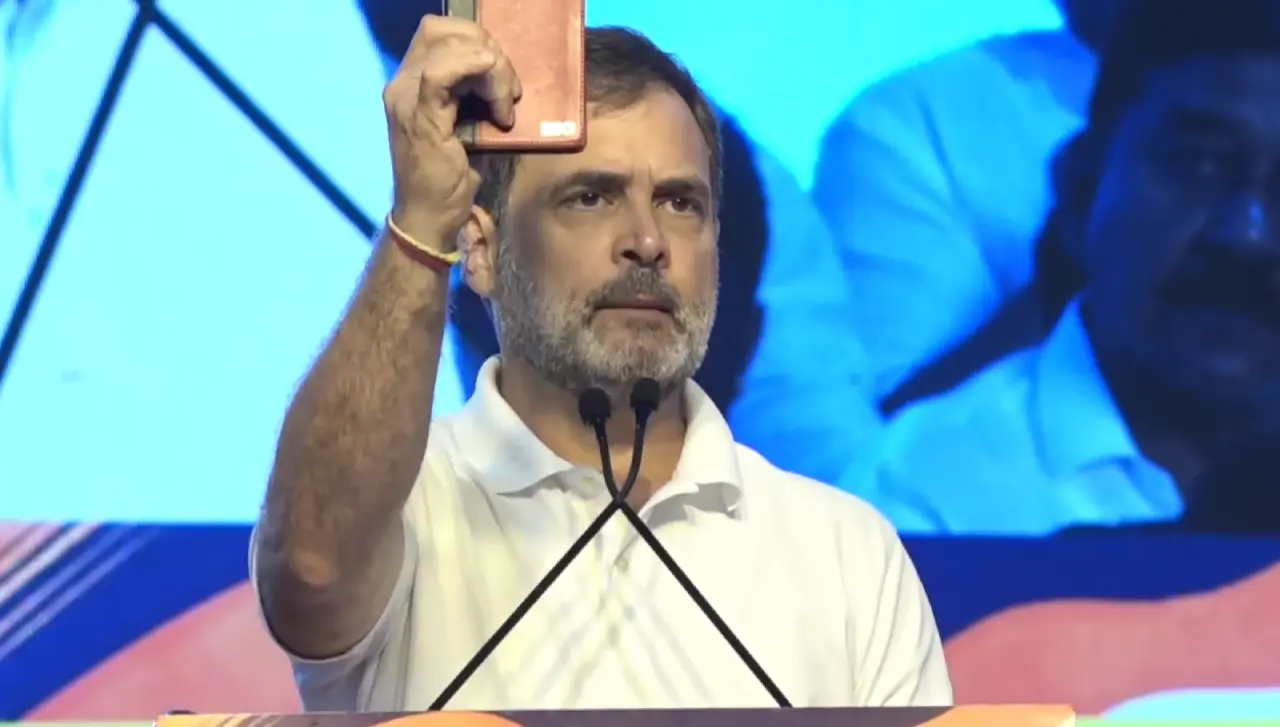
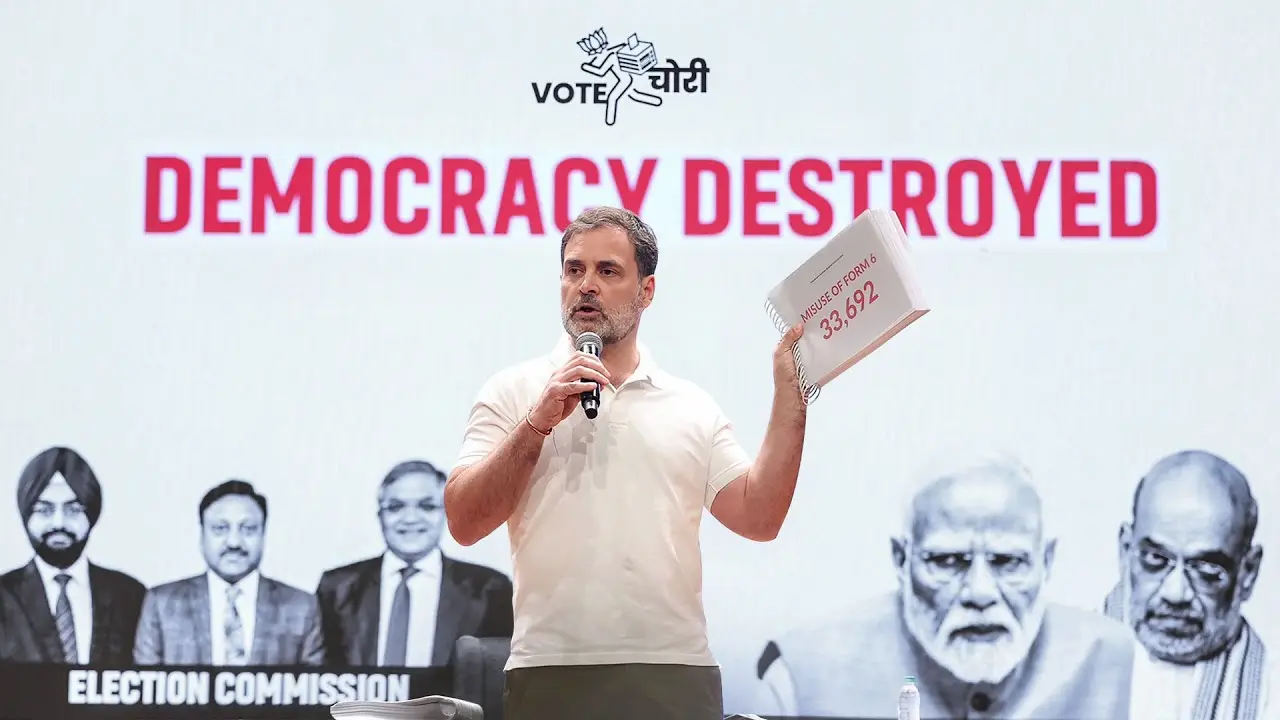
Congress leader Rahul Gandhi has launched a scathing attack on the Election Commission (EC), alleging it is “openly colluding” with the BJP to orchestrate large-scale electoral fraud through the Special Intensive Revision (SIR) of electoral rolls. In a video posted on his YouTube channel on Friday, Gandhi described SIR as “institutionalised chori” aimed at disenfranchising poor voters across India.
Gandhi claims the EC initiated SIR in Bihar only after Congress exposed alleged voter manipulation, and accused the poll body of helping the ruling party “steal elections.” The allegations follow a press conference where Gandhi unveiled data from an investigation into the Mahadevapura assembly segment in Karnataka’s Bangalore Central Lok Sabha seat, which he said revealed a theft of 1,00,250 votes through five forms of manipulation.
According to Gandhi, the irregularities include 11,965 duplicate voters, 40,009 entries with fake or invalid addresses, 10,452 voters registered under a single address, 4,132 invalid voter photos, and 33,692 misuses of Form 6—meant for new voters. Citing examples, he pointed to voters registered multiple times, others listed with non-existent addresses like “House Number 0,” and cases of one house having up to 80 registered voters.
He warned that this manipulation was not limited to one seat, stating, “I am confident this has happened in over 100 constituencies.” Gandhi added that if the BJP had won 10–15 fewer seats, there would be an INDIA bloc government today.
Calling the EC’s actions “treason,” he accused it of deliberately withholding digital voter list data to avoid scrutiny. “The truth is in black and white, but the EC refuses to investigate. They know we have caught their chori,” Gandhi said. He emphasized that his party had only looked into voter additions and suspects deletions may be even higher.
Recalling past suspicions, Gandhi said discrepancies between voter turnout and crowd response during campaign events prompted further scrutiny. He cited examples from Uttarakhand, Chhattisgarh, Madhya Pradesh, and Maharashtra where election outcomes appeared inconsistent with ground sentiment.
Gandhi also referenced a period after the 2018 Madhya Pradesh elections—where Congress initially formed the government but later lost power—alleging BJP manipulation continued into 2023. He claimed that in Maharashtra, new voters “magically” appeared between Lok Sabha and Assembly polls and disproportionately favored the BJP.
He said repeated denials from the EC, including refusal to share machine-readable voter lists or polling booth footage, raised serious questions about the commission’s neutrality. “When we asked the EC for data, they gave us reams of paper instead of digital files. Why? Because if they give digital data, their fraud will be exposed,” Gandhi said.
In a post on X tagging the video, Gandhi wrote, “Vote theft is not just an election scam, it is a betrayal of our Constitution and democracy. Criminals of the country should listen — times will change, punishment will be given.”
The Chief Electoral Officer of Karnataka has since asked Rahul Gandhi to submit the names of electors he alleged were wrongly added or removed, along with a signed affidavit, to initiate further proceedings.
Priyanka Gandhi Slams EC Over Poll Rigging Claims: 'Not Just Responsible to BJP' 8
Congress leader Priyanka Gandhi Vadra on Friday took a sharp swipe at the Election Commission (EC) for demanding a signed affidavit from Rahul Gandhi over his allegations of voter list manipulation, questioning whether the poll body’s responsibility lies solely with the BJP.
Her comments come a day after Chief Electoral Officers in at least three states asked Rahul Gandhi to submit the names of electors he claimed were wrongly included or excluded from voter rolls, accompanied by a sworn declaration.
The EC, according to sources, insisted that under the Conduct of Election Rules, Rahul must either file a formal affidavit listing the alleged discrepancies or “stop misleading the public with baseless allegations.”
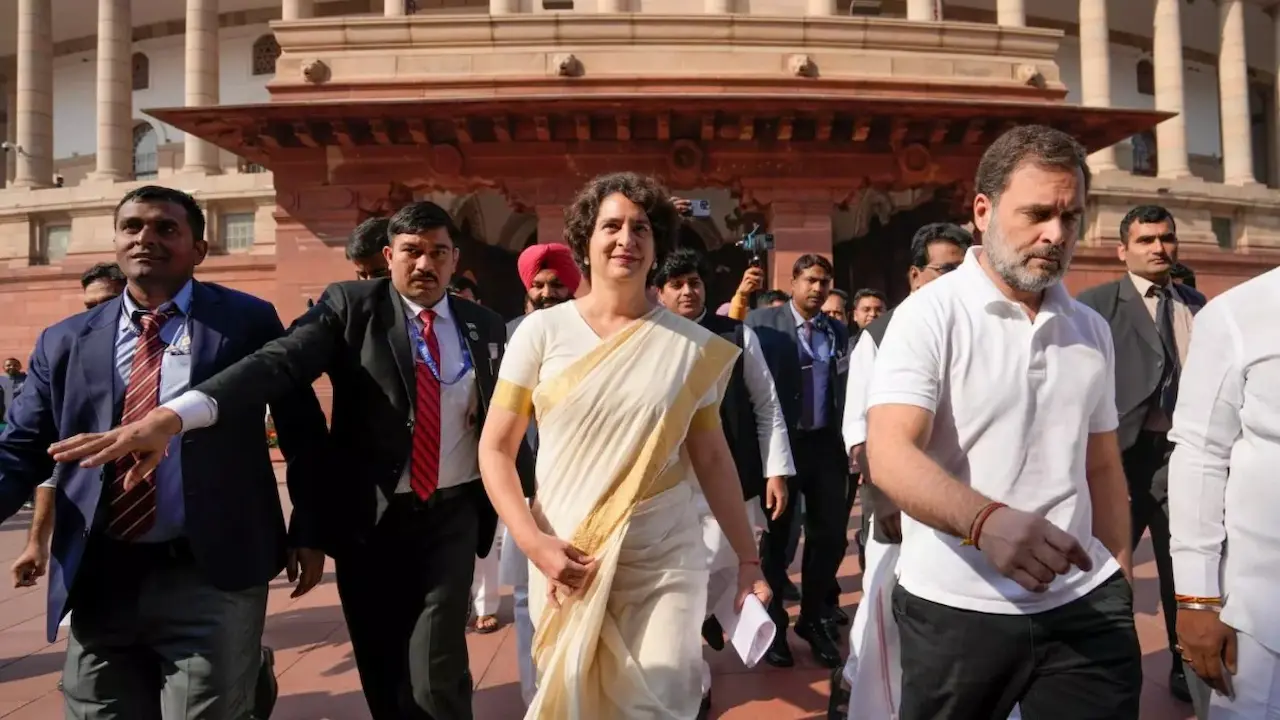
Responding to this, Priyanka Gandhi questioned the intent behind the demand. “If they haven’t investigated, how can they say it’s wrong? The evidence is before them. It’s not about one party—it’s about Indian democracy. If they think their responsibility is only to the BJP, they need to rethink,” she said while addressing reporters in Parliament.
She also highlighted that Rahul Gandhi’s claims—backed by data showing over 1 lakh fake or fraudulent entries in a Karnataka constituency—require serious investigation, not threats or dismissals. “Instead of probing, they’re asking for an affidavit. What oath is greater than one taken in Parliament?” she asked.
Rahul Gandhi had earlier claimed that a total of 1,00,250 fake or duplicate votes were uncovered, including voters with invalid addresses, multiple entries under one address, and fake photos. Addressing media at AICC headquarters, he challenged the EC’s response, saying, “I’ve made these claims in public—take that as my oath.”
He warned that officials involved in such electoral fraud would be held accountable when the Opposition comes to power. “You are attacking the foundation of democracy built by our freedom fighters. We will not let you get away with this,” he said.
Priyanka Gandhi concluded by asserting that the INDIA bloc will collectively decide on the next course of action regarding the alleged poll fraud and voter manipulation.
Huma Qureshi's Cousin Stabbed to Death Over Parking Row in Delhi, Two Teens Held 10
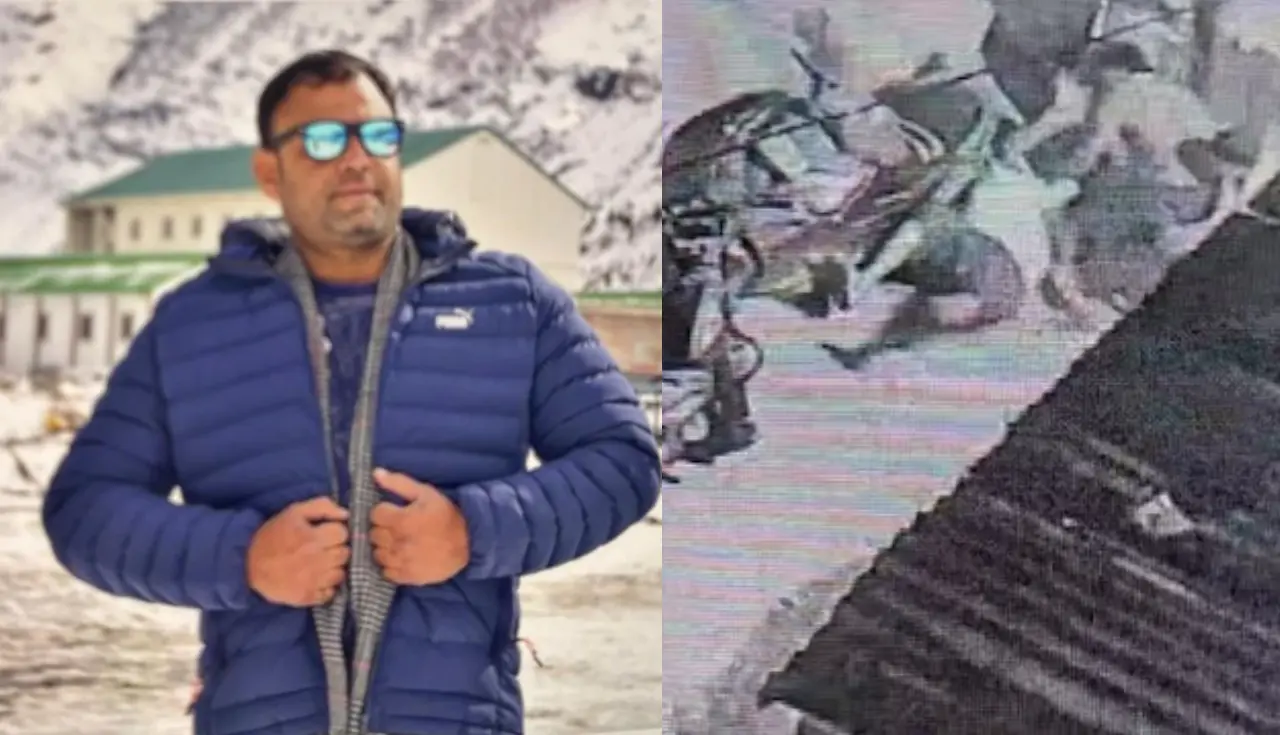
A parking dispute in Delhi’s Bhogal area turned fatal on Thursday night when actor Huma Qureshi’s cousin, Asif Qureshi, was allegedly stabbed to death by two teenagers. The incident occurred around 10:30 pm when Asif confronted an individual for parking a scooter in front of his residence on Church Lane.
According to the police, the verbal spat escalated quickly and resulted in Asif being attacked with a sharp, poker-like weapon, leading to a grievous chest injury. He collapsed on the spot and was rushed to a nearby hospital, where he was declared dead on arrival.
The accused, identified as Ujjwal (19) and Gautam (18), both residents of the same locality and living just a few houses away from the victim, were taken into custody soon after the incident. Police have registered a case under sections 103(1) and 3(5) of the Bharatiya Nyaya Sanhita at the Hazrat Nizamuddin police station.
The body has been sent for post-mortem, and an investigation is underway to determine the exact sequence of events and the involvement of each accused in the assault.
Democracy Dies in Daylight When Its Institutions Choose Darkness 12
The recent press conference by Rahul Gandhi wasn’t just another political event. It was a warning bell — loud, detailed, and frankly, terrifying. Not because of who said it, but because of what was said — and more importantly, what it revealed.
This wasn’t theatre. It was a data-backed presentation that laid bare how India’s electoral process—the very mechanism that gives citizens a voice—has allegedly been manipulated, rigged, and bent to favour the ruling establishment. The evidence presented pointed to patterns of voter deletions, duplicate entries, ghost votes, and suspicious booth-level operations.
If true — and these claims deserve serious investigation — we may be witnessing the largest-scale subversion of democracy in modern Indian history.
So, where is the outrage? Where is the accountability? Where is the Election Commission?
A Silent Commission Is a Complicit Commission
The Election Commission of India (ECI), once revered as one of the most robust democratic institutions in the world, now finds itself in the dock. Its inexplicable silence in the face of such grave electoral irregularities is not just irresponsible — it is dangerous.
Is the Commission no longer answerable to the people but only to the political executive?
When institutions that are meant to uphold fairness begin serving those in power, what remains of democracy? Nothing but a hollow shell — draped in ritual, stripped of substance.
Institutional Decay Is Not an Accident—It’s a Strategy
This is not about one election or one political party. What we are witnessing is the systematic capture of democratic institutions — from the Election Commission to investigative agencies, from large sections of the media to even parts of the judiciary.
Each of these institutions is being quietly repurposed — from watchdogs to guard dogs of power.
The consequences are chilling. If elections are rigged, Parliament is a fraud. If the media won’t report it, public discourse becomes a joke. If the courts won’t intervene, the Constitution becomes just a paperweight.
This is not governance. This is a democratic coup in slow motion.
A Complicit Media Is Democracy’s Worst Betrayal
The role of the mainstream media in this betrayal cannot be overstated. Once the fourth pillar of democracy, it has now become a loudspeaker for propaganda.
Major news channels barely reported on Rahul Gandhi’s press conference. There were no prime-time debates, no investigative follow-ups, and no fact-checking — just silence.
When journalists become stenographers for the powerful, they stop serving the public.
And when the media turns a blind eye to electoral fraud, it becomes an accomplice in the murder of democracy.
It’s Not About Rahul Gandhi. It’s About You.
Dismiss this as just another Congress complaint, and you’ve missed the point entirely.
This isn’t about liking or disliking Rahul Gandhi. It’s not about BJP versus Congress. It’s not even about ideology.
It’s about one terrifying question: Do your votes even count anymore?
If voters can be deleted without consent, if fake voters can be added in bulk, and if booth-level agents of the ruling party can tamper with entire constituencies, then you, the citizen, have already been erased from the system.
Your vote is your power. And if it can be stolen, then you’re no longer a citizen. You’re just a spectator in a rigged game.
Will We Wake Up—Or Be Silently Ruled?
India’s democracy is not dying in silence. It is being murdered in broad daylight — while institutions look away, while the media distracts, and while the public scrolls on.
But it’s not too late — yet.
If the people rise, ask questions, organise, and refuse to be distracted by hate and noise, democracy can still fight back.
The first step? Demand accountability — from the Election Commission, from political parties, and from media houses.
Ask:
Where is the data?
Who ordered the deletions?
Who created the duplicates?
Who benefited?
If the answers don’t come, we already know who is guilty.
And if we still stay silent, then maybe we weren’t citizens to begin with. Just spectators to our own disenfranchisement.
Cloudburst Triggers Deadly Flash Floods in Uttarkashi’s Dharali, At Least Four Dead 14
A sudden cloudburst on Tuesday triggered devastating flash floods in Uttarkashi’s high-altitude village of Dharali, located on the route to Gangotri, leaving at least four people dead and causing extensive damage to homes and infrastructure. Officials said that the flooding, which followed heavy rains in the catchment area of the Kheer Ganga river, swept away several houses and possibly dozens of hotels and homestays.
Dharali, a key stopover for pilgrims heading to Gangotri, witnessed scenes of destruction as torrents of muddy water and silt tore through the village. Initial reports suggest that 10 to 12 people may be trapped under debris, while locals estimate that 20 to 25 tourist accommodations could have been washed away. Uttarkashi District Magistrate Prashant Arya confirmed the fatalities and said an Army team from Harsil has been deployed for rescue operations.
Chief Minister Pushkar Singh Dhami expressed grief over the incident, calling the loss “extremely sad and painful.” He said SDRF, NDRF, and local administration teams are working on a war footing to carry out relief and rescue operations. “I am in constant touch with senior officials and closely monitoring the situation. I pray for everyone’s safety,” Dhami posted on X.
Videos circulating on social media captured the terrifying scale of the disaster—gushing water tearing down slopes, people screaming, and families desperately calling loved ones in the affected zone. In one chilling video, a person can be heard saying, “Everything is finished.”
Widespread panic has gripped neighbouring villages as rescue operations continue amid fears that more lives could be at risk.
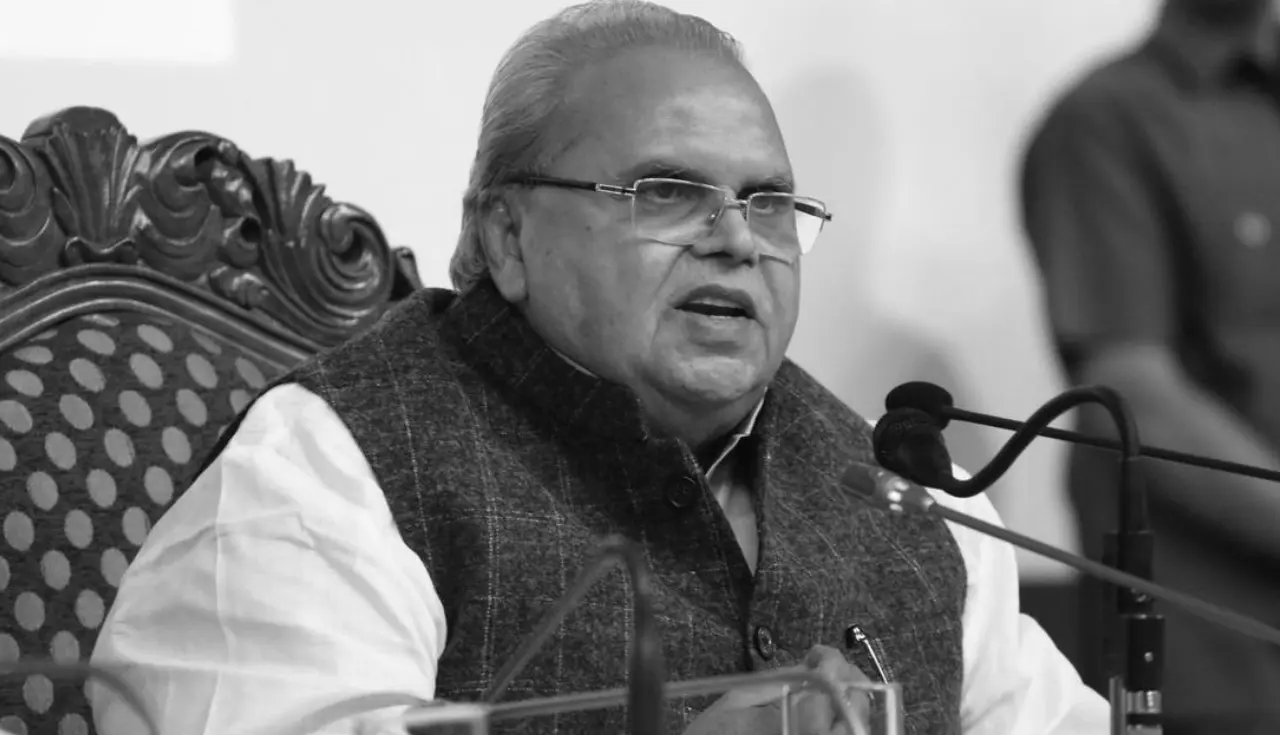
Former J&K Governor Satya Pal Malik Passes Away 16
Former Jammu and Kashmir Governor Satya Pal Malik passed away on Tuesday after a prolonged illness. He was undergoing dialysis treatment at Ram Manohar Lohia Hospital in New Delhi and had been on ventilatory support.
The 79-year-old politician, known for his outspoken criticism of the Modi government following his removal as Governor of Meghalaya, had been in the headlines recently over a corruption case. Earlier in May, the CBI filed a chargesheet against Malik and seven others in connection with the alleged irregularities in awarding a ₹2,200-crore civil works contract for the Kiru Hydropower Project.
Rahul Gandhi, Leader of the Opposition in the Lok Sabha, had visited Malik at RML Hospital on May 23 during his period of illness.
The chargesheet named Malik and his two aides, Virender Rana and Kanwar Singh Rana, alleging malpractice in the 2019 tender process. Malik had previously claimed he was offered a ₹300-crore bribe to approve two files, one related to the Kiru project, during his tenure as Governor.
Soon after the chargesheet was filed, Malik’s official ‘X’ handle posted a photo of him in a hospital bed, connected to multiple medical devices. The accompanying message read:
“I am getting calls from many of my well-wishers which I am unable to take. My condition is very bad right now. I am admitted in the hospital and am not in a condition to talk to anyone.”
The CBI had conducted searches at the premises of Malik and others in February last year after registering the case in 2022. Malik served as Governor of Jammu and Kashmir from August 23, 2018, to October 30, 2019.
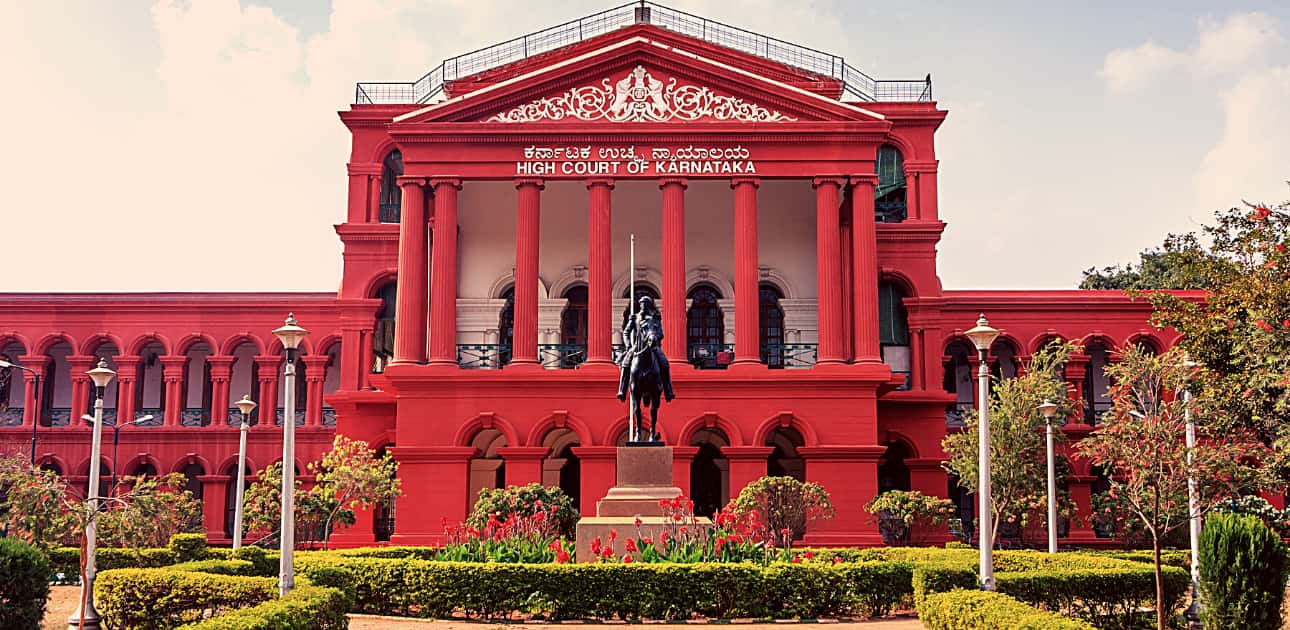
Karnataka HC Quashes Gag Order on Dharmasthala Case, Upholds Press Freedom 18
In a significant win for press freedom, the Karnataka High Court has set aside a gag order that had barred media outlets, including YouTube channels, from reporting on the alleged mass burials of sexual assault and murder victims in Dharmasthala over the past 20 years. The controversial ex parte injunction, issued by a Bengaluru civil court on July 8, was challenged by YouTube platform Kudla Rampage.
Justice M Nagaprasanna, delivering the verdict on Friday, quashed the lower court’s order and remitted the matter for a fresh hearing. He emphasized that the trial court must now reconsider the interlocutory application with attention to the directions and observations outlined by the High Court.
The original gag order had been obtained by Harshendra Kumar D, brother of Dharmasthala Dharmadhikari Veerendra Heggade. Kumar sought the removal of over 8,000 digital links—including news reports, videos, and social media posts—that he claimed were defamatory toward his family and the temple administration.
Justice Nagaprasanna made it clear that the High Court’s ruling was limited to the procedural aspect of the injunction and did not address the merits of the underlying allegations or counter-allegations. The broader civil and criminal elements of the case remain open for adjudication.
Reacting to the development, Kudla Rampage’s legal counsel, A Velan, hailed the verdict as a milestone in protecting journalistic integrity. “The Karnataka High Court has not merely issued a judgment—it has reaffirmed a cornerstone of our democracy,” Velan stated. He called the lower court’s injunction an “unconstitutional instance of prior restraint” that lacked jurisdiction and threatened to suppress public scrutiny on a matter of national concern.
China Defies US Demands, Vows to Keep Buying Oil from Russia and Iran Amid Trade Talks 20
Amid renewed trade negotiations between the US and China, tensions have flared over Washington’s demand that Beijing cease purchasing oil from Iran and Russia. Following two days of talks in Stockholm, China responded defiantly, rejecting pressure from the US and insisting it will continue to safeguard its energy security based on national interests.
“Coercion and pressuring will not achieve anything. China will firmly defend its sovereignty, security and development interests,” China’s Foreign Ministry posted on X, responding to Washington’s threat of a 100 per cent tariff on Chinese goods if oil purchases continue.
Despite this flashpoint, both sides have projected cautious optimism about reaching a broader trade deal that could stabilize economic ties between the world’s two largest economies. However, China’s firm stance on energy sources signals its refusal to let foreign policy be dictated by external threats—especially under the Trump administration.
US Treasury Secretary Scott Bessent acknowledged China’s resolve, telling reporters that while the issue of Russian oil remains unresolved, the broader trade discussions are still on track. “The Chinese take their sovereignty very seriously,” Bessent said, noting that China would rather pay the threatened 100 per cent tariff than change course.
Trump administration officials have framed the oil issue as part of a broader effort to choke funding to Russia’s military during its war in Ukraine and to militant groups supported by Iran. Yet Beijing’s continued oil imports from both countries underline its strategic alignment and economic interests. A report from the US Energy Information Administration states that between 80 to 90 per cent of Iran’s oil exports go to China—amounting to over a million barrels daily.
Analysts believe Trump’s threats are likely bluster. Gabriel Wildau of Teneo noted that enforcing the full tariff threat could undo recent diplomatic progress. “It would probably kill any chance of a trade deal if Trump and Xi meet this fall,” he said.
Experts also highlight Beijing’s perception of inconsistencies in US foreign policy, arguing that China sees its support for Moscow as consistent and strategically beneficial. Danny Russel from the Asia Society Policy Institute emphasized that President Xi Jinping views Russian and Iranian oil as irreplaceable. “It is too important a strategic energy supply, and Beijing is buying it at fire-sale prices,” he said.
In April, China’s imports of Russian oil surged by 20 per cent over the previous month, reaching 1.3 million barrels per day—second only to India, which also faces US backlash. Trump recently announced a 25 per cent tariff on Indian goods, citing the country’s continued Russian oil purchases.
While trade negotiations may continue, China’s refusal to budge on oil imports underscores a deeper geopolitical divide—where energy security, strategic alliances, and sovereignty now play a larger role than tariff threats.