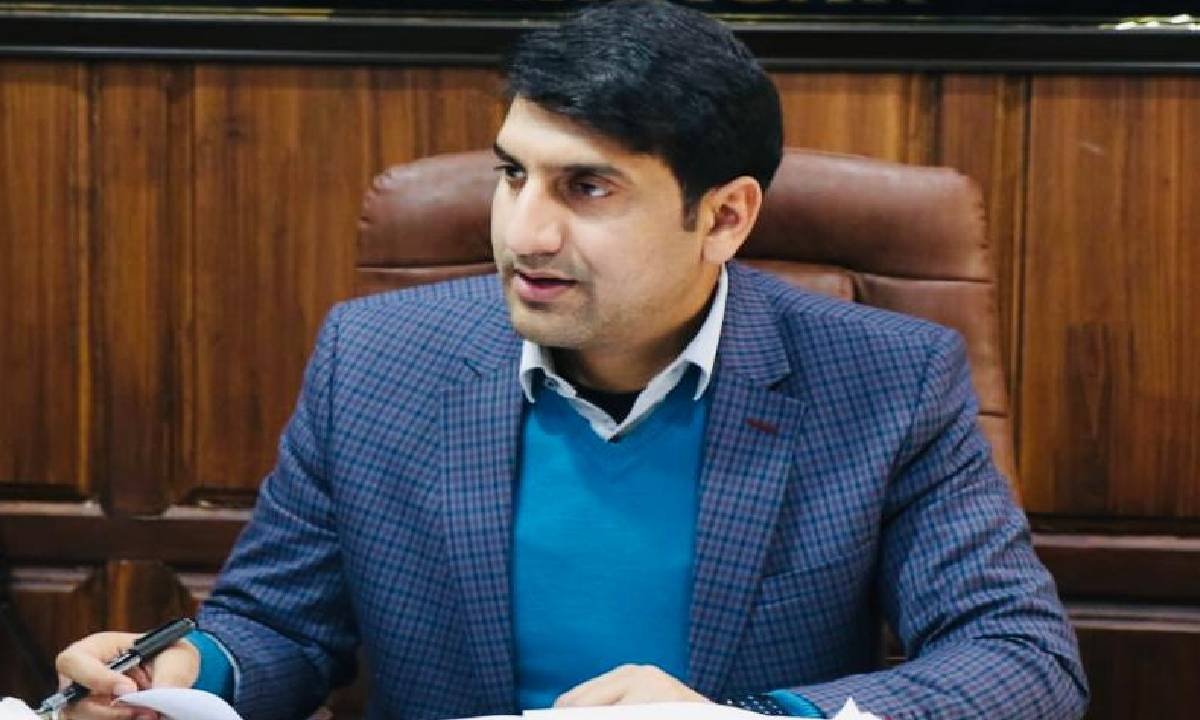
The Deputy Commissioner (DC) Srinagar, Mohammad Aijaz Asad, is one of the accomplished officers who are responsibly committed to the people of valley.
In the recent past he chaired Public Grievance Redressal Camp at Gund Hassi Bhat area in Shalteng Tehsil of the District in order to listen to the public grievances and resolve local issues at their door steps as part of Public Outreach Programme under weekly Block Diwas.
There were many local representatives who were part of the gathering; Mr Mohammad Aijaz Asad has motivated them to get involved in helping the public.
He is also working enormously in making Srinagar drugs free District under Nasha Mukt Bharat Abhiyan (NMBA).
He said collective efforts from all participants are must to make Srinagar drugs-free. He is dealing with many challenges with the help of locals such as combing operations at drug hubs chasing the peddlers, locating home-grown drug supply dens, consumption hotspots, rehabilitation measures.
The rising trend of drug abuse and to establish the motive behind drug related crimes has another issue to check and address. DC is focused upon the prevention and curability aspects of drug de-addiction so that the youth can be saved from consuming drugs.
When we spoke to a local citizen of Srinagar he spoke to Afternoon Voice under the condition of anonymity.
He said “Deputy Commissioner Sahab has bridged the gap between the commoners and authorities. Now resolving issues related to public grievances has become easy.
He at least listens to the people unlike those celebrity decorative officers. We have a lot of expectations from him, and the people of Srinagar feel protected”.
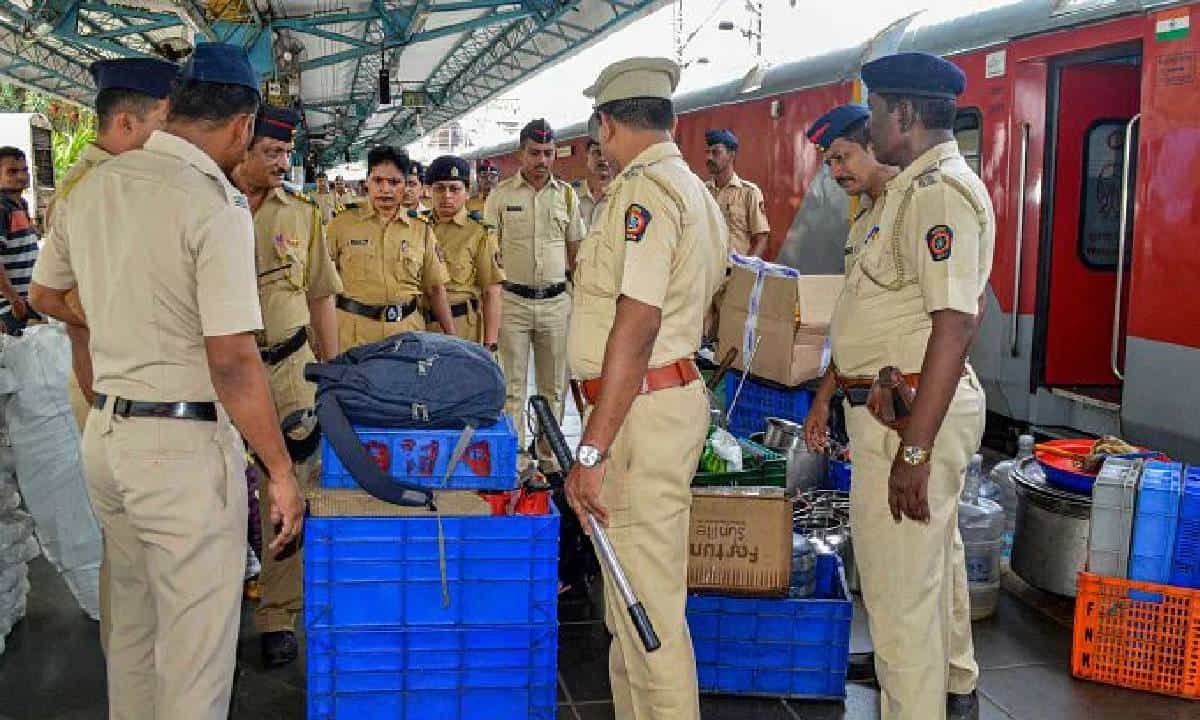
Mumbai Railway Police along with a dog squad conduct a security check at CSMT after a threat message warning of a 26/11-like terrorist attack was sent to the WhatsApp number of Mumbai Police traffic control from a Pak-based phone number.
The threat message states that six people will execute the plan in India. The probe is underway.
BJP Mumbai unit president Ashish Shelar at a party workers rally in Mumbai’s Shanmukhanand Hall said, “Metro and the coastal road has been given by Devendra Fadnavis, the fund for Mithi river clean up, BRIMSTOWAD to prevent Mumbai from flooding and bullet train connectivity, suburban railway upgradation given by the Centre.”
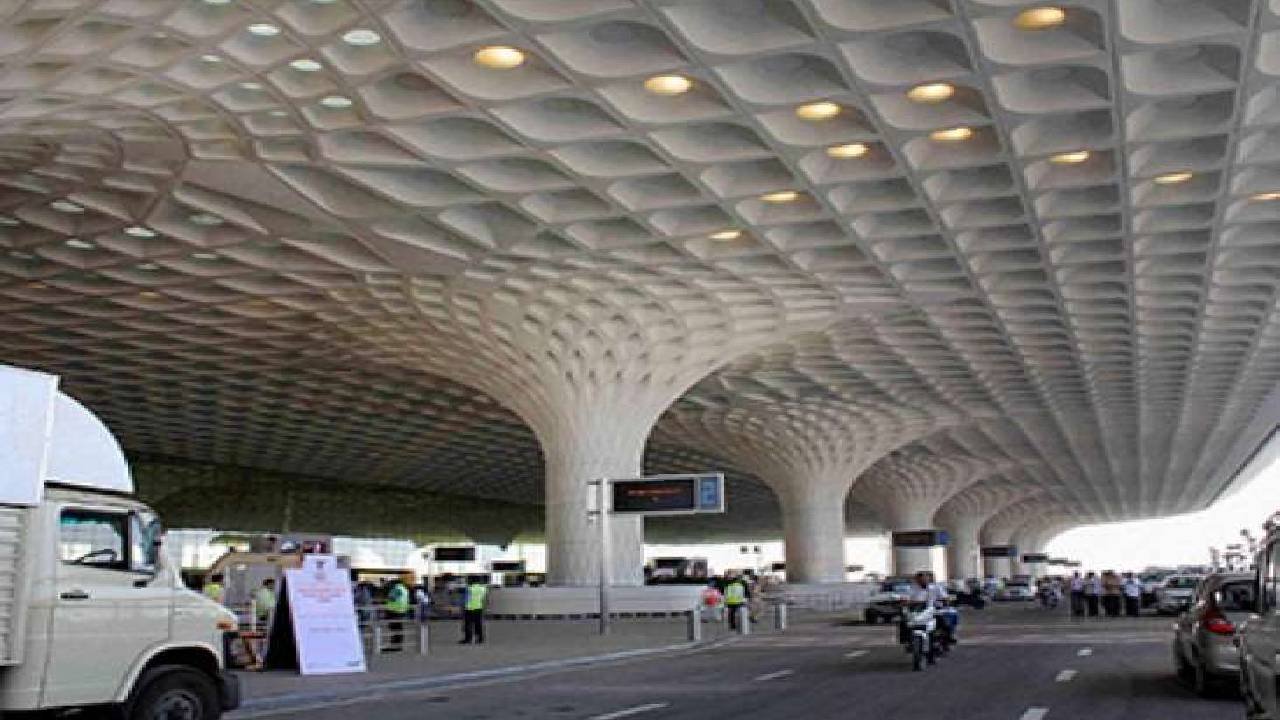
The Customs department has recovered 500 grams of cocaine worth Rs 5 crore from a woman passenger, who arrived at the city international airport from Ethiopia, following which she was arrested, officials said.
The woman had arrived in Mumbai on Friday from Addis Ababa by Ethiopian Airlines flight, the customs department said in a tweet.
On 19/08/2022 Customs, CSMI Airport, Mumbai seized 500 gms Cocaine worth ₹ 5 Crores and arrested a Sierra Leonean lady pax arriving from Addis Ababa by Ethiopian Airlines Flight No. ET-610. The drugs were found concealed in purse by the pax. @cbic_indiapic.twitter.com/57IZpnjuWx
“The woman identified as Sierra Leonean was placed under arrest after the recovery of the drug,” it said. The drug was found concealed in her purse, it added in the tweet.
Shelling has recently intensified at the Russian-controlled Zaporizhzhia nuclear power plant, raising international safety concerns. Ukrainian staff continue to operate the massive plant under strict control and stressful conditions.
Both Russia and Ukraine are blaming one another for the continued attacks, and damage. Disinformation and fake news have played a major role in this conflict, and so the exact nature of the situation is unclear.
It seems unlikely that either side would want to seriously damage Europe’s biggest nuclear plant, in the near-frontline city of Enerhodar, and cause a release of radiation. Ukrainian plant workers claim that Russia is deliberately targeting non-critical equipment.
A deliberate attack against a nuclear facility would break international norms, and concerns over the potentially dangerous consequences are well justified.
This plant is not like Chernobyl, the site of the world’s biggest nuclear disaster. Chernobyl was an older reactor type, with several questionable design choices.
Like Zaporizhzhia, it was cooled by water, but it also contained large quantities of graphite to perform a function known as neutron moderation, which is necessary for the reactor to operate.
When the Chernobyl reactor overheated, the water boiled away and became less effective at cooling. However, the graphite continued to moderate the neutrons, allowing the reactor power and thus temperature to build uncontrollably.
The shutdown system at Chernobyl was also poorly designed and contributed to the accident.
At Zaporizhzhia, as with the majority of reactors globally, if the reactor overheats, both cooling and moderation are reduced, and so the reactor power also reduces. Nuclear engineers see this as fundamental to safe reactor design.
But a breach of a fuelled and operating reactor could still be disastrous if attacks damage nuclear materials or safety-critical equipment.
This could release large quantities of hazardous nuclear material into the air, potentially contaminating vast areas of land and water supplies.
The reactors are surrounded by high-strength containment buildings. These are designed to both contain explosions from within, and to withstand a certain amount of force from outside.
However, while modern plants are designed to withstand aircraft strikes, it is debatable whether they could withstand deliberate bombardment. They are made of many metres of concrete, with steel liners, but a concerted effort with appropriate weapons would eventually be able to penetrate them.
Of perhaps greater concern are the outdoor spent fuel cooling pools, where highly radioactive spent nuclear fuel is stored underwater.
A direct attack on any of these could lead to a major release of radioactive material into the atmosphere, as the fuel is relatively unprotected against strikes from the air.
Safety-critical equipment, such as pumps and pipes, remains important even after the nuclear power plant has been shut down. Three of Zaporizhzhia’s six reactor units are currently in a shutdown state.
Fuel within the reactor, as well as used fuel, remains very hot for several years after shutdown and removal from the reactor. At plants such as Zaporizhzhia, unless the fuel is constantly cooled, it can overheat, generating explosive gases, melting, or catching fire. This would also lead to a radiation release.
The fuel at Zaporizhzhia requires a constant flow of cooling water over it to take away excess heat. Should this water be lost through damage to piping, pools or reactors, or should pumps become inoperative, there would only be a limited time to intervene before dangerous consequences might be felt.
Claimed attacks thus far have largely hit power lines, radiation monitoring equipment, and non-nuclear buildings such as training facilities.
The attacks on power lines are particularly worrying, as reliable access to offsite power is required for cooling water pumping. The plant can generate its own power during operation and has a range of backup diesel generators in case access to offsite power fails, but the loss of any safety system is a concern.
Should there be a release of radioactive material, authorities will need to act quickly to assess the danger and respond appropriately. The risk will depend on factors such as how much material is released and how it is spread by wind and weather.
The level of radiation would be the highest close to the plant and reduce as it spreads, with those exposed potentially experiencing health impacts.
For those exposed to very high levels of radiation, there is a risk of acute radiation syndrome, which can be fatal in the worst cases.
Lower levels of exposure can increase cancer risks later in life. The best course of action is to take shelter in buildings, close all doors, windows and vents, and follow advice from trusted authorities.
Russia’s strategy Russia’s president Vladimir Putin might wish to control the plant for several reasons. Russia could cut power supplies from the plant to Ukraine, but it was operating in a low power mode at the time of the invasion and so this may be of limited impact.
Alternatively, Russia might use it as a political bargaining chip or propaganda tool, in order to legitimise claims over occupied territory. Various sources also suggest that Russia has stationed troops and equipment at the plant.
This allows it to be used as both a fortress and missile launch site, against which Ukraine dare not retaliate.
Military conflict around nuclear sites was outlawed by the 1977 Amendment to the Geneva Conventions.
However, attempts by the international community to address the Russian occupation of Zaporizhzhia have been largely unsuccessful. The International Atomic Energy Agency has repeatedly requested access to examine conditions and check that nuclear materials remain in place but has yet to gain entry.
The UN has recently called for demilitarisation of the site, but Russia claims that this would place the plant at greater risk due to alleged threats of nuclear terrorism. Placing the plant under the care of a neutral third party for security purposes might be a potential solution.
However, there is a risk that even a neutrally held plant could be attacked by disguised military forces, in order to support Russian narratives of Ukrainian terrorist groups.
Above all, the violence around the plant must stop, and verification access must be granted to the international community. Military action around the plant must cease as soon as possible to protect people, the environment and the infrastructure.
All India Majlis-e-Ittehadul Muslimeen (AIMIM) chief Asaduddin Owaisi on Thursday slammed centre over granting remission to 11 convicts in the case related to Bilkis Bano gang-rape and murder of her kin during 2002 Gujarat riots and said that the BJP government has taken a double standard policy.
Talking to agencies, Owaisi said, “In his address from Red Fort, PM Modi spoke about women empowerment, but on the same day 11 accused in a rape and murder case were released through the remission policy. There is a government circular that says the rapists should not be remitted on Independence day and BJP has taken the decision against that too.” He alleged that whatever BJP is doing, is just for winning the upcoming Gujarat Election.
“As a woman, you can understand Bilkis Bano’s pain. She cannot be seen as a Muslim, but this is a matter of justice and we demand to cancel the remission order and send the convicts to jail,” he said.
Demanding justice for Bano, Owaisi further said, “Then Gujarat Chief Minister is the Prime Minister now, but Bilkis Bano is still on the road. We request PM Modi with folded hands to give justice to her.”
He took Twitter also and said, “In his Independence Day speech, Modi had asked Indians to take a pledge not to do anything that lowers the dignity of women. He said something about supporting “Nari Shakti”. Gujarat BJP govt released criminals convicted of gang rape on the same day. The message is clear.”
Kavita Krishnan, Communist Party of India (Marxist-Leninist) Liberation leader, also tweeted, “On Independence Day 2022 when PM Modi was giving a speech asking us to respect women, support “Nari Shakti”, Gujarat CM was releasing 11 convicted gang-rapists of Bilkis Bano on remission. Can Narendra Modi tell us, is Bilkis not part of your “Nari Shakti” because she’s Muslim?”
All the 11 life-term convicts in the case were released as per the remission policy prevalent in Gujarat at the time of their conviction in 2008.
In March 2002 during the post-Godhra riots, Bano was allegedly gang-raped and left to die with 14 members of her family, including her three-year-old daughter.
She was five months pregnant when rioters attacked her family in Vadodara. In 2008, a special court in Mumbai sentenced the 11 accused to life imprisonment.
It was later upheld by the Bombay High Court. In 2019, the Supreme Court even directed the state government to give her Rs 50 lakh as compensation to Bano, besides a house and a job.
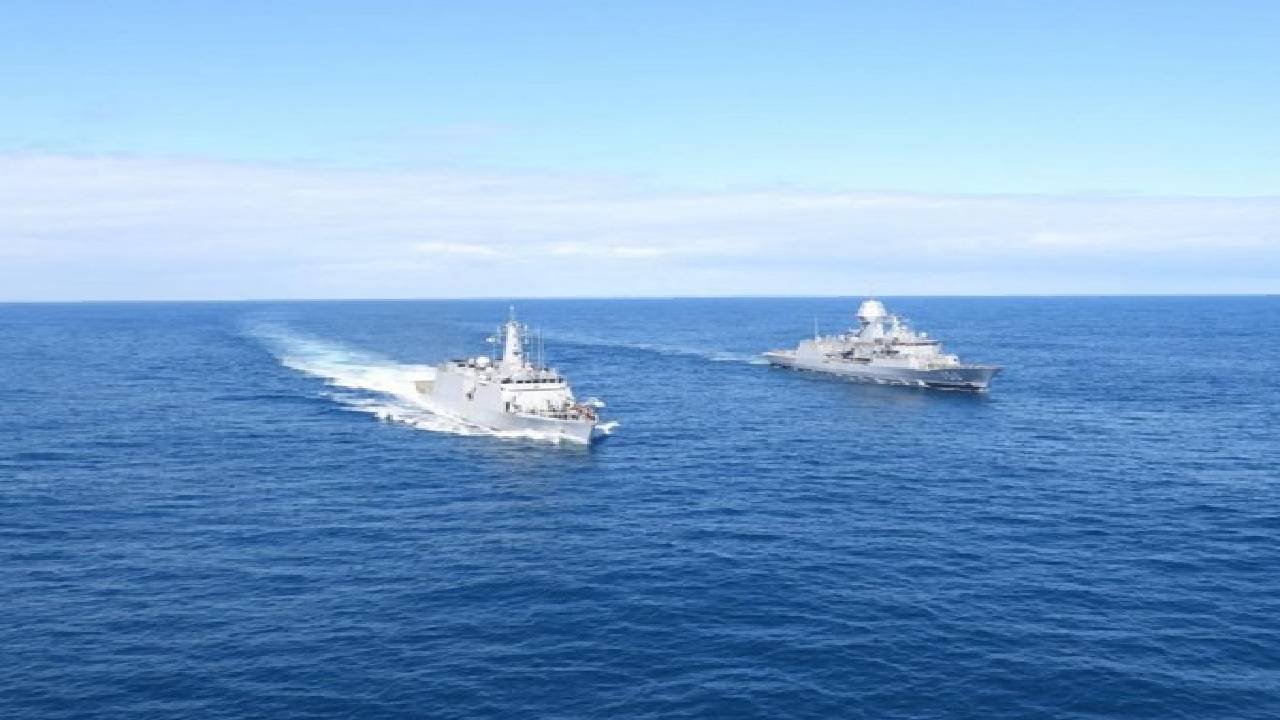
The Maritime Partnership Exercise (MPX) between the navies of India and Australia concluded on Saturday.
INS Sumedha participated with HMAS Anzac in the exercise reaffirming the strong navy-to-navy links and interoperability between the Indian Navy and Royal Australian Navy.
The MPX included cross deck landing of helicopters, tactical manoeuvres and a farewell steam past. Indian Navy’s INS Sumedha was docked at Perth in Australia to celebrate India’s 76th Independence Day on Monday.
To commemorate the spirit of Independence, a flag hoisting ceremony was scheduled onboard in presence of Veterans and Australian Defence Forces officers on August 15.
As part of the Indian Navy’s Operational Deployment, INS Sumedha has been deployed to the South Eastern Indian Ocean. She is part of the Indian Navy’s initiative to hoist ‘Tiranga’ on all continents (except Antarctica) as part of Azadi Ka Amrit Mahotsav celebrations.
INS Sumedha is an indigenously built Naval Offshore Patrol Vessel deployed for multiple roles independently and in support of Fleet Operations.
She is part of the Indian Navy’s Eastern Fleet based at Visakhapatnam and functions under the operational command of the Flag Officer Commanding-in-Chief, Eastern Naval Command.
The visit of INS Sumedha underscores India’s vision of SAGAR (Security and Growth for All in the Region) and shared objectives of the two countries towards ensuring good order in the maritime domain and the Indian Navy’s commitment to building bridges of friendship and strengthening cooperation with friendly maritime nations.
It is in consonance with Joint Guidance provided by the Chiefs of both the navies in August 2021 and is aligned to the ‘2020 Comprehensive Strategic Partnership’ between the two nations.
It aims to further consolidate shared commitment to regional and global security challenges promoting peace, security and stability in the Indo-Pacific region.
Both navies have been collaborating on various fronts and are playing a critical role in ensuring the safety of international maritime trade and working towards global commons.
Mumbai Police is investigating a WhatsApp message warning of a “26/11-like” terror attack in the city received on the WhatsApp number of the Mumbai Police Traffic Control from a Pakistan-based number police sources said on Saturday.
The message said that six people will execute the attack in India. The Mumbai Police has initiated a probe on an immediate basis, sources said, adding that security agencies have put on alert.
The WhatsApp message talked of reviving memories of the attacks on November 26, 2008, in which Pakistan terror group Lashkar-e-Taiba carried out strikes across Mumbai.
Meanwhile, the Nationalist Congress Party’s Leader of Opposition Ajit Pawar today said that the state government should take the threat seriously and probe the issue.
This development comes after a security scare on Thursday when a boat carrying AK 47, rifles, guns and ammunition were found on the Harihareshwar beach in the Raigad district of the state. Following the boat’s recovery, Maharashtra Police has been asked to stay vigilant.
According to Maharashtra Deputy Chief Minister Devendra Fadnavis, the boat belongs to an Australian citizen. “Boat’s engine broke out in the sea, people were rescued by a Korean boat.
It has now reached Harihareshwar beach. Keeping in mind the coming festive season, police and the administration have been instructed to be prepared,” he said. On November 26, 2008, 10 Lashkar-e-Taiba terrorists from Pakistan arrived by sea route and opened fire, killing hundreds of people, including 18 security personnel, and injuring several others in Mumbai.
Nine terrorists were later killed by the security forces, including the NSG, the country’s elite commando force. Ajmal Kasab was the only terrorist who was captured alive. He was hanged four years later on November 21, 2012.
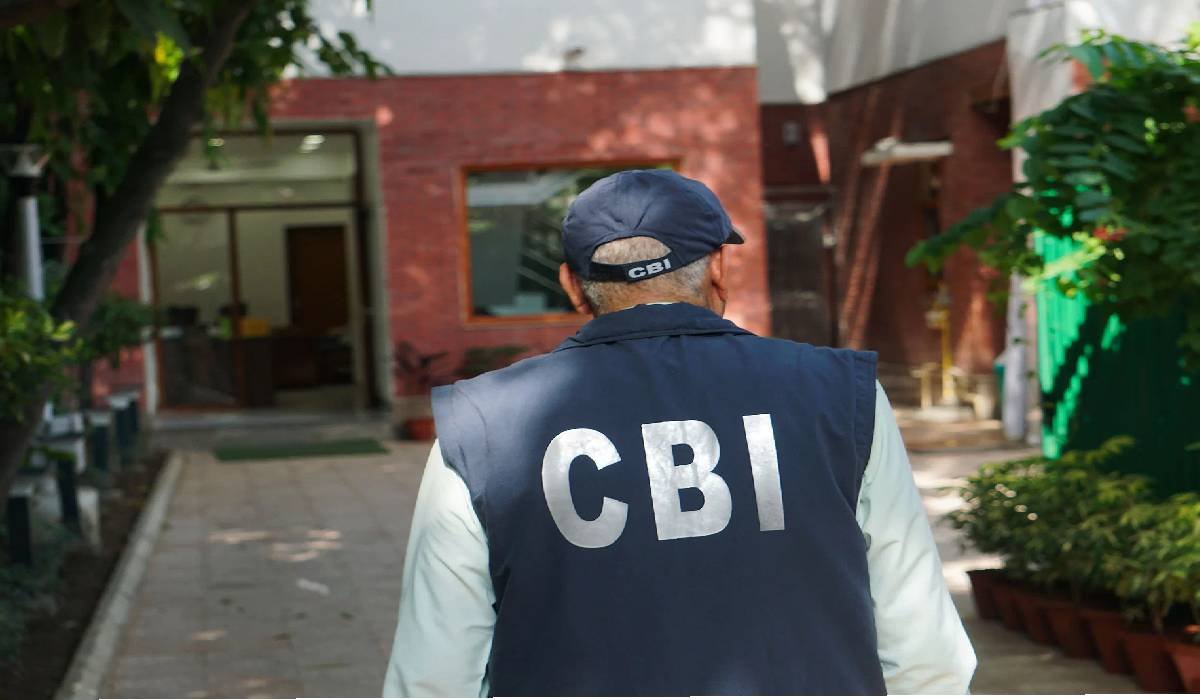
The Central Bureau of Investigation conducted raids at 31 locations including various big cities in connection with the recently withdrawn Delhi excise policy and registered a case against Aam Aadmi Party leader Manish Sisodia among 15 persons.
The raids have led to the recovery of Incriminating documents/articles, digital records etc.
“The Central Bureau of Investigation has registered a case against Deputy Chief Minister, GNCTD of Delhi and others including then Commissioner (Excise), then Deputy Commissioner (Excise), then Assistant Commissioner (Excise), all of GNCTD, Delhi; 10 liquor licences, their associates and unknown others on a reference from MHA (GOI) related to alleged irregularities in framing and implementation of the excise policy of GNCTD, Delhi,” said a statement by CBI.
“It was further alleged that irregularities were committed including in modifications in Excise Policy, extending undue favours to the licences, waiver/reduction in licence fee, an extension of L-1 license without approval etc,” it added.
According to the CBI, it was also alleged that illegal gains on the count of these acts were diverted to concerned public servants by private parties by making false entries in their books of accounts.
“Searches are being conducted today at 31 locations including in Delhi, Gurugram, Chandigarh, Mumbai, Hyderabad, Lucknow, Bengaluru which, so far, have led to the recovery of Incriminating documents/articles, digital records etc,” the statement said.
Further investigation into the matter is underway.
A cloudburst occurred in Raipur block in the Dehradun district of Uttarakhand in the early hours of Saturday.
The cloudburst was reported by locals at 2.45 am on Saturday in Sarkhet village in Raipur block. State Disaster Response Force (SDRF) team rushed to the spot after getting information.
“All the people stuck in the village were rescued while some took shelter in a resort nearby,” said SDRF.
“Due to the continuous torrential rains since yesterday, the Tamasa river flowing near the famous Tapkeshwar Mahadev temple in Dehradun has taken a formidable form. Due to this, the contact between Mata Vaishno Devi Cave Yoga Temple and Tapkeshwar Mahadev has been lost, and the pool has also been damaged. By the grace of God, there has been no loss of life or property,” said Acharya Bipin Joshi, the founder of the temple.
Meanwhile, heavy rainfall triggered flash floods near Mata Vaishno Devi Shrine in Katra town in the Reasi district of Jammu and Kashmir on Saturday. In view of the heavy rains and flash floods, the upward movement of devotees in Mata Vaishno Devi temple was stopped for some time.
“In the wake of heavy rainfall, upward movement of pilgrims to Vaishno Devi temple has been stopped from Katra. Priority is given to pilgrims coming downwards. Police and Central Reserve Police Force (CRPF) have already been deployed, The situation is being monitored. No untoward incident reported so far,” said Shri Mata Vaishno Devi Shrine Board.
However, the movement to the shrine has been resumed now. Earlier in July, a cloudburst struck the holy cave area of Amarnath which resulted in a heavy discharge of water in the ‘Nallah’, adjoining the holy cave, following which the route to Amarnath was damaged, it the yatra was on halt for some time.
Four Mi-17V5 and four Cheetal helicopters of the Indian Air Force were also deployed for rescue and relief efforts at the Amarnath shrine.
The Yatra began on June 29, from Jammu amid tight security arrangements made by the Central Reserve Police Force (CRPF) along with the army and the local police.
The Amarnath shrine pilgrimage to the 3,880-metre-high cave shrine of Lord Shiva, located in the upper reaches of the Himalayas, is held from the twin routes of Pahalgam and Baltal.