Ram Rahim Walks Out on 30-Day Parole, Marks 16th Release Since 2017 Conviction 2
Title: Ram Rahim Walks Out on 30-Day Parole, Marks 16th Release Since 2017 Conviction
Subtitle: Dera Sacha Sauda chief granted another month-long parole; to stay at Sirsa headquarters during release period
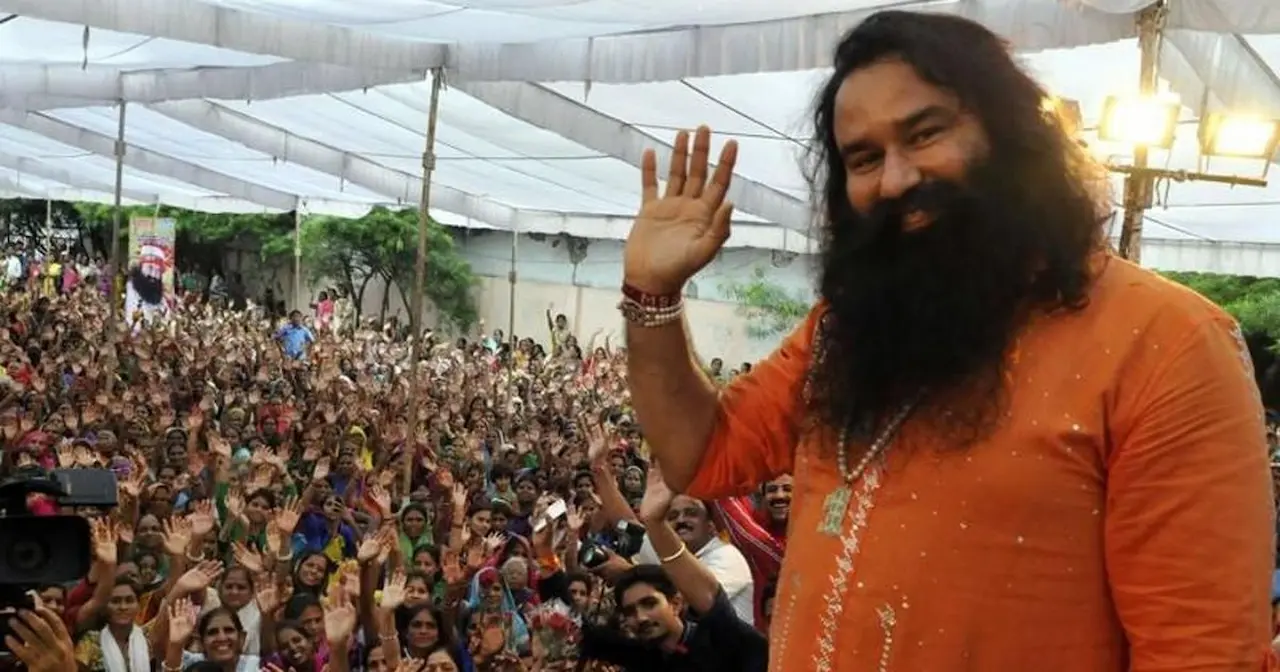
Rewritten Article: Dera Sacha Sauda chief Gurmeet Ram Rahim Singh, who is serving a 20-year prison sentence for the rape of two women disciples, was released from Sunaria Jail in Rohtak on Tuesday after being granted a 30-day parole. This marks the 16th time he has been released from prison since his conviction in 2017.
According to Dera spokesperson and advocate Jitender Khurana, Ram Rahim will stay at the sect’s headquarters in Sirsa during the parole period.
The latest parole comes just months after he was granted a similar release in January. Over the past two years, Ram Rahim has received multiple paroles and furloughs, including a 40-day parole in August 2025, a 21-day furlough in April 2025, and a 30-day parole in January 2025 ahead of the Delhi Assembly elections.
He was also granted a 20-day parole on October 1, 2024, days before the Haryana Assembly elections, a 21-day furlough in August 2024, and a three-week furlough in February 2022 shortly before the Punjab Assembly polls.
The repeated grant of parole and furlough to the Dera chief has drawn criticism from several Sikh organisations, including the Shiromani Gurdwara Parbandhak Committee (SGPC), which has questioned the frequency of his temporary releases.
In a significant legal development earlier this year, the Punjab and Haryana High Court acquitted Ram Rahim in the 2002 murder case of journalist Ram Chander Chhatrapati, seven years after a special CBI court had convicted him and sentenced him to life imprisonment.
In May 2024, the high court had also overturned a special CBI court verdict and acquitted Ram Rahim and four others in the 2002 murder case of former Dera manager Ranjit Singh.
The Sirsa-based Dera Sacha Sauda commands a substantial following across Haryana, Punjab, Rajasthan and several other states. In Haryana, the sect enjoys considerable influence in districts such as Sirsa, Fatehabad, Kurukshetra, Kaithal and Hisar.
The latest parole is likely to reignite debate over the repeated temporary release of high-profile convicts and the criteria governing parole and furlough decisions.
'Krishnavataram Part 1 – The Heart' Surges in Week 3 With 44% Growth, Housefull Shows Across India 4
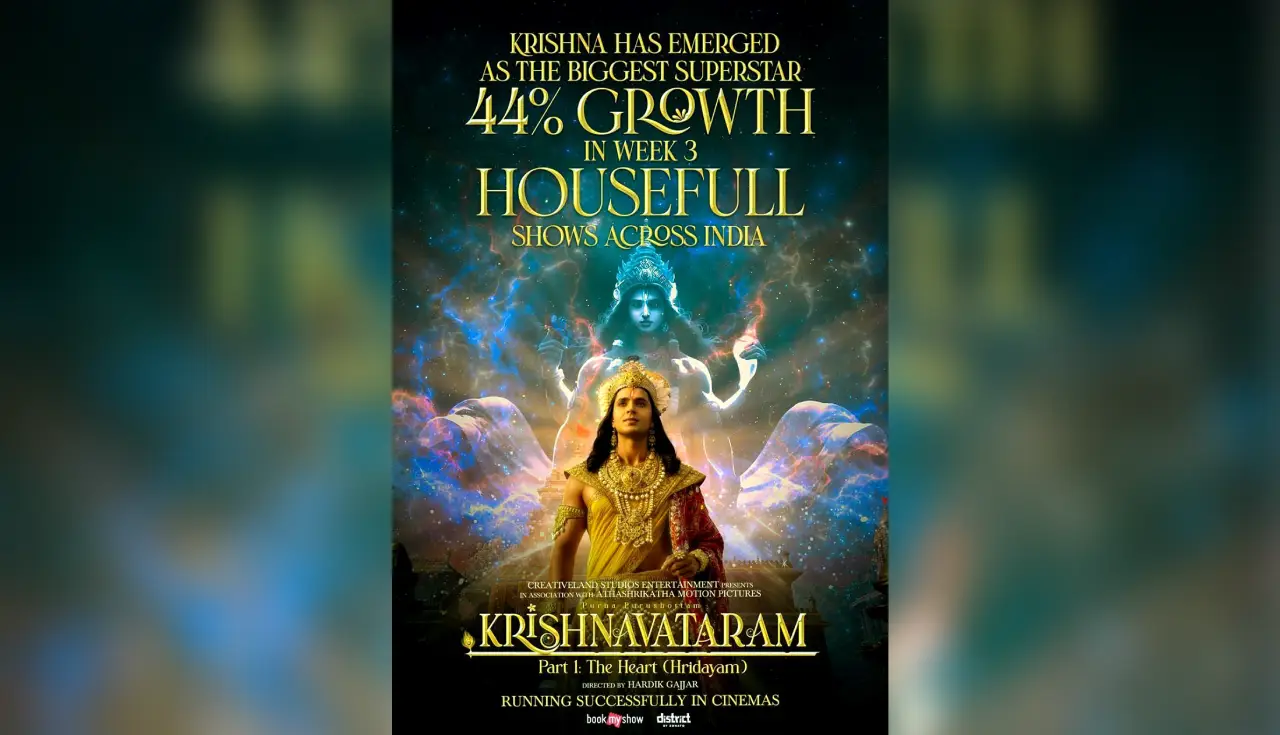
At a time when most films begin losing momentum after their opening week and large studio-backed releases dominate theatres, Krishnavataram Part 1 – The Heart is emerging as one of the surprise box-office success stories of the season.
The film recorded an impressive 44 per cent growth within 24 hours, coupled with a strong 28 per cent occupancy rate, signalling rising audience demand and increasing word-of-mouth appreciation.
What has caught the attention of trade analysts is that the film is delivering these numbers in its third week of release — a phase when most films typically witness a decline in collections and audience footfall. Instead, Krishnavataram Part 1 – The Heart appears to be gaining momentum, with expanding traction across multiple centres.
The film has also reported several housefull shows across India, reflecting sustained audience interest and repeat viewership. Industry observers often regard consistent occupancy and audience retention as stronger indicators of a film’s long-term theatrical performance than opening-day figures alone.
Unlike many large-scale commercial releases backed by extensive studio systems, aggressive marketing campaigns and massive distribution networks, Krishnavataram Part 1 – The Heart has largely relied on audience connection and organic appreciation.
Trade experts believe that while bigger films may naturally generate larger collections because of wider releases, Krishnavataram is showcasing a different strength — a stronger audience pull relative to its scale and reach.
Produced by Sajan Raj Kurup and directed by Hardik Gajjar, the film stars Siddharth Gupta as Lord Krishna, alongside Sushmitha Bhat as Radha, Nivaashiyni Krishnan as Rukmini, Sanskruti Jayana as Satyabhama and J. Karthik as Satrajit.
Reacting to the growing audience response, producer Sajan Raj Kurup said the emotional connection viewers are building with the film has become its biggest achievement.
“For us, the biggest victory is not just the growth in numbers, but the emotional connection audiences are building with Krishnavataram. Every day, we are hearing stories of families returning to theatres, devotees watching the film multiple times, and audiences recommending it to others purely out of love. In an industry driven by scale and massive campaigns, seeing a film grow because of genuine word-of-mouth is incredibly special,” he said.
Director Hardik Gajjar described the audience response as emotional and humbling.
“We made this film with faith, honesty and the intention of creating a deep emotional connection with audiences. Seeing people return to theatres again and again, witnessing housefull shows even in the third week, and watching the film grow purely through audience love is truly special,” he said.
With devotional themes, emotional storytelling, music and performances continuing to resonate with viewers, Krishnavataram Part 1 – The Heart appears to be proving that while scale may create visibility, audience love ultimately sustains a film’s journey at the box office.
For now, the numbers indicate one clear trend — theatres may open with screens, but audiences decide the momentum.
SC Orders Fair CBI Probe in Twisha Sharma Death Case, Says Judiciary 'Pained' by Bias Narrative 6
The Supreme Court on Monday said it was “pained” by the narrative suggesting that the judiciary was shielding the accused in the Twisha Sharma death case, and assured that a fair, independent and impartial CBI investigation would be conducted.
Twisha Sharma, 33, a former model-turned-actor, was found hanging at her matrimonial home in Bhopal’s Katara Hills area on May 12. Her family has accused her in-laws of dowry harassment and abetment to suicide, while the accused family claimed she suffered from drug addiction.
Police have registered an FIR against her husband, lawyer Samarth Singh, and mother-in-law, former district judge Giribala Singh, on charges related to dowry harassment.
A bench comprising Chief Justice of India Surya Kant and Justice Joymalya Bagchi urged restraint in media coverage and requested both families to avoid public statements during the investigation.
“We are slightly in pain because of some of the actions. We request the media not to go for statements from the victim’s family or the other family. Let things move as per law and procedure,” the bench observed.
The court also asked the media not to reduce the grief of the family into “sound bites” and cautioned against creating narratives that could prejudice the investigation.
Solicitor General Tushar Mehta informed the apex court that the Central Bureau of Investigation (CBI) would formally take over the probe and assured that the necessary administrative steps would be completed immediately.
The Supreme Court had taken suo motu cognisance of the case after media reports raised concerns over alleged institutional bias in the investigation, citing claims that a fair probe was being denied because the accused belonged to a legal and judicial background.
The matter was registered under the title: “In Re: Alleged Institutional Bias and Procedural Discrepancies in the Unnatural Death of Young Woman at Matrimonial Home.”
Appearing for the Madhya Pradesh government, Mehta submitted that Twisha’s mother-in-law had made public statements on television channels against the deceased, which intensified media coverage surrounding the case.
He added that significant progress in the investigation had been made due to public attention and remarked that the case was a reminder to parents that “it is better to have a divorced daughter than face such an unfortunate incident.”
The solicitor general also informed the court that a second autopsy on Twisha Sharma’s body was conducted on Sunday by a team from AIIMS-Bhopal following directions from the Madhya Pradesh High Court.
Senior advocate Siddharth Dave, appearing for the accused, raised concerns regarding media reporting and claimed that the entire Section 164 CrPC statement recorded before a magistrate had been published in newspapers.
The top court urged both the victim’s and accused’s families to present their versions only before the investigating agency and refrain from making statements that could affect the ongoing probe.
“We also request the media to avoid recording statements of persons who are likely to be potential witnesses, as it may unnecessarily impact issues under investigation,” the bench said.
The court further appealed to the public to avoid speculation and place trust in the CBI, expressing confidence that the agency would conclude the investigation fairly and professionally.
CUET-UG 2026 Exams on May 28 Postponed Due to Bakrid Holiday Change 8
The National Testing Agency (NTA) has postponed the Common University Entrance Test Undergraduate (CUET-UG) 2026 examinations scheduled for May 28 in both shifts following the revision of the Bakrid holiday date.
The agency said fresh dates for the affected examinations will be announced shortly.
In a public notice issued on Sunday, the NTA stated that the decision was taken after the Department of Personnel and Training (DoPT) issued an office memorandum on May 22 revising the date for the Eid-ul-Azha (Bakrid) holiday.
“In continuation of the Public Notice dated May 5, 2026, it is hereby informed that the CUET (UG) 2026 examinations scheduled to be held on 28.05.2026 in both shifts stand postponed,” the notice said.
Candidates have been advised to regularly visit the official NTA websites for updates regarding revised examination schedules and other announcements. The agency also urged students to contact the NTA helpdesk for any clarification.
Introduced in 2022, CUET-UG was launched to standardise undergraduate admissions across central, state and select private universities in India.
The entrance examination replaced multiple university-specific tests and aims to provide a common assessment platform for students nationwide. CUET-UG evaluates candidates on language proficiency, domain-specific subjects and general aptitude in line with the objectives of the National Education Policy (NEP) 2020 to promote inclusivity and equal opportunities in higher education admissions.
From Feminism to Mockery: Why Is Mrinal Pande Targeting Aishwarya Rai's Cannes Glory? 10
There was a time when Indian women had to fight tooth and nail merely to be seen in public life. Journalism, cinema, politics, literature, television — every field was guarded by gatekeepers who rarely allowed women to occupy space without scrutiny. It took extraordinary determination for women to rise above ridicule and establish themselves as institutions in their own right. That is why it feels deeply unfortunate when two accomplished women from two entirely different generations and professions are suddenly positioned against each other in a controversy that never needed to exist in the first place.
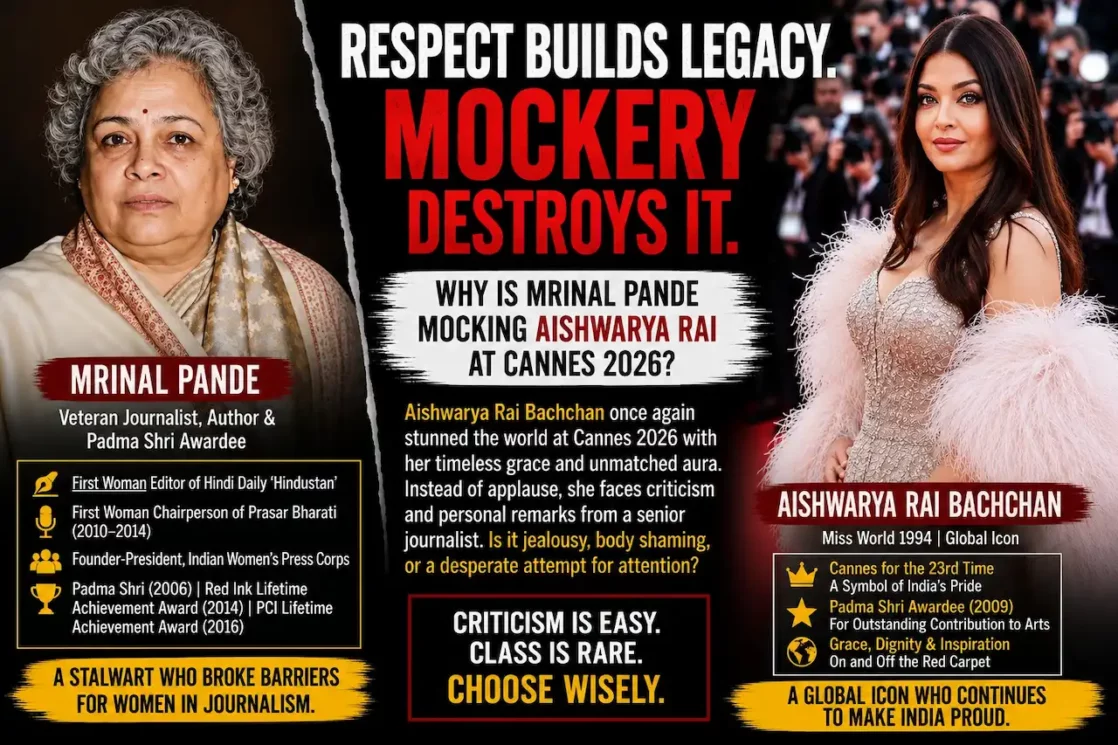
The recent remarks made by Mrinal Pande regarding Aishwarya Rai Bachchan at Cannes 2026 have triggered widespread criticism online. Many people are not merely upset because a senior journalist expressed an opinion about a celebrity appearance; public figures are naturally open to commentary. What has disturbed people is the tone, the persistence, and the personal nature of the remarks directed not only at Aishwarya but reportedly even toward her teenage daughter Aaradhya. That is where criticism stops looking intellectual and starts appearing unnecessarily cruel.
What makes this entire episode stranger is that both women represent remarkable milestones in Indian public life.
On one side stands Mrinal Pande — a veteran journalist, author, television personality, and one of the most influential women in Indian media history. She broke barriers in a male-dominated Hindi journalism industry long before feminism became fashionable in drawing-room conversations. She became the first woman editor of the Hindi daily Hindustan, later chaired Prasar Bharati, and played a major role in creating space for women journalists in India. Her writings on gender inequality, rural women, body politics, and social taboos earned her national respect and prestigious honours, including the Padma Shri.
Mrinal Pande belongs to a generation of women who had to fight institutional patriarchy directly. She did not rise in an era of social media validation or celebrity culture. She earned recognition through intellect, discipline, and years of relentless work. Whether one agrees with her politics or not, her contribution to Indian journalism remains historically significant.
On the other side stands Aishwarya Rai Bachchan — perhaps one of the most globally recognised Indian women of the modern era. From winning Miss World in 1994 to becoming one of the earliest Indian actresses to achieve mainstream international visibility, Aishwarya transformed the image of Indian beauty and cinema on the world stage. Long before global representation became a fashionable buzzword, she was walking international red carpets carrying Indian identity with poise and dignity.
Her Cannes appearances over the years became more than celebrity fashion moments. They became cultural events. Generations watched an Indian woman command attention at one of the world’s most elite cinematic gatherings with confidence, elegance, and grace. Even critics who may not admire every film she acted in cannot deny her global impact. She helped normalize the idea that Indian actresses could belong on international platforms without needing Western approval to validate their presence.
At Cannes 2026, Aishwarya once again drew massive attention. Dressed in a dramatic couture creation by Fjolla Nila and styled by Mohit Rai, she walked the red carpet with the same calm confidence that has defined her public persona for decades. Social media erupted almost instantly. Videos of photographers shouting her name went viral. Admirers praised her timeless beauty and commanding aura. At 52, she continues to possess the rare quality that true stars carry — presence. Some people merely wear clothes; others create moments. Aishwarya has spent over two decades doing precisely that.
This is why many found Mrinal Pande’s remarks jarring and unnecessary.
Criticism of fashion is fair game. Cannes itself invites commentary, analysis, and debate. But when criticism slips into personal ridicule, age-related mockery, or subtle body shaming, it begins to contradict the very values many feminist intellectuals once championed. That contradiction is what people are reacting to most strongly.
Mrinal Pande spent much of her career speaking about the policing of women’s bodies, the hypocrisy surrounding female appearance, and the social scrutiny imposed on women in India. Her writings often challenged society’s obsession with controlling women through shame. Therefore, when someone associated with those ideals appears to target another woman’s appearance or public image, the reaction becomes sharper because expectations are higher.
People are asking a simple question: if a woman cannot age publicly without being mocked even after decades of achievement, what exactly are younger women expected to learn from this?
There is also another uncomfortable reality behind the backlash. Indian society often glorifies successful women only until they cross a certain age. Once they continue occupying attention beyond middle age, the tone suddenly changes. Their visibility begins irritating people. Questions emerge about whether they are “trying too hard,” “holding onto glamour,” or “seeking attention.” Men in public life rarely face the same hostility for aging visibly or remaining socially relevant.
Aishwarya Rai Bachchan’s continued popularity unsettles certain sections precisely because she defies the expiration date society silently imposes on women. She remains admired, photographed, discussed, and celebrated globally after decades in public life. That longevity is rare. Instead of acknowledging that achievement, critics often attempt to reduce it through sarcasm.
Ironically, the internet generation seems to understand this contradiction more clearly than older commentators. Social media users across platforms defended Aishwarya not merely as a celebrity but as a symbol of confidence and endurance. Many women especially pointed out how exhausting it is to constantly watch female public figures being dissected for their appearance regardless of age.
More troubling, however, is the alleged commentary involving Aaradhya Bachchan. Children of celebrities already grow up under relentless public observation. Every expression, outfit, gesture, or appearance gets turned into viral content. Subjecting a teenager to mocking public discourse crosses an ethical line. Public curiosity is one thing; targeted ridicule is another.
One may disagree with celebrity culture, luxury fashion, or red carpet obsession. Those debates are legitimate. But basic decency should remain non-negotiable.
There is also a visible shift in how public intellectuals today interact with social media culture. Earlier, respected journalists maintained a certain restraint because their words carried institutional weight. Today, outrage cycles reward provocation. Sharp comments generate headlines, screenshots, shares, and temporary relevance. In many cases, intellectual criticism slowly transforms into performative commentary designed to stay socially visible.
That is why some observers believe this controversy reflects a larger issue — the growing temptation among public figures to insert themselves into viral conversations for attention. Whether intentional or not, controversial remarks about globally recognised celebrities almost always guarantee instant visibility online. In today’s media ecosystem, outrage itself has become publicity currency.
This is unfortunate because someone of Mrinal Pande’s stature does not need such attention tactics. Her legacy is already secure. She is remembered as a pioneer. That should have been enough.
Similarly, Aishwarya Rai Bachchan does not need constant validation either. Her place in Indian popular culture was cemented long ago. From cinema to international representation, she has already achieved what many aspire to across multiple lifetimes.
Which is precisely why this clash feels unnecessary.
Instead of tearing each other down, India should celebrate the fact that both these women succeeded in fields historically dominated by men. One transformed Hindi journalism; the other transformed India’s international cultural image. Their journeys reflect two different models of female success — intellectual influence and cultural glamour — and both deserve respect.
Disagreement is healthy. Critique is natural. But there is a difference between critique and contempt.
At a time when young women are constantly battling online trolling, appearance-based judgment, and public humiliation, senior women in influential positions carry a greater responsibility with their words. Society learns not only from achievements, but also from conduct.
Aishwarya Rai Bachchan walking confidently at Cannes at 52 should not be treated as something laughable. It should be viewed as proof that women do not become invisible with age. And Mrinal Pande’s extraordinary journalism career should not be overshadowed by remarks that appear petty compared to the stature she built over decades.
India does not need accomplished women competing to diminish one another. It needs them reminding the world that women can age, succeed, disagree, and still carry dignity without descending into bitterness.
Petrol, Diesel Prices Surge Again; Fuel Rates Jump Nearly Rs 7.5 Per Litre in 12 Days 12
Petrol and diesel prices were hiked once again on Monday, marking the fourth increase in less than two weeks as state-owned oil companies continued passing on rising international energy costs to consumers.
With the latest revision, petrol and diesel prices have increased by nearly Rs 7.5 per litre since fuel price revisions resumed on May 15 after a prolonged freeze.
In Delhi, petrol prices were raised by Rs 2.61 per litre, taking the retail price from Rs 99.51 to Rs 102.12 per litre. Diesel prices climbed by Rs 2.71 per litre, rising from Rs 92.49 to Rs 95.20 per litre, according to industry sources.
The fresh hike comes amid elevated global crude oil prices and continued weakness in the Indian rupee, both of which have significantly increased import costs for oil marketing companies.
Fuel prices had already witnessed three successive hikes since May 15 as oil firms adopted a calibrated approach to pass on the impact of global energy market volatility arising from the ongoing West Asia crisis.
The latest increase is expected to further impact transportation costs, logistics, inflation and household budgets across the country.
Industry experts say sustained geopolitical tensions and fluctuations in crude oil markets may continue to influence domestic fuel prices in the coming weeks.
NEET Paper Leak Probe Triggers Crackdown on Illegal Coaching Hubs in Latur 14
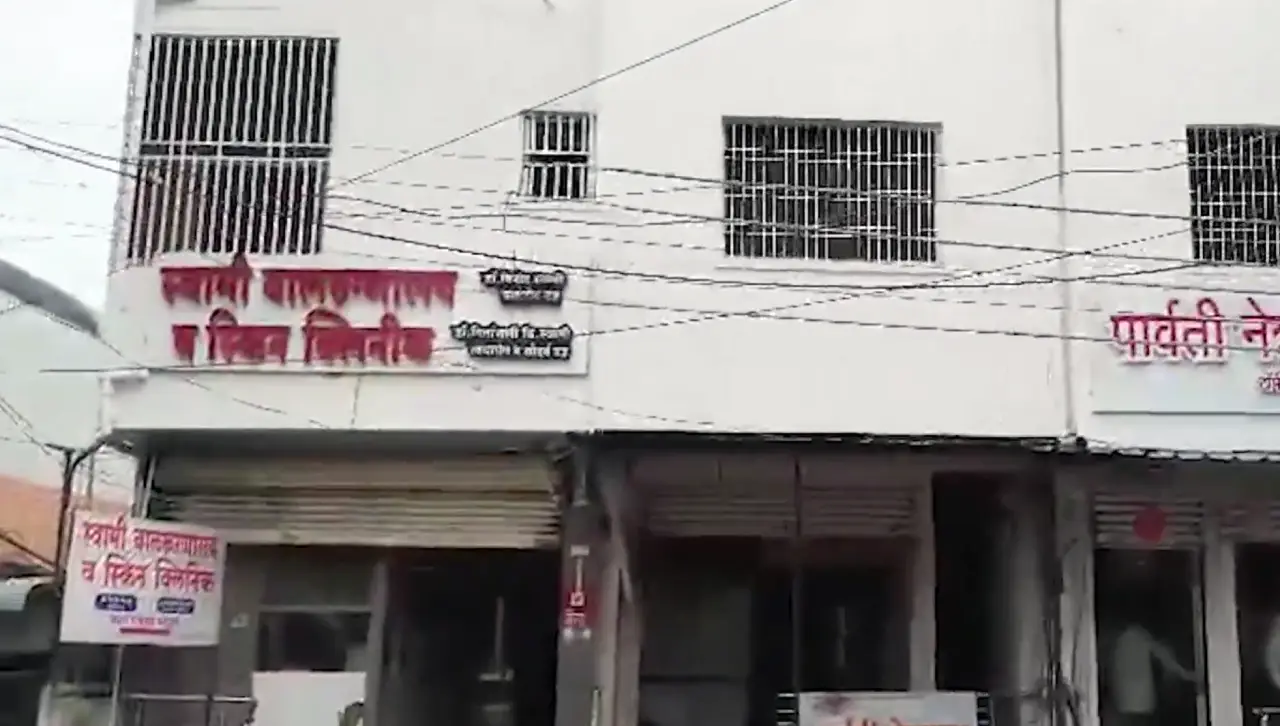
The fallout of the NEET-UG 2026 paper leak investigation has prompted the Latur district administration to launch a major crackdown on illegal coaching classes and unauthorised commercial activities operating from industrial units in the city.
The action comes after the Central Bureau of Investigation (CBI) arrested 11 accused in connection with the paper leak case, including retired professor P V Kulkarni and Renukai Career Centre director Shivraj Motegaonkar.
Officials said the administration has now tightened its focus on Latur’s controversial “coaching classes area,” which has long functioned as a hub for private tuition centres.
On Friday, the Zilla Udyog Kendra (District Industries Centre) issued directives ordering the immediate closure of all commercial activities illegally operating from industrial sheds allotted exclusively for manufacturing purposes within the Latur Industrial Estate Co-operative Society.
The move follows the recent arrest of Pune-based Manisha Havaldar, who is accused of leaking Physics questions from the NEET examination.
According to an official letter issued by the District Industries Centre on May 22, the crackdown was initiated after a meeting chaired by the Latur District Collector.
The administration observed that several industrial units located in the MIDC area were being misused for private coaching classes, hostels, mess facilities, hotels, study rooms, book centres and other commercial operations instead of industrial production activities.
Officials noted that these plots and sheds were originally leased to entrepreneurs strictly for manufacturing and industrial purposes. However, following the decline of several industries after 2000, many units were allegedly rented out to coaching institutes, transforming the locality into Latur’s well-known “tuition area.”
In its notice to the president of the Latur Industrial Estate Co-operative Society, the District Industries Centre warned that strict legal action would follow if the directives were not implemented immediately.
The administration’s move is being viewed as part of a wider effort to tighten oversight on the coaching ecosystem in the wake of the NEET-UG paper leak controversy.
Raghav Chadha Appointed Chairman of Rajya Sabha Petitions Committee After BJP Switch 16
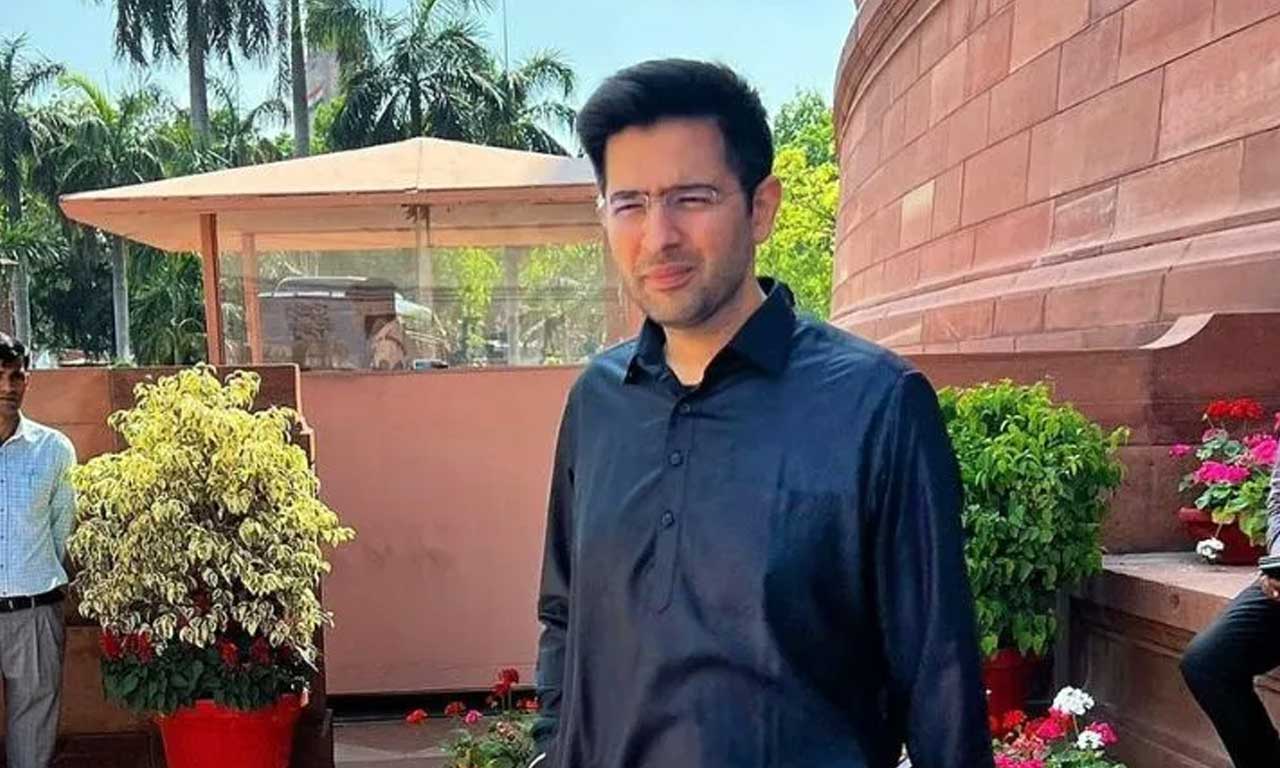
Rajya Sabha MP Raghav Chadha, who recently switched from the Aam Aadmi Party (AAP) to the BJP, has been appointed chairman of the Rajya Sabha Committee on Petitions.
The appointment was announced after Rajya Sabha Chairman C P Radhakrishnan reconstituted the Committee on Petitions and nominated 10 members to the panel.
“Raghav Chadha has been appointed Chairman of the Committee,” an official Rajya Sabha notification stated. The committee has been reconstituted with effect from May 20, according to the notification.
The other members of the panel include Harsh Mahajan, Gulam Ali, Shambhu Sharan Patel, Mayankkumar Nayak, Masthan Rao Yadav Beedha, Jebi Mather Hisham, Subhasish Khuntia, Rwngwra Narzary and Sandosh Kumar P.
In a separate notification, the Rajya Sabha Secretariat announced that Chairman C P Radhakrishnan had nominated Dr Menaka Guruswamy, Member of Parliament in the Rajya Sabha, to the Joint Committee on the Corporate Laws (Amendment) Bill, 2026.
The latest appointments come amid ongoing reshuffles and committee reconstitutions in Parliament ahead of the upcoming legislative session.
CM Fadnavis Warns Against Fuel Black-Marketing, Assures Diesel Supply for Farmers 18
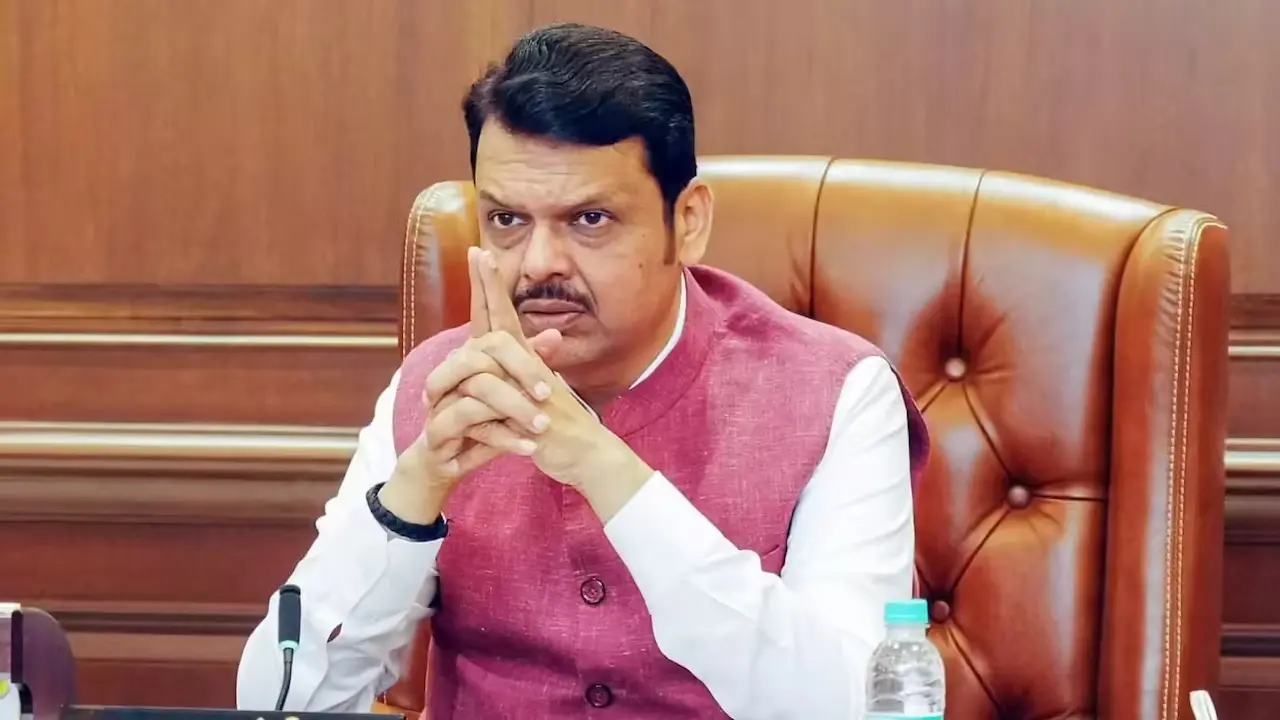
Maharashtra Chief Minister Devendra Fadnavis on Saturday assured farmers that the state government would ensure uninterrupted diesel supply in rural areas amid reports of fuel shortages and panic buying triggered by the ongoing West Asia crisis.
Speaking to reporters during his visit to Shirdi, Fadnavis acknowledged that petrol and diesel were currently not readily available in some rural regions and said district administrations had been directed to take immediate corrective measures.
“Petrol and diesel are not available in rural areas right now. In this regard, I have issued instructions to all district collectors and divisional commissioners that wherever necessary, diesel should be made available to farmers,” the Chief Minister said.
Fadnavis also issued a strong warning against black-marketing of fuel in the name of farmers, noting that certain parts of Maharashtra had witnessed a sudden surge in fuel purchases.
“Some areas have seen a 20 to 30 per cent spike in fuel sales. Action will be taken against anyone involved in black-marketing,” he cautioned.
According to officials, Maharashtra recorded nearly a 20 per cent rise in petrol and diesel sales during the first fortnight of May due to panic buying amid fears of possible supply disruptions linked to tensions in West Asia.
The Chief Minister had travelled to Shirdi to attend the inauguration of a defence and aerospace complex. During the visit, he also praised the Vande Bharat train service, saying Prime Minister Narendra Modi had gifted the country a world-class transport experience comparable to developed nations.
“I enjoyed the experience very much. During the journey, I cleared files and met many people. It was a completely different and very good experience,” Fadnavis said.
Speaking about the newly inaugurated defence complex in Shirdi, the Chief Minister said the temple town had evolved into a symbol of both spirituality and strength.
“Shirdi has now emerged as a centre of strength. Devotion and strength are integrated in Indian spirituality. Only those who are powerful can establish peace. The weak can never establish peace,” he remarked.
Petrol and diesel prices were hiked once again on Saturday, marking the third increase in less than 10 days, as state-owned oil marketing companies continued to pass on the impact of rising global energy prices triggered by the ongoing West Asia conflict.
In Delhi, petrol prices were increased by 87 paise per litre, taking the retail rate from Rs 98.64 to Rs 99.51 per litre. Diesel prices rose by 91 paise, moving from Rs 91.58 to Rs 92.49 per litre.
This is the third revision in fuel prices since May 15, when oil companies began a calibrated increase in retail rates due to elevated crude oil prices and geopolitical uncertainty in the Middle East.
Earlier, petrol and diesel prices were raised by Rs 3 per litre on May 15, followed by another hike of around 90 paise on May 19.
With the latest revision, fuel prices have increased by nearly Rs 5 per litre within a span of 10 days, adding pressure on household budgets and transportation costs.
The recent hikes come amid concerns over disruptions in global energy markets due to escalating tensions in West Asia, which have pushed up crude oil prices internationally.
The continuous rise in fuel prices is also expected to impact inflation and logistics costs across sectors, including transportation and essential commodities.