The Northeast Frontier Railway (NFR) loaded 2.979 MT freight during the first quarter of the current financial year, registering an increase of 28 per cent against the corresponding period of last year.
NFR loaded 0.910 MT during the month of June, 2022. This is an increase of 7.9 per cent as compared to the corresponding period of last year, a spokesperson said on Monday.
In June, coal and other commodities such as stone chips and potatoes also increased by a good margin in comparison to the corresponding period last year, he said.
Cement loading increased by 68.3 percent, Petrol Oil Lubricant (POL) loading rose by 17.3 per cent, container loading grew by 27.8 percent and other commodities increased by 21.4 per cent, he added.
Improved terminal handling facility and improvement in mobility due to enhanced maintenance efforts and continuous monitoring at all levels resulted in increased loading, the spokesperson said.
State-owned coal major Coal India reported a 65 per cent growth in capital expenditure year-on-year during the April-June quarter of FY23 in a regulatory filing to the stock exchanges on Monday. The company’s capital expenditure rose to Rs 3,034 crores during the April-June quarter, as compared to Rs 1,841 crores in the same period last year.
“The capex increase came on the back of a strong spending in acquiring land and strengthening transport infrastructure in our coalfields under first mile connectivity projects. These two vital areas help CIL in expanding its mining operations for accelerated production and pairing it with seamless transportation of coal”, a senior official of the company said in the filing.
“CIL’s production tempo is keeping up a consistent double-digit growth in FY’23 so far and all efforts are on to continue the trend. What assumes importance is to have a matching evacuation infrastructure that can handle transportation of the increased output”, said the official.
Land acquisition accounted for nearly one-fifth of the first quarter’s total capex basket at Rs 608 crores. This represents a close to 2.3-fold increase compared to Rs 268 crores spent on land acquisition during April-June of 2021.
Three labourers were killed and two others seriously injured after lightning struck them during heavy rains in Madhya Pradesh’s Sagar district, an official said on Monday.
The incident took place on Sunday evening in Semadhana village under Jaisinagar police station limits, the official said.
The five labourers were working at an under-construction house. Due to heavy rains, they took shelter under a tree when lightning struck them around 6 pm on Sunday, Jaisinagar police station in charge Shashikant Gurjar said.
Three of them – Mohit Raikwar (30), Chhotu Raikwar (18) and Mahendra Singh (65) – died, while two others were injured and undergoing treatment at the Sagar district hospital, he said.
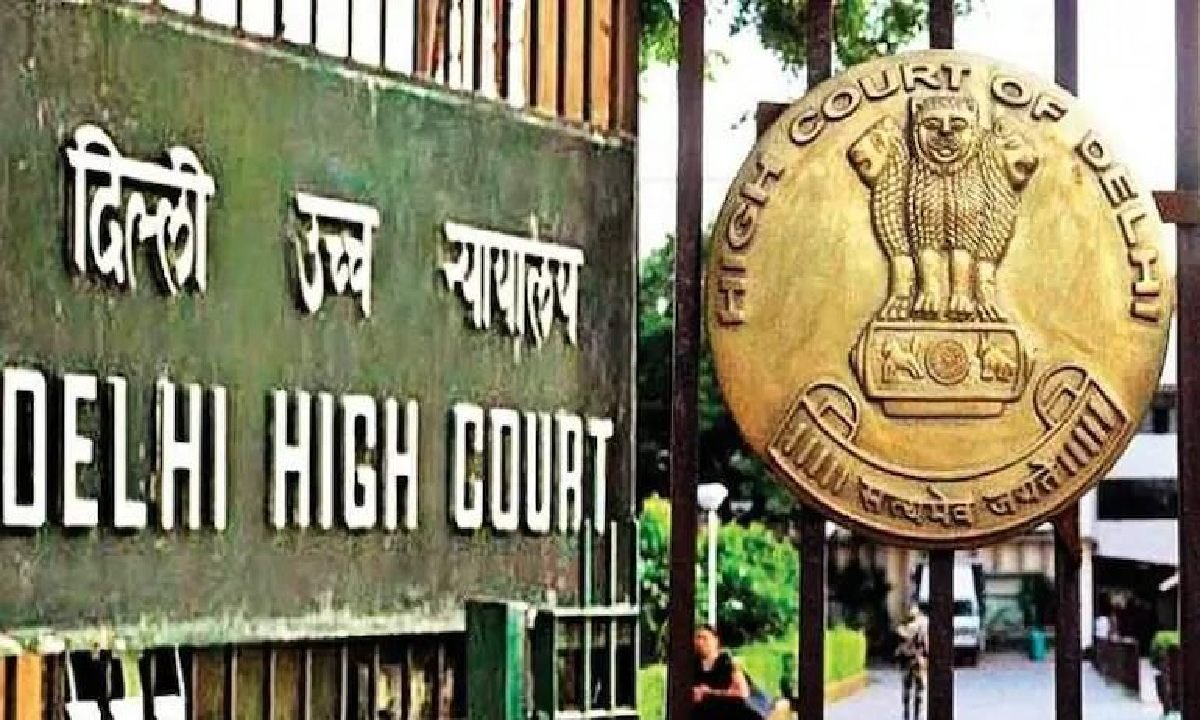
The Delhi High court on Monday transferred the bail plea of Khalid Saifi, an accused in a larger conspiracy case of North East Delhi riots, before the special bench hearing the connected bail matters.
The Division Bench of Justice Mukta Gupta and Justice Anish Dayal at the request of the petitioner’s counsel, listed the matter before the special bench of justices Sidharth Mridul and Rajanish Bhatnagar for July 22, 2022.
Advocate Rajat Kumar, counsel for the petitioner, submitted that it is an appeal against the trial court order in a riot-related matter and other connected matters are pending before the special bench.
So this matter should be listed before the same bench. Special public prosecutor Amit Prasad did not oppose the request. The High Court on May 9, 2022, had issued notice to the Government of NCT Delhi on an appeal of Khalid Saifi, an accused in a larger conspiracy connected with the northeast Delhi violence challenging the trial court order refused bail to him.
Saifi was booked under UAPA by the Delhi Police. It was alleged that Khalid Saifi was one of the main organizers of the Khureji Protest site which was near Badi Masjid in the Khureji area. The Division Bench of Justice Siddharth Mridul and Justice Rajnish Bhatnagar on May 9, 2022, issued notice to the Government of NCT Delhi and listed the matter for July 11, 2022.
Then the bench was changed and the matter had been listed before another bench. Appearing for Khalid Saifi, Senior Advocate Rebecca John submitted, “my case is different from other appeals pending before this court in the related case. Let me be different even if that has to be delayed. Let those be over. Let me show how my case is different”.
Earlier Trial Court’s Additional Sessions Judge Amitabh Rawat dismissed the bail plea saying, “I am of the opinion that allegations against the accused Khalid Saifi are prima facie true.”
Senior Advocate Rebecca John, counsel for the accused had argued that the accused Khalid Saifi has been falsely implicated in this case and the entire case of the prosecution is unsubstantiated without any evidence to link with the communal riots of 2020.
It was also argued that the accused is a businessman by profession and runs a travel agency. He is also a social activist. There is no evidence on record to suggest that the accused gave any provocative speech so as to instigate anyone to commit any act of violence.
Senior Advocate had argued that the reliance of the prosecution on a WhatsApp group called DPSG would show the peripheral participation of the accused in the said group.
Nothing in the group or in the accused’s participation in the group is suggestive of any criminal conspiracy. Counsel for the accused further argued that as per the prosecution, funding was provided to him between December 2019 and 26 February 2020 for orchestrating riots in Delhi.
It was argued that the accused was receiving money from Naseef Abdul Kareem in his NGO bank account not just in 2020 but since 2018. The statement of Abdul Majid, a Trusty of the New Education Welfare Organisation, NGO, is inherently false.
On the other hand, opposing the bail the Special Public Prosecutor (SPP) Amit Prasad had argued that there is sufficient material on record to establish that the accusation against the accused Khalid Saifi is prima facie true and hence the bail application may be dismissed.
SPP Amit Prasad had submitted that Khalid Saifi was a member of Whatsapp group DPSG, CAB Team and United Against Hate (UAH) Okhla. Khalid Saifi also attended a meeting at 6/6 Jangpura, Bhogal, Delhi on 8 December 2019 attended by Umar Khalid, Sharjeel Imam, Meeran Haider and others.
He also attended the meeting on 26 December 2019 at Indian Social Institute, Lodhi Colony, Delhi after which DPSG was created on 28 December 2019.
According to the statement of Saturn, on January 8, 2020, a meeting between Umar Khalid, Tahir Hussain, and Khalid Saifi took place at the PFI office, Shaheen Bagh, Delhi.
In northeast Delhi, large-scale violence broke out in February 2020. In this violence, 53 people died and hundreds were injured according to the police.
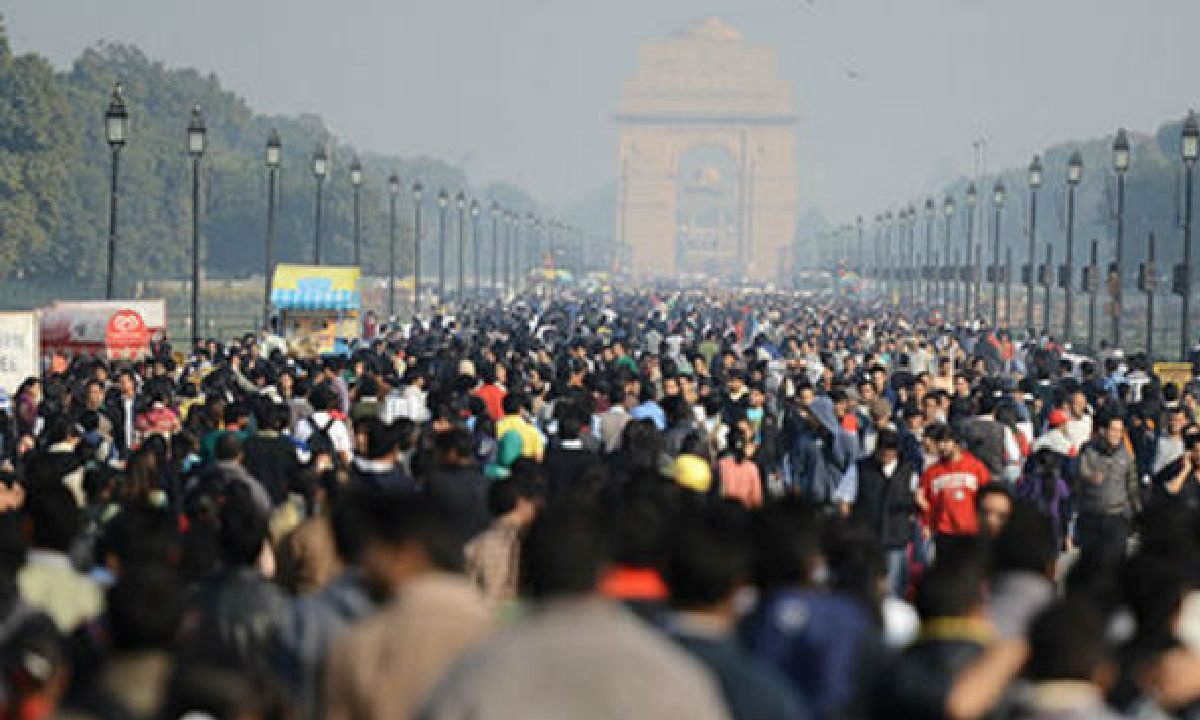
India is projected to surpass China as the world’s most populous country next year, as per a report by the United Nations on World Population Day.
According to a report by the World Population Prospects 2022 by the United Nations Department of Economic and Social Affairs, Population Division the world’s population is projected to reach eight billion on November 15, 2022.
The latest projections by the United Nations suggest that the global population could grow to around 8.5 billion in 2030, 9.7 billion in 2050 and 10.4 billion in 2100.
Central and Southern Asia is expected to become the most populous region in the world by 2037 as the population of Eastern and South-Eastern Asia could start declining by the mid-2030s.
According to the report, in 2022, the two most populous regions were both in Asia, namely Eastern and South-Eastern Asia with 2.3 billion people (29 per cent of the global population), and Central and Southern Asia with 2.1 billion (26 per cent of the global population).
China and India, with more than 1.4 billion each, accounted for most of the population in these two regions. India’s population stands at 1.412 billion in 2022, compared to China’s 1.426 billion, the report said. India is projected to have a population of 1.668 billion in 2050, way ahead of China’s 1.317 billion people by the middle of the century.
The report said that the growth of the world population slowed down by more than half after 1965, owing to reduced levels of fertility. In India, IHME projects a total fertility rate of 1.29 births per woman in 2100 instead of 1.69 in
the United Nations medium scenario, resulting in a population that is 433 million smaller than according to the United Nations projections at the end of the century. Globally, the world counts slightly more men (50.3 per cent) than women (49.7 per cent) in 2022.
This figure is projected to slowly invert over the course of the century. By 2050, it is expected that the number of women will equal the number of men.
In 2020, and for the first time since 1950, the rate of population growth fell below 1 per cent per year and it is projected to continue to slow in the next few decades and through the end of this century, the report said.
In some parts of the world, international migration has become a major component of population change. It is estimated that ten countries experienced a net outflow of more than 1 million migrants between 2010 and 2021.
In many of these countries, these outflows were due to temporary labour movements, such as Pakistan (net outflow of -16.5 million during 2010-2021), India (-3.5 million), and Bangladesh (-2.9 million), Nepal (-1.6 million) and Sri Lanka (-1 million).
The 46 least developed countries (LDCs) are among the world’s fastest-growing. Many are projected to double in population between 2022 and 2050, putting additional pressure on resources and posing challenges to the achievement of the Sustainable Development Goals (SDGs).
The UN report said that the relationship between population and sustainable development should be considered within the context of climate change and other global environmental challenges that have a direct impact on sustainable development.
The growth of the population itself may not be the direct cause of environmental damage; it may nevertheless exacerbate the problem or accelerate the timing of its emergence, depending on the problem in question, the timeframe considered, the available technology and the demographic, social and economic context.
The contest to replace British Prime Minister Boris Johnson gathered pace on Sunday as five more candidates declared their intention to run, with many pledging lower taxes and a clean start from Johnson’s scandal-ridden premiership.
Johnson on Thursday said he would resign as prime minister, after lawmakers and cabinet colleagues rebelled over his handling of a series of scandals, including breaches of lockdown rules in gatherings at his Downing Street office.
He said he would stay on until a new leader was elected.
A member of a Conservative party committee which sets the rules for leadership elections said on Sunday the final result would be announced in September.
Junior trade minister Penny Mordaunt officially declared she was running on Sunday, joining transport Secretary Grant Shapps, finance minister Nadhim Zahawi and former ministers Jeremy Hunt and Sajid Javid, who announced their candidacies for the leadership in time for the Sunday newspapers, taking the total to nine.
“This is a critical inflection point for our country. I believe that a socialist or socialist-led coalition government at the next election would be a disaster for the UK,” Mordaunt said in a statement. “We must win the next election.”
The Conservative Party’s 1922 Committee of legislators, which sets rules for the party in parliament, will set out the exact timetable after a meeting on Monday.
Bob Blackman, an officer on the 1922 Committee’s executive, said that nominations would close on Tuesday evening, followed by a process to whittle candidates down to a final two by July 21.
Party members would elect a new party leader over the summer, who would then become prime minister.
“We’ll (select the final two) by the 21st of July, to allow the party membership sufficient time to have husting sessions and a postal ballot to then lead to a new leader being in place by the fifth of September,” he told Sky News.
Entering the race, Shapps, Zahawi, Hunt and Javid all pledged tax cuts, setting them against the current favourite, former finance minister Rishi Sunak, whose budget last year put Britain on course for its biggest tax burden since the 1950s.
“I believe in a lower tax, lower regulation, cut-the-red-tape economy,” Shapps told Sky News, adding he would hold an emergency budget to bring forward a one pence reduction in the income tax rate which is currently planned in 2024, freeze a planned rise in corporation tax and look to reduce the size of the civil service.
Hunt, a former foreign minister who came second in the leadership contest in 2019 when Johnson came to office, and Javid, who twice resigned from Johnson’s government, both said they would cut corporation tax to 15%.
Hunt said that no Conservative should either raise taxes or offer unfunded tax cuts. Asked if cutting taxes would lead to inflation, Hunt said: “I don’t agree with that when it comes to business taxes.”
“If you stimulate consumer demand, when there’s some demand-led inflation, there is that risk, but we must bear down on inflation. That’s why I’d be very careful not to promise (tax) cuts that would stoke inflation,” he said.
The Mail on Sunday said Foreign Secretary Liz Truss would launch her campaign on Monday with a promise to cut taxes and tackle the cost-of-living crisis, while one of her main rivals for the role, Defence Secretary Ben Wallace, has ruled himself out.
India’s Mahindra & Mahindra could consider investing in a battery-cell company to meet future electrification needs, its CEO said, after the company raised funds for its new electric vehicle (EV) unit at $9.1 billion (roughly Rs. 7,11,00,000 crore) valuation.
Mahindra on Thursday raised $250 million(roughly Rs. 19,831,650,000 crores) from British International Investment for the unit and is exploring a partnership with Volkswagen AG to source such EV components as batteries and motors.
While the Volkswagen deal would meet Mahindra’s “short to medium term” battery needs, Mahindra CEO Anish Shah said the company was open to looking at some sort of “investment with a global leader” in the battery-cell space if it needed to secure future supplies.
“Our intent is not to get into (manufacturing) batteries,” Shah said in an interview. “There are people who do it very well. We can partner with them; we could be a co-investor in some form. We don’t need to own it and run it.”
Automakers are also wary of situations like the pandemic semiconductor shortage that lead to production stoppages. Many companies still face order backlogs because of supply problems.
Shah said that, except for batteries and motors, most of the components for EVs were not very different from those of combustion-engine cars and Mahindra produced a majority of those parts in-house.
“If we can get an agreement as we have with Volkswagen to secure (battery) supplies, that’s what we will do. If there’s some investment we need to make to secure those supplies, we will do that,” he said.
Mahindra’s plans come as Indian companies seek to capitalise on billions of dollars worth of incentives being offered by the government to build EVs, part of a policy to meet national climate change and carbon reduction goals.
India’s EV market, dominated by local carmaker Tata Motors, represents only 1 per cent of the country’s annual sales of about 3 million vehicles. The government wants this to grow to 30 per cent by 2030.
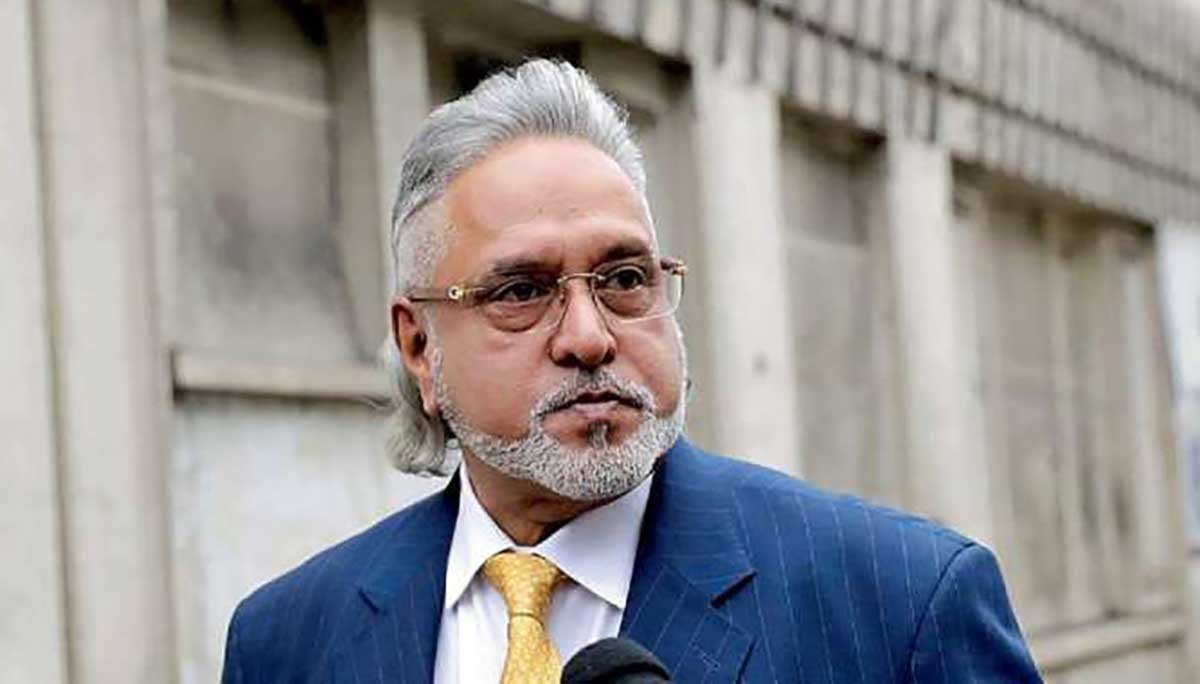
The Supreme Court on Monday awarded four months in jail to fugitive businessman Vijay Mallya who was found guilty of contempt of court in 2017 for withholding information from the court.
A bench of Justices UU Lalit, Ravindra S Bhat and PS Narasimha also imposed a cost of Rs 2,000 on the Mallya while observing that he showed “no remorse” for his conduct and did not appear before it during the sentence hearing.
The apex court asked Mallya to deposit the fine within four weeks to the Supreme Court legal services authority and failing which a further sentence of two months will be added.
It also directed Mallya’s family members to return USD 40 million, transferred to them, with eight per cent interest within four weeks failing which attachment proceedings will be initiated against his properties.
The bench said an adequate sentence must be imposed on him to “uphold the majesty of law”.
In 2017 the top court had held Mallya guilty of contempt of court for withholding information from the court about transferring USD 40 million to his children in violation of the court’s order, and sought his presence before it on various occasions. He was found guilty of contempt of court in a case filed by a consortium of banks led by the State Bank of India.
The apex court, during the hearing of the contempt case, had noted that Mallya behaves like “a free person” in the United Kingdom and no information was forthcoming about the proceedings concerning Mallya there.
Last year, the top court while saying that it has waited “long enough” and cannot “wait longer now” for Mallya to get extradited from the United Kingdom to India, decided to go ahead with the hearing on the quantum of punishment in the contempt case against him.
On February 10, the Supreme Court granted the last opportunity of two weeks to Mallya to personally present or through counsel in the contempt case against him, and if he failed to do so the court would take the matter to the logical conclusion.
Solicitor General Tushar Mehta appearing for the Ministry of External Affairs clarified that it’s not the government of India’s stand that something confidential is going on in the case in the United Kingdom but it is what the government has been informed by the UK that there is something going on which can’t be shared.
Earlier, Mehta had furnished a document of Deputy Secretary (Extradition) Ministry of External Affairs, to which the bench had said the proceedings for extradition of Mallya to India from the United Kingdom has attained finality but certain “confedential proceedings” are pending in the UK, details of which are not known.
The Centre had also said that Mallya has already exhausted all his avenues of appeal in the UK.
The apex court had dismissed a plea filed by Mallya seeking a review of its May 2017 order holding him guilty of contempt.
Mallya is an accused in a bank loan default case of over Rs 9,000 crore involving his defunct Kingfisher Airlines and is presently in the United Kingdom.
The Supreme Court had issued its May 9, 2017, order on a plea by a consortium of banks led by the State Bank of India (SBI), claiming he had allegedly transferred USD 40 million received from British firm Diageo to his children in “flagrant violation” of various judicial orders.
Earlier, the apex court had asked Mallya about the “truthfulness” of his disclosure of assets and the transfer of money to his children.
At that time, the top court was dealing with pleas of lending banks seeking contempt action and a direction to Mallya to deposit USD 40 million received from offshore firm Diageo to the banks respectively.
The banks had then accused Mallya of concealing the facts and diverted the money to his son Siddharth Mallya and daughters Leanna Mallya and Tanya Mallya in flagrant violation of the orders passed by the Karnataka High Court.
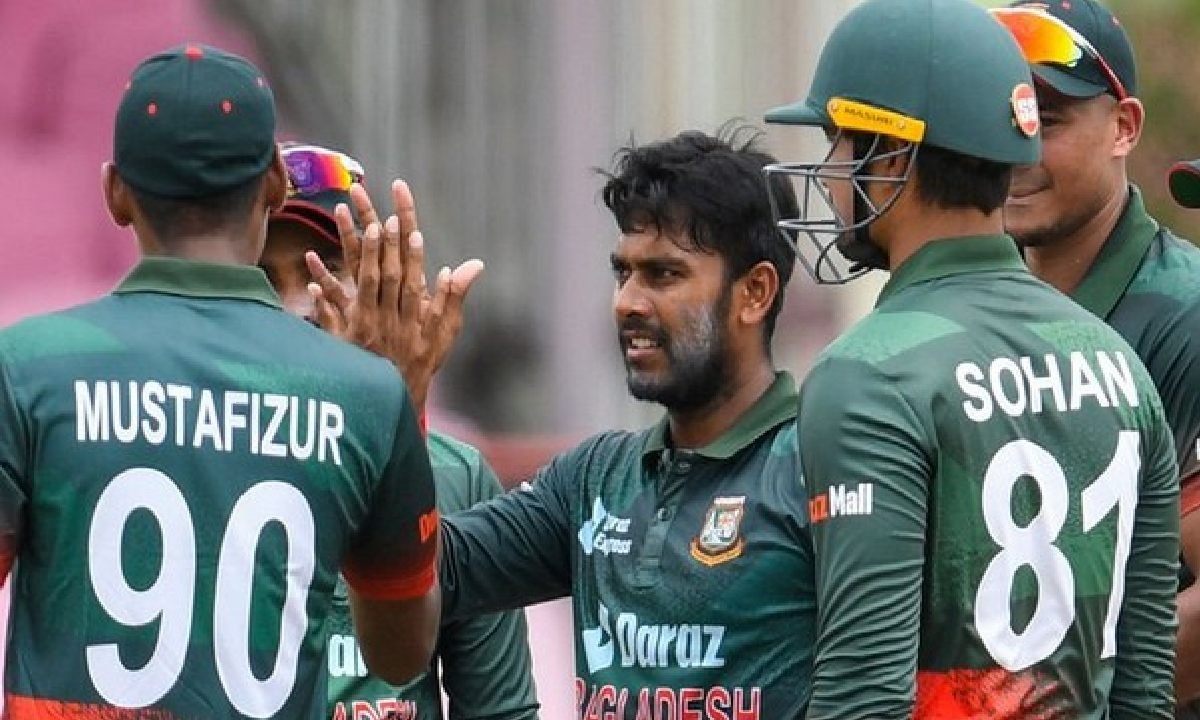
Mehidy Hasan Miraz and Shoriful Islam’s fierce bowling helped Bangladesh defeat West Indies in the first ODI here at Providence Stadium.
Emerging spinner Mehidy Hasan Miraz was the hero for Bangladesh with a brilliant spell that netted 3/36 and the 24-year-old was adjudged as the Player of the Match.
Bangladesh captain Tamim Iqbal won the toss and was elected to bowl.
Chasing the target of 150 runs, Bangladesh also did not have a good start. Liton Das could only score one run. After this Tamim Iqbal and Najmul Hossain added 48 runs for the second wicket. Tamim was run out after scoring 33 runs off 25 balls. Hits 4 fours and a six.
Najmul and Mahmudullah added 49 runs for the third wicket to take the score to 100. Najmul was dismissed after scoring 37 runs off 46 balls. Afif Hossain scored 9 runs. Mahmudullah returned unbeaten on 41 off 69 balls. Hits 2 fours and a six. While Nurul Hasan remained unbeaten on 20 off 27 balls. Hit a four and a six.
That was never going to be enough, with skipper Iqbal (33) getting the visitors off to a fast start and Mahmudullah (41) using all his experience to ensure Bangladesh drew first blood in the three-match ODI series.
Earlier, West Indies failed to shine after being sent into bat first in Providence, with three of their top six batters unable to reach double figures.
West Indies did not have a good start and the team lost 5 wickets at 74. Shemrah Brooks, who came to the crease at number-3, scored the highest 33 runs. Captain Nicosal Pooran scored 18 runs.
The Men in Maroon lost 9 wickets on 110 runs on board. After this, Anderson Phillip and Jayden Seals added an unbeaten 39 runs for the final wicket to bring the score close to 150 runs. Philip scored an unbeaten 21 off 22 balls.
Off-spinner Mehdi Hasan Miraj took 3 wickets for 36 runs in 9 overs. On the other hand, left-arm fast bowler Shoriful Islam scalped 4 wickets for 34 runs in 8 overs.
No.3 Shamarh Brooks top-scored for West Indies with an overly cautious 33 and their total may have been even less if not for an unbeaten final-wicket stand of 39 between Anderson Phillip (21) and Jayden Seales (16*) at the end of their innings.
Nine people died while five others were injured in a road accident in the central Uganda district of Luweero, police said Sunday.
Police in a statement issued here said the Saturday accident occurred after a public service vehicle collided with a truck.
The statement said the alleged speeding passenger service vehicle (van) travelling from Kampala to Gulu burst its rear tire, lost control and overturned several times before colliding with an oncoming truck.
The passengers who died and others injured were in the van.
According to police statistics, some 20,000 road accidents occur nationwide each year, causing more than 2,000 deaths and thus making Uganda among the countries with the highest traffic fatality rates.