Home Blog Page 635

Today’s youth should work towards nation building: Shailesh Suresh Varkhade

hailesh Suresh Varkhede, Varkhede, Babasaheb Purandare, Shivshahir Babasaheb, Purandare, Shivaji, Chhatrapati Shivaji Maharaj, Swarajya
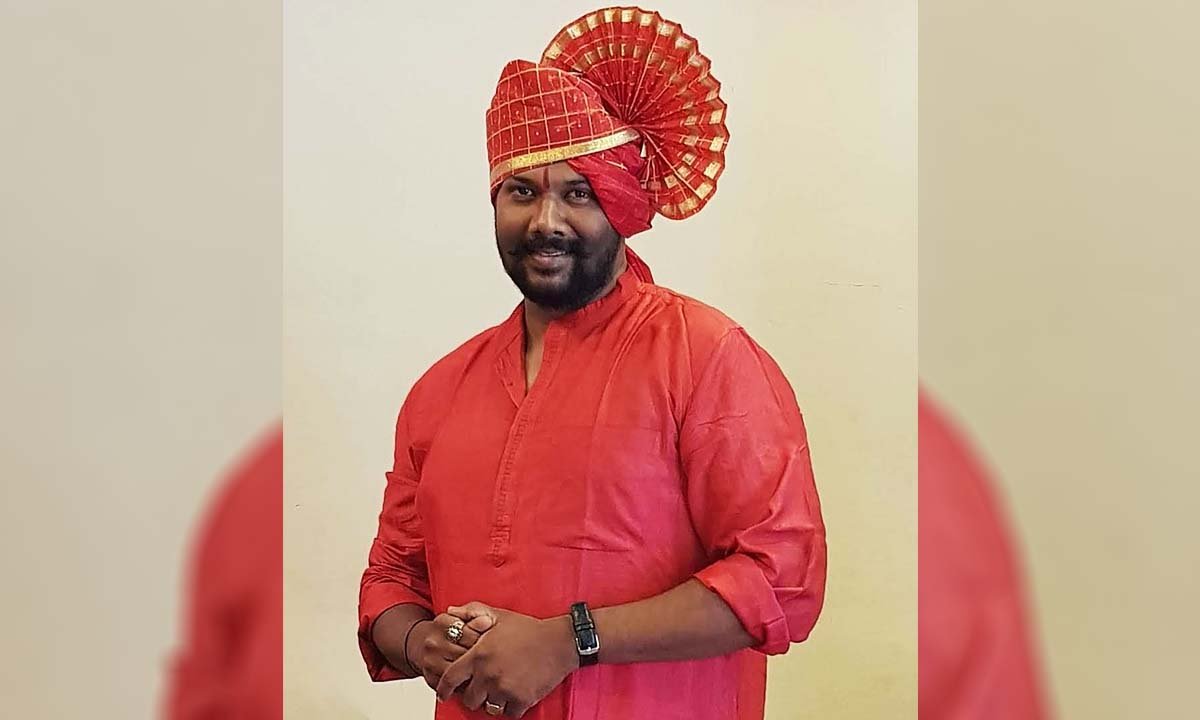
Image: Shailesh Suresh Varkhede / Facebook

Shailesh Suresh Varkhade is a mechanical engineer by profession and a well-known History Researcher who has delivered speeches all over India and in London too. He is a companion of an eminent historian of Maharashtra’s late Shivshahir Babasaheb Purandare.

While speaking to Afternoon Voice’s trainee journalist, Sahil Ghawali, Mr Varkhede spoke about the need for history to be re-introduced in young finds. In an interview with Shailesh Varkhade, we’ll understand how Maharashtra has got the status of Swarajya.

What does it mean when you say, “Swarajya was earned by shedding ‘Blood, Toil, Sweat, and Tears’?”

I consider myself a student studying the life of Shiv Chhatrapati Maharaj. These warrior legends like Chhatrapati Shivaji Maharaj, Maharana Pratap, Rana Sangha, and Prithviraj Chauhan had to go through enormous challenges and the freedom struggle was very difficult. They could earn freedom “Swarajya” by shedding blood and sweat’.

In the present political scenario, do you think the sweat shed by commoners on various fronts has any value?

The state we are living in today had got the status of sovereignty after 1947, but what we should build after independence is what we have to work on. Let it be the Industrial structure, infrastructure, fundamental rights, or the right to profess religion or the formation of the state. People have contributed to it on various occasions and that has definitely been of added value. There are generations in the history of freedom struggle where our great freedom fighters laid down their lives so that we can breathe in an independent nation.

How important is the determination and will of people in better nation-building?

Let me give an example: After the First World War, America detonated two of the Japanese cities, Hiroshima and Nagasaki. Not a single human was alive, and it burned lakhs of people in ashes. Although, after the attack, this is aspiring to watch how the people gathered their will to make their nation where it is now. Their economy has more leverage than any of the nations. Its citizens slogged their whole life to rebuild their nation. The hard work and dedication of the people can restore lost countries. Why can’t we work hard to protect our sovereign nation?

What is the power of the common man and how can they be compensated in power politics?

One has to keep in mind that it takes everyone to be part of the nation and its government. Then the biggest power of the common citizen is the right to vote and choose a government. They are the power makers. Voters decide the fate of the government and this brings revolution. This power of the commoner forces the government to stop the anarchy and corruption towards a better nation.

These days Shivaji Maharaj is being politicised in Maharashtra? How do you look at it?

Recently, I attended coronation ceremonies at Lalitpur. To my surprise, well-studied people who attended the event were proficient in the history of Chhatrapati Shivaji Maharaj. Shivaji was the pioneer of guerrilla warfare, using which he trained his Maratha army to fight the grand army of Mughals. Unfortunately, today’s generation drifted away from history and they hardly know who has contributed what to the freedom struggle of our nation.

You are a staunch follower and student of Babasaheb Purandare. What has influenced your life the most?

It’s been 22 years since I’ve been listening, practising and believing in Babasaheb. I lived each moment with him. I’ve learned two things: “word-of-mouth and time can’t reverse back once gone”. If we can’t comply with what we have said, what we have promised, better to remain silent than to speak about what we cannot accomplish. And the second lesson is ‘Be the Shivaji of your battlefield’. That means, conquering what you aimed for and fighting your battles wisely. Love your nation and its people. Contribute to nation-building in your own capacities.

What is your advice to my generation of students?

Your generation has advanced with technology. Your generation is much more privileged in terms of education and infrastructure. Make the best use of it, create awareness, and voice your opinion. You are the pillar of the fourth estate. Bring change and build a nation.


Note: This interview has been edited by a senior editor at Afternoon Voice.
17th Presidential election to be held in India

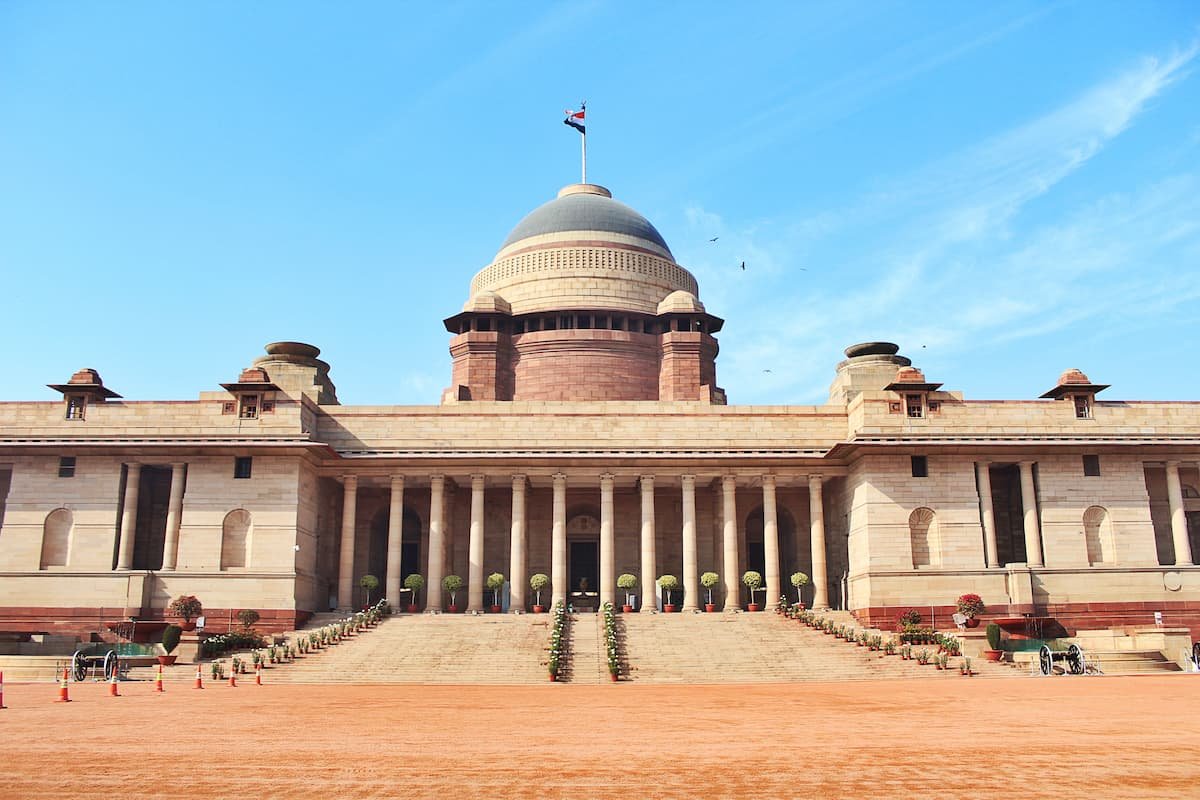
rashtapati bhavan, president house, president of india
Image: Wiki Commons

People are eager to know who would be the 17th president of India. Ram Nath Kovind is expected to be the mandatory president at the time of the election. Article 56 of the Constitution of India provides that the President of India shall remain in office for five years. The Election Commission is set to announce the schedule for polls to elect the next President of India at 3 pm today. President Kovind’s term ends on July 24. The declaration comes just a day before polls are held to fill 57 vacant Rajya Sabha seats across 15 states.

The members of the Electoral College elect the President, comprising elected members of both houses of Parliament, and elected members of the legislative assemblies of all states, including the National Capital Territory of Delhi and the Union Territory of Puducherry. How the President of India is elected. A President in India is elected by the members of the Electoral College consisting of elected members of both the houses — Lok Sabha and Rajya Sabha.

The Electoral College for the presidential election comprises the 776 MPs of the Lok Sabha (543) and Rajya Sabha (233), as well as MLAs of state Assemblies and the Union Territories of Delhi and Puducherry. The total votes are counted because of their value, which varies from state to state, with an Uttar Pradesh MLA carrying the highest value, followed by Maharashtra and West Bengal.

President of India Ram Nath Kovind is an Indian Politician who is serving as the 14th and current President of India since July 25, 2017. President Ram Nath Kovind is a member of the Bharatiya Janata Party and is also the first person from Uttar Pradesh to serve as the President. Before his presidency, Ram Nath Kovind served as the 26th Governor of Bihar from 2015 to 2017 and as a Member of Parliament, Rajya Sabha from 1994 to 2006.

Along with the President, a new Vice-President will also be selected. The BJP, along with its partners, has a comfortable majority in the presidential Electoral College comprising MPs of both Houses of Parliament and MLAs of all state assemblies. The BJP-led NDA also commands the required majority in two houses of Parliament to elect the next Vice-President. New Delhi’s political circles are buzzing with discussions on the choices for the next occupant of the Rashtrapati Bhavan.

No President, with the sole exception of first President Rajendra Prasad, has got a second term in office. Many names are mentioned, but they always added a caveat that nobody knows the mind of Prime Minister Narendra Modi, who alone will finalise candidates for the two top constitutional offices of the Indian republic. The Prime Minister has pulled out a surprise every time a top appointment was made and proved all speculations and guesses wrong.

Nitish has been upset with the BJP for some time and has been moving closer to Lalu Yadav’s RJD. While the BJP appears on solid ground in the presidential elections, there’s also a move to field an opposition candidate with the support of NDA ally and Bihar chief minister Nitish Kumar. Though Kumar has given no hint of supporting a non-NDA candidate, leaders such as Mamata Banerjee and K Chandrashekhar Rao are trying to engage him through back channels and offering to support his choice of candidate.

In the current round of the Rajya Sabha election for 57 seats, polling for which is scheduled on June 10, the most interesting contest is the one in Haryana between Congress leader Ajay Maken and media baron Kartikeya Sharma. These two candidates are distant relatives. Ajay Maken’s uncle Lalit Maken was the son-in-law of former President of India Shankar Dayal Sharma. Kartikeya’s uncle was married to a daughter of Shankar Dayal Sharma. Maken and Kartikeya frequently get together at family functions but are pitted against each other. Kartikeya is the son of Vinod Sharma, who was a minister in Bhupinder Singh Hooda’s government in Haryana and was considered Hooda’s closest friend. Hooda had brought this hotelier friend from Chandigarh and given him a Congress ticket from Ambala and then made him a minister.

To win this Rajya Sabha seat, a candidate requires 31 votes. Congress has exactly 31 MLAs in the state Assembly. The BJP has 40. After electing its candidate with 31 votes, the BJP will have nine surplus votes. The party has committed these votes to Kartikeya. BJP’s partner in the state government, the Jannayak Janata Party (JJP) of deputy chief minister Dushyant Chautala has 10 MLAs. The JJP has been the prime sponsor of Kartikeya. Then there is one vote each for Abhay Chautala and Gopal Kanda. These two votes are also likely to go to Kartikeya. This takes Kartikeya’s total support to 21. The fight is for the seven independents. The state government, BJP and Vinod Sharma are together trying to win over these seven independents, besides some Congress MLAs with an offer of a ticket in the upcoming state elections.

Source: Various news agencies


Prime Minister Modi said, India’s Bio-economy has grown 8 times in the last 8 years.

Prime Minister Narendra Modi (photo representation )
Prime Minister Narendra Modi (photo credit: ANI)

Emphasising the country’s rising stature in the global ecosystem of biotech, Prime Minister Narendra Modi on Thursday said India’s bio-economy has grown eight times in the last eight years.

Prime Minister inaugurated the Biotech Startup Expo – 2022 at Pragati Maidan, here on Thursday. Prime Miniter also launched the Biotech products e portal. Union Ministers Piyush Goyal, Dharmendra Pradhan, Jitendra Singh, stakeholders of biotech sectors, experts, SMEs and investors were among those present on the occasion.

Addressing the event, Prime Minister Modi said, “India’s bio-economy has grown 8 times in the last 8 years. We have grown from USD 10 billion to USD 80 billion. India is not too far from reaching the league of top-10 countries in Biotech’s global ecosystem.”

modi 3
Prime Minister Modi said, India's Bio-economy has grown 8 times in the last 8 years. 6

He also noted the contribution of the Biotechnology Industry Research Assistance Council (BIRAC) in the development of the sector in the country. The Prime Minister said that today, when the country is taking new pledges during the Amrit Kaal, the role of the biotech industry is very significant in the development of the country.

Highlighting the growing reputation of Indian professionals on the global stage, PM Modi said, “Trust in the skill and innovation of our IT professionals in the world is at new heights. This same trust and reputation, this decade, we are seeing happening for the Biotech sector of India and for the Bio Professionals of India.

” Prime Minister listed out five factors behind the success of India’s biotech sector.

“There are five big reasons why India is being considered a land of opportunities in the field of biotech. First- diverse population and diverse climatic zones; second India’s talented human capital pool; third – increasing efforts for ease of doing business in India; fourth – the demand for bio-Products is increasing continuously in India; and fifth- India’s biotech sector that is the track record of its successes,” he said.

The Prime Minister said that the government has worked tirelessly to improve the potential and power of the Indian economy. He emphasized that there is stress on the ‘whole of the government approach.

‘ He said for the biotech sector, unprecedented steps are being taken which are clearly manifested in the startup ecosystem.

“In the last 8 years, the number of start-ups in our country has increased from a few hundred to 70,000. These 70,000 start-ups are made in about 60 different industries. In this also, more than 5,000 startups are associated with biotech. Every 14th startup in the biotechnology sector and more than 1,100 such biotech startups emerged in the last year itself,” stated PM Modi.

Further talking about the shift of talent towards the sector the Prime Minister said number of investors in biotech sector has risen by 9 times and biotech incubators and funding for them has increased by 7 times. Number of Bio tech incubators have increased from 6 in 2014 to 75 now. Biotech products have increased form 10 products to more than 700 today”, he informed.

modi 2
Prime Minister Modi said, India's Bio-economy has grown 8 times in the last 8 years. 7

The Prime Minister said in order to transcend the government-centric approach, the Centre is encouraging a culture of providing new enabling interfaces. Platforms like BIRAC are being strengthened and many other sectors are seeing this approach. He gave the example of Startup India for start-ups. IN-SPACe for space sector, iDEX for defence startups, India Semiconductor Mission for semiconductors, Smart India Heckathons for encouraging innovations among the youth and also, the Biotech start-up Expo.

The Prime Minister emphasized that “Biotech sector is one of the most Demand Driven Sectors. The campaigns for Ease of Living in India over the years have opened up new possibilities for the biotech sector.” He pointed out that developments health, agriculture, energy, natural farming, bio fortified seeds are creating new avenues for the sector.

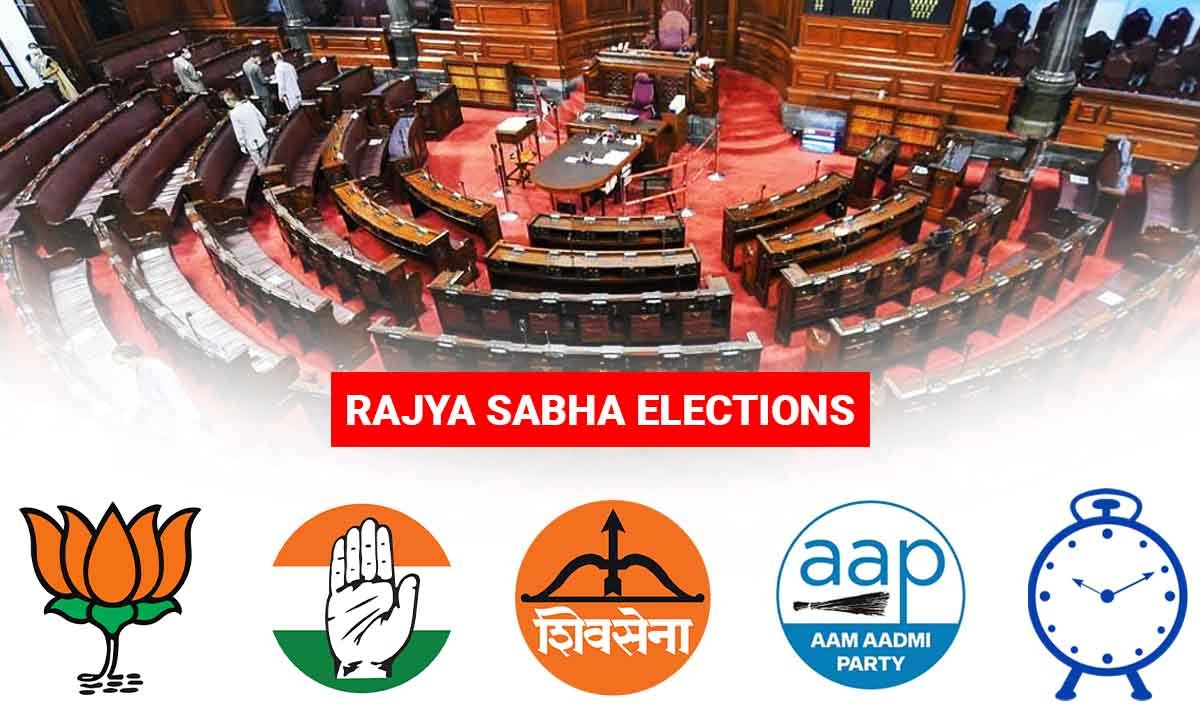
Rajya Sabha election June 10

rajya sabha, rs polls, rajya sabha elections, bjp, shiv sena, pankaja munde, mlc, member of legislative counsel, mlc post
Rajya Sabha election June 10 9

A Mumbai court is likely to decide on June 10 on the bail request of two Maharashtra ruling party leaders, Nawab Malik and Anil Deshmukh, which has become crucial ahead of Rajya Sabha elections in which every vote counts.

Nawab Malik, a Maharashtra Minister, is in jail since his arrest in February by the central Enforcement Directorate in a money laundering case. The state’s former home minister Anil Deshmukh is also in jail on money-laundering allegations. Both have approached a special court for one-day bail to cast their vote in the Rajya Sabha election on Friday. On the other hand, the BJP’s Devendra Fadnavis has been reaching out to independent MLAs, working the phones as he recovers from Covid.

Nawab Malik has told the court that he is an elected MLA and is duty-bound to represent the residents of his constituency in electing a representative to Rajya Sabha. Elections will be held for six Rajya Sabha seats in Maharashtra and for the first time in more than two decades, there is a contest with seven candidates.

The ruling Shiv Sena has fielded two candidates, Sanjay Raut and Sanjay Pawar. The opposition BJP has put up three candidates – Union minister Piyush Goyal, Anil Bonde and Dhananjay Mahadik. The Sena, NCP and Congress moved their MLAs to resorts to prevent “poaching”.

Ruling coalition allies Nationalist Congress Party (NCP) and Congress have nominated one candidate each, Praful Patel and Imran Pratapgarhi. Any candidate needs 42 votes to win a Rajya Sabha seat.

The Shiv Sena-led Maha Vikas Aghadi has the numbers to win three out of the six Rajya Sabha seats for which 288 MLAs will vote. The BJP, which had 106 members in the assembly, can win two on its own but has fielded a third, setting up a contest for the sixth seat, between the BJP’s Dhananjay Mahadik and the Shiv Sena’s Sanjay Pawar. Every vote is crucial for the ruling coalition, which is racing to get the Sena’s second candidate, Sanjay Pawar, elected.

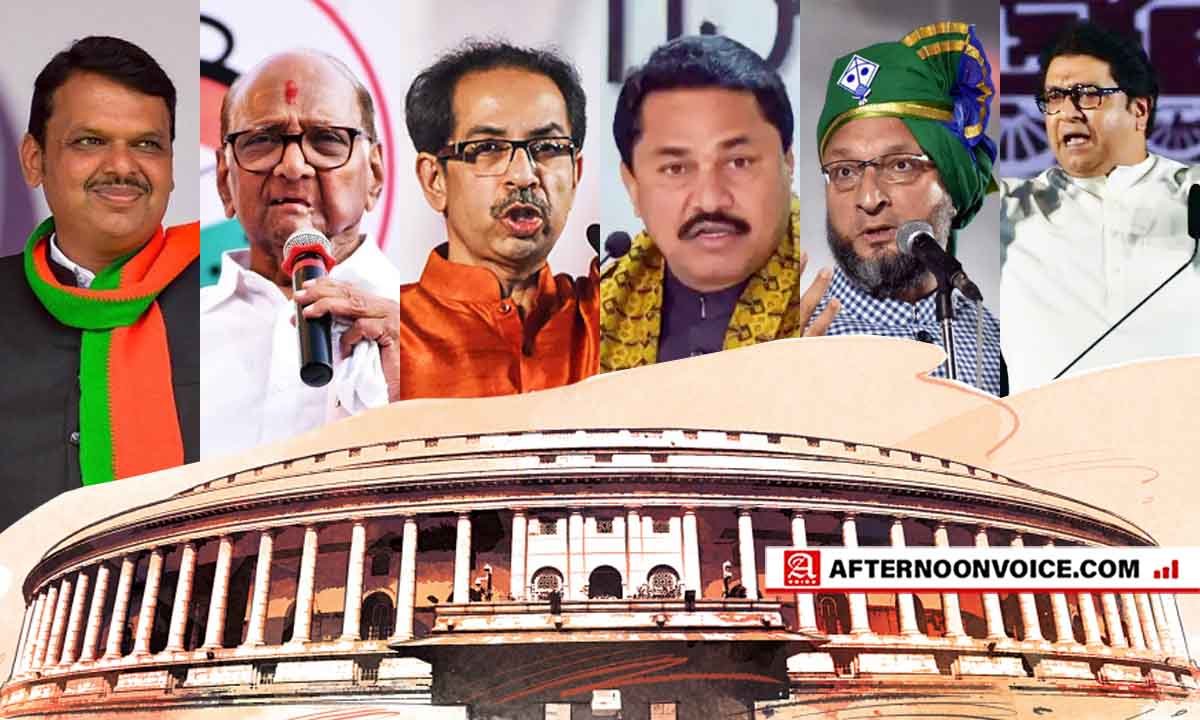
Rajya Sabha polls 2022: Maharashtra – Big trade, bargain, backbiting

rajya sabha, elections, rs polls, rajya sabha polls, elections, uddhav thackeray, thackeray, sambhaji raje, owaisi, pawar, sharad pawar, devendra fadnavis, raj, nana patole, congress, kharge
Rajya Sabha polls 2022: Maharashtra - Big trade, bargain, backbiting 11

The Rajya Sabha election has scorched up in Maharashtra, a direct descendant of Chhatrapati Shivaji Maharaj, dropped out of the race. Maharashtra has a 288-member assembly which can elect six seats to Rajya Sabha. Each candidate needs a quota of 42 votes to win. Banking on this calculation, the BJP can safely win two seats, the Shiv Sena one, the NCP one, and the Congress one. The Shiv Sena has fielded one more candidate, banking on extra votes from the NCP and the Congress.

BJP has 105 MLAs while Shiv Sena 55, NCP 53, Congress 44, Bahujan Vikas Aghadi three, Samajwadi Party, AIMIM, and Prahar Janshakti Party two each, MNS, CPM, Peasants and Workers Party, Rashtriya Samaj Paksha, Swabhimani Party, Jansurajya Shakti and Krantikari Shetkari Party one each. There are 13 Independents, while one seat is vacant.

Shiv Sena’s Sanjay Raut and Sanjay Pawar filed their nomination papers for the elections and expressed confidence in winning the Rajya Sabha polls in 2022. Raut said they wanted the polls to be deferred so that there is no horse-trading. BJP has fielded three candidates in Maharashtra for the Rajya Sabha polls. The Shiv Sena leader said Maha Vikas Aghadi (MVA) has four candidates in the Rajya Sabha elections and the ruling alliance will win all four seats.

After the BJP kept 113 MLAs, including their independents, in five-star hotels, criticism also started against them. Shiv Sena also did the same. They locked their MLAs in a five-star hotel. The discussion that Hitendra Thakur, who considers ERV Shiv Sena as his elder brother, will lean towards BJP in Rajya Sabha elections caused a stir in the political circles on Tuesday. He was met by Girish Mahajan, who had brought big leaders from other parties into the BJP.

Rajya Sabha elections in four states on June 10, various parties have accommodated legislators from at least three states in resorts, away from potential poaching by rival parties. A practice frequently seen before Rajya Sabha elections; this underlines the importance parties give to seats in the Upper House.

The tenure of six Rajya Sabha members from Maharashtra — Piyush Goyal, Vinay Sahastrabuddhe and Vikas Mahatme (all three from the BJP), P Chidambaram (Congress), Praful Patel (NCP) and Sanjay Raut (Shiv Sena) ends on July 4.  Giving a stern message to the Bharatiya Janata Party (BJP) ahead of the Rajya Sabha elections 2022, the Maha Vikas Aghadi (MVA) coalition of Shiv Sena, Nationalist Congress Party (NCP), and Congress held a show of solidarity on Tuesday night in Mumbai.

The meeting was attended by all the big figures of the MVA coalition, including Sena’s Uddhav Thackeray, NCP’s Sharad Pawar, and Congress leader Mallikarjun Kharge. During the meeting, Thackeray exuded confidence that all four candidates of the MVA will win the Rajya Sabha polls.

Maharashtra is expected to witness fierce competition between the BJP and the ruling MVA. Six seats will fall vacant in Maharashtra and as per the numbers, the BJP will win two seats while the MVA government will bag three seats. A tough competition is expected for the sixth seat between BJP’s Dhananjay Mahadik and Sena’s Sanjay Pawar. Both sides have refused to withdraw their candidates for the sixth seat.

Reportedly, the MVA alliance had tried to reach out to the BJP, asking the saffron party to withdraw its sixth candidate in return for help in the Maharashtra legislative council elections. However, the BJP had rejected the offer after which the Sena shifted its MLAs to a hotel to thwart attempts of poaching.

The Lok Sabha (lower house) and the Rajya Sabha (upper house) are the two houses of India’s Parliament. Currently, the Rajya Sabha has a sanctioned strength of 245 Members of Parliament (MPs). Of them, 233 are elected from states and Union Territories (UTs). India’s President nominates the rest from the fields of art, literature, science and social services. India’s Vice-President is the Rajya Sabha chairperson of the Upper House which also has a Deputy Chair. A critical role of Parliament is to make laws. And no bill has been deemed a law till it has been passed by both houses before being sent to India’s President for his assent. The idea behind having the Rajya Sabha is to ensure richer debates, with the participation of experts from various walks of life, before bills are approved or disapproved.

Lok Sabha MPs have a five-year tenure. They are elected simultaneously. The Lok Sabha is dissolved when national elections are announced. But the Rajya Sabha is never dissolved. Like in the case of the Lok Sabha, each state is allocated Rajya Sabha candidates based on its population. Its MPs are elected by MLAs for six years. Since one-third of them retire every second year, polls are held to fill their vacant seats. In case of death, disqualification or resignation, bypolls are held. A member chosen to fill such a vacancy will serve the remainder of his predecessor’s term.

One might think if a party has more MLAs than others, its Rajya Sabha candidates will definitely win. That’s not necessarily the case. Balloting in Rajya Sabha polls follows a proportional representation principle and a single transferable vote system to ensure only the majority does not dictate the process. Each MLA’s vote is counted once. But MLAs don’t vote for each seat. Instead, they have to list different candidates in order of preference. If a qualifying number of voters choose a candidate as their first choice, he or she is elected. The remaining votes go to the next candidates, but with a lesser value. So, MLAs also vote for candidates from other parties. But MLAs have to show their ballots to an authorised agent from their party to check cross-voting. Independents don’t have to show their ballot.


Kerala gold smuggling case prime accused Swapna Suresh

Former Kerala minister and (M) leader KT Jaleel (photo representation)
Former Kerala minister and (M) leader KT Jaleel (photo credit) Facebook KT Jaleel

Former Kerala minister and CPI(M) leader KT Jaleel on Wednesday filed a police complaint against allegations levelled by Kerala gold smuggling case prime accused Swapna Suresh.

According to Jaleel, there is a conspiracy hatched by Swapna Suresh and former MLA PC George and BJP.

“Allegations against me are baseless. This is a BJP and UDF conspiracy. They are trying to tarnish the image of the existing government. This conspiracy should be investigated,” said Jaleel.

Swapna Suresh had on Tuesday revealed that she has declared in court about the involvement of chief minister Pinarayi Vijayan, his wife and daughter in the 2020 gold smuggling case.

Suresh also alleged that there is a threat to her life and that she has sought protection.

“I have already given 164 statements in court about a threat to my life. I have declared in court about all the people involved in this case. I have also filed a petition seeking protection in court. They are considering it. I have declared in the court about what is the involvement of M Sivasankar (then principal secretary to Kerala CMO), the Chief Minister, CM’s wife Kamala, CM’s daughter Veena, his secretary CM Raveendran, then Chief Secretary Nalini Netto IAS, then minister KT Jaleel,” she said.

Swapna claimed that baggage containing currency was sent to Vijayan when he was in Dubai in 2016.

Earlier today, Kerala Tourism Minister PA Mohammed Riyas said that it was not the first time that Swapna Suresh had made allegations against Chief Minister Pinarayi Vijayan.

“After the government was formed in 2016, this is not the first time allegations are being made. Chief Minister and party Secretary have reacted to this. Our stand is also the same,” said Riyas who is also the son-in-law of CM Pinarayi Vijayan.

Meanwhile, Vijayan had yesterday dismissed Swapna Suresh’s allegations stating that the same statement was being repeated by the accused.

“These comments by the accused are part of the political agenda. The public had already dismissed this agenda. After an interval, they are making the accused repeat the same statement. There is not even an iota of facts in this allegation. If you think that by spreading these lies, you can destroy the determination of the government and political leadership, I am reminding you that this is a futile exercise,” he said.

“I strongly believe that society will give an apt reply to those who think that they can benefit from this,” the Chief Minister added.

Stating that the public will dismiss the “fake allegations” aimed at tarnishing his government, Vijayan said that it works for the “comprehensive development and social welfare of Kerala”.

Rajya Sabha Election 2022 – The sixth Rajya Sabha seats are from Maharashtra

rajya sabha, rs polls, rajya sabha elections, bjp, shiv sena, pankaja munde, mlc, member of legislative counsel, mlc post
Rajya Sabha Election 2022 - The sixth Rajya Sabha seats are from Maharashtra 14

Amid the hype about the contest for the sixth Rajya Sabha seat from Maharashtra, chaotic lobbying is also on in the Shiv Sena for a nomination to the Member of Legislative Council (MLC). According to Sena functionaries, Sachin Ahir from Mumbai and Amsha Padvi from Nandurbar are frontrunners. Two senior Sena MLCs, Diwakar Raote and industries minister Subhash Desai, are retiring.

While the party will drop Raote, who was transport minister in the previous Sena-BJP government, a decision is yet to be taken on renominating Desai, a sitting minister in the Maha Vikas Aghadi (MVA) government and a key coordinator. A source said the party is likely to drop at least one of the veterans; chief minister Uddhav Thackeray will take a decision on this.

Ahir, who was in the NCP, joined the Sena before the 2019 assembly polls but did not contest from Worli seat. Aaditya Thackeray won the seat by a large margin. But the party is clear that it will nominate a common Shiv Sainik just like Kolhapur district unit chief Sanjay Pawar is the nominee for the Rajya Sabha polls.

KC Padvi is the tribal development minister in the current MVA government. The MVA is once again pitted against the BJP for 10 seats in the Maharashtra Legislative Council elections on June 20. The electoral college comprises the 288 members of the Maharashtra Legislative Assembly. “Each candidate needs a quota of 27 votes to win. The Sena has enough votes to get its two candidates elected. The party is clear that it will pick hard core party workers over celebrities,” the Sena functionary said.

Just days ahead of the crucial Rajya Sabha elections, the familiar “resort politics” has begun with the ruling Maha Vikas Agadi in Maharashtra corralling its MLAs to a five-star hotel in south Mumbai as part of a strategy to ward off poaching.

Earlier, both Congress and BJP had shifted their MLAs to different resorts in Rajasthan and Haryana to eliminate the possibility of cross-voting. Elections will be held on June 10 to fill 57 Rajya Sabha seats from 15 states falling vacant due to the retirement of members on different dates between June and August. Prominent among those retiring is Union minister Mukhtar Abbas Naqvi, Congress leaders Ambika Soni, Jairam Ramesh and Kapil Sibal, and BSP’s Satish Chandra Misra.

While 11 seats are falling vacant in Uttar Pradesh, six members each are retiring from Tamil Nadu and Maharashtra, five from Bihar and four each from Andhra Pradesh, Rajasthan and Karnataka. Three members each from Madhya Pradesh and Odisha, two each from Telangana, Chhattisgarh, Punjab Jharkhand and Haryana, and one from Uttarakhand are also retiring.

A race is on for electing the rest 16 MPs from four states – Maharashtra, Rajasthan, Karnataka and Haryana. The elections to fill 57 Rajya Sabha seats across 15 states will be held on June 10 and the results will be declared the same day. While the BJP’s tally is likely to remain 100, the Congress’ share in the Upper House may increase by a couple of seats.

Elections to the seats that will fall vacant because of the retirement of members on different dates between June and August. Prominent among those retiring are Union ministers Piyush Goyal and Mukhtar Abbas Naqvi, Congress leaders Ambika Soni, Jairam Ramesh and Kapil Sibal, and BSP’s Satish Chandra Misra. Rajya Sabha Chunav 2022: States going to polls.

While 11 seats are falling vacant in Uttar Pradesh, six members each are retiring from Tamil Nadu and Maharashtra, five from Bihar and four each from Andhra Pradesh, Rajasthan and Karnataka. Three members each from Madhya Pradesh and Odisha, two each from Telangana, Chhattisgarh, Punjab Jharkhand and Haryana, and one from Uttarakhand are also retiring.

Here is a list of states going to the polls on June 10:

  • Uttar Pradesh – 11
  • Maharashtra – 6
  • Tamil Nadu – 6
  • Bihar – 5
  • Rajasthan – 4
  • Andhra Pradesh – 4
  • Karnataka – 4
  • Madhya Pradesh – 3
  • Odisha – 3
  • Punjab – 2
  • Haryana – 2
  • Jharkhand – 2
  • Telangana – 2
  • Chhattisgarh – 2
  • Uttarakhand – 1

Rajya Sabha Elections 2022: Where numbers stand

Maharashtra

In Maharashtra, the ruling coalition Shiv Sena-NCP-Congress coalition has the strength to ensure its victory in all the three seats it holds, while the BJP can comfortably win two of its three seats.

The six Rajya Sabha MPs to be elected from the states would require 42 votes to win. The ruling MVA has 151 votes which are enough to win three seats, but it has fielded four candidates. On the other hand, the BJP gas 106 MLAs and can win two seats but has fielded three candidates.  

The MVA needs 15 more votes to secure the seat, which BJP would bag with 13 more seats. Both the MVA and the BJP are reaching out to smaller parties and Independents — a group of 25 MLAs.

The BJP currently has 95 MPs and the Congress 29 in the 245-member house. The BJP will suffer losses in Andhra Pradesh, where it has three outgoing members, Jharkhand and Rajasthan but is hopeful of making upto for its in states like Uttar Pradesh and Uttarakhand, where it recently retained power.

The saffron party crossed an important milestone when it touched the 100 marks in the Rajya Sabha, a feat achieved by the Congress in 1988. It hopes to be close to the magic figure of 123 along with allies to complete its poll promises. The Akali Dal’s lone member from Punjab Balwinder Singh Bhunder and Congress’ Ambika Soni are likely to make way for members from the Aam Aadmi Party whose huge strength in the assembly will ensure that it wins both seats.

Five BJP MPs are among the 11 retiring Rajya Sabha members from UP, and the party along with its allies is in a position to win eight seats, while the opposition Samajwadi Party may retain its tally of three. The elections are also likely to see the BSP’s presence in the upper house reducing to a mere one.

Karnataka

Given their strength, the BJP with 121 MLAs and Congress with 70 members are sure to win two seats and one seat respectively. The contest will be for the fourth seat. Despite lacking the numbers to win a Rajya Sabha seat, the JD(S) with 32 MLAs has fielded its lone candidate, Kupendra Reddy.

There’s an all-out fight for the fourth seat between Lehar Singh Siroya (BJP), Mansoor Ali Khan (Congress) and the JD(S) candidate. Interestingly, none of the three parties have the required votes to win the fourth seat, which is why they are reaching out to one another seeking support.

Haryana

The entry of media baron Kartikeya Sharma, who is supported by both the JJP and the BJP — has made the contest close in the state. Sharma’s entry has queered the pitch for Congress’ Ajay Maken who is eyeing a second term in the Upper House.

Sharma needs 31 votes to win — four more than the surplus of the BJP-led alliance. Congress has 31 but fears cross-voting from its camp. JJP leader Ajay Singh Chautala has said all 10 MLAs of the party will support Sharma.

Rajasthan

The entry of another media baron Subhash Chandra, who is backed by the BJP, has made the contest close for the fourth seat where Chandra will be challenging Congress’ Pramod Tiwari.

In the 200-member Rajasthan assembly, each candidate needs 41 votes to win.

The Congress has 108 MLAs and the BJP has 71 votes. The BJP has 30 surplus votes and to win a second seat, it needs another 11. To win the third seat, Congress needs 15 more votes. Smaller parties and independents will, therefore, play a critical role in who wins the seat.

Not a single NEET PG seat should go waste

Supreme Court Of India (photo representation )
Supreme Court Of India , photo for representation (photo credit ANI)

The counsel appearing for MCC sought time to file an affidavit regarding this. The MCC counsel also said that 2022 counselling will get delayed and there will be a cascading effect.

The Supreme Court on Wednesday asked the Medical Counselling Committee (MCC) to ensure that not a single National Eligibility cum Entrance Test (Postgraduate) or NEET PG seat should go waste while slamming the board for “playing with the future” of medical students.

The court lashed out at the MCC, saying that you are “playing with the future of students”.

The top court has also asked the MCC to file an affidavit on the plea seeking to conduct a Special Stray Round of counselling to allow the candidates to participate in the vacant seats which are available after the conduct of the stray vacancy round of All India Quota (AIQ).

The vacation bench of Justices MR Shah and Aniruddha Bose asked counsel for MCC and Centre to file an affidavit today during the course of the day explaining why seats were vacant.

The court listed the matter tomorrow for further hearing.

During the hearing, the court expressed dismay to hear that 1,456 seats have remained vacant.

The court sought to know why there is no streamlining process and questioned, “Do you know the stress level of students?”

The court also expressed disappointment when it came to know that the MCC was aware of the vacant seats in May and asked, “What will you get by keeping seats vacant when we need doctors and super-specialists?

The court was hearing a plea seeking to direct the Respondent–Medical Counselling Committee (MCC) to conduct a Special Stray Round of counselling to allow the candidates to participate in the vacant seats which are available after the conduct of stray vacancy round of All India Quota (AIQ).

The petitioners were represented by advocate Milind Kumar Advocate.

The petitioners appeared in NEET-PG 2021-22 and participated in Rounds 1 and 2 of All India Quota (AIQ) Counselling and State Quota Counselling which was followed by All India Mop-Up and State Mop-Up Rounds and was concluded on May 7, 2022 by Medical Counselling Committee post the All India Stray Vacancy Round.

The petitioners were not able to secure a seat in any of the rounds. They claimed that they are aggrieved by the counselling process which was conducted by MCC in a manner that all the vacant seats were not a part of the stray vacancy round of the counselling.

They said that the cause of action for filing the present Writ Petition arose on May 11, 2022 when the petitioners received a reply to the RTI they had filed wherein it was stated that “At the time of online allotment process all medical/dental post-graduate seats were exhausted but due to non-joining, resignation, and non-reported some seats remained vacant”. However, official data has not been provided, the petitioners said.

Hence, the petitioners have sought to direct MCC to provide the exact number of vacant seats after the conduct of the stray vacancy round of AIQ and to conduct a Special Stray Round of counselling to allow the candidates to participate in the vacant seats which are available after the conduct of stray vacancy round of AIQ.

Be a part of World Ocean Day 2022

jay shringarpure, environmentalist, world ocean day
Be a part of World Ocean Day 2022 18

Today we celebrate the World Ocean Day. In the year 1992, in Global forum to have celebrated this day to provide platform to the NGO’s speaking on environmental issues. Almost, over 70% of our Earth is covered by the Ocean that comprises over 95% of the total planet water. Ocean produces 50% of the Plane’s oxygen and it is the major source of protein for the people living on Earth.

The sea has employed millions of people around the world through various means. From mining the ocean resources like pearls, oils and minerals and the supply of seafood Ocean plays an inevitable role in human lives. India also joins the clean Sea Campaign in February 2017, launched by United Nations Environment Programme (UNEP). Let’s all be a part of something great and take a pledge to always keep our Oceans clean.

Our correspondent Akash Nirmal spoke to Jay Shringarpure one of the renowned social activists and environmentalist from Mumbai, here are excerpts of the interview:

What Indians can do to make our ocean clean?

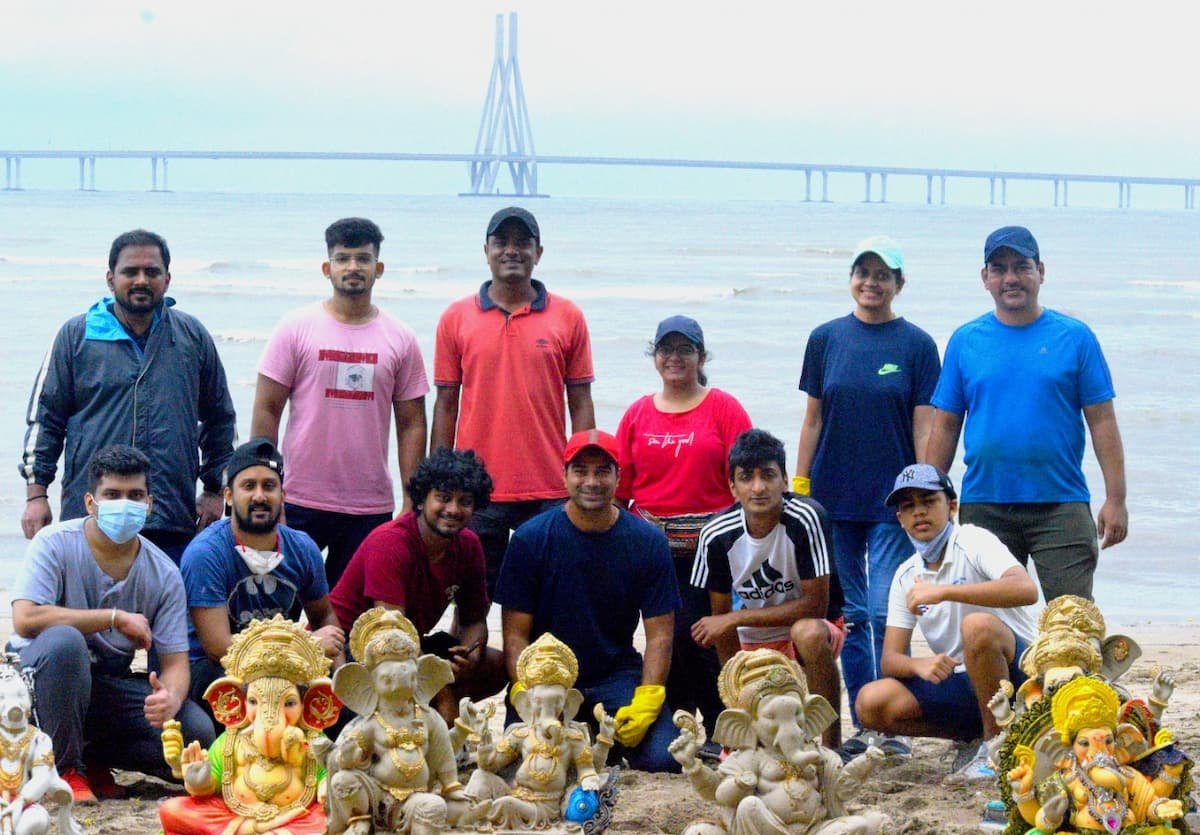
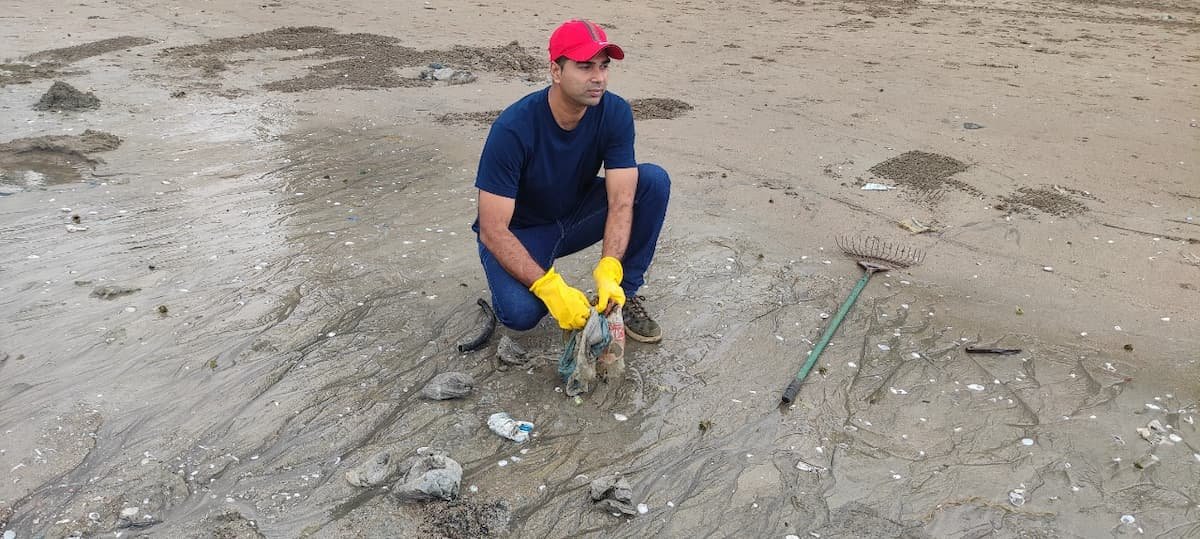
It should start from our home. If we segregate our home dry and wet waste and remove plastic from dry waste, then recycle plastic. It will never reach to the ocean. My team is already working towards the plastic that is already available in and around Ocean. We have started from Dadar beach, going towards Mahim beach and now we are working on 40 beaches in Maharashtra. We are also creating the awareness through Social media, college visits and going door to door to recycle their plastic waste.

jay shringarpure, environmentalist, world ocean day
Be a part of World Ocean Day 2022 19

What are your suggestions to those who eat food from the stall on the ocean area and throw the waste into the ocean? How to manage that?

In foreign countries, they have herbal connected to their beach. But they know how to manage their waste. BMC should be able to tell the food stall how they can manage their waste and support them. Like in Goa, they also have beaches but their oceans are clean because they know how to manage their waste and not throw in the ocean.

What action government can take against serial offenders?

Indian lacks bio waste management as compared to western countries. For example, in countries like Australia, New Zealand and Dubai, if people are throwing waste in an ocean, they are fined and punished. In India we do not have such strict rules and the deterrence for law, here people take instructions casually.  Government need will to deal with such issues with strong laws and vigilance. Meanwhile, people too should understand their asocial responsibility. It is the matter of civic sense.


Monetary, fiscal authorities taking steps to moderate inflation, push growth: DEA Secy

inflation, Monetary, economy, business, gdp,
Image: PTI

Monetary and fiscal authorities are taking steps to moderate inflation and push growth, Department of Economic Affairs Secretary Ajay Seth said on Wednesday.

His comments came in the backdrop of the Reserve Bank of India (RBI) hiking key interest rates by 50 basis points to tame inflation. The central bank also upped the inflation projection to 6.7 per cent while maintaining the growth estimate at 7.2 per cent for the current fiscal.

“There are domestic challenges and larger ones are there in the global scenario. Whatever it takes for monetary and fiscal authorities, those actions are being taken. We (are working) to moderate the inflation (and) at the same time keep the growth efforts as earlier,” Mr Seth told reporters.

He was responding to questions on the RBI decision on the interest rate front.

Mr Seth said that apart from growth and inflation, the authorities are also working on management of the rupee and keeping fiscal balance. Both monetary and fiscal authorities are working towards that goal, he added.

“There cannot be any copybook solution. As new information emerges, they are analysed and whatever it takes to meet those challenges those measures will be taken,” he added.