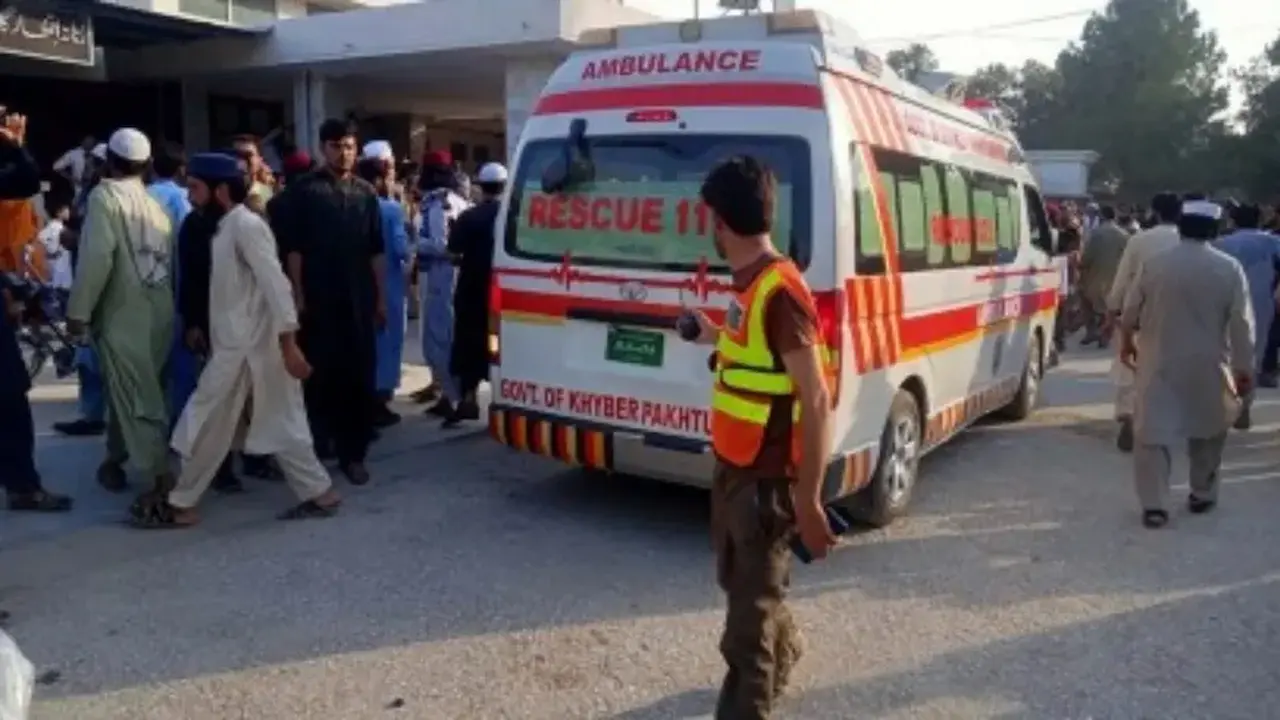
At least 13 security personnel were killed and 24 others injured in a devastating suicide attack on Saturday in Pakistan’s Khyber Pakhtunkhwa province, security sources confirmed.
According to officials, a suicide bomber rammed an explosives-laden vehicle into a Mine-Resistant Ambush Protected (MRAP) vehicle of the Bomb Disposal Unit early in the morning in the Khaddi area of North Waziristan district. Among the injured are 14 civilians, including women and children, several of whom are in critical condition.
At the time of the attack, a curfew had been imposed in the area due to ongoing military movements, the sources said. Security forces quickly launched a rescue and search operation following the blast.
The militant group Usud al-Harb, a faction linked to the Hafiz Gul Bahadur network, claimed responsibility for the assault, which is being described as one of the deadliest attacks in North Waziristan in recent months. The incident has heightened concerns over deteriorating security and the resurgence of militant activity in the region.
President Vladimir Putin has accused Western nations of actively encouraging separatism and turning a blind eye to terrorism targeting Russia, intensifying his criticism of the West amid the ongoing Ukraine conflict.
Speaking to reporters in Minsk, Belarus, on Friday, Putin alleged that Western countries have long ignored terror attacks in Russia as long as they harm Moscow’s interests. “No one wants to pay attention to the Islamic State when it targets Russia — explosions in Moscow and all that. This continues even today. Everything is fine, as long as it is directed against Russia,” he said.
He further charged that Western powers had previously “encouraged separatism” within Russia as part of what he described as their “instrument of the fight against Russia.”
Putin’s comments come at a time of heightened hostilities with the West over Russia’s military actions in Ukraine, with Moscow regularly accusing the US and European allies of meddling in its internal affairs and fueling unrest.
CJI Gavai Slams Article 370: 'It Betrayed Ambedkar's Vision of One Constitution for United India' 6
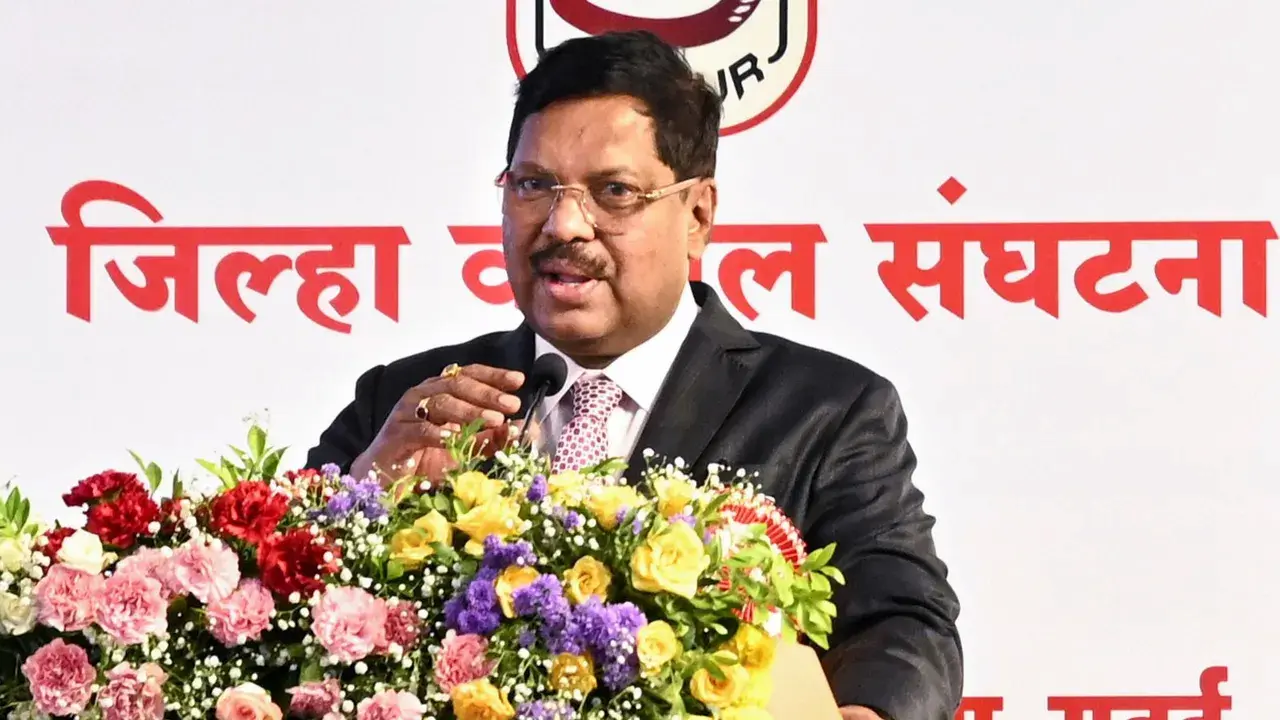
Chief Justice of India B R Gavai on Saturday declared that Article 370 was fundamentally opposed to Dr B R Ambedkar’s vision of a single Constitution binding the country together, asserting that Ambedkar never supported the idea of separate constitutions for individual states.
Speaking at the inauguration of the Constitution Preamble Park, CJI Gavai said the Supreme Court’s decision to uphold the abrogation of Article 370 drew directly from Ambedkar’s commitment to unity through one Constitution. Gavai served on the five-judge Constitution bench, led by then Chief Justice DY Chandrachud, that unanimously upheld the Centre’s 2019 decision to revoke Article 370, which had granted special status to Jammu and Kashmir.
“When the challenge to Article 370 came before us, I remembered Dr Ambedkar’s words that a single Constitution is essential to keep India united,” Gavai told the audience in Marathi.
On August 5, 2019, the Centre stripped Jammu and Kashmir of its special status and bifurcated it into two Union Territories. Gavai noted that critics of Ambedkar had once argued the Constitution’s federal features might fragment the nation in times of crisis, but Ambedkar had firmly believed the Constitution could withstand such challenges and keep India together.
“Look at our neighbours — Pakistan, Bangladesh, Sri Lanka — but India has stayed united despite many challenges,” Gavai remarked.
Union Minister Nitin Gadkari, present at the event, praised CJI Gavai for inaugurating the Constitution Preamble Park and unveiling a statue of Dr Ambedkar. He called freedom, equality, and fraternity Ambedkar’s most precious gifts to India through the Constitution.
Gadkari also highlighted how the Constitution defines the rights and duties of the four pillars of democracy: the executive, judiciary, legislature, and media.
Chief Minister Devendra Fadnavis lauded Gavai’s leadership as CJI and said the government aims to ensure the Preamble of the Constitution reaches every student as part of the Constitution’s Amrit Mahotsav celebrations.
“If we embrace the Preamble’s values, 90 percent of our nation’s problems can be resolved,” Fadnavis asserted.
Supreme Court Curbs Judges' Power to Halt Trump Orders Nationwide, Birthright Citizenship Fate Unclear 8
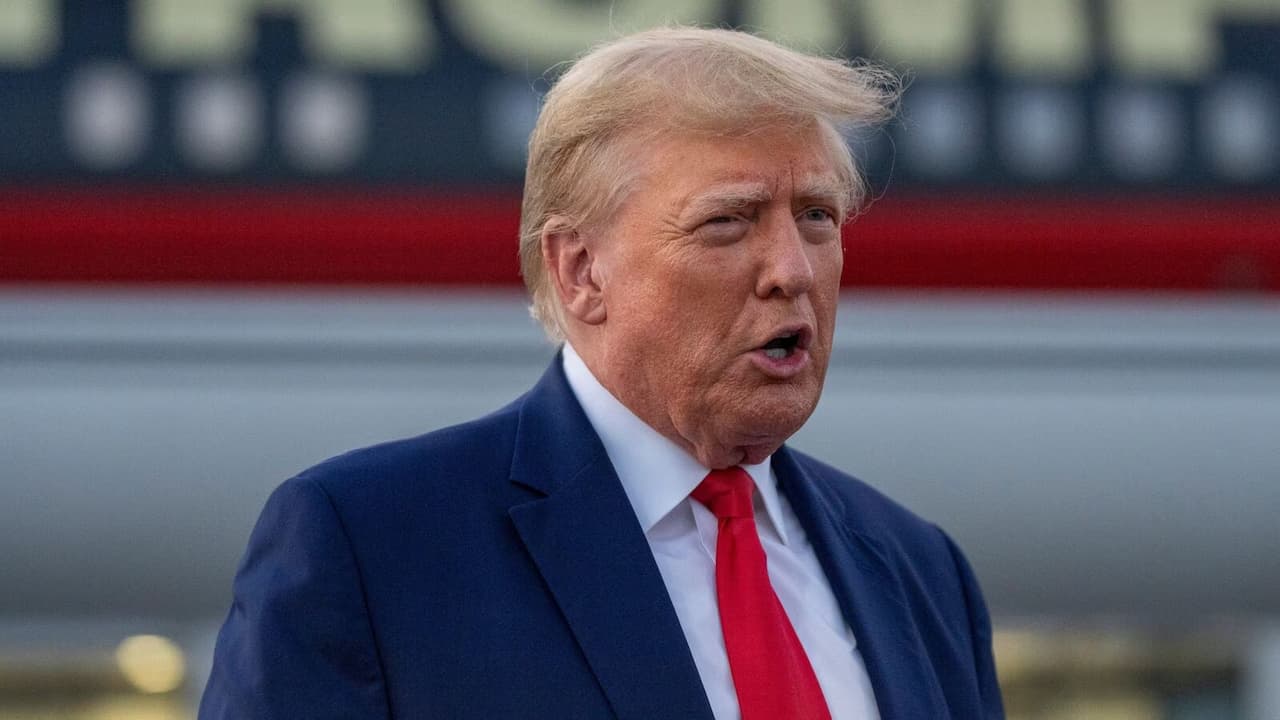
In a sharply divided decision, the US Supreme Court on Friday ruled that individual federal judges do not have the authority to issue nationwide injunctions blocking executive orders, handing a victory to former President Donald Trump — but leaving the fate of his restrictions on birthright citizenship uncertain.
Trump hailed the decision as a “monumental victory” and vowed to “promptly file” to advance policies previously blocked by lower courts, including his executive order aimed at denying citizenship to US-born children of undocumented immigrants.
Writing for the conservative majority, Justice Amy Coney Barrett said that lower courts will now need to tailor their rulings more narrowly, applying them only to the parties before them. The cases over birthright citizenship will return to lower courts for further proceedings under these new guidelines.
The ruling aligns with arguments from both Trump’s Republican administration and President Joe Biden’s Democratic administration, which agreed that federal judges had overstepped their authority by issuing broad, nationwide orders.
However, Justice Sonia Sotomayor issued a blistering dissent, warning the decision invites the government to skirt constitutional protections. She argued that under the ruling, an administration could enforce a policy even after it has been deemed unconstitutional by a lower court.
Birthright citizenship, guaranteed under the 14th Amendment adopted after the Civil War, grants automatic US citizenship to anyone born on American soil, including children of undocumented immigrants. In the landmark 1898 case United States v. Wong Kim Ark, the Supreme Court affirmed that only children of diplomats, enemy forces, or members of sovereign Native American tribes were exceptions to the rule.
Trump and his allies have long sought to toughen the requirements for birthright citizenship, calling it “a priceless and profound gift” and claiming children of noncitizens are not “subject to the jurisdiction” of the US, a phrase found in the 14th Amendment.
Multiple lawsuits by states, immigrants, and rights groups challenged Trump’s executive order, accusing his administration of attempting to dismantle a longstanding interpretation of the Constitution. Lower courts have so far ruled uniformly against Trump’s plan.
The Justice Department argued judges lacked authority to impose nationwide blocks and asked the Supreme Court to allow Trump’s order to apply everywhere except for the plaintiffs in the lawsuits — or, at minimum, limit the injunction to the 22 states that sued.
The Supreme Court’s decision now sends the matter back to the lower courts, which must reassess their injunctions to comply with the new ruling, leaving Trump’s controversial restrictions on birthright citizenship in legal limbo for now.
Marathi Vs Hindi: Sanjay Raut Blames Centre, RSS for Language Imposition in Maharashtra Schools 10
Shiv Sena (UBT) MP Sanjay Raut on Saturday launched a fierce attack on the Centre and RSS, alleging they pressured the Mahayuti government into “imposing” Hindi as a third language in Marathi and English medium schools for classes 1 to 5 in Maharashtra.
Raut accused the state government of “destroying Marathi” under the Centre’s influence, claiming veteran RSS leader Bhayyaji Joshi’s recent remark that “Marathi is not Mumbai’s language” reflected the true intent behind the policy. “There was pressure from the RSS on the state government to implement the three-language policy by making Hindi compulsory in Marathi and English schools,” Raut alleged, adding that the Fadnavis government issued the government resolution under the Centre’s directions.
Countering the BJP’s claim that Uddhav Thackeray’s government initiated the process by setting up a high-level committee recommending Hindi, Raut insisted appointing a committee wasn’t the same as enforcing a policy. “Did Uddhav issue a government resolution or ordinance? No. The Fadnavis government did,” Raut said, challenging Chief Minister Devendra Fadnavis to release the committee report publicly.
Raut announced that the government resolution making Hindi the third language would be burned during a morcha scheduled for July 5, which will see Uddhav Thackeray and Maharashtra Navnirman Sena chief Raj Thackeray share the stage in a rare show of unity. He said NCP patriarch Sharad Pawar, Congress, Dalit Panthers, PWP, Left parties, and various Marathi organisations would join the protest at Azad Maidan.
He expressed hope that the morcha would create a positive atmosphere and strengthen Marathi unity, especially ahead of the Brihanmumbai Municipal Corporation elections.
Meanwhile, BJP chief spokesman Keshav Upadhye hit back, saying Uddhav Thackeray had initiated the three-language process himself. He dismissed the allegations against PM Modi and Union Home Minister Amit Shah as “laughable,” accusing Uddhav of hypocrisy, citing his government’s announcement of an Urdu Bhavan but failure to support Marathi schools during his tenure.
“Where was their love for Marathi then?” Upadhye asked, adding that the BJP was confident people would see through the political stunt and support development.
Poisoned for Revenge: Three Held After Tigress, Four Cubs Killed in Karnataka Forest 12
The shocking deaths of a tigress and her four cubs in Karnataka’s Male Mahadeshwara Hills have been traced to an act of revenge by a man whose cow was killed by wild animals, forest officials revealed on Saturday. Three men — including the cow’s owner — have been arrested after investigations confirmed the big cats were poisoned.
The incident, which took place in the Hugyam forest range, caused massive public outrage when the tigress and her cubs were discovered dead on Thursday. Officials said the breakthrough came when they found the poisoned carcass of a cow belonging to Maada alias Maaduraju, who was enraged after his cow, Kenchi, was killed by predators.
In retaliation, Maaduraju allegedly sprayed poison on the cow’s carcass. When the tigress returned with her cubs to feed on it, all five died after consuming the tainted meat. His friends, Konappa and Nagaraju, are accused of helping him execute the deadly plan.
Police have taken the three suspects to Aranya Bhavan in Hanuru Taluk for interrogation. Meanwhile, Maaduraju’s father initially confessed to the crime but was cleared after investigations pointed to his son’s involvement.
The killings have sparked a political storm, with the BJP blaming the Siddaramaiah government for negligence in protecting Karnataka’s wildlife. Forest Minister Eshwar Khandre assured that strict action would follow, promising no one involved would escape accountability.
According to the National Tiger Conservation Authority, Karnataka is home to 563 tigers, the second highest population in India after Madhya Pradesh.
Horror in Kolkata: Law Student Gang-Raped on Campus, BJP Blasts TMC Over Women's Safety 14
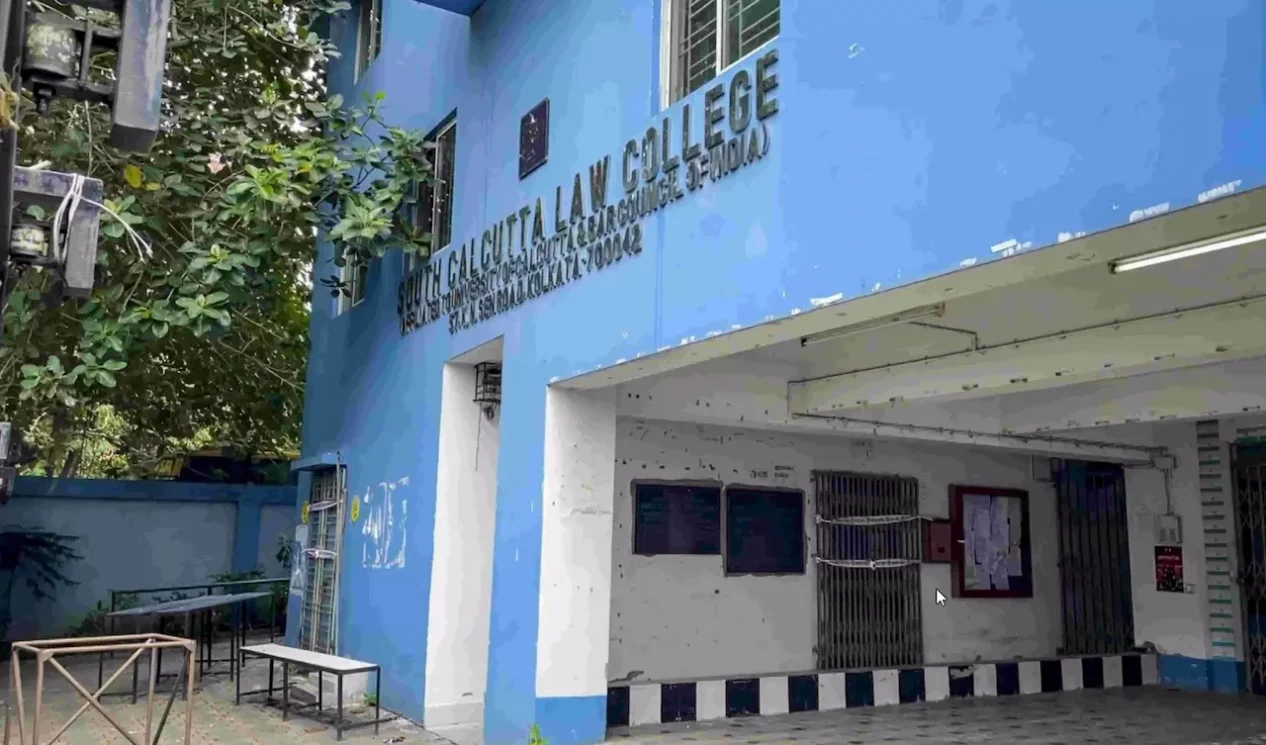
A shocking crime has rocked Kolkata after a law student was allegedly gang-raped by her two seniors and a former student inside her college premises, police said Friday. The horrific incident occurred on the evening of June 25 when the victim, who had gone to the college, was lured by the three accused into a room where they took turns assaulting her.
Following a complaint lodged by the survivor at Kasba Police Station, the three accused were arrested on Thursday night. Police confirmed that the matter is currently in its preliminary investigation stage and that medical tests of the victim are underway.
The accused are expected to be produced in court on Friday, police officials added.
The incident has sparked a political storm, with the Bharatiya Janata Party (BJP) slamming Chief Minister Mamata Banerjee’s Trinamool Congress (TMC) government over the deteriorating safety of women in West Bengal. BJP leaders questioned how such a heinous crime could occur within an educational institution, calling it a chilling reflection of the law-and-order situation under TMC’s rule.
50 Years Later: We Mourn One Emergency While Quietly Living Through Another 16
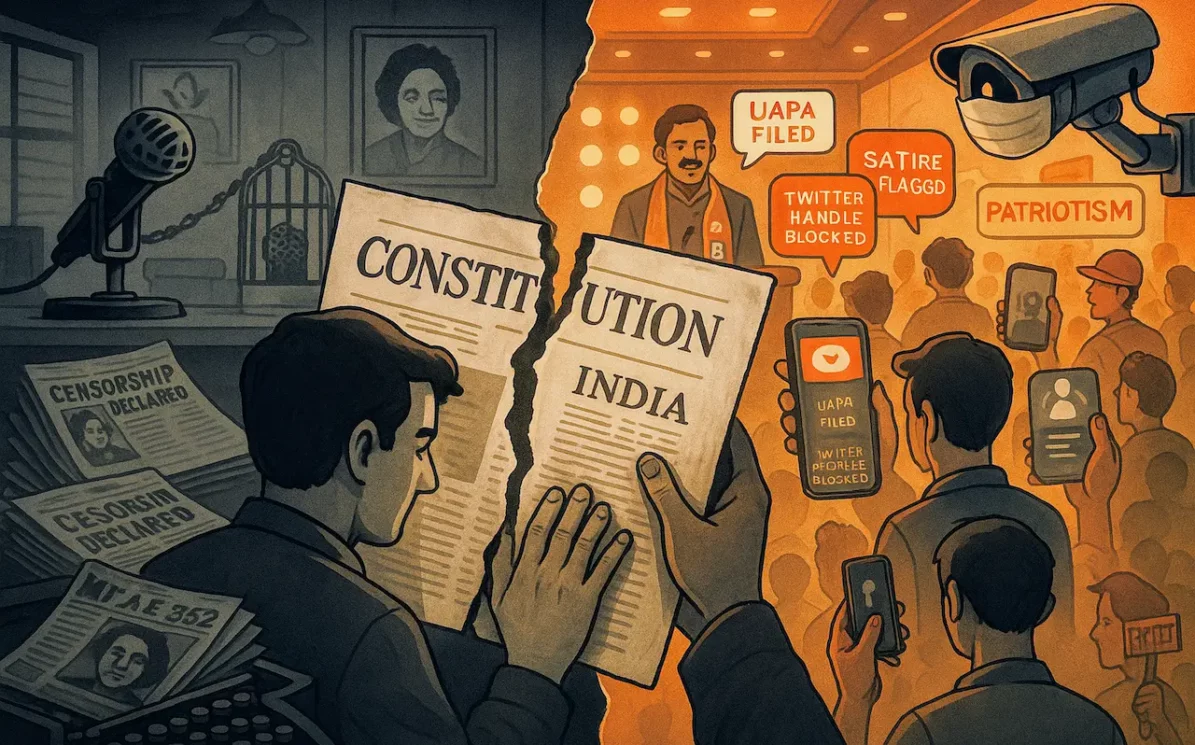
It’s that time again—June 25. The annual constitutional weep-fest. The government is out with its banners, hashtags, and pious speeches about “dark times,” the Congress is squirming in selective amnesia, and Twitter is ablaze with black-and-white photos of Atal Bihari Vajpayee behind bars. We’re told to “Never Forget.” Fair enough. But while we’re lighting digital candles for democracy’s past, maybe—just maybe—we should take a long, hard look at democracy present.
Let’s rewind to 1975.
Indira Gandhi, cornered by a court verdict that declared her election invalid, chose not to step down, not to appeal for calm—but to shut the nation down. Using Article 352, she declared a national Emergency citing “internal disturbance”—which conveniently translated to “I might lose my job.” Press freedom? Suspended. Civil liberties? Erased. Opposition leaders? Jailed by the thousands. Sanjay Gandhi became the unelected czar, sterilizing the poor and bulldozing slums like an overzealous architect of dystopia. Parliament became a rubber stamp. Judiciary bowed. Police saluted. The “voice of India” was reduced to a whisper—often behind prison bars.
Now fast-forward to 2025.
We haven’t declared an Emergency. No, no—we’re better at this now. Why use Article 352 when you can just weaponize every institution? You don’t need to jail all opposition leaders—just enough to send a message. You don’t need to censor the press—just buy it. Why ban civil liberties outright when you can strangle them with a thousand little rules, a barrage of FIRs, UAPA cases, IT raids, and patriotic gaslighting?
And the masterstroke? Call yourself the guardian of democracy while operating in an “undeclared emergency” mode.
Let’s be brutally honest—India went wrong in 1975 because it allowed one person’s insecurity to hijack the entire system. We let fear override freedom, loyalty override law, and propaganda override principles. The Parliament sang chorus, the President signed like a stenographer, and the courts—barring a few brave exceptions—folded like paper.
India is going wrong again—but this time, it’s worse because the erosion is slow, silent, sugarcoated. No formal declaration, just a daily diet of fear, manipulation, and mass distraction.
Back then, newspapers had their power supply cut. Today, they cut their own credibility voluntarily. Then, journalists like Kuldip Nayar and Arun Shourie resisted. Now, anchors compete to out-yell each other in lapdog nationalism. Then, the opposition was jailed; now, they’re sued, silenced, defamed, or conveniently investigated by every acronym-laced agency from CBI to ED.
Back then, there was at least shock. Today, there is normalization. The public shrugs. The youth scrolls. Parliament gets bulldozed—literally and metaphorically—and we call it “efficiency.”
We criticize Indira Gandhi for centralizing power. Yet today, decisions are taken by one man and one machine. Cabinet ministers tweet after the PM tweets. Governors behave like party secretaries. Even the Election Commission reads like a WhatsApp forward factory.
Indira Gandhi’s Emergency was blatant, ugly, and brutal. Modi’s undeclared version is slick, digital, and drenched in nationalism. Both function the same way: consolidate power, control institutions, cripple the opposition, manipulate the media, and rule through fear disguised as pride.
Let’s not forget—Indira Gandhi at least paid a political price. She withdrew the Emergency. She held elections. She lost. Today, the government thrives on elections. In fact, it wins more when it silences more. Why fear elections when you have money, media, muscle, and myths all working in sync?
The real tragedy is this: while we spend hours arguing about 1975, most Indians don’t even realize they are already in a different kind of emergency—one without sirens, but with a deep, systemic rot. An emergency where surveillance is celebrated, dissent is sedition, satire is a threat, and questions are acts of betrayal.
So yes, commemorate June 25. Mourn what was lost. But do so with the courage to confront what we are losing now.
Because what’s the point of remembering a dictatorship from the past if you can’t even recognize the one staring you in the face—armed with slogans, electoral data, a billion-dollar IT cell, and a national anthem playing in the background?
Democracy didn’t die in 1975.
It was just a trailer. The full film is now streaming—across all channels, with commercial breaks brought to you by your friendly neighborhood government.
And we? We’re watching it in HD… with popcorn in hand.
Modi Cabinet Clears ₹3,626 Crore Pune Metro Phase 2: 13 Stations, 2 New Corridors to Transform Urban Commute 18
The Union Cabinet on Wednesday approved Phase 2 of the Pune Metro Rail Project, greenlighting two elevated corridors with 13 stations across a 12.75 km stretch at an estimated cost of ₹3,626.24 crore. The decision, taken during a meeting chaired by Prime Minister Narendra Modi, marks a significant step forward in enhancing Pune’s urban transport network.
The two new corridors—Vanaz to Chandani Chowk and Ramwadi to Wagholi—are planned as extensions of the Vanaz–Ramwadi line developed under Phase 1. These corridors will pass through fast-developing suburbs like Chandani Chowk, Bavdhan, Kothrud, Kharadi, and Wagholi, significantly improving east-west mass transit in the city.
Information and Broadcasting Minister Ashwini Vaishnaw said the cost will be equally shared by the central government, Maharashtra state government, and external bilateral or multilateral agencies. The project is slated for completion within four years.
“These extensions will connect IT hubs, educational institutes, commercial zones, and residential areas. They will also integrate with Line-1 (Nigdi–Katraj) and Line-3 (Hinjewadi–District Court) at the District Court Interchange Station to enable seamless multimodal travel,” Vaishnaw noted.
As part of long-term mobility planning, intercity bus services from Mumbai and Bengaluru will integrate at Chandani Chowk, while buses from Ahilya Nagar and Chhatrapati Sambhaji Nagar will connect at Wagholi. This will allow easier access to Pune’s metro network and reduce congestion on arterial roads like Paud Road and Nagar Road.
The Maharashtra Metro Rail Corporation Limited (Maha-Metro) will implement the project, handling all civil, electrical, and mechanical work. Preliminary steps such as topographical surveys and detailed design planning are already underway.
The projected incremental daily ridership for Line-2 is expected to rise steadily—from 0.96 lakh in 2027 to 3.49 lakh by 2057—signifying the metro’s long-term value. The expansion is expected to boost public transport usage, reduce carbon emissions, and unlock economic growth opportunities in Pune’s expanding metropolitan area.
CBSE's Big Shake-Up: Class 10 Students to Face Two Board Exams a Year from 2026 20
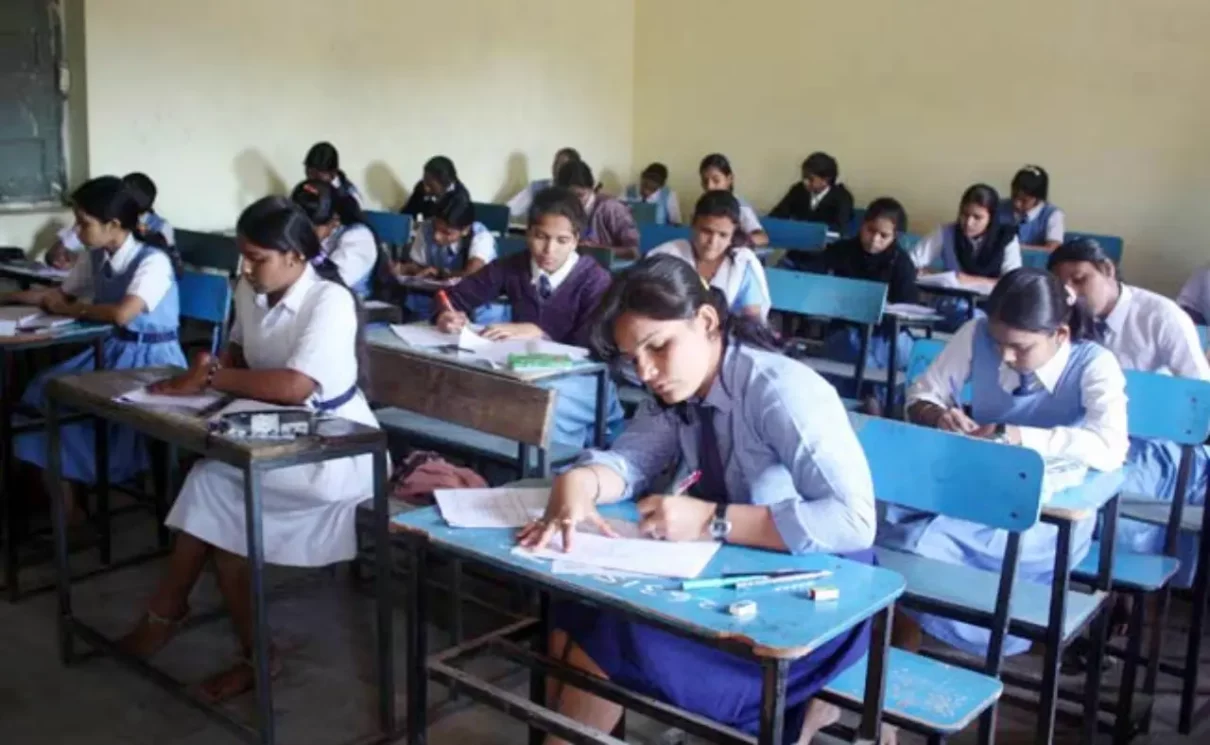
Beginning in 2026, Class 10 students under the Central Board of Secondary Education (CBSE) will take board exams twice in an academic year, in line with the New Education Policy’s (NEP) recommendation to reduce exam-related stress. According to officials, the first exam phase will be held in February and will be mandatory for all students, while the second phase, scheduled for May, will be optional for those seeking to improve their performance.
CBSE Examination Controller Sanyam Bhardwaj confirmed the board’s approval of the new exam format. “Students will appear mandatorily in the February exam. Those wishing to enhance their marks may attempt the May exam in up to three subjects — from science, mathematics, social science, and languages,” he said.
The results of the first phase will be declared in April, while the second phase results will be released in June. The board also clarified that internal assessments will continue to be held only once per academic session.
Students from winter-bound schools will have the flexibility to choose either of the two exam phases. This new system aims to eliminate the “high-stakes” nature of board exams and provide students with an opportunity to perform better without pressure.
The policy shift follows public feedback on a draft shared earlier this year and is expected to mark a transformative step in India’s secondary education landscape.