PM Modi Slams Congress on Emergency Anniversary: "Democracy Was Put Behind Bars" 2
Prime Minister Narendra Modi, marking the 50th anniversary of the Emergency, said on Wednesday that no Indian will ever forget how the spirit of the Constitution was trampled during that period. He reiterated his government’s unwavering commitment to protecting and strengthening the nation’s constitutional principles.
Calling the Emergency one of the darkest chapters in Indian democracy, Modi said in a series of posts on X that the era was marked by suspended fundamental rights, crushed press freedom, and the mass jailing of political leaders, social activists, students, and ordinary citizens.
“It was as if the Congress Government in power at that time placed democracy under arrest,” the prime minister remarked. He reminded the public that the Emergency anniversary is now observed as Samvidhan Hatya Diwas (Constitution Killing Day), as declared by his government last year.
Modi also slammed the 42nd Amendment passed during the Emergency, calling it a blatant attempt by the Congress regime to rewrite and distort the Constitution. He said the amendment, later reversed by the Janata Party government, remains a stark example of Congress’s constitutional overreach.
Highlighting the human cost of the Emergency, Modi said the poor and marginalised were especially victimised. “Their dignity was insulted and their voices silenced,” he said.
Paying tribute to those who resisted the Emergency, Modi praised the unity shown by citizens from various backgrounds who came together to fight for democracy. “It was their collective struggle that forced the then Congress Government to restore democracy and call fresh elections, which they badly lost,” he said.
Reaffirming his vision for a Viksit Bharat (Developed India), Modi concluded by pledging to honour the sacrifices of the past by upholding the democratic values for which freedom fighters laid down their lives.
Election Commission Hits Back at Rahul Gandhi: 'All Maharashtra Polls Held as Per Law' 4
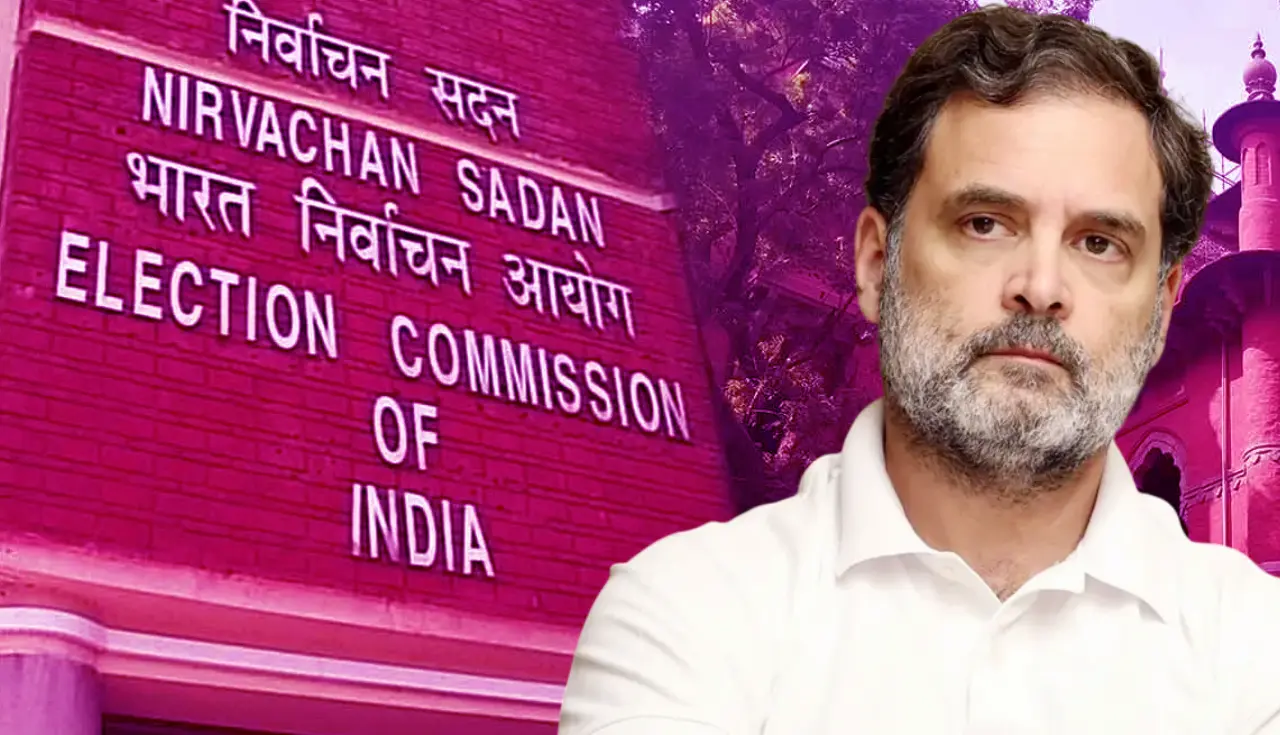
The Election Commission of India (EC) has pushed back against Congress leader Rahul Gandhi’s allegations of rigging during the 2024 Maharashtra elections, stating that all polls were conducted in full compliance with laws passed by Parliament and established rules.
In a letter dated June 12 and sent via email, the EC responded to Gandhi’s recent article in a national daily where he accused the electoral body of malpractice. The EC asserted that the entire election process was carried out transparently and in a decentralised manner across all assembly constituencies in the state.
The Commission highlighted that over 1,00,186 Booth Level Officers (BLOs), 288 Electoral Registration Officers (EROs), 139 General Observers, 41 Police Observers, 71 Expenditure Observers, and 288 Returning Officers were involved in overseeing the elections. Additionally, political parties—including the Congress—appointed 1,08,026 Booth Level Agents (BLAs), with Congress itself fielding 28,421 agents across Maharashtra.
The EC reminded Gandhi, now the Leader of the Opposition in Lok Sabha, that any genuine electoral grievances should be raised through legal channels. “We presume that any issue regarding the conduct of elections would have already been raised through election petitions filed in the competent court of law (High Court) by INC candidates,” the letter stated.
However, the poll body also extended an olive branch, saying Gandhi was welcome to submit any further concerns in writing or meet the Commission in person at a mutually convenient time to discuss the issues raised.
The response underscores the Commission’s stance that the 2024 elections were free and fair, despite increasing political criticism and controversy surrounding the conduct and outcome of polls in several states.
Maharashtra's Great Political Tamasha: Where Power is Worshipped, and the Voter is Just a Prop 6
As Maharashtra limps toward its long-delayed civic elections, the state’s political theatre is in full swing—and what a grotesque spectacle it is. Parties are not contesting to serve the people; they’re scrambling to stay relevant, to save their face, and most importantly, to claim their share in the spoils of power. In this circus of shifting loyalties, public bickering, fake virtue, and dangerous distractions, the ordinary voter—the Marathi Manoos—is reduced to a disposable extra, expected to clap, vote, and suffer in silence.
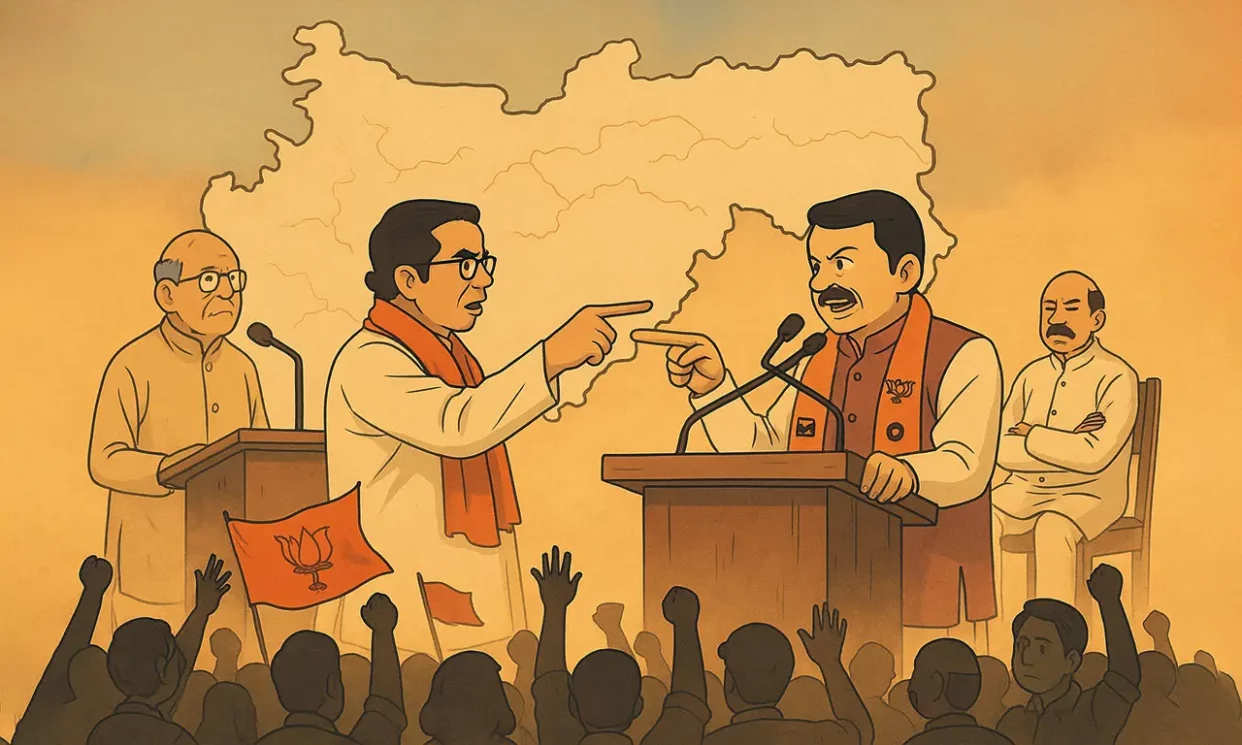
At the centre of this chaos is the ongoing tug-of-war between the Mahayuti alliance and the Mahavikas Aghadi. While the Mahayuti, comprising BJP, Shinde Sena, and Ajit Pawar’s NCP faction, boasts of power, money, and machinery, it is suffering from a severe trust deficit within its own ranks. Eknath Shinde, once hailed as the bold rebel who toppled Uddhav Thackeray’s government, is now struggling to maintain his authority even within his own faction. Infighting between Shinde Sena and NCP is spilling into the public domain—what began as a petty quarrel over the Guardian Minister post in Raigad has escalated into a bizarre war of viral “Aghori pooja” videos and political blackmail. NCP’s Suraj Chavan mocks Shinde Sena’s Bharat Gogavale, and in retaliation, Shinde’s camp threatens to leak videos of Sunil Tatkare. It’s no longer a question of who governs Raigad—it’s a matter of who can disgrace whom first.
Meanwhile, the BJP remains the grand puppeteer, watching its allies quarrel while focusing on its real agenda: controlling the municipal corporations, especially the BMC, through meticulous planning, resource dominance, and brute electoral force. While Shinde is bleeding credibility and Ajit Pawar’s influence is shrinking, Devendra Fadnavis appears to be the only man with a coherent plan. But even he is facing fire on multiple fronts.
On one side, Uddhav Thackeray’s Shiv Sena (UBT) is exploiting every opportunity to ignite Marathi pride. With a loyal voter base still intact and fiery rhetoric through Saamana, Uddhav continues to portray himself as the rightful heir of Maharashtra’s Marathi legacy. His MP Vinayak Raut, not mincing words, publicly referred to CM Shinde as an “impotent politician”—a direct and brutal strike meant to shake up his weakening image.
And then, there is Raj Thackeray. The ever-unpredictable MNS chief has flared up the language issue yet again. At a high-profile event celebrating the Estimates Committees of Parliament, banners were printed in Hindi and English—but not in Marathi. Raj didn’t just object; he tore through the government’s apathy, reminding them of Maharashtra’s hard-fought linguistic identity and invoking C.D. Deshmukh’s resignation during the Samyukta Maharashtra movement. Ironically, while Raj and Uddhav’s workers often find themselves on the same platform, no formal alliance has been struck. Shiv Sena (UBT)’s Sanjay Raut diplomatically advised “patience,” but everyone can sense the strategic hesitation and deep-rooted rivalry that still lingers between the Thackeray cousins.
Amidst all this tamasha, the BJP government tried to sneak in a seemingly “harmless” language policy—implementing Hindi as a default third language in Marathi and English medium schools. But the backlash was instant and severe. Faced with rising opposition, CM Fadnavis had to call an emergency meeting with Eknath Shinde, Education Minister Dada Bhuse, and officials to save face. The result? Another promise of consultation and yet another PowerPoint presentation in the making. It’s the same old bureaucratic charade: Delay, distract, and defuse.
And if that wasn’t enough, the tragic and continuing crisis of Maharashtra’s farmers remains on the back burner. Over 12,600 suicides from 2015 to 2019. Seven deaths a day in 2023. And what does the government do? Appoint a committee under Bachchu Kadu to “look into” the issue of loan waivers. Not a single word on irrigation reforms, sustainable pricing, or long-term structural solutions. The message to farmers is clear—your death matters less than our data.
And now, even the civic polls—the most basic exercise of democracy—are being toyed with. After years of delay, the new ward boundaries are conveniently being redrawn by two Urban Development Department secretaries. A June 10 government order had no fixed schedule. Two days later, a letter magically added timelines. Now, the final announcement will come 18 days later, and elections will likely be pushed to the end of November—post Diwali, post public outrage, post everything. It’s a masterclass in democratic procrastination.
So here we are—standing in the eye of Maharashtra’s political hurricane. Where leaders perform rituals, abuse each other, forge secret pacts, delay polls, and debate language—while farmers die, students suffer, and the common man is forced to pick between the lesser evil. Every party wants to win, not for the people, but for their own survival. And in this power-hungry circus, the voter is merely an audience member, tricked into believing he has a say when all he has is a seat—at the back row, far from the stage, far from the truth.
This isn’t governance. This is a drama with too many clowns, no ringmaster, and a society that keeps paying the price—again and again.
Trump Brokers Ceasefire in "12-Day War" Between Israel and Iran After Devastating 8
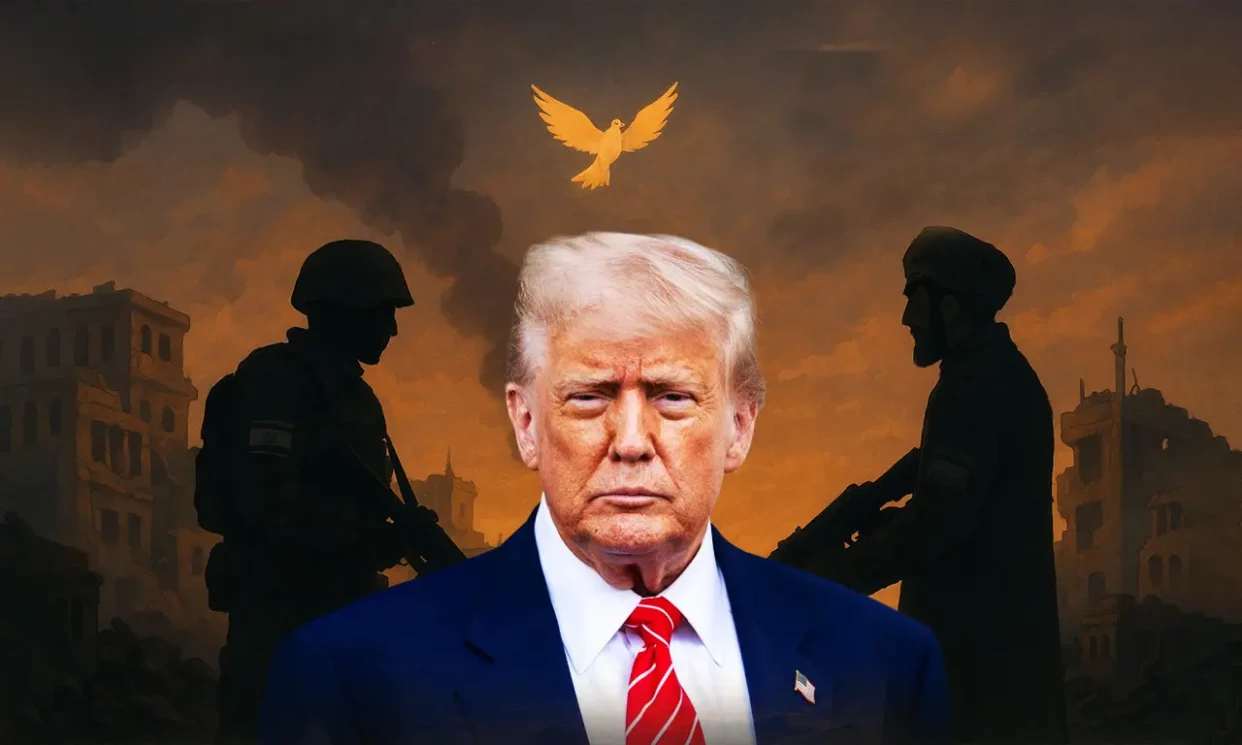
In a dramatic turn after 12 days of escalating conflict, Israel and Iran have agreed to a ceasefire brokered by former US President Donald Trump, following final missile exchanges that claimed lives and intensified global concerns.
The ceasefire, which Trump dubbed the end of the “12-Day War,” was confirmed Tuesday after Iran’s last wave of missile strikes on Israel killed at least four people and wounded several others in Beersheba. Israel, in retaliation, launched a pre-dawn blitz of airstrikes across Iran, claiming it had achieved all its military objectives.
Prime Minister Benjamin Netanyahu stated that the military operation dismantled Iran’s nuclear and missile capabilities and significantly damaged Tehran’s military infrastructure. He warned that Israel would respond “forcefully” to any violation of the truce.
Trump took to Truth Social over an hour after the deadline for Iran’s attacks had passed, writing, “THE CEASEFIRE IS NOW IN EFFECT. PLEASE DO NOT VIOLATE IT!” However, Iranian Foreign Minister Abbas Araghchi had earlier said there was “no agreement yet,” though he indicated Iran was open to halting further strikes if Israel ceased hostilities by 4 a.m. Tehran time.
Iran’s barrage earlier damaged three residential buildings in Beersheba, with rescue workers retrieving four bodies and treating multiple injuries—even inside so-called “safe rooms.”
Trump said the ceasefire came into effect around midnight Washington time and called it an “Official END” to the war. The Qatari government reportedly played a key role in brokering the deal, while Trump and Israeli PM Netanyahu coordinated directly.
The missile exchange even forced temporary airspace closures in both Israel and Qatar. Flights were suspended and later resumed once the threat subsided.
The war has claimed at least 24 Israeli lives and wounded over 1,000. Iranian casualties are significantly higher, with the Washington-based Human Rights Activists group reporting at least 974 deaths—including 387 civilians and 268 security personnel—along with more than 3,400 injured.
The US State Department confirmed the evacuation of 250 American citizens and their families from Israel, amid fears the violence could spiral further.
While the ceasefire brings a fragile pause, uncertainty looms over whether both nations will fully honor the agreement or if deeper tensions will reignite conflict in the region.
Months after suffering a major setback in Delhi, the Aam Aadmi Party (AAP) has bounced back with critical bypoll victories in Gujarat and Punjab, signaling a strong resurgence for party chief Arvind Kejriwal. The standout win came from Visavadar in Gujarat, where Gopal Italia defeated the BJP in Prime Minister Narendra Modi and Home Minister Amit Shah’s home state—making it a high-impact political upset.
While the Ludhiana West seat win in Punjab boosted AAP’s image in a state it governs, the Gujarat result carried greater symbolic weight. Visavadar hasn’t been a BJP fortress since 2007, but AAP’s victory here is notable because the party’s earlier MLA, Bhupendra Bhayani, had defected to the BJP just four months ago. Defeating the ruling party in a bypoll—something rarely seen—has allowed AAP to claim the mantle of BJP’s primary challenger in Gujarat, relegating the Congress to third place.
For Kejriwal, the win is a strategic and emotional rebuttal to Modi and Shah, following his recent imprisonment in the Delhi excise policy case. After the Delhi loss, he had pivoted focus to Punjab—drawing criticism for being the real power behind the scenes in the state while Chief Minister Bhagwant Mann is seen by many as a figurehead.
The AAP needs to retain Punjab to maintain its national party status and political relevance, and Sanjeev Arora’s win in Ludhiana West has helped counter growing perceptions of anti-incumbency against the Mann government.
Kejriwal is now expected to increase his presence in Gujarat ahead of the 2027 assembly elections. With Congress continuing to lose ground across states, AAP is eyeing expansion in Goa and Bihar too, aiming to contest more seats in upcoming elections.
The Congress’s only consolation in the bypolls came from Kerala’s Nilambur seat, where it triumphed over the ruling CPI(M). But AAP’s latest wins point to a shifting political dynamic where it is increasingly replacing Congress as the BJP’s chief opposition force.
'No Hindi Imposition': Fadnavis Says Final Call on 3-Language Policy After Stakeholder Talks 12
Maharashtra Chief Minister Devendra Fadnavis has clarified that the final decision on the implementation of the three-language formula in state schools will be taken only after thorough consultations with all stakeholders, including language experts, scholars, political leaders, and litterateurs.
Fadnavis chaired a high-level meeting at his official residence in Mumbai on Monday night, which was attended by Deputy CM Eknath Shinde, School Education Minister Dada Bhuse, Minister of State Dr. Pankaj Bhoyar, and senior education department officials. The meeting focused on the implications of the three-language policy under the New Education Policy (NEP), especially concerning the academic impact on Marathi-speaking students.
The state government had recently amended its language guidelines, stating that Hindi would generally be offered as the third language in Marathi and English-medium schools from Classes 1 to 5. However, it provided an opt-out option if at least 20 students in a class chose a different Indian language.
Addressing concerns over Hindi “imposition”, Fadnavis stressed that a structured consultation process would be launched to address objections and gather inputs. He said the aim is to reach a balanced decision that prioritizes students’ interests while preserving Maharashtra’s linguistic heritage.
School Education Minister Dada Bhuse echoed the sentiment, stating the policy would not be imposed unilaterally and that the government remains open to dialogue with critics, including MNS chief Raj Thackeray, who had publicly opposed making Hindi the default third language.
Bhuse added that the state would present a comparative analysis of policies from other states and clarify that Marathi remains the only mandatory language. He reiterated that the move is aimed at offering flexibility, not enforcing Hindi.
Cultural Affairs Minister Ashish Shelar also weighed in, calling the ongoing controversy “unreasonable and illogical”. He clarified that the government has actually removed the previous mandate of teaching Hindi from Classes 5 to 8, making it an optional language instead.
The state leadership affirmed their commitment to promoting Marathi and ensuring that the educational framework aligns with the evolving needs of students without sparking cultural or linguistic divides.
"Trump Invited, Jagannath Called": PM Modi Says He Chose Odisha Over White House Visit 14
Prime Minister Narendra Modi on Friday stirred attention by revealing that he had declined an invitation from former U.S. President Donald Trump to visit Washington, choosing instead to travel to Odisha — the land of Lord Jagannath.
Speaking at a rally in Bhubaneswar, Modi said, “While I was attending the G7 Summit in Canada, President Trump called and invited me to Washington for a meeting and lunch. I respectfully thanked him but told him I must go to Odisha — the sacred land of Lord Jagannath — and humbly declined his invitation.”
The Prime Minister was in Odisha to mark the first anniversary of the BJP’s first-ever state government and to inaugurate development projects worth over ₹18,600 crore.
The Central Bureau of Investigation (CBI) has registered a corruption case against Tata Consulting Engineers Limited, a former Chief Manager of the Jawaharlal Nehru Port Trust (JNPT), and other private companies over an alleged ₹800 crore scam involving dredging contracts.
According to officials, the case stems from a preliminary inquiry that revealed deep-rooted collusion between JNPT officials and private contractors. The accused allegedly inflated project estimates, manipulated tenders to favour specific international bidders, and ignored independent expert reports to extend undue favours to select contractors.
The irregularities are linked to Phase I of the port project (2003–2014) and Phase II (2013–2019), with estimated wrongful losses of ₹365.90 crore and ₹438 crore, respectively, due to over-dredging. The CBI stated that criminal conspiracy, cheating, and abuse of official position led to massive losses to the exchequer.
The FIR has been filed under sections of the Indian Penal Code and the Prevention of Corruption Act against the then JNPT chief manager, Tata Consulting Engineers Ltd, a project director at TCE, and private firms based in Bandra Kurla Complex and Chennai.
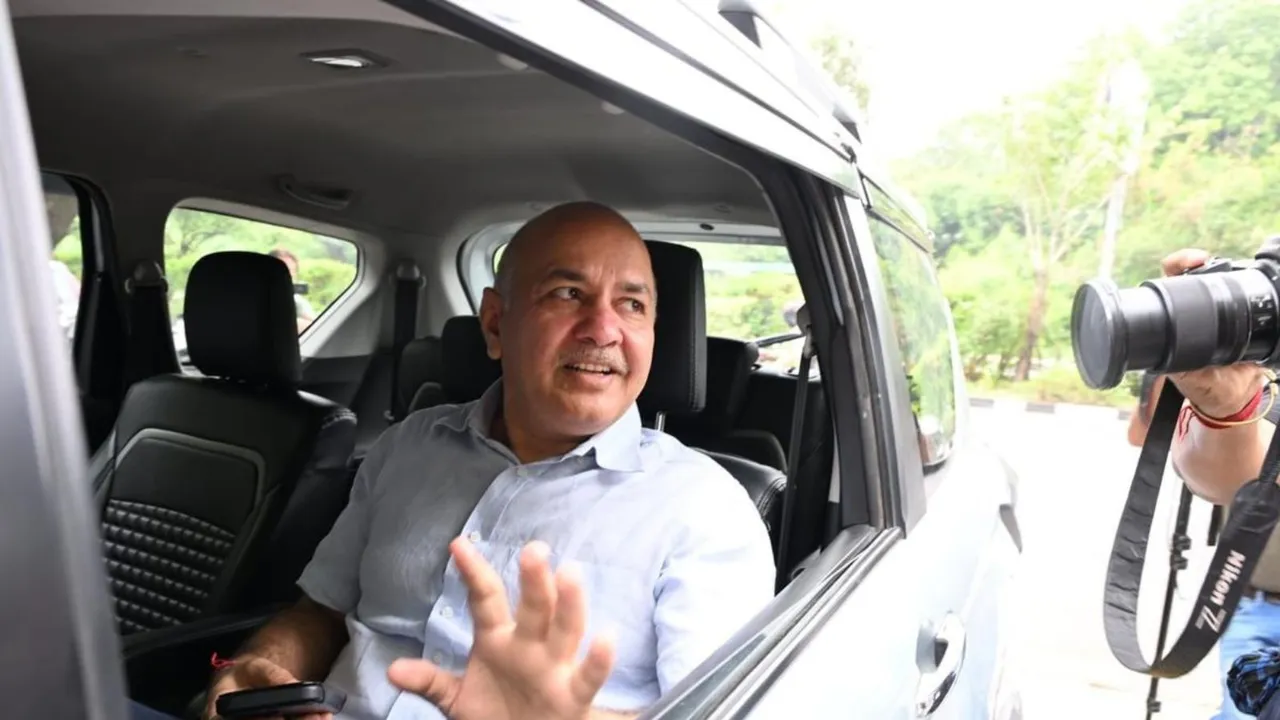
Manish Sisodia Grilled by ACB in ₹2,000 Crore Classroom Scam Probe 18
Former Delhi Deputy Chief Minister Manish Sisodia appeared before the Anti-Corruption Branch (ACB) on Friday for questioning in connection with a ₹2,000 crore corruption case linked to the construction of classrooms in Delhi government schools.
According to officials, the ACB had summoned both Sisodia and Aam Aadmi Party (AAP) leader Satyendar Jain over alleged financial irregularities in the execution of more than 12,000 classrooms and semi-permanent school structures. Jain had responded to the summons and appeared before the agency on June 6.
The case stems from an FIR registered by the ACB on April 30, citing serious allegations of graft and misappropriation of public funds during the classroom construction project. Investigators are probing whether inflated costs and procedural lapses led to a massive financial scam in the education sector under the AAP-led Delhi government.
Tragedy at Sathaye College: 21-Year-Old Student Jumps to Death, Probe Underway 20
In a heartbreaking incident, a 21-year-old female student of Mumbai’s Sathaye College died after allegedly jumping from the third floor of the college building on Thursday morning. The student, identified as Sandhya Pathak, was a third-year student and a resident of Nalasopara, a suburb on the outskirts of Mumbai.
According to police officials, Sandhya sustained critical injuries in the fall and was rushed to a nearby hospital, where doctors declared her dead on arrival. The incident occurred at the college premises located in the Vile Parle (East) area.
Authorities have not recovered any suicide note, and the reason behind the act remains unclear. An accidental death report has been filed, and the police have begun a detailed investigation to determine what led to the tragedy.
The college and the local community are in shock as police continue to question classmates, faculty, and family members in search of possible clues.