Home Blog Page 65

Three Languages, Zero Loyalty: How Netas Keep Failing the Marathi Manoos

language, maharashtra, raj thackeray, devendra fadnavis, marathi, hindi, students
Three Languages, Zero Loyalty: How Netas Keep Failing the Marathi Manoos 2

Ah, the grand circus of politics has a new act in town—the “Language Tug-of-War”! And once again, the Marathi Manoos is sitting in the stands, watching his so-called guardians juggle interests, dance to Delhi’s tunes, and occasionally throw him a half-eaten vada pav of cultural tokenism.

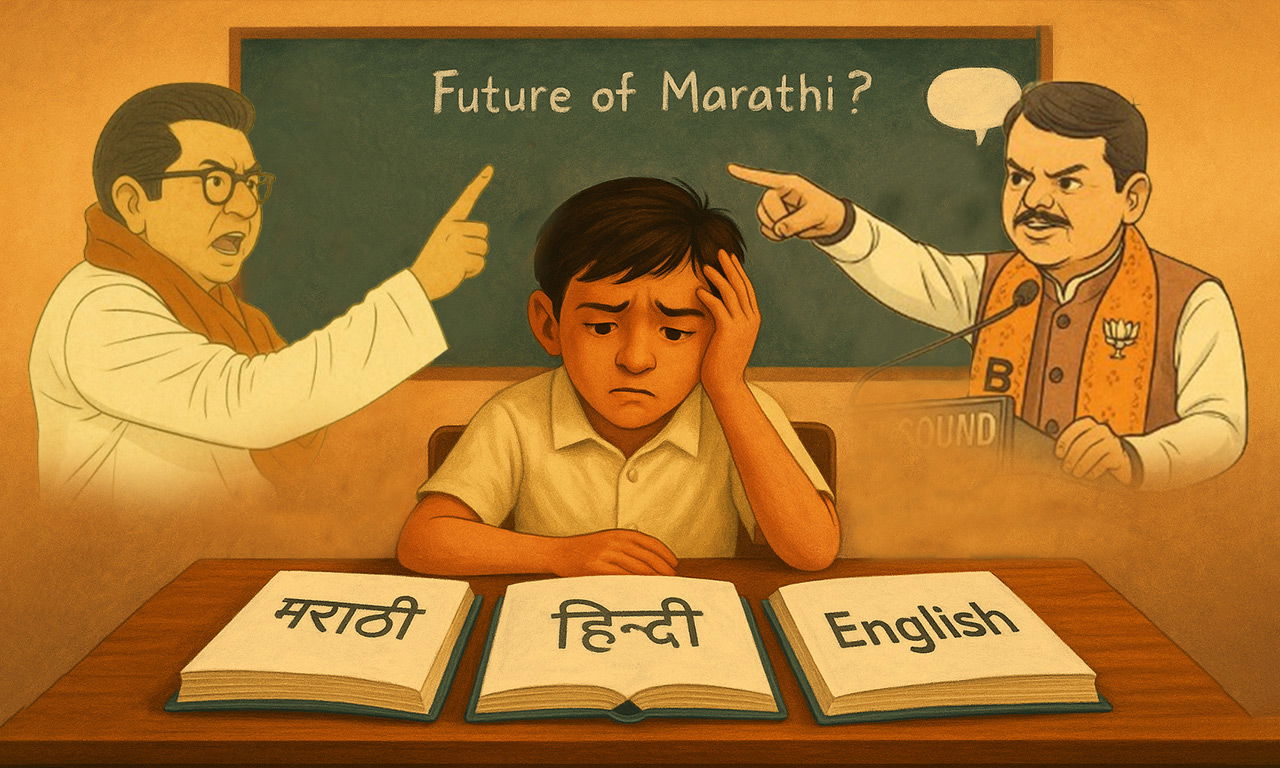
One day it’s Marathi pride; the next day it’s “Hindi is our national language, so learn it, love it, live it.” And all this while the Marathi-medium school kid is still figuring out why he’s learning trigonometry in English and prayers in Sanskrit while politicians debate his third language like it’s a toss-up on a game show: “Aur aapki teesri bhasha ke liye aapka option hai… Hindi, ya phir… good luck finding 19 more students!”

Let’s be honest—when Marathi was made compulsory, did the fate of Marathi Manoos change? Did job interviews suddenly start happening in Marathi? Did state-level exams or bureaucratic functioning start operating in Marathi? Nope. But now that Hindi is being parachuted in via a convenient “default option,” we’re being told it’s just a matter of linguistic love—not imposition. Of course! When Marathi is brought in, it’s a symbolic victory; when Hindi enters, it’s a “progressive policy.”

What’s more heartwarming is how our netas are performing in this linguistic drama. One camp is busy lighting diyas for their North Indian vote bank while chanting “Bharat Mata Ki Jai” in chaste Hindi. The other is standing with a saffron tilak and “Jai Maharashtra” slogans, pretending to be the last bastion of Marathi identity. But scratch the surface, and all you’ll find is political varnish. Because the truth is—nobody really cared. Not when Marathi was being diluted in administration. Not when Marathi films struggled for screen space. Not when job postings quietly demanded English or Hindi fluency, pushing Marathi into the margins of “cultural heritage.”

Let’s not forget the State Education Minister’s dazzling flip-flops—first Hindi is mandatory, then it isn’t, then it’s just a recommendation, and now it’s the “default.” If this were a yoga pose, it’d be called “Rajneetik U-turn-asana”.

And of course, Raj Thackeray enters the scene with his trademark thunder—questioning why even Gujarat didn’t impose Hindi. A rare moment of Marathi manhood flex, while the Shiv Sena (Uddhav edition) is conveniently on mute mode. Probably busy choosing between Bollywood scripts and BMC seats.

Fadnavis, defending the move, says learning another Indian language isn’t a threat—well, sure, but why does Marathi always have to be the sacrificial goat in every “three-language formula”? Why not make Marathi the default in North Indian schools, just to be fair? Oh wait, fairness was never part of the curriculum.

This isn’t about learning languages—it’s about who controls the script of identity. And right now, the Marathi Manoos is watching his own language be auctioned off for electoral math again. Classical status, literary legacy, historical depth—all sound great in speeches, but on the ground, Marathi is being treated like that relative everyone invites to the wedding but never gives a seat at the main table.

So, here’s the real question: When will Marathi Manoos stop being the bait and start being the priority? Because every time language becomes a political football, it’s his cultural soul that’s kicked around.

Until then, enjoy the show. Coming soon to a classroom near you: “Marathi, Hindi, English aur Rajneeti—Teen Bhasha, Ek Dhoka.”
Flight from the Fire: 100+ Indian Students Evacuated from Iran Land Safely in Delhi

iran, israel, iran-israel conflict, indian students, airport
Flight from the Fire: 100+ Indian Students Evacuated from Iran Land Safely in Delhi 4

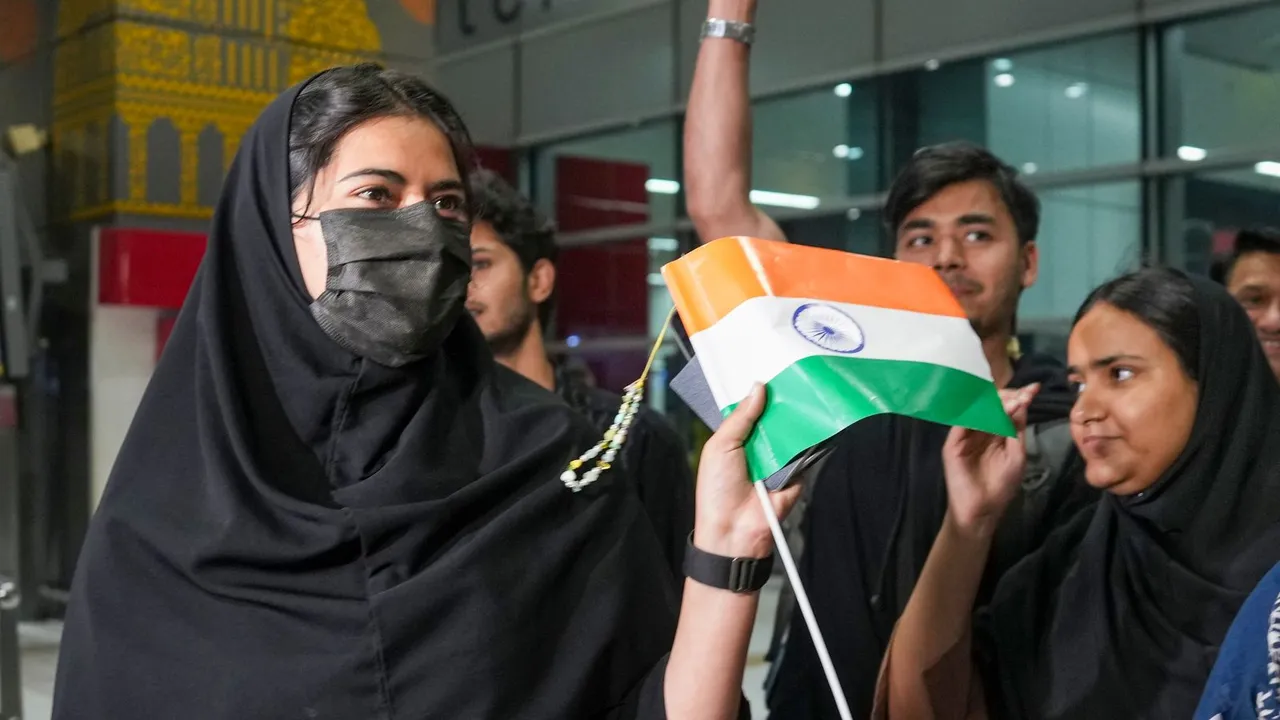
In a significant diplomatic and humanitarian effort, the first flight carrying over 100 Indian students evacuated from war-torn Iran landed safely in New Delhi in the early hours of Thursday. The students, caught in the escalating tensions between Israel and Iran, were shifted out of Tehran and taken across the border into Armenia before being flown back to India.

The rescue mission, carried out under the Indian government’s ‘Operation Sindhu,’ was coordinated by the Indian Embassy in Tehran in response to the deteriorating security situation in the region. On Tuesday, 110 students managed to cross into Armenia, marking a critical step in the evacuation process.

The Jammu and Kashmir Students’ Association, which had been closely monitoring the safety of students from the region, expressed gratitude to Prime Minister Narendra Modi and External Affairs Minister S. Jaishankar for the swift response. “We thank the government for this timely intervention and remain hopeful that all remaining students will be brought back safely,” the association said in a statement.

As the situation in the Middle East remains volatile, Indian authorities continue to assess the safety of nationals still in the region, with further evacuations expected in the coming days.

Uddhav’s Shiv Sena in Free Fall as BJP-Shinde Combine Tightens Grip — Devendra Fadnavis Emerges as the Master Strategist

shiv sena, shinde, thackeray, bjp, uddhav thackeray, shiv sena (ubt)
Uddhav's Shiv Sena in Free Fall as BJP-Shinde Combine Tightens Grip — Devendra Fadnavis Emerges as the Master Strategist 6
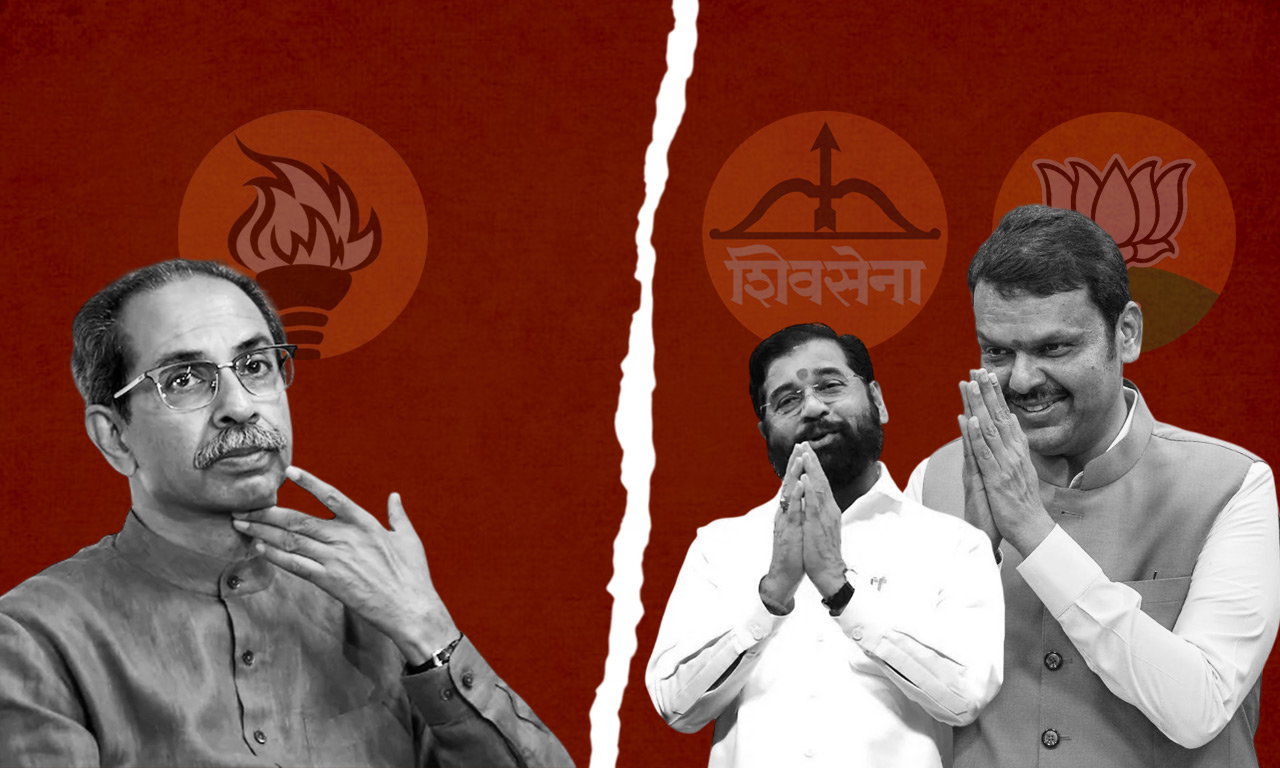
The political battleground in Maharashtra has intensified, and the civic polls — particularly those in Mumbai, Thane, Nashik, and Pune — have now become the make-or-break moment for every major political player. For the Bharatiya Janata Party (BJP), these elections are not just about local governance but a strategic mission to assert complete dominance across urban Maharashtra. For the Shiv Sena (UBT), led by Uddhav Thackeray, these polls represent a desperate attempt at survival — a last-ditch effort to prove that the party still has a pulse after being stripped of its name, symbol, and soul.

In this high-stakes scenario, the recent defection of Sudhakar Badgujar — once a loyal lieutenant of Sanjay Raut — has added to Uddhav’s woes. His dramatic entry into the BJP, backed by a caravan of over 100 buses and thousands of supporters, was more than a political switch — it was a public spectacle that sent shockwaves through the Shiv Sena (UBT). Even internal opposition from BJP leaders like Seema Hiray couldn’t stop his induction, proving that when the mission is big, party discipline gives way to grand strategy. And behind that grand strategy is one name — Devendra Fadnavis, Maharashtra’s undisputed master planner.

Despite initial resistance from local units, the efforts of BJP heavyweights like Girish Mahajan and Ravindra Chavan ensured Badgujar’s entry. And he wasn’t alone. Joining him were former Social Welfare Minister Baban Gholap, ex-MNS corporator Dilip Datir, NCP’s Manohar Borade, Balasaheb Sanap, and social activist Kailash Chumble. This is not random induction — it’s a carefully crafted plan to hollow out the opposition, region by region, leader by leader.

Uddhav Thackeray’s Shiv Sena is now bleeding from within. And this isn’t just political — it’s ideological. The very leaders who once upheld the legacy of Balasaheb Thackeray are now abandoning the son, accusing him of compromising the party’s core principles for a short-lived alliance with Congress and NCP. What was once a stronghold of Hindutva is now a sinking ship, and its passengers are jumping off — not just to save themselves but to sail ahead with the wind of power blowing in BJP’s direction.

Badgujar, who began his political journey as an independent corporator in 2007 and later rose through the ranks of the Nashik Municipal Corporation, held crucial posts as leader of the house and opposition leader. Though he faced defeats in the 2019 and 2024 Assembly polls, his grassroots strength remains intact. His departure, coupled with hints of criminal charges, adds both controversy and significance to his BJP induction. Notably, he was considered a trusted confidant of Shiv Sena MP Sanjay Raut — making his switch even more symbolic of the disintegration within Uddhav’s faction.

And this is just the beginning. Buzz within political circles suggests that more Shiv Sena (UBT) leaders are quietly knocking on the doors of Eknath Shinde and Devendra Fadnavis, hoping for a safe landing before the civic polls. The Mahayuti alliance’s resounding comeback in the state — dominating 236 of 288 Assembly segments — has shifted the power dynamics. The Maha Vikas Aghadi (MVA) is gasping for relevance, while the BJP-Shinde juggernaut is rolling ahead with confidence.

The civic elections have always been vital — they decide the control of local administration, urban planning, infrastructure projects, and budget allocations, and hold the power to nurture the next generation of political leaders. But this time, the stakes are unprecedented. For the BJP, it’s an opportunity to translate its Assembly-level dominance into municipal machinery. For Shinde’s Sena, it’s a chance to reinforce its claim as the real Shiv Sena. And for Uddhav, it’s a matter of political survival.

MVA’s looming defeat is more than an electoral loss — it’s a dismantling of Uddhav’s leadership narrative. In just three years, he has lost power, party, and perception. The rebellion led by Shinde wasn’t just about positions — it was about restoring Balasaheb’s ideology, a pitch that has clearly resonated with voters. Today, Shinde’s camp calls this an “ideological victory,” and rightly so.

Meanwhile, Fadnavis continues to prove why he is the BJP’s most trusted strategist in Maharashtra. From ward-level booth structuring to stitching alliances, his foresight is unmatched. His plan is clear: break the opposition’s morale before the first ballot is cast. As Badgujar himself said after joining BJP, the party will focus on micro-level block booth management. He confidently stated that in Nashik West — where BJP earlier won 18 out of 44 seats compared to Shiv Sena’s 22 — the target is now 35 seats.

In Nashik East, the BJP already holds 29 out of 47 seats and 19 of 31 in Nashik Central. The margins are narrowing, and the BJP is determined to bridge the gap — not with slogans, but with structure, discipline, and defections.

Five key reasons explain Uddhav’s collapse:

  1. Ideological betrayal – Aligning with Congress and NCP was a rupture from Shiv Sena’s original Hindutva ethos.
  2. Leadership vacuum – Uddhav’s aloof style distanced him from grassroots workers and long-time loyalists.
  3. Loss of symbol and identity – Losing the bow-and-arrow and party name was a moral and operational blow.
  4. Internal unrest – Prominent leaders felt sidelined, prompting them to leave rather than stay and fade.
  5. Strategic inertia – While Fadnavis was building equations, Uddhav was caught in nostalgia.

The civic polls are no longer just urban elections — they’re a political referendum. A battle for narrative. A test of loyalty and ideology. And with each passing day, it becomes clearer: the BJP and Shinde Sena are not just contesting elections — they are scripting the endgame of Uddhav Thackeray’s political chapter.

High on Rage, Armed with Scissors: Mumbai Man Gets Life for Brutal Killing of Roommate

judgement, bombay high court, bombay hc, court, sentence
High on Rage, Armed with Scissors: Mumbai Man Gets Life for Brutal Killing of Roommate 8

In a chilling case of violence triggered by a personal dispute, the Dindoshi Sessions Court in Mumbai sentenced 31-year-old Mohammad Firoz Khan to life imprisonment for murdering his roommate with a pair of scissors in April 2019. The court found Khan guilty of fatally stabbing Tanveer Mohammad Shaikh after an argument inside their shared living space at a tyre repair workshop.

According to the prosecution, Khan, who often stayed at the Teghi Tyre Services workshop owned by Gulam Rasul Ansari, was known for consuming drugs and frequently returning in an intoxicated state. On April 10, 2019, an altercation broke out when Khan returned late and Shaikh objected to his entry, prompting a police intervention that briefly resolved the matter.

However, the situation escalated the next morning around 6:30 am, when Khan, still enraged, returned to the workshop, picked up a pair of scissors, and viciously attacked Shaikh while he was asleep. The assault resulted in grave injuries to Shaikh’s trachea, heart, and lung, causing his death before he could receive medical attention.

The court stated that the evidence clearly established that Shaikh was unarmed and asleep at the time of the attack. “The injuries inflicted were to vital organs, indicating a clear intent to kill,” the court observed. “No provocation was offered by the deceased. The assault was deliberate and without justification.”

Calling it a cold-blooded act, the court held that the brutality and targeted nature of the attack warranted the maximum punishment under the law, leading to Khan’s life sentence.

Eknath Shinde Rallies Shiv Sena for Local Body Polls, Blasts Congress over ‘Operation Sindoor’ Silence

eknath shinde, shinde, shiv sena, cm, shiv sena cm
Eknath Shinde Rallies Shiv Sena for Local Body Polls, Blasts Congress over 'Operation Sindoor' Silence 10

Maharashtra Deputy Chief Minister Eknath Shinde on Tuesday asserted that his Shiv Sena faction is poised for a strong showing in the upcoming local body elections, citing a surge in grassroots support and the party’s focus on development. Highlighting mass joinings from Nashik, other parts of Maharashtra, and even neighbouring states, Shinde claimed, “People know Shiv Sena delivers on its promises. Our growing support from municipal staff, sarpanches, and leaders from other regions will help us dominate the Swaraj elections.”

Shinde dismissed allegations that the elections were announced because of the ruling alliance, stating the groundwork had been underway since 2022. His remarks come ahead of crucial local body polls, which are being held after a five-year delay triggered by OBC reservation disputes.

Chief Minister Devendra Fadnavis confirmed that the BJP, Shiv Sena, and allies will contest under the Mahayuti banner. “Our party’s state leadership will decide on local alliances. Where it’s not possible, we may have friendly fights,” he said on June 11.

On June 10, the Maharashtra government began drafting ward boundaries for 29 municipal corporations—including Pune, Nagpur, Thane, and Navi Mumbai—following a Supreme Court directive issued on May 6 instructing the State Election Commission to announce poll dates within four weeks.

Meanwhile, Shinde announced plans for a grand Shiv Sena anniversary celebration on June 19. “Operation Tiger is on daily. Funds will keep coming in. Our work will continue,” he said, reinforcing the momentum of his faction’s organizational efforts.

Addressing national issues, Shinde lauded the Modi government for launching ‘Operation Sindoor’ in retaliation to the Pahalgam terror attack. Describing it as an attack on Indian womanhood—symbolized by the wiping of ‘sindoor’—Shinde said the Modi-led response was what the nation demanded. “Congress merely reacted in the past and indulged in vote-bank politics. This time, India acted. Delegations were sent to 34 countries, and the world is backing our stand,” he stated.

As Maharashtra heads into high-stakes civic elections, Shinde is positioning his party not only as a force of local governance but also as a nationalistic voice in tune with the Modi government’s assertive posture on terrorism.

Maharashtra U-Turns on Hindi Rule: Third Language Now Optional for Primary Students

maharashtra, rural schools, hindi, optional language, language, schools
Maharashtra U-Turns on Hindi Rule: Third Language Now Optional for Primary Students 12

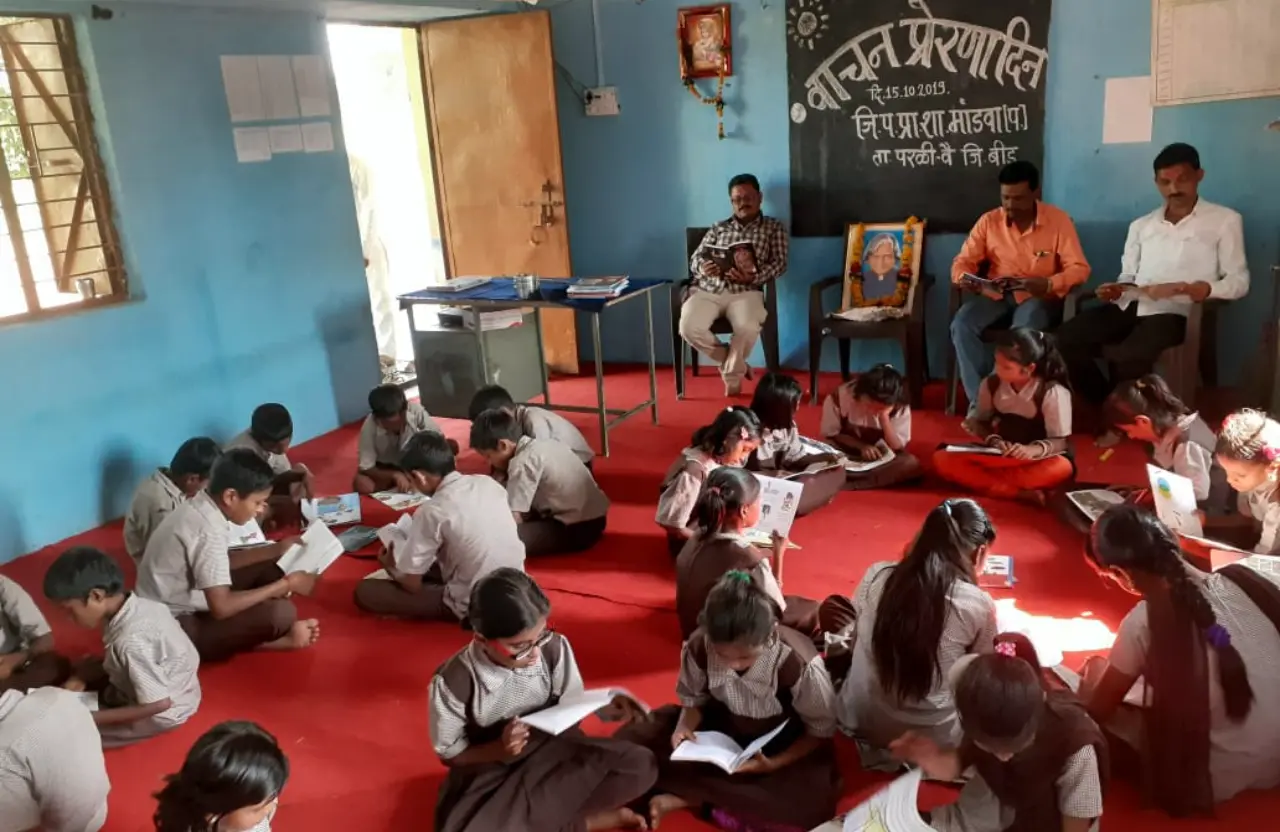
In response to growing public backlash, the Maharashtra government has rolled back its decision to make Hindi a compulsory third language in primary schools. A fresh government resolution (GR) issued on June 17 now allows students in Classes 1 to 5, studying in Marathi and English-medium schools, to opt for a different Indian language instead of Hindi, subject to certain conditions.

The updated guidelines from the state school education department clarify that if 20 or more students in a class wish to study an alternative Indian language, the school will appoint a dedicated teacher for it. If fewer than 20 students opt for a different language, the subject will be taught online.

The corrigendum to the earlier resolution cites the State Curriculum Framework – School Education 2024, stating that while Hindi will generally be the third language in Marathi and English-medium schools, students who prefer another Indian language will be allowed to pursue it. This revised stance is intended to provide linguistic choice and flexibility without disrupting the curriculum’s foundational structure.

Additionally, the new GR outlines the language policy for schools with mediums other than Marathi and English. In these institutions, students will study three languages: their medium of instruction, Marathi—which remains mandatory—and English.

The move is being viewed as a significant shift in language education policy, offering students and parents more control over linguistic preferences in the foundational years of schooling.

High Court Cracks Down: Bike Taxis Banned in Karnataka; Ola, Uber, Rapido Forced to Halt Services

bike taxis, karnataka, rapido, ola, uber, high court, karnataka high court
High Court Cracks Down: Bike Taxis Banned in Karnataka; Ola, Uber, Rapido Forced to Halt Services 14

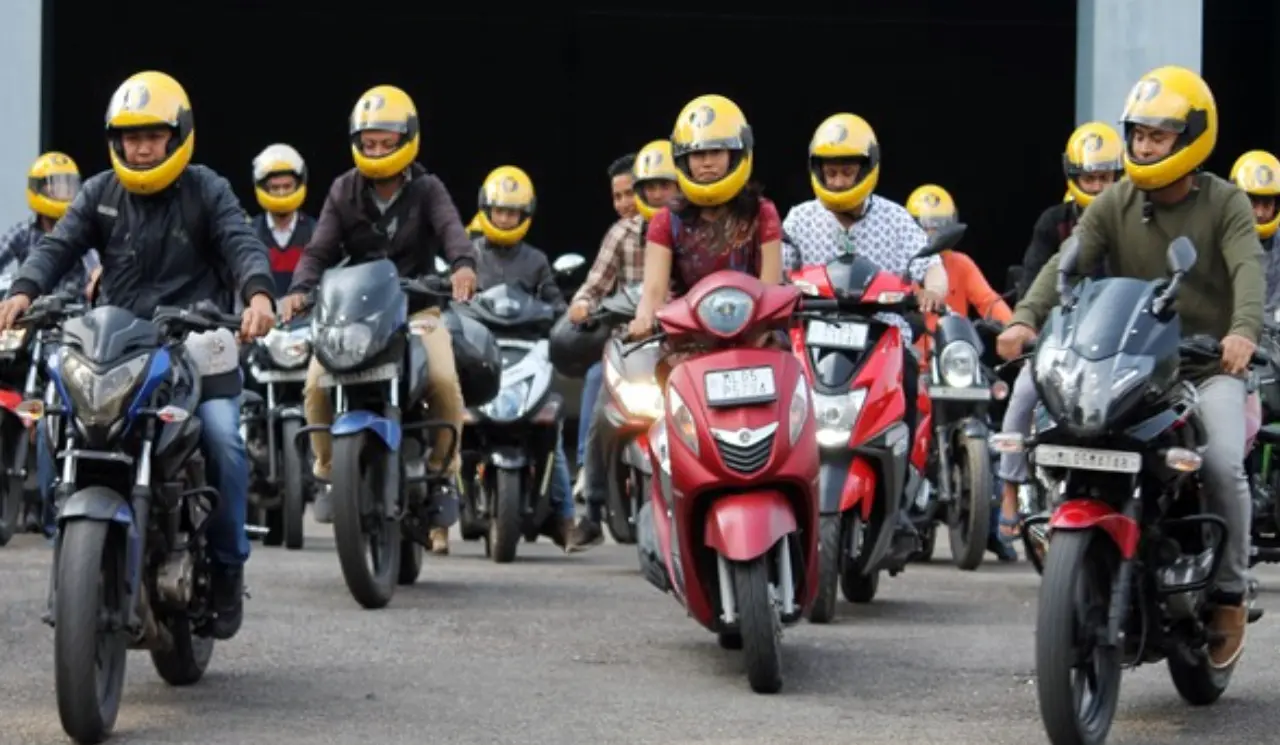
Bike taxi services across Karnataka came to a grinding halt on Monday after the High Court upheld its directive to suspend operations by app-based aggregators. In compliance with the ruling, ride-hailing platforms like Ola, Uber, and Rapido removed bike taxi options from their apps.

Karnataka Transport Minister Ramalinga Reddy confirmed the move, stating the companies are legally bound to obey the court’s orders. “Three months ago, the court ruled bike taxis are illegal. It gave six weeks, then extended another six. With 12 weeks passed, the aggregators must comply,” Reddy said.

The latest decision came after a division bench of the Karnataka High Court refused to stay an earlier single-judge order issued on April 2, which had directed bike taxi services to shut down within six weeks unless specific rules were notified under the Motor Vehicles Act.

The bench, led by Acting Chief Justice V Kameshwar Rao and Justice Sreenivas Harish Kumar, rejected the appeals filed by Uber, Ola, and Rapido, noting that the state government had chosen not to draft any new regulatory framework—making a stay unjustifiable. The court has issued fresh notices and scheduled the next hearing for June 24.

Tanveer Pasha, president of the Ola Uber Drivers and Owners’ Association, demanded strict enforcement, calling on the state to seize bikes operating illegally and prosecute violators.

In response, Rapido released a statement expressing concern for its rider-partners. “We acknowledge the court’s decision. This is a difficult time for our captains who rely on this work. We remain committed to working with the government to develop a compliant and sustainable policy framework.”

Uber also confirmed it suspended bike taxi operations from June 16 and expressed hope for future engagement with the government to create progressive mobility policies that balance accessibility and safety.

The suspension has affected thousands of drivers and commuters who relied on affordable bike taxi services, raising questions about the future of gig economy transport in the state.

Haryana Model Simmi Found Dead in Canal; Cops Suspect Murder by Estranged Husband

model simmi, simmi, haryana. murder
Haryana Model Simmi Found Dead in Canal; Cops Suspect Murder by Estranged Husband 16

In a chilling turn of events, the body of a Haryana-based model, Sheetal alias Simmi, was found in a canal in Sonipat with deep injury marks on her throat, leading police to suspect murder. The 26-year-old model, who lived with her sister in Panipat and frequently featured in music videos, had gone missing after leaving for a shoot on June 14.

Her family filed a missing persons complaint when she didn’t return, prompting police to launch a search. Authorities were alerted on Sunday evening when a woman’s body was discovered in the Kharkhoda area of Sonipat. Police soon confirmed it was Sheetal.

Preliminary investigations suggest she may have been murdered by a male acquaintance from Panipat with whom she had a personal history. According to Deputy Superintendent of Police Satish Kumar, a car belonging to a youth from Israna was also found submerged in the same canal, strengthening the suspicion.

“There were visible injuries on her body. It appears she was in the vehicle with a man who may have attacked her. We are probing all angles, including statements made by her family,” Kumar said.

Anil Kumar, a Panipat police officer, added that the man in question had been close to Sheetal for over four years and was reportedly married to her. The couple had been living separately due to domestic disputes. Authorities are also verifying allegations that she was assaulted on the day she vanished, after attending an event in Ahar village.

While police have detained the man for questioning, they note he hasn’t given any coherent explanation so far. Officials are awaiting the post-mortem report from Kharkhoda to confirm the cause of death and move forward with the investigation.

‘Evacuate Tehran Immediately!’: Trump Issues Explosive Warning as Iran-Israel Conflict Boils Over

donald trump, trump, iran-israel conflict, iran, israel, tehran
'Evacuate Tehran Immediately!': Trump Issues Explosive Warning as Iran-Israel Conflict Boils Over 18

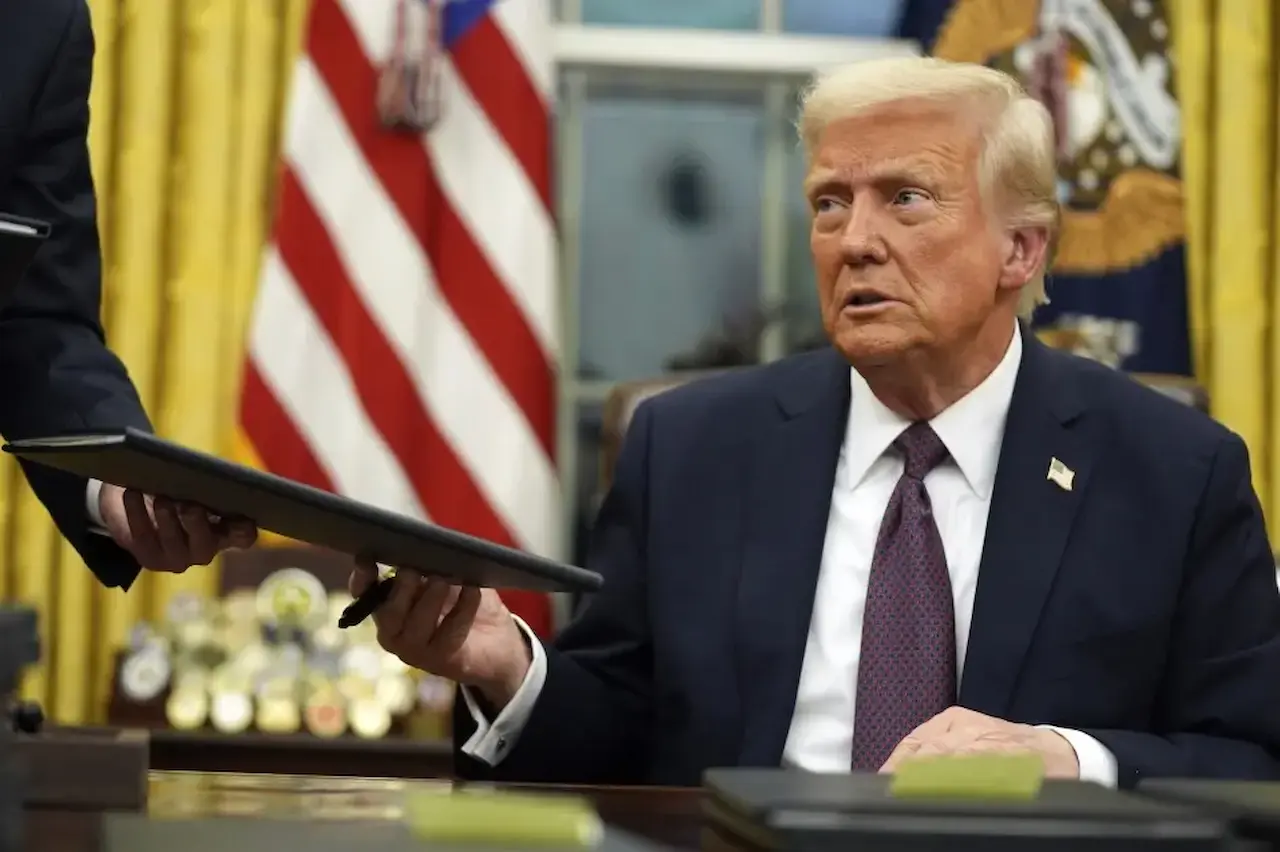
In a dramatic escalation of Middle East tensions, former U.S. President Donald Trump on Monday (local time) called for the immediate evacuation of Tehran, slamming Iran for refusing to sign a nuclear deal and warning of devastating consequences. His remarks came as Israel intensified airstrikes in the Iranian capital.

Using his Truth Social platform, Trump declared, “Everyone should immediately evacuate Tehran!” He added, “Iran should have signed the ‘deal’ I told them to sign. What a shame, and waste of human life. Simply stated, IRAN CAN NOT HAVE A NUCLEAR WEAPON. I said it over and over again!”

Moments after the post, the White House announced Trump would leave the G7 summit in Canada early to “attend to many important matters.” In another post, he reinforced his longstanding opposition to Iran’s nuclear program, tying it to his “America First” policy: “AMERICA FIRST means many GREAT things, including the fact that, IRAN CAN NOT HAVE A NUCLEAR WEAPON. MAKE AMERICA GREAT AGAIN!!!”

Israeli strikes over Tehran, which began Thursday night, reportedly intensified following Trump’s remarks. Iranian state media confirmed explosions and heavy air defense activity, though it’s unclear if there’s a direct connection to Trump’s social media warnings.

According to Israeli sources, the military now has complete air dominance over Tehran and is expanding its targets beyond military installations. Civilian evacuation orders were issued in multiple densely populated areas, including neighborhoods housing Iranian state TV offices.

The scale of evacuations remains uncertain, as Tehran’s population of over 10 million faces a near-impossible task of rapid relocation.

Just hours before his online posts, Trump had said at the G7 summit that the U.S. was in phone contact with Iran and suggested that talks might be more fruitful in person. “I think a deal will be signed. I think Iran is foolish not to sign one,” he stated. Later, he hinted a diplomatic breakthrough might occur shortly after his summit departure: “I think Iran is basically at the negotiating table and wants to make a deal.”

Meanwhile, Iran has appealed to the U.S. for help in ending the aerial bombardments, which have escalated in both intensity and scope over the past several days.

Iran-Israel: A Perpetual Collision Course in a Multipolar World Order

israel, iran, conflict, strikes, drones, netanyahu, benjamin,
Iran-Israel: A Perpetual Collision Course in a Multipolar World Order 20

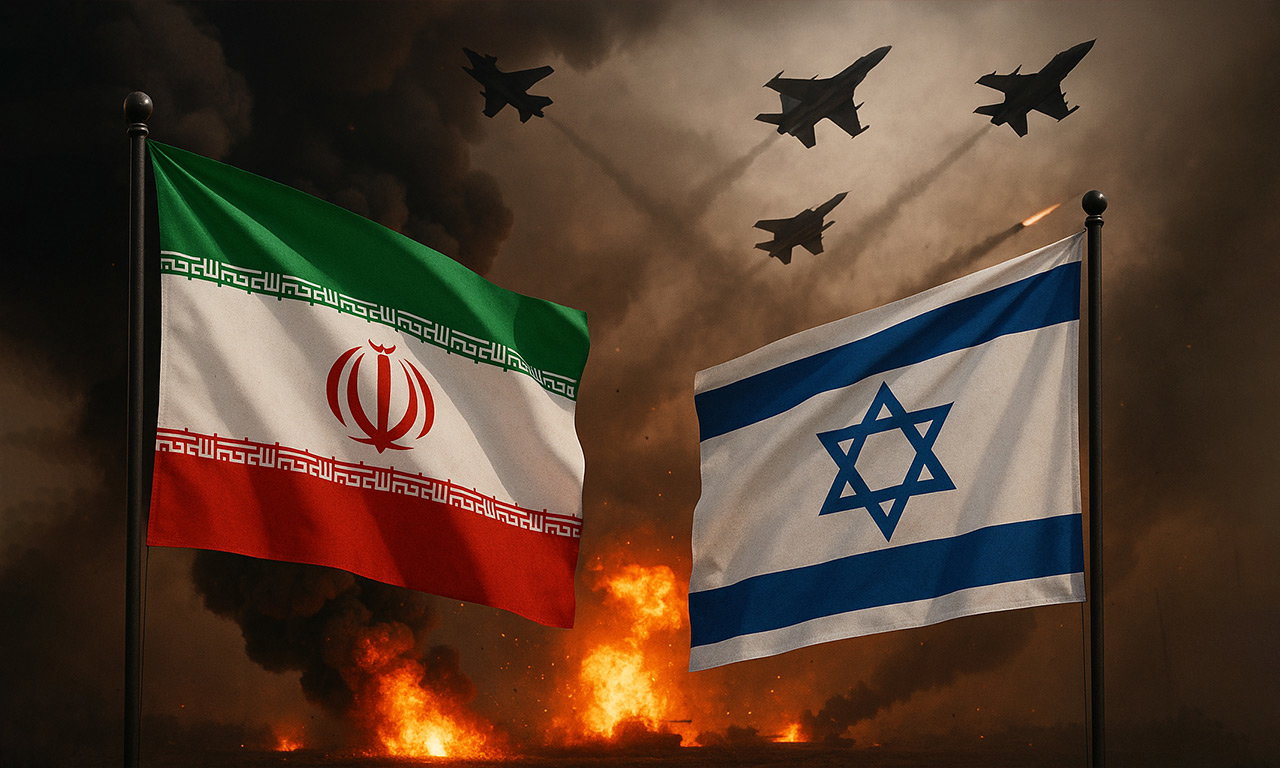
The volatile confrontation between Iran and Israel has now entered a dangerously escalatory phase, with the two regional powers trading their most intense military blows in decades. Israel’s largest-ever aerial offensive—reportedly designed to dismantle Iran’s nuclear capabilities—has triggered a predictable, yet deeply unsettling, retaliatory spiral. In the early hours, Tel Aviv and Jerusalem were rocked by air-raid sirens, sending millions scrambling for shelter as Iranian missiles cut through the skies. Prime Minister Benjamin Netanyahu’s warning that “more is on the way” is not mere rhetoric—it’s an affirmation of a geopolitical reality where restraint is no longer currency.

Iran’s Supreme Leader Ayatollah Khamenei, as expected, accused Israel of provoking war. But to present this as a recent flare-up is to insult history. Since the 1979 Islamic Revolution, Iran has positioned itself not merely as Israel’s adversary, but as the vanguard of an anti-Zionist resistance—albeit one largely performative and self-serving in nature. Theocratic Iran, under its clerical elite, has weaponised the Palestinian cause not out of solidarity, but utility. The Ayatollahs care little for the Palestinian people; they care for regional legitimacy and ideological leverage.

The true nature of this enmity is strategic, not moral. Iran has codified the destruction of Israel into its foreign policy doctrine—not merely as a slogan, but through material commitments: arming Hezbollah, bankrolling Hamas and PIJ, building forward-operating bases in Syria, and attempting to encircle Israel with a ring of fire. These are not rogue operations; they are state-sponsored, sanctioned acts of asymmetric warfare executed via proxies, insulated from direct accountability. No other country—none—has institutionalized antisemitism into statecraft like the Islamic Republic.

Meanwhile, Israel, a Western-facing state born out of the ashes of European Jewry, now finds itself in perpetual siege mode. Its transformation from an Eastern Semitic civilization into a Western military-technological powerhouse has placed it on the opposite end of Iran’s historical spectrum. Where Persia once embraced Jews as allies against the Hellenistic and Roman empires, it now sees Zionism as a Western colonial implant and, therefore, as the enemy.

The antagonism, however, runs deeper than mere ideology—it is about regional supremacy. The modern Iranian state, emboldened by its Revolutionary Guard Corps and its expanding arc of influence—from Tehran to Beirut via Baghdad and Damascus—has arguably become more powerful today than at any point in the last three centuries. This resurgence, ironically, is a byproduct of U.S. miscalculations. The fall of Saddam Hussein handed Iraq to Iran on a silver platter, turning it into a proxy and buffer zone. In Iraq, Iran found not just geopolitical depth but also religious-cultural hegemony. Its control over militias, political parties, and religious institutions has made it the shadow government of Baghdad.

This dominance allows Iran to project power westward—to Syria, to Lebanon, and to the Mediterranean. It’s not Israel, but strategic access to the Mediterranean and the Strait of Hormuz, that remains Tehran’s ultimate objective. Israel is simply a convenient boogeyman to justify that expansion and galvanize pan-Islamic legitimacy.

The U.S., for its part, remains shackled to the region’s hydrocarbon calculus. Washington’s strategic doctrine hinges on controlling three nodes of global power: Europe, East Asia, and the Persian Gulf. The Gulf, flush with energy resources, cannot be surrendered to a China-aligned Tehran. Hence, American foreign policy oscillates between containment and coercion when it comes to Iran. Sanctions have failed. Cyber-sabotage campaigns like Stuxnet, while tactically brilliant, are strategically limited. The JCPOA, while heralded as diplomacy’s high-water mark, was ultimately a Band-Aid on a bullet wound.

But a military solution is fraught with peril. Iran is not Iraq. It has a battle-hardened, Russia- and China-aligned military-industrial complex. Any large-scale confrontation risks dragging Washington into a catastrophic multi-front war, potentially handing Beijing the Gulf through the backdoor. The price of bombing Iran is not measured in missiles but in geopolitics—specifically, in ceding influence over Eurasia to a rising China.

Thus, Israel’s aggressive posture isn’t just about neutralizing a nuclear threat. It is about pre-empting a regional shift where Iran, backed by China and Russia, redefines the balance of power in the Middle East. If Iran acquires a nuclear weapon, it’s not just Israel’s security that is compromised—it’s America’s strategic footprint that is rendered obsolete.

The Palestinian question, meanwhile, is tragically peripheral. Palestinians are pawns in this regional chessboard. For Iran, they are a tool to rally Arab street sentiments and discredit Sunni monarchies that have normalized relations with Israel. For Israel, they are a demographic and security dilemma, increasingly irrelevant in its broader strategic calculus.

Since the 1960s, Palestinians have aligned themselves not based on ideology, but on opposition to American imperialism. Their support for Iran post-1979 was less about Shia revolutionary zeal and more about shared antipathy toward U.S.-backed regimes. But Iran is no liberator. Its record in Syria, where it aided Assad’s mass slaughter, or in Iraq, where it props up sectarian militias, makes a mockery of its claims to moral leadership.

What we are witnessing today is not just another regional squabble—it is the crumbling of a post-Cold War order, the emergence of a new axis of resistance and revanchism, and the recalibration of power in a multipolar world. Iran and Israel are not just enemies. They are symbols of two clashing worldviews—one theocratic, messianic and revisionist; the other nationalist, democratic (albeit imperfect), and Western-aligned.

In this zero-sum game, peace is not an outcome—it is a pause. The battleground may be Syria, Lebanon, Iraq or Gaza, but the war is existential. For Israel, survival. For Iran, supremacy. For the rest of the world—especially the U.S.—the challenge is preventing this regional fire from becoming a global conflagration.

The clock is ticking. Diplomacy is gasping. And history, it seems, is repeating—only this time, with nuclear stakes.