Haryana Model Simmi Found Dead in Canal; Cops Suspect Murder by Estranged Husband 2
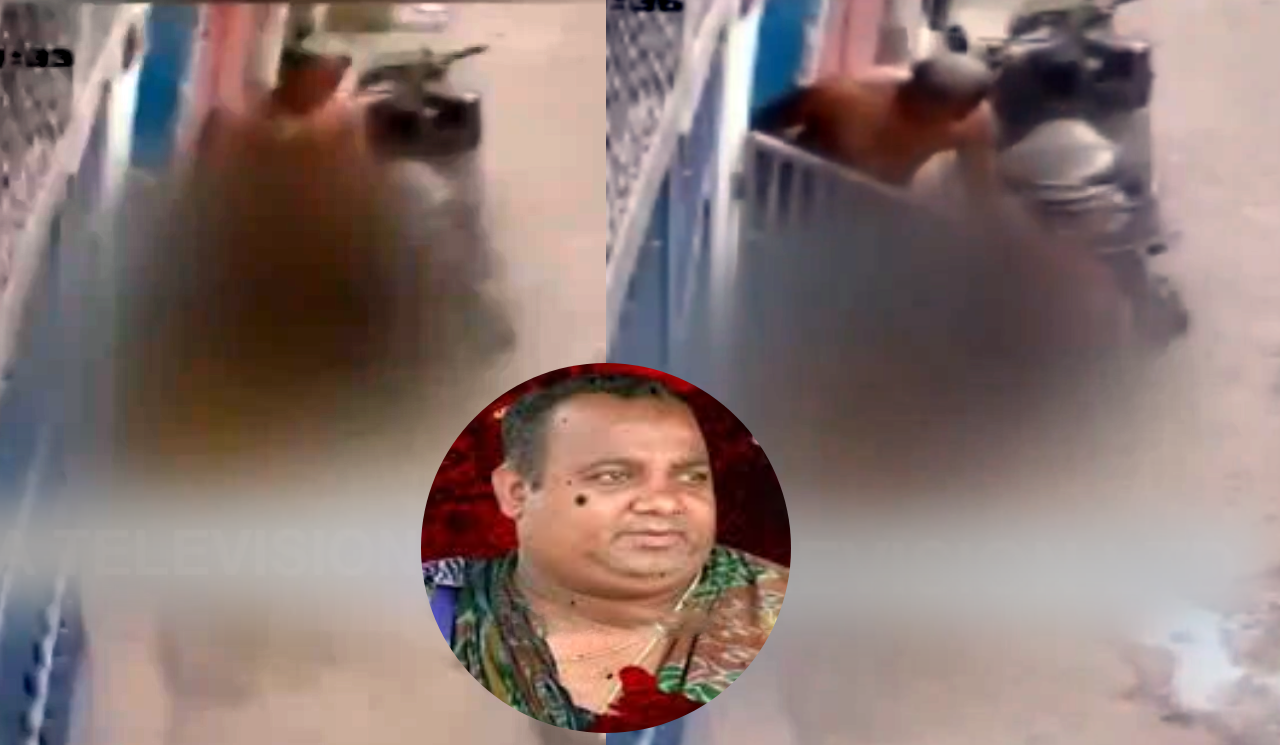
In a chilling turn of events, the body of a Haryana-based model, Sheetal alias Simmi, was found in a canal in Sonipat with deep injury marks on her throat, leading police to suspect murder. The 26-year-old model, who lived with her sister in Panipat and frequently featured in music videos, had gone missing after leaving for a shoot on June 14.
Her family filed a missing persons complaint when she didn’t return, prompting police to launch a search. Authorities were alerted on Sunday evening when a woman’s body was discovered in the Kharkhoda area of Sonipat. Police soon confirmed it was Sheetal.
Preliminary investigations suggest she may have been murdered by a male acquaintance from Panipat with whom she had a personal history. According to Deputy Superintendent of Police Satish Kumar, a car belonging to a youth from Israna was also found submerged in the same canal, strengthening the suspicion.
“There were visible injuries on her body. It appears she was in the vehicle with a man who may have attacked her. We are probing all angles, including statements made by her family,” Kumar said.
Anil Kumar, a Panipat police officer, added that the man in question had been close to Sheetal for over four years and was reportedly married to her. The couple had been living separately due to domestic disputes. Authorities are also verifying allegations that she was assaulted on the day she vanished, after attending an event in Ahar village.
While police have detained the man for questioning, they note he hasn’t given any coherent explanation so far. Officials are awaiting the post-mortem report from Kharkhoda to confirm the cause of death and move forward with the investigation.
'Evacuate Tehran Immediately!': Trump Issues Explosive Warning as Iran-Israel Conflict Boils Over 4
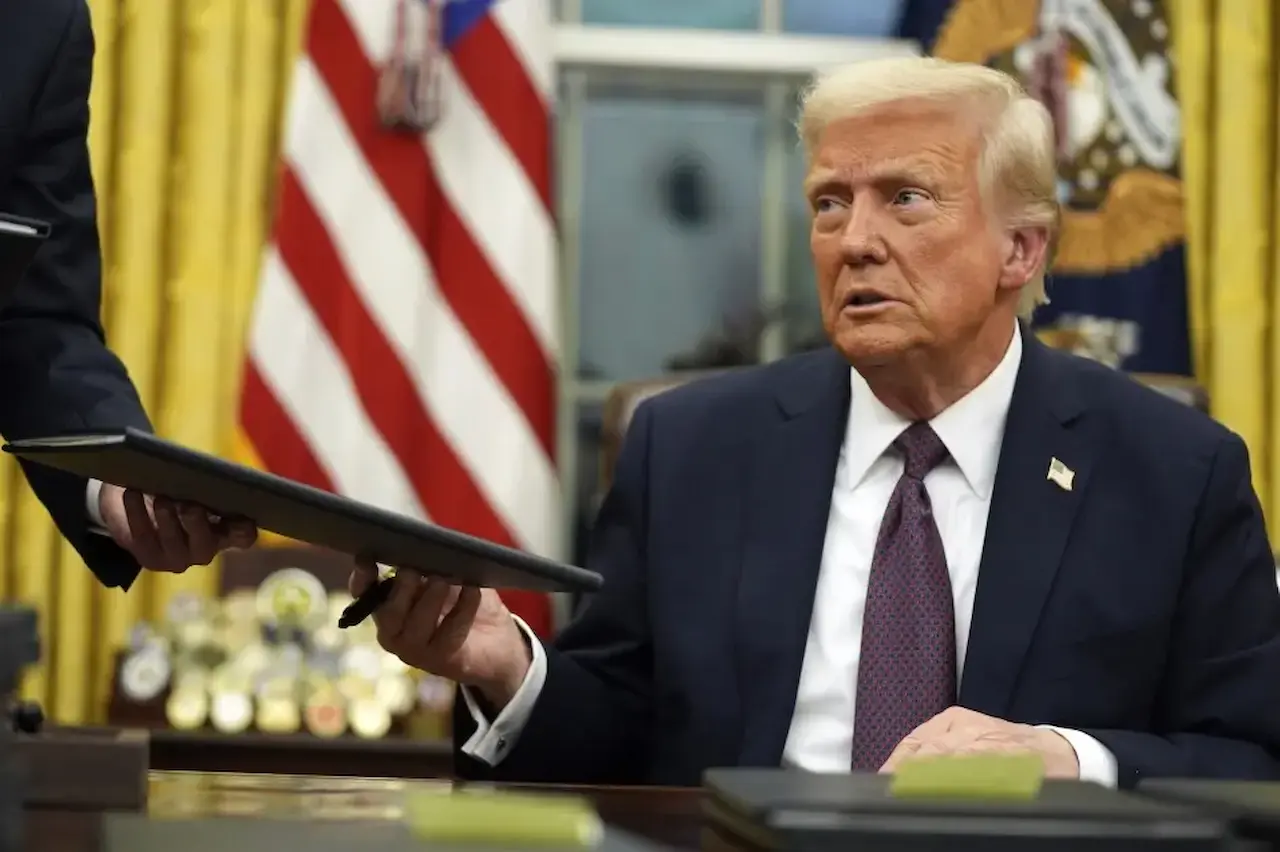
In a dramatic escalation of Middle East tensions, former U.S. President Donald Trump on Monday (local time) called for the immediate evacuation of Tehran, slamming Iran for refusing to sign a nuclear deal and warning of devastating consequences. His remarks came as Israel intensified airstrikes in the Iranian capital.
Using his Truth Social platform, Trump declared, “Everyone should immediately evacuate Tehran!” He added, “Iran should have signed the ‘deal’ I told them to sign. What a shame, and waste of human life. Simply stated, IRAN CAN NOT HAVE A NUCLEAR WEAPON. I said it over and over again!”
Moments after the post, the White House announced Trump would leave the G7 summit in Canada early to “attend to many important matters.” In another post, he reinforced his longstanding opposition to Iran’s nuclear program, tying it to his “America First” policy: “AMERICA FIRST means many GREAT things, including the fact that, IRAN CAN NOT HAVE A NUCLEAR WEAPON. MAKE AMERICA GREAT AGAIN!!!”
Israeli strikes over Tehran, which began Thursday night, reportedly intensified following Trump’s remarks. Iranian state media confirmed explosions and heavy air defense activity, though it’s unclear if there’s a direct connection to Trump’s social media warnings.
According to Israeli sources, the military now has complete air dominance over Tehran and is expanding its targets beyond military installations. Civilian evacuation orders were issued in multiple densely populated areas, including neighborhoods housing Iranian state TV offices.
The scale of evacuations remains uncertain, as Tehran’s population of over 10 million faces a near-impossible task of rapid relocation.
Just hours before his online posts, Trump had said at the G7 summit that the U.S. was in phone contact with Iran and suggested that talks might be more fruitful in person. “I think a deal will be signed. I think Iran is foolish not to sign one,” he stated. Later, he hinted a diplomatic breakthrough might occur shortly after his summit departure: “I think Iran is basically at the negotiating table and wants to make a deal.”
Meanwhile, Iran has appealed to the U.S. for help in ending the aerial bombardments, which have escalated in both intensity and scope over the past several days.
Iran-Israel: A Perpetual Collision Course in a Multipolar World Order 6
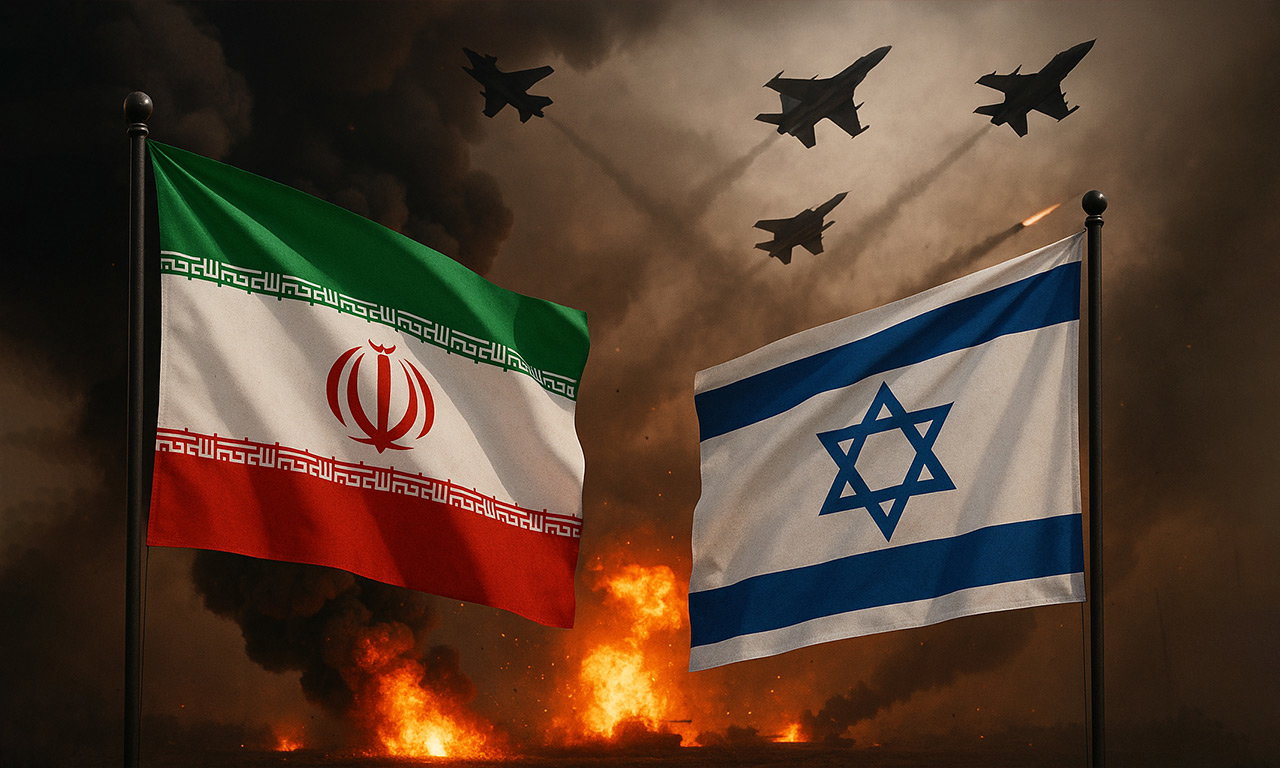
The volatile confrontation between Iran and Israel has now entered a dangerously escalatory phase, with the two regional powers trading their most intense military blows in decades. Israel’s largest-ever aerial offensive—reportedly designed to dismantle Iran’s nuclear capabilities—has triggered a predictable, yet deeply unsettling, retaliatory spiral. In the early hours, Tel Aviv and Jerusalem were rocked by air-raid sirens, sending millions scrambling for shelter as Iranian missiles cut through the skies. Prime Minister Benjamin Netanyahu’s warning that “more is on the way” is not mere rhetoric—it’s an affirmation of a geopolitical reality where restraint is no longer currency.
Iran’s Supreme Leader Ayatollah Khamenei, as expected, accused Israel of provoking war. But to present this as a recent flare-up is to insult history. Since the 1979 Islamic Revolution, Iran has positioned itself not merely as Israel’s adversary, but as the vanguard of an anti-Zionist resistance—albeit one largely performative and self-serving in nature. Theocratic Iran, under its clerical elite, has weaponised the Palestinian cause not out of solidarity, but utility. The Ayatollahs care little for the Palestinian people; they care for regional legitimacy and ideological leverage.
The true nature of this enmity is strategic, not moral. Iran has codified the destruction of Israel into its foreign policy doctrine—not merely as a slogan, but through material commitments: arming Hezbollah, bankrolling Hamas and PIJ, building forward-operating bases in Syria, and attempting to encircle Israel with a ring of fire. These are not rogue operations; they are state-sponsored, sanctioned acts of asymmetric warfare executed via proxies, insulated from direct accountability. No other country—none—has institutionalized antisemitism into statecraft like the Islamic Republic.
Meanwhile, Israel, a Western-facing state born out of the ashes of European Jewry, now finds itself in perpetual siege mode. Its transformation from an Eastern Semitic civilization into a Western military-technological powerhouse has placed it on the opposite end of Iran’s historical spectrum. Where Persia once embraced Jews as allies against the Hellenistic and Roman empires, it now sees Zionism as a Western colonial implant and, therefore, as the enemy.
The antagonism, however, runs deeper than mere ideology—it is about regional supremacy. The modern Iranian state, emboldened by its Revolutionary Guard Corps and its expanding arc of influence—from Tehran to Beirut via Baghdad and Damascus—has arguably become more powerful today than at any point in the last three centuries. This resurgence, ironically, is a byproduct of U.S. miscalculations. The fall of Saddam Hussein handed Iraq to Iran on a silver platter, turning it into a proxy and buffer zone. In Iraq, Iran found not just geopolitical depth but also religious-cultural hegemony. Its control over militias, political parties, and religious institutions has made it the shadow government of Baghdad.
This dominance allows Iran to project power westward—to Syria, to Lebanon, and to the Mediterranean. It’s not Israel, but strategic access to the Mediterranean and the Strait of Hormuz, that remains Tehran’s ultimate objective. Israel is simply a convenient boogeyman to justify that expansion and galvanize pan-Islamic legitimacy.
The U.S., for its part, remains shackled to the region’s hydrocarbon calculus. Washington’s strategic doctrine hinges on controlling three nodes of global power: Europe, East Asia, and the Persian Gulf. The Gulf, flush with energy resources, cannot be surrendered to a China-aligned Tehran. Hence, American foreign policy oscillates between containment and coercion when it comes to Iran. Sanctions have failed. Cyber-sabotage campaigns like Stuxnet, while tactically brilliant, are strategically limited. The JCPOA, while heralded as diplomacy’s high-water mark, was ultimately a Band-Aid on a bullet wound.
But a military solution is fraught with peril. Iran is not Iraq. It has a battle-hardened, Russia- and China-aligned military-industrial complex. Any large-scale confrontation risks dragging Washington into a catastrophic multi-front war, potentially handing Beijing the Gulf through the backdoor. The price of bombing Iran is not measured in missiles but in geopolitics—specifically, in ceding influence over Eurasia to a rising China.
Thus, Israel’s aggressive posture isn’t just about neutralizing a nuclear threat. It is about pre-empting a regional shift where Iran, backed by China and Russia, redefines the balance of power in the Middle East. If Iran acquires a nuclear weapon, it’s not just Israel’s security that is compromised—it’s America’s strategic footprint that is rendered obsolete.
The Palestinian question, meanwhile, is tragically peripheral. Palestinians are pawns in this regional chessboard. For Iran, they are a tool to rally Arab street sentiments and discredit Sunni monarchies that have normalized relations with Israel. For Israel, they are a demographic and security dilemma, increasingly irrelevant in its broader strategic calculus.
Since the 1960s, Palestinians have aligned themselves not based on ideology, but on opposition to American imperialism. Their support for Iran post-1979 was less about Shia revolutionary zeal and more about shared antipathy toward U.S.-backed regimes. But Iran is no liberator. Its record in Syria, where it aided Assad’s mass slaughter, or in Iraq, where it props up sectarian militias, makes a mockery of its claims to moral leadership.
What we are witnessing today is not just another regional squabble—it is the crumbling of a post-Cold War order, the emergence of a new axis of resistance and revanchism, and the recalibration of power in a multipolar world. Iran and Israel are not just enemies. They are symbols of two clashing worldviews—one theocratic, messianic and revisionist; the other nationalist, democratic (albeit imperfect), and Western-aligned.
In this zero-sum game, peace is not an outcome—it is a pause. The battleground may be Syria, Lebanon, Iraq or Gaza, but the war is existential. For Israel, survival. For Iran, supremacy. For the rest of the world—especially the U.S.—the challenge is preventing this regional fire from becoming a global conflagration.
The clock is ticking. Diplomacy is gasping. And history, it seems, is repeating—only this time, with nuclear stakes.
Matheran Horror: Three Navi Mumbai Teens Drown in Charlotte Lake, Pune Bridge Collapse Adds to Tragedy 8
A monsoon outing turned tragic on Sunday, June 15, when three college students from Navi Mumbai, including a 16-year-old minor, drowned in Charlotte Lake in Matheran. The victims were part of a ten-member group from Koparkhairane who had travelled to the hill station for a day trip.
After visiting the Pisharnath Temple, the group went to Charlotte Lake, where one of the students accidentally slipped into the water. In a desperate rescue attempt, two of his friends jumped in but all three were pulled under and drowned. The rest of the group immediately alerted nearby locals, who informed authorities.
The Matheran Police, along with the Sahyadri Emergency Rescue Team, launched an urgent search operation that continued late into the night. Despite all efforts, the bodies of the three youths—identified as Sumit Chavan (16), Aryan Khobragade (19), and Firoz Shaikh (19)—were recovered lifeless.
Tragedy compounded later that day in Pune district’s Talegaon area, where a dilapidated bridge over the Indrayani River collapsed under the pressure of an overcrowded crowd. Four people were killed and 51 injured in the incident. The deceased were identified as Chandrakant Salve, Rohit Mane, Vihaan Mane, and one unidentified individual.
According to a survivor, the chaos began when people and vehicles from both sides clogged the narrow bridge. “There was a huge crowd on the bridge. The road was jammed. The crowd gathered at one place, and the bridge collapsed. People standing in the middle of the bridge were swept away. We fell on the stones and got injured,” he told ANI.
Officials believe that the bridge’s structural failure was due to excessive load, and have initiated a probe into the condition of similar bridges in the region.
Helicopter Crashes Near Kedarnath Shrine, All Seven on Board Killed 10
A helicopter crashed near the Kedarnath shrine in Uttarakhand early Sunday, killing all seven on board.Rudraprayag District Disaster Management Officer Nandan Singh Rajwar told PTI that the accident took place above the forests of Gaurikund amid poor visibility due to bad weather.The dead included six pilgrims and the pilot.The helicopter took off from Kedarnath for Guptkashi around 5:30 am and crashed soon after.Sources said the chopper belonging to Aryan Aviation Pvt Ltd crashed between Gaurikund and Trijuginarayan in Kedarghati and caught fire.
Chief Minister Pushkar Singh Dhami said in a post on X that a helicopter has crashed and the State Disaster Response Force and other agencies are engaged in relief and rescue operations.
The incident comes days after an Air India flight to London crashed in Ahmedbad, killing 241 people on board and several others on the ground.Earlier, on May 8, a helicopter going to Gangotri Dham crashed in Uttarkashi district in which six people were killed.On June 7, a helicopter going to Kedarnath had to make an emergency landing on the road due to a technical fault soon after take-off in which the pilot was injured but the five devotees on board were rescued safely.
Delayed Democracy in Mumbai: BMC Elections Caught in a Political Crossfire 12
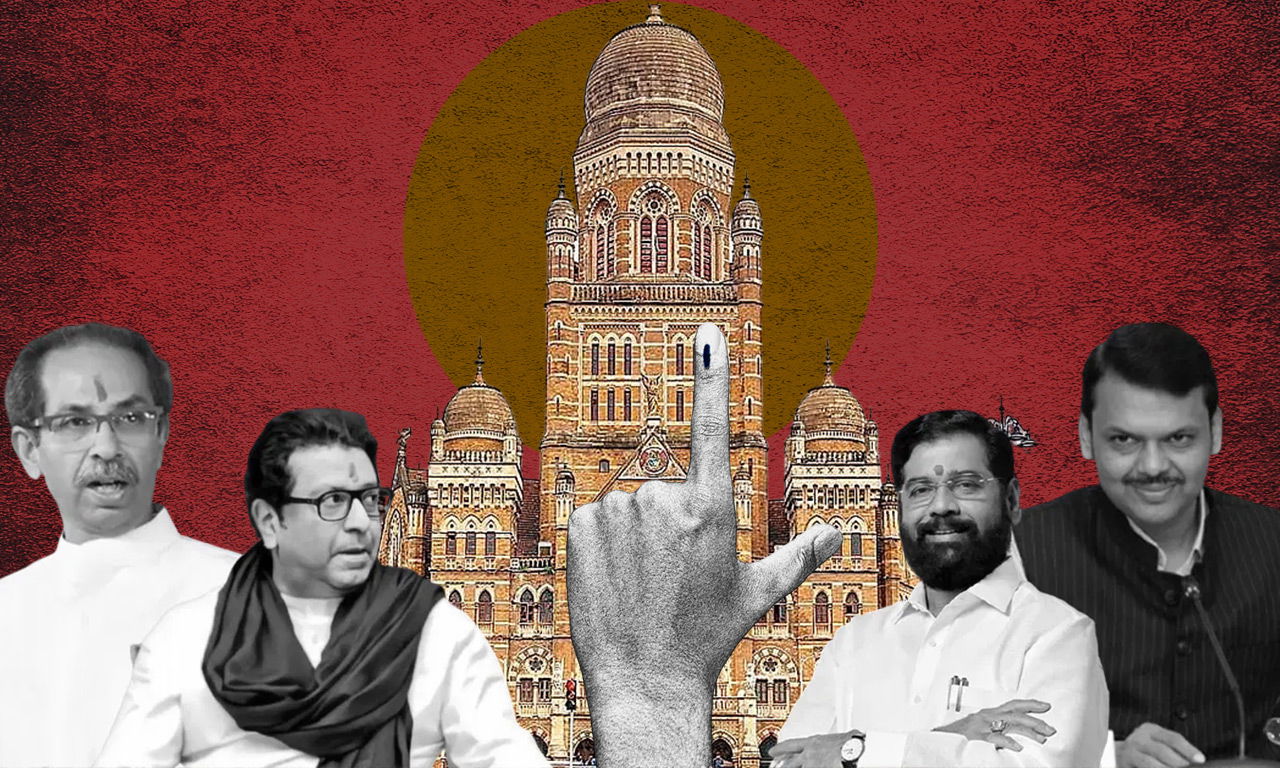
The long-stalled Brihanmumbai Municipal Corporation (BMC) elections, overdue since 2022, may finally see a breakthrough, with the court recently directing the State Election Commission (SEC) to issue a poll notification. If followed through, elections must be conducted within four months—potentially in the first or second week of October, once the monsoon subsides. Yet the question remains: why has the city—India’s financial capital—been denied elected civic governance for nearly half a decade?
At the heart of this delay lies a dense web of legal hurdles, administrative reshuffling, and blatant political maneuvering. Since 2017, the city has been governed by unelected administrators—a model that runs contrary to democratic principles and undermines public accountability. Over five years have passed without new civic mandates across Mumbai, Thane, Pune, and several other municipal bodies. What should have been routine electoral governance has instead turned into a high-stakes battleground for political control.
The official explanation for the delay includes the pending resolution of legal disputes over OBC reservation quotas, disputes over ward delimitation powers between the state government and the SEC, and decisions made under the former Maha Vikas Aghadi (MVA) government to increase the number of wards from 227 to 236. These changes—whether warranted or politically expedient—have created a bureaucratic deadlock.
Adding to the confusion, the current Mahayuti government recently reversed the MVA’s decision, bringing the number of wards back to 227, citing adherence to the 2011 Census. This is a controversial move, given the demographic transformations Mumbai has undergone in over a decade. Critics argue that relying on outdated census figures for ward formation not only distorts representation but serves narrow political interests.
The administrative roadmap is finally moving, albeit sluggishly. Draft ward boundaries are scheduled to be published from July 22–31, followed by a public window for suggestions and objections until August 11. The final proposals will be sent to the SEC between August 12–18, and after due approval, notifications for Mumbai, Thane, and Pune will be issued by September 4. However, this timeline is already compressed, and any bureaucratic hiccup or fresh litigation could derail it once again.
Meanwhile, political parties are in a state of flux. The BMC—governing a ₹52,000 crore budget—is not just any civic body; it is the richest municipal corporation in Asia and a power centre in its own right. All major parties—BJP, Shiv Sena (in its various avatars), Congress, and NCP factions—are jockeying for dominance. The absence of elections has only intensified this political anxiety, with each camp trying to manipulate the administrative process to safeguard its urban turf.
In a telling move, the SEC has introduced a regulation mandating all registered political parties to contest at least five seats in upcoming civic elections, failing which they face de-registration. While this seeks to curtail the proliferation of fly-by-night political outfits—418 registered parties at last count—the timing of the directive is suspect. Critics allege it could disproportionately affect smaller, regional, or emerging parties that may not yet be electorally strong but serve vital democratic functions.
Adding further layers of intrigue, the state government has implemented a four-member ward system across most municipalities, except the BMC. While the ruling coalition defends this as a means to bolster grassroots democracy, the exemption of Mumbai—India’s most politically strategic city—invites uncomfortable questions. Is the exception based on administrative rationale or electoral calculus?
What emerges from this murky political theatre is a concerning pattern: democratic processes are increasingly being treated as tools of convenience rather than as fundamental constitutional obligations. The repeated delays, arbitrary policy reversals, and top-down ward restructuring betray a political class more invested in controlling outcomes than enabling fair representation.
Mumbai’s citizens have effectively been disenfranchised for years, not due to war or emergency, but because political actors cannot agree on the rules of the game. At a time when urban governance faces unprecedented challenges—from housing shortages to climate resilience—the lack of an elected civic body in a global metropolis like Mumbai is not just a failure of administration, but a crisis of democracy.
The October election window now looms as a test of the state’s credibility and the resilience of its institutions. Will the political leadership across party lines rise above expediency and allow the people of Mumbai to reclaim their voice? Or will the city’s democratic fate continue to be held hostage to electoral arithmetic?
The answers, as always in Indian politics, lie not in declarations—but in delivery.
Kunal Kamra Faces Privilege Heat Over Satirical Song on Eknath Shinde 14
The Maharashtra Legislative Council is set to begin breach of privilege proceedings against stand-up comedian Kunal Kamra for his controversial parody song aimed at Deputy Chief Minister Eknath Shinde, a senior official confirmed on Saturday.
The move stems from a notice submitted by BJP legislator Pravin Darekar during the state’s budget session in March. The notice also named Shiv Sena (UBT) spokesperson Sushma Andhare.
Legislature secretary Jitendra Bhole stated that Council Chairperson Ram Shinde has referred the matter to the Privilege Committee, chaired by BJP MLC Prasad Lad. Lad confirmed to PTI that the committee has convened to discuss the matter and that the process of issuing notices to Kamra and Andhare is underway.
Kamra, known for his sharp political satire, sparked backlash from Eknath Shinde’s supporters in March after releasing a parody song mocking the Shiv Sena chief. The upcoming proceedings could mark a significant legal and political development in the ongoing tension between political satire and legislative sensitivity.
Israel Claims Strike on Iranian Nuclear Site in Isfahan; Tehran Silent Amid Escalating Tensions 16
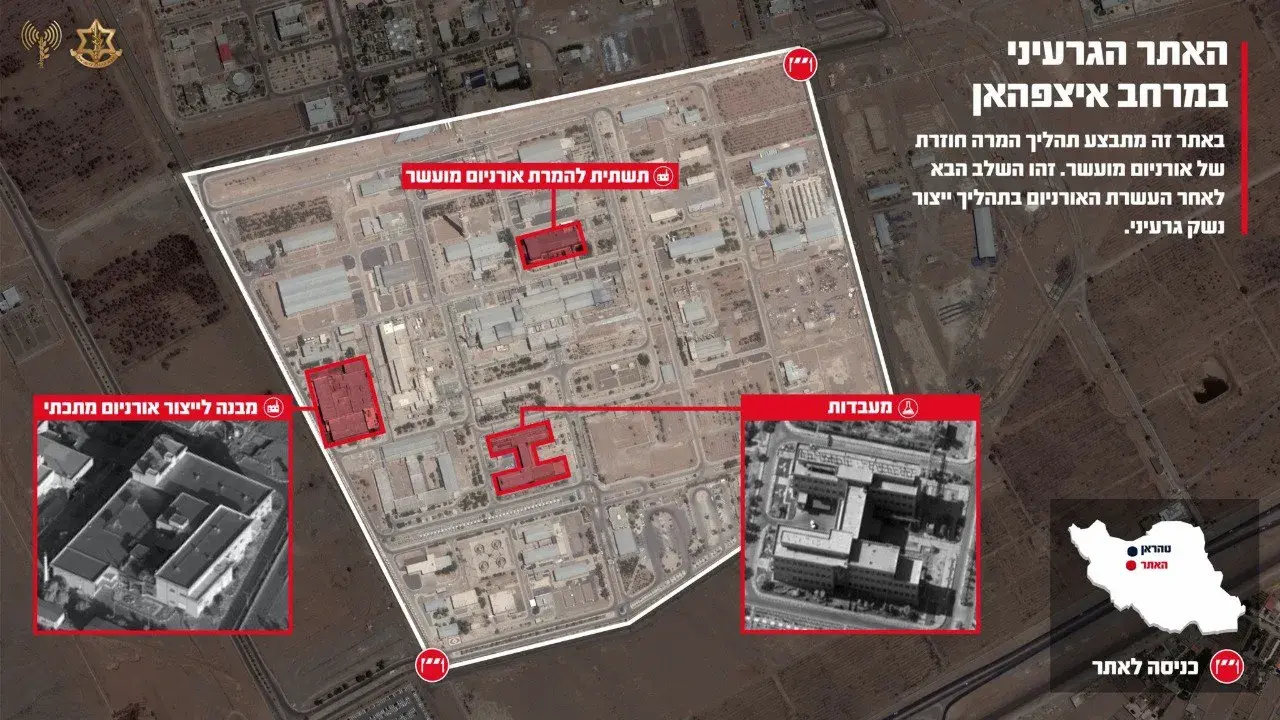
In a bold escalation, the Israeli military claimed on Friday that it had launched a strike on an Iranian nuclear facility in Isfahan—an assertion that Iran has yet to confirm or deny.
According to Israeli army spokesperson Brigadier General Effie Defrin, the operation was still underway at the time of his statement. He said the target was a nuclear technology site in Isfahan, located roughly 350 km southeast of Tehran, which employs thousands of scientists and is central to Iran’s atomic ambitions.
Isfahan is known to host not just uranium conversion facilities but also three Chinese-assisted research reactors and several laboratories connected to Iran’s broader nuclear programme.
While international observers are still seeking independent verification of the Israeli claim, the lack of immediate acknowledgment from Tehran has further fueled speculation and anxiety over a potential escalation between the two adversaries. The silence from Iran’s state media and military has raised questions about the scale and impact of the alleged attack.
The reported strike comes amid already heightened regional tensions and could mark a significant turning point in the long-simmering conflict over Iran’s nuclear activities.
Murder in the Holy Town: 83-Year-Old Jagannath Temple Servitor Killed Over Money Dispute 18
In a disturbing incident that has shocked Puri, an 83-year-old servitor of the Shree Jagannath Temple was allegedly murdered in broad daylight on Wednesday, just hours after completing his religious duties. The crime occurred even as the holy town was under tight security for the Snana Purnima rituals.
The deceased, Jagannath Dikshit, a senior kothabhoga supakar (temple cook), was reportedly attacked in the Gudia Sahi area around 2 pm by Narayan Pattajoshi (49), following a heated argument. According to police sources, the accused allegedly smashed Dikshit’s head against a wall, leading to fatal injuries. Shockingly, Dikshit, despite being severely wounded, tried to clean the blood stains before succumbing to his injuries.
Initial investigation suggests the crime stemmed from an old monetary dispute. Pattajoshi had allegedly borrowed money from Dikshit and refused to repay it. A confrontation earlier in the day reportedly escalated into violence.
The entire incident is believed to have been captured on CCTV, aiding the investigation. Pattajoshi was arrested within hours of the incident, police confirmed.
What makes the murder even more alarming is that it happened during Snana Purnima, when the town was under an extensive security grid—70 platoons of police, three commandants, and 450 senior officers had been deployed to ensure safety during Chief Minister Mohan Charan Majhi’s visit and the sacred bathing rituals.
Despite the heightened security presence, this brutal act has raised serious questions about ground-level enforcement and public safety in one of India’s most revered pilgrimage towns. A senior police officer confirmed the arrest and said further investigation is underway.
Mega Block Alert: Central Railway to Cancel Key Mumbai Locals on June 15 for Maintenance 20
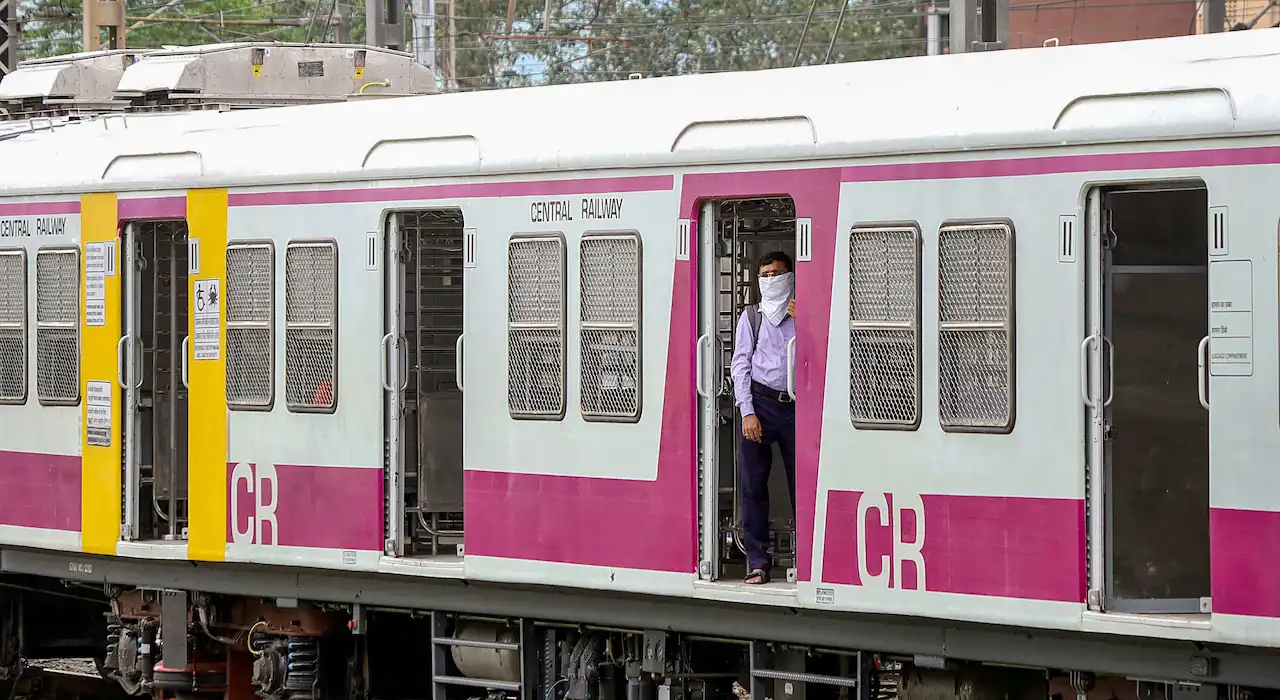
Mumbai commuters, brace for major travel disruption this Sunday. Central Railway’s Mumbai Division has announced a mega block on June 15, affecting several suburban train services to facilitate urgent maintenance and engineering work.
According to a statement from Central Railway’s Public Relations Department, services on the CSMT Mumbai–Vidyavihar Up and Down slow lines will be impacted between 10:55 am and 3:55 pm. During this time, Down slow trains from CSMT will be diverted to the Down fast line up to Vidyavihar, halting only at Byculla, Parel, Dadar, Matunga, Sion, and Kurla. Similarly, Up slow services from Ghatkopar will run on the Up fast line to CSMT, stopping at the same stations in reverse.
In addition, a block on the Panvel–Vashi Up and Down Harbour lines will be enforced from 11:05 am to 4:05 pm. Harbour line services between Panvel and CSMT (Up and Down) and Trans-Harbour services between Panvel and Thane during this window will be cancelled. However, special services will run between CSMT and Vashi, and trains will continue to operate between Thane and Nerul/Vashi. Port line operations will remain unaffected.
Railway authorities have appealed for public cooperation, citing that these blocks are vital for safe and efficient train operations. Passengers are urged to check train schedules in advance and plan alternative travel arrangements accordingly.