'Unconstitutional' and 'Irrational': SC quashes suspension of 12 BJP MLAs from Maharashtra Assembly 2
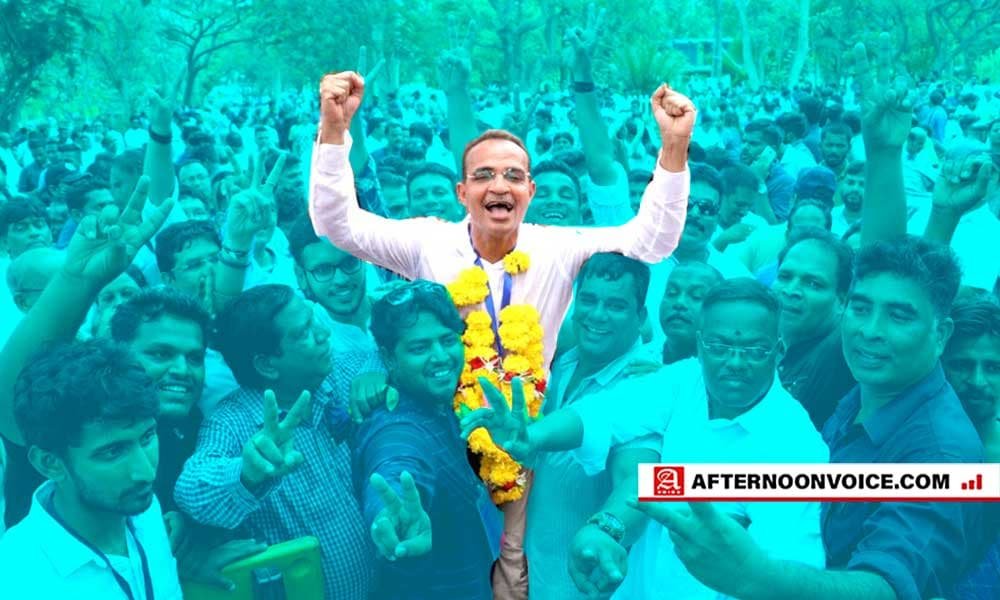
The Supreme Court on Friday held that a resolution suspending 12 BJP MLAs from the Maharashtra Legislative Assembly beyond the period of the remainder of the session held in July 2021 is “unconstitutional” and “irrational”.
The apex court delivered its verdict on the pleas filed by the 12 BJP MLAs, who had challenged their one-year suspension from the state assembly for allegedly misbehaving with the presiding officer “In conclusion, we have no hesitation in allowing these writ petitions and the impugned resolution suspending these members beyond the period of the remainder of the concerned Monsoon session held in July 2021 is non-est in the eyes of law, nullity, unconstitutional, substantially illegal and irrational,” a bench headed by Justice A M Khanwilkar said.
“The impugned resolution is thus declared to be ineffective in law in so far as the period beyond the stated session in which the resolution came to be passed,” the bench said.
The 12 suspended members are Sanjay Kute, Ashish Shelar, Abhimanyu Pawar, Girish Mahajan, Atul Bhatkhalkar, Parag Alavani, Harish Pimpale, Yogesh Sagar, Jay Kumar Rawat, Narayan Kuche, Ram Satpute and Bunty Bhangdia.
These MLAs had filed petitions in the apex court challenging the resolution passed by the Assembly to suspend them for one year. They were suspended on July 5 last year from the Assembly after the state government had accused them of misbehaving with presiding officer Bhaskar Jadhav in the Speaker’s chamber.
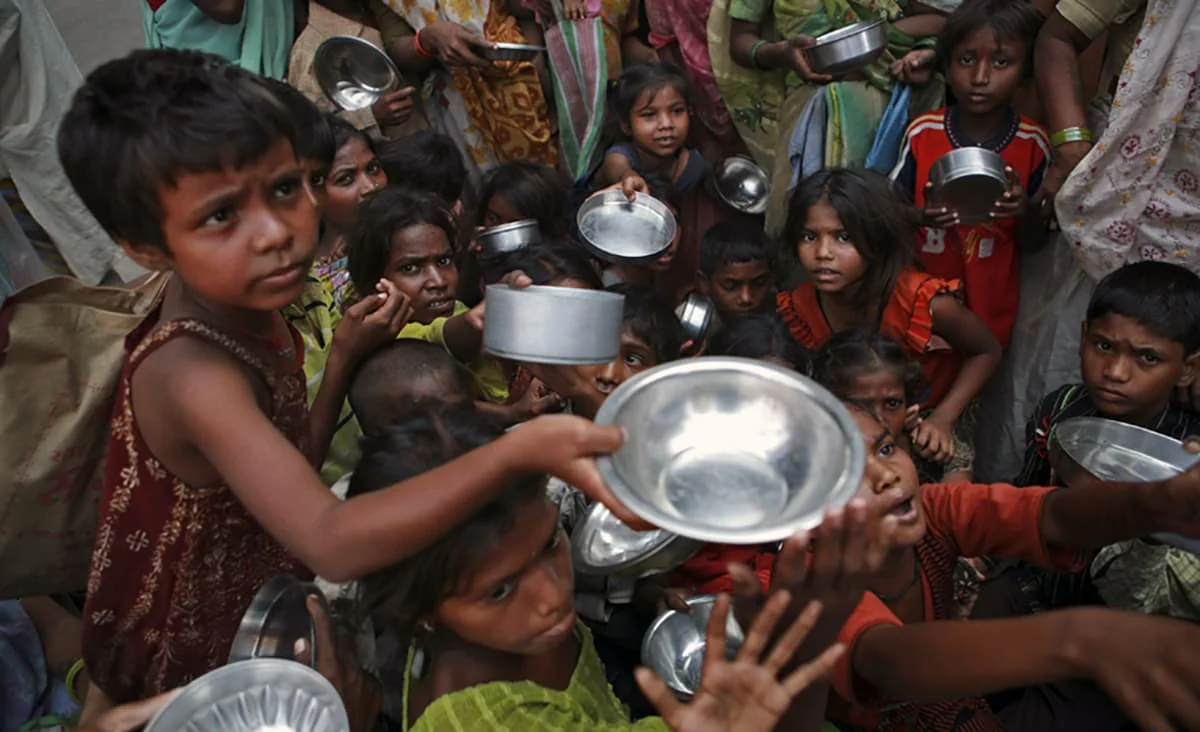
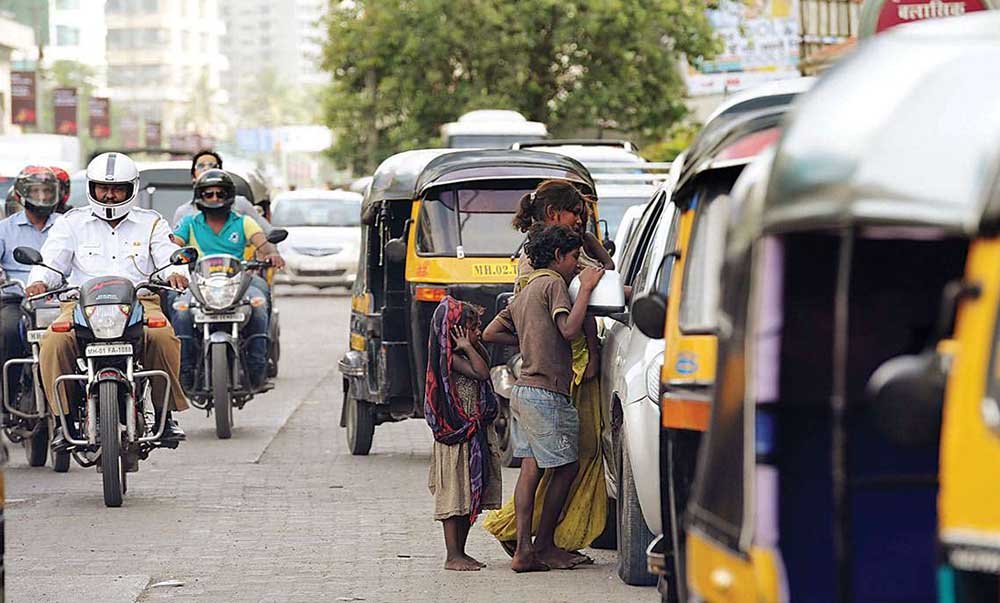
Most of the footpaths and abandoned corners are occupied by beggars in Mumbai. They beg across the city, which includes important monuments, railway stations, religious and spiritual sites, and shopping malls. Here you will find most of the beggars at major traffic joints as well, where they approach vehicles while the lights are red. The number of beggars is relatively high in Maharashtra. However, as it’s difficult to determine who is a beggar, there are issues over the accuracy of data available.
In Mumbai, we are often approached by a child or woman wanting some powdered milk to feed a baby. Or someone claiming a dead body is placed at home needs money for a funeral, or you will get two ladies with children asking money to return to their village as they lost their purse, they pretend as if they are very naïve and someone robbed them. Sometimes with some medical prescription in hand, they will assist you to a nearby medical shop that suitably happens to sell the medicines. However, the medicines will be expensively priced and if you hand over the money for it, the shopkeeper and the beggar will simply split the proceeds between them.
Beggars also rent babies from their mothers each day, to give they are begging more credibility. They carry these babies who are sedated and hang limply in their arms and claim they have no money to feed them. In the worst of cases, they make that child cry so that you can melt. On some signals, they are an utter nuisance, by mistake, if you are on a bike or in auto rikshaw, they will touch you and nag by coming very close to your body.
Beggars come in all shapes and sizes in India, and they have many different methods of pulling at your heartstrings in an effort to get money. Unfortunately, too many foreigners feel that they MUST do something to help Indian beggars. The beggars are also often quite persistent and won’t take no for an answer. As a result, tourists start throwing out money. Most foreigners feel privileged to click beggars’ pictures to portray Indian poverty. There are literally photo sessions on the street. Our Indian beggars know the pulses of Firangs and they leave no stone unturned to exploit them.
While it can appear callous when you hush the beggars, the best is to ignore beggars in India. There are so many that even if you want to give them, it’s not possible to give to them all. Another common problem is that if you give to one beggar, such a gesture will quickly attract others. The reality is that you’re not responsible for solving India’s begging problems. The beggars can be very misleading, even the children. While they may be all smiles or pleading faces, they can be very rude to you when you turn them down.
Mumbai has dedicated beggars’ homes if they wish to go, however, the irony is that nearly 70 to 80 per cent of the people brought into the beggars’ homes are not beggars, nor were they caught in the midst of the act of begging. The cops are not trained to identify beggars, and they randomly round up people whom they feel might be a beggar. The beggar act also gives immunity to the police, as it has many loopholes.
Most inmates at Beggars’ Home are not from Mumbai, nor were they all lifelong beggars. They were mostly poor, mentally ill, disabled, hearing-impaired, addicts, or victims of abuse. That being said, not all of them came from economically vulnerable backgrounds. Many other women at Beggar’s Home ended up there by mere “accident”.
The police conduct regular raids in certain spots across Mumbai and arrest people suspected of begging. For those who have not previously been detained under the Act, the Magistrate Court in Mumbai’s Kurla neighbourhood solicits a summary inquiry on the allegation of begging. Till the inquiry is made, the person is remanded in custody at a “receiving centre” — like Beggars’ Home. It is likely that this is what happened to most of the inmates. The actual beggars on the streets know how to bully or avoid cops.
There are many NGOs like Koshish working for the Beggars’ Home. Koshish plays an active role in representing their clients at every stage. Due to the arbitrary definition of begging, many remanded in custody at Beggars’ Home are not “beggars” so, Koshish works with the Probation Officer and every client to ensure the release of the wrongfully convicted. However, many clients that come to the Home are unable to remember key personal information. In that case, Koshish gathers as much information from the client as possible and then follows up on leads with the help of the police and other women’s welfare departments.
The only way to go forward from here is to redefine the problem: it is obvious that the issue is not begging and that defining it as such lends a negative connotation to the public perception of beggars. They are viewed as scammers, as lazy citizens who can make a living but choose not to. Beggars’ homes need to be set in order, cops need to identify actual beggars, there should be a full proof plan to rehabilitate them. Eradicating beggars for Mumbai Street is a collective responsibility and we all must do our bit.
Any suggestions, comments or disputes with regards to this article send us at feedback@www.afternoonvoice.com
In 2021, Mumbai Police had launched the ‘Zero Beggars’ drive in an attempt to make the city begging free. Under this drive, all police stations in Mumbai were asked to track beggars and keep them at a special home in Chembur after testing them for COVID-19 infection.
The drive to rid Mumbai of beggars was supposed to be carried out during the month of February 2021 according to the directions of Joint Commissioner of Police Vishwas Nagre Patil under the Bombay Prevention of Begging Act, 1959. All police stations were instructed to detain these beggars, take permission from the court, conduct their COVID-19 tests and then lodge them at the beggars’ homes.
A senior police officer told Afternoon Voice under the condition of anonymity, “Looking at the geographical size of Mumbai, the department lacks manpower. From high profile securities to bandobast maximum staff is stalled, police chauki has limited force, crime investigation is at a low pace, in such conditions it’s easy to announce anything but very difficult to execute.”
T . Lavanya social activist said, “It was a good initiative though, just putting them in homes is not going to help rehabilitate with work like infra etc. and people providing alms would also need to contribute to this effort equally by donating to a digital fund for rehab than providing direct alms on streets.”
While the intentions behind the anti-begging drive looked noble, experts and activists raised questions on adequate space to accommodate beggars in the Chembur home and further rehabilitation. There were huge media coverages but all the beggars are still parked in their own spaces.
It’s been almost one year now but Mumbai could not be beggars free, and on the other hand, there is a rise in the beggars’ population on Mumbai pedestals.
Senior advocate and activist Abha Singh already raised the question by stating, “Will this drive end begging in Mumbai? For how long will the beggars’ home keep them? Is there a plan to rehabilitate them? The police can implement the law but what next. There should be a plan to eradicate begging and it should not be a token drive.”
The Brihanmumbai Municipal Corporation (BMC) identified approximately 29,000 people including women and children engaged in begging in the city in November 2020. By December 2021 the population of beggars almost doubled in the city.
Hanumant Shevde, a man who is doing research on beggars said, “A beggars’ home, where the majority of inmates are not beggars this is the truth about the Chembur Beggars’ Home; most of the people here have been caught by police and left here. But around 70-80 per cent of the people are the elderly suffering from mental illnesses, cancer patients and even persons who are simply walking on the roads. Meanwhile, frantic families are on the lookout for these missing family members, unaware that they have been forcibly put into a beggar’s home.”
Mohammed Tarique has been instrumental in making amendments to The Bombay Prevention of Begging Act 1959 that the cops have misused so often to put people into the beggars’ homes.
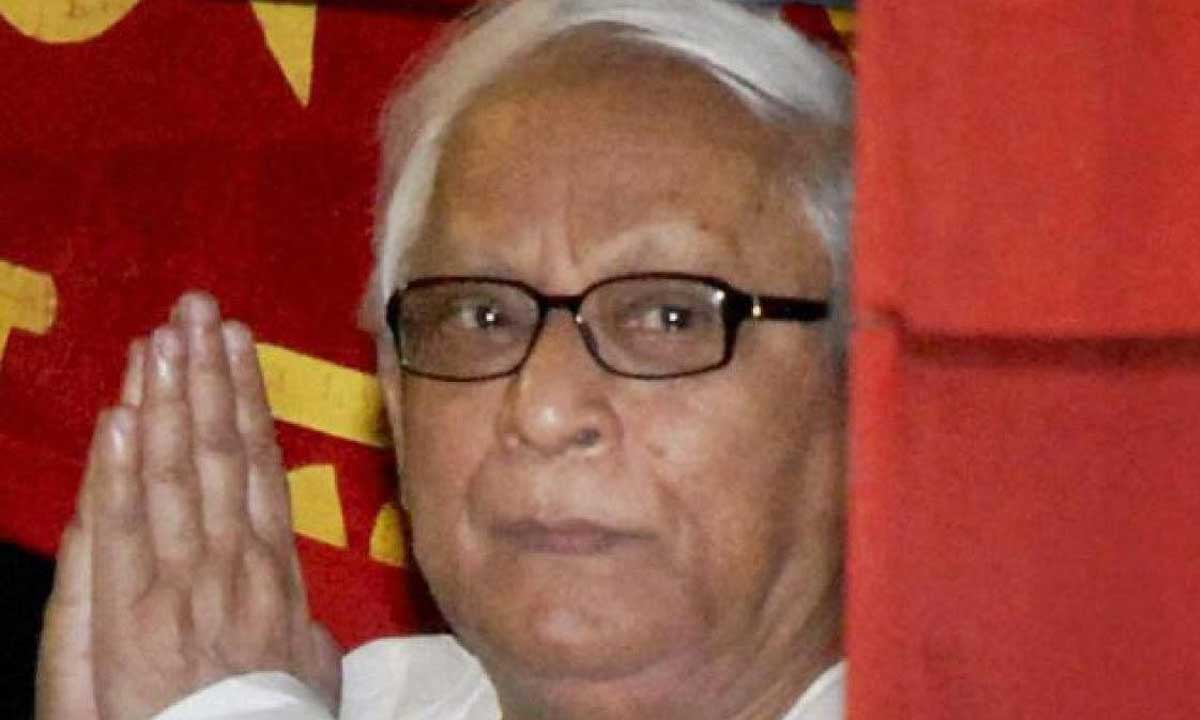
Former West Bengal Chief Minister Buddhadeb Bhattacharjee said he was not aware that he had been named for the Padma Bhushan and he would reject it if it were so, in an extremely rare instance of a recipient turning down one of India’s top civilian honours seen as a major embarrassment for the government.
“I don’t know anything about a Padma Bhushan award. No one told me anything about it. If indeed they have given me a Padma Bhushan award, I am rejecting it,” he said in a brief statement in Bengali posted on his party CPM’s Bengal social media pages.
According to the central government, the Union Home Secretary had spoken with Mr Bhattacharjee’s wife about the award this morning. She had accepted the award and said thanks, Home Ministry officials said, explaining the flub.
A staunch critic of Prime Minister Narendra Modi’s government, the 77-year-old has been suffering from age-related ailments along with heart and lung conditions for quite some time and has largely retracted himself from public appearances.
Rejections of the Padma Awards are extremely rare – recipients are required to confirm acceptance before the announcement. Film writer Salim Khan had said he had refused to accept a Padma Shri in 2015. Before him, historian Romila Thapar had refused a Padma Bhushan in 2005, having returned her 1974 award in 1984 over the siege of the Golden Temple by the Indian Army.
Author Khushwant Singh had also returned his 1974 Padma Bhushan in 1984 over the same issue but he accepted the Padma Vibhushan in 2007. Mr Bhattacharjee, a lifelong Marxist, was the second of two prominent opposition figures named for the Padma Awards this year. Congress leader Ghulam Nabi Azad, part of a dissident group in the party that has questioned its leadership, was the other.
Congress leader Jairam Ramesh, who has stood by the Gandhi family amid the discord, took a dig at Mr Azad and praised Mr Bhattacharjee, tweeting, “Right thing to do. He wants to be Azad (Independent) not Ghulam (Slave).”
Both Mr Azad and Mr Bhattacharjee were conferred the Padma Bhushan, the third-highest civilian award. But while there was no response from the Congress leader, Mr Bhattacharjee — an arch-critic of the BJP and Prime Minister Narendra Modi — promptly issued a statement declining the award.
Parents' divorce is inarguably intensely distressing for children – Part 2 8
Divorce is certainly not a happy event, everyone suffers, it does depend on the reason for the divorce, how the adults handle it and who gets nailed the worst in the settlement. However, the divorce is the adults’ fault. Whatever they suffer due to divorce, they share fault in it. The children are always the innocent victims and therefore I have to say that they suffer the most simply because they have no control over what is happening to their lives and because too often, they are trapped between two supposed adults who insist on using them as weapons against one another, pawns in angry adult games.
Children generally dislike change, they hate moving from their table families. They hate people leaving. They don’t like routines overturned. They don’t like having to get used to new people, especially when their mother marries a new man. A perfect childhood would be one where the adults in their lives are totally reliable and predictable. Grownups shouldn’t be boring and add no drama, turmoil, or uncertainty. Kids like to feel safe and secure. They don’t want to worry about what’s going on, about whether they are loved, about fighting, about money, about being used as pawns. Now think about divorce. Not only is it scary, but it upends everything.
The adults suffering from divorce are of their own choice but the children suffering are beyond their control. Not only is their life falling apart but they tend to blame themselves (for no reason) and the emotional and psychological suffering can be intense and often made worse by backbiting, manipulative adults. Divorce, in all circumstances, rips a child apart, emotionally, and sensitively offensive upon the child’s well-being. A major impact of divorce is on the parent-child relationship. Especially when the parent who has the privilege of custody, hammers the child’s mind how awful another one was, the child remains mute spectator because they hardly have any voice after losing one parent, they don’t want to bargain with the one in their presence with them. They just sulk and here they develop hate, anger and rejection resulting in invisible stress.
In celebrity divorce cases we see, children often meet their mother or father. Hrithik Roshan to Malaika Arora Khan there are thousands of examples, where parents are separated but for the sake of children, they both are available. Such children definitely grow with emotional security and feel protected. They have their mother and father at equal distance from them. In middle-class families the scenario is totally different, the children are conditioned to hate, they are overburdened with sad sagas of life and the so-called sufferings of the parents who possess them.
The quantity and quality of contact between children and non-custodial parents usually fathers-tend to decrease and the relationship with the custodial parent-usually the mother shows signs of rigidity. There are also consequences of being the non-custodial parent, such as not being able to take the child out without the Court’s permission. The basic conflict in social principles in a custody case is whether to treat the child as a separated individual, apart from his/her blood ties or to emphasize the family unit from the position of the parent.
And finally, the time comes, when the children are grown beyond the custodial age, they refuse to accept the father just because they want to avoid confrontations. Divorce is an extremely disturbing experience for all children depending upon the age or maturity level. Divorce is inarguably intensely distressing for children. Outside the territory of family, because of the label of divorce, the child faces a tough time attempting to be accepted by a narrow-minded society. In socioeconomic attainments, children who experience their parents’ divorce have lower educational prospects than children from intact homes.
Within the family, the obvious effects are on the physiological behaviour of the child. Many times, they isolate themselves from the world around them. In older age group children, the assumption of hyper-maturity is very common as children often assume the tasks of adults to calm the custodial parent’s household. The law cannot prevent all damage to the child’s interests caused by divorce, since it cannot compel harmonious human relationships. It can, however, provide a means for reducing the damage by ensuring that the child’s interests are not neglected in divorce proceedings. There is a need to ensure that the child receives a stable and cherishing environment after the divorce of the parents, of course, the law gives a say to the child, but they don’t have control over the background traps laid for the child by the parents who want absolute custody.
Any suggestions, comments or disputes with regards to this article send us at feedback@www.afternoonvoice.com
Divorce in India: Children are the biggest sufferers – Part 1 10
In a way, it’s good that the couples are leaving a bad marriage and saving their lives from torture and exploitation. I’ve seen a few colleagues; a couple of friends go through a divorce. In each case, it’s been people who stepped up for themselves and made tough decisions so that they can be happy in life. I say people because not all of them were women. Marriage is an act of sacrament in India. And, ending this marriage on whatsoever ground is still not considered normal. Yet, in recent decades we can see an increase in the divorce rate in India. There is a common notion that the reason for the increasing divorce rate is because of an increase in love marriages, which is not true.
Maximum divorce petitions are from highly educated and well-heeled couples, even though India still boasts that nearly a hundred per cent of the marriages are a success, rapid urbanization and awareness of various rights are now instigating the divorce rate to shoot upwards. Empowerment of women has initiated the disbanding of marriage in urban areas as financially educated women are now open to the option of ending the relationship rather than bearing life-long abuses silently. The campaigns on gender equality are now giving rise to ego clashes between the husband and wife, especially if the wife is the equal breadwinner of the family.
In rural areas divorce is still taboo, the men abruptly dump their wives and choose to live with another woman. In most cases, the wife is not financially independent and she is made answerable on the social and family front. My office help is from a nearby village and she is just 25 years old. Her parents are poverty-stricken, she was dumped by her husband just because his heart started melting for another woman at his workplace, and there was conflict, family drama and ongoing fights. The mediator was asked to intervene; most of the people who came for the meeting blamed the girl for being unable to lure her husband. Husband said he is ready to keep his wife provided what happens outside should not come inside the home. Well! This is just an example, rural India is yet not progressed and divorce means dumping a woman with her children to face the social and economic challenges, ironically, they don’t know the laws and they don’t have that background to approach lawyers.
Around 20 years back India had a negligible divorce rate of around 5%. But based on the increasing number of divorces being filed today, the divorce rate in India is expected to rise up at a faster rate in the coming years. The privacy of the institution of marriage is threatened as of late it has become a subject of great judicial scrutiny. Can you imagine forty per cent of marriages in Mumbai and Delhi are heading towards divorce? The provisions of Section 498 A of the IPC and certain provisions of the Protection of Women from Domestic Violence Act are being mostly misused. There are some families that cannot resolve their disputes on their own. Family courts are equipped with mediators and counsellors who would try to resolve their disputes without court intervention but who will let go of their fees and perks? Lengthy cases, long term income.
However, owing to the awareness relating to men’s rights nationwide, the number of divorces by mutual consent has also gone up. Today, statistics show 60 per cent of divorces are by mutual consent. Most celebrity divorces make headlines when they are already separated. Among states with the highest number of divorces, Maharashtra topped the list in the past years, accounting for nearly 50,000 cases, with Mumbai and Pune alone accounting for 20,000 of them, while the remaining were reported from Nashik, Aurangabad, and Nagpur. 2021, up to March, 4,313 marriages and 208 divorces were registered. The biggest reason behind growing insecurities is that earlier, it was a joint family system where people of all age groups lived together in the house, “Older family members would teach the children family values. Now, with the rise of nuclear families, there is no one to inculcate these values in children. It’s often said in India that marriages are for eternity. However, this does not necessarily mean these marriages are happy.
In Urban India interestingly, most of the couples are highly educated and hail from well-heeled families. I have seen cases in which couples as old as 75 seek divorce. In such cases, most of them may have been living separately for several years. It’s to resolve the issue of dividing property among children that they approach the court for legal separation. Open arguments over custody of children and return of property are frequent occurrences outside family court. However, the majority of couples opt for mutual separation. In such cases, it takes around seven months for the divorce to be granted. In other cases, it takes longer—more than a year. But the greed to grab everything from men by women and tendencies to retain all that is possible by man is a bit snug. And their lawyers are equally greedy, one side advises to ask as much as she can, the other side says, pretend to be bankrupt as much as possible.
The couple may not be at much loss as their survival is hardly challenged, in long-pending cases most of the time women find a fall-back option and man to find some solace in another partner, but the sufferers and children. They are mentally challenged on various occasions, they have to accept the flight that their parents invited for them, most the cases the mother gets children’s custody and the father is projected as a villain, the children are strongly conditioned against the father just because the mother thinks he is a nuisance for her future. Ego clashes lead to dissatisfaction from allowing children to meet the other side of the parent. Increasing women’s independence has much to do with increasing divorce rates. I am not against women’s independence, but certainly against holding insensitive custody of children depriving them of both parents.
Any suggestions, comments or disputes with regards to this article send us at feedback@www.afternoonvoice.com
Divorce petitions are filed more by men than women; Mumbai reported an average of 22 divorce petitions a day 12
Legal Experts said divorce petitions are being filed more by men than women and the core issues between spouses are the rising standards of expectations from each other, lack of time for the partner and lack of communication between the couple. According to experts, this is because both the husband and wife are busy with their respective professional and career commitments, and lack of communication leads to conflicts between them.
Last year despite the family court at Bandra remaining closed for about six months owing to the COVID-19 pandemic, a daily average of 19 divorce petitions was recorded.
With divorce applications and break-ups skyrocketing across India, the Legal firm of Mumbai said they received a 122% increase in enquiries between January 2021 and January 2022, compared with the same period earlier year. There is a spike in searches for online advice on ending a relationship.
In Mumbai, a major legal contract-creation site recently announced a 34% rise in sales of its basic divorce agreement, with newlyweds who’d got married in the previous five months making up 20% of sales. There’s been a similar pattern everywhere in India.
Advocate Pratibha Bangera told Afternoon Voice, “Divorce cases are increasing because parties have the courage to break the taboo and mindset attached to divorce. It takes time for settlement if either party’s lawyer stretches it as a bargaining tactic to favour their client or if parties themselves have unresolved anger and ego and don’t settle. Matters don’t reach the trial and evidence stage due to delaying tactics. Unfortunately, parties don’t know how they are being played against their own interest and waste precious time battling in court.”
Senior advocate Abha Singh said, “Lack of adjustment, aggressive behaviour on both sides, elders in the family not working towards solving issues between couples and economic independence. Also, good laws to protect and take care of women, these are some of the reasons for the delay in judgements.”
Renowned lawyer Mrunalini Deshmukh, who has handled numerous high-profile divorce cases in India, said “Well various reasons for the surge in divorce cases, less tolerance leading to incompatibility. Extramarital relationships and in a few cases physical and financial violence towards women is the main cause. The legal system with its rule of law takes time.”
Advocate Satish Maneshinde said, “The Women of today are of Substance and can lead their own life without any dependence on a Man. Women empowerment has brought in a lot of courage and knowledge of their rights in Modern Society. Though some women suffer the vagaries of life in a married household even in the 21st Century, the majority of the women are in no position or mood to be used as a Chattel. Gone are the days when a woman’s rights could be trampled upon and made to suffer untold miseries, consequences and harassment both physical and mental. Apart from the above, the Pandemic has created untold miseries in a large number of households. A modern household has lost its tolerance and since the Concept of a Joint Family is slowly and certainly disappearing, problems in a marriage have increased.”
Mane further stated “In view of all these issues, the number of Divorce cases has gone up disproportionately compared to other cases. The Family court in Mumbai is heavily overburdened and due to the COVID Protocol, is unable to cope with the increase in the cases. Apart from that, we need a greater number of judges compared to the present strength of 7 Judges which is highly inadequate and unable to handle a large number of pending cases. We also have a number of other laws made for the benefit of solving matrimonial issues. This has further created an explosion of cases.”
“I hope the Central and State Government work in tandem to improve the standards of infrastructure and increase the number of Judges and Courtrooms. The Judiciary is the most neglected system in our Country. It remains the only source of strength to a common citizen. 75 years of Independence has seen no improvement in our Judicial Infrastructure and strengthening the Judicial System. God alone can help our Country,” Adv Maneshinde said.
Professor Shubhada Maitra said, “In the current scenario, the key reasons for breaking up marriages are increased expectations from each other. The expectations of women are to a large extent centred around companionship, helping with household or domestic chores, a greater degree of freedom and understanding, because women are now stepping out of their houses frequently.” “However, men do not seem to have not moved on with women, they continue to expect women to fulfil the traditional goals,” said Shubhada Maitra, Dean, School of Social Work at Tata Institute of Social Sciences.
Zenobia Khodaiji, a wellness counsellor said, “Dynamics of marriage have changed, women have their own personalities and expectations and when they are not fulfilled, they want to end the marriage. Women are educated and also prefer either not to marry or they marry late –most often after the age of 25 -26 – as compared to earlier times, when they used to get married at the age of 20-22 years. If one gets married early, the young mind can be moulded.”
Deepti Ayathan, advocate and founder of Ayathan Associates says that education has played a role in the increase in the number of divorces. “With knowledge, there is an understanding of personal space, freedom and equality. Marriage is no longer understood as assuming certain duties, but as coexisting with each other,” she explained.
Atanasio Monserrate a rape accused to contest on BJP ticket in Goa 14
In 2019 when Monserrate joined Congress Party, he made a statement that “I am here to defeat the BJP”. Today this same person swore to defeat Congress in Goa. Monserrate, who has a history of changing parties. He is fielded from Panaji against Utpal Parrikar, son of late Manohar Parrikar, who is contesting independently quitting BJP.
Monserrate started his political career with the United Goan Democratic Party (UGDP) and became an MLA. Later, he joined the BJP in 2004 only to return to the UGDP in 2007. There after he joined Congress and swore against BJP, he was expelled from the Congress party for anti-party activities in 2015. He then joined the Goa Forward (GF) and was an office-bearer till a few weeks and thereafter became an independent MLA.
Monserrate first won an election and became an MLA in 2002. Goa’s real estate boom helped him to acquire a huge fortune and cement his position in state politics. He has hobnobbed with both the Congress and BJP depending on the situation. He is an ambitious politician and has made it clear that he wants to become Goa’s chief minister after the 2017 Assembly elections.
Monserrate is believed to be a prominent leader in Goa, despite being charge-sheeted for raping a minor girl, and for human trafficking. Authorities have previously also booked him in a case of extortion. Monserrate has been a controversial minister. He has earlier been charged in several cases and accused of extortion and assaulting police officers.
Now this year he returned to BJP by promising them a victory. A seasoned and matured politician with a lot of experience, Devendra Fadnavis, chose Monserrate over some credible BJP leader is really a mystery. I don’t endorse Parrikar, because I know BJP least entertains nepotism. Parrikar needs to have required experience than having his reliable surname to his credit.
Interestingly, Narendra Modi and BJP’s major slogan is “Save Girl child and educate her” (Beti Bachao, Beti Padhao). This politician Monserrate has raped a minor girl who used to work in a Hallmark outlet at Miramar owned by Babush Monseratte himself. She worked from November 2015 to March 4, 2016. Her neighbor, whom she called Aunty Rosy, had introduced her to Babush.
Two days after she quit her job, her “Aunty” and mother took her to meet Monserrate. He asked the girl what she was interested in and whether she wanted to study. The girl refused and said wanted to go back home. After three-four days, the girl was taken to his farmhouse in Talegaon by her “Aunty” and mother. She was made to have a drink which the police believe was spiked. She passed out after having the drink.
According to the girl, when she woke up, she found that she was lying on Monserrate’s bed. There was blood on the bed sheet and the MLA was sitting on the chair shirtless, she claimed. He asked her if she wanted to stay at the farmhouse but she refused. This incident took place in the second week of March. Thereafter, she went to her friend’s place and kept the clothes that she was wearing inside a bag. The bag was recovered by the police.
She went back home and had an altercation with her mother when she was asked why she had come back. The mother told her that she had sold her off to Monserrate for Rs 50 lakh. She left the house and started staying with her friend. The police called the mother and the girl in the presence of the victim assistance unit. The girl was furious and did not want to return home with her mother. She was taken to a children’s welfare home. It was during her stay at the children’s home, she opened up and narrated the horrific incident to a counselor. Surprisingly no action was taken against her aunt, mother and minister. His son, Rohit was also accused and later acquitted of raping a German minor.
The Goa Children’s Court in 2009 framed charges against Rohit, for raping and sending obscene messages to a 14-year-old German girl. He raped her in his Audi car at the Bambolim plateau near Taleigao, his father’s constituency. She also submitted to the police the messages sent by Rohit to the minor’s mobile, asking her to smoke and drink heavily to abort possible pregnancy. While the case was in the news for a few months, the police refused to file a complaint. The victim and her mother left for Germany and later sent a letter to the Goa authorities claiming she did not wish to pursue the case because the government was conniving with the accused. Late Manohar Parrikar, then the CM of Goa, admitted that the police had committed several irregularities. The police did not even examine the victim, which was mandatory in the investigation. Rohit was acquitted by the court due to lack of evidence against him.
Pained Parrikar expressed his helplessness stating “there was the need to figure out whether it was a “a case filed to put someone in trouble”. “Not much can be done about the case now because the girl has not been examined by the police. It should have been done. From the note I have received (from the police department), it appears that there was a settlement,”. One BJP leader who was aggrieved to see the plight of girls after the molestation by father and son, and here is another BJP leader and former CM of Maharashtra who has placed this alleged rapist over credible loyalists of BJP.
From data obtained from the Lokpal website, it appears that the Lokpal had received only 1427 complaints in the first year. The outcome must have been so ineffective that citizens filed only 110 complaints in the subsequent year and in the first six months of 2021-22 filed only 30 complaints.
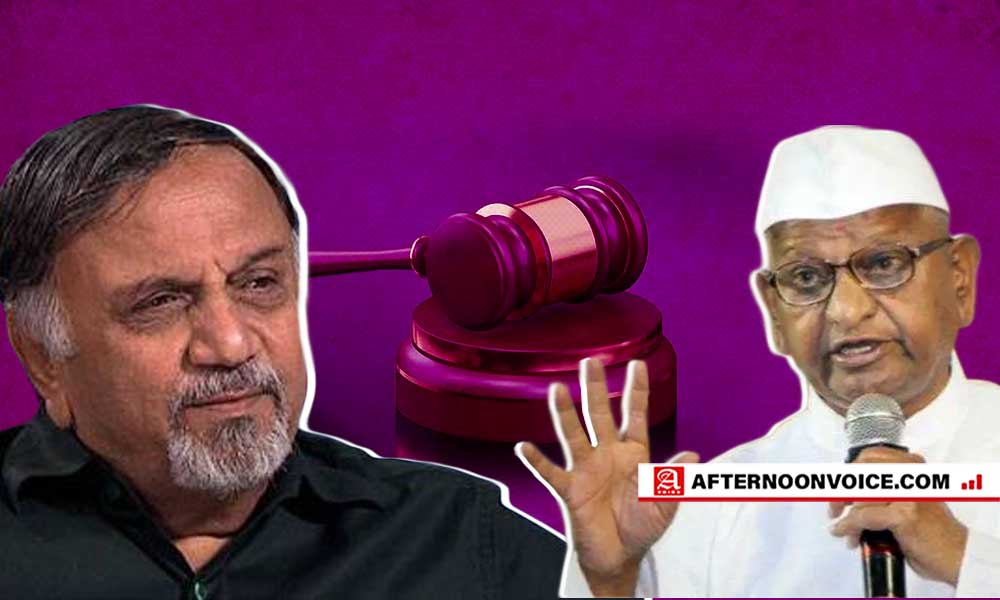
A petition to “make the Lokpal effective or disband it” has been started by former Central Information Commissioner and transparency activist Shailesh Gandhi. It will be sent to the chairperson of the Lokpal. The Lokpal was established under the Lokpal and Lokayuktas Act, 2013, to inquire and investigate allegations of corruption against public functionaries who fall within the scope and ambit of the Act.
The Lokpal has jurisdiction to inquire into allegations of corruption against anyone who is or has been prime minister, or a minister in the Union government, or a Member of Parliament, as well as officials of the Union government under Groups A, B, C and D.
RTI activist Shailesh Gandhi says, “Let us hold the Lokpal accountable. He should perform or quit. It appears the Lokpal has become a senior citizen’s club with no accountability. We are sure you recognize that the over 60 crores spent by the Lokpal have come from the pocket of the poorest man in the nation who may be starving,” he wrote, adding that “spending public money with no accountability is not acceptable.”
Remembering how “the Lokpal was set up with great hope and effort by a citizen’s movement,” Gandhi lamented that it has had “zero impact on the corruption in the country and does not seem to be aware of its pathetic performance.”
Gandhi also demanded some introspection from officials in the Lokpal and urged them to “perform or quit”. The Lokpal consists of a chairperson and eight members out of whom 50% are judicial members. One of the members, Justice Dilip B. Bhosale had resigned as a member in January 2020.
Gandhi urged those working in the ombudsman to “either find a way of discharging your duty or resign.” Referring to Justice Bhosale’s resignation, he said, he appears to have resigned listening to the voice of his conscience. “Public servants in such high positions must at least display this level of honesty,” Gandhi insisted, adding that else, “citizens will lose all faith in such institutions set up to monitor the government if this charade of being an ombudsman continues.”
On 5 April 2011 Hazare started his hunger strike to exert pressure on the Indian government to enact a stringent anti-corruption law, The Lokpal Bill, 2011 as envisaged in the Jan Lokpal Bill, for the institution of an ombudsman with the power to deal with corruption in public places. Anna Hazare’s agitation helped in toppling the UPA government, which was facing a series of corruption allegations, even though the government passed the Lokpal Act in December 2013.
On January 1, 2014, the President gave his assent to the Lokpal and Lokayuktas Act. However, five years down the line, the Act was not implemented and the 85-year-old social activist had issued a stern warning to the Narendra Modi government, recalling his India Against Corruption movement of 2011. With his constant efforts, India got the Lokpal office and the Lokpal bill was passed.
Anna Hazare said, “I did all that I can do to stop the corruption in government offices and institutions since people now have the advantage of Lokpal they should come forward and make complaints to catch the corrupt ministers and government officers. Its people can take charge and question authorities by taking advantage of Lokpal.”
Social worker Zenobia Khodaiji said, “There are unnecessary attacks and accusations made on Hazare but in spite of having such a Lokpal bill in place no one wants to take advantage of it. They just want to steam their politics. Unfortunately, many commoners don’t even know the difference between Lokpal and Lokayukta. It’s the government’s job to create awareness.”
While the office of the Lokpal has so far received fewer than 1,600 complaints, a sum of nearly Rs 60 crore has been spent on this office, which was constituted in 2019. But what has been worrying transparency activists, even more, is that the number of complaints filed with it per year has declined sharply from 1,427 in 2019-2020, to 110 in 2020-2021 and then, to just 30 in the first six months of the current financial year.
The former CIC, who had handled a record number of complaints and appeals during his term at the Central Information Commission, has in the petition questioned the manner in which the Lokpal was functioning.
Chitta-Shuddhi Kriya - Absolute state of calmness 18
Virtual Chitta-Shuddhi Kriya came my way during the pandemic, one of my friends forced me to attend this session. Initially I was not keen but my curiosity drove me to enroll for the same. Those days all deaths, distress and pain was around, COVID coverage literally drained me emotionally. I think I really needed some outlet. Well! One young sanyasi with a very soft voice and some nice background music appeared on screen, and got introduced to all of us.
Then he asked us to breathe calmly, and there after we closed our eyes and followed the instructions, I was so much absorbed within myself. This process has been conceived specifically to purify the Mind and guide it into a state of peacefulness. That was a big shift to my life.
In Sanskrit, chitta means ‘consciousness’ and suddhi means ‘purification.’ Chitta suddhi can be taken as purity of mind, fundamental for progress on any spiritual route. Chitta is pure, universal consciousness, which becomes clouded or contaminated by thought and nature.
According to the Yoga Sutras, the very purpose of yoga is to calm the ‘thought waves of the mind,’ or chitta vritti in Sanskrit. Yoga is, therefore, a practice of “chitta suddhi”, helping to purify the mind so that pure, universal mindfulness can be evoked. Every individual is forced to be involved in some kind of activity or the other, which includes voluntary and involuntary acts. I think we all need that Chitta Suddhi to lead our further life with some soothed mind.
The Bhagavad Gita explains the philosophical import of the actions of individuals. Acts are inseparably attached to effects, both good and bad, and these are governed by the purposes prompting these acts. This is the law of karma and the basis of every individual’s existence through the cycle of birth. When all waves or ripples of the consciousness are removed or prevented from occurring, to the State of Pure Consciousness that is Chitta Shuddhi. You can compare it to the mighty ocean with waves and turbulence in the mind or relativity or Sansara or Impure State.
If there is no wave at all, no turbulence, the ocean is very calm and resting upon itself, all its restless energy is gathered into itself, is the Pure State or Suddha condition. Freedom from irregular or restless chaotic thoughts is Inner Purity is Chitta Suddhi. By attaining this state, I was introduced to the responsiveness of Inner Infinite, immortal real self, or Atman or Swa. All relativity Avidya or ignorance and that gets removed.
Chitta Suddhi is the first requirement to obtain divine evidence to life, which gives Self-realization. To obtain this Chitta Shuddhi one has to practice breathing. Positive prayers which are done silently with inner surrender to God for removing obstacles and negatives and obtaining his grace.
You will be able to perceive the different aspects of the Inner Divine Light or Atma Surya or Soul Sun. You can feel the Divine Vibrations in the Chakras or face or forehead or on the top of the head, you will be calm and unperturbed but active under all circumstances. The negative extents will become less and less, and your faith in inner abilities keeps growing. Your thoughts take pause and allow you to settle.
Chitta Shuddhi, is one heavenly exercise to connect your inner soul. I practiced it every day in the morning, because I was to be with my inner soul. Chitta Shuddhi not only allowed me to control the turbulence of mind and emotions but it gave me wisdom to understand my role as human.