BJP's Naqvi hits out at Rahul Gandhi over 'two Indias' remark says "Get over Indira is India" 2
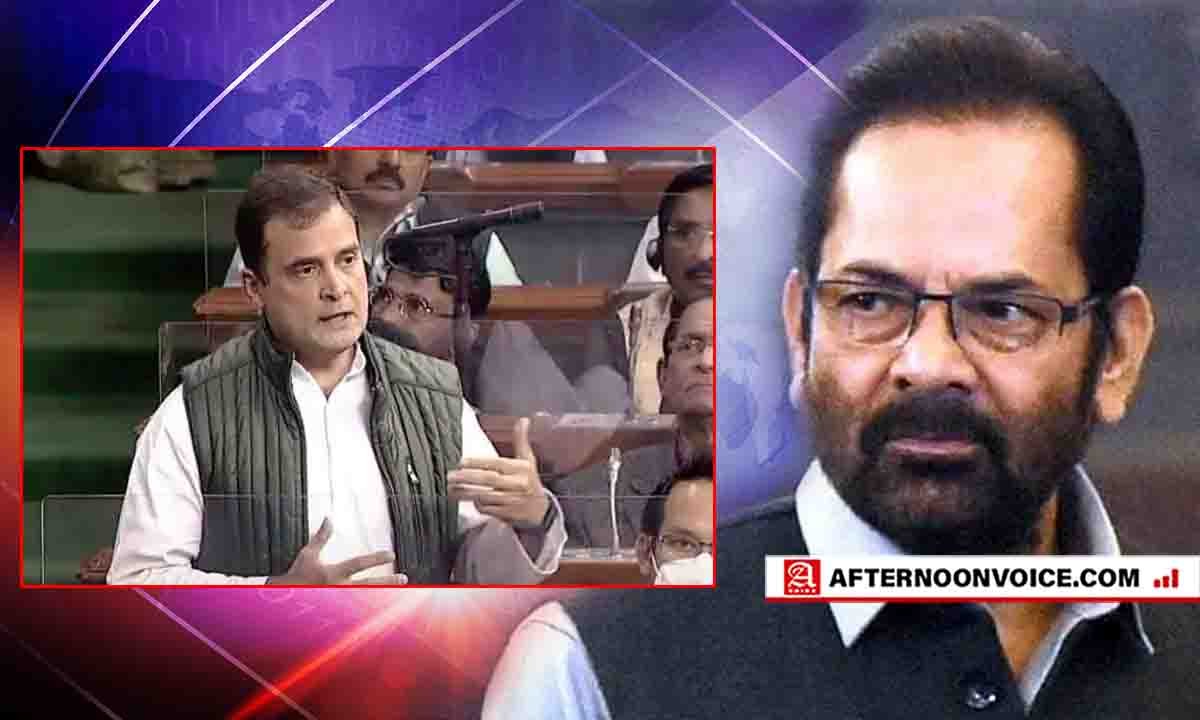
Union Minister of Minority Affairs Mukhtar Abbas Naqvi on Thursday slammed Congress and the governments led by the party before 2014, saying they have to get out of “Indira is India” belief to understand that there are no two Indias.
Speaking on behalf of the BJP during an ongoing discussion on the Motion of Thanks to the President’s address, Naqvi said, “We need to get out of the hangover of thinking of Indira is India and India is Indira and Congress is the country and the country is Congress”.
Congress leader Rahul Gandhi on Wednesday, criticizing the Presidential address that marked the beginning of the Budget Session of the Parliament, said the speech had no strategic vision and did not touch upon the main challenges that our country is facing currently including the growing gap between the extremely rich and the poor in the country.
Naqvi also informed the House that the PM Modi-led government has ended the rule of “cuts, commissions, family politics, Article 370 from Jammu and Kashmir, and brought Citizenship Amendment Act to protect religiously persecuted people”.
The BJP leader said there are two India; one is of the sanatani or thinking and the other of samanti or feudal. Listing 28 changes by the PM Modi government, Naqvi spoke on how the situation has changed since 2014 and the ruling of cuts, commissions have been stopped completely.
In the Modi government, Naqvi said “the politics of the country is not being decided on the basis of the political circumambulation of the family, and that it is now based on hard work of eligible people.” The Modi government ended the red beacon culture and the politics of power, Naqvi said, adding “We also destroyed political appeasement.”
After becoming Prime Minister, Narendra Modi made laws that were needed and removed those in which rules were not framed and these were lying for years without any use, he added. The Minister said a total of 1,500 such unused laws were repealed.
Naqvi further said “week of riots” and “months of terrorist blasts” have come to an end, and “we replied to the neighbouring country by doing surgical strikes against its terrorist activities”. Referring to late Prime Minister Rajiv Gandhi’s statement that money sent by the Central government from Delhi does not reach people in its original form, the Minister said that this scenario has now changed and people receive what is sent by the Central government.
Noting that there was a time when decisions of the Supreme Court were rendered ineffectual, Naqvi said, “The government took steps to make Supreme Court’s decision on Triple Talaq effective and brought forth a law to protect the rights of Muslim women.” Naqvi also mentioned how the government abolished Article 370 from Jammu and Kashmir, saying that the law which cut off the erstwhile state from the country’s stream of development was removed.
Bypassing the Citizenship (Amendment) Act, 2019, Naqvi said, “Modi government provided citizenship rights to people persecuted on the basis of religion and allowed citizenship to six undocumented non-Muslim communities from Pakistan, Afghanistan and Bangladesh who entered India on or before December 31, 2014.” The Minister also added that the CAA helped in bringing the minorities from Afghanistan after the Taliban took over the country.
The CAA was passed by Parliament on December 11, 2019, and the Act was notified within 24 hours on December 12. CAA exempts the members of the six communities from any criminal case under the Foreigners Act, 1946 and the Passport Act, 1920.
Nitesh Rane sent to police custody till 4 February after he surrendered before the court 4
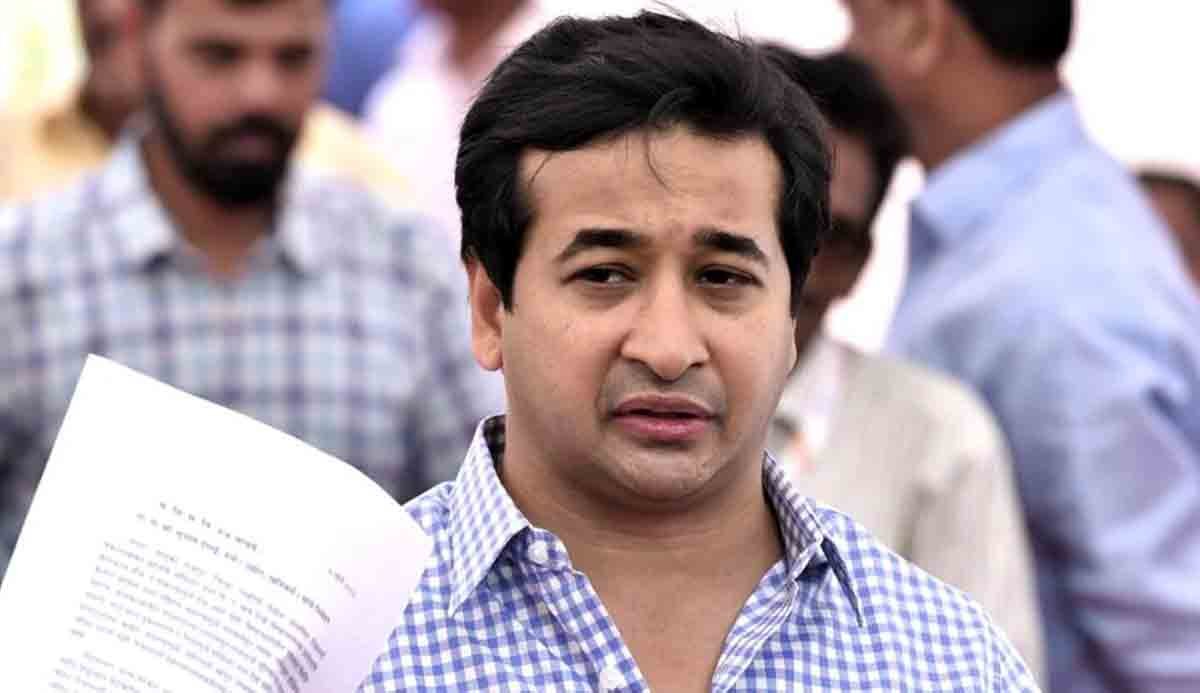
Bharatiya Janata Party (BJP) MLA Nitesh Rane on Wednesday surrendered before a court in the Sindhudurg district of Maharashtra in an alleged attempt to murder case and was remanded in police custody till February 4.
Nitesh, son of Union minister Narayan Rane, had withdrawn his bail plea from the Bombay High Court earlier in the day.
He subsequently surrendered before the Sindhudurg court, said special public prosecutor Pradip Gharat.
The prosecution then sought his police remand.
District and additional sessions judge (Sindhudurg) R B Rote had on Tuesday rejected Rane’s bail application, saying it was “premature and not maintainable”.
The court had also held that custodial interrogation of Nitesh Rane was necessary as probe into the attempt to murder case was “incomplete.”
The case pertains to an alleged attack on Shiv Sena activist Santosh Parab during the campaigning for the Sindhudurg District Co-operative Bank elections.
The BJP MLA had claimed that he was being targeted by the ruling Shiv Sena (which heads the MVA coalition government in Maharashtra) as it felt slighted by an incident of mocking outside the state legislature complex here last December.
It was a political vendetta, he had alleged.
A Shiv Sena MLA had alleged that Nitesh Rane made a ‘meow meow’ sound to mock minister and Sena leader Aaditya Thackeray on December 23 during the winter session.
Nitesh’s father Narayan Rane, a former Shiv Sena leader, is a bitter critic of his former party and its leader, chief minister Uddhav Thackeray.
Earlier on Wednesday, the BJP MLA’s lawyer Satish Maneshinde told Justice C V Bhadang of the high court that he would like to withdraw the application seeking bail.
“The applicant intends to surrender and wants to join the investigation. This is despite the fact that the applicant still has five more days of protection from arrest granted to him by the Supreme Court on January 27,” Maneshinde said.
Justice Bhadang then allowed the withdrawal.
Nitesh Rane’s pre-arrest bail pleas had been rejected by both the lower court and the HC earlier.
The MLA then approached the supreme court, which on January 27 asked Maharashtra Police not to arrest him for ten days, and directed him to appear before the court in Sindhudurg and seek regular bail.
'Gati Shakti' – Budget 2022 focuses on improving infrastructure and boosting growth 6
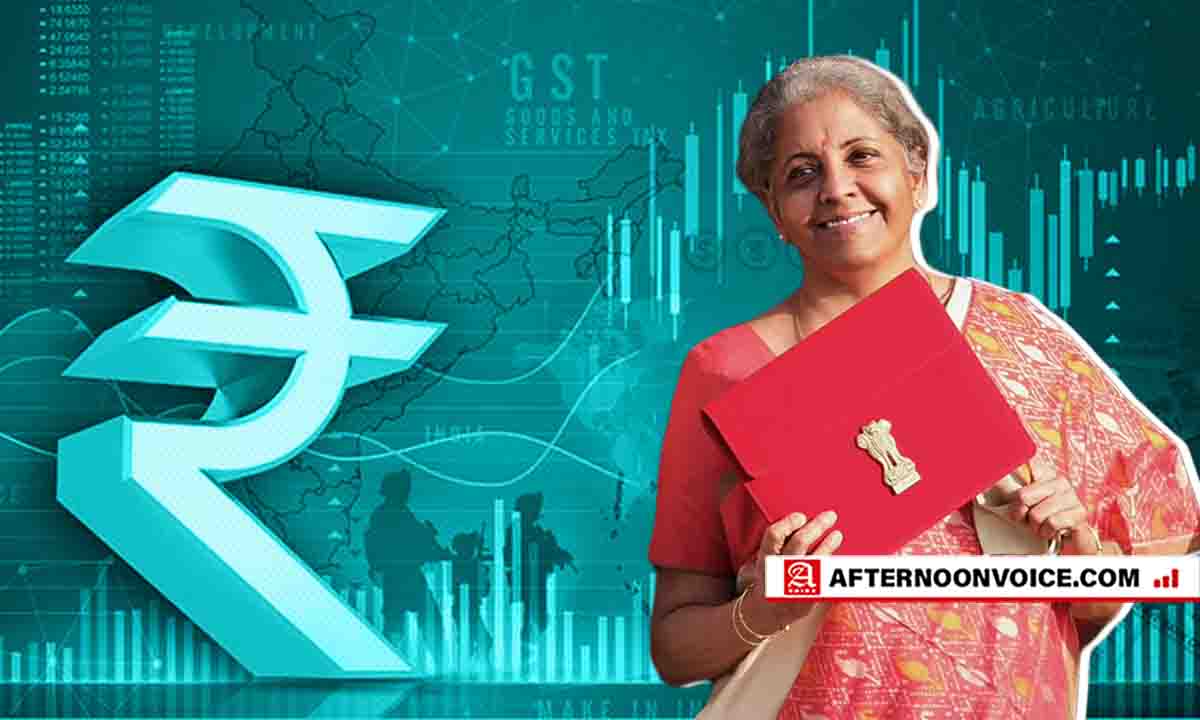
The government has said this year’s Budget focuses on improving infrastructure to boost growth amid the COVID-19 pandemic. Some of the key announcements include expanding the National Highways network by 25,000 km this fiscal and an emergency credit line guarantee scheme for small and medium-sized businesses extended to March 2023. This being the 75th year of India’s independence, Prime Minister Narendra Modi’s government decided to market its annual budget as a blueprint for the next quarter-century. “GatiShakti,” which is Hindi for kinetic energy, is Modi’s idea for speeding up the movement of goods and people.
“Drone Shakti” programme for start-ups on drone technology, Defence research to be opened up for start-ups, start-ups’ incorporation period extended till March 31, 2023, to claim tax incentives. 75 digital banking units in 75 districts by scheduled commercial banks, Digital rupee using blockchain to be issued by RBI are some of the vital key programs introduced in this budget.
Tax slabs remain unchanged, but taxpayers can now file updated income tax returns within two years in a one-time window. 5G mobile services to be rolled out within 2022-23. E-passports with embedded chips and futuristic technology to be rolled out next year. In boost to EV sector, battery swapping policy to be introduced. A 30 per cent tax will apply on income from the sale or acquisition of virtual and digital assets such as cryptocurrency.
Afternoon Voice took expert’s opinion on the Budget 2022, Devendra Fadnavis, former Chief Minister and Leader of Opposition in the Legislative Assembly said, “This Budget looks to the future of India. This is a budget that is more balanced, inclusive and leads to a development on economic parameters, The investment of Rs 7.50 lakh crore in the infrastructure sector is historic. Pradhan Mantri Gatishakti Yojana will be a major investment in roads, railways, waterways, and ropeways. The decision to provide additional capital to industries emerging from the Corona period as well as the scheme has been extended till March 2023. It will have an investment of Rs 5 lakh crore. A booster of Rs 2 lakh crore has been given to micro, small and medium enterprises. This sector generates more employment.”
Chandra Shekhar Ghosh, MD & CEO, Bandhan Bank said, “The Union Budget for 2022-23 seeks to support the recent economic growth momentum India has seen, and help it sustain over the long-term. The substantial rise in planned capital expenditure for the creation of infrastructure, focus on affordable housing, welfare & development of MSMEs, and the farm economy will prepare India for the next phase of growth. This can lead to the creation of millions of new jobs, helping India leverage its young demographic dividend. The new business opportunities and enterprises that will come up due to these projects will also benefit the banking sector. The extension in the timeline and increased outlay towards ECLGS and an additional infusion of funds in the Credit Guarantee Trust for Micro and Small Enterprises will provide relief to MSMEs, especially those engaged in contact-intensive sectors, who have been adversely impacted due to the pandemic. The significant additional allocation towards PM Awas Yojana will boost demand for affordable housing and in turn demand for housing finance. It was also heartening to hear about the Prime Minister’s Development Initiative for the North East Region find special mention in the Budget, in line with the CAPEX projects planned for the rest of the country.”
Siddhartha Sanyal, Chief Economist and Head of Research, Bandhan Bank said “The Budget aimed at near term boost to consumption, as well as creating the necessary physical and social infrastructure to support the country’s long-term growth ambitions. The Budget attempted to balance the needs of large and small industries and various segments of the population in the budget. While the details of the plans related to government borrowing need to be scrutinised closely, the Finance Minister was mindful of not allowing the deficit to balloon. The focus to support MSMEs by the extension of the ECLGS scheme till March 2023, with a larger corpus of the fund is a welcome step. The CGTMSE scheme to support small and micro enterprises should also provide much-needed support for this segment. Extending support for the affordable housing sector is heartening given the strong forward and backward linkages of this sector and its potential to generate employment at various levels. The focus on some of the long term priorities such as skill development, financial inclusion, social security, and clean energy in the budget remains noteworthy.”
MD & CEO at Bank of India, Atanu Kumar Das told Afternoon Voice “ Union Budget’s focus on significantly higher public investment pump-priming private investment will lead to multiplier effects across all segments of the real sector.”
Himanshu Pujara, Regional MD, APAC, Euronet Worldwide said, “Money has changed forms over centuries. From salt & cattle to now paper money which lasted the longest time. This is a historic budget that has defined the future of money i.e Digital Currency. A landmark step that will improve the economy and reduce Its dependence on paper money. We welcome the introduction of the Digital Rupee using blockchain technology by RBI.”
Pranay Jhaveri, MD, India and South Asia, Euronet Worldwide said, “We see that government has laid out a strong framework for a digital ecosystem to make it safer, secure and affordable for individuals and businesses. With the target to complete the laying of optical fibre in villages by 2025, settlement of 75% of running bills in 10 days, and setting up online eBill system are focused projects to expand digital infrastructure, improve internet access, increase payment touchpoints across hinterlands of India. The introduction of digital currency will bring in security and transparency. We also welcome the initiative of setting up 75 banking units in 75 districts. As 1.5L post offices come into the core banking fold, we hope that ATMs will become as ubiquitous as post boxes which will directly serve the financial inclusion narrative of India.”
Hardika Shah, Founder & CEO, Kinara Capital said, “Union Budget 2022-23 has presented a comprehensive package of policy announcements aimed at supporting the recovery of MSME. Aside from the critical announcements about the extension of the ECLGS scheme and the revamp of the CGTMSE program, along with the infusion of additional funds, the government’s focus on RAMP is also commendable, as it will define the path to sustainable and responsible development for the sector. We also look forward to the interlinking of MSMEs formalization and compliance platforms, as this stands to facilitate operability, therefore improving entrepreneurial opportunities in the sector. The digital focus of the Budget, with support for the digital ecosystem and payment platforms, also bodes well for small businesses, as we foresee the future of the sector being tech-led.”
Priyanka Gandhi to Finance Minister Nirmala Sitharaman, “You did not put anything in the Budget bag for UP, okay… but what was the need to insult the people of UP like this? Understand that the people of UP are proud to be a ‘UP type. We are proud of the language, dialect, culture and history of UP.”
Rahul Gandhi’s “zero-sum” swipe mirrors what his party colleague and former Finance Minister P Chidambaram said on the Budget, that there was “zero cash assistance, zero for those who lost their jobs, zero for those who’re looking for their jobs, zero for MSMEs…” “Modi Government’s Zero-Sum Budget! Nothing for salaried class, middle class, the poor and deprived, youth, farmers, MSMEs,” Rahul Gandhi tweeted.
Andy Mukherjee, of Bloomberg, writes his column “Sitharaman’s budget is risky because her choices were limited. India’s extremely low employment-to-population ratio points to 200 million missing jobs. Young people are delaying joining the workforce while women have left it in large numbers. By the time Modi’s “kinetic energy” plan charges up the transportation sector, India may be celebrating its 100th year of independence. Today’s young workers would be middle-aged. Missing out on a generation in its prime would be a tremendous waste of potential.”
Are the Sikh protesters becoming powerful across the globe? 8
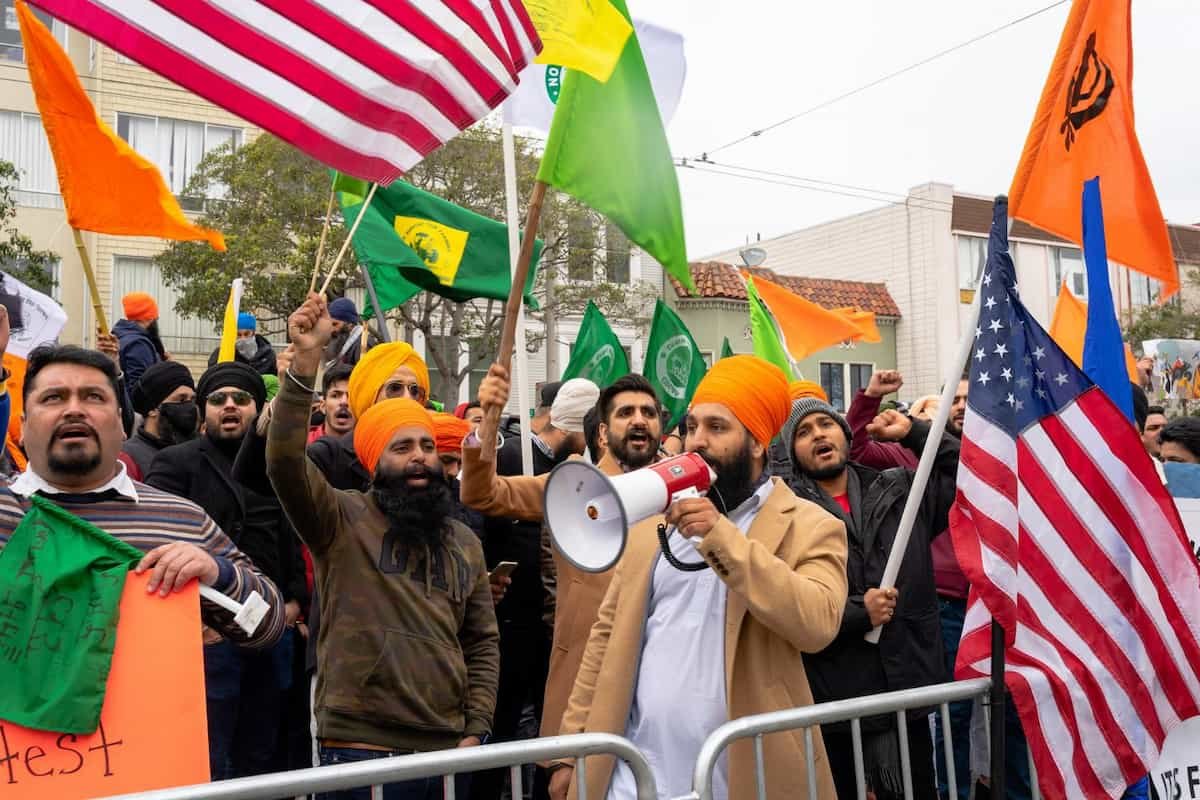
Be it Indian farmers’ protests or now in Canada the trucker’s agitation, the Sikh protests are successful enough to force respective governments to bow down to their demands. Similar to how roads leading to Delhi were blocked due to the long-standing farmer protests on its borders from November 2020 to December 2021, thousands of protesters gathered in Canada’s capital to protest vaccine mandates, masks and lockdowns. They are protesting against a new rule requiring truckers entering Canada be fully immunized against the coronavirus.
The Canadian Trucking Alliance said a great number of the protesters have no connection to the trucking industry. No one knows where these people got in agitation and disrespecting Canadian monuments. Some parked on the grounds of the National War Memorial and danced on the Tomb of the Unknown Soldier, others carried signs and flags with swastikas and some used the statue of Canadian hero Terry Fox to display an anti-vaccine statement, sparking widespread condemnation.
The convoy of truckers and others prompted police to prepare for the possibility of violence and warn residents to avoid downtown. A top parliament security official advised lawmakers to lock their doors amid reports their private homes may be targeted. Trudeau has said Canadians are not represented by this “very troubling, small but very vocal minority of Canadians (Sikhs).
Over the weekend, hundreds of truckers drove their giant rigs into the Canadian capital Ottawa. This so-called “Freedom Convoy” — coming from east and west — started out as a rally against a vaccine requirement for cross-border truckers, but has turned into a demonstration against government overreach during the pandemic with a strong anti-vaccination streak. The streets of Ottawa’s city center were packed with trucks as the blaring, non-stop honking of dozens of air horns filled the air.
Protesters compared vaccine mandates to fascism, one truck carried a Confederate flag and many carried expletive-laden signs targeting Canadian prime minister Justin Trudeau. The initial motivation for the protest was a new rule requiring truckers to show proof of vaccination when entering Canada, which Prime Minister Justin Trudeau’s government implemented on 15 January. Until then, truckers had been allowed to cross the US-Canada border with few restrictions. The US imposed a similar mandate on 22 January.
But the protest has morphed into a catch-all movement of people angry at public health restrictions meant to control the spread of COVID-19. Fearing the situation, Canadian prime minister Justin Trudeau and his family left their home in the country’s capital and shifted to a secret location. The protests also prompted a top Parliament security official advising lawmakers to lock their doors amid reports their private homes may be targeted.
The movement also received an endorsement from former US president Donald Trump and some Fox News personalities. Social media users in India said that Trudeau is receiving a retribution for supporting the farmer protests in India that lasted for over a year. In December 2020, Trudeau had come out in support of the farmers’ protests. India had then termed it “ill-informed” and “unwarranted”.
However, not all Sikh leaders in Canada condone the protest, which reportedly has been “hijacked by radical white truckers” opposed to Trudeau for reasons beyond vaccine concerns. Meanwhile, hours into the protest in Ottawa, what started out as opposition against mandatory vaccination for cross-border truckers had grown into the public protesting the Canadian government’s “overreach” in handling the pandemic, including a demand to repeal all public health measures. The rules in the US are irrelevant once you arrive at an international border. If Canada or Mexico says that all foreign nationals need to be vaccinated in order to cross the border, then all foreign nationals need to be vaccinated in order to cross the border.
Some statements by protestors included threats of violence and a call to overthrow Trudeau’s government. Same as Indian farmers threatened to throw out the Modi government. Be in Sikh protests in Canada or be it Sikh protests in India, somewhere this community has grown so huge in their protesting mechanism that they can create unrest in any nation where they are a minority? Or some outside interests want to create the illusion of equal pressure on both sides of the border. American truckers are 50% unvaccinated, compared to 10% to 15% in Canada, so American truckers would gain bigly if they could get the border restrictions changed. Plus, it stands to reason that there must be 10x more American truckers than Canadian ones, given that there are 10x more people in the USA.
Could it be that Canadian truckers are actually taking cross-border work away from Americans? In any case, I keep wondering who benefits from the protest because it sure isn’t the truckers. Some big shipping company like Amazon or FedEx? or some giant retailer like Walmart? The puzzling appearance of US Civil War flags and the inexplicable blaming of Antifa for the petty vandalism seems very unCanadian to me. People fail to realize that if Canada/American Truckers go on strike, there will be more deaths than COVID, Truckers are the backbone of any country. If the day comes when they don’t deliver supplies, like food or medicine people will die and there will be chaos. So, it would not be in the best interest of anyone to start with them. There is a shortage of drivers already.
In India also there was similar argument, farmers are the backbone of the nation, of the protest who will provide us grains and vegetables? People will soon be dying of hunger and poverty. Crores of rupees were spent on demoralizing the protesters, and millions of funding came from various sources to support the agitators. Agitations are the right of people but motives need to be clear.
Anna Hazare condemns the Maharashtra Government ill-fated decision of selling wine in grocery shops 10
Social activist and anti-corruption crusader Anna Hazare said, “The decision to sell wine in supermarkets and walk-in stores across the state is very unfortunate. Alcoholism is one of the major causes of brutal crimes across the country. State governments should ban alcohol rather than promoting its sale to walk-in shops.”
Hazare further stated, “We need a people’s movement to curb the sale of illicit liquors. Village youth and officials should coordinate with each other to curb the menace” Anna Hazare who always protested against alcoholism felt pained with such mindless decisions of state government.
“Wine is not liquor. If wine sales increase, farmers will benefit from it. We’ve done this to double farmers’ income,” Raut had said on defending his government’s decision to allow the sale of wine in supermarkets walk-in stores.
BJP leader Kirit Somayya slammed Sanjay Raut accusing him of having a partnership with a wine company. Somaiya said, “The decision taken by the Maharashtra government is to benefit the family of Sanjay Raut which is in partnership with a wine company. Raut has a partnership in Maharashtra’s big industrialist Ashok Garg’s wine company named Magpie Global Limited. He has a big investment in this wine business, in which both daughters and wife of Sanjay Raut are in the position of director in the company. MADAK Global Private Limited was renamed Cloud Pie DFS Private Limited. His family gets a profit of about Rs 100 crores annually from Magpie Company.”
The BJP leader further alleged that the said company has a business of wine distribution and Raut’s investment in the company is the reason why he is supporting the decision of the government.
Ram Shere a right-winger said, “One regulated licensed legal shop on population base one per 20kms maximum is one and only solution. Other misleading prohibition of legal liquor trade can fetch few votes from the emotional public who don’t know the consequences of the ban which will prove to be a generator of black money to the bootleggers to the supporters of the ruling party and fund-raising tool to the ruling party, officials, local leaders, opposition as well.”
With the controversy sparked against the Maharashtra government’s wine policy, Shiv Sena MP Sanjay Raut slammed the BJP over their opposition against the government’s decision to allow the sale of wine in supermarkets. He said, “Fadnavis govt planned to make a policy of giving home delivery of liquor online, what was that? BJP MP Sadhvi Pragya said that liquor is medicine and drink it in small quantities.” The liquor home delivery policy also dates back to 2018, when the then government considered an online sale and home delivery policy.”
However, then chief minister Devendra Fadnavis had said there was no such plan. There was no such official decision taken by the government.
The Maharashtra cabinet headed by Chief Minister Uddhav Thackeray has already approved the sale of wine in supermarkets or walk-in stores. Currently, wine is produced in the state from fruits, flowers, and honey. Wineries will now be able to market their wines by selling them directly in supermarkets or in walk-in stores in a shelf-in-shop manner. The decision is expected to benefit small wineries and alternatively, farmers in the state.
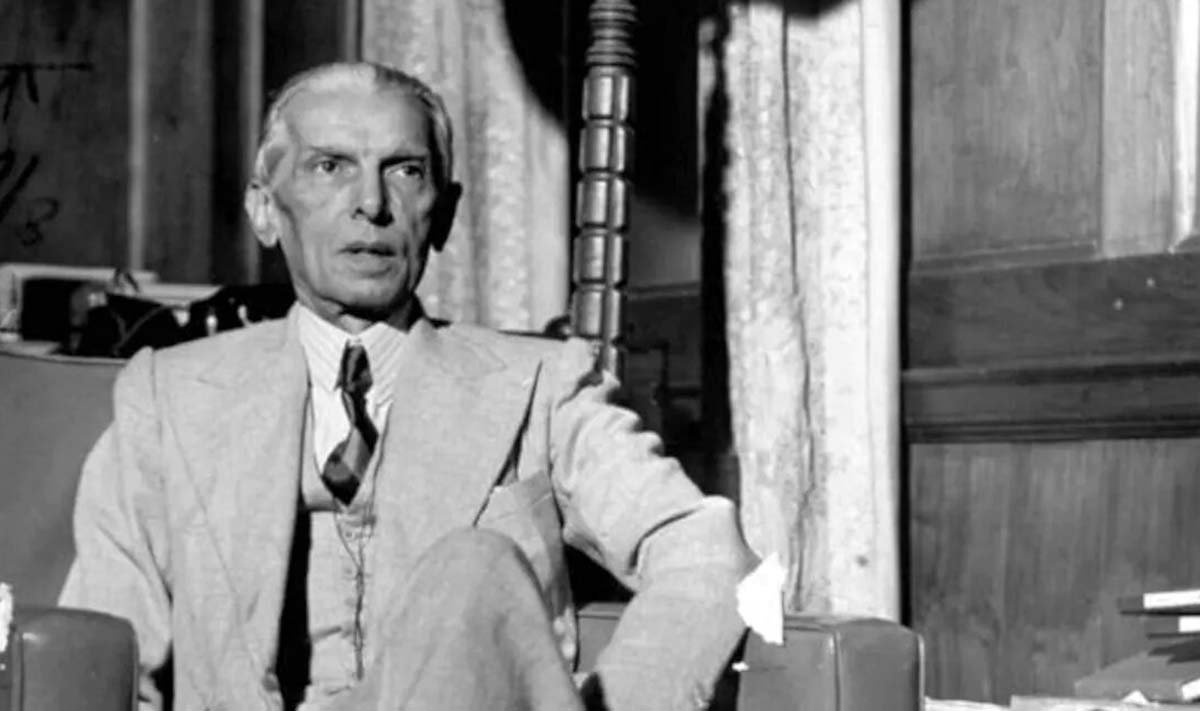
Today Sanjay Raut irked right-wingers stating that the real ‘Hindutvavadi’ would have shot Pakistan’s founder Muhammad Ali Jinnah and not Mahatma Gandhi. Raut was responding to a tweet by Congress leader Rahul Gandhi in which he said a Hindutvavadi shot Mahatma Gandhi dead but “Bapu is still alive where the truth prevails today.” Nathuram Godse, a member of Hindu Mahasabha, assassinated Mahatma Gandhi at Birla House in New Delhi during a prayer meeting in Birla House in New Delhi on January 30, 1948. Godse was a member of Rashtriya Swayamsevak Sangh (RSS) as well but his affiliation to the saffron organisation at the time of assassination remains contested.
Rahul Gandhi earlier sued for defamation over his comment blaming the RSS for Mahatma Gandhi’s assassination, while campaigning for the 2014 national election. Rahul had refused the court’s suggestion last year that he apologize and settle the case. Answering queries on the defamation case filed by Rashtriya Swayamsevak Sangh (RSS) worker Rajesh Madhav Kunte, Rahul Gandhi said, “Stand by what he said about RSS will never stop fighting its hateful agenda.” He has told the Supreme Court that he had never blamed the RSS as an institution that killed Mahatma Gandhi but had stated that a person associated with it was responsible for his assassination. However, the Congress leader took to Twitter to say that he stands by every word he said. Though BJP then made a complaint against Rahul Gandhi for his remarks linking the RSS to Mahatma Gandhi’s killing. But still, we all know, RSS’ ideology was behind the assassination of Mohandas Karamchand Gandhi, in 1948.
Mohandas Karamchand Gandhi, known around the world as Mahatma Gandhi, the “Father of the Nation”, was shot dead by Nathuram Vinayak Godse, a Chitpavan Brahmin from Pune. You can find bulks of arguments defining whether Godse was, at that time, a member of the RSS, or indeed of the Hindu Mahasabha, or perhaps of neither organization. Though Godse single-handedly carried out the execution of Gandhi, others were too implicated in the assassination plot, and among those against whom the Indian government filed charges was Veer Savarkar. Godse was very close to Savarkar, who was a prominent leader of the Hindu Mahasabha. Godse was a frequent visitor to Savarkar’s residence, and he did not, in the time that intervened between his arrest on January 30 and his execution upon conviction of the charge of murder nearly two years later, ever disown his association with the Mahasabha.
Whether Godse formally remained a member of the RSS is much less important than the fact that though the Hindu Mahasabha and the RSS had some ideological differences, both organizations were united in their extreme hostility to Gandhi as well as to Muslims. Golwalkar and Savarkar shared a platform in Pune in 1952. Following Gandhi’s murder, RSS and other Hindu organizations lost the sympathy and goodwill of people and government. Opposition turned more severe when the RSS men expressed joy and distributed sweets after Gandhi’s death.
Godse left the RSS in the early 1940s and formed a militant organization called Hindu Rashtra Dal. He believed Gandhi was giving in to Muslim interests, which he deemed anti-national. Godse believed that Gandhiji, while advocating his views, always showed or evinced a bias for Muslims, prejudicial and detrimental to the Hindu Community and its interests. But if you refer to Wikipedia, it says, Millions of Indians mourned Gandhi’s assassination; the Hindu Mahasabha was vilified and the Rashtriya Swayamsevak Sangh was temporarily banned. However, investigators could find no evidence that the RSS bureaucracy had formally sponsored or even knew of Godse’s plot. The ban on the RSS was lifted in 1949. To this day it denies any connection with Godse and disputes the claim that he was a member. However, Godse’s brother Gopal Godse claims that all the Godse brothers were members of the RSS at the time of the assassination. Nathuram, Dattatreya, Govind, grew up in the RSS rather than in their home. It was like a family to them. Nathuram had become a baudhik karyavah [intellectual worker] in the RSS. He has said in his statement that he left the RSS. He said it because Golwalkar and the RSS were in a lot of trouble after the murder of Gandhi. But he did not leave the RSS.
In 2014, following the Bharatiya Janata Party’s rise to power, the Hindu Mahasabha began attempts to rehabilitate Godse and portray him as a patriot. It requested Prime Minister Narendra Modi to install the bust of Godse. It created a documentary film Desh Bhakt Nathuram Godse (Patriot Nathuram Godse) for release on the death anniversary of Gandhi on 30 January 2015. There were attempts to build a temple for Godse and to celebrate 30 January as a Shaurya Diwas (“Bravery Day”).
A civil suit was filed in Pune Court asking for a ban on the documentary film. Anyways many documentations and evidence prove that Godse was an RSS member, and learning that if Rahul Gandhi makes any such comment it is just an expression. Still, I don’t want to contempt the court decision, but SC should know that in politics collective denunciation is common. And if one is punished then rest all should also be punished.
Rahul has so far maintained that his statement blaming the RSS for Gandhi’s assassination was based on a High Court judgment and on the basis of certain documents. The court observed that the statement was arguably made on the basis of a court verdict but the case must be decided on merits.
Any suggestions, comments or disputes with regards to this article send us at feedback@www.afternoonvoice.com
Union Budget: Expectations on changes in income tax slabs and rates 14
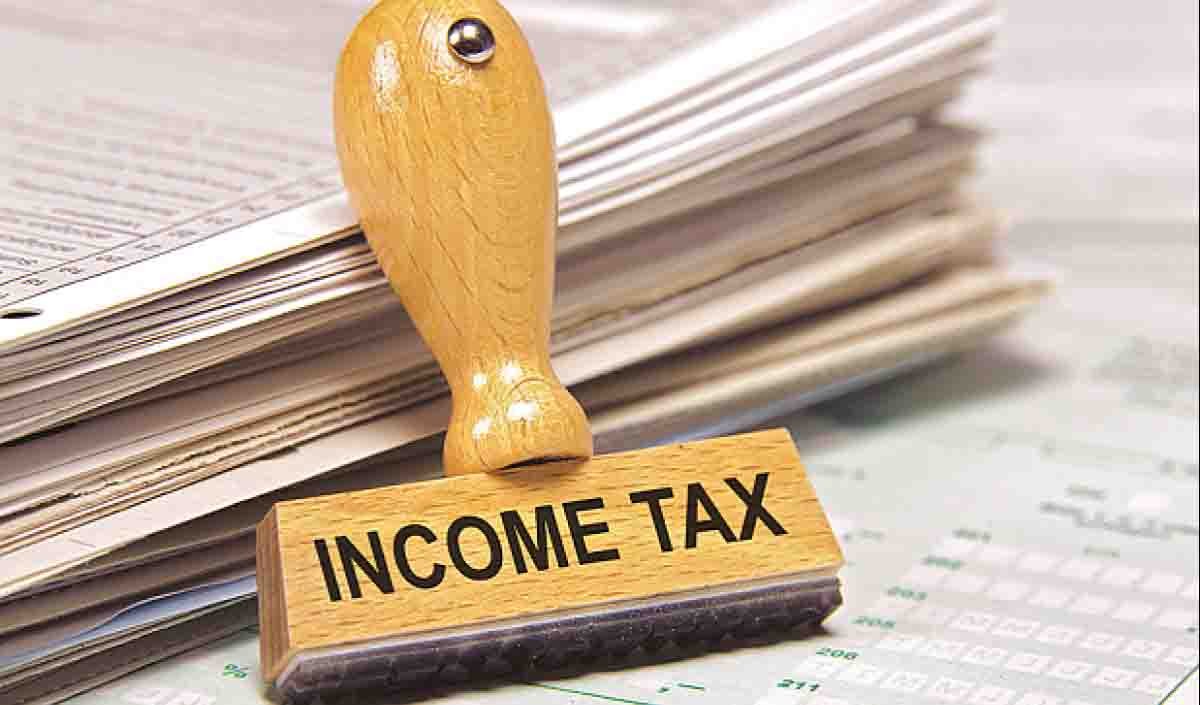
One of the most keenly awaited announcements in the union budget every year is related to personal taxation. In every budget income tax rates and slabs are reviewed. However, the income tax slabs have not been changed since 2014. Will Finance Minister Nirmala Sitharaman change the slabs and give relief to taxpayers in the budget on Tuesday?
The basic personal tax exemption limit was last revised in 2014. Presenting the first budget of Prime Minister Narendra Modi-led government in 2014 the then Finance Minister Arun Jaitley raised the basic income tax exemption limit from Rs 2 lakh to Rs 2.5 lakh. For senior citizens, the exemption limit was increased from Rs 2.5 lakh to Rs 3 lakh. The basic exemption limits have not been changed since then. Nirmala Sitharaman is set to present her fourth union budget on February 1, 2022. Some analysts feel that the finance minister may announce major relief to taxpayers.
The expected relief include an increase in the basic exemption limit from Rs 2.5 lakh to Rs 3 lakh. For senior citizens, it is likely to be increased to Rs 3.5 lakh from the present Rs 3 lakh. The top income slab is also likely to be revised upward from the existing Rs 15 lakh.
According to a pre-budget survey conducted among different stakeholders by KPMG recently, the majority (64 per cent) of respondents expect an enhancement in the basic income tax exemption limit of Rs 2.5 lakh. “Our pre-budget survey indicates that relief for individual taxpayers by way of an enhancement in the basic income tax exemption limit of Rs 2.5 Lakh is highly awaited. Respondents also support an upward revision in the top income slab of Rs10 lakhs,” said Rajeev Dimri, Partner and National Head of Tax, KPMG in India.
Although Sitharaman has not changed tax slabs and rates, she introduced a new tax regime in budget 2020. Under the new tax regime, the tax rates are reduced for those willing to forego tax exemptions and deductions. The new tax regime remains optional for taxpayers. This means a taxpayer has the option to either stick to the old regime or choose the new one.
Currently, income up to Rs 2.5 is exempt from taxation under both regimes. Income between Rs 2.5 to Rs 5 lakh is taxed at the rate of 5 per cent under the old as well as the new tax regime. Personal income from Rs 5 lakh to Rs 7.5 lakh is taxed at a rate of 20 per cent under the old regime, while under the new regime the tax rate stands at 10 per cent. Income between Rs 7.5 lakh to Rs 10 lakh is taxed at a rate of 20 per cent in the old regime, while in the new regime the tax rate stands at 15 per cent.
Under the old regime personal income above Rs 10 lakh is taxed at a rate of 30 per cent. However, under the new regime, there are three slabs above Rs 10 lakh. Personal income between Rs 10 lakh and Rs 12.5 lakh is taxed at a rate of 20 per cent under the new regime. Income from Rs 12.5 lakh to Rs 15 lakh is taxed at 25 per cent and income above Rs 15 lakh is taxed at a rate of 30 per cent. The effective tax rate is much higher due to cess and surcharges.
An individual with a net taxable income of up to Rs 5 lakh is allowed to avail tax rebate of up to Rs 12,500 under Section 87A in both the old as well as the new tax system. So effectively, the tax liability of individuals with income up to Rs 5 lakh is zero under both the tax regimes. The limit for deduction under Section 80C has also remained unchanged since 2014. In the 2014 budget, the 80C deduction limit was increased to Rs 1.5 lakh from Rs 1 lakh, while the deduction limits for interest on the home loan was increased to Rs 2 lakh from Rs 1.5 lakh.
Both these deductions remain unchanged since 2014. However, some additional deductions have been introduced in the subsequent budgets. In the 2015 budget, the government introduced an additional deduction of Rs 50,000 for contribution under the National Pension Scheme (NPS) under Section 80 CCD. The deduction limit on health insurance premiums was also increased from Rs 15,000 to Rs 25,000. Major steps towards simplification and rationalisation of the income tax regime are also expected in this year’s budget.
In the Budget 2020-21, around 70 exemptions and deductions of different nature were removed. The finance minister had announced that the “remaining exemptions and deductions will be reviewed and rationalised in the coming years with a view to further simplifying the tax system and lowering the tax rate.” In the 2021-22 Budget the finance minister did not make any significant change in the income tax rates or slabs.
“Although the Government has taken several measures to resolve tax disputes and overhaul the tax dispute resolution framework over the past few years, further measures in this regard may help in reducing litigation. Rationalisation of TDS and TCS provisions to ease compliance burdens will also be welcome,” said Dimri.
BMC elections to be delayed, all eyes on revised ward boundaries as SEC gears up for civic elections 16
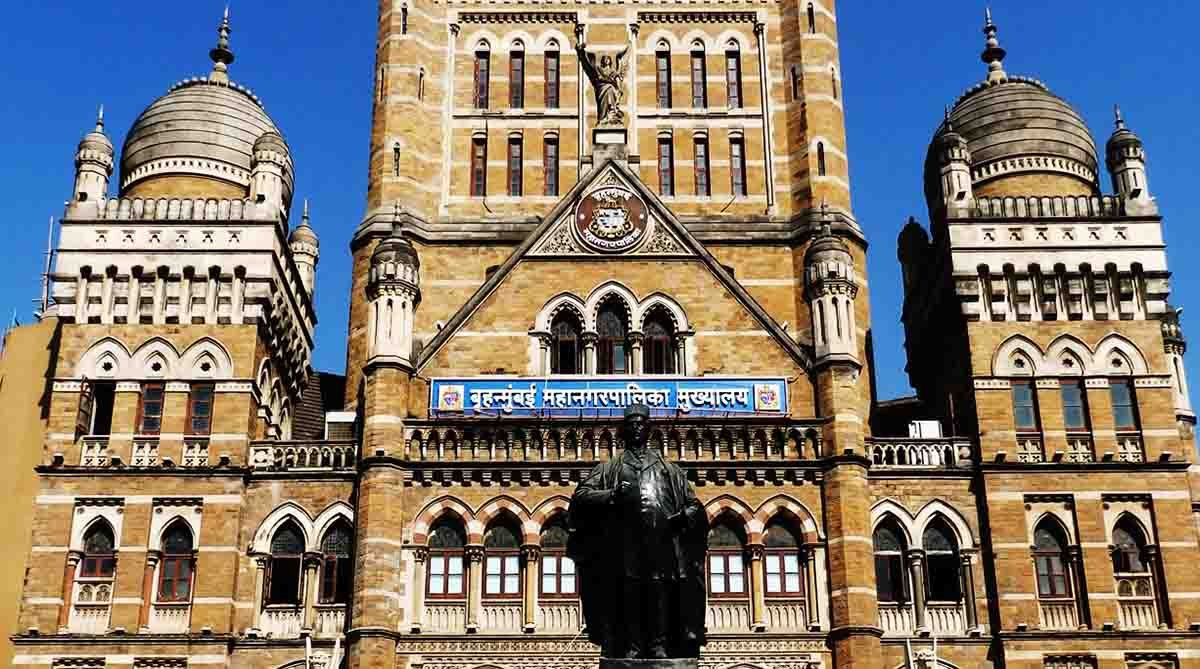
The number of electoral wards in the city will increase from 227 to 236. The SEC has directed BMC to publish the revised boundaries of wards on February 1 and invite suggestions/objections up to February 14.
A hearing on suggestions/objections received will be held on February 26, and a report will be submitted to the SEC by March 2. The same timetable will apply to other corporations including Thane, which is also going to the polls. The state cabinet had approved the proposal to increase electoral wards in the BMC and to have multiple panel wards for other corporations.
The state legislature gave its approval for amending various Acts for it. Setting the ball rolling for elections to the BMC and14 other municipal corporations in the state, the State Election Commission (SEC) on Saturday chalked out the timeline for finalizing boundaries of wards after they were increased in Mumbai and determining multiple panel wards in the other civic bodies.
With the timeline stating the final list of ward limits will be published on March 2, the polls to India’s richest civic corporation, the BMC, are set to be delayed and could possibly be pushed to late March or April. Once the new BMC electoral ward limits are decided, the lottery forward reservation too will have to take place before civic elections are held.
In a letter to the BMC and other local bodies, SEC has said finalizing reservations for OBCs will take some time. The state government had filed a special leave petition in the Supreme Court, which directed the state to submit details to the OBC commission. The panel will study data and in turn make recommendations to the state and also to the SEC.
“Since taking a decision based on recommendations of the OBC commission will take some time, the SEC in the meantime has decided to finalize ward boundaries. It will be the responsibility of the civic body to complete the exercise within the given timeline and the details are to be posted on the corporation’s website and submit a report to the SEC on completion of each step,” the SEC letter read.
The total population of the city, as finalised for the 236 wards, is 12.44 million. The SEC has accepted the ward-wise SC and ST population details provided by the BMC. Of the 236 wards, 50% are reserved for women. Of the 236 wards, 15 wards have been reserved for SCs and two for STs. In March 2021, SC had said reservations for OBCs in the state’s local bodies cannot exceed the total ceiling of 50% for SCs, STs and OBCs.
After the order, the state-appointed a commission to collect empirical data and promulgated an ordinance to give up to 27% reservation to OBCs without exceeding the 50% ceiling. But SC stayed it, saying it cannot be implemented without data. BJP MLA from Mulund Mihir Kotecha said the party will await details of ward boundaries.
“It is well known that a political agency affiliated with the ruling party (Shiv Sena) and not BMC has drawn up the ward boundaries. The pen drive submitted to BMC by the agency has been forwarded to the SEC,” he said. BJP had won 82 seats in the last civic elections and in over 25 seats, it won by a margin of fewer than 1,000 votes. “There is every likelihood booths have been adjusted such that BJP loses its winning edge. Boundaries are decided by arterial roads and major nullahs,” said BJP sources.
In Thane, SEC has okayed 47 multiple panel wards. The ward numbers will go up from 33 to 47. While 46 wards will have 3 members, ward No. 44 will have 4. The total representatives will go to 142 from 131.
Pratapsingh Rane can dent BJP's seat in Goa Poriem constituency 18
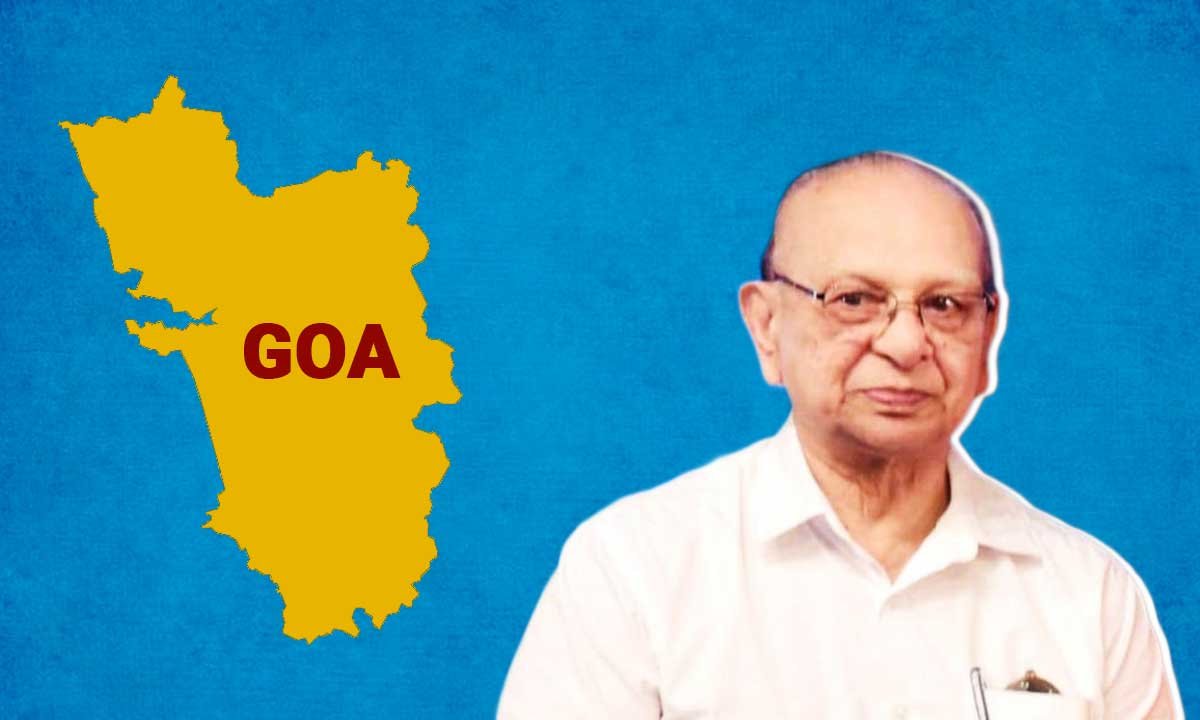
The six-time chief minister Pratapsingh Rane, who has famously never lost an election, will be up against his daughter-in-law Divya Rane, who has been announced as the BJP candidate for Poriem, a constituency that the senior Rane has represented since 1972 back when Goa was still a Union Territory and the constituency was called Satari. The 82-year-old Rane has made a series of flip flops on whether he will be contesting the elections.
Pratapsingh Rane, a 10-term legislator, is Goa’s longest serving MLA. He also holds a record for having served as chief minister of the state for a little less than 16 years across six terms between 1980 and 2007. He was the assembly speaker between 2007 and 2012. He has been continuously elected since 1972 to the then legislative assembly of the Union Territory of Goa, Daman and Diu.
After he initially announced that he would be contesting the upcoming elections, following the ‘requests’ of his workers and supporters, the Congress promptly announced that Rane would be the party’s candidate from the Poriem constituency. His decision was met with derision by his son Vishwajit Rane, a minister in the BJP government and legislator representing the neighboring Valpoi constituency. Vishwajit, who is nurturing dreams of his wife getting elected from the seat represented by his father, quite unkindly, suggested that his father should “retire gracefully”, and even threatened that the situation can get quite “messy”.
Rane has also been quick to counter BJP leaders every time they have suggested that he was quitting the Congress or that he was retiring from politics or that he has given his ‘consent’ to the BJP to field his daughter-in-law from his seat. In the 1980s, dissidents within the ruling Congress party sought to dislodge Rane from power, by appealing to New Delhi mostly unsuccessfully. Some of his later tenures in power earned criticism allegedly because of growing corruption during his regime.
He was leader of the Opposition while the Bharatiya Janata Party (BJP) ruled Goa from the late-1990s until early 2005. His critics, like the then editor of the local Goa newspaper Herald or O Heraldo, Rajan Narayan criticized Rane for not doing enough as the leader of the Opposition. Rane became chief minister after the Congress’s first-ever win in Goa in 1980 mainly as a “consensus candidate”, after a bitter battle for the top political slot between the then two Congress heavyweights, Dr Wilfred de Souza and Anant Narcinva Naik, also known as Babu Naik. Naik was subsequently largely marginalized in state politics, while Souza served under Rane in some of his cabinets.
After 5 years of BJP rule, Rane began his fifth term as chief minister in February 2005 after the government fell due to a split in the Goa BJP. A month later, however, the state was put under president’s rule for three months. Rane then served as chief minister for the sixth time, for two years until the June 2007 state elections. Though the Congress Party and its allies won a comfortable majority, Rane was forced to step aside as chief minister due to infighting within the state Congress party, and was forced to step aside in favor of a neutral candidate, Digambar Kamat.
Rane was, however, elected speaker of the state assembly when it reconvened a few days later. After the BJP attempted a “show of strength” to take over the Goa house, they were stifled by Rane. The BJP accused Rane of acting in a partisan manner to protect the Congress led government. On 21 December, the Congress high-command in Delhi approved Pratapsingh Rane’s nomination from the Poriem constituency. Rane being hardcore Congress man understand his party needs and he is all geared up to take on BJP.
Vishwajit, a former Congress leader, joined the BJP in 2o17. The MLA from Valpoi, who is also the health minister of Goa, is believed to have wanted his wife to contest from his seat while he moved to Poriem. Poriem and Valpoi — adjoining constituencies on the Karnataka-Goa border — have been bastions of the Rane family. While Pratapsingh had himself written to the Congress high-command to approve his nomination, he appeared non-committal in a press conference on 21 December.
Rane always stirred some or the other controversies, and also is accused by businessman Bhalchandra Naik for demanding Rs 10 Crore for being granted Environmental clearance for a mine, of which Rs 6 Crore had been paid to his son Vishwajit Rane, MLA from Valpoi. Recently Into a controversy for calling Goans in the UK as toilet cleaners. BJP can take advantage of these controversies by labeling Congress as a corrupt party, but Goen people are far away from national gossip, they will vote for him for his long bond with them. BJP is losing its leaders in Goa and also losing some seats to Congress veterans. Aam Aadmi, TMC, Rashtrawadi and Shiv Sena all are united to take on BJP in Goa, lets see who wins and how senior Rane can dent BJP’s seat.
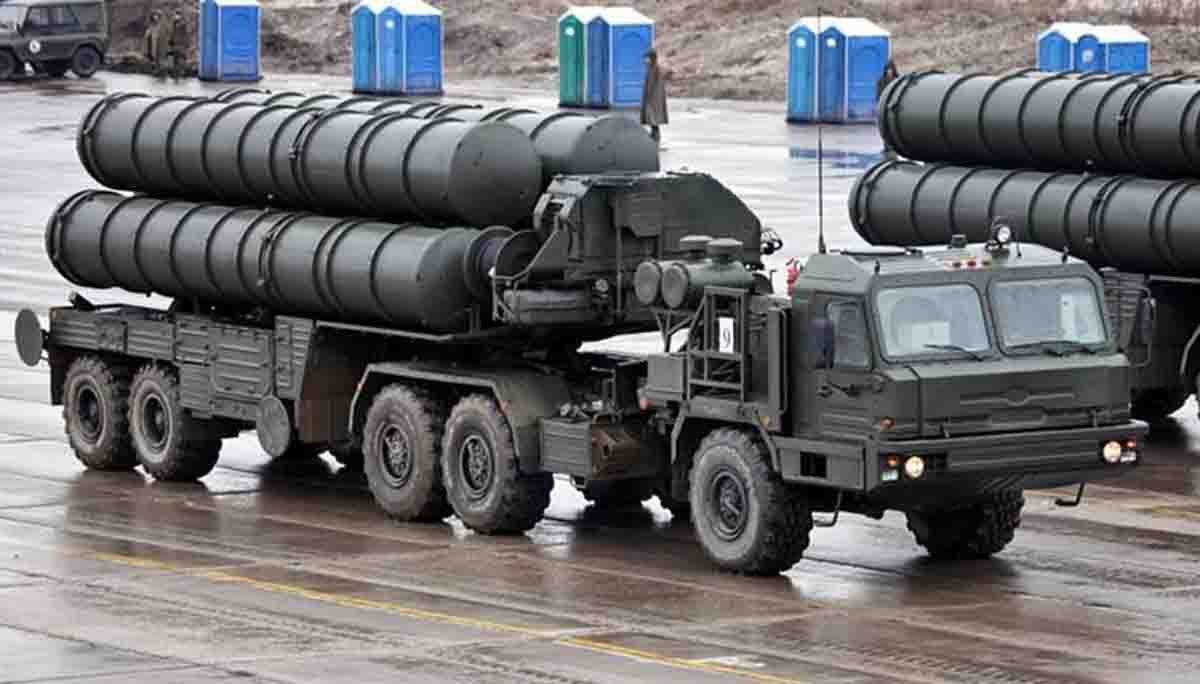
India's S-400 missile deal "Shines a spotlight on Russia's destabilising role": US 20
Russia selling the S-400 missile defence system to India “shines a spotlight on the destabilising role” that Moscow is playing in the region and potentially beyond as well, the United States has said.
The US continues to have its concerns over India purchasing the multi-billion missile defence system from Russia. India has asserted that its decisions are based on its national interest to protect its national security.
“Well in many ways, this doesn’t change the concerns that we have with the S-400 system. I think it shines a spotlight on the destabilising role that Russia is playing not only in the region but potentially beyond as well,” State Department Spokesperson Ned Price told reporters on Thursday at his daily news conference.
“When it comes to CAATSA sanctions, you’ve heard me say before, we haven’t made a determination with regard to this transaction, but it’s something we continue to discuss with the government of India given the risk of sanctions for this particular transaction under CAATSA,” he said.
Price was responding to a question on the implications of the Russian S-400 system to India on its bilateral ties with New Delhi given the unprecedented tension it is having with Moscow on what it calls an imminent Ukrainian invasion.
Despite strong objections from the US and the threat of sanctions from the Biden Administration, India has refused to make any changes in its decision and is going ahead with the purchase of the missile defence system.
“Whether it is India, whether it is any other country, we continue to urge all countries to avoid major new transactions for Russian weapon systems,” Price said.
The Biden Administration, so far, has not taken any decision on CAATSA sanctions. “I don’t have a timeline to offer, but these are issues that we continue to discuss with our partners in India,” Price said.