Home Blog Page 70

Justice Yashwant Varma Challenges Impeachment Move, Calls In-House Probe Unconstitutional

justice yashwant varma, yashwant varma, supreme court, allahabad high court, allahabad, cash
Justice Yashwant Varma Challenges Impeachment Move, Calls In-House Probe Unconstitutional 2

Justice Yashwant Varma of the Allahabad High Court has moved the Supreme Court, challenging the in-house committee’s findings and the removal recommendation made by then Chief Justice of India (CJI) Sanjiv Khanna. This comes after a large amount of unaccounted cash was reportedly found at his official residence in Delhi following a fire in March.

Justice Varma’s plea questions the constitutional validity of the in-house procedure, asserting it creates an extra-constitutional mechanism that undermines the Judges (Inquiry) Act, 1968. He contends that only Parliament is vested with the authority to remove a sitting judge, and the committee’s process lacks legal standing and procedural safeguards.

The case took a dramatic turn after a blaze broke out at Varma’s residence on March 14, while he and his wife were away in Madhya Pradesh. Firefighters allegedly recovered bundles of unaccounted cash from the scene. A video also surfaced showing the cash burning in the fire. Justice Varma has denied all allegations, claiming he is being framed in a deliberate conspiracy.

A three-member panel comprising Chief Justices Sheel Nagu (Punjab and Haryana High Court), GS Sandhawalia (Himachal Pradesh High Court), and Justice Anu Sivaraman (Karnataka High Court) was formed by CJI Khanna on March 22. The panel submitted its report on May 4, following which the CJI recommended Justice Varma’s impeachment to the President.

Justice Varma was then transferred back to the Allahabad High Court and took oath, but his judicial responsibilities were withdrawn by the CJI. In his petition, he alleges that he was not given an opportunity to present his defense, and that he was pressured to resign or retire, failing which the removal proceedings would be initiated.

He further criticizes the Supreme Court’s public disclosure of the allegations via press release, calling it a violation of due process and an invitation for a media trial. Justice Varma’s plea also highlights the absence of clarity on the cash’s ownership and exact value, which he claims was ignored in the committee’s final report.

Filed through advocate Vaibhav Niti, the petition could spark a landmark constitutional debate over judicial accountability, the scope of in-house inquiries, and the boundaries of CJI authority.

Railway Job Scam: Three Booked for Duping Aspirants of ₹23 Lakh in Thane

job scam, india, scam, railway, thane, maharashtra
Railway Job Scam: Three Booked for Duping Aspirants of ₹23 Lakh in Thane 4

Three individuals have been booked in Maharashtra’s Thane district for allegedly cheating job seekers out of ₹23 lakh under the pretext of providing employment in the Indian Railways, police said on Friday.

According to officials, a Dombivli resident filed the complaint after realizing he had been duped. One of the accused, Vishal Nivate, claimed to be a clerk in the Railways and promised jobs as clerks and ticket checkers for the complainant’s son and two others.

Over a span of five months, the accused and his two accomplices allegedly collected ₹23 lakh from the victims, issuing them fake appointment letters and bogus railway ID cards. The complainant raised an alarm when none of the promised jobs materialized.

The case was registered on Wednesday under sections 318(4) (cheating), 316(2) (criminal breach of trust), and 336(2) and 336(3) (forgery) of the Bharatiya Nyaya Sanhita (BNS), among other relevant provisions.

While no arrests have been made yet, the police have launched an investigation to determine the full scale of the fraud and recover the defrauded amount.

SC Spares Rapist from Death Sentence, Cites Ignored Mitigating Factors in ‘Rarest of Rare’ Debate

supreme court of india, supreme court, sc, uapa, uapa offence, 2011 verdict
SC Spares Rapist from Death Sentence, Cites Ignored Mitigating Factors in 'Rarest of Rare' Debate 6

In a significant judgment, the Supreme Court on July 16 commuted the death sentence of a man convicted of raping and murdering a 10-year-old girl in Uttarakhand to life imprisonment without the possibility of remission. The apex court bench comprising Justices Vikram Nath, Sanjay Karol, and Sandeep Mehta noted that both the trial court and the Uttarakhand High Court relied solely on the brutality of the crime to justify capital punishment, without adequately weighing other circumstances.

The convict had challenged the January 2020 high court verdict that upheld his conviction and the death penalty. According to the prosecution, in July 2018, the man lured the child into his hut under the pretext of buying her sweets and later raped and killed her. The court said, “A simple afternoon of play and frolic with family members yielded catastrophic results for a 10-year-old female child… the most innocent desire of either a candy or a toy was exploited in the worst manner possible.”

Evidence included the recovery of the victim’s body from the convict’s hut, the last-seen theory, and DNA analysis. While affirming the conviction, the top court criticized the lower courts for not discussing the “rarest of rare” threshold thoroughly. It emphasized that the courts failed to assess aggravating and mitigating circumstances before arriving at the death sentence.

The bench considered reports from the district probation officer, jail authorities, and psychological evaluations, which highlighted the convict’s deprived background. The convict, from a financially distressed family in Ayodhya, had started working at the age of 12 and had never attended school due to poverty.

“In view of the mitigating circumstances and absence of a comprehensive evaluation by the lower courts, we deem it appropriate to award life imprisonment without remission till the natural life of the appellant, instead of the death penalty,” the court ruled.

Congress Grills Its Own Leader for Silence on Controversial Security Bill in Maharashtra Assembly

vijay wadettiwar, wadettiwar, congress, party, security bill, maharashtra assembly
Congress Grills Its Own Leader for Silence on Controversial Security Bill in Maharashtra Assembly 8

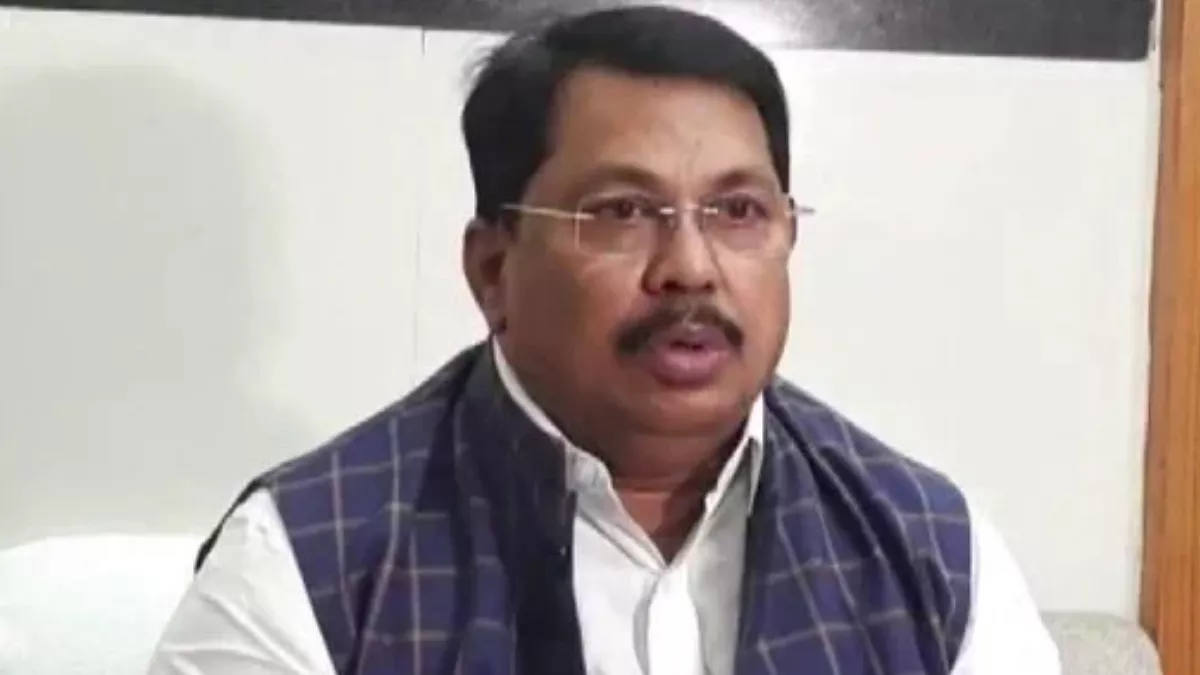
The Maharashtra Congress has demanded a formal explanation from Congress Legislature Party (CLP) leader Vijay Wadettiwar over the passage of the controversial Maharashtra Special Public Security Bill, 2024, without the party’s protest in the state assembly last week.

According to sources, state Congress president Harshwardhan Sapkal sent a letter to Wadettiwar on Monday, seeking clarity on why the party failed to oppose the bill during its passage in the assembly. The move reportedly comes at the behest of the party high command, which had earlier directed its leaders to oppose the bill.

Despite pre-circulated speaking points to all Congress MLAs ahead of the bill’s discussion on July 10, Wadettiwar was reportedly absent from the House, sources said. While the party’s MLCs raised objections and staged a walkout in the Legislative Council the following day, the absence of protest in the assembly has sparked internal backlash.

The Maharashtra Special Public Security Bill, 2024, which aims to curb activities linked to Left-wing extremism with a special focus on ‘urban Naxalism’, includes stringent provisions such as fines and imprisonment of up to seven years. The bill has come under fire from civil society and opposition parties, who argue that it poses a threat to civil liberties and could be used to suppress dissent under the guise of national security.

During an earlier meeting on June 30, chaired by AICC’s Maharashtra in-charge Ramesh Chennithala, Congress had reportedly resolved to oppose the bill. However, in the assembly, only the lone CPI (M) MLA raised a voice against it.

Shiv Sena (UBT) MLA Bhaskar Jadhav criticized the bill on Wednesday, calling it “harsher than British-era laws” and slammed the Mahayuti government for pushing such legislation without offering any data to justify its necessity.

India Issues Travel Warning for Iran Amid Escalating Middle East Tensions

iran, travel warning, india, indian embassy, mea, iranian flag
India Issues Travel Warning for Iran Amid Escalating Middle East Tensions 10

Amid rising regional instability, the Indian Embassy in Iran has issued a strong advisory urging Indian nationals to avoid non-essential travel to the country. Citing the rapidly evolving security situation, the embassy has asked citizens to stay updated with the latest developments and follow advisories from Indian authorities.

“In view of the security-related developments over the past several weeks, Indian nationals are advised to carefully consider the evolving situation before undertaking non-essential travel to Iran,” the embassy said in a statement posted on X.

The advisory further stated that Indians currently in Iran who wish to leave should utilize available commercial flight and ferry options.

This caution follows heightened tensions in the region, sparked by Israel’s launch of “Operation Rising Lion” last month against Iran. In retaliation, Iran launched airstrikes targeting Israel and a U.S. military base in Qatar. The U.S. responded by striking three locations in Iran, aligning itself with Israel’s mission to dismantle Iran’s alleged nuclear ambitions—a claim Tehran has consistently denied.

The 12-day conflict saw intense hostilities before a unilateral ceasefire was declared by U.S. President Donald Trump, temporarily halting the clashes.

Nitish Kumar’s Shock Therapy: 125 Units of Free Electricity Before Bihar Polls

nitish kumar, free electricity, units, bihar polls, bihar elections
Nitish Kumar’s Shock Therapy: 125 Units of Free Electricity Before Bihar Polls 12

In a high-voltage move ahead of the upcoming Bihar assembly elections, Chief Minister Nitish Kumar on Thursday announced 125 units of free electricity for all domestic consumers in the state. The decision is expected to benefit nearly 1.67 crore households and is being seen as a major pre-poll populist push.

Making the announcement via social media, Kumar said the scheme will come into effect from August 1, but consumers will see the benefit reflected in their July electricity bills itself. “No charges will be levied for 125 units in the bills for July,” he stated, adding that the government has already been providing affordable power to all citizens.

With the state heading into polls, the move is being viewed as a strategic effort to consolidate support across the electorate by easing financial burdens in a time of rising living costs.

“You Still Have Time to Switch Sides”: Fadnavis Teases Uddhav with Invite to Join BJP

devendra fadnavis, fadnavis, uddhav, uddhav thackeray, bjp, join bjp, sena
"You Still Have Time to Switch Sides": Fadnavis Teases Uddhav with Invite to Join BJP 14

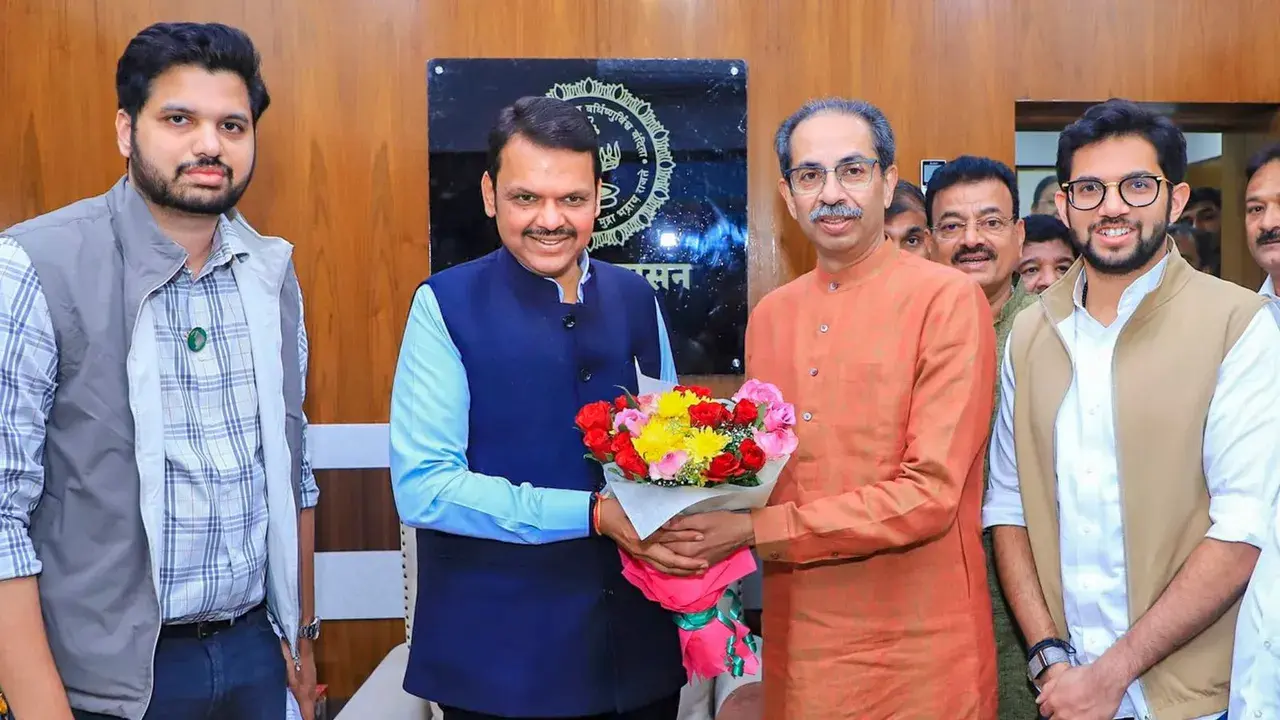
In a sharp political jibe with undertones of invitation, Maharashtra Chief Minister Devendra Fadnavis on Wednesday extended an open door to his estranged former ally Uddhav Thackeray, suggesting that while the BJP won’t be joining the opposition, Thackeray is welcome to return to the ruling side.

Speaking at a farewell function in the legislative council for Leader of Opposition Ambadas Danve, Fadnavis remarked with a smirk, “Uddhav ji, there is no scope for a change in government till 2029. We don’t have any chance to go to your side, but you have the scope to come here. We can definitely think about it.”

The comment, made in the presence of Deputy Chief Minister Eknath Shinde—who famously led a 2022 rebellion that split the Shiv Sena and toppled Uddhav’s government—comes amid murmurs of growing tension between Fadnavis and Shinde. After the Mahayuti’s sweeping win in the 2024 assembly elections, it was widely speculated that Shinde was upset about losing the chief minister’s post to Fadnavis.

Uddhav Thackeray’s Shiv Sena had parted ways with the BJP after the 2019 elections over the CM post dispute. Since then, the political landscape in Maharashtra has been defined by shifting alliances, courtroom drama, and public spats—this remark from Fadnavis only adds more heat to the fire ahead of the 2025 local body polls.

Bombay HC Halts BMC’s Kabutar Khana Demolition Drive, Slams Lack of Legal Basis

kabootar khana, mumbai, banned, kabootar khanas banned, bmc, maharashtra government
Bombay HC Halts BMC's Kabutar Khana Demolition Drive, Slams Lack of Legal Basis 16

In a significant move, the Bombay High Court on Tuesday stayed the Brihanmumbai Municipal Corporation’s (BMC) demolition drive against kabutar khanas (pigeon feeding zones) across Mumbai, offering temporary relief to animal lovers. The court also issued notices to the BMC and the Animal Welfare Board of India, seeking their responses, and directed that the Dean of KEM Hospital be included as a party in the ongoing litigation.

The bench of Justices Girish Kulkarni and Arif Doctor was hearing a petition filed by three Mumbai-based citizens—Pallavi Patil, Sneha Visaria, and Savita Mahajan—who alleged that the BMC’s sudden demolition campaign, which began on July 3, had no legal backing and was resulting in mass starvation and the extermination of pigeons. The petition cited violations of the Prevention of Cruelty to Animals Act, 1960.

Filed through advocates Harish Pandya and Dhruv Jain, the plea argued that kabutar khanas, some of which are over a hundred years old, are part of Mumbai’s ecological and cultural heritage. The petitioners said the BMC, accompanied by police, not only demolished pigeon feeding spots but also fined citizens up to ₹10,000 for feeding birds—without showing any legal notification authorising the crackdown.

“It is our moral and constitutional duty to care for these birds. With human encroachment destroying natural habitats, the remaining designated feeding areas are vital for their survival,” the petition stated. It also invoked constitutional rights under Articles 14, 21, and 51A(g), asserting that the civic body’s actions infringed upon the right to life, equality, and the duty to protect the environment.

The petitioners requested permission to feed the pigeons twice daily. However, the court declined interim relief at this stage, stating, “In view of the policy now sought to be implemented by the Municipal Corporation considering human health to be paramount, we are not inclined to grant any ad-interim order.”

The bench added that all parties must be heard before further directions are issued. The BMC and other respondents have been asked to file their replies before the next hearing, scheduled for July 23.

SC Grants Divorce After 15-Year Legal Battle, Slams ‘Futile Matrimonial Bond’

supreme court, sc, supreme court of india, fir, police, courts
SC Grants Divorce After 15-Year Legal Battle, Slams 'Futile Matrimonial Bond' 18

The Supreme Court on Tuesday granted divorce to an estranged couple, invoking the principle of irretrievable breakdown of marriage and observing that forcing a failed relationship to continue serves no constructive purpose.

A bench of Justices Vikram Nath and Sandeep Mehta ruled in favour of the man who had filed the appeal, stressing that it was in the “best interest” of both parties and their minor child to lead independent and peaceful lives, free from the burden of a 15-year-long legal tussle.

Quoting constitutional powers under Article 142, the apex court said, “The marriage between the parties stands dissolved and a decree of divorce is granted.” The court further added that marriage is based on dignity, mutual respect, and companionship, and when these values are irreparably lost, keeping the couple legally tied down only fosters more animosity and litigation.

The man had sought divorce under Section 13(1)(a) of the Hindu Marriage Act, 1955, on grounds of cruelty. His plea was rejected first by the family court and later by the high court, prompting him to approach the Supreme Court. It was alleged that the woman physically assaulted and harassed the man’s ailing mother in a bid to claim property, though the woman denied the allegations.

The court noted that the woman had earlier filed a cruelty case against the man and his family, but all were acquitted. It stated the husband could not be expected to continue the marital bond with someone who had pursued a “false case” against him.

Emphasising the need for closure, the bench remarked, “The continuance of marriage shall only fuel animosity and litigation between the parties, which runs contrary to the ethos of matrimonial harmony envisioned by law.”

The court directed the man to pay a monthly maintenance of ₹15,000 to the woman and their child.

Mamata’s Battle Cry: TMC Hits Streets Over Harassment of Bengalis in BJP States

mamata banerjee rally against harassment
Mamata's Battle Cry: TMC Hits Streets Over Harassment of Bengalis in BJP States 20

West Bengal Chief Minister Mamata Banerjee will lead a protest march in Kolkata on Wednesday to oppose what her party calls the systematic harassment of Bengali-speaking citizens in BJP-ruled states. The rally, which is being positioned as a defence of Bengal’s cultural identity, will begin at College Square at 1 PM and conclude at Dharmatala.

Top Trinamool Congress (TMC) leaders, including national general secretary Abhishek Banerjee, will join the march. With less than a year to go for the West Bengal assembly elections, the TMC is intensifying its rhetoric, accusing the BJP of linguistic profiling, arbitrary detentions, and painting Bengalis as “illegal immigrants.”

“This is not a routine political event,” said state minister Chandrima Bhattacharya. “This is a battle to defend Bengal’s honour, language, and identity. If someone calls a Bengali a Bangladeshi, we will not take it lying down.”

Although TMC typically avoids large events ahead of its annual Shahid Dibas rally on July 21, recent incidents — including the detention of Bengali migrant workers in Odisha, eviction drives in Delhi, and a “foreigner” notice issued to a farmer in Assam’s Cooch Behar — have prompted the party to act.

The protest signals a strategic pivot in the TMC’s 2026 election campaign, blending emotional appeals with aggressive grassroots mobilisation. The party aims to energise its base by tapping into regional pride and resistance against perceived cultural marginalisation.

“Bengal will not bow its head,” Bhattacharya declared. “This fight is not just about migrant workers — it’s about the right of Bengalis to exist with dignity in their own country.”