"Did She Kill Someone?" SC Slams Delhi Police, Grants Bail to Ex-IAS Officer Puja Khedkar 2
In a dramatic turn in the ongoing controversy surrounding former IAS probationer Puja Khedkar, the Supreme Court on Wednesday granted her anticipatory bail, questioning the gravity of the accusations and rebuking Delhi Police for opposing the relief. Khedkar is accused of cheating and wrongfully availing benefits under the OBC and disability quotas during the 2022 UPSC civil services examination.
A bench of Justices B V Nagarathna and Satish Chandra Sharma directed Khedkar to cooperate fully with the ongoing investigation. In strong oral remarks, the bench asked, “What is the grave crime she has committed? She is not a drug lord or a terrorist. She has not committed murder. She is not an NDPS offender.” The judges noted that Khedkar’s future in the civil services is already finished, adding, “She has lost everything and will not get a job anywhere.”
The court also pulled up the Delhi High Court for denying her bail earlier, stating, “Bearing in mind the facts and circumstances of the case, this is a fit case where the Delhi High Court ought to have granted bail to the petitioner.”
Counsel for the Delhi Police argued strenuously against granting bail, citing the seriousness of the allegations and Khedkar’s alleged non-cooperation in the investigation. However, the Supreme Court remained unconvinced by the police’s aggressive stance.
Khedkar stands accused of misrepresenting details in her UPSC application to secure reservation benefits meant for OBC and disabled candidates. She has denied all allegations, claiming she followed due process.
The Union Public Service Commission (UPSC) has taken disciplinary action against her, including filing a criminal case for allegedly faking her identity and taking multiple attempts at the examination under false pretenses. The Delhi Police has also lodged an FIR citing various offences.
The apex court’s strong words and the decision to grant bail have now raised larger questions about the proportionality of legal actions in reservation fraud cases, especially when the accused is already barred from future service.
Jayant Narlikar: The Eighth Star in the Saptarshi of Indian Science 4
India today grieves the loss of a towering intellect, but more so of a guiding spirit. Jayant Vishnu Narlikar, the eminent astrophysicist and science writer, passed away peacefully on May 20, 2025, at the age of 86. While the nation remembers him as a pathbreaking cosmologist, those who knew him best remember him for something even greater: a teacher, a guru, and a gentle force who awakened generations to the wonders of science.
Born in 1938 in Kolhapur, Maharashtra, Narlikar rose to global fame for co-developing the Hoyle–Narlikar Theory of Gravity, a bold challenge to the Big Bang theory, envisioning a universe in constant creation. But even at the height of his scientific acclaim, he saw himself not merely as a physicist—but as a communicator of knowledge, a builder of minds.
In ancient Indian tradition, the Saptarshi—seven great stars—were sages who illuminated the path of humanity. In our times, Jayant Narlikar stands as the eighth: a radiant star in the scientific sky who not only explored galaxies but also lit up the minds of thousands across classrooms, lecture halls, and living rooms.
He established the Inter-University Centre for Astronomy and Astrophysics (IUCAA) in 1988 with a clear mission: to foster original Indian research and, more importantly, to nurture young scientists. His warmth, accessibility, and humility made him far more than an institution builder—he was a guru in the truest Indian sense: one who dispels darkness with light.
Through books in Marathi, Hindi, and English, countless school visits, and science fiction stories for children, Narlikar showed that science isn’t distant or difficult—it is beautiful, human, and vital.
A Guru Among the Stars
Honoured with the Padma Bhushan, Padma Vibhushan, and global accolades, Jayant Narlikar never allowed prestige to distance him from people. He chose to stand with students, teachers, and curious minds—encouraging questions, welcoming doubt, and insisting on clarity.
He is survived by his three daughters, all involved in science, and by the countless students who saw in him not just a scientist but a guru.
“In the ancient sky, the Saptarshi guided civilisations. In our time, Jayant Narlikar became the eighth—blending science with sanskaar and inquiry with inspiration.”
Now, he returns to the stars he loved—but his light, like a true guru’s, will never fade.
Delhi HC Slams Abhijit Iyer-Mitra: Take Down 'Brothel' Slur or Face Criminal FIR 6
In a scathing rebuke, the Delhi High Court on Wednesday ordered political commentator Abhijit Iyer-Mitra to remove a series of allegedly defamatory and abusive posts directed at nine women journalists from Newslaundry, warning that failure to comply could result in suo motu criminal proceedings. The court made it unequivocally clear that Iyer-Mitra would not be allowed to argue in the ongoing civil defamation case unless the offensive posts were deleted.
The case stems from a series of tweets where Iyer-Mitra reportedly referred to the journalists as “prostitutes” and labelled Newslaundry as a “brothel”—remarks that the petitioners, including Executive Editor Manisha Pande, described as not just defamatory but also sexually abusive and beyond the bounds of lawful speech.
Advocate Bani Dixit, representing the journalists, told the court that the tweets attacked the personal dignity and professional integrity of the women, many of whom are established journalists from varied backgrounds. The court appeared to agree. “There is a limit for everything. If you are justifying this language, I am restraining you from being heard,” the judge said, also warning, “I will suo motu order registration of a criminal FIR against the defendant.”
Defence counsel Jai Anant Dehadrai attempted to argue that the posts were general commentary on Newslaundry’s funding patterns, not directed at specific individuals. The court, however, found the defence unconvincing. “If it’s not attributable to any person, what is the point of putting it out?” the judge questioned, further challenging the appropriateness of using the term “brothel” in reference to any workplace.
When Dehadrai tried to argue that the petitioners should have pursued criminal remedies rather than a civil suit, the judge warned him against derailing the matter and reiterated the court’s authority to initiate criminal proceedings on its own.
After several sharp exchanges, the court criticized the defence counsel for being “oversmart” and reiterated that Iyer-Mitra would not be heard unless the tweets were removed. Ultimately, Dehadrai agreed—without prejudice to the ongoing legal arguments—that the posts would be taken down within five hours. The court accepted this undertaking and scheduled the next hearing for May 26, 2025.
This is not Iyer-Mitra’s first run-in with the law over social media remarks. In 2018, he was arrested for allegedly derogatory comments about Odisha’s Konark Sun Temple and was denied bail at the time.
The Delhi High Court’s firm stance in this matter may set a precedent in how Indian courts address gendered abuse and defamation in digital spaces—placing limits on what can be excused under the banner of free speech.
13 AAP Councillors Rebel, Launch 'Indraprastha Vikas Party'; Accuse Kejriwal Govt of Development Paralysis 8
In a major shake-up within Delhi’s civic politics, 13 councillors of the Aam Aadmi Party (AAP) tendered their resignations on Saturday, announcing the formation of a new political outfit—Indraprastha Vikas Party. Citing internal dysfunction and halted development work in the Municipal Corporation of Delhi (MCD), the rebel leaders accused AAP of neglecting governance in favor of infighting.
The new party will be helmed by senior councillor Mukesh Goyal, who squarely blamed the AAP leadership for sidelining elected representatives. “In the last two and a half years since our election, zero development work has been executed. We raised our concerns repeatedly, but the leadership was too caught up in blame games,” Goyal told PTI. He also alleged that councillors were denied basic funds needed to serve their wards, leading to public frustration and administrative stagnation.
The group clarified that this political shift is focused on the municipal body alone and does not extend to state-level politics—for now. Goyal emphasized that their intent is to “restore purpose and functionality in the MCD,” ensuring policies are implemented for the welfare of Delhi’s residents.
The new faction includes known municipal figures like Hemchand Goyal, who will act as a senior leader in the party, along with former AAP councillors Dinesh Bharadwaj, Himani Jain, Usha Sharma, Sahib Kumar, Rakhi Kumar, Ashok Pandey, Rajesh Kumar, and Anil Rana.
Interestingly, the anti-defection law does not apply to municipal corporations like the MCD, making this move legally sound, though politically explosive. As of now, the Aam Aadmi Party has issued no official response to this significant defection—one that could signal deeper fractures within the party’s urban governance structure.
Goa Echoes with the Call for Hindu Rashtra: 19,000 Devotees Join Sanatan Shankhnad Mahotsav 10
In a powerful spiritual resurgence, Goa has transformed from a beach tourism hotspot into the epicentre of a Hindu cultural revival. The Sanatan Rashtra Shankhnad Mahotsav, held from May 17–19, 2025, at Goa Engineering College’s Infinity Maidan in Farmagudi, drew a historic crowd of over 19,000 devotees from 23 countries. This grand event celebrated the 83rd birth anniversary of Sanatan Sanstha founder Sachchidananda Parabrahman (Dr) Athavale and marked the organisation’s silver jubilee.
Goa Chief Minister Dr Pramod Sawant, addressing the congregation, praised Sanatan Sanstha for redefining Goa’s identity from a party destination to a hub of Sanatan Dharma. “People used to visit Goa for beaches. Now, they come to experience Indian culture. This Mahotsav is a milestone in reviving Dharma and boosting cultural tourism,” he said. Dr Athavale was felicitated by the state government during the ceremony, and in a symbolic gesture, he handed over a relief fund for national defence to the Chief Minister.
The event began with sacred conch-blowing, Vedic chants, and lamp-lighting and saw the presence of notable dignitaries, including Padma Shri Sadguru Brahmeshanand Swami Maharaj, Pujya Devakinandan Thakur, Union Minister Shripad Naik, Goa Ministers Sudin Dhavalikar and Subhash Phal Desai, BJP leader Damodar Naik, MP Yaduveer Krishnadatta Chamaraja Wadiyar, Sudarshan News CMD Suresh Chavhanke, and Sanatan Sanstha spokespersons Chetan Rajhans and Abhay Vartak.
Despite health concerns, Dr Athavale’s presence deeply inspired seekers. Shripad Naik described the event as the beginning of the Hindu Rashtra in the sacred land once blessed by Chhatrapati Shivaji Maharaj. Pujya Devakinandan Thakur declared, “Goa is not just sand and sea—it’s Parshuram Bhoomi.” He contrasted India’s spiritual progression with Pakistan’s turmoil, asserting that India is, and always will be, a Hindu Rashtra.
Padma Shri Sadguru Brahmeshanand Swami Maharaj called upon Hindus to awaken and protect Dharma, warning that inaction today could lead to regret tomorrow. Sanatan Sanstha’s spokesperson Chetan Rajhans highlighted that the event was not only a religious celebration but a powerful counter to threats against Sanatan Dharma, citing recent targeted killings in Pahalgam.
Royal scion and MP Yaduveer Wadiyar emphasised the Mahotsav’s non-political spiritual vision, rooted in service and tradition. Other dignitaries echoed similar sentiments, with chants of “Shri Ram” and calls for national spiritual unity resounding across the venue.
Key highlights included the release of a Hindi text and e-book on Dr Athavale’s life, the naming of the Mahotsav grounds as Bhagawan Parashuram Suvarnadwar, and symbolic displays including statues of Shri Ram and Chhatrapati Shivaji Maharaj. Seven roads were named after the Saptarshi, and themed mandaps and food courts honoured deities and divine legends.
A rare exhibit—the 1000-year-old Sorathi Somnath Jyotirlinga—was displayed to the devotees, adding further spiritual gravity to the event.
As Goa resonates with the sound of conches and chants of Dharma, the Sanatan Shankhnad Mahotsav has not just marked a celebration but potentially laid the spiritual foundation for the envisioned Hindu Rashtra.
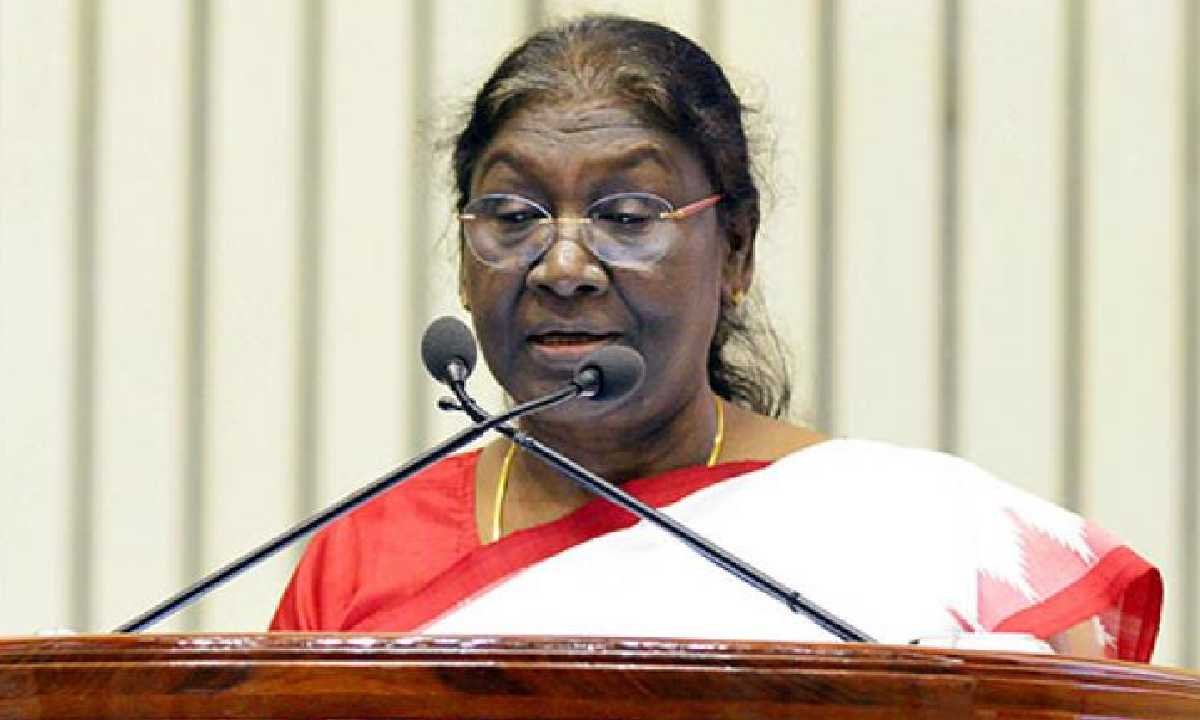
On the very day Justice BR Gavai assumed office as the 52nd Chief Justice of India, President Droupadi Murmu invoked Article 143 of the Constitution to seek the Supreme Court’s advisory opinion on a critical constitutional question: Can the judiciary impose timelines on the President’s discretion in granting assent to bills?
The move marks a significant constitutional confrontation, as Murmu posed 14 pointed questions to the apex court, mainly challenging the judicial directive that mandated a three-month deadline for the President to decide on bills under Article 201—a timeline introduced by the Supreme Court in its April 8, 2025 ruling. This judgment, delivered by Justices JB Pardiwala and R Mahadevan, came in the backdrop of a prolonged standoff between the Tamil Nadu government and Governor RN Ravi over pending legislation. The court had termed the Governor’s delays as “erroneous and illegal” and took the unprecedented step of invoking Article 142 to grant assent to the bills.
Murmu’s referral questions whether, in the absence of constitutionally defined timelines, the judiciary can impose such limits on the President’s discretionary powers. One key question asks if judicial directions can prescribe how and when the President must act under Article 201.
The Tamil Nadu-Governor conflict, simmering since 2021, involved delays in assenting to 10 bills. The Supreme Court ruling not only compelled assent but empowered state governments to seek a writ of mandamus if the Governor or President failed to act within the set period. This expansion of judicial oversight into legislative processes has now been formally challenged by the President.
Attorney General R Venkataramani, representing the Governor, had earlier warned the court that setting deadlines for presidential assent encroaches upon powers deemed non-justiciable, citing the 1983 Hoechst Pharmaceuticals case. Meanwhile, the Supreme Court, relying on the Sarkaria and Punchhi Commission reports, rejected open-ended delays, interpreting “as soon as possible” in Article 200 to mean within a reasonable, court-enforced timeframe.
With President Murmu’s Article 143 reference, the spotlight is now on Justice Gavai’s court. Known for his commitment to constitutional supremacy, Gavai had recently remarked, “Neither executive, parliament nor judiciary—CONSTITUTION IS SUPREME!”
Legal experts believe the Supreme Court’s upcoming response could reshape the power dynamics between the Centre and States, and redefine the constitutional roles of Governors and the President in India’s legislative process.
Fadnavis Flags Off Mumbai Metro Line 9 Trial Run: Double-Decker Breakthrough Promises Traffic Relief 13
Maharashtra Chief Minister Devendra Fadnavis on Wednesday flagged off the trial run and technical inspection of Mumbai Metro Line 9 (Phase 1), connecting Kashigaon to Dahisar East. Accompanied by Deputy Chief Ministers Ajit Pawar and Eknath Shinde, the CM also carried out a detailed inspection of the route.
Calling it a milestone for the region, Fadnavis stated that the new line will greatly benefit commuters in Mira-Bhayandar and reduce road congestion. Highlighting a significant innovation, he announced that for the first time in the Mumbai Metropolitan Region, a double-decker bridge—carrying both metro and railway tracks—has been built to ease traffic and optimize space.
The 11.38 km Red Line 9 extends the Metro’s reach from Andheri-Dahisar to Mira-Bhayandar. While Phase 1 includes four stations—Dahisar, Pandurang Wadi, Miragaon, and Kashigaon—future extensions will cover up to Subhash Chandra Bose Stadium in Bhayandar West.
MMRDA has begun energizing the 25,000v overhead wires along the Dahisar-Kashigaon stretch and will conduct dynamic tests of train systems including signalling and safety. The full metro corridor is aimed to be completed by 2027, offering a seamless, eco-friendly transit alternative for the growing suburban population.
Operation Sindoor: Why Was the Red Flag Raised When Victory Was Within Reach? 15
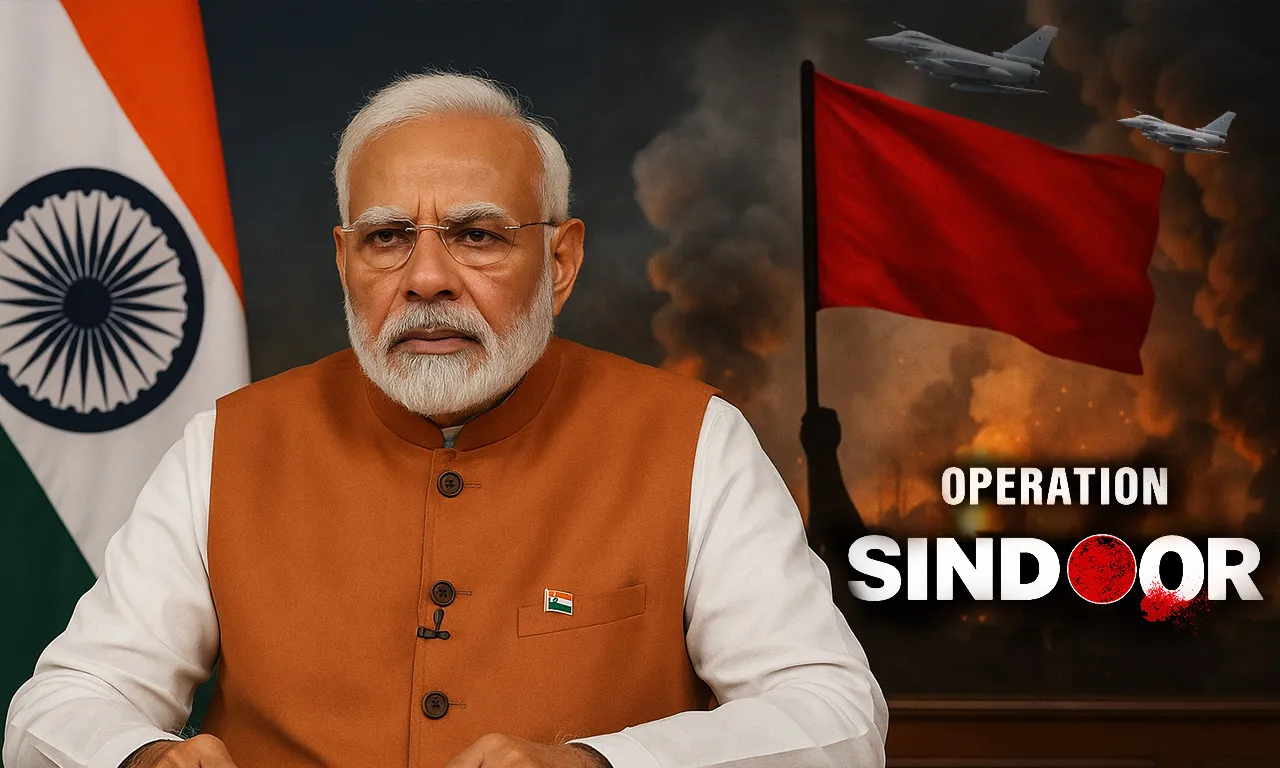
Prime Minister Narendra Modi’s address to the nation following the ceasefire announcement between India and Pakistan left many critical questions unanswered. At a time when India’s armed forces were inflicting heavy losses on Pakistan through swift and strategic drone and missile operations, why was a sudden halt called? What compelled the government to show a red flag when momentum was decisively in India’s favour?
Operation Sindoor had brought Pakistan to its knees within just four days. The Pakistani military suffered major losses, with numerous soldiers killed and key defence infrastructure—including radar systems and terrorist launch pads—systematically dismantled. India’s precision airstrikes reportedly destroyed nine terrorist camps, eliminating over 100 militants. From diplomatic protests to economic sanctions, water embargoes, and the expulsion of Pakistani nationals, India had escalated its strategy step-by-step with unprecedented resolve.
Then came the decisive military action—surgical strikes, coordinated assaults by land, sea, and air, and the deployment of BrahMos missiles with devastating impact. Pakistan, in retaliation, attempted missile strikes on Indian military bases in Jammu & Kashmir, Punjab, Rajasthan, and Gujarat, all of which were intercepted and neutralised by India’s defence systems. With both nations being nuclear powers, global concerns of a catastrophic escalation were valid—but so was India’s right to defend itself.
So, the question that haunts every patriotic Indian today is: Why was Operation Sindoor called off just as Pakistan was reeling under pressure? Why did India retreat from the battlefield when a clear message of zero tolerance toward terrorism was finally being delivered with impact?
The Prime Minister’s speech was loaded with strong warnings to Pakistan. He made it clear that India would no longer tolerate nuclear blackmail and that any future talks would only center on terrorism and Pakistan-occupied Kashmir. He rightly asserted that “terror and talks cannot go hand in hand” and that “water and blood cannot flow together.” Yet, the emotional intensity and moral clarity of his words contrast starkly with the strategic ambiguity of the ceasefire itself.
The deeper concern remains: How can India trust a nation that has consistently exported terrorism across its borders? Since Partition, Pakistan has bled India through countless terror attacks. Decades of goodwill gestures, peace talks, and diplomatic overtures have only been met with betrayal. Each ceasefire has been followed by more infiltration, more bloodshed, more widows and orphans—most recently seen in the Pahalgam massacre that left 26 Indian women widowed.
It is in this context that the timing and nature of the ceasefire raise alarms. Was it India’s sovereign decision, or was it brokered under international pressure?
Adding to the complexity is the statement by U.S. President Donald Trump, who hastily took credit for brokering the ceasefire. Trump publicly declared that the U.S. had “stopped a nuclear war” and even threatened economic consequences for both countries if hostilities didn’t cease. He proclaimed that America would now “monitor both nations closely”. Yet, Prime Minister Modi’s speech made no mention of the U.S., Trump, or any mediation role by a foreign power. This stark contrast between the U.S. narrative and India’s official communication begs the question: Was India compelled to stop Operation Sindoor due to foreign pressure, and if so, why is the government not being transparent about it?
The Indian public, swelling with pride in the armed forces, now finds itself in a moral quagmire. On one hand, they witnessed the nation’s unmatched military and strategic capability; on the other, they are left wondering why that strength was restrained just as Pakistan was cornered. Was the decision to halt the operation a matter of political diplomacy, economic pragmatism, or external coercion?
The government owes the people of India an honest explanation. If Operation Sindoor was halted as a strategic pause, what is the long-term plan to ensure Pakistan never dares to repeat its crimes? If the decision was influenced externally, why wasn’t the nation taken into confidence? And above all, how long must India continue the cycle of forgiving a rogue neighbor that thrives on bloodshed and terrorism?
The nation stood united behind Operation Sindoor. The ceasefire has left behind more than just silence on the border—it has left behind unanswered questions and an uneasy silence in the hearts of millions.
Historic First: Justice B.R. Gavai Sworn in as 52nd CJI, to Serve Six-Month Term 17
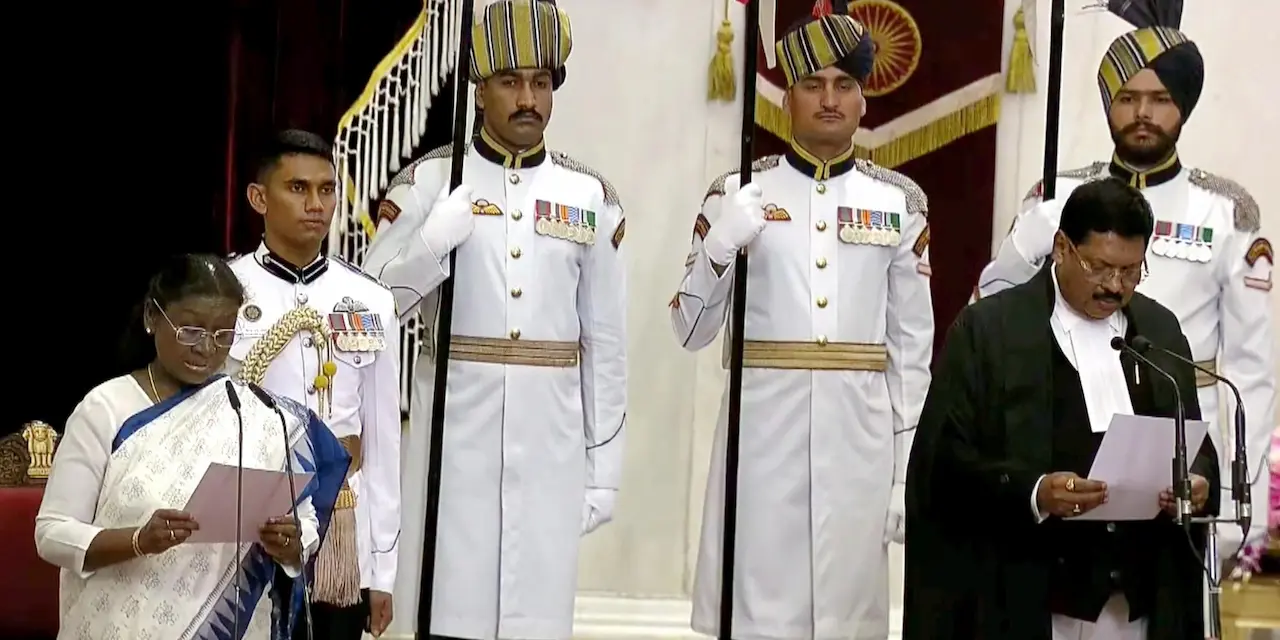
Justice Bhushan Ramkrishna Gavai was sworn in as the 52nd Chief Justice of India on Wednesday in a ceremony held at Rashtrapati Bhavan. President Droupadi Murmu administered the oath of office in a brief but significant event that marked the beginning of Justice Gavai’s six-month tenure.
He succeeds Justice Sanjiv Khanna, who retired on Tuesday after reaching the mandatory retirement age of 65. Notably, Justice Gavai took his oath in Hindi, a rare gesture for a Chief Justice of India.
Elevated to the Supreme Court on May 24, 2019, Justice Gavai brings with him years of judicial experience. He will hold office until November 23, making his term relatively short, but symbolically important.
"No Post-Retirement Perks for Me": CJI Sanjiv Khanna Bows Out, Takes Stand on Judicial Integrity 19
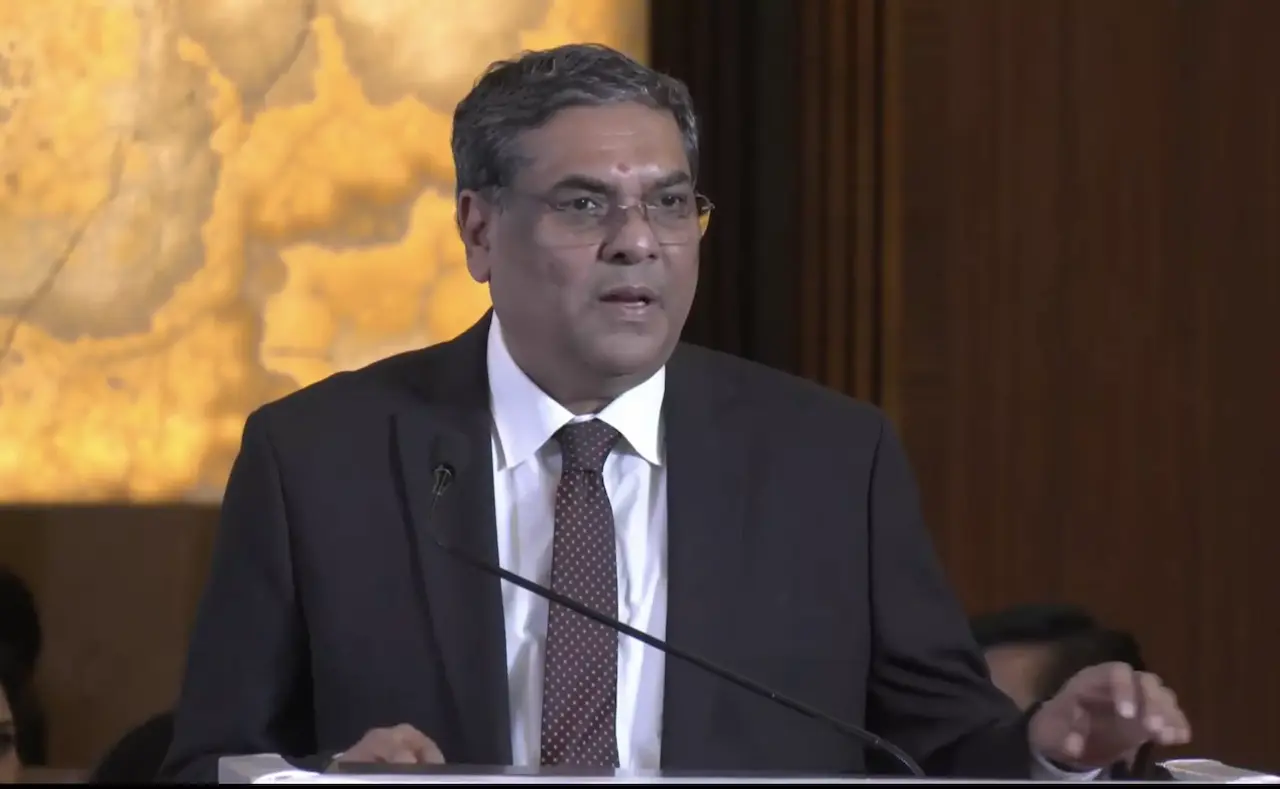
Chief Justice of India Sanjiv Khanna on Tuesday firmly declared that he would not accept any official post-retirement assignments, even as he vowed to continue contributing to the legal field. “I will not accept any post-retirement post… perhaps will do something with law,” he told journalists after his final day at the Supreme Court.
Justice Khanna, who joined the apex court on January 18, 2029, and took over as CJI on November 11, 2024, demitted office on Tuesday. Speaking informally after the ceremonial bench proceedings, he hinted at beginning a “third innings” in the legal world, joining a handful of former judges who have chosen not to enter arbitration or government-appointed roles post-retirement.
When asked about the recent controversy involving High Court judge Justice Yashwant Varma, who was embroiled in a cash recovery case, the CJI remarked, “Judicial thinking has to be decisive and adjudicatory. We see plus and minus points and decide the issue, then rationally weigh various factors to make the right decision.”
Justice Khanna had acted promptly following reports of unaccounted cash allegedly linked to Justice Varma. He ordered a preliminary inquiry led by Delhi High Court Chief Justice D.K. Upadhyaya, removed Varma’s judicial duties, and transferred him to the Allahabad High Court without any court work. After an in-house inquiry found Varma guilty, Khanna urged him to resign. When the judge refused, he formally wrote to President Droupadi Murmu and Prime Minister Narendra Modi, seeking further action.
Meanwhile, CJI-designate Justice B.R. Gavai has also declined to take up any official post-retirement role, signaling a rare moment of ethical clarity at the top of the judiciary.