Priyanka Gandhi Claims Victory as Centre Agrees to Caste Census, Credits Rahul’s Push 2
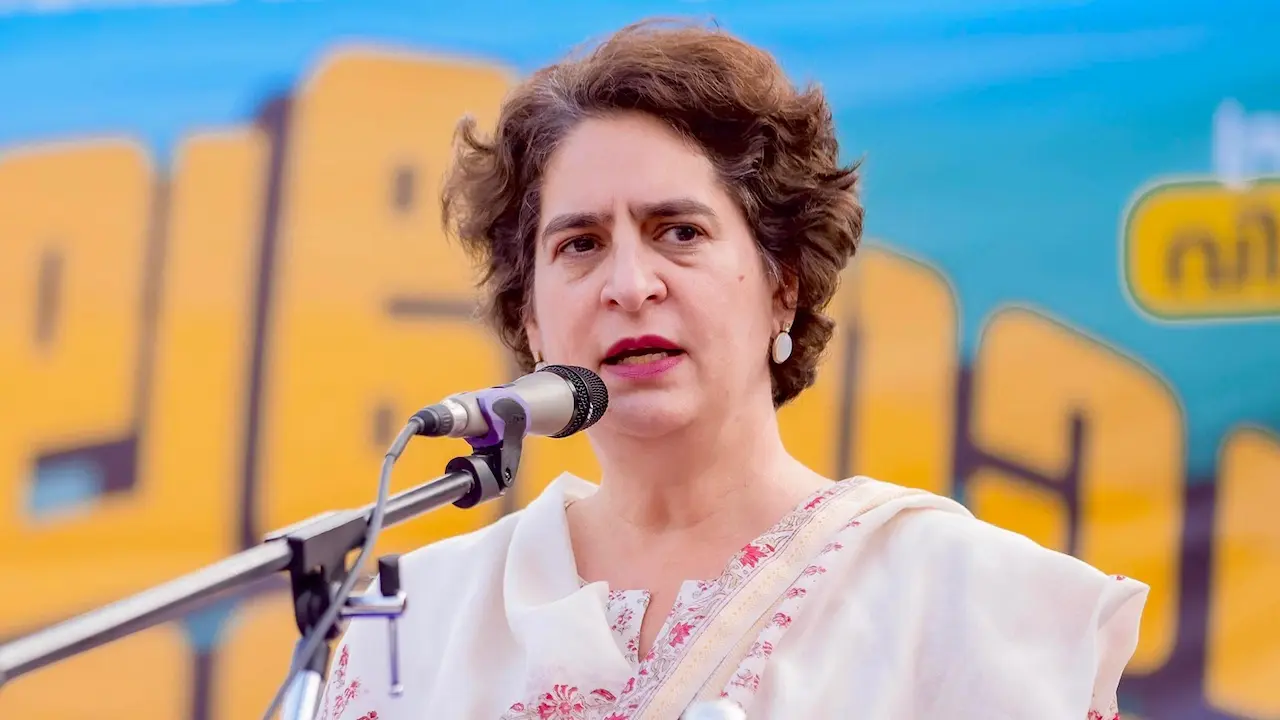
Congress MP Priyanka Gandhi Vadra has welcomed the Centre’s announcement to include caste enumeration in the upcoming national census, calling it a step taken under immense public pressure and the result of sustained advocacy led by her brother, Rahul Gandhi.
Speaking to reporters during her two-day visit to Wayanad, she said, “There was strong public demand for this, and people supporting the cause have worked hard. My brother raised this issue consistently last year, even as the BJP mocked him and rejected the idea.”
Priyanka emphasized that Rahul Gandhi remained firm despite facing ridicule in Parliament, and the eventual acceptance of caste-based data collection showed the impact of people’s voices across the country.
She expressed hope that the government would now conduct the caste census transparently and with accurate data collection, ensuring it serves its intended purpose.
Saket Gokhale Slammed with ₹50 Lakh Defamation Penalty as Delhi HC Rejects Plea 4
In a strong rebuke to TMC MP Saket Gokhale, the Delhi High Court on Friday refused to recall its earlier order directing him to pay ₹50 lakh in damages to former diplomat and UN official Lakshmi Murdeshwar Puri for defamation. Justice Purushaindra Kumar Kaurav dismissed both Gokhale’s application to review the decision and his request to condone a delay of over 180 days in approaching the court.
“We can’t help you. We have to reject both the applications,” the court stated, adding that no valid explanation was offered for the delay.
Puri had filed the defamation suit in 2021, accusing Gokhale of publishing false and reckless allegations about her financial affairs, particularly regarding an apartment she owned in Geneva. The court, in a judgment dated July 1, 2024, ruled in Puri’s favour, ordering Gokhale to publicly apologise and pay ₹50 lakh in damages. Additionally, he was barred from making or publishing any further defamatory content about her on social media or electronic platforms.
Puri was represented by senior advocate Maninder Singh and the law firm Karanjawala & Co., while the court’s decision further solidifies her legal victory in a high-profile social media defamation battle.
Newsmakers Achievers Awards 2025 Set to Honour India's Changemakers in 17th Edition 6
The 17th edition of the Newsmakers Achievers Awards 2025, presented by Afternoon Voice, is set to take place on Thursday, May 1, 2025, at Rangswar, Yashwantrao Chavan Auditorium, Nariman Point, Mumbai, from 6:00 PM onwards. The annual event recognises individuals from diverse fields who have made significant contributions to society through their exceptional work and leadership.
This year’s ceremony will witness the presence of Shri Ram Lal Ji, Akhil Bharatiya Sampark Pramukh of Rashtriya Swayamsevak Sangh (RSS), as the Chief Guest, and Shri Uday Samant, Minister for Industries & Marathi Language, Government of Maharashtra, as the Guest of Honour.
Among the most anticipated highlights of the evening are the Lifetime Achievement Awards, which will be presented to:
Pt. Hridaynath Mangeshkar, renowned music composer and singer
J. V. Pawar, veteran Dalit Panther and literary icon
Smita Jayakar, acclaimed film and television actress
Anu Agarwal, former actress and wellness advocate
Zilla Bai Vasave, tribal reformer and social worker
Other prominent awardees include Ranjit Savarkar (Best Author), Sandeep Tamgadge (IPS) (Best IPS Officer), Manisha Patankar-Mhaiskar (IAS) (Best IAS Officer), Col. Prabhat Sood (Retd.) (Defence Services Contribution), Ananth Mahadevan (Best Film Director), Prashant Damle (Best Theatre Artist), Dinesh Vijan (Best Film Producer), and H.E. Mr Sven Ostberg, Consul General of Sweden in Mumbai.
The event will also confer Special Jury Awards to Dr Nandita Pathak, a noted social entrepreneur, and Maya Rambahadur Lama for her exemplary work in the social sector.
In addition to the names mentioned above, many more awardeesfrom diverse sectors, including journalism, public service, politics, healthcare, arts, business, and social reform, will also be felicitated.
Organised annually by Afternoon Voice, Mumbai’s leading English daily, the Newsmakers Achievers Awards is a one-of-a-kind platform that honours unsung heroes and celebrated personalities alike. A self-funded parallel media initiative, Afternoon Voice is known for its independent editorial voice and commitment to people-centric journalism. The newspaper also runs vocational training programmes for budding journalists and promotes citizen journalism as part of its outreach.
The award is the brainchild of Dr Vaidehi Taman, editor-in-chief of Afternoon Voice, who has consistently worked to spotlight individuals making a difference across sectors such as media, governance, social welfare, public service, business, arts, and culture.
The evening promises a confluence of dignitaries, celebrities, civil servants, social activists, and media leaders, making it one of the most prestigious and inclusive recognition platforms in India.
'Devmanus' Review: Murder, Masala, and Morality Collide in a Saree-Soaked Thriller 8
If Alfred Hitchcock had spent a summer sipping cutting chai in rural Maharashtra while binge-watching Vadh, he might have dreamed up something like Devmanus. Directed by Tejas Prabha Vijay Deoskar, this Marathi crime drama, a remake of the 2022 sleeper hit, offers a wild concoction of murder, morality, and middle-class mayhem—seasoned with a generous dash of emotional ras and spicy cinematic masala.
Mahesh Manjrekar delivers a restrained and haunting performance as Keshav, shedding his usual swagger for creaky slippers, a permanently furrowed brow, and the aura of a man marinated in despair. Opposite him, Renuka Shahane brings luminous strength as Laxmi, a sari-weaving goddess whose sighs carry more weight than most monologues.
But it’s Siddharth Bodke’s Dilip who steals scenes with peak sleaze—gold chains, slimy grins, and an aura of ghee-soaked menace. When he demands Keshav pimp out a neighbour to clear a debt, you instinctively want to leap through the screen and clobber him with a thesaurus full of curses. Keshav responds with cinematic flair—cue murder and a deliciously messy fallout.
What follows isn’t a tight crime thriller but more of a morality play dressed in a Lavani costume, complete with mythological metaphors, a pilgrimage to Pandharpur, and a glitter-bomb dance number by Sai Tamhankar that feels delightfully chaotic. It’s inconsistent at times, but undeniably fun.
The screenplay occasionally trips into melodrama, yet the sharp dialogues and Subodh Bhave’s portrayal of a morally ambiguous inspector keep the momentum lively. The climax packs a twist—not quite Nolan-level, but enough to make you mutter a satisfied “Oho!” while reaching for another chakli.
Devmanus may not be flawless, but it’s bursting with flavour. Picture a pressure cooker of simmering guilt, suppressed rage, and sharp social critique—ready to whistle its way into your guilty pleasures list. Watch it for Manjrekar’s transformative act, Shahane’s poise, and a plot that asks: how saintly can a “man of God” remain when the world around him crumbles?
India Blocks 16 Pakistani YouTube Channels, Slams BBC for Calling Terrorists 'Militants' 10
In a strong move following the Pahalgam terror attack, the Indian government has blocked 16 Pakistani YouTube channels for allegedly spreading provocative, communally sensitive, and misleading narratives targeting India, its Army, and security agencies, officials said on Monday. The action was taken on the recommendations of the Ministry of Home Affairs after the April 22 attack in Jammu and Kashmir’s Pahalgam, where 26 people, mostly tourists, were killed.
Officials confirmed that alongside the YouTube ban, the government has formally written to the BBC, criticizing its choice to refer to terrorists as “militants” in its coverage of the tragedy.
“The Government of India has banned Pakistani YouTube channels for disseminating provocative and communally sensitive content, false narratives, and misinformation against India and its security forces,” an official statement said.
The blocked channels include major Pakistani media outlets and prominent YouTubers such as Dawn News, Irshad Bhatti, SAMAA TV, ARY News, BOL News, Raftar, The Pakistan Referenc, Geo News, Samaa Sports, GNN, Uzair Cricket, Umar Cheema Exclusive, Asma Shirazi, Muneeb Farooq, SUNO News, and Razi Naama.
The government’s stern measures highlight a growing intolerance towards disinformation campaigns and media narratives that are seen as undermining India’s security and sovereignty.
Omar Abdullah Slams Indus Water Treaty as "Most Unfair Document" to Jammu and Kashmir 12
Jammu and Kashmir Chief Minister Omar Abdullah on Friday lashed out at the Indus Water Treaty (IWT) with Pakistan, describing it as the “most unfair document” to the people of Jammu and Kashmir. His remarks came after the Centre suspended the treaty in the aftermath of the Pahalgam terror attack that killed 26 people.
Speaking to reporters after a meeting with tourism, trade, and industry bodies, Abdullah said, “Let’s be honest, Jammu and Kashmir has never been in favour of the Indus Water Treaty.” In response to questions on the Centre’s decision to put the treaty in abeyance, he said that while the full implications remain to be seen, the people of the Union territory have always considered the treaty unjust.
Following the Pahalgam attack, India downgraded diplomatic ties with Pakistan, expelled military attachés, suspended the Indus Water Treaty of 1960, and closed the Attari land-transit post.
When asked if the government would honour Syed Adil Hussain Shah, the brave ‘ponywallah’ who resisted the terrorists before being killed, Abdullah assured that Shah’s sacrifice would be recognized. “He is a symbol not just of Kashmiriyat but of Kashmiri hospitality, and it is our duty to reward his family and keep his memory alive,” he said. Maharashtra’s tour and travel operators have pledged to support Shah’s family by funding the children’s education and aiding them in the future.
The meeting of tourism and trade stakeholders strongly condemned the attack and expressed collective sorrow. Abdullah praised them for prioritizing solidarity with the victims over business concerns. “Not one participant in today’s meeting brought up losses to tourism or demanded compensation. They focused solely on expressing their grief and support,” he noted.
Regarding the strong condemnations of the attack made in mosques across the Valley, Abdullah said these actions exposed the false narratives spread by some media outlets. He criticized certain television channels for promoting hatred against Kashmiris and praised the observance of a two-minute silence at Jamia Masjid as a true reflection of Kashmiri sentiments.
“Unfortunately, some shameless channels won’t show this, because they thrive on hatred. Some anchors are cowards who are afraid of telling the truth,” Abdullah said sharply.
Meanwhile, Kashmir’s chief cleric and Hurriyat Conference chairman Mirwaiz Umar Farooq led the Friday congregation at Jamia Masjid in observing a moment of silence in solidarity with the victims of the attack.
On reports of harassment of Kashmiris outside the Union territory, Abdullah confirmed that he raised the issue directly with Union Home Minister Amit Shah. Shah reportedly assured Abdullah that steps were being taken to protect Kashmiri students, traders, and other citizens across India, with advisories being issued and liaison efforts initiated by Jammu and Kashmir’s government with other states.
Abdullah concluded by stating that ministerial colleagues would personally visit states where Kashmiris are residing to ensure their safety and wellbeing.
A Clarion Call for Unity, Strength, and Dharma: Dr Mohan Bhagwat's Unflinching Message to the Nation 14
Attending the Lata Dinanath Mangeshkar Puraskar was not just a ceremonial experience—it was a reminder of the moral compass this nation must urgently realign itself with. The highlight of the evening was the speech delivered by RSS Sarsanghchalak Dr Mohan Bhagwat, whose words were not only deeply impactful but also carried a precise message—Bharat must unite or risk erosion from within and attacks from beyond.
He began by acknowledging the very purpose of the award—recognising individuals who have made significant contributions to society and nation-building. “When society appreciates its own”, he said, “it sustains its values and nurtures excellence.” This wasn’t a hollow statement; it was a powerful call to build a culture where positivity is acknowledged and reinforced, rather than ignored or ridiculed.
He urged the audience to not merely applaud achievements in formal ceremonies but to consciously appreciate those around us in daily life. “If you can’t organise an award function, at least take a moment to recognise good qualities in people near you. Acknowledge their strengths first. Only then can you guide them through their weaknesses.” In an age of criticism without contribution, his message was sharp and necessary.
But the speech grew firmer as he addressed the pressing issue of societal fragmentation. He stressed that divisions—of caste, language, and region—are weakening the fabric of Hindu society. “The feeling of belonging arises when unity is practised as a principle, not as convenience.” It was a bold indictment of the identity politics that has plagued us for too long. Unity is not a slogan—it is a duty.
The most emotional and hard-hitting part of his speech was his reaction to the recent Pahalgam terror attack in Kashmir. Innocent tourists were shot dead after being asked their religion. “No Hindu would ever do such a thing,” he stated clearly, his voice heavy with both grief and controlled anger. “Because Hindu Dharma, in its essence, is humanity. But let us be clear—if we were united, no one would dare do this to us.”
Then came a lesson from our own Itihasa. He recalled how even Ravana, a mighty scholar, had to be slain because he refused to transform. “Ram didn’t want to kill Ravana. He wanted to reform him. But when that failed, action had to be taken.” The message was unambiguous—when evil does not retreat, it must be confronted with strength.
He invoked the image of Ashtabhuja Devi—the goddess with eight arms, each holding a weapon to eliminate evil. “We need such strength today,” he said. “Moral strength, mental courage, strategic capability. Softness without power is not virtue. It is a vulnerability.”
With precision, he referenced 1962, the year of the Sino-Indian War. “Nature punished us then for not having a capable army.” That defeat was not just territorial; it was psychological. But times have changed. “Now there is anger. But there is hope too. This time, it feels like hope will be fulfilled.”
His words rang like a warning bell when he said, “Only the powerful can afford non-violence. The weak have no such luxury. And if we have power, we must display it when required.” This is not warmongering—it is realism rooted in dharma. Non-violence is not surrender. It is restraint with strength.
Toward the end, he told a symbolic story. A lion, arrogant in his belief that he is the king, bullies smaller animals who all confirm his power. But when he asks an elephant the same question, the elephant flings him aside. “You can intimidate the weak,” Bhagwat ji said, “but the strong will answer differently.”
This wasn’t just a story. It was a statement of where Bharat needs to stand today. We must not be a society that breaks in fear. We must be like the elephant—firm, composed, and ready to respond with strength when provoked.
His speech ended not in applause but in silence—because it left everyone thinking. Thinking about what it really means to be united. Thinking about what we owe our civilisation. Thinking about what it takes to protect Dharma—not just in temples, but in thought, in speech, in conduct.
This was not a speech of empty nationalism. It was a clarion call—to rise, to unite, and to act. And in that moment, every word felt like a vow we all needed to take—for our society, our dharma, and our Bharat.
Centre Defends Waqf Amendment Act, Asserts It Doesn't Violate Religious Freedom 16
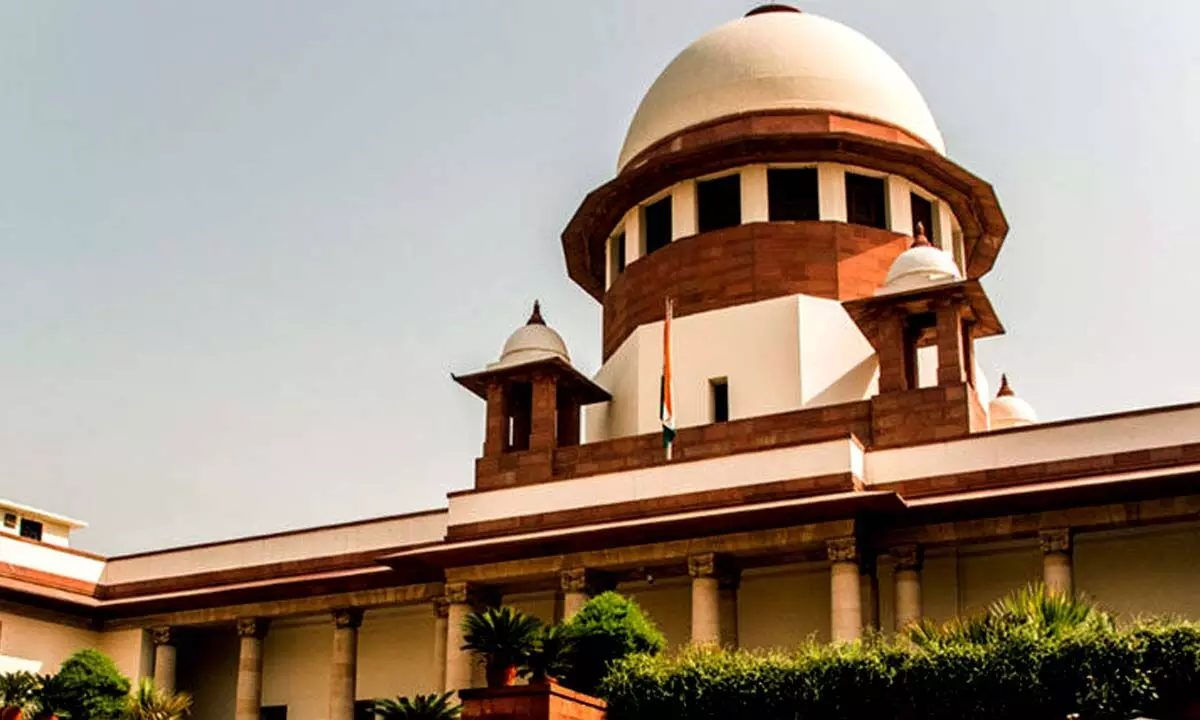
The Union government on Friday defended the Waqf Amendment Act before the Supreme Court, arguing that the law does not violate any fundamental rights guaranteed under the Constitution. In an affidavit filed by Shersha C Shaik Mohiddin, joint secretary in the Ministry of Minority Affairs, the Centre opposed petitions challenging the law’s constitutional validity.
The Centre explained that the amendments to the Waqf Act were meant to regulate the secular aspects of waqf property management and did not interfere with religious freedoms under Articles 25 and 26 of the Constitution. The law falls within the government’s regulatory powers, it argued.
A waqf, under Islamic law, is an endowment for religious, educational, or charitable purposes, and each state has a waqf board responsible for managing waqf properties. The 2024 Waqf Amendment Bill proposed amendments to 44 sections of the 1995 Waqf Act. The bill, which Parliament cleared on April 4, includes provisions such as allowing non-Muslims on waqf boards, limiting property donations, and revising waqf tribunal procedures. The bill received presidential assent on April 5 and came into effect on April 8.
The Congress and the All India Majlis-e-Ittehadul Muslimeen have challenged the constitutionality of the bill in the Supreme Court. In its affidavit, the Centre emphasized that the recognition of waqfs as “valid statutory dedications of property” under the 1995 Waqf Act remained unchanged. The Centre stressed that the new law only regulates secular aspects such as record management, procedural reforms, and administrative structure, not matters of religious ritual or fundamental Islamic obligations.
The government argued that the amendments steer clear of infringing on religious freedoms and should not be subject to any “blanket stay.” The Union government also highlighted the misuse of waqf land, with over 20 lakh hectares of land marked as waqf since 2013, including instances where waqf boards encroached upon private and government land.
Regarding the inclusion of non-Muslims in the Central Waqf Council and State Waqf Boards, the Centre argued that these bodies exercise secular functions and that non-Muslim members would not impact the religious rights of Muslims. It also clarified that the maximum number of non-Muslim members would be limited to four out of 22 for the council and three out of 11 for boards.
On the provision allowing a government officer to decide if waqf land has encroached upon government land, the Centre presented examples of waqf boards claiming ownership of government land, public utilities, and protected monuments without proper documentation.
The Centre urged the Supreme Court not to issue any interim order, citing legal precedents that bar courts from staying legislation at the initial stage. The amendments, it said, were passed after thorough analysis by a Joint Parliamentary Committee with representatives from major political parties.
The Supreme Court is set to hear the case on May 5. The Centre had previously assured the court on April 17 that it would not denotify waqf properties or make new appointments to the Waqf Boards until the matter is heard.
SC Slams Rahul Gandhi for Savarkar Remarks, Stays Defamation Case 18
The Supreme Court on Friday reprimanded Congress leader Rahul Gandhi for his controversial remark about Hindutva ideologue VD Savarkar, where he claimed that Savarkar had collaborated with the British. A bench of Justices Dipankar Datta and Manmohan was hearing a petition that challenged an Allahabad High Court order, which had refused to quash the summons issued by a Lucknow magistrate court regarding Gandhi’s remarks.
While the court stayed the criminal defamation proceedings against the Congress leader, it did not hold back in criticizing his comments. The defamation case was filed following a complaint by lawyer Nripendra Pandey, who accused Gandhi of insulting Savarkar during his Bharat Jodo Yatra in November 2022. Gandhi had referred to Savarkar as a “British servant” who allegedly received a pension from the colonial authorities.
The Supreme Court bench called Gandhi’s statements “irresponsible” and warned the Lok Sabha MP that it would take suo motu action if he made similar remarks in the future. “You have a good point on law and you will get a stay, but any further statement by him will be taken up suo motu. No words on our freedom fighters. They gave us freedom and we treat them like this?” the bench remarked.
The bench further questioned whether Mahatma Gandhi could be labeled a servant of the British for referring to the viceroy as “your faithful servant” in his letters. The court also pointed out that Gandhi’s grandmother, former Prime Minister Indira Gandhi, had praised Savarkar in the past.
The defamation case had a tumultuous journey through the courts. In June 2023, an additional chief judicial magistrate had dismissed Pandey’s complaint, but the complainant appealed. The sessions court allowed the plea and sent the matter back to the Lucknow magistrate court, which then issued summons to Rahul Gandhi in December. The Congress leader had challenged the order in the High Court, which refused to set aside the summons on April 4.
Journalist Assaulted While Covering BJP Protest in J&K Over Pahalgam Terror Attack 20
A senior journalist was hospitalized after being assaulted while covering a BJP protest in Jammu and Kashmir’s Kathua district on Wednesday, following the recent terror attack in Pahalgam. Rakesh Sharma, a reporter for Dainik Jagran, was attacked at Kalibari Chowk while documenting the protest led by BJP legislators Devinder Manyal, Rajiv Jasrotia, and Bharat Bhushan. The assault has sparked strong condemnation from journalistic circles, with calls for an FIR against the accused.
A video of the incident, showing the assault on Sharma, has gone viral on social media, further fueling outrage. Sharma claimed that while he was covering the protest, a BJP activist named Himanshu Sharma accused the journalists of speaking the “separatist language” for questioning the security situation—specifically regarding the infiltration of terrorists into Kathua and the Pahalgam attack. Despite the peaceful tone from BJP leaders, the situation escalated when Sharma and other journalists were confronted by a group of party supporters, including Himanshu Sharma, Ravinder Singh, Ashwani Sharma, Manjit Singh, Tony, and Parveen Chuna, who then physically attacked Sharma in full public view.
The assault was interrupted by Deputy Superintendent of Police Ravinder Singh, who helped Sharma get medical attention at the Government Medical College hospital. Following the incident, a group of senior journalists met with the Senior Superintendent of Police, Kathua, Shobhit Saxena, demanding immediate action, including the filing of an FIR and the arrest of those responsible.
In response to the assault, journalists in Kathua staged a protest, donning black bands, and announced a boycott of all BJP programs until action is taken against the perpetrators. Solidarity protests were also held outside the press club in Jammu.
The Pradesh Congress Committee strongly condemned the attack, calling it a direct assault on the press’s right to question security issues in the wake of rising terror attacks. PCC spokesperson Ravinder Sharma demanded an apology from BJP president J.P. Nadda and swift action against the accused. The incident has raised serious concerns about the safety of journalists in the region and the growing intolerance toward critical questions.