Home Blog Page 79

The Curse of Bhringi: A Mumbaikar’s Memory and the Forgotten Balance of Shiva-Shakti

rishi bhringi, bhringi, story, shiva-shakti, shakti-shiva, lord shiva
The Curse of Bhringi: A Mumbaikar's Memory and the Forgotten Balance of Shiva-Shakti 2

As a child growing up in the vibrant heart of Mumbai, my mornings began not with alarms or mobile screens but with the gentle hum of mantras, the scent of agarbatti curling through our modest home, and the soft ringing of the temple bell as dawn broke across the city. My grandmother, ever serene in her silk saree, would sit before the twin idols of Shiva and Shakti, her fingers counting beads, her eyes closed in prayer — lost in a world where the divine was not distant but intimately near.

I, impetuous and curious, would often dash in, drawn to the silent calm of the Shiv Linga — the cosmic stillness of the Lord of Kailash. I would fold my hands hurriedly before Shiva and turn to leave, but every time, my grandmother would gently pull me back.

“Don’t forget Ma Shakti,” she’d whisper. “You cannot worship Shiva without Shakti, my child.”

Back then, I didn’t understand. Shiva looked peaceful, powerful, and complete. Why did I need to bow to another?

And so she would tell me a story. The story of Rishi Bhringi — a tale that danced into my memory like sacred music and has echoed there ever since.

Rishi Bhringi was no ordinary sage. He was one of Shiva’s fiercest devotees, a member of the Ganas — the celestial attendants who lived at Mount Kailasha, serving the Lord with absolute loyalty. But Bhringi’s devotion, though deep, was incomplete. He worshipped only the masculine, only the unchanging, meditative Shiva. To him, Parvati — the goddess, the Shakti, the flowing, fiery essence of life — was a distraction. An attachment. An illusion.

One day, the sage ascended Kailash to perform his sacred pradakshina, the circumambulation that symbolises surrender, reverence, and spiritual unity. But when he saw Shiva sitting with Parvati — the eternal Ardhanarishwara — he made it clear he would walk only around Shiva, excluding Shakti.

Parvati, graceful yet fierce, decided to teach him a lesson. The next time Bhringi came, she sat on Shiva’s lap, her presence inescapable. But Bhringi, unwavering in his one-eyed devotion, transformed into a bird and flew only around Shiva’s head. When the divine couple merged into one — one form, half-male, half-female — the sage turned into a bee and tried to pierce a hole through their fusion, desperate to avoid the feminine.

That was the moment the goddess’s patience wore thin.

“If you reject Shakti”, she declared, “then you shall live without what she gives — your blood, your flesh, your vitality.”

With her words, Bhringi was reduced to a skeleton. Hollow. Weak. He could no longer stand.

The sage, humbled and broken, cried out to Shiva. And Shiva, ever compassionate, did not undo Parvati’s curse. Instead, he bestowed upon Bhringi a third leg — a symbol of balance, of understanding, of support. Not a negation of Shakti, but a reminder that without her, even the fiercest devotion crumbles.

This story, my grandmother would say, isn’t just from some ancient scripture — it lives in our world today. And as I grew older, walking Mumbai’s crowded lanes, breathing in its dreams and disappointments, I began to see just how true that was.

We are a generation of Bhringis. We worship intellect, ambition, technology, and logic — the masculine energies of Shiva. But we forget compassion, emotion, and intuition—the feminine grace of Shakti. We strive for progress but abandon peace. We race for success but forget to pause for love. And like the sage, we find ourselves skeletal—alive, but not whole.

Mumbai, my Mumbai, once rich with spiritual rhythm, now pulses with imbalance. The temples still stand, but the hearts are distracted. We chase after light but forget the warmth. Our youth drown in rave parties and screen-lit nights, seeking joy in illusions, stimulation in place of serenity.

And yet, just like Bhringi, there is hope. Shiva’s grace never dies. The universe, in its divine patience, always offers a chance to restore our lost balance.

We only need to remember.

To honour not just the god who meditates but the goddess who moves. To respect not only wisdom but also feeling. To walk not just with power, but with grace.

From my grandmother’s quiet prayers to the chaos of my city’s streets, this story has stayed with me. A sacred reminder. A timeless lesson.

Worship Shiva. But never forget Shakti. For without her, even divinity cannot dance. And neither can we.

“Hindi Zor Zabardasti Nahi Chalegi in Maharashtra”: Uddhav Thackeray Slams Language Imposition

uddhav thackeray, shiv sena, ubt, sena
"Hindi Zor Zabardasti Nahi Chalegi in Maharashtra": Uddhav Thackeray Slams Language Imposition 4

Shiv Sena (UBT) chief Uddhav Thackeray on Saturday made it clear that his party will strongly oppose any attempt to impose Hindi in Maharashtra. Reacting to the state government’s recent move to make Hindi a compulsory third language for students from Classes 1 to 5, Thackeray declared that such compulsion would not be tolerated.

Speaking at an event of the Bharatiya Kamgar Sena, the workers’ wing of his party, Thackeray emphasized that while he holds no hostility towards the Hindi language, he firmly questioned the need to impose it forcefully in schools. His comments come in the backdrop of growing outrage from opposition parties and cultural groups over the state’s decision, which marks a shift from the longstanding two-language policy followed in Marathi and English-medium schools.

Thackeray’s sharp response adds fuel to the intensifying political debate over regional identity, education policy, and cultural autonomy in the state.

Ananth Mahadevan’s ‘Phule’: A Brave, Brilliant Tribute to India’s First Social Revolutionaries

phule, ananth mahadevan, movie 2025
Ananth Mahadevan's 'Phule': A Brave, Brilliant Tribute to India's First Social Revolutionaries 6

In a time when cinema often seeks the safety of commercial formulas, director Anant Mahadevan yet again proves why he stands apart as one of India’s most fearless and refined storytellers. His latest offering, Phule, is not just a biopic — it is a bold and moving cinematic testament to the unvarnished truth of India’s most neglected revolution. The recently released trailer, wrapped in controversy and courage, is a glimpse into a film that dares to speak what society often prefers to bury.

Phule brings to life the monumental yet largely overshadowed journey of Mahatma Jyotirao Phule and Savitribai Phule — visionaries whose reformist fire lit up 19th-century Maharashtra and gave India its first push toward grassroots social justice. Savitribai, India’s first female teacher, and Jyotiba, her unshakeable partner in reform, waged a war not against an external oppressor but an internal one — the tyranny of caste, patriarchy, and ignorance. They opened the first girls’ school in 1848 at Bhidewada in Pune — a quiet, historic act that would go on to challenge centuries of institutional darkness.

The trailer begins with a line that reverberates like a thunderclap through the conscience of this nation. A Brahmin man mocks Phule: “You think educating girls will bring revolution? Fight for the country’s freedom instead!” To this, Phule’s calm yet cutting reply echoes through time — “The British enslaved us for a hundred years. The slavery I fight is three thousand years old.” In that one sentence, the essence of the film and the enormity of the Phules’ mission is laid bare. Their resistance was not merely social — it was civilisational.

Ananth Mahadevan, with his seasoned eye for nuance and narrative, has chosen a subject that most filmmakers wouldn’t dare touch — not just because of its controversial edge, but because it demands an unflinching gaze and a heart committed to truth. The dialogues are piercing, the screenplay gripping, and the storytelling unwavering. In a landscape where caste continues to bleed silently into the lives of millions, this film arrives as a necessary jolt — not to incite, but to awaken.

Patralekha delivers a soul-stirring performance as Savitribai. Her eyes alone carry the weight of generations of suppressed voices. Her measured grace, her simmering defiance, and her luminous presence make her portrayal unforgettable. She doesn’t just play Savitribai — she becomes her. Pratik Gandhi brings sincerity to the role of Jyotiba, although his natural persona occasionally seeps through. Yet the chemistry between them and the ideals they embody are beautifully brought alive by Mahadevan’s deft direction.

The film, originally set to release on April 11 — Jyotiba Phule’s birth anniversary — faced backlash from Brahmin organisations offended by a two-minute scene in the trailer where a Brahmin boy hurls cow dung at Savitribai. Their rage, ironically, validates the very message the film seeks to convey. The attempt to stall the film’s release underlines how uncomfortable India still is with its own history of caste oppression. Mahadevan has confirmed that the Censor Board demanded a few changes, and the film will now release on April 25.

What’s most heartbreaking — and revealing — is that even today, while politicians from across the spectrum line up to garland statues of Phule, Ambedkar, and Gandhi for votes, a film that earnestly brings their stories to life is met with resistance and outrage. This contradiction speaks volumes about the tokenism we’ve wrapped our revolutionaries in, choosing memory over movement and tribute over transformation.

Phule is not just a film — it’s a mirror. A reminder. A reckoning. It’s a cinematic revolt wrapped in art, asking us to reflect, to remember, and most importantly, to restart the conversations that Savitribai and Jyotiba began more than 150 years ago. And only a director of Anant Mahadevan’s calibre could have treated such a theme with the honesty, elegance, and empathy it deserves.

As we await the film’s release on April 25, the two-minute trailer alone is enough to stir the soul. It speaks of a forgotten legacy, of voices that cracked the silence long before social media hashtags, and of battles that are still being fought — not just in villages and slums, but in hearts and minds. Stay tuned. This is more than a movie. It is history reborn.

Delhi Tragedy: Four Dead, Many Feared Trapped as Four-Storey Building Collapses in Shakti Vihar

delhi, mustafabad, buiding collapse
Delhi Tragedy: Four Dead, Many Feared Trapped as Four-Storey Building Collapses in Shakti Vihar 8

A major tragedy unfolded in northeast Delhi’s Shakti Vihar area early Saturday morning as a four-storey building collapsed, killing four people and leaving several others feared trapped under the debris. The incident occurred around 3.02 AM, prompting an immediate response from the local police and rescue teams.

According to officials, nearly 22 people were suspected to be under the rubble when the structure crumbled. So far, 14 individuals have been rescued and shifted to GTB Hospital, where four were declared brought dead by doctors.

Police officials confirmed that they received a distress call at the Dayalpur police station and immediately rushed to Gali No. 1, Shakti Vihar. The area has since been cordoned off as emergency teams continue the search for survivors.

Rescue operations are underway amid growing concerns about the structural integrity of nearby buildings and the safety of those still trapped.

BMC Sparks Outrage by Demolishing 1960s Jain Temple in Vile Parle

vile parle, demolition, jain temple, jain, bmc, brihanmumbai municipal corporation
BMC Sparks Outrage by Demolishing 1960s Jain Temple in Vile Parle 10

The Brihanmumbai Municipal Corporation (BMC) has triggered a wave of anger and protest after demolishing an alleged unauthorized Jain temple in Mumbai’s Vile Parle area, with community members calling the move unjustified and insensitive.

According to Anil Shah, a trustee of the decades-old ‘chaitalaya’ located within the Neminath Cooperative Housing Society in Kambliwadi, the structure was demolished on April 16. He claimed the temple had existed since the 1960s and had even undergone renovations in the past with BMC’s approval.

“There is a government resolution that allows for regularization of such structures. All we had to do was submit a proposal to the BMC — which we did,” said Shah, suggesting the demolition ignored due process.

He further alleged that the demolition was carried out under pressure from a local hotelier, and that religious texts and temple artifacts were damaged during the operation.

The Jain community has expressed deep anguish over the action and announced a protest march to the BMC’s K-East ward office on Saturday.

Despite repeated attempts, the BMC has not issued a statement or responded to calls and messages regarding the demolition, leaving questions unanswered and tensions high.

Bureaucrat’s ₹1.22 Lakh Holi Bash Sparks Row in Debt-Ridden Himachal

holi, prabodh saxena, controversy, ias officer, himachal, himachal pradesh
Bureaucrat's ₹1.22 Lakh Holi Bash Sparks Row in Debt-Ridden Himachal 12

A political storm has erupted in Himachal Pradesh after a bill of ₹1.22 lakh for a Holi-cum-retirement party hosted by Chief Secretary Prabodh Saxena was reportedly sent to the General Administration Department (GAD) for payment. The BJP has slammed the move as a gross violation of ethical conduct and a mockery of administrative discipline, especially when the state is battling a staggering ₹1 lakh crore debt.

The controversy broke out after a copy of the bill, allegedly issued by Hotel Holiday Home of the HP Tourism Development Corporation, surfaced online. According to the document, lunch and snacks were served on March 14 to 75 guests, including IAS, IPS, and IFS officers and their families. It also covered meals for 22 drivers and support staff, indicating the scale of the celebration.

Notably, Saxena was due for retirement on March 31 but was granted a six-month extension — ironically, while the retirement party was ongoing.

BJP MLA Bikram Singh condemned the expenditure, stating, “This is a gross violation of democratic spirit, ethical conduct, and administrative decorum. When the state is neck-deep in debt, such extravagance shows sheer insensitivity to the plight of common people.”

Singh, a former minister, further alleged that the act breached financial discipline and contravened provisions under the Central Civil Services (Conduct) Rules, 1964.

Echoing the outrage, BJP chief spokesperson Randhir Sharma questioned how a cash-strapped government could justify such lavish spending at the taxpayers’ expense.

Saxena, meanwhile, has remained unavailable for comment as the controversy continues to fuel public and political backlash.

SC Halts Nashik Dargah Demolition, Slams Bombay HC for Ignoring Plea Listing

nashik, dargah, demolition, nashik dargah, supreme court, bombay high court
SC Halts Nashik Dargah Demolition, Slams Bombay HC for Ignoring Plea Listing 14

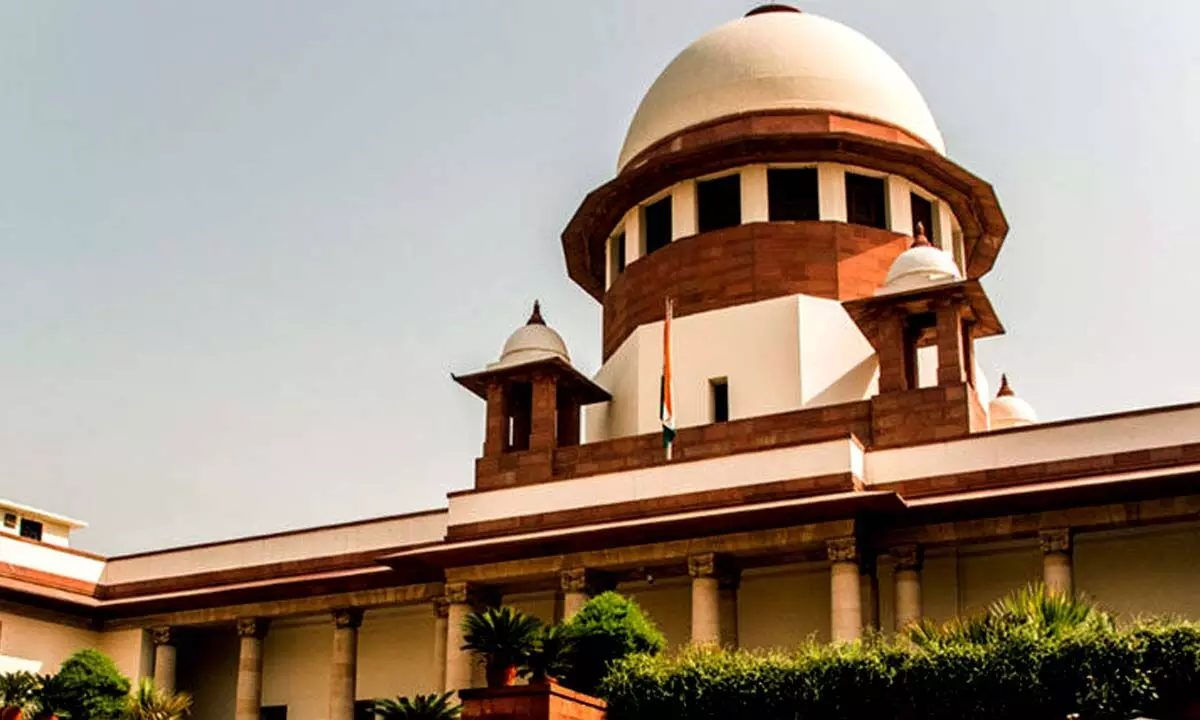
In a significant intervention, the Supreme Court has stayed the demolition notice issued by the Nashik Municipal Corporation for the Hazrat Saatpeer Sayed Baba Dargah and pulled up the Bombay High Court for failing to list the shrine’s urgent plea. The court sought a detailed report from the registrar general of the high court, questioning why a writ petition filed on April 7 was not listed for hearing.

Shockingly, the dargah at Kathe Galli in Nashik was reportedly razed by civic authorities during the night of April 15–16, just hours before the Supreme Court hearing on the matter took place at noon on April 16.

A bench of Justices P.S. Narasimha and Joymala Bagchi, taking note of the urgency and the allegations made by senior advocate Navin Pahwa—who represented the dargah trust—observed that “extraordinary measures” were warranted. Pahwa stated that daily efforts were made to have the case heard by the Bombay High Court, but it was “consistently declined.”

The apex court, taking the submission seriously, said, “We are unsure of the statement made and that the high court would not have listed the case despite repeated requests. This is a serious statement and the counsel shall take and feel responsibility for the consequence of such a statement.”

The Supreme Court has now directed the Bombay High Court’s registrar general to provide a report detailing the listing status of the petition. It also sought a response from the Nashik Municipal Corporation and other authorities involved.

The court’s interim stay on the April 1 demolition notice comes amid growing concerns over procedural lapses and religious sensitivities. The matter will next be heard on April 21.

Waqf Act: SC Directs Centre to File Response Within a Week, Next Hearing on May 5

supreme court, sc, supreme court of india, fir, police, courts
Waqf Act: SC Directs Centre to File Response Within a Week, Next Hearing on May 5 16

The Supreme Court on Thursday directed the Centre to file its stand within a week in the challenge to Waqf (Amendment) Act, 2025 after it was assured by the union government that ‘waqf by user’ or ‘waqf by deed’ properties won’t be denotified till the next hearing.

A bench comprising Chief Justice Sanjiv Khanna and Justices Sanjay Kumar and K V Viswanathan also recorded the assurance of solicitor general Tushar Mehta, representing the Centre, that no appointments in the central Waqf council and boards will be made in the meantime.

Mehta said the government won’t denotify “waqf by deed” and “waqf by user” properties till the next hearing.

The CJI said if registration of any waqf property had taken place under the erstwhile 1995 Act, then those properties can’t be denotified till the next hearing on May 5.

The bench passed the order after Mehta sought a weeks’ time to file a preliminary response to the pleas against the newly-amended waqf law.

“If your lordships will say something about ‘waqf by user’, what will be the fallout?” he asked.

The bench, on the other hand, said it was impossible to deal with a number of pleas on the issue and clarified it would only five of them while asking lawyers to decide among themselves who would argue.

The petitioners, the bench said, could file their rejoinders to the Centre’s reply within five days of the service of the government’s response.

After Devgiri Fort Blaze, INTACH Demands Ban on Lighters, Cigarettes, and Plastic Bottles at Heritage Site

devgiri fort, fire incident, shambhaji nagar, aurangabad
After Devgiri Fort Blaze, INTACH Demands Ban on Lighters, Cigarettes, and Plastic Bottles at Heritage Site 18

Following the devastating fire at Devgiri Fort on April 8, the Indian National Trust for Art and Cultural Heritage (INTACH) has demanded stringent safety measures, including a complete ban on flammable items like cigarettes, lighters, and matchboxes within the fort premises. The blaze, which affected significant portions of the fort and harmed wildlife such as monkeys, has raised alarm over the lack of fire safety protocols at the historic site.

A delegation from INTACH submitted a formal memorandum to the Archaeological Survey of India (ASI) in Chhatrapati Sambhajinagar, highlighting the urgent need for preventive action. The heritage conservation group pointed out that grass growing on the terrace of the Baradari—an upper structure of the fort—caught fire, which then spread to wooden sections, escalating the damage.

INTACH has called for regular removal of dry grass and trees from key areas of the fort, especially before summer, along with cleanliness drives to eliminate plastic waste and other fire hazards. The memorandum stressed the importance of thorough security checks at entry points to stop visitors from bringing flammable materials.

They further proposed restrictions on plastic bottles and strict enforcement of the Maharashtra Fire Prevention and Life Safety Measures Act, 2006. To manage emergency situations more efficiently, INTACH also recommended the creation and maintenance of access pathways for water tankers within the fort.

The 9th-century Devgiri Fort, also known as Daulatabad Fort, was once the capital of the Yadava Dynasty and remains a major tourist attraction near Chhatrapati Sambhajinagar, Maharashtra. The recent fire incident has sparked serious concern over heritage preservation and disaster preparedness at India’s historical landmarks.

Pune Businessman Lured, Abducted, and Killed in Bihar: Cyber Racket Behind Gruesome Murder

pune, businessman, bihar, killed in bihar, laxman shinde
Pune Businessman Lured, Abducted, and Killed in Bihar: Cyber Racket Behind Gruesome Murder 20

A horrifying interstate crime has come to light with the abduction and murder of Pune-based businessman Laxman Sadhu Shinde, who was lured to Bihar under the pretext of a high-value business deal. Shinde, owner of Centrifugal Casting Bearing in Pune, was found dead in Bihar’s Jehanabad district days after he landed at Patna airport on April 11. Bihar Police have arrested seven individuals, including a woman, and detained four others in connection with the case.

According to investigators, Shinde was targeted by a cybercrime gang posing as clients seeking mining equipment for operations in Jharkhand. After landing in Patna, Shinde messaged his daughter that he was heading to Jharkhand. That was the last communication from him. A missing persons complaint was filed by his family the next day in Pune, prompting a joint investigation by Pune and Patna police.

The gang allegedly demanded ransom from Shinde’s family, managing to extort ₹90,000 before murdering him and dumping his body in Ghosi, Jehanabad. The mastermind and other suspects were tracked down across multiple districts—Nawada, Gaya, Nalanda, and Vaishali. Police recovered the vehicle used in the abduction and seized CCTV footage that helped crack the case.

Officials revealed that the gang was involved in a series of kidnappings and murders across Jharkhand, Gujarat, Karnataka, and other states. Some of those arrested are also cybercriminals with a history of online fraud. The kingpin of the gang has been sent to judicial custody, and further investigation is ongoing.